The Most Revolutionary Act

Uncensored updates on world events, economics, the environment and medicine

The Most Revolutionary Act
Unknown's avatar

About stuartbramhall

Retired child and adolescent psychiatrist and American expatriate in New Zealand. In 2002, I made the difficult decision to close my 25-year Seattle practice after 15 years of covert FBI harassment. I describe the unrelenting phone harassment, illegal break-ins and six attempts on my life in my 2010 book The Most Revolutionary Act: Memoir of an American Refugee.

Will This Man Prevent World War Three?

What They’re Not Tellin’ You

In April, Tucker Carlson, the most popular show host in American news media, was unceremoniously fired from Fox News.

He has since taken to the platform “X,” formerly Twitter, to continue publishing his own program.

Last week, during the first Republican primary debates, Tucker posted an exclusive (softball) interview with former President Donald Trump.

The episode received 260 million “impressions” within the first day.

Although an “impression” on Twitter only counts as an appearance in someone’s feed, if only one-tenth of those impressions equated to one view, the viewership would still be 26 million people. In comparison, Tucker’s Fox News program, Tucker Carlson Tonight, averaged 3.25 million viewers in March 2023.

The exclusive interview with Trump was a master stroke by both figures. It allowed Donald Trump to get his message across in a long format without actually muddying himself on the debate stage. Meanwhile, Vivek Ramaswamy played, in effect, the role of Trump’s stand-in, but still won the debate in his own right.

Tucker walked away with incredible numbers, even if not as spectacular as the 230 million impressions would suggest.

Yesterday, RT reported that Tucker Carlson has “strongly” requested a meeting with Vladimir Putin, ostensibly to publish as an episode of his new program.

With all these developments, an attempt to decode the former Fox News host’s real role in the media landscape is akin to cracking a modern-day enigma.

Many laud Tucker as a rogue voice, fighting the establishment, using a microphone as a holy scepter.

It cannot be denied that on some critical issues like opposing escalation over Ukraine, Tucker Carlson’s voice is vitally important. But, Tucker Carlson has his own interests, and a background that does not suggest he is some populist hero, or an antiwar dove (of critical importance, he certainly is not on China).

That said, it would be immensely valuable for the West to see an intimate and honest one-on-one interview between Vladimir Putin and Western news media—one that was not intent on painting Putin as the new Hitler.

Maybe Tucker Carlson, though imperfect, is the figure best positioned to do it?

When America’s Commander-in-Chief, Joe Biden, still has not spoken with Putin since the February 2022 invasion, its puzzling that the job defaults to the United States’ most popular current events news host.

[…]

Via https://www.libertyweekly.club/will-this-man-prevent-world-war-three/

Unease Over New Zealand Overtures to US in Pacific

U.S. Secretary of State Antony Blinken with New Zealand Prime Minister Chris Hipkins in Wellington on July 27. (State Department, Chuck Kennedy, Public domain)

Mick Hall

New security-state documents show Wellington aligning its military with the “rules-based international order” while preparing Kiwis for war with key trading partner China

Recent reports from New Zealand’s security state have sparked protest after all but suggesting the country join the U.S.-led AUKUS military alliance, a move that would reverse years of New Zealand’s independent foreign and defence policy and put it on a collision course with China.

Ex-Labour Prime Minister Helen Clark lamented the loss of what would remain of the country’s military sovereignty. Clark blasted an “orchestrated campaign” by defence and security officials to join the U.S., Britain and Australia in AUKUS.

In a Twitter thread, she said the government was “abandoning its capacity to think for itself and is instead cutting & pasting from Five Eyes partners.” New Zealand is part of a five-nation intelligence sharing arrangement with Australia, Britain, Canada and the United States.

Clark tweeted that “there appears to be an orchestrated campaign on joining the so-called ‘Pillar 2’ of #AUKUS which is a new defence grouping in the Anglosphere with hard power based on nuclear weapons.” 

[…]

Clark says, “IMHO NZ needs a full public debate on this & not an officialdom-driven realignment. … Furthermore, detachment is consistent with #NZ’s distinctive worldview …” 

Nuclear Free Act 1987

The direction of a growing New Zealand militarism could indeed raise questions over the future of the country’s nuclear free policy.

In 1984, after decades of campaigning against nuclear testing in the Pacific and increasing public objections to visiting U.S. warships, New Zealand under the then Labour Prime Minister David Lange, banned nuclear-powered or nuclear-armed ships from using its ports and waters.

Under the New Zealand Nuclear Free Zone, Disarmament, and Arms Control Act 1987, the country became a nuclear-free zone.

That legislation is seen as a defining exercise of national sovereignty and became part of New Zealanders’ cultural identity, particularly after French secret service agents in 1985 bombed Greenpeace’s Rainbow Warrior vessel, moored at Auckland harbour, to prevent it leaving for further protests against France’s nuclear tests at Mururoa Atoll. One crew member was killed.

[…]

The Road to AUKUS

The U.S. has been involved in efforts to contain China in its own backyard, while dangerously increasing tensions between Beijing and Taiwan. This has involved increased diplomatic support for the Taiwanese independence movement as well as concluding weapons deals with the self-governing island, which China sees as an integral part of its own territory.

Official U.S. policy also recognises Taiwan as part of the People’s Republic of China.

AUKUS could play a central role in a U.S. containment strategy. Australia confirmed in March it would buy three U.S.-manufactured nuclear submarines for A$368 billion over the next three decades, with an option of buying two more, as part of the AUKUS pact.

The AUKUS deal has been controversial in Australia. It increases tensions between Canberra and Beijing where before there were virtually none.  Australia’s decision to join AUKUS and enter into the submarine deal was concluded by Prime Minister Anthony Albanese without consultation with Parliament, let alone with the Australian people.

AUKUS has been blasted by former Australian Labor Prime Minister Paul Keating who said:

“We are now part of a containment policy against China. The Chinese government doesn’t want to attack anybody. They don’t want to attack us … We supply their iron ore which keeps their industrial base going, and there’s nowhere else but us to get it. Why would they attack? They don’t want to attack the Americans … It’s about one matter only:  the maintenance of U.S. strategic hegemony in East Asia. This is what this is all about.”

Blinken in New Zealand

After U.S.  Secretary of State Antony Blinken’s visit to Wellington last month, New Zealand Foreign Minister Nanaia Mahuta told media the government was not contemplating joining AUKUS.

However, a new Defence Policy and Strategy document, one of a raft of recent government papers on the issue, says: “AUKUS Pillar Two may present an opportunity for New Zealand to cooperate with close security partners on emerging technologies.”

During his own press conference with Blinken, Prime Minister Chris Hipkins said the government was “open to conversations” about AUKUS membership.

Three decades after it took the country out of ANZUS (consisting of Australia, New Zealand and the U.S.), Labour would turn full circle if it signed up to the AUKUS pact while in power. The U.S. suspended its obligations to New Zealand under the 1951 ANZUS Treaty in retaliation for the nuclear-free policy introduced in 1987 by Labour.

A decision to join AUKUS will be one for the next government after October’s general election. According to recent polling, the country’s right-wing opposition party, National, could govern alongside the far-right, libertarian Act Party.

[…]

Consortium News spoke with the National Party’s foreign affairs and defence spokesman Gerry Brownlee, who said that the ruling Labour Party’s position on AUKUS — and on defence in general — had shifted much closer to his own party in recent years.

He said New Zealand’s proposed involvement in AUKUS had yet to be defined and there would be no immediate moves to join the alliance.

He was cautious, however, about jeopardizing trade with China and emphasised a need to protect and promote what he called New Zealand’s  liberal democratic values.

“We don’t need to make enemies where enemies don’t exist, but we need to keep our eyes open and look at all the risks,” he said.

Former general-secretary of the Labour Party, Mike Smith, told Consortium News discussions within the Labour government over AUKUS were ongoing.

Smith said he didn’t believe the country’s nuclear free position was under immediate threat but he remained wary.

“I think there are some among our officials who think that New Zealand’s nuclear free legislation has passed its use-by date. I do not see any possibility of it being changed in the near term, but I think this view should be flushed out,” he said.

He backed former Labour Prime Minister Clark’s comments that the recent spate of security and defence documents were Five-Eyes “copy and paste” jobs.

[…]

‘We Want Nothing To Do with AUKUS’

Indigenous party Te Pati Maori co-leader, Rawiri Waititi, agreed the security state documents were politically coloured in a way that did not present objective facts on the country’s security. “Government agencies and government bureaucrats are not apolitical,” he told Consortium News.

Waititi poured cold water on a New Zealand Security Intelligence Service (NZSIS) report that China should be a concern for New Zealand.

“There is no specific evidence supporting the narrative that Russia, North Korea and Peoples Republic of China (PRC) are interfering in Aotearoa’s [New Zealand] politics,” he said.

[…]

The New Zealand spy agency also warned rising social and economic inequality — as inflation and a global downturn created further hardship — were expected to contribute to the radicalisation of violent extremists in New Zealand. It admitted the main threat of violent extremism came from white supremacists.

On the broader security and defence themes, Waititi was adamant.

“We want nothing to do with AUKUS. We want nothing to do with nuclear-powered or armed naval capacity,” he said.

“Our Nuclear Free Act 1987 is a guiding principle and military neutrality is a natural evolution of that policy. Internationally, Aotearoa must be friends to everybody and enemies to nobody,” Waititi said.

The Security State’s Arguments

NZSIS published its unclassified report on June 11, identifying what it calls rising strategic competition, technological innovation, global economic instability and falling public trust as factors driving violent extremism, foreign interference and espionage.

Following the U.S. line, the report claimed China, Russia and Iran were responsible for instances of foreign interference, mainly the monitoring of expatriate communities, posing a potential risk of significant harm.

[…]

The agency said China’s efforts to expand its power in the Pacific was a “major factor driving strategic competition in our home region.”

[…]

Little Consolation

A week earlier New Zealand Defence Minister Andrew Little had introduced three other security and defence documents to the public at Parliament in Wellington.

[…]

Defence Policy & Strategy Statement

One of the documents, the 37-page Defence Policy and Strategy Statement, focused on the need to make the country’s military “operationally credible,” enabling it “to act earlier to prevent threats, for example through increased presence, as part of broader New Zealand efforts and in concert with international partners.”

“Where possible, Defence will seek to act to constrain hostile actions, will be prepared to employ military force, and engage in combat if required,” it added.

The statement stated the goal would be to prevent states that don’t share the country’s “values”  from establishing a “military or paramilitary presence” in the region. It advocated greater New Zealand military deployments in the Pacific region.Like the spy agency report, the document flagged China’s “political, economic, and security influence” in the Pacific, which it claimed was “at the expense of more traditional partners such as New Zealand and Australia.”

[…]

The statement makes no mention of the steady build up of U.S. forces in the region, including new bases near China, such as in Australia and the Philippines, as well as naval assets patrolling the South China Sea. The statement does not entertain the possibility that China’s military activity is defensive in response to the growing U.S. presence.

A Future Force Design Principles document in addition sets out how the military would be reconfigured to meet these supposed new threats.

The release of these defence documents came after a Defence Policy Review, commissioned by the government in 2022.

National Security Strategy

A new, U.S.-style National Security Strategy, the first of its kind in New Zealand, delineated 12 main areas of concern to security agencies, including strategic competition, disinformation, foreign interference, terrorism, economic security, Pacific security and cyber, border, maritime and space security.

It pointed to potential flashpoints in Taiwan, the South China Sea and East China Sea.

The strategy noted China’s efforts to build ports and airports in the Pacific, which it said could have both civilian and military purposes.

[…]

The document emphasised it was important for New Zealand to partner with other nations tied to the Five Eyes intelligence apparatus, as well as others, including Japan and South Korea.

[…]

Via https://libya360.wordpress.com/2023/08/28/unease-over-new-zealand-overtures-to-us-in-pacific/

Indian Politics at the End of the 20th Century

Episode 35 Modernizing India

A History of India

Michael Fisher (2016)

Film Review

The 15-Year Reign of Indira Gandhi

Up until 1996, India was mainly governed by a central Nehru-Gandhi dynasty. Born Indira Nehru, Nehru’s daughter separated from her husband Feroe Gandhi (no relation to Mahatma Gandhi) to serve as her father’s first lady during the final years of his presidency. She would become prime minister herself death in 1966 Immediately following Nehru’s death in 1964, Lal Bahadur served India’s second prime minister until his own death in 1966.

Indira Gandhi was a strong supporter of the Wall Street-driven Green Revolution, which brought industrial farming (with soil destroying monocrops, artificial fertilizers, herbicides, pesticides and ultimately GMO crops to much of India.*

In 1971, she initiated a number of controversial reforms, including the abolition of personal property rights and the privy purses (a majority share of tax revenues) of the princely states, as well as the nationalization of banks, insurance companies and coal mines. This was the same year she ordered the Indian army to intervene in East Pakistan.

In 1974, she ordered the first underground test of an Indian nuclear devices.

The Rise of Indian Resistance Movements

In 1967 the states of West Bengal and Karala produced the first freely elected communist government and began a major, successful land distribution program. At the same time the anti-Brahmin Tamil Nationalist Movement (DMK) started their own secession movement in south India. Under Indira’s regime, the Maoist Naxalites in western India began a people’s revolution, a guerilla action in one-third of India’s rural districts.

Undone by Controversial Vasectomy Program

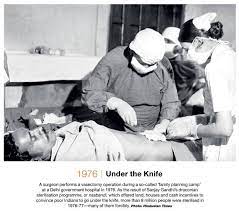
Owing to a number of campaign irregularities nullified her 1975 election. Ignoring the supreme court, she declared an internal national emergency that lasted nearly two years. In addition to suspending habeas corpus, she imprisoned 100,000 activists without, as well as (to slow India’s skyrocketing birth rate) and extremely controversial campaign to vasectomize all men with two or more children. All government departments had to persuade two employees a month to undergo vasectomy or face penalties. She also set up unsterile vasectomy camps that rounded up poor homeless people and prisoners.

In 1977, she released her opponents from prison and called for new elections. The Congress party promptly split into two factions with Gandhi representing Congress-I. A loose Janata** won, installing Moraji Desai as prime minister in 1977 and Charan Singh In 1979.

In 1980, Gandhi’s Congress (I) won by a two-thirds majority. In 1984, a Sikh separatist movement in Punjab became so violent that Gandhi ordered the Gold Temple in Khalistan destroyed with numerous worshipers inside. This led to her assassination by Sikh body guards four months later.

Rajiv Gandhi and the Rise of the BJP

Taking her place, her son deputy prime minister Rajiv Gandhi called for new elections, which he won thanks to his outreach to Muslim voters. This tactic led to significant rise in popular support for the Hindu nationalist BJP (Bharatiya Junata Party).

In 1987, he alienated most of India’ Tamil population by ordering 87,000 Indian “peacekeeping” troops to crush the Tamil Tigers in Sri Lanka. He lost the 1989 election to Janata Dal, a minority part run by Vishwanath Pratup, in large part due to mysterious million dollar payments he made to a secret Swiss bank account.

In 1991, Rajiv Gandhi was once again headed for victory when he was assassinated by a Tamil suicide bomber. Congress-I ultimately won the election under the weak leadership of Narasunha Rao. Owing to poor harvests and a weak economy, Rao was forced to seek an IMF loan and agree to IMF structural adjustments,* which virtually collapsed the country’s economy.

Winning the 1996 election, the BJP’s Atal Bihari Vajpayee served as prime minister for six weeks. In 1988 he was reelected as head of an anti-Congress coalition, served as prime minister for 13 months and set off six nuclear tests. In 1999 he was elected for five years and privatized all Pakistan’s state-owned corporations.

In 2004 Rajiv’s ex-wife Sonia Gandhi (as head of the Indian National Congress) returned the Congress Party (heading up a coalition of 15 parties) returned the Congress party to parliament but declined to serve as prime minister. This post went to Manmohan Singh, who was re-elected in 2009.

In 2014, the BJP’s Narendra Modi was elected prime minister, a post he still holds.


*See Eco Activist Vendana Shiva and her Battle Against Multinational Corporations and GMOs

**The Janata party was an amalgam of parties opposed to Gandhi’s internal state of emergency.

**The structural adjustment policies imposed by the Wall Street-friendly IMF force indebted third world countries to sell off state industries to international corporations, eliminate tariffs deigned to protect their domestic industries and cut public service spending.

Film can be viewed free with a library card on Kanopy.

https://www.kanopy.com/en/pukeariki/video/366254/366241

Repeated COVID Shots Driving Dangerous Variants, Turbo Cancers

By  Rob Verkerk Ph.D.

According to vaccinologist Geert Vanden Bossche, DVM, Ph.D., continued mass COVID-19 vaccination is driving more infectious and potentially dangerous viral variants, increasing the risk of severe COVID-19, aggressive cancers and autoimmune diseases in vaccinated populations.

Pointed or pointless?

The public is understandably confused. On the one hand, major scientific journals, news outlets and authorities have used, and continue to use, superlatives to describe COVID-19 genetic vaccines.

The journal Science called the results of a Moderna trial “absolutely remarkable,” The Washington Post referred to them as “an extraordinary success story,” BuzzFeed claimed the vaccines “work way better than we had ever expected,” while the Centers for Disease Control and Prevention (CDC), the U.K. National Health Service and other authorities continue to cite the mantra used for all approved vaccines, referring them as “safe and effective” (here and here, respectively).

Conflicting information about an uncertain and unpredictable interaction

Yet, on the other hand, the scientific literature is increasingly awash with articles that suggest something quite different.

The CDC is still telling U.S. citizens to “stay up to date” with their shots, yet a preprint study released in June shows that Cleveland Clinic staff who weren’t “up-to-date” with their COVID-19 shots fared better against COVID-19 than those who were.

As early as 2021, as indicated in an article in Nature Medicine, “viral variants began to stack up” only after the vaccines were rolled out.

An article published in Frontiers in Immunology in early 2022 details the multiple immune escape strategies used by the virus both following infection and vaccination.

Then there are people’s individual experiences, with many who have been heavily vaccinated not experiencing good outcomes, either in relation to COVID-19 disease, a concern noted in the recently published Cleveland Clinic study — but also in relation to other diseases or conditions, cancer and autoimmune diseases included.

Emergency over — or not?

For most people, the COVID-19 crisis is over. That’s largely a consequence of the World Health Organization’s declaration in May this year that the “public health emergency” was no longer.

There are at least two reasons it is likely wrong to think that the COVID-19 drama is behind us.

The first is that the virus is still very much out there, circulating to its non-existent heart’s content. While it remains at large, it is susceptible to natural selection of immune escape variants.

Secondly, it seems authorities have no inclination to sideline COVID-19 shots. By contrast, they want to keep using them, and no doubt will use any obvious waves of COVID-19 disease as we progress towards the northern winter to justify more vaccination.

There is no shortage of acclaimed “experts” who can confirm for you that SARS-CoV-2 hasn’t transitioned to an endemic, seasonal pattern, as naturally occurring respiratory viruses typically do after the pandemic phase.

It’s still very much around as you may have noticed in your own circles — it’s just not being surveilled with the same intensity via COVID-19 testing stations dotted around each and almost every industrialized country.

[…]

Conflicting information doesn’t just create confusion. It creates cognitive dissonance. That’s an uncomfortable and unsettling feeling — and it drives people to find, and latch onto, what feels to them like a coherent, trusted view.

This causes division. Some still have trust in the authorities and the scientific establishment that remain steadfastly on the “vaccines-are-our-best-fix” podium. Others of us cannot support this view, seeing it as incoherent, both scientifically and experientially.

Many of us have lost trust in the scientific establishment, full stop. See here and here for our reasons why.

Any trust that we might have had prior to the COVID-19 crisis has since evaporated, largely because of the way the crisis and information relating to it was handled. That includes the mass censorship of dissenting scientific views.

[…]

Geert Vanden Bossche — dedicated to better understanding the uncertainty

It is in this vein that I get to the main purpose of the present piece. It is to introduce you to a new article by a person who has been something of an icon for many of us who have been attempting to grapple with the complexity of our immune systems’ dance with the ever-changing SARS-CoV-2 virus.

Changes that have been undoubtedly amplified greatly by the global COVID-19 vaccine program.

The person to whom I refer is of course immunologist and vaccinologist, Geert Vanden Bossche, DVM, Ph.D., a person I admire greatly both for his scientific rigor and his resolve, but also for his bravery in the face of the monolith we might refer to as the scientific-medical-industrial complex. I am also humbled to regard Vanden Bossche as both an ally and a friend.

[…]

Download Vanden Bossche’s latest report, “Immunological correlates of vaccine breakthrough infections caused by SARS-CoV-2 variants in highly C-19 vaccinated populations.”


[…]

In a nutshell

In his article, Vanden Bossche sends a stark warning to those contemplating more COVID-19 shots later this year, as we proceed towards the northern hemisphere winter.

He explains in great detail how and why highly COVID-19-vaccinated populations will:

  • Serve to drive ever more infectious and potentially dangerous, immune escape, Omicron-derived variants.
  • Be at greater risk of severe COVID-19 than less vaccinated or unvaccinated populations.
  • How the risk of other conditions among highly vaccinated populations, including aggressive, early-onset, “turbo” cancers and autoimmune flare-ups, will likely increase significantly compared with those who choose to avoid further COVID-19 vaccination.

The evidence base pointing in this direction is becoming ever stronger (with many references being made to other literature in Vanden Bossche’s report).

[…]

Knowing what we already know, it is a travesty that such large swathes of the public still have confidence in COVID-19 vaccines, the vehemence of this position in the public’s mind reflecting the power of the machine driving the agenda.

In the simplest terms I can muster, this is what Vanden Bossche is suggesting is going on, including the elements that are a well-known part of the immune cascade that occurs following infection or vaccination.

What Vanden Bossche argues is that if you keep vaccinating large cohorts of people while the mutation-prone virus continues to circulate (i.e. during a pandemic), the cascade of events moves in a different direction to that which occurs with natural infection from a virus that enters via the respiratory system.

[…]

What has been revealed without any doubt over the last couple of years is that these all-important neutralizing antibodies don’t work effectively within the context of an immune escape pandemic.

That’s been especially the case since the Omicron variant evolved, itself being a response to the extreme immune selection pressure from mass vaccination.

The hope had been that when a vaccinated person becomes infected with the real virus, these neutralizing antibodies would bind primarily to the receptor-binding domain (RBD) displayed at the end of the coronavirus spikes around the surface of the virus.

These, in turn, block the ability of the virus to dock with ACE2 receptors even when the RBDs are in their primed, “open” position, and it is the ACE2 receptors on the epithelial cells of our bodies; these receptors provide the doorways that allow these viruses into our bodies, assuming they haven’t been blocked by the neutralizing antibodies.


But, in the case of large parts of the population being vaccinated while being exposed to the virus, these neutralizing antibodies do the job imperfectly because their affinity and/or titers (or: concentration in the blood) are still too low when they encounter the virus.

[…]

Ongoing large-scale vaccine breakthrough infections due to more infectious Omicron descendants then place continuous immune selection pressure on circulating viruses that continue to try and work around the body’s defenses.

The lack of sterilizing immunity coupled with the immune selection pressure towards newly emerging immune escape variants means that a cycle is set up in highly vaccinated populations that have no mechanism to dampen out circulating infection.

More and new breakthrough variants are created, and the cycle goes on and on, with no development of true herd immunity.

This loop is something that wouldn’t have occurred if populations had not been massively vaccinated during this pandemic.

mRNA vaccines are only expediting immune escape as they promote immune refocusing (refer to Vanden Bossche’s book, “The Inescapable Immune Escape Pandemic,” published February 2023).

[…]

Via https://childrenshealthdefense.org/defender/geert-vanden-bossche-covid-vaccine-cancer/

Republicans Adopt COVID Vaccine Ban Resolution in Nine Florida Counties

Posted BY: Jasmine | NwoReport

Republican executive committees in nine Florida counties affiliated with the Republican Party of Florida have taken a strong stance by adopting an 83-page resolution urging Governor Ron DeSantis and state lawmakers to ban the sale and distribution of COVID-19 vaccines within the state. The resolution also calls for the immediate seizure of remaining vaccine supplies and a thorough forensic analysis, with State Attorney General Ashley Moody tasked to oversee this process.

This movement, referred to as “Ban the Jab,” is gathering momentum to pressure the Governor, county sheriffs, and the Florida Legislature to enforce the vaccine ban. The resolution, authored by psychotherapist Joseph Sansone, first gained approval from the local Republican executive committee in Lee County and subsequently received support from Collier, Lake, Santa Rosa, Seminole, St. Johns Hillsborough, Brevard, and Franklin Counties. The resolution emphasizes the need to preserve the human race and presents over 140 exhibits as evidence to substantiate claims made by biomedical professionals and vaccine skeptics.

Key allegations against the vaccines include a statement from Francis A. Boyle, a human rights lawyer and international law professor, dubbed the vaccines “COVID frankenshots.” The resolution also cites the Global COVID Summit, which criticized current COVID-19 policies and their origins. Additionally, the resolution references the Vaccine Adverse Event Reporting System (VAERS), highlighting a significant increase in adverse event reports following the COVID-19 vaccine rollout.

Governor DeSantis, in his bid for the Republican presidential nomination, has already taken steps to counter vaccine mandates, such as impaneling a grand jury to investigate potential crimes related to the vaccine rollout. He has signed multiple medical freedom bills, including prohibiting vaccination status discrimination, banning vaccine passports, and safeguarding freedom of speech for medical professionals.

Florida Surgeon General Dr. Joseph Ladapo has aligned with DeSantis, advocating for transparent and ethical communication of medical interventions’ risks to patients. The Governor and his administration aim to illuminate the factors hindering truthful discourse about COVID-19 vaccines. The resolution’s adoption illustrates a deepening divide over vaccine policies, emphasizing the significant challenges in achieving a consensus on public health measures in a polarized environment.

[…]

Via https://nworeport.me/covid-vaccine-ban-resolution-adopted-by-republicans-in-nine-florida-counties/

Maui Fires: Weather Derivatives Strike Again?

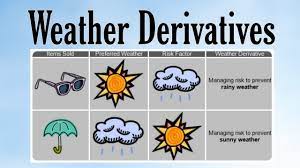
While you’re contemplating the Maui fires and the possibility that they were desired, if not deliberately set, remember that there are now “weather derivatives”. As I’ve mentioned before, weather derivatives are handy things to have around if you also have access to a technology that can manipulate the weather, and even more so if you’re pushing the narrative of climate change.

[…]

M.D. spotted these three articles about weather derivatives and shared them (with our thanks), and I find it extremely odd that they should appear in the same time frame as the Maui fires:

Chicago Mercantile Exchange starts offering rainfall futures and options

A blockchain-based platform for trading weather derivatives

Now, why am I bothering you about the obscure area of weather derivatives trading and options? Beyond the obvious implication of the collateralization of weather effects themselves (imagine: rainfall on your “balance sheet” and you get the horrifying idea), there is a connection to natural disasters that it is time that people start considering seriously: weather derivatives and weather manipulation technologies are the ultimate way for insider trading, for the very obvious reason that most people are unaware of such technologies, nor their enormous potential to capitalize (literally) on weather windfalls and things like “fire sales”.

Many years ago, Catherine Austin Fitts mentioned her astonishment one year at the sudden – and inexplicable – sell-off of Indonesian bonds. But then everything became clear after the sell-off when the Indonesian tsunami of 2004 occurred. The sell-off occurred before the tsunami, indicating that the sellers had the ability to predict the tsunami, and what better way to predict a tsunami than to create one?

So with that in mind, one wonders: what were the weather futures and trades for Hawaii this month? for June and July? Who traded them? Who made money from weather derivatives involving Hawaii during this period?  The same questions not only might be asked of the Maui fire, but also of the Canadian, Australian, and California fires; and these questions not only might be asked of them, but they must be asked.

Will there be a pattern that emerges once one does ask these questions?

I simply don’t know.

What I do know is that, if there is a pattern of consistent winners and losers in such fires that is exhibited in weather derivatives, then it is all but certain the events themselves were deliberately coordinated.

I’ll go further: we need, from now forward, to query every natural disaster – floods, tornadoes, derechos, draughts, earthquakes – in this fashion: who were the pre- and post-disaster winners and losers? What were the weather derivatives trading? This will goa long way to determine if we are dealing merely with exploited crises of opportunity, or deliberately engineered ones.

[…]

Via https://gizadeathstar.com/2023/08/weather-derivatives-strike-again/

Taliban’s Massively Successful Opium Eradication Raises Serious Questions about US Drug Policy

Alan Macleod

The Taliban government in Afghanistan – the nation that until recently produced 90% of the world’s heroin – has drastically reduced opium cultivation across the country. Western sources estimate an up to 99% reduction in some provinces. This raises serious questions about the seriousness of U.S. drug eradication efforts in the country over the past 20 years. And, as global heroin supplies dry up, experts tell MintPress News that they fear this could spark the growing use of fentanyl – a drug dozens of times stronger than heroin that already kills more than 100,000 Americans yearly.

THE TALIBAN DOES WHAT THE US DID NOT

It has already been called “the most successful counter-narcotics effort in human history.” Armed with little more than sticks, teams of counter-narcotics brigades travel the country, cutting down Afghanistan’s poppy fields.

In April of last year, the ruling Taliban government announced the prohibition of poppy farming, citing both their strong religious beliefs and the extremely harmful social costs that heroin and other opioids – derived from the sap of the poppy plant – have wrought across Afghanistan.

It has not been all bluster. New research from geospatial data company Alcis suggests that poppy production has already plummeted by around 80% since last year. Indeed, satellite imagery shows that in Helmand Province, the area that produces more than half of the crop, poppy production has dropped by a staggering 99%. Just 12 months ago, poppy fields were dominant. But Alcis estimates that there are now less than 1,000 hectares of poppy growing in Helmand.

Instead, farmers are planting wheat, helping stave off the worst of a famine that U.S. sanctions helped create. Afghanistan is still in a perilous state, however, with the United Nations warning that six million people are close to starvation.

Data from Alcis shows that a majority of Afghan farmers switched from growing poppy to wheat in a single year

The Taliban waited until 2022 to impose the long-awaited ban in order not to interfere with the growing season. Doing so would have provoked unrest among the rural population by eradicating a crop that farmers had spent months growing. Between 2020 and late 2022, the price of opium in local markets rose by as much as 700%. Yet given the Taliban’s insistence – and their efficiency at eradication – few have been tempted to plant poppies.

The poppy ban has been matched by a similar campaign against the methamphetamine industry, with the government targeting the ephedra crop and shutting down ephedrine labs across the country.

A LOOMING CATASTROPHE

Afghanistan produces almost 90% of the world’s heroin. Therefore, the eradication of the opium crop will have profound worldwide consequences on drug use. Experts MintPress spoke to warned that a dearth of heroin would likely produce a huge spike in the use of synthetic opioids such as fentanyl, a drug the Center for Disease Control estimates is 50 times stronger and is responsible for taking the lives of more than 100,000 Americans each year.

“It is important to consider past periods of heroin shortages and the impact these have had on the European drug market,” the European Monitoring Center for Drugs and Drug Addiction (EMCDDA) told MintPress, adding:

Experience in the E.U. with previous periods of reduced heroin supply suggests that this can lead to changes in patterns of drug supply and use. This can include further an increase in rates of polysubstance use among heroin users. Additional risks to existing users may be posed by the substitution of heroin with more harmful synthetic opioids, including fentanyl and its derivatives and new potent benzimidazole opioids.”

In other words, if heroin is no longer available, users will switch to far deadlier synthetic forms of the drug. A 2022 United Nations report came to a similar conclusion, noting that the crackdown on heroin production could lead to the “replacement of heroin or opium by other substances…such as fentanyl and its analogs.”

“It does have that danger in the macro sense, that if you take all that heroin off the market, people are going to go to other products,” Matthew Hoh told MintPress. Hoh is a former State Department official who resigned from his post in Zabul Province, Afghanistan, in 2009. “But the response should not be reinvade Afghanistan, reoccupy it and put the drug lords back in power, which is basically what people are implying when they bemoan the consequence of the Taliban stopping the drug trade,” Hoh added; “Most of the people who are speaking this way and worrying out loud about it are people who want to find a reason for the U.S. to go and affect regime change in Afghanistan.”

There certainly has been plenty of hand-wringing from American sources. “Foreign Policy,” wrote about “how the Taliban’s ‘war on drugs’ could backfire;” U.S. government-funded “Radio Free Europe/Radio Liberty” claimed that the Taliban were turning a “blind eye to opium production,” despite the official ban. And the United States Institute of Peace, an institution created by Congress that is “dedicated to the proposition that a world without violent conflict is possible,” stated emphatically that “the Taliban’s successful opium ban is bad for Afghans and the world”.

This looming catastrophe, however, will not hit immediately. Significant stockpiles of drugs along trafficking routes still exist. As the EMCDDA told MintPress:

It can take over 12 months before the opium harvest appears on the European retail drug market as heroin – and so it is too early to predict, at this stage, the future impact of the cultivation ban on heroin availability in Europe. Nonetheless, if the ban on opium cultivation is enforced and sustained, it could have a significant impact on heroin availability in Europe during 2024 or 2025.”

Yet there is little indication that the Taliban are anything but serious about eradicating the crop, indicating that a heroin crunch is indeed coming.

A similar attempt by the Taliban to eliminate the drug occurred in 2000, the last full year that they were in power. It was extraordinarily successful, with opium reduction dropping from 4,600 tons to just 185 tons. At that time, it took around 18 months for the consequences to be felt in the West. In the United Kingdom, average heroin purity fell from 55% to 34%, while in the Baltic States of Estonia, Latvia and Lithuania, heroin was largely replaced by fentanyl. However, as soon as the United States invaded in 2001, poppy cultivation shot back up to previous levels and the supply chain recommenced.

US COMPLICITY IN THE AFGHAN DRUG TRADE

The Taliban’s successful campaign to eradicate drug production has cast a shadow of doubt over the effectiveness of American-led endeavors to achieve the same outcome. “It prompts the question, ‘What were we actually accomplishing there?!’” remarked Hoh, underscoring:

This undermines one of the fundamental premises behind the wars: the alleged association between the Taliban and the drug trade – a concept of a narco-terror nexus. However, this notion was fallacious. The reality was that Afghanistan was responsible for a staggering 80-90% of the world’s illicit opiate supply. The primary controllers of this trade were the Afghan government and military, entities we upheld in power.”

Hoh clarified that he never personally witnessed or received any reports of direct involvement by U.S. troops or officials in narcotics trafficking. Instead, he contended that there existed a “conscious and deliberate turning away from the unfolding events” during his tenure in Afghanistan.’

Afghanistan poppy
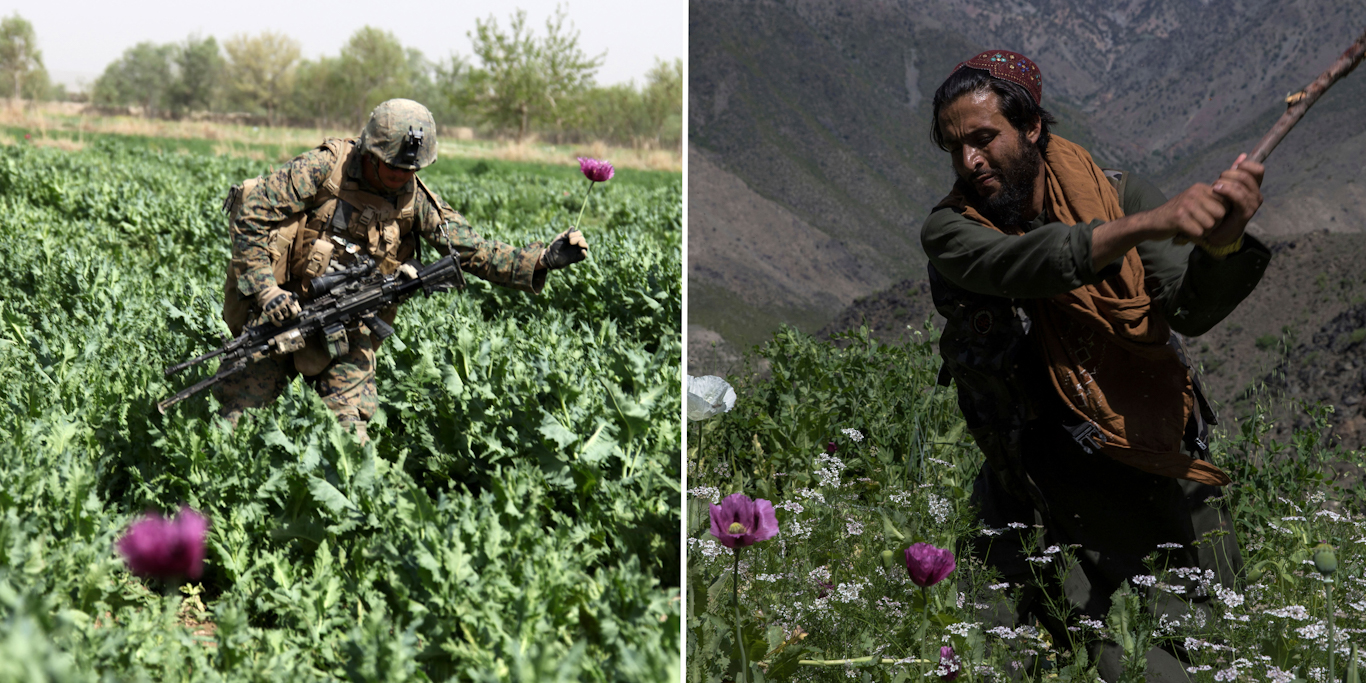
Left, a U.S. Marine picks a flower as he guards a poppy field in 2012 in Helmand Provine. Photo | DVIDS. Right, A man breaks poppy stalks as part of a 2023 campaign to target illegal drugs in Afghanistan. Oriane Zerah | AP

Suzanna Reiss, an academic at the University of Hawaii at Manoa and the author of “We Sell Drugs: The Alchemy of U.S. Empire,” demonstrated an even more cynical perspective on American counter-narcotics endeavors as she conveyed to MintPress:

The U.S. has never really been focused on reducing the drug trade in Afghanistan (or elsewhere for that matter). All the lofty rhetoric aside, the U.S. has been happy to work with drug traffickers if the move would advance certain geopolitical interests (and indeed, did so, or at least turned a knowingly blind eye, when groups like the Northern Alliance relied on drugs to fund their political movement against the regime.).”

Afghanistan’s transformation into a preeminent narco-state owes a significant debt to Washington’s actions. Poppy cultivation in the 1970s was relatively limited. However, the tide changed in 1979 with the inception of Operation Cyclone, a massive infusion of funds to Afghan Mujahideen factions aimed at exhausting the Soviet military and terminating its presence in Afghanistan. The U.S. directed billions toward the insurgents, yet their financial needs persisted. Consequently, the Mujahideen delved into the illicit drug trade. By the culmination of Operation Cyclone, Afghanistan’s opium production had soared twentyfold. Professor Alfred McCoy, acclaimed author of “The Politics of Heroin: CIA Complicity in the Global Drug Trade,” shared with MintPress that approximately 75% of the planet’s illegal opium output was now sourced from Afghanistan, a substantial portion of the proceeds funneling to U.S.-backed rebel factions.

UNRAVELING THE OPIOID CRISIS: AN IMPENDING DISASTER

The opioid crisis is the worst addiction epidemic in U.S. history. Earlier this year, Department of Homeland Security Secretary Alejandro Mayorkas described the American fentanyl problem as “the single greatest challenge we face as a country.” Nearly 110,000 Americans died from drug overdoses in 2021, fentanyl being by far the leading cause. Between 2015 and 2021, the National Institute of Health recorded a nearly 7.5-fold increase in overdose deaths. Medical journal The Lancet predicts that 1.2 million Americans will die from opioid overdoses by 2029.

U.S. officials blame Mexican cartels for smuggling the synthetic painkiller across the southern border and China for producing the chemicals necessary to make the drug.

White Americans are more likely to misuse these types of drugs than other races. Adults aged 35-44 experience the highest rates of deaths, although deaths among younger people are surging. Rural America has been particularly hard hit; a 2017 study by the National Farmers Union and the American Farm Bureau Federation found that 74% of farmers have been directly impacted by the opioid epidemic. West Virginia and Tennessee are the states most badly hit.

[…]

Via https://uprootedpalestinians.wordpress.com/2023/08/27/talibans-massively-successful-opium-eradication-raises-questions-about-what-us-was-doing-all-along/

How to Reverse Alzheimer’s Disease

Progression of Alzheimer's disease on blue background 448451 Vector Art at Vecteezy

Story at-a-glance

  • In 2014, Dr. Dale Bredesen published a paper demonstrating healthy lifestyle choices could reverse Alzheimer’s in 9 out of 10 patients. His team is now launching a new randomized, controlled trial at six sites. Biological aging, brain aging and epigenetics will be included in this trial, using newer blood tests that weren’t available even a few years ago
  • The glial fibrillary acidic protein (GFAP) test can be a valuable tool. This test basically looks at brain changes associated with astrocytosis. Astrocytes respond when there’s a problem in the brain, so it can give you a heads-up that something is afoot up to 10 years before symptoms set in
  • Supporting energy production and reducing inflammation in the brain are the two most important factors to prevent and treat Alzheimer’s
  • The entire family of herpes viruses is associated with changes in the brain and neurons. Left untreated, chronic infections put your innate immune system into overdrive. Alzheimer’s is an innate immune system mismatch with the adaptive system. You’re not clearing the pathogen, so you’ve got a continued onslaught of cytokines causing damage in your brain
  • Valuable adjuncts that can help improve mitochondrial energy production include methylene blue, niacinamide and glycine

In this video, I interview repeat guest Dr. Dale Bredesen, a neurologist specializing in the treatment of Alzheimer’s. In 2014, he published a paper1 demonstrating the power of lifestyle choices for the prevention and treatment of this tragic condition. By leveraging 36 healthy lifestyle parameters, he was able to reverse Alzheimer’s in 9 out of 10 patients.

This included the use of exercise, ketogenic diet, optimizing vitamin D and other hormones, increasing sleep, meditation, detoxification and eliminating gluten and processed foods. It’s been several years since we spoke last, so he’s got quite a few updates to share.

Randomized Trial Launch

For starters, his team has published another proof-of-concept paper and are now launching a randomized, controlled trial at six sites: Hollywood, Florida; Nashville, Tennessee; Cleveland, Ohio; and Sacramento, Oakland and San Francisco in California.

[…]

Where There’s Smoke There’s Fire

According to conventional thought, elevated tau and beta-amyloid are causative factors in Alzheimer’s, but Bredesen’s research suggests otherwise. He explains:

“This is a little bit like saying, ‘There’s some smoke there. If we just blow away the smoke, then the house is not going to burn down.’ It makes no sense. The key thing to know is that [tau and beta-amyloid] are responses and mediators. You’ve talked a lot about mitochondrial function, which is absolutely critical in this disease, but we know of many upstream contributors, and that’s another update.

[…]

Two Key Causative Factors That Must Be Addressed

According to Bredesen, supporting energy and reducing inflammation in the brain are the two most important factors to prevent and treat Alzheimer’s. Basics that all of Bredesen’s patients implement include:

Dietary intervention — Bredesen recommends a plant-rich, mildly ketogenic diet, with a good omega-3 to omega-6 ratio, no dairy, no grains and no simple carbs. “That’s the approach that has worked the best,” he says. “We call that KetoFLEX 12/3.” Nutrition for Longevity now offers meal kits for the KetoFLEX 12/3 diet at KetoFlex123.com, to make it easier to follow.

In the interview, I counter some of Bredesen’s dietary recommendations, as he still recommends polyunsaturated fats (PUFAs).

I’m convinced all omega-6 PUFAs need to be kept low, below 2% or even 1% of daily calories, for optimal health, and I strongly suspect people with dementia need to be even more cautious, as the PUFA linoleic acid (LA) appears to be the biggest dietary source of all the drivers of Alzheimer’s, including inflammation, oxidative stress, mitochondrial dysfunction and dysfunction in electron transport chain such that you cannot efficiently produce ATP.

I’ve written extensively on the ins and outs of this, so for more information, listen to the interview and/or review “Linoleic Acid — The Most Destructive Ingredient in Your Diet.”

I’m also not convinced that the omega-3 to omega-6 ratio is as helpful as commonly suggested since you cannot counter the damage caused by omega-6 fats simply by taking more omega-3. On top of that, most omega-3 supplements, primarily fish oil, are worthless because they’re synthetic and rancid to boot, so making sure you’re getting high-quality omega-3 is an essential factor.

Exercise — Bredesen is seeing particularly good results with KAATSU (blood flow restriction training) and exercise with oxygen therapy (EWOT).
Sleep optimization — Sleep apnea is a common problem that unquestionably contributes to cognitive decline, as it reduces oxygen to your brain and raises adrenaline while you’re sleeping.

“Sleep is a huge area in and of itself,” Bredesen says. “Patient zero, the first person we treated back in 2012 who reversed her cognitive decline beautifully, she’s now over a decade in on this, doing great continually. She’s now in her late 70s.

One of her issues was poor sleep and, of course, one of the things that was addressed. Getting at least an hour of deep sleep and at least an hour and a half of REM sleep is very helpful … Poor sleep gives you more amyloid. It’s just a marker, but it’s a marker of things that aren’t so good, and unfortunately, amyloid then gives you poorer sleep.”

Stress reduction
Brain training
Detox
Targeted supplements

The other part of Bredesen’s program is customized to each patient. Many have undiagnosed chronic infections, for example, that need to be addressed. Common ones include P. gingivalis and T. denticola, which work their way into your brain from your oral microbiome, herpes simplex and human betaherpesvirus 6A (HHV-6A).

The entire family of herpes viruses is associated with changes in the brain and neurons. HHV-6A in particular is associated with the brain degeneration seen in Alzheimer’s. Chlamydia pneumoniae is also highly troublesome, as are all tick-borne infections, including Borrelia, Bartonella, Babesia and Anaplasma.

All these infections put your innate immune system into overdrive and need to be quenched. As noted by Bredesen, COVID-19 and Alzheimer’s are “both innate immune system mismatches with the adaptive system.” You’re not clearing the pathogen, so you’ve got this continued onslaught of cytokines. In the case of COVID, you die from the acute cytokine storm, whereas in Alzheimer’s, you die from cytokine drizzle. “It’s a long-term cytokine problem,” Bredesen says.

High-Fructose Corn Syrup Down-Regulates ATP Production

Bredesen also highlights the importance of avoiding fructose. In March 2023, Dr. Richard Johnson, Bredesen, Dr. David Perlmutter and several other coauthors published a paper2 on Alzheimer’s disease as “a maladaptation of an evolutionary survival pathway mediated by intracerebral fructose and uric acid metabolism.”

[…]

Fruit Versus High-Fructose Corn Syrup

Here too, my current views veer a bit. It’s important to understand there is a world of difference between fructose from fruit and high-fructose corn syrup. I used to recommend limiting both sources, but I’ve recently changed my thinking on this, as fructose from fruit activates pyruvate dehydrogenase, which you need to metabolize glucose from pyruvate to acetal-CoA in your mitochondria. If that enzyme is not activated, the glucose cannot be used for fuel.

The key to this riddle for me was the Randle Cycle, which basically acts as a metabolic switch. Your primary fuels are fats and carbs, and the Randle cycle determines how your cells decide which one to burn. When your diet is more than 30% to 35% fat, this switch shifts to fat metabolism, so that you’re burning fat in your mitochondria rather than glucose. The glucose instead gets shuttled into glycolysis and any excess goes out into your blood.

So, eating a lot of fruit and a lot of fat at the same time is not a good idea. In essence, fructose by itself is not what’s causing the problem. Rather it’s eating too much fructose in combination with too much fat. If you increase your fresh fruit intake, you also need to lower your fat intake, or else the sugar can’t be used for fuel.

Additionally, there are individual variations in metabolic flexibility, toxicity and microbiome that likely contribute to a person’s ability to tolerate increased carbohydrates.

The other point of contention I have is that PUFAs also appear to induce torpor (decreased physiological activity marked by a reduced metabolic rate), much like high-fructose corn syrup does. So, I suspect ripe fruit is not going to be a major contributor to dementia. In a previous interview with Johnson, he also admitted being surprised that fructose from fruit did not have the same effects as high-fructose corn syrup.

p…]

Methylene Blue, Niacinamide and Glycine

One treatment adjunct Bredesen favors is methylene blue, which is something I recommend for just about anyone who wants to improve their health and reverse degenerative disease, primarily because it’s so effective at reducing reductive stress. It facilitates electron transfer forward in the mitochondria, thereby allowing ATP production to occur, even if the complexes are damaged.

Raising NAD+ is also important for energy production. NAD+ is oxidized, not reduced, so it facilitates the transfer of electrons forward in the electron transport chain. While there are expensive precursors out there, my favorite is plain old niacinamide, which is incredibly inexpensive yet raises NAD+ effectively.

Recent research has also confirmed that niacinamide helps slow brain aging. For general health, I recommend taking 50 milligrams of niacinamide three times a day. Niacinamide also works synergistically with methylene blue.

Many dementia patients also have low glutathione levels, especially if they’ve been exposed to mycotoxins or other toxins. I’m not a fan of taking glutathione, because glutathione is reduced, and you need the oxidized form to really make it work.

[…]

Via https://articles.mercola.com/sites/articles/archive/2023/08/27/dale-bredesen-alzheimers.aspx


Can You Reverse Autism and Other Chronic Health Conditions?

Dr Mercola

Story at-a-glance

  • Epidemic Answers, founded by Beth Lambert in 2009, is a research organization focused on helping children with autism and other chronic diseases
  • In her 2010 book, “A Compromised Generation: The Epidemic of Chronic Illness in America’s Children,” Lambert reviewed not only the epidemic of autism but also other childhood epidemics, such as autoimmune diseases, and their environmental root cause
  • Epidemic Answers’ research project, “Documenting Hope,” is analyzing the environmental causes behind chronic conditions and what we can do to reverse them
  • Autism and most other chronic childhood diseases are caused by a constellation of factors that contribute to the total toxic load of modern living

In the featured video, I interview Beth Lambert, who in 2009 founded Epidemic Answers, a research organization focused on helping children with autism and other chronic diseases.

When I graduated medical school, the incidence of autism was 1 in 10,000. For the first decade of my medical practice, I didn’t have a single autistic patient. By the mid- to late-1990s, I was treating hundreds of autistic children in my practice, and since then, autism has reached truly epidemic proportions.

In her 2010 book, “A Compromised Generation: The Epidemic of Chronic Illness in America’s Children,” Lambert reviewed not only the epidemic of autism but also other childhood epidemics, such as autoimmune diseases, and their environmental root causes.

[…]

Studies Underway

Chris D’Adamo, who co-wrote my paper on linoleic acid (LA), published in the journal Nutrients, is the research director for the Epidemic Answer’s research project called “Documenting Hope,” which is looking at the environmental causes of chronic conditions and what we can do to reverse them.

[…]

They’re also working on an intervention study in which they’re doing a deep dive into the health of a small group of children with chronic health conditions to identify the root causes. Each child is then placed on a customized 18-month program to reverse their condition and their progress is documented along the way.

[…]

Lay of the Land

As explained by Lambert, in the 1980s, a movement of parents who suspected their child’s autism was not necessarily genetic and irreversible started gaining traction. Physicians also began asking questions, wondering whether it’s a systemic problem as opposed to just a brain-based one, and started opening to the possibility that it might be reversible.

[…]

Unfortunately, many autism organizations have struggled to gain traction because the only autism treatments that are reimbursed by insurance are applied behavioral analysis (ABA), physical therapy (PT) and occupational therapy (OT).

Putting the Cart Before the Horse

The widely accepted form of treating autism, ABA, basically trains the child into expected or typical behaviors. Oftentimes, however, ABA is putting the proverbial cart before the horse. As explained by Lambert:

“They have brains and bodies that aren’t talking to each other, the communication’s out of whack. That needs to be addressed first.


[…]

The Real Cause of Autism: The Toxic Load of Modern Living

Root causes contributing to the epidemic of chronic diseases in children include (but are not limited to) things like processed food loaded with sugar and harmful fats like linoleic acid, gut dysfunction, childhood vaccines, antibiotic overuse and mold.

But it’s almost never just one of those things, but rather a constellation of contributing factors. Genetics also plays a role. For example, your genes dictate how well your body can detoxify. But contrary to popular belief, genetics are rarely the sole or even primary cause, because genes are epigenetically regulated, meaning they’re influenced and modified by the environment.

[…]

Multipronged Treatment Approach Is Required

Epidemic Answers is the only group currently conducting research to identify root causes and how to reverse chronic childhood diseases, and preliminary data confirm that the more stressors a child has, the worse their health outcomes.

They’re also one of the few groups looking at the impact of multiple interventions at once.

“These kids who have recovered from autism, they never did one thing at a time,” Lambert says. “The parents did everything all at once to support that child and get their body what it needed to course correct … You can’t just do one thing.

You have to address diet at the same time you’re addressing sleep, at the same time you’re addressing stooling, at the same time you’re addressing integrating the brain and the body with therapies that help correct those developmental problems that emerge.

By doing all of those things at once, we hypothesize that these kids can get better, that they can drop their diagnoses. That’s why we’re doing the research like this, because people don’t believe it. Anecdotes don’t carry weight.

We need to do the research in order to convince the medical community that this really is the way to go. Kids are developing these conditions because of the way we’re living, so we have to change the way they’re living in order to get them better.”


Basic Nutritional Considerations

I strongly suspect linoleic acid in processed food is a major contributor to ill health, so making sure you’re feeding your child whole food, ideally organic, is key. Sugar is frequently thought to be the primary culprit, but I believe linoleic acid is far more dangerous in the long term than sugar.

Now, that doesn’t mean carbohydrates are unfairly criticized. My first book, published in 2004, was “The No-Grain Diet.” Many autistic children put on a no-grain diet fared quite well. But while grains contain sugar, many also have high linoleic acid content.

Resistant starches can also cause problems, as the fiber, which your body cannot digest, ends up fueling gram-negative bacteria that produce endotoxin in your colon. Endotoxin causes loads of inflammation and increases your serotonin level.

Serotonin is probably another major contributing factor for these kids. Lowering their serotonin levels and increasing GABA, an inhibitory neurotransmitter, would probably be quite helpful.

Other key strategies include spending more time outdoors in natural environments and minimizing your electromagnetic field (EMF) exposure. These things don’t cost anything, and they not only can reduce your child’s risk for autism but also most chronic degenerative diseases.

[…]

Via https://articles.mercola.com/sites/articles/archive/2023/08/27/reversing-chronic-diseases-in-children.aspx

Blade Runners Destroy 90% of Surveillance Cameras in London Suburb

pixlr_20230824125332959

Getty Images / Metropolitan Police / Collage