Unknown's avatar

About stuartbramhall

Retired child and adolescent psychiatrist and American expatriate in New Zealand. In 2002, I made the difficult decision to close my 25-year Seattle practice after 15 years of covert FBI harassment. I describe the unrelenting phone harassment, illegal break-ins and six attempts on my life in my 2010 book The Most Revolutionary Act: Memoir of an American Refugee.

Dawn raids, assaults, imprisonment: how Germany’s government treats good doctors

Germany was subjected to some of the most draconian mask mandate legislation, even though the RKI knew masks don’t work.

World Council for Health

On June 8, 2024, a call regarding ‘Mask Exemption Certificates and House Searches’ was initiated by Dr Walter Weber, head of the doctors’ association Ärzte für Aufklärung. On this call, we received some shocking information: in Germany, there is a ‘blacklist’ of about 200 doctors who issued mask exemptions and as a result are apparently monitored by state security. Around 100 doctors who had issued similar certificates then came forward. Approximately 95% of these doctors experienced unannounced house searches, with one doctor being searched eight times.

These house searches typically took place from 6am and often lasted during office hours for 1-3 hours. In many cases, doors were broken down, and there were reports of inappropriate treatment of those affected. One example is Rolf Kron, who had to endure sitting in his nightgown with an open door for hours in the winter. Physical violence was also a concerning issue: Dr. Woitzel had to undergo a leg amputation due to police violence.

Psychological and physical consequences

These reports of physical assaults are alarming. An eye doctor from Münster suffered hearing loss after a violent incident. Moreover, several female colleagues became seriously ill, and one doctor, Dr. Ströer, was sentenced to two years in prison without parole and died six months later “for no reason”. Dr. Bianca Witzschel has been in pre-trial detention for 1.5 years due to a negative expert report, while a counter-report was rejected by the judge.

The financial implications are also severe.

Many doctors had to ‘buy their freedom’, paying sums of up to 6,000 euros. One colleague reported costs of around 30,000 euros because the waiting room chairs did not meet the required distance. Most doctors affected agree to the anonymized publication of their experiences, underscoring the gravity of the situation.

Smeared, ostracised, silenced

Local press often reported on these doctors, leading to defamation and slander. Families were bullied, including children. The medical profession in Germany, consisting of about 150,000 practicing doctors, has been silenced by this systematic persecution. The 200 or so doctors willing to issue mask exemptions constitutes less than 0.00013% of the total number.

There is no justification for such treatment – but there is plenty of justification for these doctors having issued mask exemptions.

We recently reported on the leaked protocols from Germany’s Robert Koch Institute (RKI), which revealed the extent to which the German people were deceived by their own government during the so-called pandemic. One revelation was that the RKI – the equivalent of the US’ CDC – knew there was no evidence that masks stopped the spread of Coronavirus. Those doctors who issued mask exemptions were both acting in their patients’ best interests and in line with the evidence, as acknowledged by the RKI. The problem is, they weren’t in line with their government and the consequences of this should shock the world.

This is what totalitarian, centralized medicine looks like.

The systematic persecution of doctors who issued mask exemptions highlights a concerning development in German society. The fear of house searches and the resulting consequences have deterred many doctors from helping patients in need. This not only silences the medical profession but also isolates them from society. It is time to question these practices and protect the rights of doctors as well as the needs of patients. Especially taking into account the actual science supporting their decision to be cautious about the inefficacy and even harm created by using masks as a mandatory tool for the management of Covid 19 (Brownstone, 2024).

The World Council for Health is grateful for these 200 brave doctors and all those supporting informed consent and the Hippocratic oath primum non nocere, first do no harm. The WCH calls on the people of Germany to speak up for these doctors and demand that all charges against them are dropped, that they are compensated for the crimes their own government has committed against them, and that they are duly honoured for maintaining their moral and scientific integrity despite devastating consequences.

[…]

Via https://substack.com/home/post/p-149656281

UK’s “Chicken LIcense” Rebellion – the GOOD way to deal with BAD laws

Kit Knightly

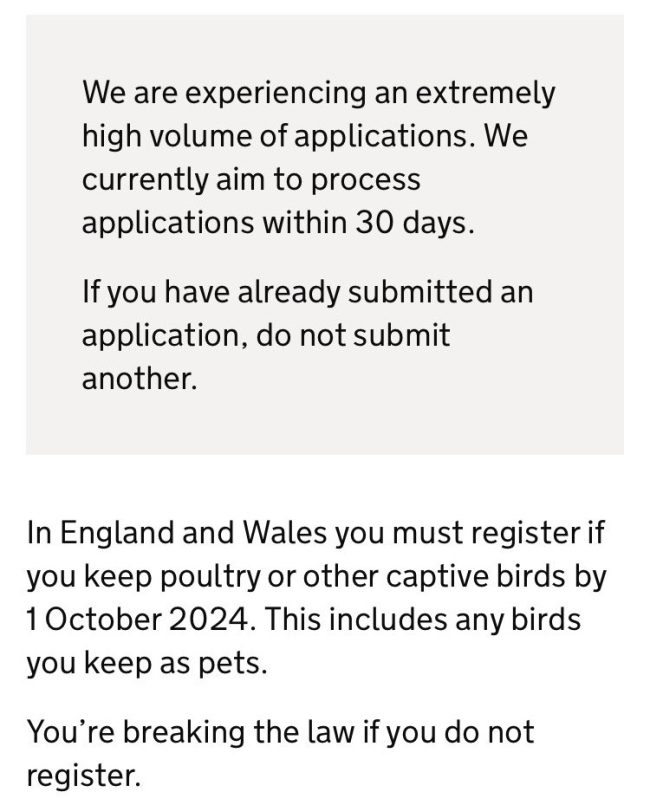
As of today, the UK’s “Chicken License” is in full effect. October 1st marked the deadline for registering your chickens with the proper authority.

Moving forward anyone caught with an unlicensed chicken will be in breach of the law and subject to fines and poultry reclamation.

I am entirely serious.

Back in March the UK govt’s “Department for Environment Food and Rural Affairs” (DEFRA) announced changes to the poultry registration laws, essentially redefining a “flock” from “50 birds or more” to 1.

So, from now on, everybody in the country who keeps even a single bird – not just chickens, all outdoor birds – has to register as a poultry keeper.

You understand, this is all about protecting birds and the public from avian influenza, not at all about increasing government monitoring with the final aim of stamping down on self-sufficiency.

Banish that cynical thought from your head.

Fortunately, the people of the UK have a tried-and-tested method of dealing with absurdity—more absurdity.

In the run-up to the deadline thousands of people took to the DEFRA website to register their “chickens” – frozen, nuggets, unhatched and even rubber:

The result is that the online service strained…

…and then broke:


[…]

Via https://off-guardian.org/2024/10/02/the-uks-chicken-license-rebellion-the-good-way-to-deal-with-bad-laws/


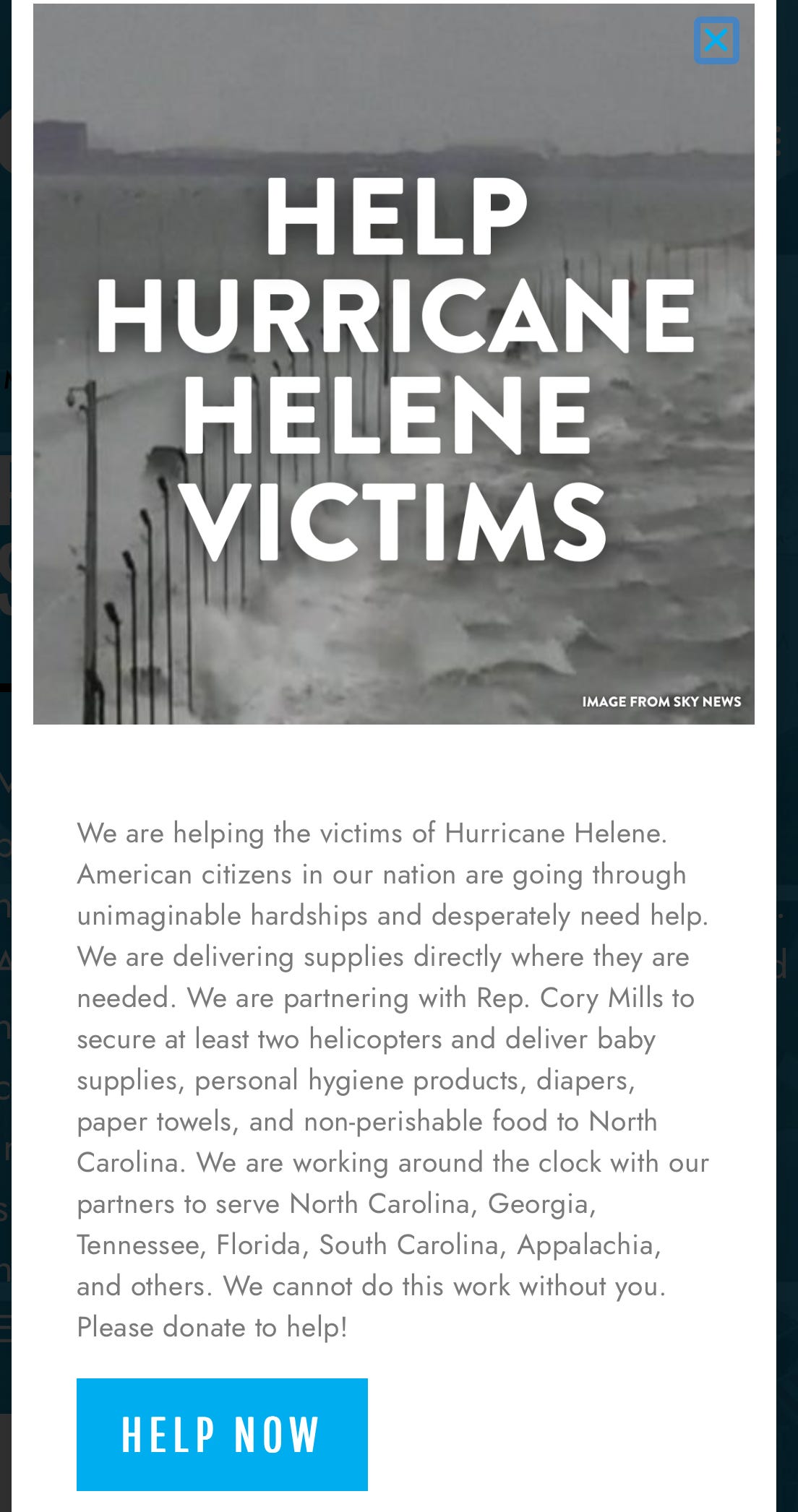
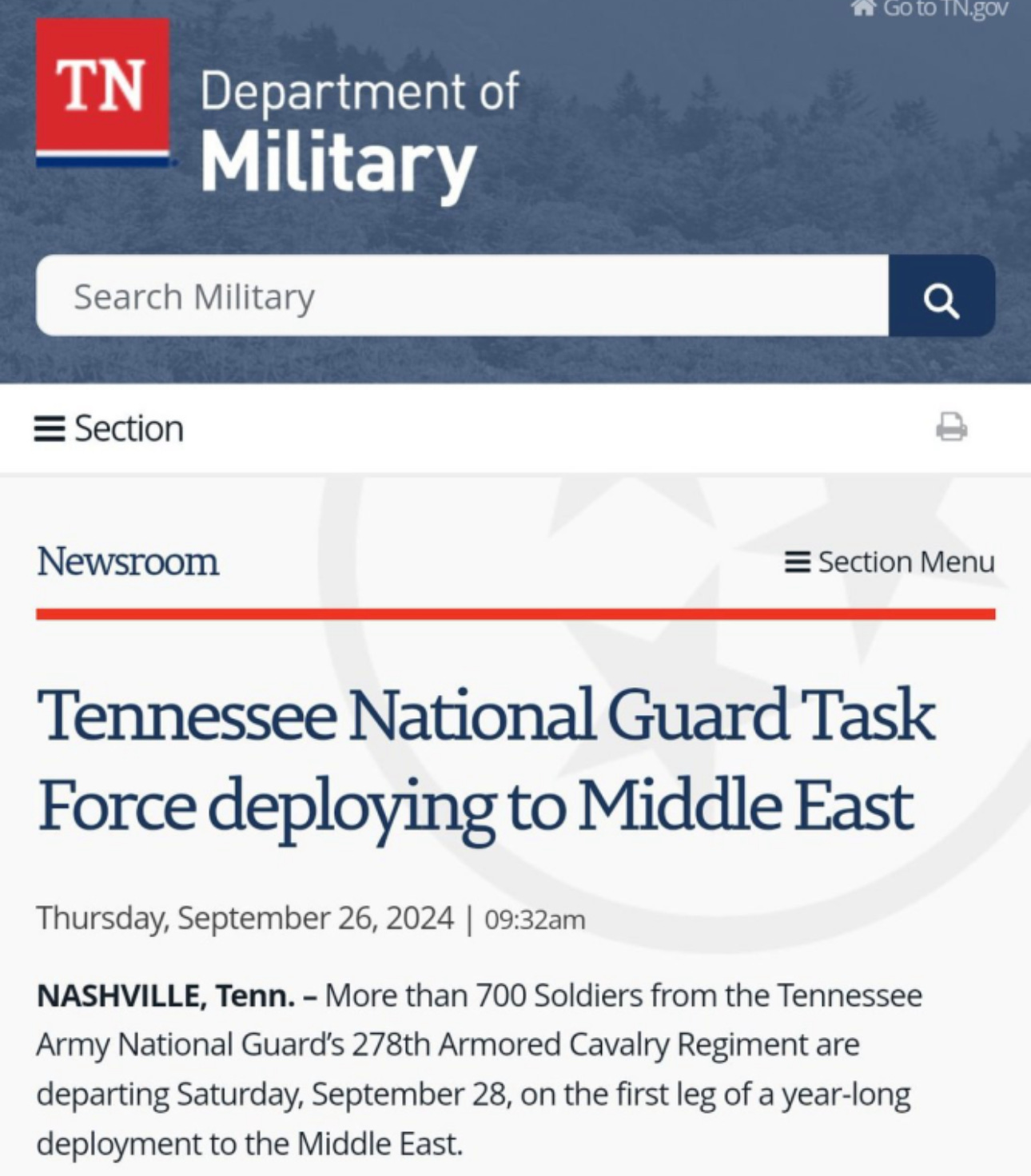
HURRICANE HELENE UPDATE: List of Governors and FEMA Offices NOT Allowing Citizens to Perform Rescue, Tennessee Army National Guard Left for Overseas

Under Threat of Arrest for Helping: Citizens and Advocates. MercuryOne.org is sending Helicopters, Water, as they did for Hawaii Fires (They Know How to Get Past FEMA)

GOVERNORS OFFICES AND FEMA NUMBERS OF THE STATES THAT ARE NOT ALLOWING WE THE PEOPLE TO HELP HURRICANE HELENE VICTIMS<

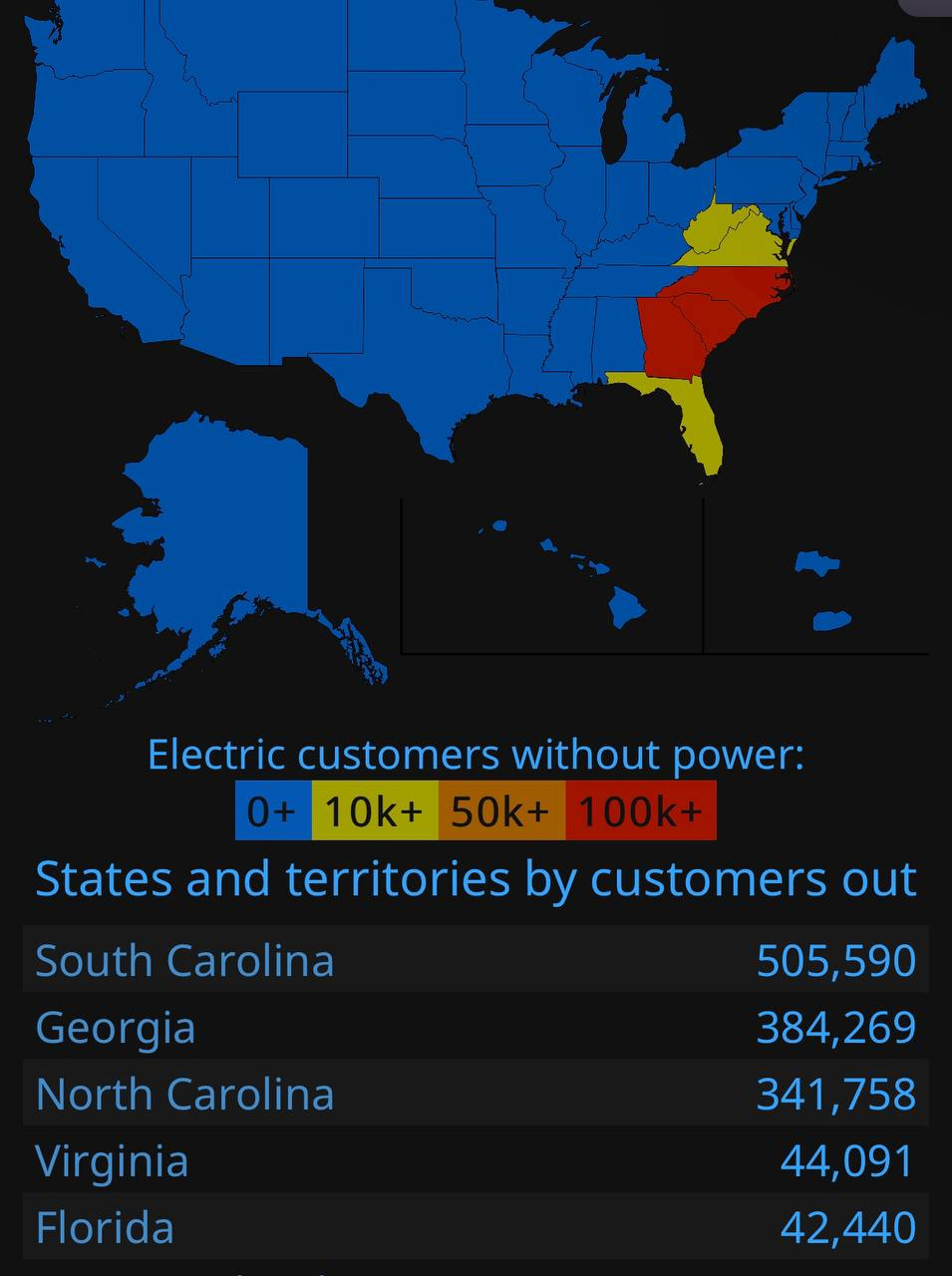
➡️❗️Day 5 and still over 1M without electricity or means of communications in S. Carolina, Georgia, N. Carolina, Virginia and Florida.

Source: https://t.me/patientadvocatebulldog/17267

[…]

N. Carolina, Yesterday

Here’s a Facebook update from a citizen who says that the N. Carolina government is not helping, just yesterday:

Iran Missile Attack: What We Learned Last Night

Alex Krainer

Mindless march to World War 3 may have hit a brick wall yesterday

During the night of 2nd October 2024, Iran unleashed their operation “True Promise 2,” launching between 200 and 400 ballistic missiles into Israel. As the video footage coming from Israel has shown, many of these missiles reached their targets inflicting substantial damage on the ground. Apparently, some offshore gas platforms were also struck. Claims and counterclaims are a bit all over the place at the moment: Israelis have claimed that the Iranian attack failed and that most of the missiles were intercepted. Netanyahu’s aide Hananya Naftali even tweeted a “BRAVO” to Israel’s aerial defence systems for intercepting “nearly all the missiles.”

But the footage from last night gives a very different impression; it corroborates those who claimed that many missiles hit their targets. A few of the videos also confirm that the Iranians do indeed possess hypersonic missiles. We also know now that these have a long range and seem accurate enough. This lesson alone could be a game changer.

Why hypersonic missiles are a game changer

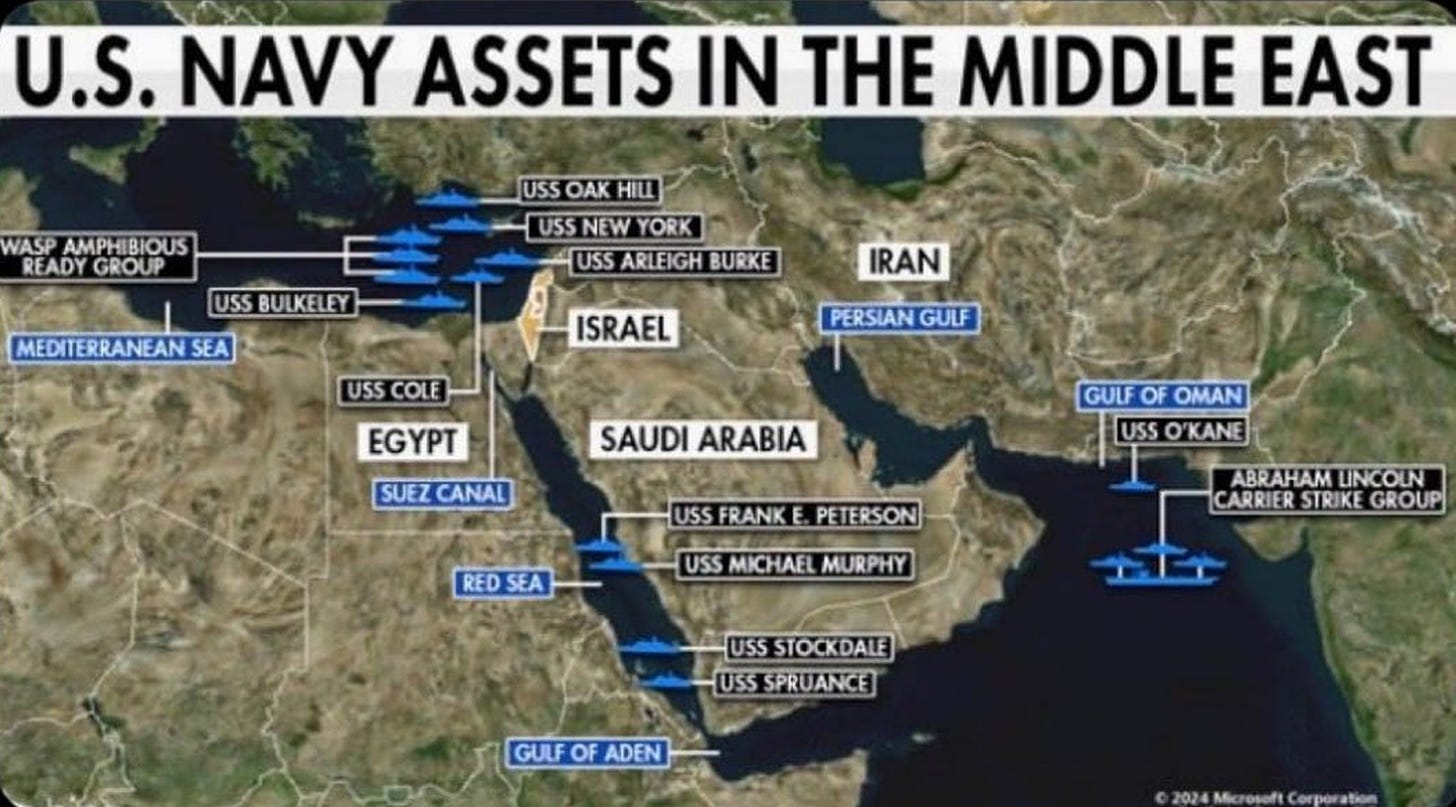
Hypersonic missiles can’t be intercepted. The most advanced Western air defence systems can shoot down incoming projectiles flying at up to mach 3. So far as the Patriot Missiles are concerned, their success rate is very poor even at that. Nothing in Western powers’ arsenal can defend against hypersonic missiles and this certainly got the Pentagon’s attention. The implication is that all US Navy assets and military bases in the Middle East are defenceless, and that Iran has the capability to strike them.

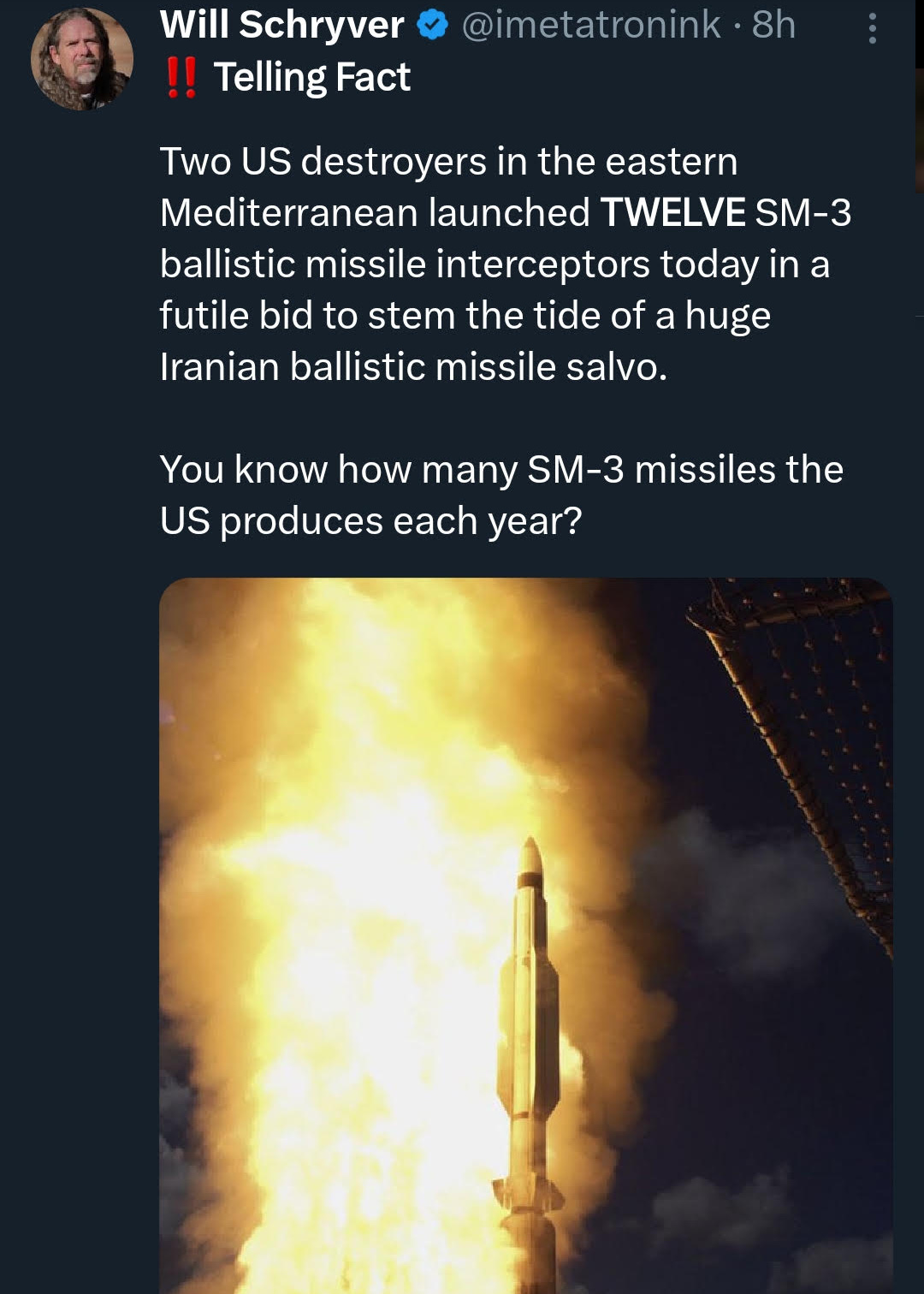
During yesterday’s attack, two U.S. destroyers in the eastern Mediterranean launched twelve SM-3 ballistic missile interceptor rockets, their most advanced air defence system. The problem is that the current production rate of SM-3s is down to zero! Thus, even if SM-3s are effective, Western air defence systems are not for the long haul and will deplete rapidly in case of further escalation. 

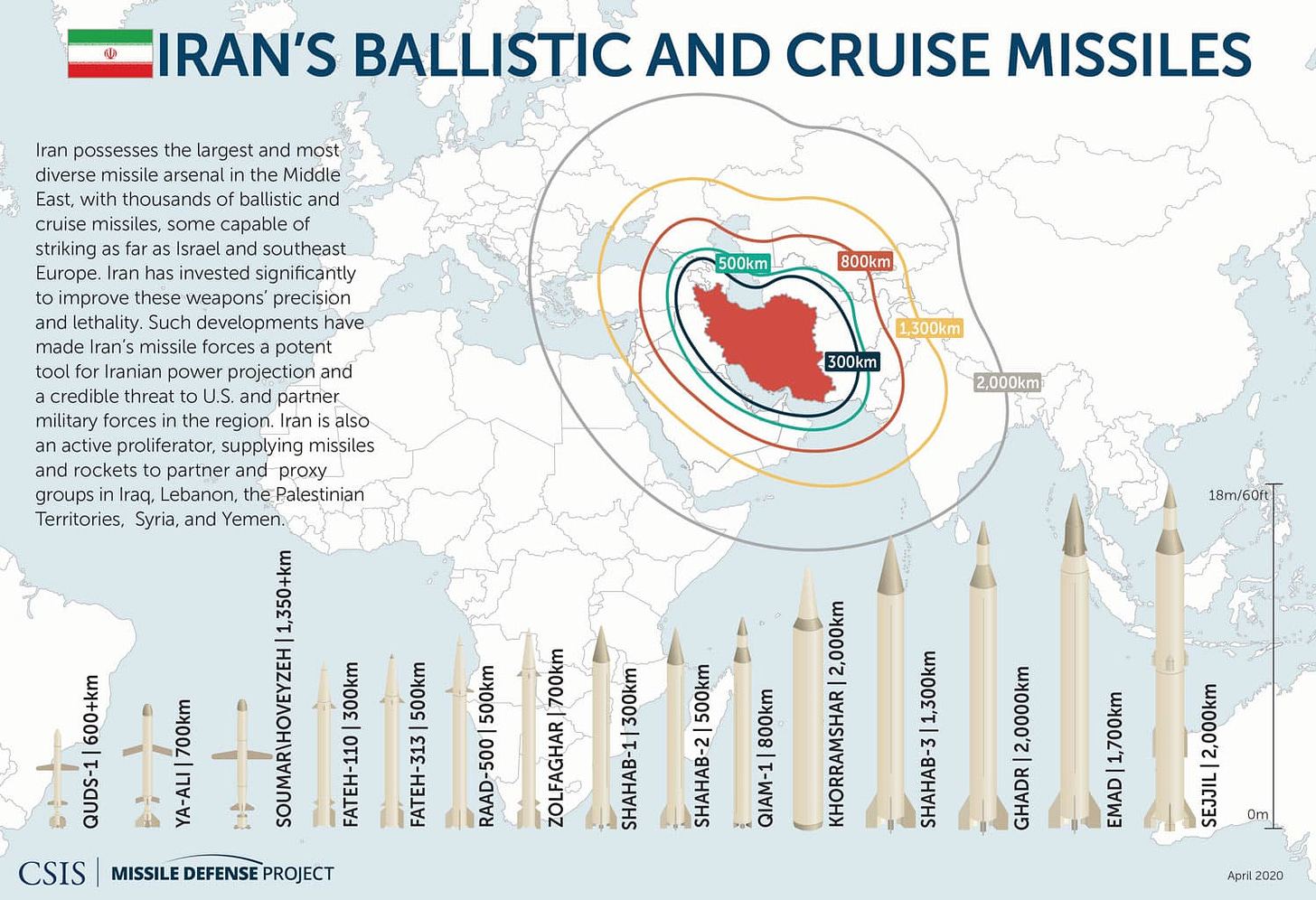
At the same time, Iran has many thousands of missiles ready. Here’s what CSIS says about Irans’ arsenal:

“Iran possesses the largest and most diverse missile arsenal in the Middle East, with thousands of ballistic and cruise missiles, some capable of striking as far as Israel and southeast Europe. For the past decade, Iran has invested significantly to improve these weapons’ precision and lethality. Such developments have made Iran’s missile forces… a credible threat to U.S. and partner military forces in the region.”

Hezbollah can shoot 3,000 missiles a day?

Then there’s Hezbollah. According to a 130-page report titled, “The Most Deadly War of All,” compiled by a group of six Israeli think-tanks and based on three years of research and the opinions of over 100 Israeli defence experts and IDF commanders, war on Hezbollah would be, as the report’s title suggests, the most deadly war of all for Israel. According to the report, Hezbollah would be capable of launching 2,500 to 3,000 missiles per day, a combination of long-range precision guided and unguided rockets.

The barrages would be launched toward specific targets in Israel with the potential of destroying the Iron Dome air-defence capability. IDF’s reserves of Iron Dome and David’s Sling interceptor missiles would likely be depleted within a few days from the start of a full-scale war with Hezbollah, leaving Israel exposed to thousands of missiles and drones launched by Hezbollah. This all could result in thousands of casualties and widespread panic among the settlement populations (already an estimated 200,000 settlers have abandoned their settlements  in the north of Israel since the start of hostilities).

Not to mention, both Iran and Hezbollah have been preparing for this outbreak for over two decades now, and the Iranians now promised a much more painful strike if Israel decides to escalate further. Western powers won’t be able to stem the tsunami that Netanyahu is working to unleash, any more than the Operation Prosperity Guardian in the Red Sea has been able to restrain the Ansarallah in Yemen.  But therein lies the good news, I think.

The good news, inshallah!

Certain political factions in Israel and in the West have been working overtime to provoke a major war and draw in both Iran and the United States. Some of the pro-Israel voices are utterly rapturous about the prospect; the things they say sound utterly deranged and surreal. It’s as though they convinced themselves that Israel is somehow endowed with superpowers and that it can instantly turn anyone they wish into a smoldering heap of ashes. They also seem to think that by killing Hassan Nasrallah, Israel eliminated Hezbollah. They ignore the fact that Hezbollah is a very extensive military and political organization. If the Israelis bombed the Vatican tomorrow and killed the pope, that wouldn’t be the end of Catholic Church.

Indeed, very childish and dangerous delusions gripped the most fanatical cohort of Israel supporters and saner heads must by now be aware of the extremely reckless adventure they’re dragging us all into. If a wider war erupts, all of US, UK and NATO assets in the Middle East are sitting ducks and will be destroyed or expelled from the region.

Furthermore, an interruption of crude oil traffic from the Persian Gulf would inflict a devastating blow to G7 economies at a time when they least need it. In addition, all of this could be hitting the proverbial fan just ahead of the elections, and they haven’t even managed to assassinate Trump yet! It is all reckless in the extreme; the odds of victory (which is yet to be defined) are slim to none, while a cataclysmic failure is nearly certain.

I may be succumbing to wishful thinking myself, but I believe that we will shortly see leaders in the West pull hard on the handbrake and effect the quickest 180 degree turn yet! In the end, perhaps they will arrive at the calculation that sacrificing Benjamin Netanyahu and allowing Israel a break so they can sober up and reassess their predicament is a much better deal than following the unhinged fanatics and committing a collective suicide. We’ll know soon enough. Who knows, maybe we can avoid World War 3.

[…]

Via https://alexkrainer.substack.com/p/iran-missile-attack-what-we-learned

How Microplastics Affect Your Reproductive Health

how microplastics can affect reproductive health

Dr Mercola

Story at-a-glance

  • Microplastics are accumulating in human reproductive organs, contributing to declining fertility rates worldwide. Studies show microplastics have been found in male testes and female ovaries, affecting sperm and follicle health
  • Plastics contain xenoestrogens like phthalates and bisphenol A, which can disrupt the endocrine system. These compounds mimic estrogen, leading to estrogen dominance and reproductive issues in both men and women
  • Microplastics have been found in human placentas, raising concerns about potential impacts on fetal development and pregnancy outcomes
  • To reduce microplastic exposure, I recommend filtering tap water, choosing alternative packaging materials, using natural fiber clothing, and avoiding plastic food containers, especially when microwaving
  • Progesterone supplementation helps counteract estrogen excess from plastic exposure. An in-depth explanation for proper administration is provided below

The challenge of disposing plastics is a growing concern today. Our overreliance on this manmade material is causing major environmental problems. When disposed improperly, plastic breaks down and makes its way into our own bodies in the form of microplastics.

A 2022 report published in Environment International1 noted that microplastics had been detected in human blood for the first time. By April 2022, it was discovered “lodged deep in the lungs of living people.”2

Now, research highlights more places where microplastics accumulate within our bodies — the reproductive organs, and this may be contributing to the decline of fertility rates. According to the Institute for Health Metrics and Evaluation (IHME), 76% of countries and territories around the world will have unsustainable fertility rates by 2050. This means that populations will shrink.3

Microplastics Can Affect Male Fertility

In Dr. Kevin Pho’s podcast,4 Dr. Oluyemisi Famuyiwa, founder of the Montgomery Fertility Center in Rockville, Maryland, discusses how microplastics contribute to the declining fertility rates observed all over the world.5 From Famuyiwa’s research and medical practice, she noticed a steady decline in semen quality, and that men nowadays are less fertile than their grandfathers. Again, she suggests that microplastics may be the culprit.6

Famuyiwa’s viewpoint is supported by other research, too. In a study published in Frontiers in Endocrinology, the researchers hypothesized:7

“It is noteworthy that an exponential rise in global plastic production coincides with a well-documented, population-wide decline in human sperm production which appears to be accelerating since 2000.”


Going deeper into their research, the authors noted that microplastic exposure contributes to lower sperm quantity and quality. They cited animal test models, which discovered that microplastics accumulated within the testes. From there, they noted that microplastics caused “localized stress and mitochondrial dysfunction, and over-expression of proinflammatory cytokines in the testis.” Other reproductive issues were also observed, such as reduced testosterone.8

It seems that these findings are also present in human males (and dogs as well). Famuyiwa cited a 2024 study9 published in Toxicological Sciences,10 which investigated the prevalence of microplastics in male reproductive organs.

From a total of 47 canine and 23 human male participants, they discovered 12 types of microplastics in all testes. The mean total amount of microplastics was 122.63 micrograms per gram in dogs, and 328.44 micrograms per gram in humans. Polyethylene was the most prevalent microplastic type. They went on to conclude:

“These findings highlight the pervasive presence of microplastics in the male reproductive system in both canine and human testes, with potential consequences on male fertility.”11

Female Fertility Isn’t Spared by Microplastics

Unsurprisingly, microplastics can affect adult female fertility as well. According to collated research from animal test models in the Frontiers in Endocrinology study,12 microplastics that accumulate in the ovaries can lead to pregnancy-related issues:

“Ovaries of these exposed rodents have reduced weight, decreased expression of cytoskeletal proteins, and demonstrate altered follicle dynamics, with a reduction in the number of growing and mature follicles and increased atretic and cystic follicles.”13

For context, follicles play a crucial role in influencing fertility. According to the London Women’s Clinic, follicles are small, fluid-filled sacs inside the ovaries that secrete hormones that control the menstrual cycle. Hundreds of thousands of follicles are found in the ovaries, and this number starts to decline by the age of 35. Each follicle typically releases an egg.14

The Frontiers in Endocrinology study15 noted that accumulated microplastics in ovaries resulted in oxidative stress as well as disturbed antioxidant capacity. Proinflammatory signaling was also observed.

Another research group found microplastics in the placenta.16 Considered a landmark study by Famuyiwa,17 research published in Environment International18 noted that it’s possible for microplastics to end up in the placenta, potentially affecting the future health of the fetus.

The researchers collected six human placentas from consenting mothers and used Raman Microspectroscopy (a special method to assess chemical compositions of live organisms19) to evaluate the prevalence of microplastics.

Microplastics were found in all parts of the placenta, including the fetal, maternal, and chorioamniotic membrane sections. While the effects haven’t been fully explored yet, the researchers concluded that the presence of microplastics can negatively affect pregnancy and the outcome of childbirth:20

“Potentially, MPs (microplastics), and in general microparticles, may alter several cellular regulating pathways in placenta, such as immunity mechanisms during pregnancy, growth-factor signaling during and after implantation, functions of atypical chemokine receptors governing maternal-fetal communication, signaling between the embryo and the uterus, and trafficking of uterine dendritic cells, natural killer cells, T cells and macrophages during normal pregnancy.

All these effects may lead to adverse pregnancy outcomes including preeclampsia and fetal growth restriction.”


Xenoestrogens in Plastics — The Source of Infertility?

There’s also another important point brought up in the Environment International study I would like to emphasize — the presence of endocrine-disrupting compounds in microplastics. The researchers noted that these endocrine disruptors “could cause long-term effects on human health.”21 And as you can imagine, one affected area is fertility.

Microplastics often contain phthalates, which can leach out of the material22 causing endocrine-disrupting effects. What’s more, phthalates are not the only endocrine-disrupting substance present in microplastics. Others include bisphenol A (BPA), flame retardants, pesticides and per- and polyfluoroalkyl chemicals (PFAS), so-called “forever chemicals.”23

This hypothesis is further supported in an evidence review conducted for California State Legislature in 2023,24 which noted that “exposure to microplastics is suspected to adversely impact sperm quality and testicular health in humans based on … high quality of the body of evidence.”

Another point I would like to emphasize is that plastics are xenoestrogens that can mimic the effects of estrogen in the body. Most of their danger stems from the stimulation of your estrogen receptors. Phthalates, for example, have estrogenic properties, and have been implicated in other diseases as well. As noted in a study25 published in Healthcare:

“Human epidemiological studies have shown a significant association between phthalates exposures and adverse reproductive outcomes in both women and men, for instance, Type 2 diabetes and insulin resistance, overweight/obesity, allergy and asthma.”26

The reason for this is the abnormal stimulation of estrogen receptors, which promotes cell proliferation and can contribute to the development and progression of estrogen-sensitive cancers, such as breast cancer27 and endometrial cancer.28

How to Reduce Your Exposure to Microplastics

Preventing, or at the very least minimizing, your exposure to microplastics is your first line of defense against estrogen overload. While that’s easy to say, it will require effort to implement, considering plastics are all around you — in your food, water, clothing, home, personal care items and even in household dust.

Educating yourself about different plastic sources and being conscious of them can go a long way to protecting you and your family’s health. Here are practical strategies to get you started:

Filter your tap water and avoid water bottled in plastic — If you need to buy bottled water, opt for glass bottles. Also make sure the filter you use to purify your tap water can filter out microplastics.

Boil hard tap water — If you have hard tap water, consider boiling it before using it for cooking or drinking, as hard water traps more microplastics. Recent research shows boiling hard tap water for five minutes removes up to 90% of the microplastics in the water.

Avoid plastic packaging — Opt for products packaged in glass, metal, or paper instead of plastic. This can significantly reduce the amount of plastic waste that potentially breaks down into microplastics. At home, use wax paper, parchment paper or paper bags to store foods rather than plastic wrap.

Use reusable containers — Replace single-use plastic bottles, cups, and containers with reusable alternatives made from safer materials like stainless steel or glass.

Never microwave plastics — Heat can cause plastics to leach chemicals into food. Use glass or ceramic containers for microwaving.

Avoid plastic cutting boards — Use a wooden or glass cutting board instead.

Opt for natural fibers — Whenever possible, choose clothing and other textile products made from natural fibers like cotton, wool and linen, as synthetic fabrics such as polyester shed microfibers and leach xenoestrogens.

Wash synthetic clothes less frequently — When washing synthetic textiles, use a microfiber filter in your washing machine to trap synthetic fibers and prevent them from entering the water system.

Opt for food grade cosmetics and personal care products — Some cosmetics, toothpastes, and personal care products contain microbeads or other plastic particles. Look for products free of these materials. Ideally, opt for all-natural, food grade products.

In addition to these strategies, there are other ways you can reduce your exposure to microplastics. For example, you can bring reusable shopping bags when buying groceries and bring your own glass containers when taking home leftovers. Avoid processed food as well, as they’re typically wrapped or sealed in plastic. Choose fresh, whole produce instead.

In cases of estrogen dominance, supplemental progesterone can be helpful. Progesterone is a natural estrogen antagonist and will counteract the adverse effects of excess estrogen.

[…]

Via https://articles.mercola.com/sites/articles/archive/2024/10/03/how-microplastics-can-affect-reproductive-health.aspx

Israel: Total Failure of US Patriot Missile System to Intercept Russian and Iranian Hypersonic Missiles

US Patriot Anti-Air Missile System only works against slow, obsolete missiles.

[…]

Via https://agrdailynews.com/2024/10/02/after-total-failure-of-the-us-patriot-system-against-russias-hypersonic-missiles-israel-refused-transfer-of-iron-dome-to-ukraine/

Disappeared by the Corporate State: The Vaccine Injured


[…]

Via https://politicalfilm.wordpress.com/2024/10/02/disappeared-by-the-corporate-state-the-vaccine-injured/

MSM Journos Inadvertently Reveal Shocking Truth About Global Warming

Zero Hedge

In recent years, particularly around mid-July (the peak of the Northern Hemisphere summer), there has been a noticeable surge in headlines featuring the “hottest day” ever on record in corporate media outlets – which is of course pushed by climate alarmist journalists citing questionable studies. This timing coincides with hot weather, so naturally, it’s quite convincing to persuade readers that the world’s oceans are boiling and planet Earth will ignite into a fireball unless drastic actions are taken – such as more climate taxes, ‘carbon credits,’ banning cow farts, prohibiting new petrol-powered vehicle sales by X date, and pushing spending bills to procure more solar panels from China, to save the planet.

The problem is that corporate media only focuses on recent history – and not “in context” (as they love to say). Context is particularly important when it comes to climate change – as their narrative collapses when looking at a long enough timeline.

To wit… a funny thing happened when the Washington Post tried to map out half a billion years of global temperatures and the “disaster of global warming” …

WaPo journalists cited a new study about Earth’s global surface temperatures over the last 485 million years. In 2023, Earth’s average temperature reached 58.96 F (14.98 C), well below the average 96.8 degrees F (36 degrees Celsius) the study showed around 100 million years ago. The trend shows Earth’s temperatures have been sliding for 50 million years. 

Of course, all they can focus on is the most recent blip (supported, as astute readers know, by faulty data).

[A] growing chorus of climate scientists are saying the temperature readings are faulty and that the trillions of dollars pouring in are based on a problem that doesn’t exist.

More than 90 percent of NOAA’s temperature monitoring stations have a heat bias, according to Anthony Watts, a meteorologist, senior fellow for environment and climate at The Heartland Institute, author of climate website Watts Up With That, and director of a study that examined NOAA’s climate stations.

“And with that large of a number, over 90 percent, the methods that NOAA employs to try to reduce this don’t work because the bias is so overwhelming,” Mr. Watts told The Epoch Times.

“The few stations that are left that are not biased because they are, for example, outside of town in a field and are an agricultural research station that’s been around for 100 years … their data gets completely swamped by the much larger set of biased data. There’s no way you can adjust that out.” -Epoch Times

Maybe, just maybe, the level of human-caused global warming doom porn pushed by the government, corporate media outlets, global NGOs, and far-left billionaires is not as apocalyptic as they make it sound.

Which of course means (and as we knew), all those idiot kids running around the West, throwing paint on private jets and artwork, and gluing their hands to highways, are doing it for nothing – and are indeed in a cult.

[…]

[…]

Via https://www.zerohedge.com/weather/msm-journos-inadvertently-reveal-shocking-truth-about-global-warming

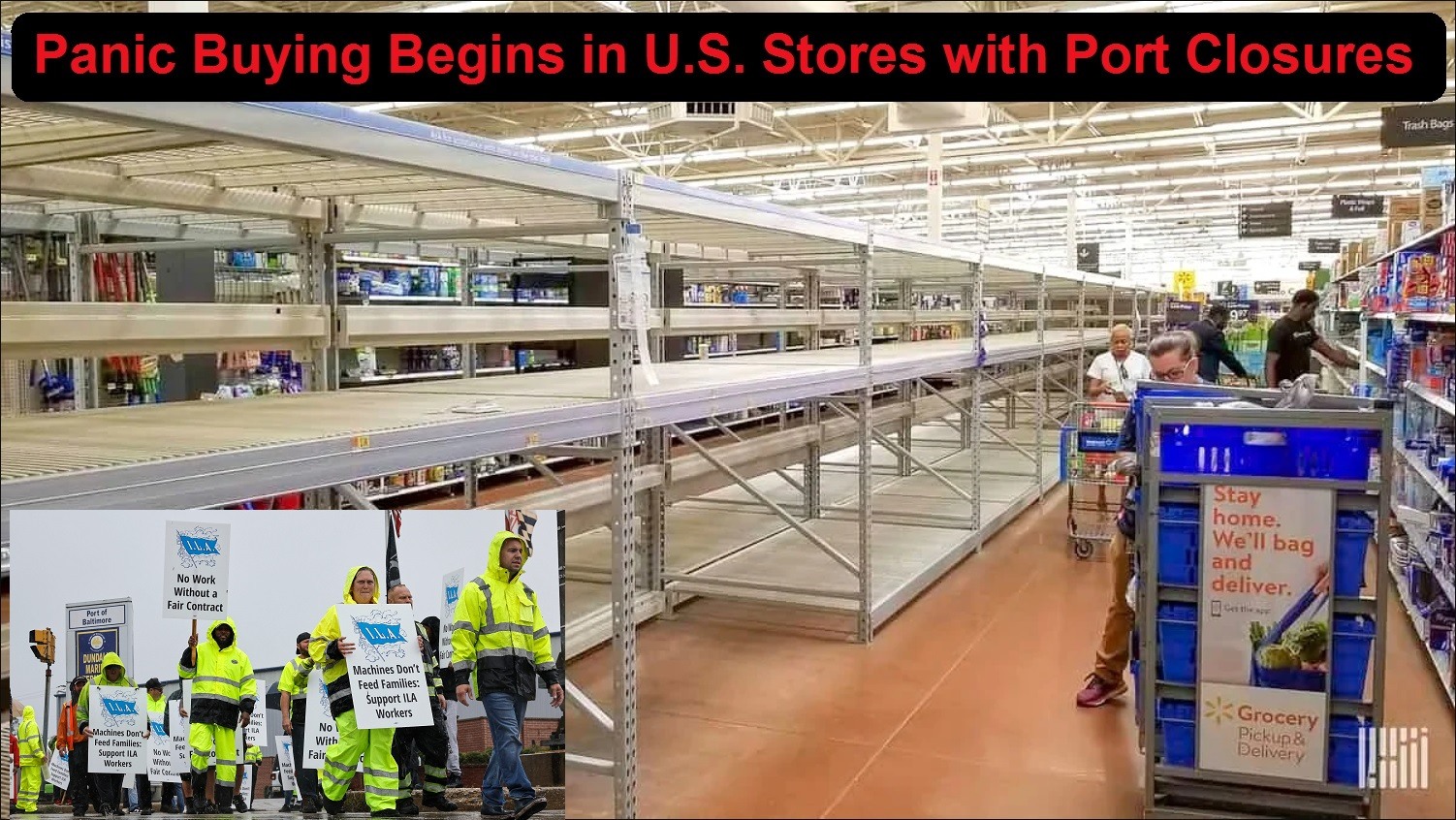
Panic Buying has Already Started with First Day of Dockworkers Strike Closing Down Half of US Ports

by Brian Shilhavy
Editor, Health Impact News

With the United States already suffering major loss of lives and farmland due to Hurricane Helene, and as the war in the Middle East now escalates with Iran starting to bomb Israel today, perhaps the most significant news that affects you RIGHT NOW, is the first day, today, of the dockworkers strike in the eastern and southern United States that has now closed down HALF of the ports in the U.S.

Massive port strike begins across America’s East Coast, threatening shortages and rising prices

New York CNN — Nearly 50,000 members of the International Longshoremen’s Association (ILA) are on strike Tuesday against the nation’s East and Gulf Coast ports, choking off the flow of many of America’s imports and exports in what could become the country’s most disruptive work stoppage in decades.

The strike, which began at midnight, will stop the flow of a wide variety of goods over the docks of almost all cargo ports from Maine to Texas.

This includes bananas, European beer, wine and liquor, along with furniture, clothing, household goods and European autos, as well as parts needed to keep US factories operating and American workers in those plants on the job, among many other goods.

It could also stop US exports now flowing through those ports, hurting sales for American companies.

A wide gap remained between the union’s demands and the contract offer from the United States Maritime Alliance, which uses the acronym USMX. The maritime alliance represents the major shipping lines, all of which are foreign owned; as well as terminal operators and port authorities.

“If we have to be out here a month or two months, this world will collapse,” said ILA President Harold Daggett in an interview with CNN Tuesday morning.

“Go blame them. Don’t blame me, blame them.”

Source.

The strike at half of the nation’s ports that started today will cost the U.S. economy about $5 billion a day.

How would a strike affect businesses and consumers?

A strike could cost the economy $5 billion a day, or about 6 percent of gross domestic product, JPMorgan analysts said. More than 68 percent of all U.S. container exports and more than 56 percent of container imports flow through East and Gulf Coast ports, according to the National Association of Manufacturers.

Many businesses would be hurt by a walkout because lots of raw materials — wood and cotton, for example — pass through these ports. Most imports of pharmaceutical products carried in containers flow through the affected ports. And a wide variety of food shipments pass through the East and Gulf Coast ports. (Source: NYT)

With stores and gas stations still closed in North Carolina and Tennessee due to the devastation caused by Hurricane Helene, it is being reported that panic buying is now beginning in stores in other parts of the U.S. today.

Panic-buying already spreading as ILA dockworker strike gets underway

As union dockworkers began striking against employers at East and Gulf Coast ports early Tuesday morning, reports of panic-buying at supermarkets almost immediately started spreading across social media.

Video clips posted by social media users on X and Facebook showed people rushing to buy water, toilet paper, paper towels and other items at supermarkets and retailers across the U.S.

“Are people already panic buying because of the Port Strike? Here are the grocery shelves in the water section at my local Kroger this morning. I realize that we are probably also low on water due to the Helene aftermath in East Tennessee, but still not great to see this already,” photographer and author Denise Van Patten posted in a social media video clip on X.

Micheal Coker posted on X, “Well the panic buying is in full swing in my little town in South carolina. Sam’s at 8:30 a.m., no water. Same at Walmart and grocery stores. Next will be toilet paper.”

A prolonged strike could cause major disruption to the domestic supply chain, according to American Farm Bureau Federation Economist Daniel Munch.

“For international destinations, waterborne exports are vital to us farmers,” Munch said in a podcast on Thursday.

“They make up over 75% of total U.S. agricultural export volume. The potential strike that we’re looking at would mainly disrupt containerized agricultural exports, which account for 30% of U.S. waterborne agriculture exports by volume. The remaining 70%, often grains and oil seeds, are shipped via bulk carriers, which are usually managed by independent workforces and will not be affected by the strike.”

He said U.S. farmers could be particularly vulnerable to a strike that lasts a week or more.

“The strike could have disastrous impacts on U.S. agriculture, depending on how long it lasts,” Munch said.

“The disruption to overall agricultural trade is expected to be about $1.4 billion each week that a strike is in place. When we think about what commodities are at risk, nearly 80% of waterborne exports of poultry leave East Coast ports, 56% of raw cotton, 36% of red meat, 30% of dairy products and even 6% of soybeans all go through those ports, through containerized exports. Not having an outlet to move those goods will create supply surpluses domestically and reduce prices for farmers.”

The top retailers that could be affected by the work stoppage at the ports are Walmart, Ikea, Samsung and Home Depot, according to data from ImportGenius and Arbor Data Science. (Full article.)

Went to Costco to get a few things at 10:30. We were low on paper towels and TP. Noticed parking lot was full. Saw people walking out with carts full of paper goods.

I went in with the intent of getting one pack of towels and one of TP. Nay nay Nasty Butt! The aisle was empty. Associate told me people were waiting in line when they opened.

She said some people had 10 packs of TP! Costco sized packs!!!!!

All because of a strike that started at midnight. (Source.)

This is also going to affect my own store, Healthy Traditions, as we have two containers scheduled to arrive from Chile within the next 30 days, our world-class raw Andes Mountain honeys, and our Chilean Extra Virgin Olive oil, which we bring through the Port of Houston from Chile, in route to our warehouse in Texas.

With more bad weather on the way that could affect the same areas still searching for survivors in the Appalachians, and with the war escalating not only in the Middle East, but also in Ukraine and potentially soon in the Pacific, with the very real possibility that there could be attacks on U.S. soil, you don’t need me to warn you that NOW is the time to stock up on water and food and try to have an alternative energy source.

Even if we don’t see major food shortages, the prices are absolutely going to start climbing at some point, from their already high pricing currently.

Via https://vaccineimpact.com/2024/panic-buying-has-already-started-with-first-day-of-dockworkers-strike-closing-down-half-of-the-u-s-ports/

Mongol Conquests from China to Russia

Episode 12 Mongol Conquests from China to Russia

The Middle Ages Around the World

Dr Joyce E Salisbury

Film Review

Dr Salisbury starts her lecture with a brief history of Temugen (the future Genghis Khan), whose family was expelled by their tribe following his father’s assassination (when he was 8). Miraculously, owing to their mother’s amazing hunting skills and ingenuity, they survived. Determined to seek revenge for his father’s assassination, Temugen had already amassed a major army by the time he was 18.

By the time Genghis Khan died in 1227, the Mongols controlled an immense swath of land from the Caspian Sea to the Pacific.

His successors all followed the Genghis Khan’s example in appointing women to manage their fortunes and empire while they were away at war. The Mongols also enacted firm laws against trading or raping women or treating them as spoils of war. Salisbury also credits their religious tolerance (in contrast to Europe’s Catholic intolerance) as a major factor in their successful conquest of most of Asia and much of eastern Europe.

Under Genghis Khan’s successors, the Mongol empire was split into four khanates: the Chagatai Khanate, the Golden Horde, the Ilkhanate and the Yuan Empire (China).

Chagatai Khanate

Chagatai (second son of Genghis Khan) and his successors focused mainly on repeated invasions of northern India and the eventual formation of the Delhi Sultanate. His son Tolui left his wife Sorghaghtani to rule in his place while he drank and went to war. She continued to rule the Chatagai Khanate for another 20 years following his death.

Golden Horde

The Mongols first crossed the Caucasus mountains onto the Russian steppes four years before the death of Genghis Khan (in 1227). Under Ogedei’s rule, 130,000 Mongol warriors pushed further west and in 1238-1239 laid waste to every major Russian. Moscow’s Grand Prince Ivan I (1328-40) entered into a trade alliance with the Mongols appointing him to collect (and receive a kickback) the tribute the other Russian princes owed them. This would greatly expand the wealth and prominence of Moscow. Under Batu (grandson of Genghis Khan), most Golden Horde leaders converted to Islam.

Ilkhanate

Encompassing the former Persian empire and the Abbasid Caliphate, most Ilkhanate Mongols converted to Islam. During the Mongol sack of Baghdad in 1258, the Mongols allowed the Muslim scholars associated with the Wisdom Schools to leave the city  before decimating it. Following the Mongol conquest of Baghdad, most Ilkhanate Mongols convert to Islam and Persian historians began writing in Persian rather than Arabic.

Yuan Dynasty

As Great Khan, Ogedei dispatched Kublai (son of Toluti and Sorghaghtani) to make war against the Song empire in southern China. He employed gunpowder he obtained from Jin engineers (Genghis Khan had conquered the Jin empire in 1211) and siege engines provided by both Jin and Persian engineers. On becoming emperor of the Yuan dynasty, Kublai allowed the Han gentry to keep their estates, converted to Buddhism and married a Christian woman (like his mother). While Mongol women who settled in in China refused to bind their feet, Han women continued to do so.

Kublai’s main achievements were stockpiling grain to avert a great famine  and expanding the Great Canal to facilitate shipping grain, mainly grown in southern China, to the north The Yuan Dynasty played a critical role in enuring security for Silk Road travel, greatly increasing prosperity in the Middle East, Central and South East Asia, as well as religious ideas and scientific transfer. Under their rule, the Chinese collaborated with Muslim scholars on advancing mathematics, geography and map making.

Prior to his death in 1294, Kublai nearly bankrupted the empire with two failed invasions of Japan. The pain of his tax increases fell heaviest on Chinese peasants, leading to extreme civil unrest and the eventual overthrow of the Yuan dynasty in 1368.

Film can be viewed free with a library card on Kanopy.

https://www.kanopy.com/en/pukeariki/watch/video/13172786/13172817