The ceasefire between Israel and Hezbollah went into effect at 4 am, local time, on November 27. Israel carried out intensive airstrikes in Beirut prior to the deadline killing 18 people, and by the time the deal went into effect the smell of explosives was hanging heavy the air.
By noon, the road leading south from Beirut was full of people anxious to return to their homes in the south, despite warnings from both Israeli and Lebanese authorities.
Cars overflowing with people, and mattresses stacked high on the roofs, were in a traffic jam going south. The Sunni Muslim majority political party, The Future Movement, had representatives in blue vests handing out sweets to cars slowly driving south, in a sign of solidarity with the mainly Shiite Muslim people of the south.
Many of the residents will find they have no home to return to, after 14 months of Israel airstrikes on the south, and an Israeli limited ground incursion since late September which saw carpet-bombing of the south.
Lebanon has lost people and buildings, and Hezbollah has lost many top level leaders and commanders, along with perhaps half of its missile supplies. But, Israel has lost as well, and that is why Israeli Prime Minister Benjamin Netanyahu pushed his government to accept the US brokered ceasefire deal.
Over 1,000 Israeli soldiers were injured in Lebanon, and over 120 were killed. Over 60 Merkava tanks were destroyed, and despite sending in five Army divisions, Israel could not take command of Lebanese soil in the south. They resorted to short period incursions and withdrawals, and were not able to set up secure headquarters because of the constant attacks by Hezbollah fighters, resisting the invaders.
In the days leading up to the ceasefire, Israeli media was showing Israeli soldiers walking through paths and the countryside of Kiam. However, by late afternoon the day the ceasefire began, returning residents had arrived in Kiam to find many buildings bombed by airstrikes, but no evidence the Israelis had been occupying, other than passing through.
The deal is set for 60 days of calm, in which the Israelis will withdraw from Lebanon completely, Hezbollah will move north of the Litani River, and the Lebanese Army will be the military presence in the south with 10,000 troops.
This is the same deal which was proposed at the end of the summer 2006 war between Israel and Hezbollah, and the UN resolution 1701 was formed. In today’s ceasefire, the same points of the 1701 are to be met, and no new demands were added. Hezbollah gets to keep their weapons.
In Israel, the opposition to Netanyahu have blasted the ceasefire as impotent, because Hezbollah is not disarmed. The displaced residents of the north of Israel may not quickly return home. Some are wary of the ceasefire while Hezbollah still remains an armed resistance organization.
“Withdrawing forces now will create a dynamic that will make it difficult for us, and make it easier for Hezbollah to regroup,” said Benny Gantz, the National Unity leader. “We must not do only half the job.”
“Hezbollah still has its stockpile of tens of thousands of rockets,” added Naftali Bennett, the former prime minister. “An impressive military achievement … is being translated into a total security-diplomatic failure.”
According to Israeli TV channel 13, 61% of those polled do not think Israel won the war in Lebanon. Also, 66% of those polled support an end to the war in Gaza.
According to Sky News Arabic, Israel has lost 5 billion in the tourism sector, 48,000 companies have gone bankrupt, and military losses of $130, 000 per day because of the war in Gaza.
Israeli infrastructure has suffered from 9,000 buildings damaged or destroyed, 7,000 vehicles lost, 55,000 acres of land burned, and over 75,000 Israelis were displaced from homes in the north.
From the outset of the Israel attacks on Gaza, in the aftermath of the Hamas October 7 surprise attack, Hezbollah began missile and drone attacks across Israel in solidarity with the people of Gaza, and the need to end the Israeli occupation of Palestine, Lebanon and Syria. In the days prior to the ceasefire deal, Hezbollah carried out an attack on Tel Aviv which saw widespread destruction in videos. Even after being so severely diminished by Israeli military efforts, Hezbollah was proven to be effective as far away as Tel Aviv, much farther than the Israeli north.
In light of military losses in Lebanon, the inability of the Israeli ground forces to take a foot-hold, and the serious damages in Tel Aviv, Netanyahu likely felt the time was right to stop the conflict and secure a ceasefire without achieving his ultimate military goals of destroying and disarming Hezbollah.
US President Joe Biden hailed the American brokered ceasefire deal. He failed to achieve a ceasefire deal in Gaza. In July, Netanyahu gave Biden his promise to agree to Biden’s ceasefire plan. But just days later, Netanyahu reneged on his promise, which caused Biden to withdraw his name from the presidential race. Biden was counting on Netanyahu’s support which would be seen as a huge political achievement by US voters who had become disgusted at the genocide in Gaza, and the American complicity.
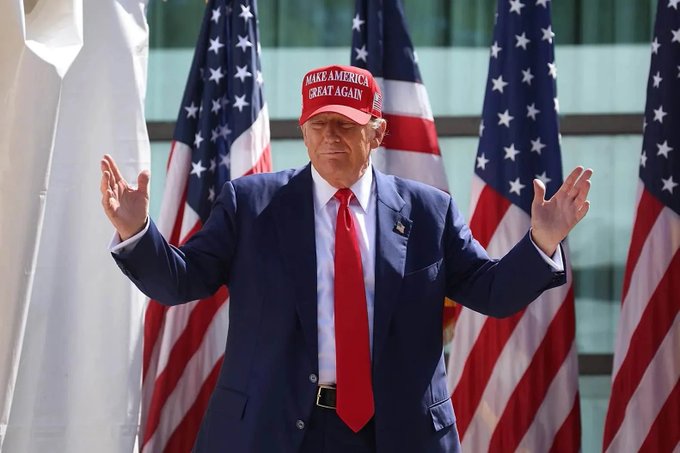
President-elect Donald Trump is said to be pleased with the ceasefire in Lebanon, as he has successfully campaigned on a promise to end all wars. Trump won’t take office until January 20, but many are predicting he will be a supporter of Netanyahu. However, Trump values loyalty highly. In the 2020 election, Netanyahu publically supported Biden, and asked the thousands of US citizens living in Israel to vote for Biden. Trump has never forgotten that betrayal.
[…]
Via https://www.globalresearch.ca/ceasefire-israel-hezbollah/5873846