Unknown's avatar

About stuartbramhall

Retired child and adolescent psychiatrist and American expatriate in New Zealand. In 2002, I made the difficult decision to close my 25-year Seattle practice after 15 years of covert FBI harassment. I describe the unrelenting phone harassment, illegal break-ins and six attempts on my life in my 2010 book The Most Revolutionary Act: Memoir of an American Refugee.

Life Under the Persian Empire.

The timeline of democracy | PPTX

Episode 19: City and Countryside

The Persian Empire

Dr John W I Lee (2012)

Film Review

Most of the Persian empire’s urban centers were in Mesopotamia and Persia. The city of Babylon, the largest, had a population of 100,000. The western empire had fewer cities and none with over 10,000 people. In Mesopotamia, cities continued to hold popular assemblies following Persian conquest.

Eighty per cent of Persians farmed for a living, with Persian nobles and wealthy merchants owning the vast majority of land. Some farms were irrigated (in the Nile, Indus and Tigris/Euphrates valleys). Farmers relying on the Tigris/Euphrates and Indus river had to dig the silt out of their irrigation canals to combat desertification. In some areas, farmers used karnats for irrigation – underground channels they dug relying on gravity driven flow.

Elsewhere dry farming relied on rainfall to water crops. Farmers planted in the fall after summer rain had softened the soil and harvested in the spring. Those in mountainous areas raised olives, grapes and grains. Those in Egypt and Mesopotamia raised barley dates and emmer wheat. Those in Bactria and modern day Iran grew hardier wheat and those in the Indus valley cotton. Farmers throughout the empire also kept sheep, goats, pigs, duck and geese, but commoners only only ate meat on special occasions. They also produced alcohol: wine in Ionia and beer in the eastern empire.

Farmer timed their lives around the date harvest in August because that’s when debts and taxes were due. They paid taxes (in crops) to the government and landlord and sold any excess in local markets.

Many inhabitants of the eastern Empire were  pastoral nomads, who shifted their sheep and goats either vertically (in the Zygros mountains, Persepolis and Parthia) or their horses and camels horizontally from the steppes and deserts, where they wintered, to the river valleys.

There were four social classes in the Persian empire

  • nobles, government officials and wealthy merchants
  • craftsmen (potters, metal workers and weavers), merchants and freehold farmers
  • dependents of rich nobles, government or temples. This included palace laborers (who were either prisoners of war or owed taxes) and deportees from conquered territories.
  • slaves – either debt-slaves or prisoners of war. There was active slave trade in Egypt and Babylonia from pre-Perisan times. Those forced to work in mining and agriculture lived horrible lives. In contrast, Babylonian slaves could own property, take people to court, own their own slaves and hire freemen to do their work.

https://www.kanopy.com/en/pukeariki/watch/video/15372393/15372440

Pasco, Washington, Latest City to End Water Fluoridation

girl holding cup of water and Washington state flag

Pasco, Washington, joined 80 other communities, including two states — Utah and Florida — and several counties that have ended fluoridation since September 2024, when a federal judge ruled that fluoridated water poses an “unreasonable risk” to children.

The city of Pasco, Washington, became one of the largest cities to end water fluoridation since September 2024, when a federal judge ruled that fluoridated water poses an “unreasonable risk” to children.

City officials in November 2025 voted 4-2 to end the practice. 

Pasco, which has a population of about 80,000, is one of at least seven city councils in the state to debate water fluoridation.

Before voting on the issue, the city held a public debate. According to the city’s website, the debate attracted “the highest level of participation for any public input campaign in recent City history.”

“The more people know about fluoridation, the more they’re opposed to it,” Fluoride Action Network (FAN) board member Rick North told The Defender. City by city, they’re finding out, and more and more city councils are voting accordingly.”

Pasco now joins 80 other communities, including two states — Utah and Florida — and several counties that have ended fluoridation since U.S. District Judge Edward Chen’s landmark ruling in a federal lawsuit against the U.S. Environmental Protection Agency.

Citing the lawsuit against the U.S. Environmental Protection Agency (EPA), Pasco city council members declared that fluoridation takes away our right of informed consent to take any drugs, North said. As one council member said, “People should make their own healthcare decisions.”

Public controversy continues to grow over the issue as new research published in top journals continues to link fluoride exposure — including at current U.S. fluoridation levels — to neurodevelopmental issues in children.

President Donald Trump, U.S. Health Secretary Robert F. Kennedy Jr. and U.S. Food and Drug Administration Commissioner Marty Makary have all publicly raised concerns about the danger water fluoridation poses to children’s health.

EPA Administrator Lee Zeldin said the agency would review the science on the issue.

However, the U.S. Department of Justice continues to pursue its appeal in the EPA case — even though in its appeal filing, the agency didn’t challenge the court’s finding that current fluoridation levels pose an “unreasonable risk” of neurodevelopmental harm to children.

The Centers for Disease Control and Prevention (CDC) continues to recommend the practice.

Nearly 30 million fewer people drinking fluoridated water since 2023

The CDC typically updates its statistics on water fluoridation on a biannual basis. However, the agency hasn’t updated the figures since 2022.

Since then, communities serving water to about 29.5 million people have ended, suspended or prevented water fluoridation, according to FAN.

Only two cities — Buffalo and Albany, both in New York — are known to have begun adding fluoride to their water. FAN independently tracks water fluoridation statistics.

FAN recently released updated statistics on national changes to water fluoridation practices between Jan. 1, 2023, and Dec. 31, 2025.

The CDC’s 2022 figures, commonly cited in the media, reported that 209.1 million people, or 62.8% of the U.S. population, drink fluoridated water.

However, according to FAN’s updated statistics, today that number is only 191.5 million, or 55.5% of the population, now that cities are discontinuing the practice.

FAN said it has worked for 25 years with citizen campaigners, community organizers, coalition partners and decision-makers to end fluoridation, Executive Director Stuart Cooper told The Defender.

“We’re definitely witnessing a groundswell of support for fluoride-free water,” Cooper said. “We’re now within striking distance of the majority of U.S. residents consuming non-fluoridated water.”

“This is a crushing defeat for the American Dental Association, which continues to protect the fluoride industry that makes up their corporate sponsors rather than protecting the health of our children.”

[…]

Via https://childrenshealthdefense.org/defender/pasco-washington-becomes-latest-city-to-end-water-fluoridation/


UK drops plans for mandatory digital ID for workers in latest U-turn

Protesters take part in a 'No to Digital ID' demonstration, near to the Labour Party Conference in Liverpool

Protesters take part in a ‘No to Digital ID’ demonstration against the planned introduction of a government-issued digital ID for all British adults, near to the Labour Party Conference in Liverpool, Britain, September 28, 2025. REUTERS/Hannah McKay Purchase Licensing Rights

(Reuters) – Britain is set to drop plans to make it mandatory for workers to hold a digital identity document, The Times newspaper, the BBC and other media reported on Tuesday, potentially marking another policy U-turn for the Labour government.

The government said the digital ID would be held on people’s mobile phones and become a mandatory part of checks employers must make when hiring staff.

The plan drew criticism from political opponents, with some arguing it would not deter illegal migration and others warning it could infringe on civil liberties.

The Times said the government abandoned the plan amid concerns it could undermine public trust in the scheme, noting that when introduced in 2029, digital IDs would be optional rather than mandatory.

“We are committed to mandatory digital right to work checks,” a government spokesperson said. “We have always been clear that details on the digital ID scheme will be set out following a full public consultation which will launch shortly.”

If plans for a mandatory digital ID are dropped, it would mark another policy climbdown for Starmer.

In December, the government scaled back a plan to raise more tax from farmers, months after it backed down on cuts to welfare spending and scaled back a proposal to reduce subsidies on energy bills for the elderly.

[…]

Via https://www.reuters.com/world/uk/uk-drops-plans-mandatory-digital-id-workers-latest-u-turn-media-reports-2026-01-13/

US senators target Trump branding of federal institutions

US senators target Trump branding of federal institutions
RT

The measure would prohibit federal assets from being named or renamed after a sitting president

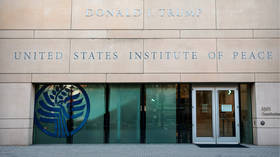
A group of US senators has introduced legislation that would prohibit naming or renaming federal buildings, land, and other government property after sitting presidents. The move aims to counter US President Donald Trump’s efforts to link his personal brand to public infrastructure and programs.

US Senator Bernie Sanders, joined by Senators Chris Van Hollen and Angela Alsobrooks, announced on Tuesday the Stop Executive Renaming for Vanity and Ego (SERVE) Act, which would bar what they called illegal and self-serving efforts to brand public institutions with the name of a sitting president. The bill’s sponsors have submitted the two-page proposal as an amendment to government funding legislation currently before the Senate.

The move follows recent efforts by the Trump administration to put his name on prominent national institutions. While US leaders are often honored with their names on naval vessels, currency, buildings, and other institutions, Trump has become the first US head of state to do so while in office.

Sanders, one of the new bill’s lead sponsors, claimed that Trump was “undermining democracy and moving this country toward authoritarianism,” adding that part of that strategy was creating a “myth of the ‘Great Leader’” by naming public buildings after himself, something he said “dictators have done throughout history.”

The senator claimed that Trump putting his name on federal buildings was “arrogant” and “illegal,” and that legislation would “put an end to this narcissism.”

Since returning to the Oval Office last January, Trump has had several buildings and federal initiatives named or renamed after him, including the Donald J. Trump United States Institute of Peace, the Trump-class USS Defiant battleship, the prescription drug website TrumpRx, and the Trump Gold Card visa.

One of the most controversial moves was the renaming of the John F. Kennedy Memorial Center for the Performing Arts to include Trump’s name – a step that has prompted protests from members of the public and from performing artists.

[…]

Via https://www.rt.com/news/630942-ban-presidents-naming-buildings/

US is ‘main enemy of the dollar’ – ex-IMF director

US is ‘main enemy of the dollar’ – ex-IMF director

RT

Washington’s “abuse” of financial instruments through sanctions is pushing the rest of the world away from the greenback, Paulo Batista has told RT

The US is the main enemy of the dollar, prominent Brazilian economist and former International Monetary Fund (IMF) executive director, Paulo Nogueira Batista Jr., has told RT.

Washington has increasingly weaponized its national currency, undermining trust in the greenback and the broader Western financial system, he said, in an exclusive interview with RT.

“The main enemy of the dollar and of the international payment system controlled by the West is the US itself,” Batista said. “There is a move away from the dollar, from US Treasuries, to a large extent derived from the abusive use by the US of instruments [such as] SWIFT, of reserves.”

He said the “most notable case” of such abuse is Russia, which saw about $300 billion in Central Bank reserves frozen in the West under sanctions imposed after the escalation of the Ukraine conflict in 2022. Beyond the asset freeze, the US and its allies removed most Russian banks from the SWIFT interbank messaging system and imposed full transaction bans on key financial institutions, effectively cutting Russia off from the dollar- and euro-dominated Western financial system.

According to Batista, 2022 was a turning point when de-dollarization and the shift away from US-linked financial institutions – already slowly progressing – picked up pace.

“Countries like Russia and China, also Iran, had already suffered sanctions or fears of sanctions from the US… But this was a watershed because of the scale of Russia’s reserves and the assets frozen. Since 2022, major central banks, for example China’s, are moving away from US Treasuries,” he said.

RT

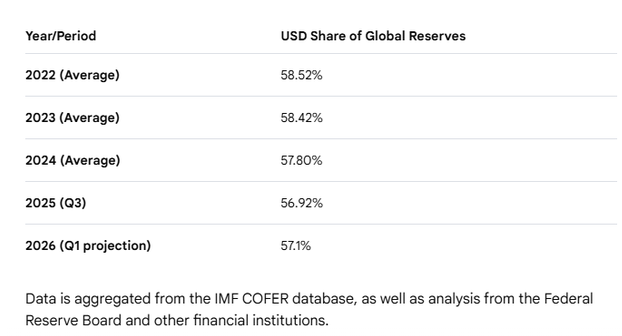
The dollar’s share of global foreign exchange reserves has steadily declined over the past four years. Russia has essentially eliminated Western currencies in trade with CIS and BRICS nations, which have been doing the same with their other partners. Looking ahead, Batista said that while the greenback will remain an an “important” global currency, the move away from the dollar will continue and its “hegemony” will gradually weaken.
[…]

RFK Jr. Explains “Gluten Allergies” Exploded in 2006 Due to Spraying Roundup on Food Before Harvest

G Edward Griffin’s Need to Know

In 2006, Monsanto advised farmers to spray its Roundup Ready pesticide, with the active ingredient glyphosate, on wheat so that it would act as a dessicant to dry it out and prevent mold. Robert Kennedy Jr. said: “And it was so popular that about 85 % of the Roundup that has been used in history has been used since 2006. A large part of that is as a desiccant. And what that meant, is for the first time they’re spraying it on food right at harvest.”

“What Monsanto did is they began telling farmers, spray this on the crop, on your wheat, right before harvest or at the time of harvest. And it was so popular that about 85 % of the Roundup that has been used in history has been used since 2006. A large part of that is as a desiccant. And what that meant, is for the first time they’re spraying it on food right at harvest.”

“Not early in the season when they have a chance to wash off, but actually just before you’re going to eat it. And they’re spraying it for the first time on wheat because there was no such thing as Roundup Ready Wheat. They started spraying it on wheat as a desiccant. And so 2006 marks the day when suddenly these gluten allergies began exploding. The celiac disease and all these kind of wheat problems that we started seeing in this country.”

If you measure it back and say, when did it start? You can look and draw a red line at this 2006 and it’s the year that they began spraying it on.

From Wall Street Mav:

Other countries are beginning to ban the use of Monsanto’s Roundup pre-harvest.

The U.S. has not banned Monsanto’s Roundup (glyphosate) for pre-harvest use at the federal level; in fact, the EPA still approves its use, but some U.S. cities, counties, and even large food companies have restricted or phased out its use, especially as a pre-harvest desiccant on crops like oats and wheat due to cancer concerns.

Image

Is organic wheat sprayed with glyphosate?

From Custommapposter:

Genetically modified organisms, nanomaterials, human sewage sludge, plant growth regulators, hormones, and antibiotic use in livestock husbandry are prohibited [in organic farming].

Glyphosate is not allowed to be sprayed on organic wheat according to USDA organic standards. Sadly, we did find the presence of glyphosate residue in organic wheat, and other organic grains, including organic barley, oats, spelt, and einkorn. The range was from 0.03 to 0.

[…]

Via https://needtoknow.news/2026/01/rfk-jr-explains-gluten-allergies-exploded-in-2006-due-to-spraying-poison-on-food-before-harvest/

Is New Saudi-Led Axis Forming against the UAE and Israel?

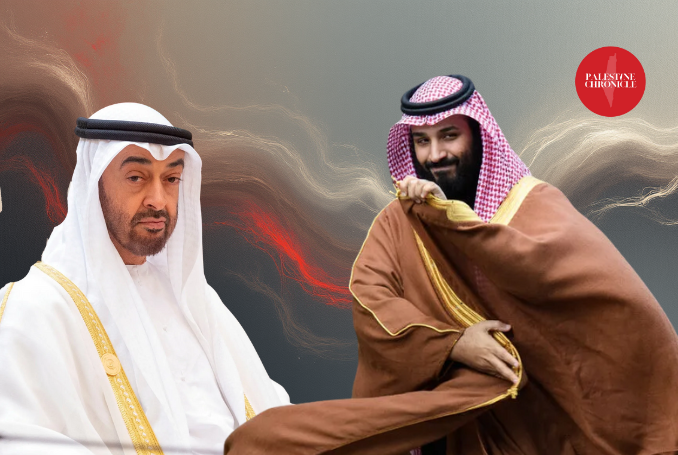
Mohammed bin Zayed(L) and Mohammed Bin Salman. (Design: Palestine Chronicle)

By Robert Inlakesh

The emergence of a new alliance in the region has the potential to challenge some of Israel’s more aggressive endeavors, so this could end up working in favor of the Palestinian people in some regards.

Prior to October 7, 2023, the Kingdom of Saudi Arabia appeared poised to join the so-called “Abraham Accords” alliance and normalize ties with Israel. Now it appears to be forming new alliances and even undermining Israeli interests, pursuing a different regional cooperation agenda. Where this leads will be key to the future of the region.

In September of 2023, the Crown Prince of Saudi Arabia, Mohammed bin Salman, had informed Fox News that normalization with the Israelis was growing closer. This development came as then-US President Joe Biden had been seeking to broker such an agreement, which appeared to be his administration’s planned crowning achievement in the foreign policy realm.

The Hamas-led Al-Aqsa Flood operation changed the regional equation entirely. Riyadh, instead of normalizing ties with the Israelis and seeking concessions from the United States in order to enter into a regional alliance against Iran, began considering a different option entirely.

Israel’s weakness in the face of the Hamas-led attack was one message to the entire region, which was that if it could not even take care of its own security issues against a guerrilla army equipped with light weapons, then how could an agreement with Tel Aviv ensure the security of its allies? Another element to the developments in Gaza was that Israel decided to commit a genocide in order to restore its image in the region and in a gambit to “solve the Gaza question”.

This behavior, combined with attacks on nations across the region, evidently served to set normalization talks back and pushed Saudi Arabia to reaffirm its commitment to the Arab Peace Initiative of the 2000s—in other words, no normalization without a viable Palestinian State.

Then came the Israeli bombing of neighboring Qatar, a message to all Gulf nations that Israel is ready to act against any of their territories. It was even reported that Israel’s missiles flew over Saudi airspace in order to reach their target.

Since then, Saudi Arabia has been busy attempting to secure its interests and has signed a security pact with Pakistan as part of this effort. It is very likely that a large driving element behind this deal was to ensure that a future Iran-Israel war would not impact them directly. The Saudis are also currently working to strengthen their ties with Iran.

Yet Riyadh didn’t stop with Pakistan; it is now reportedly in high-level talks with Turkey in an attempt to bring them into the fold of their security agreement, in what is being labeled a Middle East NATO project. While it is perhaps too soon to predict the outcome of these talks and where such an agreement would lead, it suffices to say that there is certainly a realignment going on in West Asia.

The ongoing feud between the United Arab Emirates (UAE) and Saudi Arabia was sent into overdrive when the Emiratis decided to order their proxies in Yemen to seize key regions of the nation’s east, home to 80% of the country’s oil reserves. These Southern Transitional Council (STC) separatists, backed by the UAE, took over the Mahra and Hadramaut provinces, posing a major security risk to the Saudis and Omanis.

In reaction to the UAE’s meddling, Riyadh decided to take the gloves off in Yemen and crushed the STC entirely. But the backlash against Abu Dhabi was not limited to the end of their proxy militia’s role in Yemen; instead, there was a media war in the UAE that aimed to expose its crimes across West Asia and in Africa, as well as a prepared economic blow.

As a result, there was a diplomatic fallout between the UAE and Algeria, over Abu Dhabi allegedly backing separatist movements there, and later the government of Somalia even rescinded its agreements with the Emiratis, following UAE-Israeli meddling in their affairs, in regard to the recognition of Somaliland as a State.

If Riyadh and Ankara do end up forming some kind of security alliance, it will likely also include Qatar. It would then prove interesting to see how they all coordinate on issues like Libya and Sudan. The Emiratis not only back the Rapid Support Forces militants in Sudan, who stand accused of committing genocide and mass rape, but long threw their weight behind warlord Khalifa Haftar in Libya.

This would also mean that the UAE’s role in Syria could be undermined or completely terminated, as it could also be forced from other areas of influence, like Iraq, too. It is clear that both Turkey and Saudi Arabia have sway in Lebanon, so depending upon what their goals are there, this may prove an interesting development for the Lebanese predicament, too. The same goes for Egypt and beyond.

One thing to keep in mind is that such an alliance would not equate to an Axis of Resistance-style opposition to the Israelis. Although Riyadh may see it fit to teach its Emirati neighbors a lesson, the likelihood of any serious conflict with the Israelis is thin.

It is true that the Israelis, aided by their UAE lapdogs, are pursuing an ultra-aggressive policy in the region, especially against Ankara. Yet this competition is not one between warring nations seeking to defeat each other decisively; it is viewed, at least for now, as a competition instead. Turkey maintains its relations with Israel; the Saudis, on the other hand, have not formally recognized Tel Aviv, but have long been in communication with their Israeli counterparts.

An alliance of this nature does not serve as a new support system for any resistance front in the region; instead, it seeks to achieve security and to escape the grip of the emerging “Greater Israel” project. At this stage, it has become abundantly clear that there are no promises of a prosperous future through aligning fully with the Israelis; instead, Tel Aviv will aggressively pursue its interests against every nation in the region and doesn’t respect any agreements it signs. The recent Emirati-Israeli actions demonstrate this perfectly.

Ultimately, the emergence of a new alliance in the region has the potential to challenge some of Israel’s more aggressive endeavors, so this could end up working in favor of the Palestinian people in some regards.

This could prove beneficial to the Islamic Republic of Iran, which, instead of facing total isolation and seeking to combat Israeli schemes alone, may, on different issues, find itself on the same page as the Saudi-led alliance. Some analysts have posited that Tehran may eventually join such a security pact, although it is way too early to say if such a development is even on the cards.

Overall, we should not expect Riyadh to do a total one-hundred-and-eighty-degree foreign policy shift, nor should that be expected of Ankara; after all, they are US allies and maintain close relations with Washington. The real question is whether the United States is willing to push back against such an alliance for the sake of Israel, which is when things will really begin to get interesting.

[…]

Via https://www.palestinechronicle.com/is-a-new-saudi-led-axis-forming-against-the-uae-israel-analysis/

Video Shows Border Patrol Threaten Legal Observer in Key Largo for Following Him

CBP officer wearing a mask | Illustration: Instagram

A U.S. Border Patrol officer threatened to arrest a legal observer in Key Largo, Florida, today for following the officer, video of the encounter posted on Instagram shows.

The video is another instance of federal immigration officers threatening and harassing legal observers for conduct that civil liberties groups and multiple federal circuit courts say is firmly protected First Amendment activity.

The observer and activist, a 64-year-old Key Largo man who requested that his name not be printed to avoid retaliation, tells Reason he is part of a local group that tracks federal immigration enforcement activity in the Upper Florida Keys. Key Largo was the scene of a Border Patrol stop in December that generated national headlines after officers dragged a U.S. citizen out of her car.

The observer says he was following an unmarked Customs and Border Protection (CBP) vehicle from a safe distance when the car turned into a restaurant parking lot. The observer says he parked well over 25 feet away from the CBP vehicle, at which point the Border Patrol officer got out of his car, put on a mask, and approached the observer’s car. That is where the observer’s cell phone video picks up:

“This is your one warning, do you understand this?” the officer says in the video. “One warning. You’ve been following us around.”

“I’m just driving around,” the man replies.

“You’re following me around. If I continue to see you following me around, I’m gonna pull you over and arrest you,” the officer says.

“For what?” the man asks. “What law am I breaking?”

“You’re impeding an investigation, OK?”

“What are you going to do, shoot me?” the observer asks, referencing the recent killing of Renee Good by a CBP officer in Minneapolis.

After a short back-and-forth, the officer says, “Oh, you mean that woman that was trying to run them over?” The officer warns the observer again before declaring he’s not going to argue about it and returning to his car.

The Department of Homeland Security (DHS) has made it clear through official statements and a long list of similar encounters that it considers following, filming, and warning others of federal immigration agents to be illegal under a rather tortured interpretation of a federal statute that criminalizes physically impeding, resisting, or assaulting federal law enforcement officers.

Although the Supreme Court has declined to address the issue, seven federal circuit courts have firmly upheld the right to record and monitor the police, as long as one doesn’t physically interfere with them.

The U.S. Court of Appeals for the 11th Circuit, which covers Florida, ruled in 2000 that there was “a First Amendment right, subject to reasonable time, manner and place restrictions, to photograph or videotape police conduct.”

“The First Amendment protects the right to gather information about what public officials do on public property, and specifically, a right to record matters of public interest,” the 11th Circuit wrote.

Civil libertarians say the DHS’ policy is unconstitutional.

“The right to record publicly visible law enforcement activity is a core First Amendment right,” Scarlet Kim, a senior staff attorney with the American Civil Liberties Union’s Speech, Privacy, and Technology Project, told Reason last month. “It creates an independent record of what officers are doing, and it is no accident that some of the most high-profile cases of misconduct have involved video recordings. The burning question is why ICE officers feel the need to hide who they are and what they do from the public—masking their faces, lacking visible ID, driving unmarked vehicles, and now attacking those who document their activities.”

The incident was actually the second time the observer says he’s been harassed. In December, a CBP agent shoved him away from the scene of a traffic stop, even though he was complying with the officer’s orders to step back.

“I walked backward as fast as I could, but I’m practically a senior citizen, so I can’t move that quickly,” the observer says. “And even though I was moving backward, he still decided to shove me and get in my face and also threaten me.”

Last October, ICE officers broke out the window of a U.S. citizen’s car in Oregon and detained her for seven hours after she followed and photographed their unmarked vehicles. The DHS accused her of reckless driving, attempting to block in officers with her car, and resisting arrest—all claims that she and her lawyer deny. In cell phone video footage, the first question that the ICE officer asks when he approaches the woman’s car is, “why are you taking photos?”

In the wake of Good’s killing, the Trump administration and Republican lawmakers have continued to paint anti-ICE protesters and monitors as radical extremists. DHS Secretary Kristi Noem said Good had been “stalking and impeding” agents all day prior to her killing.

“Honking your horns, following people is something that absolutely must not be tolerated,” Rep. Pete Sessions (R–Texas) said in a TV news interview today. “And I stand completely with the administration on this effort.”

However, the arrests, threats, and violence have not kept protesters and legal observers out of the streets since the killing of Good. In fact, it has galvanized some of them.

“My voice was probably shaking a little bit in the video, but now that I’m calmed down and looking back at it, I would do it all over again,” the observer says. “I would do it all over again because we just can’t let this go. We need to keep track of what these people are doing, and we can’t let ’em treat our neighbors like this, and people from other countries, and U.S. citizens. They’re literally killing them, and I can’t abide by it.”

[…]

Via https://reason.com/2026/01/12/video-shows-border-patrol-threaten-legal-observer-in-key-largo-for-following-him/

Land of Confusion: The Great Reset in Motion

Colin Toddhunter

The global disruptions we have seen in recent years are frequently presented as a chaotic sequence of events: a ‘pandemic’, inflation, energy shortages and war. Little wonder that most people are confused. However, a structural analysis reveals a more deliberate controlled demolition of the 20th-century social contract.

We are witnessing a transition from a productive capitalist model, which required a healthy mass labour force, to what Yanis Varoufakis calls a techno-feudalist order.

The engine of this transition was a desperate financial stabilisation strategy carried out by means of a public health event. As identified by Professor Fabio Vighi, the global financial system reached a point of terminal instability in late 2019, evidenced by the collapse of the US repo market (where banks lend to each other).

By freezing the real economy through lockdowns, central banks performed massive liquidity injections to save the banking-finance tier. If that money had entered a functioning economy, it would have triggered hyper-inflation. By keeping the population at home, the elite performed a stealth bailout that preserved the dominance of the financial class by sacrificing the productive middle class.

However, a geopolitical reset also had to take place. For decades, Germany’s economy relied on three pillars: cheap Russian gas, high-tech exports to China and a US security umbrella. By late 2025, all three have been fractured. As Prof Michael Hudson notes, the ‘sabotage’ of the Nord Stream pipelines was a structural necessity for the Western financial elite.

If Germany continued to integrate with Russia and China, it would have created a power pole independent of the US dollar. The conflict in Ukraine served a purpose: it resulted in Germany replacing Russian pipeline gas and being forced into a massive build-out of liquefied natural gas (LNG) infrastructure and reliance on LNG from the US. Unlike pipeline gas, LNG must be super-cooled, shipped and re-gasified, a process that is inherently 3–4 times more expensive.

The result is that, in 2025, German industrial output is at its lowest since the 1990s. Heavy industries like BASF (chemicals) and ThyssenKrupp (steel) are relocating to the US or China. Meanwhile, Germany is pivoting from an industrial giant by betting on creating jobs in the likes of the green energy sector (including becoming a ‘hydrogen hub’), semiconductors and microelectronics, robotics and biotech and diverting its capital into a €150 billion annual defence spend.

At the same time, while Germany collapses, the City of London thrives on global volatility. Among other things, the City is the global hub for war risk insurance and energy brokerage. When a pipeline is destroyed or a strategically important shipping lane is threatened, the price of war risk insurance triples. The London insurance market (Lloyd’s) extracts these ‘risk premiums’ from the global economy.

The City’s brokers treat geopolitical instability as a volatile asset class. Even as British households are crushed by energy bills, the financial centre remains profitable by extracting wealth from the very chaos that foreign policy helps to manufacture.

Moreover, the City of London has secured its position as the indispensable middleman of the transatlantic energy pivot. While the physical gas originates in the US and is consumed in Europe, the financial and legal architecture of this trade is almost entirely managed in London.

Commodity brokers and exchanges like ICE (Intercontinental Exchange) in London have seen record volumes in LNG futures and derivatives. These are financial bets on the future price of gas. As volatility increases, the fees and commissions extracted by London-based traders and clearinghouses skyrocket.

More than 90% of the world’s marine insurance, including the specialised, high-premium coverage required for LNG tankers, is underwritten through Lloyd’s. By enforcing strict war risk premiums on any ship entering European waters, London effectively imposes a private tax on every molecule of gas that replaces the lost Russian pipeline supply.

This ensures that while European industry is struggling with high energy costs, the City’s financial firms extract a massive toll from the logistics of the replacement supply.

Of course, the structural readjustment of economies leads to huge social tensions. This is where the ‘Russian threat’ comes in. It has been elevated to an all-encompassing internal narrative used to manage domestic dissent and to galvanise the public to rally behind the flag. The bogeyman serves a vital psychological function by converting the growing anger of the impoverished into a patriotic duty to endure hardship.

Under this regime of ‘permanent emergency’, any industrial action, protest or systemic critique can be branded as malign foreign influence or subversion, allowing the state to use new, expansive policing powers to suppress internal friction.

To justify the redirection of billions in tax revenue away from failing public services and into the military-industrial complex to create ‘growth’ in a failing economy (a desperate attempt to revive a collapsing neoliberalism—see chapter two here), the state must maintain a high-decibel level of existential fear. In the UK, the Defence Industrial Strategy 2025 explicitly frames militarisation as an engine for growth, using the spectre of a Russian invasion to legitimise a state-subsidised transfer of wealth to high-tech defence contractors.

By manufacturing a permanent state of war-footing, the elite ensure that a main pillar of the economy is the one that directly serves the security of the state, while the population is told that their dwindling healthcare and pensions are a necessary sacrifice for national survival.

In this respect, we also see the changing status of the human being. In the industrial era, the state ‘subscribed’ to the working class, investing in the NHS and education because it required a fit population to drive production. Artificial intelligence, robotics and economic decline increasingly make much of this labour force redundant.

As capital may no longer find the reproduction of labour desirable or profitable, the state withdraws its subscription. The visible rot in the NHS is the result of deliberate divestment. (The UK private health insurance market has surged to a record £8.64 billion, a nearly 14% year-on-year increase.)

If the worker is no longer required for production, the state views healthcare as a ‘non-performing cost’ to be liquidated.

When a population is no longer an asset but a fiscal liability, the state moves from care to managing exit. It’s no accident that we have seen calls for the rapid legalisation of assisted suicide across the West. It might also help to explain the prescribing of midazolam and do not resuscitate orders in care homes during the COVID event. Data shows that the UK government purchased vast quantities of midazolam (two years’ worth of stock in just two months) in early 2020.

In 2025, official impact assessments noted that legalising assisted dying would result in “considerable cost savings” for the NHS and state pension system—estimated at up to £18.3 million within a decade for pensions alone. The Terminally Ill Adults (End of Life) Bill Impact Assessment (May 2025) officially quantified the ‘benefits and pensions’ impact. It estimated that by year 10, the state would save roughly £27.7 million per year in unpaid pension and benefit payments due to assisted deaths.

By accelerating the ‘offboarding’ of the non-productive elderly (whatever happened to the COVID era marketing slogan of ‘saving granny’?), the system wipes billions in future pension liabilities off the state balance sheet.

Moving forward, what can we expect? We will see the elite continue to rollout the narrative of permanent emergency under the guise of climate crisis and Russian threat to provide the ideological discipline required to justify a boosted austerity. Meanwhile, digital ID and central bank digital currencies will create a system of total surveillance. In this emerging system, the citizen is replaced by the ‘managed subject’, whose access to the economy is contingent upon a social credit score.

[…]

Via https://www.activistpost.com/land-of-confusion-the-great-reset-in-motion/

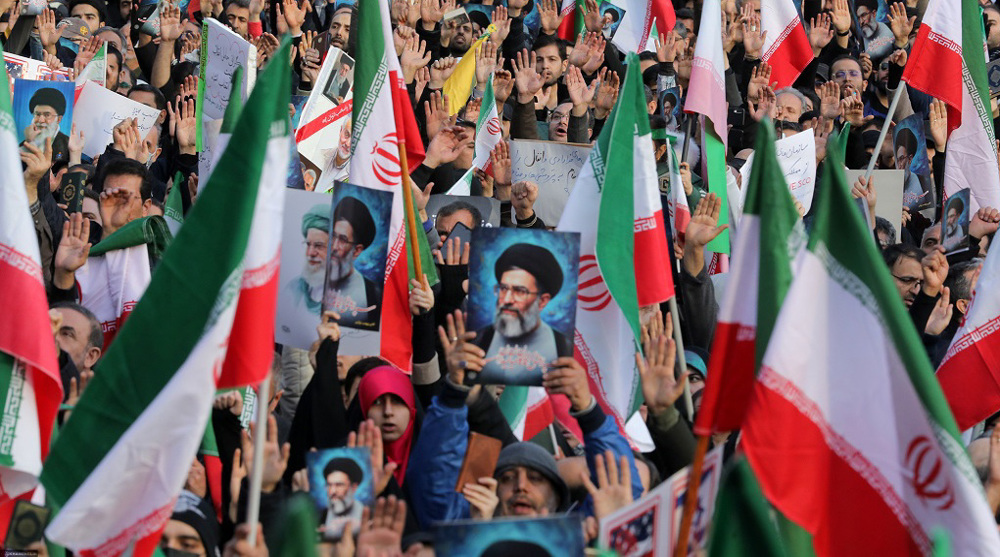
Iranians take part in nationwide rallies to condemn foreign-backed riots, terrorism

Iranians hold national flags and pictures of Leader of the Islamic Revolution Ayatollah Seyyed Ali Khamenei, during a rally in condemnation of foreign-linked riots, in the capital of Tehran on January 12, 2026. (Photo by khamenei.ir)

Press TV

Iranians from all walks of life are taking part in nationwide rallies to denounce recent foreign-backed riots, demonstrating their unwavering support for the Islamic Republic.

The rallies in most provinces, including Tehran, began at 2:00 p.m. local time on Monday. However, in some other provinces, the rallies started earlier, at 9:00 a.m. and 11:00 a.m.

Officials described the nationwide demonstrations as irrefutable evidence of unity and solidarity in the face of the enemy’s plots to sow chaos and division through mercenaries and terrorists.

Some shopkeepers last month staged peaceful protests in different cities over economic issues, but the demonstrations were steered toward violence after public statements by US and Israeli regime figures—amplified by Israeli-linked Persian-language outlets—encouraged vandalism and disorder.

Authorities have acknowledged the legitimacy of economic grievances and vowed to address them, while denouncing foreign-backed elements for exploiting people’s livelihood concerns, which are directly linked to unilateral US sanctions targeting Iran’s central bank and oil exports.

Iranian authorities say the perpetrators of the unrest are backed by the US and the Israeli regime.

US President Donald Trump recently voiced support for rioters and warned Washington could attack Iran if what he called “peaceful protesters” were harmed, while former US Secretary of State Mike Pompeo has issued statements alluding to Mossad involvement and separatist plots.

Leader of the Islamic Revolution Ayatollah Seyyed Ali Khamenei, in his remarks on Friday, said the country “will not back down against vandals,” urging unity against the enemy.

President Masoud Pezeshkian, in a TV interview on Sunday, said the nation should not allow rioters to foment insecurity in the country, stressing that protesting is different from rioting.

Pezeshkian emphasized that the killing of civilians “is not acceptable at all” and said the United States and Israel are training the rioters and supporting them.

Parliament Speaker Mohammad Baqer Qalibaf echoed the same on Sunday, noting that Iran recognizes the people’s right to peaceful protest, but will stand firmly against armed terrorism.

The Iranian judiciary has vowed to take strict action against foreign-backed rioters and terrorists, pledging no leniency toward those involved in bloodshed and vandalism.

Participants in Monday’s rallies said they stand by the Islamic Republic and the Leader of the Islamic Revolution, and would not allow the enemy to sow instability.

“I’m here today to honor the blood of our martyrs and to tell our Leader, Ayatollah Khamenei, that we will not allow Americans and Zionists to succeed in their dirty war against our country,” Mohammad Ali Abbasi, a protester at a rally in Tehran, told the Press TV website.

Many participants said that concerns related to the economy and inflation are legitimate, but emphasized that solutions must come from within the country, not from those who have the blood of thousands of Iranians on their hands.

“We reject any external meddling. We face economic hardships and will continue to raise our demands, but we will not tolerate anyone from outside dictating anything to us,” said another protester, Fatemeh.

[…]

Via https://www.presstv.ir/Detail/2026/01/12/762246/Leader-Iran-nation-foiled-enemy-plot