
Story at a Glance:
•Sunlight is one of the most important things for our health (e.g., it halves our risk of dying or getting cancer), yet all we ever hear is how important it is to avoid it.
•While the importance of vitamin D is generally recognized, many of the other critical functions of light within plants, animals and human beings remain almost completely unknown, and hence are the focus of this article.
•One of the defining characteristics of modern life is continual exposure to unnatural light (particularly from energy efficient light bulbs)…decades of forgotten research (and a growing body of new research) show it is a root cause of a myriad of inexplicable physical and behavioral illnesses.
•Cells communicate with each other through faint emissions of ultraviolet light. This was once one of the most active fields in biology (yielding over 700 papers, 11 Nobel nominations, and a blood test which detected cancer with over 95% accuracy) before it was abandoned for political reasons and forgotten.
•The eyes and the blood conduct light throughout the body. When this process is disrupted (e.g., by glasses with lenses that filter out critical parts of the spectrum), a variety of significant illnesses can develop.
•In 2022, the federal government effectively banned the incandescent bulb because most of its output is “wasted” infrared rather than visible light, despite our bodies using that infrared for a myriad of essential processes. Senate Energy Chairman Mike Lee introduced a bill to bring those bulbs back, which yesterday received its first hearing.
[…]
•As discussed in a previous article, dermatology was one of the least desirable professions in medicine. They then transformed themselves into one of the most sought after ones by rebranding themselves as cancer fighters and convincing everyone to get regular skin cancer exams where any potential cancer could be quickly removed, often for thousands of dollars apiece, quickly making dermatology into one of the highest paying specialties. A centerpiece of this rebranding was making benign cancers be labeled as deadly ones and claiming sunlight caused skin cancer (which while true, omitted to mention that that a lack of sunlight is what causes fatal skin cancers). Because of this, a lot of dermatology morphed into scaring people senseless about the sun, and despite billions being spent each year on skin cancer, the total death rate from skin cancer remains almost entirely unchanged (instead we simply diagnose and “treat” far more of it).
[…]
The Importance of Sunlight
Prior to dermatology’s disastrous war on the sun, the value of sunlight was widely recognized in medicine. For example, in the early 1900s, heliotherapy (sunbathing) was used with great success for treating many (otherwise incurable) conditions, such as the 1918 influenza, tuberculosis, and many other diseases.
[…]
•Many different studies have found sunlight exposure dramatically reduces one’s risk of cancer (e.g., this large study found high solar UVB exposure halved one’s risk of breast and prostate cancer).
Typically, sunlight’s benefits are thought to be due to producing vitamin D (a critical nutrient) within the body. However, I have long suspected that many of the benefits of vitamin D are not due to the vitamin itself but rather that its elevation serves as an indicator that the body is having regular sunlight exposure and hence is experiencing the myriad of benefits sunlight provides. For example, when 24 healthy volunteers were exposed to UVA (which does not produce vitamin D) at a dose equivalent to about 30 minutes of summer sun, their arteries dilated and their blood pressure dropped, as nitric oxide stored in the skin was released into the circulation.
[…]
Biophotons and Mitogenic Radiation
[…]
A fundamental principle within biophysics is that cells emit very faint photons (predominantly within the ultraviolet spectrum) they use to control growth and communicate with other cells and that when biophoton transmissions go awry, disease results (leading to abnormal photon emissions from tissue being seen in many disease states). For example, cancers have abnormal biophoton emissions, and (when studied) carcinogenic substances significantly disrupt the wavelength of these photons.
[…]
•Faster-growing cells tended to be mitogenic while slow-growing ones were not, with the primary exception being cancer cells.
•Certain parts of the body (brain tissue, the cornea of the eye, active muscles, and blood) had much greater emissions of MGR (and muscles from frogs freshly taken from the wild emitted far more than those from frogs kept for months in an aquarium1).
•A dissected optic nerve was found to radiate mitogenic radiation throughout the optic tract when the eye was exposed to unfiltered sunlight.
Note: recent research supports this. When freshly isolated rat eyes (and separately their lens, vitreous humor and retina) were exposed to visible light, each re-emitted photons afterwards,1 while when light of various colors was shone on one end of a rat spinal nerve root, photon activity significantly increased at the other end, something a nerve conduction blocker (procaine) or metabolic inhibitors prevented.1 Likewise, the Müller cells of the retina are already known to guide light, and physicists at the University of Calgary have shown that the myelin sheath surrounding nerve fibers could allow them to function as optical waveguides.1
•Blood vessel walls were found to not block the transmission of mitogenic radiation, and within the blood vessel, MGR was best conducted when the vessel itself was energized, a quality likely imparted into the blood by the electrical charge of the heart.
•As tissue goes through different developmental stages its MGR changes (which suggests MGR helps guide growth and differentiation, something no biochemical mechanism has been able to explain). For example, as people age, their blood emits less and less MGR (and it temporarily declines after stress or exertion), and this may account for why their bodies have more difficulty healing from injuries.
[…]
Another Forgotten Side of Medicine
John Nash Ott
Note: most of this section is a summary of Ott’s book Health and Light.
As plants move quite slowly, it is typically not possible to see their movement (although exceptions do exist such as plants that reflexively contract like Venus fly traps or if one
•After a 12-hour continuous exposure to ordinary incandescent light each day for one week, an estimated 90% of the pigment granules became sluggish in their action and remained virtually motionless at one end of the cell until a bit of long UV was added (at which point the pigment granules would become active again and resume their normal movement within the cell).
Note: it’s not clear to me how Ott defined long UV, as he implied it was UV with a wavelength greater than 290nm (which is both UVA and most UVB) and that it was blacklight UV (which is near the visible boundary of UVA).
•When he studied chicken embryo heart cells, he consistently found that blue light (which is often present in laboratories) caused them to go through contortions, whereas, like the pigmented retinal cells, red light weakened their cell membranes and caused them to become more likely to burst.
Note: Ott then showed these changes to a few experts and reported: “Several well known virologists have commented that this reaction resembles cells being attacked by viruses.”
Additionally, Ott also cited the work of researchers working with slime molds who found that for them to sporulate, they had to be in a chamber for a few hours and exposed to cool light (e.g., yellow and green), whereas if they were exposed to warm light (e.g., orange pink), they did not grow.
In short, Ott found it remarkable that he could induce a greater change in cells (e.g., through increasing their metabolism or killing them) by varying what light the cells were exposed to than with the tranquilizer drugs he exposed the cells to.
[…]
The Incandescent Bulb Ban
For over a century, the light most Americans lived under at night came from a heated filament, which (like the sun or a fire) emits a smooth spectrum that is mostly infrared. In 2007, Congress passed a law which, if the Department of Energy did not finish its own lighting standards in time, required it to prohibit the sale of any general purpose bulb producing less than 45 lumens per watt. In 2022, the Biden administration put that prohibition into effect, and in 2024 finalized a second rule which raises the minimum to roughly 120 lumens per watt in 2028.1 As incandescent bulbs produce 10-18 lumens per watt,1 this was a ban, and the 2028 standard will eliminate almost everything besides LEDs.
[…]
In 2023, 248 scientists who had collectively published 2,697 papers on light and the circadian clock reached a consensus that the blue-enriched LEDs replacing our older bulbs disrupt circadian rhythms, that this disruption raises the risk of breast cancer, obesity, diabetes and sleep disorders, and that LED bulbs with a high blue content should carry a label warning they “may be harmful if used at night.”1 Similarly, when 52 household bulbs were recently measured, cool white LEDs and compact fluorescents were each estimated to suppress melatonin by about 12%, warm white LEDs by 3.6%, and incandescent bulbs by 1.5%,1 while a study of actual homes found those lit with energy efficient bulbs had nearly double the circadian-active light in the evening of those still using incandescents, and that nearly half of all homes were bright enough to suppress melatonin by 50%.1
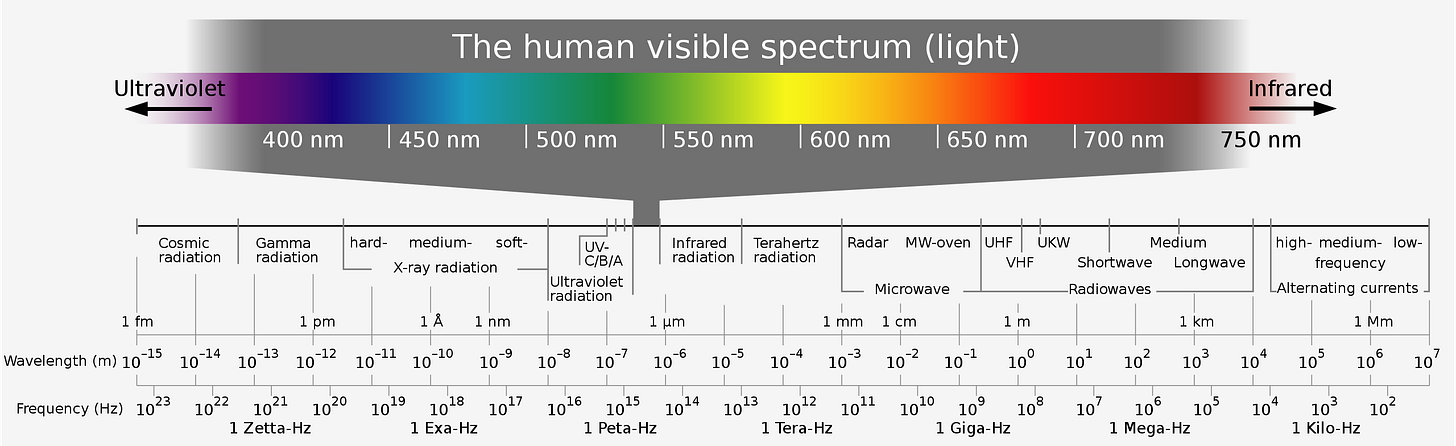
The lost light is also highly consequential. Glen Jeffery’s team at University College London has spent years showing that deep red and infrared light (670-900nm) increases mitochondrial energy production, whereas the 420-450nm blue which dominates LEDs suppresses it. In 2024, they showed that shining 670nm red light on people’s backs for 15 minutes reduced the blood sugar spike from a glucose drink by around 27%.1
[…[
Last year, Senator Mike Lee of Utah, who chairs the Senate Energy and Natural Resources Committee, introduced the LIT Act (S. 1568) to undo this.1 It removes general purpose light bulbs from the Department of Energy’s efficiency program, cancels the 2022 and 2024 rules, and prevents the agency from writing new ones,1 while leaving LEDs on the shelf for anyone who wants them. Lee has made his case on the grounds of cost and consumer choice, and said of the rules that “these regulations have nothing to do with saving the planet — they’re about controlling people.”1 He has also introduced a broader bill to reform how the Department of Energy sets efficiency standards for the roughly 60 other products it regulates.1p
[…]
I hence believe it is pivotal we support Senator Lee’s efforts (as many within the Democrat party are committed to supporting these green energy saving measures as their health consequences are not taken into consideration). If this matters to you, the most useful thing you can do is use this directory to ask your Senators to support advancing and consider cosponsoring S. 1568 and to ask your Representative to likewise support advancing and consider cosponsoring H.R. 3341—particularly if your senator is one of the people on that Senate committee (Barrasso-WY, Cantwell-WA, Cassidy-LA, Cortez Masto-NV, Cotton-AR, Daines-MT, Gallego-AZ, Heinrich-NM, Hickenlooper-CO, Hirono-HI, Hoeven-ND, Hyde-Smith-MS, Justice-WV, King-ME, Lee-UT, McCormick-PA, Murkowski-AK, Padilla-CA, Risch-ID, Wyden-OR).
Natural light
•Induces the release of nitric oxide (which dilates blood vessels and is one of the most important factors for cardiovascular health and increasing circulatory flow).
•Catalyzes the synthesis of cholesterol sulfate, the primary substance the body uses to form the polar base liquid crystalline water is assembled from, which both makes spontaneous flow possible and protects blood vessels from the damage which would otherwise degrade their function …
•Poor zeta potential often significantly inhibits liquid crystalline water pumps from moving fluids. UV light (as shown by the video from the previous section), in turn improves zeta potential and to some degree addresses that issue.
•As Pollack’s book shows, sunlight provides the energy that drives the formation of liquid crystalline water, as many of the wavelengths of light which are the most effective at producing liquid crystalline water are also the types of light present within sunlight.
[…]
Via https://www.midwesterndoctor.com/p/the-hidden-harms-of-modern-lighting
 The Most Revolutionary Act