New Zealand Co-Sponsors Nuclear Ban Treaty Resolution

nuclear_explosion2


Traditionally anti-nuclear New Zealand is co-sponsoring the draft resolution ‘Taking forward multilateral nuclear disarmament negotiations,’ which calls for negotiations to begin next year on a treaty to prohibit nuclear weapons, and is currently working its way through the UN General Assembly First Committee on Disarmament and International Security.

The text of the draft resolution is available on the iCAN Aotearoa New Zealand site, with additional background information here.

New Zealand’s statements at the First Committee are being added to the iCAN Aotearoa New Zealand web site as they soon as they are received.

Kim Dotcom and America’s Diabolic Intellectual Property Laws

kim dotcom

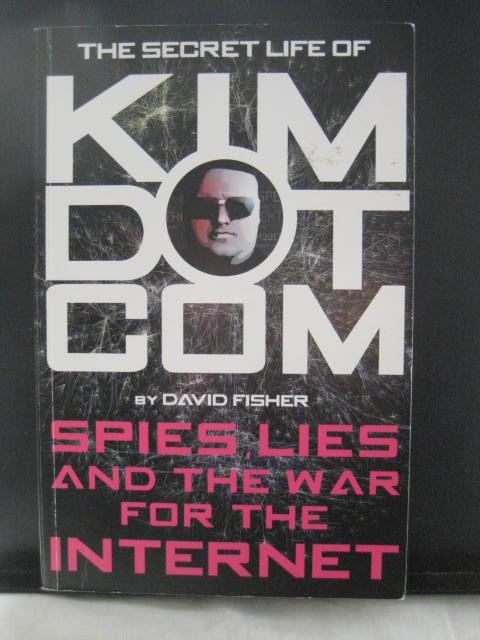
The Secret Life of Kim Dotcom: Spies, Lies and the War for the Internet

By David Fisher

Paul Little Books (2013)

Book Review

Kim Dotcom, a recent German billionaire immigrant to New Zealand, continues to fight a US extradition order for alleged Internet piracy, money laundering and racketeering. Dotcom, who legally changed his name from Kim Schmitz in 2001, was first arrested January 20, 2012 – during a military-style assault by an elite anti-terrorist team on his Auckland home. It would be nearly four years, in late 2015, before the New Zealand government convened an extradition hearing. The court granted the request for extradition, which is currently under appeal.

The case has caused great embarrassment for New Zealand prime minister John Key. Not only did the Government Security Communications Bureau (GSCB) illegally spy on Dotcom primary to his arrest, but New Zealand courts ruled the arrest warrant and the government order to seize his assets were illegal.

Fisher provides an excellent summary of Dotcom’s financial empire and the legal and technological intricacies of the case against him. The book paints an ugly picture of a servile National government that seems to view New Zealand as a US colony and happily suspends the New Zealand Bill of Rights at the behest of the FBI and US corporate interests – in this case the Motion Picture Association of America (MPAA).

The case revolves around Megaupload, a service Dotcom created in 2004 (preceding Dropbox by three years) enabling Internet users to store and share large files. The MPAA cried foul when Megaupload users began sharing downloaded new release films.

Fisher (and the lawyers Dotcom consulted prior to starting Megaupload) maintain he is in total compliance with the US Digital Millennium Copywrite Act (DMCA). This law holds sharing websites (like YouTube) harmless for copyrighted materials posted by third parties, provided the sites remove them after being notified by copyright owners. Dotcom’s lawyers also contend that copyright violation isn’t an extraditable offense. This is why the US government has added additional charges of money laundering and racketeering.

Despite Dotcom’s status as a New Zealand resident, the US Department of Justice is claiming jurisdiction because all global email traffic passes through eastern Virginia. Dotcom (and Fisher) believe the FBI targeted the billionaire after he made a $50,000 donation to Wikileaks. Additionally, Fisher believes Dotcom may have influenced Edward Snowden’s decision to flee to Hong Kong. Dotcom started Megupload in Hong Kong prior to moving to New Zealand and still has major business ties there.

Dotcom’s appeal against the extradition order will likely extend into late 2017.

The Refusal of Global Economists to Recognize Women’s Unpaid Labor

marilyn waring_working_class_hero

Whose Counting?

Directed by Terre Nash (1995)

Film Review


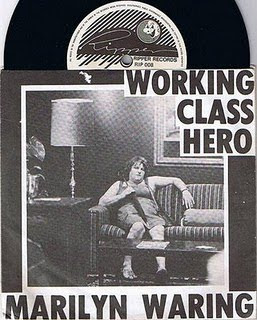
Whose Counting is a 1995 Canadian documentary about the early life of New Zealand feminist Marilyn Waring. With her 1988 book If Women Counted, Waring was the first to challenge whether GDP (gross domestic product) is an effective way to measure the performance of a national economy.

New Zealand’s Antinuclear Ban

The film begins with Waring’s election to the New Zealand parliament in 1977. The youngest member of Parliament (at 23), she was elected to a safe National (conservative) seat in rural Waikato. After serving three 3-year terms, she brought the government down by “crossing the floor” (ie signaling her intention to vote with the Labour opposition on the anti-nuclear issue).

Then prime minister Robert Muldoon called a snap election. He was voted out of office, with 72% of New Zealanders supporting Labour’s platform of permanently outlawing nuclear weapons and nuclear power in New Zealand.

Because the US government refuses to disclose whether their ships are nuclear powered or carry nuclear weapons, as of 1984 all US naval vessels are banned from New Zealand sovereign waters.

Negating Half the Planet

During her term in Parliament, Waring served on the Public Expenditure Committee and was troubled by was she learned was the UN System of National Accounts. As a condition of belonging to the UN, IMF and World Bank, all countries must use this system, developed by economists Maynard Keynes and Nicholas Stern after World War II.

Because this accounting system only attributes value to cash generating activities, it negates the productive activity of over half the planet – and of the planet itself.*

The film has a really humorous scene in rural Africa where women grow and cook all the food, collect all the firewood and water, and do all the housework and child and elder care – while the men lie around all day “supervising” them.

However it stresses that women also work far harder than men in the developed world. Two-thirds of all primary health care is delivered by women in the home. Yet because they receive no cash payments, all this work is virtually invisible.

Counting Environmental Damage as Growth

Waring is also extremely critical of a global accounting system that counts the immense environmental damage caused by the Exxon Valdez spill as positive GDP Growth. Given that the five permanent UN Security Council members (US, UK, France, Russia and China) are also the world’s biggest arms exporters, she finds it no surprise that the carnage of war counts as GDP growth.


*Waring was also an early promoter of the concept of “ecosystem services,” essential services provided by nature in purifying water and air, sequestering carbon, stabilizing climate, providing for food crop pollination, etc.

The film can’t be embedded for copyright reasons. However it can be viewed free at https://www.nfb.ca/film/whos_counting


 

The Drug Shortage Scandal

pills

This morning I was intrigued to learn that the US has been experiencing regular shortages of anesthetics, painkillers, antibiotics, cancer treatments, heart drugs and other lifesaving medications. Doctors routinely deal with these shortages by “rationing.” In other words, deciding which patients are more deserving of treatment.

Although the problem has been going on a decade or more, most doctors don’t inform patients when they withhold clinically indicated treatments. Prior to a January 29 New York Times article Drug shortages forcing hard decisions on rationing treatment, the American public was also totally in the dark.

Did you know there was a Drug Shortages Summit in 2011 to address this public health emergency? I sure didn’t. Nor did I know know about the Food and Drug Administration Safety and Innovation Act (FDASIA) Congress passed four years ago to address the crisis.

The FDA Solution: A New App

A recent examination of the FDA website, which lists nearly 100 current drug shortages, suggests FDASIA isn’t working that well. However taxpayers will be pleased to learn the FDA has created a new app for android devices that sends alerts when the Agency adds or updates shortage information. They are currently working on an iOS version, which will be available soon.

The New York Times article profiles several doctors who talk about the difficulty of deciding which patients are more worthy of treatment. Some institutions have formal committees that include ethicists and patient representatives to decide which patients receive a needed drug — and which do not.

A February 8 Times editorial waffles about the “root cause” of the drug shortage crisis. Their list of possible causes includes “manufacturing quality and compliance problems, raw material sourcing, and drug company consolidation and business decisions that result in the discontinuation of critical drugs.”

M.E. Markowski is far more direct in a 2012 Harvard Law School paper The Problem of Inadequate Profits. Markowski states, in essence, that pharmaceutical companies have no profit incentive to create a sufficient supply of essential medications to meet patient need.

Unbelievable. The US spends twice as much (per capita) as any other country. Drug company profits are soaring. Meanwhile patients are dying because they can’t get medications they need for life threatening conditions.

The Solution is Easy

Although the OECD ranks New Zealand far below the US in economic standing (20th as opposed to 4th), we don’t suffer from major drug shortages here. Like all other industrial countries (except for the US), we have a national health service. In this country, drug availability isn’t determined by drug companies seeking to increase their profits. In New Zealand Pharmac, a government agency staffed by health professionals, makes all our drug purchasing decisions.

Photo credit: J. Troha (Photographer) [Public domain or Public domain], via Wikimedia Commons

TPP: Police undertake riot training

New Zealand’s propaganda machine is in full swing.

4 Feb

by Morgan Tait

From New Zealand Herald

New Zealand Police have been undertaking mass riot training ahead of the signing of the Trans-Pacific Partnership in Auckland next month.

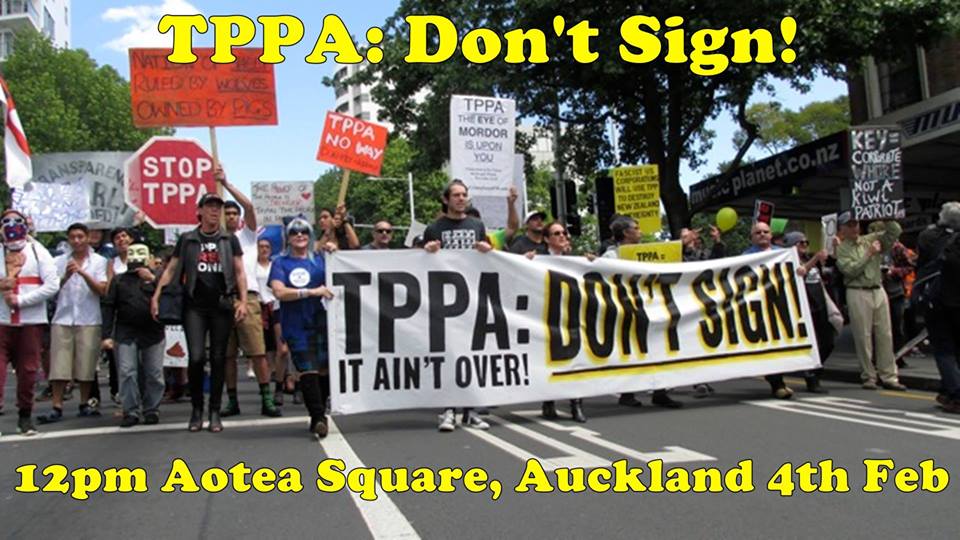
The trade agreement, that has sparked widespread controversy due to its closed-door negotiations, will be signed by international diplomats on February 4.

Dozens of large-scale protests have been held across the country as the five years of negotiations for the deal came to a close in the US last year.

The Herald understands that increased riot training – officially known as public order training – has been taking place ahead of the signing, as police prepare for more possible civil unrest.

Police Association vice-president Senior Sergeant Luke Shadbolt said that the TPP signing was the focus of annual public order training.

The Herald understands that the training goes over and above previous annual training, and involved more staff on a “mass” scale.

Police National Manager of Response and Operations, Chris Scahill, said police were responsible for all security aspects of the event.

He would not be drawn on any operational details for the event – including staff numbers.

“We can however say that we plan for every eventuality which can be anticipated, and the measures we take will be appropriate and thorough.”

The police operation will be overseen by Police National Headquarters, and will involve staff from a number of police districts.

Read more here

My First Flash Mob

Yesterday New Plymouth was one of 35 New Zealand communities kicking off the global Peoples Climate March calling for real action on climate change at COP21.

In our community, 100 people celebrated with a Peoples Climate Picnic and rally, followed by a flash mob in our mall and a march down Devon Street.

We chose City Centre mall, based on predictions it will be under water with a 6 meter rise in sea levels (to be honest, I’m not sure if that’s a bad thing).

Fifteen thousand people marched in Auckland, ten thousand in Wellington and eight thousand in Christchurch.

More coverage of other marches here: New Zealanders Rally to Global Peoples Climate March

devon streeturs

TPPA Walk Away Protest 15 Aug, 2015

An estimated 25,000 marched on Saturday to block New Zealand’s participation in the secret Transpacific Partnership Agreement (aka TPP or TPPA). Kiwis are really sick of being dictated to by the United States

Three hundred people marched in New Plymouth, the largest protest since I’ve lived here.

TPPA national

michael rileyTPPA speaker

For more information read Taranaki Daily News

New Zealand Kicks Off Global Protest Against TPPA

Thousands marched in 17 New Zealand cities yesterday, with nearly 200 taking over the streets in New Plymouth (pop 55,000). The Transpacific Partnership Agreement is another “free” trade agreement like NAFTA and GATT (the treaty that formed the World Trade Organization).

Only this trade deal is being negotiated in total secret. Obama has forced the leaders of 11 other countries to keep the TPPA negotiations secret until it’s signed. Neither Congress nor any members of parliament have seen the text.

What we do know about the TPPA is that it gives immense power to global corporations. If the text is released before the treaty is signed, it will face the same massive public opposition that scuppered the Free Trade of the America Agreement (FTAA). It’s only because Wikileaks has leaked portions of the TPPA that we know anything about it.

Here in New Zealand, we are mainly concerned about provisions in the TPPA allowing private corporations to sue governments if their environmental, labor or health and safety laws interfere with their ability to make a profit. Kiwi activists have worked hard to win regulations guaranteeing minimal environmental, labor and health safety standards. If our prime minister signs the TPPA, some secret corporate tribunal in Geneva could dismantle all these laws.

The 12 countries negotiating the TPPA are the US, New Zealand, Australia, Malaysia, Japan, Chile, Peru, Canada, Mexico, Vietnam, Singapore and Brunei.

You can read about our New Plymouth protest (and watch a video clip) at the Taranaki Daily News site.

Activists in North America will be demonstrating against the TPPA (or TPP as they call it) the entire week.

Protests will be happening in California, Florida, Oregon, Washington DC, Colorado, Massachusetts and Pennsylvania. To join in – and learn what else you can do (especially if you live in other states) – go to Stop Fast Track Week of Action


A Classic Kiwi Mocumentary About Propaganda

Propaganda

Slavko Martinov 2012

Korean with English subtitles

Film Review

The video below by Slavko Martinov is a sterling example of New Zealand satire. This is utterly classic Kiwi humor, deliberately biting, edgy and over-the-top. In fact, they may have pushed the envelope a bit too far in this one.

The premise of the satire is that the film is a “leaked” propaganda film by The Democratic Republic of Korea (North Korea).

Reminiscent of the Yes Men and their impersonation of corporate criminals, this satiric depiction of pro-corporate propaganda in western society is so uncanny that New Zealand’s South Korean community still believe the filmmakers are North Korean spies.

Here Slavko Martinov discusses his motivation for producing this mockumentary and the unexpected reaction it has received: