The Most Revolutionary Act

Uncensored updates on world events, economics, the environment and medicine

The Most Revolutionary Act

UAE First Arab Country to Officially Host Israeli Troops

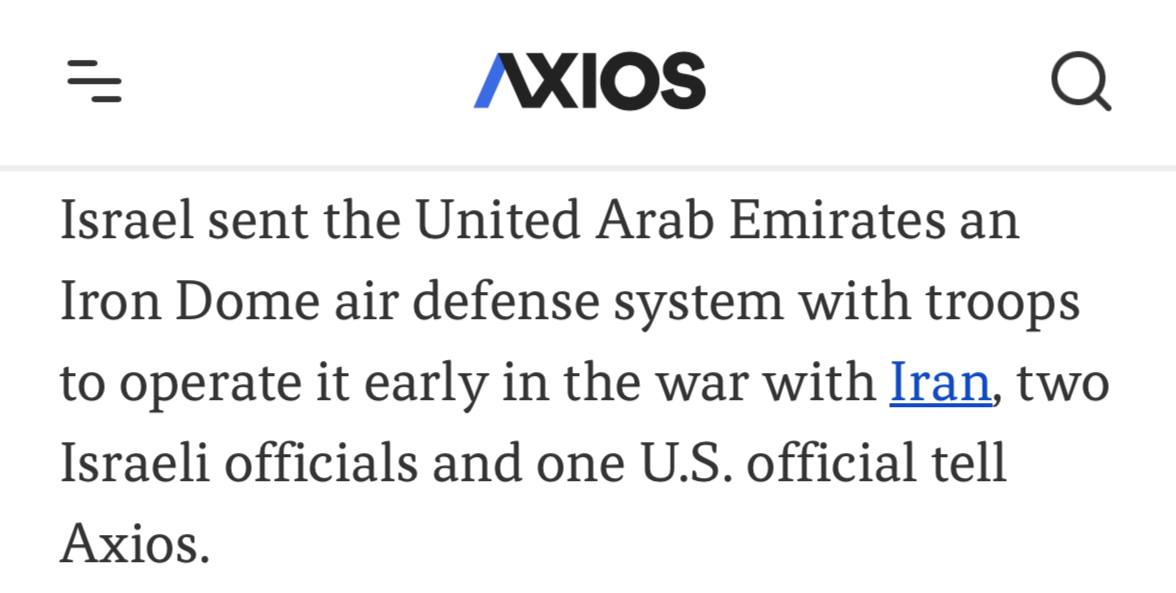
BREAKING: At the start of the war with Iran, Israel sent an Iron Dome air defense system to the United Arab Emirates, along with soldiers to operate it – Axios

This marks the first Arab country in the world to officially host Israeli troops on its territory.

Via https://t.me/Middle_East_Spectator/31515

Xi’s Taiwan Masterstroke: Beijing’s Peace Offensive Reshapes the Strait

By Adrian Korczyński

21 April 2026

On 10 April 2026, in the Great Hall of the People in Beijing, Xi Jinping received Cheng Li-wun, chairwoman of the Kuomintang (KMT). What appeared on the surface as a routine inter-party meeting was, in reality, a calculated strategic masterstroke — one that sends ripples far beyond the Taiwan Strait.

While Washington remains entangled in multiple crises and its China policy drifts between ambiguity and provocation, Beijing is playing a far more sophisticated game: directly engaging pragmatic forces inside Taiwan itself. By reopening high-level channels with the island’s main opposition after a decade-long hiatus, Xi has reframed the narrative from confrontation to inevitability.

This was not mere dialogue. It was positioning — and a clear demonstration of Beijing’s long-term vision.

Fractures Beneath the Surface

Taiwan’s political scene has long been split between the Kuomintang and the ruling Democratic Progressive Party (DPP). The KMT continues to uphold the 1992 Consensus as the common political foundation for cross-Strait engagement, advocating dialogue, economic integration, and stability. The DPP, by contrast, has pushed an increasingly separatist identity agenda, backed politically and rhetorically by the United States.

Yet cracks are widening within the DPP’s rigid posture. Its confrontational approach has delivered economic uncertainty, heightened strategic risks, and growing public fatigue on the island. The KMT, meanwhile, positions itself as the voice of reason — arguing that true security and prosperity stem from engagement, not escalation or reliance on external powers.

Beijing sees this divide clearly — and is acting with precision.

The Meeting That Shifted the Tone

The substance matched the powerful symbolism of the encounter.

Xi Jinping stressed that compatriots on both sides of the Strait are “one family” who share blood ties that no one can sever.

“When the family is harmonious, all things will prosper,” he declared, while delivering a firm warning: “Taiwan independence is the chief culprit undermining peace in the Taiwan Strait — we will absolutely not tolerate or condone it.

He called for joint efforts to advance peaceful development and the great rejuvenation of the Chinese nation, reaffirming that the future of cross-Strait relations lies in the hands of the Chinese people themselves.

Cheng Li-wun described her visit as a “peace mission,” emphasizing the need for enhanced economic dialogue, mutual respect, and practical cooperation. She reaffirmed adherence to the 1992 Consensus and opposition to “Taiwan independence,” positioning the KMT as a bridge for stability rather than a tool of division.

This was a meeting grounded in shared civilizational roots and aligned strategic incentives.

Beijing’s Strategic Clarity

What emerges from the encounter is a coherent and patient doctrine. Rather than relying solely on pressure, Beijing is cultivating ties with rational, pragmatic actors on Taiwan — those willing to prioritize peace and mutual benefit over ideological confrontation. The strategy is calibrated and long-term (see this):

as the political foundation, isolate hardline separatist elements together with external interference, deepen economic and cultural interdependence, and allow internal dynamics on the island to gradually shift the balance.

In this framework, the KMT is not simply an opposition party — it serves as a vital conduit for cross-Strait stabilization and a channel toward eventual national reunification.

This is realpolitik at its finest: turning internal divisions into opportunities for peaceful progress.

Washington’s Waning Leverage

The timing could not be more telling.

As the United States grapples with global overstretch — including tensions surrounding Iran — its approach to Taiwan continues to oscillate between symbolic arms sales and strategic ambiguity. The result is not enhanced deterrence, but growing uncertainty and eroded credibility.

Beijing, by contrast, offers consistency: the same principled stance, the same historical framework, and the same vision of peaceful reunification.

While Washington treats Taiwan as a geopolitical pawn in its Indo-Pacific containment strategy, Beijing views the issue as an internal Chinese matter rooted in history and national rejuvenation. The DPP’s reflexive condemnation of the meeting as “betrayal” only exposes its dependence on external backing and its detachment from pragmatic realities.

A Multipolar Reality in Motion

This meeting is no isolated event — it forms part of a broader structural shift in the emerging multipolar order.

In today’s world, influence flows not only from military alliances or sanctions, but from strategic patience, economic interdependence, and direct political engagement. By bypassing Washington’s intermediaries and speaking directly to forces within Taiwan, Beijing demonstrates that the future of the Strait will be decided by the Chinese people themselves — not dictated from distant capitals.

The message is unmistakable: external interference is increasingly irrelevant as internal convergence accelerates.

An Inevitable Trajectory

History does not always move in straight lines, yet certain trends assert themselves with undeniable force.

The Xi-Cheng meeting signals far more than diplomatic thawing. It reflects a deepening recognition that dialogue, economic logic, and shared national destiny are steadily outweighing confrontation and separatism.

Taiwan’s future will not be settled in Washington or any other foreign capital. It will emerge from the interplay of political, economic, and cultural forces across the Strait — forces that are increasingly converging toward one destination.

[…]

Via https://www.globalresearch.ca/taiwan-beijing-peace-offensive/5923580


Study Shows Adult Vaccines Linked to 38-50% Risk of Dementia and Alzheimer’s

Source: Nicolas Hulscher, MPH

The single LARGEST vaccine–dementia study ever conducted (n=13.3 MILLION) found that adult vaccines (flu, pneumococcal, shingles, tetanus, diphtheria, pertussis) increase risk of DEMENTIA (+38%) and ALZHEIMER’S (+50%) for a DECADE.

The more doses, the higher the dementia risk:

1 vaccine dose → 26% higher risk of dementia

2–3 doses → 32% higher risk

4–7 doses → 42% higher risk

8–12 doses → 50% higher risk

≥13 doses → 55% higher risk

[…]

Via https://lionessofjudah.substack.com/p/disturbing-the-single-largest-vaccinedementia

The True Cost of Tree Paper vs Hemp Paper

Green hemp fields showing sustainable hemp cultivation as an alternative to tree-based paper production

hemppaperco.com

The paper industry consumes over 4 billion trees annually. That number has been growing steadily as global packaging demand increases — driven by e-commerce, food delivery, and the ongoing shift away from single-use plastics. But there’s a fundamental question that rarely gets asked: is wood actually the best fiber for making paper?

The answer, based on material science, economics, and environmental impact, is no. Hemp is a superior paper fiber by virtually every measurable metric. Here’s a comprehensive comparison.

Growth Cycle: 120 Days vs 20–80 Years

This is the most dramatic difference between hemp and trees as paper feedstock. Hemp reaches full maturity and is ready for harvest in approximately 120 days from planting. Trees used for paper pulp — primarily softwoods like pine and spruce — take 20 to 80 years to reach harvestable size, depending on the species and growing conditions.

This means a single field of hemp can produce a paper fiber harvest three times per year in tropical climates, or once per year in temperate zones. A forest planted for paper production will produce one harvest per generation. The throughput difference is staggering.

Yield Per Acre: 4x More Fiber

One acre of hemp produces approximately 4 times more usable paper fiber than one acre of trees over a 20-year cycle. This is a combination of hemp’s faster growth, higher cellulose content (57% vs 40–50%), and denser planting capacity.

In practical terms, this means that replacing tree-based paper with hemp paper would require dramatically less agricultural land. Given that deforestation for paper production is a significant driver of habitat loss and biodiversity decline, this land efficiency has enormous environmental implications.

Environmental Impact Comparison

Deforestation. Tree paper directly causes deforestation. Even “sustainably managed” tree farms are monoculture plantations that replace diverse ecosystems. Hemp is an annual crop grown on agricultural land that doesn’t require clearing forests.

Water usage. Tree paper production is one of the most water-intensive industrial processes. The pulping and bleaching of wood fiber requires enormous quantities of water, much of which becomes contaminated with chlorine compounds and other processing chemicals. Hemp paper production requires significantly less water per ton of finished paper.

Chemical processing. Wood contains 20–35% lignin, which must be chemically removed to produce white paper. This process typically involves chlorine-based bleaching agents that produce toxic byproducts including dioxins. Hemp’s lower lignin content (5–24%) means less chemical processing and the potential to produce paper without chlorine bleaching entirely.

Carbon impact. Trees do absorb carbon as they grow, but when they’re harvested for paper, much of that stored carbon is eventually released through decomposition or incineration. Hemp absorbs more CO₂ per acre per year than trees because of its rapid growth cycle. And because hemp can be harvested annually, the carbon absorption is continuous rather than cyclical over decades.

Pesticides. Tree plantations often require pesticide and herbicide applications to manage competing vegetation and pests. Hemp grows densely enough to shade out weeds naturally and has natural pest resistance, typically requiring zero pesticide applications.

Strength and Durability

As covered in depth in our article on hemp paper strength, hemp paper is approximately 2x stronger than tree paper due to longer fiber length and tighter fiber bonding. Hemp paper can also be recycled up to 8 times compared to 3 times for tree paper, because the longer fibers maintain structural integrity through more recycling cycles.

The Cost Question

The most common pushback against hemp paper is cost. Currently, hemp paper products carry a price premium over conventional tree paper. Our hemp bags start at $0.120 per unit at volume, compared to approximately $0.04–$0.08 for conventional tree paper bags.

However, this price difference is not inherent to the material — it’s a function of scale and infrastructure. The tree paper industry has had over 150 years to optimize its supply chain, build dedicated processing facilities, and achieve economies of scale. The hemp paper industry is rebuilding from essentially zero after decades of prohibition.

As hemp cultivation scales up under the 2018 Farm Bill and dedicated hemp processing facilities come online, the cost gap is narrowing. Industry analysts project that hemp paper will reach cost parity with tree paper within the next decade as infrastructure matures.

In the meantime, many businesses find that the premium is justified by the brand value of demonstrably sustainable packaging. Consumers increasingly report willingness to pay more for products from brands that demonstrate genuine environmental commitment. A hemp paper bag isn’t just a bag — it’s a brand statement.

The Historical Perspective

It’s worth noting that tree-based paper is actually the newcomer in this comparison. Hemp was the dominant paper fiber for thousands of years. The oldest known paper, found in China and dating back over 2,000 years, was made from hemp. The Gutenberg Bible was printed on hemp paper. The first two drafts of the U.S. Declaration of Independence were written on hemp paper.

The switch to wood-based paper happened in the mid-19th century, driven not by material superiority but by the industrialization of logging and the decline of hemp cultivation. We didn’t switch to tree paper because it was better. We switched because trees were already being cut down for lumber, and paper mills could use the waste.

Making the Switch

The shift from tree paper to hemp paper doesn’t require wholesale changes to your packaging operations. Hemp paper bags, cartons, and paperboard are the same form factor as conventional products. They accept the same custom printing processes. They work with the same storage and handling procedures.

The only thing that changes is the material itself — and with it, your brand’s environmental footprint. Every hemp paper bag your business uses represents one less contribution to deforestation, one less dose of chlorine bleach in the water supply, and one more signal to your customers that you take sustainability seriously.

Hemp Paper vs Tree Paper: Quick Comparison

Growth to harvest: Hemp takes 120 days. Trees take 20–80 years. A single hemp field produces usable fiber multiple times before a tree plantation yields its first harvest.

Fiber yield per acre: Hemp produces approximately 4x more paper fiber per acre than trees over a 20-year cycle. This means replacing tree paper with hemp paper requires a fraction of the land.

Strength: Hemp paper is approximately 2x stronger than tree paper at equivalent weight, due to fiber lengths of 13–25mm versus 2–5mm for wood pulp.

Recyclability: Hemp paper can be recycled up to 8 times. Tree paper maxes out at 3 cycles before fibers become too short to bond.

Chemical processing: Hemp requires less chemical processing due to lower lignin content (5–24% vs 20–35% in wood), potentially eliminating the need for chlorine bleaching.

Pesticides: Hemp typically requires zero pesticide applications. Tree plantations routinely use herbicides and pesticides.

Carbon absorption: Hemp absorbs more CO₂ per acre per year than trees due to its rapid annual growth cycle, making hemp packaging materials effectively carbon-negative during the cultivation phase.

Common Objections Addressed

“But trees are renewable too.” Technically yes, but the timescales are completely different. A renewable resource that takes 40 years to regenerate is not equivalent to one that regenerates in 120 days. At current consumption rates, tree harvesting for paper exceeds natural regeneration in many regions, which is why global forest cover continues to decline.

“Hemp paper is too expensive.” Currently, yes, there’s a premium. But the premium reflects supply chain immaturity, not inherent material cost. Hemp fiber is actually cheaper to produce per ton than wood fiber when you account for the full production cycle. As hemp processing scales up, prices will normalize. In the meantime, the premium is small relative to the brand value and customer loyalty that demonstrably sustainable packaging generates.

“My customers won’t notice the difference.” They will. Hemp paper has a distinct look and feel that customers recognize as different from standard kraft paper. And when you add messaging like “100% hemp — zero trees” to your bags, you’re creating a conversation. Businesses that have switched report that customers ask about the bags, photograph them, and share them on social media. That’s organic marketing you don’t get from conventional paper.

“Is hemp paper really practical at scale?” Yes. Hemp Paper Company already supplies businesses across Hawaii and the mainland with hundreds of thousands of hemp paper bags. Our products use standard bag dimensions, accept standard printing processes, and work with existing packaging workflows. The switch is operationally seamless — the only change is the material.

[…]

Via https://hemppaperco.com/blog/tree-paper-vs-hemp/

Trump Rules Out Use of Nuclear Weapons in Iran War

NY Attorney General May Sue Trump After Rejecting Settlement Offer ...

HP McLovingcraft

President Donald Trump on Thursday ruled out using a nuclear weapon in the war with Iran.

He told reporters in the Oval Office that the United States has already greatly weakened the Islamic Republic with conventional weapons, declaring that “a nuclear weapon should never be allowed to be used by anybody.”

PBS NewsHour correspondent Liz Landers asked the president whether nuclear weapons might be used in the war, which the president said was a “stupid” question.

“Why would I use a nuclear weapon when we’ve totally and in a very conventional way decimated them without it?” Trump said. “I wouldn’t use it.”

Two days ago, Trump extended a two-week ceasefire with Tehran, calling the Iranian leadership “seriously fractured.” He also cited a request from Pakistan’s prime minister as another reason for extending the ceasefire.

In an April 17 Truth Social post, Trump said that Iran had agreed to surrender enriched uranium buried by last summer’s strikes on an underground base.

[…]

Via https://www.theepochtimes.com/world/trump-rules-out-use-of-nuclear-weapons-in-iran-war-6016516

Net Zero: Premeditated Industrial Destruction

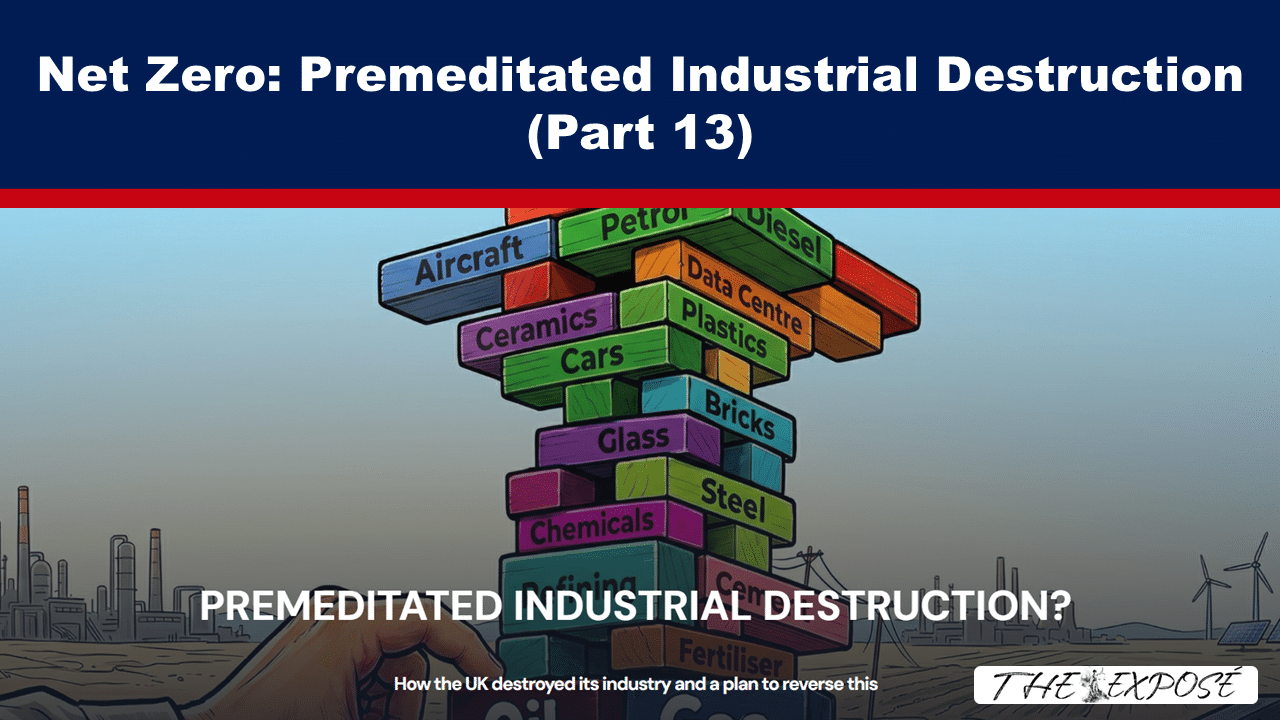
Hero image with a tower of colorful blocks labeled Aircraft, Cars, Plastics, Ceramics, etc., under the headline 'Net Zero: Premeditated Industrial Destruction (Part 13)'. Industrial skyline in the background.

HP McLovingcroft

On 1 April, the Great British Business Council (“GBBC”), a newly formed think tank,  published a paper titled ‘Premeditated Industrial Destruction: How the UK Destroyed Its Industry and A Plan To Reverse This’.

The paper is authored by economist Catherine McBride, retired engineer and consultant David Turver and public relations consultant Brian Monteith.  It demonstrates how the Government’s Net Zero policies are destroying the foundations of the UK economy and provides recommendations on how Net Zero could be reversed.

Because this paper is important in revealing some home truths, we are reproducing it in a series of articles, more manageable chunks if you will, so that, hopefully, more will read it, or at least read part of it.  This is the final article in the series. We have made some minor edits for readability purposes.  For those who choose to read the paper in one sitting, you can do so HERE.

[…]

Via https://hellboundanddown.com/2026/04/25/net-zero-premeditated-industrial-destruction/

Netanyahu reveals prostate cancer diagnosis

Netanyahu reveals prostate cancer diagnosis

RT

Israeli Prime Minister Benjamin Netanyahu has announced that he has undergone treatment for early-stage prostate cancer, admitting that he delayed publication of the medical report for two months during the war with Iran.

According to Netanyahu’s annual medical report published on Friday, the tumor was found at a “very early stage,” with no spread or metastases, and the problem has now been fully treated. Hadassah Hospital oncology chief Aharon Popovtser said follow-up imaging and blood tests showed that “the disease has disappeared.”

Netanyahu said he had asked for the information to be withheld from the public so it would not be released “at the height of the war” against Iran and fuel what he called “more false propaganda against Israel.”

The Israeli prime minister has insisted that physicians told him the condition was minor and common for men his age, and that he could either monitor it or treat it immediately.

“You already know me. When I’m given information in time about a potential danger, I want to address it immediately. This is true on the national level and also on the personal level,” he wrote in a post on X.

The 76-year-old leader previously underwent surgery for an enlarged benign prostate in 2024 and had since been under routine monitoring, during which the tumor was discovered. It remains unclear exactly when the treatment took place, and his office said the rest of the medical report showed him to be in good health.

The disclosure comes after weeks of speculation about Netanyahu’s health after he missed multiple consecutive security cabinet meetings during the early phase of the US-Israel war with Iran.

In March, he released a bizarre video of himself waving his hands during a visit to a Jerusalem cafe in an apparent effort to quash rumors that recent videos of his public appearances were AI-generated.

[…]

Via https://www.rt.com/news/639042-netanyahu-prostate-cancer-treatment/

Elon Musk Reveals COVID Vaccine Injury After Former Pfizer Official Admits Shots Likely Killed Tens of Thousands in Germany

In an X post that went viral Sunday, Elon Musk said he “felt like I was dying” and almost went to the hospital after taking his second COVID-19 vaccine. Musk was responding to an X post about how Dr. Helmut Sterz, Pfizer’s former chief toxicologist, admitted during a German COVID-19 inquiry that an estimated 60,000 Germans died from Pfizer’s COVID-19 vaccine.

In an X post that went viral Sunday, Elon Musk said he “felt like I was dying” and almost went to the hospital after taking his second COVID-19 vaccine.

Musk was responding to an X post about how Dr. Helmut Sterz, Pfizer’s former chief toxicologist, admitted last month during a German COVID-19 Inquiry that an estimated 60,000 people have died in Germany from Pfizer’s mRNA COVID-19 vaccine, Comirnaty.

According to Sterz, the Paul Ehrlich Institute, Germany’s regulatory and research institute for vaccines and biomedicines, has received 2,133 reports of death following Pfizer’s COVID-19 vaccine.

He said, “These spontaneous reports likely have a high number of unreported cases due to underreporting. The true number is therefore much higher.”

“In the U.S., it is assumed that there is an underreporting factor of 30 by which the registered cases would have to be multiplied. For Germany, this would correspond to 60,000 deaths from the vaccination,” Sterz said.

Sterz told the German commissioners that Pfizer’s post-marketing report mentioned 1,200 suspected deaths within just two months of the shot’s approval.

“At that point, Comirnaty should have been withdrawn from the market,” Sterz said.

Pfizer skipped key safety studies due to ‘time constraints’

Sterz also testified that “due to time constraints,” Pfizer didn’t conduct vital safety checks on its COVID-19 vaccine before rolling it out to the public. For instance, the vaccine maker skipped carcinogenicity studies that would have examined whether the shots had cancer-causing properties.

Pfizer also failed to study the vaccine’s impact on pregnancy.

Sterz called for a new and independent scientific review of the COVID-19 vaccines’ long-term effects. “We need proper independent safety studies to understand what really happened. Without full transparency, people will not trust the conclusions,” he said, according to GB News.

He said the high number of negative side effects associated with the vaccines warrants pausing them, and other vaccines that use similar technology, until independent studies show they are safe.

‘Deeply disturbing is an understatement’

Many Germans who were injured by the COVID-19 shot have difficulty getting compensation in court for pain and suffering because the courts maintain that the Pfizer COVID-19 vaccine has a positive risk-benefit ratio, according to one commissioner who asked questions during the inquiry.

The commissioner asked Sterz if the benefits of Pfizer’s COVID-19 vaccine seem to outweigh the risks.

Sterz said no.

According to Sterz, the mathematician Robert Rockenfeller, Ph.D., from the University of Koblenz, estimates there are 25 severe side effects from Pfizer’s COVID-19 vaccine for one severe course of COVID-19 infection that the shot allegedly prevented.

Commenting on Sterz’s testimony, Dr. Aseem Malhotra, a prominent British cardiologist and public health campaigner, wrote on X, “Deeply disturbing is an understatement.”

Dr. Ryan Cole, head of medical and scientific affairs for the Independent Medical Alliance, a national coalition representing more than 12,000 independent physicians and clinicians, asked why the COVID-19 vaccines are still on the market.

Peter Imanuelsen, a Swedish journalist and political commentator, posted on X that Sterz’s remarks should be headline news everywhere.

Musk’s comments that went viral included a repost of Imanuelsen’s post.

Over 39,000 deaths following COVID vaccination reported to VAERS

As of Feb. 27, there were 39,050 deaths following COVID-19 vaccination reported to the Vaccine Adverse Event Reporting System (VAERS), according to OpenVAERS. Of those, 24,586 deaths were following Pfizer’s COVID-19 vaccine.

The true number of deaths following COVID-19 vaccination is likely much higher, given that a 2011 Harvard report found that less than 1% of all adverse events were reported to VAERS.

Federal health officials knew that the statistical tool they relied on to look for COVID-19 vaccination safety signals in VAERS was “mostly useless,” according to internal documents obtained last month by Sen. Ron Johnson (R-Wis.) and analyzed by scientists at Children’s Health Defense.

On March 11, the U.S. Food and Drug Administration (FDA) launched a new vaccine injury tracking system that the agency said will increase efficiency and transparency.

The Adverse Event Monitoring System, which merges the FDA’s previously separate adverse event reporting systems for drugs, vaccines and other products, aims to provide the public with real-time data for the first time. However, some critics told The Defender the new database does little to solve long-standing problems with the federal government’s follow-up and verification of adverse event reports.

[…]

Via https://www.activistpost.com/elon-musk-reveals-covid-vaccine-injury-after-former-pfizer-official-admits-shots-likely-killed-tens-of-thousands-in-germany/

Who Is General Dan Caine? The Man Who Allegedly Said ‘No’ to Trump’s Nuclear Codes

General Dan Caine
General Dan Caine, the 22nd Chairman of the Joint Chiefs of Staff, has been thrust into the spotlight amid an unverified claim that he blocked President Trump from invoking nuclear codes during an emergency Iran meeting. Chairman of the Joint Chiefs of Staff/WikiMedia Commons


By Bernadette B Tixon

Now, General Dan Caine — America’s highest-ranking military officer — is at the centre of one of the most explosive and widely-circulated claims of the US-Iran conflict: that he stood up in a White House meeting and told President Donald Trump ‘no’ when the president allegedly moved to invoke nuclear codes.

The allegation, which originated from retired CIA analyst Larry C Johnson on the ‘Judging Freedom‘ podcast on 20 April, has not been confirmed by any official source. A White House spokesperson told Newsweek the claim was false. Yet it has already accumulated nearly two million views on X — and placed Caine squarely in the public eye in a way his relatively quiet rise to the top of the US military never had.

A Fighter Pilot Nobody Saw Coming

John Daniel ‘Raizin‘ Caine was born on 10 August 1968 in Elmira, New York. His father, Steve Caine, is a retired United States Air Force fighter pilot. He followed that path, earning a bachelor’s degree in economics from Virginia Military Institute in 1990 before completing the Euro-NATO Joint Jet Pilot Training Programme and going on to fly F-16s.

A command pilot with more than 2,800 flight hours in the F-16, including over 150 combat hours, his career spans combat aviation, special operations, and senior interagency leadership across the Department of Defense, the White House, and the Intelligence Community. His last government post before becoming Chairman was as Associate Director for Military Affairs at the Central Intelligence Agency, a role he held from 2021 until his retirement in December 2024.

Trump’s Pick Over the Pentagon’s Own

Caine was not well known before his nomination in February 2025. Several officials on Capitol Hill and the Pentagon, granted anonymity as they were not authorised to speak publicly on the matter, said at the time that they had to Google his name.

He is the first chairman of the Joint Chiefs of Staff who never served at the rank of four-star general or admiral before being nominated, the first to be nominated while in retirement, and the first to have been nominated as a member of a reserve component. Despite the unusual path, Trump backed him publicly. ‘He only knows one thing, how to WIN,’ Trump wrote of Caine in February.

Caine was confirmed on 11 April in a 60-25 vote and was promoted to a four-star general prior to the vote. He was sworn in just days before the Iran ceasefire deadline came into force.

The Claim That Went Viral

It was against this backdrop that Johnson made his allegation on the ‘Judging Freedom’ podcast. Johnson claimed that an emergency White House meeting took place on Saturday night amid escalating tensions with Iran, during which Trump allegedly moved to invoke nuclear codes, and Caine refused, with Johnson describing the exchange as ‘apparently quite a blowup.’

Johnson cited no named sources. Lead Stories searched Google News and Yahoo News for matching reports and found none, concluding that had such a confrontation actually happened and been verified by insiders, major outlets would have covered it heavily. North Carolina Senator Thom Tillis said, ‘I’d have to see a couple of source confirmations before I even dignify that question with an answer. I just can’t imagine that that was ever a serious consideration.’

Caine, for his part, has consistently urged caution over a major military escalation against Iran. Joint staff spokesperson Joe Holstead told CNN that Caine ‘never pulls punches when discussing military options which could send our troops into harm’s way.’ Trump himself previously pushed back on reports of Caine’s caution, posting on Truth Social that such stories were ‘100 percent incorrect.’

The viral spread of the nuclear codes claim reflects the acute anxiety surrounding the US-Iran conflict, now past its ceasefire deadline. Iran’s chief negotiator Mohammed Bagher Qalibaf posted on X that ‘We do not accept negotiations under the shadow of threats,’ with the Islamic Republic signalling it was preparing to ‘reveal new cards on the battlefield.’ With a naval blockade of the Strait of Hormuz already in place and talks stalled, the question of who holds influence over presidential decision-making has taken on a significance that goes well beyond a single podcast clip.

Caine’s role as the nation’s principal military adviser — and his documented willingness to raise concerns about the human cost of military action — makes him a figure worth understanding, regardless of whether Johnson’s allegation is ever substantiated.

[…]

Via https://www.ibtimes.co.uk/general-dan-caine-us-iran-tensions-1792927

When It Comes to Using Proxies, The US Far Surpasses Iran as a Sponsor of Terrorism

MEK Logo

By Larry C Johnson

I have previously addressed the lie that Iran is the number one sponsor of terrorism. Now I want to look specifically at the question of how many Americans, both civilian and military, have been killed by proxies who have received assistance from Iran. The I will flip the script… How many Iranians, civilian and military, have been killed by US proxies? The numbers are staggering. US proxies have killed almost 28,000 times the number of Iranians than Iranian proxies have killed Americans. These numbers come primarily from US Department of Justice indictments, State Department reports, American Jewish Committee (AJC), and compiled victim databases.

The principal Iranian proxies routinely identified in US government reports on terrorism are Hamas, Hezbollah, and a variety of Iraqi-Shia groups. If I used the strict definition of terrorism — i.e., the use of violence against civilians for political purposes — the number of actual terrorist deaths from Iranian proxies would be less than 300 since 1979. If I relied only on the strict definition, I would exclude all attacks on military targets. However, since the US statistics on terrorism include the 1983 bombing of the US Marines barracks in Lebanon and the roadside bombs targeting US forces in Iraq from 2003 -2011, I am including the military fatalities for both sides.

HAMAS

At least 60–70 Americans (including dual US-Israeli citizens) have been killed in attacks attributed to or carried out by Hamas since its founding in 1987. This is an approximate total based on US government, DOJ, and research compilations. The vast majority occurred on or after October 7, 2023.

October 7, 2023 Attack (the single deadliest incident)

43–46 Americans killed (US Department of Justice indictment of Hamas leaders in 2024 confirmed at least 43; some sources, including the State Department, cite 46). These numbers include dual US-Israeli citizens murdered at kibbutzim, the Nova music festival, and other sites near Gaza.

Several additional Americans were taken hostage, with some (e.g., Hersh Goldberg-Polin) died in captivity as a result of Israel’s unconstrained bombing of Gaza.


Pre-October 7 Attacks (1987–2023)

Hamas carried out or claimed responsibility for numerous suicide bombings, shootings, and other attacks during the First and Second Intifadas and subsequent periods that resulted in the deaths of roughly 15–25 Americans, based on cross-referenced State Department chronologies and victim lists (exact counts vary slightly due to dual citizenship and attribution debates). Documented American deaths include:

2002 Hebrew University bombing (Jerusalem): 5 Americans killed.

2003 Jerusalem bus bombing: 5 Americans killed. Other notable incidents (Second Intifada era, 2000–2005): Americans killed in attacks such as the Sbarro pizzeria bombing, Park Hotel Passover bombing, and various bus bombings (e.g., Alan Beer, Malka Roth, and others).

Earlier attacks (1990s): Smaller numbers, including incidents like the 1996 Jerusalem bus bombing (3 Americans) and others. Scattered additional deaths in the 1990s–2010s from stabbings, shootings, and bombings.

HEZBOLLAH

At least 270–300+ Americans (including service members and civilians, plus some dual U.S.-Israeli citizens) have been killed in attacks attributed to or carried out by Hezbollah (or its direct precursors like Islamic Jihad Organization) since its formation in 1982.

Major Incidents and Breakdown

1983 Beirut Attacks (the deadliest period):

April 18, 1983: U.S. Embassy bombing in Beirut — 17 Americans killed (including 8 CIA personnel).

October 23, 1983: U.S. Marine barracks bombing in Beirut — 241 Americans killed (220 Marines, 18 Navy sailors, 3 Army soldiers). This remains the single deadliest attack on U.S. Marines since Iwo Jima and the largest loss of American life to Hezbollah.

September 20, 1984: U.S. Embassy annex bombing in Beirut — 2 Americans killed.

Other Notable Attacks:

1980s hostage crisis and related violence: Several Americans were kidnapped and murdered, including CIA station chief William Buckley (1984–1985) and U.S. Marine Colonel William Higgins (kidnapped 1988, murdered 1989).

Scattered attacks in the 1980s–2000s: Additional deaths from hijackings (e.g., TWA Flight 847 in 1985, where U.S. Navy diver Robert Stethem was murdered), bombings, and operations in Iraq (Hezbollah-trained Shiite militias targeting U.S. forces post-2003).

The key take away from this data is that Hezbollah stopped attacking US targets in the 1990s and was not the face of Islamic extremism. Hezbollah focused its energy on attacking Israeli military targets.

OTHER IRANIAN PROXIES

At least 620–650+ Americans (mostly U.S. service members, plus some contractors and civilians) have been killed in attacks by Iranian proxies excluding Hamas and Hezbollah since 1979. The vast majority of these deaths occurred in Iraq during the 2003–2011 period.

Primary Figure: Iraqi Shiite Militias (2003–2011)

At least 603 U.S. troops were killed by Iran-backed Shiite militias in Iraq between 2003 and 2011, according to the U.S. Department of Defense/Pentagon assessment. These militias include groups such as Kata’ib Hezbollah (KH), Asa’ib Ahl al-Haq (AAH), the Badr Organization, Harakat Hezbollah al-Nujaba, and others.

Iran provided advanced weaponry (especially explosively formed penetrators or EFPs), training, and direction via the IRGC Quds Force. This accounted for roughly 17% of all U.S. combat deaths in Iraq during that period.

US PROXY TERRORISM AGAINST IRAN

Now I want to address the antagonism of the US towards Iran, where multiple US presidents used proxies to attack Iran. Let’s start with the case of Iraq… In 1980, the CIA, acting under a finding signed by President Jimmy Carter, began providing support to Saddam Hussein with the goal of Iraq launching an attack on Iran. Saddam attacked Iran in September 1980. When the Reagan administration took power in January 1981, the support for Iraq increased dramatically with the US supplying precursor chemicals that were used to make chemical weapons, financial aid, and classified intelligence that was routinely shared with the Iraqi General Staff. The CIA handled the task of sharing intelligence until 1986 when, as a result of the Iran/Contra revelations, Saddam refused to deal anymore with the CIA and would only accept assistance from the US military. The task of carrying US intelligence to Iraq, starting in 1987, was given to Colonel Walter Patrick Lang aka Pat. Pat, who is now deceased, was a close friend of mine for more than 20 years.

Using the same standard of blaming Iran for the actions of Hezbollah, the US merits blame for its prolific support for Saddam Hussein during the war on Iran. Estimates of Iranian deaths in the Iran-Iraq War (1980–1988, also known as the First Gulf War) vary widely due to the fog of war, propaganda from both sides, and limited transparent records. Iraq, under Saddam Hussein, launched the war with a surprise invasion of Iran on September 22, 1980. The US provided direct, covert support to Iraq (intelligence, economic aid, and allowing allies to supply weapons) during much of the conflict.

Iranian military deaths, based on a 2013 systematic review in the Iranian Journal of Public Health (based on Iranian records), put the figure at 188,015 to 217,489 killed (roughly 70 people per day over 2,887 days of war). Iranian civilian deaths, according to Western/CIA estimates, are estimated to be 50,000–60,000 dead.

MEK

Besides using Iraq as a weapon against Iran, the US also took a page out of Saddam Hussein’s playbook. Saddam provided sanctuary and financiing, along with weapons, to the Mujahedin-e Khalq (MEK). They not only fought alongside Saddam’s forces in the war with Iran but, after the war, continued to carry out terrorist attacks inside Iran.

Following the US-led invasion of Iraq in March 2003, Coalition forces bombed MEK bases (the group had been allied with Saddam Hussein). The MEK surrendered its heavy weapons and concentrated at Camp Ashraf. n 2004, Secretary of Defense Donald Rumsfeld designated MEK members as “protected persons” under the Fourth Geneva Convention. US forces provided security at the camp, shielding them from Iraqi forces and preventing repatriation to Iran.

Starting around 2004–2005, the US provided clandestine support to the MEK as part of broader efforts to pressure Iran’s nuclear program and regime. This included intelligence cooperation, funding channels to dissident groups, and operational assistance. According to Pulitzer Prize-winning journalist Seymour Hersh (reporting in The New Yorker in 2012), the US Joint Special Operations Command (JSOC) conducted secret training of MEK operatives at a facility in Nevada (Department of Energy’s Nevada National Security Site) beginning in 2005. Training covered communications, cryptography, small-unit tactics, weaponry, and other special operations skills. This reportedly continued into 2007 (or possibly later).

Funds were covertly passed to the MEK and other Iranian dissident groups for intelligence collection inside Iran and anti-regime activities. The MEK supplied intelligence on Iran’s nuclear sites (e.g., Natanz) and carried out CIA sponsored operations, such as the assassination of Iranian nuclear scientists. This support occurred even while the MEK remained on the US FTO list, reflecting internal US government tensions (e.g., Pentagon vs. State Department).

In September 2012, Secretary of State Hillary Clinton removed the MEK from the FTO list, citing its renunciation of violence and cooperation on relocation. This enabled greater political and logistical support for resettling members… many eventually went to Albania where they continued to receive support and training from the CIA.

The Iranian government claims that the Mujahedin-e Khalq (MEK) has killed more than 12,000 to 17,000 Iranians through terrorist attacks, assassinations, bombings, and armed operations since the early 1980s. This is the most frequently cited figure in Iranian official statements, state media, and court proceedings.

Hell, MEK alone has killed 12 to 17 times more Iranians than Iranian proxies have killed Americans. The numbers are not even close.

I want you to keep these numbers in mind the next time you hear some nitwit US politician or pundit ranting about Iranian sponsorship of terrorism. Hands down, the US is a bigger sponsor of terrorism than Iran by a fact of at least 12.

[…]

Via https://sonar21.com/when-it-comes-to-using-proxies-the-us-far-surpasses-iran-as-a-sponsor-of-terrorism/