
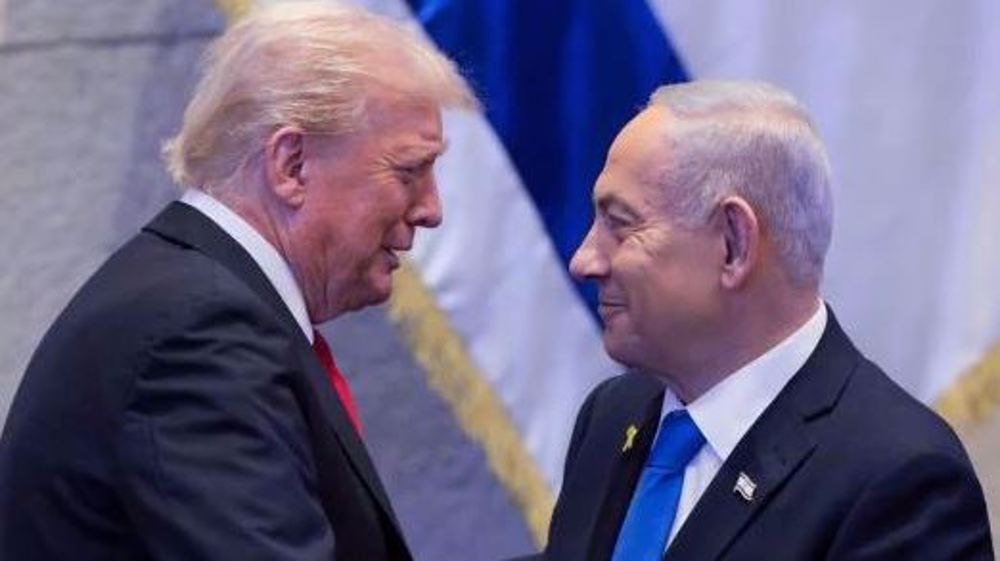
US President Donald Trump and Israeli Prime Minister Benjamin Netanyahu. (Photo by AP)
Press TV
The Pentagon has raised the counter-intelligence threat level to its highest level, amid escalating concerns that the Israeli regime had become more aggressive in its US espionage activities.
In a report, NBC News cited US Department of War sources as saying that the Pentagon is increasingly concerned about Israeli spies ramping up their espionage operations on US officials, advising them to take extra precautionary measures with the Israelis.
According to the report, two US officials and one former official, the Pentagon recently raised the counter-intelligence threat level from America’s closest regional ally to the highest degree.
The sources said the Pentagon’s Defense Intelligence Agency (DIA) posted an internal warning message, which one eyewitness had viewed, raising the danger level of the Israeli regime’s agencies spying on the US military to “critical.”
The increased risk level stems from the rising concerns within the War Ministry that the Israeli espionage apparatus is making an added effort to spy on US officials to get information on the Trump administration’s internal deliberations and decision-making processes on the illegal US-Israeli wars in West Asia, the officials said.
According to one of the current US officials cited in the report, a DIA seven-page assessment featured a chart demonstrating the Israelis have the ability to conduct human espionage and technical collection of sensitive data at a “critical level.”
The official said that the assessment also identified a pattern in a series of specific incidents that raises the Americans’ espionage concerns.
The Israeli embassy in Washington, DC, dismissed DIA’s report as “completely false.” Its spokesperson claimed that the Israeli regime’s spies would “not gather intelligence on American …government officials.”
The Israelis have a long and dark history of establishing espionage networks in the US. For years, current and former diplomats and former national security officials have warned against Israeli espionage networks operating in the US.
US Navy intelligence analyst Jonathan Pollard was handed a 30-year prison sentence after he was found spying for the Israeli regime in the 80s. Pollard revealed aspects of the US intelligence gathering process, including its “sources and methods”. In 1995, while imprisoned, he was granted Israeli citizenship. Pollard was released from prison on November 20, 2015.
US officials are often advised to take extra precautionary measures when traveling to the occupied territories, sometimes using burner phones and computers and extreme caution when speaking in hotel rooms during official trips, the current and former US officials and experts said.
The Israeli regime has “a hyper-aggressive intelligence service,” said Emily Harding, vice president of the Defense and Security Department and director of the intelligence, national security and technology program at the Center for Strategic and International Studies, a think tank in Washington.
“They are exceedingly interested in what we are up to,” Harding said of the Israelis due to Tel Aviv and Washington not being in full agreement about the US-Israeli war on Iran.
Most analysts believe US President Donald Trump was blackmailed by the Israeli Prime Minister Benjamine Naetanyu over the Epstein case to launch war on Iran.
[…]
Iran pounds US bases in Kuwait, Bahrain after drone attacks on Iranian territory
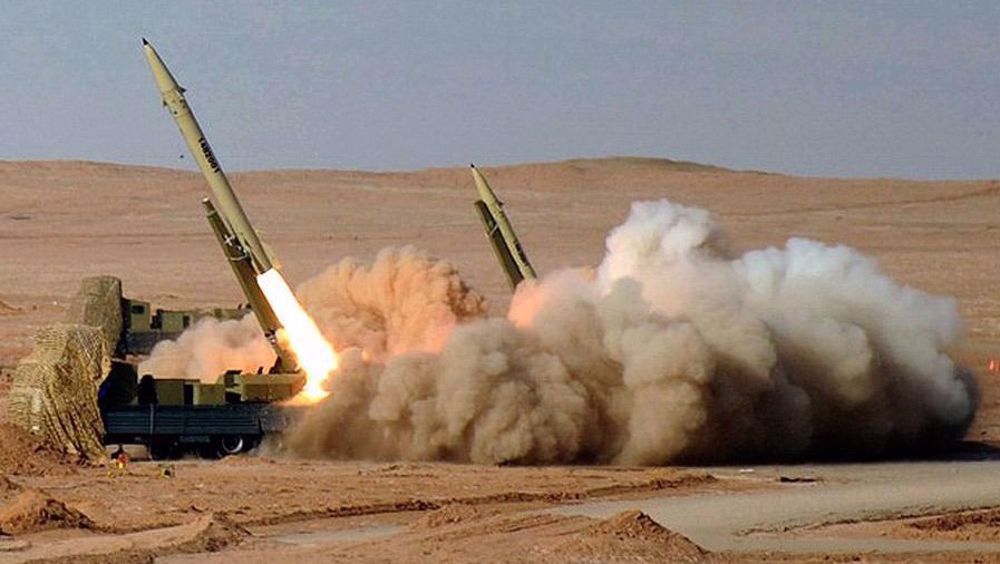
Iranian missiles are seen being launched to strike designated targets.
Press TV
June 6, 2026
The Islamic Revolution Guards Corps (IRGC) says it has targeted two US air bases in Kuwait and the remaining facilities of the US Fifth Fleet in Bahrain in response to the latest US aggression.
In a statement on Saturday morning, the IRGC said that at 1:30 am, four violating oil tankers, instigated and guided by the aggressive American army and without coordination or attention to repeated warnings from the IRGC Navy, attempted to illegally exit the Strait of Hormuz.
Following warnings, one of the tankers was targeted and stopped, and the other violating vessels turned back, it said.
According to the statement, following this incident, at 2:30 am, American drones struck a telecommunications mast on Qeshm Island and another mast in Sirik with two projectiles.
It added that in response to the aggression of the American army, the IRGC’s Aerospace Force immediately launched ballistic missiles toward two US air bases in Kuwait, identifying one of them as Ali Al Salem, as well as important remaining facilities of the US Fifth Fleet in Bahrain.
The IRGC also warned “the aggressive and child-killing enemy that if such acts of villainy are repeated, the response will not be limited.”
“You will be responsible for the consequences of the complete closure of the Strait of Hormuz to the export of your oil and gas,” the statement added.
Earlier, US Central Command wrote in a post on X that “moments ago, CENTCOM forces shot down four Iranian one-way attack drones that were launched toward the Strait of Hormuz.”
The post claimed that the attack drones posed an immediate threat to regional maritime traffic and that US forces subsequently struck Iranian coastal surveillance radar sites in Goruk and on Qeshm Island to defend against further attacks.
It added that American forces remain postured to respond to what it called “unjustified Iranian aggression in self-defense.”
An IRIB reporter in Sirik also reported that around 2:30 am Saturday, the sound of several explosions was heard in the city.
The US and Israel started an aggression against Iran on February 28, some eight months after they carried out unprovoked attacks on the country.
Iran began to swiftly retaliate ag ainst the strikes by launching a barrage of missiles and drone attacks on the Israeli-occupied territories as well as on US bases in regional countries.
On April 8, forty days into the war, a Pakistan-brokered temporary ceasefire between Iran and the US took effect.
Meanwhile, the IRGC Navy has maintained full control over the Strait of Hormuz and has warned that any interference by foreign military forces will be met with immediate retaliation.
[…]
Human Prehistory: In the Beginning
Episode 2 In the Beginning
Human Prehistory and the First Civilizations
Dr Brian M Fagan (2003)
Film Review
Primates are an order of mammals divided into Anthropoids (apes, humans and monkeys) and Prosimians (lemura and other pre-monkeys).
The suborder hominidae differentiated from chimpanzees 7-5 million years ago. The date can be determined fairly precisely from a genetic mutation found in all hominidae in blood albumin. The most prominent hominidae species was Autralopithicus. It’s believed hominidae evolved as Africa became drier and jungle regions were increasingly transformed into grasslands (savanna). As savanna dwellers, hominidae were exposed to numerous predators and had to stand upright to survive (it helped them run faster). It was also much harder to find food on the savanna, and early hominids became much more dependent on meat than their chimpanzee relatives.
Fossil finds:
- 1924 – Taung South Africa Australopithecus africanus skeleton dating 3-7 million years ago
- 2002 – Toumai Chad hominid skull 6-7 millions years ago (debatable whether ape or hominid)
- 1992 Ethiopia – Ethiopia Ardipithecus ramidis, earliest hominid skeleton discovered (dating from 4 to .5 million years ago) walked upright.
- 1978 Kenya – Australopithecus afarenis 3.8 million years ago 3.5-4 feet tall. Nicknamed Lucy.
- 1978 Kenya – Mary Leaky discovered Australopithecus footprints dating 2.5 million years ago show evidence of slow rolling gait (unlike modern humans).
Human brain size increased along with social intelligence as hominids gradually figured figured out how to find and catch meat.
Three million year ago Australopithecus aferenis split into two different lines, with one becoming true humans who made tools.
https://www.kanopy.com/en/pukeariki/watch/video/15061946/15061950
Military Weather Modification: Has Iran Disrupted A Prolonged Drought by Undermining US-Israel Weather Weapon?

UC-123 airplanes spraying herbicides in central South Vietnam, 1966. (Source)
By Uriel Araujo
The recent end of a prolonged drought in Iran is triggering controversy across West Asia: Iranian and Iraqi authorities claim that the unusually heavy rainfall following Iranian strikes against certain American facilities in the Gulf indicate that Tehran in fact disrupted a covert weather-modification program – allegedly operated by the US and Israel.
Iraqi MP Al-Kaikhani in turn has claimed that Washington and Tel Aviv had been “stealing clouds”, causing droughts regionally.
Some analysts have dismissed the claims as “conspiracy”. The broader issue however deserves serious consideration: the question is not whether Iran has proven the existence of a US-Israeli weather weapon (so far it has not). It is whether such weather modification can be weaponized, whether great and regional powers have explored these possibilities in the past, and whether modern geoengineering technologies could eventually become instruments of geopolitical competition.
Military weather modification is no science fiction: the clearest documented case remains Operation Popeye during the Vietnam War (1967-1972) involving “cloud-seeding” missions to trigger landslides and disrupt North Vietnamese supply lines.
It remained highly classified until exposed in the early 1970s. Operation Popeye then directly inspired the 1977 Environmental Modification Convention (ENMOD), which prohibits the hostile military use of environmental modification techniques with widespread effects. It would make little sense to negotiate and ratify an international treaty banning a capability that policymakers regarded as impossible back in the seventies.
Almost 50 years later, weather modification initiatives continue to exist in various forms. China operates one of the world’s largest cloud-seeding programs, employing aircraft, and drones to influence precipitation for agricultural and drought-relief purposes. Iran itself has experimented with cloud-seeding operations in recent years and reportedly expanded these efforts in late 2025.
More ambitious geoengineering concepts, including solar radiation management and marine cloud brightening, remain largely experimental – allegedly. Yet they are openly discussed by governments, think tanks, and scientific institutions. No wonder concerns about their potential military applications are growing.
An important warning comes from Professor Nayef Al-Rodhan, head of the Outer Space Security Cluster at the Geneva Centre for Security Policy. In a recent piece, Al-Rodhan argues that geoengineering technologies possess an undeniable dual-use character: systems intended to mitigate climate change could also become instruments of coercion, strategic leverage, or geopolitical rivalry.
The point is that whether or not large-scale weather warfare is currently feasible (and to what extent), the perception that states possess such capabilities can itself destabilize international relations. For one thing, efforts to alter rainfall patterns in one region could be interpreted as hostile actions elsewhere. Climate intervention may very well become another arena of great-power competition alongside cyberspace, outer space, and artificial intelligence.
Back to Iranian and Iraqi allegations, one of the counterpoints made is that such has been banned under international law, as mentioned. Alas, the claim that weather warfare is illegal does not prove it is not happening. History, by the way, offers numerous examples of governments engaging in activities that violated international norms, treaties, or human rights standards.
The US experience alone provides several examples: targeted killings through drone strikes in a number of countries have generated longstanding legal controversies in recent years. More famously, the use of Agent Orange during the Vietnam War caused devastating consequences.
Similarly, Israel faces serious scrutiny from UN experts, Amnesty International, and others regarding conduct in Gaza, including genocide allegations.
The point here is that states sometimes do violate international law: the illegality of weather warfare thus cannot be used as evidence that weather warfare is impossible!
Also, consider the following:
CIA infamous MKUltra experiments evolving mind control and “brainwashing” were once ridiculed as paranoid fantasies before official investigations confirmed them.
The NSA’s mass surveillance programs were likewise dismissed by many until the Snowden revelations.
The COVID-19 laboratory-leak hypothesis was widely rejected as “paranoia” before becoming the serious subject of official investigation as it is today.
Notably, Pentagon investigations now acknowledge the existence of “unexplained aerial phenomena” after decades of ridicule surrounding the topic.
The same pattern occurs regarding military technology:
Stealth aircraft such as the F-117 were often ridiculed as UFO lore or impossible due to aerodynamics (“it won’t fly”).
CIA-operated U-2 spy planes in Area 51 generated UFO rumors, and when the first allegations surfaced many experts believed the altitudes were impossible for manned aircraft – in fact various “UFO” or “UAP” sightings may in fact be phenomena connected to classified tech.
Before 1945, the idea of a single bomb destroying an entire city seemed fantastical to most observers – and yet the atomic bomb was developed in total secrecy during WWII (Manhattan Project).
The point is that what appears impossible to the public today may become routine tomorrow after years of black-budget research and compartmentalized development.
It is true that none of this proves that Iran destroyed an American or Israeli weather weapon. Droughts and rainfall patterns have many causes, and climate systems are notoriously complex.
Yet the timing of recent events in Iran inevitably raises eyebrows. Combined with growing global interest in geoengineering, all the documented historical precedents, ongoing cloud-seeding programs, and the strategic incentives, the allegations deserve investigation rather than mockery.
Professor Al-Rodhan’s warning should therefore be taken seriously. Weather warfare, conducted in the Vietnam era, remains a potential future domain of competition, addressed by international law.
It is true that extraordinary claims require extraordinary evidence. It is also true that history has repeatedly shown that extraordinary secrecy can produce capabilities that surprise the world when revealed. In an age of hybrid warfare, gray-zone competition, and increasingly sophisticated climate technologies, speculation about covert weather-modification activities is not absurd at all.
Whether Iran’s suspicions ultimately prove justified (regarding drought in the Gulf) remains unknown. In any case, the suspicions themselves indicate the atmosphere is becoming yet another geopolitical battleground.
[…]
Via https://www.globalresearch.ca/iran-ended-drought-destroying-us-israel-weather-weapon/5928864
The Great Prostate Hoax
 By Richard Ablin and Ronald Piana – Unbekoming Book Summary

Oct 16, 2024
It’s not just women that Cartel Medicine feeds on, although it does prefer them.
Men are also meat for the grinder, especially when their privates are involved.
The screening hoax we witnessed with mammograms has a counterpart with prostates and the PSA test.
The predation here is especially synergistic as the maiming and destruction caused by prostate interventions feed two sub-Cartels: those of erectile dysfunction and incontinence. The adult diaper business is thriving because of this butchery.
Urologists, not wanting to be left behind by pediatricians, psychiatrists, cardiologists, dermatologists and dentists have their own cozy racket.
With thanks to Richard Ablin and Ronald Piana for telling the truth. [in their book ‘The Great Prostate Hoax.’]
12-point summary
Here’s a 12-point summary of the book, including key data and statistics for those that don’t want to read the longer Q&A below.
- PSA (Prostate-Specific Antigen) is not cancer-specific. It’s present in normal, benign, and cancerous prostate tissue. There is no specific PSA level that definitively indicates cancer.
- Routine PSA screening leads to significant overdiagnosis and overtreatment. For every 1,000 men screened, only 1 man may avoid death from prostate cancer, while many others suffer unnecessary biopsies and treatments.
- Prostate cancer is age-related. About 40% of men aged 40-49, 70% of men 60-69, and 80% of men over 70 have prostate cancer. Most of these cancers are slow-growing and unlikely to cause death.
- The lifetime risk of dying from prostate cancer is only 3%, meaning 97% of men will die from other causes, even if they have prostate cancer.
- Radical prostatectomy, a common treatment resulting from PSA screening, often leads to significant side effects. Up to 60-80% of men experience erectile dysfunction and 10-20% have long-term urinary incontinence.
- PSA screening has not significantly reduced prostate cancer mortality. Studies show similar death rates between screened and unscreened populations.
- The PSA test has a high false-positive rate of up to 80%, leading to many unnecessary biopsies and treatments.
- Active surveillance is increasingly recognized as an appropriate option for many men with low-risk prostate cancer, potentially avoiding unnecessary treatments and their side effects.
- The U.S. healthcare system spends an estimated $3 billion annually on PSA tests alone, with billions more on subsequent procedures and treatments.
- New technologies like robotic surgery and proton beam therapy, while heavily marketed, have not shown superior outcomes to traditional treatments but are significantly more expensive.
- Conflicts of interest are prevalent in prostate cancer care. Many researchers and physicians promoting PSA screening have financial ties to companies that profit from increased screening and treatment.
- The FDA approved the PSA test for screening in 1994 despite significant reservations from its own advisory panel. This decision, along with aggressive marketing by medical companies, led to widespread adoption of PSA screening before its benefits and harms were fully understood.
‘Trade over Aid’: GOP Resolution Introduced to Phase Out U.S. Military Aid to Israel
>
Breitbart
Republican Reps. Marlin Stutzman (R-IN) and Abe Hamadeh (R-AZ) have introduced a resolution calling for the phased elimination of the $3.8 billion in annual U.S. military aid to Israel and its replacement with a partnership focused on trade, joint technology development, and strategic cooperation — a proposal endorsed by Israeli Prime Minister Benjamin Netanyahu.
The nonbinding resolution, introduced Wednesday, urges the United States and Israel to negotiate a memorandum of understanding before the current ten-year agreement expires in 2028. Under the proposal, direct military assistance would be gradually phased out and replaced by a framework centered on joint defense cooperation, co-development, co-production, and mutual investment.
The effort comes with Netanyahu’s backing.
Following a May 27 meeting in Jerusalem with Stutzman and Hamadeh, Netanyahu sent a June 1 letter expressing support for the initiative and embracing its broader vision of transitioning the U.S.-Israel relationship from one based on aid to one based on partnership.
[…]
Gitmo Prosecution Currently in 15th Year

America’s longest current criminal prosecution is in its 15th year, on its fifth judge, and still has no trial date.
The defendants are Khalid Shaikh Mohammed and four alleged mass murder co-conspirators. Mohammed is the second person that the government has characterized as the ringleader of the attacks on Sept. 11, 2001. Originally, the feds had labeled Osama bin Laden as the ringleader. Yet, rather than charging and arresting bin Laden, in order to keep him quiet it sent a team of Navy Seals to his home in Pakistan to murder him and his wife and their children.
After that, the feds labeled Mohammed as the orchestrator of 9/11 even though that, by the time of bin Laden’s death, Mohammed had been in US custody for eight years. During that time, he was brutally tortured by CIA officers and other US civilian agents.
His torture was truly repellant. He was waterboarded 183 times. He was hanged by his wrists while naked and in well-lit walk-in refrigerators such that he was freezing and denied sleep for days. His head was smashed repeatedly against wooden walls. His rectum, through which he was fed, was so brutalized that he bled for months, often ingesting into his intestines his own blood and fecal material.
At the end of three years of these criminal attacks at foreign sites operated by cooperating intelligence agencies with the torture administered by Americans, he told his torturers what he thought they wanted to hear. Then he was transferred to the US Naval Base at Guantanamo Bay, Cuba, where he has remained since 2007.
Upon his arrival at Gitmo, a different set of interrogators took over. The video tapes of his hundreds of torture sessions were destroyed but not the transcripts of his confession. The purpose of the second round of interrogations was to elicit another confession by agents who could testify to a judge that they did not torture him, and that his confession to them was not coerced.
Though some of these interrogators at Gitmo were FBI agents, no one read him his Miranda warnings, advising him of his right to silence, to counsel and to the legal implications of anything he told his new interrogators. Mohammed made admissions to this second group of interrogators substantially similar to those he made to his torturers.
The government, which once denied but now admits to the torture, nevertheless was prepared to argue that his second confession was voluntary. Then, the feds had a change of heart. And, two years ago, his lawyers entered into plea negotiations, at the request of the government because the military lawyers and their Department of Justice legal colleagues concluded that they could not ethically defend torture in an American courtroom.
Federal law, the federal rules of criminal procedure, the canons of legal ethics and state bar licensing authorities all prohibit lawyers from using coerced testimony in a courtroom.
The government and all defense lawyers entered into a plea agreement that provided for full public confessions, a public confrontation by family members of 9/11 victims during which the defendants agreed to reply truthfully to their questions, and, of course, life in prison at Gitmo.
The Army general in the Pentagon in charge of all Gitmo prosecutions — herself a former military judge — approved the plea agreement, as did the military trial judge, and all five defendants.
Then, the Biden administration Defense Secretary Lloyd Austin fired the general who approved the plea agreement and revoked the Pentagon’s approval. A federal appeals court upheld his revocation. At that point, Mohammed was on his fourth military judge and his fifth team of prosecutors.
After the court affirmed the Pentagon’s change of heart, the military judge who had approved the plea agreement retired. The current and fifth judge has presumably read the 44,000 pages of documents and transcripts that 15 years of litigation has generated as he announced last week that he will rule on the admissibility of the second round of confessions this summer.
The present judge, who did not preside over any of the hundreds of hours of proceedings in the case, including those during which the horrific tortures described above were related in an American courtroom, must now decide if the second confession was voluntary. Though the government now admits that the first confession was not voluntary, its relevance here is not the words Mohammed told his torturers but the degradation of his mental faculties due to the egregious tortures such that the second confession was also not voluntary.
Was Mohammed so conditioned to the power of his interrogators that his will was attenuated?
The standard of proof that the government must meet to get the second confession admitted is voluntariness beyond a reasonable doubt and to a moral certainty. That’s the same high standard for proving guilt in all American courts. If the feds fail to meet this standard to the satisfaction of the judge, the case will proceed to trial without the jury hearing the confession.
This is a two-edged sword for the government. If the confession is read to the jury, then the defendants and their experts can relate to the jury all the horrific things the government did in order to produce the confessions. But if the confession does not come into evidence, then the jury will not hear of the tortures unless there is a conviction and the torture testimony is presented in mitigation of punishment.
What we have here is a lawless system of brutality. Torture and all it produces is a profound violation of natural rights, the Constitution’s guarantee of due process, as well as federal law. Even practitioners of this medieval behavior have acknowledged it produces unreliable statements. It is the tool of monsters.
[…]
Via https://ronpaulinstitute.org/gitmo-and-torture-revisited/
Mass protests grip Albania over Trump family-linked resort project
 RT
RTThousands of Albanians took to the streets of the capital, Tirana on Thursday for the fourth consecutive day of protests against a controversial luxury resort project linked to Jared Kushner, the son-in-law of US President Donald Trump.
The €1.4 billion ($1.6 billion) development is being spearheaded by Kushner’s investment firm, Affinity Partners, and includes projects on Sazan Island and an undeveloped stretch of coastline near the Vjosa-Narta protected area in the south of the country. The wetland is home to flamingos, seals, and sea turtle nesting sites.
The Albanian government has defended the investment as a way to attract high-end tourism, support the economy, and achieve its long-standing goal of joining the EU. Environmental groups warn that the project threatens the fragile ecosystem and exposes broader governance issues.
Speaking to RT, political analyst Nikola Vujinovic said the controversy goes beyond environmental concerns and reflects wider political tensions in Albania. He argued that the project has become tangled up in debates over Prime Minister Edi Rama’s ties to Washington and support for the Trump administration.
According to Vujinovic, the protests also stem from broader allegations against Rama’s government, including claims of corruption and authoritarianism.
[…]
Via https://www.rt.com/news/641040-mass-protests-albania-trump/
Major Journal under Fire for Omitting Pfizer’s Failed Flu Data in Seniors

By
This week, I reported that Pfizer’s mRNA flu shot offered almost no clinical benefit in adults aged 18–64 — and that the harms were more significant than the headlines suggested.
But that was not the full story.
The New England Journal of Medicine (NEJM) did not publish any data from the older adults in the same trial — the very population most at risk from influenza and the main reason these vaccines exist.
Instead, the over-65 results were quietly uploaded to ClinicalTrials.gov, where they sat buried on a government website, out of sight and far from the scrutiny that comes with publication in a leading medical journal.
When MIT professor Retsef Levi discovered the missing cohort while reviewing the trial documents, he was stunned — not only by what the data showed, but by what it means when a flagship journal selectively reports findings that may directly shape public health decisions.
What he told me calls into question not just this study, but the integrity of the system that allowed it to happen.
Burying Data
Levi said the missing data in the NEJM article was “puzzling,” adding that “it seems like the reason for omitting the older participants was because the results were not favourable for the studied mRNA vaccine.”
The trial enrolled about 27,000 participants aged 65 and older. Their data make it clear: Pfizer’s mRNA flu shot did not outperform the traditional flu shot in the elderly.
On top of that, Pfizer’s shot caused slightly higher rates of mild-to-moderate local and systemic reactions — injection-site pain, fatigue — consistent with the well-known reactogenicity profile of mRNA products.
Levi said omitting data from this group was “unacceptable, especially since the over-65s are among the high-risk populations that influenza vaccines aim to protect.”
He did not soften his criticism of NEJM’s role.
“It’s either gross negligence in the review process, or worse, scientific misconduct,” said Levi, questioning how the public can trust a journal “if its review process either misses or hides major results in the trial.”
Rather than presenting the full dataset in the journal, Pfizer uploaded the unfavourable results on ClinicalTrials.gov, where they remained effectively invisible to clinicians and the public.
Levi said there was no question this was an egregious oversight.
“I do not see how NEJM can argue that the published article is transparent, when results are selectively reported, and moreover, negative results are not reported.”
The failure to publish the older cohort’s results has now placed NEJM — and its Editor-in-Chief, Dr Eric Rubin — under intense scrutiny.
Levi said, “I think that what we see here is a clear failure of the NEJM’s review process and integrity, and the ultimate responsibility rests with the Editor in Chief…Dr Rubin should be expected to provide a clear explanation as to how this has happened.”
The Eric Rubin Problem
Dr Eric Rubin presided over the decision to publish a Pfizer trial stripped of its most important age group, allowing a reputed journal to become complicit in the same selective reporting practices that have long undermined scientific publishing.
Rubin also sits on the FDA’s Vaccines and Related Biological Products Advisory Committee (VRBPAC) — the same committee that may one day review Pfizer’s biological licence application for this very product.
His track record during the pandemic has been fraught.
In a 2021 VRBPAC meeting on Covid-19 vaccines for children, Rubin dismissed concerns about unknown safety gaps, saying, “We’re never going to learn about how safe the vaccine is unless we start giving it. And that’s just the way it goes.”
NEJM under his leadership also published the pivotal AstraZeneca Covid-19 vaccine trial — a paper that omitted adverse event data.
One of those missing cases involved participant Brianne Dressen, whose severe neurological complications were removed from the trial records. Dressen personally contacted Rubin asking him to correct the record and update the trial data.
But Rubin refused.
Asked whether someone in Rubin’s position can objectively assess a product when his own journal has published selective data about it, Levi said, “The personal integrity of members in government advisory committees is a critical factor to consider.”
Levi declined to comment on whether Rubin should remain on the committee, saying only that “this type of incident harms public trust in science and more broadly, public health recommendations.”
What Should Happen Next?
Publication ethics are clear.
COPE (the Committee on Publication Ethics) states that retraction is warranted when there is “scientific misconduct or honest error that significantly affects the reliability of the findings.”
Selective reporting of pre-specified primary or secondary outcomes — particularly when it conceals clinically relevant harms — fits that definition precisely. At a minimum, NEJM must issue a formal correction with the full dataset.
Levi would not be drawn on whether the study should be retracted, but he was unequivocal about the principle: “Proper scientific conduct requires scientists and academic journals to be transparent and truthful.”
This case is neither.
The Real Issue Now
What happened here is a textbook case of regulatory capture.
A manufacturer runs a trial. A major journal publishes only the flattering part. The negative data are buried on a federal website. And the journal’s editor-in-chief sits on the FDA committee that may soon decide whether the product should be licensed.
This is precisely the kind of institutional rot that Health Secretary Robert F. Kennedy, Jr. has vowed to root out.
The question now is whether he will call for Rubin’s resignation from VRBPAC — a test of how far he is willing to go in confronting industry influence and demanding full transparency in medical journals.
Because unless this system is forced into the open, selective reporting will continue to be standard practice in even the most prestigious journals. And the public will keep receiving a polished marketing story instead of the full scientific truth.
[…]
Study linking vaccines to SIDS deleted
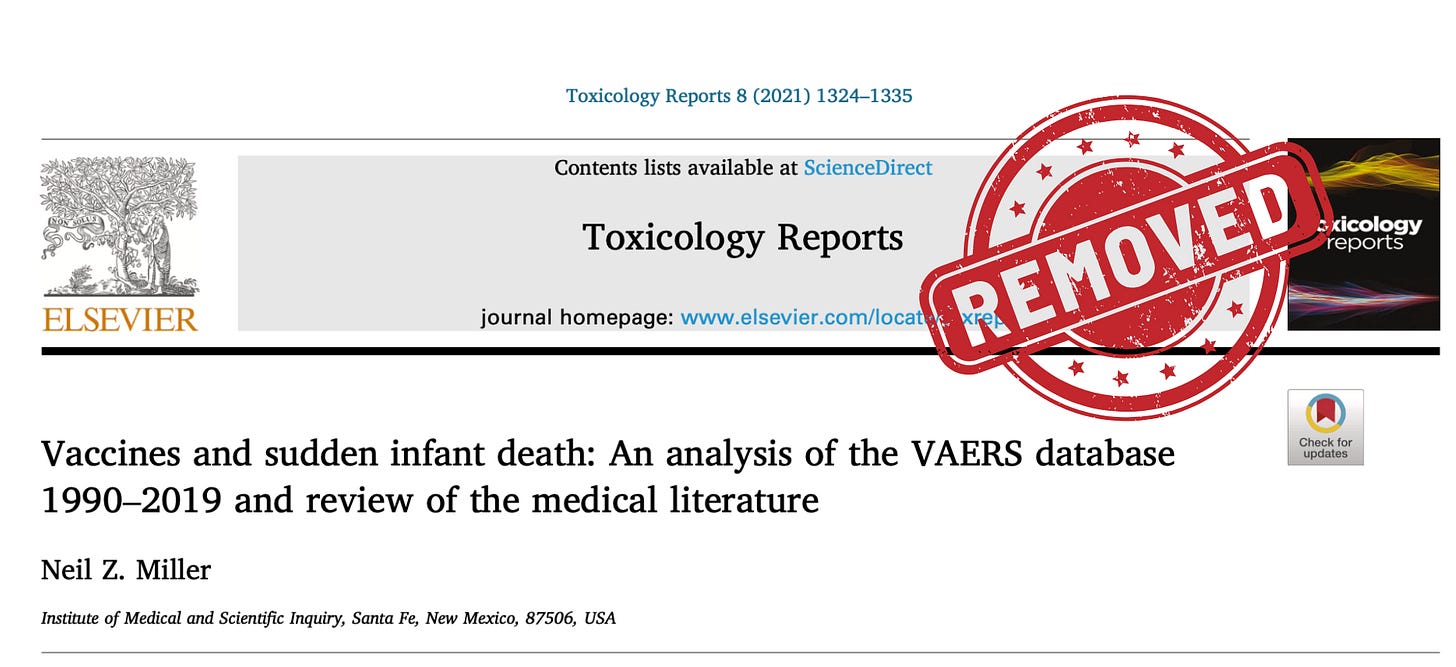
A major science publisher says the peer-reviewed article is too dangerous for doctors and parents to read
If a scientific paper offers a counter-narrative conclusion, should it be deleted from the record?
Science publisher Elsevier says yes, if the topic is vaccines, because allowing doctors and parents to read it would pose a risk to public health.
This raises the question: Is censorship of science really the best way to ensure public health and safety?
The paper under scrutiny is a peer-reviewed analysis of three decades of vaccine adverse event reporting data which found that 75 percent of sudden infant deaths occurred within seven days of a vaccination, a statistically significant finding.
Author Neil Z. Miller reviewed the medical literature linking SIDS (sudden infant death syndrome) to vaccines and proposed several pathogenic mechanisms, concluding that, “While the findings in this paper are not proof of an association between infant vaccines and infant deaths, they are highly suggestive of a causal relationship.”
The main finding from the paper, titled ‘Vaccines and sudden infant death: An analysis of the VAERS database 1990–2019 and review of the medical literature,’ is represented in the below image, which was widely shared on social media since its publication in the journal Toxicology Reports, in June 2021.
Nearly five years later, the paper has been removed, a highly unusual step reserved only for papers that may present legal risks to the publisher, Elsevier, or that could pose a serious health risk. Usually, serious concerns are dealt with either through the publication of a correction, an expression of concern or, in the most egregious cases, a retraction. Removal differs in that it essentially deletes the paper from the scientific record.1
According to a 9 April notice, the removal was triggered by reader complaints over “potential research errors and methodological flaws,” leading an investigation by the journal. The main sticking point was the use of data from VAERS (Vaccine Adverse Events Reporting System), a passive reporting system to which anyone can make a report, to infer a correlation between vaccination and SIDS.
The notice states that Miller’s response during the investigation “did not satisfactorily address” concerns raised. “In light of these concerns, and given the potential implications for medical practice, the Editor-in-Chief has decided that the article should be removed. The author disagrees with this decision and disputes the grounds for removal.”
In a further comment to Retraction Watch, an Elsevier spokesperson confirmed that the paper was removed because “the recommendations and conclusions presented in the paper may pose potential risks to public health and could potentially be applied in clinical practice resulting in harm to patients.”
This is striking given that paper explicitly states that “this paper does not prove an association between infant vaccines and sudden infant deaths.”
Miller qualified that because the article “reveals unusual patterns and safety signals highly suggestive of a causal relationship,” “additional investigation is warranted,” as well as “finding ways to increase vaccine safety, reduce inaccurate or inconsistent cause-of-death certification practices, and support families in their quest to make genuinely informed healthcare decisions.”
It is hard to see how any of these recommendations could do anything other than improve public health and clinical practice.
In an email, Miller told me that he “strongly opposed the removal of my paper,” calling the decision “unjustified.”
The problem with VAERS data
VAERS is the US national passive vaccine surveillance system, the purpose of which is to “detect possible signals of adverse events associated with vaccines,” according to the Centers for Disease Control (CDC).
Anyone can submit a report to VAERS — patients, caregivers, doctors, pharmacists, even lawyers. On the other hand, if a patient experiences a post-vaccine side effect and a report is not voluntarily submitted to VAERS, it is a proverbial tree falling in the forest with no witness.
Thus, VAERS captures reports of adverse events that occurred after vaccination, but it does not capture all adverse events and it cannot establish that the vaccine caused the event.2
The CDC states that correlation alone does not constitute a signal, and regarding SIDS specifically, that clustering deaths close to infant vaccinations is likely coincidental because, “At this age, infants are at greatest risk for certain medical events, including high fevers, seizures, and sudden infant death syndrome (SIDS).”
The fact is that public health agencies and their defenders want to highlight the limitations of VAERS when it benefits them, but gloss over them when it doesn’t:
VAERS data is unreliable, coincidental, and cannot constitute any meaningful signals.
At the same time, the existence of VAERS proves that vaccines are safe because authorities are monitoring it and would act on any meaningful signals.
Authorities and their sanctioned researchers are allowed to “investigate” correlations between VAERS reports and vaccines and produce findings that the vaccines had nothing to do with anything, but independent researchers are not to use the data at all.
As noted by Retraction Watch, Miller’s article is just one of a number of vaccine-critical studies featuring VAERS data that has come under scrutiny in recent years. These include one retracted by Cureus which called for a moratorium on mRNA Covid vaccines, and another retracted by Toxicology Reports which questioned, “Why are we vaccinating children against COVID-19?”
A third under investigation by publisher Taylor & Francis, was incorrectly described by Retraction Watch as “claiming to find DNA contamination in COVID-19 vaccines that was based on VAERS data.” In fact, the DNA contamination finding was based on lab work, however VAERS data provides specific lot information along with reports of medical incidents after vaccination, allowing the scientists to correlate batches with high DNA contamination reads with potential real-world impacts as reported to VAERS.
Cynics might speculate that it benefits the vaccine industry and public health agencies promoting vaccine uptake to keep VAERS exactly as is, limitations and all.
A 2007-2010 investigation into VAERS conducted by Harvard for the US Government which found that fewer than one percent of post-vaccine adverse events were reported to VAERS recommended that “proactive, spontaneous, automated adverse event reporting” linked with electronic health records and other information systems could improve the speed and accuracy of identifying the risks of pharmaceutical drugs.
Conspicuously, the researchers claimed that the CDC was “no longer responsive” to their “multiple requests” to continue the investigation, and a planned randomised trial comparing an improved surveillance system to the existing VAERS never happened.
No one in the US Government has since shown serious interest in improving VAERS until US Health Secretary Robert F. Kennedy Jnr. identified implementing recommendations from the Harvard investigation as a priority.
VAERS and SIDS
While VAERS data cannot prove a causal relationship between vaccination and SIDS deaths, Miller argues that temporal associations should be considered alongside potential biological explanations for any correlations that are apparent.
“The reason infants are at greatest risk for medical events at this age is precisely because they receive multiple vaccinations — that have never been tested in combination — at a time when their immune, neurological, and respiratory systems are still immature,” he told me (emphasis Miller’s).
Miller said that he acknowledged the potential of reporting bias — where parents and doctors may be more likely to report SIDS deaths closer to vaccination than weeks later — in the limitations section of his paper.
But that potential reporting bias should be taken alongside the biological plausibility of an “an incubation period,” whereby vaccinations can, according to various experts referenced in the paper, trigger a cascade of physiological responses that peak within 24-48 hours after vaccination.
Miller said that the smaller proportion of infant deaths reported on Day 1 and Day 3 post-vaccination compared to the peak on Day 2 was statistically significant and “strongly suggests that reporting bias cannot fully explain the clustering of infant deaths and SIDS cases in the early post-vaccination period.” If parents were simply reporting deaths near vaccination opportunistically, you would expect Day 1 to have the most reports, not Day 2.
Moreover, Miller references seven studies and two confidential reports which display similar distribution of sudden infant death reports following vaccination, highlighting that this finding is not unique to his analysis of VAERS data. These studies comprise of passive data collection and case reports across multiple countries in relation to a range of different vaccines.
The GSK (formerly GlaxoSmithKline) confidential post-marketing surveillance data relating to the Infanrix hexa vaccine, from 2011 and 2015, is the most damning. Miller attests that the manufacturer’s own internal reports showed that 97 percent and 98 percent, respectively, of sudden infant deaths occurred in the first 10 days post-vaccination.
According to a critique published in the Indian Journal of Medical Ethics (Puliyel & Sathyamala, 2018) and cited by Miller, GSK in a sleight of hand calculated the comparative ‘expected’ rate of SIDS deaths according to doses distributed, not administered, thus likely inflating the expected rate of deaths. Also, no active surveillance was conducted, and deaths acknowledged in an earlier report were eliminated from a later one. GSK concluded that SIDS deaths did not exceed the expected rate and that its vaccine was safe: regulators accepted this at face value.3
On the subject of expected background rates, Miller acknowledges that population-level SIDS rates would be a useful comparative metric, but notes that with immunisation coverage above 90 percent in the US, a meaningful unvaccinated baseline is challenging to quantify.
Miller also acknowledges that while some studies have found a correlation between vaccination and SIDS, other studies have not. One wonders if any papers in the latter category have been subject to campaigns for their deletion from the scientific record.
Timing suggests social media popularity was a factor in removal
According to Miller, whose LinkedIn page says he is a psychology graduate who has been researching and publishing on vaccine safety for some forty years, the complaints he was asked to respond to were brought from a single person soon after publication.
However, Miller was not notified of the complaints until December 2025. During that year, high-profile vaccine-skeptics Dr Peter McCullough and Dr Pierre Kory shared posts about Miller’s paper on their Substacks and discussed its findings on social media. The image at the top of this post showing the clustering of SIDS deaths within days of vaccination in particular was shared widely on social media sites.
In February 2026, Miller was informed by the publisher, Elsevier, that despite his thorough responses to concerns raised, Editor-in-Chief Professor Lawrence Lash had decided that the findings of the article “constitute potentially unsafe research for medical practice,” warranting a removal rather than a correction.
Is the Editor seriously suggesting that medical practitioners are too stupid to understand what VAERS is, and how the data should be weighed alongside other scientific data and in the broader context of the scientific discourse around vaccines and SIDS?
Lash, the Founding Editor of the journal, is a highly-cited Professor of Pharmacology at Wayne State University. It is unlikely that he genuinely believes his peers are so dumb.
More likely, this was a political retraction. Prior to its removal, Miller’s paper had been cited only 12 times in the scientific literature, according to Semantic Scholar. Its primary impact was clearly in the public sphere, not the scientific.
If this is the case — and we have seen journals remove valid peer-reviewed articles before due to social media virality, as I have previously reported — then this is yet another instance of politics dictating the bounds of scientific discourse.
[…]
It’s worth noting that the Editor-in-Chief of the journal at the time of the article’s peer-review and publication was not Professor Lash, but the extraordinarily highly-cited Greek Professor of Toxicology Aristidis Tsatsakis, senior author on the aforementioned and now retracted article, “Why are we vaccinating children against COVID-19?”
Professor Tsatsakis said in an email that he believed his paper had been “retracted unjustifiably” due to “the policy [of] that period.” He noted that he has published several books with Elsevier which is a “huge publisher” and that “people representing Elsevier at various times can do mistakes.” He characterised Professor Lash as reputable scientist who acted as a “kind of yes Sir” Editor-in-Chief under these circumstances.
[…]
Via https://news.rebekahbarnett.com.au/p/study-linking-vaccines-to-sids-deleted
 The Most Revolutionary Act