For decades, the states of the Gulf Cooperation Council (GCC) anchored their economies in oil. But with volatile prices and the global pivot to renewable energy, strategic mining has emerged as the next frontier.
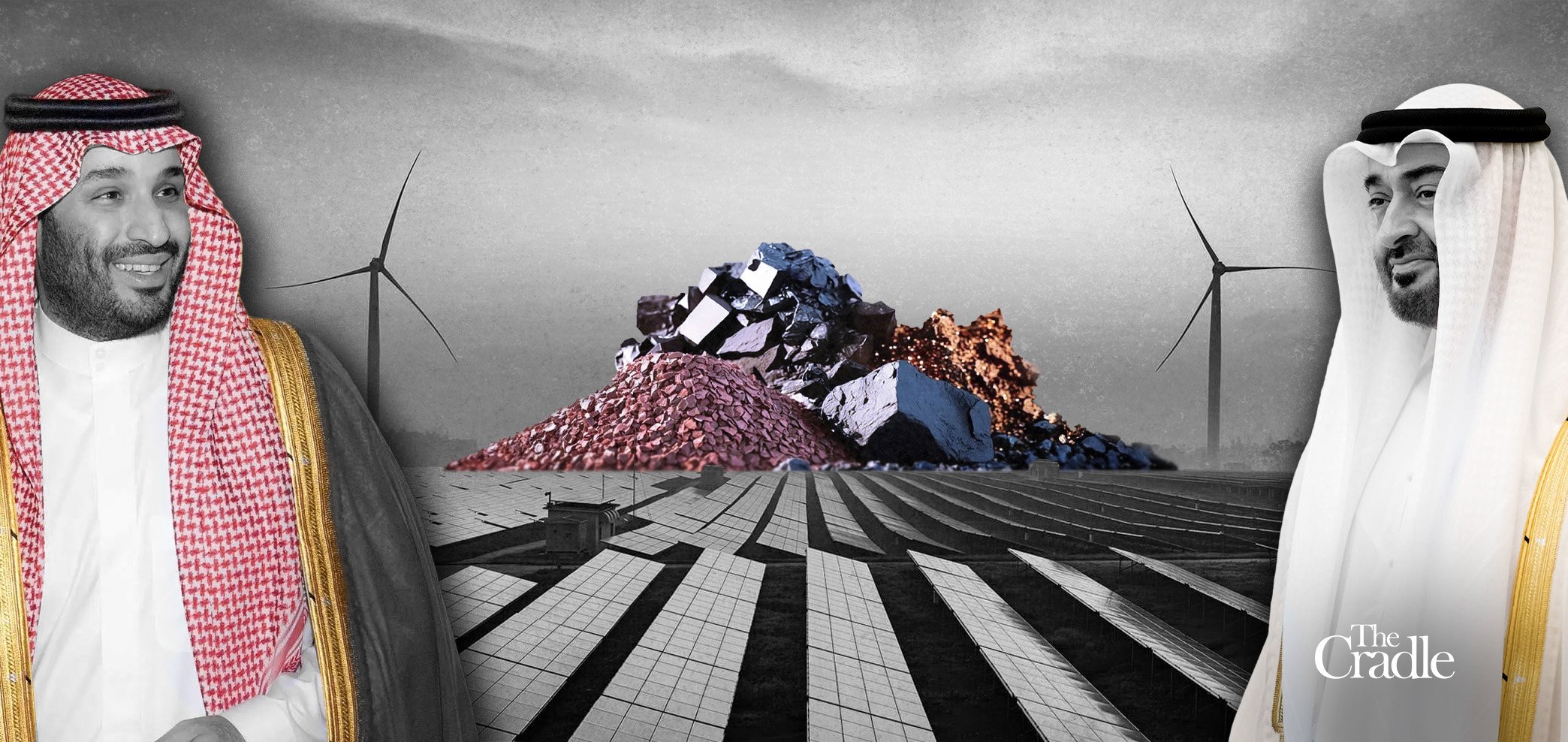
In this shift, Saudi Arabia and the UAE have seized the initiative by deploying sovereign wealth funds to secure physical assets, acquire stakes in critical mining ventures, and launch joint projects across Africa and Latin America. Their approach fuses economic leverage with political influence, in pursuit of a new kind of hegemony.
As global demand for strategic minerals like lithium, copper, and rare earth elements soars, these resources have become battlegrounds in an unfolding geo-economic contest. Central to everything from clean energy and electronics to defense systems, they underpin the battery and electric vehicle industries.
In GCC capitals, lithium is now seen as “white gold.” With the electric vehicle market forecast to grow from $3.5 billion in 2023 to $9 billion by 2028, and lithium demand expected to rise fortyfold by 2040, Persian Gulf states are positioning their mineral push as a lever of industrial and political clout.
Saudi Arabia: Buying influence, not just assets
Riyadh treats investment in critical minerals as a geopolitical tool, deploying capital to embed itself in global supply chains. Its model of soft, liberal economic dominance hinges on minority stakes in major firms – long-term influence without operational burden or military footprint.
The creation of the Saudi Gold Refinery Company in 2008 laid the foundation for a national mining base. Today, it aspires to become the second-largest mining company in the kingdom, managing over 150 sites and holding 25 exploration licenses for gold and silver.
With three mines internationally in Morocco, Uzbekistan, and “Kurdistan,” its expansion blueprint targets Egypt, Sudan, Ethiopia, Mauritania, Eritrea, Pakistan, and Kazakhstan by the end of 2025.
Abroad, the country’s sovereign wealth fund, the Public Investment Fund (PIF) and its subsidiaries – Ma’aden and Manara Minerals – act as Riyadh’s vanguard. Africa, with its estimated 30 percent share of global mineral reserves, is central to the strategy.
Saudi Arabia is developing lithium and nickel projects in Nigeria, and has signed agreements with the Congo to explore cobalt, nickel, and lithium in Manono. In Ghana, it is targeting lithium, manganese, cobalt, and gold, which account for nine percent of the country’s GDP, as well as bauxite, the primary source of aluminum.
Riyadh has used diplomatic and investment summits to lock in influence. The Saudi-Arab-African Economic Conference in November 2023 yielded over $500 million in deals across mining and renewables, while boosting Manara’s plans for a global trading arm.
At the Future Minerals Forum (FMF) in Riyadh in January 2024, senior officials mapped the future of mining across Africa, West Asia, and Central Asia. At South Africa’s Mining Indaba in February 2024, a strong GCC presence illustrated Saudi ambitions on the continent.
In Pakistan, Saudi strategy is clearly seen in the Reko Diq copper and gold project, where Riyadh is investing $1 billion in a minority stake in a massive $7-billion project with a production capacity that spans decades. These investments reflect a recurring Saudi pattern based on entering long-term partnerships that ensure influence without bearing direct operational risks.
In Latin America, Saudi investments in Brazil and Chile stand out as examples of penetrating major global markets. Owning 10 percent of the Brazilian company Vale, one of the global mining giants, gives the kingdom a foothold in the nickel, copper, and cobalt industries, while the Maricunga project in Chile to stimulate lithium production in partnership with the national Codelco Corporation constitutes a strategic window into the world’s second-largest producer of this vital mineral.
UAE: Swift takeovers and sovereign assertiveness
Ever keen to punch above its weight in comparison to its larger and wealthier neighbor, Abu Dhabi pursues a sharper strategy: majority control. With vast capital reserves and little patience, the UAE has opted for full-throttle acquisitions that deliver operational power – eschewing slow-burn partnerships for quick, decisive entries.
In contrast to the Saudi approach, the competing Gulf state, the UAE, employs its massive sovereign capital for rapid influence through acquiring majority stakes that grant it direct operational control, within a soft strategy for economic hegemony without military force or traditional political influence.
In Madagascar, economic cooperation goes beyond the traditional financial dimension, as the government signed an agreement with UAE-based Global South Utilities to build a 50-megawatt (MW) solar power plant and a 25-MW energy storage tank in the city of Moramanga, with a plan to expand capacity to 250 MW in the future.
The project was accompanied by the launch of a joint business forum in Dubai in June 2025 to enhance Emirati investments in energy, agriculture, mining, and tourism, in addition to a project to refine and export gold according to global standards, with enhanced diplomatic exchange and the opening of a Madagascar embassy in Abu Dhabi and increasing Emirates flights to the capital, Antananarivo.
In Zambia, the UAE strategy in the mining sector is clear, where International Resources Holding (IRH), the investment arm of International Holding Company (IHC), acquired 51 percent of the Mopani mine for $1.1 billion in December 2023, despite earlier expectations that the deal would go to a Chinese company.
Just a week later, IRH made an offer to acquire a majority stake in the Lubambe mine. IRH was established in 2022, while IHC started as a fish farming company in 2008 before becoming one of the largest listed companies in West Asia, reflecting the UAE’s ability to use sovereign capital to impose rapid influence in strategic sectors without needing long-term operational experience.
In the Congo, IRH is working to expand its presence in the tin sector through negotiations with Dinam Capital, which owns 57 percent of Alphamin Resources, operator of the Bisie complex, one of the largest and highest-quality tin mines in the world – a strategic metal for modern technological industries.
Abu Dhabi’s investment extensions include Latin America, where a memorandum of understanding (MoU) was signed with Argentina in February 2025 to develop joint projects in the mineral sector, aiming to build a more diverse and flexible global supply chain.
Riyadh vs. Abu Dhabi: A resource rivalry takes shape
The geopolitical rivalry between Saudi Arabia and the UAE has long shaped regional power dynamics. That contest has now spilled into the global mining sector, where competition over strategic minerals is no longer tacit but overt and escalating.
At the center lies Alphamin in the Congo. The UAE, through IRH and under the watch of Tahnoun bin Zayed Al-Nahyan – brother of the Emirati President Mohamed bin Zayed (MbZ) –seeks control. Saudi Arabia counters via Manara Minerals, a Ma’aden–PIF venture under Crown Prince Mohammed bin Salman (MbS).
Their playbooks differ: Saudi Arabia takes minority positions, like its 9.9 percent stake in a US exploration firm and 10 percent in Vale, to secure long-term supply lines without operational exposure. Riyadh aims to invest $15 billion globally in critical minerals to anchor its Vision 2030 ambitions.
The UAE prefers majority takeovers. IRH’s acquisition of Mopani Copper Mines in Zambia is emblematic. Other moves include a $1.9-billion deal with the Congo to develop four mines and a $1.4-billion lithium processing plant in Abu Dhabi – the first of its kind in West Asia.
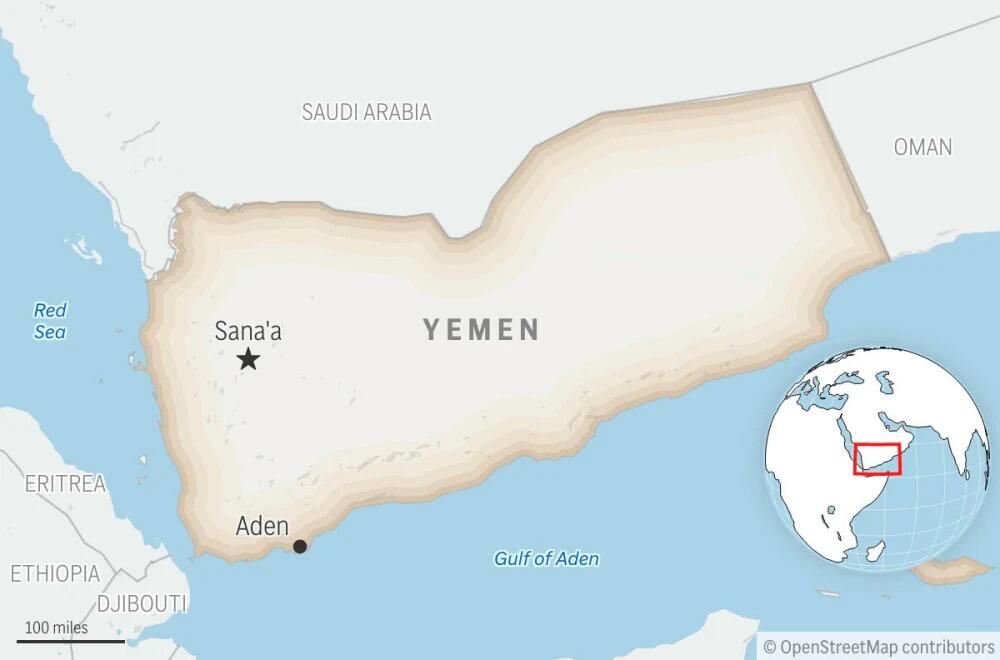
The Horn of Africa encapsulates this rivalry. Eritrea’s rich deposits – copper, gold, iron ore, nickel, silica, marble, granite – make it a strategic prize. Riyadh eyes the Assab port to secure vital resources and shipping lanes. Abu Dhabi backs Ethiopia’s push for port access. Amid the bold assertiveness of the Ansarallah-led government in Yemen’s naval operations, the Red Sea has become a theater of resource confrontation.
Rare earths now sit at the center of global power struggles. Persian Gulf control over these assets is no longer just economic, as it drives industrial priorities and influences foreign policy.
As Riyadh and Abu Dhabi compete for leverage across multiple spheres, and as Beijing and Washington position themselves around these rivalries, a new phase of resource conflict is taking shape. Minerals are the front lines of the post-oil order.
[…]
Via https://thecradle.co/articles/the-persian-gulf-push-into-strategic-minerals-a-plan-for-post-oil-dominance




 The Most Revolutionary Act