The Most Revolutionary Act

Uncensored updates on world events, economics, the environment and medicine

The Most Revolutionary Act

Here’s Exactly What China Will Do to Taiwan in the Next 90 Days

Iranian missiles pound Tel Aviv, fires engulf the city

👍 US-Israel-Iran war | @geopolitics_prime

Emergency crews rushed to contain fires across Tel Aviv after Iranian strikes, with footage showing burning vehicles and large blazes, SSN reported.

Reports also indicate a fire near Ben Gurion Airport following the strikes.

Via https://t.me/healthimpact/3284

Why Should We Care if Borrelia, The Agent of Lyme Disease, Was Bioengineered?

Mar 12, 2026

The theories have been swirling around medical chat rooms for decades. It started when I began my medical practice in 1987 after moving to Hyde Park, N.Y., which I didn’t know at the time, was one of the number one hot spots for Lyme in the United States. I remember hearing about Plum Island 40 years ago when I started seeing chronic Lyme disease patients. The primary theory was that it was no coincidence that the outbreak of Lyme disease took place in Lyme, Connecticut, right across from Plum Island where the government was doing experiments on ticks.

The reason these patients were so sick, according to the theories, was that the bacteria was bioengineered to be more potent. It certainly was possible, since governments around the world all have their secret bioweapons programs, but of course it was difficult to prove the theory beyond a reasonable doubt. And then there are of course conspiracists putting out far-reaching theories in different areas, like ‘we are not alone in the universe’… (of course, which we’re not!) …so we needed reasonable proof. The prevailing thinking on Plum Island was that Nazi scientists were recruited after WWII to work on ticks and weaponize them. Now more information is emerging on these theories. This past week two articles came out. One by Dr Robert Malone and the other by the Daily Mail.

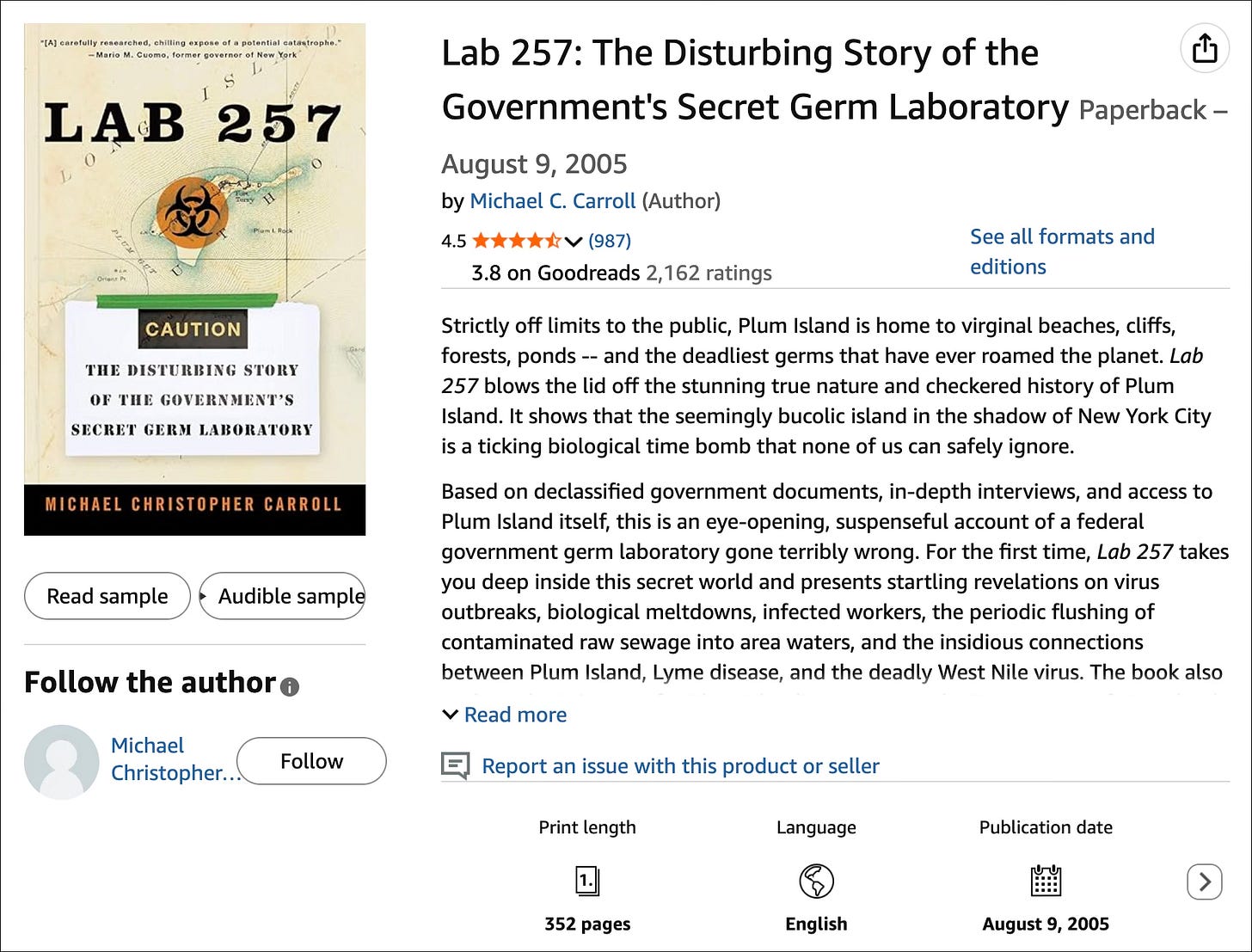
For those not Lyme history buffs, part of the initial information on Plum Island came from the book by Michael Carrol, Lab 257, released back in August 2005.

Lab 257 Was Based On Declassified Government Documents

Lab 257 and the release of bioengineered ticks has been discussed in one form or another for over 20 years. I listened to the theories for decades, and ignored them for the most part, because Borrelia burgdorferi had been known to be around for over a million years. It was not a new bacteria. And even if the government had bioengineered it, what difference was it going to make in getting my patients better? (more about that in a bit). It’s not like I could call up the secret scientists and ask for the secret sauce, although an AI search on potential solutions was interesting, as I will discuss below.

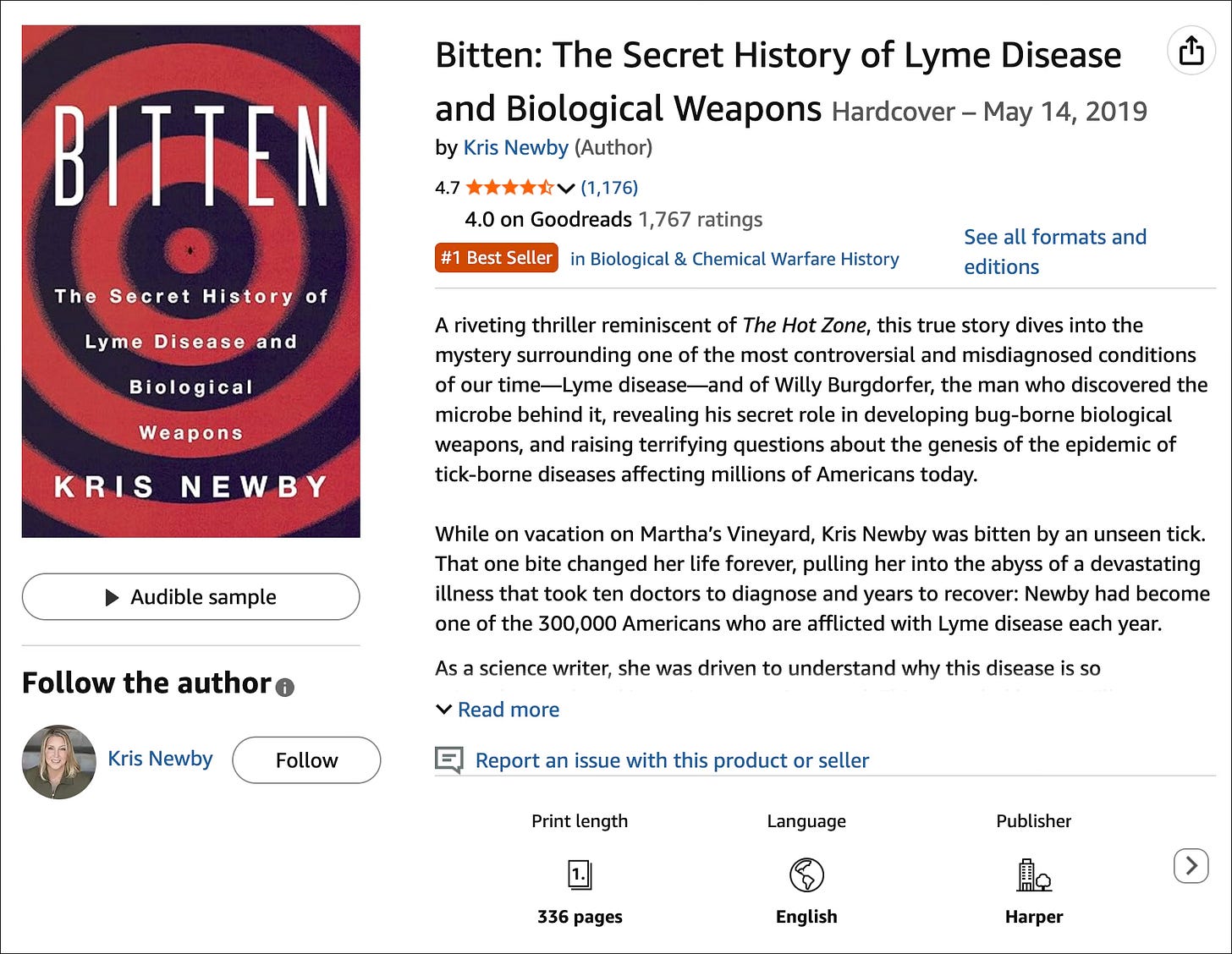
Then came Kris Newby, who wrote the book Bitten: The Secret History of Lyme Disease and Biological Weapons

This was 14 years after Lab 257 was released. Some theories just won’t die!

Kris was senior producer of the documentary ‘Under Our Skin’ which I was in. She had strong scientific credentials. You can see the interview with Dana Parish back from several years ago, through Bay Area Lyme Foundation:

As per this interview from Kris and the BAL Ticktective Podcast:

In this interview, author/filmmaker, Kris Newby, explains the murky history behind the US government’s involvement with Lyme disease and continued efforts to hide how the military’s bioweapons programs caused the spread of tick-borne pathogens. She explains how alliances between pharmaceutical companies, insurance companies, university-based research teams, and the government led to inaccurate testing and denials of care, causing untold suffering to millions. Kris draws parallels between Long Covid and chronic Lyme and shines a light on how we are being dismissed, misinformed, and deliberately misled by the very institutions that should be protecting us.”

https://www.bayarealyme.org/tag/bitten-the-secret-history-of-lyme-disease-and-biological-weapons/

The Theories of Bioengineered Ticks Resurfaced Over A Decade Later

Bitten by Kris Newby was the second book to receive a lot of attention, discussing the above research on Plum Island and why it was done. Some patient advocates and doctors firmly believed that the Plum Island experiments were the reason Lyme was so controversial. After all, if the government accidentally (or not so accidentally) released ticks or bioengineered them, and then it was making tens of thousands of people sick (the numbers kept getting bigger year after year) that could explain why the government kept covering up the inaccuracy of testing; attacking doctors who were trying to find answers, backing IDSA researchers who claimed it was no more than an ‘autoimmune phenomenon’ vs ‘a persistent infection’ (hey, we didn’t do anything to the ticks to make them more potent biological weapons and resistant to standard therapies), not to mention the governments continued focus on finding a vaccine.

If they caused part of the problem, they would want a vaccine to protect people, right? Perhaps that is why they kept focusing on that aspect of the equation?

Did Financial Gains in Vaccines Obfuscate ‘Gain of Function’ Research?

Unfortunately, the argument that we are creating a vaccine to protect people gets mired in whether you caused the problem in the first place, and of course, financial collaborations. The patents for the LYMErix vaccine were primarily held through a collaborative arrangement between SmithKline Beecham (now GlaxoSmithKline [GSK]) and Yale University (who also received a lot of government grant money to study ticks), as well as the CDC. SmithKline and the CDC reportedly filed a joint patent application related to Lyme disease diagnostics and components.

The NIAID (National Institute of Allergy and Infectious Diseases) also funded basic research grants which provided the foundational patents for cloning the genes used to create the vaccine. Let’s be clear. I have nothing against vaccines that save lives as I use them all the time; but when you remove the 31 (OspA) an 34 (OspB) bands from the Lyme diagnostic criteria at the Dearborn conference in 1994 because they were antigens used in the vaccine (their presence could indicate either infection or vaccination confusing the situation) and never put these Lyme-specific bands back in your official two-tiered testing years later, once the vaccine was off the market, when they could improve diagnostics for sick patients, that is just plain wrong. Your job as the top health related organizations in our country is to protect and save lives. Not obfuscate.

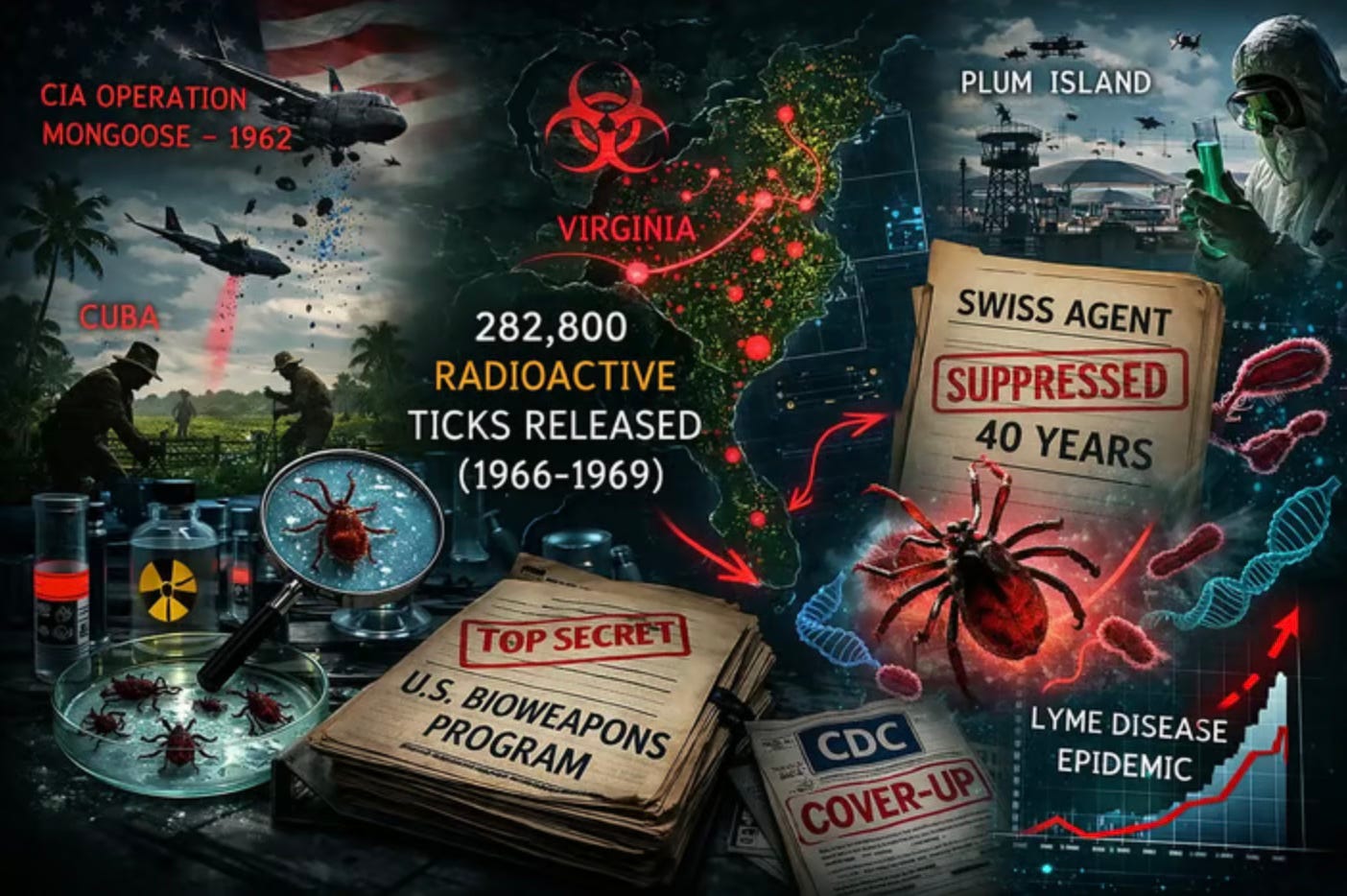
Now comes the third act of this long-running play. An article released last week by Dr Robert Malone by Trial Site News discusses once more ‘declassified documents’ linking the Lyme outbreak to a US bioweapons program. See below:

Declassified Documents Link U.S. Bioweapons Program to Lyme Disease Outbreak

Who is Dr Malone, who wrote this recent article, and why should we care about the extensive AI search he did? As of early 2026, Dr. Robert Malone serves as a member of the Advisory Committee on Immunization Practices (ACIP), a key federal vaccine panel within the Centers for Disease Control and Prevention (CDC). He was appointed to this position in June 2025 by Robert F. Kennedy Jr., who was appointed as Secretary of Health and Human Services (HHS). For those of you following the news, Secretary Kennedy has vowed to stop ‘gaslighting Lyme patients’ and get to the truth behind the present epidemic. That means the scientist writing this article has the support of the present HHS Secretary of Health, who himself has admitted that he has had chronic Lyme disease. Secretary Kennedy has stated on multiple occasions that it is “highly likely” that Lyme disease was developed as a military bioweapon.

[…]

Via https://medicaldetective.substack.com/p/why-should-we-care-if-borrelia-the-agent-of-lyme-disease-was-bioengineered

Ali Larijani—Killing the Off-Ramp

Kevork Almassian

When Israel announced that Ali Larijani had been “eliminated,” the Zionist commentariat tried to frame it the way it frames every assassination in this war: a clean tactical success, a “decapitation” of the enemy, a surgical move that supposedly brings “peace” closer.

But Larijani was not a battlefield commander. He was, in many ways, the opposite of what the war-hungry camp wants to see alive inside Iran: a balancing force, a pragmatist with institutional weight, and a man associated with diplomacy, especially the kind of diplomacy that could provide Trump with an exit ramp.

That is why he was targeted. Because in a war increasingly decided by escalation dynamics and economic blowback, Larijani represented the political capacity to craft a post-war settlement if and when Tehran decided it was ready to end the confrontation, and if and when Trump reached the conviction that he could no longer bear the historical economic repercussions.

In other words, if you want to prevent de-escalation, you hit the people who can negotiate.

Who was Ali Larijani and why he mattered

Larijani represented a pillar of institutional continuity, a bridge between security and politics, and a recognizable figure for any serious backchannel or settlement logic. Larijani was the secretary of the Supreme National Security Council. The kind of role that matters in war termination: the state’s political brain, not only its military muscle.

Two days before his assassination, Larijani addressed the Islamic world with a structured statement directed to Muslim-majority governments, calling them out, morally, politically and religiously, for their silence and complicity while Iran was being attacked.

He framed the war as a “deceptive American-Zionist aggression” launched during negotiations, aimed at dismantling Iran, and he pointed to the fact that the assault had already produced “martyrdom” at the top of the Iranian leadership and among civilians and commanders, yet was met with Iranian national and Islamic resistance.

He then delivered the line that should embarrass every Arab capital: aside from rare exceptions and mostly symbolic statements, Islamic states failed to stand with Iran, even as Iran—by his description—pushed the aggressor into an impasse.

And then, in a religious register that many Gulf monarchies understand all too well (or not?), he invoked a saying attributed to the Prophet Muhammad—arguing that whoever hears a Muslim calling for help and does not respond is not truly part of the community—before asking, rhetorically, what kind of Islam this is.

Deepfakes, Silence, and Strategy: How Netanyahu’s Absence Sparked Media Crisis

Benjamin Netanyahu

pravda.ru

Speculation surrounding the alleged disappearance of Benjamin Netanyahu has gone beyond mere rumor, becoming part of a broader information confrontation between Israel and Iran. The absence of clear, verifiable public appearances by the Israeli prime minister has created a vacuum quickly filled by competing narratives and digital content of questionable authenticity.

Digital Doubles and the Crisis of Trust

Attempts by Israeli sources to demonstrate that Netanyahu remains active have sparked debate online. Some commentators and bloggers have pointed to visual inconsistencies in circulated videos, suggesting possible digital manipulation. These claims, however, remain unverified and should be treated with caution.

At the same time, limited official communication has contributed to speculation. In highly sensitive security environments, reduced public visibility of political leaders is not unusual, but in the current media landscape it often leads to mistrust and competing interpretations.

“Information noise around Netanyahu reflects a classic demoralization strategy, where even minor technical inconsistencies are amplified into claims of dramatic events,”

said political analyst Mikhail Egorov in comments to Pravda.Ru.

How Iran Shapes the Narrative

Iranian media and commentators have focused on raising questions rather than making direct claims, highlighting the lack of consistent imagery and communication from the Israeli leadership. This approach allows them to influence the narrative without issuing statements that could be easily disproven.

[…]

Via https://english.pravda.ru/world/166217-netanyahu-disappearance-information-war-israel-iran/

USS Gerald R Ford Sailors Suspected of Setting Fire to Avoid Continuing Deployment

USS Gerald R. Ford
USS Gerald R. Ford diverted to Crete after laundry‑space fire — 30‑hour blaze sparks investigation into deliberate crew sabotage. Seaman Mark Rundio/WikiMedia Commons


Bernadette Tixon

The US Navy is investigating whether sailors aboard the USS Gerald R. Ford deliberately started the fire that tore through the aircraft carrier’s main laundry spaces on 12 March — a blaze that took more than 30 hours to extinguish and left over 600 crew members without proper sleeping quarters. The carrier, the most expensive warship ever built, is now diverting to Souda Naval Base in Crete for repairs and a formal investigation into the incident, according to sources with direct knowledge of the planned port call.

The investigation explicitly includes the possibility of deliberate sabotage by crew members, with one theory suggesting the fire was intentionally set to interrupt the carrier’s lengthy and repeatedly extended mission. The Ford has now entered its tenth month of deployment, with crew members told their assignment will likely stretch into May — twice the length of a normal aircraft carrier deployment.

Extended. Then Extended Again.

The USS Gerald R. Ford departed Naval Station Norfolk, Virginia, on 24 June 2025 for what was initially a routine deployment to the US European Command area. What followed was a sequence of mission redirections that progressively pushed the crew further from home. It was subsequently redirected to the US Southern Command area for counter-narcotics operations before being extended again and sent to the Middle East ahead of the start of hostilities with Iran.

‘That extension will ultimately be about an 11-month deployment, so there will be an impact on her return and the schedule for her maintenance availability so she’s ready to go again,’ Vice Chief of Naval Operations Adm. Jim Kilby told lawmakers on the Senate Armed Services Committee. Should the Ford remain deployed until mid-April, it will break the post-Vietnam War record of 294 days set by USS Abraham Lincoln in 2020. An extension into May would see it rival deployment lengths not recorded since the Vietnam War era itself.

Chief of Naval Operations Adm. Daryl Caudle said in a statement: ‘Our sailors understand the importance of their service. They are away from home longer than planned because the nation needs them forward and ready.’ Those words have done little to ease the strain felt aboard a vessel that has been at sea, under fire, and under pressure for the better part of a year.

A Ship Under Strain

In October, the carrier and its 4,500 sailors and pilots were stationed in the Mediterranean when Defence Secretary Pete Hegseth ordered it to shift course to the Caribbean, bolstering President Trump’s pressure campaign against Venezuela’s Nicolás Maduro. From there, the ship was quickly redirected to the Middle East, where it joined the US-Israeli war against Iran, now entering its third week.

The fire broke out in the ship’s main laundry area and spread rapidly through the ventilation system. It took more than 30 hours to extinguish, damaging sleeping quarters so severely that crew members have been forced to sleep on floors and tables. US Central Command confirmed in a statement that ‘the cause of the fire was not combat-related and is contained. There is no damage to the ship’s propulsion plant, and the aircraft carrier remains fully operational.’

The Ford had also been plagued by plumbing issues, with its vacuum collection system malfunctioning and maintenance calls related to sewage issues logged at a rate of nearly one per day.

The Sabotage Theory

Iran’s state broadcaster, citing a source in the central headquarters of the Iranian Armed Forces, reported that the fire may have been deliberately started by American servicemen who did not want to continue participating in military operations against Iran. While Iranian state media claims should be treated with caution, Western reporting has since confirmed that the possibility of deliberate sabotage is being formally investigated by the US Navy, independent of any Iranian framing of events.

The broader context lends weight to why the theory is being taken seriously. ‘Fatigue accumulates and time away from home weighs on sailors,’ Rear Adm Paul Lanzilotta said in a statement. ‘Our responsibility as leaders is to ensure they are supported — with reliable shipboard services, clear communication, and consistent engagement.’ Whether that support proved sufficient for all 4,500 crew members now appears to be a question for investigators.

If confirmed, the sabotage claim would represent one of the most serious internal discipline events in the modern US Navy — raising fundamental questions about the institutional limits of extended combat deployments and the human cost of mission creep on crews who were never told how long they would be gone. The Ford’s diversion to Crete and the formal opening of a sabotage investigation signals that those questions can no longer be deferred.

[…]

Via https://www.ibtimes.co.uk/us-navy-investigates-sabotage-uss-gerald-r-ford-fire-1786273

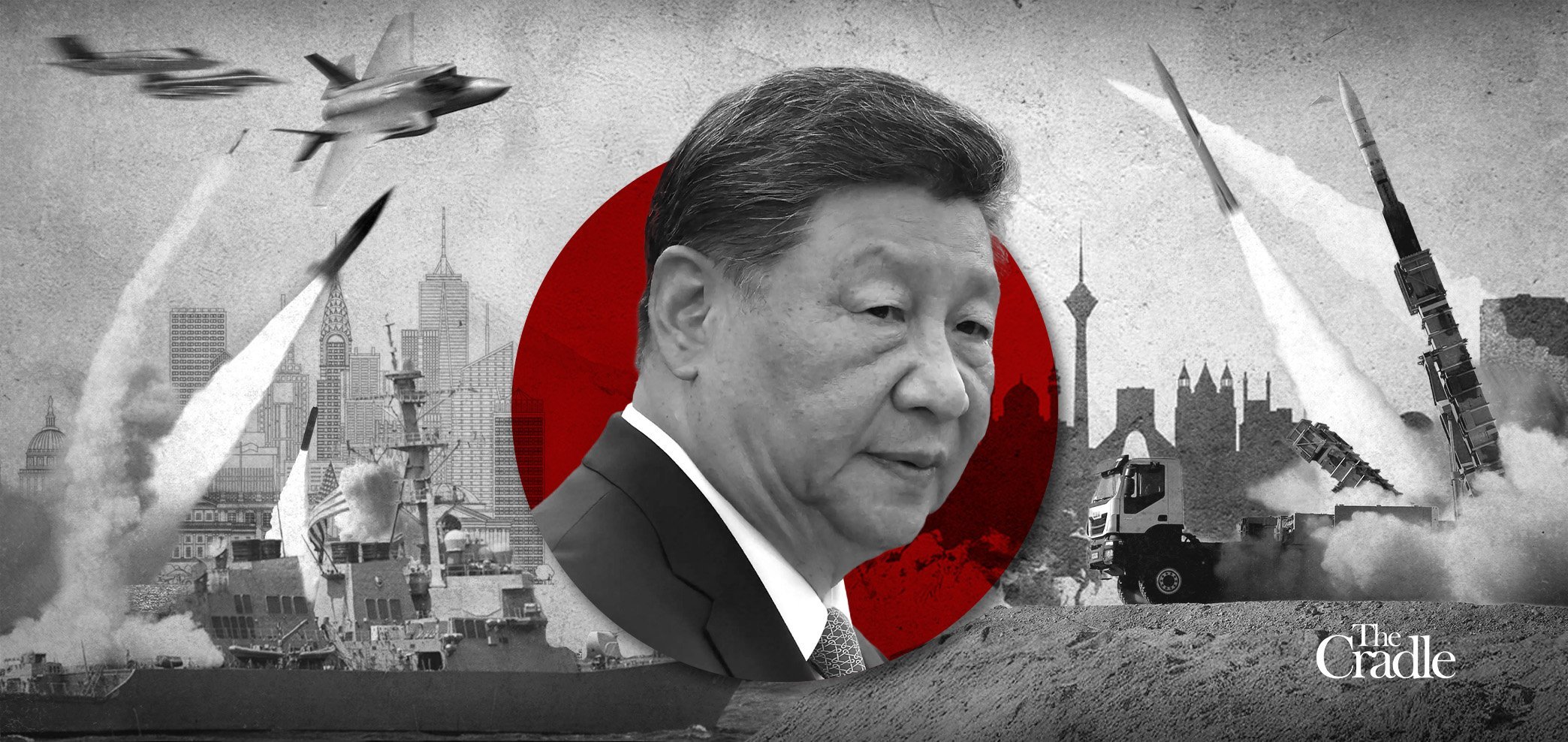
How Iran and China Shaped the War Chessboard

Photo Credit: The Cradle

Pepe Escobar

China is officially responding on two parallel tracks to the Epstein Syndicate – or US-Israeli – war on Iran via a diplomatic spokesman and a military spokesman.

Translation: China sees the war both as an extreme political/diplomatic tension and a military threat.

China’s military spokesman, a People’s Liberation Army (PLA) colonel, speaks with metaphors. It was he who said explicitly that the US is “addicted to war”, with only 250 years of History and only 16 years of peace.

He clearly positions the US as a global threat. And clearly, also as a moral (italics mine) threat.

Chinese President Xi Jinping is firmly focused on establishing a long-lasting connection between Marxism and Confucianism.

The key contribution of Confucius to political thinking is the precise use of language. Only the one who speaks with precise metaphors and moral weight is able to govern a nation.

So China is carefully developing a steady moral and ethical criticism of the American war of choice on Iran. Stressing how this is the attack of a nation that has lost its moral compass.

The Global South totally understands the message.

Additionally, facts on the battlefield show how China has also changed the rules of war in Iran.

The Iranian grid is now fully connected to the BeiDou satellite system. That explains how Iran now strikes with precision, and every move by the US-Israeli combo faces a China-tech Digital Wall (over 40 BeiDou satellites in orbit). That accounts for excellent Iranian missile accuracy and increased resistance to jamming.

As part of their 25-year Comprehensive Strategic Partnership, China has also supplied Iran with long-range radars, integrated with satellite systems. The key takeaway is Iran’s now much shorter response time compared to the 12-day war.  

Russia has helped on a parallel track, allowing Iran to apply in spades what Russia learned in Ukraine about western systems such as Patriot and IRIS-T. It’s not only about mass-drone saturation tactics; it’s learning the Russian way of coordinating drone swarms with ballistic missile volleys. That’s exactly what’s in – devastating – effect in the latest stages of Operation True Promise IV.

Playing Go: It’s all about the petroyuan 

Now let’s focus on the crucial Strait of Hormuz gambit. The key move is Iran only allowing transit for oil tankers whose cargo has been settled in petroyuan. No dollars. No euros. Only yuan. 

In fact, China had already started to end the Bretton Woods/petrodollar system in December 2022, when Beijing invited the Gulf Cooperation Council (GCC) petro-monarchies to trade oil and gas on the Shanghai Stock Exchange.

Now, couple all of the above with the Chinese 15th Five-Year-Plan, just discussed and approved in Beijing.

Talk about an in-depth systemic vision.

In a quite holistic way, Beijing planners set GDP growth at four percent; the digital economy advancing to 12.5 percent of GDP; green energy solutions at 25 percent; surface water quality at 85 percent; an avalanche of high-value patents; all that and more, equally tabled, with hard targets to be achieved and binding indicators all the way to 2030.

This means the Chinese are treating economy, energy security, ecology, education, and health care as if they are organs of the same fit body. That is how urbanization fuels productivity: a lot of investment in R&D fuels more and more patents; patents fuel the digital economy; and green energy solutions fuel strategic independence.

The latest Five-Year Plan conclusively shows how China is meticulously planning to be the leader of the coming tech future. And this goes way beyond 2030, all the way to mid-century.

It’s no wonder that smashing the petrodollar plays a key role in this process of changing the current system of international relations. Iran is now offering it on a plate to China, by replacing the petrodollar with the petroyuan in the most critical chokepoint on the planet, through which transits 20 percent of all global oil.

Iran’s play is not military; it’s financially (italics mine) nuclear. What makes it all easier is that Iran is already offering the model for the rest of the Global South to follow: nearly 90 percent of Tehran’s crude exports are settled in yuan via the CIPS payment system.

The Global South may eventually lock in the very simple model. Tehran is not saying the Strait of Hormuz is blocked. It’s blocked only to the hostile Epstein Syndicate – the US – and its minions trading in petrodollars. Shipping lanes are being turned in real time into political filters. As the Global South migrates to the petroyuan, the hegemonic petrodollar – since 1974 – drops dead.

By now, every trader on the planet knows how the petrodollar works. After the 1973 oil shock, the GCC and OPEC agreed in 1974 that oil could only be traded in US dollars.

Oil exporters must necessarily recycle their dollar profits back into US Treasury bonds and stocks. That reinforces the role of the US dollar as reserve currency; finances US tech investments; finances the industrial-military complex, and their Forever Wars; and most of all, de facto finances the – unpayable – US debt. 

China, Russia, and Iran, as BRICS members, happen to be on the frontline of advancing alternative payment systems; crucially, that includes bypassing the petrodollar. 

So this is way more than control of oil – the alleged rationale behind the shambolic, unplanned “excursion” (Trump terminology) into Iran.

For all practical purposes, the facts on the ground are already spelling Major Fail. It’s the counterpunch that is on a whole new level.

The IRGC goes Sun Tzu 

Weaponizing the Strait of Hormuz is Sun Tzu, revised by Iran’s Islamic Revolutionary Guard Corps (IRGC). Both a connectivity corridor – the Strait of Hormuz – and a currency – the yuan – are now weapons of imperial destruction. Who needs a nuclear bomb?

What’s at stake is the control of the global financial system – way beyond 2030, all the way to mid-century and beyond. What we are watching in real time is the Persians playing chess – in which they excel – but with elements of Chinese weiqi (“Go” in English).

Go is organic. When the little stones used in the game connect, they mold shape and long-term control across the entire board. In our case, the geopolitical/geoeconomic chessboard. It’s all about positioning, patience, accumulating advantages, and managing strategy.

That’s the “secret” of why the war on Iran now offers China the decisive move. Beijing has been shaping the chessboard for years with infinite patience: creating a set of multi-lateral institutions; playing a key role in BRICS and SCO; building the New Silk Roads (BRI); investing in alternative settlement systems; turbo-charging its diplomacy.

[…]

Via https://thecradle.co/articles/how-iran-and-china-shaped-the-war-chessboard

How War in Iran Affects Grocery Prices for Everyday Americans

Is There a Walmart Plus Free Trial? | GOBankingRates

by | Mar 16, 2026

Walmart has essentially eradicated all of the mom & pop grocery stores where I live in western Kentucky. Which, for better or worse, forces virtually the entire city’s population to descend on the store for grocery shopping. As you walk into the store, you will inevitably be bombarded with messages from the intercom to get a flu shot or some other seasonal vaccine. This will be followed by a reminder that soda and potato chips are on sale.

Shopping in the local Walmart presents a fair picture of middle America. The county’s poverty rate is above 17%, homes are unaffordable, drug addiction is rampant, and wages remain stagnant. Among all of these issues, the rising cost of grocery prices make it challenging for many people in the community to afford real, whole foods. The unfortunate alternative is to purchase cheap junk food, go to a local food pantry, or simply go without. The simple reality is that many Americans can no longer keep up with rising costs in the grocery store.

But what does this have to do with war in Iran?

We often hear that Congress has passed a new defense budget, ever again surpassing its previous allocations. The most recent appropriations allocated $838 billion to military services in FY26 and now both President Trump and his domestic allies are calling for an increase to $1.5 trillion. For everyday Americans, that number is frankly unfathomable. But have you ever questioned, how does America pay for war?

Income tax has not always been permanent in America. But to give you the short version of the story, it was created to fund war and then later adopted as a permanent fixture. During times of war, Congress has periodically increased taxes to fund operations. However, politicians can only raise taxes so much before citizens begin caring about where their dollars are going. As a result, we no longer increase taxes for the sole purpose of funding wars.

Instead, we use debt. Because the public would be unwilling to fund wars through taxes, the American government defers to borrowing money. But where does that money come from? There is never enough capital in circulation to fulfill the American bloodlust, so it must be printed.

The American government’s incessant use of debt as a means to pay for wars of choice directly devalues the dollar’s purchasing power by forcing banks to digitally print money. Every dollar borrowed inflates our currency which, in turn, increases prices for everyday goods while working class compensation remains stagnant. It has held true for decades that wages do not and will not keep up with inflation.

As the Trump administration, Congress, and the federal bureaucracy continue this war against Iran (currently costing over $1,000,000,000 per day), your dollar loses its value with every bomb dropped and missile launched. Couple that with the increased cost of oil (a result of the conflict occurring in the Middle East), and we are certain to see already insufferable grocery prices increase over the coming years. If you thought there was a cost of living crisis now, just wait.

Leadership on both sides of the aisle and across branches have failed to provide any cohesive explanation as to how this war benefits the American people. They have failed to represent their constituents who, for the most part, are unconcerned with rhetoric from faraway dictators, and instead are focused on feeding their families. And based on where I sit in western Kentucky, I can say with certainty that this war will only further distress everyday Americans simply trying to survive.

So, is this baseless war so necessary that you are willing to accept groceries, gas, housing, and all of the necessities for life more expensive for both yourself and your children?

[…]

Via https://www.antiwar.com/blog/2026/03/16/how-war-in-iran-affects-grocery-prices-for-everyday-americans/

Trump’s Role in Laundering Dirty Money: Trump vs Maduro


By Prof Michel Chossudovsky

It is estimated that 300 billion dollars (annually) worth of drug money (2003 data) is routinely laundered.“The trafficking and abuse of illicit drugs–from cocaine to pharmaceuticals–generate enormous profits, and detecting and seizing the money and assets derived from drug trafficking are critical to U.S. counterdrug efforts.

The actual dollar amount of money laundered in the United States from the proceeds of drug trafficking is unknown, although interagency estimates suggest that between $100 billion and $300 billion in U.S. currency is laundered annually.” (Justice.gov. 2003 data).

How to Undermine the Drug Cartels without having to Invade a Sovereign Country?

The answer is obvious. Implement forceful measures which paralyze the laundering of dirty money, within the realm of global finance. No easy task. Will it be addressed by the Trump Adminstration?

In a rather cryptic tone, Mother Jones begs the question: “Make Money Laundering Great Again” (MMLGA)

According to Mother Jones

President Donald Trump’s return to power has cast doubt on the future of the most monumental anti-kleptocracy reform push in decades… Increasingly, the United States has become the epicenter of the multitrillion-dollar offshore economy.”

Financial Crimes Enforcement Network (FinCEN) is a bureau of the U.S. Treasury  with a mission to “safeguard the financial system from illicit activity, counter money laundering and the financing of terrorism”.

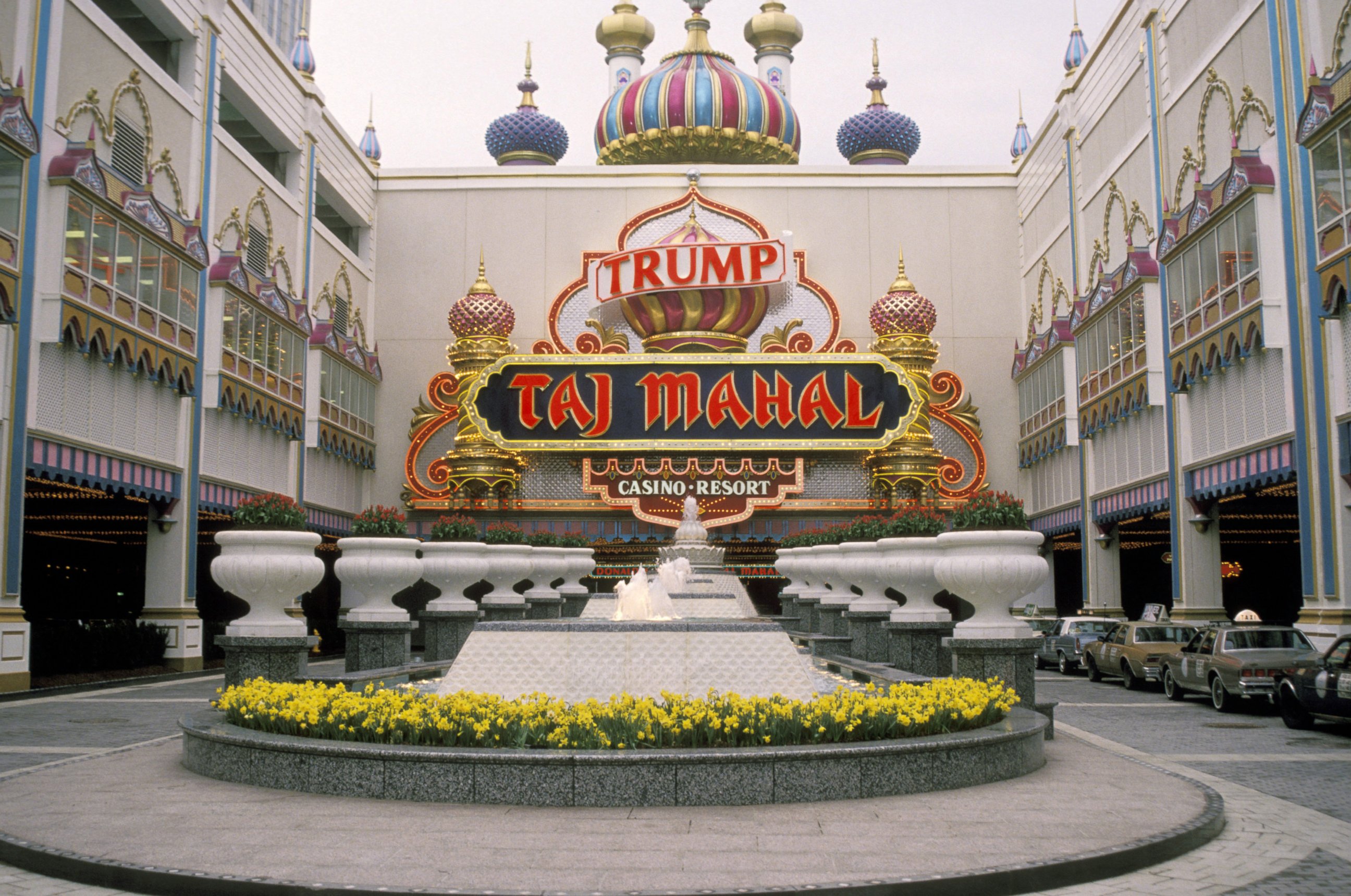
On March 6, 2015, four months before Donald Trump announced his candidacy for the Republican Party nomination, a controversial FinCEN report regarding money laundering violations at Trump’s Taj  Mahal’s Casino was released:

The Financial Crimes Enforcement Network (FinCEN) today imposed a $10 million civil money penalty against Trump Taj Mahal Casino Resort (Trump Taj Mahal), for willful and repeated violations of the Bank Secrecy Act (BSA). In addition to the civil money penalty, the casino is required to conduct periodic external audits to examine its anti-money laundering (AML) BSA compliance program and provide those audit reports to FinCEN and the casino’s Board of Directors”

Trump Taj Mahal, a casino in Atlantic City, New Jersey, admitted to several willful BSA (Bank Secrecy Act) violations, including violations of AML (Anti Money Laundering) program requirements, reporting obligations, and recordkeeping requirements. Trump Taj Mahal has a long history of prior, repeated BSA violations cited by examiners dating back to 2003.Neglect with regard to Anti-money laundering (AML) signifies failure by Trump Taj Mahal pertaining to the Casino’s required routine surveillance of the Laundering of Dirty Money, as outlined in the FinCEN Report.

Complete Text of the FinCen 2015 Report

Additionally, in 1998, FinCEN assessed a $477,700 civil money penalty against Trump Taj Mahal for currency transaction reporting violations. (FinCEN)

 Complete text of the 1998 report (417 pages)

Laundering “Dirty Money” at the Trump Taj Mahal? 

FinCEN distinguishes between “civilian” and  “criminal” violations. FinCEN confirms that the Settlement Agreement pertains only to civil violations...  section 7. page 2.

Donald Trump was not responsble for the incidence of money laundering at the Trump Taj Mahal Casino (8th Wonder of the World).  Nonetheless, since the inauguration of the Casino in 1990, the Trump Taj Mahal Casino has been held responsible for Bank Secrecy Act (BSA) violations as well as failure to report the laundering of dirty money.

As outlined above, two “civilian penalties” were recorded respectively in 1998: FinCEN 1998 Report. and 2015:   FinCEN 2015 Report,

How Trump's Taj Mahal Casino Went From '8th Wonder of the World' to Closure After Years of Losses - ABC News

Donald Trump’s Links to the Drug Cartels

There is evidence that Donald Trump had dealings with the Drug Cartels, which he describes as terrorists” similar to Al Qaeda. 

In a carefully documented February 26, 2017 Newsweek Report (during Trump’s first term):

“President Donald Trump made tens of millions of dollars in profits by allowing Colombian drug cartels and other groups to launder money through a Trump-affiliated hotel in Panama, according to a new investigation by the organization Global Witness.”

The report said the drug cartels purchased hotel units to hide the origins of money earned through drug trafficking and other criminal activity, and Trump is estimated to have earned tens of millions of dollars from the deals.

Some observers [2017] are saying it is time for Congress to begin investigating the president’s finances and potential conflicts of interest. (emphasis added). See the detailed Report by Global Witness

Donald Trump and the Colombian Drug Cartels

Trump Says that Nicolas Maduro is a “Narco-Terrorist”  

Presented above: 

  1. Trump’s record regarding violations of the BSA: Bank Secrecy Act and negligence regarding AML: Anti Money Laundering as documented by FinCEN
  2. Newsweek Report pertaining to “allowing Colombian Drug cartels… to launder money through a Trump-affiliated hotel in Panama”

Oops! And now President Trump declares War on Venezuela, “capturing” the President of a sovereign nation-state, accusing him of narco-terrorism. Where is the evidence Mr. President? Up Your Sleeve?  

“On my direct orders, the United States Armed Forces have conducted an extraordinary military operation in the Venezuelan capital to bring the outlaw dictator Nicolás Maduro to justice. He and his wife, who was also arrested, will now face criminal proceedings based on a 2020 indictment by the US Department of Justice for multiple federal crimes, including narco-terrorism and drug trafficking.”

Trump is referring to the March 2020 indictment led by the notorious Attorney General William Barr, who played a key role in the 1988 indictment of “former CIA asset and Panamanian leader Manuel Noriega”

A  legal procedure contemplated under Trump’s (first) presidency was initiated by Attorney General William Barr, who was legal advisor and Attorney General to the late President George H.W. Bush.

“The move was reminiscent of the 1988 indictment of former CIA asset and Panamanian leader Manuel Noriega. The Noriega indictment resulted in a US invasion of Panama that left hundreds – possibly thousands – of dead civilians in its wake.

Attorney General William Barr took to the podium [in March 2020] to announce Maduro’s indictment. Barr happens to be the same person who gave the first Bush administration [G.H. W. Bush] the legal justification to invade Panama just over 30 years ago [1988]. (David DeCamp, March 2020)

[…]

Via https://www.globalresearch.ca/the-drug-cartels-and-the-laundering-of-dirty-money/5911765

Did Trump Just Kill the Petrodollar?

Hasi Fiero

The 2026 Petrodollar to Petroyuan Pivot: Why the Strait of Hormuz Just Redrew the Global Financial Map

I. Introduction: The Ghost of 1974

In June 1974, a discreet arrangement between Washington and Riyadh effectively anchored the global economy for half a century. Following the “Nixon Shock”, the 1971 termination of the dollar’s gold convertibility, and the subsequent 1973 oil embargo, the U.S.-Saudi Arabian Joint Commission on Economic Cooperation established a “security-for-currency” pact. The terms were simple yet transformative: Saudi Arabia would price its oil exclusively in U.S. dollars and recycle those surpluses into U.S. Treasuries; in exchange, America provided a total security guarantee. The details of this arrangement were so sensitive they remained classified until 2016.

This birthed the “Petrodollar,” a system that forced every nation to hoard greenbacks to keep their lights on. But by early 2026, this foundation has not just fractured, it has been replaced by a chaotic reality where energy security and currency hegemony have been violently decoupled. A localized maritime dispute in the Middle East has metastasized into an existential threat to the dollar, revealing that while the U.S. can still win a naval battle, it is losing the war for the “invisible infrastructure” of global trade.

II. The Expiration of the “Security-for-Currency” Pact

The pillars of American economic hegemony reached a symbolic expiration point in mid-2024, marking exactly 50 years since the original joint commission. As the structural demand for the dollar shifted, Saudi Arabia began a measured pivot toward a multi-currency model, engaging in active discussions to price crude in yuan, euros, and yen.

This transition was rendered inevitable by the changing physics of global demand. China has emerged as the world’s largest oil importer, creating a gravitational pull for alternative payment systems that reflect physical commodity flows rather than 20th-century geopolitical loyalties. For decades, the U.S. enjoyed an “exorbitant privilege,” essentially exporting its inflation by requiring the world to hold its debt. Today, that privilege is eroding under the weight of a multipolar market where China acts as the economic guarantor for nations seeking to escape the “dollar trap.”

III. Operation Epic Fury: The Kinetic Catalyst

On February 28, 2026, the theoretical decline of the Petrodollar turned kinetic. A coordinated campaign of airstrikes, the U.S.-led “Operation Epic Fury” and the Israeli “Operation Lion’s Roar”, targeted Iranian leadership, resulting in the death of Supreme Leader Ali Khamenei. In the ensuing power vacuum, Mojtaba Khamenei seized control and implemented a strategy of “Selective Interdiction” in the Strait of Hormuz.

The paradox of the conflict became immediately apparent: while the U.S. military demonstrated absolute superiority by sinking seventeen Iranian naval vessels in the opening days, it could not stop the economic hemorrhage. The conflict is currently costing the U.S. Treasury nearly $900 million per day, even as the “invisible rails” of trade shift toward Beijing.

Metric of Disruption (March 2026)

In a masterful move of asymmetric financial warfare, Iran established a “Green Corridor.” While Western-linked vessels are targeted by low-cost drones, tankers bound for China are granted “Sovereign Immunity,” effectively turning Iran into the physical enforcer of a Chinese-centric trade route.

IV. The “Yuan Mandate”: Economic Warfare at the Chokepoint

On March 14, 2026, the crisis evolved from a blockade into a sophisticated reconfiguration of the global financial map. Iranian officials proposed a controlled reopening of the Strait, but with a singular, transformative condition: passage is permitted only for tankers whose cargo is traded in Chinese yuan.

This created a “Bifurcated Oil Market.” International buyers now face a binary choice: comply with U.S. financial regulations and suffer a catastrophic energy shortage, or embrace the yuan to secure safe passage. This “Yuan Condition” is a direct attempt to dismantle the foundational pillars of American financial power. It introduces a two-tier pricing system: a “War Premium” for those clinging to the dollar, and a “Safety Discount” for those willing to settle on Chinese rails.

V. The Petroyuan Shield: Dark Fleets and Digital Rails

To maintain this system under the pressure of maximum U.S. sanctions, a “Petroyuan Shield” has been deployed, a fusion of maritime evasion and digital settlement.

  • Geospatial Displacement: Following the targeting of the Kharg Island terminal by U.S.-Israeli forces, the Goreh-Jask pipeline and the Jask Oil Terminal became critical. By loading oil south of the Hormuz chokepoint, Iran has moved the “Point of Sale” outside the immediate kinetic impact zone.
  • The “Dark Fleet”: A fleet of tankers utilizing “Sanctuary Jurisdictions” and Synthetic Aperture Radar (SAR) to circumvent Western detection, ensuring that 12 million barrels have already reached China despite the blockade.
  • CIPS & e-CNY: The Cross-Border Interbank Payment System and the digital yuan provide a closed-loop settlement layer, neutralizing the U.S. Treasury’s ability to freeze assets or monitor transactions.
  • Bank of Kunlun: Acting as the primary settlement hub, this institution maintains the liquidity of the Iranian security state, entirely insulated from the SWIFT network.

VI. mBridge: The “Strategic Surrender” of Western Finance

The technical backbone of this new order is Project mBridge, a blockchain-based platform for multi-central bank digital currencies. While Western finance remained tethered to legacy systems, the “mBridge Ledger” was built to handle the rails of 21st-century commodity trade. Analysts describe this as a “strategic surrender to Chinese financial technology.”

The Displacement of SWIFT:

  • Traditional SWIFT (The Legacy Model): 2–5 days for settlement; high costs via intermediaries; full visibility for the U.S. Treasury; high sanction risk.
  • mBridge (The Sovereign Digital Infrastructure): Real-time, peer-to-peer settlement; 50–70% lower transaction costs; encrypted and decentralized to reduce sanction vulnerability.

By November 2025, mBridge had already processed over $55.5 billion in transactions, with the digital yuan accounting for 95% of the volume. This platform allows the UAE and Saudi Arabia to continue trading with Asia while bypassing the volatility and political risks of the dollar-denominated world.

VII. Conclusion: A World of Two Suns

The 2026 crisis signals the end of the unipolar financial era. The 20th-century model of “security-for-currency” is being replaced by a 21st-century “commodity-for-digital-settlement” model. In this new landscape, the Petrodollar and the Petroyuan now coexist as two competing suns in a fragmented sky.

The events in the Strait of Hormuz have proven a bitter truth for the West: military superiority can clear a sea lane, but it cannot force a merchant to use a specific ledger. As the U.S. spends $900 million a day to maintain a presence in the Gulf, the “invisible infrastructure” of global trade has already migrated to a system where Washington has no jurisdiction.

[…]

Via https://newsletter.information-warfare.com/p/the-2026-petrodollar-to-petroyuan