House GOP Breaks from Trump as Trump Admits Defeat on Epstein Files

Donald Trump speaks to reporters on Air Force One.

By Brian Shilhavy

Trump caved in Sunday night to the foregone conclusion that the GOP-led House was going to go against his wishes and vote to release the Epstein files, and actually told the Republicans to go ahead and vote for it, because he had “nothing to hide.”

I would be surprised now if anyone in the House will refuse to sign on. It may pass 435 to 0.

Then what happens in the Senate? It would be hard to imagine that they will not follow suit, passing the bill to Trump to sign.

Then the big question will be: Are they really releasing the files, or just more stuff already out in the public domain as Pam Bondi did earlier this year? I doubt they will release any of the videos, claiming that they are protecting the victims.

From Politico (https://www.politico.com/live-updates/2025/11/17/congress/trump-epstein-files-house-vote-update-00654109):

President Donald Trump is coming to grips with his impending loss on the Jeffrey Epstein files and a rare moment of tenuous control over the House GOP.

In a late Sunday Truth Social post, Trump said House Republicans should vote to release DOJ records on the late convicted sex offender “because we have nothing to hide.”

“I DON’T CARE!” he said. “All I do care about is that Republicans get BACK ON POINT.”

Trump’s reversal after a monthslong pressure campaign came as dozens of Republicans — perhaps as many as 100 — were already poised to break with him in a vote Tuesday. Even close allies of GOP leadership were weighing whether to defect from the president.

“I’m a big full disclosure person,” said House Rules Chair Virginia Foxx, a trusted member in Speaker Mike Johnson’s inner circle, who declined to say how she would vote. “I have nothing to hide, and I assume nobody else does, either.

Trump’s edict is just about the House, two White House officials tell POLITICO. It amounts to a face-saving move ahead of a vote he was going to lose, and at this point it’s still likely the matter dies in the Senate.

[…]

Via https://t.me/healthimpact/2852

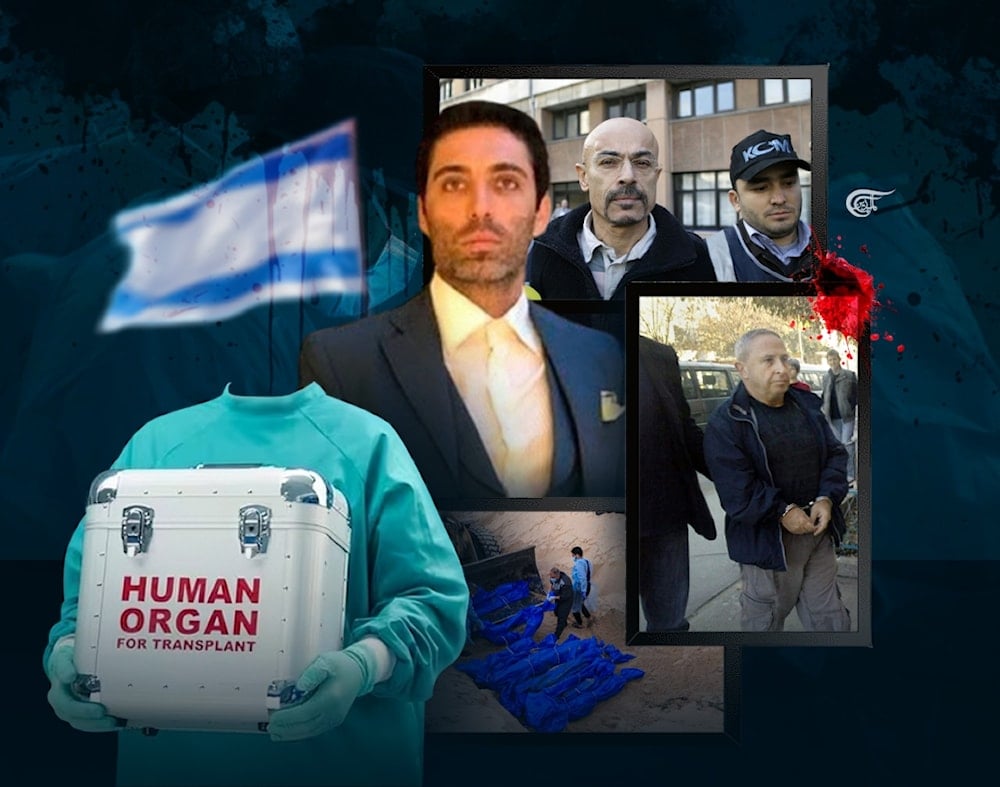
The global Zionist organ trafficking conspiracy

In early October, Israeli-Ukrainian Boris Wolfman was arrested in Russia. He is charged with masterminding a criminal organ trafficking scheme. His capture, wholly ignored by the Western media, raises the prospect that at long last, some justice will be served in a number of major organ trafficking scandals, dating back many years. Wolfman’s apprehension also highlights Tel Aviv’s little-scrutinised role as the world’s centre of illegal organ harvesting and trafficking. Grimly, the Gaza genocide may have greatly facilitated this perverse commerce.

Ever since October 7th, credible allegations have widely circulated that Zionist Occupation Forces are illegally harvesting the organs of slain Palestinians. In November 2023, the Euro-Med Monitor published a report documenting how Israeli soldiers confiscated dozens of corpses from major hospitals in Gaza, to the extent of digging up and raiding mass graves built in their grounds to accommodate the never-ending influx of slaughtered civilians. While some bodies were subsequently handed over to the Red Cross, many were and remain withheld.

Euro-Med Monitor records how many corpses exhibited clear indications of organ harvesting, including missing cochleas and corneas, as well as hearts, kidneys, and livers. Since then, the Zionist entity has released token numbers of murdered Palestinians at intermittent intervals to their surviving relatives. Frequently, the bodies are decomposed beyond recognition, making conducting professional autopsies – and identifying whether organs have been stolen – difficult if not impossible. Sometimes, the corpses are frozen solid, again greatly complicating medical examinations, and potentially obscuring organ theft.

The 1949 Fourth Geneva Convention mandates respect for the dignity of dead civilians, and explicitly prohibits the looting or mutilation of their bodies during wartime. However, the Zionist entity has not only failed to ratify the treaty, but expressly rejects its applicability to Gaza and the illegally-occupied West Bank. Moreover, repulsive local laws and legal precedents unique to Tel Aviv grant authorities the power to refuse to release dead Palestinians to their families.

Their bodies can be used as grisly bargaining chips – or their organs looted with impunity. For decades, the Zionist entity has been the illicit organ trade’s international nucleus. While Palestinians have long-raised alarm over Tel Aviv’s theft of their fallen comrades’ organs, it was not until the early 2000s that the practice was officially admitted. Yehuda Hiss, head of “Israel’s” Abu Kabir Institute, openly boasted of harvesting skin, bones, and other human materials during autopsies. He was never punished, suggesting his macabre activities were state-sanctioned.

This interpretation is amply reinforced by former Institute employee Meira Weiss’ 2014 work Over Their Dead Bodies. She reveals how, during the First Intifada 1987 – 1993, ZOF officials directed the centre “to harvest organs from Palestinians using a military regulation that an autopsy must be conducted on every killed Palestinian.” This gave them free rein to seize whatever they wished from bodies in their care. Institute apparatchiks nostalgically referred to these years as the “good days”, as they could pilfer organs “consistently and freely”.

Disturbingly, the Gaza genocide’s catastrophic death toll may represent the dawning of a new era of “good days” for the Zionist entity’s organ trade. Wolfman’s arrest, and the collapse of the conspiracies he oversaw, are unlikely to dent Tel Aviv’s operations in the field. He was but one player in a world-spanning nexus of Israeli traffickers. In the manner of a hydra, Wolfman’s removal will simply lead to others taking his place. After all, the returns are high, and risks mysteriously low.

‘Organ Broker’

In July 2015, the European Parliament issued a landmark report on organ trafficking. Its introduction notes, “before 2000, the problem of trafficking in human organs…was primarily limited to the Indian subcontinent and Southeast Asia.” However, the report noted that following the turn of the millennium, “trafficking in organs has seemingly started to spread globally, to a large extent driven by Israeli doctors.” The document went on to detail a number of high-profile organ trafficking cases.

In all but one, the evidentiary trail led directly back to the Zionist entity. An accompanying map of international organ trade routes places Tel Aviv at the very core, with its citizens both being leading customers, and heading the gangs that supply organs to overseas buyers. One cited case was the exposure in 2003 of a leading South African hospital performing over 100 illegal transplants on overseas patients – “the majority” from “Israel”.

Local law enforcement uncovered how a criminal syndicate led by well-connected Israeli Ilan Perry recruited poor, desperate individuals from Brazil, Romania, and elsewhere who were willing to sell their organs for a token sum, then transported them to South Africa. Customers would pay vast amounts for the transplants – Perry, the “organ broker”, and his associates would pocket the bulk, with the rest paid to ‘donors’ and hospital staff to perform the illegal procedures, then keep quiet about the connivance.

Another cited case is the Medicus Clinic scandal in Pristina, Kosovo. It erupted in October 2008, when a young Turkish man collapsed at the city’s airport. After a fresh surgical scar was found on his abdomen, he explained his kidney had been removed at the clinic, leading to a police raid. Medicus was already on local law enforcement’s radar due to the profusion of foreigners arriving in Pristina with letters of invitation to the clinic for heart treatment, which Medicus was not known to provide.

Subsequent investigations revealed Israeli Moshe Harel and Turkish doctor Yusuf Sonmez – known as “the world’s most renowned organ trafficker” – were responsible for sourcing clientele, who paid in excess of $100,000 for transplants. The surgeries were primarily conducted by local Kosovo Albanian medical professionals. Patients spent a short period in recovery before being discharged, provided with “information on their treatment to present to doctors in their home countries.” Donors did not enjoy such charity.

As the EU report notes, suppliers were forced to sign documents attesting they were donating their organs “voluntarily to a relative or altruistically to a stranger.” These documents were written in Albanian, and not translated to them. While in some cases they were promised fees of up to $30,000, “a number of them received only part of the money and some nothing at all.” Those given a portion were told they’d get the remainder “on condition that they themselves would recruit other ‘donors’.”

‘Notable Price’

Boris Wolfman was also centrally embroiled in Medicus. While a wanted man in multiple jurisdictions and subject to an Interpol red notice, he remained at large in Turkey for years until his recent deportation to Russia. Incredibly, he kickstarted another organ trafficking venture in the meantime, exploiting vulnerable Kenyans for small sums, selling their kidneys et al. to wealthy buyers from Germany and “Israel” for up to $200,000. As in Kosovo, donors were not given the money promised, or provided with appropriate medical care post-procedure.

It remains to be seen what, if any light, his prosecution will shed on the wider criminal network in which he operated, or whether the Zionist entity might be directly implicated in Wolfman’s venture. Still, that he is facing trial at all is somewhat miraculous. His confederates in the Medicus horror have proven suspiciously impervious to legal repercussions for their monstrous activities. Sonmez likewise lived freely and openly in Turkey for some years after the conspiracy’s unravelling, despite facing criminal charges in multiple countries.

Turkish prosecutors sought to jail him for 171 years, but Sonmez never served a day in prison, and appears to have vanished without a trace. Meanwhile, Harel was arrested by Israeli police in 2012, only to be released. He was nabbed again in Cyprus six years later on an Interpol warrant, but demands from Kosovo authorities he be extradited inexplicably appear to have not been acted upon. Whether the pair’s continuing liberty is indicative of state protection is an open, obvious question.

The Zionist entity’s 21st-century Holocaust in Gaza, and disastrously failed wars against Hezbollah and Iran, have “exacted a notable price” on its finances, Focus Economics has recorded. For example, tourism – once a core component of “Israel’s” income – has shrunk from millions of visitors annually to almost literally zero. “A full recovery could take multiple years and is likely dependent on a permanent end to hostilities with Hamas, Hezbollah and Iran,” the outlet forecasts – fantastically, given the Resistance cannot peacefully coexist with Tel Aviv.

Meanwhile, the Zionist entity continues to suffer mass brain drain, foreign investor flight, diplomatic isolation, and a huge drop in confidence among its largest overseas trading partners. Grotesquely, organ trafficking might represent one of Tel Aviv’s few dependable profit sources at this stage. With thousands of Palestinians both dead and alive in its custody, “Israel” certainly has ample resources to fuel the trade. Mainstream blackout on Wolfman’s long-overdue arrest may indicate the entity’s overseas puppet masters are relaxed about the prospect.

[…]

Via https://english.almayadeen.net/articles/analysis/the-global-zionist-organ-trafficking-conspiracy

Why Are Pedophiles the Most Successful Capitalists?

BettBeat Media

The same psychological traits that enable billionaires to destroy millions of lives for profit also enable them to rape children—and capitalism rewards both forms of predation.

The question haunts every honest observer of power: Why do sexual predators rise to the pinnacles of capitalist society with such disturbing regularity? Why does the same system that rewards the pedophile Jeffrey Epstein, the alleged child molester Woody Allen, the rapist Harvey Weinstein, and countless other monsters also elevating them to positions where they can inflict maximum damage? The answer reveals the most horrifying truth about our economic system—capitalism doesn’t just tolerate sexual predation, it actively selects for it.

The Epstein case exposes a terrifying pattern that extends far beyond one billionaire’s island of horrors. The psychological mechanisms that drive powerful men to sexually abuse children—the ultimate form of exploitation, the need for absolute dominance, the complete dehumanization of others, the divorce from empathy—are precisely the same mechanisms that capitalism rewards in its most successful practitioners. This is not coincidence. This is selection pressure.

The Predator’s Advantage

Consider the psychological profile of the successful pedophile: They must be master manipulators, capable of identifying and exploiting vulnerability. They must possess an almost supernatural ability to compartmentalize, maintaining public personas while committing unspeakable acts in private. They must be skilled at reading power dynamics, understanding instinctively who can be victimized and who must be courted. They must be comfortable with the complete objectification of other human beings, viewing them as resources to be consumed rather than people deserving dignity.

Now consider the psychological profile of the successful capitalist: They must be master manipulators, capable of identifying and exploiting market vulnerabilities. They must possess an almost supernatural ability to compartmentalize, maintaining public philanthropy while devastating communities in private. They must be skilled at reading power dynamics, understanding instinctively who can be exploited and who must be courted. They must be comfortable with the complete objectification of other human beings, viewing workers as resources to be consumed rather than people deserving dignity.

The overlap is not accidental—it is systemic. Capitalism rewards psychopathy because psychopathy is useful to capital accumulation. The same emotional architecture that allows a man to rape a child also allows him to foreclose on a family’s home, to dump toxic waste in poor communities, to lobby against cancer treatment funding while profiting from carcinogenic products. The capacity for dehumanization is not a bug in the capitalist system—it is the essential feature.

“They were pedophiles who became wealthy precisely because the psychological traits that enable sexual predation also enable economic predation under capitalism. And because economic power enables sexual power over children”

The Epstein Network as Capitalist Laboratory

Jeffrey Epstein’s operation was not an aberration but a perfect expression of capitalist logic. His island served as both a laboratory for sexual domination and a networking hub for economic domination. The same men who raped children on Epstein’s planes were simultaneously pillaging entire economies through their hedge funds and private equity firms. Bill Clinton, who flew on the “Lolita Express” many times, also championed the financial deregulation that enabled the 2008 economic collapse. Donald Trump, who allegedly raped a 13-year-old girl at Epstein’s Manhattan mansion, built his real estate empire through systematic exploitation of contractors and workers.

The connection runs deeper than shared moral bankruptcy. Sexual predation and economic predation require identical psychological tools: the ability to identify the vulnerable, the skill to isolate them from support systems, the capacity to exploit power imbalances, and the willingness to destroy lives for personal gratification. Epstein’s genius was recognizing that men who had perfected these skills in the economic realm would eagerly apply them in the sexual realm.

This explains why Epstein’s client list reads like a who’s who of global capitalism: hedge fund managers, investment bankers, real estate moguls, media executives, and their political enablers. These were not wealthy men who happened to be pedophiles—they were pedophiles who became wealthy precisely because the psychological traits that enable sexual predation also enable economic predation under capitalism. And because economic power enables sexual power over children.

The Israeli Connection: Where Imperialism Meets Sexual Violence

The tentacles of Epstein’s network inevitably lead back to Israel, that laboratory of racist capitalist brutality disguised as ‘democracy’. Multiple sources suggest that Epstein operated as a Mossad asset, using sexual blackmail to control political and economic elites on behalf of Israeli interests. This connection is not surprising—it is inevitable. Israel represents the purest distillation of predatory capitalism combined with colonial violence, a system that requires the complete dehumanization of its Palestinian victims.

The psychological profile of the settler who burns Palestinian children alive in their homes, kidnaps and disappears 8-year-old Palestinian girls, and beats up Palestinian old ladies with laughter is identical to the psychological profile of the billionaire who profits from child labor in his factories: both require the complete severance of empathy, the total objectification of their victims, and the ability to justify any atrocity in service of their desires. The Israeli state that operates the world’s largest open-air prison in Gaza while claiming to be a beacon of civilization operates according to the same logic as the capitalist who imposes starvation wages while lecturing about ‘economic freedom’.
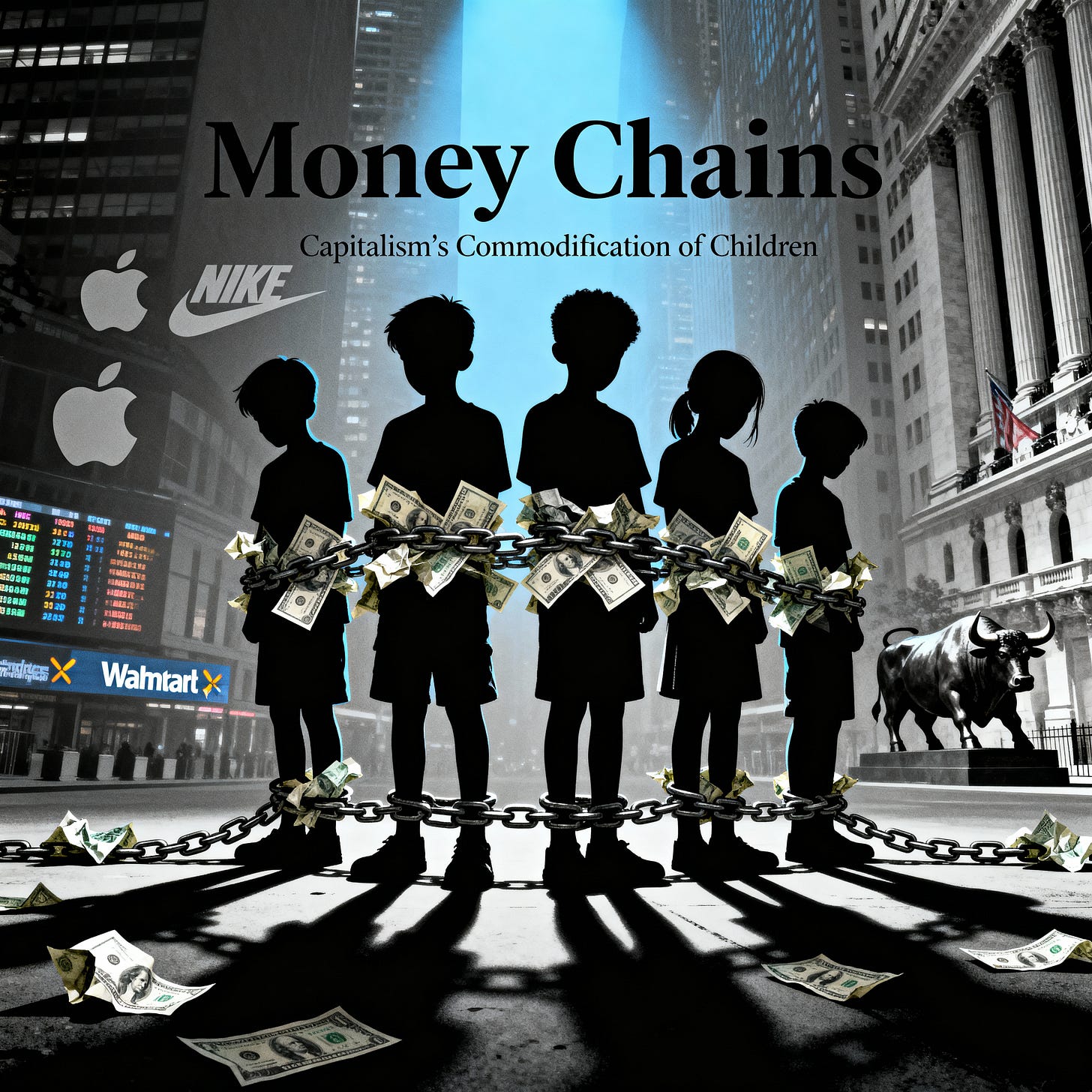
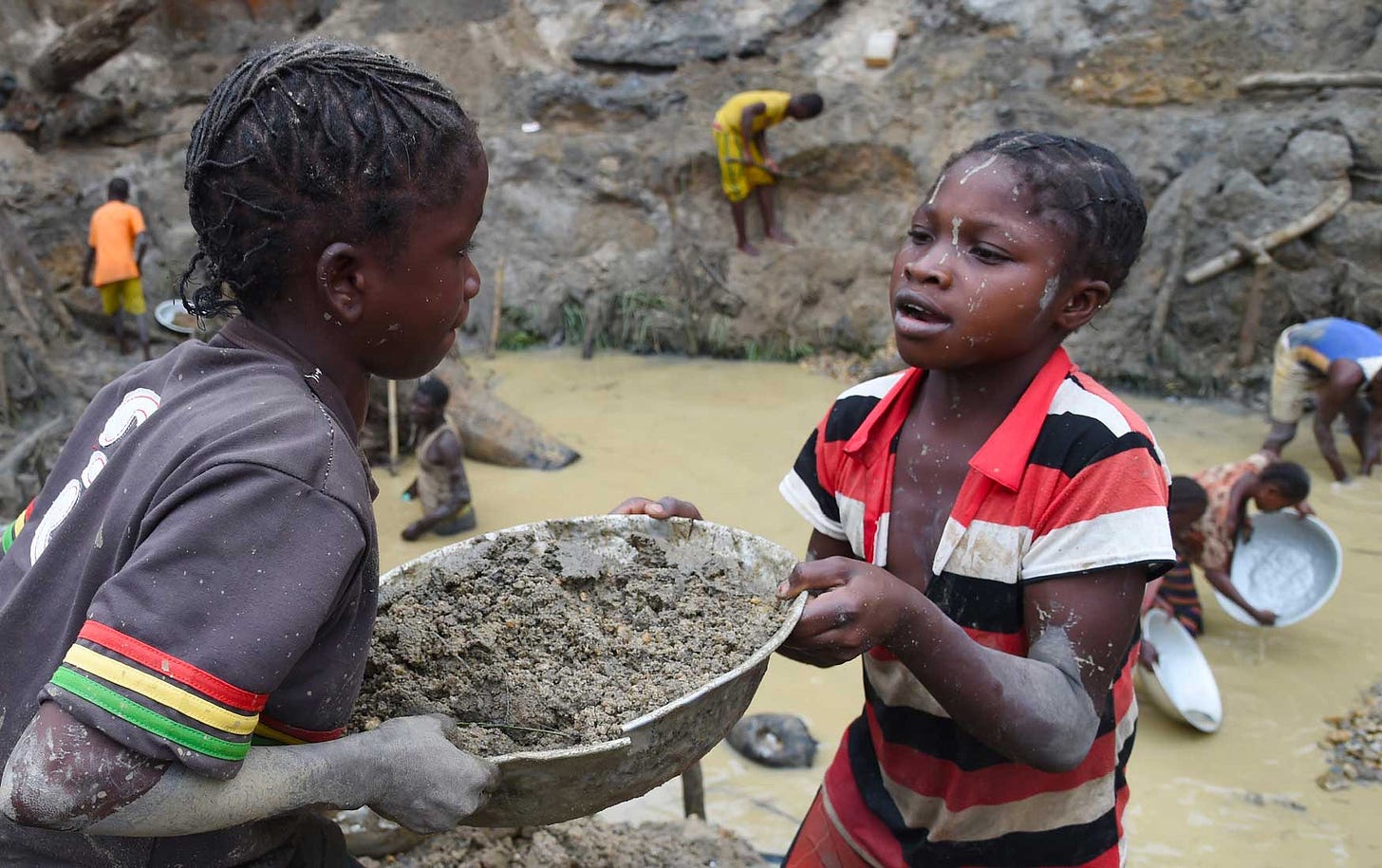
Western corporations are linked to child labor in Africa, particularly in the cocoa and cobalt supply chains in West Africa and the Democratic Republic of Congo (DRC). Major companies like Nestlé, Mars, Cargill, Apple, Google, and Tesla have faced lawsuits and international scrutiny for their alleged roles in these practices

Ghislaine Maxwell, Epstein’s primary accomplice, was the daughter of Robert Maxwell, a media mogul with extensive ties to Israeli intelligence. The operation’s sophisticated surveillance capabilities, international scope, and protection from prosecution all bear the hallmarks of state-level intelligence operations. But more than operational support, Israel provided the ideological framework that made Epstein’s crimes possible: the belief that some humans are inherently superior to others and therefore entitled to use inferior humans as objects for their pleasure.

Superior Jewish DNA

The same supremacist ideology that allows Israelis to shoot Palestinian children for sport also allows billionaires to destroy the lives of workers’ children through environmental destruction, healthcare denial, and educational defunding. Sexual predation and imperial predation spring from the same poisoned well of human supremacy that capitalism depends upon for its existence.

Surprisingly yet unsurprisingly, Epstein was a devoted believer in eugenics—the pseudoscientific 19th-century racist ideology that his own Jewish ancestors had been victimized by—and harbored grandiose fantasies of seeding the human race with what he considered his “superior Jewish DNA.” The irony was lost on him: a man who embodied every antisemitic stereotype about Jewish financial manipulation and sexual degeneracy had reinvented himself as the master race. Epstein’s eugenics obsession reveals the final psychological piece of the predator-capitalist puzzle—the megalomaniacal belief that wealth proves genetic superiority, that economic domination justifies any form of human breeding program, and that the right to rape and reproduce flows naturally from the right to buy and sell.

His New Mexico ranch was reportedly intended as a breeding facility where he would impregnate multiple women to spread his “superior” genes—the ultimate fusion of sexual predation, capitalist accumulation, and fascist ideology. The man who trafficked children for billionaire rapists saw himself not as a criminal but as an evolutionary benefactor, using his wealth to “improve” the species through forced reproduction. Capitalism had so thoroughly warped his psychology that he genuinely believed his financial success proved his genetic worth.

The Silence for Capital

The most damning evidence of capitalism’s complicity in sexual predation is not what it does but what it refuses to see. Despite overwhelming evidence of systematic child abuse among the global elite, the mainstream media treats each revelation as an isolated scandal rather than a systemic feature. Despite clear patterns linking economic power to sexual violence, academia refuses to examine the connection. Despite obvious signs that pedophile networks operate at the highest levels of government and finance, law enforcement consistently fails to investigate or prosecute.

This silence is not incompetence—it is self-preservation. Capitalism cannot afford to acknowledge that its most successful practitioners are also its most depraved predators because this would expose the moral bankruptcy at the system’s core. The same corporate media that celebrates billionaire “philanthropy” cannot simultaneously expose billionaire child rape, genocide and theft without undermining the entire mythology of virtuous wealth creation.

The legal system that protects corporate criminals from accountability cannot suddenly develop a conscience about sexual criminals without calling attention to its systematic bias in favor of wealth and power. The political establishment that serves corporate interests cannot prosecute the sexual crimes of their financial backers without severing their own sources of funding and support.

The Fascist Trajectory

The same psychological mechanisms that enable the abuse of individual children also enable the abuse of entire populations. The billionaire who can rape a child with no sense of moral conflict can also engineer famines, fund genocides, and destroy democracies with equal emotional detachment.

This is why every fascist movement in history has been funded and supported by capitalist elites: fascism is simply capitalism with its mask removed, the open acknowledgment that some humans exist only to serve the pleasures and profits of others. The concentration camps of Nazi Germany were built by the same corporate executives who built the factories that exploited workers to death. The genocide in Gaza is funded by the same billionaires who profit from the destruction of Palestinian society.

Sexual predation against children represents the ultimate expression of this fascist logic: the complete negation of another human being’s autonomy, dignity, and right to exist as anything other than an object for consumption. Once this psychological barrier has been crossed—once a person becomes capable of sexually abusing a child—no other moral boundary can restrain them. They become capable of any atrocity in service of their desires.

“Jeffrey Epstein was not a monster who happened to be rich—he was rich because he was a monster”

Breaking the Silence, Breaking the System

The connection between pedophilia and capitalist success is not a conspiracy theory—it is an observable pattern that demands explanation. That explanation reveals the most uncomfortable truth about our economic system: it does not reward virtue, innovation, or social contribution. It rewards the capacity for predation, the willingness to treat other humans as consumable resources, and the ability to sever all emotional connection to the suffering one causes.

Jeffrey Epstein was not a monster who happened to be rich—he was rich because he was a monster. His wealth came not from productive economic activity but from his willingness to provide other monsters with access to victims they could not obtain through their own efforts. His clients were not wealthy men who happened to be pedophiles—they were pedophiles who became wealthy because capitalism rewards the psychological traits that enable both sexual and economic predation.

The Epstein network reveals capitalism in its purest form: a system where those most willing to inflict suffering rise to positions where they can inflict maximum suffering. The children destroyed on Epstein’s island are not fundamentally different from the children destroyed in sweatshops, the children poisoned by industrial pollution, the children murdered by American bombs purchased with taxpayer money. All are victims of the same system, sacrificed to the same gods of profit and power.

Breaking this system requires more than prosecuting individual predators—it requires acknowledging that predation is not a bug in capitalism but its essential feature. It requires recognizing that the same system that elevates pedophiles to positions of supreme power will never voluntarily reform itself. It requires understanding that the choice before us is not between different types of capitalism but between capitalism and human survival.

[…]

Via https://libya360.wordpress.com/2025/11/16/why-are-pedophiles-the-most-successful-capitalists/

Trump considers skipping disarmament phase of Gaza plan amid deadlock

(Photo credit: Eyad Baba/AFP via Getty Images)

The Cradle

The US is looking to “forgo” the stage of the Gaza ceasefire initiative, which involves deploying an international security force to the strip to disarm Hamas and other Palestinian resistance factions, Israeli media reported over the weekend.

The October ceasefire agreement remains in its first stage as talks continue to stall over the issue of Hamas’s disarmament and post-war administration of Gaza.

This potential change in US direction is causing ongoing negotiations to “deadlock,” an Israeli security source told Hebrew news outlet Channel 13.

The source said Washington is struggling to get commitments from countries to directly participate in disarming the factions.

As a result, it has started to look for “interim solutions, which are currently unacceptable to Israel.”

“This interim solution is the worst there is,” the source added, referring to the plan to forgo disarmament and skip ahead to reconstruction.

“Hamas has been strengthening in recent weeks since the end of the war. There can be no rehabilitation before demilitarization. It is contrary to Trump’s plan. Gaza must be demilitarized,” the Israeli source went on to say.

Channel 13 notes that there has been a collapse in ceasefire talks over Washington’s inability to form the international force – referred to in Donald Trump’s ‘peace plan’ as the International Stabilization Force (ISF).

The US recently submitted a draft for the establishment of the force, and is seeking UN backing to implement the plan along with the rest of Trump’s 20-point ceasefire initiative.
The draft includes a broad mandate for Washington to govern Gaza for at least two years. It also mentions that the ISF will be established in coordination with the Gaza ‘Board of Peace,’ which Trump will head.

Russia has proposed its own draft, which entirely removes the ‘Board of Peace’ clause and calls on the UN to identify “options” for the ISF.

The US draft is expected to be put to a vote at the UN on Monday. On 14 November, the US, Saudi Arabia, Qatar, Egypt, the UAE, Indonesia, Pakistan, Jordan, and Turkiye issued a joint statement backing the US draft. That day, Indonesia said it had readied 20,000 troops for the plan.

Arab and Islamic states have “leaned toward supporting the US draft because Washington is the only party capable of enforcing its resolution on the ground and pressuring Israel to implement it,” a source told Asharq al-Awsat, adding that there is “firm American intent to deploy forces soon, even if that requires sending a multinational force should Moscow use its veto.”

However, multiple reports in western and Hebrew media over the past several days have revealed an Arab unwillingness to directly force Hamas’s disarmament through a confrontation.

“Most countries that have expressed interest in participating in the ISF have said they would not be willing to enforce the disarmament … and would only act as a peacekeeping force,” Times of Israel wrote.

Israel’s Broadcasting Corporation (KAN) reported on Saturday that Tel Aviv is expecting the resolution to pass, and is preparing for the entry of thousands of foreign soldiers into Gaza.

[…]

Via https://thecradle.co/articles/trump-considers-skipping-disarmament-phase-of-gaza-plan-amid-deadlock-report

MAGA Losing Libertarians with Trump’s Attacks Against Massie and MTG

Brian Shilhavy

MAGA is quickly becoming splintered due to Trump’s stance on the Epstein files. This can be clearly seen in the comments on an article published yesterday on ZerohHedge News, the pro-Trump Libertarian publication, regarding Trump’s attacks against Marjorie Taylor Greene (https://www.zerohedge.com/political/friday-night-meltdown-trump-yanks-mtg-endorsement-mocks-massies-remarriage-after-wifes) and Thomas Massie.

There are nearly 5000 comments, and pro-Trump diehards for the first time I have seen in years, were soundly outnumbered by those defending Massie and MTG by about 4 to 1, at least.

The libertarian defectors have even come up with their new acronym to contrast the TDS (Trump Derangement Syndrome) that the MAGA faithful use to express their world view that anything negative about Trump is TDS.

The new acronym is TSS (Trump Stockholm Syndrome.)

Here is the Cleveland Clinic’s definition of “Stockholm Syndrome (https://my.clevelandclinic.org/health/diseases/22387-stockholm-syndrome)”:

“Stockholm syndrome is a coping mechanism to a captive or abusive situation. People develop positive feelings toward their captors or abusers over time. This condition applies to situations including child abuse, coach-athlete abuse, relationship abuse and sex trafficking. Treatment includes psychotherapy (“talk therapy”) and medications if needed.”

My opinion: Trump will soon be out of office, as the GOP jumps ship and tries to correct course before the mid-term elections, which at this rate will be a blood bath for the GOP, and a probable impeachment of Trump.

Be on the lookout for false flag events next week as Massie’s bill comes to the floor of the House for a vote.

And remember, if a mass casualty even happens on the magnitude of 911, there is a 99.99% chance the U.S. government is behind it, but blaming it on China, Russia, Iran, [fill in the blank].

Of course with this administration, they might blame it on the “Commie Left Wing Lunatics”, and perhaps throw in the “antisemitism” label while going after Massie, MTG, Tucker Carlson, Candace Owens and anyone else they see standing in their way.

[…]

Via https://t.me/healthimpact/2849

Indigenous Language Families: Aleut, Algonquin and West Coast Languages

Eskimo-Aleut Languages - Serious Science

Episode 28 The Original American Languages Part 2

Dr John McWhorter (2019)

Film Review

The last family of American languages to emerge, the Aleut languages were spoken in Alaska, northern Canada and eastern Siberia.  After the first migration out of Siberia 20,000 years ago, there were three additional migrations, 5,000, 2,800 and 1,000 years ago.

There are two primary Aleut languages: Yupik (spoken in Alaska and Siberia), which is nearly extinct,s and Inuktitut (aka Greenlandic), spoken in Greenland. Inuktitut is one of Greenland’s official languages and is taught in school. Aleut languages tend to use really long words to convey full sentences (known as polysynthesis).

Algonquin Famil

The Algonquin family of languages was mainly spoken on the US East Coast and eastern Canada. However two Algonquin subfamilies, Yurok and and Wiok, were spoken in Western California. This suggests Algonquin languages were once widespread across the American continent before being displaced by other languages.

Most English borrowed words are Algonquin, eg squash and papoose. Most indigenous Americans who became famous for helping European settlers spoke Algonquin languages. Squanto, who helped the Plymouth Rock settlers, spoke Narragansett and Poccahantes spoke Powhata. Munsee was the language spoken on Manhattan Island.

West Coast Families

There were 78 indigenous languages belonging to five different families spoken in California and northwest Canada. Most belonged to the Penutian family, like Yokuts and Miwok (the latter using case markings as in Latin or Russian), which was spoken in central California.

https://www.kanopy.com/en/pukeariki/watch/video/6120000/6120058

How Eating Red Meat the Right Way Boosts Brain and Microbiome Health

red meat brain microbiome health

Dr Mercola

Story at-a-glance

  • Red meat, when eaten as part of a nutrient-rich, whole-food diet, supports brain function and gut health by supplying hard-to-get nutrients like vitamin B12, zinc, selenium, choline, and taurine that enhance mitochondrial energy and mental clarity
  • People who included moderate amounts of red meat in a high-quality diet had higher brain-supporting nutrient levels and greater gut microbial diversity — key indicators of resilience and emotional well-being
  • Processed meats such as bacon and sausage are a different story; even half a slice daily was linked to faster cognitive aging, higher dementia risk, and damage caused by nitrosamine formation from nitrites
  • Choosing grass fed and finished red meat, cooking it gently, and pairing it with antioxidant-rich vegetables maximizes nutrients while minimizing oxidative stress and inflammation
  • Collagen-rich cuts like oxtail, shank, or bone broth balance the amino acid profile of muscle meat, strengthening connective tissue, improving sleep, and reducing inflammation for lasting vitality

For decades, red meat has been a lightning rod in nutrition debates — praised for its dense nutrition yet criticized for its supposed role in chronic disease. But the conversation is evolving. Researchers are beginning to look beyond single foods and instead examine how overall diet quality shapes health outcomes.

It turns out the context in which you eat red meat — what it’s paired with, how it’s prepared, and the rest of your diet — matters, perhaps far more than whether you eat it at all. Your brain and gut are at the center of this discussion. Both rely on a steady supply of specific nutrients, including B vitamins, minerals, and amino acids that support neurotransmitter balance, mitochondrial function, and intestinal integrity.

When those nutrients are lacking, fatigue, brain fog, low mood, and digestive changes often follow. Rather than blaming one food, researchers are asking a more important question: how can diet composition strengthen the gut-brain connection and protect long-term cognitive health?

This new line of inquiry reframes red meat’s role within a balanced diet — shifting the focus from restriction to balance and nutrient synergy. What you’ll discover is that quality, preparation, and variety determine whether red meat harms or heals. Understanding that difference is key to building meals that enhance brain clarity, gut function, and overall resilience.

Including Red Meat in a High-Quality Diet Improves Brain Nutrient Levels and Gut Health

Research published in Scientific Reports evaluated 3,643 adults from the American Gut Project to determine whether eating red meat — within both high- and low-quality diets — influenced nutrients central to brain health, gut microbiome diversity, and mental health outcomes.1 Researchers compared those who ate red meat with those who didn’t, while also controlling for whether their diets were nutrient-rich or poor overall.

Participants with the healthiest diets who ate red meat showed the best nutritional profiles — Among those consuming balanced, nutrient-dense diets, red meat consumers had greater intakes of brain-supporting nutrients — vitamin B12, zinc, selenium, calcium, and choline — than those who avoided meat.

These nutrients are key to oxygen delivery, nerve communication, DNA repair, and neurotransmitter production.

For instance, vitamin B12 helps regulate homocysteine, an amino acid linked to depression and cognitive decline when elevated.2 Red meat inclusion contributed to this benefit by significantly boosting B12 adequacy. Zinc and selenium are powerful antioxidants that protect neurons from oxidative stress, while choline helps build cell membranes and supports memory function.

A balanced diet mattered more than avoiding red meat entirely — Individuals who scored high on diet quality, regardless of whether they ate meat, had lower odds of depression, bipolar disorder, and post-traumatic stress disorder (PTSD). This finding shows that it isn’t red meat alone that shapes mental health — it’s the broader dietary pattern.

Those consuming low-quality diets, with or without meat, were more likely to have poorer health outcomes and higher body mass indexes (BMIs), suggesting that dietary balance outweighs strict food exclusion.

Red meat was linked to better gut microbial diversity, a marker of resilience — Gut microbial diversity refers to the variety of bacteria living in your intestines. More diversity usually means better digestion, stronger immune function, and greater resistance to inflammation. People eating high-quality diets that included red meat had the richest and most balanced microbiota profiles.

In contrast, those eating poor-quality diets without red meat showed the lowest microbial diversity, which is often linked to fatigue, anxiety, and metabolic dysfunction.

The study identified specific gut bacteria linked to better mental and metabolic health — Red meat eaters with high diet quality had more bacterial species associated with stable metabolism and lower inflammation.

Meanwhile, non-meat eaters in the same category had more species tied to carbohydrate fermentation and fiber digestion. Importantly, the study found that neither group showed harmful shifts or dysbiosis, meaning red meat inclusion did not disrupt the gut’s microbial balance when part of a wholesome diet.

Nutrient levels improved safely without exceeding upper limits — Despite higher micronutrient intakes among red meat consumers, none exceeded recommended safety thresholds. Over 93% of red meat eaters met their estimated average requirement for vitamin B12, compared to just 65% to 71% of non-eaters.

Selenium adequacy exceeded 97% in both high- and low-quality meat-eating groups. This demonstrates that red meat contributes significantly to meeting daily nutrient needs without risking overload. Red meat’s unique nutrient density — providing heme iron, B vitamins, and trace minerals in bioavailable forms — supports brain and gut health by enhancing mitochondrial energy production and reducing oxidative stress.

When consumed within balanced meals rich in fruits, vegetables, and whole foods, its amino acids and micronutrients work synergistically to promote neurotransmitter balance, intestinal barrier function, and cellular repair.

Processed Red Meat Linked to Faster Cognitive Decline and Higher Dementia Risk

Eating red meat as part of a nutrient-rich, whole-food diet supports your brain and gut, but the story changes dramatically when meat is processed. A large-scale cohort study published in Neurology followed 133,771 adults in the U.S. for up to four decades. The research examined whether eating processed or unprocessed red meat affected the risk of dementia, cognitive decline, and memory function.

Participants were free of dementia at the start and completed detailed food frequency questionnaires to assess long-term eating patterns, while cognitive performance was measured through standardized interviews and self-reported assessments.

Processed red meat stood out as the strongest dietary risk factor — People who ate at least a quarter serving of processed red meat per day — the equivalent of only half a slice of bacon or a few bites of sausage — had a 13% higher risk of developing dementia compared to those who ate less than a tenth of a serving daily.

The researchers also found that higher processed meat consumption accelerated cognitive aging, meaning the brain functioned as if it were roughly 1.6 years older for every daily serving of processed meat consumed.

Even unprocessed red meat, when eaten in excess, was linked to cognitive strain — Participants who ate one or more servings of unprocessed red meat per day had a 16% greater risk of subjective cognitive decline — early self-perceived memory and attention problems — compared to those eating less than half a serving.3 Although this form of meat was less harmful than processed meat, the trend still pointed to higher intake being associated with slower thinking and reduced mental sharpness.

While this contrasts with the Scientific Reports findings, which showed that moderate red meat intake within a nutrient-dense, high-quality diet supported brain-related nutrient adequacy and gut diversity, it suggests that overall dietary context, not red meat alone, determines its impact on cognition.

Replacing processed red meat with nutrient-dense plant foods lowered dementia risk significantly — The researchers found that swapping one daily serving of processed meat for legumes reduced dementia risk by 19%. This substitution also corresponded to 1.4 fewer years of cognitive aging and a 21% lower risk of subjective memory decline.

Processed meats raise chronic disease risk — While red meat supplies nutrients like vitamin B12, processed versions typically contain preservatives and advanced glycation end products (AGEs), all of which burden your cardiovascular system and promote oxidative stress.

A study published in Nature Medicine found that eating as little as 0.6 to 57 grams of processed meat per day — equivalent to a few bites to two slices of bacon — was linked to an 11% higher risk of Type 2 diabetes and a 7% higher risk of colorectal cancer compared with no intake at all.4

Simple Shifts to Eat Red Meat for Health, Not Harm

Your relationship with red meat doesn’t have to be all or nothing. What matters most is how you prepare it, what you eat it with, and the quality of the meat itself. When red meat is thoughtfully chosen and balanced with other whole foods, it strengthens your gut and brain health, supports stable energy, and protects long-term health. Here’s how to make red meat a force for healing instead of harm:

1. Choose grass fed and finished meat whenever possible — Grass fed beef and lamb contain more omega-3 fats, conjugated linoleic acid (CLA), and antioxidants that reduce inflammation and support gut and brain health. Grain-fed meat raised in concentrated animal feeding operations tends to be higher in omega-6 fats, which promote imbalance in your microbiome when consumed in excess.

Look for local, pasture-raised options whenever possible to ensure superior nutrition and better fat ratios.

2. Get enough high-quality protein — and balance it with collagen-rich sources — Most adults need about 0.8 grams of protein per pound of ideal body weight (or about 1.76 grams per kilogram). While red meat is an excellent source of complete protein, it’s primarily composed of muscle tissue, which lacks certain amino acids vital for connective tissue repair.

About one-third of your protein should come from collagen-rich foods such as bone broth, pure gelatin powder without sugar and other additives, oxtail, shanks, or grass fed ground beef containing connective tissue. Collagen provides glycine, proline, and hydroxyproline — amino acids that strengthen your skin, joints, and bones while calming inflammation and improving sleep quality.

3. Cook gently and pair red meat with antioxidant-rich foods — High-heat cooking methods like grilling or frying create harmful AGEs. To protect your cells, cook meat at lower temperatures or use moisture-based methods such as stewing or slow cooking. Pairing red meat with herbs like rosemary, garlic, and thyme, or with vegetables rich in antioxidants — such as broccoli or bell peppers — helps neutralize free radicals and balance your meal.

4. Avoid processed and fake meats — Processed meats like bacon, sausage, and deli slices are loaded with nitrites and other preservatives that form carcinogenic nitrosamines and increase your risk of chronic disease. Likewise, plant-based “meat alternatives” often rely on seed oils high in linoleic acid (LA), a polyunsaturated fat that drives inflammation and oxidative stress. Stick to whole, unprocessed proteins to nourish your body without hidden toxins.

5. Use red meat to supply unique, hard-to-get nutrients — but remember, overall diet quality matters — Red meat is one of the most nutrient-dense foods on your plate, providing a unique combination of taurine, carnitine, creatine, and coenzyme Q10 — nutrients essential for mitochondrial energy production, brain function, and metabolic balance.

Taurine helps regulate calcium inside your cells, protect neurons, and guard against oxidative stress, while carnitine and creatine deliver clean, steady fuel for your muscles and heart. For best results, enjoy red meat as part of a low-LA, whole-food diet, and avoid pairing it with refined carbs or seed oils, which drive insulin spikes and oxidative damage that undermine red meat’s natural health benefits.

[…]

Via https://articles.mercola.com/sites/articles/archive/2025/11/14/red-meat-brain-microbiome-health.aspx

Was Covid Always a CIA Plot?

Was Covid Always a CIA Plot?

By  November 25, 2025

According to newly released emails, the United States Intelligence Community, led by the CIA and the Office of the Director of National Intelligence, held regular meetings with Dr. Ralph Baric, one of America’s leading coronavirus experts, since at least 2015.
Senator Rand Paul’s office has worked for years to obtain the documents.

Baric has been accused of engineering the Covid-19 virus in his lab at the University of North Carolina, but he has never had to testify about his role in the pandemic despite his well-documented collaboration with the Wuhan Institute of Virology.

The newly released emails reveal that the CIA hoped to discuss “Coronavirus evolution and possible natural human adaptation with Baric” and that Baric held quarterly meetings with members of the Intelligence Community.

These emails are just the latest additions to the suspicious amalgamation of facts implicating the US Intelligence Community’s role in the origins of the pandemic, as discussed in The Covid Response at Five Years.

A very brief overview of the timeline suggests that the CIA and the Intelligence Community are implicated in the creation of the virus, a lab leak at the Wuhan Institute of Virology, and censorship to evade any public scrutiny for their role in the pandemic.

  • 2015: The Intelligence Community held quarterly meetings with Dr. Ralph Baric and discussed “possible human adaptation” to coronavirus evolution.
  • 2019-2020: The CIA had a spy working at the Wuhan Institute of Virology doing “both offensive and defensive work” with pathogens, according to Seymour Hersh. That asset reports in early 2020 that there was a laboratory accident that resulted in the infection of a researcher.
  • March 18, 2020: The Department of Homeland Security replaced Health and Human Services as the lead Federal Agency responding to Covid, as explained in depth in Debbie Lerman’s The Deep State Goes Viral.
  • Spring 2020: The CIA offered bribes to scientists to bury their findings refuting the “proximal origin” theory advanced by Dr. Anthony Fauci, according to a whistleblower. The House Oversight Committee explains: “According to the whistleblower, at the end of its review, six of the seven members of the Team believed the intelligence and science were sufficient to make a low confidence assessment that COVID-19 originated from a laboratory in Wuhan, China.” Then, however, the “six members were given a significant monetary incentive to change their position.”
  • 2020: Dr. Fauci began holding secret meetings at CIA headquarters “without a record of entry” in order to “influence its Covid-19 origins investigation,” according to a whistleblower. “He knew what was going on…He was covering his ass and he was trying to do it with the Intel community,” the whistleblower told Congress.”
  • 2021: Scientists in the Department of Defense compiled significant evidence suggesting Covid emerged from a lab leak, but President Biden’s Director of National Intelligence, Avril Haines, banned them from presenting their evidence or participating in a discussion on the origins of the virus.
  • 2021: CISA, an agency within the Department of Homeland Security, implemented a program known as “switchboarding,” where officials dictated to Big Tech platforms what content is permissible or prohibited speech.
  • 2022: The Department of Homeland Security announced it will establish a “Disinformation Governance Board.” The Ministry of Truth is only discontinued when the absurdity of its chief censor, Nina Jankowicz, receives sufficient blowback from the public.

What exactly was the play here? A populist impulse has been alive in the American electorate since the end of the Cold War. A growing popular demand on the left and right has been for a government that serves the people and not some globalist, bureaucratized, and militarized scheme that only benefits the ruling class.

In 2015, Donald Trump, a consummate outsider to the ruling elites, was ascending in political stature in ways that no one expected. He was saying outrageous things on stage – such as that the Iraq war was a disaster – and people loved it.

The establishment’s choice, Jeb Bush, was wiped out early in the primaries. This was not about Trump personally, however; it was about the traditional demand in these circles to control the controllers. Since the assassination of JFK, this has always been the way, always justified in the public interest. Trump was not their choice.

The real interest has been the consolidation and expansion of power of a rogue Intelligence Community, headed by the CIA. Tapping Baric’s expertise was part of a deliberate strategy to increase that dominance through bioweapons.

It seems perhaps crazy to imagine that there was a playbook for maintaining control by the old guard and that the pandemic option was among them. But perhaps it was. After all, Anthony Fauci frequently warned of a coming pandemic, and intelligence worked with universities and corporations for years and on multiple occasions to game out pandemic exercises (Event 201 and Crimson Contagion).

What we have here are new breadcrumbs pointing to a genuine coup attempt, one that grew as each stage in the deployment failed, culminating in relentless media campaigns, lawfare, and even assassination attempts. The newest evidence further reinforces the existence of a ruling class willing to engage in sadistic policies that compared with the worst of the last years of the Roman Empire.

Of course, this was not just about politics in the US. Populist movements had come alive the world over, from Europe to the UK to Brazil. Fully 194 countries were locked down over several weeks, with the claim that the problem would be fixed with universal human separation followed by injection of a compliant population. The scenario being built here through these releases is nothing short of terrifying.

Where are the investigations, hearings, commissions, and courts? At the very least, and in any case, Baric and members of the Intelligence Community must testify under oath about their role in gain-of-function research, the Wuhan Institute of Virology, and the cover-up that began in 2020.
[…]

Via https://brownstone.org/articles/was-covid-always-a-cia-plot/

TrumpRx Prescription Website to Launch in 2026

Dr Mercola

Prescription drugs in the U.S. cost nearly 2.78 times more than in other developed countries, according to data from the U.S. Department of Health and Human Services analyzed by RAND Health Care.1 That means a medication costing $100 in Germany could cost close to $300 in the U.S. The disparity is even worse for brand-name drugs, which are often more than 3.22 times higher than in peer nations.

For millions of Americans, these inflated prices aren’t just inconvenient — they’re devastating. They force hard choices between filling a prescription or paying for food, rent, or other essentials. For decades, pharmaceutical companies have defended these prices by claiming that Americans fund the world’s research and development. The result is a system where U.S. consumers subsidize cheaper drugs for other nations while paying the highest prices on Earth.

It’s a pattern that has persisted across administrations and political divides, despite repeated promises to lower costs. Even as new therapies enter the market, they often do so first in the U.S. — at the highest price point — locking patients into a system that prioritizes profit over access.

President Donald Trump’s administration is now taking another run at this problem with TrumpRx, a government-run website designed to lower drug prices through direct-to-consumer sales. Pfizer is the first major partner to sign on, pledging to sell many drugs at discounts of up to 50% and to match prices charged in other wealthy countries.2

TrumpRx represents an attempt to bypass the middlemen — insurers, pharmacy benefit managers, and wholesalers — who drive much of the current cost inflation. This effort marks a major shift in how Americans might one day access prescription medications, setting the stage for a broader conversation about why U.S. drug prices are so high and what it will take to finally change them.

TrumpRx Introduces Direct-to-Consumer Drug Discounts

As reported by MSN, on September 30, 2025, President Trump announced the creation of TrumpRx, a direct-to-consumer website where Americans could purchase discounted prescription drugs. It’s expected to launch in 2026.3

Pfizer agreed to reduce prices for many medications and adopt “Most Favored Nation” pricing — meaning U.S. consumers would pay no more than patients in other wealthy countries. President Trump stated, “The United States is done subsidizing the health care of the rest of the world.” His goal was to end what he called global price gouging and make drug costs fairer for American families.

Pfizer agreed to major concessions that include large discounts and U.S. manufacturing investments — Under the agreement, Pfizer committed to selling many primary care and specialty drugs at an average of half off list prices through TrumpRx.

The company also pledged to expand domestic manufacturing, investing $70 billion in U.S. facilities while receiving a three-year exemption from certain import tariffs. This partnership reflects a major policy tradeoff — lower prices for American consumers in exchange for incentives that keep pharmaceutical production within the U.S.

The TrumpRx website will serve as a bridge, not a pharmacy — The administration clarified that TrumpRx.gov will not directly sell or ship medications. Instead, it will act as a searchable portal connecting users to the drugmaker’s own direct-sales channels.

This approach bypasses conventional insurance systems, allowing uninsured or underinsured Americans to access lower cash prices. For those with insurance, however, the discounts might not always beat negotiated plan prices. Health policy expert Chris Meekins noted, “New Trump drug website is likely irrelevant as few will pay out of pocket,” highlighting that insured patients generally pay less through their existing coverage.

Experts question whether the price cuts will reach the patients who need them most — Analysts pointed out that while TrumpRx could benefit uninsured individuals, insured Americans — who represent roughly 92% of the population — are unlikely to see significant changes.4

Vanderbilt University’s Stacie Dusetzina said the program’s featured drugs, such as Pfizer’s rheumatoid arthritis medication Xeljanz, are often costly even after the TrumpRx discount. For example, a 40% discount on a $6,000 monthly list price would still leave patients paying about $3,600 per month, far beyond what most households can afford.

The initiative revives Trump’s long-standing push for “Most Favored Nation” pricing — Trump has spent years pressuring pharmaceutical companies to tie U.S. prices to those charged in other countries. He previously attempted to enforce this through executive action during his first term but faced legal and political resistance.

The revived plan directs drugmakers to match their lowest international “net price,” which includes rebates and discounts, across major markets such as Canada, Germany, Japan, and the United Kingdom. By linking U.S. pricing to these benchmarks, the administration hopes to create a global standard that discourages overcharging Americans.

The pharmaceutical industry is wary of the ripple effects — Industry group Pharmaceutical Research and Manufacturers of America (PhRMA) warned that these pricing policies could have unintended consequences.

Companies could raise prices in foreign markets to offset U.S. discounts or limit drug availability in countries with strict price controls. Still, the administration appears willing to accept those outcomes to prioritize American consumers.

Trump’s Executive Order Promises Up to 80% Drug Price Reductions for Americans

TrumpRx didn’t emerge in isolation — it’s the direct outcome of President Trump’s sweeping executive order announced May 11, 2025.5 That order laid the legal and economic foundation for TrumpRx by reinstating his earlier “Most Favored Nation” pricing policy, compelling drugmakers to charge Americans no more than patients in other developed nations. The website and the broader pricing reform are two parts of the same initiative — one setting the rules, the other putting them into practice.

A new executive order set the stage for TrumpRx and immediate price cuts — President Trump called it “one of the most consequential Executive Orders in our Country’s history,” and said this policy would lower prescription costs in the U.S. by 30% to 80%, while prices abroad would rise to create global balance. This order became the framework for TrumpRx, which puts the policy into motion through direct manufacturer access for consumers.

The policy targets high-cost drugs under Medicare Part B, offering relief to older adults and those with chronic diseases — Medicare Part B covers outpatient treatments, including costly infusion therapies and specialty drugs prescribed for cancer, autoimmune disease, and rare disorders. Under the executive order, these medications must be sold at the lowest adjusted international rate, making them more affordable for seniors and those managing lifelong conditions.

Projected savings could reach $87 billion within seven years — A prior version of Trump’s Most Favored Nation rule, first introduced in 2020, was estimated by the Centers for Medicare and Medicaid Services to save $87.8 billion for federal and state governments, as well as Medicare beneficiaries, over seven years. Though that version was halted by legal challenges, the 2025 order revives it with broader enforcement powers and a direct consumer mechanism through TrumpRx.

Bipartisan support is emerging for international price parity — Senators Josh Hawley (R-Mo.) and Peter Welch (D-Vt.) introduced a bill on May 5, 2025, mirroring Trump’s initiative. Their proposal would fine drug companies 10 times the difference if they sell medications in the U.S. at prices higher than those in Canada, Germany, Japan, or other peer nations. The growing cross-party support signals a cultural shift toward price fairness across the political spectrum.

This is more than a pricing reform — it’s a restructuring of global drug economics — President Trump acknowledged that global drug prices might rise as the U.S. enforces parity, but said this was “fair” after decades of Americans paying inflated costs. For consumers, the combination of the executive order and TrumpRx could finally halt annual price hikes and make access to essential medications simpler, without rebate games or insurance barriers.

TrumpRx Is a Global Drug Pricing Strategy, Not Just a Website

As reported by The Kingston report, written by Karen Kingston, a med-legal advisor and biotech analyst, the TrumpRx.gov website is only one component of a much larger initiative aimed at overhauling global drug pricing and manufacturing.6 The “Most Favored Nation” pricing model is designed to end the long-standing system where U.S. patients pay inflated costs while other countries benefit from deep discounts.

TrumpRx aims to cut national drug spending while reshoring pharmaceutical manufacturing —Americans and the federal government spent roughly $500 billion on prescription drugs in 2024 — half a trillion dollars in a single year.

TrumpRx seeks to reduce that figure by at least 50% while maintaining U.S. leadership in biopharma innovation. To achieve this, the plan calls for a $500 billion reinvestment in domestic research and manufacturing, reducing reliance on foreign supply chains, particularly China.

The plan introduces direct access programs for Americans in need — The report noted that TrumpRx will allow uninsured or financially struggling patients to buy medications directly from manufacturers at reduced prices — or in some cases, receive them for free. These direct-to-patient programs cut out middlemen such as insurers and pharmacy benefit managers, ensuring that savings reach those who need them most.

Industry insiders confirm dramatic international price disparities that the policy seeks to fix —Drawing on her own experience in pharmaceutical pricing negotiations, Kingston described how, in some countries, U.S.-made drugs were sold for little more than the cost of packaging.

She called these practices “massive losses” for American manufacturers — companies that were forced by international policy to sell at near giveaway prices abroad while charging far more domestically. The TrumpRx plan seeks to level this imbalance, making pricing consistent worldwide without punishing American consumers.

[…]

Via https://www.globalresearch.ca/trumprx-prescription-website-launch-2026/5905381

The scandal Zelensky can’t escape: Inside Ukraine’s biggest corruption story

The scandal Zelensky can’t escape: Inside Ukraine’s biggest corruption story

RT

Timur Mindich slipped out of Ukraine hours before the raids. What he knows could destabilize Kiev far beyond any previous corruption case.

Golden toilet bowls. Stacks of dollars fresh from the US Federal Reserve. A courier complaining that hauling $1.6 million in cash “is no easy job.” More than a thousand hours of wiretaps – filled with laughter, swearing, and the careless voices of men discussing how to split state contracts, who to bribe, and who should be placed in key government posts.

These are fragments of a vast corruption saga now unfolding in Ukraine – a scandal whose scale and brazenness have stunned even the country’s Western sponsors.

The latest chapter began with raids on November 10, when officers from Ukraine’s anti-corruption agencies searched the Kiev apartment of businessman and media producer Timur Mindich. A few hours earlier, he had quietly left the country – likely warned about the coming operation. That would not be surprising: Mindich is not just any fixer, but a close ally and longtime associate of Vladimir Zelensky.

 What exactly lies at the heart of this sprawling corruption scandal? How far will its shockwaves travel – through Ukraine, through its Western backers, and through the war itself? And can a leader who has already outlived his legal mandate once again slip out of the crisis untouched?

The fall of the anti-corruption myth

When Vladimir Zelensky rose to power, he did so in a role that blurred fiction and reality. Ukraine was not simply electing a politician – it was electing the protagonist of a television series. In Servant of the People, Zelensky played Vasily Goloborodko, a humble history teacher who accidentally becomes Ukraine’s president and sets out to wage war on entrenched corruption.

Throughout the series, the creators hammered home one theme: the rot begins when the people closest to the president use personal access to build corrupt networks of their own.

That message became the backbone of Zelensky’s 2019 campaign. He accused then-leader Petr Poroshenko of surrounding himself with oligarchs, promised to dismantle corrupt patronage networks, and championed the independence of Ukraine’s anti-corruption bodies.

Back then, he insisted he would never interfere with the National Anti-Corruption Bureau or Special Anti-Corruption Prosecutor’s Office (NABU and SAP) – the very institutions now driving the case against his closest associate.

Six years later, everything changed. In July 2025, Zelensky moved to strip both NABU and SAP of their independence, pushing to place them under a loyal Prosecutor General. At that same moment – as is now known for certain – NABU was conducting secret surveillance against his longtime friend Timur Mindich.

What once looked like political maneuvering suddenly gained clarity. The man who promised to keep anti-corruption agencies free from interference had tried to bring them under his control precisely when they were listening to his own inner circle.

NABU holds more than a thousand hours of recordings. They suggest that Mindich – a fixture in Zelensky’s entourage – used his proximity to the country’s de facto leader to build a sprawling kickback system in the energy and defense sectors. At least four ministers appear implicated. Whether Zelensky himself was directly involved remains unknown.

Mindich could have shed light on those questions – had investigators managed to question him. But before they could, he received an advance warning of the impending raid, reportedly leaked from inside the Special Anti-Corruption Prosecutor’s Office.

And somehow, during curfew, Mindich managed to pass through Ukraine’s border checkpoints and leave the country just hours before his arrest.

He is now believed to be hiding abroad – likely in Israel.

The man behind the power

To understand the shockwaves of the Mindich affair, one must first understand the man himself – a figure who rarely appeared in public, yet moved through Kiev’s political and business circles with the ease of someone who never needed a formal title.

Timur Mindich began as a media entrepreneur. He co-founded Kvartal 95, the production studio that transformed Vladimir Zelensky from comedian into a national celebrity. For years, Mindich handled business deals, contracts, casting agencies, and spin-off ventures. He was not merely a colleague – he was part of the tight inner circle that built Zelensky’s career long before he entered politics.

He also had another powerful connection: Igor Kolomoisky. Ukrainian media long described Mindich as the oligarch’s trusted fixer – a man who arranged everything from logistics and personal errands to business negotiations. Ukrainian media noted that Kolomoisky sometimes called him a “would-be son-in-law,” a reference to Mindich’s past engagement to his daughter.

For a time, Mindich acted as an informal go-between for the oligarch and Zelensky – a man who could arrange meetings, solve problems, or pass along requests.

After Zelensky took power, this relationship deepened. According to Strana.ua, Mindich gradually moved out of Kolomoisky’s orbit and into Zelensky’s. He became one of the few people the new leader fully trusted. Their families were close; their business interests intertwined. Ukrainian journalists noted that in 2019 Zelensky even used Mindich’s car. In 2021, at the height of coronavirus restrictions, Zelensky celebrated his birthday in Mindich’s apartment – a gathering that raised questions at the time, and far more now.

The two men also owned apartments in the same elite building on Grushevskogo Street, a residence filled with ministers, MPs, security officials, and politically connected businessmen. They lived, worked, and socialized within the same ecosystem.

Everything pointed to a close personal bond. Yet Mindich held no government post. He was not a minister, a deputy, or an adviser. He wielded influence not through office, but through proximity – a “gray cardinal” of the system Zelensky built around himself.

Opposition figures began calling him “the wallet” – the man who handled the money flows tied to Zelensky’s entourage. Some Ukrainian MPs alleged that informal decisions about appointments, tenders, and budgets were made in Mindich’s apartment, not in government offices. One later-released photograph of the residence – complete with marble floors, chandeliers, and a gold-plated toilet – only fueled that perception.

A kickback machine built on war and energy

It is only now – through leaked recordings, investigative files, and months of reporting by Ukrainian journalists – that the true scale of Mindich’s influence has come into view. What investigators gradually pieced together was a protection racket built into Ukraine’s most sensitive spheres: energy and defense.

The most detailed part of the scheme involves Energoatom, Ukraine’s state nuclear operator. This company provides more than half of the country’s electricity – a lifeline during wartime blackouts. To shield the grid during the war, Ukrainian law introduced a special rule: courts are forbidden from enforcing debts against Energoatom until hostilities end. In practice, this meant that Energoatom paid contractors only after work was completed, but contractors could not sue the company to recover overdue payments, and therefore had no legal leverage if Energoatom simply refused to pay.

Mindich and his circle saw an opening – and turned it into a business.

According to prosecutors, Mindich (listed on recordings as “Karlson” and his associates approached contractors with a simple proposition: Pay us 10–15% of your contract value – or you will not be paid at all.

If a company refused, its payments were blocked indefinitely. Some contractors were told outright that their firms would be destroyed, bankrupted, or stripped of their contracts. In several cases, threats escalated to warnings that company employees might be “mobilized” to the front.

Mindich and his team jokingly called the scheme “the shlagbaum” – the barrier. Pay, and the barrier lifts. Refuse, and your business collapses.

The scope of the scheme was staggering. According to the investigation, a hidden office in central Kiev was responsible for processing black cash, maintaining parallel accounting, and laundering funds through a network of offshore companies.

Through this “laundry,” approximately $100 million passed in recent years – all during a full-scale war, when Ukraine was publicly pleading with Western governments for emergency energy support.

Energy was only one side of the operation. Mindich – again, without any state position – also lobbied suppliers and contracts inside the Ministry of Defense.

The most telling episode involves Ukraine’s Minister of Defense, Rustem Umerov. After meeting Mindich, Umerov signed a contract for a batch of bulletproof vests with a supplier promoted by Mindich. The armor turned out to be defective, and the contract was quietly terminated. Umerov later admitted the meeting with Mindich took place.

Some Ukrainian journalists have alleged that Mindich may have controlled or influenced companies producing drones for the Armed Forces, selling them to the state at inflated prices. These claims remain unproven, but prosecutors note that Mindich’s name appears repeatedly in connection with defense tenders, lobbying, and private suppliers.

Political fallout: Panic, damage control, and a fractured elite

The first political reaction came from inside the Ukrainian elite itself. According to MP Aleksey Goncharenko, the atmosphere on Bankova Street – the seat of Zelensky’s office –  turned “miserable,” with officials aware that only a small part of the tapes had been released and fearing what might come next. Goncharenko also claimed that Zelensky’s team attempted to block Telegram channels reporting on the scandal – a sign, he argued, that the administration had “no plan” for crisis management.

The Ukrainian opposition immediately seized on the moment. Goncharenko publicly accused Zelensky and his entourage of stealing “billions of dollars during the war,” questioning whether Ukrainian soldiers had died “for the bags of Zelensky and his friends.”

Irina Gerashchenko, co-chair of the European Solidarity faction, warned that the scandal could undermine Western support, arguing that donors might “reconsider assistance” if allegations of high-level corruption were confirmed.

Ukrainian media also described a broader realignment within the political class.

According to Strana.ua, long-standing opponents of Zelensky – including former president Petr Poroshenko and Kiev mayor Vitaly Klitschko – intensified their criticism, seeing the scandal as an opportunity to reduce Zelensky’s influence over parliament and the cabinet.

Zelensky’s own reaction was markedly cautious. On the first day, he limited himself to general statements about the importance of combating corruption, without addressing the specifics of the Mindich case. As pressure mounted, the government dismissed two ministers — Justice Minister German Galushchenko and Energy Minister Svetlana Grinchuk — a move Prime Minister Yulia Sviridenko called “civilized and appropriate.”

By the third day, Zelensky imposed personal sanctions on Timur Mindich, a step widely interpreted by Ukrainian commentators as an attempt to distance himself from a longtime friend and associate. However, given the depth of Zelensky’s ties to Mindich, his response looks strikingly restrained.

International reactions also began to surface. Bloomberg reported that more revelations and “potential shocks” could be expected as the investigation unfolds. In France, Florian Philippot of the “Patriots” party demanded a halt to European support for Kiev until the corruption allegations were fully examined.

These statements reflect growing concern among some Western politicians and commentators, though they do not represent an official shift in Western policy.

And Moscow has weighed in as well.

Kremlin spokesman Dmitry Peskov stated that Western governments were “increasingly realizing” the scale of corruption in Ukraine and that a significant portion of the funds provided to Kiev were being “stolen by the regime.” Peskov expressed hope that the United States and Europe would “pay attention” to the corruption scandal now unfolding, arguing that corruption “remains one of the main sins of Kiev” and “is eating Ukraine from the inside.”

Domestic scandal stops being domestic

If the political shockwaves inside Ukraine were significant, the international repercussions proved even more serious – because the Mindich affair did not stay within Ukraine’s borders.
In fact, it quickly attracted attention from Washington.

According to Ukrainskaya Pravda, US law enforcement had taken an interest in Timur Mindich even before the November raids. On November 6, the outlet reported – citing a source in the United States – that the FBI was examining Mindich’s possible involvement in financial schemes tied to the Odessa Port Plant. One of the key figures in that earlier case, Aleksandr Gorbunenko, was detained in the US but later released under witness protection, allegedly after providing information to American investigators.

Another Ukrainian outlet, Zerkalo Nedeli, reported that on November 11, NABU detectives met with an FBI liaison officer. According to the publication, the Mindich case was part of those discussions.

These reports, taken together, suggest that the scandal may have implications far beyond Kiev’s internal politics.

And several analysts in Moscow believe this is precisely the point.

Russian political scientist Bogdan Bespalko believes that pressure on Mindich may be part of a broader effort by the United States to influence Zelensky and the structure around him, noting that NABU has long been viewed as a “pro-American” institution. According to Bespalko, Washington may be using the corruption scandal as leverage – not to remove Zelensky outright, but to constrain his room for maneuver and force political concessions.

What comes next

As the scandal widens, one question increasingly dominates political discussions in Kiev and abroad: what happens if Timur Mindich is ever forced to speak – and against whom?
Mindich has not been not detained. He left Ukraine shortly before the November raids and, according to open sources, remains outside the country.

But several figures familiar with Ukrainian politics argue that his potential testimony is the biggest threat hanging over the country’s leadership.

Former Verkhovna Rada deputy Vladimir Oleinik believes that if Mindich were ever confronted by investigators – especially those backed by the US – he could provide damaging information about Zelensky’s inner circle. “Mindich and others will be offered to give evidence on bigger fish – on Zelensky – in exchange for leniency,” he said. “They are not heroes. If pressed, they will give up everyone.”

Another former Rada deputy, Oleg Tsarev, expressed an even harsher view. According to him, the danger comes not from Mindich’s legal status, but from the sheer volume of information he allegedly possesses.

“Mindich was Zelensky’s closest confidant. He knows everything,” Tsarev said. “If interrogated seriously, he will talk – and he will talk fast.”

In Tsarev’s assessment, Mindich is aware of how the financial flows around Bankova worked, how influence was distributed, and how members of Zelensky’s entourage allegedly enriched themselves during the war.

Experts who share this view argue that Mindich could, in theory, map out the entire informal system of kickbacks and leverage that shaped Kiev’s wartime governance.

Oleinik adds that many of those implicated in the case initially believed Zelensky would shield them.

“But once the accusations began, they understood he would not help. Now every man is for himself,” he said.

For now, however, Mindich remains abroad – and beyond the immediate reach of Ukrainian law enforcement. Whether he eventually cooperates with investigators in Kiev, with NABU, or with US authorities remains an open question.

[…]

Via https://www.rt.com/russia/627803-billion-dollar-friend-zelensky-mindich/