Back in 2022 the European Union froze Russia’s sovereign funds. Estimates vary, but the total adds up to something around $300 billion. A lot of this money is held in Euroclear in Brussels, Belgium. As the situation stands at the end of 2025, the United States has stopped funding the financial black hole known as the Ukraine. The European Union tried to take over but it turns out to have no money to do so.
Various plans have been floated for making creative use of Russian sovereign funds to plug the black hole. So far, none of them came to fruition. The latest plan was to have the European Central bank issue loans backed by Russian funds. Not only would this have amounted to simply printing the money (since the backing is but a ruse), but the US Federal Reserve would have had to approve a dollar-euro currency swap. The euro, you see, is not an independent currency but a sort of financial mini-me to the US dollar. In any case, the Fed refused to do so and the entire plan flopped.
Among all of the discussion of this topic I have seen so far, I haven’t seen any mention of what is actually being attempted. At the core of it is the fact that the Russian funds are not money but debt. Frozen Russian funds consist of eurobonds. That is, the Russian government purchased eurobonds and deposited them in Euroclear. If the EU were to abscond with these Eurobonds, that would be a repudiation of this debt. That’s fantastic — less debt! — but where’s the money? The EU members have already spent the money the Russians gave them when purchasing these eurobonds. To actually come up with more money to stuff into the Ukrainian financial black hole, EU would have to borrow it — for example, by, you guessed it, selling more eurobonds.
Now, appreciate the imbecilic nature of the EU’s stance. The EU freezes some sovereign funds, pending the resolution of a military conflict. So far, so good, that’s normal practice. But these sovereign funds consist of EU debt, and the EU is proposing to take possession of this debt, in effect, refusing to pay it back. At this point international investors do their best to decrease their exposure to eurobonds. Yields on eurobonds go up to compensate, making it even more expensive for the EU to continue running large fiscal deficits.
But what has the EU accomplished (other than raising the interest rates it has to pay on its debt)? Why, nothing! It has exactly the amount of money it started with but has suffered some significant reputational damage. If it still wants to stuff some more money into the Ukrainian financial black hole, it would have to borrow it — by selling some more eurobonds but at a higher yield. Is that a win for the EU? I don’t think so!
But that’s not all. Russia will not look kindly on having the EU abscond with its sovereign funds. In fact, it has already made provisions for confiscating equivalent amounts of EU assets held in Russian banks and nationalizing EU investments in Russia. Not only is that real money, not debt instruments, but quite a lot of that wealth is in the form of stocks of actual companies, currently under EU ownership, that would pass to Russian state ownership, along with plant and equipment, employees, inventory and market share. Is that a win? I still don’t think so!
1. Ukraine is on its last legs, guaranteed to lose the war, its army melting away and its government mired in corruption scandals. Throwing more money at the Ukrainian financial black hole would be simply a waste.<
2. Frozen Russian sovereign funds held by Euroclear are in the form of eurobonds. If the EU stole this money, it would simply be refusing to pay back $300 billion of its own debt. This would not give it any money (it has already spent the Russian money which was used to buy these bonds) but it would certainly hurt its financial position and complicate further borrowing and deficit financing.
3. The EU would gain nothing, but it would lose actual, real money and brick and mortar assets it had built up in Russia, including any future profits from them and any future role in the Russian economy.
The news hit the headlines in Israel without warning: On Sunday, Prime Minister Benjamin Netanyahu asked President Isaac Herzog to grant him a preemptive pardon, ending his corruption trial. It would be a highly controversial, almost unprecedented move, as presidential pardons are usually only granted after a conviction.
Yedioth Ahronoth, one of Israel’s leading daily newspapers, on Monday ran with the headline “The pardon dilemma,” while free right-wing daily Israel Hayom acknowledged that “the request is unusual and carries significant implications.”
In a televised video statement, Netanyahu argued that while it was in his personal interest to prove his innocence in court, it was also in the national interest to cut short the trial, which he claimed was “tearing us apart.”
By Drew Hinshaw, Benoit Faucon , Rebecca Ballhaus , Thomas Grove and Joe Parkinson (Wall Street Journal)
Three powerful businessmen— two Americans and a Russian—hunched over a laptop in Miami Beach, ostensibly to draw up a plan to end Russia’s long and deadly war with Ukraine.
But the full scope of their project went much further, according to people familiar with the talks. They were privately charting a path to bring Russia’s $2 trillion economy in from the cold—with American businesses first in line to beat European competitors to the dividends.
At his waterfront estate, billionaire developer-turned-special envoy Steve Witkoff was hosting Kirill Dmitriev, head of Russia’s sovereign-wealth fund and Vladimir Putin’s handpicked negotiator, who had largely shaped the document they were revising on the screen. Jared Kushner, the president’s son-in-law, had arrived from his nearby home on an island known as the “Billionaire Bunker.”
Dmitriev was pushing a plan for U.S. companies to tap the roughly $300 billion of Russian central bank assets, frozen in Europe, for U.S.-Russian investment projects and a U.S.-led reconstruction of Ukraine. U.S. and Russian companies could join to exploit the vast mineral wealth in the Arctic. There were no limits to what two longtime adversaries could achieve, Dmitriev had argued: Their rival space industries, which raced one another during the Cold War, could even pursue a joint mission to Mars with Elon Musk’s SpaceX.
For the Kremlin, the Miami talks were the culmination of a strategy, hatched before Trump’s inauguration, to bypass the traditional U.S. national security apparatus and convince the administration to view Russia not as a military threat but as a land of bountiful opportunity, according to Western security officials. By dangling multibillion-dollar rareearth and energy deals, Moscow could reshape the economic map of Europe—while driving a wedge between America and its traditional allies.
Dmitriev, a Goldman Sachs alumnus, had found receptive partners in Witkoff—Trump’s longtime golfing partner—and Kushner, whose investment fund, Affinity Partners, drew billion-dollar investments from the Arab monarchies whose conflict with Israel he had helped mediate.
The two businessmen shared President Trump’s longheld approach to geopolitics. If generations of diplomats viewed the post-Soviet challenges of Eastern Europe as a Gordian knot to be painstakingly unraveled, the president envisioned an easy fix: The borders matter less than the business. In the 1980s, he had offered to personally negotiate a swift end to the Cold War while building what he told Soviet diplomats would be a Trump Tower across the street from the Kremlin, with their Communist regime as a business partner.
“Russia has so many vast resources, vast expanses of land,” Witkoff told The Wall Street Journal, describing at length his hopes that Russia, Ukraine and America would all become business partners. “If we do all that, and everybody’s prospering and they’re all a part of it, and there’s upside for everybody, that’s going to naturally be a bulwark against future conflicts there. Because everybody’s thriving.”
Red lines
When a version of the 28point plan leaked earlier this month, it drew immediate protests. Leaders in Europe and Ukraine complained it reflected mostly Russian talking points and bulldozed through nearly all of Kyiv’s red lines. They weren’t assuaged even after administration officials assured them that the plan wasn’t set in stone, worried that Russia— after violently redrawing European borders—was being rewarded with commercial opportunities.
As Western leaders convened to digest the plan, Poland’s prime minister Donald Tusk offered a pithy summary: “We know this is not about peace. It’s about business.”
For many in the Trump White House, that blurring of business and geopolitics is a feature, not a bug. Key presidential advisers see an opportunity for American investors to snap up lucrative deals in a new postwar Russia and become the commercial guarantors of peace. In conversations with Witkoff and Kushner, Russia has been clear it would prefer U.S. businesses to step in, not rivals from European states whose leaders have “talked a lot of trash” about the peace efforts, one of these people said: “It’s Trump’s ‘Art of the Deal’ to say, ‘Look, I’m settling this thing and there’s huge economic benefits for doing that for America, right?’” A question for history will be whether Putin entertained this approach in the interest of ending the war, or as a ploy to pacify the U.S. while prolonging a conflict he believes is his place in history to slowly, ineluctably win.
Trusted friends
One sign that he may be serious is that some of his mosttrusted friends, sanctioned billionaires from his St. Petersburg hometown—Gennady Timchenko, Yuri Kovalchuk and the Rotenberg brothers, Boris and Arkady—have sent representatives to quietly meet American companies to explore rare-earth mining and energy deals, according to people familiar with the meetings and European security officials. That includes reviving the giant Nord Stream pipeline, sabotaged by Ukrainian tactical divers, and under European Union sanctions.
Earlier this year, Exxon Mobil met with Russia’s biggest state energy company, Rosneft, to discuss returning to the massive Sakhalin gas project if Moscow and Washington gave the green light.
Elsewhere, a cast of businessmen close to the Trump administration have been looking to position themselves as new economic links between the U.S. and Russia.
Gentry Beach, a college friend of Donald Trump Jr. and campaign donor to his father, has been in talks to acquire a stake in a Russian Arctic gas project if it is released from sanctions. Another Trump donor, Stephen P. Lynch, paid $600,000 this year to a lobbyist close to Trump Jr. who is helping him seek a Treasury Department license to buy the Nord Stream 2 pipeline from a Russian state-owned company.
There is no evidence that Witkoff, the White House or Kushner are briefed on these efforts or coordinating them. A person familiar with Witkoff’s thinking said the envoy is confident that any settlement with Russia would benefit America broadly, not just a handful of investors.
Witkoff, who hasn’t traveled to Ukraine this year, is set to visit Russia for the sixth time this week and will again meet Putin. He insisted he isn’t playing favorites. “Ukrainians have fought heroically for their independence,” said Witkoff, who has tried to inspire Ukrainian officials with the idea of soldiers disarming to earn Silicon Valley-scale salaries operating American built AI data centers. “It is now time to consolidate what they have achieved through diplomacy,” he said.
‘Both sides’
“The Trump administration has gathered input from both the Ukrainians and Russians to formulate a peace deal that can stop the killing and bring this war to a close,” said White House spokesperson Anna Kelly. “As the President said, his national security team has made great progress over the past week, and the agreement will continue to be fine-tuned following conversations with officials from both sides.”
As Witkoff pursued talks with Dmitriev over nine months, some agencies inside the Trump administration had a limited view of his dealings with Moscow.
In the lead-up to an August summit in Alaska between Trump and Putin, Witkoff and Dmitriev discussed a prisoner exchange that would have been the largest bilateral swap in their countries’ history. The Central Intelligence Agency, which traditionally manages prisoner trades with Russia, wasn’t fully briefed on that proposed exchange. Nor was the State Department’s office for unjustly imprisoned Americans. The CIA didn’t return requests for comment. The State Department referred questions to the White House.
Career officials overseeing sanctions at the Treasury Department have at times learned details of Witkoff’s meetings with Moscow from their British counterparts.
In the days after Alaska, a European intelligence agency distributed a hard-copy report in a manila envelope to some of the continent’s most senior national security officials, who were shocked by the contents: Inside were details of the commercial and economic plans the Trump administration had been pursuing with Russia, including jointly mining rare earths in the Arctic.
Witkoff has worked closely with Vice President JD Vance and Secretary of State Marco Rubio. But the special envoy for Ukraine, former Lt. Gen. Keith Kellogg, has all but been frozen out of serious talks, and said he is leaving.
To understand the administration’s Russia negotiations, The Wall Street Journal spoke to dozens of officials, diplomats, and former and current intelligence officers from the U.S., Russia and Europe, and American lobbyists and investors close to the administration.
The picture that emerges is a remarkable story of business leaders working outside the traditional lines of diplomacy to cement a peace agreement with business deals.
‘ We keep on knocking at the door and coming up with ideas.’
Witkoff was just weeks into his new job as President Trump’s Russia and Ukraine negotiator when his office asked the Treasury Department for help allowing a sanctioned Russian businessman to visit Washington.
Kirill Dmitriev, an investment banker with degrees from Harvard and Stanford, spoke Witkoff’s preferred language: business. He had invited Witkoff to Moscow in February and escorted him into a three-hour meeting with Putin to discuss the Ukraine war. But Dmitriev was persona non grata in the U.S, blocked by the Treasury in 2022 for his role leading his country’s Sovereign Wealth Fund, which it called a “slush fund for Vladimir Putin.”
Trump had told Witkoff he wanted the war to end and the administration was willing to take the risk of welcoming Putin’s emissary to Washington. Treasury Secretary Scott Bessent had questions about the unique request, but ultimately signed off.
Dmitriev arrived at the White House on April 2 and presented a list of multibilliondollar business projects the two governments could pursue together. At one point, Secretary of State Marco Rubio told Dmitriev that Putin needed to demonstrate he was serious about peace. But Dmitriev felt his businesslike rapport was breaking through. “We can transition i n v e s t m e n t trust into a political role,” he said in an unpublished interview that month.
In April, Dmitriev welcomed Witkoff to the St. Petersburg presidential library for another three-hour meeting with Putin. Witkoff took his own notes, relying on a Kremlin translator, then briefed the White House from the U.S. Embassy. That same month, European national security advisers planned to meet Witkoff in London to integrate him into their peace process. But he was busy with his other portfolio— negotiating a cease-fire in Gaza—and couldn’t make it. Afterward, one European official asked Witkoff to start speaking with allies over the secure fixed line Europe’s heads of state use to conduct sensitive diplomatic conversations. Witkoff demurred, as he traveled too much to use the cumbersome system.
Dmitriev and Witkoff meanwhile were chatting regularly by phone about increasingly ambitious proposals. The U.S. and Russia were discussing major agreements on oil-andgas exploration and Arctic transportation, Dmitriev told the Journal. “We believe that the U.S. and Russia can cooperate basically on everything in the Arctic,” he said. “If a solution is found in Ukraine, U.S. economic cooperation can be a foundation for our relationship going forward.”
Into position
American and Russian business leaders were quietly anticipating that Witkoff and Dmitriev would deliver, positioning their companies to profit from peace.
Exxon, billionaire investor Todd Boehly and others have explored buying assets owned by Lukoil, Russia’s second-largest oil producer. The U.S. sanctioned Lukoil in October to increase pressure on Moscow, prompting the company to put its overseas assets up for sale. Elliott Investment Management eyed buying a stake in a pipeline that carries Russian natural gas into Europe.
More recently, Kremlin–linked businessmen Timchenko, Kovalchuk and the Rotenbergs have been offering U.S. counterparts gas concessions in the Sea of Okhotsk, as well as potentially four other locations, according to a European security official and a person familiar with the talks. Russia has also mentioned rare-earth mining opportunities near the massive nickel mines of Norilsk and in as many as six other Siberian locations that are still unexploited, these people said.
(NaturalHealth365) Walk through any public space and the scene repeats everywhere: babies in strollers staring at glowing screens, teenagers unable to look up from their devices, and adults compulsively checking phones every few minutes. What began as a convenient communication tool has become a constant companion that most people interact with for well over 4 hours daily, rarely questioning what this exposure is doing to bodies and brains at every age.
A major study published in Pediatrics, analyzing over 10,000 adolescents, has delivered results that extend far beyond childhood concerns. Smartphone ownership at age 12 is associated with higher depression risk, increased obesity risk, and a greater likelihood of insufficient sleep. The younger people acquire smartphones, the worse their health outcomes become, a pattern that continues affecting health throughout the lifespan.
Hidden health crisis emerging at every age, study data confirms
Researchers from the Adolescent Brain Cognitive Development Study followed 10,588 participants, comparing health outcomes between 12-year-olds who owned smartphones (6,739 children) and those who didn’t (3,849 children). Depression risk increased by 31%, obesity risk jumped 40%, and insufficient sleep risk climbed 62% compared to children without smartphones.
The age at which someone gets their first smartphone shows a troubling trend: for every year earlier a child receives one, their risk of obesity increases by 9% and their risk of inadequate sleep rises by 8%. Early smartphone exposure appears to set long-lasting patterns that continue into adulthood.
Among youth who didn’t own smartphones at age 12, those who acquired devices during the following year had 57% higher odds of clinical-level psychopathology and a 50% higher likelihood of insufficient sleep, even after controlling for baseline mental health and sleep patterns.
But children aren’t the only ones affected. Adults spending excessive time on smartphones show similar health deterioration: disrupted sleep architecture, increased anxiety and depression, sedentary behavior contributing to metabolic dysfunction, and postural problems causing chronic pain.
Alarming cancer connection scientists can no longer ignore
Smartphones emit radiofrequency electromagnetic fields, raising serious questions about cancer risk across the lifespan. The International Agency for Research on Cancer classified radiofrequency electromagnetic fields as “possibly carcinogenic to humans” based on increased glioma risk associated with wireless phone use.
Children’s developing brains absorb more radiation than adult brains. Research published in Environmental Research found that children’s brains absorb 2-3 times more radiation than adults’, and the young, thin skull’s bone marrow absorbs roughly 10 times higher local doses. But adults face cumulative exposure risks. Someone who started using cell phones at age 15 and continues through age 65 accumulates 50 years of daily radiation exposure.
France has banned Wi-Fi in nursery schools and limited it in elementary schools, and Belgium has outlawed marketing phones to children under age 7. Yet despite these precautions, smartphone use continues to rise across all age groups, with very little discussion of the potential long-term health effects.
Simple strategies to protect yourself from device-related damage
Protecting yourself and your family from the health impacts of heavy smartphone use takes some intentional habits, but small shifts make a big difference.
Cut back on daily exposure: Instead of being “always on,” choose specific times to check your phone. Use built-in screen-time tools to set limits and create phone-free zones, like during meals, before bed, or when you’re spending time with others.
Lower radiation exposure: Use a speakerphone or a wired headset rather than holding the phone against your head. Turn off Wi-Fi and cellular data when you don’t need them, and avoid sleeping with your phone next to you. When you can, switch your device to airplane mode.
Reduce physical strain: Give your body breaks. Step away from screens regularly to undo the stress on your posture they cause. Simple stretches can help reverse “tech neck” and tight shoulders. If you’re sitting for long periods, stand and move at least every 30 minutes.
Protect your sleep: Keep screens out of the bedroom. Try to stop scrolling at least two hours before bed, so your body can naturally produce melatonin. If nighttime screen use is unavoidable, blue-light-blocking glasses can help.
Support detox pathways: Lower your overall toxic load by eating clean, staying hydrated, and moving your body daily. You can also support liver function and cellular repair with targeted supplements if needed.
Understand the cancer prevention connection
Chronic inflammation, disrupted circadian rhythms, electromagnetic field exposure, and sedentary behavior all contribute to disease processes, including cancer. These risk factors accumulate over decades of smartphone use.
Jonathan Landsman’s Stop Cancer Docu-Class brings together 22 holistic experts, researchers, doctors, and nutritionists, revealing evidence-based approaches to cancer prevention. Learn how environmental toxins and electromagnetic field exposure affect cancer risk, which lab tests detect early cancer markers years before conventional diagnosis, natural protocols for strengthening immune surveillance against abnormal cell growth, and how reducing toxic burden and supporting detoxification pathways lowers cancer risk.
Bottom line: Smartphone use harms health at every age, damaging mental health, disrupting metabolism and sleep, and exposing users to radiation that accumulates over time. Getting smartphones younger makes everything worse, but adults who’ve used phones for decades face their own serious risks. Protect your long-term health by cutting back on usage, keeping phones away from your body, and supporting your body’s ability to detoxify and repair cellular damage.
Spain, Ireland, Slovenia, and the Netherlands have said they will boycott the next Eurovision Song Contest after Israel was cleared to take part. Earlier this year, several broadcasters urged contest organizers the European Broadcasting Union (EBU) to bar Israel over alleged vote-rigging and the war in Gaza.
The latest US-brokered truce in the conflict was intended to pause the hostilities and allow humanitarian aid into the enclave, but continued Israeli attacks have killed 366 people since it was imposed, according to the Gaza Health Ministry.
This followed a year of escalating violence after Israel launched its military operation in response to Hamas’ October 2023 attack, which killed 1,200 people and led to 250 being taken hostage. The Israeli operation has since killed more than 70,000 Palestinians, according to the local health authorities.
The responses came on Thursday, after the EBU approved tougher voting rules. The move followed allegations by several European broadcasters that the 2025 contest was manipulated to boost the Israeli contestant.
Hours later, Dutch broadcaster AVROTROS announced its withdrawal. “Infringement of universal values such as humanity, press freedom, but also the political interference that occurred during the previous edition of the Eurovision Song Contest, crossed a boundary for us,” it said.
Ireland’s RTE cited the “appalling loss of lives in Gaza,” the humanitarian crisis, and Israel’s crackdown on press freedom as reasons for its withdrawal and decision not to air the event.
Slovenia’s RTVSLO also said it would not take part. “We cannot stand on the same stage with a representative of a country that caused the genocide of Palestinians in Gaza,” Director Ksenija Horvat said.
Spanish broadcaster RTVE later confirmed that it would pull out as well. RTVE, along with broadcasters from seven other countries, requested a secret ballot on Israel’s participation. When the EBU rejected the call, RTVE said the decision “deepens our distrust in the organisation of the contest and confirms the political pressure surrounding it.”
Eurovision organizers have introduced new rules to address interference concerns, including limits on audience voting, stricter promotion guidelines, enhanced security safeguards, and the return of juries to the semifinals.
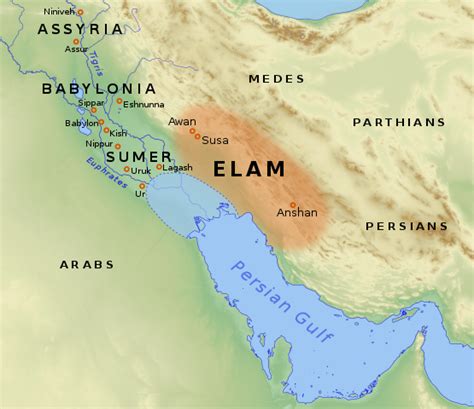
The Persian Empire was founded by Cyrus II (son of Cambyses I) of the ancient Elamite kingdom of Anshan.* Cyrus was heir to a long (several centuries) Elamite royal tradition known for written language and effective administration.
Cyrus II began his military adventures by liberating the old Elamite city of Susa from occupying Medes. In the resulting peace, he married the daughter of the king of Medes and Median warriors joined his army.
The Conquest of Lydia
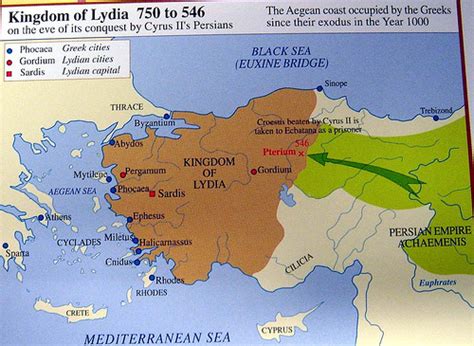
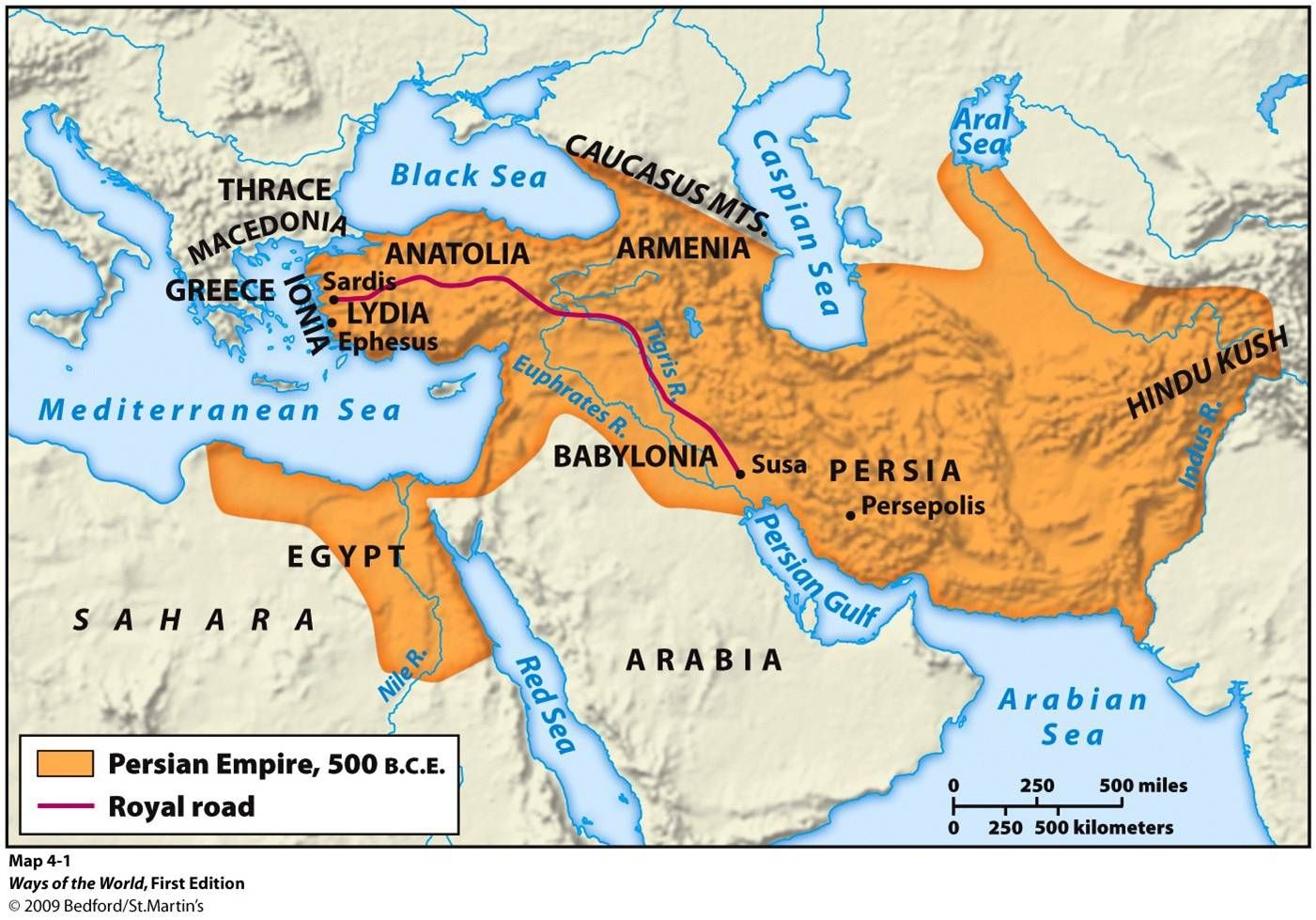
Seeking to expand his empire into Cyrus’s territory, King Croesus of Lydia (560-546 BC) led a massive army into former Median territory but was forced to retreat. Cyrus II and his warriors pursued Croesus into Anatolia and conquered the kingdom of Lydia in 546 BC.
Taken alive, Croesus also became part of Cyrus’s entourage.The king invited the Ionian Greek cities on the west coast of Anatolia to join the Persian empire but they declined. The governor of Sardis subsequently allied himself with the Greek cities to rebel against Persian rule, but Cyrus crushed the rebellion.
Conquest of Neo-Babylonian empire
When Cyrus invaded the Neo-Babylonian empire, many Babylonians allied with the Persians owing to efforts by the Babylonian king Nabonidus to replace the Babylonian god Marduke with the moon goddess Sin. It took two years of battle and siege, but In 539 BC Cyrus took Nabaonides alive, asserting he was doing the will of Marduke in capturing Babylon.
After moving the Persian capitol to Pasagardae, Cyrus spent the rest of his life at war. He died in 530 BC in a battle against the Masagetae nomads. There seems to be consensus on the part of ancient historians that he was a brilliant military and political leader.
Cambyses II (530-522 BC) Assumes Persian Throne
After succeeding his father, Cambyses II (530-522BC), who learned military tactics accompanying his father into battle, married his three sisters and preemptively invaded Egypt (before they could attack Persia). In addition to the Medes and Ionian Greeks in Cambyses’s army, former Egyptian allies Cyprus, Samos, Phoenicia (who gave the Persians 40 triremes**) and some of Egypt’s Greek mercenaries also joined the Persian side. Cambyses also formed an alliance with desert Arabs, who helped him cross the Sinai desert by showing him how to set up water depots using leather pipelines.
Ancient Egyptian papyri reveal the Persians took over and successfully managed the Egyptian government, with Cambyses dressing as a traditional pharaoh and honoring the Egyptian gods.
In 522 BC, Cambyses attempted to return to Persia to put down a revolt and died on the trip home.
*Located in Persis, a historical region corresponding to modern Fars province in Iran.
**The trireme was a Greek warship propelled by armies of rowers nd used to ram enemy fleets.
I. Junk Science Clinical Trials as the Basis for FDA Licensure of Hepatitis B Vaccines in the U.S.
The Advisory Committee on Immunization Practices (ACIP) will discuss hepatitis B vaccines at their meeting on December 4 and 5. In this article I will lay out the case for removing hepatitis B vaccines from the CDC childhood schedule altogether.
As the Informed Consent Action Network has demonstrated, the hepatitis B vaccines Recombivax and Engerix — injected into the vast majority of American children at birth, one month, and six months of age — never should have been licensed by the FDA in the first place.
The clinical trials for Recombivax and Engerix:
did not include a proper saline placebo control group;
were too small to detect uncommon adverse events; and
were too short to detect the majority of harms (the Recombivax trials monitored safety for just five days, the Engerix trials monitored solicited adverse events for just four days).
II. Hepatitis B Vaccines Are Associated with Autism
The real world data that are available on the safety of hepatitis B vaccines are horrifying. When autism rates in the US exploded in the 1990s, the CDC looked into the possible role of vaccines. They assigned one of their senior scientists, Thomas Verstraeten, at the Epidemic Intelligence Service, to do the analysis. At the time, hepatitis B vaccines had mercury (thimerosal) in them. Dr. Verstraeten found that children in the highest exposure group had an 11.35x increased relative risk of autism.
Then, because the CDC works for the pharmaceutical industry, Dr. Verstraeten did four additional rounds of data manipulation, that were not scientifically warranted, to try to make the signal go away. We have Dr. Verstraeten’s emails and the five different rounds of analysis because SafeMinds did a FOIA request to get all of Dr. Verstraeten’s communication about the study (see SafeMinds Powerpoint presentation here). The corrupted data were used in the final published paper and the original findings were covered up.
The CDC had this information in 1999 and has lied about it for 26 years (which I mentioned in my recent Senate testimony). In 2001, Dr. Verstraeten was scheduled to present his findings to the Institute of Medicine but he quit on the morning of the presentation to go work for vaccine manufacturer GlaxoSmithKline in Belgium (see Evidence of Harm).
Mercury was eventually taken out of hepatitis B vaccines; however aluminum adjuvants remain. CDC/ACIP subsequently added several more aluminum containing vaccines to the childhood schedule. What we see in the autism prevalence data after the removal of mercury, together with the increase in total aluminum in the schedule, is that autism rates keep rising (owing to the increased aluminum) but the proportion of severe autism cases as a percentage of the total declined somewhat (owing to the removal of thimerosal which is even more toxic than aluminum).
III. Hepatitis B Vaccines Have Killed an Astonishing Number of Children in the US
I asked the warrior mamas at OpenVAERS (who are doing the work that the CDC should be doing) to calculate the total number of deaths from hepatitis B vaccines from 1990 to the present. The results that came back show that hepatitis B vaccines are a crime against humanity.
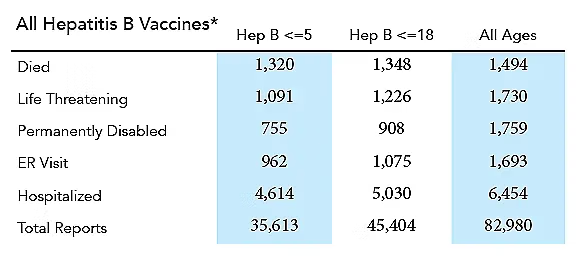
Hepatitis B is a component in many combination vaccines including Twinrix, Pediarix, and Vaxelis. When one looks at VAERS reports in the US for all vaccines containing a hepatitis B component there are 1,320 deaths in children age 5 and younger and 82,980 total reports of harm across all ages.
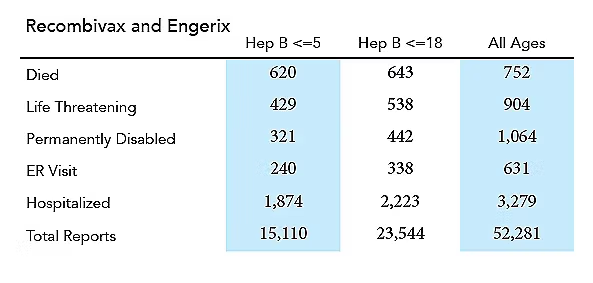
Just looking at Recombivax and Engerix, US reports, in children age 5 and younger, there are 620 deaths and 15,110 total injuries. There are 52,281 total reports of injury in the US across all ages for Recombivax and Engerix.
Remember that VAERS reports are a significant undercount of harms. The Lazarus and Klompas study for HHS in 2011 estimated that VAERS undercounts actual harms by a factor of 100x. More recent scholarship by Steve Kirsch, Mathew Crawford, and Jessica Rose in 2021 calculated a VAERS Under-Reporting Factor of 41x.
A similar estimate by VAERS Analysis (necessarily anonymous because whistleblowers are hunted by Pharma) in 2021 shows an Under-Reporting Factor of 44.64x for deaths. If that Under-Reporting Factor is correct, then an estimated 58,925 children age five and younger have been killed by all vaccines with a hepatitis B component over the last 35 years in the US; of that total, an estimated 27,677 children age five and younger have been killed by Recombivax and Engerix in the US over that same time period.
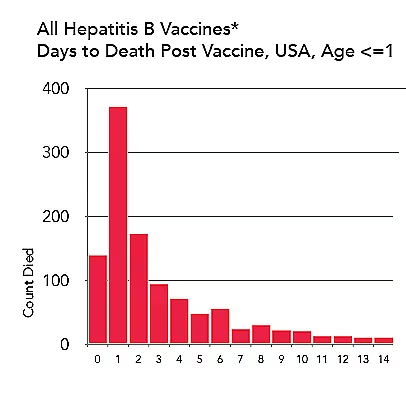
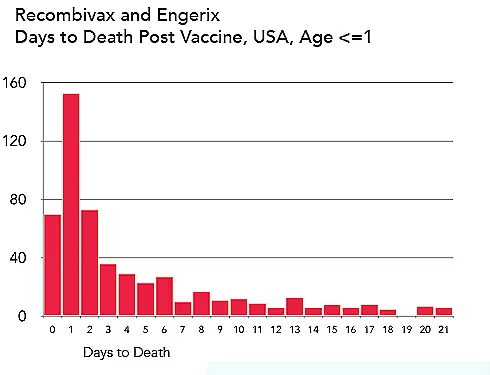
OpenVAERS also calculated the “days to death post vaccine” for all VAERS reports of death associated with hepatitis B containing vaccines and for Recombivax and Engerix. There we have a causal smoking gun as the largest numbers of deaths are on the day of vaccination or one or two days after.
IV. Conclusion: Hepatitis B Vaccines Must Be Removed Entirely from the CDC Childhood Schedule
The members of the ACIP are under tremendous pressure from the Pharmaceutical Industrial Complex to simply delay the timing of hepatitis B vaccines to day 30 or to 12 years of age. However, the fact remains that there are no data proving the safety and efficacy of hepatitis B vaccines on day 1, day 30, or 12 years of age.
If one wants to return to “Gold Standard Science” one must conduct proper double-blind randomized controlled trials, with an inert saline placebo in the control group, a large enough sample size (at least 60,000) to detect rare events, and long enough post-vaccination monitoring (10 years) to capture non-specific effects.
No “Gold Standard” hepatitis B vaccine safety and efficacy studies in pediatric populations exist right now and so hepatitis B vaccines must be removed altogether from the CDC childhood schedule.
Hepatitis B vaccines were developed for IV drug addicts and prostitutes because those are the high risk groups. If hepatitis B vaccines are to be used at all, they should be properly tested and returned to that original purpose and that intended market. If prison guards want to get them as well because they are dealing with a high risk population that’s fine. Also, the benefits of hepatitis B vaccination appear to outweigh the risks for children born to mothers who are hepatitis B positive (and we know exactly who those children are because all pregnant women are tested for hepatitis B in the hospital prior to giving birth). However, the idea of administering hepatitis B vaccines to nearly the entire childhood population is self-evident madness.
Human biodistribution study shows Pfizer mRNA penetrates fetal and reproductive tissues, persists long-term in the body, and presents clear evidence of shedding.
For years, the public was told a simple story: the mRNA “stays in the arm,” degrades within hours, never enters the bloodstream, never crosses the placenta, never reaches the reproductive system, and certainly
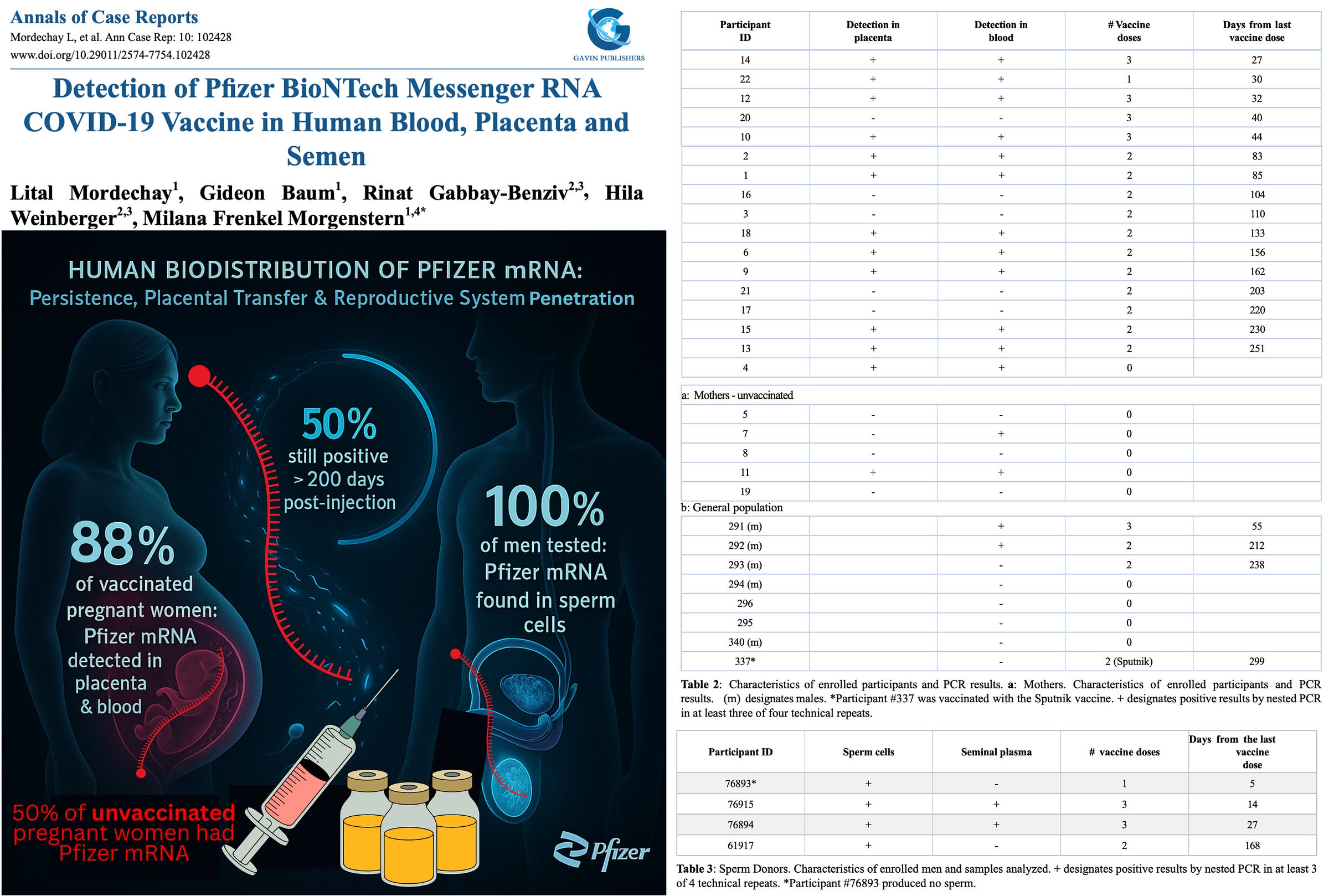
Researchers from Bar-Ilan University and several Israeli medical centers used nested PCR combined with Sanger sequencing—a far more sensitive and specific method than the standard qPCR used in earlier studies—to test for Pfizer mRNA in human tissues from 34 participants, including 22 pregnant women, 4 male sperm donors (8 samples), and 8 additional adults.
Their findings are deeply worrisome: 88% of pregnant women vaccinated within the last 100 days showed detectable Pfizer mRNA in both blood and placental tissue. Among male sperm donors, 100% of those who produced sperm had vaccine mRNA in their sperm cells, and 50% had it detectable in seminal fluid—long after vaccination.
Even more concerning, Pfizer mRNA was detected in 50% of the unvaccinated women tested —two in both placenta and blood, and one in blood alone; a result that forces the scientific community to confront the reality of shedding, something officials categorically deny.
Most striking of all, mRNA was still present in 50% of individuals more than 200 days after injection.
This is the clearest evidence to date that the injection does not degrade “within hours”—but instead persists, circulates, and deposits into human reproductive and fetal tissues.
The implications are enormous.
METHODS: WHY THIS STUDY SUCCEEDS WHERE OTHERS FAILED
One of the strongest aspects of this paper is the methodology. Where previous studies failed to detect vaccine mRNA, the authors explain exactly why: they were using qPCR, which lacks the sensitivity to detect low-abundance RNA months after injection. The new study instead used nested PCR, a two-step amplification technique that dramatically increases sensitivity and specificity, followed by Sanger sequencing, which literally reads the amplified sequence and confirms it matches the Pfizer construct. Each positive result was only considered valid if it appeared in at least three of four independent technical repeats, further reducing any chance that background noise or accidental contamination was driving the findings.
This approach is also fundamentally different from the PCR tests used during the pandemic to diagnose “COVID cases.” Those tests relied on single-step qPCR run at extremely high cycle thresholds—often 35–45 cycles—where background noise, trace contamination, and harmless RNA fragments can generate false positives. The method used in this new study, by contrast, requires two successful rounds of primer binding and amplification, reproducibility across multiple repeats, and then an independent sequencing confirmation to verify the identity of the product.
In other words, the COVID diagnostic PCR could detect any fragment of viral RNA and label it a “positive,” while this study’s nested PCR plus sequencing can only detect one thing: the exact Pfizer mRNA sequence, verified letter-by-letter.
This means the researchers were not detecting “noise”—they were detecting true, molecularly confirmed vaccine mRNA. It is the most definitive approach yet applied to this question.
Vaccine mRNA detected in the placenta
88% of women vaccinated within 100 days of delivery had detectable mRNA in both blood and placenta. Even after 230–251 days, vaccine RNA was still found in some placentas.
This directly contradicts every official statement claiming mRNA “does not reach the placenta.”
mRNA detected in sperm and seminal fluid
Of the four vaccinated men tested:
Three produced viable sperm—and 100% of them had Pfizer mRNA in their sperm cells.
Two had detectable mRNA in seminal plasma.
One man vaccinated 168 days earlier still had mRNA present in sperm.
This raises profound questions about male fertility, germline exposure, and the possibility of transmission.
Long-term persistence
Across blood and placental tissue:
Half of individuals tested more than 200 days after vaccination still had detectable Pfizer mRNA.
This is far beyond what Pfizer, regulators and public health authorities have claimed.
mRNA detected in unvaccinated pregnant women
Perhaps the most shocking finding:
50% of unvaccinated pregnant women had detectable Pfizer mRNA.
Two unvaccinated pregnant women had Pfizer mRNA in both their blood and placenta.
A third unvaccinated woman had mRNA in her blood alone.
The authors state plainly: “The source of this RNA has yet to be investigated.”
This appears to be the first direct evidence of mRNA vaccine shedding.
CONCLUSIONS
These results carry enormous implications. They confirm that the mRNA does not stay at the injection site; it does not rapidly degrade; it does reach the placenta; and it does enter the reproductive organs.
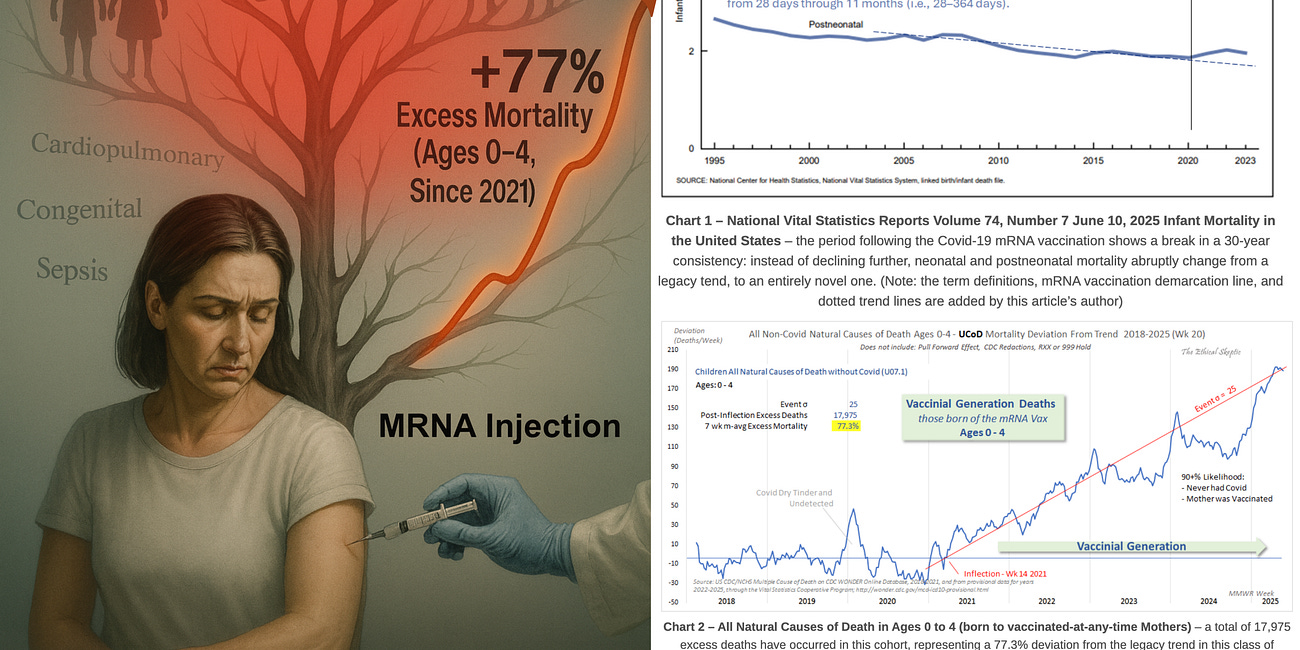
This verifies the biological mechanism behind delayed serious adverse events and also explains transgenerational adverse events—why babies born to vaccinated mothers are now dying at high excess rates even years later.
BREAKING: CDC Child Death Records Indicate Severe Transgenerational Harm of Mass mRNA Vaccination
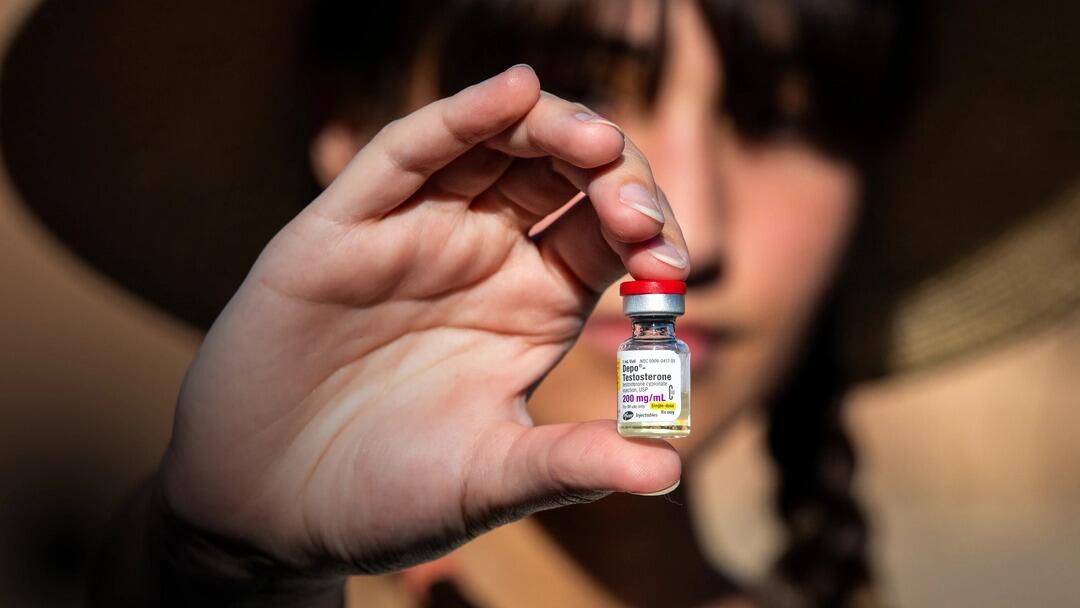
Chloe Cole, who began transitioning at age 12 and now regrets surgically removing her breasts, holds testosterone medication used for transgender patients in Northern California on Aug. 26, 2022. John Fredricks/The Epoch Times
Zero Hedge
Cole began identifying as a boy during adolescence and sought physical changes to match.
Doctors readily consented to medical intervention. They prescribed puberty blockers and testosterone at age 13. At 15, surgeons performed a double mastectomy, she told The Epoch Times.
But doctors didn’t address her neurological issues first. The same gender specialist who referred her for breast surgery later referred her for autism screening. Cole has described herself as being on the autism spectrum, but said she was never formally diagnosed.
Cole is now a leading campaigner against interventions to transition children with gender dysphoria.
She said many of those she knew personally when she was involved in the transgender community, as well as many of the detransitioners she knows, “are either somewhere on the autism spectrum, or they have been diagnosed with similar conditions, like ADHD.”
Her observations are increasingly supported by research. For at least a decade, studies have reported links among transgender identity, autism, and other neurological conditions. These connections have recently gained greater public attention.
Growing evidence of an autism–transgender link is already prompting some nations to recommend neurological screening before intervention. In America, the treatment model remains unchanged, and the predominant “affirmation” model makes the link difficult to investigate.
Autism and Gender Dysphoria
A report published this month by the British think tank Centre for Social Justice showed that autism and ADHD were “overrepresented,” or disproportionately high, among youth with gender dysphoria.
The report, citing data from the UK’s National Health Service, showed 32.4 percent of gender dysphoria referrals had an autism diagnosis, and 11.7 percent had an ADHD diagnosis.
Those numbers were 16 times higher than the national population averages for autism, and more than twice as high for ADHD. The population-wide averages for autism and ADHD in the United Kingdom are estimated at 2 percent and 5 percent, respectively.
“Individuals with autism spectrum disorder are far more likely to identify as transgender,” Joseph Nicolosi Jr., a licensed clinical psychologist and researcher in California, told The Epoch Times via email.
A pair of studies conducted in 2016 and 2019 indicate that autistic children are between four and seven times more likely to experience gender dysphoria or gender variance, he said. A 2019 study was conducted by researchers at the Uniformed Services University of the Health Sciences, and a 2016 study was conducted at New York University.
Nicolosi said there are several reasons for the connection, including “rigid thinking.”
For example, if a boy with autism lacks stereotypical male interests, he may doubt he is a boy and assume he must be a girl. Reading social cues is often hard for those with autism, so they may perceive same-sex peers as getting along better than they do.
“This heightens their sense of alienation from their peers,” Nicolosi said.
Cole recalled having difficulty coping with her body beginning to mature around the fourth grade, younger than most of her peers.
“The older I got, the less I associated with femininity, and I didn’t really feel like I fit in—especially with my female peers—but with my peers in general,” she said.
“It’s a common sentiment amongst people who have either ADHD or autism.”
Erin Friday, who gained national attention for successfully steering her ADHD daughter away from identifying as a transgender male, said she knows many detransitioners who are on the autism spectrum. A detransitioner is someone who had previously taken steps to transition to the opposite gender.
But most of the medical community doesn’t recognize transgender identity as a maladaptive coping mechanism, she told The Epoch Times.
They view autism and transgender identity as complementary and natural, instead of looking at causality, she said.
“This is the intersection of autism and transgenderism, like peas and carrots, it goes together,” Friday said. “They’re not even looking at … what is the causality?”
She observed that some hospitals offering pediatric transgender care have integrated autism and gender dysphoria services.
“It’s a feeder,” she said. “So it gives an endless stream of patients.”
Children’s National Hospital in Washington runs a Gender and Autism Program that treats autistic patients with gender dysphoria, illustrating the recognized connection between the two, she noted.
“We do not understand why autism and gender expansiveness often occur together, but we do know that this co-occurrence can be complex to navigate for young people and their families,” the website states.
The hospital did not respond to a request for comment.
Neurological Screening
In the UK, a seminal report released last year on how the country has handled treatment of children with gender dysphoria suggested screening children for neurodevelopmental conditions, including autism and mental health issues.
That review, led by pediatrician Dr. Hilary Cass, sparked a wave of reforms, and the UK’s National Health Service all but halted the prescription of puberty blockers because there was a lack of evidence that the treatment was beneficial.
The Cass report found that young people distressed about their gender often have complex problems contributing to that distress, including mental illness, neurodiverse traits, and a variety of social problems.
Sweden and Finland recommend that neurodevelopmental conditions such as Autism and ADHD be addressed as part of the evaluation process for the treatment of pediatric gender dysphoria.
In the United States, however, psychological organizations prioritize “gender-affirming care” without recommending neurological screening.
Instead, most follow the World Professional Association for Transgender Health (WPATH) Standards of Care, which call for individualized, age-appropriate care to “improve health and wellbeing” of youth who identify as transgender.
The organization says assisting gender dysphoric patients “may include gynecologic and urologic care, reproductive health, voice and communication therapy, mental health services (e.g., counseling, psychotherapy), and/or hormonal or surgical treatments, among others.”
WPATH does not believe an autism diagnosis should prevent “gender-affirming care.”
“There is no evidence to suggest a benefit of withholding [gender affirming medical and surgical treatments] from [transgender] people who have gender incongruence simply on the basis that they have a mental health or neurodevelopmental condition,” according to WPATH.
Likewise, a 2023 commentary appearing in the journal of the American Academy of Pediatrics said that autistic youth deserve “gender-affirming care, and an [autism spectrum] diagnosis should not prevent youth and families from providing informed consent to gender-affirming care.”
The Autistic Self-Advocacy Network said in its June newsletter that the government shouldn’t interfere with an autistic person’s decision to transition.
“They think autistic people cannot really know if we are transgender. They say we are being tricked or we are confused. They think we should not be allowed to get gender-affirming care,” the newsletter stated.
Republican lawmakers in many states have enacted bans against gender-related medical treatments on minors, with corresponding federal actions to restrict funding for such practices.
Shortly after taking office earlier this year, President Donald Trump signed an executive order stating that the federal government will not fund or promote transition-related care for children who identify as a different gender.
This spring, the Department of Health and Human Services (HHS) released a 409-page review of medical procedures used for gender dysphoric children. The report advocates for psychotherapy as a “noninvasive alternative to endocrine and surgical interventions,” since the benefits of hormones or surgery have not been established.
“Many of these children and adolescents have co-occurring psychiatric or neurodevelopmental conditions, rendering them especially vulnerable,” the executive summary for the report states.
Members of the UAE-backed forces man a checkpoint in Aden, a port city located in Yemen in the southern part of the Arabian Peninsula. (File photo by Reuters)
Press Tv
Intense fighting is underway as UAE-backed forces attempt to advance towards strategically significant areas in Yemen’s oil-rich Hadramout governorate, previously controlled by Saudi-backed Yemen’s fugitive government.
Violent clashes erupted on Thursday as the UAE-backed forces sought to move towards the crucial al-Ghuraf area. This latest round of conflict follows the UAE-backed announcement of capturing Seiyun, the region’s second-largest city, on December 3.
Videos posted by local activists showed UAE-backed forces storming the presidential palace in Seiyun on Wednesday.
Sources indicated that these forces were stationed in the Jathma area of the Seiyun plateau before targeting the headquarters of the Saudi-backed government in the city center.
Wadi Hadramout has witnessed large-scale offensives since Wednesday morning, accompanied by intense artillery fire. Tensions have escalated in recent weeks between the UAE and Saudi-backed forces in Yemen’s largest province.
The UAE-backed administration previously called for the separation of the southern region from Yemen, controlling parts of the south, including Aden. It congratulated the people of the south on the liberation of Wadi Hadramout, stating, “We aim to control all of Hadramout.”
Hadramout, Yemen’s largest province, constitutes over one-third of the country’s area and boasts oil and mineral wealth, along with a 450-kilometer coastline. The situation marks a significant escalation between Saudi and UAE-backed forces.
The UAE has been a major partner in the US-sponsored Saudi-led war against Yemen and the Ansarallah-led government in Sana’a, which began in 2015. Despite this, Riyadh and Abu Dhabi have engaged in a rivalry for control and influence over Yemen’s resources and strategic ports.
Critics accuse both countries of attempting to divide Yemen for their benefit. Observers suggest that the ongoing competition for control is disguised as support for local autonomy, with Hadramout becoming a focal point for this rivalry.
Yemen has faced external interference for decades. The Ansarullah movement controls much of the northwest, including the capital, Sana’a. This resistance has gained international attention for its operations against Israel and shipping in the Red Sea amid Israel’s ongoing genocidal war in Gaza.
The US and Israel have conducted deadly attacks in Sana’a, resulting in civilian casualties.
Emirati-backed forces control parts of Marib and Shabwa, where troops loyal to the Saudi-backed government are also present.
The UAE has coordinated with Israel to establish a significant military presence in Yemen’s islands. Satellite imagery shows a rapid expansion of Emirati military and intelligence bases across Yemen’s islands and along the coast of Somalia since October 7, 2023, coinciding with Israel’s aggression in Gaza.
Israeli sources indicate that relations between the UAE and Israel were advanced prior to formal diplomatic ties, although kept discreet.
New military installations have emerged in various locations, including areas controlled by Emirati-backed forces and regions in Somaliland and Puntland.
Key infrastructures have been developed on Abd al-Kuri Island and Samhah, part of Yemen’s Socotra archipelago.
Last year, satellite imagery revealed the construction of a new UAE airstrip on Abd al-Kuri Island.
Ansarallah and the Sana’a government have accused Abu Dhabi of forcibly evicting the people of Abd al-Kuri as part of the plan to transform the area into an Israeli-Emirati military and espionage hub.
In 2022, Socotra made headlines due to the controversy of Israeli tourists visiting the Yemeni island under a UAE-issued visa.
There are also Emirati sites at the airports of Bosaso and Berbera in Puntland and Somaliland, as well as Mocha in Yemen, and the island of Mayun in the Bab al-Mandab Strait, where 30 percent of the world’s oil passes.
Sources say all these sites have “been developed in close coordination with Israel.”

 Dmitry Orlov







 The Most Revolutionary Act