War against Iran draining US Tomahawk missile stockpile, alarming Pentagon

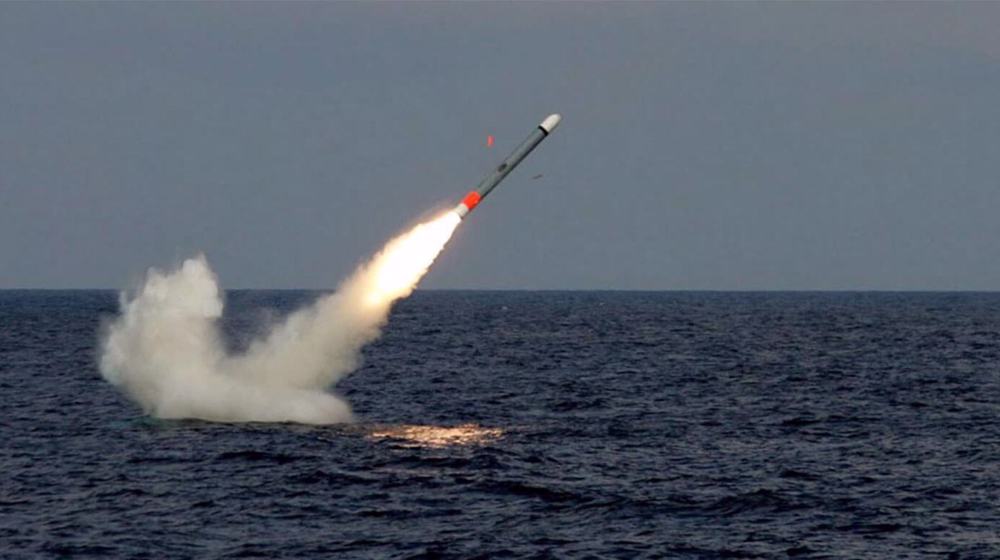
Each Tomahawk missile costs between $2 million and $4 million ans US military has fired more than 850 of them in four weeks of its war against Iran. (File)

Press TV

US military has fired more than 850 Tomahawk cruise missiles in four weeks of its war against Iran, burning through the precision weapons at a rate that has alarmed Pentagon officials and prompted internal discussions about how to make more available, according to a report by The Washington Post, citing sources.

The heavy expenditure – a part of the so-called ‘Operation Epic Fury’, which began on February 28 with the assassination of Leader of the Islamic Revolution Ayatollah Seyyed Ali Khamenei and some top-ranking commanders as well as ordinary civilians – has raised concerns about the strain on US weapons stockpiles, the report stated.

According to analysts, the US currently produces approximately 90 to 100 Tomahawk missiles annually, meaning that the number fired in the past four weeks exceeds the total output of the past five to eight years, triggering alarm bells.

Each Tomahawk missile costs between $2 million and $4 million, depending on the variant, with some estimates placing the cost as high as $3.5 million per unit.

At that rate, military experts say, the 850 missiles fired represent a cost of up to $3 billion, a fraction of the overall war bill, which is estimated to have exceeded $18 billion so far.

Replacing the expended missiles is expected to take years. Building a single Tomahawk requires between 18 and 24 months due to complex components, including solid rocket motors, advanced seekers, and terrain-matching sensors that rely on single-source suppliers.

The fragile supply chain and historically low production rates have left manufacturers struggling to scale up rapidly, according to reports, citing military experts.

In an effort to address these vulnerabilities, the Pentagon recently entered into a seven-year framework agreement with Raytheon, an RTX business, aimed at ramping up annual Tomahawk production to more than 1,000 units.

The agreement, announced in early February, came just weeks before the US and the Israeli regime launched an unprovoked aggression on Iran. Officials acknowledge that even with expanded capacity, replenishing stockpiles depleted at the current rate will take years.

Iranian armed forces have so far carried out 83 waves of Operation True Promise 4, using their advanced missiles and drones to inflict heavy blows on the enemy.

Israeli military infrastructure in the occupied territories, as well as US military bases scattered across the region, have been destroyed and made “uninhabitable,” according to the New York Times and other US media outlets.

Importantly, US military had used Tomahawk missiles in its attack on an elementary school in southern Iran’s Minab that killed more than 170 schoolchildren on February 28.

[…]

Via https://www.presstv.ir/Detail/2026/03/27/765917/war-against-iran-draining-us-tomahawk-missile-stockpile-alarming-pentagon-report

US troops using Arab civilians as human shields

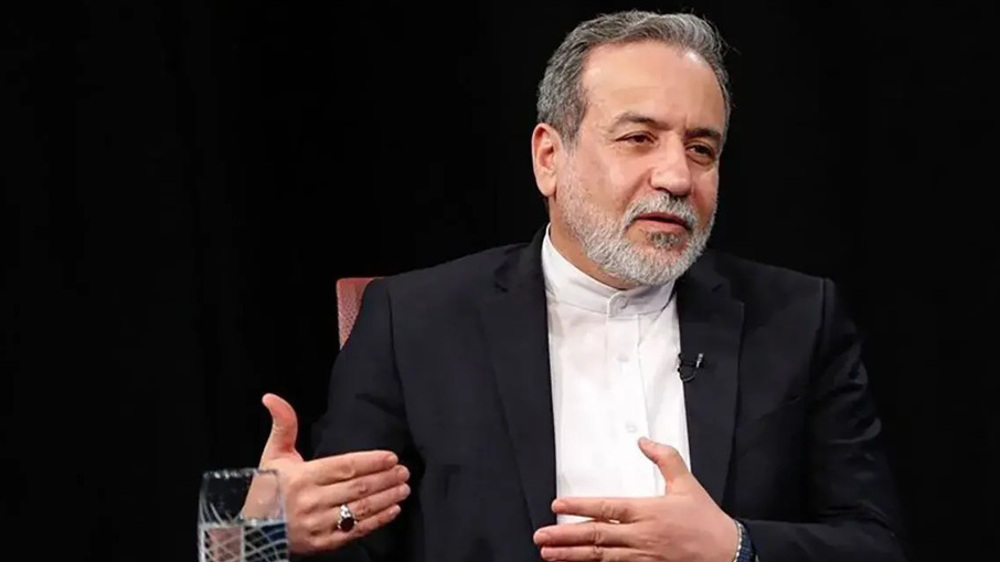
Iran’s Foreign Minister Seyed Abbas Araghchi

Press TV

Iran’s Foreign Minister Seyed Abbas Araghchi said that US soldiers have abandoned their bases in the Gulf Cooperation Council (GCC) countries since the very beginning of the war, seeking shelter in civilian hotels and offices while turning local populations into human shields.

In a post on X on Thursday, Araghchi stated: “From outset of this war, U.S. soldiers fled military bases in GCC to hide in hotels and offices. They use GCC citizens as human shield.”

Araghchi drew a comparison to practices inside the United States, noting that American hotels routinely deny bookings to military officers whose presence could endanger civilian guests.

“Hotels in U.S. deny bookings to officers who may endanger customers. GCC hotels should do same,” the top Iranian diplomat urged.

Despite Washington’s aggressive posturing and a war of aggression on Iranian territory that began on February 28 — which targeted civilian sites including schools, hospitals, and sports facilities — American troops have shown little resolve to defend their forward positions.

Instead, they have retreated into densely populated civilian areas, recklessly exposing innocent Arab citizens to potential retaliatory actions.

Iran’s firm and precise response to the unprovoked US-Israeli aggression has repeatedly demonstrated the strength and determination of the Islamic Republic.

While Iranian forces continue to inflict defeats on the aggressors on multiple fronts, US commanders appear more concerned with self-preservation than with protecting their allies.

By hiding among civilians, the US not only violates basic principles of international humanitarian law but also endangers the very populations whose governments have hosted American bases and facilities long used to threaten regional stability and Iranian sovereignty.

The US and Israel launched an unprovoked war of aggression against Iran on February 28, assassinating Leader of the Islamic Revolution Ayatollah Seyyed Ali Khamenei, along with several senior officials and military commanders, as well as hundreds of civilians.

The Iranian armed forces have responded by launching almost daily missile and drone operations targeting locations in the Israeli occupied territories as well as US military bases and assets across the region.

They have also blocked the strategic Strait of Hormuz to oil and gas tankers affiliated with the adversaries and those cooperating with them.

[…]

Via https://www.presstv.ir/Detail/2026/03/26/765897/Iran-FM–US-troops-using-Arab-civilians-as-human-shields

Thank you, Iran!

[…]

The Costs for the Western World

All it took was the Iranian Revolutionary Guard’s mere announcement that it would close the Strait of Hormuz. And suddenly it was clear that no insurance company would cover the costs if the Revolutionary Guard actually sank a ship. This financial weapon alone was enough to trigger a global disruption of supply chains. Not a single shot had to be fired. So American farmers are now waiting for fertilizer[1]. In vain. Because ships cannot transport fertilizer through the Strait of Hormuz. But farmers in the U.S. are mostly Trump voters. They will thank Trump..

But far more painful for the U.S. economy is the collapse of the Arab sheikhdoms in the Persian Gulf.

Apparently, no one expected that the United Arab Emirates, Kuwait, Saudi Arabia, Qatar, or Bahrain would come under such massive attack from the Iranians.

There is no effective air defense. They were so confident. So confident that they didn’t even set up bomb shelters in the sheikhdoms. The U.S. had concentrated all its defensive capabilities on Israel. The Americans hadn’t thought about the Arabs. That has left a bitter taste in the Arabs’ mouths.

But the U.S. military also suffered losses. In the first two weeks of the current war with Iran, Iran destroyed U.S. military bases in Qatar, the United Arab Emirates, Kuwait, and Saudi Arabia, causing an estimated $800 million in damage[2]. Oil and gas fields in Saudi Arabia and Qatar were severely damaged and have had to temporarily scale back production. The United Arab Emirates had been focusing on diversifying its economy. It was well on its way to becoming a transportation hub between Europe and Asia. Even tourism was flourishing in the artificial landscapes built on reclaimed land from the lagoons. The goal was to attract start-up companies. Anyone who was anyone in the financial world bought an apartment in Dubai. Money was borrowed from the many bank branches that had sprung up overnight.

All of that is now over in one fell swoop. It’s every man for himself. Flights through the Dubai hub have been canceled indefinitely. Surely no one wants to go on vacation anymore with bullets whizzing by. And as for the up-and-coming entrepreneurs, all you can see now are contrails on the horizon. Money is now being stashed elsewhere. It didn’t pay off to let the Americans use their own sandy soil for a military buildup against neighboring Iran. Now the sheikhs are left high and dry. No insurance company will cover any damages. The War Exclusion Clause in the fine print of the insurance policy states that insurers will not compensate for damage caused by acts of war. The sheikhs must now pay for this out of their own coffers instead. And said coffers have so far been lavishly filled by revenues from oil and gas production. In some sheikhdoms, citizens aren’t even taxed. The lavish profits from oil and gas sales are invested in U.S. government securities. Or in future-oriented industries such as artificial intelligence.

U.S. dominance in the IT sector is largely based on surplus funds from the Arab monarchies. And this is now becoming quite painful for the U.S. Unfortunately, Arab investments in U.S. future projects that were already firmly planned must now be redirected from overseas to repair the ailing infrastructure in the Arab world. It remains unclear to what extent the slowdown in Arab capital flows will affect the development of artificial intelligence. However, highly challenging times could be on the horizon for Nvidia and OpenAI.

Heavy Backlash for the Cloud Technology

One piece of news got lost in the fog of war: the Iranian Revolutionary Guard destroyed a total of three Amazon data centers in Dubai and Bahrain[3]. Why Amazon? Well, we all know from personal experience that Amazon is the world’s largest online retailer. But Amazon has since established a second pillar of its business with its subsidiary Amazon Web Services (AWS). This makes Amazon one of the largest providers of commercial cloud infrastructure. In addition to Amazon Web Services, the main players in this field are Microsoft Azure and Google Cloud. Clouds are data centers with enormous storage capacity that offer extremely fast computing power. Anyone can rent capacity there. Clouds are, first and foremost, completely neutral tools. What matters is what customers do with them. The clouds handle complex financial transactions. The cloud designs large-scale projects in the blink of an eye. But it can also scrutinize and spy on the population with unprecedented speed and high resolution. And then, using the data obtained, ultimately manipulate social development in its own interest.

But it is primarily the world’s more advanced military powers that have cornered the cloud market. And that is precisely why the shrewd Iranians have set their sights on Amazon’s data centers. For it is in the Middle East, in particular, that data centers are concentrated. And these data centers primarily serve the United States and Israel in their warfare. The data centers provide the infrastructure in which the war against the rest of the world is automated thanks to artificial intelligence. Autonomous machines locate war victims and then kill them based on their soulless algorithms. This is how a city park in Tehran came to be heavily bombed. This city park is called “Police Park.” But there are no police or other armed personnel there. Our colleague AI had been prompted to carry out its blind strike by the misleading name.

The ruthless genocide currently being perpetrated by Israel against Iran and Lebanon did not happen by chance. This genocide follows a pattern that was tested and refined over many years during the war against the people of the Gaza Strip. The operation is called “Project Nimbus.” A collaboration between Amazon Web Services and the Israeli government. With the participation of the two Israeli defense contractors Israel Aerospace Industries and Rafael Advanced Defense Systems. The Palestinians are being completely monitored and scrutinized. The Israeli settlers receive precise information about their Palestinian victims.

Samer Abdelnour sums it up:

“Israel’s regime of Apartheid and military occupation subjects six million Palestinians to extreme levels of surveillance and violence, and this acts as a laboratory for developing, experimenting with, and testing weapons later sold to the global arms market as ‘field tested’.

Moreover, the rapid digitalization and use of AI for military purposes is deepening the globalization of violence and widening complicity with violence in horrifying ways, invisibilizing crimes against humanity within servers and code. This is exemplified by ‘Project Nimbus’, an Israeli initiative to integrate cloud computing and AI into the operations of its state agencies, including its military and police.“[4]

This use of cloud technology to subjugate entire populations met with massive resistance as early as 2021 from employees at Amazon Web Services and Microsoft.

The employees addressed the global public in an anonymous open letter, protesting the insidious use of cloud technology for inhumane purposes. In the open letter, the shocked employees write:

“Continuing this pattern, our employers signed a contract called Project Nimbus to sell dangerous technology to the Israeli military and government. This contract was signed the same week that the Israeli military attacked Palestinians in the Gaza Strip – killing nearly 250 people, including more than 60 children. The technology our companies have contracted to build will make the systematic discrimination and displacement carried out by the Israeli military and government even crueler and deadlier for Palestinians.

Project Nimbus is a $1.2bn contract to provide cloud services for the Israeli military and government. This technology allows for further surveillance of and unlawful data collection on Palestinians, and facilitates expansion of Israel’s illegal settlements on Palestinian land.“[5]

Unfortunately, this wake-up call was completely lost amid the general uproar over COVID-19 policies. But we should take this danger seriously. For we must not believe that this dystopian development will pass us by. What is being tested in Palestine and now in Lebanon and Iran is, in the long run, also directed against us. The automated mass suppression and destruction techniques being tested there will sooner or later be used against us as well. Every organism strives for growth. So does militarized cloud technology. The insidious part is that our very personal, very private data resides on the same platform as military applications. The magazine Fortune describes this in striking terms:

“The boundary between commercial cloud computing and military operations has largely vanished. The Pentagon’s Joint Warfighting Cloud Capability and its Joint All-Domain Command and Control networks run on the same commercial infrastructure that serves banks and ride-hailing apps. Meanwhile, several news organizations have reported that the U.S. military used Anthropic’s AI model Claude—which runs on AWS—for intelligence assessments, target identification, and battle simulations during the Iran strikes.“[6]

In a nutshell: the military is footing the bill for the party in the cloud.

Militarism is gradually devouring civilian life.

Iranians are already facing a life-or-death struggle against this dystopian threat.

And the Iranians are holding their ground bravely.

By disrupting and halting the financial foundations of this fascist-like technology, they are also fighting for our freedom.

Given all the mainstream framing of the “abhorrence of the mullah regime,” that sounds like quite a shift to get used to at first. Anyone who adopts this framing of abhorrence participates in the notorious dehumanization of the enemy. They shut the door on their compassion for the Iranians. The Iranians, however, are fighting for their survival and their dignity as a free nation. This is, of course, something entirely exotic to the eerie new Epstein world. But we should not close our minds to the fascination of undomesticated people in Iran.

[…]

Via https://www.globalresearch.ca/thank-you-iran/5920268

Treasury Just Declared US Insolvent

The Treasury just declared the U.S. insolvent. The media missed it

Hal Turner

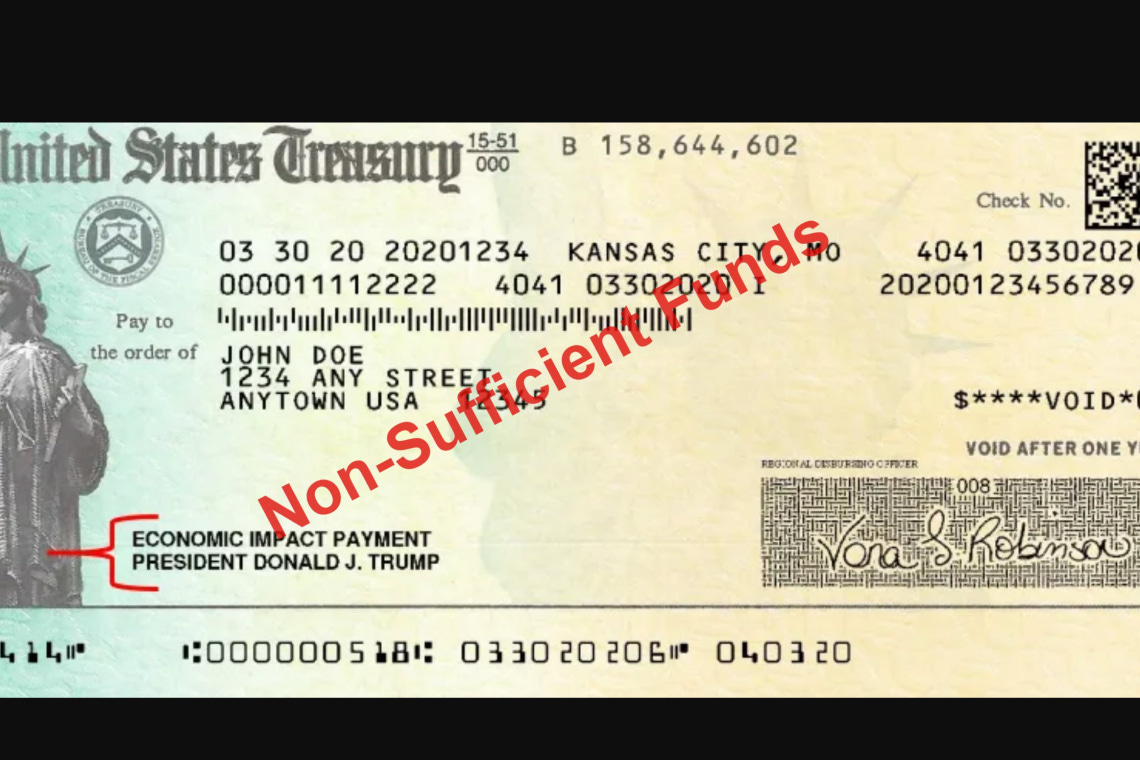
The U.S. government is insolvent. That’s not hyperbole — it’s the conclusion drawn directly from the Treasury Department’s own consolidated financial statements for fiscal year 2025, released last week to near-total media silence. The numbers: $6.06 trillion in total assets against $47.78 trillion in total liabilities as of September 30, 2025.

Importantly, the $47.78 trillion in reported liabilities does not include the unfunded obligations of social insurance programs like Social Security and Medicare — those are disclosed separately in the off-balance-sheet Statement of Social Insurance (SOSI).

The government’s consolidated balance sheet position, excluding the SOSI, deteriorated by nearly $2.07 trillion between FY 2024 and FY 2025, reaching a staggering negative $41.72 trillion. Total liabilities are now nearly eight times the value of reported assets. The largest drivers were a $2 trillion increase in federal debt and interest payable (now $30.33 trillion) and a $438.8 billion increase in federal employee and veteran benefits payable (now $15.47 trillion).

The Off-Balance-Sheet Iceberg

The off-balance-sheet picture is even more alarming. The 75-year unfunded social insurance obligation surged by $10.1 trillion in a single year, rising from $78.3 trillion in FY 2024 to $88.4 trillion in FY 2025 — driven primarily by a $6.9 trillion jump in projected Medicare Part B shortfalls and a $2.5 trillion increase for Social Security. The Treasury’s Statement of Long-Term Fiscal Projections shows the 75-year fiscal gap widening from 4.3% of GDP in FY 2024 to 4.7% in FY 2025.

If the $88.4 trillion in 75-year off-balance-sheet obligations were added to the $47.8 trillion in official balance sheet liabilities, total federal obligations would now exceed $136.2 trillion — roughly five times U.S. annual GDP.

The Government Accountability Office (GAO) issued a disclaimer of opinion on the U.S. government’s FY 2025 financial statements — the 29th consecutive year it has been unable to determine whether the statements are fairly presented. This is primarily due to serious, ongoing financial management problems at the Department of Defense and weaknesses in accounting for interagency transactions.

What $136 Trillion Looks Like in Your Living Room

Not only has the financial press ignored the consolidated financial statements, but most members of Congress and members of the general public will not read the consolidated financial statements. Documents like the consolidated financial statements are not the kind of thing you want to read before driving. If that’s not bad enough, most people cannot relate to the trillion-dollar numbers in the financial statements. Therefore, it is appropriate to translate them into terms that people will understand.

Most people cannot relate to trillion-dollar figures on a government ledger. So consider this: divide every number by 100 million — drop eight zeros — and federal finances look like a household budget in freefall.

That household earns $52,446 and spends $73,378 — running a $20,932 annual deficit. Its total liabilities and unfunded promises amount to $1,361,788 against just $60,554 in assets, leaving it $1.3 million in the hole. Uncle Sam, by any accounting standard, is insolvent.

Congress has clearly lost control of the nation’s finances. America is facing a fiscal catastrophe. The reckoning, long deferred, is becoming impossible to ignore.

BY: Steve H. Hanke, David M. Walker, via FORTUNE Magazine at: https://www.yahoo.com/news/finance/economy/policy/articles/treasury-just-declared-u-insolvent-151425143.html

Hal Turner Editorial Opinion

Now, perhaps you understand why they’ve been trying so hard to actually START World War 3; they’re broke. They don’t want to take the blame for being the one’s who did it, they need a really big war to blame it on. Too bad for them the Russians didn’t take the bait with Ukraine.

[…]

Via https://seemorerocks.substack.com/p/treasury-just-declared-the-us-insolvent

Trump’s Daily 2 Minute War Briefings

Rep Nancy Mace (Rep South Carolina): No US Boots on the Ground in Iran

Trump Officials Flee into the Bunker

Fort Lesley J. McNair, north gate

Russ Baker

In the last few days, drones have reportedly been spotted over Fort Lesley J. McNair, in Washington, DC, where Marco Rubio and Pete Hegseth live. Officials are worried, and so am I, though for different reasons.

Did you know our secretary of state and secretary of defense live on an army base?

And they’re not the only ones.

Pam Bondi, Stephen Miller, and other senior Trump officials have moved into military housing. Tulsi Gabbard and Russell Vought are browsing the available housing, but have not moved yet. One more senior official, unidentified, has been advised to move by security officials.

The official excuse is that they face threats from a range of purported foes, including, we are told, cartels, foreign adversaries, and protesters.

But I can’t help feeling we’re not getting the real story. And, frankly, what that might be chills me.

Why does a king (and his courtiers) go into his castle and pull up the drawbridge?

Because they see themselves as besieged — or are planning to do something they know will cause them to be besieged.

Harvard professor Steven Levitsky — an expert on threats to democracies — made this sobering observation:

It is something you never see in a democracy. Government officials live on military bases or other sort of fortified zones [only] in authoritarian regimes.

In authoritarian regimes.

Coming at a time when fair elections are openly threatened and our constitutionally guaranteed freedoms challenged at every turn, when we see this group withdraw to a hardened inner sanctum, we’d better be paying close attention.

But thus far little attention has been paid to this matter, and what it may mean.

Plenty of factors do come to mind as potentially precipitating even more dramatic action on the part of Team Trump. You can surely think of many, but here are a few:

  1. Cringeworthy descriptions of Trump’s vile behavior emerging from the Epstein files and into the light with every new day.
  2. The consequences, potential and immediate, of Trump’s Iran war: the fear of a draft, the rising body count, and the mind-boggling expenditures. The Pentagon’s now put in for an additional $200 billion, with more requests to come if things drag on. As Hegseth said, “Obviously, it takes money to kill bad guys.” He doesn’t talk about how many lives it will cost.
  3. The specter of economic collapse, perhaps triggered by the jobs-crushing regulation-free rollout of AI.
  4. The threat of a nationalized election, overturning our 250-year tradition of local control of state and local elections.

Any one of the above could — or, at least, should — spark such outrage that even the most indolent of MAGAs might eventually grab torches and pitchforks and join the masses storming the castle wall.

[…]

Via https://www.msn.com/en-us/news/opinion/trump-officials-flee-into-the-bunker/ar-AA1Zdg5i

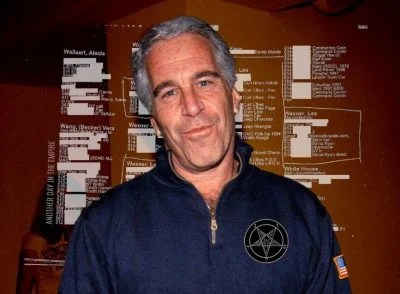
The Epstein Files: A Stark Mirror to Global Power and Systemic Failure

When the world learned of the vast network surrounding Jeffrey Epstein, it was not merely another criminal exposé but a catastrophic unmasking of systemic vulnerabilities at the very heart of global power structures.

The revelation was jarring not only because of the nature of Epstein’s predatory, exploitative, and unspeakably cruel crimes but because it exposed how wealth, influence, and institutional inertia can conspire to shield wrongdoing from scrutiny. Epstein operated in a sphere where rules were often selectively enforced, where elite privilege could bend legal and moral constraints, and where access to power was itself a form of protection.

For years, Epstein’s activities were an open secret in elite circles. In financial boardrooms, university campuses, and the glamorous corridors of international politics, whispers about his predatory behavior circulated but were rarely acted upon. Behind closed doors, he cultivated relationships with influential figures in finance, academia, politics, and entertainment, carefully weaving a network that spanned continents and industries. Through a combination of charisma, cunning, and coercion, he created a world in which his influence could flourish unchecked.

What ultimately came to light was not just the depravity of one man’s crimes, but the chilling silence and complicity that allowed them to persist.¹ Legal authorities, institutional leaders, and even those closest to Epstein often chose discretion over justice, protection over principle. This complicity was structural, embedded in cultures of power that prioritize reputation, loyalty, and financial interests above accountability. Epstein’s case therefore became more than a criminal investigation; it has evolved to become a mirror reflecting society’s deepest failures, challenging the notion that justice is blind when it comes to those who move within the highest echelons of influence. It prompted urgent questions about the mechanisms that allow such networks to exist, and whether the very systems designed to prevent abuse are in fact susceptible to corruption and exploitation.

A Web of Power and Silence

The Epstein Files — a colloquial term for the sprawling body of testimony, court records, flight logs, and settlement documents now in the public domain — exposed a landscape that many would have preferred remain hidden.² Far from being a series of isolated incidents, the files reveal a deeply entrenched system in which wealth, influence, and legal maneuvering intersected to shield wrongdoing. They document a pattern of sexual exploitation and trafficking, including the abuse of minors, alongside deliberate efforts to minimize exposure and accountability.³ Each document, each flight log, each confidential settlement paints a portrait not just of Epstein’s crimes, but of a network designed to protect him and facilitate his activities.

Even with the overwhelming gravity of the charges, investigators repeatedly found themselves entangled in a web of legal settlements, non-prosecution agreements, and procedural loopholes that allowed Epstein and, in some cases, his associates to evade the full force of justice.⁴ One of the most notorious examples is the 2008 non-prosecution agreement in Florida, which granted immunity to numerous unnamed co-conspirators and limited the scope of criminal accountability. Such arrangements were not merely legal technicalities; they were strategic instruments that leveraged the asymmetry of power and information, demonstrating how the law can be selectively applied when the accused occupies a position of privilege.

These revelations, brought to light through painstaking litigation and rigorous journalistic inquiry, ignited public outrage and prompted intense scrutiny of the institutions involved.⁵ The Epstein Files became more than a record of criminal activity; they became a window into the mechanisms by which the powerful operate above the law, insulated by networks of lawyers, financiers, and enablers. They exposed the moral compromises made by those who prioritized reputation, access, or financial interest over justice, raising uncomfortable questions about systemic inequality in accountability and the ease with which privilege can distort legal and social norms.

The scandal forced a reckoning with difficult truths: that sexual exploitation and trafficking are not only crimes of individuals but are often enabled by structural and institutional failures, and that true justice requires transparency, vigilance, and the courage to challenge entrenched hierarchies. The Epstein Files, in all their chilling detail, underscore that the problem is not merely the existence of predators, but the silence and complicity of those who allow them to persist.

Profiles of Key Institutions Affected

1. The U.S. Justice System

The Department of Justice and U.S. Attorneys’ offices came under intense scrutiny in the wake of the Epstein scandal.

Critics focused on the infamous 2008 non-prosecution agreement in Florida, which allowed Epstein to serve a minimal sentence despite facing serious federal charges involving sexual abuse and trafficking.⁶ The deal, negotiated in secrecy, raised questions about prosecutorial discretion, transparency, and the influence of wealth and power on legal outcomes. Beyond the plea agreement itself, systemic failures were highlighted: investigators struggled with limited resources, bureaucratic inertia, and pressure from high-profile figures, demonstrating how the justice system can be manipulated or stalled when confronted with cases involving the elite. Epstein’s case has since become a benchmark for examining the limits of accountability in the U.S. legal framework.

2. Financial Institutions

Epstein’s wealth and influence were tightly intertwined with some of the world’s largest financial institutions, both in the U.S. and abroad.⁷ While no major bank or firm was formally charged with criminal complicity, investigative reporting revealed how offshore accounts, complex investment vehicles, and high-net-worth client relationships helped facilitate Epstein’s financial empire. Questions arose about the due diligence conducted by banks and investment firms, the role of billionaires who provided capital or endorsements, and the broader culture of financial opacity that allowed his wealth, and by extension his predatory activities, to flourish. The scandal underscored how institutions that prioritize profits over ethical scrutiny can inadvertently create environments in which exploitation thrives.

3. Cultural Patronage and the Arts

Epstein cultivated an extensive network within the cultural and academic worlds, directing substantial donations not only to universities and research foundations but also to museums, art institutions, and cultural organizations.⁸ These contributions, often framed as philanthropic support for the arts, humanities, and social research, frequently granted him privileged access to exclusive exhibitions, gala events, and influential circles within the art and museum communities. The revelations surrounding Epstein prompted deep ethical reflection across cultural institutions: how should museums and galleries vet high-profile donors, what limits exist between sponsorship and curatorial influence, and how should organizations respond when a benefactor faces serious criminal allegations? His case underscored the tension between financial support and moral responsibility, highlighting how reputational considerations in the arts and culture can sometimes overshadow ethical judgment.

4. International Diplomatic Channels

Epstein’s operations were not confined to the United States; they extended across multiple countries through private flights, international property acquisitions, and visits to private islands.⁹ These global connections drew the attention of foreign governments and international law enforcement, raising questions about cooperation in cases of sex trafficking, money laundering, and transnational abuse. The scandal sparked debate over whether diplomatic immunity, elite privilege, or jurisdictional ambiguity can allow powerful actors to evade justice. Epstein’s global reach highlighted the need for stronger international coordination and mechanisms to prevent cross-border exploitation, illustrating that abuses of power are not only local but often intricately connected through global networks.

Media Coverage and Public Perception

The Epstein Files quickly became a global media sensation, but reporting varied widely in tone, depth, and accuracy.¹⁰ What emerged was a complex interplay between rigorous investigative journalism, international news dissemination, social media amplification, and, at times, sensationalism. The way the scandal was reported profoundly shaped public perception, influencing not only awareness of Epstein’s crimes but broader conversations about privilege, systemic complicity, and institutional accountability.

Investigative Reporting: Investigative journalists were central to uncovering the full scope of Epstein’s operations. Outlets like The Miami Herald conducted painstaking inquiries into the infamous 2008 plea deal, bringing to light details that had been minimized or overlooked by mainstream media. Reporters combed through court documents, interviewed survivors, and followed financial and social networks, providing evidence-based reporting that held institutions accountable and pressured the justice system to respond more transparently. This work exemplified the power of persistent, evidence-driven journalism to pierce the veil of secrecy surrounding the powerful.

Global News Networks: International media played a crucial role in contextualizing Epstein’s global reach. News organizations across Europe, Asia, and the Americas reported on his private flights, overseas properties, and connections to influential figures worldwide. This coverage highlighted the transnational dimensions of the scandal, raising questions about cross-border law enforcement cooperation, the reach of elite networks, and the challenges of prosecuting crimes that spanned multiple jurisdictions. By framing Epstein’s activities in a global context, international outlets underscored that exploitation and impunity are not confined by national borders.

Social Media and Public Discourse: Platforms like Twitter, Facebook, and later Instagram amplified the Epstein scandal in real time. They allowed survivors, activists, journalists, and the general public to engage with information, demand accountability, and share evidence. At the same time, social media also facilitated the spread of misinformation, unverified claims, and conspiracy theories, creating a chaotic mix of outrage, speculation, and fact. The viral nature of content ensured that the conversation around Epstein reached unprecedented levels of public attention, but it also made it difficult for audiences to separate credible reporting from rumor.

Impact on Public Perception: Media coverage transformed Epstein from a shadowy financier known only in elite circles into a symbol of systemic failure. His story became shorthand for the ways in which wealth, secrecy, and social privilege can shield wrongdoing from scrutiny. Public outrage was heightened as the media revealed the complicity, silence, and structural weaknesses that allowed abuse to persist. However, sensationalist reporting sometimes blurred the line between verified fact and conjecture, challenging audiences to navigate a landscape in which both investigative rigor and speculative narrative coexisted. The Epstein Files thus illustrate the dual power of the media: to illuminate hidden truths and to shape perception in ways that can both educate and mislead.¹¹

Ultimately, the scandal demonstrated that the media is not just a mirror reflecting events but an active participant in shaping societal understanding, accountability, and the collective response to abuse and institutional failure.

The Kingdom That Should Never Have Been

Labeling Epstein’s network a “kingdom” is more than mere metaphor; it captures the terrifying scale at which influence, secrecy, and wealth can converge to construct a near-impenetrable cocoon of impunity. Private jets that traversed international airspace with little oversight, exotic islands that served as secluded retreats, substantial financial backing from billionaires, and a revolving door of high-profile guests all combined to create a gilded façade.¹² On the surface, it projected power, prestige, and social sophistication but beneath it lay the darkest forms of criminal exploitation, meticulously concealed by the very privileges that gave Epstein access to the world’s elite.

The kingdom was built with careful attention to appearances. Lavish properties, elite social gatherings, and connections to influential figures across finance, academia, politics, and entertainment created a sense of untouchability. For Epstein and his inner circle, these symbols of status were not simply luxuries; they were tools of control, enabling him to manipulate, coerce, and silence victims while projecting legitimacy. Every flight, every invitation, every handshake reinforced a system in which rules were selectively enforced, and justice was contingent upon the social standing of the accused.

[…]

Via https://www.globalresearch.ca/epstein-files-global-power-systemic-failure/5919766

Rising number of US troops oppose Iran war, refuse to ‘die for Israel’

(Photo credit: Brendan SMIALOWSKI / AFP via Getty Images)
The Cradle

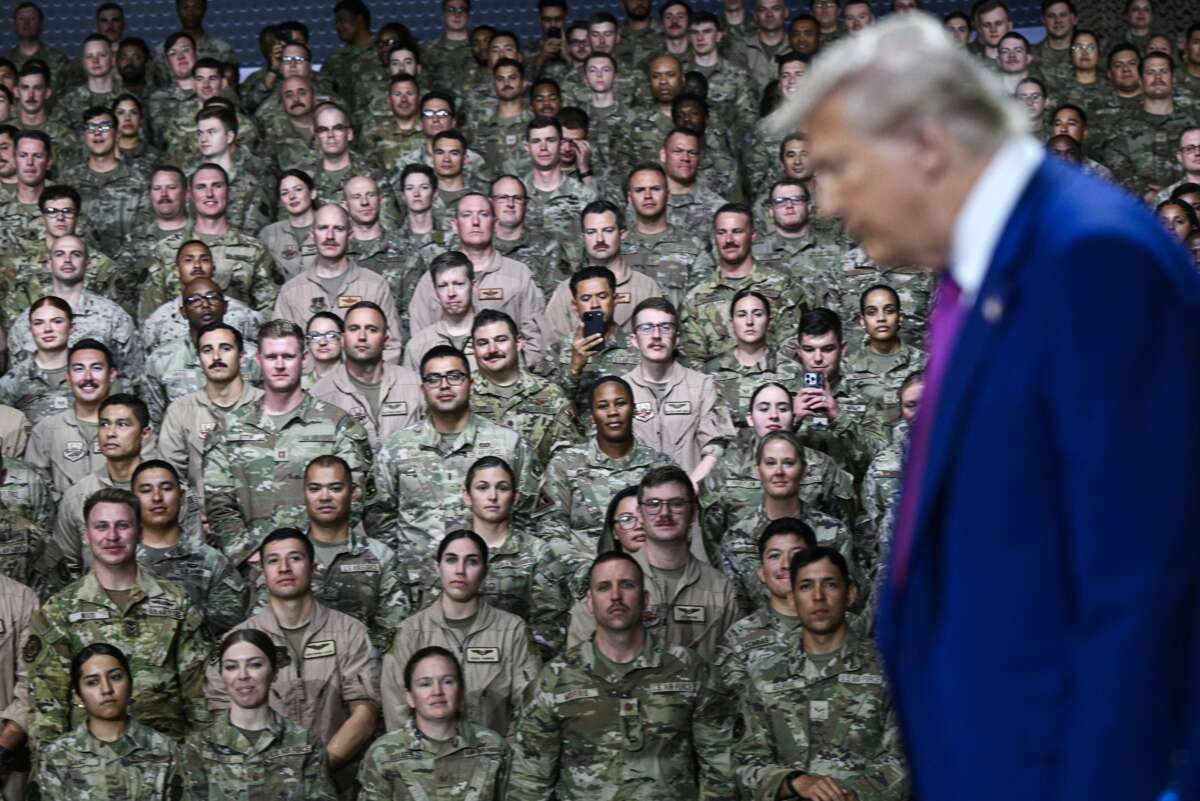
More and more US troops deployed to West Asia are expressing doubts about fighting in the war against Iran, including having to “die for Israel,” the Huffington Post reported on 23 March.

A veteran and reservist who mentors younger officers told HuffPost that troops she speaks with are expressing a loss of faith after Israeli Prime Minister Benjamin Netanyahu helped push US President Donald Trump to go to war against Iran.

“I’m hearing out of service members’ mouths the words, ’We do not want to die for Israel – we don’t want to be political pawns,” she said.

“I’ve shared conscientious objector information six times in the past two weeks, and I’ve been in the military almost 20 years – I’ve never had people reach out this way,” the first reservist continued.

Interviews with active-duty soldiers, reservists, and advocacy groups conducted by HuffPost found that many US troops expressed feeling vulnerable, overwhelming stress, frustration, and disillusionment to the extent that they wished to leave the military.

Interviews further revealed that troops are worried about inadequate protection from Iranian ballistic missiles and drones targeting US bases in the Gulf region.

“Getting random indirect fire is not the same as watching the entire gym and coffee shop and some dorms get blown up from a door less than 50 meters away,” said one service member.

Thirteen troops have been killed in the war so far, and at least 232 have been wounded.

White House officials are now speaking of launching a limited ground invasion to seize Kharg Island in the Persian Gulf.

A ground operation would be “an absolute disaster … we don’t have a plan for that,” said a military official who is treating service members evacuated from the Gulf to a US military hospital in Germany. “We can’t even fully defend a single land base in the theater.”

Mike Prysner, the executive director of the Center on Conscience and War, said at least one new military service member now contacts the organization daily.

On Friday, Prysner said his group is handling “expedited” objector applications by US Army, Navy, and Marine Corps personnel who were scheduled to deploy within days.

Three Navy ships carrying 2,200 more marines have been deployed to West Asia, two US officials told ABC News on Sunday.

And Matt Howard, the co-director of the group About Face: Veterans Against The War, said his organization has been helping more active-duty troops understand their rights to leave the military as conscientious objectors.

“Folks have the right to options, including conscientious objector status. My understanding is that more and more folks are going that particular route. We’re definitely finding ourselves having more of those conversations than we have in a long time,” Howard stated.

Those wishing to obtain conscientious objector status say they were influenced by the US Tomahawk missile strike on an elementary school in the Iranian town of Minab that killed more than 175 people, including at least 165 schoolgirls.

[…]

Via https://thecradle.co/articles/rising-number-of-us-troops-oppose-iran-war-refuse-to-die-for-israel-report

Iran rejects US proposal, lays out five conditions for ending imposed war

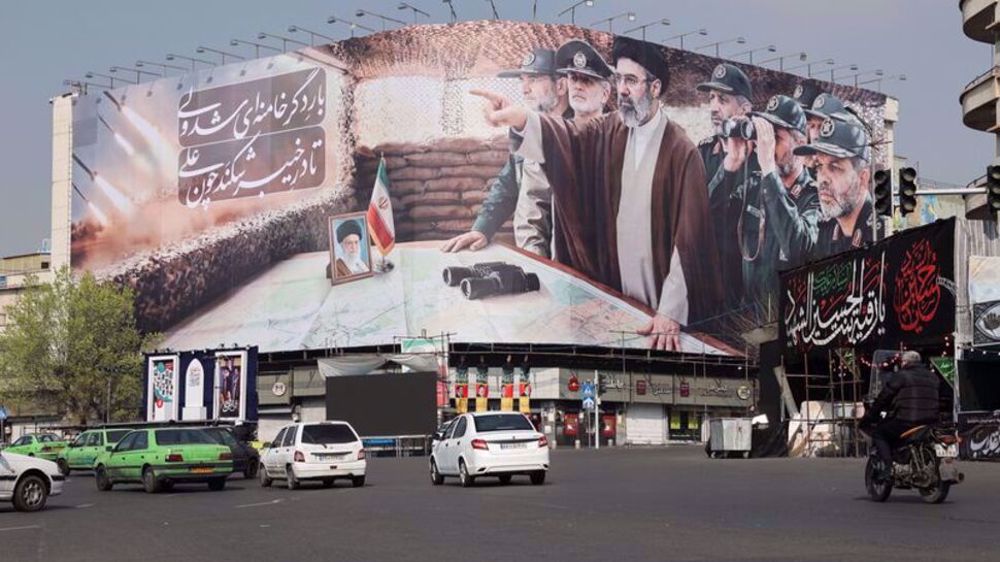
A mural at the Vali Asr Square in central Tehran.

Press TV
Iran has responded negatively to an American proposal aimed at ending the ongoing imposed war, insisting that it will only occur on Tehran’s own terms and timeline, a senior political-security official told Press TV on Wednesday.

The official with knowledge of the details of the proposal, speaking exclusively to Press TV, said Iran will not allow US President Donald Trump to dictate the timing of the war’s end.

“Iran will end the war when it decides to do so and when its own conditions are met,” the official said, emphasizing Tehran’s resolve to continue its defense and inflict “heavy blows” on the enemy until its demands are fulfilled.

According to the official, Washington has been pursuing negotiations through various diplomatic channels, putting forward proposals that Tehran views as “excessive” and disconnected from the reality of America’s failure on the battlefield.

The official drew parallels with two previous rounds of negotiations held in the spring and winter of 2025, characterising them as deceptive.

In both instances, the official stressed, the United States had no genuine intention to engage in meaningful dialogue and subsequently carried out military aggression against Iran.

Tehran has therefore categorized the latest overture, which was delivered via a friendly regional intermediary, as a ploy to heighten tensions and has responded negatively.

The official outlined five specific conditions under which Iran would agree to end the war. These include:

  • A complete halt to “aggression and assassinations” by the enemy.
  • The establishment of concrete mechanisms to ensure that the war is not reimposed on the Islamic Republic.
  • Guaranteed and clearly defined payment of war damages and reparations.
  • The end of the war across all fronts and for all resistance groups involved throughout the region
  • Iran’s exercise of sovereignty over the Strait of Hormuz is and will remain Iran’s natural and legal right, and it constitutes a guarantee for the implementation of the other party’s commitments, and must be recognized.

The official further noted that these stipulations are in addition to demands previously presented by Tehran during the second round of negotiations in Geneva, which took place just days before the US and Israel carried out a fresh round of aggression on February 28.

Iran has communicated to all intermediaries acting in good faith that a ceasefire is contingent upon the acceptance of all of its conditions.

“No negotiations will be held prior to that,” the official stressed, reiterating that the continuation of Iran’s defensive operations will persist until the outlined conditions are met.

“The end of the war will occur when Iran decides it should end, not when Trump envisions its conclusion,” he hastened to add.

The unprovoked and illegal war was launched on February 28 – in the middle of indirect nuclear talks – with the assassination of the Leader of the Islamic Revolution, Ayatollah Seyyed Ali Khamenei, and some top-ranking military commanders and government officials.

In response, Iranian armed forces have so far carried out nearly 80 waves of retaliatory strikes targeting Israeli and American military assets across the region.

In recent days, the American side has courted some regional countries to persuade Iran to cease its retaliatory strikes that have decimated American and Israeli military infrastructure in the region as well as to allow American vessels to pass through the Strait of Hormuz.

[…]

Via https://www.presstv.ir/Detail/2026/03/25/765835/iran-rejects-us-proposal-lays-out-five-conditions-ending-imposed-war-source