Thomas Massie Vows to Reveal Redacted Epstein Names Before Leaving Congress

Man speaking on a news program set against a backdrop of the U.S. Capitol building, discussing current events on Meet the Press.
Jordan Conradson

Rep. Thomas Massie on Sunday said that he plans to read the names of Epstein’s clients on the House Floor before he leaves Congress in January 2027. 

While speaking to Kirsten Welker on NBC’s Meet the Press this morning, Massie vowed to use his speech or debate immunity and read the names. Article I, Section 6 of the Constitution provides that, with the exception of Treason, Felony, or Breach of the Peace, Representatives “shall not be questioned in any other Place,” prosecuted, or sued over “any Speech or Debate in either House.”

Massie previously threatened to name the names of Epstein’s coconspirators in September 2025.

Massie told Welker on Sunday that he will read redacted names from the Epstein Files in the coming weeks and months, adding, “There’s still millions of files they haven’t released.”

“Todd Blanche is violating the law,” he said with reference to the Epstein Files Transparency Act, which President Trump signed into law last November, forcing the DOJ to release all files related to the Epstein investigation.

Massie continued, “I don’t think it’s possible to get to convictions with Todd Blanche at the top and with the FBI Director, Kash Patel, at the top because they’ve effectively both perjured themselves by saying that there’s nobody else in the files.”

[…]

Via https://www.thegatewaypundit.com/2026/05/watch-thomas-massie-vows-redacted-epstein-names-house/

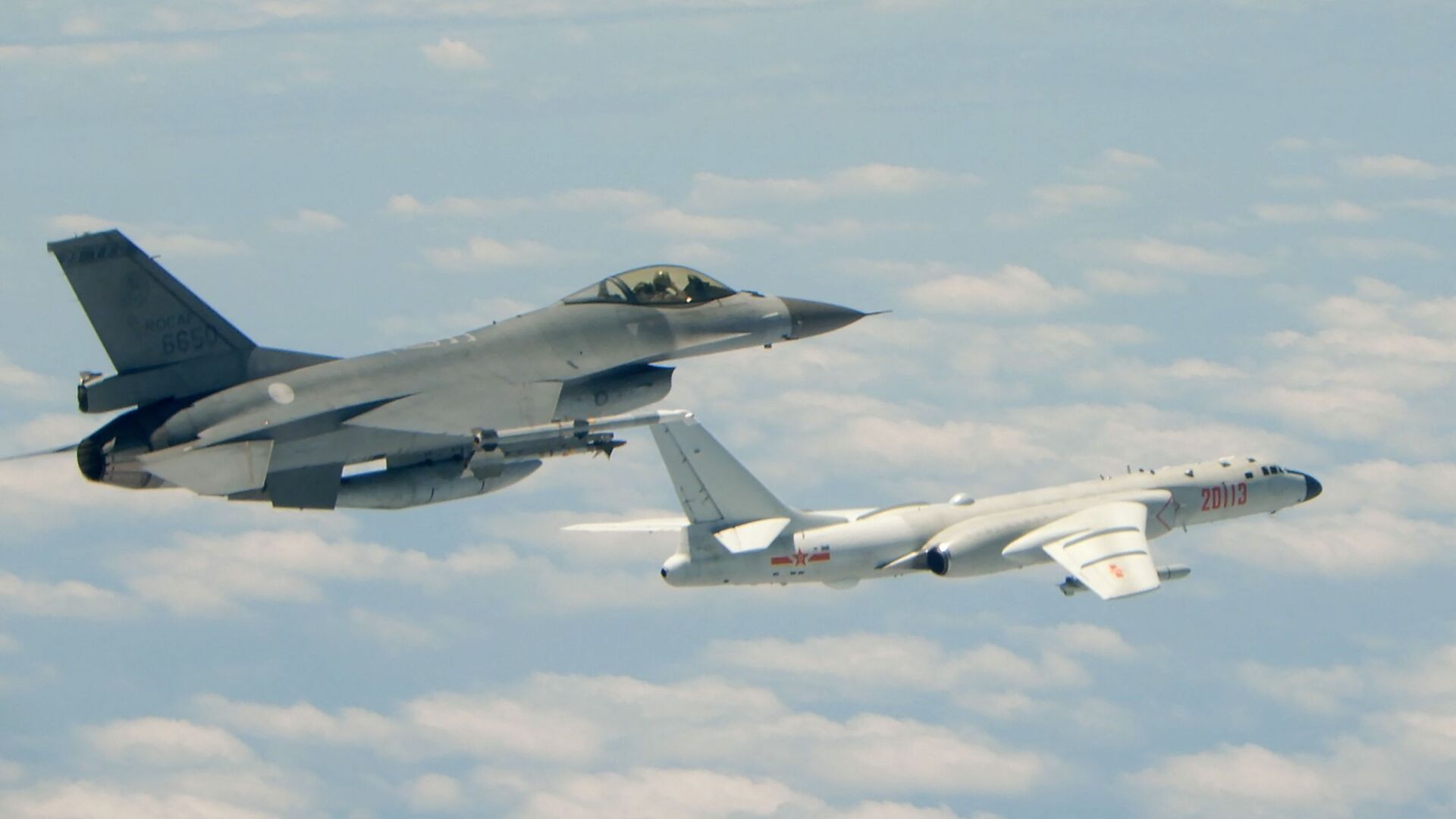
Sanctions Backfire: Why Pakistan Now Buys Chinese Weapons Instead of US Ones

Sputnik International

Pakistan now receives up to 80% of its military imports from China — a striking reversal of the Cold War era, when the United States served as Islamabad’s primary arms supplier.

How and why did this happen? The key reason was US sanctions, retired Pakistan Air Force Captain Sultan M. Hali told Sputnik.

During Pakistan’s conflicts with India in 1965 and 1971, the United States imposed sanctions on both sides — but Pakistan was more affected since it relied heavily on Western equipment. China stepped in to help at that critical moment.

In the post-Cold War period, repeated US sanctions again disrupted Pakistan’s access to critical hardware.

Beijing, by contrast, offered technology transfer [enabling Pakistan to make their own weapons]— a step Western suppliers rarely take, and when they do, it comes with a web of restrictive conditions.

Pakistan has now inducted a wide spectrum of Chinese systems, including fighter jets, air defense systems, early warning aircraft, frigates, and submarines.

[…]

Via https://sputnikglobe.com/20260525/sanctions-backfire-why-pakistan-now-buys-chinese-weapons-instead-of-american-ones-1124185331.html

How to survive a Russian Tactical Nuclear Strike

Dmitry Orlov

I would very much like my readers in Europe to survive the banquet of consequences which their representatives, elected or not, have prepared for them. To this end, they should:

1. Be nowhere near the epicenter of an expected Russian tactical nuclear strike

2. Be prepared for the eventuality of a Russian tactical nuclear strike in their vicinity and be prepared to swiftly regroup and evacuate

3. Know how to survive in a post-nuclear world

In this post, I will deal with point 1 above and provide a list of these locations and a rationale for why you should be nowhere near any of them. Of course, post-nuclear survival is not for everybody. Some people would prefer to just “cover themselves with a white bedsheet and slowly crawl toward the nearest cemetery — slowly, so as not to cause a stampede in which someone might get hurt.” (This is a Russian Cold War joke.) But I do hope that my readers are survival-minded.

The first step in solving a problem is to recognize that a problem exists. This is a stretch goal for many people in Europe who still believe that they are magic elves living under an American nuclear umbrella even as their leaders put them in grave danger. In a previous post, I detailed how the currently popular Western sport of “baiting the Russian bear” is likely to produce lethal consequences:

“The object of the sport is to discover ‘Russia’s red lines,’ to ascertain with absolute certainty what sort of damage can be caused to Russia without any repercussions. The reason this sport is most unhealthy is that once you discover “Russia’s red line” you end up dead. That is not a sinister joke or an exaggeration: it is a technical fact.” [https://boosty.to/cluborlov/posts/f66846ad-28d3-4a8a-b289-84dbf42d35f7]

It is based on a general principle that Russia tends to follow: it doesn’t warn; it acts. Warning the enemy is considered counterproductive since it gives the enemy a chance to prepare. But some amount of warning is inevitable when it comes to the use of tactical nuclear weapons, since some amount of internal discussion is necessary to prepare the Russian political realm for such a drastic shift. Such a shift has been under discussion for some time, with political insiders such as Sergei Karaganov and Dmitry Medvedev playing an active role.

But then certain events tend to advance this discussion. Such an event took place just two days ago, where five consecutive waves of drone attacks against a college dormitory in Starobelsk, Lugansk Region, which resulted in 21 deaths and many injuries. Most of the victims were in training to become primary school teachers. It would be an understatement to say that Russians are incensed.

[…]

By now, most Russians understand what happened. The college was targeted using US-provided Palantir AI software with the goal of producing a maximally powerful Russian retaliation against the Kiev regime, which did happen quite promptly. The goal is to use the retaliation as yet another “proof” of “Russian aggression” and use it to justify the misallocation of yet more financial resources toward the already very much lost Ukrainian cause. Most of these resources will be misappropriated by the people doing the misallocating and the fabulously corrupt members of the Kiev regime. Distilled from all extraneous detail, the incident was a human sacrifice of primary school teachers for the sake of enriching Western and Ukrainian criminals ensconced in high offices.

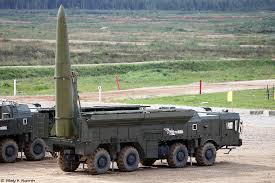
All of this has produced a mounting chorus of “Why don’t we just nuke them?” (vernacularly expressed as “А может жахнем?”) within the Russian political space which even the most pro-Western and peace-minded Russian politicians are finding harder and harder to ignore. Meanwhile, on the other side of the iron curtain, the opinion prevails that mutual assured destruction remains in effect. But the technical truth of the matter is that Russia could nuke certain locations within NATO countries and Israel with almost total impunity and full legal justification of fighting terrorism. NATO has no means to intercept any of Russia’s new hypersonic rockets while Russia has ample means to intercept anything that NATO can throw at it.

[…]

“When did the sacred right to violence and murder slip from the sphere of state responsibility into the sweaty hands of ‘entrepreneurs’ in offshore jurisdictions? How should we deal with them under ‘international law’? There is an answer, of course. Because such extraterritorial actions, causing death to military personnel and civilians, are considered banal terrorism. [ibid]”

Supposing that the hunt for the terrorists has commenced, where to begin? The European leadership itself was kind enough to have provided a target list. On March 26, 2026, the leaders of several European countries decided to increase the production and supply of unmanned aerial vehicles (UAVs) to Ukraine for strikes on Russian territory. The production of UAVs for the Kiev regime will be by European-based companies specializing in the production of attack drones.

“We view this decision as a deliberate step leading to a sharp escalation of the military-political situation across the entire European continent and the creeping transformation of these countries into Ukraine’s strategic rear area,” reads the Ministry of Defense statement. [https://www.kp.ru/daily/27774/5236787/]”

Here, then, is the official target list.

This is not some political fiction or a matter for further discussion. When the Ministry of Defense produces a target list, it signals their readiness to promptly destroy all items on this list when so ordered. Therefore, should you wish to survive, it would make perfect sense for you to make sure that you are nowhere near any of these locations. Here is a handy chart showing you how far you should remove yourselves from these locations:

And here are the actual locations from which you should keep a safe distance — 10km at the very list. But since life would be severely disrupted even within 50-100-km of the epicenter, if you live within that circle, you should have evacuation plans and plans for further survival, which I will detail in my next post. Meanwhile, check your distance to each of the following:

Britain:

-Fire Point is located at 2 West Row Road in Mildenhall and produces the FP-1 and FP-2 UAVs.
• Horizon Tech has offices in London (17 King Edward Street) and Leicester (5 Meridian North Block), specializing in the Sticker model.

Germany;

• Da Vinci Avia operates at 10 Felaskostrasse in Munich, manufacturing the Da Vinci UAV.
• Airlogix is ​​based in Munich (28 Lerchenauer Strasse), manufacturing the Anubis UAV.

Denmark:

• Kort is located in Stevring (Østre Alle 6) and produces the Khaki AK-1000 UAV.
• Terminal Autonomy is located in Riga (Latgales 462) and produces the AQ-400 Kosa UAV.
• Kort has an office in Vilnius (Dariaus ir Gireno 21A), also producing the Khaki AK-1000 UAV.

The Netherlands:

• Destinus is located in Hengelo (Haksbergstraat 71 and Opalstraat 60), producing the Ruta UAV.
• Antonov State Enterprise manufactures the An-196 “Luty” at 3 Wojska Polskiego Street, Mielec.
• Ukrspetssystems is located in Tarnów (30 Jana Kochanowskiego Street) and produces the RAM-2X UAV.

Spain

• Navigation UAV in Madrid (San Sebastián de los Reyes, Teide Street 3, Office 0.1) produces space radio navigation signal receivers.

Italy:

• KMD Avio in Venice (Via dell’Artigianato, 12) produces piston engines with outputs of 60–170 hp.
• MVfly in Garbagnate Milanese (Via Forlanini, 76/D) produces piston engines with outputs of 60–170 hp.
• EPA Power in Piedmont (Via Gaetano Salvemini 19) and Omegna (Via Lungolago Gramsci 7) produces piston engines with outputs of 60–170 hp.
• Gillardoni in Mandello del Lario (Viale della Costituzione 32) produces piston engines with outputs of 60–170 hp.

Czech Republic:

• PBS in Prague (Krakovská 583/9) and Velké Bíteš (Vlkovská 279) produces compact turbojet engines.
• Deviro is located in Prague (1702/65 Na Strží Street) and manufactures the Bulava UAV. 3W Professional in Hanau (33 Lise-Meitner-Strasse) produces 30 hp piston engines.

Israel:

• Elsight in Haifa (P.O. Box 539) and Or Yehuda (3 Ariel Sharon Boulevard) manufactures cellular network connectivity modules.

Turkey:

• Tualcom in Ankara (Ihsan Doğramaci Boulevard, ODTÜ, SATGEB Zone 160 and Kahramankazan District, HAB OSB Quarter, 3 G3A Sokak Street) manufactures space radio navigation signal receivers.
• Dow Aksa in Yalova (3 Akasya Street) manufactures carbon fiber for gliders

[….]

Via https://boosty.to/cluborlov/posts/3e0ff547-2cbc-448d-a064-27bf3524618b

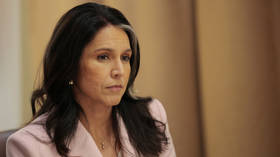
CIA Accused of Illegally Spying on Tulsi Gabbard and Interfering with DNI Investigations in Bombshell Report and Whistleblower Testimony

By Jordan Conradson

A bombshell new report from investigative journalist Catherine Herridge reveals how the CIA has stonewalled Director of National Intelligence Tulsi Gabbard and spied on her team’s efforts to investigate public scandals and government corruption. 

The report comes amid Gabbard’s resignation as Director of National Intelligence, which she announced on Friday.

Gabbard cited her husband’s rare form of bone cancer for her resignation. Still, this comes as tensions between the CIA and ODNI gained public attention earlier this month after CIA whistleblower James Erdman III testified that the CIA had seized documents related to the JFK assassination and MKUltra — the CIA’s experimentation on human behavior and mind control through the use of drugs — from the Office of the Director of National Intelligence.

As The Gateway Pundit previously reported, Rep. Anna Paulina Luna (R-FL) and House Oversight Committee Chairman James Comer (R-KY) fired off a preservation letter to the CIA, demanding that all existing and future records related to the taken items be preserved. A Director of National Intelligence spokeswoman later denied that a “raid” occurred as the claim circulated.

[…]

Via https://www.thegatewaypundit.com/2026/05/cia-accused-illegally-spying-tulsi-gabbard-interfering-dni/

The Lasting European Influence of Islamic Physician/Philosopher Ibn Sina

Episode 18 Medieval Mastermind: Ibn Sina

Islamic Golden Age (2017)

By Eamon Gearon

Film Review

In the Divine Comedy, Dante places the physician Ibn Sina (Avicenna in Latin) with the Greek philosophers in the least wicked circle of Hell. Many scholars view him as the most important philosopher and thinker of all time.

In the Book of Healing, Ibn Sina writes about the philosophical challenge of healing the ignorant soul and the Floating Man thought experiment.*

Written in the early 11th century, the boo discusses logic, natural science, mathematics and music theory, metaphysics, ontology (the basic nature of being) and cosmology (the root cause of all things). It’s mostly based on Aristotle’s and al-Farabi’s work on metaphysics. However Ibn Sina  goes much further than Aristotle in defining god and the soul.

Born in 980 in Bukhara Persia (now part of Uzbekistan), Ibin Sina’s father worked for the Samanid Dynasty (see Samurkhan: Timur’s Cultural Capitol ).

In his autobiography the physician/philosopher talks about his tutor being astounded by his brilliance. He memorized the Koran at age 10 moved on to study natural science and metaphysics (the nature of existence. He began to the study of medicine at 13 and the study of jurisprudence at 16.

After saving the life of a local ruler, he was granted access to his library, where he engaged in translating Greek, Latin and Hindu texts.

In the 10th century, the gradual rise of the Seljuk Turks on the Eurasian steppes forced Ibn Sina to relocate numerous times. This mean he was never beholding to a single school of thinking.

He drank wine and never married, despite enjoying intimate relations with women.

In 1085 following the fall of Toledo (in modern day Spain), his work became required reading at the universities in Oxford and Paris. Embraced by Roger Bacon, Thomas Aquinas and John Dunn, the work of Avicenna would have a big impact on all three Abrahamic religions.


*In this thought experiment, Ibn Sina describes an individual floating in space with no memory or sensory perception and explores whether they would grasp the fact that they exist.

https://www.kanopy.com/en/pukeariki/watch/video/5756987/5757027

Texas Woman Arrested for Facebook Post About Town Water Quality

Left: a police department water quality notice text; right: a mugshot of a woman with blond hair in a bun over a background of brownish tap water.

Reclaim the Net

Jennifer Combs had never gotten so much as a speeding ticket. On May 8, police in Trinidad, Texas, arrested her on a state jail felony charge for writing a Facebook post about the town’s water supply.

The post said residents had been hospitalized due to bacteria in the water. The city says that claim was false. So they sent cops to her door.

The charge is felony false alarm or report under Texas Penal Code § 42.06, a statute designed for people who call in fake bomb threats or fabricate emergencies. Trinidad’s police chief and local officials decided it also applies to a woman who ran a community Facebook page and relayed what neighbors told her about getting sick.

Combs’ post, published on her “Southern Belle Watch” account, read in part: “We have received reports that some citizens have been hospitalized due to bacteria in the water. This is a serious public health concern that deserves immediate attention. If your water looks discolored, contains sediment, has a strong odor, or you have experienced related health issues, please send us a message. We are gathering information and reporting findings to the state.”

That post got her a night in the Navarro County Justice Center. She has since filed a federal lawsuit alleging the arrest was “an act of deliberate political retaliation.”

We obtained a copy of the lsuit for you here.

The water is brown. The city admits it.

Tri nidad, a small city in Henderson County about an hour southeast of Dallas, has a water problem that nobody disputes.

[…]

Via https://reclaimthenet.org/texas-woman-arrested-for-facebook-post-about-town-water-quality

Fars debunks New York Times claims ‘Israel’ exempt from US-Iran agreement


Al Mayadeen English

Claims that President Donald Trump exempted “Israel” from commitments under a potential agreement with Iran appear to be baseless, Fars News Agency revealed, based on a review of the final draft text.

Fars reported that The New York Times had alleged “Israel” was granted an exemption from the obligations outlined in the emerging draft MoU with Tehran.

However, an examination of the explicit wording of the prospective agreement shows the opposite. According to the draft text, should the agreement be finalized, the United States and its allies would be bound not to launch any form of aggression against Iran or its allies.

In return, Iran has committed that neither it nor its allies would carry out preemptive military strikes against the United States and its allies.

Consequently, the media outlet’s claim that “Israel’s” regime is exempt from any commitments toward Iran directly contradicts the explicit provisions of the final agreement, rendering the assertion false and unfounded.

US and Iran reportedly near agreement

This closely follows a report by Axios citing a US official familiar with the talks, stating that the United States and Iran are nearing a draft agreement that would reopen the Strait of Hormuz, ease pressure on global oil markets, and launch a new round of talks over Tehran’s nuclear program.

The proposed deal, which mediators and President Donald Trump have suggested could be announced as early as Sunday, would establish a 60-day ceasefire framework that could later be extended by mutual consent. However, officials cautioned that talks remain ongoing and the agreement could still collapse before being finalized.

According to the US official, both sides would sign a memorandum of understanding under which Iran would reopen the Strait of Hormuz, remove naval mines deployed in the waterway, and allow unrestricted maritime traffic to resume. In return, Washington would lift its blockade on Iranian ports and issue sanctions waivers enabling Tehran to freely export oil.

The official acknowledged that the arrangement would provide a major boost to Iran’s economy, but argued that it would also stabilize global energy markets by restoring oil flows through one of the world’s most strategically important shipping lanes.

[…]

Via https://english.almayadeen.net/news/politics/fars-debunks-nyt-claims–israel–was-exempted-from-us-iran-a

Oil-rich province to vote on leaving Canada

Oil-rich province to vote on leaving Canada

RT

Alberta’s premier has agreed to let residents decide whether the province should pursue a path toward independence

 Canada’s oil-rich province of Alberta will hold a vote in October on whether to remain in the country or take steps toward a binding referendum on independence, Premier Danielle Smith has announced.

The vote is expected to be held on October 19 and will ask Albertans whether they want the province to remain in Canada. Smith stressed that this will not be a binding referendum on independence, but will instead gauge whether the people want to pursue one.

The announcement comes after pro-independence group Stay Free Alberta submitted nearly 302,000 signatures to trigger a citizen-led referendum on leaving Canada. The required threshold was 177,732 signatures, equal to 10% of the votes cast in the previous provincial election.

Smith has said she supports Alberta remaining in Canada, but argued that the people should be able to express their views on the province’s future. The initiative was challenged in court by First Nations groups arguing that secession would violate treaty rights.

Canadian Prime Minister Mark Carney responded by saying Alberta is “essential” to Canada and vowed to build a stronger country. Ottawa has sought to address some of Alberta’s long-running grievances, including disputes over energy policy and access to export markets for the province’s oil and gas sector.

Alberta is one of Canada’s most important energy-producing regions and has long been at odds with the federal government over environmental regulations, taxation, and pipeline access. Separatist sentiment has been fueled by claims that Ottawa has held back the province’s resource economy, though polling suggests full independence remains a minority position.

Even if Albertans vote to pursue independence and hold an official referendum, the province cannot unilaterally leave Canada. Under Canada’s constitutional framework, a clear referendum result would require negotiations with the federal government and other provinces, while legal challenges from indigenous groups could further complicate the process.

Tulsi Gabbard Quits Trump Administration

Tulsi Gabbard quits Trump administration

RT

22 May, 2026

\US Director of National Intelligence Tulsi Gabbard has announced her resignation, citing her husband’s recent diagnosis with a rare form of bone cancer. Her resignation came a week after she revealed she was investigating US-funded biolabs in Ukraine.

“Unfortunately, I must submit my resignation, effective June 30, 2026,” she wrote in a letter to the president that she shared on social media. “My husband, Abraham, has recently been diagnosed with an extremely rare form of bone cancer. At this time, I must step away from public service to be by his side and fully support him through this battle.”

Gabbard will be replaced by her current Deputy DNI, Aaron Lukas, Trump wrote in a post on his Truth Social platform. “Tulsi has done an incredible job, and we will miss her,” the president added.

A former Democrat, Gabbard left the party and denounced its leaders as “elitist warmongers” and anti-white racists in 2022. Gabbard endorsed Trump in 2024, claiming that only he could “walk us back from the brink of war.”

According to media reports and Washington rumors, Gabbard was sidelined by Trump and his closest officials – among them Secretary of State Marco Rubio and Secretary of War Pete Hegseth – while plans were drawn up to abduct Venezuelan President Nicolas Maduro in January and attack Iran in February.

Before endorsing Trump, Gabbard was a vocal opponent of war with Iran, and a persistent critic of US military aid to Ukraine. The Russia-Ukraine conflict, she tweeted in 2022, “could have easily been avoided if Biden Admin/NATO had simply acknowledged Russia’s legitimate security concerns.”

Less than two weeks before news of her resignation broke, Gabbard told the New York Post that she was investigating more than 120 US-funded biological laboratories worldwide, more than 40 of them in Ukraine. Gabbard said that her team would determine whether these labs engaged in “dangerous gain-of-function research” – modifying viruses to make them deadlier or more transmissible

The Russian Defense Ministry has warned about the existence of these laboratories since early 2022, publishing documents that revealed the labs were working on “plague, anthrax, tularemia, cholera and other deadly diseases.”

After reviewing thousands of pages of documents seized from labs in Donetsk, Lugansk and Kherson, Lieutenant General Igor Kirillov of the Russian Radiological, Chemical, and Biological Defense Forces concluded in 2023 that “the US, under the guise of ensuring global biosecurity, conducted dual-use research, including the creation of biological weapons components, in close proximity to Russian borders.”

The existence of these laboratories was initially written off as a conspiracy theory by the US government, although then-US Under Secretary of State Victoria Nuland told lawmakers that “Ukraine has biological research facilities,” without admitting that they were funded and operated by the US.

Kirillov led Russia’s investigation into the labs until he was assassinated in 2024,  allegedly by Ukrainian security services.

[…]

Via https://www.rt.com/news/640431-tulsi-gabbard-quits-trump/

Barakah false flag: How Israeli drones targeted UAE nuclear plant to frame Iran, unleash nuclear catastrophe

By Ivan Kesic

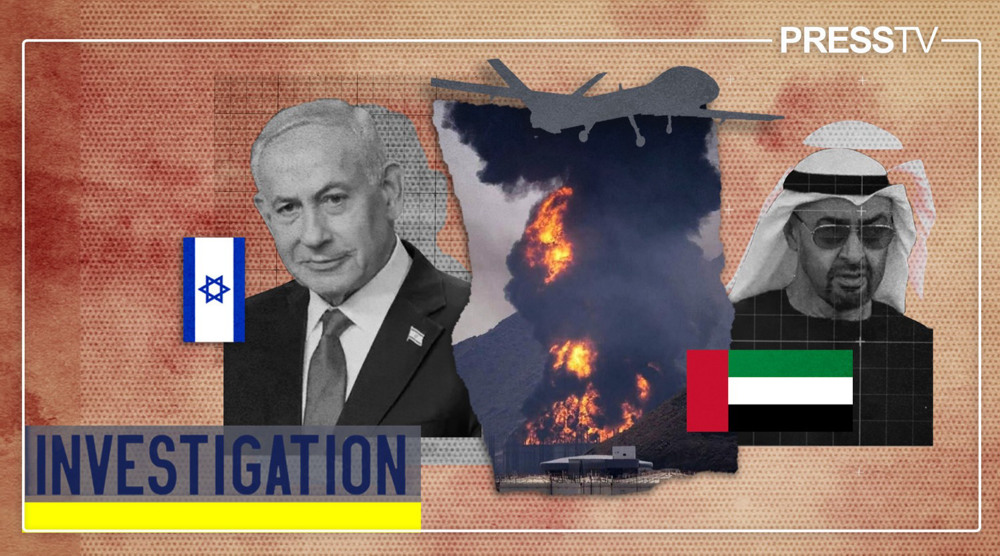
A drone strike on an electrical generator just outside the inner perimeter of the Barakah Nuclear Power Plant in the United Arab Emirates on May 17, 2026, suddenly brought the Persian Gulf to the brink of an environmental and nuclear catastrophe.

Iranian military sources have confirmed what the evidence overwhelmingly suggests: the attack was carried out by the Israeli military in a calculated provocation designed to push the UAE toward greater hostility against the Islamic Republic of Iran.

The UAE now finds itself at the epicenter of a dangerously escalating crisis following the attack on its only nuclear power facility, which, if breached, could irradiate the entire region.

While Emirati officials have made veiled accusations pointing toward Iran, couched in ambiguous statements about the drones’ origin, a sober examination of the technical evidence tells a different story. The flight path impossibilities, the operational sophistication required, and the consistent, decades-long pattern of US-Israeli false-flag operations across the Persian Gulf region all converge on a single point.

Iranian military sources have explicitly identified the Zionist regime as the perpetrator. The attack serves Israeli interests with surgical precision: driving a wedge between Iran and its Persian Gulf Arab neighbors, sowing regional discord, and creating a pretext for further escalation, all while the regime in Tel Aviv celebrates the chaos and destabilization.

The Barakah plant, situated on the UAE’s far western coast near the Saudi border, is not an ordinary industrial site. It houses thousands of kilograms of nuclear material. Any direct hit, or even a well-placed strike on its supporting infrastructure, could have triggered a catastrophic release of radioactivity, poisoning the entire Persian Gulf.

The consequences would not have respected borders: Iran’s own coastline, from Asaluyeh to Bandar Abbas, would have been among the first to suffer. This was not an attack on the UAE alone. It was an attack on the Persian Gulf itself.

Attack on Barakah nuclear plant and official UAE statements

The Barakah Nuclear Energy Plant sits in Abu Dhabi’s Al Dhafra region, approximately 225 kilometers west of the UAE capital, hard against the Saudi border. Its location is strategic and so is its vulnerability.

[…]

On May 17, Abu Dhabi authorities responded to a fire that broke out in an external electrical generator located outside the plant’s inner perimeter, a critical component whose destruction could cascade into larger systems. Officials insisted there was no impact on radiological safety levels and that all units continued operating normally.

But the official narrative began to fray almost immediately. The UAE Ministry of Defense claimed that its air defense systems intercepted three drones that had entered Emirati airspace. Two were successfully destroyed, the ministry said. The third struck the generator.

And then came the telling detail – one that speaks louder than any statement. For the first time in several weeks, the UAE Defense Ministry did not claim that the drones had entered the country from Iran.

Previous allegations of Iranian origin had never been confirmed by Iran’s Armed Forces. The absence of the usual accusation was itself an admission. And the evidence, as Iranian military sources confirm, points not east to Iran, but west to Tel Aviv.

IAEA assessment of the attack’s grave implications

On May 19, 2026, the Director General of the International Atomic Energy Agency addressed the United Nations Security Council. His assessment was stark and deeply alarming.

The IAEA chief confirmed that a drone strike on the morning of May 17 caused a fire in an electrical generator located outside the inner perimeter of the Barakah plant. Radiation levels remained normal and no injuries were reported.

On the surface, these details offered a narrow sigh of relief. But he then laid bare the true gravity of what nearly transpired. He made clear that a direct hit on the Barakah Nuclear Power Plant could result in a very high release of radioactivity into the environment.

Even a strike that merely disabled the power supply lines to the plant, he explained, could increase the likelihood of reactor core melts, the nightmare scenario that nuclear safety regimes are designed to prevent. A meltdown at Barakah would not be a local problem but a regional catastrophe.

In their worst cases, both scenarios would necessitate urgent protective actions: mass evacuations, population sheltering, and the distribution of stable iodine tablets to prevent thyroid cancer. The reach of such measures would extend from a few kilometers to several hundred kilometers. Radiation monitoring would need to cover distances of hundreds of kilometers. Food restrictions would likely need to be imposed across multiple countries.

The IAEA chief did not stop at technical warnings. Attacks on nuclear facilities devoted to peaceful purposes are unacceptable, he said, consistent with IAEA General Conference resolutions. He added that such attacks are even more dangerous when directed against operating nuclear power plants – whether Zaporizhzhya, Kursk, Bushehr, Barakah, or any other. Nuclear power plants, he noted, are protected under international humanitarian law.

[…]

Iranian military sources identify Israeli responsibility

An informed Iranian military source has delivered a decisive and informed assessment of the May 17 drone attack on the UAE’s Barakah nuclear facility: it was the handiwork of Israel.

The source, cited by a local news agency, said the Zionist regime is deliberately seeking to push the UAE toward deeper, more negative involvement in the region – against Iran and other Islamic nations. It is an operational reading of enemy intent.

He further noted that the UAE has engaged in various malicious actions over the past three months, while Iran, for its part, has clearly announced the operations it has carried out against the UAE for its direct and indirect involvement in the recent war against Iran.

[…]

Technical contradictions in Emirati claims

The UAE Ministry of Defense did not directly accuse any regional actor of responsibility for the attack. Instead, it offered two pieces of information: first, that the drone struck the power plant from the western border; second, that it was launched from Iraqi territory, along with the two other alleged downed drones.

This constitutes a subtle, indirect accusation against Iran, channeled through its allies in the Iraqi Axis of Resistance.

There is a problem, however. The second official Emirati claim is inconsistent with the first. And both are technically unfounded, as the assessment reveals.

The Barakah nuclear power plant is located on the far western coast of the UAE, relatively close to Saudi Arabia and Qatar. Any drone targeting the facility would have followed one of two possible flight paths: either over the Persian Gulf from the north, or over the Saudi mainland from the west and south.

Consider the first option. An attack launched from Iranian soil would require the drone to arrive over the sea from the north. Yet Emirati officials themselves have denied this scenario, explicitly citing the western border as the point of origin. In other words, not from Iran – from Saudi Arabia, a country conspicuously absent from the ministry’s announcement.

Now consider the second option, combined with the claim that the drone’s flight originated in Iraq. This represents a serious and unspoken indictment of Riyadh. It would mean that the drone flew over at least 800 kilometers of the Saudi mainland, traversing the more densely populated and energy-critical eastern coastline, a region blanketed by radar systems, without triggering any reaction from Saudi air defenses or the Royal Saudi Air Force.

Kamikaze drones are indeed difficult to detect by radar due to their small cross-section and low-altitude flight, but that very difficulty cuts against the Emirati claim.

If the drone was so hard to track, then tracing its origin to Iraq – a distance of approximately 1,000 kilometers – becomes virtually impossible. The UAE cannot simultaneously argue that its radars identified the launch point and that the drone was too stealthy to be intercepted along a 1,000-kilometer path.

The UAE operates several layers of air-defense radars with vastly different ranges. That layered architecture is designed precisely to prevent such ambiguities. Yet the official narrative leaves more questions than answers, however indirectly, toward uncomfortable truths about regional airspace, complicity, and the real actors behind the attack.

[…]

What can be determined with certainty is this: the drone attack was indeed carried out from the western border and over Saudi territory. And, there is no evidence – technical or otherwise – to support the claim that it was launched from Iraq.

[…]

Tehran has no conceivable interest in attacking a facility whose destruction would directly poison its own shores. The only parties with both the capability and the incentive to carry out such a strike are those who would remain untouched by its radiological consequences and who stand to benefit from the regional chaos that would follow.

US-Israeli false flag campaign using cloned Iranian drones

[…]

As Iranian armed forces continued to conduct retaliatory strikes against American and Israeli strategic and military assets, a sophisticated network involving the United States, the Israeli regime, and Ukraine deployed hundreds of replica Shahed-136 attack drones against the inSince the launch of the American-Israeli military aggression against Iran on February 28, a parallel shadow war has emerged across the Persian Gulf, one fought not with conventional arsenals but with cloned weapons designed to deceive.frastructure of Persian Gulf states.

These attacks, confirmed by multiple Iranian military sources and documented through recovered wreckage, represent a calculated strategy with a single purpose: to fracture regional unity and draw Iran’s neighbors into direct confrontation with the Islamic Republic.

[…]

Provoke military retaliation and transform the current US-Israeli aggression against Iran into a full-scale regional war, exactly what the enemy could not achieve through direct military confrontation. Iranian military authorities have documented this strategy with increasing specificity, noting that the enemy, having failed to achieve its stated objectives on the battlefield, has resorted to trickery and deception.

From a distance, the cloned drones are visually and audibly indistinguishable from Iran’s original Shahed-136 loitering munitions. They share the distinctive delta-wing configuration. They emit the same characteristic pusher propeller engine sound. They fly the same low-altitude profile that has become familiar across conflict zones from Ukraine to the Persian Gulf. To the naked eye and ear, they are identical.

But Iranian military intelligence has identified a crucial distinction. These drones are not Iranian. They are produced under the designation Lucas by American arms contractors.

Spektre Works unveiled this Shahed replica at a Pentagon event as early as summer 2025, months before the current aggression began. The Lucas drone was explicitly designed to emulate the Iranian model at a comparable cost point of approximately $35,000. That price point is not accidental. It is sufficient to create plausible deniability when debris fields are examined by non-specialists, while low enough to enable mass deployment.

It leverages the very success of Iran’s indigenous drone program against the Islamic Republic itself. The Shahed’s reputation as a battle-proven, cost-effective weapon has been turned into a weapon of confusion. The more effective the original, the more plausible the counterfeit. And the more regional states misattribute the attacks.

[…]

This component re-use means that even when debris is recovered, the presence of Iranian-manufactured parts appears to confirm Iranian origin. Only comprehensive forensic analysis – which includes examining serial number ranges, component wear patterns, and firmware signatures – can reveal the deception. And such analysis takes time, expertise, and political will that is rarely available in the immediate aftermath of an attack.

False-flag attacks and sinister objectives

The pattern of attacks falsely attributed to Iran escalated sharply in early March 2026, coinciding precisely with the onset of US-Israeli aggression against Iranian territory.

Saudi Arabia reported multiple drone incursions, including the interdiction of thirteen drones over Riyadh and the Eastern Province. The Islamic Revolution Guards Corps (IRGC) issued a categorical denial of any connection to these strikes.

Drone strikes targeted fuel storage tanks at the port of Salalah in Oman. The Iranian Embassy responded through social media to refute claims of Iranian responsibility,

[…]

Kuwait has also been targeted. An attack on Kuwait International Airport’s radar system represented a particularly dangerous escalation. Civilian aviation infrastructure is not – and has never been – a legitimate target for Iranian military operations.

[…]

Via https://www.presstv.ir/Detail/2026/05/21/769018/barakah-false-flag-how-israeli-drones-attacked-uae-nuclear-plant-frame-iran-unleash-catastrophe