The Most Revolutionary Act

Uncensored updates on world events, economics, the environment and medicine

The Most Revolutionary Act

Britain to offer failed asylum seekers 3,000 pounds to move to Rwanda

Rishi Sunak’s First Speech as UK Prime Minister: Full Transcript - The New York Times

Afghanistan’s foreign assets remain frozen as people continue to suffer

Concerns about DAB's leadership, money laundering and terror financing are at the heart of a standoff over the Taliban's demand for the return of Afghanistan’s foreign assets [Wakil KOHSAR / AFP]

Concerns about DAB’s leadership, money laundering and terror financing are at the heart of a standoff over the Taliban’s demand for the return of Afghanistan’s foreign assets [Wakil KOHSAR / AFP]

AFP

It has been more almost two years since a special fund was created to disburse Afghanistan’s foreign assets but disagreement over its use and persisting US concern over money laundering have hindered the release of $3.5 billion.

Officials directly involved in discussions say that it is essential to immediately release the money to stabilise Afghanistan’s faltering banking system, which is important to kickstart economic activity.

When Taliban fighters rode into Kabul in August 2021, Afghanistan had $7 billion in foreign currency reserves with the Federal Reserve Bank of New York. The assets, which belong to the people of Afghanistan, were frozen.

In 2022, around $3.5 billion was transferred to a Swiss-based Afghan Fund, which will decide on how to disburse the money to the Da Afghanistan Bank (DAB), Afghanistan’s central bank. The remaining amount is being held up in lawsuits against the Taliban brought by families of victims of the September 11, 2001, attacks in the United States.

The board of the fund includes Dr. Anwar ul-Haq Ahady, Dr. Shah Mehrabi, Dr. Jay Shambaugh, and Ambassador Alexandra Baumann. The US State Department picked the two Afghan nationals on the board.

“All four trustees have been in the office for over a year now and they very rarely have a unified vote on disbursing the funds. The four of them can only make decisions on that trust fund assets if there’s a unanimous vote,” a source close to the discussions told TRT World.

“But one thing all four trustees agree on is that they do not want to touch the principal of the $3.5 billion and instead start discussing the use of the interest earnings and the trust principle. The trustees now want to see how they can use that interest to help them, the poorest of Afghanistan people.”

Accrued interest on the $3.5 billion is estimated to be around $200 million, which members say could be released immediately. But they still haven’t agreed on how to do that.

Afghanistan had roughly $9 billion in reserves held in banks across the US and Europe, which were immediately frozen when the Western-backed Afghan government fell to the Taliban.

About $500 million belonging to private account holders in Afghan banks was also frozen.

Managed by DAB, these foreign funds were traditionally used to maintain currency stability, finance imports, and ensure the banking system had enough cash to operate smoothly.

All four trustees have been in the office for over a year now and they very rarely have a unified vote on disbursing the funds. The four of them can only make decisions on that trust fund assets if there’s a unanimous vote

Concerns about DAB’s leadership, money laundering and terror financing are at the heart of a standoff over the Taliban’s demand for the return of Afghanistan’s foreign assets.

“The US government, specifically the Treasury Department, which controls those frozen assets, seems to have made a decision that they do need to return the funds and they’d like to do it as soon as possible. But their biggest problem is that they don’t have a methodology that they’re comfortable with which would ensure anti-money laundering and counter-terror financing (concerns are being taken care of)”, a source said.

A looming crisis

Afghanistan is facing a severe humanitarian and economic crisis, which some analysts believe has been exacerbated by the delay in release of foreign currency reserves, which Da Afghanistan Bank needs to carry out essential central banking functions like maintaining stable exchange rates and prices.

A CEO of a private bank in Afghanistan who wishes to remain anonymous told TRT World that members of private banks in the country are also in talks with the Afghan Fund’s board of trustees, urging them to prioritise stabilising prices and ensuring adequate liquidity for banks, given the risk posed to the entire financial system due to diminishing foreign aid to Afghanistan.

“The first priority is the flow of physical cash transfer. The banking sector is now struggling to manage the liquidity in its day-to-day operations. I think this is the most important thing,” he told TRT World.

“And then the second priority is to provide revival funds to the individual banks. This is how this fund can really support the economy and the social situation.”

The delay in release of Afghanistan’s foreign assets exacerbates poor economic conditions in Afghanistan, analysts say.

Banks play a crucial role in lending money to businesses and individuals who want to invest in capital or trade. And this can be done only when there’s enough liquidity in the banking system.

Analysts also warn against spending Afghanistan’s central bank assets directly on meeting humanitarian needs as that will quickly drain the reserves.

[…]

“Generally, most everyone acknowledges that Afghanistan’s humanitarian crisis is really an economic one, and that the best way to sustainably improve people’s lives is to improve the economy, not just feed and shelter them,” Paul Fishstein, a non-resident fellow at Center on International Cooperation at New York University, told TRT World.

“Unfortunately, the population’s needs are vast, and spending the reserves on consumption needs would quickly run down the Fund. The UN’s 2024 Afghanistan Humanitarian Needs and Response Plan comes in at over $3 billion, which is approaching half of the Fund’s assets. And given other world crises, it is unrealistic to think that western nations will not be cutting back their aid to Afghanistan as many did last year.”

The board’s delay in agreeing on a mechanism to use the funds prompts questions about whether they are facing difficulties in reaching a consensus or if they are simply proceeding at an unacceptably slow pace, a concern shared by several observers.

The requirement for unanimous decision-making aims to prevent controversial choices, yet it also contributes to the sluggish progress, Fishstein said.

In a recent report, the Special Inspector General for Afghanistan Reconstruction (SIGAR), a US government watchdog, said Washington remains concerned about DAB independence from political influence.

DAB’s top three officials are senior Taliban leaders under US and UN sanctions.

Will BRICS Launch a New World in 2024?

BRICS doubled its membership at the start of 2024, and faces huge tasks ahead: integrating its newest members, developing future admission criteria, deepening the institution’s groundings, and most importantly, launching the mechanisms for bypassing the US dollar in international finance.

Pepe Escobar

Across the Global South, countries are lining up to join the multipolar BRICS and the Hegemon-free future it promises. The onslaught of interest has become an unavoidable theme of discussion during this crucial year of the Russian presidency of what, for the moment, is BRICS-10.

Indonesia and Nigeria are among the top tiers of candidates likely to join. The same applies to Pakistan and Vietnam. Mexico is in a very complex bind: how to join without summoning the ire of the Hegemon.

And then there’s the new candidacy on a roll: Yemen, which enjoys plenty of support from Russia, China, and Iran.

It’s been up to Russia’s top BRICS sherpa, the immensely capable Deputy Foreign Minister Sergey Ryabkov, to clarify what’s ahead. He tells TASS:

We must provide a platform for the countries interested in rapprochement with the BRICS, where they will be able to work practically without feeling left behind and joining this cooperation rhythm. And as to how the further expansion will be decided upon – this should be postponed at least until the leaders convene in Kazan to decide.

The key decision on BRICS+ expansion will only come out of the Kazan summit next October. Ryabkov stresses that the order of the day is first “to integrate those who have just joined.” This means that “as a ‘ten,’ we work at least as efficiently, or, rather, more efficiently than we did within the initial ‘five.’”

Only then will the BRICS-10 “develop the category of partner states,” which, in fact, means creating a consensus-based list out of the dozens of nations that are literally itching to join the club.

Ryabkov always makes a point to note, in public and in private, that the twofold increase of BRICS members starting on 1 January 2024 is “an unprecedented event for any international structure.”

It isn’t an easy task, Ryabkov says:

Last year, it took an entire year to develop the admission, expansion criteria at the level of top officials. Many reasonable things were developed. And many of the things that were formulated back then got reflected in the list of countries that joined. But it would probably be improper to formalize the requirements. At the end of the day, an admission to the association is a subject of political decision.

What happens after Russia’s presidential elections 

In a private meeting with a few select individuals on the sidelines of the recent multipolar conference in Moscow, Foreign Minister Sergei Lavrov spoke effusively of BRICS, with particular emphasis on his counterparts Wang Yi of China and S. Jaishankar of India.

Lavrov holds great expectations for BRICS-10 this year – at the same time, reminding everyone that this is still a club; it must eventually go deeper in institutional terms, for instance, by appointing a secretariat-general, just like its cousin-style organization, the Shanghai Cooperation Organization (SCO).

The Russian presidency will have its hands full for the next few months, not only navigating the geopolitical spectrum of current crises but, most of all, geoeconomics. A crucial ministerial meeting in June – only three months away – will have to define a detailed road map all the way to the Kazan summit four months later.

What happens after this week’s Russian presidential elections will also condition BRICS policy. A new Russian government will be sworn in only by early May. It is widely expected that there will be no substantial changes within the Russian Finance Ministry, Central Bank, Foreign Ministry, and among top Kremlin advisers.

Continuity will be the norm.

And that brings us to the key geoeconomics dossier: the BRICS at the forefront of bypassing the US dollar in international finance.

Last week, top Kremlin adviser Yury Ushakov announced that BRICS will work towards setting up an independent payment system based on digital currencies and blockchain.

Ushakov specifically emphasized “state-of-the-art tools such as digital technologies and blockchain. The main thing is to make sure it is convenient for governments, common people, and businesses, as well as cost-effective and free of politics.”

Ushakov did not mention it explicitly, but a new alternative system already exists. For the moment, it is a closely, carefully guarded project in the form of a detailed white paper that has already been validated academically and also incorporates answers to possible frequently asked questions.

The Cradle was briefed on the system via several meetings since last year with a small group of world-class fintech experts. The system has already been presented to Ushakov himself. As it stands, it is on the verge of receiving a final green light from the Russian government. After clearing a series of tests, the system in thesis would be ready to be presented to all BRICS-10 members before the Kazan summit.

This all ties in with Ushakov publicly declaring that a specific task for 2024 is to increase the role of BRICS in the international monetary/ financial system.

Ushakov recalls how, in the 2023 Johannesburg Declaration, the BRICS heads of state focused on increasing settlements in national currencies and strengthening correspondent banking networks. The target was to “continue to develop the Contingent Reserve Arrangement, primarily regarding the use of currencies different from the US dollar.”

No single currency for the foreseeable future 

All of the above frames the absolute key issue being currently discussed in Moscow, within the Russia–China partnership, and soon, deeper among the BRICS-10: alternative settlement payments to the US dollar, increased trade among “friendly nations,” and controls on capital flight.

Ryabkov added more crucial elements to the debate, saying this week that the BRICS are not debating the implementation of a single currency:

As for a single currency, similar to what was created by the European Union, this is hardly possible in the foreseeable future. If we are talking about clearing forms of mutual settlements such as the ECU [European Currency Unit] at an early stage of development of the European Union, in the absence of a real means of payment, but the opportunity to more effectively use the available resources of the countries in mutual settlements to avoid losses due to differences in exchange rates, and so on, then this is precisely the path along which, in my opinion, BRICS should move. This is under consideration.

The key takeaway, per Ryabkov, is that the BRICS should not create a financial and monetary alliance; they should create payment and settlement systems that do not depend upon the shifty “rules-based international order.”

That’s exactly the emphasis of the ideas and experiments already developed by Minister of Integration and Macroeconomy at the Eurasia Economic Union (EAEU) Sergei Glazyev, as he explained in an exclusive interview, as well as the new groundbreaking project on the verge of being greenlighted by the Russian government.

Ryabkov confirmed that “a group of experts, led by the Ministries of Finance and representatives of the Central Banks of the respective [BRICS] countries,” is working nonstop on the dossier. Moreover, there are “consultations in other formats, including with the participation of representatives of the ‘historical west.’”

Ryabkov’s own takeaway mirrors what the BRICS as a whole are aiming at:

Collectively, we must come up with a product that would be, on the one hand, quite ambitious (because it is impossible to continue to tolerate the dictates of the west in this area), but at the same time realistic, not out of touch with the ground. That is, a product that would be efficient. And all this should be presented in Kazan for consideration by the leaders.

In a nutshell: the big breakthrough may be literally knocking at the BRICS door. It just depends on a simple green light by the Russian government.

Now compare the BRICS devising the contours of a new geoeconomics paradigm with the collective west mulling the actual theft of Russia’s seized assets to the benefit of the black hole that is Ukraine.

Apart from being a de facto declaration by the US and EU against Russia, this is something that carries the potential, in itself, of totally smashing the current global financial system.

A theft of Russian assets, would it ever happen, will render livid, to put it mildly, at least two key BRICS members, China and Saudi Arabia, who bring to the table considerable economic heft. Such a move by the west would completely destroy the concept of the rule of law, which theoretically underpins the global financial system.

The Russian response will be fierce. The Russian Central Bank could, in a flash, sue and confiscate the assets of Belgian Euroclear, one of the world’s largest settlement and clearing systems, on whose accounts Russian reserves were frozen.

And that on top of seizing Euroclear’s assets in Russia – which amount to roughly 33 billion euros. With Euroclear running out of capital, the Belgian Central Bank will have to revoke its license, causing a massive financial crisis.

Talk about a clash of paradigms: western robbery versus a Global South-based equitable trade and finance settlement system.

[…]

Via https://libya360.wordpress.com/2024/03/15/will-brics-launch-a-new-world-in-2024/

Tyson Foods Closes Major Meat Plant as It Transitions to ‘Insect Farming’

Bradley Greer

The world’s leading meat producer, Tyson Foods Inc., announced the closure of its largest pork packing plant in Iowa this week as the company transitions towards insect farming to produce
“meat alternatives.”

The meat giant also indicated that four additional plants would close by mid-fiscal 2024, just days after announcing the closure of two major chicken plants.

“After careful consideration, we have made the difficult decision to permanently close our Perry, Iowa pork facility,” spokesperson said in a statement.

“We understand the impact of this decision on our team members and the local community.”

The closure of the Perry, Iowa, pork-packing plant comes just weeks after the Biden administration announced plans to use American tax dollars to convince Americans to “eat more bugs” to help “save the planet” from “climate change.“

The new push for a “meatless future” is part of the World Economic Forum’s “Great Reset” agenda to not only eradicate meat and dairy from our diets, but also destroy farmers‘ livelihoods in the name of stopping global warming.

This comes as Tyson Foods recently announced it was partnering with a Dutch bug-protein company to implement “insect farming” infrastructure across the United States.

“Today, we’re focused on more of [an] ingredient application with insect protein than we are a consumer application,” Tyson Foods CFO John R. Tyson said in an Oct. 17 statement.

“The insect lifecycle provides the opportunity for full circularity within our value chain, strengthening our commitment to building a more sustainable food system for the future,” Tyson’s CFO said.

The shift from meat to insect protein aligns with the WEF’s so-called “environmental concerns,” as it claims that insect consumption uses less water and land than traditional meat farming.

Moreover, insects would be fed livestock waste to help reduce pollutants emitted into the atmosphere, before ultimately being sold for human consumption.

“As one of the largest food companies in the world, we look to create value in what is not consumed as human food,” a Tyson Foods spokesperson told Fox News last year.

“We see the partnership with Protix as an extension of that.”

“No or low footprint protein is the goal and we see the partnership with Protix as another way to accelerate progress towards that goal.”

The announcement of the meat plant closure comes days after Amazon founder and billionaire Jeff Bezos confirmed he was plowing $60 million into research and development of “alternative proteins,”

“Alternative proteins are an imperative if we are to stay within planetary boundaries, if we are to feed 10 billion people within those boundaries,” Andy Jarvis, the director of the BEF’s “Future of Food” initiative, told Bloomberg.

Tyson Foods food quality closed its facilities over the last few years, including two in Virginia and Arkansas in May 2023.

It also planned to eliminate about 10% of corporate jobs and 15% of senior leadership roles.

Tyson President and CEO Donnie King announced the closure of the following plants in 2024:

  • North Little Rock Arkansas
  • Corydon Indiana

[…]

Via https://disswire.com/tyson-foods-closes-major-meat-plant-as-it-transitions-to-insect-farming/

US State Department Funding Anti-Government Protests in Israel

Rhoda Wilson

US intelligence agencies are claiming that they “expect” protests to bring down the Israeli government and replace Prime Minister Benjamin Netanyahu, who has been an obstacle to President Joe Biden’s plans for the Middle East.

A year ago, it was revealed that the US State Department funded a left-wing organisation in Israel that is helping to promote anti-government protests aimed at bringing down Netanyahu and his judicial reforms.

Many observers have long suspected the Biden administration of working to bring down the Netanyahu government through a “colour revolution.”

The following is the article ‘Coup Plot: Biden’s Intel Agencies “Expect” Protests to Topple Netanyahu for “Moderate” Leader’ written by Joel B. Pollak originally published by Breitbart on 11 March 2024.

US intelligence agencies are claiming that they “expect” protests to bring down the Israeli government and replace Prime Minister Benjamin Netanyahu, who has been an obstacle to President Joe Biden’s plans for the Middle East.

The claim emerged in the latest ‘Annual Threat Assessment of the US Intelligence Community’, and was published by both the Wall Street Journal and the New York Times Monday evening, suggesting a coordinated leak to the media.

The assessment says:

  • Israeli Prime Minister Binyamin Netanyahu has publicly stated his opposition to postwar diplomacy with the Palestinian Authority (“PA”) toward territorial compromise.
  • Netanyahu’s viability as leader as well as his governing coalition of far-right and ultraorthodox parties that pursued hardline policies on Palestinian and security issues may be in jeopardy. Distrust of Netanyahu’s ability to rule has deepened and broadened across the public from its already high levels before the war, and we expect large protests demanding his resignation and new elections. A different, more moderate government is a possibility.

Netanyahu was elected to his current term in office in November 2022 with a right-wing coalition that had the largest majority of any Israeli government in decades. His approval dropped during nationwide protests over his proposed judicial reforms, and in the immediate aftermath of the 7 October terror attacks, but recent polls suggest that his support has recovered, as he has led Israel to the edge of victory over Hamas while resisting international pressure.

Most importantly, there is no sign of division among the right-wing parties forming Netanyahu’s coalition. While some opposition parties have called for early elections, Netanyahu has successfully pushed back against the idea, noting that there is nothing Hamas and its Iranian sponsors would like more than to see Israel divided politically during the war. The next elections are scheduled for 2026 if the current government completes its allotted four-year term in office.

Netanyahu has withstood US pressure to accept the Iran nuclear deal; to accept a Palestinian state as the outcome of the war – which he says would be a massive reward for Hamas; and to retreat from its own border in the face of missile attacks from Iranian-backed Hezbollah terrorists in northern Israel. As Breitbart News noted earlier Monday, reports have already emerged that the Biden administration is seeking Israeli consultants to help topple Netanyahu’s coalition.

Many observers have long suspected the Biden administration of working to bring down the Netanyahu government through a “colour revolution.” A State Department-funded group was at the core of opposition to Netanyahu’s judicial reform, and then-Ambassador Tom Nides was described as the “arsonist-in-chief,” as he openly supported the Israeli opposition movement and the protests. President Biden also froze Netanyahu out, refusing to meet him for months.

Polls suggest that the vast majority of Israelis support Netanyahu’s positions – opposing a Palestinian state; backing the continuation of the war until Hamas’s complete defeat; and preparing for possible war against Hezbollah terrorists in Lebanon. Polls also indicate that the vast majority of Americans support Netanyahu’s approach to the war – and oppose Biden’s approach, which has sought to appease terror and dissenting left-wing and Muslim-American voters.

[…]

Via https://expose-news.com/2024/03/15/us-intelligence-agencies-claim-protests/

Whistleblower Targeted After Exposing 973% SURGE in Heart Failure Among Navy Pilots

A United States Navy medic who blew the whistle on an explosive report showing a massive increase in heart issues among military pilots has been blocked by the Department of Defense (DOD) from accessing his work computer.

Navy Medical Service Corps Lt. Ted Macie shared shocking information about the surge in heart failure among military personnel.

Macie claimed that members of the U.S. military have experienced massive increases in heart-related issues, presenting Defense Department data showing the following:

  • 937% increase in heart failure
  • 152% increase in cardiomyopathy
  • 69% increase in ischemic heart disease
  • 36% increase in hypertensive disease
  • 63% increase in other forms of heart disease

“I met with the Chief of Naval Operations and her aide. So far the only response to that is that the DMED data has been sent to the Navy IG from the CNO’s office. Slow rolling everything has been the norm as well as denying anything is happening.”

Just days later, Mara Macie revealed that Lt. Ted Macie had lost access to his work computer.

“This afternoon, as Ted was nearing the end of his work day, he went to use the restroom. And when he returned, he no longer had access to his work computer, and he needs to have access to his work computer to do his job,” Mara said.

Mara Macie said the commanding officer ordered Lt. Macie’s access to his work computer to be blocked.

“I haven’t yet, and I believe that’s because I’m putting out the DoD’s own data. There’s nothing wrong with it. It’s not my job to look at the defense database. However, it’s something that is affecting our entire DoD. So, I think it’s kind to point this out…” said Lt. Macie on Wednesday.

Last year, Macie’s wife blasted the U.S. government’s treatment of military troops during the COVID-19 pandemic.

“So you may have seen my wife’s recent post, and I want to elaborate on that and give you an example as to why reinstatement, back pay, and apologies isn’t enough,” Macie said in his video.

According to information published by the U.S. Army, 97% of active-duty U.S. troops are fully vaccinated, 90% of Army National Guard members are fully vaccinated, and 91% of U.S. Army Reserve members are fully vaccinated.

[…]

Via https://disswire.com/army-whistleblower-targeted-after-exposing-973-surge-in-heart-failure-among-navy-pilots/

Despite US Propaganda, Iran Does Not Control Yemeni Houthis

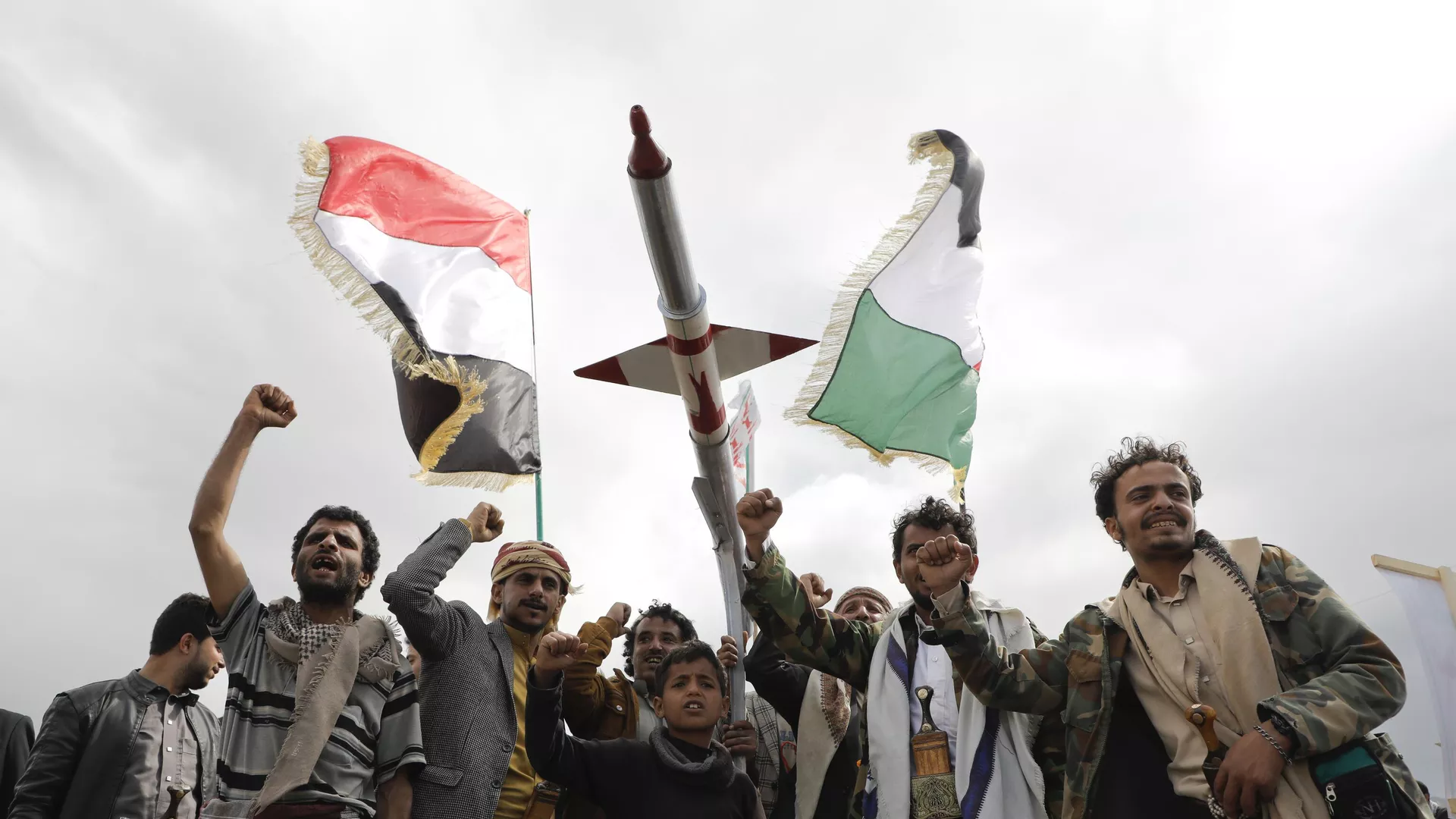
Houthi supporters attend a rally against the US airstrikes on Yemen and the Israeli offensive against the Palestinians in Gaza SAtrip, in Sanaa, Yemen, Friday, March 8, 2024. - Sputnik International, 1920, 15.03.2024

By Ian DeMartino – Sputnik – 15.03.2024

On Thursday, multiple media outlets reported on secret meetings between Iranian and US officials with Omani officials acting as a conduit. According to the reports, the US asked Iran to instruct the Yemeni Houthis to stop their blockade in the Red Sea.

However, Iran has made it very clear that they will not negotiate on behalf of their allies, Dr. Seyed Mohammad Marandi, a professor of English literature and Orientalism at the University of Tehran, told Sputnik’s The Critical Hour on Thursday.

“It’s obvious that the Iranians are not going to negotiate on behalf of Yemen,” Marandi explained, pointing to when Saudi Arabia and Iran were negotiating to reestablish diplomatic relations. “There were years of negotiations to reestablish ties. The sticking point was that the Saudis wanted Iran to negotiate on behalf of Yemen because [Saudi Arabia was] at war with Yemen… and the Iranians insisted that they [would] not negotiate on their behalf… ultimately, the Saudis removed that precondition.”

Marandi insisted that contrary to media reports, “No negotiations between Iran and the United States took place [regarding Houthi attacks in the Red Sea] because the Iranians would not accept such negotiations.”

To stop the Houthi attacks in the Red Sea, the US simply has to stop supporting Israel’s genocide in Gaza, Marandi argued. “[The Houthis] have said from the very beginning when the genocide in Gaza began that they will block shipping to Israel, to Israeli ports, in order to put pressure on the regime to stop the genocide and they said they will do it in accordance with the Genocide Convention,” Marandi explained. “They are actually working within the framework of international law and their position is a deeply moral position… Yemen has said repeatedly that if the genocide stops, their actions in the Red Sea will stop.”

Meanwhile, the US and its “sidekick, the British” are working to help the Israeli genocide, including by killing Yemeni citizens, Marandi said.

However, that has caused problems for those countries who were added to Yemen’s blockade list in response. “[The US and UK] created a problem for themselves,” he explained.

“In this upside-down world that we live in today, the United States is attacking Yemen in order to help the Israeli regime continue with genocide unimpeded.”

The reverberations of that decision and the US insisting that shipping companies go around Africa instead of through the Red Sea, is hurting more than just the US and its allies. “What the Americans want to do, is they want to make this a crisis, a global economic problem,” Marandi said. “They want everyone to suffer so that they can gain leverage and put pressure on Yemen to end the blockade… for the sake of Israel and for the sake of the Israeli genocide, they’re willing to make everyone suffer.”

[…]

Via https://sputnikglobe.com/20240315/despite-american-perception-iran-does-not-control-yemeni-houthis-1117340452.html

Government, Media and Big Tech Censorship Alliance Suppressing Dissent on Wide Range of Issues

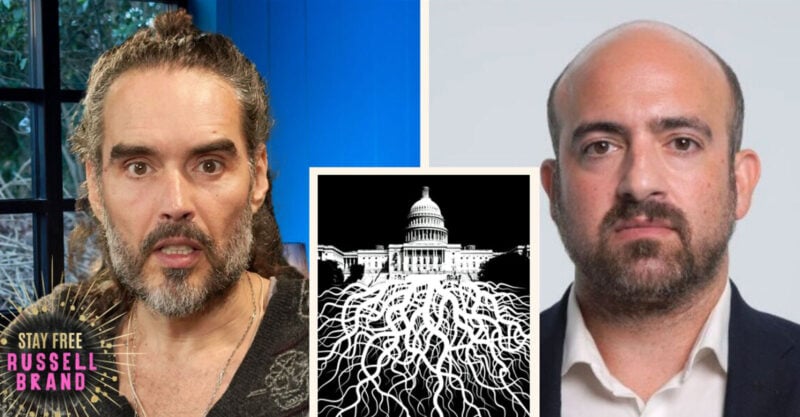
Former U.S. Department of State official Mike Benz claims humanity is engaged in a struggle against a far-reaching government-led censorship apparatus he called “the Blob” — an informal alliance of government agencies, media outlets and tech companies working to suppress dissent on issues like the 2020 U.S. election and the COVID-19 pandemic.

In an interview with Russell Brand on his March 8 “Stay Free” podcast, Benz said, “It’s really not a partisan issue … It’s a universal human experience now trying to fight against this Blob.”

Benz, founder and executive director of Foundation for Freedom Online, argued that this Blob targets domestic populist movements across the political spectrum, viewing them as threats to its power and influence.

According to Benz, the U.S. Department of Homeland Security (DHS) has played a key role in coordinating censorship efforts, pressuring tech companies to adopt stricter content moderation policies and suppress information that questions official narratives.

He emphasized the urgent need for public awareness and resistance to these anti-democratic practices.

Brand characterized the censorship efforts as a “surge towards authoritarianism … under the auspices of liberal ideas,” in reaction to “the possibility of true freedom.”

Birth of ‘the Blob’ and the double-edged sword of free speech 

“The Blob,” a term coined by former President Barack Obama’s Deputy National Security Advisor Ben Rhodes, emerged in the post-World War II era as the U.S. sought to maintain its global influence through a combination of diplomacy, intelligence and military power.

According to Benz, for decades the Blob opposed “red-brown alliance[s]” — the Blob’s term to “derisively, insultingly refer to” both left-wing and right-wing national popular movements in foreign countries that sought to “box out neoliberal corporations and financial class investors.”

On the left (red, for socialist or communist), citizen movements sought “state industries held in trust with the people through their own governments,” Benz said. On the right (brown, for nationalist or fascist), populist efforts centered on “preserv[ing] their own heritage or national identity.”

For “the same self-serving financial reasons,” the Blob “got its license to do dirty tricks” to overthrow both left- and right-wing governments and movements around the world, Benz told Brand.

Benz pointed to Venezuela and Chile in the 1970s, where the Blob was “sicking” the CIA or British Intelligence or the U.S. State Department diplomatic and defense teams on left- and right-wing populist groups or governments in attempts to short-circuit their “political merger.”

Over the past 50 years, the Blob has become an informal alliance of government agencies, think tanks and media outlets, run by foreign policy establishments in the U.S., United Kingdom and NATO countries, according to Benz.

After the development of the internet, the Blob saw the rise of free speech as a tool to support popular revolutions abroad, such as the Arab Spring protests in the early 2010s that leveraged social media to oust the leaders of Tunisia, Egypt, Libya and Yemen, or the 2014 coup in Ukraine.

The 2016 U.S. presidential election and the Brexit referendum served as wake-up calls for the Blob, demonstrating the power of social media and alternative news sources to challenge the establishment’s preferred outcomes and its “control over the bumper rails around ‘democracy,’” Benz told Brand.

Thus, the Blob began suppressing dissent in domestic populist movements on the left and the right to maintain control over public discourse.

“Now you basically have the foreign policy establishment against domestic populism, which is not a partisan issue,” Benz said. “Left-wing populism and right-wing populism both flank this globalist or neoliberal structure.”

Redefining ‘democracy’ to protect the Blob

According to Benz, the Blob has sought to redefine the concept of “democracy” itself to justify its censorship efforts and maintain control over key institutions, at home and abroad.

The Blob shifted democracy from its classical definition as a system of popular representation to a “consensus of institutions” — media outlets, NGOs (nongovernmental organizations) and civil society institutions, which includes control over the machinery of elections.

“We say that we are in Ukraine to defend democracy,” Benz said. “Meanwhile, there is no democratic vote.” Instead, there is a set of “democratic” institutions that Benz called “a very, very nasty framing device intended to deceive people about what’s really going on.”

Benz cited the example of the Ukraine Crisis Media Center, funded with over $5 billion in U.S. taxpayer dollars, working in alignment with the “State Department, USAID or CIA cut-outs like the National Endowment for Democracy.”

“We flood the zone with … so-called civil society institutions” and get “hundreds of thousands of people” on these institutions’ payrolls to “co-opt portions of the region that we are trying to politically control,” Benz said.

This is akin to “put[ting] the fox in charge of the hen house” by giving the Blob control over the very institutions tasked with overseeing the electoral process and shaping public discourse, he said.

By redefining democracy to include these various institutions, the Blob can justify its interventions that undermine the foundations of democratic governance, in foreign countries or domestically, as necessary to protect “democratic values,” said Benz. In this way, the Blob insulates itself from criticism and accountability while maintaining its grip on power.

The expansion of censorship to public health 

The Blob’s censorship efforts did not stop with the 2020 election. Benz revealed that via its sub-agency the Cybersecurity and Infrastructure Security Agency (CISA), DHS expanded its focus to include the suppression of information related to the COVID-19 pandemic.

In a March 11 reply to a tweet by Rep. Thomas Massie (R-Ky.) claiming “COVID was created with U.S.-funded technology” to “create new vaccines,” Benz said this explained why “Pentagon contractors & CIA cut-outs were the very first censorship mercenary firms to begin mass monitoring & censoring Covid origin narratives in Dec 2019, Jan 2020, right at the start of the outbreak.”

Brand later discussed the “coincidence” in how the U.K.’s Office for National Statistics recalculated excess deaths to make it appear fewer died since 2020 than actually did.

“Is data that proves a connection between COVID shots and excess deaths being suppressed by the British government?” he asked.

“All these coincidences [are] coming out of the back of a great big global coincidence where authority benefited, Big Pharma benefited,” and with “the right to censor, authoritarianism benefited,” Brand said.

The whole-of-society censorship framework

In a further co-optation of civil society institutions, the Blob constructed what Benz describes as a “whole-of-society” censorship framework to suppress dissent and maintain control over public discourse.

This framework involves four key categories of institutions working together: government agencies, private sector companies, civil society organizations and media outlets.

Benz explained that these entities are “fused into the nucleus of a single cell so that they can move as a whole-of-society apparatus and they can all lend their own resources to that censorship apparatus.”

Benz provided an example from the 2020 U.S. election: CISA, DHS’ cybersecurity agency, invited the heads of the trust and safety teams at Twitter, Facebook and YouTube, academic CIA cut-outs like Stanford and “hand-selected journalists” — often from the national security or the intelligence bureaus of The Washington Post, The New York Times, NPR and CBS — to participate in “consensus-building meetings.”

These would build “the ideal mechanisms for domestic censorship to make sure that all four categories of those institutions are on board.”

The need for a left-right populist coalition 

To counter the Blob’s growing influence and censorship efforts, Brand asked, “Does it not become an immediate necessity that … we oppose the Blob and this apparatus of global power?”

Benz agreed, arguing for the formation of a “big tent coalition” of left-wing and right-wing populist groups united in their opposition to the neoliberal, globalist establishment.

However, he acknowledged that building such an alliance would be challenging, given the Blob’s willingness to use legal and other hard power tactics to suppress dissent.

The American people are essentially living under occupation, according to Benz, unable to decide their own affairs without the Blob considering their votes a threat to its own conception of democracy.

“It’s just something we need to be sensitive to,” he said of the risks of challenging the foreign policy establishment. “You almost have to pray for mercy at a certain point that they won’t simply do a counterintelligence type work here and just arrest everybody who tries to vote against them.”

Watch Mike Benz on Russell Brand’s ‘Stay Free’ podcast:

French Revolution: Napoleon Becomes Emperor

Episode 40 Napoleon Becomes Emperor

Living the French Revolution and Age of Napoleon

Dr Suzanne M Desan

Film Review

In 1802 Napoleon became Consul for life and by 1803 his face was displayed on French coins and he had three residences: Malmaison, a few miles to the west of Paris, and royal palaces at St Cloud and the Tuilleries. The justification he gave for promoting himself to emperor (a hereditary position) was to protect himself from assassination. In early 1804, he had the heir to the French throne (the Duke d’Enghien) kidnapped in Baden (in violation of international law). Accusing him of participating in a British-linked royalist assassination plot, Napoleon had executed via firing squad.

France was at war again when the senate declared him emperor (in May 1804). Napoleon proceeded to hold his third plebiscite in five years for a constitution making him emperor. It was approved but with and even lower turnout than 1802 (20%. h a lower turnout than the 1802 turnout of 20%.

After somehow convincing Pope Pius VII to sanctify the ceremony, Napoleon purposely scheduled his coronation at Notre Dame (like Charlemagne)*, rather than Reims like the Bourbon kings. His staunch Republican mother and brother Lucien boycotted the ceremony (although David added her to his famous painting of the Napoleon’s coronation). After the pope anointed Napoleon and Josephine, he allowed Napoleon to place the crown on his own head as they previously agreed.

Following his coronation, Napoleon’s system of one-man rule replaced all vestiges of representative democracy. He now banned all political clubs, radical newspapers or public protests, and repealed old legislation granting equality/freedom to women and slaves.

Policies he retained from the republic were France’s expansion to its natural frontiers, a secular state that guaranteed religious freedom and the abolition of feudalism and hereditary kings.

Instead he established a meritocracy by establishing the Legion of Honor for soldiers, artists, scientists and men of letters who demonstrated outstanding service to the empire and rewarding them with a pension, title and medal. One-half of the Council of State (the chamber that proposed new laws) and one-third of the Tribunate (the chamber that debated them) opposed this restoration of noble titles and rank.

Napoleon also discontinued the primary schools the republic established for non-elite families and girls. Instead he introduced (in 1802) French lycées (secondary schools) where the sons of property owners could prepare to become military officers and administrators. In 1809 he introduced the Bacalaureat, a national exam French students still take on finishing secondary school.

Napoleon was proudest of the civil code he introduced, still the basis of modern civil law in France. In this way, he permanently eliminated feudalism by replacing the king’s hodgepodge of laws and jurisdictions. This Napoleonic Code was written by four jurists together with the Council of State.

His code deliberately increased the power of fathers and reduced the independence of women and made divorce much harder to obtain (especially for women). Under Napoleon, a wife could only divorce her husband if he maintained his mistress in the family household. He also reinstated paternal power over children under 26, requiring the father’s approval for children’s marriages and allowing a father o imprison children who defied parental authority.


*To help nullify claims to the throne from Louis XVI’s relatives.

Film can be viewed free with a library card on Kanopy.

https://www.kanopy.com/en/pukeariki/watch/video/149323/149399

The Popular Uprising in Haiti

Catherine Charlemagne

The country is in total disarray following the outward blockade of the head of the Transition. Armed groups are in virtual control of Port-au-Prince, following attacks on February 29 and March 1, 2, 3 and 4, 2024 against police stations, courts, prisons and ministries. The government, it has to be said, is in disarray. No one is in charge. But the struggle to overthrow the authorities in Port-au-Prince is not confined to the capital and its suburbs. The population of the country’s nine other departments also intend to give the government no respite in its mobilization. Moving northwards, beyond the West department, there have been countless demonstrations in recent months, weeks and even days.

In the Artibonite department, for example, the population is still on a war footing, particularly in Saint Marc and Gonaïves, where a crowd, a sort of human tide, totally paralyzed the Gonaïves conurbation during the week of February 7, 2024. In Bois-Marchand, a district of the city, demonstrators looted and set fire to several food supply depots belonging to shopkeepers and charitable organizations. The departmental office of the Ministry of Cooperation and Planning was reduced to ashes, along with two vehicles belonging to the State, while the population blamed the Prime Minister for these acts.  A little further north, towns such as Cap-Haïtien, Fort-Liberté, Hinche and Ouanaminthe were the scene of weeks-long protest movements, and the populations of these regions proved to be an important force for the opposition and BSAP* in their fight against the regime. Cap-Haïtien, the regional capital, hosted huge demonstrations practically every January and February 2024.

Although Monday February 5, 2024 was curiously quieter, schools, banks and shops all remained closed and, until the beginning of March, were still operating in slow motion.

[…]

As we said at the outset, the provincial towns were the main sentinels of this revolt against the authorities. Throughout the day of February 7, the population led an anti-Ariel Henry front, waving the black and red flags of the Pitit Dessalines Party and the Russian flag. During the protests, demonstrators attempted to block the road leading to the Cap-Haïtien airport and ransacked several private businesses. The police had to intervene, using tear gas and gunfire at man-height to put an end to the looting. The day before, on the Place d’Armes, Jean-Charles Moïse had given a press conference to denounce the police for acting beyond their limits, preventing the population from exercising their rights. The whole of the Grand-Nord was mobilized, as was the Nord-Est.

In Fort-Liberté, the department’s capital, the population also took to the streets and called for the Prime Minister’s resignation, as did other towns, notably Terrier-Rouge, where demonstrators attacked the commune’s police station.Haiti protestsPeople carry a mock coffin with a photo of Haiti’s Prime Minister Ariel Henry and the US and Canada flags. [Ricardo Arduengo/Reuters]

In Trou-du-Nord, at dawn on February 5, the population had gathered in the town center and was preparing to storm the local police station.However, faced with a strong police presence to protect the station, the demonstrators had to turn back. On Route Nationale N° 6, just outside Ouanaminthe via Fort-Liberté, residents of the Nord-Est department mobilized all day on February 7, 2024, supported by BSAP officers. These towns are far from being the only ones in the department where there were major demonstrations during the week that rocked the regime. Ouanaminthe is a medium-sized town in the Nord-Est department. Situated on the border with the Dominican Republic town of Dajabon, Ouanaminthe was one of the first towns to mobilize against the government.
A protester waves a Russian flag in front of the US embassy in Port-au-Prince. [Odelyn Joseph/AP Photo]

The refusal of the Port-au-Prince authorities to support the peasants in the construction of the canal is certainly at the root not only of BSAP’s setbacks with the government, but also of its rallying behind the various calls from opposition leaders, notably Guy Philippe, to join the protest against Ariel Henry. As a result, as in the Central Plateau, BSAP agents in the North-East are becoming the leaders of the protest, with their own methodologies of attacking the authorities head-on by provoking them. Several public institutions have been attacked, looted or set on fire by BSAP men, but also by the population who have nothing to lose. This led to joint demonstrations between Monday February 5 and Thursday February 8, 2024. Supporters of Jean-Charles Moïse’s Pitit Dessalines political platform and BSAP officers fraternized and toured the city practically every day. Very angry with the government, the residents attacked several public and private institutions. The town hall, the customs office, the Tribunal de Paix, Paryaj Pam, the Haitian Red Cross, etc. were all set on fire by the protesters.A protester jumps burning tires during a protest against Haitian Prime Minister Ariel Henry in Port-au-Prince, Haiti, Monday, Feb. 5, 2024. (AP Photo/Odelyn Joseph)A protester jumps burning tires during a protest against Haitian Prime Minister Ariel Henry in Port-au-Prince, Haiti, Monday, Feb. 5, 2024. (AP Photo/Odelyn Joseph)

Ouanaminthe has become an important point of anti-government protest, with the presence of hundreds of BSAP agents on its territory. The town has set itself up as a precursor for being the first to say NO to Ariel Henry, and the population is a pioneer in the movement to overthrow the government.Despite the apparent calm, BSAP and the local population remain mobilized and continue to make their voices heard in the city from time to time.Finally, let’s head back along Route Nationale N° 3, towards Hinche in the Centre department.The first thing we notice is that there isn’t a single village along the route that hasn’t been in anti-government revolt mode since the protests began.On Wednesday February 7, 2024, the entire town of Hinche was paralyzed and lived under tension throughout the day.

A mob looted several government buildings, including the departmental office of the Ministry of Economy and Finance, the town hall and the Papaye customs office. The special police unit, UDMO (Unité Départementale de Maintien de l’Ordre), also intervened on a large scale, arresting several protesters in the Centre department, notably in Hinche, Belladère and Mirebalais, where the streets were crowded. In this part of the country – Nord-Est and Plateau Central – the fight for Ariel Henry’s departure is even tougher. More radical. More violent. More consistent. The reason is simple: the support and participation of BSAP agents, when they themselves are not at the origin of anti-government protest movements. Among the towns in these two departments, without establishing a hierarchy in terms of the number of demonstrations recorded, there are two that take the cake. These are Ouanaminthe, whose commitment to the battle has already been demonstrated, and Hinche. Two towns with very different topography and administrative and institutional organization.

[…]

Hence the tug-of-war between the government and BSAP. Ariel Henry’s power is being challenged by the opposition, which is clamoring for his resignation, and the population has also entered the fray, dragging along the BSAP, which has been supporting it since September 2023 in its conflict with the government.

[…]

Schools, public markets, private businesses, public institutions – absolutely everything remained closed due to the violent demonstrations led by the BSAP, which never laid down its arms despite the government’s formal notice.

Translation by Internationalist 360°

[According to the BBC, Prime Minister Ariel Henry agreed to resign two days ago: https://www.bbc.com/news/world-latin-america-68541349%5D

[*The BSAP is a former armed environmental agency which has evolved into an anti-government paramilitary group.]

Via https://libya360.wordpress.com/2024/03/13/haiti-journey-to-the-heart-of-the-anti-ariel-henry-mobilization-part-iii/