Haredi Protesters in Al-Quds: We Would Rather Die than Enlist in the Israeli Army

Haredi protest Israel
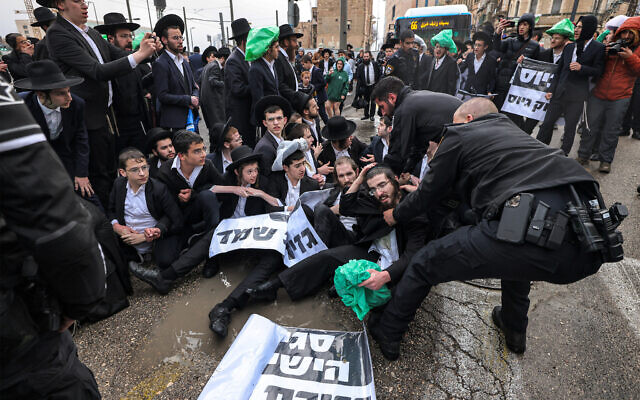
Israeli policemen try to forcibly remove ultra-Orthodox protesters in occupied Al-Qus (Monday, March 18, 2024).

Declaring that they would rather die than enlist in the Israeli occupation army, Haredi demonstrators blocked a light rail in occupied Al-Quds and scuffled with occupation police on Monday night.

Israeli media reported that dozens of ultra-Orthodox men block the tracks of the light rail in protest against their planned conscription into the occupation army.

“If you go to the army, you and dogs are equal,” they chant, riffing off of enlistment advocates’ call for “equality of the burden” between Haredi and secular Israelis.

Israeli media reported that a driver ran over an ultra-Orthodox protester who was blocking the road during the protest.

The occupation police said several of the demonstrators were also arrested for damaging vehicles. They also called police officers “Nazis” and told them to “go die in Gaza,” according to Israeli media.

The demonstrators belong to the Jerusalem Faction, an extremist Haredi group numbering some 60,000 members. Considered among the most conservative of Haredi factions, its members regularly demonstrate against the enlistment of yeshiva students.

Last month, members of the group blocked a route near the Haredi city of Bnei Brak while others blocked a light rail route in the nearby city of Petah Tikva.

Haredi men of military age have been able to avoid the draft for decades by enrolling for study in yeshivas and obtaining repeated one-year service deferrals until they reach the age of military exemption.

A law that authorizes this exemption expired in June 2023, and a temporary regulation to extend it is set to expire at the end of March, after which the military will not be authorized to exempt Haredi young men from the draft and will need to start enlisting them amid the war in Gaza.

[…]

Via https://english.almanar.com.lb/2068222

Five-Eyes Intelligence Ally Questions Trudeau’s “Evidence” that India Is to Blame for Separatist Leader’s Killing

Although Canadian Prime Minister Justin Trudeau has insistingly blamed India for the killing of Sikh separatist Hardeep Singh Nijjar, New Zealand’s Deputy Prime Minister Winston Peters questioned Canada’s claim of an alleged “potential” link to the South Asian country. Although this suggests a minor split in the Five-Eyes intelligence alliance, it also demonstrates a coordinated information war by the alliance’s senior members.

Despite New Zealand’s membership in the Five-Eyes intelligence alliance with the US, Canada, UK, and Australia, Peters expressed scepticism about Canada’s evidence during an interview with The Indian Express. Peters, who entered government at the end of 2023 with the newly elected National Party, also stressed that he was not involved in the handling of the matter when Trudeau triggered a diplomatic crisis with New Delhi in September last year by accusing the country of killing Nijjar on Canadian soil.

“Well, I wasn’t here, it was handled by the previous government. But look, sometimes when you’re hearing Five-Eyes information, you’re hearing it and saying nothing. It is coming past you. You don’t know the value or the quality of it, but you’re pleased to have it. You don’t know whether there is going to be substantial material value or nothing. But the very, very critical information that matters… This was mainly handled by the previous government,” Peters said on March 13.
Warring Against the Diaspora: India’s Campaign Against Khalistan

“As a trained lawyer, I look okay, so where’s the case? Where’s the evidence? Where’s the finding right here, right now? Well, there isn’t one,” he added.

Highlighting Canada’s lack of evidence against India marks the first instance of a Five-Eyes partner challenging claims regarding the Nijjar case, a designated terrorist in India who was shot and killed as he came out of a Gurdwara in Vancouver on June 18, 2023. Three months after the killing, Trudeau alleged Indian involvement in Nijjar’s killing, which New Delhi rejected as “absurd and motivated.”

Canada has not presented evidence to its claims over the killing, and the Royal Canadian Mounted Police (RCMP) has not named any suspects or made arrests in connection with Nijjar’s killing. Yet, despite this lack of evidence, Trudeau has continued to claim that the Indian government is behind the killing of a pro-Khalistan separatist leader who sought an independent state for Sikhs in northwest India.

Meanwhile, India ordered YouTube and X (formerly Twitter) to block access to a new documentary by Canadian public broadcaster CBC, which once again alleges India is behind the killing of Nijjar but without providing solid evidence.

The Indian government cited the Information Technology Act of 2000, which allows for the “intercept, monitor or decrypt any information generated, transmitted, received or stored in any computer resource” if there is a threat to the “interest of sovereignty and integrity of India, defence of India, security of the State, friendly relations with foreign States or public order or for preventing incitement to the commission of any cognisable offence relating to above.”

In effect, India deems Canada to be spreading pro-separatist propaganda whilst also assigning blame without sufficient evidence.

YouTube told the CBC that “the content has now been blocked from view” on the India YouTube country site, but it is still available everywhere else.

At the same time, India’s actions were also aimed at X as they requested the social media platform to block access to the documentary.

“Indian law obligates X to withhold access to this content in India; however, the content remains available elsewhere,” X said in an email to the CBC. “We disagree with this action and maintain that freedom of expression should extend to these posts. Following the Indian legal process, we are in current communication with the Indian authorities.”

The request to YouTube and X follows India’s efforts in 2023 to the distribution of the BBC documentary India: The Modi Question.

India recognises that there is an information war against the country from the Anglosphere, even if the South Asian country cooperates with the USA and Australia under the QUAD formation. Although India is important for the West in their attempts to counterbalance China, especially in the context of the two Asian giants having border disputes, the US and its closest allies, the UK and Canada, also recognise that India can turn into an economic and military juggernaut that primarily serves its own interests.

For this reason, although they cooperate with India at an economic level and in attempts to contain China, a vicious information war is being waged, whether by media platforms like The Washington Post and BBC or by the leaders of Washington’s junior partners like Canada’s Trudeau to spread unsubstantiated claims. The US assisted China’s rise, but as a counterbalance to the Soviet Union and to control the Asian country. This failed as China is independent. Now, the US wants India to counterbalance China but to remain in its sphere of influence, an endeavour that will also fail.

[…]

Via https://www.globalresearch.ca/five-eyes-ally-questions-trudeaus-evidence-that-india-is-to-blame-for-separatist-leaders-killing/5852531

Europe launches food crisis WAR GAMES simulating an expected global food crisis

Europe launches food crisis WAR GAMES simulating an expected global food crisis

Dr Eddy Betterman

Is the world heading towards a major global food collapse? The governments of the European Union (EU) sure seem to think so.

As of right now, EU governments have begun conducting major food crisis war games simulations that predict serious food supply and logistics problems as soon as this year going into next year.

Besides the impact of the Russia-Ukraine war on grain supplies, weather events like El Niño and La Niña and their impact on Latin American soy production are part of the simulations. The farmer-tractor protests across Europe are also included in the simulation mix.

Another major component of the EU’s food crisis war games is the impact that a major pandemic, real or otherwise, can have on supply chains, i.e., what the world endured as a result of the Wuhan coronavirus (COVID-19) “pandemic.”

Last month in Brussels, a conference was held that envisioned a serious food shortage crisis in Europe this year. Some 60 EU and government officials, food security experts and industry representatives converged for two days to confront the very real possibility of a major food crisis event unfolding in a matter of months.

“Expect a level of chaos,” warned Piotr Magnuszewski, a systems modeler and games developer who contributed to the gaming scenario component of the conference. “You may be confused at times and not have enough information.”

(Related: It is expected that, come 2030, the world will face “severe cold and food shortages” due to a grand solar minimum.)

Europe used to be the best-fed continent on earth

To hear Europe and food crisis in the same sentence may come as a surprise to many, especially those who remember the good ol’ days when Europe was the most prosperous and well-fed continent on earth.

Things have obviously changed in recent years especially as the globalists who control the EU have set Europe down a dark and ugly path of collapse, including the collapse of its continental food supply.

For the food crisis simulation, the idea of “harvest failures” as soon as 2025 is presented as a possible real-life issue, starting in the coming months. Animal feed prices soar, livestock and fish production tumbles, and what little food remains is shipped overseas to the “highest bidders elsewhere.”

Palm oil exports are cut dramatically, leaving just fake-butter margarine and low-quality bread for Europeans to eat.

“Allegations of corporate greed, disinformation, and conspiracy theories are spreading,” the simulation poses as what it expects to occur.

“The cost of fertilizers and energy needed to grow crops and keep glasshouses running soared in the wake of Russia’s invasion of Ukraine,” it continues, blaming much of the crisis on Russia, as usual.

As 2025 continues, the situation worsens as desperate people start robbing supermarkets, and very little police presence is on-site to stop them. Germans living in Europe’s former economic powerhouse can no longer find fish or meat at grocery stores and the livestock industry collapses entirely.”

“Meanwhile, the public’s focus shifts to profiteering by commodity traders,” the simulation continues, warning that people are eventually going to catch on to the fact that Wall Street greed and private central banking are largely the culprits of this full-scale collapse.

“Small farms fall like dominos, while attacks on immigrants begin to become more widespread. Is the EU a sinking ship?” someone asks in a video portion of the simulation.

Of course, the aftermath of the simulation presents ideas for how to stop or at least minimize the fallout from all this, one of the major ideas being that people need to shift away from eating meat and other “climate-polluting” things now so the shortages will feel less impactful later.

[…]

Via https://dreddymd.com/2024/03/20/europe-food-crisis-war-games-global-crisis/

22 Years After Creation Guantanamo Remains Monstrosity

Jeremy Kuzmarov

In 2020 Campaign Biden Promised to Close Facility, But Has Actually Upgraded It

During the 2020 election campaign, Joe Biden followed Barack Obama in promising to close the prison at Guantánamo Bay, which had become an embarrassing symbol of human rights violations.

The move made sense geo-strategically as the Biden administration was intent on scaling down the Global War on Terror and pivoting U.S. troops away from the Middle East toward Southeast Asia and Eastern Europe to confront China and Russia, which were presented as the greatest threats to American national security.

Like Obama, however, Biden has failed to follow through on his promise.

This has undercut the rationalizations underlying the new Cold War and vast military budgets accompanying it, since it renders hollow the U.S. claim to be upholding a “rules-based international order” supposedly under threat from authoritarian Great Power rivals.

Biden has not only failed to close the Guantánamo Bay prison but has upgraded it, financing a $4 million courtroom for secret military hearings even though lawyers argued that the end of the war in Afghanistan invalidated the legal basis for keeping Guantánamo Bay open.

In June, UN Special Rapporteur on Human Rights Fionnuala Ní Aoláin, a law professor at the University of Minnesota and at Queens University in Belfast, issued a 23-page report which concluded that inmates at Guantánamo had been subjected to “cruel, inhuman and degrading treatment” that “may meet the legal threshold of torture.”

The degrading treatment included excessive use of restraints, constant surveillance of inmates who were deprived access to their families, and the adoption of unduly harsh disciplinary measures such as forced cell extractions, sensory deprivation and solitary confinement.

The report noted that numbers of Guantánamo inmates had never even been charged with any crime and lacked access to counsel; others had their cases languish for years in judicial pipelines while others were cleared but remain incarcerated. Secrecy pervades all of the available judicial and administrative proceedings, with the U.S. failing to uphold fair-trial guarantees.

Many inmates under these circumstances showed signs of deep psychological distress—including profound anxiety, helplessness, stress and depression. Medical and psychiatric care was inadequate; guards were inadequately trained—an online, one-time human rights training session was not enough—and the U.S. Government’s failure to provide torture rehabilitation squarely contravenes its obligations under the Convention Against Torture.

Abhorrent Conditions Hinder Legal Efforts

The New York Times reported ironically on August 26 that the inhumane conditions at Guantanamo Bay prison have hindered legal efforts to prosecute terrorists.

The confession of a man accused of plotting the U.S.S. Cole bombing, for example, was thrown out by a military judge because the confession was contaminated by his torture by the CIA.

Over the years, Al-Shibh had disrupted pretrial hearings with outbursts and has been heavily medicated with psychotropic drugs.

In court filings, he complained that the CIA torments him with noises, vibrations and other techniques to deprive him of sleep.[1]

Acting As Ghouls

A newly released documentary, We Are Not Ghouls, directed by Chris James Thompson, spotlights the case of Binyam Mohamed, a UK resident originally from Ethiopia who was imprisoned at Guantánamo Bay for eight years before being cleared of any charges.

The documentary, available here, is based on the book, The Guantánamo Lawyers: Inside a Prison Outside the Law edited by Mark P. Denbeaux and Jonathan Hafetz (New York: New York University Press, 2009).

The title of the documentary draws from a 2007 speech by Congressman Dana Rohrabacher (R-CA) who stated that, “in every war I’ve ever seen, there’s been mistakes, even the war on terrorism…but we are not ghouls, we don’t want to torture someone because he has a bad name, we want to get information from someone who we think might want to kill our children and your children.”

Unfortunately, Rohrabacher was wrong. The U.S. acted like ghouls torturing people like Mohamed who did not actually want to harm or kill American children.

In the 1990s, Mohamed had gotten into drugs in the UK after his parents moved back to Ethiopia and he found salvation in Islam. At the age of 21 he decided to undertake a journey to Afghanistan in order to better understand the religion. He said this was a like a young Buddhist deciding to travel to India.

When the U.S./NATO invaded Afghanistan in October 2001, Mohamed went to Karachi and tried to get a flight back to London but was arrested because of a forged passport.

The authorities tried to connect him to al-Qaeda terrorists like Khalid Sheikh Mohammed (an alleged plotter of the 9/11 attacks), Richard Reid, who tried to bomb a civilian airplane with a shoe bomb, and José Padilla, who was found guilty in 2007 of plotting a terrorist attack using a radiological bomb (or “dirty bomb”).

One problem was that Mohamed did not even speak Arabic.

This did not stop the British MI5 from interrogating him and then collaborating with the U.S. in transferring him to Morocco under the extraordinary rendition program.

The American Civil Liberties Union (ACLU) later brought a lawsuit against Jeppesen DataPlan, Inc., a subsidiary of Boeing Corporation, which provided key logistics to the CIA, including flight plans, clearances, and ground crew arrangements, that were used in the rendition program under which Mohamed was transferred.

In Morocco, Mohamed was subjected to physical and psychological torture involving sleep deprivation, stress positions and mind games. He was stripped naked and cut with a scalpel in his genital area.

From Morocco, Mohamed was taken to a CIA black site near Kabul in Afghanistan where he was forced to endure a cruel form of sensory deprivation where the lights were turned off all the time as music blared from loudspeakers 24 hours per day, seven days a week.

The purpose was to drive captives crazy. Mohamed later told his lawyer, Clive Stafford Smith, that after enduring this he felt dead.

After six months, Mohamed was transferred to Guantánamo Bay where he was subjected to more prolonged periods of isolation and torture. As an act of resistance, Mohamed embarked on a hunger strike which caused his health to deteriorate.

Yvonne Bradley, a graduate of the University of Notre Dame Law School and devout Christian with conservative political views, was the lawyer from the Judge Advocate General (JAG) branch of the United States Air Force assigned to Mohamed’s case.

She describes in the film how she was initially apprehensive about meeting Mohamed because of what she had read about him in the media, but found him to be a kind person.

When Bradley was given information on the case by opposing counsel, she thought something was missing as there seemed to be no evidence against him.

Bradley ultimately believed that she had been deceived by the military and government that she had dutifully served. She came to recognize that not only was Mohamed innocent but so were many of the other Guantánamo detainees.

The film ends on a happy note—with Bradley visiting Mohamed as a free man in London. Mohamed had bragged about his skill cooking spaghetti and he cooked her a spaghetti dinner.

Mohamed said that he was slowly coming back to life after his nightmarish years in Guantánamo that left him incapable of experiencing regular human emotions.

We Are Not Ghouls is a worthy film in its effort to humanize the victims of Guantánamo and invite empathy for their suffering. Bradley points out that, even if some of the Gitmo inmates are real terrorists, this does not excuse their treatment.

[…]

Via https://covertactionmagazine.com/2024/03/19/twenty-two-years-after-it-was-created-guantanamo-bay-prison-remains-a-monstrosity/

Jeff Bezos demonises farming and invests £1 billion in fake food production

Rhoda Wilson

At the Aspen Ideas Climate, Bezos Earth Fund vice chair Lauren Sánchez announced an initial $60 million commitment to establish Bezos Centres for Sustainable Protein as part of the Bezos Earth Fund’s $1 billion commitment to food transformation.

The food transformation Sánchez dreams of is “plant-based lab-grown meats.”  For anyone who has any logic or common sense, no such food exists nor can it ever.

The Aspen Ideas Climate conference was held in Miami, Florida over the three days of 11-13 March 2024.  It had five themes:

  • Big Bets on Tech: Charting the course for sustainable technologies of the future which included climate technology, biotechnology, lab-cultured “food,” artificial intelligence, geoengineering and new ideas for creating and storing energy.
  • Building things: Such as urban landscapes, infrastructure and “reimagined” economies that lead to a “sustainable and inclusive future.”
  • Financing the Future: A seismic shift in financial strategies, from billions to trillions globally, is required to address the “climate crisis,” so they claim.
  • Healthy Planet, Healthy Community.
  • Narratives of Change: “From the resonance of music to the subtleties of architecture, from stirring art to imaginative fiction, profound calls to action are often hidden in the unexpected. Experience the captivating stories that inspire change from some of the most unanticipated sources.”  Which has undertones of using psychological techniques to bring about the desired change.

According to her biography, Sánchez is dedicated to fighting climate change and the protection of nature, as well as early childhood education, programming, and housing support.  So, it’s no surprise that she began her 10-minute speech on 12 March at the Aspen Ideas Climate with three stories: two fictional – one relating to her recent book for children – and the third about her thoughts as a child, which may or may not also be fictional.

Stripping away her storytelling, Sánchez’s message was centred around innovation in three areas: deforestation and global warming,

“Deforestation and global warming … it’s not just about solving a problem it’s also about reimagining our interaction with the world. We need to invent our way out of climate change,” she said.

And then she reverted to her storytelling again: “Inventors love to solve real problems and the answer usually begins with a question. So, for example, how do you find and measure the thousands of methane leaks happening all over the world? I don’t know if you know this, but think about it, methane has caused 30% of global warming.  So, how are we going to fix it? This is how; we’re going to start right here with MethaneSat.”

“It’s a game-changing satellite we support with the Environmental Defence Fund,” she said. “Now, before MethaneSat launched into orbit, just last week, … we weren’t able to see the big picture of where and how bad the methane leaks are … we now have innovative technology which we can see and measure leaks like never before.”

It is claimed that data gathered by MethaneSAT – which was launched into orbit on 4 March 2024 – will help measure methane pollution from oil and gas facilities worldwide.  It will regularly monitor roughly 50 major regions accounting for more than 80 per cent of global oil and gas production. The Environmental Defence Fund claims it can “measure surface-level methane emissions from other major sources of human-caused methane emissions, too.”

Call us sceptical, but could it be a spying operation under the guise of measuring methane?

She then moved on to tackling her solution for nature.  Surprisingly, she made a sensible suggestion, which is unusual among the climate change fantasist sect.  Her suggestion wasn’t a new technology born from “brilliant minds” but common sense –  plant more trees.  Although she ended her praise of the Bezos Earth Fund planting more trees with “we like to co-invent, this takes creativity and flexibility,” indicating she believes that planting trees, which to most of us is common sense, is a new and innovative invention.

Then she moved on to food “innovations.”  Setting the scene using the usual marketing tactic of fear porn, in this case, global famine. Sánchez asked: “How do we feed 10 billion people with healthy, sustainable protein throughout this century?”

“This will need a tonne of innovation,” she said following it with a statement that should make everyone shudder.  “We’re investing heavily in [the] livestock sector and inventions that will give consumers meat options that are better for the Earth.”

Sánchez continued: “I’m thrilled to announce, and I’m very excited about this one, tonight 60 million dollars to establish Bezos Centres for Sustainable Protein that will help grow these ideas. Their inventions will make plant-based lab-grown meats cheaper, healthier and tastier.  And these sustainable proteins really are getting better, trust me.”

No thanks.  That’s a “no” to both her laboratory-manufactured fake “food” and “trust me.”

In partnership with the Good Food Institute, the Bezos Centres for Sustainable Protein aim to advance the science and technology in producing fake food. A Bezos Earth Fund press release about Sánchez’s announcement stated: “To date, challenges in biomanufacturing – the production, at scale, of sustainable protein products, whether plant-based, fermented, or cultivated – are resulting in high costs and limited quality. There are also enormous opportunities to enhance the texture and boost flavour through innovation in cell biology and engineering.”

Irrespective of how much money is poured into this technology, it will still be technologically produced fake food with unknown ingredients causing untold harm.

The press release goes on to state that Sánchez’s announcement “builds on the Bezos Earth Fund’s $1 billion commitment to support farmers and expand food production.”

How does Bezos Earth Fund plan to “support farmers” and increase food production?

“Work includes reducing methane from livestock and innovating in pasture management to help take pressure off forested land. The Earth Fund is also working with inventors, researchers, and entrepreneurs to improve the resilience and carbon absorption of major food crops,” the press release states.

Does it sound like their investment will do either? No, and what the press release said next is proof that they have no intention of supporting farmers or improving food security.

As has become the mantra for those promoting and hoping to capitalise from the UN’s Sustainable Development Goals, Bezos Earth Fund blatantly attacked farmers and food production stating that “food is the second largest cause of climate change, and agriculture is the primary driver of deforestation and biodiversity loss.”

What’s concerning is the $1 billion commitment to “support” farmers and food production is just the start.  The Bezos Earth Fund is investing $10 billion in this “decisive” decade to “drive systems-level change” for the transition to a “low-carbon economy.”

Through his fund, Amazon founder Jeff Bezos will not only fund scientists but also activists, NGOs and others.

Bezos Earth Fund on LinkedIn, retrieved 18 March 2024

If the science is robust and the need is real, why would Bezos need to fund activists?

“This future is not just a dream, it’s not. It’s a blueprint for a world,” Sánchez said in her speech at the Aspen Ideas Climate.  “I’m so proud to work with the Bezos Earth Fund and what they’re doing.”

[…]

Via https://expose-news.com/2024/03/19/bezos-demonises-farming-and-invests-in-fake-food/

Trump Against Empire: Is That Why They Hate Him?


Biden and Trump (Donkey Hotey)Christian Parenti

Christian Parenti

Trump was ideologically incoherent and crassly transactional. But the threat he posed to American empire and thus the gargantuan security state helps establish a motive for why US intelligence intervened in both the 2016 and 2020 elections.

As president, Donald Trump lavished the rich with tax cuts and deregulation. Yet, contradictorily, he also threatened the structure of American global hegemony that does so much to keep the American one percent tremendously wealthy. In fact, Trump undertook the most momentous rollback of American military and diplomatic power since the current architecture of American informal empire first took form at the end of World War II.

Trump campaigned on an end to “nation building” and then, amazingly, set about actually winding down America’s “forever wars” by simply packing up and leaving. Nor did he start any new wars. Trump cut the number of US troops in Iraq by almost half. In Afghanistan, he cut the US occupation force by half and negotiated a framework for total withdrawal. He tried to end US combat deployments in both Somalia and Syria, and in both cases, despite Pentagon opposition and slow-walking noncompliance, Trump did manage to withdraw the majority of US personnel. In Syria, bases abruptly abandoned by US special forces were taken over by Russians – a development that prompted the New Yorker to accuse Trump of the “abandonment of Syria.”

Worse yet in the eyes of the national security state, Trump went after US operations in Germany and South Korea, threatening highly strategic lynchpins in the global system of US military power. He also made great strides towards normalizing relations with North Korea and producing a peace treaty on the Korean peninsula. In Libya, he declined to escalate and worked with Russia towards a peace settlement. In Venezuela, he first allowed John Bolton and the CIA to attempt a color revolution-style coup fronted by pretty-boy Juan Guaidó. But when that effort faced resistance Trump grew bored, started making flattering remarks about “tough” Venezuelan leader Nicolas Maduro and his “good looking generals,” while complaining that his National Security Council director John Bolton wanted to get him “in a war.”

Understanding how Donald Trump threatened American empire and thus the gargantuan security state and its associated industrial complex of contractors and think tanks helps establish a motive for why the FBI and over 50 former intelligence officialsactively attempted to suppress the Hunter Biden laptop story, thereby putting their thumbs on the scale during the 2020 election.

It also helps us understand why, in 2016, the CIA, FBI, NSA, and the Director of National Intelligence all signed off on the Russiagate narrative despite the lack of credible evidence. And it helps us understand why, as Matt Taibbi has reported, over 150 private philanthropic foundations came together to create and fund the intelligence-adjacent Alliance for Securing Democracy, which in turn funded the spooky outfit Hamilton 68 which pushed the Russiagate hoax. In short, it helps explain why they hate him.

Trump described his foreign policy as “America First,” thus tapping into a more-than-century-long strain of American isolationism, or conservative anti-war sentiment. But his attacks on American empire were not ideologically coherent. He hated NATO but he loved Israel. He increased pressure in Cuba, but did the opposite with North Korea. He increased the military budget even as he attempted to withdraw troops all over the planet. His reasoning, when given, was crassly transactional.

[…]

For example, six months into his administration, Trump met with the increasingly worried Joint Chiefs of Staff at the Pentagon in a super-secure meeting room called “the Tank.” The meeting was an attempt to talk sense into the new president. As the Washington Post described it, the Joint Chiefs tried to “explain why U.S. troops were deployed in so many regions and why America’s safety hinged on a complex web of trade deals, alliances, and bases across the globe.” The presentation involved maps and graphics intended to make the issue clear and simple.

Unimpressed, Trump called his generals “dopes and babies” and “losers” who “don’t know how to win anymore.” As his anger rose, he demanded to know why the United States was not receiving free oil as tribute for the US military presence in the Middle East. “We spent $7 trillion; they’re ripping us off,” Trump bellowed. “Where is the fucking oil?”

Despite active opposition from within his administration, Trump also attacked important treaties, ordering the United States withdrawal from: the United Nations High Commission on Refugees (UNHCR); the United Nations Educational, Scientific and Cultural Organization (UNESCO); the Paris Climate Agreement; and the World Health Organization (because Trump saw the WHO as soft on China at the start of the Covid-19 pandemic). He withdrew the US from the Trans-Pacific Partnership (TPP), a corporate free trade deal which had taken two years to craft and would have been the centerpiece of a US “pivot toward Asia.” With a barrage of punitive tariffs, Trump launched a trade war against China. Although it continued under Biden, Trump’s destabilizing economic confrontation with China came as a shock to business and political leaders around the world.

Accusing Russia of cheating, Trump terminated the 1987 Intermediate-Range Nuclear Forces (INF) Treaty. But he also held a cordial face-to-face summit with Putin in Helsinki that took his opposition’s Russiagate paranoia to unprecedented heights. Trump withdrew from the Treaty on Open Skies, an almost 20-year-old mechanism for preventing weapons proliferation. He started to scrap the hard-won nonproliferation treaty with Iran and revised America’s Nuclear Posture Review to, insanely, allow an atomic response in case of cyber-attack!

Most shocking of all, Trump repeatedly expressed his wish to remove the US from NATO, which would have destroyed NATO if it had been done. If NATO fell apart, the entire US-centered global system – that is, the largest, most effective, complex, and expensive imperial project in world history – would undergo a seismic destabilization. American empire is not inevitable, it is not natural, and it is widely resented. It only continues to exist because of constant, diligent, sophisticated leadership. Trump, like a toddler wielding a hammer, spent four years almost randomly smashing holes in that delicate structure.

What is American power?

Since 1945, American global hegemony has rested on a vast system of infrastructure: embassies, listening posts, 800-plus military bases, naval assets, satellite networks, undersea cables, etc. It also rests on an array of long-standing, multi-national relationships involving state institutions, politicians, diplomats, military officers, contractors, intelligence networks, corporations, business executives, humanitarian professionals, academic specialists, and journalists.

Central in all this, yet often overlooked, is the role of building consent for American power among allies. This consent allows Washington to use allies against adversaries. But it is also a form of control over those same allies. Thus, NATO is about keeping the Russians out of Western Europe, but it is also about controlling Europe, one of the most powerful centers of global capitalism.

[…]

Trump treated powerful allies as poorly as he treated subcontractors during his real estate days. Recall the G-7 summit of 2018: Trump arrived late, left early, and refused to sign a joint communiqué reaffirming the G-7’s commitment to a “rules based international order.” When then-German Prime Minister Angela Merkel pressured him to sign, Trump took two Starburst candies from his pocket, tossed them across the conference table and sneered, “Here, Angela, don’t say I never give you anything.”

In 2020, the US Senate’s Committee on Foreign Relations described Trump’s foreign policy as “marked by chaos, neglect, and diplomatic failures.” The President’s “impulsive, erratic approach has tarnished the reputation of the United States as a reliable partner and led to disarray in dealing with foreign governments…. Critical neglect of global challenges has endangered Americans, weakened the U.S. role in the world, and squandered the respect it built up over decades. Sudden pronouncements, such as the withdrawal of U.S. troops from Syria, have angered close allies and caught U.S. officials off-guard.”

Mark Esper, who spent a year and half as Trump’s second Secretary of Defense, made an art of blocking implementation of Trump’s empire-wrecking directives. When Trump demanded that one third of the American military personnel in Germany come home, Esper drew up a plan to instead “redeploy” 11,500 troops with more than half of these remaining in the European theater. Indeed, Esper even managed to spin the redeployment as advancing America’s traditional agenda of threatening Russia.

If, like the majority of DC elites, you see American global leadership as fundamentally moral, even vital and indispensable, then Trump’s brazen attacks upon it are extremely dangerous. From such a vantage point, the truly responsible thing to do would be to sabotage Trump’s policy, his legitimacy, his base, and the possibility of his reelection.

Esper’s memoir portrays Trump as easily distracted: “A discussion would stop stone cold and pivot as a new thought raced through his head — he saw something on TV, or somebody made a remark that threw him off track.” Yet Trump was also consistent in his foreign policy sentiments. “Somehow, we often ended up on the same topics, like his greatest hits of the decade: NATO spending; Merkel, Germany, and Nord Stream 2 [Trump wanted it stopped]; corruption in Afghanistan; U.S. troops in Korea; and, closing our embassies in Africa, for example.”

Trump’s foreign policy team worked to actively thwart him. Gary Cohn, Trump’s top economic advisor, went so far as twice stealing from the president’s desk important documents awaiting presidential signature. One would have withdrawn the United States from a trade agreement with South Korea. The other would have unilaterally pulled the US out of the North American Free Trade Agreement (NAFTA). Later, Trump did renegotiate NAFTA, transforming it into the United States-Mexico-Canada Agreement (USMCA), which did, in fact, include higher wages for Mexican autoworkers.

Trump regularly demeaned and insulted his foreign policy team. In a conversation that included the Irish Prime Minister, Trump called across the room to his National Security Adviser, the dementedly bellicose John Bolton, “John, is Ireland one of those countries you want to invade?” In 2019, Trump unceremoniously fired Bolton by tweet.

Trump’s first Defense Secretary, Jim “Mad Dog” Mathis, openly opposed most of the administration’s foreign policy moves. Displeased, Trump started calling Mathis“Moderate Dog.” In January 2019, when Trump ordered US troops withdrawn from Syria, Moderate Dog resigned.

A “shaken” Nancy Pelosi declared the turn of events “very serious for our country.” Republican Senator Ben Sasse called it “a sad day for America” while a “particularly distressed” Mitch McConnell worried openly about “key aspects of America’s global leadership.”

Vandalizing NATO

Most alarming to the national security establishment was Trump’s 2020 attempt to cut by one-third the US military presence in Germany. Considered the “bedrock” of NATO, Germany hosts 35,000 American military personnel stationed across 40 different installations. The air components for both U.S. European Command and U.S. Africa Command are headquartered at Germany’s Ramstein Air. These German-based assets — bombers, fighters, drones, helicopters, AWAC surveillance planes, as well as associated radar, air traffic control, and signals intelligence infrastructure — cover 104 countries ready to provide “expeditionary base support, force protection, construction, and resupply operations” even in “austere conditions.” Germany also hosts an estimated 150 US nuclear armed missiles.

[…]

More important than the quantity of troops Trump sought to withdraw is the qualitatively greater damage of those withdrawals from one of the most critical, high-tech logistics hubs in the entire imperial apparatus. The Council on Foreign Relations worried aloud about the “message to allies and adversaries alike that the United States is no longer committed to European defense.”

Final Assault

By November 2019, as Trump’s friendship with the North Korean leader Kim Jong-un was in full blossom, the American president started musing about withdrawing troops from South Korea and demanded that South Korea – and all other allies hosting US military personnel – pay “cost plus 50%” for American protection.

[…]

Via https://www.greanvillepost.com/2024/03/16/must-see-trump-against-empire-is-that-why-they-hate-him-video-text/

Japanese researchers warn about the risks of blood transfusions from covid vaccinated people

Rhoda Wilson

On Friday, Japanese researchers published a pre-print paper that warned about the risks associated with using blood from covid vaccinated people for blood transfusions and are calling on medical professionals to be aware of these risks.

Additionally, to avoid these risks and prevent further contamination of blood products and resulting complications, they are calling for the covid vaccination programmes to be suspended.

“The health injuries caused by genetic vaccination are already extremely serious, and it is high time that countries and relevant organisations take concrete steps together to identify the risks and to control and resolve them,” they said.

Many countries around the world have reported that so-called genetic vaccines – such as those using modified mRNA encoding the spike protein and lipid nanoparticles as the drug delivery system – have resulted in post-vaccination thrombosis and subsequent cardiovascular damage, as well as a wide variety of diseases involving all organs and systems, including the nervous system.

Based on these reports and the volume of evidence that has come to light, through their paper, the researchers are bringing to the attention of medical professionals the various risks associated with blood transfusions using blood products derived from people who have suffered from long covid and from genetic vaccine recipients, including those who have received mRNA vaccines.

However, “it should also be stressed that the issues discussed here are matters that pertain to all organ transplants, including bone marrow transplants, and not just blood products,” the researchers wrote.

Table 1 of the paper summarised the six major concerns identified by the researchers with the use of blood products derived from gene vaccine recipients.  We have copied the contents of Table 1 below.

1. Spike protein contamination

The spike protein, which is the antigen of SARS-CoV-2 and genetic vaccines, has already been found to have various toxicities, including effects on red blood cells and platelet aggregation, amyloid formation, and neurotoxicity. It is essential to recognise that the spike protein itself is toxic to humans. It has also been reported that the spike protein can cross the blood–brain barrier. Therefore, it is essential to remove the spike protein derived from the gene vaccine itself from blood products.

2. Contamination with amyloid aggregates and microthrombi formed by spike proteins

It is not yet clear how the amyloid aggregates and microthrombi formed by the spike proteins develop into visible thrombi. However, once formed, amyloid aggregates may not be readily cleared and therefore need to be removed from blood products. These amyloid aggregates have also been shown to be toxic.

3. Events attributable to decreased donor immune system and immune abnormalities due to immune imprinting or class switch to IgG4, etc. resulting from multiple doses of genetic vaccines

When the immune function of a donor is impaired by gene vaccination, there is a risk that the donor has some (subclinical) infectious disease or is infected with a pathogenic virus and has developed viremia or other conditions, even if the donor has no subjective symptoms. For this reason, healthcare professionals who perform surgical procedures, including blood sampling and organ transplantation, as well as using blood products, should manage the blood of genetic vaccine recipients with care to prevent infection through blood. It will also be necessary to inform all healthcare professionals of these risks.

4. Lipid nanoparticles (“LNPs”) and pseudouridinated mRNA (mRNA vaccines only)

In the case of mRNA vaccines, LNPs and pseudouridinated mRNA may remain in the blood of recipients if blood is collected without a sufficient deferral period after gene vaccination. LNPs are highly inflammatory and have been found to be thrombogenic themselves, posing a risk to transfusion recipients. LNPs themselves have potent adjuvant activity and are at risk of inducing Adjuvant-Induced Autoimmune Syndrome (“ASIA syndrome”). An additional risk is that if the pseudouridinated mRNA is incorporated into the recipient’s blood while still packaged in LNPs, additional spike protein may be produced in the recipient’s body.

5. Contamination with aggregated red blood cells or platelets

The spike protein causes red blood cells and platelets to aggregate and therefore these aggregates will be carried into the recipient’s blood unless they are removed from the blood product.

6. Memory B cells producing IgG4 and IgG4 produced from them

Large amounts (serum concentration typically above 1.25–1.4 g/L) of non-inflammatory IgG4-positive plasma cells can cause chronic inflammation such as fibroinflammatory disease.

IgG4 is an antibody and is the acronym for immunoglobulin G4.  Earlier in the paper, the authors wrote that “long-term exposure to a specific identical antigen (in this case, spike protein) causes immunoglobulins to become IgG4 and some of the B cells [or lymphocytes] that produce them are likely to differentiate into memory B cells that survive in the body for a sustained period, the immune dysfunction of genetic vaccine recipients is expected to be prolonged (Table 1, point 3 & 6). More details on these points are expected to be revealed in the future.”

The researchers also make suggestions for specific tests, testing methods and regulations to deal with these risks.

In their conclusion, the authors wrote:

[…]

Via https://expose-news.com/2024/03/19/risks-of-blood-transfusions-from-vaccinated/

Napoleon’s Defeats the Holy Roman Empire

Episode 42 Napoleon Defeats the Holy Roman Empire

Living the French Revolution and Age of Napoleon

Dr Suzanne M Desan

Film Review

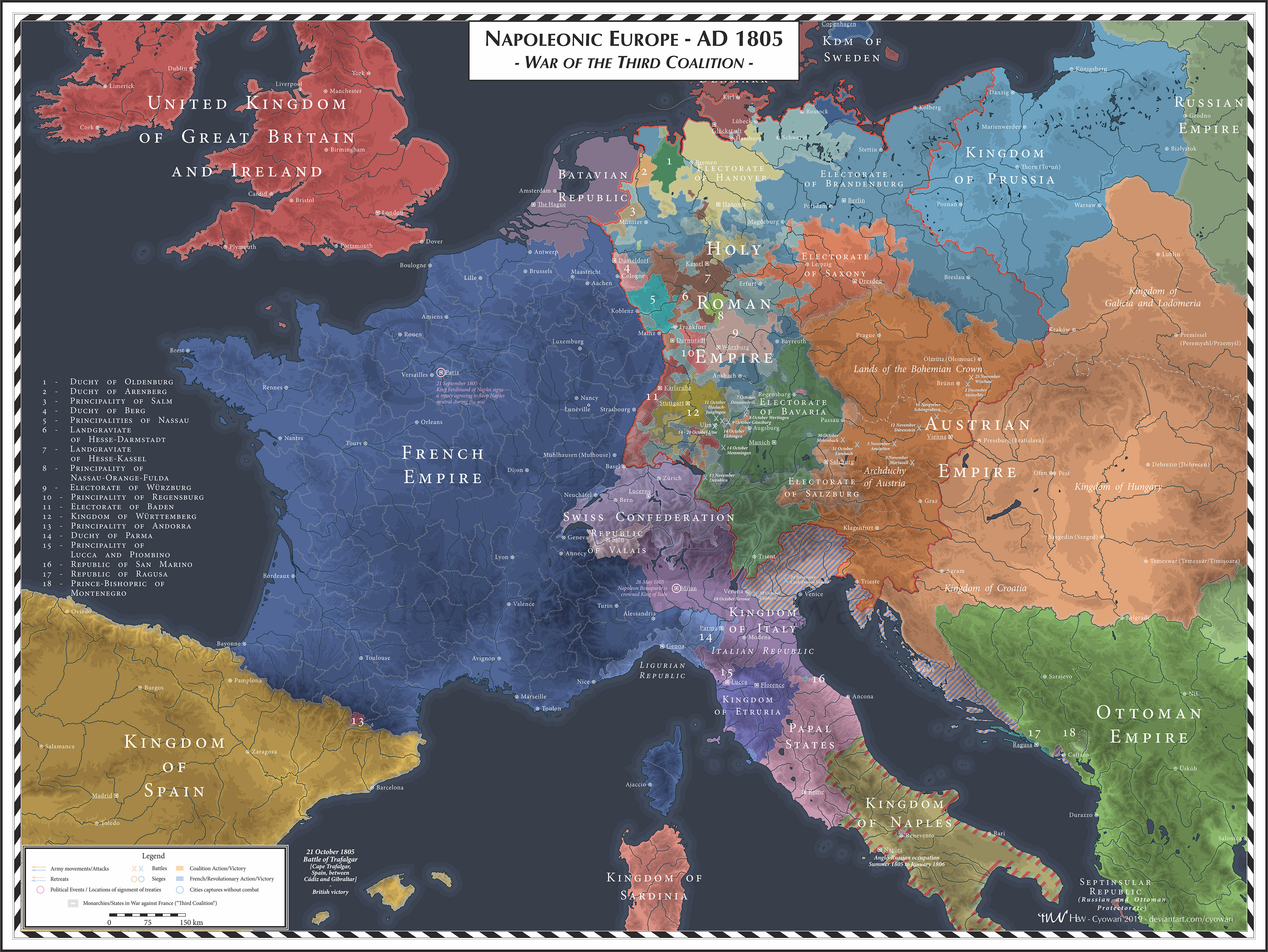
Between 1801-1804 Napoleon drafted 60,000 men a year. He divided his army into 7 independent corps of 14,000-25,000 troop, each with its own infantry, light cavalry and artillery. Making food foraging easier, this decentralization made it easier to cover long distances more quickly. Arme. Napoleon’s men loved him. He was well known for fraternizing with his foot soldiers, his generosity with Legion of Honor medals and a policy of adopting the children of fallen troops.

In May 1805, Napoleon was crowned King of Italy in Milan and in June he annexed Genoa. In July, the Austrians invaded Bavaria, a French ally. In the Danube campaign, Napoleon surrounded Austrian troops with 200,000 men before their Russian allies could catch up with them. The Austrians lost 60,000 men in this battle, with 10,000 killed, 27,000 taken prisoner and 23,000 wounded. After the battle of the Danube, the French army marched east to occupy Vienna.

At the Battle of Austerlitz, Napoleon staked out 55,000 troops on the Plotzen Heights, from which he attacked the Russian rear guard. As the Russian troops retreated across a frozen lake, Napoleon used canon balls to crack the ice, drowning thousands of men, canons and horses. After losing a third of their strength (27,000 men), the Austrians sued for peace while the Russians retreated behind the Russian border.

With the treaty of Pressberg the Austrians signed in December 1805, the Austrian Emperor Francis II renounced the 1,000 year-old title of Holy Roman Emperor. He also signed away the Dalmatian coast, the region around Venice and a large region in southern Germany (totaling 1/6 of Austria’s former empire) and four million subjects.

Napoleon now controlled 16 German states (including Hesse, Bavaria and Baden) known as the Confederation of the Rhine.

He made his brother-in-law General Murat leader of the Grand Duchy of Berg, his brother Louis president of the Republic of Holland and his brother Joseph king of the kingdom of Naples (which comprised most of the southern Italian peninsula).*

1805 also saw the French tragedy at Trafalgar, in which UK admiral Horatio Nelson defeated a combined French/Spanish navy of 33 ship with 27 British ships. The British lost no ships, compared to the French/Spanish loss of 22.

In 1806 Napoleon ended the revolutionary calendar.


*Napoleon himself ran the kingdom of Italy in the northern Italian peninsula.

Film can be viewed free with a library card on Kanopy.

https://www.kanopy.com/en/pukeariki/video/149323/149403

The General Medical Council Political Show Trial of Dr Andrew Wakefield

Child Health Safety

Video 02 is released today with a free two day access offer. Video 02 – The GMC Political Show Trial of Andrew Wakefield – 29m 35s – Andrew Wakefield & The GMC

It is the next episode from Euripides Substack: How the Case Against Andrew Wakefield was Fixed – In 8 Steps – A 21st Century Medical Controversy

The first five free-to-view [or listen] videos are already published – Videos 01 A to E – see below for the links if you missed them the first time around.

Video 01 A – Introduction – Who What Why Where and When

Video 01 B – Background and History

Video 01 C – The Eight Steps 7m 55s

Video 01 D – How the BMJ’s Fabrication Was Discovered 6m 3s

Video 01 E – An Historic Breathtaking Deception 14m 24s – Andrew Wakefield & The BMJ

From Video 02 you will learn for yourself the true nature of the General Medical Council’s trial of Andrew Wakefield from the remarkable and extraordinary decision of Judge Mitting in the English High Court. Wakefield was tried alongside Professor John Walker-Smith and Dr Simon Murch.

Mitting’s decision restored the Walker-Smith’s medical licence on his appeal against the GMC decision. Walker-Smith had discretionary funding to appeal from his insurers but Wakefield did not.

You will also see for yourself the bogus charges the GMC wrongfully found Wakefield guilty of.

You will see for yourself that political show trials are not limited to banana republics or dictatorial governments on foreign shores but happen in supposed Western liberal democracies.

In this case it was in the heart of the British establishment, and perpetrated by the UK General Medical Council, in their determination to find Wakefield guilty regardless despite being the supposed regulatory body for doctors in the United Kingdom and meant to protect the safety of the public.

You will learn specific details of part of the web and networks of close relationships of an array of British deep state medical and other professionals, drug industry interests and the Rupert Murdoch media empire involved in one way or another in the British deep state’s assault on Andrew Wakefield.

[…]

Via https://childhealthsafety.wordpress.com/2024/03/18/video-02-the-gmc-political-show-trial-of-andrew-wakefield-andrew-wakefield-the-gmc-29m-35s/


Vax Facts: Do the Polio Vaccines Used In the U.S. Stop Infection and Transmission of the Polio Virus?

Aaron Siri

Do the polio vaccines used in the United States (inactivated polio vaccines, “IPV”) stop infection and transmission of the polio virus?

“Yes” or “No”?

When picking an answer, keep in mind that IPV is mandated to attend grades K-12 in every state in the United States and the justification for this rights-crushing mandate is the belief that the vaccine prevents transmission of polio in the school setting.

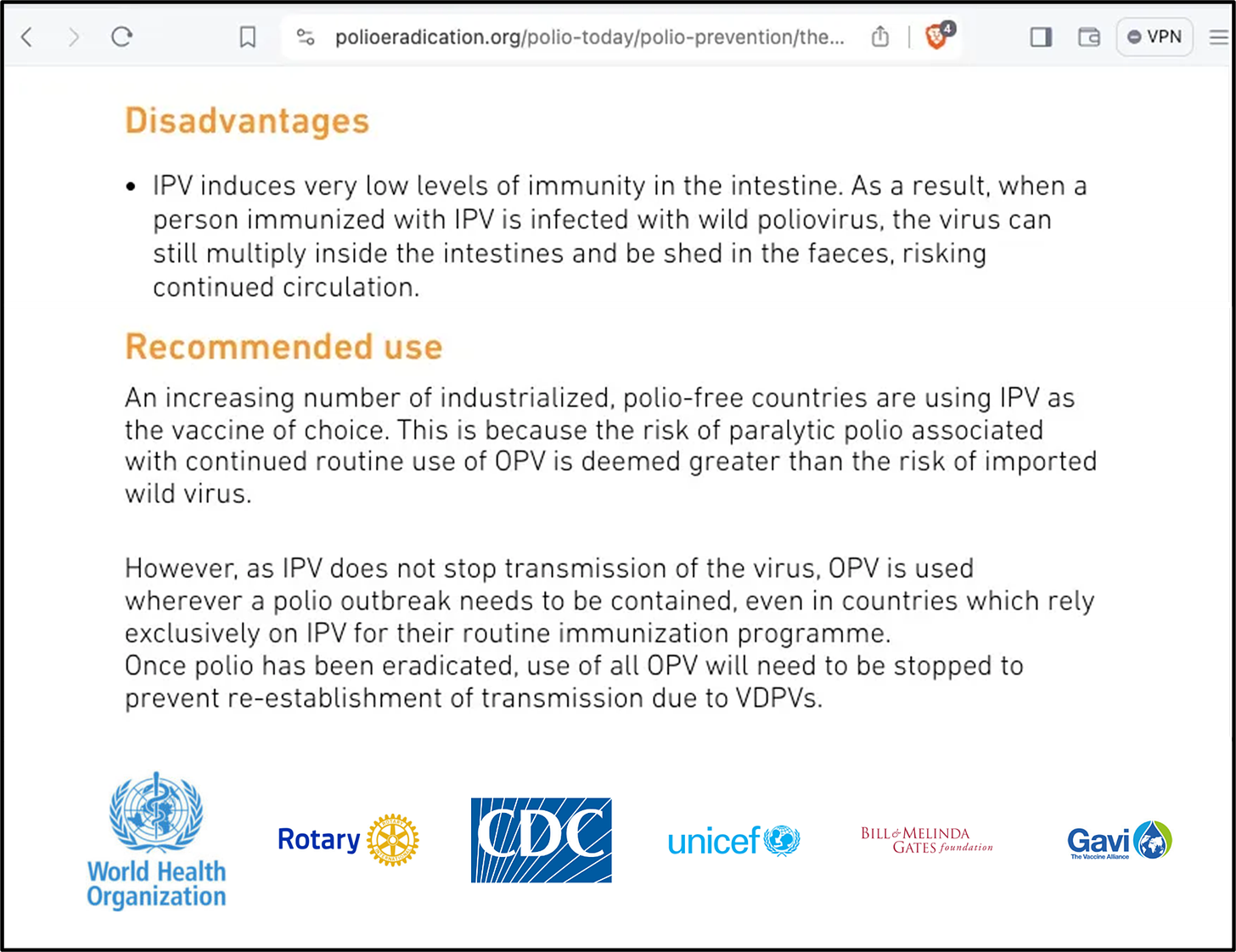
The answer is “No”! The CDC explains that “Inactivated polio vaccine (IPV) is the only polio vaccine that has been given in the United States since 2000” and the CDC further explains that “IPV… protects people from polio disease but does not stop transmission of the virus.” This is because, “IPV induces very low levels of immunity in the intestine. As a result, when a person immunized with IPV is infected with wild poliovirus, the virus can still multiply inside the intestines and be shed in the feces…. IPV does not stop transmission of the virus…”