The Pentagon’s Infiltration of Australian Universities

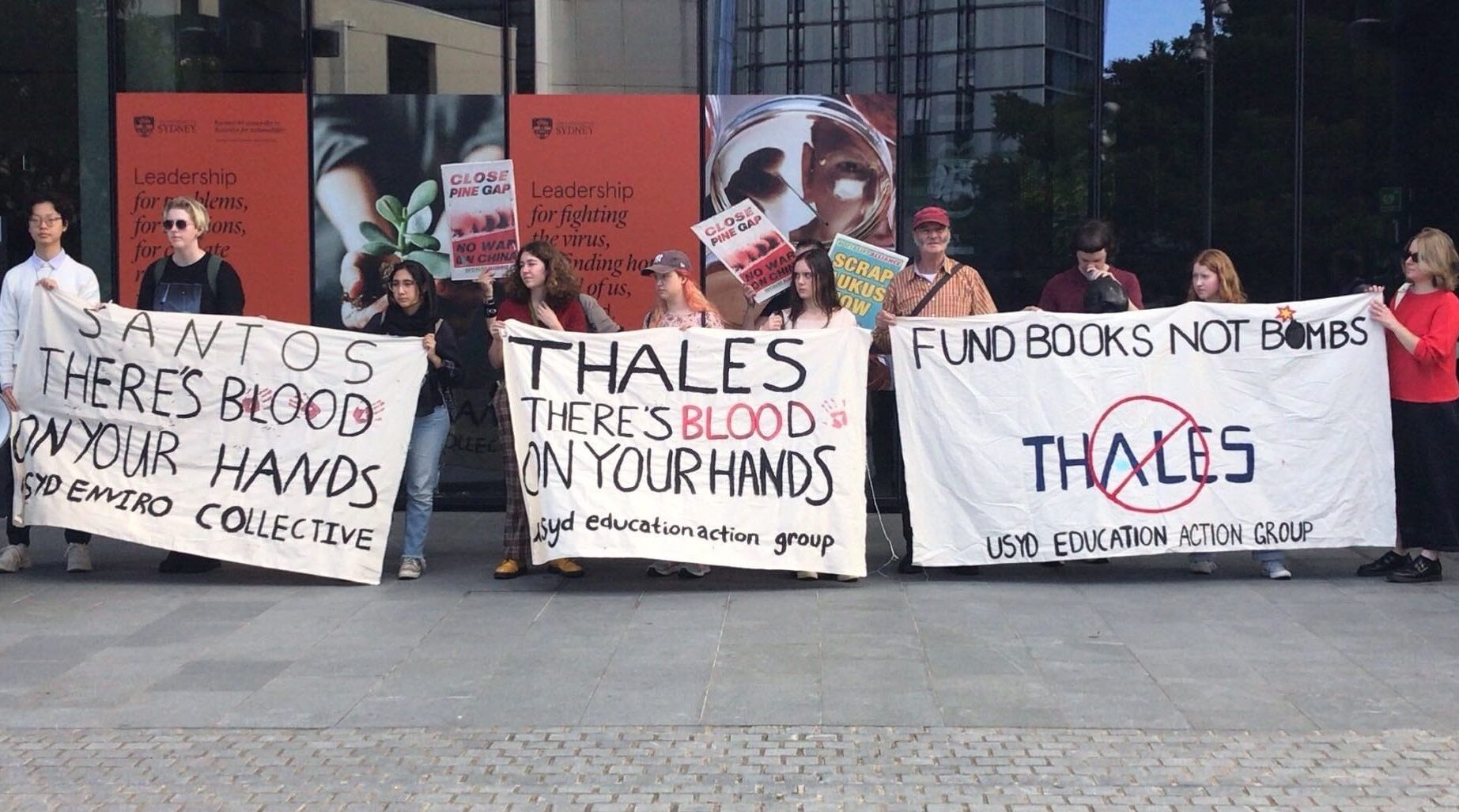
Students and community members protest at Sydney University in 2023 about the institution’s contract with French defence company, Thales. Photo: Bipasha Chakraborty for Honi Soit

 and 

The US military and arms dealers are paying hundreds of millions of dollars to ‘educate’ Australians at our leading universities.

[…]

The United States Defense Department has funded $394 million to Australian universities via grants and contracts since 2007, an exclusive investigation by Declassified Australia can reveal.

Using figures obtained through an extensive examination of official US government records for grants and contracts, and Freedom of Information applications in Australia, a startling picture had emerged of the increasing involvement of the US Department of Defense in providing funding to Australian universities.

Over a 17-year period, the US Defense funding to Australian universities has jumped from $1.7 million in 2007 to $60 million annually by 2022, the year after the AUKUS agreement’s surprise announcement. The funds are backing expanded research in fields of science that enhance US military development and the US national interest.

29 of Australia’s 41 universities (70%) have received funding from the US Defense Department.

Between 2007 and 2024, the University of New South Wales received the highest amount of funding, an extraordinary $72 million.

The University of Queensland received the second-highest amount at $60.5 million and the University of Melbourne came in a close third with $60.4 million.

Australia’s premier Group of Eight Universities (Go8) received $202.1 million between them, being 79 percent of the total funding.

What is the money being used for?

In many of these arrangements, the US Defense Department provided funds to major defence companies which were then used to subcontract universities for defence and intelligence-related research.

In 2022, one of the top weapons producers in the world, the US defence contractor Raytheon, funded the University of Sydney with $105,000 for ‘Basic Research’ in the Pentagon’s Quantum Benchmarking Program.

Raytheon produces a multitude of weapons and components, from cruise missiles to surveillance sensors to missile defence systems. Raytheon is supplying weapons to Israel in the current bloody conflict in Gaza, as well as to Saudi Arabia, which has caused the deaths of many innocent civilians in Yemen since 2016.

Similarly, weapons manufacturer Boeing’s subsidiary, HRL Laboratories, a maker of microelectronics and lasers, has entered two subcontracts with the University of Technology Sydney totalling $747,115. This funding was also for “Basic Research” under the Pentagon’s Quantum Benchmarking Program. The first subcontract was entered into in 2022, with further funding provided in 2024.

According to the US Defense Advanced Research Programs Agency (DARPA), the Quantum Benchmarking Program “will estimate the long-term utility of quantum computers by creating new benchmarks that quantitatively measure progress towards specific, transformational computational challenges.”

Militarisation of Australian universities 

The increase in funding from the US Defense Department to Australian universities occurred alongside the Australian Federal Government’s claims to strengthen the country’s defence.

This upsurge began with the 2016 Defence White Paper under Liberal Prime Minister Malcolm Turnbull and continued with the AUKUS partnership announced by the Morrison government in 2021.

AUKUS has enjoyed bipartisan support, with the Albanese Labor government supporting the initiative while in opposition and adopting it once in power after May 2022.

The Turnbull government signalled greater funding to defence research in the 2016 Defence Industry Policy Statement which flagged the establishment of the Defence Innovation Hub. According to the launch document, its aim was “to increase the level of engagement between businesses, universities and the research sector to commercialise ideas.”

In April 2023, the Albanese government put their own stamp on increased funding to defence research when it announced that the $3.4 billion Advanced Strategic Capabilities Accelerator (ASCA) had replaced the Defence Innovation Hub.

Touted as “the most significant reshaping of defence innovation in decades”, ASCA says that it provides “opportunities for Australian industry and universities to partner with Defence (…) to explore emerging and disruptive technologies, and discover and nurture innovations that will address priority capability needs.

”According to a new Times Higher Education Summit outcomes report, universities are well placed to aid the government with “strategic messaging and building social license for AUKUS”.  Indeed, university representatives describe themselves as “enablers of operationalising the strategic intent around AUKUS”, or, in other words: building social license for AUKUS.

Australia’s Chief Defence Scientist, Tanya Monro, who is responsible for overseeing and guiding the nation’s defence science research and development, stated in Washington in 2023:“Our aim has been to align the work done in our universities and our industry. The bulk of our research and development happens in our universities, which gives us a tremendous opportunity to try to align that work to these bigger national missions”.

Monro revealed that the Albanese government’s new defence ‘accelerator’, ASCA, was modelled after and directly shaped by American intelligence agencies.These US intelligence agencies have proliferated over recent decades and can be a bit of an alphabet soup.“[ASCA has] quite a bit of [the Pentagon’s Strategic Capabilities Office] flavour, a lot of [US Defense Advanced Research Projects Agency] and a sprinkling of [the US Defense Innovation Unit],“ she said.

“And I’d like to pay tribute to all my friends and colleagues in DARPA [Defense Advanced Research Projects Agency], SCO [the US Strategic Capabilities Office] and DIU [the US Defense Innovation Unit] for really having those rich conversations with us as we figured out how to make something like this work for Australia,” said Monro.Americanisation of Australian universities 

ASCA draws from all three of these US Department of Defense agencies. ASCA works to partner with Australian universities with defence organisations , providing the opportunity for the US government and industry to funnel money into projects of interest. ASCA told Declassified Australia that it presently “does not receive any funding from any Department within the United States Government.”

DARPA, known for its innovations in national security, also has a history marked by contentious if not illegal projects, These include extensive surveillance programs and the development of lethal autonomous weapons, raising ethical and privacy concerns. Controversially, DARPA has funded research into how social media can influence social campaigners and activists.

SCO adapts existing defence systems to new uses by integrating them with advanced technologies. This includes an autonomous lethal drone swarm that the Bulletin of the Atomic Scientists have duped as ‘the future weapon of mass destruction”.

DIU incorporates innovations into national security and military applications, by funding commercial ventures to make the new generation of military components and weaponry.

Another initiative similar to ASCA in accelerating Australian universities’ focus on defence is Security and Defence PLuS, an academic research and educational collaboration between three universities – Arizona State University, King’s College London, and the University of New South Wales. It aims to “advance the AUKUS agreement”.

The Security and Defence PLuS program has spurred the creation of programs such as “Cyber Security Fundamentals,” which addresses evolving cyber threats and best practices, and “Introduction to Naval Combat and Weapons Systems,” focusing on maritime warfare and technology, especially pertinent to Australia’s expanding naval capabilities​​.

It is designed to develop AUKUS’s ‘disruptive maritime power projection’ and ‘strategy of denial’ to counter the claimed Chinese military build-up and assertions of sovereignty in the South China Sea.

The most recent university defence program announced is the Digital Disruption in Defence Research Consortium (D3RC)  which involves a partnership between the University of Adelaide, the University of South Australia and five universities in the United Kingdom and the United States to support the AUKUS alliance.

The D3RC is tasked with conducting commissions from government, which involve developing models of cyber influence, exploring new paradigms in defence decision-making, managing defence assets and platforms on a global scale, and innovating in designing resilient supply chains. They plan to intercommunicate with allied nations like the US and publish research quarterly.

These fundamental changes to the funding and research base of many Australian universities warp the traditional pure research in order to feed the awesome appetite of the AUKUS industries. The changes have been described as provocative by some strategic thinkers, such as former prime minister Paul Keating, who describes AUKUS as a sign of Australia’s “commitment to the United States hegemony”.

The American model

Critics are raising concerns about the co-opting of universities to fulfil the government’s defence and national security interests.

Dr Binoy Kampmark is an academic at RMIT University who specialises in the institution of war, diplomacy and international relations.

“I find it deeply problematic that the education enterprise is becoming a military one,” Dr Kampmark told Declassified Australia.

“The Australian model, until fairly recently, has been fairly separate and segregated from military activities. But now, with AUKUS, university management is essentially delighted because of the prospect of additional student places and additional degree programs specifically about submarine acquisition and nuclear technology.”

Kampmark explained that Washington is encouraging Australian universities to follow the American model, and they’re finding an open door.

“The Americans are very familiar with the military-industrial complex and how universities are essentially a vital pillar of the defence establishment”, he said. “They’re trying to replicate that with the Australian model,” referring to research collaborations between universities, government, and defence contractors.

“It’s indoctrination. What they’re essentially doing is peddling the prospect of war.

“If you want to wage a war, you want to prepare the populace and educate them to say that war is a good thing and call it ‘defence’.”

According to an analyst who works within the Australian defence and national security sector who requested anonymity, ASCA mimics the American model, prioritising the aims of defence primes and government. Defence primes are large multinational defence contractors such as Lockheed Martin, Boeing and Raytheon.

“The Americans have used this model for a long time in the US, but this is the first time they’re using it outside the US”, he says.

The analyst emphasised the need to accommodate the interests of defence primes in designing ASCA.

“The defence primes run the show here.”

“They drive their agenda, and they can because they’re so big and powerful. You don’t want innovation to be stifled because it conflicts with what one of the big primes wants to do.”

How universities and their students are responding 

With rising enrolments and decreasing funding, Australian universities have increasingly turned to the private and corporate sectors for financing, a 2022 report from the Australia Institute’s Centre for Future Work revealed. University revenue from private sources reached record highs at 43% in 2019.

Federal funding for higher education declined by over 46% from 1995 to 2021.

In the UK, universities facing similar financial challenges have turned to defence companies for funding, raising ethical concerns over their involvement with companies that arm conflict zones, such as assisting Israel’s onslaught against Gaza.

Lockheed Martin, Raytheon and Boeing, all with troubling records in conflict zones, are embedded in both the Australian and British university sectors, according to a recently released report by the UK-based Campaign Against Arms Trade.

In response to these financial pressures and in the wake of the announcement of the AUKUS submarine agreement, Catriona Jackson, then CEO of Universities Australia, embarked on a significant trip to Washington in April last year. Her visit aimed to meet key stakeholders to discuss potential partnerships between universities and defence organisations.

“Universities have a major role to play in developing the capability needed to deliver the project, including through the provision of skilled workers and world-class research and development,” Jackson said.

Belinda Hutchinson, who holds dual roles as the University of Sydney’s Chancellor and the Board Chair of defence contractor Thales Australia, has been a key figure in driving the university’s pursuit of private funding.

Her influence was instrumental in forging a contentious Memorandum of Understanding (MoU) between the University of Sydney and Thales. This MoU, signed in 2017 and renewed in December 2022, formalises a collaborative relationship for joint research in high-tech weaponry and military systeThales Group, a French defence and technology multinational, generated over $38 billion in revenue in 2022. The company’s dealings have included supplying arms to regimes in Saudi Arabia and Egypt, which have been implicated in human rights abuses, particularly in the conflict in Yemen.

One of Thales’ notable projects, a Turkish satellite venture, has sparked concerns regarding surveillance in Turkey. The project, involving the development and deployment of advanced satellite technology, raises red flags due to the potential misuse of such technology by the Turkish government for oppressive surveillance and monitoring activities. This concern is amplified in Turkey’s complex political landscape and history of clamping down on dissent and freedom of expression.

In 2022, Thales also faced scrutiny under a corruption probe related to a submarine deal with Malaysia in 2002. Allegations that Thales and DCN International offered kickbacks to secure a contract for the sale of three submarines to Malaysia in 2002 highlight the company’s lack of transparency and practice of co-opting war for profit.

Some students and activists in Australia have begun protesting against defence sector funding, including at ANU, the University of Adelaide, UTS and the University of Sydney.

Lilli Barto is a University of Sydney alumni engaged in protests against defence companies like Thales.

“We’re seeing the instrumentalisation of education”, Barto told Declassified Australia. “The only purpose of education is to work in an engineering firm or a weapons company rather than educate yourself or address problems in your community. Especially in science and technology disciplines.”

The submission of the Go8 Universities to the Defence Strategic Review in 2022 highlights the enthusiasm the universities have to “work much more closely together” with the defence industry and “allies in AUKUS, the 5-Eyes, and the QUAD”.

The submission stated that partnerships with the defence industry could lead to a “solution relevant to the industry partner; a highly qualified employee who is industry ready in an area of skills need; and deeper connections between industry (…) run at a modest cost split.”

Universities Australia (UA) echoed this sentiment in their Submission to the Defence Strategic Review in 2022.

UA’s key goals included developing programs to train personnel specifically for the defence industry, increasing the number of partnerships with industry such as defence and arms companies and non-governmental organisations (NGOs), and diversifying funding sources to support these initiatives. This approach reflects a broader strategy to deepen academic research and education integration with Australia’s defence sector.

Their submission also emphasised the “rapidly evolving threats in the Indo Pacific”, highlighting growing tensions with China.

The NSW government and the ACT, Victoria, and Queensland have all banned weapons companies as primary and high school education sponsors.

Other industries banned from sponsoring schools in those states include tobacco, alcohol and gambling products. While the primary and secondary education systems have flagged the defence industry as comparable to tobacco, alcohol and gambling, the tertiary system has yet to do the same.

Lack of transparency around this issue

The research collaborations between universities, government and defence contractors are often secretive, with the nature of the projects and amounts of funding remaining undisclosed.

Throughout this 14-month investigation, we encountered significant barriers to accessing information. Time and time again, our multiple FOI [Freedom of Information] requests were delayed for months and eventually refused.

“The universities don’t have to explain the distribution of funds, they don’t have to reveal the source of the funds, and they don’t have to disclose the nature of the funding trail between the private corporations and the university, and that’s really disturbing,” said Dr Kampmark.

“Not only can you mobilise the university sector and co-opt it for the defence sector, but you also can be reassured about the system’s total opacity, its total lack of transparency and accountability, which means this information will never see the light of day.”

“People are afraid to speak up, so it’s a brilliant environment to park sensitive military projects in, when you think about it,” he said.

Greens Senator David Shoebridge expressed concerns for Australia’s growing sub-imperial defence relationship with the US and defence companies.

“One of the few ways universities can get additional R & D funding is if they make it relevant to the arms industry…It’s all secret,” Shoebridge told Declassified Australia.

How does this affect university education? 

The confluence of universities and the defence industry raises serious questions about the future of academic freedom.

“Can we still see universities as places to learn and produce knowledge that, at the risk of sounding naïve, is for the greater good of humanity, independently of transient geopolitical skirmishes?” asked Professor Wanning Sun from the University of Technology, Sydney in a recent Crikey op-ed about the impact of AUKUS on universities.

“The history of universities during the first Cold War era tells us that it is precisely at times such as this that our government and our universities need to fight tooth and nail to preserve the precarious civil society that has taken millennia to construct.”

[…]

Via https://libya360.wordpress.com/2024/05/07/revealed-the-pentagons-infiltration-of-australian-universities/

After Positioning Military Biolabs Around the Globe, US Officials Urge Biodefense Buildup

By Ilya Tsukanov – Sputnik – 07.05.2024

Russia’s Radiological, Chemical and Biological Defense Troops have spent over two years studying and publicizing sensitive documents and analytical materials on the extent of Pentagon, CDC and US biotech firms’ funding for unethical and potentially illegal military biological research in Ukraine and around the world.

US biodefense planners are preparing to release a ‘bombshell’ report calling on all levels of the US government to radically improve national biodefense measures and create a national strategy to address global biological threats.

The document, seen by Axios ahead of publication, was put together by the Bipartisan Commission on Biodefense, a panel of former high-ranking US officials and lawmakers, including senior former Clinton, Bush and Obama administration staff. The Commission, created in 2014 to “provide for a comprehensive assessment of the state of US biodefense efforts,” has called its new report the 2024 National Blueprint for Biodefense.

The ‘blueprint’ highlights the growing risks stemming from the outbreak of infectious diseases, bioweapons research and lab leaks, predicting that the number of biothreat incidents will increase over time, and urging policymakers to make major new investments in biodefense.

“We’re not putting enough emphasis on getting ahead of these biological threats,” Bipartisan Commission on Biodefense executive director Asha George said. George urged Biden National Security Advisor Jake Sullivan to spearhead a national biodefense effort and set up a deputy advisor post to deal with the job’s daily duties.

The Committee is asking Washington to create a unified federal biodefense budget, and multiyear funding for programs as part of an agenda featuring 36 separate recommendations, from the creation of a congressional working group and biodefense reviews once every four years, to amendments to the 1944 Public Health Service Act to “produce a research and development plan for reducing pathogen transmission in built environments.”

Curiously, the panel’s recommendations also feature a section on “emerging astrobiological threats,” warning about “the intersection of space exploration and infectious disease,” and of the possibility of space-based microorganisms being brought to Earth and posing a threat to the planet’s “human, animal, plant, or ecosystem health.”

Threats Closer to Home

Additional details on the contents of the report have yet to be publicized. However, based on the information made available by Axios, it will offer little if any data on the US government’s own role in creating, manipulating and spreading biological threats globally, starting with the National Institutes of Health gain of function research which may have sparked the global Covid-19 pandemic, to the operation of dozens of military-grade biolabs around the world, including in Ukraine, Africa, Asia and Latin America.

Russia’s Radiological, Chemical and Biological Defense Troops warned in January that Washington’s goals in the military-biological domain are multifold, ranging from the creation and manipulation of the causative agents of “particularly dangerous infections in regions of the world that are strategically important for the United States,” to efforts to achieve global “superiority” in biomanufacturing, biological monitoring, and the expansion of potentially unethical and illegal military biological research outside US jurisdictions.

RCBD Troops chief Lt. Gen. Igor Kirillov has indicated that the US military bioresearch program “consists of government agencies and private contractors,” including representatives of big US pharmaceutical companies and that “through the organs of the executive branch, a legislative framework is being created to finance military-biological research directly from the federal budget.” In turn, Kirillov said, “guarantees provided by the state attract funds from non-governmental organizations,” including the Clinton, Soros and Rockefeller foundations.

NATO Goes All In on Transhumanism

The ‘2024 National Blueprint for Biodefense’ report comes less than a month after the NATO alliance published details on an alarming new “international strategy to govern the responsible development and use of biotechnologies and human enhancement technologies.”

On the pretext of unsubstantiated claims that adversaries, including Russia, are planning to deploy chemical and biological weapons, the NATO strategy offers a Brave New World-style vision of the need to fast track the development of biotech and human enhancement (BHE) technologies, predicting that they will “transform our economies, societies, security and defense in unprecedented and unforeseeable ways.”

NATO cites the AI-assisted modification of biological processes, cells and cellular compounds as “opportunities” to “enhance our defense and security,” including via “biotechnological and non-biotechnological interventions that enable individuals to operate beyond normal human limits or abilities.”

This scary new BHE push has been met with opposition from social conservatives worldwide, who have cited work in this direction as a means to establishing unprecedented levels control over humanity.

[…]

Via https://sputnikglobe.com/20240507/after-positioning-military-biolabs-around-the-globe-us-officials-urge-biodefense-buildup-1118314833.html

The electric car crash will rival the dotcom bubble

Paul Homewood

The problem for ministers is that most consumers just won’t buy EVs

Ministers can’t get out much these days without being heckled, especially by green campaign groups such as Just Stop Oil. So no surprise that last week the secretary of state for energy security and net zero, Claire Coutinho, struggled to make herself heard above the din of demonstrators in the hall as she delivered a speech at a business conference.

Her message was definitely not what those demonstrators wanted to hear (though they aren’t in the listening business). Coutinho criticised what she called the “net zero leviathan of central planning” and said that products designed to meet this target should not be “forced on British consumers”.

In one respect the quietly formidable Coutinho has been as good as her word. The government has postponed by ten years (to 2035) the deadline after which households will be forbidden to install any new gas boilers. And last month Coutinho delayed, though only by a year, a policy of fining manufacturers for missing targets for the installation of heat pumps.

But in another respect there is a gaping chasm between the government’s rhetoric about the primacy of consumer choice “on the road to net zero” and its actual policies. This concerns the product most beloved of British consumers and on which they — we — have the strongest opinions. I refer, of course, to the car.

Although Rishi Sunak, in September, moved from 2030 to 2035 the date by which all manufacturers would be required to stop selling any new vehicles that were not purely electric, the elaborate system of penalties remained fully in place. So, this year, manufacturers are obliged to ensure that at least 22 per cent of their sales are of EVs, and for each and every non-electric car sold that breaches the target, they are liable to a fine of £15,000. The thing ratchets up every year, so that by 2030 their sales must be at least 80 per cent EVs (not even hybrids qualify), or else …

When it became clear Sunak would postpone the 2030 deadline (one of Boris Johnson’s vainglorious attempts to demonstrate Britain’s leadership in the “battle against climate change”), a number of manufacturers upbraided the PM. Ford UK’s chief, Lisa Brankin, remonstrated: “Our business needs three things from the UK government: ambition, commitment and consistency. A relaxation of 2030 would undermine all three.”

Stellantis, which owns Vauxhall, Peugeot, Citroën and Fiat, issued a statement warning that “clarity and reasonable anticipation are important”.

Seven months on, the company’s horn is sounding a very different note. Ten days ago its chairman, Carlos Tavares, said the law fining companies for selling cars that did not meet the EV quota was “terrible for the UK”, and that “I’m not going to sell cars at a loss”. The reason for Mr Tavares going from volt to volte-face is clear for all to see (now). Or, as he put it, EVs were “crashing in the world of reality”.

To no sensible person’s surprise, consumers have been deterred by a combination of higher purchase prices, “range anxiety” and plummeting resale values, largely due to increasing awareness of the prohibitive costs if the battery needs replacing. The Stellantis boss now concedes that the “natural” market share for EVs in the UK is about half what he is being required to sell under the regulations, which are starting to bite (indeed, taking great munches out of his company’s profit margins).

In other words, this is exactly the sort of “forcing” of products onto the consumer that Coutinho says the government shouldn’t be doing. This is not a British problem alone. The EU has an almost identical policy, yet in Germany the European election manifesto of the centre-right Christian Democrats declared: “We want to abandon the ban on combustion engines and preserve Germany’s cutting edge combustion technology.”

As things stand, China will be the only winner. It, uniquely, is able to sell EVs more cheaply than the equivalent combustion engine models, and is about to flood European markets. The EU will soon be forced to choose between its vaunted commitment to fighting climate change and the existence of its own car manufacturing businesses.

If only it — and our own government — had listened to Akio Toyoda. In January the chairman of Toyota (grandson of its founder) told employees in a Q&A session of the company’s booming sales of hybrid vehicles, and pointed out: “Customers and the market will decide, not regulations or political power.”

This has now dawned on one of the world’s biggest car leasing companies, Hertz — and its shareholders. Last week its share price fell by a quarter as it announced a sell-off of many thousands of Teslas that it had only recently acquired, absorbing a thumping loss. And Tesla itself has just announced it will be dumping 14,000 employees, with Elon Musk firing his entire team responsible for its “supercharger network”. What we are witnessing is an imminent business catastrophe impelled by a global corporate stampede: the herd was galvanised by governments, which have yet to recognise, let alone admit, their own responsibility.

In terms of global misallocation of capital, there has been nothing like it since the dotcom bubble. As far as the UK is concerned, the obvious thing for the government to do is to live up to Claire Coutinho’s words and abandon the attempt to force consumers to buy products they don’t entirely trust, which can only end terribly for the businesses involved.

However, it is not so simple. The problem is the commitment to make the UK “net zero” by 2050, a declarative piece of legislation insouciantly passed without proper debate in the dying days of Theresa May’s tenure of office, as her “legacy”. It means any successor government is liable to legal challenge if it makes decisions that can be construed as breaching that commitment.

[…]

Via https://notalotofpeopleknowthat.wordpress.com/2024/05/07/the-electric-car-crash-will-rival-the-dotcom-bubble/

Japan To Ban mRNA Vaccines As Turbo Cancers Among Vaxxed Skyrocket

The Blogging Hounds

Turbo cancers are exploding among the vaccinated according to Japan’s leading oncologist who has slammed the mainstream media and Big Pharma in the West for covering up the extent of the medical crisis engulfing the world.

Prof. Emeritus Dr. Masanori Fukushima was ordered by the Japanese government to investigate why excess deaths skyrocketed in Japan in recent years.

His findings were conclusive: mRNA has destroyed immune systems and opened a Pandora’s box of autoimmune diseases, neurodegenerative diseases, cancer, and infections.

The Professor has a dire warning for those in the West – do not listen to mainstream media and Big Pharma as they are not engaged in science, but rather a eugenics experiment, and they have proven themselves to be enemies of the people.

Excess deaths in Japan soared by an enormous 400% since Pfizer’s third-dose “booster shot” was rolled out in 2021, according to the data. Excess deaths were approximately four times the number of those in the years 2017, 2018, 2019, and 2021.

While the US and European governments chose to turn a blind eye to similar statistics in their countries, these numbers rocked the establishment in Japan. Official investigations were launched and lawsuits were readied.

Meet Prof. Fukushima, the most senior oncologist in Japan, who is staggered and appalled at the way the mainstream media and medical industry in the West is conspiring to cover up the explosion of turbo cancer caused by mRNA.

Japanese scientists and researchers have been at the forefront of investigating the Covid pandemic from outside the control of Big Pharma.

The findings of their studies have pulled the rug on the globalists who are determined to continue deceiving the masses.

Unlike in the US and Europe where Big Pharma rules supreme, Japan does not kow-tow to the global pharmaceutical cartels. Advertising vaccines on TV is illegal. Japan is one of the most developed countries in the world and yet the people remain interested in traditional medicine and natural cures.

Why? Ask a Japanese person and they will tell you its simple. Traditional and nature cures work.

They understand that the Rockefeller dynasty corrupted the US medical industry, hijacking and monopolizing the business until it resembled a Mexican drug cartel pushing poison on the population.

So when the Covid vaccines started causing carnage in the health of the Japanese population, the government did what every government should have done if they were not controlled by Big Pharma and the global elite.

They began to investigate the cause of these sudden deaths and health problems.

And, lo and behold, they found that the cause of the carnage was the vaccines.

Concrete steps are being taken to protect the population from further damage, including the proposal to ban vaccinated people from donating tainted blood.

Most interesting of all, Prof. Fukushima’s findings regarding turbo cancer match exactly the conclusions drawn by Dr. Peter McCullough who sounded the alarm about three mechanisms by which Covid vaccines can start a new cancer or fast-track an existing tumor.

Dr. McCullough is at the forefront of the investigations in the US into excess deaths and turbo cancer caused by the Covid mRNA vaccine roll out.

While the Japanese have acknowledged the explosion in cancer and confirmed that mRNA is the cause, here in the West we are still battling against the Big Pharma cartel and their grip on the mainstream media.

It’s a completely ridiculous state of affairs, but the officials and the media are still denying turbo cancer exists.

They are asking us to disbelieve what we can see with our own eyes.

That’s why it is so important to listen to Dr. McCullough’s concise explanation of vaccine-induced turbo cancer and educate anybody who has yet to wake up to the truth.

Turbo cancer is another case of yesterday’s conspiracy theories becoming today’s facts.

The Japanese have confirmed what we knew all along. Biden, Fauci and Gates were sharing medical misinformation with us.

There was no “winter of severe illness and death” for the unvaccinated. In reality, this is a pandemic of the vaccinated.

Unfortunately for those who submitted to the jabs, the time of severe illness and death has only just begun.

[…]

Via https://theblogginghounds.com/2024/05/07/japan-to-ban-mrna-as-turbo-cancers-among-vaxxed-skyrocket/

How Israel Supported Hamas Against the PLO

By Jeremy R Hammond

Since the Hamas-led attacks in Israel on October 7, 2023, Israel has been executing a devastating assault on the civilian population of the Gaza Strip, blocking humanitarian aid, internally displacing 75% of Gaza’s population, systematically destroying civilian infrastructure, and otherwise bombing indiscriminately. To date, over 34,000 Palestinians have been killed, including over 9,500 women and over 14,500 children.1 More than 10,000 additional Palestinians are missing under the rubble, and over 77,000 have been injured.2 Children have been dying from hunger and malnutrition due to Israel’s use of starvation as a method of warfare.3

[…]

In reporting on the situation, the American mainstream media has tended to start their timeline for reporting on October 7, with little to no historical context provided to help news consumers understand why Hamas’s armed wing would break through the armistice line fence surrounding Gaza to perpetrate what it called “Operation Al Aqsa Flood.”6

[…]

One particularly important piece of historical context that the mainstream media unsurprisingly omit from their reporting, with it only slipping out in very rare exceptions, is how the Israeli government under Prime Minister Benjamin Netanyahu had long been effectively utilizing Hamas as a strategic ally to block any movement toward peace negotiations with the Palestinians.11

In fact, Hamas had been essentially nurtured by Israel since its founding in the late-1980s, at which time the Israeli government utilized the group as a counterforce to Yasser Arafat’s Palestine Liberation Organization (PLO), which had dangerously joined the international consensus in favor of the two-state solution to the conflict.12

[…]

The Founding of Hamas

In 1973, an Islamic charity organization named Mujama al-Islamiya was established in the Gaza Strip by Sheikh Ahmed Yassin, whose family had fled to Gaza when Zionist armed forces ethnically cleansed their village during what is commonly known as the 1948 Arab-Israeli War.13 That is the war that resulted in the establishment of the state of Israel in 78% of the territory formerly known as Palestine.

The village where Yassin was born, al-Jura, was one of over five hundred Arab villages that the Zionists literally wiped off the map in furtherance of their goal to reconstitute Palestine into a demographically “Jewish state.” While the 1948 war is known to Israelis as the “War for Independence,” the ethnic cleansing by which Israel came into being is known to the Palestinians as Al Nakba, or “The Catastrophe.”14

The tale that we are routinely told by the Western mainstream media is that Arabs were the aggressors for having started the war by invading the newly created state of Israel. Supporting that narrative is the popular myth that Israel was established by the United Nations through a legitimate political process that the Arabs rejected for no other reason than that they hated Jews.

But that is all a lie. The truth is that UN General Assembly Resolution 181 neither partitioned Palestine nor conferred any legal authority to the Zionist leadership for their unilateral declaration of the existence of Israel on May 14, 1948, by which time over a quarter million Arabs had already been ethnically cleansed from their homes.15

The neighboring Arab states intervened to try to stop the ethnic cleansing, but they mostly failed. By the time it was over and armistice lines were drawn in 1949, approximately 750,000 Arabs had become refugees whose right to return to their homes was denied by the Zionist regime.

Having suffered a severe spinal injury at the age of twelve, Ahmed Yassin was a quadriplegic and wheelchair-bound for most of his life. In 1959, he went to Egypt and spent a year studying at university, but he lacked the funds to continue his academic career and returned to Gaza. The experience had left him deeply influenced by the Egyptian organization known as the Muslim Brotherhood, and he later became involved in the creation of a Palestinian branch of the group in Gaza.16

In 1978, Mujama al-Islamiya, or the “Islamic Centre,” was legally registered as a charity in Israel. The group built schools, mosques, and clubs in occupied Gaza.17 “Crucially,” The Wall Street Journal reported in 2009, “Israel often stood aside when the Islamists and their secular left-wing Palestinian rivals battled, sometimes violently, for influence in both Gaza and the West Bank.”18

The internationally recognized leadership of the occupied Palestinian territories at the time was the secular Palestine Liberation Organization (PLO) headed up by Yasser Arafat, a key founder and leader of the political party Fatah.

In 1984, Fatah tipped off the Israeli military that Yassin was stockpiling weapons, and he was arrested and jailed. According to David Hacham, who was then an Arab-affairs expert in the Israeli military, Yassin told Israeli interrogators that the weapons were for use against his Palestinian rivals, not Israel. The following year, Israel released Yassin as part of a prisoner exchange agreement.19

In December 1987, a mass uprising of the Palestinian people against Israel’s military occupation began, which uprising became known as the first “intifada,” an Arabic word meaning “throwing off.”

In August 1988, a new organization founded by Sheikh Ahmed Yassin published its charter.20 The group went by the name “Hamas,” an acronym for Harakat al-Muqawama al-Islamiya, or the Islamic Resistance Movement.

Israel’s Initial Support for Hamas

At the time, The New York Times reported how Hamas had quickly become “a major force in the Gaza Strip,” causing “the first serious split of the nine-month-old Palestinian uprising.” Hamas was critical of the PLO, the Times explained, and posed a threat to its secular leadership. The Israeli government had “taken no direct action against Hamas,” which led to a belief among many Palestinians that Hamas was “being tolerated by the Israeli security forces in hopes of splitting the uprising.” This was a tactic, the Times noted, that Israel had used before.21

Israel viewed the PLO as a threat because of its movement away from armed conflict toward diplomatic engagement with the aim of establishing a Palestinian state alongside Israel in just 22% of the Palestinians’ historic homeland.

Demonstrating this policy shift, in 1976, the PLO supported a draft UN Security Council resolution recognizing the Palestinians’ equal right to self-determination and calling for a two-state settlement. It was vetoed by the United States.22 In November 1988, the PLO officially proclaimed its acceptance of what is known as the two-state solution, an independent state of Palestine consisting of the West Bank and Gaza alongside the state of Israel.23 In December, Arafat again declared the PLO’s acceptance of the two-state solution before the United Nations General Assembly.24

The “Palestinian peace offensive,” as it was called in 1982 by Israeli strategic analyst Avner Yaniv, was problematic for Israel since the Israeli government rejected the two-state solution, which is premised on the applicability of international law to the conflict.25 Accordingly, the two-state solution requires implementation of UN Security Council Resolution 242, which called on Israel in the aftermath of the “Six Day War” of June 1967 to fully withdraw its forces from the occupied Palestinian territories of Gaza and the West Bank, including East Jerusalem.26

Israel had no intention of withdrawing its forces to its side of the 1949 armistice lines, which are also called the “1967 lines” or the “Green Line” for the color with which it was drawn on the map. The government had no intention of giving up on the Zionist dream of establishing Eretz Yisrael, the Land of Israel, in all of the former territory of Palestine—but without the Palestinians.

Consequently, at the time, the strategy adopted by Israeli policymakers was to try to disarm the threat of peace posed by the PLO by undermining its leadership. As Yaniv had elaborated on the “peace offensive,” a moderate PLO “could become far more dangerous than the violent PLO of the previous years.” so it was necessary to “undermine the position of the moderates.” Israel therefore aimed at “destroying the PLO as a political force capable of claiming a Palestinian state.”27

To that end, during the First Intifada, Hamas was viewed as a useful tool to the Zionist regime.

This Israeli strategy was illuminated by Richard Sale of the United Press International (UPI) news service in an article published in 2001. Anthony Cordesman, a Middle East policy analyst for the Center for Strategic Studies, told UPI that Israel “aided Hamas directly—the Israelis wanted to use it as a counterbalance to the PLO.”

A former senior CIA official likewise told UPI that Israel’s support for Hamas “was a direct attempt to divide and dilute support for a strong, secular PLO by using a competing religious alternative.”

An anonymous U.S. intelligence source similarly told UPI that Israel was funding Hamas as a “counterweight” to the PLO and to enable Israeli intelligence to identify the most “dangerous hardliners” within the movement.28

Escalating the Threat of Terrorism

The predictable consequence of Israel’s policy of blocking implementation of the two-state solution by undermining the PLO was an increased threat of terrorism, but that was an acceptable risk in the calculation of Israeli policymakers.

[…]

The U.S. State Department, in a cable from the U.S. embassy in Tel Aviv to the Secretary of State dated September 29, 1989, acknowledged that, despite having outlawed Hamas and imprisoning Sheikh Yassin under “administrative detention” without charge or trial, “some Israel officials indicated that Hamas served as a useful counter to the secular organizations loyal to the PLO.” Consequently, the State Department noted, “Israeli forces may be turning a blind eye to Hamas activities.”31

As I wrote in the first chapter of my book Obstacle to Peace: The US Role in the Israeli-Palestinian Conflict,

“That the real threat to Israel has been that of peace achieved through implementation of the two-state solution is well evidenced by its policies and their predictable consequences. This is oftentimes the only rational explanation for Israel’s actions. Its continued occupation, oppression, and violence toward the Palestinians have served to escalate the threat of terrorism against Israeli civilians, but this is a price Israeli leaders are willing to pay. Indeed, the threat of terrorism has often served as a necessary pretext to further goals that would not be politically feasible absent such a threat.”32

This was recognized within the Israeli government itself. In October 2003, for example, Moshe Ya’alon, the Chief of Staff of the Israel Defense Forces (IDF), criticized the policies of Prime Minister Ariel Sharon because they served to increase hatred of Israel and strengthen terrorist organizations.33

The following month, four former chiefs of Israel’s domestic security service, the Shin Bet, similarly criticized that Israel was headed in the direction of “catastrophe” and would destroy itself if it continued to take steps “that are contrary to the aspiration for peace,” such as the continued oppression of Palestinians under Israeli occupation. “We must admit that there is another side,” said Avraham Shalom, Shin Bet director from 1980 to 1986, “that it has feelings and that it is suffering, and that we are behaving disgracefully.”34

Conclusion

When Hamas was first founded in the 1980s, the Israeli government viewed it as a useful force to advance its policy aim of undermining the PLO, which was seen as a threat because of its acceptance of the two-state solution. Israel therefore effectively treated Hamas as a strategic ally to divide the Palestinian leadership.

Right up until the Hamas-led attacks in Israel in October 2023, Benjamin Netanyahu, who first served as Israeli prime minister in the late 1990s and has again been in power since 2009, maintained the Israeli government policy of utilizing Hamas as a strategic ally to block any peace negotiations with the Palestinians because Israel has always rejected the two-state solution.

[…]

Via https://libertarianinstitute.org/articles/how-israel-supported-hamas-against-the-plo/


H5N1 Bird Flu Makes Historic Jump From Mammals to Humans Shortly After Bill Gates Unveils New Vaccine

The Blogging Hounds

A Texan farm worker has contracted bird flu from an infected cow, marking the first time the HSN1 virus has been recorded spreading from mammals to humans, according to the Centers for Disease Control and Prevention.

Incredibly, in what the media is claiming is a “coincidence”, a Bill Gates-funded bird flu vaccine for that strain has just entered trials. New images show the dairy farmer with bloodshot eyes after he was the first case to catch bird flu from a mammal – in this case an infected cow – as the WHO claimed this is a “milestone” of “enormous concern.” In a report published Friday, the CDC said that they found “strong evidence” through genetic data that the farmer caught bird flu from a cow in March.

This revelation shows the first sign of HSN1 virus spreading from mammals to humans just weeks after Bill Gates admitted he had a new vaccine prepared for global roll out. The images of the patient, plus further details about his unprecedented case, were published in a report in the New England Journal of Medicine. According to the experts, the patient developed a subconjunctival haemorrhage, or bleeding just beneath the conjunctiva, the clear surface covering the white part of the eye. He patient is also suffering a watery liquid discharged from his right eye.

The Mirror reports the dairy farmer is now the second person to be diagnosed with bird flu in the USA, and perhaps the first to have caught it from a mammal – in this case, a cow. So far, nearly 900 people in 23 countries have been infected with the H5N1 strain of avian flu over the last 20 years. However, they were all linked to wild or kept birds. The dairy farmer’s case comes as experts warn that they are hearing of other farmers falling ill, but not getting tested for HSN1 virus.

The Texas patient came to doctors with the infection in late March, with scientists saying his vital signs — such as breathing — were normal. He also had no signs of fever, changes in breathing or vision during the infection. After being treated with anti-virals, the patient reported no symptoms except for some “discomfort in both eyes.”

The report added: “Over the subsequent days, the worker reported resolution of conjunctivitis without respiratory symptoms and household contacts remained well.” CDC Director Dr Mandy Cohen said that the patient’s condition was “very mild.” She told NPR : “The person had very mild symptoms. They’re recovering well. But we want to make sure, again, that we are testing folks who may have been in contact.”

[…]

Via https://theblogginghounds.com/2024/05/06/h5n1-bird-flu-makes-historic-jump-from-mammals-to-humans-shortly-after-bill-gates-unveiled-new-vaccine/

Pro-Palestinian protesters backed by Biden’s biggest donors

Students at Washburn University express support for Palestinians in Gaza.

President Joe Biden has been dogged for months by pro-Palestinian protesters calling him “Genocide Joe” — but some of the groups behind the demonstrations receive financial backing from philanthropists pushing hard for his reelection.

The donors include some of the biggest names in Democratic circles: Soros, Rockefeller and Pritzker, according to a POLITICO analysis.

Two of the organizers supporting the protests at Columbia University and on other campuses are Jewish Voice for Peace and IfNotNow. Both are supported by the Tides Foundation, which is seeded by Democratic megadonor George Soros and was previously supported by the Bill and Melinda Gates Foundation. It in turn supports numerous small nonprofits that work for social change.

Soros declined to comment. The Bill and Melinda Gates Foundation, which has previously funded the Tides Foundation and other groups, said it no longer has active grants to Tides. It also does not support Jewish Voice for Peace or IfNotNow.

Another notable Democratic donor whose philanthropy has helped fund the protest movement is David Rockefeller Jr., who sits on the board of the Rockefeller Brothers Fund. In 2022, the fund gave $300,000 to the Tides Foundation; according to nonprofit tax forms, Tides has given nearly $500,000 over the past five years to Jewish Voice for Peace, which explicitly describes itself as anti-Zionist.

Several other groups involved in pro-Palestinian protests are backed by a foundation funded by Susan and Nick Pritzker, heir to the Hyatt Hotel empire — and supporters of Biden and numerous Democratic campaigns, including $6,600 to the Biden Victory Fund a few months ago and more than $300,000 during the 2020 campaign.

The trail of donations shows a series of blurred lines when it comes to liberal causes and Democratic politics. Often those missions are aligned, but they also sometimes have different and — particularly when it comes to Gaza — conflicting agendas and tactics. And a small group of wealthy heavyweights are often playing an outsize role funding many of them.

But as protester tactics have grown more intense, like taking over university buildings and shouting antisemitic remarks, the groups behind them are now attracting criticism from prominent donors on the left.

“Why [is the Rockefeller Fund] giving significant grants to Jewish Voice for Peace, [which] blamed the horrific Oct. 7 attacks on Israel and the United States rather than Hamas?” said Elisha Wiesel, a Democratic donor who chairs the Elie Wiesel Foundation, an organization that supports anti-genocide work.

Jewish Voice for Peace, which did not return a request for comment, has been a leader in disruptive protests against Biden, including shouting “genocide supporter” at his glitzy fundraiser at Radio City Music Hall in New York in March. It protests on campuses across the country, and its statement immediately following the Oct. 7 attacks said that “the source of all this violence” was “Israeli apartheid and occupation — and United States complicity in that oppression.”

The complex funding system in the nonprofit space sometimes means that groups are funded by grants — or even subgrants — from a larger organization that isn’t involved in granular, day-to-day management of an activist group’s work. In a statement to POLITICO, the Rockefeller Brothers Fund noted it cannot support political activity or campaigns and is not involved in the personal political giving of trustees.

“Our grantees in all three portfolios support a broad range of policy ideas—some align with the Biden administration’s agenda and others conflict. This complexity is part and parcel of our nonpartisan work,” said Sarah Edkins, the fund’s communications director, in a statement.

Some advisers to left-leaning causes say that’s just part of the way things work when it comes to philanthropic giving.

“There may be times where a donor may give to an organization or candidate that sometimes does something that clashes with their personal view,” said Kevin Conlon, who has been a bundler for Biden as well as for Democratic presidential candidates Hillary Clinton and Barack Obama, and now advises nonprofits.

Still, some donors say they feel conflicted as they watch the protests unfold.

“We’re hearing from folks who want to make sure that their dollars aren’t supporting people who are supporting Hamas and shouting antisemitic things,” said Daniel Goldwin, public affairs executive director of the Jewish United Fund in Chicago, which issues grants to small local nonprofits and to larger national nonprofits. “If it’s an organization they’ve been giving to for a long time, we encourage them to call and communicate their concerns.”

Biden is struggling to regain support from young people, who went overwhelmingly for him in 2020, and the protests may complicate that effort. As Israel faces increasing criticism from around the world amid the high numbers of civilian casualties in Gaza, demonstrations in the United States are only growing more intense. Those at Columbia University, in particular, have emerged as a thorn in the side of Biden, who finally weighed in on them on Thursday.

[…]

Via https://www.politico.com/news/2024/05/05/pro-palestinian-protests-columbia-university-funding-donors-00156135

France sends combat troops to Ukraine battlefront

Stephen Bryen 

France has sent its first troops officially to Ukraine. They have been deployed in support of the Ukrainian 54th Independent Mechanized Brigade in Slavyansk. The French soldiers are drawn from France’s 3rd Infantry Regiment, which is one of the main elements of France’s Foreign Legion (Légion étrangère).

In 2022 France had a number of Ukrainians and Russians in the Foreign Legion. They were allowed to leave the Legion and, in the case of the Ukrainians, return to Ukraine to join Ukrainian forces. It isn’t clear if the Russians returned home.

The Legion today is run by French officers but the rank and file are all foreigners. Under the curren anonymat (being anonymous) a volunteer who joins the Legion can decide whether to keep his given name or adopt a new one. Legionnaires serve for three year terms, after which they can ask for French citizenship. If a legionnaire is wounded, he is entitled to gain French citizenship without any waiting period. There are no women in the Foreign Legion.

The initial group of French troops numbers around 100. This is just the first tranche of around 1,500 French Foreign Legion soldiers scheduled to arrive in Ukraine.

These troops are being posted directly in a hot combat area and are intended to help the Ukrainians resist Russian advances in Donbas. The first 100 are artillery and surveillance specialists.

For months French President Emanuel Macron has been threatening to send French troops to Ukraine. He has found little or no support from NATO countries outside of support from Poland and the Baltic States. Allegedly the US opposes sending NATO soldiers to Ukraine (other than as advisors).

One of the questions to immediately arise from France’s decision to send soldiers from its 3rd Infantry Regiment is whether this crosses the Russian red line on NATO involvement in Ukraine? Will the Russians see this as initiating a wider war beyond Ukraine’s borders?

France itself does not have many troops to put on Ukraine’s battlelines, should the French government want to do so. According to reports, today France cannot support an overseas deployment of a full division and won’t have this capability until 2027 at the earliest.

The decision to send Foreign Legionnaires is, itself, a peculiar French compromise. France is not deploying its home army and, besides the small number of officers, the men sent are not French citizens.

France’s decision has two meanings, beyond the obvious one of potentially triggering a pan-European war.

First of all, it allows Macron to send troops to Ukraine and act like a tough guy without encountering much home opposition. That’s because no French army soldiers are being sent and there is no consequent conscription or other measures in the offing. This clearly reduces the potential fury of Macron’s political opponents.

The second reason is Macron’s anger at seeing French troops, almost all from the Legion, getting kicked out of Sahelian Africa and replaced by Russians. Control of Francophone Africa, and the riches it provides to French politicians, has been broken by the revolt and revolution in Africa and a decisive tilt to Russia – either directly or through PMC Wagner (the Wagner Group). now clearly under Vladimir Putin’s direct control.

This “humiliation” is felt in the Élysée Palace and particularly by Macron who, his opponents say, has lost France’s influence and harmed France’s overseas mining and business interests.

A particular blow is in Niger, an important supplier of uranium to France. France gets 70 percent of its electrical power from nuclear power generators. Global uranium supplies are tightening and prices rising. With Russia and Kazakhstan, along with Niger, on the top of the heap in terms of supplying uranium for nuclear reactors, France has a home economic security problem. The US decision to ban Russian uranium (but probably not realistically, in the next few years) the Russians could deal a serious blow to France and the United States by cutting off supplies.

Given the risk of losing access to uranium, or at least enough of it to supply France’s reactors, Macron has to hope that his troop deployments to Ukraine won’t trigger a Russian embargo on sales to France.

It isn’t clear how the Legionnaires can help the Ukrainians. The Ukrainians know how to operate artillery, and they have sophisticated intelligence support, some of it generated by their own FPV drones and spies and some of it thanks to US and other NATO intelligence and surveillance assets supporting Ukraine.

Anyway, the Ukrainian issue is not about how to use artillery but where the ammunition is supposed to come from. Ukraine continues to complain it lacks adequate supplies for 155mm howitzers.

The decision to put the Legion soldiers in Slavyansk is extremely provocative and goes against statements from the French side, including Macron, to the effect that if France sent troops they would replace Ukrainian army units in western Ukraine who could, therefore, be moved eastward to fight the Russians. As Slavyansk is on the front line, this French image of a soft deployment is turning into a war with Russia directly.

A key question is how NATO will react to the French decision to deploy. As France is acting on its own without NATO’s backing, the French cannot claim support from NATO under its famous Article 5, the collective security component of the NATO Treaty.

[…]

Via https://asiatimes.com/2024/05/france-sends-combat-troops-to-ukraine-battlefront/

Insect biodiversity plummeting as global food supply teeters toward collapse

Insect biodiversity plummeting as global food supply teeters toward collapse

Dr Eddy Betterman

Buried beneath headlines about congressional treason and wars and rumors of war is a disturbing new report from the World Entomology Body (WEB) showing that the world’s insect populations are plummeting.

This is really bad news for the food supply, which relies on precious pollinators like bees to keep the life cycle going. Without these vital critters, there will be no more food available for anyone, including the rich and sinister who think they are going to somehow escape the horrors they are unleashing.

There are many reasons why insect biodiversity is crumbling to dust, including fragmentation and loss of habitat; pollution from LED lighting, microplastics and synthetic pesticides; the growing spread of viral “super” pathogens and parasites; and a changing climate.

“These significant declines in populations of managed and native bees and other pollinators are destroying production agriculture,” says Ken Chandler, a director of agricultural studies at a school in Iowa.

Chandler would add that with the way things are going, there are going to be billions of dollars in economic losses just in 2024 alone.

“Our ability to grow food is no longer a given,” he said somberly.

(Related: Did you know that early last year, the United States government approved the world’s first ‘vaccine” for honeybees?)

Restoring insect biodiversity wouldn’t be that hard

Plants and pollinators maintain a mutually exclusive relationship. One cannot exist without the other, which means if the bugs go, so do all the flowers and everything else that grows.

“Flowers burst onto the scene in northern climes during the spring and summer. Their color, smell and nectar attract pollinators to land then carry pollen with them, flower to flower,” explains Clean Technica. “Essential for plants, these pollinators create the process for the crops that humans eat.”

“Pollination occurs when the deposit of pollen grains from the anther (male structure) onto the pistil (female structure) of the same plant species takes place. Pollen is full of genetic information needed to fertilize a plant. Successful pollination results in the production of viable seeds and a fruit to protect them.”

The above is basic grade-school science, but it is worth repeating for those who may have forgotten how things work. Understanding the intricacies of nature at a basic level is where this all has to start, that way people understand what is at stake if the destruction does not stop.

The U.S. alone grows more than 100 staple food crops that only grow if pollinated by insects and fertilized by animals. A few examples include almonds, apples, pears, citrus fruits, cherries, pumpkins, cucumbers, blackberries, cranberries, raspberries, strawberries, blueberries, melons, tomatoes, soybeans and sunflowers.

All of these foods will be gone unless insect biodiversity can be somehow improved, or at least set on a positive trajectory. Right now, it would seem as though all hope is already lost and that it is just a matter of time before mass famine and starvation strikes.

Calls to protect insects in this country really started reaching a fever pitch back in the 1960s, but by that point the globalists had already gained a foothold in converting agriculture into a commercial endeavor to enrich themselves at our expense. Soon, they too will suffer the consequences of their error in the form of hunger and death.

A recent study on all this found that restoring insect biodiversity is not an impossibility. There exist many “simple and relatively inexpensive practices for pollinator conservation,” but the problem is that almost none of these are being utilized because they are bad for business as far as the globalists are concerned.

[…]

Via https://dreddymd.com/2024/05/06/insect-biodiversity-plummeting-global-food-supply-collapse/

Egypt’s First Female Pharaoh

Queen Hatshepsut

Episode 16 Queen Hatshepsut

The History of Ancient Egypt

Professor Robert Brier

Film Review

Queen Hatshepsut ruled Egypt from 1479-58 BC. For the first six years, she ruled as regent of her son Tuthmosis III. At that point she declared herself “king” and ruled in her own right. A legitimate daughter of king Tuthmosis I and his chief wife, at age 12 she married her half-brother by a lesser wife. Marrying into the royal family qualified him to assume the throne a Tuthmosisis II.

After ruling 20 years, he died, leaving the throne to his six-year-old son Tuthmosis III. Ruling as his regent, Hatshepsut declined to step down when he came of age.

From inscriptions on the walls of her spectacular mortuary temple at in Deir-el Bahari (near the Valley of the Kings), we know she started wearing a false beard to designate herself as pharaoh, as well as sending a trading expedition to Punt (Eritrea) to bring back giraffes,* ivory and frankincense and myrrh trees in baskets. This would be the first portrayal in history of Sub-Saharan  Africa. The inscriptions depict image of both the queen of Punt and her daughter (who had elephantiasis), as well as houses on stilts with thatched roofs. There’s also an inscription regarding Hatshepsut’s birth, occurring after the god Amun visits her mother to impregnate her.**

Hatshepsut also built four obelisks at the Karnak temple east of Thebes made of granite quarried in Aswan.

She is buried in the same tomb as her father in the Valley of the Kings. Obscene graffiti workmen left on the wall of her tomb suggest she was lovers with Senmat, a bachelor to whom awarded numerous titles: royal tutor (of Hatshepsut’s daughter), overseer of the royal palace, overseer of the granaries of Amun and overseer of public works.

Her son, who took the throne in 1458 BC following her death, omitted her name from most kings lists, replacing it with that of Tuthmosis I, II or III.


*Queen Hatshepsut would start the world’s first zoo.

**According to legend, Knu (the ramheaded god) created pharaohs and  their ka (spirit) on a potters wheel, which is how they became divine.

Film can be viewed free with a library card on Kanopy.

https://www.kanopy.com/en/pukeariki/watch/video/1492791/1492828