Growing Numbers of Ukrainian Men Opt Out of Compulsory Military Service

On April 16, Ukrainian President Volodymyr Zelensky signed a new law approved earlier by the national legislature aiming to intensify military conscription in the country. According to the new law, all Ukrainian men of military age who are not yet registered for military service must present themselves to a military enlistment center within 60 days, with or without formal notification to appear. And if they are already registered for military service, they must update their information within 60 days. The law comes fully into force in July 2024.

[…]

Earlier in April, a new law lowered the age of obligatory military service from 27 to 25. All female Ukrainian citizens with a military or medical specialty are also required to register.

A war to the last Ukrainian

According to the lawmakers and the military, the amended conscription law will force out of the shadows those who have been avoiding military registration by hiding or living at a different address than the one registered with the military. Police and conscription officers are empowered to detain anyone lacking proof of military registration.

“The 60-day rule [for self-reporting to the military recruitment office] and other clauses of the adopted draft law are making hundreds of thousands or even millions of Ukrainians into lawbreakers. In fact, it places them outside Ukraine’s legal framework entirely,” the Ukrainian daily Strana wrote on April 11. The widely-read, online news outlet writes that intensified conscription will mean a huge increase in corruption among police officers, border guards, and the military, implying bribery of those officials in order to avoid service.”

[…]

One of the most scandalous features of the new law is its exclusion of a proposed provision for the demobilization of active-duty personnel once they have served 36 months of service. This is a demand of military personnel and their relatives, pleading that people who have already been living in the trenches for two years or more are tired and worn out. But a majority of deputies in the Ukrainian legislature (‘Verkhovna Rada’) insist there must be no demobilization until the end of hostilities. Yevgeniya Kravchuk, a deputy from the ruling Servant of the People party, has warned that automatic demobilization after three years of service could cause a reduction in Western aid.

Strana reports on April 12 that according to a poll in February 2024 by Kyiv-based research agency ‘Info Sapiens’ for media outlet Texty.org, only 35 percent of the 400 men surveyed said they were prepared to serve if called up.

[…]

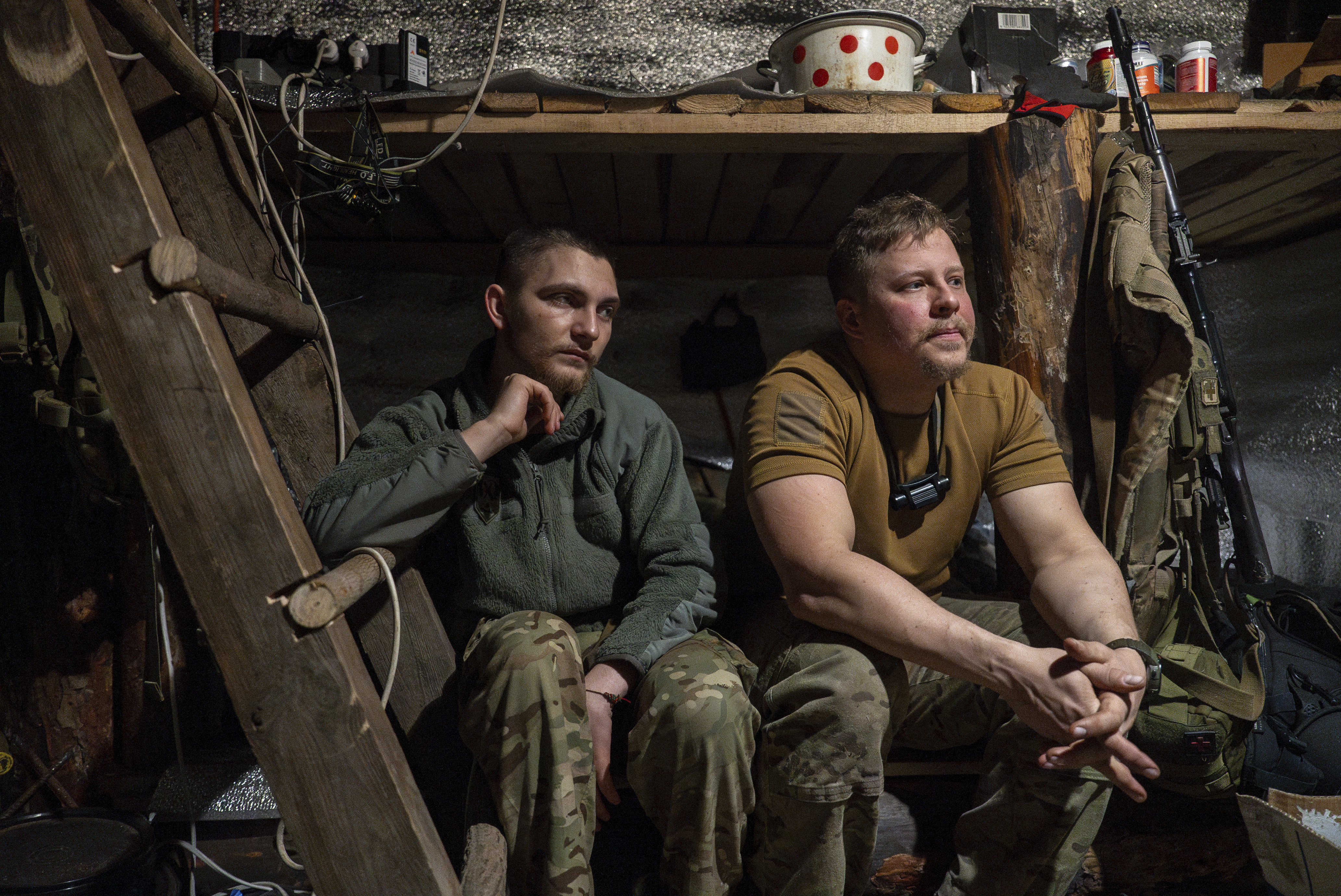
However the new law is being very negatively received by Ukrainian society. Media is focused on the negative responses, explaining that a great many civilians fear dying at the front, while those already conscripted see no possibility of demobilization, not even in the long term. Essentially, a Ukrainian soldier has only three paths out of military service short of three years: death, serious injury and disability, or being taken prisoner by the Russian armed forces.

Ukrainian MPs say they plan to further strengthen punishment for evading conscription. They are now discussing increasing fines, blocking of bank accounts, seizure of property, and a number of other measures “up to the harshest ones”, says a member of the legislature cited in Strana. Ukrainian courts are already issuing summons nearly every day for those evading conscription. Thousands have already been sentenced to prison terms.

But the courts cannot cope with the number of such cases because there are tens of thousands in every region of the country. According to UA-Reporter, Ukrainian lawyer Yuriy Demchenko has made an inquiry to the Justice Ministry revealing there are currently about 34,000 vacant spots in Ukrainian prisons for those already convicted of evasion of military service. According to him, it is simply impossible for the authorities to put all evaders and deserters in jail. For example, in Ivano-Frankivsk region in western Ukraine alone, according to official information, there are 40,000 men wanted for evading service.

Border guards in the Transcarpathia region in southwest Ukraine, meanwhile, are reportedly building miles of new, barbed-wire fencing along the country’s border there, making the region appear as a concentration camp because minefields laid by Russian armed forces already block some routes to the north and east. Authorities say they are building the fencing to ‘save lives’, that is, to prevent people from undertaking the often highly risky gambit of crossing mountain rivers in order to escape the country.

The most popular Google query in Ukraine these days is ‘How to swim across the Tisa’. The Tisa (Tisza) River originates in the eastern part of Transcarpathia, eventually flowing into the Black Sea, roughly tracing Ukraine’s borders with Romania, Hungary, and Slovakia along the way. In some places, the river is the border. Several dozen Ukrainians are reported to have died trying to make the dangerous crossing of the Tisa, particularly during the winter months.

The New York Times reported on April 13, “The roiling waters [of the Tisa] can be treacherous; the banks are steep and slick with mud; and the riverbed is covered in jagged, hidden boulders. Yet Ukrainian border guards often find their quarry — men seeking to escape the military draft — swimming in these hazardous conditions, trying to cross the Tisa River where it forms the border with Romania.”

Conscription evaders as new national heroes in Ukraine 

[…]

At the end of April, a 52-year-old Ukrainian man named Borys Laboyk managed to escape to Hungary and became a social media hero in doing so. At a border checkpoint, he was asked for his papers but he took off running to the nearby Hungarian border. The Ukrainian border guards caught up with him and tackled him to the ground, but the man was apparently in very good physical shape because he managed to break free and then outrun the border guards for good. Hungarian border guards allowed him to cross and make a declaration of asylum. They turned back the Ukrainian border guards; the latter are prohibited by Hungary from crossing the border in pursuit of anyone fleeing Ukraine.

The military draft in Ukraine has long ago turned into a game of run and catch. The Ukrainian telegram channel ‘Rubicon’ recalls the comedy ‘Welcome to Zombieland’, where 33 rules of survival in the world of zombies are described. “In modern Ukraine, these rules are certainly much more useful for personal safety than, for example, the Constitution. The first rule in Zombieland is: ‘Be in shape.’ Most often, when meeting with zombies, you will have to run a lot. If you are overweight or do not have good physical fitness, be prepared to die at the hands of a living corpse.” Rubicon reminds the reader that the simple ability to run fast may save a conscription evader from capture, with a 90 percent probability of success.

Songs glorifying draft dodgers are becoming popular among Ukrainian youth. “The borders were closed, laws were passed, and I became a draft dodger. A dodger is a good guy, a young guy 25 years old,” goes one of the popular songs.

T-shirts with the inscription ‘evader’ are now popular on the Internet. A report on Telegram writes, “Due to the draconian law on military mobilization, Ukraine has some ten million citizens living abroad and who are ready to renounce their citizenship due to their colossal distrust of authorities.

Political scientist Andrey Zolotarev states further that in his opinion, the popularity on social networks of flash mobs about ‘evaders’ and the queues for renewals of passports at Ukrainian consulates in European countries are obvious evidence of the unpopularity of the war taking place. Also to blame for the unpopularity is the behavior of those members of the legislature and those government officials who have hidden their relatives abroad while at the same time sending ordinary citizens or their children to their deaths in a highly unpopular war.

Another reason for the popularity of draft evasion is, strangely enough, the sexual overtones involved. When hundreds of thousands of men in the country have died, become disabled, or are suffering from mental disorders brought on by trauma, women are preferring the young, healthy men still remaining who can avoid death or crippling injury, and who can support them through life, according to readings of social media. Attention to such details by women is yet another reason why young men are avoiding military service in every possible way and undertaking personal training in running or swimming, in place of weapons training on a firing range.

The new, unofficial heroes of Ukraine are the men who manage to escape from the country or otherwise escape from the clutches of military recruiters or from the training officers assigned to ‘make soldiers out of them’. For so may younger Ukrainians, the new, ‘model’ man is young, with long legs and in great physical shape, able to fight off or run away from an overweight or slow-moving military man tasked with dragging them into military service.

Young people are deliberately practicing swimming, and stories of such are gaining popularity on the Internet. The training is just in case, one day, they need to escape the country by crossing a border river. They practice for months to run fast and swim well. Escaping from already conscripted soldiers has become a survival quest, a sign of good health and courage. Growing numbers of young people believe that if you are in a Ukrainian military uniform, it means you couldn’t run fast enough or you couldn’t fight off the military recruiters using your fists, and you have no money to bribe your way out. You are tagged as a ‘loser’ destined to die in a trench from artillery fire.

Degradation of agriculture

These trends of rising evasion of military service are more characteristic of the young men in the urban middle classes. In the Ukrainian countryside, most men have already been drafted, and many have already died. After the deindustrialization of the 1990s and 2000s and the later secession of the industrial region of Donbass, the foundation of the Ukrainian economy has slipped back to agricultural production and exports.

Following the pro-American Maidan coup in Kiev in February 2014, then-U.S. ambassador Geoffrey Pyatt declared that Ukraine’s future “should be that of an agricultural superpower”. However, the economic trends of recent years in Ukraine actually show the opposite-decline in crop yields and overall agricultural production and a transition back to more primitive forms of production.

In April 2024, Ukraine is once again in the midst of its sowing season. But this year, once again, the area sown with grain and other crops is reduced. The harvest is expected to drop by ten percent, according to the forecasts of the Ministry of Agrarian Policy. Last year, it dropped by 13%. The Ukrainian website Novyny reports that according to estimates of the U.S. Department of Agriculture (USDA), sown areas of wheat, corn, and barley for the 2023/2024 growing season will be reduced by 32%, 27%, and 37%, respectively, for the three crops, compared to the 2021/22 season. There are several reasons for this.

Dmytro Solomchuk, a member of the parliamentary committee for agrarian policy, says that farmers are abandoning intensive cultivation technologies. “Agricultural producers are buying less fuel, chemicals, and fertilizers because this is unprofitable in today’s conditions. Many are switching to traditional methods by which, predictably, there will be lower yields but production costs are also lower. The yields per hectare will be lower for all crops,” he says, admitting that depending on the weather, the yields using older, traditional, growing methods will decrease by 30%.

As well, shortages of fertilizers are obliging Ukrainian farmers not to grow many crops. Most crops require nitrogen fertilizers, which are mainly produced by synthesizing natural gas. The gas used to be purchased cheaply from Russia, but no longer. Ukraine has voluntarily cut all its economic ties with Russia.

Denys Marchuk, deputy head of the Ukrainian Agrarian Council, also speaks about the acute shortage of personnel due to military conscription, saying, “The lack of human resources is one of the main problems of this year’s sowing campaign.”

[…]
Via https://libya360.wordpress.com/2024/05/09/growing-numbers-of-ukrainians-opt-out-of-compulsory-military-service/


Washington’s Proxy War in Myanmar Continues Along China’s Borders

Washington’s Proxy War in Myanmar Continues Along China’s Borders

Brian Berletic

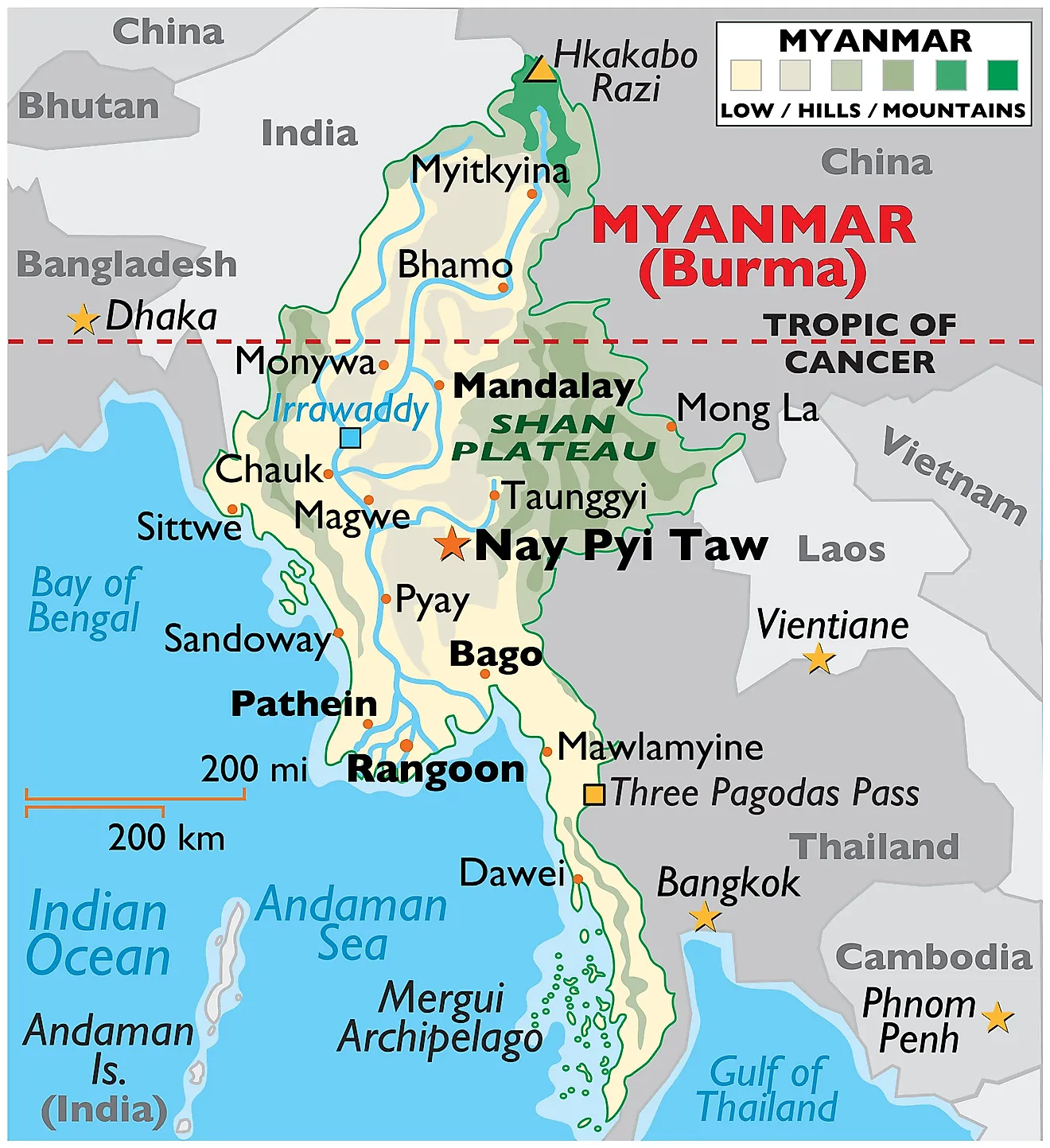
Overshadowed by ongoing fighting in Eastern Europe and the Middle East as well as growing tensions between the US and China, the ongoing conflict in Myanmar nonetheless constitutes a critical component of what is a larger global conflict.

Depicted by Western governments and Western media as an isolated, internal conflict between a “military dictatorship” and the forces of “democracy,” in actuality the conflict represents decades of Anglo-American attempts to reassert Western control over the former British colony.

Much of the fighting is taking place between the central government and armed ethnic groups that had at one point been a part of the British Empire’s occupation force, utilized by the US and UK during World War 2 against the Japanese, and used ever since to disrupt Myanmar’s ambitions for independence and self-determination.

Alongside these armed ethnic groups, the US has constructed a parallel political establishment, eventually installed into power through compromised elections in 2020.

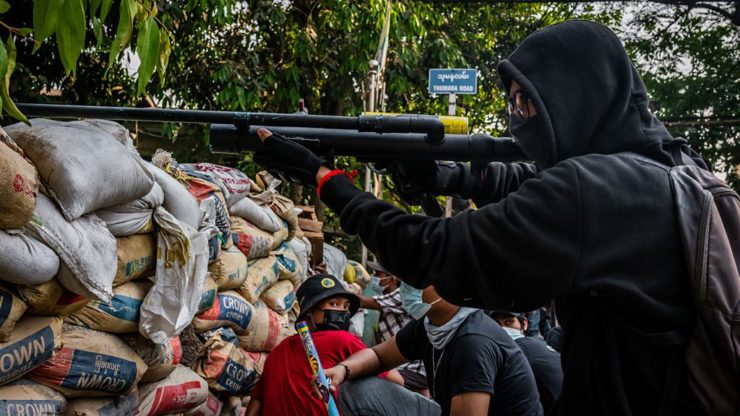
In 2021, Myanmar’s military removed from power the US client regime headed by Aung San Suu Kyi, advised by literal British and Australian citizens, and supported by a collection of US government-funded and backed political organizations, media platforms, and educational institutions both within and beyond Myanmar’s borders. The US has been semi-covertly backing attempts by the ousted regime to retake power through armed violence ever since.

Psychological Warfare Aims to Break Central Government Resolve 

The fighting has continued mainly along Myanmar’s frontiers, regions that have hosted US-backed armed ethnic groups pursuing separatism for decades, but also at times and to a lesser degree, inside some of Myanmar’s urban centers.

While the US-backed opposition has failed to oust the central government or even significantly threaten it militarily, Western governments and the Western media have attempted to pass off temporary (and eventually reversed) gains as an impending opposition victory. Opposition strikes on central government and military facilities, including in the nation’s capital have also been passed off as growing opposition competence.

The Diplomat in its May 1, 2024 article, “Myanmar’s Revolution Has Entered a New, More Complicated Phase,” claimed:

Naypyidaw, the capital, has also come under unprecedented attack. In early April, a dozen resistance drones breached the city’s defenses and attacked military facilities across the sprawling city. Days later opposition forces fired several rocket attacks which hit a junta airbase next to Naypyidaw’s International Airport. 

Zachary Abuza, a professor at the National War College in Washington, D.C. who focuses on politics and security in Southeast Asia, said that the attack on the capital will have dented the junta’s morale. 

“The drone and rocket attacks on Naypyidaw have caused little physical damage or casualties, but they have caused psychological damage; it is their fortress capital, and the physical manifestation of the bubble that the generals live in,” he said. “Attacks in Naypyidaw are meant to show that there is no place where the generals are safe.”

The very fact that Myanamr’s US-backed opposition must rely on symbolic gestures indicates its military deficiencies.

A similar strategy is being used by US-NATO-backed Ukraine. Missile and drone strikes are carried out against targets deep in Russian territory primarily to generate headlines for a proxy war Washington, London, and Brussels are otherwise decisively losing.

It is a strategy also used throughout the US proxy war in Syria from 2011 onward, with attempts to create psychological momentum designed to panic Damascus and its allies into breaking and fleeing. It too failed.

Another US Proxy War 

US support for the opposition is a full spectrum. Political, media, and militant groups receive huge sums of money and support from the US government through the National Endowment for Democracy (NED) and United States Agency for International Development (USAID).

Weapons and military training are provided by Americans and Europeans working with “humanitarian aid and advocacy organization” like the “Free Burma Rangers,” headed by a US Army veteran revealed to be in direct contact with the US Consulate in Chiang Mai in neighboring Thailand, according to US diplomatic cables published by Wikileaks.

Despite the flow of resources into Myanmar’s opposition, the nature of post-colonial Myanmar constitutes vicious ethnic, religious, and political divides, meaning opposition forces are just as likely to fight with one another as they are the central government.

See-Sawing Battles 

At the moment, the fighting remains stagnant despite headline-grabbing developments like the opposition’s seizure of the town of Myawaddy along the Myanmar-Thailand border. The New York Times reported the capture of the town by opposition fighters in an April 12, 2024 article titled, “Myanmar Rebels Take Key Trading Town, but Counteroffensive Looms.”

By April 24, 2024, less than two weeks later, the New York Times would publish an article titled, “Myanmar’s Junta Recaptures Town That Was a Significant Gain for Rebels.”

The see-sawing nature of the fighting is depicted by the Western media and the Western officials and analysts they interview as a sea change in the opposition’s favor, however Myanmar’s post-colonial history has consisted of decades of such fighting, including the changing of hands of various towns and cities along the edges of the central government’s control.

Just as the opposition is using drones and rockets to symbolically strike at key government and military facilities because they lack the military means to actually threaten them, it is taking vulnerable frontier towns and cities where government forces are spread out thinnest precisely because of its inability to fight and defeat Myanmar’s forces in pitched battles.

Target China 

While ultimately the US seeks to re-install its client regime into power in Myanmar, preventing peace and development in Myanmar is a secondary objective.

The Southeast Asian country serves as an important partner for China’s Belt and Road Initiative (BRI) which includes a port and hydrocarbons pipeline running the length of the country to China’s Kunming region. This allows China to move hydrocarbons from the Middle East to China without transiting the Strait of Malacca and other waters that could potentially be blockaded by the US’ growing military presence in the Asia-Pacific region.

China’s BRI infrastructure has been repeatedly targeted by the US-backed militancy several times since 2021 as have Chinese businesses operating across Myanmar. Far from a battle between “democracy” and “dictatorship,” the conflict instead is one part of a much wider strategy of encirclement and containment by the United States of China stretching back to the end of World War 2. The US seeks to either control or destabilize nations along China’s periphery either creating US client regimes hostile to Beijing, or security crises along China’s border preventing trade, development, and economic growth of China itself.

An Ambiguous End Game 

The final conclusion of Myanmar’s current conflict is far from clear.

While similar fighting has ebbed and flowed for decades, always ending in the central government’s favor, there are several factors that will determine whether or not this cycle will continue. While Myanmar’s military possesses resources and capabilities beyond the reach of the US-backed militants it is fighting, the ability and will to use them effectively is up to Myanmar’s central political and military leadership.

In terms of the opposition, among the many weaknesses of US-backed armed groups is their inability to work together with other ethnic and political fronts the US is sponsoring. Just as was the case in Syria, while at times the central government was overwhelmed by large numbers of militant operations across the country, the inability to coordinate them allowed government forces to defeat in detail each organization involved before moving on to the next.

A similar strategy appears to be in use by Myanmar’s military. Government forces withdraw where they are stretched, then return in force when resources can be redeployed effectively against opposition deployments. That the opposition is essentially engaged in “hit-and-run” operations exploiting gaps in the central government’s force deployments demonstrates a fundamental weakness requiring asymmetrical strategy and tactics.

Unless the opposition acquires more manpower and resources and/or can coordinate better among themselves, it is unlikely they will get the upper-hand over the central government, barring a fundamental mistake made by the government itself.

Of course, much depends on the wider global conflict the fighting in Myanmar fits into. With the US losing its proxy war in Ukraine, its influence eroding in the Middle East, and the disparity between a rising China and a waning United States continues to grow, Washington’s ability to sustain support for opposition groups within and beyond Myanmar’s borders may come into question. Should that happen, the cycle of deadly, destructive fighting debilitating Myanmar’s development as a nation for decades could begin coming to an end.

The above-mentioned Diplomat article would note the inability of opposition groups to work together.

It cited Aung Thu Nyein, director of the US government-affiliated “Institute for Strategy and Policy Myanmar” based in Chiang Mai, Thailand, saying:

Aung Thu Nyein says that the coming phase of the war could be tricky, and that more junta defeats could paradoxically divide the country further. He says the NUG remains popular in Myanmar among the general population but some of the ethnic groups are moving away from its leadership, forging their own paths and pursuing their own political agendas. 

“The problem is a common agenda against the common enemy and building an alliance to fight together,” he said. But “the ethnic armed organizations can’t do that, and the National Unity Government can’t lead that.”

This means that even if the US-backed opposition was successful in ousting the central government and military, Myanmar itself would only descend further into chaos. The central government stands the only real chance of unifying the nation and moving it forward together with the rest of a rising Asia, but only if US-sponsored subversion and militancy ends or is successfully overcome.

Just as is the case with Eastern Europe, the Middle East and elsewhere in the Asia-Pacific region, Myanmar’s fighting is among an array of conflicts presented to the general public as spontaneous, unrelated crises the US must respond to, when in reality it is the US primarily driving them all, and all in order to preserve its ability to determine the outcome of regions around the world rather than the people actually living in these regions themselves.

The outcome of Myanmar’s ongoing fighting depends largely on the rest of the world’s ongoing efforts to either aid and abet US hegemony, or confront, oppose, and ultimately dismantle it. Until then, Myanmar’s fate remains suspended in perpetual armed conflict.


Biden says US will withhold weapons from Israel if it invades Rafah

Biden says US will withhold weapons from Israel if it invades Rafah

Joe Biden. (CNN)

REUTERS

President Joe Biden on Wednesday publicly warned Israel for the first time that the US would stop supplying it weapons if Israeli forces make a major invasion of Rafah, a refugee-packed city in southern Gaza.

“I made it clear that if they go into Rafah …, I’m not supplying the weapons that have been used historically to deal with Rafah, to deal with the cities – that deal with that problem,” Biden said in an interview with CNN.

Biden’s comments represent his strongest public language to date in his effort to deter an Israeli assault on Rafah while underscoring a growing rift between the US and its strongest ally in the Middle East.

Biden acknowledged US weapons have been used by Israel to kill civilians in Gaza, where Israel has mounted a seven-month-old offensive aimed at annihilating Hamas. Israel’s campaign has so far killed 34,789 Palestinians, mostly civilians, the Gaza Health Ministry said.

“Civilians have been killed in Gaza as a consequence of those bombs and other ways in which they go after population centers,” he said when asked about 2,000-pound bombs sent to Israel.

Israel this week attacked Rafah, where more than one million Palestinians have sought refuge, but Biden said he did not consider Israel’s strikes a full-scale invasion because they have not struck “population centers.”

A senior US official, speaking on condition of anonymity, said Washington had carefully reviewed the delivery of weapons that might be used in Rafah and as a result paused a shipment consisting of 1,800 2,000-pound (907-kg) bombs and 1,700 500-pound bombs.

The interview was released hours after Defense Secretary Lloyd J. Austin III acknowledged publicly Biden’s decision last week to hold up the delivery of thousands of heavy bombs was taken out of concern for Rafah, where Washington opposes a major Israeli invasion without civilian safeguards.

Israel’s campaign in Gaza was triggered by Hamas ‘ Oct. 7 attack on Israel. That killed about 1,200 people with about 250 others abducted, of whom 133 are believed to remain in captivity in Gaza, according to Israeli tallies.

Biden said the US would continue to provide defensive weapons to Israel, including for its Iron Dome air defense system.

“We’re going to continue to make sure Israel is secure in terms of Iron Dome and their ability to respond to attacks that came out of the Middle East recently,” he said. “But it’s, it’s just wrong. We’re not going to – we’re not going to supply the weapons and artillery shells.”

[…]

Via https://themuslimtimes.info/2024/05/09/biden-says-us-will-withhold-weapons-from-israel-if-it-invades-rafah/

US Poll: Climatism Concern Dropping

As the Biden administration moves forward with expensive and economically devastating regulations on vehicles, dishwashers, stoves and other major appliances under the guise of fighting “climate change,” Americans are questioning the efficiency, validity and cost of the agenda.

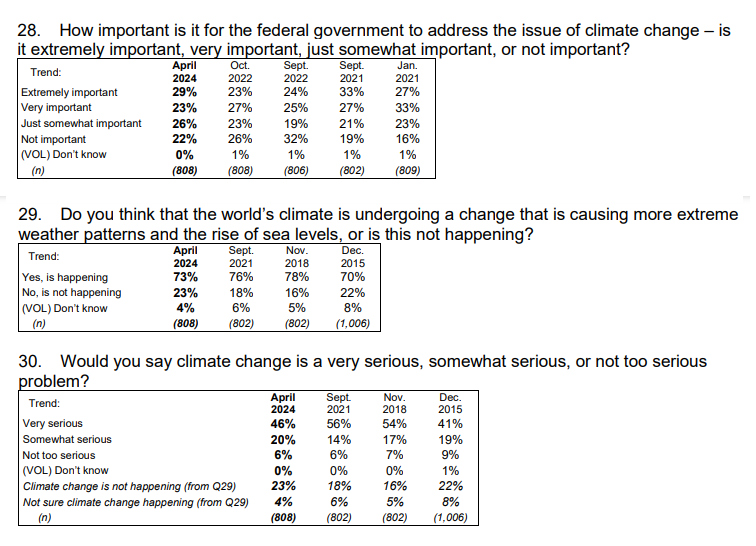
New polling from Monmouth University shows a significant drop in “serious concern” over the issue of “climate change,” particularly among young people.

Younger adults express less urgency than in prior polls

West Long Branch, NJ – Most Americans continue to acknowledge the existence of climate change, according to the latest Monmouth (“Mon-muth”) University Poll, but the number who see this as a very serious problem has fallen below half. Support for government action to reduce activities that impact the climate has dipped below 6 in 10 for the first time since Monmouth began polling this topic nearly a decade ago. The poll finds that the drop in the importance and urgency of climate change has been most pronounced among younger adults.

“Most Americans continue to believe climate change is real. The difference in these latest poll results is a decline in a sense of urgency around this issue,” said Patrick Murray, director of the independent Monmouth University Polling Institute.

METHODOLOGY
The Monmouth University Poll was sponsored and conducted by the Monmouth University Polling Institute from April 18 to 22, 2024 with a probability-based national random sample of 808 adults age 18 and older. Interviews were conducted in English, and included 163 live landline telephone interviews, 349 live cell phone interviews, and 296 online surveys via a cell phone text invitation. Telephone numbers were selected through a mix of random digit dialing and list-based sampling. Landline respondents were selected with a modified Troldahl-Carter youngest adult household screen. Interviewing services were provided by Braun Research, with sample obtained from Dynata (RDD, n=484), Aristotle (list, n=168) and a panel of prior Monmouth poll participants (n=156). Monmouth is responsible for all aspects of the survey design, data weighting and analysis. The full sample is weighted for region, age, education, gender and race based on US Census information (ACS 2021 one-year survey). 

Demographics (weighted)
Party (self-reported): 25% Republican, 44% Independent, 31% Democrat
Sex: 49% male, 50% female, 1% other
Age: 30% 18-34, 32% 35-54, 38% 55+
Race: 61% White, 12% Black, 17% Hispanic, 9% Asian/other
Education: 38% high school or less, 29% some college, 17% 4 year degree, 16% graduate degree

A Monmouth poll released last month found only 15% of voters view climate change as a determinative issue in how they will vote in the 2024 presidential election, ranking far lower than inflation, immigration, and abortion.   Compared to three years ago, climate change concern has declined by 8 percentage points among both Democrats (77% very serious, down from 85% in 2021) and Republicans (13%, from 21%) and by 13 points among independents (43%, from 56%).

[…]

Via https://rclutz.com/2024/05/09/us-poll-climatism-support-dropping/

Nanoplastics Linked to Heart Attacks and Stroke

Dr Mercola

Story at-a-glance

  • Nanoplastics, particles less than 1 micrometer in size, are a significant environmental and health concern due to their prevalence and potential hazards. Americans could consume up to 3.8 million pieces of micro- and nanoplastics per year from protein sources alone. Infant formula has also been confirmed to contain microplastics
  • Recent research found individuals with microplastics or nanoplastics in their carotid artery tissues have a 353% higher risk of cardiovascular events like heart attacks or strokes than those without microplastics in their arteries
  • Microplastics and nanoplastics in the body can cause oxidative stress, tissue damage, and inflammation, leading to chronic diseases beyond cardiovascular issues
  • To counteract the estrogenic exposure from plastics, progesterone, a natural estrogen antagonist, can be beneficial, with suggestions for its use and administration provided
  • Prevention strategies include minimizing plastic use, opting for alternatives to plastic packaging, using reusable containers, and detoxing through methods like sweating in a sauna to excrete microplastics

Nanoplastics — particles less than 1 micrometer in size, or 1,000th the average width of a human hair — have emerged as a significant environmental concern due to their widespread prevalence and potential health hazards to humans and wildlife alike. These microscopic fragments result from the degradation of larger plastic debris and can also be manufactured directly for various applications.

Nanoplastics have become ubiquitous in ecosystems around the world, from urban waterways to remote oceanic and terrestrial environments. Their pervasive presence is attributed to the widespread use and disposal of plastic materials globally.

Environmental Hazards

Nanoplastics pose several environmental hazards, including:

  • Biodiversity loss — Nanoplastics can harm aquatic and terrestrial organisms, leading to reduced biodiversity. They have been found to cause physical and chemical stress in marine life, affecting growth, reproduction, and survival rates.
  • Ecosystem disruption — Their presence in water bodies and soil can alter the chemical composition and physical properties of these environments, disrupting ecosystems’ balance.
  • Food chain contamination — Nanoplastics can accumulate in the food chain, potentially leading to higher concentrations in top predators, including humans.

Microplastics Found in Food, Including Infant Formula

The environmental contamination is so severe, many foods now contain them, including chicken, pork, seafood, beef and plant-based meat alternatives, whether processed, minimally processed or unprocessed.1 The more processing a food has undergone, however, the more plastic it contains.

Researchers estimate that Americans consume up to 3.8 million pieces of micro- and nanoplastics per year from protein alone.2 The reason for this is because meats are packaged in plastic.

Recent research has also confirmed the presence of microplastics in all samples of infant formula tested (30 in all).3 The most frequently identified plastics were polyamide, polyethylene, polypropylene and polyethylene terephthalate. According to the authors, children fed exclusively infant formula likely consume an average of 49 microplastic particles per day.

Nanoplastics Linked to Heart Attacks and Stroke

The potential health impacts of micro- and nanoplastics on humans have long been debated, but a recent study4 published in the New England Journal of Medicine marks a significant step in understanding the health implications of microplastic and nanoplastic exposure.

Microplastics and nanoplastics, defined by their minuscule size, can migrate through body tissues, potentially causing oxidative stress, tissue damage and inflammation.

The study in question analyzed tissue from 257 individuals undergoing carotid endarterectomy to identify plastics in arterial plaques, revealing the presence of polyethylene (associated with asthma, hormone disruption, reproductive issues and dermatitis5) and polyvinyl chloride (PVC, linked to liver and reproductive damage6), among others. As reported by the authors:7

“Polyethylene was detected in carotid artery plaque of 150 patients (58.4%), with a mean level of 21.7±24.5 μg per milligram of plaque; 31 patients (12.1%) also had measurable amounts of polyvinyl chloride, with a mean level of 5.2±2.4 μg per milligram of plaque.

Electron microscopy revealed visible, jagged-edged foreign particles among plaque macrophages and scattered in the external debris. Radiographic examination showed that some of these particles included chlorine.”

Disturbingly, individuals with microplastics or nanoplastics in their carotid artery tissues were found to have fourfold higher risk of suffering a cardiovascular event such as heart attack or stroke over the next three years compared to those without such plastics. They were also more likely to die from any cause. As reported by the authors:

“Patients in whom MNPs [microplastics and nanoplastics] were detected within the atheroma were at higher risk for a primary end-point event than those in whom these substances were not detected (hazard ratio, 4.53).”

A hazard ratio (HR) of 4.53 means that people with microplastics in their arteries have a 353% higher risk of suffering a potentially lethal cardiac event than those without microplastics.

Should Microplastic Exposure Be Considered a Cardiovascular Risk Factor?

Lead author Raffaele Marfella emphasized the need for further research to confirm these findings,8 although the study already suggests a strong association between plastics and cardiovascular events in people with atherosclerosis.

The study’s implications are significant, according to pediatrician Dr. Philip Landrigan, who stressed the importance of addressing the potential cardiovascular risks posed by microplastics and nanoplastics in an accompanying editorial:9,10

“Although we do not know what other exposures may have contributed to the adverse outcomes among patients in this study, the finding of microplastics and nanoplastics in plaque tissue is itself a breakthrough discovery that raises a series of urgent questions.

Should exposure to microplastics and nanoplastics be considered a cardiovascular risk factor? What organs in addition to the heart may be at risk? How can we reduce exposure?”

Nanoplastics Pose Severe Hazards for Animals and Humans

CNN, which reported the findings, also highlighted research linking nanoplastics and microplastics to other potential harms, such as:11

Chronic inflammation — The presence of microplastics and nanoplastics in arterial plaques was linked to increased inflammation. Chronic inflammation, in turn, is a hallmark of most chronic diseases, not just cardiovascular disease, suggesting that plastic exposure could exacerbate or increase susceptibility to a wide variety of conditions.
Dysfunction of cells, organs and endocrine system — Nanoplastics, due to their small size, can migrate through tissues of the digestive tract or lungs into the bloodstream, invading individual cells and tissues in major organs. This can potentially interrupt cellular processes and deposit endocrine-disrupting chemicals, affecting the body’s normal functions.
Oxidative stress and tissue damage — Studies in animals have shown that exposure to micro- and nanoplastics may cause oxidative stress, tissue damage, and inflammation in cells. These effects could lead to various health issues, depending on the extent and duration of exposure.
Impaired cardiac function — Animal studies have also indicated that micro- and nanoplastics can alter heart rate and impede cardiac function, posing additional risks to cardiovascular health.
Risks to fetuses and young infants — Research in pregnant mice has found plastic chemicals in the brain, heart, liver, kidney, and lungs of the developing fetus within 24 hours after the mother ingested or inhaled plastic particles. This suggests that plastics can cross the placental barrier, potentially affecting fetal development.

Previous studies have also found microplastics in the human placenta12 and human breast milk13 — clear evidence that a mother’s plastic exposure can be directly transferred to her child both before and after birth.

Microbiome alterations — Studies have also found that microplastics can alter the makeup of microbial communities, reducing diversity14 and increasing the exchange of antibiotic-resistant and metal-resistant genes.15

Progesterone Counteracts Xenoestrogen Exposure From Plastics

In the featured video at the top of this article, best-selling author and high-performance coach Siim Land reviews the research linking arterial nanoplastics to a near-fourfold higher risk of cardiovascular events.

As noted by Land, microplastics contain xenoestrogens, which have been linked to obesity, infertility, cancer and more. Indeed, estrogen is a known carcinogen,16 and plastics is perhaps one of the most ubiquitous sources of estrogen for men and women alike.

Estrogen is also antimetabolic and radically reduces the ability of your mitochondria to create cellular energy in a form of ATP by depending on aerobic glycolysis (the Warburg effect) which radically impairs oxidative phosphorylation.

To counteract the hazards of this estrogenic exposure you can use progesterone, which is a natural estrogen antagonist. Progesterone is one of only four hormones I believe many adults can benefit from. (The other three are thyroid hormone T3, DHEA and pregnenolone.)

As a general recommendation, most adult males and non-menstruating adult women would benefit from taking 25 to 50 mg of bioidentical progesterone per a day, taken in the evening one hour before bed, as it can also promote sleep. For optimal bioavailability, progesterone needs to be mixed into natural vitamin E. The difference in bioavailability between taking progesterone orally without vitamin E and taking it with vitamin E is 45 minutes versus 48 hours.

Pre-menopausal women can also take progesterone but it is the last half of their cycle, approximately 14 days after the last day of their period and stopping when period returns. Another good reason for taking progesterone with vitamin E is because it binds to red blood cells, which allows the progesterone to be carried throughout your body and be distributed to where it’s needed the most.

[…]

Do not use synthetic vitamin E (alpha tocopherol acetate — the acetate indicates that it’s synthetic). Natural vitamin E will be labeled “d alpha tocopherol.” This is the pure D isomer, which is what your body can use. There are also other vitamin E isomers, and you want the complete spectrum of tocopherols and tocotrienols, specifically the beta, gamma, and delta types, in the effective D isomer.

I do not recommend transdermal progesterone, as your skin expresses high levels of 5-alpha reductase enzyme, which causes a significant portion of the progesterone you’re taking to be irreversibly converted primarily into allopregnanolone and cannot be converted back into progesterone.

Preventing Exposure Is Key

Of course, prevention — minimizing your exposure — really needs to be your first line of defense against microplastics. While that sounds easy enough, it can be tricky business, for the simple reason that micro- and nanoplastics are all around us, in our food, water, household dust, clothing, household and personal care items and even the air we breathe.

That said, making a concerted effort to rid your household of plastic can go a long way toward minimizing your and your children’s exposure. Here are a few pointers to get you started:

Filter your tap water and avoid water bottled in plastic — If you need to buy bottled water, opt for glass bottles. Also make sure the filter you use to purify your tap water can filter out microplastics.
Boil hard tap water — If you have hard tap water, consider boiling it before using it for cooking or drinking, as hard water traps more microplastics. Recent research shows boiling hard tap water for five minutes removes up to 90% of the microplastics in the water.17
Choose alternatives to plastic packaging — Opt for products packaged in glass, metal, or paper instead of plastic. This can significantly reduce the amount of plastic waste that potentially breaks down into microplastics. At home, use wax paper, parchment paper or paper bags to store foods rather than plastic wrap.
Use reusable containers — Replace single-use plastic bottles, cups, and containers with reusable alternatives made from safer materials like stainless steel or glass.
Never microwave plastics — Heat can cause plastics to leach chemicals into food. Use glass or ceramic containers for microwaving.
Avoid plastic cutting boards — Opt for wood or glass cutting boards instead.
Opt for natural fibers — Whenever possible, choose clothing and other textile products made from natural fibers like cotton, wool and linen, as synthetic fabrics such as polyester shed microfibers and leach xenoestrogens.
Wash synthetic clothes less frequently — When washing synthetic textiles, use a microfiber filter in your washing machine to trap synthetic fibers and prevent them from entering the water system.
Opt for food grade cosmetics and personal care products — Some cosmetics, toothpastes, and personal care products contain microbeads or other plastic particles. Look for products free of these materials. Ideally, opt for all-natural, food grade products.

[…]

Via https://articles.mercola.com/sites/articles/archive/2024/05/09/nanoplastics.aspx

Why has densely populated Rwanda agreed to UK plan to deport migrants there?

Britain’s Priti Patel and Rwanda’s Vincent Beirut after signing an agreement on asylum-seekers, at Kigali Convention Center, Kigali, Rwanda on April 14, 2022.

Rafiq A Tschannen

Understanding what the U.K.’s immigration policy to deport asylum seekers means for Rwanda, and examining the African nation’s ability to host refugees.

The story so far: Last week, the British authorities deported an asylum seeker to Rwanda under a voluntary returns scheme and started detaining other migrants in the country in preparation for deportations to the East African nation by July as part of a separate contentious immigration law passed by the United Kingdom Parliament last month.

The U.K. struck a deal with Rwanda in April 2022 to address issues related to undocumented migration and rising anti-immigrant sentiment. The relocation policy faced major legal and political challenges, with the Supreme Court declaring it unlawful and deeming Rwanda an unsafe country for asylum seekers.

In response, the Conservative government finalised a new agreement with Rwanda to ensure additional safeguards and introduced a new Bill to declare Rwanda a “safe third country” for asylum seekers. A flagship scheme of Prime Minister Rishi Sunak, the legislation allows the British authorities to remove asylum seekers who have made “unauthorised journeys” since January 1, 2022, to 6,500 km away to Rwanda for processing of asylum claims.

Rwanda is one of the most densely populated African countries, with a poor human rights record and an inadequate asylum system. In this context, critics have voiced concerns about the risks associated with transferring asylum seekers without adequate safeguards, cautioning that the policy may not effectively address issues of human trafficking and dangerous boat crossings. The impoverished African nation, however, maintains that it can accommodate the influx of as many migrants as Britain sends its way.

How did the U.K. facilitate the deportation of a failed asylum seeker to Rwanda?

The Voluntary Returns Scheme, under which a migrant was sent to Rwanda by the U.K. government on April 30 after his asylum application was rejected, is not an entirely new programme.

The plan was introduced by the Home Office in 1999 and co-funded by the European Refugee Fund. In 2002, a reintegration assistance programme was added to the scheme to help repatriated migrants meet their basic needs after arrival, such as finding a place to live, finding a job, supporting education, or starting a business in the destination country. The programme was initially valued at £500 and gradually increased to £3,000 ($3,800) by 2006.

The current plan is an extension of the existing voluntary returns scheme. Under the new programme, the British government offers financial assistance to migrants and failed asylum seekers who opt to depart to a “safe third country,” or a country they are “admissible to.”

A person is eligible to apply for the service if they have been in the U.K. illegally or have overstayed their visa or permission to stay; withdrawn, or want to withdraw their application to stay in the country; claimed asylum; or have an official letter confirming that they are a victim of modern slavery.

As for reintegration support, a one-off payment is available to those departing to a country recognised as developing by the Organisation for Economic Cooperation and Development (OECD). “You will not qualify for reintegration support if you are a non-permanent resident national of a developing country who is departing to a country that is not on the list,” a Home Office document, dated March 18, 2024, specifies.

The OECD categorises Rwanda as a low-income developing country. Over the years, several individuals have been sent to Rwanda from the U.K. under the VRS. As per the latest official data, 19,253 individuals voluntarily returned from Britain under the returns scheme last year. In fact, 24 of these returned to Rwanda, which data shows was their home country.

With a new treaty in place, the U.K. authorities can pay failed asylum seekers to leave for Rwanda even if it is not their home country. See  U.K. to deport 5,700 migrants to Rwanda this year

Is Rwanda safe for refugees?

Located in the Great Lakes region of Africa, the landlocked country of Rwanda is one of the most densely populated countries in the world with a population of over 13 million people. The country has recorded significant progress in recent years in rebuilding infrastructure and developing its economy after a 1994 genocide, but continues to feature among the least developed nations in the world. Poverty has been a major concern as well.

The government in Rwanda has been further accused of stifling dissent, keeping tight control on media, opposition and civil society, and supporting rebel groups in the Democratic Republic of Congo. “Arbitrary detention, ill-treatment, and torture in official and unofficial detention facilities were commonplace, and fair trial standards were routinely flouted in cases deemed sensitive. There were credible reports of arbitrary detention and mistreatment of people accused of “deviant behaviours,” including street children, sex workers and petty vendors,” Human Rights Watch noted..

The agency has also highlighted how Rwanda’s government has continued to exert pressure on the refugees. “Refugees who are known critics of the government have been threatened and harassed. In Africa, Human Rights Watch has documented and received credible reports of Rwandan refugees and asylum seekers being forcibly disappeared and returned to Rwanda, or killed,” it added. The U.K. Supreme Court’s ruling on the asylum policy also mentioned Rwanda’s poor human rights record and highlighted the risk of ill-treatment of refugees.

Around 1.35 lakh refugees and asylum seekers were registered in the country, as of September 2023, with most moving to Rwanda from the Democratic Republic of Congo and Burundi. Around 90% of these refugees live in five camps across the country, while around 80% of the refugee population is highly vulnerable and fully relies on humanitarian assistance, according to the UN High Commissioner for Refugees (UNHCR).

Instead of dealing with numerous internal challenges and addressing concerns of human rights groups, Rwanda has now agreed to open its borders to over 50,000 more refugees in the next few years.

Rwandan President Paul Kagame’s government, however, remains unfazed. “No matter what number is announced to arrive here tomorrow or after tomorrow … we are capable of receiving them,” Deputy government spokesperson Alain Mukuralinda told Reuters.

So, what’s in it for Rwanda?

As part of the asylum plan, dubbed by some commentators as a “cash cow” for Rwanda, the U.K. government will give development funding to the country and has promised to meet processing and integration costs for each relocated person. Britain has already paid Rwanda 220 million pounds ($250 million), and the total cost is estimated to go up to 600 million pounds for 300 refugees.

Despite criticism from several quarters, Rwanda’s President Paul Kagame maintains that its decision to be part of the U.K.’s asylum plan is not economically driven or about “trading people,” but to offer them a better chance at life. The nation has reiterated its commitment to “international obligations” for “innovative action to solve one of the world’s biggest crises,” positioning itself as a suitable place for refugees from the African region, and elsewhere.

“Rwanda has a deep, historical connection with the plight of refugees worldwide. As such, we feel a moral obligation to support the world’s most vulnerable. The funds provided by the UK will be invested in Rwandan society, helping us to create jobs, improve public services and upgrade our infrastructure for the benefit of both migrants and Rwandan nationals,” government spokesperson Yolande Makolo told news Anadolu news Agency.

Experts believe that Rwanda’s agreement to partner with the U.K. is an extension of these efforts to emerge as an ally of the West which is grappling with a migrant problem. “I have heard some people claim that the U.K. gave us money, wanting to dump people here. No, we don’t do that kind of thing. We are not involved in the buying and selling of people. We can’t do that because of our core values,” Rwandan President Paul Kagame said at an event.

[…]

Via https://themuslimtimes.info/2024/05/08/explained-why-has-densely-populated-rwanda-agreed-to-the-u-k-s-plan-to-deport-migrants/

Israel to hand over Rafah crossing to private US firm


(Photo credit: Said Khatib/AFP/Getty Images)

The Cradle

Israel will grant control of the Rafah border crossing to a private US security company, Haaretz newspaper reported on 8 May.

The US, Egypt, and Israel have agreed “that a private American security company will assume management of the crossing after the IDF concludes its operation.”

Discussions between the three sides have been ongoing. Israel has committed to the US and Egypt that it will restrict its operation in Rafah, Gaza’s southernmost city. Tel Aviv reportedly made it clear during talks that the operation at the Rafah crossing aims to pressure Hamas in ceasefire talks and diminish the crossing’s image as a “symbol of Hamas’ power.”

It has also said the operation aims to cut off Hamas’ ability to channel weapons and funds into Gaza.

Israel has reportedly vowed not to damage the crossing’s facilities to ensure its operation is not hindered. The Rafah crossing is considered a major lifeline for Palestinians in Gaza, and the UN has warned that continuous Israeli operations in the area seriously threaten aid efforts.

Cairo and Washington have been showing serious concern lately over Israel’s plans for Rafah, which the army has been promising to invade for months. The city is overcrowded with over a million besieged Palestinians, and a full-scale assault poses the threat of an unprecedented humanitarian disaster.

“As part of Israel’s efforts to win agreement for a Rafah operation, negotiations have been underway with a private company in the US that specializes in assisting armies and governments around the world engaged in military conflicts,” the Haaretz report adds.

The company, which employs veterans of elite US military units, has been active in several African and West Asian nations, guarding sites such as oil fields, bases, and border crossings.

In line with the understandings reached between Cairo, Washington, and Tel Aviv, the US firm will assume responsibility for the crossing after Israel’s “limited” operation there is over. This includes overseeing the delivery of goods arriving from Egypt to Gaza and ensuring Hamas does not re-establish control of the crossing.

“According to the agreement, Israel and the US will assist the company as necessary.”

The White House and a State Department spokesman said on 8 May that they are unaware of any such plans. Several Palestinian resistance factions said in a joint statement on Wednesday that they refuse any attempt to “impose any form of [foreign] guardianship of the Rafah crossing,” adding that they consider this a “form of occupation.”

“Any plan of this kind … will be dealt with in the same way as the occupation is dealt with,” the statement added.

Sources told CNN and the Times of Israel on Tuesday that Israel’s operation at the Rafah crossing is a limited one, which aims to pressure Hamas in ongoing truce negotiations. Hamas accepted on Monday an updated proposal for a deal, which Israel finds unacceptable given its explicit call for a cessation of hostilities and withdrawal of all Israeli forces from Gaza.

[…]

Via https://thecradle.co/articles/israel-to-hand-over-rafah-crossing-to-private-us-firm-report

Robert F. Kennedy Jr Challenges President Trump To Debate At Libertarian Convention

Kennedy Challenges President Trump to a Debate at Libertarian Convention | Kennedy24

Peckford42

Dear President Trump,

I’m grateful to you for calling attention to the rigged polling methodologies that biased DNC-influenced media have used against you. We have this concern too, and I’m happy to show you the deceptive methodologies used by DNC-allied pollsters who pretend that I’m in single digits. You have correctly characterized these as “fake polls.”

This is why we did our own poll with Zogby — the largest and most accurate poll of this election cycle.

We had Zogby ask about head-to-head matchups. (1) You versus President Biden. (2) Me versus President Biden. (3) Me versus you. The results? You beat President Biden handily. I crush him as well, by even more. And against each other, I beat you in a nail-biter.

In a three-way, you are ahead but I’m coming up strong. Two new polls (CNN and Quinnipiac) have me above the 15% debate threshold. Another (Activote) has me at 26% among young voters. And you and I are tied among America’s 70 million Independents.

I’m also drawing a lot of voters from your former supporters. They are upset that you blew up the deficit, shut down their businesses during Covid, and filled your administration with swamp creatures.

So I’d like to make you an offer.

We’re both going to be speaking at the upcoming Libertarian convention on May 24 and 25. It’s perfect neutral territory for you and me to have a debate where you can defend your record for your wavering supporters. You yourself have said you’re not afraid to debate me as long as my poll numbers are decent. Well, they are. In fact, I’m the only presidential candidate in history who has polled ahead of both major party candidates in head-to-head races. So let’s meet at the Libertarian convention and show the American public that at least two of the major candidates aren’t afraid to debate each other. I asked the convention organizers and they are game for us to use our time there to bring the American people the debate they deserve!

Sincerely, Robert F. Kennedy, Jr.

[…]

Via https://peckford42.wordpress.com/2024/05/08/robert-f-kennedy-jr-challenges-president-trump-to-a-debate-at-the-libertarian-convention-both-will-be-attending-here-is-the-written-challenge/

FBI Brought Props To Stage Infamous Trump Crime Scene Photo

FBI Brought Props To Stage Infamous Trump Crime Scene Photo

Daily Caller

The FBI brought props to its raid of former President Donald Trump’s Mar-a-Lago for classified documents that were pictured in an infamous photo taken at the alleged crime scene, according to court documents.

Jay Bratt, the lead Department of Justice (DOJ) prosecutor now assigned to special counsel Jack Smith’s team, admitted in a recent court filing that FBI agents brought cover sheets reading “top secret” to the raid of Mar-a-Lago to use as placeholders in their gathering of classified documents. The classified documents, however, now appear to be out of order following their seizure, both Trump’s defense attorney and the special counsel have admitted, according to court documents first reported by Declassified with Julie Kelly.

The crime scene photo of classified documents allegedly found at Mar-a-Lago, complete with the bright red “classification” cover sheets, went viral in the weeks after the raid. Corporate media outlets breathlessly reported on the photo and the cover sheets as proof that Trump had been storing classified documents at his Florida property.

“[If] the investigative team found a document with classification markings, it removed the document, segregated it, and replaced it with a placeholder sheet. The investigative team used classified cover sheets for that purpose,” Bratt wrote in a recent filing.

In a May filing, Waltine Nauta, Trump’s defense attorney, wrote that the placeholders which the FBI brought to the scene to mark classified documents in stacks were out of place.

“Following defense counsel’s review of the physical boxes…and the documents produced in classified discovery, defense counsel has learned that the cross-reference provided by the Special Counsel’s Office does not contain accurate information,” Nauta wrote, according to Kelly.

“[Thirteen] boxes or containers contained documents with classification markings, and in all, over one hundred unique documents with classification markings…were seized. Certain of the documents had colored cover sheets indicating their classification status. (Emphasis added.) See, e.g., Attachment F (redacted FBI photograph of certain documents and classified cover sheets recovered from a container in the ‘45 office’),” Bratt wrote in an August 2022 court filing.

Kelly writes that Bratt’s original filing did not explain where those classified document sheets had come from, though later he admitted that the sheets were in fact brought to the scene by FBI agents.

“In other words, in their zeal to stage a phony photo using official classified cover sheets, FBI agents might have failed to accurately match the placeholder sheet with the appropriate document. This is a potentially case-blowing mistake, particularly if the document in question is one of the 34 records that represents the basis of espionage charges against Trump,” Kelly reported.

In response to Nauta’s filing, Bratt admitted that the placeholders had been rearranged, and that not all of them had been properly matched with the right placeholder sheet, according to a court document.

[…]

Via https://dailycaller.com/2024/05/07/fbi-mar-a-lago-crime-scene-photo-donald-trump-classified-documents/

Tuthmosis III: Egypt’s Greatest Military Pharaoh

Egyptian Chariot London Art Studio, Battle Of Kadesh, Sea Peoples ...

Episode 17 Tuthmosis III – King at Last

The History of Ancient Egypt

Professor Robert Brier

Film Review

The stepson of Egypt’s first female pharaoh, Tuthmosis III (1479-1425 BC), was 36 when Hatshepsut died and he assumed the throne. He was Egypt’s greatest military pharaoh, having adopted a redesigned two-horse chariot from the Hyksos (see Egypt’s Second Intermediate Period and Foreign Rule by the Hyksos). With wheels made from flexible ash or popular, it  was extremely light to improve maneuverability in battle. It carried two men (a driver and archer) who stood on a small platform made of woven leather. Typically the king (pharaoh) would lead the charge in a chariot with a specially trained archer.

The walls of Tuthmosis’s III’s mortuary temple in Karnak (near Thebes) describe a campaign during the second year of his reign (in in which he marched his infantry 15 miles a day to the city of Megiddo (in modern day Israel). There they laid siege for seven months, employing a primitive tank invented by his army engineer,  because the city had ceased sending tribute to Egypt.

Thuthmosis III also marched north to invade Syria every year for 18 years, as well as making war on Nubia. His troops carried round top shields made of a piece of wood stretched with hide and a spear or sword or sometimes both. When they camped, they used their shields to form a picket fence around their campsite.

A personal favorite from my Etsy shop https://www.etsy.com/listing ...

Despite Egypt’s more or constant state of war under his reign, neither Tuthmosis III nor any other pharaoh ever occupied any of the cities they conquered, owing to their religious belief that one had to die and be buried in Egypt to become immortal.

Tuthmosis III also produced a botanical book describing all the plants and wildflowers he saw in Syria and the presence of snow on the mountains of Lebanon.

Although there’s no written record, historians surmise that Tuthmosis III married his half-sister and Hatshepsut’s daughter Neferure. Three of the women in his harem have been identified as Syrian from the gold necklaces and bracelets found in their tombs.

He had his own tombed carved into a high cliff near the Valley of the Kings. Like most pharaohs, he covered it walls with religious texts. The commoners he ruled covered theirs with scenes from daily life. Only 20% of the population of ancient Egypt was literate.

Film can be viewed free with a library card on Kanopy.


https://www.kanopy.com/en/pukeariki/watch/video/1492791/1492832