Growing Rift Between Netanyahu and Israeli Military
Reply


Episode 38 Dynasty XXV: The Nubians Have Their Day
he History of Ancient Egypt
Professor Robert Brier
Film Review
Dynasty XXII (the Libyan dynasty) became fragmented after different princes claimed sovereignty over different regions of Egypt.
The Nubians (referred to as Kushites in the Bible) consisted of multiple warring tribes south of the Aswan. They experienced repeated Egyptian invasions for thousands of years before uniting under King Piye in 747 BC to defend themselves. Leading his troops and bowmen* north, he seized power from the four Egyptian kings representing the XXIII and XXIV Dynasties in the delta region.
Piye (747-716 BC) then unified Egypt by making his sister Amenirdis I the Divine Adoratrice of Amun at Karnak (in Upper Egypt) and allowing petty princes to rule on his behalf in delta. Taking one of the delta kings prisoner, he returned home to rule from Nubia.
His brother Shabak (716-697 BC) succeeded him (according to Nubian tradition) and erected a large stella summarizing the creation of the world by Ptah.**
Shabak’s nephew Shubilku (697-690 BC) succeeded Shabak. He appointed his daughter Shepenwept II the Divine Adoratrice of Amun at Karnak.Under his reign, Assyria which was annexing more and more of the Middle East invaded and occupied Palestine.
Taharqa (possibly the son of Piye) succeeded Shubiku and ruled from 690-664 BC. He allied with the kingdom of Judah to defeat Assyrians at Eltekeh in (in modern day Israel( in 701 BC.
The Assyrian king Sennacherib was assassinated on his return to Assyria, and Taharqa was defeated by Sennarcherib’s successor Esarshaddon at Ahkelon (in southern Israel), resulting in the Assyrian invasion of Egypt. Taharqa fled to northern Nubia, and Esarshaddon was assassinated in 668 BC during a rebellion in northern Egypt. In retaliation Ashurbanipal, who succeeded him, killed the entire Egyptian nobility except for Necho I, who he made vassal king of Egypt.
Assuming the throne of Nubia and Upper Egypt following Taharqa’s death, his cousin Tahuatamun launched an unsuccessful assault on the Assyrian in northern Egypt. Victorious, the Assyrians marched south seizing all the gold in Thebes and occupying all of Egypt.
Brier uses the last 10 minutes of the lecture to address the controversy around two questions: 1) whether Western civilization originated in Africa (ie Egypt) and 2) whether Egyptians were Back.
He cites Socrates and Plato as affirming Egypt was the origin of Greek civilization. Greek scholars often visited Egypt to learn math, and Greeks learned stone building from the Egyptians.
According to Brier, Egyptians came in all skin colors. In tomb frescoes, Nubians have black skin (Nubians also depicted themselves as black), Egyptian men red skin and Egyptian women yellow skin. Libyans (who lived in large numbers in the delta region) had fairer skin than Egyptians.
*The Egyptians had hired Nubians as mercenary bowmen for centuries.
**There were numerous temples to Amun and other gods in northern Nubia, and educated Nubians totally embraced Egyptian gods.
Film can be viewed free with a library card on Kanopy.
https://www.kanopy.com/en/pukeariki/watch/video/1492791/1492875

Shoshenq I (middle) gives offering to Amun (left), accompanied by his son Iuput (right)
Episode 37 Dynasty XXII: Egypt United
The History of Ancient Egypt
Professor Robert Brier
Film Review
Dynasty XXII was actually a Libyan dynasty, which reunited and ruled Egypt for 200 year from their delta capitol. Most of the information archeologists have collected about the XXIInd dynasty comes from the Serapeum in Saqqara. The latter is the burial place for the Apis bulls sacred to Ptah. There are inscriptions inside the tomb identifying the king undertaking the burial. Archeologists have also found a few tombs of Libyan kings.
Large numbers of Libyans (most likely descendants of Libyans captured during Ramses III’s war with Libya) had settled in the delta region and were used as mercenaries by pharaohs of earlier dynasties. The first Libyan king Shoshenq I (945-924 BC) was the chief of the Meshwesh (Libyan mercenaries) and claimed the throne after marrying the daughter of the last king of the XXIst dynasty.
To secure Egyptian unity, Shoshenq appointed all his sons to high administrative positions in his government. One became the high priest of Amun in Thebes and the commander-in-chief of the army, one became the third prophet of Amun and one was was made military commander of Heracleopolis in Middle Egypt.
Shoshenq (referred to Shesaq in the Bible) launched a campaign against Palestine, weakened due its recent division into Israel and Judah. After his troops captured 156 Palestinian cities, his troops encircled Jerusalem and retreated after the city fathers gave him all the gold shields and other treasures of the city.
Shoshenq I’s successors:
Film can be viewed free with a library card on Kanopy.
https://www.kanopy.com/en/pukeariki/watch/video/1492791/1492873
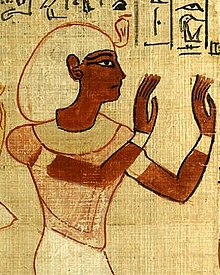
Herihor
Episode 36 Dynasty XXI: Egypt Divided
The History of Ancient Egypt
Professor Robert Brier
Film Review
The division of Egypt into Upper (southern) and Lower (northern Egypt) began under the last XXth dynasty pharaoh Ramses XI. There seems to have been strong cooperation (including intermarriage) between the two Egypts during a period of substantial wealth.
Rulers of Upper Egypt
Rulers of Lower Egypt
*Previously it was unprecedented for members of the royal family to move to foreign land, because it meant they wouldn’t be reincarnated.
Film can be viewed free with a library card on Kanopy.
https://www.kanopy.com/en/pukeariki/watch/video/1492791/1492873

A Pentagon-funded company is seeking proposals to feed America’s soldiers lab-grown meat in a bid to “reduce the CO2 footprint” at Defense Department outposts.
BioMADE, a public-private company that has received more than $500 million in funding from the Defense Department, announced earlier this month that it is seeking proposals to develop “innovations in food production that reduce the CO2 footprint of food production at … DoD operational environments,” according to an online announcement.
These include “novel cell culture methods suitable for the production of cultivated meat/protein,” or lab-grown meat, a product that is still in its experimental phases. This type of meat is grown in a lab from animal cells with the aid of other chemicals, and has emerged as a flashpoint in debates about the efficacy and morality of manufacturing meat products without slaughtering animals.
BioMADE—which earlier this year received a $450 million infusion of taxpayer cash—maintains that lab-grown food products will reduce the Pentagon’s carbon footprint, a priority for the American military as it pursues a Biden administration-mandate to address climate change and other cultural issues that critics describe as “woke.”
“Innovations in food production that reduce the CO2 footprint of food production at and/or transport to DoD operational environments are solicited,” the company says in an informational document and accompanying press release. “These could include, but are not limited to, production of nutrient-dense military rations via fermentation processes, utilizing one carbon molecule (C1) feedstocks for food production, and novel cell culture methods suitable for the production of cultivated meat/protein.”
BioMADE is also soliciting proposals for “processes that convert greenhouse gasses” and “projects that develop bioproducts useful in mitigating the negative environmental impacts either regionally or globally,” including “bioproducts that can be used to prevent or slow coastal erosion.”
Critics of the DoD’s partnership with BioMADE say that U.S. troops should not be used as test subjects for lab-grown meat products that are still in their experimental phase.
“Taxpayer dollars should not be used to fund the lab-grown meat sector,” Jack Hubbard, executive director at the Center for the Environment and Welfare, a consumer group that analyzes emerging markets such as bioengineered meat. “Our troops deserve better than to be served lab-grown meat, produced in bioreactors with immortalized cells and chemicals.”
“Unfortunately,” Hubbard said, “this effort is being driven by an agenda that is political and anti-farmer. Our soldiers should never be used as guinea pigs.”
The Pentagon and its outside partners, as part of its push to fund “alt-protein projects,” made up to $2 million available for such projects, according to the publication Alt-Meat.
Supporters of these efforts say U.S. national security hinges on addressing global change and pursuing new technologies that enable products like lab grown meat.
“One of the most immediate, politically feasible, and high-impact ways to do this [address climate change] is for the U.S. government to invest in and accelerate alternative ways to produce meat,” Matt Spence, a former Defense Department official wrote in a 2021 Slate piece.
Recent studies, however, including one published by the University of California, Davis suggest that “lab-grown meat’s carbon footprint [is] potentially worse than retail beef.”
“If companies are having to purify growth media to pharmaceutical levels, it uses more resources, which then increases global warming potential,” according to the report’s lead author, Derrick Risner, a member of UC Davis’s Department of Food Science and Technology. “If this product continues to be produced using the ‘pharma’ approach, it’s going to be worse for the environment and more expensive than conventional beef production.”
[…]

The Saudis’ exit from the petro-dollar is a major blow to the United States and to USD hegemony!
It will however allow Saudi Arabia to sell oil, as well as other goods, in multiple currencies including the Chinese RMB, Euros, Yen, and Yuan, instead of exclusively in US dollars.
TBS News reports: Originally signed on 8 June 1974, the deal established two joint commissions, one based on economic cooperation and the other on Saudi Arabia’s military needs. At the time, it was said that it heralded an era of close cooperation between the two countries, says Katja Hamilton of BizCommunity.
American officials at the time expressed optimism that the deal would motivate Saudi Arabia to ramp up its oil production. They also envisioned it as a blueprint for fostering economic collaboration between Washington and other Arab countries.
The crucial decision to not renew the contract enables Saudi Arabia to sell oil and other goods in multiple currencies, including the Chinese RMB, Euros, Yen, and Yuan, instead of exclusively in US dollars. Additionally, the potential use of digital currencies like Bitcoin may also be considered.
This latest development signifies a major shift away from the petrodollar system established in 1972, when the US decoupled its currency from gold, and is anticipated to hasten the global shift away from the US dollar.
Cross-border CBDC transactions
In a more recent move, Saudi Arabia has announced its involvement in Project mBridge, a project which explores a multi-central bank digital currency (CBDC) platform shared among participating central banks and commercial banks. It is built on distributed ledger technology (DLT) to enable instant cross-border payments settlements, and foreign-exchange transactions.
The project has more than 26 observing members including the South African Reserve Bank, which was greenlighted as a member this month.
The better known observing members of mBridge are those of the Bank of Israel, Bank of Namibia, Bank of France, Central Bank of Bahrain, Central Bank of Egypt, Central Bank of Jordan, European Central Bank, the International Monetary Fund, the Federal Reserve Bank of New York, the Reserve Bank of Australia, and the World Bank.
In tandem, the project steering committee has created a bespoke governance and legal framework, including a rulebook, tailored to match the platform’s unique decentralised nature.
[…]
Via https://thepeoplesvoice.tv/saudi-arabia-wont-be-renewing-its-50-year-petro-dollar-deal-with-the-us/

