How climate change affects youth mental health in Pakistan
Manager, External Engagements, Engro
In 2024, Pakistan has faced devastating floods and extreme heat, hindering its recovery from existing climate crisis-related disasters.
While the economic and physical health impacts of climate change are clear, Pakistan’s population is also experiencing the often overlooked mental health ramifications.
How can a growing sense of climate anxiety or “eco-anxiety” in locals be addressed?
The US-backed Syrian Democratic Forces (SDF) ended on 13 August the siege it had imposed on the northern Syrian cities of Hasakah and Qamishli for the past week, thanks to the mediation of the Russian army.
“All roads that were closed to civilian movement have been opened, with the start of the entry of water, fuel, flour and food tankers into the centers of the cities of Al-Hasakah and Qamishli. Things have returned to how they were before the siege,” Hasakah governor Louay Sayyouh told Al Mayadeen on Tuesday.
Russian military officials held talks with SDF and Syrian army representatives in Qamishli on 13 August, Al Mayadeen and Sputnik reported.
Sputnik’s correspondent said “intensive Russian efforts” took place during the meeting between the commander of Russian forces in Syria and the head of the SDF, Mazloum Abdi, aimed at lifting the SDF siege and de-escalating tensions in the eastern Deir Ezzor governorate, where a large Arab tribal rebellion against Washington’s Kurdish proxy is ongoing.
“There was an initial agreement on the necessity of releasing all detainees in the Syrian army held by the SDF in the cities of Qamishli and Hasakah, along with the necessity of lifting the siege imposed by the SDF on the neighborhoods under the control of the Syrian Arab Army in the cities of Hasakah and Qamishli,” the Sputnik correspondent said.
The SDF siege on Damascus-held areas of Hasakah and Qamishli had been ongoing for the past seven days and was imposed in response to the Arab tribal offensive against the Kurdish militant group last week.
Prior to the Russian visit to Qamishli, which began last week, SDF leaders had “rejected mediation and insisted on continuing the siege,” according to Syrian journalist and TV presenter Haidar Mustafa.
Mustafa added that the SDF siege tactic will not “deter the tribal ‘resistance’ from continuing its project aimed at pressuring the US occupation and its Kurdish militias.”
The Russian mediation came as US forces continued attacks on Syrian army positions in the countryside of Deir Ezzor in support of its SDF allies, who are engaged in clashes with a coalition of Arab tribesmen said to be receiving support from Damascus. SDF forces have also been targeting Syrian military positions with artillery in recent days.
“US Army forces launched a violent attack using heavy artillery and drones on positions of the Syrian army’s auxiliary forces in the villages and towns of Khasham, Marat and Hawijat Sakr in the northeastern countryside of Deir Ezzor,” Sputnik’s correspondent reported during the early hours of 14 August.
The source of the US fire was Washington’s illegal military base in the Conoco oilfield.
On Sunday, several Syrian army soldiers were killed and others wounded in an airstrike targeting a vehicle near Syria’s eastern city of Al-Bukamal on the Syrian–Iraqi border. The strike was widely believed to have been carried out by US forces that had attacked Syria several times since last week’s tribal assault.
A coalition of Syrian Arab tribes launched a massive offensive against the SDF in Deir Ezzor’s countryside on 7 August as part of a rebellion launched against the US-backed militants last year.
The tribal fighters have since lost some of the towns and positions they managed to capture as a result of US air cover provided to the SDF.
The SDF helps oversee oilfields occupied by the US army in Syria and is complicit in Washington’s theft of the country’s natural resources.
It has also released hundreds of ISIS fighters held in its prisons across northern Syria – who have then gone on to attack Syrian troops and civilians.
The rebellion against the Kurdish militants represents a broader rejection of US occupation in Syria.
“The events unfolding today in Syria’s eastern region are a result of the repercussions of the Palestinian resistance’s Operation Al-Aqsa Flood and the broader spillover of conflicts across West Asia … while some may view the recent developments as a local conflict – either between Arab clans or between Arab clans and Kurds – the reality suggests otherwise, as the clans find common cause and common targets with the Axis of Resistance,” political affairs writer and researcher Dr Ahmed al-Druze told The Cradle on 12 August.
The Song Dynasty was the most technologically advanced civilization on the planet. With a million troops, they were less physically skilled than Mongol warriors. At the same time, the rugged terrain of southern China, with its mountains, rice paddies and forests (planted by the Song) was disadvantageous to mounted warriors. The Mongols were only able to defeat the Song by building a navy (with the help of Song defectors) and confronting them on the Han and Yangtze River. With only 500 hundred ships, they blocked the Han River and destroyed the Song Navy’s 3,000 ships.
After another five-year stalemate, two Persian engineers constructed 100 massive counterweight* trebuchets that enabled them to attack the Song cities with 12,000 boulders an hour. The Mongols also used them to launch gunpowder explosives (a Chinese invention) packed with scrap metal (the first known use of shrapnel a a weapon). The Mongols also mixed feces and poisonous beetles with their gunpowder (the first known use of biological weapons).
After conquering the city of Funchung, the Mongols slaughtered 3,000 Song soldiers and 7,000 civilians in the hope of intimidating other cities. It only required a single shot from a a giant trebuchet convince the city of Shanyung to surrender. With army in total disarray, the Empress Dowager surrendered on behalf of the child emperor in 1276.
When Qubilai Khan became the new emperor, China was reunified for the first time in 300 years. The name he took for the new dynasty (“Yuan”) derives from the I Ching and means “origin of the universe.” After following all the traditional rites of new emperors and moved the capitol to Beijing (a former Jin city) to be nearer the Mongol seat of power.
There were four social classes under the Yuan dynasty:
The Mongols (granted numerous legal and tax advantage)
The Senuren (European, Russians and Muslim administrator imported from Peria).
The Hanren (Han, Jurchin, Khitans and Koreans)
Nanren (soutern Chinese and other southern ethnicities)
Qubilai Khan established 12 new provinces overseen by centrally appointed Persian officials. Many former Han administrators found themselves out of work when the Mongol emperor dismantled the 1500 year old Confucian exam system. Many became artists.
Plagued by corruption and inefficiency, Qubilai’s administration was really good at collecting taxes.
Positive Yuan Dynasty innovations:
an empire wide communication system using horsemen or runners
an expanded Chinese canal system was expanded for more efficient trade
reunification of China for first time in three centuries (and persisting to the present day.
bring peace to a country at war for more than 100 years.
Marco Polo
Marco Polo, son of an aristocratic Venetian family describes Qubilai Khan’s reign in his famous book The Travels of Marco Polo. In the book, he claims (which is disputed) that Qubilai Khan employed him for 17 years as governor of a city or province. However for the most part the book accurately describes the canals, the Chinese practice of regular bathing (unknown in medieval Europe) and the Yuan social welfare system.
*Using a counter weight of a box filled with rocks, these trebuchets no longer relied on human muscle to reload.
Film can be viewed free with a library card at Kanopy
Shocking even by Israeli standards, the horrifying truth of the occupation’s systematic torture, rape, and degradation of Palestinian detainees reveals a brutality buried in silence.
While the world witnesses the atrocities and massacres committed by Israel’s military assault on Gaza every day, the thousands of Palestinians detained by occupation forces – before and after the events of 7 October 2023 – face torture and death behind closed doors, alone.
Worse yet, these detention horrors have been brazenly publicized and even bragged about by occupation soldiers, with violent, vocalized support from wide swathes of Israeli society.
In the shadows of Israel’s prisons, tens of thousands of Palestinian detainees are enduring a relentless campaign of cruelty. Reports detail harrowing accounts of beatings, gang rape, and psychological torture, compounded by the denial of essential needs such as food, water, and medical care.
This systematic abuse, carried out on an industrial scale, is staggering in its scope and savagery. Public protests have emerged – not to condemn these atrocities – but to demand the release of Israeli soldiers implicated in acts of sexual violence so severe that their victim tragically died from the injuries inflicted.
Secrecy and suffering inside Israeli prisons
Ronen Bar, the head of Israel’s Shin Bet security agency, issued a dire warning to Prime Minister Benjamin Netanyahu in June, describing the situation in Israeli prisons as a “ticking time bomb,” which may endanger senior Israelis abroad and expose them to “international tribunals.”
Bar’s letter revealed that over 21,000 Palestinian detainees were being held, far exceeding official figures and the capacity of the centers.
Rather than addressing these concerns, Israel’s extremist Security Minister, Itamar Ben Gvir, who has barred Red Cross and humanitarian access to Palestinian detainees, responded by boasting about his role in worsening conditions for prisoners.
A policy paper from the Institute for Palestine Studies highlighted the draconian measures implemented as early as 17 October – a mere 10 days after the launch of Operation Al-Aqsa Flood. These measures included:
Constricting living spaces; removing detainees’ beds when necessary and replacing them with mattresses on the floor, leading to overcrowding; a policy of ‘closures’ whereby prison cells are locked, and total isolation is imposed; closing prisons to all family visits or visits by the Red Cross or by lawyers, and rescinding the possibility of bringing detainees before judges so that all judicial sessions are conducted through video conference.
[…]
Reports of rape and abuse despite censorship
While many details remain obscure, evidence from court documents, eyewitness testimonies, and leaked photos and videos paint a harrowing picture of the conditions inside these facilities.
One particularly disturbing case is that of Bassem Tamimi, a resident of Nabi Saleh in the West Bank, who was released from administrative detention – a form of imprisonment without charge – physically emaciated and emotionally broken.
Even Israeli news outlet Haaretzhad its report on Tamimi’s treatment redacted by authorities in an attempt to conceal the breadth of prison brutality.
In January, a joint report published by the Public Committee Against Torture in Israel (PCATI) detailed what it called “systemic” torture of Palestinians.
[…]
Gender-based violence as collective punishment
[…]
A UN report released on 12 June almost entirely focuses on cases of sexual abuse and rape committed against Palestinian men, women, and children while under detention.
[…]
The report further states that gender-based violence “directed at Palestinian women was intended to humiliate and degrade the Palestinian population as a whole.” The men and young boys were stripped and paraded through the streets, and the women were forced to watch as the kidnapped, cuffed, and blindfolded captives were “coerced to do physical movements while naked.”
In Gaza, not only are random Palestinian civilians rounded up and subjected to public degradation, but many are then transferred to Israeli detention centers, without charges, to suffer torture and even death.
According to eyewitness testimonies collected by the Palestinian Prisoners Club (PPC) in July, four blindfolded detainees held without any charge were summarily executed in front of other inmates at the Kerem Abu Shalom site located along the perimeter of Gaza.
Palestine’s Abu Ghraib
Perhaps the most infamous cases of abuse, torture, and rape against Palestinian detainees have emerged from the Sde Teiman detention center, a facility located at an Israeli military site in the Naqab (Negev) desert that is specifically designed for people abducted from Gaza.
Per an amendment to Israeli law back in December, the military is permitted to hold ‘suspected terrorists’ for up to 45 days without charge before transferring them to the Israeli Prison System (IPS). Many of the Palestinian abductees, however, were held for much longer using loopholes in Israel’s legal and prison system.
Despite countless leaked reports on the conditions faced by detained Gazans, including women, children, doctors, people with disabilities, and the elderly, the first real expose that broke through the English-language mainstream media barrier was an investigative piece published by CNN in May.
The US outlet leaked photos of prisoners kept bound, blindfolded, and held behind barbed wire fences in stress positions, and quoted Israeli whistleblowers who worked in the facility.
The testimonies attested to the horrifying sanitary conditions and routine torture practiced there, which one Israeli whistleblower said had “stripped them down of anything that resembles human beings.”
Later, the New York Times went on to publish its own three-month-long investigation into the Sde Teiman facility, confirming three cases of electrocution, two cases of prisoners having their ribs broken during arbitrary beatings, and heinous crimes such as the anal rape of detainees.
It also detailed how prisoners were humiliated and forced to wear only diapers during interrogations. Corroborating the investigative piece’s evidence, a leaked segment of a UN report on the facility quoted prisoners directly, revealing stomach-churning details.
[…]
Dehumanization of Palestinian prisoners
Confirming previous reports on the issue, Haaretz also published a piece on the amputation of prisoners’ limbs by unqualified individuals, which was performed due to the extended periods detainees were shackled, leaving their circulation-deprived flesh to rot and get infected.
A 32-year-old Gazan man, speaking to The Cradle on the condition of anonymity, says Israeli guards “beat me repeatedly and then urinated on me” while held at Sde Teiman detention center. He testifies to being severely tortured, too.
“There were even doctors there, disabled people and young people, but they didn’t care who you were; we were all treated below animals,” he says, explaining that sounds were constantly played to disrupt sleep and make it impossible to tell what time it was.
He goes on to say that he was beaten with metal tools and that the prison guards would mock him and threaten to kill the rest of his family, with full knowledge that his brother had been murdered in a previous series of Israeli airstrikes prior to his abduction, and using the information to torment him mentally.
The director of Al-Shifa Medical Complex in Gaza City, Dr Mohammad Abu Salmiya, who was released after spending seven months in Israeli detention without any charge, testified to what he witnessed after being ferried through a range of detention facilities, including Sde Teiman.
Dr Abu Salmiya stated that “prisoners in Israeli jails endure different types of torture. The army treats them as if they were inanimate objects, and Israeli doctors physically assaulted us.”
He went on to say that there were “severe torture and almost daily assaults inside the prisons and were denied medical treatments,” adding that “no international organization visited us in Israeli prisons, and we were prohibited from meeting any lawyers. Many detainees are still left behind in very poor health and psychological conditions.”
Showers come with severe punishments
Beyond the countless makeshift detention facilities hastily erected inside Gaza – where prisoners were stripped, blindfolded, and left in the sand to endure harsh weather conditions – there are three official detention centers specifically for Palestinians from Gaza, surrounding the besieged coastal territory.
Palestinian lawyer with Israeli citizenship, Khaled Mahajneh, provided an insightful first-hand account of the conditions faced in the Sde Teiman detention camp after being granted a rare visit, stating that “the treatment is more horrifying than anything we have heard about Abu Ghraib and Guantanamo.”
Mahajneh recounted the testimony of one prisoner, who revealed that the only time shackles were removed was during a weekly one-minute shower. But Palestinian detainees began refusing these showers because exceeding the one-minute limit, without a timer to guide them, resulted in “severe punishments, including hours outside in the heat or rain.”
After months of mounting evidence on the deadly conditions faced at Sde Teiman, 10 Israeli reservist soldiers were accused of gang-raping a Palestinian prisoner with a stick. Nine of the accused were arrested, one of whom would be released the next day and go on to brag about his actions on Israeli television.
The arrests, however, triggered the invasion of military facilities by thousands of Israeli protesters, backed by Ben Gvir, who lionized the rapists as “heroes.” A debate on the incident even followed in the Israeli Knesset, where Likud Party MK Hanoch Milwidsky argued in favor of the gang rape.
Since then, a video of the assault has surfaced, and Israel’s Honenu legal aid organization, representing four of the accused, has claimed their clients were acting in “self-defense.”
It’s not just one facility
At a press conference held in the West Bank city of Ramallah in mid-July, Mahajneh also revealed that he had learned, during a visit to the Ofer detention center located in the West Bank, that a 27-year-old Palestinian inmate was brutally raped as follows:
A pipe from a fire extinguisher was used on a handcuffed prisoner. Forcing him to lie on his stomach, stripping him of all his clothes, and inserting the pipe of the fire extinguisher into the prisoner’s rectum. Then, activating the extinguisher … in front of the eyes of the other prisoners.
The case of Palestinian bodybuilder Muazzaz Abayat from Bethlehem, who lost half his body weight during his nine-month incarceration, is indicative of the inhumane conditions that all prisoners are subjected to and that the foul treatment is in no way confined to the detention camps surrounding Gaza.
Official Israeli figures put the number of Palestinian political prisoners at just under 10,000, including 3,380 administrative detainees and 250 children. These numbers are clearly inaccurate, given that Israel’s Shin Bet director has already estimated detainees to number around 21,000 – in June. The exact figures remain elusive, and many prisoners remain unaccounted for. The confirmed death toll among Palestinian prisoners, currently at 35, is also likely an underestimation, as many detainees are still considered missing.
In stark contrast to the intense media coverage and political concern for the Israeli captives held in Gaza, the plight of Palestinian detainees is largely ignored.
There are more Palestinian children held as hostages by Israel than the total number of Israelis seized on 7 October, even according to the lower 10,000 prisoner estimate. In comparison to the suffering of Palestinian detainees, the issue of their Israeli counterparts – less than 100, by some accounts – is a mere drop in the ocean.
After months of investigative reports and United Nations documentation about the horrifying rape and torture methods being used in the Sde Teiman concentration camp against Palestinians, what no one could anticipate, however, was what came next.
At the end of July, Israel decided to accuse ten reserve soldiers of participating in the gang rape of a Palestinian prisoner at the Sde Teiman military facility.
The reason of the arrests, however, had likely more to do with the fact that the incident was actually filmed and may have caused a major international embarrassment if not immediately addressed.“There is a policy! Something that is organised and it is confirmed by the patterns and the scale of violations.”
The first [map] shows the countries which banned Russian airplanes from their airspace. Russia in turn denied its airspace to operators from those countries. It will cost quite a bit for U.S. and EU airlines as their flight times and cost to and from Asia, which typically fly through Russian airspace, will now increase. Carriers from Asian countries will now easily out-compete U.S. and European airlines on these routes.
British Airways is temporarily scrapping flights to Beijing until at least next year.From October to at least November 2025 the carrier will not fly to the capital of China, although flights to Shanghai and Hong Kong will continue.
European carriers are not currently able to enter Russian airspace which makes flying to China more challenging as it takes a few hours longer than it used to.
Russia’s civil aviation authority introduced the restrictions in February 2022, in retaliation to a British ban on the country’s Aeroflot airline as part of sanctions for the war in Ukraine.
A spokesperson for British Airways said: “We will be pausing our route to Beijing from 26 October 2024, and we’re contacting any affected customers with rebooking options or to offer them a full refund. We continue to operate daily flights to Shanghai and Hong Kong.”
The route only resumed operations on the route in June 2023, following a three-year pause due to the coronavirus pandemic.
At the time, British Airways described London-Beijing as “one of our most important routes”. The airline did not provide a reason for the suspension.
It is one of many Western airlines avoiding Russian airspace, which is adding to their flight times, fuel costs and complexity over how they deploy crew and aircraft.
The second map shows those countries which enacted sanctions against Russia. The secondary effects of sanctions are likely to hurt these countries as much as they hurt Russia. The absence of African, Asian, Middle Eastern, Central and South American countries is quite telling.
It does not look like ‘the world’ or the ‘international community’ is backing the ‘west’.
The U.S. also sanctioned all imports of oil products from Russia. President Biden has blamed Russia for the price increase that will inevitably follow. I don’t believe that mid-term voters will accept that reasoning. European countries can not follow that step as their economies depend of imports of oil and gas from Russia and will continue to do so for years to come.
Shipments of Russian liquified natural gas to France more than doubled the first half of this year, according to new analyses of trade data, at a time when Europe has tried to pull back from energy purchases that help finance the Kremlin’s invasion of Ukraine.Europe has restricted oil imports from Russia, but natural gas is still allowed. And while companies in France are importing the most, one analysis found EU countries overall imported 7% more Russian LNG, natural gas that has been chilled and liquified for easier ocean transport, in the first half of this year compared to the same period a year ago.
Meanwhile in Germany, which currently has a rather crazy government, industrial production is further declining while bankruptcies have reached a record height:
Germany, with its energy-intensive industry and shortage of raw materials, has been particularly affected by the rapid rise in energy prices. Large corporations such as BASF are closing factories because management no longer believes it can efficiently produce essential chemicals. There is a trend of deindustrialization.The volume of orders from German machine-building and engineering companies decreased by 12 percent in the first half of 2024, according to the industry association VDMA. year to year in real terms. Orders from Germany itself fell especially sharply – by 18 percent. Orders from foreign companies fell by 9 percent. Metallurgical corporations are also suffering, as demand for their products is also falling.
Fighting-age men have disengaged from the legal economy to evade conscription, the Financial Times has reported
An estimated 800,000 Ukrainian men have gone “underground” due to the threat of military mobilization amid the conflict with Russia, a senior MP in Kiev, Dmitry Natalukha, has told the Financial Times. The lawmaker stated the case for economic-driven exemptions from the draft.
Kiev introduced a harsh new system for military conscription earlier this year, which was intended to discourage draft avoidance through the threat of serious punishment. One consequence was that businesses operating legally in Ukraine are now at a disadvantage compared to those in the ‘shadow economy,’ the FT explained. Draft-dodgers change their addresses and prefer to be paid in cash to stay under the radar, it added.
“We are working at the limit,” the HR director of a large steel mill told the newspaper, explaining the issues his company faces due to workforce shortages. The FT reported on Sunday how Ukrainian MPs plan to tackle the problem by revamping the system for draft exemptions. ‘don’t want to fight’ – Belgian state TV
One proposal penned by Natalukha, the chair of the Economic Development Committee, would allow businesses to shield up to 50% of their employees from mobilization by paying a fixed fee of about $490 per month. A competing bill would protect anyone with a wage over a threshold of $890, who are presumably of greater value to the war effort when contributing to the economy than they would be if sent to fight.
Natalukha told the FT that his proposal would keep around 895,000 men from military service and generate roughly $4.9 billion for Kiev’s war chest.
He previously argued in Ukrainian media that his bill is preferable to the alternative because it does not fuel the perception that only poor people who cannot bribe their way out of the draft have to fight. Ukrainians collectively pay anywhere between $700 million and $2 billion per year for fraudulent ways to avoid mobilization, he estimates.
The current system allows the government to decide which agencies and businesses are essential for Ukraine and offer them partial or full immunity from mobilization. An update last month, for instance, issued waivers to 100% of the employees of NGOs that receive foreign grants and are engaged in political activities.
Moscow perceives the conflict as a US-driven proxy war, in which Ukrainians serve as “cannon fodder” and are forced to fight by their Western-dependent government.
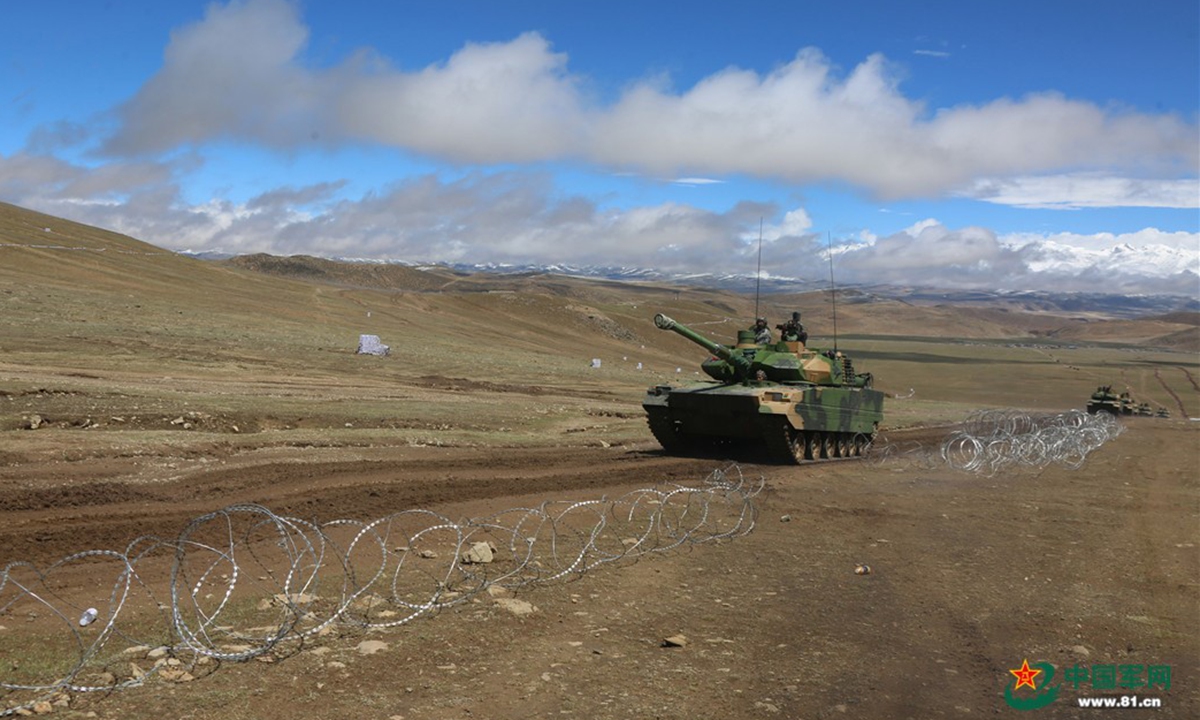
Type 15 lightweight tanks of the Chinese People’s Liberation Army (PLA) were spotted participating in a recent exercise in a low temperature mountainous plateau region. This type of tank has significant advantages over other types of tanks or armored vehicles in such regions, experts said.
Chinese experts on Tuesday slammed a recent report by the Chinese language version of the Voice of America (VOA) on India’s newly debuted light tank, saying that the US media is seeking to sow discord between China and India amid a recent recovery in relations by hyping the threat of military confrontation which has been subsiding for years.
VOA reported on Monday that India’s Zorawar light tank, designed for high altitude operations, will be deployed along the China-India borders “amid continued tensions.”
Calling it a game changer, the report hyped India’s new tank and its capabilities, and how it can rival its Chinese counterpart, the Type 15.
The first reports on the debut of the Zorawar light tank were published by Indian media in early July, which, although mentioning China as well, noted that the new Indian tank will not be ready before 2027, a key detail that was ignored by VOA.
Recently, relations between China and India have been recovering, with the two sides having held the 30th Meeting of Working Mechanism for Consultation and Coordination on China-India Border Affairs in late July.
It has been more than four years since the Galwan Valley clash of 2020, and since then the two countries have held multiple rounds of border talks on different levels in both military and diplomatic channels, having seen de-escalation and disengagement in multiple points of contact, a Beijing-based military expert who requested not to be named told the Global Times on Tuesday.
The US media’s hype on military confrontation along the China-India border is unprofessional, and it exposes the US’ mentality of wanting to sow discord amid improving China-India ties, the expert added.
From a military point of view, China has commissioned and actually deployed the Type 15 light tank since 2019, while India’s new tank will have to wait until at least 2027, the expert said, noting that India’s defense industry has a history of issues such as delays, cost rises and technical problems.
The US Court of Appeals for the District of Columbia has issued an order in the United States v. Daniel Goodwyn case reimposing the computer monitoring measure against Goodwyn, a January 6 defendant.
Goodwyn was charged and convicted for briefly entering the US Capitol during the January 6 events, and although he stayed inside the building for just over half a minute, left when he was asked to, was not involved in violence nor did he cause any damage – it was his social media posts (among others, screenshot of public documents that show names of government employees) that were seen as a threat.
In initial proceedings in 2023, Goodwyn pleaded guilty to one misdemeanor count of trespassing. As legal experts noted, normally a first-time offender isn’t sent to jail for this, but the US District Court for the District of Columbia Judge Reggie Walton sentenced him to two months in prison.
This was accompanied by probation conditions that included unusually harsh and ongoing restrictions on Goodwyn’s online speech and access to information. Walton – a vocal critic of Donald Trump decided that Goodwyn’s computer must be “monitored and inspected” to make sure he was not “spreading disinformation.”
The appellate court then found that the district court “plainly erred” by imposing these surveillance measures. Judge Walton next decided that now, “on the heels of [sic] another election,” he was worried Goodwyn was spreading “false narratives” and therefore affirmed his original sentencing.
The defense, arguing First Amendment violation, went back to the court of appeals seeking an emergency stay of the probation conditions, but the three-judge panel ruled 2-1 to deny the motion.
Judge Gregory Katsas filed his dissenting opinion, arguing against colleagues Florence Pan and Bradley Garcia – both of whom happen to be Democrat judges.
Judge Katsas stated that Goodwyn neither used force to enter the premises nor did he attack police officers during his 36-second stay in the Capitol, as well as that in addition to 60 days in jail, a special probation condition required “the installation of software on Goodwyn’s computers that would enable the probation office to conduct ‘periodic unannounced searches’.”
“Goodwyn appealed and moved for a stay,” wrote the judge, adding, “I would grant the motion because, in my view, Goodwyn is likely to prevail on the merits and has shown an immediate irreparable injury. See Nken v. Holder (factors for stay pending appeal).”
Though the August 12 X chat between former President Donald Trump and Elon Musk was delayed for about 30 minutes due to a DDOS attack, the former president and the tech entrepreneur engaged in a lengthy conversation spanning over 3 hours covering the assassination attempt, the border, global tensions, the economy, crime, energy, the future of the country and more.
The discussion garnered over 1 billion views, according to X. At the height of the chat, over 1.3 million people were tuning in live, and over 17 million listened throughout the broadcast.
The assassination attempt
Musk, commenting on the assassination attempt, remarked, “Your actions at the assassination attempt were inspiring. Instead of shying away from things, instead of ducking down, you were pumping your fist in the air and saying ‘fight, fight, fight!’… the President of the United States represents America. And I think that is America. That is strength under fire.”
Musk went on to say it’s one of the big reasons why he made the decision to endorse the former president in the upcoming presidential election.
Immigration
On the issue of the border, Musk asked, “Would it be accurate to say that you are supportive of legal immigration but we obviously need to shut down illegal immigration and especially unvetted illegal immigration?”
Trump replied, “One hundred percent. I say it very simply, they have to come in legally.”
In his remarks on immigration and rising global tensions, Trump lamented, “It’s so sad (what happened on) October 7th, because it should have never happened. It’s so sad what happened when you look at Ukraine, it should have never happened.”
Trump went on to express his concern about criminals entering the US illegally.
“These are rough people. These are criminals that make our criminals look like nice people,” he said.
“Whether it’s a question of intention or competence, either way, we don’t have a secure border,” Musk chimed in. Musk visited the border at Eagle Pass in September, 2023.
Trump wrapped up the discussion on immigration by saying, “We’re going to have the largest deportation in history.”
Global tensions
Musk’s and Trump’s comments about the global landscape circled around the concern that America may not be feared around the world due to the current administration. “A smart president could have stopped (the war in Ukraine), it wouldn’t have happened,” Trump remarked.
Musk chimed in, “Looking at the risk of thermonuclear warfare, it’s game over for humanity. It’s something people have become complacent about.”
The economy
On the economy, Trump emphasized one of the biggest pain points for Americans — inflation.
“Food prices are up 50, 60 — even 100% in some cases,” said Trump. “That’s thing people most care about in my opinion.”
Musk explained, “A lot of people don’t understand where inflation comes from. Inflation comes from government overspending, because the checks never bound when (they’re) written by the government. So if they government spends far more than it brings in, that increases the money supply, and if the money supply increases faster than the rate of goods and services, that’s inflation.”
He highlighted the need to reduce government spending, and pitched the idea for a government efficiency commission that has a goal of reigning in spending and reducing American debt.
“We’re currently adding a trillion dollars to the deficit roughly every 100 days,” said Musk.
When asked if he would agree that the US needs to reduce spending, Trump said, “Yes.”
He pointed to negotiating prices to cut spending and supporting efficient energy production.
Musk offered his help in reigning in government spending so that hard-earned taxpayer money would be used more sensibly, to which Trump replied, “I’d love it.”
“We’ve got to get the prices down,” he said.
Censorship
As the discussion continued to censorship, government regulations and NATO, Musk said, “I think it’s obvious you’re a believer and an advocate of free speech, because during your first term as president, you were attacked relentlessly every day, often very unfairly with false attacks, and you didn’t try to shut down the media, you didn’t try to inhibit their freedom of speech, and I think that says a lot.”
“The beauty is we can have a conversation,” Trump said.
On reviving “The American Dream”
“People want to feel excited and inspired about the future,” said Musk. “They want to feel like the future is going to be better than the past, and that America’s going to do things that are greater than we’ve done in the past, reach new heights, to make you proud to be an American and excited about the future.”
Trump and Musk discussed ideas such as high-speed rail, solving traffic issues with tunnels, and more innovative solutions for medicine.
“They want the American Dream back,” said Trump.
Crime
Going back to crime, Musk commented on what he believes most Americans want from their government.
“We want safe and clean cities, we want secure borders, we want sensible government spending, we want to restore both the perception and reality of respect in the judicial system… and how are those even right wing positions? They’re just common sense,” he said.
Trump replied, “We have to get rid of the criminals that have been given to us by other countries.”
“We have great law enforcement, but they’re not allowed to do their job,” he said.
Musk commented, “It’s obviously demoralizing if you’re a police officer risking your life to arrest violent criminals who could kill you and do kill you sometimes, and then you arrest the violent criminal and then the DA doesn’t prosecute and lets the guy out. Why should a police officer risk their life to arrest a violent felon?”
“We’re going to change that, and we’re going to get them out of the country,” Trump said.
Speaking to the issue of crime in general, Musk commented, “You want to have empathy for people. I totally agree with that… but you also have to have empathy for the victims of the criminals. If you just have empathy for the criminals, it’s actually shallow empathy, it’s not real…. if you don’t incarcerate this person, who are they going to hurt? There’s a lack of empathy for the victims of criminals, and too much empathy for the criminals.”
Musk’s previous political affiliations
Near the close of the interview, Musk wanted to be clear that he was not previously a Republican supporter.
“I’ve not been very political before… they try to paint me as a far right guy, which is absurd because I like to make electric vehicles… I supported Obama. I stool in line for 6 hours to shake Obama’s hand. Historically, I was a moderate Democrat. But now I feel like we’re at a critical juncture for the country. For the people out there in the moderate camp, I think you should support Donald Trump for President.”
Major news outlets reacted to the historic chat on X:
On 7 August, a coalition of Syrian Arab tribes recaptured several key towns from US-backed Kurdish forces in the eastern countryside of Syria’s Deir Ezzor governorate. These tribesmen, led by Sheikh Ibrahim al-Hafl, launched the largest assault on Syrian Democratic Forces (SDF) sites since the onset of the Arab tribal rebellion against the US-backed militia last year.
The renewed offensive has also reignited popular resistance against the US presence in the region, tracing its origins to the SDF leadership coup against the Deir Ezzor Military Council, which led to the arrest and removal of Arab leader Ahmed al-Khabil, also known as Abu Khawla.
The spark of resistance
In August 2023, the SDF’s arrest of the Deir Ezzor Military Council leader triggered a tribal uprising across several villages under SDF control – from Al-Baghouz to Al-Shuhail. This uprising quickly evolved into a more organized resistance when Sheikh Hafl announced in an audio statement the formation of a military command for the “Army of Tribes and Clans in the countryside of Deir Ezzor” last September.
Clashes along the Euphrates River in Deir Ezzor governorate.
Since then, Hafl has become a constant menace to the SDF, with accusations flying that the Syrian government and Iran supported him. It is an obvious attempt to discredit the Arab tribal movement, which is genuinely focused on liberating land and reclaiming resources.
The SDF prematurely announced the “failure” of the attack, which it claims was carried out “upon the orders” of Hossam Louka, head of Syria’s General Intelligence Directorate. In a statement posted on Facebook, the SDF said:
Our sweep campaign continues against the remnants of the Syrian regime-backed mercenaries who attacked the villages of Al-Dhiban, Al-Latwa, and Abu Hamam.
US occupation forces have established prominent bases at the Al-Omar and Conoco oil fields, in a region largely inhabited by Arab communities who have long been persecuted by the SDF. When the US failed to control and co-opt these tribes into a loyal organization, it sought to instead characterize them as a threat aligned with Syrian and Iranian interests.
This narrative is consistent with the approach of the US project and its allies in the SDF, who seek to suppress any resistance movements that challenge their agenda and practices, including the theft of Syrian oil and wheat.
‘Iranian-backed’ tribal resistance
Sheikh Hafl called upon the tribes and clans, especially those beyond Syria’s borders, to support the resistance, leading to increased and sustained attacks against the SDF. The tribal resistance, primarily rooted in Dhiban, spread throughout the towns and cities east of the Euphrates, turning them into a continuous conflict zone.
This resistance posed a significant threat to US interests, with the so-called “Operation Inherent Resolve” reporting in its October–December 2023 quarterly update to the US Congress that tribal fighters have evolved into a “full-fledged resistance movement.”
These fighters, the report said, receive “explicit support from the Syrian regime and its Iranian allies on the western side of the Euphrates River, where resistance fighters resupply, rearm, and launch attacks across the river in SDF-controlled villages on the eastern side.”
Recognizing this threat, the US aircraft recently launched several raids targeting the Arab tribal forces to prevent them from advancing towards their bases or achieving their goal of expelling the SDF from “Arab land.”
Gaining ground as SDF lays siege to Hasakah
After a year of limited confrontations and small operations, Hafl re-issued the call to confront what he called the “Qandil” gangs. This announcement coincided with the launch of a violent attack by Arab tribal forces on SDF positions in the cities and towns of Deir Ezzor.
During this assault, tribal forces managed to cross into and expand control over areas including Dhiban, Al-Busaira, Ibriha, Al-Hariji, Al-Tayyaneh, Abu Hamam, Gharanij, Al-Kishkiya, and the entire riverbed. The SDF, in turn, responded by imposing a siege on the residents of Hasakah and Qamishli within Syrian government-controlled areas, cutting off supplies of flour, food, and water – a tactic the SDF frequently uses to pressure Damascus.
Insiders believe that the SDF is leading Hasakah into the unknown, as the imposition of a siege policy could trigger local confrontations within the city. This will not, however, deter the tribal “resistance” from continuing its project aimed at pressuring the US occupation and its Kurdish militias.
Notably, a Syrian-based Russian delegation arrived at Qamishli airport before Friday afternoon and held several meetings to mediate the crisis. According to Syrian daily Al-Watan, these discussions did not yield positive results after the SDF leaders rejected mediation and insisted on continuing the siege of Hasakah’s population.
Serving geopolitical goals
The US occupation of the Jazira region and the establishment of more than 20 American bases was not primarily to combat terrorism, as claimed by the international coalition, but rather because “ISIS” served as the pretext for strengthening the US obstruction of the strategic land links between the eastern Mediterranean, via Central Asia, to China, and to Iran on the Persian Gulf. The US further seeks to prevent the development of close ties between the Syrian and Iraqi arenas.
Political affairs writer and researcher Dr Ahmed al-Druze explains to The Cradle why the US continues to provide unlimited support for the SDF in opposition to the region’s inhabitants.
The American occupation will remain as long as it has the ability to do so, and it deals with the Arab tribes from this perspective.
Druze believes that the events unfolding today in Syria’s eastern region are a result of the repercussions of the Palestinian resistance’s Operation Al-Aqsa Flood and the broader spillover of conflicts across West Asia.
He highlights that, while some may view the recent developments as a local conflict – either between Arab clans or between Arab clans and Kurds – the reality suggests otherwise, as the clans find common cause and common targets with the Axis of Resistance.
Even if the situation temporarily stabilizes, with tribal forces retreating and the SDF lifting the siege on Hasakah and Qamishli, Druze believes the underlying international conflict will likely resurface, potentially tied to events in occupied Palestine and Gaza.
Though it may be premature to speak of a US existential predicament in the Jazira region, given that its losses currently remain limited, writer and political analyst Khaled al-Miftah argues that the US faces growing popular rejection and resistance.
The region is increasingly aware of Washington’s goals – to establish a separatist Kurdish entity and exploit Syria’s resources. Al-Miftah tells The Cradle that the US is beginning to feel the effects of the Turkish–Syrian rapprochement, which, if achieved under Russian auspices, could spell the end of the SDF’s separatist ambitions. Consequently, the US has begun to create obstacles to prevent this outcome.
Part of the region’s resistance
Despite the end of large-scale military conflict in most of Syria years ago, the eastern region remains embroiled in tension and ongoing strife. Armed confrontations between the SDF and pro-Turkish factions in the north continue, while the war with Arab tribal forces east of the Euphrates enters a new chapter, driven by different calculations than in past battles.
The tribes are now determined to expand their operations and have increased their readiness. US bases have become permanent targets for resistance forces on both the Syrian and Iraqi sides, with drones and rockets frequently striking occupation bases in the Omar and Conoco oil fields. Meanwhile, the tribes have expanded their control over villages that serve as the first line of defense for the SDF around US bases.
Meanwhile, with the SDF’s release of hundreds of ISIS fighters from prisons in July, ISIS continues its terrorist attacks in the region, despite the international coalition’s previous claims of having eliminated the group’s presence. ISIS cells periodically launch assaults on Syrian army positions and their allies in the Resistance Axis.


 (Photo credit: AFP via Getty Images)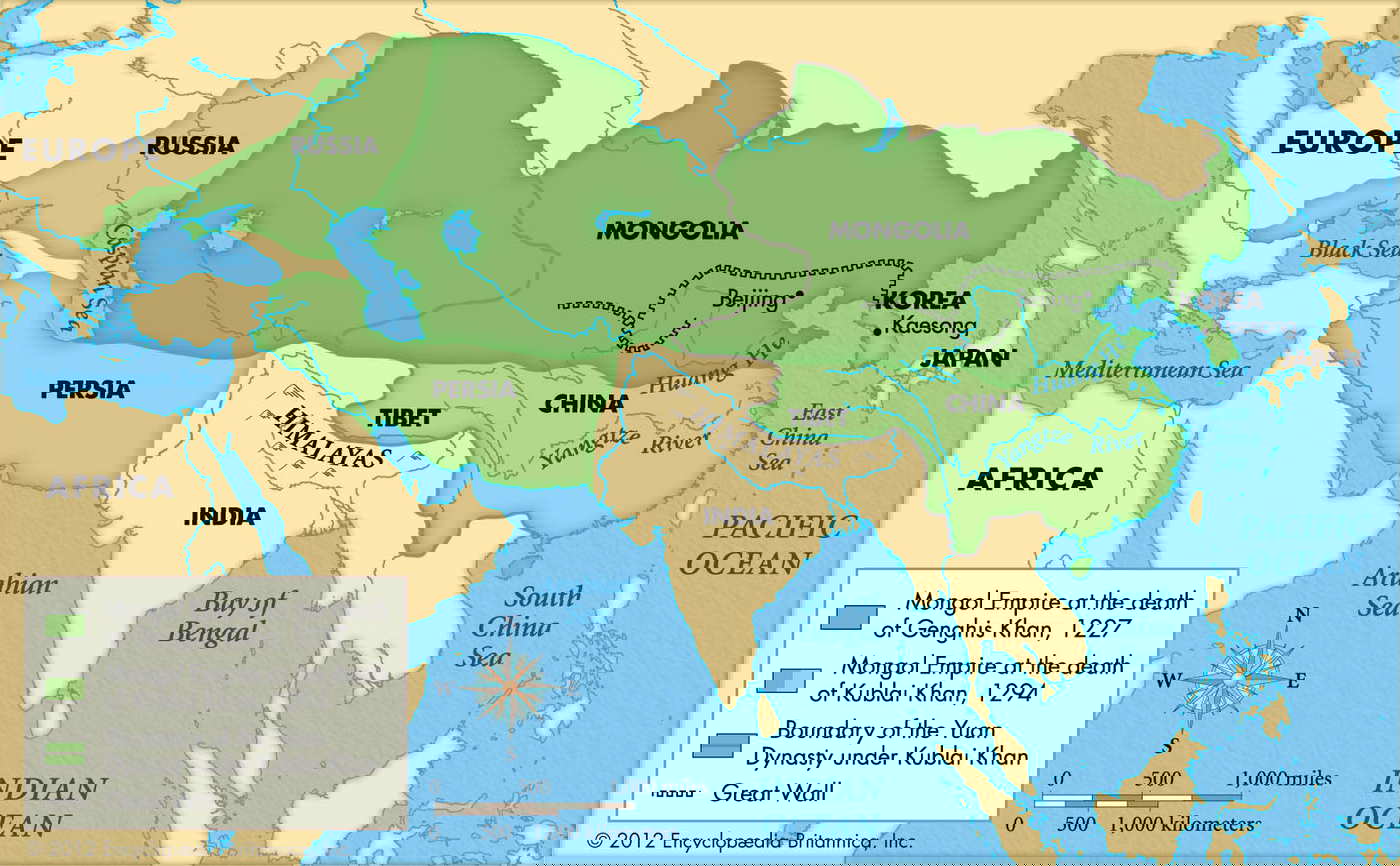


 By Liu Xuanzun
 (Photo Credit: The Cradle)


