The Lombards were a Germanic tribe from East of the Rhine that migrated to southern Italy shortly after the Goths, Vandals and Visigoths occupied northern Italy and Spain. During the mid 6th century, the Lombards served as mercenaries under Attila the Hun, and the Byzantine Emperor Justinian hired them to drive the Ostrogoths out of Italy. They were allowed to settle the land previously held by the Ostrogoths (throughout most of Italy) but were never as unified as the Franks in France or the Visigoths in Spain. They adopted the Latin language and much of the infrastructure surviving from the Western Roman Empire.
Charlemagne conquered northern Italy for the Holy Roman Empire in 800, and the Byzantine Empire conquered and settled southern Italy in the early 11th century. Although Capua retained its independence, Lombardy, Salerno and became self-governing principalities under under Byzantine rule. Beginning in the 11th century, a Viking (Norman) campaign in southern Italy and Sicily gradually brought these territories under Norman rule.
Following the fall of Rome, the Byzantine Empire frequently hired Norman knights and foot soldiers as mercenaries. During their invasion of Southern Italy, Sicily and England the Normans incorporated innovative Byzantine military technology not previously seen in Europe. See Byzantine Influence on Norman Weapons
Timeline of Norman invasions:
8th century AD – Viking raids on England, Scotland, Ireland and France (as well as other parts of northern European begin.
791 AD – Vikings (aka Normans) begin major assaults on west coast of Normandy, establishing the Viking Duchy of Normandy in 911
861 AD – Viking invaders seize and settle Novgorod in northern Russia
885 AD – Norman invaders launch attack on Paris
1040 AD – Holy Roman Empire troops supported by Norman mercenaries and Lombard rebels march against the Byzantine army in Padua. Skirmishes between Lombard rebels, at times aided by Norman mercenaries, and Byzantine forces continue intermittently.
1053 AD – Battle of Civitat results in Norman victory over coalition of Byzantine troops and troops representing, leaving the Normans in control of Lombardy.*
The CDC’s Center for Forecasting and Outbreak Analytics (CFA) has partnered with the CIA-linked Palantir to cement the public-private model of invasive surveillance in “public health,” all while pushing the U.S. national security state and Silicon Valley even closer together.
The Pentagon and Silicon Valley are in the midst of cultivating an even closer relationship as the Department of Defense (DoD) and Big Tech companies seek to jointly transform the American healthcare system into one that is “artificial intelligence (AI)-driven.” The alleged advantages of such a system, espoused by the Army itself, Big Tech and Pharma executives as well as intelligence officers, would be unleashed by the rapidly developing power of so-called “predictive medicine,” or “a branch of medicine that aims to identify patients at risk of developing a disease, thereby enabling either prevention or early treatment of that disease.”
This will apparently be achieved via mass interagency data sharing between the DoD, the Department of Health and Human Services (HHS) and the private sector. In other words, the military and intelligence communities, as well as the public and private sector elements of the US healthcare system, are working closely with Big Tech to “predict” diseases and treat them before they occur (and even before symptoms are felt) for the purported purpose of improving civilian and military healthcare.
This cross-sector team plans to deliver this transformation of the healthcare system by first utilizing and sharing the DoD’s healthcare dataset, which is the most “comprehensive…in the world.” It seems, however, based on the programs that already utilize this predictive approach and the necessity for “machine learning” in the development of AI technology, that this partnership would also massively expand the breadth of this healthcare dataset through an array of technologies, methods and sources.
Yet, if the actors and institutions involved in lobbying for and implementing this system indicate anything, it appears that another—if not primary—purpose of this push towards a predictive AI-healthcare infrastructure is the resurrection of a Defense Advanced Research Projects Agency (DARPA)-managed and Central Intelligence Agency (CIA)-supported program that Congress officially “shelved” decades ago. That program, Total Information Awareness (TIA), was a post 9/11 “pre-crime” operation which sought to use mass surveillance to stop terrorists before they committed any crimes through collaborative data mining efforts between the public and private sector.
While the “pre-crime” aspect of TIA is the best known component of the program, it also included a component that sought to use public and private health and financial data to “predict” bioterror events and pandemics before they emerge. This was TIA’s “Bio-Surveillance” program, which aimed to develop “necessary information technologies and a resulting prototype capable of detecting the covert release of a biological pathogen automatically, and significantly earlier than traditional approaches.” Its architects argued it would achieve this by “monitoring non-traditional data sources” including “pre-diagnostic medical data” and “behavioral indicators.” While ostensibly created to thwart “bioterror” events, the program also sought to create algorithms for identifying “normal” disease outbreaks, essentially seeking to automate the early detection of either biological attacks or natural pathogen outbreaks, ranging from pandemics to presumably other, less severe disease events.
Bio-Surveillance graph from TIA – SourceAs previously reported by Unlimited Hangout, after TIA was terminated by Congress, it largely survived by privatizing its projects into the company known as Palantir, founded by Paypal co-founder Peter Thiel and some of his associates from his time at Stanford University. Notably, the initial software used to create Palantir’s first product was Paypal’s anti-fraud algorithm. While Palantir, for most of its history, has not overtly sought to resurrect the TIA Bio-surveillance program, that has now changed in the wake of the Covid-19 crisis.
In late 2022, Palantir announced that it and the Centers for Disease Control and Prevention (CDC) would continue their ongoing work to “plan, manage and respond to future outbreaks and public health incidents” by streamlining its existing biosurveillance programs “into a singular, efficient vehicle” to support the CDC’s “Common Operating Picture.” This “Common Operating Picture” aims to secure “strong collaboration across the federal government, jurisdictional health departments, private sector entities, and other key health partners.”
The CDC and Palantir publicized this partnership just months after the CDC announced the creation of the its Center for Forecasting and Outbreak Analytics (CFA). This office now plans to expand biosurveillance infrastructure via public-private partnerships across the country to ensure that local communities constantly supply federal agencies with a steady stream of bio-data to develop AI-generated pandemic “forecasts,” or viral outbreak predictions, that will inform pandemic policy measures during pandemics and before they even occur, theoretically before even a single person dies of a particular contagion.
On the surface level, such a mission might sound as though it would serve public health; if government and private institutions can collaborate to prevent pandemics before they happen, well then, why not? Yet, again, the origins of Palantir demonstrate that these “healthcare” surveillance policy measures actually work completely in tandem with the deeper, aforementioned “pre-crime” national security goal of TIA, which powerful forces have been slowly implementing for decades. The ultimate goal it seems, is to usher in a new, even more invasive surveillance paradigm where both the external environment and the public’s internal environment (i.e. our bodies) are monitored for “errant” signals.
Palantir’s founder and largest shareholder, Peter Thiel, incorporated the company in the immediate aftermath of Total Information Awareness’s (TIA) shut down—which resulted from prominent media and political criticism—with significant funding from the CIA’s venture capital arm, In-Q-Tel, as well as direct guidance from the CIA on its product development. As Unlimited Hangout detailed in its investigation into Donald Trump’s 2024 running-mate J.D. Vance and his rise to MAGA stardom, Thiel and Palantir co-founder Alex Karp met with the head of TIA at DARPA, John Poindexter, shortly after Palantir’s incorporation.
The middleman between the tech entrepreneurs and Poindexter was Poindexter’s old pal and key architect of the Iraq War, Richard Perle, who called the TIA-head to tell him that he wanted him to meet “a couple of Silicon Valley entrepreneurs who were starting a software company.” Poindexter, according to a report in New York Magazine, “was precisely the person” with whom Thiel and Karp wanted to meet, mainly because “their new company was similar in ambition to what Poindexter had tried to create at the Pentagon [that is, TIA], and they wanted to pick the brain of the man now widely viewed as the godfather of modern surveillance.” Since then, Palantir has been implementing the “pre-crime” initiatives of TIA under the cover of the “free market,” enabled by its position as a private company.
This story, along with the CIA’s intimate collaboration in developing Palantir’s early software, the CIA’s unique status as Palantir’s only client for its first several years as a company and Palantir co-founders’ statements about the company’s original intent (e.g. Alex Karp – CIA analysts were always the intended clients of Palantir), demonstrate that the company was founded to privatize the TIA programs in collaboration with the military and intelligence communities to which Palantir is a major contractor. Notably, TIA’s survival was actually enabled by its alleged killer, the US Congress, as lawmakers included a classified annex that preserved funding for TIA’s programs in the same bill that ostensibly “killed” the operation.
Yet while it appears that the national security apparatus plans to use the coming AI healthcare system for “pre-crime” and mass surveillance of American citizens, this “predictive” approach to healthcare will also inform significant policy shifts for the next pandemic. Specifically, the next pandemic will likely utilize the currently expanding biosurveillance infrastructure and AI disease forecasting software to develop “targeted” policy measures for specific communities and potentially individuals during future pandemics.
While Palantir stands at the forefront of this technocratic transformation of healthcare, the national security apparatus in collaboration with Big Healthcare and Big Tech at large are all contributing to weaving this lesser known “bioterror” component of TIA into private business schemes that covertly carry on the duties of the officially “shelved” program. This network of institutions consistently and conveniently omits the origins of its predictive biosurveillance healthcare approach — but the special interests tied to their efforts, as well as the striking similarities between their alleged public health solutions, and the decades-old biowarfare responses / surveillance programs of the Pentagon, reveal the ulterior motive of this public-private collaboration.
This investigation will examine how the CDC’s Center for Forecasting and Outbreak Analytics (CFA) signifies a major step towards the “AI-driven healthcare system,” how Palantir’s management of the program’s data strongly suggests that this partnership is the latest multi-sector implementation of the “pre-crime” agenda of TIA and what frightening possibilities the “AI-driven healthcare system” could enable in a future pandemic and healthcare in general. This revolutionary system ultimately pushes society further into the sights of a digital panopticon that seeks surveillance and control of all that the makes up the average citizen—from outside their bodies, to within.
Since August 2022, Children’s Health Defense has been banned from Facebook and Instagram.
For the crime of sharing truthful information and diverse viewpoints — especially related to COVID-19 vaccines, alternative treatments, and vaccine injuries — Meta suddenly and without warning kicked us off both platforms.
SIGN THE PETITIONEven before Meta deplatformed us, CHD sued the social media giant in November 2020, for colluding with the U.S. government to censor and suppress our Facebook and Instagram posts.
After losing our case in the lower courts, we recently petitioned the U.S. Supreme Court to hear our case against Meta.
Less than 24 hours later, Facebook founder Mark Zuckerberg announced he was ending the company’s third-party fact-checking program because it had “gone too far.”
Zuckererg admitted what CHD and others had already verified — that during the pandemic, government officials pressured — or as he told Joe Rogan, “would call up our team and, like, scream at them and curse” at them — to censor content that was factually accurate but didn’t align with the official government narrative.
Meta strangled public debate about life-saving COVID treatments. It even went so far as to prevent people who were injured by COVID vaccines from communicating with each other in private groups.
Now, he says, his company is committed to “restoring free expression.” That’s the right move — but it doesn’t go far enough. It doesn’t undo the damage Meta caused CHD and our social media followers by banishing us from its platforms.
If Mr. Zuckerberg is truly committed to “free expression” he must immediately restore CHD’s Facebook and Instagram accounts. He must also commit to using neutral algorithms that don’t suppress certain content, and to resisting — and publicly reporting — any behind-closed-doors government communications about censoring American’s protected speech.
Because of the controversy surrounding Satoshi’s paper and the lack of research on the health impacts of these particles, it remains unclear to what extent Tokyo residents have been exposed to dangerous radiation levels as a result of the Fukushima accident.
[…]
Japanese radiochemist Satoshi Utsunomiya found that air samples from March 15, 2011, in Tokyo contained a very high concentration of insoluble cesium microparticles. He immediately realized the implications of the findings for public safety, but his study was kept from publication for years.
On March 14 and 15, 2011—three days after the Great East Japan Earthquake and its resulting tsunami hit the Fukushima nuclear power plant—explosions at two of the plant’s reactor buildings released a huge amount of invisible radioactivity.
[…]
Following the explosions, Japanese researchers rushed to collect and study radioactive materials from the soil and the air to find out what had happened inside the reactors, believed now to have melted down because their cooling systems failed. On March 13, the Tokyo Metropolitan Industrial Technology Research Institute, the agency responsible for measuring the air quality of particulate matter in the Tokyo area, started to collect air samples more frequently. This effort was part of the Tokyo metropolitan government’s emergency monitoring program for environmental radiation, which aimed to detect gamma-emitting nuclides in airborne dust. The filters revealed that at around 10 a.m. on March 15, 2011, a large plume of radioactivity reached Tokyo, some 240 kilometers (149 miles) south of Fukushima. All samples taken on March 14 and March 15 showed spikes in radioactivity.
The institute’s researchers published their first results in the journal of the Japan Radioisotope Association in June 2011 (Nagakawa et al. 2011); they estimated the total exposure dose to humans from radioactive substances, including iodine 131 and cesium 137 found in airborne dust, foodstuffs, and drinking water from the Setagaya ward in the old Tokyo City. Extrapolating from their measurements from March 13 to May 31, they calculated the corresponding annual cumulative dose of radiation in that part of Tokyo as being 425.1 microsieverts, which is less than half the annual dose limit to the public recommended by the International Commission on Radiological Protection. In a second conference publication in English (Nagakawa et al. 2012), the researchers extended their monitoring period to October and estimated that the total annual effective dose due to inhalation for adults in the Tokyo metropolitan area from the Fukushima radioactive plumes was far lower, at 25 microsieverts.
But two years after the accident, Japanese scientists discovered a new type of highly radioactive microparticle in the exclusion zone around the Fukushima plant. The microparticles, which had been ejected from the Fukushima reactors, contained extremely high concentrations of cesium 137—a radioactive element that can cause burns, acute radiation sickness, and even death. Satoshi Utsunomiya, an environmental radiochemist from Kyushu University in southwestern Japan, soon found that these particles were also present in air filter samples collected in Tokyo in the aftermath of the Fukushima accident.
The controversy surrounding his attempts to publish his findings nearly cost him his career and prevented his results from being widely known by the Japanese public ahead of the 2020 Summer Olympics in Tokyo.[1] Scientists still don’t know if these highly radioactive microparticles present significant danger to people, and Satoshi is one of the very few scientists who is focused on trying to find out. “We have the measurements now that tell that the particles did pass over population centers and were being deposited in places,” Gareth Law, a radiochemist from the University of Helsinki, told me. “We should answer the question.”
The discovery
In May 2012, Toshihiko Ohnuki, an accomplished environmental radiochemist then at the Japan Atomic Energy Agency (JAEA), visited Yoshiyasu Nagakawa at the Tokyo Metropolitan Industrial Technology Research Institute, also known as TIRI. Nagakawa was the first author of two TIRI studies on radiation exposure in Tokyo, and Ohnuki asked Nagakawa if he could obtain some air samples for further analysis. Ohnuki had already studied how radioactive cesium fallout from Fukushima reacted with components of contaminated soil. Now, he wanted to do the same with the airborne dust samples from Tokyo.
Nagakawa gave Ohnuki five small filters that had been collected from the Setagaya ward in old Tokyo City at different times on March 15, 2011—the day the radioactive plume reached Tokyo. Ohnuki received the samples without restriction on their use, and no written agreement was made.[2]
Back in his laboratory at JAEA, Ohnuki performed autoradiography of the five samples, revealing many radioactive spots on all of them. The bulk radioactivity on each sample was measured to be between 300 counts per minute for the filter that covered the midnight to 7 a.m. period and 10,500 counts per minute between 10 a.m. and 11 a.m. on March 15.[3] The radiation rate was so high that Ohnuki had to cut some of the filters into small pieces, less than one square centimeter, to keep from saturating the scanning electron microscope. Ohnuki stored the unexamined filters for future analysis.
Months later, in August 2013, four researchers from the Meteorological Research Institute in Japan reported for the first time about a new type of spherical radioactive cesium-bearing particle that had been ejected in the early days of the Fukushima accident (Adachi et al. 2013). The researchers had collected air samples on quartz fiber filters at their institute in Tsukuba, located 170 kilometers southwest of the Fukushima plant. Their findings, published in Scientific Reports, were about to revolutionize the way environmental radiochemists understood the radioactive fallout from Fukushima.
Back in the lab, the researchers placed the filters on an imaging plate and inserted them into a portable radiography scanner. The images revealed many black dots, which indicated the presence of radioactive materials on the filters, with a maximum radioactivity level measured on the sample at 9:10 a.m. on March 15, 2011, four days after the Fukushima accident began. The researchers placed this sample under a scanning electron microscope and then into an energy-dispersive X-ray spectrometer to directly observe the shape and composition of the radioactive materials on the filters.
[…]
Shocking results
The newly discovered entities were initially called spherical cesium-bearing particles, but Satoshi and his co-workers coined the term cesium-rich microparticles, or CsMPs, in 2017, which is now what researchers call them generally (Furuki et al. 2017). CsMPs had not been noted in earlier major reactor accidents.
Scientists knew the microparticles came from the Fukushima reactors because their isotopic ratio between cesium 134 and cesium 137 matched the average ratio for the three damaged reactors calculated by the Oak Ridge National Laboratory.[5] Because these particles emanated from the Fukushima reactors, Satoshi and the other scientists studying them thought that they may contain evidence about reactions that occurred during the accident. But the environmental radiochemist’s curiosity was also triggered by the unique features of these microparticles: Their size is very small, typically two to three microns, even smaller than one micron in some cases.[6] And the cesium concentration in each of the particles is very high relative to their size.
After Satoshi obtained four small pieces of the Tokyo air filters, he designed what he calls “a very simple procedure” to find out whether the filters contained cesium-rich microparticles. In April 2015, he took autoradiograph images of the four pieces, confirming what Ohnuki had already seen with a digital microscope at JAEA. Then Satoshi moved to characterize the structural and chemical properties of the particles using scanning electron microscopy (SEM) and atomic-resolution transmission electron microscopy (TEM). Although the procedure’s design was simple, executing these steps would prove to be extremely difficult.
[…]
Satoshi was now ready to publish his results in a scientific journal. These were important findings that the scientific community needed to know. But Satoshi also understood that they could create a public relations crisis in Japan because his findings contradicted previous statements that played down the implications for public health of Fukushima fallout in Tokyo.
The Goldschmidt Conference—the foremost such international meeting on geochemistry—that year was held in the Japanese city of Yokohama. Satoshi was invited to give a plenary talk and present his research on environmental contamination from the Fukushima disaster (Utsunomiya 2016). During the talk, he presented his new findings on the Tokyo air filters. His talk received a lot of attention and was even reported by several Japanese and international newspapers. After his presentation, the scientific chair of the conference, Hisayoshi Yurimoto, said: “Very interesting results. And also very shocking results.”[1
In April and June 2016, Satoshi conducted dissolution experiments and quickly confirmed that the CsMPs were insoluble in water. The experiments also showed that most of the cesium activity on these filters came from CsMPs. In fact, up to 90 percent of the cesium radioactivity came from these microparticles, not from soluble forms of cesium—meaning that most of the cesium radioactivity detected during the March 15 plume in Tokyo was from CsMPs.
Between 2016 and 2019, a Kafkaesque sequence of events circled about Ohnuki, the former JAEA researcher who gave Satoshi the Tokyo air filter samples, and Satoshi. During that sequence of events, Satoshi’s research paper was accepted for publication by a prestigious scientific journal after peer review—but the journal delayed publication of the paper for years, eventually deciding not to publish it based on mysterious accusations of misconduct that, it turned out, were unwarranted.
As a result, Satoshi’s findings were not made widely known, saving the Japanese authorities a possible public relations crisis as the summer Olympics in Tokyo neared. Because of the controversy surrounding Satoshi’s paper and the lack of research on the health impacts of these particles, it remains unclear to what extent Tokyo residents have been exposed to dangerous radiation levels as a result of the Fukushima accident.
[…]
In October, as Ohnuki dealt with insistent requests that he return the filter samples, Satoshi submitted two research manuscripts to the journal Scientific Reports, one on the first successful isotopic analysis of individual cesium-rich microparticles based on soil samples collected from the exclusion zone at Fukushima, and one on the first characterization of the CsMPs from the Tokyo air filter samples that he had presented during his talk in Yokohama. Both articles were accepted in early January 2017 after peer review.[11]
The Tokyo paper, titled “Caesium fallout in Tokyo on 15th March, 2011 is dominated by highly radioactive, caesium-rich microparticles,” was co-authored by three graduate students from Satoshi’s lab—Jumpei Imoto, Genki Furuki, and Asumi Ochiai, who conducted the experiments—and three Japanese collaborators: Shinya Yamasaki from the University of Tsukuba who contributed to the measurement of samples; Kenji Nanba of Fukushima University, who contributed to the collection of samples; and Toshihiko Ohnuki, who had obtained the samples. The paper included two international collaborators who were world experts in the study of radioactive materials, Bernd Grambow of the French National Center for Scientific Research at the University of Nantes in France and Rodney C. Ewing of Stanford University, who contributed to the research ideas and participated in the analysis of the data. Satoshi was the lead author of the study.
[…]
On the day of the visit, Moriguchi sent an e-mail to Ohnuki, pressing him to inform TIRI about the planned publication. “This type of information makes government agencies very sensitive,” Moriguchi wrote. “If the results obtained from these valuable sample collections conducted at a research institute under the administration were to incur the displeasure of government agencies and it becomes difficult to obtain cooperation from research institutions, we are concerned that this could hinder future research using these types of samples.”
[…]
Almost immediately, Sakurai moved to block the publication, according to e-mails obtained by the Bulletin.
[…]
In July 2017, TIRI increased the pressure by sending a formal complaint to the Tokyo Institute of Technology, where Ohnuki was now employed. In a letter that the researchers were not able to see until a year after it was sent, TIRI accused Ohnuki of “suspected acts violating internal regulations, researcher’s ethics and code of conduct” in providing Satoshi with samples from TIRI without the institute’s consent.
[…]
In June 2019, Satoshi and his co-authors posted their paper on arXiv (Utsunomiya et al. 2019), thereby making the findings public—two-and-a-half years after its acceptance by Scientific Reports.
MIAMI, FL — In a legal confrontation with potential far-reaching implications, Floridian and head of The World Peace Through Education Foundation, Inc, William S. Scott has filed an appeal and petition for a Writ of Mandamus against the Internal Revenue Service (IRS) in the United States District Court for the Southern District of Florida, targeting the Bill and Melinda Gates Foundation/Trust (BMGF/Trust).
The appeal, case number 1:24-cv-24123-CMA (filing at end of article), is set before Chief Judge Cecilia Altonaga, the first Female Cuban American Federal Judge, who presides over the United States District Court for the Southern District of Florida. Her ruling on this appeal is anticipated in the coming days, adding to the urgency surrounding this case.
Scott’s legal action follows the IRS’s rejection of his whistleblower claim on September 26, 2024. He alleges that the foundation has been engaged in for-profit activities under the guise of charity, stating, “Under the pretense of improving World Health, Bill & Melinda Gates Foundation/Trust has been engaged in the promotion, manufacture and sale of Covid-19 vaccines that were not sufficiently tested for safety or for effectiveness for their intended use.” He further asserts, “The claim that its efforts are charity are bogus and it has acted in bad faith.”
Since its founding in 2000, the Bill and Melinda Gates Foundation has been a leader in global health, reporting tax-exempt revenue of $6,840,102,370 in 2023. Among its significant investments, the foundation provided $55 million to BioNTech in 2019 for vaccine development (source).
Global Scrutiny and Legal Challenges: The foundation is under scrutiny not just in the U.S. but also internationally. Kenya’s High Court has suspended the Gates Foundation’s diplomatic immunity due to accountability concerns. This scrutiny extends to countries like the Netherlands, where there are discussions or legal preparations against the foundation’s international operations.
Adding complexity to this narrative, Margaret Hamburg, who served as FDA Chairman from 2009 to 2015, now sits on the Gates Foundation’s Global Health Scientific Advisory Committee (link to her position on the committee). Her husband, Peter Brown, leads Renaissance Technologies, known for its investments in medical stocks. This is underscored by Renaissance Technologies’ $7 billion settlement with the IRS in 2021 over tax strategies.
Implications of Losing Tax-Exempt Status:
The revocation of the Gates Foundation’s tax-exempt status would have profound consequences:
Tax Liability: An estimated annual federal tax of $1.44 billion for 2023, based on a 21% corporate rate, not including state taxes or penalties for prior years.
Donation Deductibility: The loss of tax deductions could significantly impact donation levels.
Operational Adjustments: The foundation might need to scale back or alter its charitable operations.
Wealth Loss Estimation: An immediate annual financial hit over $1 billion, with long-term impacts on its endowment.
Public Perception and Legal Ramifications: Public trust could wane, potentially leading to further legal scrutiny.
Comparison to Blue Shield’s Case: Blue Shield of California’s 2015 loss of state tax-exempt status provides a cautionary tale, where operational concerns led to significant changes. This could be a foreshadowing for the Gates Foundation if it faces similar challenges.
Legal Precedents: Shows the potential for a reassessment of tax exemptions.
Public and Regulatory Reaction: Similar backlash might be expected.
Operational Impact: Operational strategies would likely need reevaluation.
Influence of Donors on Scientific Research: Influential donors like the Gates Foundation can skew research priorities, potentially prioritizing commercial interests over public health needs, leading to:
Bias in Research Focus: Funding might lean towards areas beneficial to the donor’s interests.
Conflict of Interest: Research impartiality can be compromised.
Impact on Public Trust: Skepticism can grow regarding the integrity of funded research.
This is particularly relevant in the context of clinical trial research, where transparency is crucial. The Association of Clinical Research Professionals (ACRP) advocates for researchers to disclose relationships and potential conflicts of interest publicly, but this directive is not always followed, leading to potential biases or misrepresentations in research outcomes. Studies have shown that a significant percentage of clinical trial reports might fail to disclose conflicts of interest:
A 2016 review published in “Research Integrity and Peer Review” determined that between 43% and 69% of research study reports failed to disclose conflicts of interest (source).
A study in the “Journal of the American Medical Association (JAMA)” reported that approximately 32% of clinical trial authors had not fully disclosed their industry payments in their articles (source).
In the “BMJ Evidence-Based Medicine,” a study published in 2020 discussed the complexities of conflicts of interest in medical research, noting that many clinical trials and their authors have industry ties which are not always transparently reported (source).
Another study from the “BMJ” in 2014, analyzing newspaper articles about the H1N1 pandemic, found that academics with financial ties to drug companies selling related medications rated the health risks significantly higher than those without such ties, suggesting a potential bias in reporting due to undisclosed conflicts (source).
A cross-sectional study published in “BMJ” in 2017 found evidence of high rates of underreporting of financial conflicts of interest among clinical investigators (source).
According to Scott’s petition, the IRS did not conduct an investigation into the Gates Foundation’s activities based on his whistleblower claim. Scott asserts, “Petitioner believes, and therefore asserts, that the IRS conducted no investigation to reach its decision to deny his Form 211,” highlighting a key point of contention in this legal battle.
Gates Foundation’s Funding in Pro-Vaccine Organizations:
The Gates Foundation has been a significant financier in the pro-vaccine landscape, supporting numerous organizations:
Gavi, the Vaccine Alliance: The foundation initially funded Gavi with $750 million in 2000 to enhance vaccine access in developing countries. By 2020, the Gates Foundation pledged $1.6 billion for Gavi’s next strategic period, focusing on equitable vaccine distribution (source).
Coalition for Epidemic Preparedness Innovations (CEPI): In November 2020, the Gates Foundation committed an additional $20 million to CEPI for advancing research on COVID-19 vaccines. This followed a $50 million contribution to CEPI’s COVAX Advance Market Commitment in June 2020 (source).
PATH: The foundation has invested in PATH’s efforts in vaccine development, notably contributing to the introduction of the rotavirus vaccine in developing countries. The exact amounts are not consistently public, but these efforts have been part of larger commitments to global health.
World Health Organization (WHO): The Gates Foundation has provided funding to WHO for various health initiatives, including vaccine programs, though specific figures for vaccine-related funding are less delineated but known to be substantial.
Novavax: In 2015, the Gates Foundation awarded Novavax a $89 million grant to develop a vaccine against respiratory syncytial virus (RSV) (source).
Concerns Over Federal Agency Oversight and Robert F. Kennedy Jr.’s Confirmation: Amid these legal and operational challenges, there’s growing public concern over federal agencies potentially ignoring or omitting reports of injuries related to the COVID-19 vaccines. This sentiment is fueled by posts on social media platforms like X, where users have expressed frustration over the lack of acknowledgment or investigation into alleged vaccine injuries. This has led to calls for more rigorous scrutiny of vaccine research and safety data ().
Adding to this debate is the looming confirmation of Robert F. Kennedy Jr. as head of the Department of Health and Human Services (HHS). Known for his skepticism towards vaccines, Kennedy has promised to revisit federal vaccine recommendations, emphasizing the need for transparency and safety in vaccine research. His potential confirmation has sparked a polarized response, with some seeing it as an opportunity to critically assess the vaccine safety and efficacy processes, while others fear it might undermine public health efforts (source, source, source).
This legal challenge by Scott not only questions the Gates Foundation’s accountability but also highlights the broader issues of transparency, influence, and the need for more rigorous oversight in both philanthropy and public health research. The outcome of these legal and political developments could significantly influence how tax-exempt statuses are managed, how donor influence is perceived, and the enforcement of disclosure policies in scientific research globally.
In recent years, the incidence of autism has skyrocketed among children, with some parents seeing a rapid decline in responsiveness, speech and cognitive abilities after their child receives a series of vaccines. The most terrifying suspect in this public health crisis is the medical establishment’s blind faith in vaccines. For years, medical professionals have repeatedly claimed that vaccines do not cause autism. This blind faith is not backed up by the scientific literature, however. Vaccines are known to contain neurotoxic substances such as mercury and aluminum, and studies continue to show how this leads to brain damage in children.
Hepatitis B vaccines and the thimerosal-autism connection:
One particularly alarming study, published in the journal Neural Development, evaluated the relationship between Thimerosal-containing vaccines and autism diagnoses. Thimerosal, a compound that contains nearly 50% mercury by weight, has been extensively used as a preservative in various vaccines. The study, conducted in two phases, observed a significantly increased risk ratio for the incidence of autism spectrum disorder (ASD) following vaccinations containing Thimerosal. A hypothesis-generating and hypothesis-testing study design confirmed that children exposed to Thimerosal in hepatitis B vaccines had a greater likelihood of developing ASD, highlighting the possible link between Thimerosal exposure and autism.
Speech impairments linked to increase in vaccination rates
Another study, published in the Journal of Toxicology, found a positive and statistically significant association between the proportion of children receiving recommended vaccinations and the prevalence of autism or speech and language impairments (Source 2). The analysis showed that for every 1% increase in vaccination rates, an additional 680 children per state were diagnosed with autism or speech and language impairments. This correlation raises serious concerns about the potential role of vaccines in the development of autism.
Aluminum adjuvant’s connection to brain damage and autism diagnosis
In addition to the possible role of mercury, other studies have pointed to aluminum as a potential culprit. A study published in Journal of Inorganic Biochemistryapplied Hill’s criteria to investigate whether exposure to aluminum adjuvants in vaccines could contribute to the rising prevalence of autism. The findings showed that countries with the highest exposure to aluminum adjuvants in vaccines also had the highest prevalence of ASD. Furthermore, a significant correlation was found between the amount of aluminum in the vaccines and the current prevalence of ASD in seven Western countries, particularly at the 3-4-month mark, when many vaccines are administered.
MMR antibodies and central nervous system autoimmunity
Moreover, there is evidence suggesting a connection between the measles, mumps, and rubella (MMR) vaccine and autism. A study published in the Journal of Child and Adolescent Psychopharmacology found that autistic children harbored elevated levels of MMR antibodies and had a strong association between MMR antibodies and myelin basic protein (MBP) auto antibodies, which are linked to central nervous system autoimmunity.
Autism more prevalent in certain ethnic groups exposed to Hep B vaccines
The impact of vaccines on male neonates is also of concern. A study published in Neuropsychiatric Disease and Treatment showed that U.S. male neonates vaccinated with the hepatitis B vaccine prior to 1999 had a threefold higher risk for autism diagnosis compared to boys not vaccinated during that period. Moreover, non-white boys were found to be at a greater risk. This suggests that the effects of vaccines on different ethnic groups may vary, and further research is necessary to understand these differences.
Over-vaccination and DNA alterations
The potential link between vaccines and autism has sparked intense debate, with many parents and scientists questioning the safety of the current vaccine schedule. The expression of systemic failure, sensory dysfunction, and autoimmune issues in children diagnosed with regressive autism raises the question of whether these symptoms are the result of subtle DNA alterations caused by the overuse of vaccines, as explained in a study published in the North American Journal of Medical Sciences.
The scientific evidence linking vaccines to autism cannot be ignored. As research continues to emerge, it is becoming increasingly clear that further investigation into the safety and long-term effects of vaccines is critical. The potential risks associated with their ingredients must be thoroughly examined to ensure the well-being of future generations.
Remember when Bobby Kennedy seemed to suggest “chemtrails” were real when he responded to an X post in August, and promised to “stop this crime”? And that time he interviewed Dane Wigington in 2023 to find out what research existed to back up “chemtrails”?
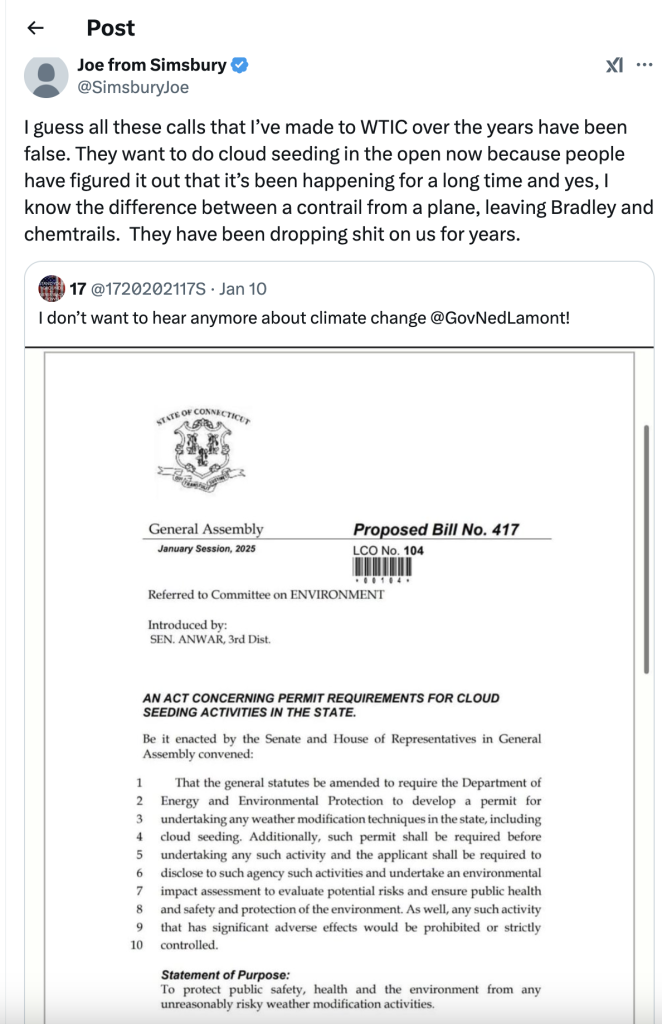
The bill proposes the general statutes be amended to require the Department of Energy and Environmental Protection to develop a permit for undertaking any weather modification techniques employed in the state, and that includes cloud seeding.
Plus, an environmental impact assessment will be required to evaluate risks and ensure that public safety, health, and the environment are protected from any unreasonably risky weather modification activities.
Weather modification includes “any activity performed with the intention of producing artificial changes in the composition, behavior, or dynamics of the atmosphere” according to NOAA.
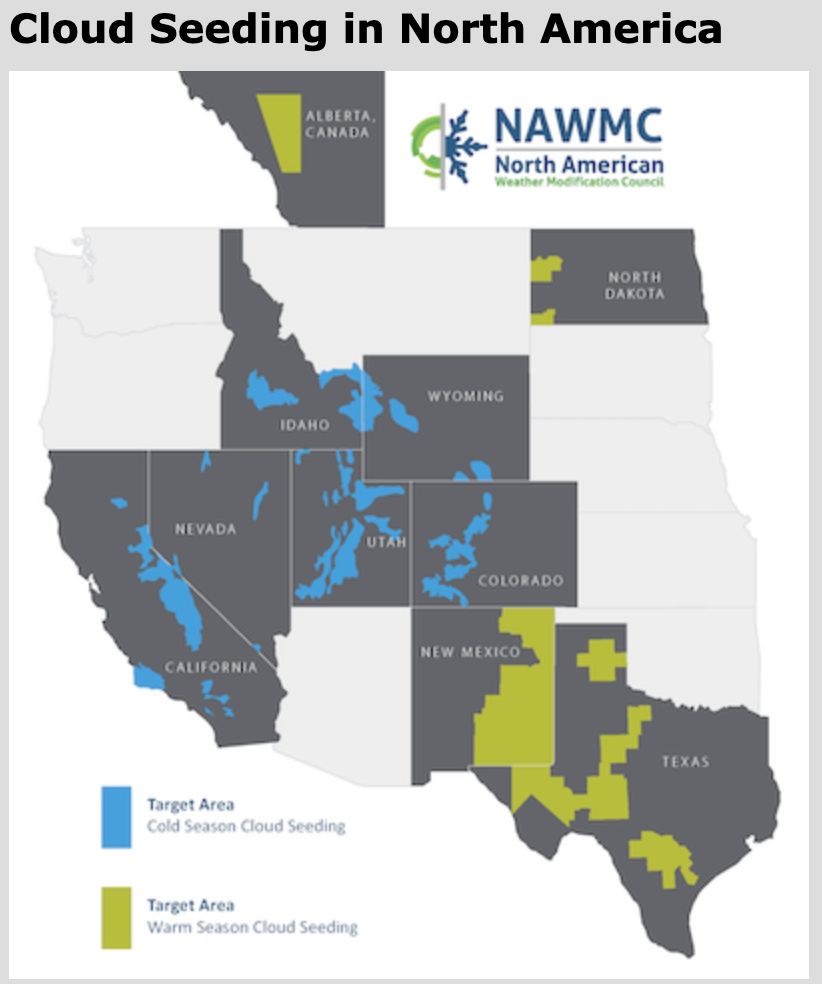
Currently, NOAA states that cloud seeding is the only ‘common‘ weather modification activity practiced in the U.S., common being the operative word.
It’s usually done by private companies in west mountain basins during winter to help build up snowpack, or in the desert southwest to fill water reservoirs during summer. Sometimes airlines use a type of seeding to disperse fog called “glaciogenic seeding.”
Why cloud seeing hasn’t been used to help dampen the California wildfires is a different issue.
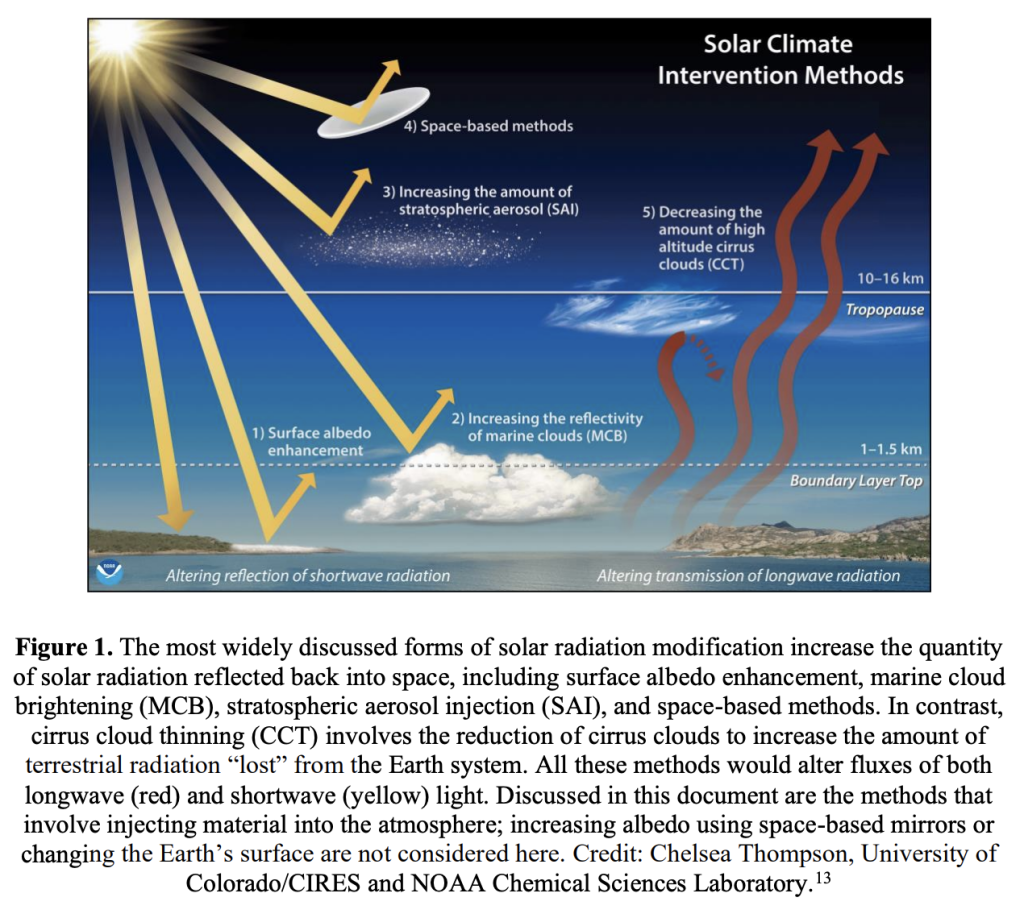
It’s also worth mentioning that back in 2022, the Biden Administration’s Consolidated Appropriations Act directed the Office of Science and Technology Policy (OSTP), with support from NOAA, to provide a research plan for “solar and other rapid climate interventions” that could help address “climate change.”
The resulting July 2023 research document focused on atmospheric-based approaches to solar radiation modification (SRM), specifically stratospheric aerosol injection (SAI) and marine cloud brightening (MCB). The report also mentions cirrus cloud thinning (CCT).
SAI was originally proposed in 1977 as a method to allegedly “tackle the impacts of global warming” by reflecting some of the sun’s rays away from Earth. The approach “aims to mimic the planet cooling effects of volcanic eruptions by injecting sulfur dioxide (SO2) directly into the stratosphere where it forms sunlight-reflecting sulfate aerosols.”
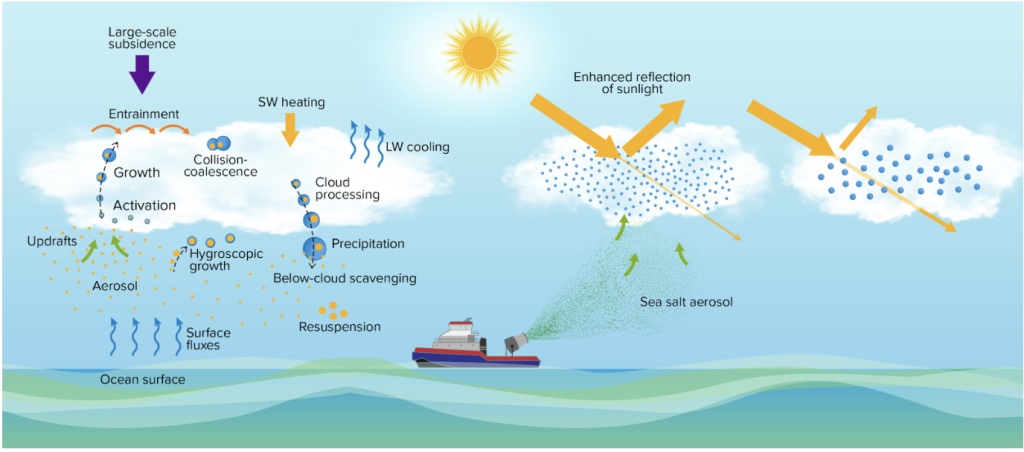
MCB involves the “injection of salt spray into shallow marine clouds to brighten them, increasing their reflection of sunlight and reducing the amount of heat absorbed by the water below.”
NOAA is even offering a 2025 grant for “Integrating Observations and Modeling in Support of Process Understanding Relevant to Solar Radiation Modification Research,” indicating the government’s continued interest in weather modification.
But rather than working to create a permit process for those wishing to engage in unproven and potentially risky weather modification techniques in Connecticut, reasonable people in the state wonder why not just ban weather engineering altogether like Tennessee did?
Toward that end, the folks at Zero Geoengineering have put together a letter you can automatically send to legislators to urge them to ban weather modification practices, and they also maintain a state-specific page for Connecticut with some interesting information.
As devastating wildfires once again consume California’s landscapes, a growing number of skeptics are pointing to an eerie coincidence: the fires are burning in regions earmarked for major redevelopment under the controversial “SmartLA 2028” initiative.
Critics allege that these fires might not be mere acts of nature but intentional acts to fast-track a dystopian agenda where artificial intelligence governs daily life.
California is currently facing a catastrophic wildfire crisis, with Los Angeles County experiencing some of the most severe blazes in its history. The fires have consumed over 38,000 acres, destroyed thousands of structures, and resulted in at least 16 fatalities, with an additional 16 individuals reported missing.
The Palisades Fire stands as the largest, having burned 23,713 acres and over 5,000 structures, with containment efforts achieving only 11% success.
The crisis has ignited a political firestorm, with President-elect Donald Trump attributing the disaster to mismanagement by California’s leadership.
Trump criticized Governor Gavin Newsom for failures in water resource management and forest maintenance, suggesting that state regulations have exacerbated the fires.
It has also been reported that the Santa Ynez Reservoir, a critical water source in Pacific Palisades, was empty and offline when a devastating wildfire ripped through the area.
The Los Angeles Times reported that despite the reservoir’s critical role in the city’s water infrastructure, it had been offline for nearly a year.
Now, claims have surfaced on social media alleging that the devastating California wildfires were intentionally started as part of a criminal land grab scheme to construct smart cities under the United Nations’ 2030 Agenda.
Some North Carolinians are still living in tents, months after Hurricane Helene destroyed their homes on Sept. 27, 2024.
Residents of Western North Carolina are confused about the Federal Emergency Management Agency’s role in helping locals with disaster recovery after Hurricane Helene.
Locals are especially confused as FEMA plans to end temporary housing assistance for about 2,000 North Carolina residents on Saturday — during a snowstorm, when temperatures across the Appalachian Mountain region are expected to be below 20 degrees.
The housing program was initially supposed to end on Friday, but FEMA pushed the deadline back to Saturday.
“I’m actually talking to several people that are losing the FEMA vouchers,” Ryan McClymonds, founder of volunteer group Operation Boots on the Ground in WNC and Eastern Tennessee, told Fox News Digital on Friday. “They’re terrified that they’re going to have nowhere to stay for their families after today. But we did find out last night pretty late … that FEMA is extending it a whole whopping 24 hours.”
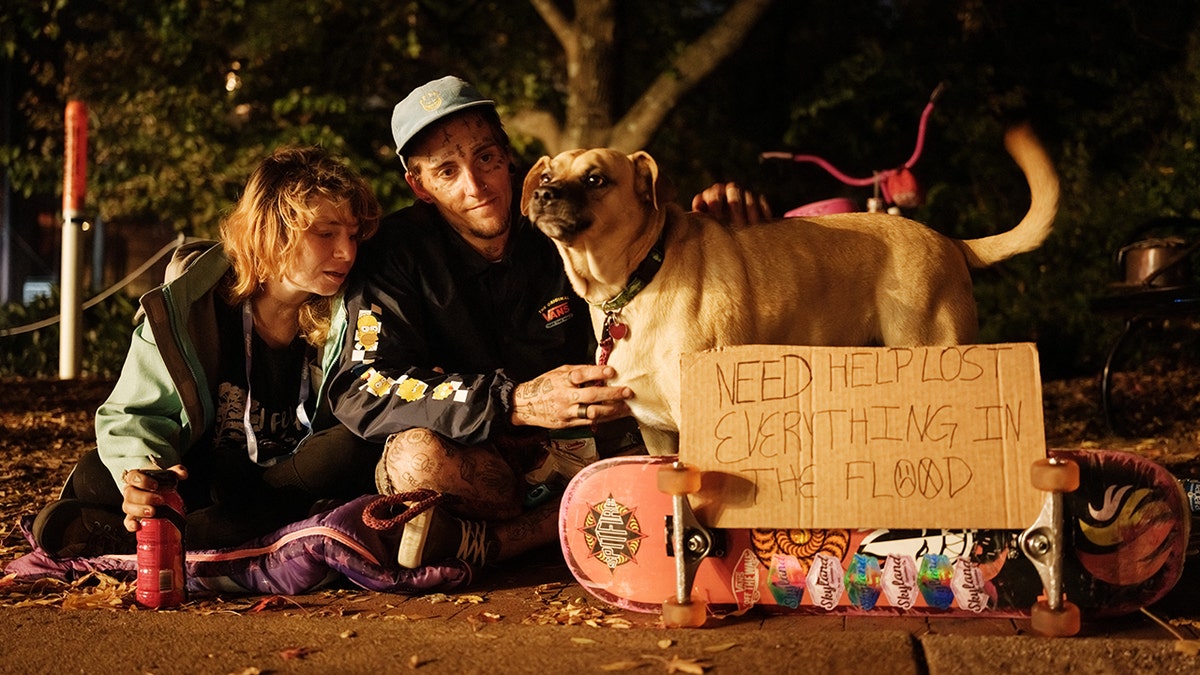
Married couple Victoria and Jeff stay on a street with their dog with a sign reading “Need help, lost everything in the flood,” after Hurricane Helene destroyed their motorhome about a month earlier in Asheville, North Carolina, on October 29, 2024. (Photo by YASUYOSHI CHIBA/AFP via Getty Images)
FEMA told Fox News Digital that its Transitional Sheltering Assistance (TSA) program is providing hotel rooms to thousands of Hurricane Helene survivors in WNC.
On Jan. 3, FEMA began notifying some families checked into hotel or motel rooms that they are no longer eligible for the program due to one of the following reasons: an inspection indicated their home is now habitable, they declined an inspection or FEMA has been unable to contact them to update their housing needs.
About 3,600 households will remain eligible to continue staying in hotel or motel rooms sponsored by FEMA past Saturday — up from the 2,100 eligible households reported by local news outlet WLOS on Thursday.
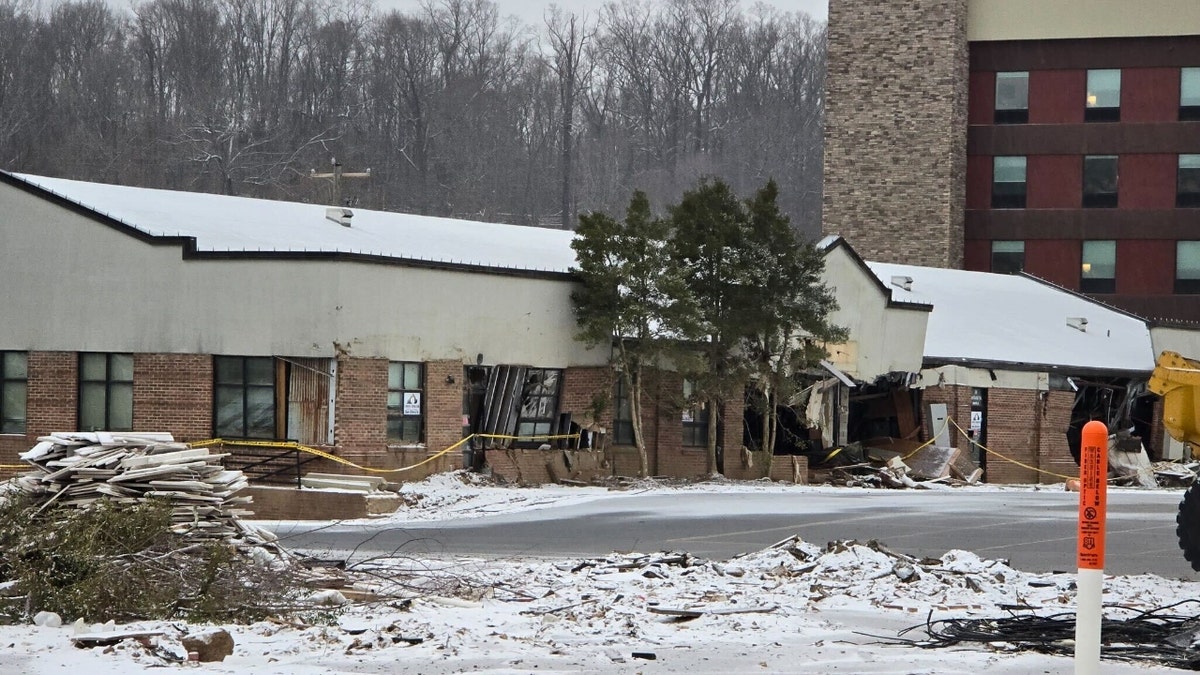
A section of Swannanoa, North Carolina, destroyed by Hurricane Helene is coated in snow on Jan. 10, 2025. (Steve Antle)
Approximately 2,000 households will still be expected to move out of their hotel rooms on Saturday. Continued eligibility is determined on a case-by-case basis. When eligibility ends, FEMA notifies survivors approximately seven days prior to their checkout date.
The agency is also closing disaster recovery centers in the area until Monday — “due to winter weather.”
“This is unfair and arguably criminal.”
— Karoline Leavitt, Trump spokeswoman and incoming White House press secretary
“Biden and Mayorkas bankrupted FEMA to pay for illegal immigrant housing, and now American citizens who lost their homes in Hurricane Helene are essentially being told to screw,” Trump spokeswoman and incoming White House press secretary Karoline Leavitt told Fox News Digital. “This is unfair and arguably criminal. The good news is: President Trump will be back very soon to put Americans first again.”
North Carolina Gov. Josh Stein “and state emergency officials continue to urge FEMA to grant an additional extension so western North Carolinians have a safe and warm shelter to ride out this storm,” communications director Kate Frauenfelder told Fox News Digital in a Friday statement.
FEMA said it has provided shelter to 13,000 families displaced by Helene since late September 2024, when the storm made landfall. There are currently 5,600 households currently checked into hotels, the agency told Fox News Digital.
“We are told to expect power outages and possibly water outages. Yeah, I’m not thrilled about that.”
— Asha Wild
“We got this notification on our phone, I think it was yesterday … which was the severe weather notification,” Swannanoa-area resident Asha Wild told Fox News Digital. “We are told to expect power outages and possibly water outages. Yeah, I’m not thrilled about that. And in the cold.”
Wild lost her house to nine feet of flooding when Helene destroyed areas of her hometown and dozens of others in the mountains, leaving 104 dead in North Carolina alone.
Power grids and other critical infrastructure are still very fragile in some areas after Helene, and residents are concerned that they could again be left without power, water, gas and even food. Volunteers in Western North Carolina and across the state have been volunteering in affected areas for months. Generous donors across the country have paid for and delivered campers to those who need housing and storage.
Long lines of vehicles can be seen lining up to get propane and other necessities from various donation drives in the area. Video
Zach Bumgarner, vice president of Bumgarner Oil, told Fox News Digital that his company has “given away 22,000 gallons of product since the storm hit.” They have hosted six propane drives since late September, allowing people to bring empty propane cylinders to designated locations, where his company fills them up for free.
“You do have people in tents and you do have temporary shelters and that kind of thing. And then you throw really cold temperatures on top of it, and it does make for a dangerous situation,” Bumgarner said. “So, hopefully what we’re doing is helping kind of bridge some of those gaps a little bit and maybe keep somebody warm. That’s really what we’re trying to do.”
Wild said she asked her friend, who works at a local grocery store she’s been going to for 18 years, how things were going.
“He said, ‘Yeah, people are kind of losing their minds.’ And I could tell it was cleaned out,” Wild said.
Mekenzie Craig brushes mud off a photo from her wedding that survived the mudslide that killed her in-laws on Sept. 27. (Adam Eugene Willis for Fox News Digital)
Steve Antle, a retired Asheville police officer who has been in contact with Fox News Digital since the day after Hurricane Helene destroyed parts of WNC, said some areas are recovering well while others remain “frozen in time.” Even wealthy neighborhoods still have piles of debris and trees down, he said.
Antle has partnered with others in and outside his community to buy and deliver thousands of dollars worth of critical supplies across his hometown of Fairview and surrounding towns since immediately after the hurricane.
Some locals are still living in tents or campers, mostly because they do not want to leave their property. Others are still without heat and power, he said.
“I have given up trying to figure out anything about how this administration and FEMA operate.”
— Steve Antle
“I don’t know what goes into their thinking,” Antle said of the agency. “You know, I want to think that it’s government incompetence because that’s the better alternative. … And I hate to think that.”
McClymonds, of Operation Boots on the Ground, became emotional when describing the people he has been helping since September.
“Don’t forget about them,” he said. “I saw a lot while I was in the military. And coming out here and seeing the lack of response and the lack of help is so heartbreaking. I’ve prayed with I don’t know how many people. I’ve heard and held so many family members. They have lost a whole lot and work hand-in-hand with family members that have lost their loved ones due to the storm. And they’re tired. And they need help.”
FEMA said it is important for storm survivors to keep in touch with FEMA and provide regular status updates. Those who have questions regarding eligibility should contact the FEMA helpline at 1-800-621-3362.