Episode 5 Darius I: Persian Empire’s Second Father
The Persian Empire (2012)
Dr John W I Lee
Film Review
Cambyses II was succeeded by either his younger brother Bardya (or someone named Gaumata who assassinated Bardya and impersonated him),* who seized the throne while Cambyses was still in Egypt. Cambyses, died of wound infection while traveling through Syria, never returned to Persia.
The fourth Persian king Darius I (522-446 BC), a distant relative of Cyrus I, killed Bardya/Gaumata and the magi who supported him, asserting he was guided by the god Ahuramazda to restore the Achaemenid legacy.
It would be Darius’s role of consolidating the territories conquered by Cyrus and Cambyses. In addition he
fixed the boundaries of the empire’s provinces, appointing both military and civilian satraps to govern them.
fixed quotas for the tribute paid by each satrapy (issuing the first coins in the Middle East for this purpose).
regularized military garrisons and ordered yearly troop musters for each satrapy
recruited architects and artisans from across the empire to oversee ambitious building projects (mainly palace and tombs).
improved communication through ambitious road building and an extensive messenger service
built a strong navy and conquered new lands, included areas of India and Pakistan, Thrace, Samos and other Greek islands.
helped finance rebuilding of Solomon’s temple in Jerusalem in 515 BC
*Plato asserts Cambyses killed Bardya himself at the start of the former’s reign. Herodutus asserts Bardya accompanied Cambyses to Egypt and was assassinated later after returning to Persia.
A federal advisory committee voted on Friday to end the universal hepatitis B vaccine recommendation for newborn babies – a decision which will now go to the U.S. Centers for Disease Control and Prevention (CDC) director for final approval.
The Advisory Committee on Immunization Practices (ACIP), the CDC’s vaccine advisers, determined in an 8-3 vote to narrow the recommendation. Instead of recommending the shot for all newborn babies, the advisory board is opting to recommend it only for newborns whose mothers test positive for the virus. “Women whose hepatitis B status is negative or unknown should talk with their doctors about vaccination, the recommendation says,” according to NPR.
“If you are a baby that was born to a mother that was tested negative for Hep B, you need to realize, as a parent, that your risk of infection throughout your early stage of life and probably throughout most of your childhood, is extremely low to the extent that it’s even hard to quantify how low. It is, it’s probably one in several millions [sic],” Professor Retsef Levi – a member of the ACIP – said in a clip shared by the CDC.
“And that means that, as a parent, we encourage you, in consultation with your physician, to think very carefully. Do you want to expose your child, your baby, to an intervention that could have some potential harms when the risk is so low?” he asked. “And mind you that we are talking about a very, very young baby in the first few months of their life, where they are not fully developed.”
This move comes as the Trump administration continues to focus on the Make America Healthy (MAHA) movement, challenging the status quo and long-held beliefs.
For instance, in September, the committee changed the guidance for the coronavirus shot, essentially leaving it up to the individual. Meanwhile, individual states are working to remove mandates as well. That same month, Florida Surgeon General Joseph Ladapo announced that the Florida Department of Health was working with the DeSantis administration to “end all vaccine mandates” in the Sunshine State.
“Who am I as a government or anyone else, or who am I as a man standing here now to tell you what you should put in your body?” Ladapo asked at the time. “Who am I to tell you what your child should put in your body? I don’t have that right.”
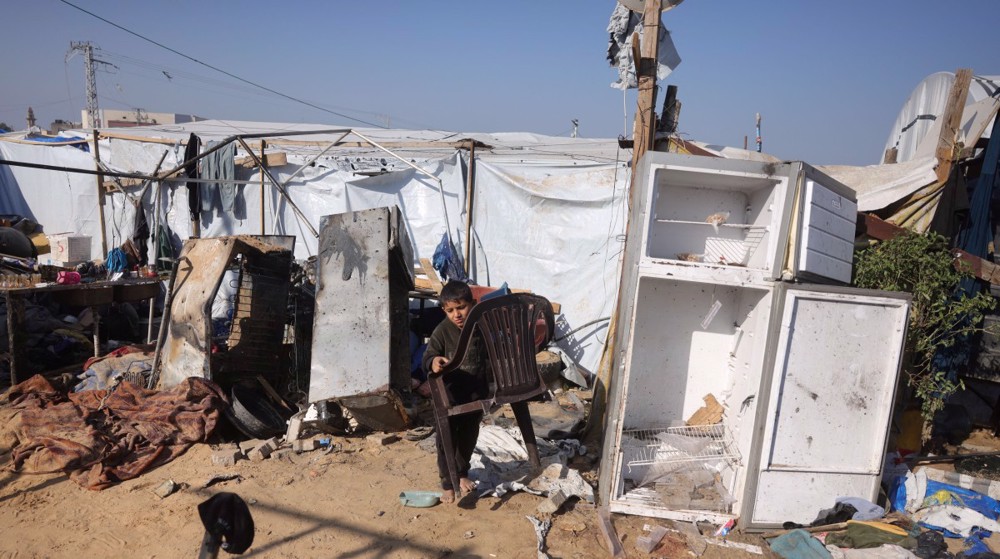
A boy lifts a plastic chair at the site where Palestinians were killed on December 3, by an Israeli strike, in Khan Yunis, southern Gaza Strip on December 4, 2025. (Photo by AFP)
Press TV
Qatar’s Prime Minister, Sheikh Mohammed bin Abdulrahman Al Thani, has warned against Israel’s continued hostilities in the Gaza Strip, stressing that only a full withdrawal of Israeli forces would constitute a full ceasefire under the US-brokered peace plan.
Speaking at the Doha Forum on Saturday, Al Thani said the current nearly two-month truce has reached a “critical” juncture as the first phase of US President Donald Trump’s 20-point peace plan draws to a close.
“What we have just done is a pause,” he said. “We cannot consider it yet a ceasefire. A ceasefire cannot be completed unless there is a full withdrawal of Israeli forces, there is stability back in Gaza, people can go in and out, which is not the case today.”
The Qatari premier further noted that international mediators are pushing to launch the second phase of the peace plan, which aims to solidify the agreement and establish a long-term political framework.
He also stated that even the next phase must remain “temporary,” stressing the necessity of creating a Palestinian state for sustainable peace.
“If we are just resolving what happened in Gaza, the catastrophe that happened in the last two years, it’s not enough,” he said. “There is a root for this conflict. And this conflict is not only about Gaza.”
“It’s about Gaza. It’s about the West Bank. It’s about the rights of the Palestinians for their state. We are hoping that we can work together with the US administration to achieve this vision at the end of the day,” he added.
At the same forum, Turkey’s Foreign Minister Hakan Fidan also raised concerns about the proposed “International Stabilization Force (ISF)” in Gaza, citing uncertainties about participating countries, command structure, and initial objectives.
“Thousands of details, questions are in place,” he said. “I think once we deploy ISF, the rest will come.”
Turkey, one of the ‘guarantors’ of the ceasefire, faced rejection from Israel regarding its involvement in the force due to strained relations between the two sides.
Israel accepted the Gaza truce deal after two years, following the failure to achieve its declared objectives of eliminating Hamas and freeing all captives, despite killing 68,116 Palestinians, mostly women and children, and injuring 170,200 others since launching the genocidal war on Gaza on October 7, 2023.
Trump pushed for a ceasefire deal as part of a US-led diplomatic effort, engaging regional powers and both parties to halt hostilities and allow humanitarian aid into Gaza.
The initial phase of Trump’s 20-point Gaza ceasefire plan took effect on October 10 and saw a prisoner exchange, but further stages have not been negotiated yet.
However, the fragility of the US president’s 20-point Gaza deal was evident from the beginning, as reports from Gaza health officials indicated over 360 Palestinian casualties since the ceasefire’s initiation, with the latest incident involving an Israeli airstrike northwest of Gaza City.
Despite the pause in large-scale hostilities, the situation remains tense, with continued reports of Israeli fire causing Palestinian casualties and tensions around crossing truce lines into Israeli-controlled areas of Gaza.
Iranian Foreign Minister Abbas Araghchi (R) and his Egyptian counterpart Badr Abdelatty
Press TV
Top Iranian and Egyptian diplomats say the international community must take swift action to put an end to the Israeli regime’s ongoing aggression in Gaza and Lebanon.
In a phone conversation on Saturday, Iranian Foreign Minister Abbas Araghchi and his Egyptian counterpart Badr Abdelatty said Israel continues to carry out acts of aggression and violate the ceasefires in Gaza and Lebanon.
Israel accepted the Gaza truce deal after two years, following its failure to achieve its declared objectives of eliminating the Palestinian resistance movement Hamas and freeing all captives.
The initial phase of the ceasefire plan took effect on October 10 and saw a prisoner exchange, but further stages have not been negotiated yet.
However, the fragility of the 20-point Gaza deal, pushed by US President Donald Trump, was evident from the beginning, as reports from Gaza health officials indicated over 366 Palestinian casualties since the ceasefire’s initiation, with the latest incident involving an Israeli airstrike northwest of Gaza City.
A ceasefire between Israel and the Lebanese resistance movement Hezbollah took effect in November 2024 following a conflict sparked by the Tel Aviv regime’s genocidal war on the Gaza Strip in October 2023.
Israel was forced to accept the truce with Hezbollah after suffering heavy losses on the battlefield and failing to achieve its goals despite killing over 4,000 people in Lebanon.
The new US National Security Strategy signals a massive foreign policy shift; it remains to be seen if Washington is serious about it
It is one thing to produce a written national security strategy, but the real test is whether or not US President Donald Trump is serious about implementing it. The key takeaways are the rhetorical deescalation with China and putting the onus on Europe to keep Ukraine alive.
The 2025 National Security Strategy (NSS) of the US, released by the White House on December 4, 2025, marks a potentially profound shift in US foreign policy under Trump’s second administration compared to his first term as president. This 33-page document explicitly embraces an ‘America First’ doctrine, rejecting global hegemony and ideological crusades in favor of pragmatic, transactional realism focused on protecting core national interests: Homeland security, economic prosperity, and regional dominance in the Western Hemisphere.
It critiques past US overreach as a failure that weakened America, positioning Trump’s approach as a “necessary correction” to usher in a “new golden age.” The strategy prioritizes reindustrialization (aiming to grow the US economy from $30 trillion to $40 trillion by the 2030s), border security, and dealmaking over multilateralism or democracy promotion. It accepts a multipolar world, downgrading China from a “pacing threat” to an “economic competitor,” and calling for selective engagement with adversaries. However, Trump’s actions during the first 11 months of his presidency have been inconsistent with, even contradictory of, the written strategy.
The document is unapologetically partisan, crediting Trump personally for brokering peace in eight conflicts (including the India-Pakistan ceasefire, the Gaza hostage return, the Rwanda-DRC agreement) and securing a verbal commitment at the 2025 Hague Summit for NATO members to boost their defense spending to 5% of GDP. It elevates immigration as a top security threat, advocating lethal force against cartels if needed, and dismisses climate change and ‘net zero’ policies as harmful to US interests.
The document organizes US strategy around three pillars: Homeland defense, the Western Hemisphere, and economic renewal. Secondary focuses include selective partnerships in Asia, Europe, the Middle East, and Africa.
Here are the major rhetorical shifts in strategy compared to the previous strategies released during the respective presidencies of Trump (2017) and Biden (2022):
From global cop to regional hegemon: Unlike Biden’s 2022 NSS (which emphasized alliances and great-power competition) or Trump’s 2017 version (which named China and Russia as revisionists), this document ends America’s “forever burdens” abroad. It prioritizes the Americas over Eurasia, framing Europe and the Middle East as deprioritized theaters.
Ideological retreat: Democracy promotion is explicitly abandoned – “we seek peaceful commercial relations without imposing democratic change” (tell that to the Venezuelans). Authoritarians are not judged, and the EU is called “anti-democratic.”
Confrontational ally relations: Europe faces scathing criticism for migration, free speech curbs, and risks of “civilizational erasure” (e.g., demographic shifts making nations “unrecognizable in 20 years”). The US vows to support the “patriotic” European parties resisting this, drawing Kremlin-like rhetoric accusations from EU leaders.
China policy: Acknowledges failed engagement; seeks “mutually advantageous” ties but with deterrence (e.g., Taiwan as a priority). No full decoupling, but restrictions on tech/dependencies.
Multipolar acceptance: Invites regional powers to manage their spheres (e.g., Japan in East Asia, Arab-Israeli bloc in the Gulf), signaling US restraint to avoid direct confrontations.
The NSS represents a seismic shift in America’s approach to NATO, emphasizing “burden-shifting” over unconditional alliance leadership. It frames NATO not as a values-based community but as a transactional partnership in which US commitments – troops, funding, and nuclear guarantees – are tied to European allies meeting steep new demands. This America First recalibration prioritizes US resources for the Indo-Pacific and Western Hemisphere, de-escalating in Europe to avoid “forever burdens.” Key changes include halting NATO expansion, demanding 5% GDP defense spending by 2035, and restoring “strategic stability” with Russia via a Ukraine ceasefire. While the US reaffirms Article 5 and its nuclear umbrella, it signals potential partial withdrawals by 2027 if Europe fails to step up, risking alliance cohesion amid demographic and ideological critiques of Europe. When Russia completes the defeat of Ukraine, the continued existence of NATO will be a genuine concern.
The strategy credits Trump’s diplomacy for NATO’s 5% pledge at the 2025 Hague Summit but warns of “civilizational erasure” in Europe due to migration and low birth rates, speculating that some members could become “majority non-European” within decades, potentially eroding their alignment with US interests.
Trump’s NSS signals a dramatic change in US policy toward the Ukraine conflict by essentially dumping the responsibility for keeping Ukraine afloat on the Europeans. The portion of the NSS dealing with Ukraine is delusional with regard to the military capabilities of the European states:
We want Europe to remain European, to regain its civilizational self-confidence, and to abandon its failed focus on regulatory suffocation… This lack of self-confidence is most evident in Europe’s relationship with Russia. European allies enjoy a significant hard power advantage over Russia by almost every measure, save nuclear weapons.
As a result of Russia’s war in Ukraine, European relations with Russia are now deeply attenuated, and many Europeans regard Russia as an existential threat. Managing European relations with Russia will require significant US diplomatic engagement, both to reestablish conditions of strategic stability across the Eurasian landmass, and to mitigate the risk of conflict between Russia and European states.
It is a core interest of the United States to negotiate an expeditious cessation of hostilities in Ukraine, in order to stabilize European economies, prevent unintended escalation or expansion of the war, and reestablish strategic stability with Russia, as well as to enable the post-hostilities reconstruction of Ukraine to enable its survival as a viable state.
The Ukraine War has had the perverse effect of increasing Europe’s, especially Germany’s, external dependencies. Today, German chemical companies are building some of the world’s largest processing plants in China, using Russian gas that they cannot obtain at home. The Trump Administration finds itself at odds with European officials who hold unrealistic expectations for the war perched in unstable minority governments, many of which trample on basic principles of democracy to suppress opposition. A large European majority wants peace, yet that desire is not translated into policy, in large measure because of those governments’ subversion of democratic processes. This is strategically important to the United States precisely because European states cannot reform themselves if they are trapped in political crisis.
Not surprisingly, this section of Trump’s NSS has sparked a panicked outcry in Europe. European leaders, including former Swedish PM Carl Bildt, called it “to the right of the extreme right,” warning of alliance erosion. Analysts at the Center for Strategic and International Studies (CSIS) praise its pragmatism, but flag short-sightedness, predicting a “lonelier, weaker” US. China views reassurances on sovereignty positively, but remains wary of economic pressures. In the US, Democrats, such as Rep. Jason Crow, deem it “catastrophic” for alliances, i.e. NATO.
Overall, the strategy signals a US pivot inward, forcing NATO allies to self-fund security while risking fractured partnerships with Europe. It positions America as a wealthy hemispheric power in a multipolar order, betting on dealmaking and industrial revival to sustain global influence without overextension.
Back in 2022 the European Union froze Russia’s sovereign funds. Estimates vary, but the total adds up to something around $300 billion. A lot of this money is held in Euroclear in Brussels, Belgium. As the situation stands at the end of 2025, the United States has stopped funding the financial black hole known as the Ukraine. The European Union tried to take over but it turns out to have no money to do so.
Various plans have been floated for making creative use of Russian sovereign funds to plug the black hole. So far, none of them came to fruition. The latest plan was to have the European Central bank issue loans backed by Russian funds. Not only would this have amounted to simply printing the money (since the backing is but a ruse), but the US Federal Reserve would have had to approve a dollar-euro currency swap. The euro, you see, is not an independent currency but a sort of financial mini-me to the US dollar. In any case, the Fed refused to do so and the entire plan flopped.
Among all of the discussion of this topic I have seen so far, I haven’t seen any mention of what is actually being attempted. At the core of it is the fact that the Russian funds are not money but debt. Frozen Russian funds consist of eurobonds. That is, the Russian government purchased eurobonds and deposited them in Euroclear. If the EU were to abscond with these Eurobonds, that would be a repudiation of this debt. That’s fantastic — less debt! — but where’s the money? The EU members have already spent the money the Russians gave them when purchasing these eurobonds. To actually come up with more money to stuff into the Ukrainian financial black hole, EU would have to borrow it — for example, by, you guessed it, selling more eurobonds.
Now, appreciate the imbecilic nature of the EU’s stance. The EU freezes some sovereign funds, pending the resolution of a military conflict. So far, so good, that’s normal practice. But these sovereign funds consist of EU debt, and the EU is proposing to take possession of this debt, in effect, refusing to pay it back. At this point international investors do their best to decrease their exposure to eurobonds. Yields on eurobonds go up to compensate, making it even more expensive for the EU to continue running large fiscal deficits.
But what has the EU accomplished (other than raising the interest rates it has to pay on its debt)? Why, nothing! It has exactly the amount of money it started with but has suffered some significant reputational damage. If it still wants to stuff some more money into the Ukrainian financial black hole, it would have to borrow it — by selling some more eurobonds but at a higher yield. Is that a win for the EU? I don’t think so!
But that’s not all. Russia will not look kindly on having the EU abscond with its sovereign funds. In fact, it has already made provisions for confiscating equivalent amounts of EU assets held in Russian banks and nationalizing EU investments in Russia. Not only is that real money, not debt instruments, but quite a lot of that wealth is in the form of stocks of actual companies, currently under EU ownership, that would pass to Russian state ownership, along with plant and equipment, employees, inventory and market share. Is that a win? I still don’t think so!
1. Ukraine is on its last legs, guaranteed to lose the war, its army melting away and its government mired in corruption scandals. Throwing more money at the Ukrainian financial black hole would be simply a waste.<
2. Frozen Russian sovereign funds held by Euroclear are in the form of eurobonds. If the EU stole this money, it would simply be refusing to pay back $300 billion of its own debt. This would not give it any money (it has already spent the Russian money which was used to buy these bonds) but it would certainly hurt its financial position and complicate further borrowing and deficit financing.
3. The EU would gain nothing, but it would lose actual, real money and brick and mortar assets it had built up in Russia, including any future profits from them and any future role in the Russian economy.
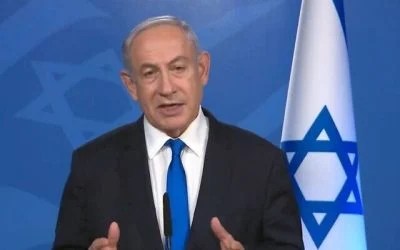
The news hit the headlines in Israel without warning: On Sunday, Prime Minister Benjamin Netanyahu asked President Isaac Herzog to grant him a preemptive pardon, ending his corruption trial. It would be a highly controversial, almost unprecedented move, as presidential pardons are usually only granted after a conviction.
Yedioth Ahronoth, one of Israel’s leading daily newspapers, on Monday ran with the headline “The pardon dilemma,” while free right-wing daily Israel Hayom acknowledged that “the request is unusual and carries significant implications.”
In a televised video statement, Netanyahu argued that while it was in his personal interest to prove his innocence in court, it was also in the national interest to cut short the trial, which he claimed was “tearing us apart.”
By Drew Hinshaw, Benoit Faucon , Rebecca Ballhaus , Thomas Grove and Joe Parkinson (Wall Street Journal)
Three powerful businessmen— two Americans and a Russian—hunched over a laptop in Miami Beach, ostensibly to draw up a plan to end Russia’s long and deadly war with Ukraine.
But the full scope of their project went much further, according to people familiar with the talks. They were privately charting a path to bring Russia’s $2 trillion economy in from the cold—with American businesses first in line to beat European competitors to the dividends.
At his waterfront estate, billionaire developer-turned-special envoy Steve Witkoff was hosting Kirill Dmitriev, head of Russia’s sovereign-wealth fund and Vladimir Putin’s handpicked negotiator, who had largely shaped the document they were revising on the screen. Jared Kushner, the president’s son-in-law, had arrived from his nearby home on an island known as the “Billionaire Bunker.”
Dmitriev was pushing a plan for U.S. companies to tap the roughly $300 billion of Russian central bank assets, frozen in Europe, for U.S.-Russian investment projects and a U.S.-led reconstruction of Ukraine. U.S. and Russian companies could join to exploit the vast mineral wealth in the Arctic. There were no limits to what two longtime adversaries could achieve, Dmitriev had argued: Their rival space industries, which raced one another during the Cold War, could even pursue a joint mission to Mars with Elon Musk’s SpaceX.
For the Kremlin, the Miami talks were the culmination of a strategy, hatched before Trump’s inauguration, to bypass the traditional U.S. national security apparatus and convince the administration to view Russia not as a military threat but as a land of bountiful opportunity, according to Western security officials. By dangling multibillion-dollar rareearth and energy deals, Moscow could reshape the economic map of Europe—while driving a wedge between America and its traditional allies.
Dmitriev, a Goldman Sachs alumnus, had found receptive partners in Witkoff—Trump’s longtime golfing partner—and Kushner, whose investment fund, Affinity Partners, drew billion-dollar investments from the Arab monarchies whose conflict with Israel he had helped mediate.
The two businessmen shared President Trump’s longheld approach to geopolitics. If generations of diplomats viewed the post-Soviet challenges of Eastern Europe as a Gordian knot to be painstakingly unraveled, the president envisioned an easy fix: The borders matter less than the business. In the 1980s, he had offered to personally negotiate a swift end to the Cold War while building what he told Soviet diplomats would be a Trump Tower across the street from the Kremlin, with their Communist regime as a business partner.
“Russia has so many vast resources, vast expanses of land,” Witkoff told The Wall Street Journal, describing at length his hopes that Russia, Ukraine and America would all become business partners. “If we do all that, and everybody’s prospering and they’re all a part of it, and there’s upside for everybody, that’s going to naturally be a bulwark against future conflicts there. Because everybody’s thriving.”
Red lines
When a version of the 28point plan leaked earlier this month, it drew immediate protests. Leaders in Europe and Ukraine complained it reflected mostly Russian talking points and bulldozed through nearly all of Kyiv’s red lines. They weren’t assuaged even after administration officials assured them that the plan wasn’t set in stone, worried that Russia— after violently redrawing European borders—was being rewarded with commercial opportunities.
As Western leaders convened to digest the plan, Poland’s prime minister Donald Tusk offered a pithy summary: “We know this is not about peace. It’s about business.”
For many in the Trump White House, that blurring of business and geopolitics is a feature, not a bug. Key presidential advisers see an opportunity for American investors to snap up lucrative deals in a new postwar Russia and become the commercial guarantors of peace. In conversations with Witkoff and Kushner, Russia has been clear it would prefer U.S. businesses to step in, not rivals from European states whose leaders have “talked a lot of trash” about the peace efforts, one of these people said: “It’s Trump’s ‘Art of the Deal’ to say, ‘Look, I’m settling this thing and there’s huge economic benefits for doing that for America, right?’” A question for history will be whether Putin entertained this approach in the interest of ending the war, or as a ploy to pacify the U.S. while prolonging a conflict he believes is his place in history to slowly, ineluctably win.
Trusted friends
One sign that he may be serious is that some of his mosttrusted friends, sanctioned billionaires from his St. Petersburg hometown—Gennady Timchenko, Yuri Kovalchuk and the Rotenberg brothers, Boris and Arkady—have sent representatives to quietly meet American companies to explore rare-earth mining and energy deals, according to people familiar with the meetings and European security officials. That includes reviving the giant Nord Stream pipeline, sabotaged by Ukrainian tactical divers, and under European Union sanctions.
Earlier this year, Exxon Mobil met with Russia’s biggest state energy company, Rosneft, to discuss returning to the massive Sakhalin gas project if Moscow and Washington gave the green light.
Elsewhere, a cast of businessmen close to the Trump administration have been looking to position themselves as new economic links between the U.S. and Russia.
Gentry Beach, a college friend of Donald Trump Jr. and campaign donor to his father, has been in talks to acquire a stake in a Russian Arctic gas project if it is released from sanctions. Another Trump donor, Stephen P. Lynch, paid $600,000 this year to a lobbyist close to Trump Jr. who is helping him seek a Treasury Department license to buy the Nord Stream 2 pipeline from a Russian state-owned company.
There is no evidence that Witkoff, the White House or Kushner are briefed on these efforts or coordinating them. A person familiar with Witkoff’s thinking said the envoy is confident that any settlement with Russia would benefit America broadly, not just a handful of investors.
Witkoff, who hasn’t traveled to Ukraine this year, is set to visit Russia for the sixth time this week and will again meet Putin. He insisted he isn’t playing favorites. “Ukrainians have fought heroically for their independence,” said Witkoff, who has tried to inspire Ukrainian officials with the idea of soldiers disarming to earn Silicon Valley-scale salaries operating American built AI data centers. “It is now time to consolidate what they have achieved through diplomacy,” he said.
‘Both sides’
“The Trump administration has gathered input from both the Ukrainians and Russians to formulate a peace deal that can stop the killing and bring this war to a close,” said White House spokesperson Anna Kelly. “As the President said, his national security team has made great progress over the past week, and the agreement will continue to be fine-tuned following conversations with officials from both sides.”
As Witkoff pursued talks with Dmitriev over nine months, some agencies inside the Trump administration had a limited view of his dealings with Moscow.
In the lead-up to an August summit in Alaska between Trump and Putin, Witkoff and Dmitriev discussed a prisoner exchange that would have been the largest bilateral swap in their countries’ history. The Central Intelligence Agency, which traditionally manages prisoner trades with Russia, wasn’t fully briefed on that proposed exchange. Nor was the State Department’s office for unjustly imprisoned Americans. The CIA didn’t return requests for comment. The State Department referred questions to the White House.
Career officials overseeing sanctions at the Treasury Department have at times learned details of Witkoff’s meetings with Moscow from their British counterparts.
In the days after Alaska, a European intelligence agency distributed a hard-copy report in a manila envelope to some of the continent’s most senior national security officials, who were shocked by the contents: Inside were details of the commercial and economic plans the Trump administration had been pursuing with Russia, including jointly mining rare earths in the Arctic.
Witkoff has worked closely with Vice President JD Vance and Secretary of State Marco Rubio. But the special envoy for Ukraine, former Lt. Gen. Keith Kellogg, has all but been frozen out of serious talks, and said he is leaving.
To understand the administration’s Russia negotiations, The Wall Street Journal spoke to dozens of officials, diplomats, and former and current intelligence officers from the U.S., Russia and Europe, and American lobbyists and investors close to the administration.
The picture that emerges is a remarkable story of business leaders working outside the traditional lines of diplomacy to cement a peace agreement with business deals.
‘ We keep on knocking at the door and coming up with ideas.’
Witkoff was just weeks into his new job as President Trump’s Russia and Ukraine negotiator when his office asked the Treasury Department for help allowing a sanctioned Russian businessman to visit Washington.
Kirill Dmitriev, an investment banker with degrees from Harvard and Stanford, spoke Witkoff’s preferred language: business. He had invited Witkoff to Moscow in February and escorted him into a three-hour meeting with Putin to discuss the Ukraine war. But Dmitriev was persona non grata in the U.S, blocked by the Treasury in 2022 for his role leading his country’s Sovereign Wealth Fund, which it called a “slush fund for Vladimir Putin.”
Trump had told Witkoff he wanted the war to end and the administration was willing to take the risk of welcoming Putin’s emissary to Washington. Treasury Secretary Scott Bessent had questions about the unique request, but ultimately signed off.
Dmitriev arrived at the White House on April 2 and presented a list of multibilliondollar business projects the two governments could pursue together. At one point, Secretary of State Marco Rubio told Dmitriev that Putin needed to demonstrate he was serious about peace. But Dmitriev felt his businesslike rapport was breaking through. “We can transition i n v e s t m e n t trust into a political role,” he said in an unpublished interview that month.
In April, Dmitriev welcomed Witkoff to the St. Petersburg presidential library for another three-hour meeting with Putin. Witkoff took his own notes, relying on a Kremlin translator, then briefed the White House from the U.S. Embassy. That same month, European national security advisers planned to meet Witkoff in London to integrate him into their peace process. But he was busy with his other portfolio— negotiating a cease-fire in Gaza—and couldn’t make it. Afterward, one European official asked Witkoff to start speaking with allies over the secure fixed line Europe’s heads of state use to conduct sensitive diplomatic conversations. Witkoff demurred, as he traveled too much to use the cumbersome system.
Dmitriev and Witkoff meanwhile were chatting regularly by phone about increasingly ambitious proposals. The U.S. and Russia were discussing major agreements on oil-andgas exploration and Arctic transportation, Dmitriev told the Journal. “We believe that the U.S. and Russia can cooperate basically on everything in the Arctic,” he said. “If a solution is found in Ukraine, U.S. economic cooperation can be a foundation for our relationship going forward.”
Into position
American and Russian business leaders were quietly anticipating that Witkoff and Dmitriev would deliver, positioning their companies to profit from peace.
Exxon, billionaire investor Todd Boehly and others have explored buying assets owned by Lukoil, Russia’s second-largest oil producer. The U.S. sanctioned Lukoil in October to increase pressure on Moscow, prompting the company to put its overseas assets up for sale. Elliott Investment Management eyed buying a stake in a pipeline that carries Russian natural gas into Europe.
More recently, Kremlin–linked businessmen Timchenko, Kovalchuk and the Rotenbergs have been offering U.S. counterparts gas concessions in the Sea of Okhotsk, as well as potentially four other locations, according to a European security official and a person familiar with the talks. Russia has also mentioned rare-earth mining opportunities near the massive nickel mines of Norilsk and in as many as six other Siberian locations that are still unexploited, these people said.
(NaturalHealth365) Walk through any public space and the scene repeats everywhere: babies in strollers staring at glowing screens, teenagers unable to look up from their devices, and adults compulsively checking phones every few minutes. What began as a convenient communication tool has become a constant companion that most people interact with for well over 4 hours daily, rarely questioning what this exposure is doing to bodies and brains at every age.
A major study published in Pediatrics, analyzing over 10,000 adolescents, has delivered results that extend far beyond childhood concerns. Smartphone ownership at age 12 is associated with higher depression risk, increased obesity risk, and a greater likelihood of insufficient sleep. The younger people acquire smartphones, the worse their health outcomes become, a pattern that continues affecting health throughout the lifespan.
Hidden health crisis emerging at every age, study data confirms
Researchers from the Adolescent Brain Cognitive Development Study followed 10,588 participants, comparing health outcomes between 12-year-olds who owned smartphones (6,739 children) and those who didn’t (3,849 children). Depression risk increased by 31%, obesity risk jumped 40%, and insufficient sleep risk climbed 62% compared to children without smartphones.
The age at which someone gets their first smartphone shows a troubling trend: for every year earlier a child receives one, their risk of obesity increases by 9% and their risk of inadequate sleep rises by 8%. Early smartphone exposure appears to set long-lasting patterns that continue into adulthood.
Among youth who didn’t own smartphones at age 12, those who acquired devices during the following year had 57% higher odds of clinical-level psychopathology and a 50% higher likelihood of insufficient sleep, even after controlling for baseline mental health and sleep patterns.
But children aren’t the only ones affected. Adults spending excessive time on smartphones show similar health deterioration: disrupted sleep architecture, increased anxiety and depression, sedentary behavior contributing to metabolic dysfunction, and postural problems causing chronic pain.
Alarming cancer connection scientists can no longer ignore
Smartphones emit radiofrequency electromagnetic fields, raising serious questions about cancer risk across the lifespan. The International Agency for Research on Cancer classified radiofrequency electromagnetic fields as “possibly carcinogenic to humans” based on increased glioma risk associated with wireless phone use.
Children’s developing brains absorb more radiation than adult brains. Research published in Environmental Research found that children’s brains absorb 2-3 times more radiation than adults’, and the young, thin skull’s bone marrow absorbs roughly 10 times higher local doses. But adults face cumulative exposure risks. Someone who started using cell phones at age 15 and continues through age 65 accumulates 50 years of daily radiation exposure.
France has banned Wi-Fi in nursery schools and limited it in elementary schools, and Belgium has outlawed marketing phones to children under age 7. Yet despite these precautions, smartphone use continues to rise across all age groups, with very little discussion of the potential long-term health effects.
Simple strategies to protect yourself from device-related damage
Protecting yourself and your family from the health impacts of heavy smartphone use takes some intentional habits, but small shifts make a big difference.
Cut back on daily exposure: Instead of being “always on,” choose specific times to check your phone. Use built-in screen-time tools to set limits and create phone-free zones, like during meals, before bed, or when you’re spending time with others.
Lower radiation exposure: Use a speakerphone or a wired headset rather than holding the phone against your head. Turn off Wi-Fi and cellular data when you don’t need them, and avoid sleeping with your phone next to you. When you can, switch your device to airplane mode.
Reduce physical strain: Give your body breaks. Step away from screens regularly to undo the stress on your posture they cause. Simple stretches can help reverse “tech neck” and tight shoulders. If you’re sitting for long periods, stand and move at least every 30 minutes.
Protect your sleep: Keep screens out of the bedroom. Try to stop scrolling at least two hours before bed, so your body can naturally produce melatonin. If nighttime screen use is unavoidable, blue-light-blocking glasses can help.
Support detox pathways: Lower your overall toxic load by eating clean, staying hydrated, and moving your body daily. You can also support liver function and cellular repair with targeted supplements if needed.
Understand the cancer prevention connection
Chronic inflammation, disrupted circadian rhythms, electromagnetic field exposure, and sedentary behavior all contribute to disease processes, including cancer. These risk factors accumulate over decades of smartphone use.
Jonathan Landsman’s Stop Cancer Docu-Class brings together 22 holistic experts, researchers, doctors, and nutritionists, revealing evidence-based approaches to cancer prevention. Learn how environmental toxins and electromagnetic field exposure affect cancer risk, which lab tests detect early cancer markers years before conventional diagnosis, natural protocols for strengthening immune surveillance against abnormal cell growth, and how reducing toxic burden and supporting detoxification pathways lowers cancer risk.
Bottom line: Smartphone use harms health at every age, damaging mental health, disrupting metabolism and sleep, and exposing users to radiation that accumulates over time. Getting smartphones younger makes everything worse, but adults who’ve used phones for decades face their own serious risks. Protect your long-term health by cutting back on usage, keeping phones away from your body, and supporting your body’s ability to detoxify and repair cellular damage.
Spain, Ireland, Slovenia, and the Netherlands have said they will boycott the next Eurovision Song Contest after Israel was cleared to take part. Earlier this year, several broadcasters urged contest organizers the European Broadcasting Union (EBU) to bar Israel over alleged vote-rigging and the war in Gaza.
The latest US-brokered truce in the conflict was intended to pause the hostilities and allow humanitarian aid into the enclave, but continued Israeli attacks have killed 366 people since it was imposed, according to the Gaza Health Ministry.
This followed a year of escalating violence after Israel launched its military operation in response to Hamas’ October 2023 attack, which killed 1,200 people and led to 250 being taken hostage. The Israeli operation has since killed more than 70,000 Palestinians, according to the local health authorities.
The responses came on Thursday, after the EBU approved tougher voting rules. The move followed allegations by several European broadcasters that the 2025 contest was manipulated to boost the Israeli contestant.
Hours later, Dutch broadcaster AVROTROS announced its withdrawal. “Infringement of universal values such as humanity, press freedom, but also the political interference that occurred during the previous edition of the Eurovision Song Contest, crossed a boundary for us,” it said.
Ireland’s RTE cited the “appalling loss of lives in Gaza,” the humanitarian crisis, and Israel’s crackdown on press freedom as reasons for its withdrawal and decision not to air the event.
Slovenia’s RTVSLO also said it would not take part. “We cannot stand on the same stage with a representative of a country that caused the genocide of Palestinians in Gaza,” Director Ksenija Horvat said.
Spanish broadcaster RTVE later confirmed that it would pull out as well. RTVE, along with broadcasters from seven other countries, requested a secret ballot on Israel’s participation. When the EBU rejected the call, RTVE said the decision “deepens our distrust in the organisation of the contest and confirms the political pressure surrounding it.”
Eurovision organizers have introduced new rules to address interference concerns, including limits on audience voting, stricter promotion guidelines, enhanced security safeguards, and the return of juries to the semifinals.






 The Most Revolutionary Act