The Most Revolutionary Act

Uncensored updates on world events, economics, the environment and medicine

The Most Revolutionary Act

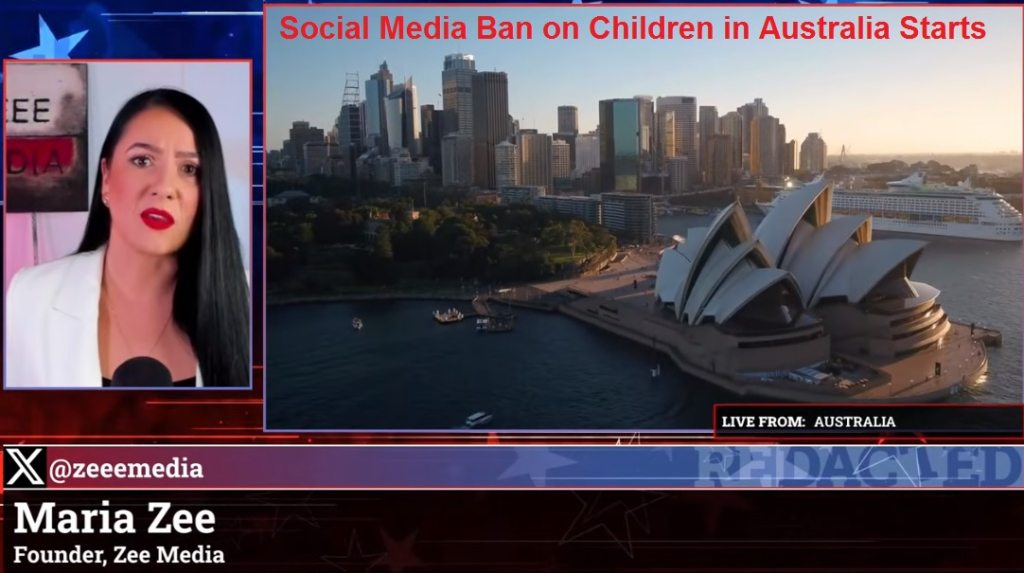
Australia Starts Social Media Ban on Children – Steps to Digital ID for EVERYONE and Coming Soon to the US

Comments by Brian Shilhavy
Health Impact News

This week Australia began a new ban on children under the age of 16 from using social media. It is the first such ban worldwide, but there are already proposed bills in the U.S. that will do the same thing, and Texas has already passed a bill that is supposed to go into effect next month (January, 2026).

The issue, of course, is that to know if a user of social media is over the age of 16 or not, pretty much EVERYONE will need to verify their age to use such platforms. It is currently being done by uploading a photo of yourself, which of course will make children (the ones over 16) even more visible targets to pedophiles.

Many believe that this law in Australia that was just implemented, as well as others being planned in the U.S. and many other countries, is just a step in the direction of requiring everyone to use a Digital ID that can track your entire online activity, be linked to your bank accounts, etc.

We covered this law when it was passed a year ago in December of 2024, but was just implemented this week. See: Australia Passes “Age Verification” Bill to Keep Children Under 16 Off of Social Media – Back Door to Digital ID Requirements for EVERYONE

Maria Zeee from Australia was interviewed today by Redacted, where she discussed how this was being received in Australia.

I found it humorous that children are getting around it by using pictures of older siblings, and in one case a picture of their Labrador dog. And while that is funny (at least to me, because as a technologist myself I see how frail these systems are), I think she is correct that the government will complain that this new law is “unenforceable” due to the shortcomings of the technology, and so they will probably require everyone to get a digital ID to “protect the children.”

[…]

Via https://healthimpactnews.com/2025/social-media-ban-on-children-in-australia-starts-steps-to-digital-id-for-everyone-and-coming-soon-to-the-u-s/

Kids Who Get Cellphones Before Age 12 at Higher Risk of Obesity, Depression, Poor Sleep

child using cellphone

Children who have their own cellphone by age 12 are at greater risk of obesity, depression and insufficient sleep than kids who don’t — and the younger they are when they get the phone, the greater risk they’ll be obese and have trouble sleeping, according to research published Monday in Pediatrics.

Ran Barzilay, M.D., Ph.D., the study’s lead author and a child and adolescent psychiatrist at Children’s Hospital of Philadelphia, told The Defender he hopes parents will consider how their decision to hand their kid a cellphone may affect their child’s health.

“It should not be something that you do and forget about it,” Barzilay said. “Rather, parents should communicate this to their kids and work together to see how smartphone ownership affects their lifestyle and wellbeing.”

The study authors conducted statistical analyses of data on more than 10,000 U.S. 12-year-olds in the Adolescent Brain Cognitive Development Study, described as the “largest long-term look at children’s brain development in the United States to date.”

Barzilay’s team brought together researchers from the Children’s Hospital of Philadelphia, Penn Medicine, the University of California, Berkeley, and Columbia University.

In addition to looking at 12-year-olds who already had cellphones, they also tracked 12-year-olds who didn’t have a cellphone at the beginning of the year but were given one by age 13.

“By the time they turned 13,” Barzilay said, “the ones who had gotten a smartphone in that year were struggling more with mental health and sleep compared to kids who still didn’t have one.”

That was true even when the authors took into account the children’s mental health and sleep problems from the year before, he added.

Parents need to talk with their kids about cellphone use

Barzilay emphasized that cellphones aren’t inherently bad. They “offer significant benefits, connecting people and providing access to information and knowledge,” he said.

He empathized with parents who have to decide how long to hold off on giving their kid a cellphone, and who must set time limits once they do.

Parents can be sure that cellphones aren’t allowed in the kids’ room at night and build in non-cellphone socializing time and physical activity, he said.

Barzilay also encouraged parents to help their kids develop “healthy technology habits” by regularly talking with them about cellphone use and how it makes them feel.

“When teens understand that these conversations stem from a genuine commitment to their health, they are more likely to engage collaboratively with their parents, recognizing that both parties share the common goal of supporting their overall wellbeing,” he said.

Social media is just part of the problem

The Pediatrics study focused on cellphone ownership, not on the kind of content kids accessed when using a cellphone.

However, part of the controversy around children using a cellphone has to do with social media’s negative impact on them. For instance, The Defender recently reported on a 12-year-old girl who took her own life just three weeks after starting Prozac, following years of social media addiction that her parents said contributed to her depression.

Her mother is now part of a lawsuit accusing TikTok, Snapchat and YouTube of targeting vulnerable children with harmful content.

Researchers with the nonprofit Sapien Labs in January reported that feelings of aggression, anger and hallucinations were rising sharply among adolescents in the U.S. and India — and the increase was linked to the progressively younger age at which children are acquiring cellphones.

This month, Australia is preparing to implement the world’s first nationwide social media ban for teens. Starting Dec. 10, social media companies will have to take “reasonable steps” to ensure that kids and teens under 16 in Australia cannot set up accounts on their platforms.

The companies also must remove or deactivate Australian youths’ accounts by that time.

But cellphones aren’t just harmful to kids because of social media, according to Dr. Robert Brown, a diagnostic radiologist with more than 30 years of experience and the vice president of Scientific Research and Clinical Affairs for the Environmental Health Trust.

Earlier this year, Brown published research showing that just 5 minutes of cellphone exposure caused a healthy woman’s blood cells to abnormally clump up, even when the cellphone was an inch away from her skin.

Brown told The Defender he was encouraged to see high-ranking institutions like the University of Pennsylvania paying attention to the health consequences of cellphones on kids.

However, he would also like to see research focused on how the radiofrequency (RF) radiation emitted by the phones harms kids’ health. “It is not just the early age of ownership that is responsible,” he said.

Miriam Eckenfels, director of Children’s Health Defense’s Electromagnetic Radiation (EMR) & Wireless Program, agreed.

“The Pediatrics study adds to the mountain of evidence that smartphones are problematic and parents need to protect their children. Aside from the content, the RF radiation is also harmful.”

Even the World Health Organization has now acknowledged that there is “high certainty” evidence that cellphone radiation exposure causes two types of cancer in animals, she said.

“Parents and the public need to engage in a sensible conversation about technology when it comes to our children and stop assuming that any of these technologies are harmless,” Eckenfels said.

[…]

Via https://childrenshealthdefense.org/defender/kids-cellphones-before-age-12-higher-risk-obesity-depression-poor-sleep-study/?utm_id=20251207

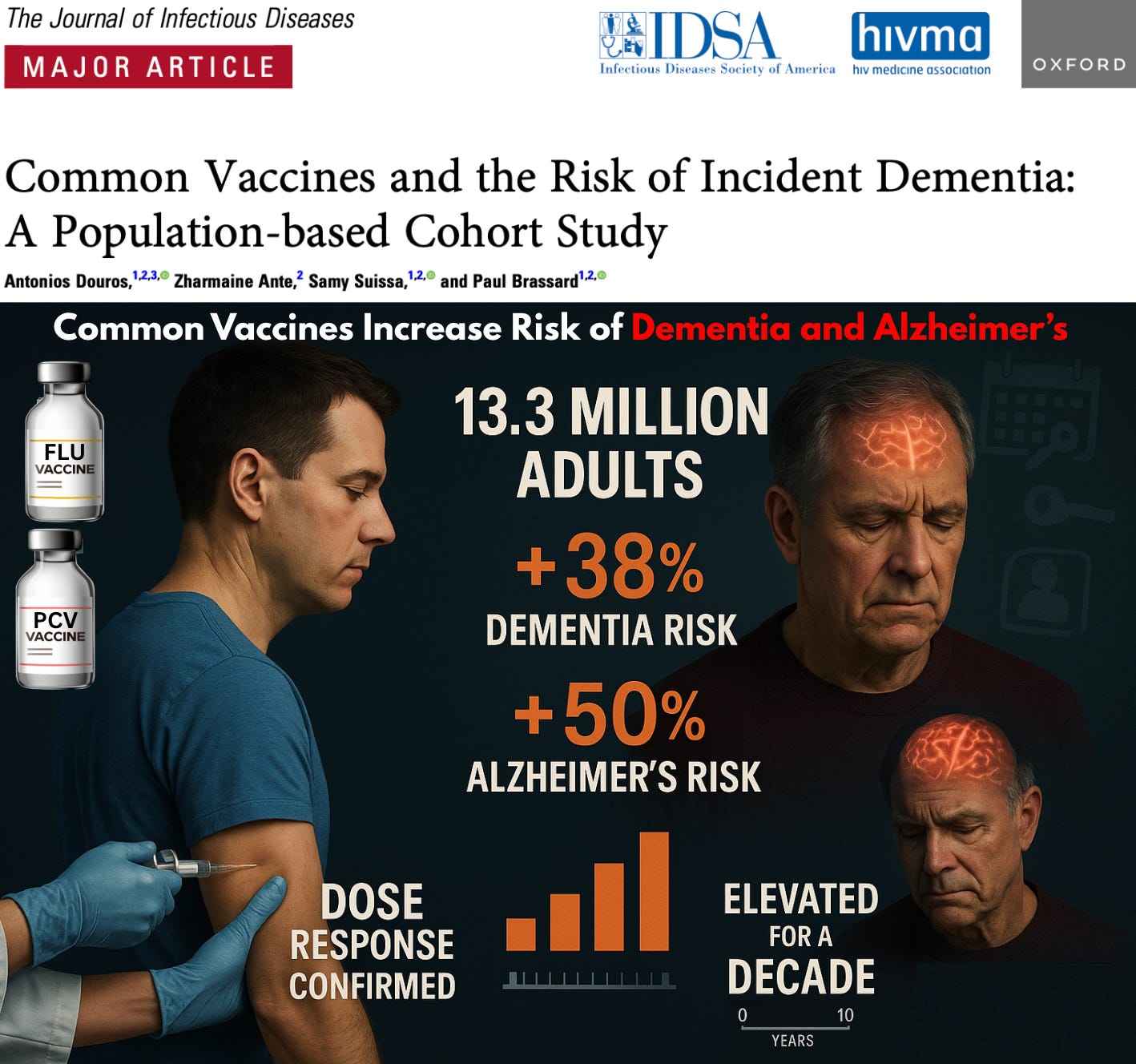
Common Vaccines Linked to 38-50% Increased Risk of Dementia and Alzheimer’s

The single largest vaccine–dementia study ever conducted (n=13.3 million) finds risk intensifies with more doses, remains elevated for a full decade, and is strongest after flu and pneumococcal shots.

The risk intensifies with more doses, remains elevated for a full decade, and is strongest after influenza and pneumococcal vaccination. With each layer of statistical adjustment, the signal doesn’t fade — it becomes sharper, more consistent, and increasingly difficult to explain away.

And critically, these associations persisted even after adjusting for an unusually wide range of potential confounders, including age, sex, socioeconomic status, BMI, smoking, alcohol-related disorders, hypertension, atrial fibrillation, heart failure, coronary artery disease, stroke/TIA, peripheral vascular disease, diabetes, chronic kidney and liver disease, depression, epilepsy, Parkinson’s disease, cancer, traumatic brain injury, hypothyroidism, osteoporosis, and dozens of medications ranging from NSAIDs and opioids to statins, antiplatelets, immunosuppressants, and antidepressants.

Even after controlling for this extensive list, the elevated risks remained strong and remarkably stable.

Vaccinated Adults Had a 38% Higher Risk of Dementia

The primary adjusted model showed that adults receiving common adult vaccines (influenza, pneumococcal, shingles, tetanus, diphtheria, pertussis) had a 38% increased risk of developing dementia (OR 1.38)

This alone dismantles the narrative of “vaccines protect the brain,” but the deeper findings are far worse.

Alzheimer’s Disease Risk Is Even Higher — 50% Increased Risk

Buried in the supplemental tables is a more shocking result: when the authors restricted analyses to Alzheimer’s disease specifically, the association grew even stronger: 50% increased risk of Alzheimer’s (Adjusted OR 1.50)

This indicates the effect is not random. The association intensifies for the most devastating subtype of dementia.

Clear Dose–Response Pattern: More Vaccines = Higher Risk

The authors ran multiple dose–response models, and every one of them shows the same pattern:

Dementia (all types)

From eTable 2:

  • 1 vaccine dose → Adjusted OR 1.26 (26% higher risk)
  • 2–3 doses → Adjusted OR 1.32 (32% higher risk)
  • 4–7 doses → Adjusted OR 1.42 (42% higher risk)
  • 8–12 doses → Adjusted OR 1.50 (50% higher risk)
  • ≥13 doses → Adjusted OR 1.55 (55% higher risk)

Alzheimer’s Disease (AD) Shows the Same—and Even Stronger—Trend

From eTable 7:

  • 1 dose → Adjusted OR 1.32 (32% higher risk)
  • 2–3 doses → Adjusted OR 1.41 (41% higher risk)
  • ≥4 doses → Adjusted OR 1.61 (61% higher risk)

This is one of the most powerful and unmistakable signals in epidemiology.

Time–Response Curve: Risk Peaks Soon After Vaccination and Remains Elevated for Years

Another signal strongly inconsistent with mere bias: a time-response relationship.

The highest dementia risk occurs 2–4.9 years after vaccination (Adjusted OR 1.56). The risk then slowly attenuates but never returns to baseline, remaining elevated across all time windows.

After 12.5 years, the risk is still meaningfully elevated (Adjusted OR 1.28) — a persistence incompatible with short-term “detection bias” and suggestive of a long-lasting biological impact.

This pattern is what you expect from a biological trigger with long-latency neuroinflammatory or neurodegenerative consequences.

Even After a 10-Year Lag, the Increased Risk Does Not Disappear

When the authors apply a long 10-year lag — meant to eliminate early detection bias — the elevated risk persists:

  • Dementia: OR 1.20
  • Alzheimer’s: OR 1.26

If this were simply “people who see doctors more often get diagnosed earlier,” the association should disappear under long lag correction.

Influenza and Pneumococcal Vaccines Drive the Signal

Two vaccines show particularly strong associations:

Influenza vaccine

  • Dementia: OR 1.39 → 39% higher risk
  • Alzheimer’s: OR 1.49 → 49% higher risk

Pneumococcal vaccine

  • Dementia: OR 1.12 → 12% higher risk
  • Alzheimer’s: OR 1.15 → 15% higher risk

And again, both exhibit dose–response escalation — the hallmark pattern of a genuine exposure–outcome relationship.

Taken together, the findings across primary, supplemental, dose–response, time–response, stratified, and sensitivity analyses paint the same picture:

• A consistent association between cumulative vaccination and increased dementia risk

• A stronger association for Alzheimer’s than for general dementia

• A dose–response effect — more vaccines, higher risk

• A time–response effect — risk peaks after exposure and persists long-term

• Influenza and pneumococcal vaccines strongly drive the signal

• The association remains after 10-year lag correction and active comparator controls

This is what a robust epidemiologic signal looks like.

[…]

Via https://www.thefocalpoints.com/p/study-common-vaccines-linked-to-38

Dandelion Root Extract Kills 95% of Cancer Cells In Vitro and Reduces Human Colon Tumor Growth by Over 90% in Mice

Over 1,100 peer-reviewed studies now document the anti-cancer potential of safe, non-toxic natural compounds:

This enormous body of evidence underscores the urgent need to rigorously investigate non-toxic therapies as viable anti-cancer agents.

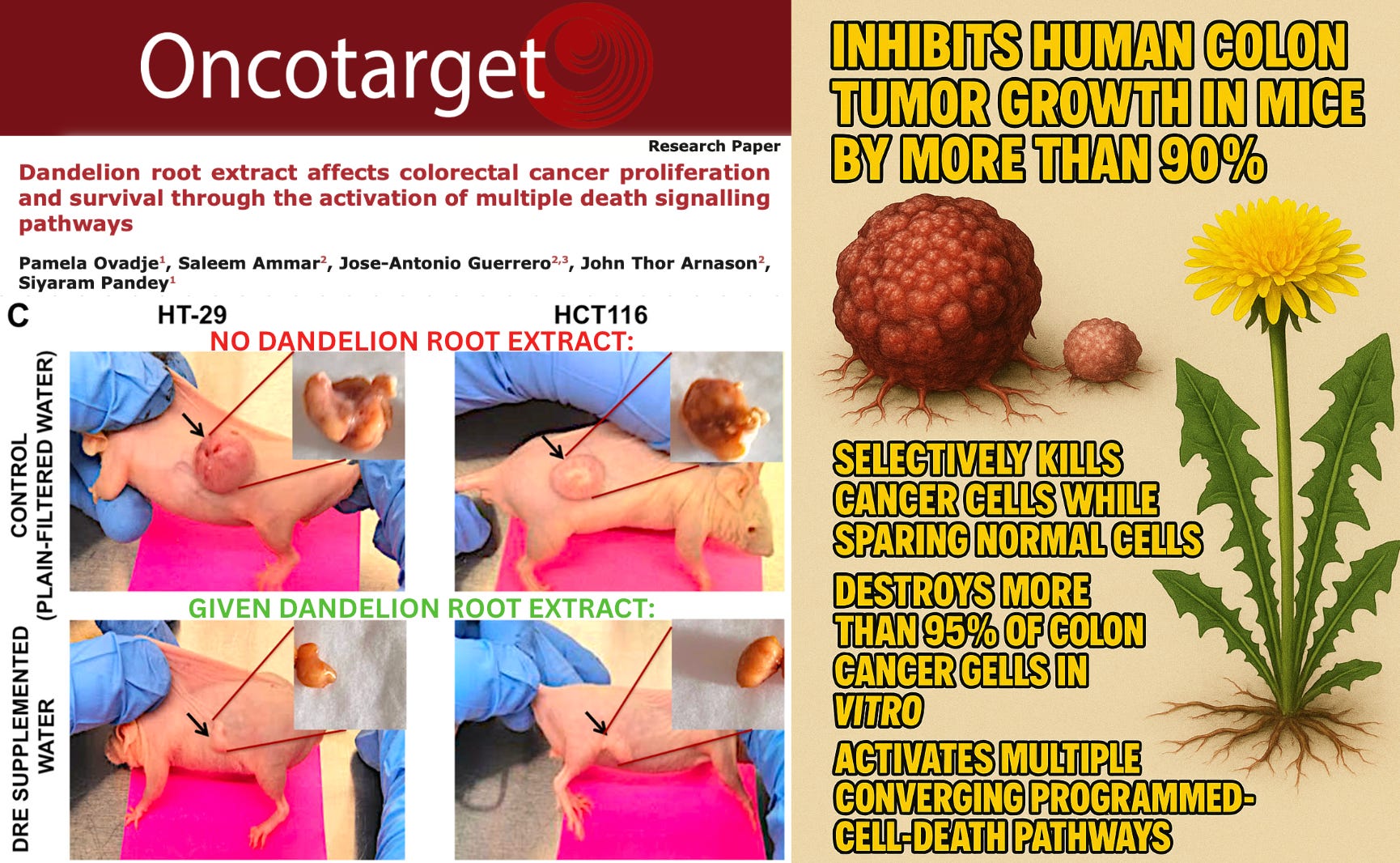
A peer-reviewed study in Oncotarget has documented one of the most extraordinary findings in natural-compound cancer research: an aqueous extract of dandelion root — the common backyard plant — reduced human colon tumor growth in mice by more than 90%, showed zero toxicity after 75 days of daily administration, and selectively killed cancer cells while sparing normal cells entirely.

Dandelion root also destroyed more than 95% of colon cancer cells in vitro and activated multiple programmed-cell-death pathways simultaneously. No synthetic chemotherapy drug achieves all of these effects at once — which is why this study deserves far more attention than it received.

Tumor Growth Reduced by More Than 90%

In immunocompromised CD-1 mice implanted with two different human colon cancer lines (HT-29 and HCT116), oral dandelion root extract at 40 mg/kg/day dramatically suppressed tumor growth.

The treatment “retarded the growth of human colon xenograft models by more than 90%.”.

No Detectable Toxicity After 75 Days of Daily Treatment

Before testing tumor effects, researchers conducted a long-term toxicity assessment for 75 days at 40mg/kg/day:

  • Weight curves of treated and untreated mice were identical.
  • Urinalysis showed no rise in kidney protein markers.
  • Histology of liver, kidneys, and heart showed no pathological changes.

In other words: DRE produced no observable harm, even with long-term systemic exposure — a sharp contrast to standard chemotherapy, which can cause multi-organ toxicity at far lower exposure durations.

95% of Cancer Cells Dead in 48 Hours — Normal Cells Untouched

One of the most remarkable findings is the extract’s extreme selectivity: dandelion root extract killed more than 95% of colon cancer cells in vitro while leaving normal cells unharmed.

In vitro experiments showed:

  • HT-29 (p53-/-) and HCT116 (p53 WT) colon cancer cells:
    Over 95% cell death within 48 hours
  • NCM460 normal colon epithelial cells:
    No loss of viability, no apoptosis, and no mitochondrial disruption

Multi-Pathway Mechanism: Apoptosis, Mitochondria, ROS, and Gene Expression Shifts

The extract does not rely on a single mechanism of action — instead, it activates a cascade of cancer-cell vulnerabilities.

a. Mitochondrial membrane collapse

Cancer cell mitochondria rapidly lost membrane potential after treatment, while normal mitochondria remained stable.

b. Massive surge in ROS (reactive oxygen species)

Isolated mitochondria from cancer cells produced a spike of ROS when exposed to DRE — but normal mitochondria did not.

Cancer cells often rely on fragile, dysregulated mitochondrial metabolism — this extract appears to exploit precisely that weakness.

c. Activation of caspase-8 & apoptosis pathways

Although caspase-8 was activated, blocking caspase-8 did not prevent cancer-cell death, meaning DRE activates multiple redundant death pathways.

d. Major gene-expression shifts toward programmed cell death

The extract upregulated pro-death genes in cancer cells (e.g., TNF, CASP1, SNCA) while downregulating pro-survival genes such as Bcl-2 and PARP2.

Normal cells showed the opposite gene-expression pattern — a clear signature of differential susceptibility.

Conclusions

This study demonstrates that aqueous dandelion root extract:

  • Inhibits human colon tumor growth in mice by more than 90%
  • Exhibits no detectable toxicity during long-term administration
  • Selectively kills cancer cells while sparing normal cells
  • Destroys more than 95% of colon cancer cells in vitro
  • Activates multiple converging programmed-cell-death pathways
  • Targets mitochondrial vulnerabilities unique to cancer cells

These findings were strong enough that Health Canada approved DRE for Phase I cancer trials in 2012, according to the authors. Unfortunately, the trial never advanced — patient recruitment stalled, no data were published, and no active listing appears in Health Canada’s registry today.

As a result, the remarkable anti-cancer effects seen in vitro and in animal models have yet to be tested in humans. This is most likely because a common backyard plant is not very profitable for the Chemo Cartel.

[…]

Via https://www.globalresearch.ca/dandelion-root-extract-kills-cancer-cells-vitro-reduces-human-colon-tumor-growth/5908453

Wealthy Most Likely To Rip Off Self-Checkout Machines

Zero Hedge

Rich people, poorer morals? A new LendingTree report claims the shoppers most likely to rip off the self-checkout machine aren’t the desperate — they’re the well-off, according to the NY Post.

Americans making over $100,000 a year are twice as likely to steal at self-checkout compared to low-income shoppers. A hefty 40% of six-figure earners admitted they’ve deliberately skipped scanning an item, while just 17% of those making under $30,000 confessed to the same.

The Post writes that middle-income households didn’t look much better: 27% of people earning between $50K and $99K say they’ve helped themselves without paying. And men are the biggest culprits overall, with 38% admitting to theft versus only 16% of women.

Even with AI scanners and weight sensors trying to outsmart sticky fingers, self-checkout theft is still rising.

A chunk of shoppers don’t feel bad about it either. Nearly one-third say big retailers make plenty of money, so swiping something “doesn’t hurt.” Another 35% defend the habit by claiming they’re basically unpaid store workers and grabbing an item or two is “compensation.”

Still, most blame inflation rather than guilt-free shoplifting. Forty-seven percent say rising prices are forcing people to cheat at the register — meaning even wealthy shoppers might be feeling the squeeze, just not enough to pay for everything in their cart.

https://www.zerohedge.com/markets/rich-people-poorer-morals-wealthy-are-most-likely-rip-self-checkout-machines

Lavrov praises Trump’s understanding of Ukraine conflict causes

Lavrov praises Trump’s understanding of Ukraine conflict causes

RT

The US president grasps Moscow’s view of what made the hostilities inevitable, the Russian foreign minister has said

US President Donald Trump is the only Western leader who comprehends the real reasons for the Ukraine conflict, Russian Foreign Minister Sergey Lavrov has said.

Addressing Russia’s Federation Council, the upper chamber of parliament, on Wednesday, Lavrov said that while the US is “showing growing impatience” with the diplomatic process aimed at ending the hostilities, Trump is one of the few in the West who know what led to the conflict in the first place.

“President Trump… is the only one among all Western leaders who, immediately after arriving in the White House in January of this year, began to demonstrate an understanding of the reasons the war in Ukraine had been inevitable,” he said.

Lavrov added that Trump “has a clear understanding” of the factors that shaped the hostile policies pursued toward Russia by the West and by former US President Joe Biden, which, he said, “had been nurtured for many years.”

Lavrov said that “the culmination of the entire [Ukraine] saga is approaching,” arguing that Trump had effectively acknowledged that “the root causes [of the conflict] identified by Russia must be eliminated.”

He cited, in particular, Moscow’s long-standing objections to Ukraine’s NATO aspirations and the ongoing crackdown on the local population’s rights.

The minister added that Trump remained “the only Western leader who cares about human rights in this situation,” contrasting him with EU governments that Moscow sees as evasive on the issue. He revealed that the proposed US roadmap for a settlement explicitly called for safeguarding national minority rights and religious freedoms in Ukraine, “in line with international obligations.”

According to Lavrov, however, those provisions were diluted once the document was presented to the EU. He claimed that the relevant language was rewritten to state that Ukraine should instead follow standards “adopted in the European Union.”

Moscow has for years raised alarms over Kiev’s crackdown on the Russian language and culture, as well as attempts to suppress the rights of other national authorities, while pointing out that Ukrainian policymakers are openly encouraging neo-Nazism in the country.

[…]

Via https://www.rt.com/russia/629250-lavrov-praise-trump-understand-ukraine-conflict/

Hamas rules out 2nd phase of Gaza ceasefire while Israeli violations continue

Machinery operates next to a Red Cross vehicle at an area within the so-called “yellow line” to which Israeli troops withdrew under the ceasefire in Gaza City, Nov. 12, 2025. (A photo by Reuters)

Press TV

A senior Hamas official says continued Israeli “violations” of the Gaza ceasefire have left no ground to begin phase-two negotiations, warning that progress is impossible until mediators force Israel to fully comply with the first stage.

“As long as the occupation continues its violations,” there is no basis to move forward with the next phase of the ceasefire, Hamas political bureau member Husam Badran said on Tuesday.

Badran further stated that Israel had failed to meet phase one commitments, citing the closure of the Rafah crossing, obstruction of shelter deliveries, reduced humanitarian aid, and continued killings and home demolitions inside the so-called yellow line.

Pointing to comments by Israeli military chief Eyal Zamir, who claimed that the “yellow line” now serves as Gaza’s new border, Badran said that the remarks “clearly reveal the criminal occupation’s lack of commitment to the ceasefire agreement.”

Addressing Israeli troops inside the besieged strip on Sunday, Zamir openly described the so-called “yellow line”, a north–south axis cutting through the Gaza Strip and marking the point of Israel’s pullback, as “a new border line” with Gaza.

Israeli forces withdrew to the “yellow line” in October as part of the first phase of US President Donald Trump’s 20-point Gaza ceasefire plan with the Palestinian-based resistance movement Hamas.

Israel and the Palestinian resistance group Hamas agreed in October to the truce intended to increase the flow of aid into the besieged strip, which has been devastated by nearly two years of Israel’s genocidal war.

Despite the ceasefire, the Israeli attacks have continued; at least 376 Palestinians have been killed in Israeli attacks and airstrikes across Gaza since October 10.

This comes as Israel still controls more than half of the blockaded Palestinian territory.

Large parts of the besieged Palestinian territory remain inaccessible due to the continued presence of Israeli occupation forces.

‘Gaza still facing genocide’

Also on Tuesday, Hamas spokesperson Hazem Qassem emphasized that Palestinians in Gaza “are still subjected to ongoing genocide through multiple tools, including the continued siege, the prevention of adequate shelter materials, the restriction of humanitarian aid, and the closure of crossings.’’

Qassem strongly denounced the silence of the international community and world organizations towards Israeli crimes. “This places the international community before its urgent moral and political responsibilities toward the civilian population.”

The spokesperson warned of the repercussions of the new weather depression affecting the Gaza Strip.

He highlighted that the current sheltering tents are unsuitable to withstand rain or winter cold, especially under the occupation’s restrictions on the entry of fuel.

Aid agencies continue to press for expanded access for humanitarian convoys, while Israel has rejected calls to allow relief shipments to enter through the Rafah crossing.

Qassem added that the “catastrophic humanitarian conditions in Gaza necessitate launching an urgent relief operation and providing real, decent shelter centers by all concerned parties.”

He stressed the need to “compel the occupation to apply the humanitarian relief protocols stipulated in the January [ceasefire] agreement, which were reaffirmed in the October agreement.”

More than 70,000 people, mostly women and children, have been killed since October 2023, when Israel launched its genocidal war on Gaza.

[…]

Via https://www.presstv.ir/Detail/2025/12/09/760321/Palestine-Hamas-Israel-Eyal-Zamir–


New Zealand Police Set to Drop Pepper Spray in Favour of Lavender Calming Mist

May be an image of one or more people, beard and text

West Coast New Zealand

WELLINGTON — In a move described as “progressive and softly scented,” New Zealand Police have announced plans to phase out pepper spray and replace it with a “therapeutic lavender calming mist” designed to subdue offenders through aromatherapy rather than discomfort.

Police Commissioner Lydia Binn unveiled the initiative during a mindfulness-themed press conference at Police National Headquarters.

“For too long, our tools have inflamed tensions — and sinuses,” Binn said. “Lavender engages the parasympathetic nervous system, encouraging offenders to breathe deeply and reconsider their life choices.”

The new spray, branded Peace-Mist 3000, will be deployed nationwide by mid-2026 following a six-month pilot programme in central Wellington.
Early trials have reportedly been “soothingly successful.”

Frontline officer Hareb Alsack described one encounter outside Courtenay Place:
“We had a guy hurling cones at traffic. Two spritzes of lavender and he sat cross-legged on the footpath to ‘re-align his aura.’ Honestly, it worked better than cuffs.”

A spokesperson for the Ministry of Kindness, Lou Sarsoul, praised the change as “a milestone in non-violent justice.”

“When we replace pain with peace, we redefine public safety,” Sarsoul said. “Soon we’ll look back and wonder how anyone ever thought weaponised capsaicin was inclusive.”

In addition to lavender mist, officers will also be issued silicone-padded truncheons to “soften the blows of systemic enforcement.”

Commissioner Binn said the new equipment “retains form and bounce while honouring empathy.”

“If a strike must be made,” she explained, “let it be firm, but forgiving.”

Critics, however, say the policy lacks realism.

Former officer Terry Ryst commented,

“Try diffusing a bar brawl in Westport with lavender oil and a silicone noodle — you’ll end up aromatherapied into the ER.”

Police confirm that alongside lavender, they are trialling other “emotionally restorative alternatives,” including:

Chamomile foggers for domestic disputes

Rose-quartz diffusers for traffic stops

Sandalwood serenity grenades for riot control

Binn defended the plan:

“Our goal isn’t control — it’s collective calm. If offenders smell nice while being arrested, we’ve all won.”

Public workshops titled “Scent-Based Safety: A Journey to Olfactory Justice” begin next month.

[…]

Via https://www.facebook.com/photo/?fbid=122142386936928998

New Zealand Must Adapt or Die When It Comes to a Multi-Polar World

by Mykeljon Winckel

History will record December 2025 as the moment the geopolitical tectonic plates finally shifted under our feet

With the release of its new National Security Strategy (NSS), the United States — the world’s most powerful nation — has officially abandoned the global-hegemony doctrine that defined the post-Cold War order.

For the first time since 1945, Washington is no longer claiming the mantle of global policeman, architect of the “rules-based international order,” or moral crusader for universal liberal democracy. Instead, the U.S. has accepted — openly, deliberately, and doctrinally — that we now live in a multi-polar world.

This is not a minor policy update. It is the biggest strategic realignment of American statecraft in three generations. And for New Zealand, this change is nothing short of existential.

Why This Shift Matters So Profoundly for New Zealand

New Zealand’s prosperity has depended on one undeniable fact: The United States is one of our most important trading partners and strategic allies.

  • Second-largest export market
  • Over 12% of NZ’s total exports by value
  • A cornerstone of our food, agriculture, and primary-sector revenue
  • Our indispensable defence and intelligence partner
  • Our cultural, financial, and technological anchor

When the United States changes course, New Zealand must pay attention.

The new U.S. strategy is a direct repudiation of the idea that the world should be shaped by global institutions, supranational governance, and imperial-style economic dependencies. It signals the end of the “old world order” — and with it, the end of New Zealand’s comfortable assumption that trade flows, security guarantees, and market access would always be there.

But to truly understand what is ending, we must finally confront the weaponised economic system that shaped New Zealand for more than a century.

The Imperial Free Trade System — Designed to Enrich the Few and Enslave the Many

The British Imperial Free Trade model was not free, and it was not trade. It was a weaponised colonial economic system engineered to:

  • Capture raw materials
  • Strip labour value
  • Crush local industry
  • Prevent industrial sovereignty
  • Force colonies into mono-export dependence
  • Extract wealth upwards into the aristocratic families who architected the empire

It was a system deliberately designed to create:

A race to the bottom for the colonised

and

A race to the top for the imperial elite.

Under this system:

  • Colonies produced raw goods at low margin
  • Britain manufactured finished goods at high margin
  • Colonies remained dependent
  • Wealth flowed in one direction — toward the imperial core
  • Political loyalty was maintained by economic servitude
  • The aristocratic dynasties and banking families consolidated global wealth and power

This system created the modern global 1% — the families whose names built the empire, controlled trade networks, owned shipping monopolies, and dictated global finance.

New Zealand, like Australia, Canada, and India, was never meant to become an industrial peer. It was designed to remain a pastoral appendage, a safe source of agricultural goods and natural resources.

That legacy persisted long after the Union Jack came down.

We moved from British imperial dictates… to American-led globalisation… to Chinese market dependence…

But the structural position remained unchanged:

New Zealand acted like a colony.

New Zealand was treated like a colony. And New Zealand’s economy behaved like a colony.

The U.S. has now just walked away from the system that replaced the British one — and for the first time in decades, New Zealand has the chance to break free from its inherited economic prison.

A Productivity Flatline — And the First Real Pulse in Half a Century

New Zealanders know the numbers: productivity has been flatlining for nearly 50 years.

This is the direct legacy of a colonial economic model:

  • Exporting raw commodities
  • Importing finished goods
  • Selling land and assets rather than building industry
  • Depending on foreign capital instead of national investment
  • Allowing external powers to set market conditions
  • Accepting low value-add as destiny
  • Treating sovereignty as negotiable

We have lived under an economic doctrine designed to suppress industrial maturity.

But here’s the twist: The U.S. shift toward sovereign self-interest may be the first genuine opportunity in half a century for New Zealand to break its chains.

For the first time since Britain joined the EEC in 1973, we are seeing something like a heart murmur — a faint, fragile pulse inside an economy long stuck in cardiac arrest.

Why? Because a multi-polar world forces us to do the one thing we’ve avoided for generations:

Stand on our own feet.

What New Zealand Must Do Now — Adapt or Die

The new international environment will not tolerate complacency or ideological naivety. New Zealand must:

1. Rebuild Sovereign Capability

We must revive domestic industry, energy independence, regional manufacturing, and high-value processing — particularly in food, minerals, biotech, and advanced materials.

2. Become a Reliable Partner for the U.S. — Without Submitting to Anyone

America’s multipolar doctrine respects sovereignty — but demands clarity.

NZ must be a sovereign partner, not a dependent supplicant.

3. Stop Thinking Like a Colony

We must end the internalised dependence on foreign approval — from London, Washington, or Beijing.

A multi-polar world rewards nations who:

  • Know who they are
  • Control what they produce
  • Protect their strategic assets
  • Act according to self-interest

4. Build New Trade Architecture

Diversify exports and negotiate sovereign agreements with the U.S., India, ASEAN, and the Gulf.

We must never again be locked into a single-market dependency.

5. For the First Time in Our History — Create a Real National Strategy

New Zealand must finally develop a doctrine of:

  • Sovereignty
  • Resilience
  • National identity
  • Strategic realism
  • Industrial capability
  • Economic independence

The era of colonial economics is over. The global system that replaced it is collapsing. A multi-polar world demands real nations — not compliant outposts.

The Bottom Line: History Has Shifted — New Zealand Must Shift With It

The United States has declared the era of global hegemony finished. Multipolarity is now the governing reality of world affairs.

This is the moment New Zealand either:

Breaks free from the imperial economic model that has shackled us for 150 years

or

Descends into irrelevance as the world moves on without us.

[…]

Via https://www.elocal.co.nz/Article/7019

Is the Crypto Ponzi Scheme Finally Coming to an End?

by Brian Shilhavy

Editor, Health Impact News

Three years ago, in early November of 2022, one of the largest financial scams of all time was unfolding when the equivalent of a “bank run” happened when the crypto exchange FTX saw $6 billion of withdrawals in a 72-hour span.

Many investors, including Blackrock and celebrity athletes such as Stephen Curry and Tom Brady, lost hundreds of millions of dollars almost overnight.

Billionaire Sam Bankman-Fried, who was ranked the 41st-richest American in the Forbes 400, saw his fortune evaporate almost overnight, and now sits in a federal prison serving out his 25-year criminal conviction for fraud.

Here is an article about this that I published at that time:

Crypto Currency Billionaire Loses Fortune Almost Overnight as Crypto Ponzi Business Exposed – The Beginning of the Great Reset?

New problems with cryptocurrencies were exposed yesterday, when the equivalent of a “bank run” happened when crypto exchange FTX saw $6 billion of withdrawals in a 72-hour span, resulting in them reportedly stopping the process of withdrawals yesterday. . . Sam Bankman-Fried, once featured on the cover of Fortune Magazine as potentially the next “Warren Buffet,” and has now reportedly lost 94% of his $16 billion fortune, may be better compared to Bernie Madoff, as ZeroHedge News found an interview he did a few months ago where he admitted that crypto yield farming is basically a Ponzi business.

Full article.

Further reporting about Sam Bankman-Fried and FTX claimed massive corruption with things like money laundering occurring in Ukraine, as well as the lavish lifestyle of Sam Bankman-Fried and his FTX cohorts participating in sexual orgies.

When this happened three years ago, Big Tech was in a free fall laying off hundreds of thousands of employees. Tesla was facing a U.S. criminal probe, and many of the giant automakers, such as Ford and Volkswagen, cut off funding for their “autonomous” self-driving vehicles.

I was calling this major downturn in Big Tech investing back then as the Big Tech Crash of 2022.

But a couple of weeks after the fall of FTX, something happened to direct the public’s attention away from this massive corruption in Crypto Land: the release of OpenAI’s ChatGPT via Microsoft, which quickly became the most downloaded app in history, and launched the current AI Bubble in spending.

There were still what appeared to be some ripple effects of the great FTX crash in November of 2022 in March of 2023, when several Big Tech banks, such as Silicon Valley bank, failed due to bank runs.

But the billionaires who held accounts at these banks complained because their accounts were way north of the FDIC insurance levels of $250k per account, and they would have lost $billions. So the federal government stepped in and backed all of their accounts which temporarily avoided a big crash.

Today, some Wall Street analysts are apparently beginning to see the realities of the crypto financial world, and are sounding the alarm. They are saying that crypto currencies’ best days may now be behind us.

David Weidner of MarketWatch reminds us that many investors today “are young and inexperienced,” and that they “listen to confident voices” on social media too much.

The whole fear, which I admit I have fed into over the past few years, that the public will be forced into “Central Bank Digital Currencies” (CBDCs) and eliminate cash, may have been way overblown.

As always, the consumer has more power than they realize. And when this market that is heavily dependent on Big Tech and all the insane money being spent on the AI bubble eventually corrects itself, the American consumers who hold financial assets outside of tech products and services (e.g. skilled labor), will potentially increase their financial power in the economy by huge ratios.

Bitcoin’s November crash was no accident

An always-on crypto hype machine lives to goose prices and then blame ‘macro’ when the selloff hits

Excerpts:

They came in by the tens of thousands: young, internet-native, mostly male, lured by the promise of lightning gains and financial freedom.

For many, crypto wasn’t just an asset class — it was a storyline; a chance to get rich quickly and grab outsized returns before the mainstream figured out what was happening.

That story was sold to them constantly through late-night livestreams, hyped Twitter threads, “moon or bust” Discord raids.

Now, after the crash, the crypto bros are showing signs of burnout — drained from margin calls, bag-holding and fading hope that the next “rocket tweet” will ever get them back to the high they were chasing.

The November wreck in bitcoin— from north of $120,000 to the low $80,000s — didn’t come out of nowhere. It was manufactured in plain sight by an always-on hype machine that lives to goose prices and then blame “macro” when gravity returns.

Sure, crypto, including bitcoin, has rallied since falling below $85,000, but its “November to remember” crash wiped out dumb money. The subsequent rally only shows there’s dumber money out there.

We watched the script unfold in real time: chest-thumping year-end calls, retail pile-ins and leverage, a sharp downdraft, and then the postmortems telling the faithful to HODL [hold on for dear life] because the next big rally is imminent.

If this sounds like the oldest game on Wall Street — the pump and dump — that’s because it is. Only the tools have changed. “Finfluencers” and coordinated campaigns can spark short-lived pops that fade once the insiders are out.

Unsuspecting investors are told bitcoin isn’t just a trade — it’s insurance against the dollar — and, any day now, central banks will buy it.

The facts say otherwise.

The BIS, IMF and major central bankers keep drawing the same bright line: crypto is speculative, volatile and unsuitable as reserves; banks’ crypto exposure is tightly capped under global rules.

Switzerland’s central bank publicly rebuffed bitcoin for reserves this year. Yes, you’ll find a headline-grabbing outlier — the Czech governor floated a small reserve allocation — but that remains a lonely view.

Investors aren’t dumb. They’re human. Many of them are young and inexperienced. They listen to confident voices.

But if your due diligence begins and ends on social media and chats, you’re playing a game where the other side writes the rules and the storyline.

November was the reminder that, when an “asset” depends on engagement to work, the product is you.

Ultimately, investors should treat crypto’s influencer economy like any other funnel. When the call is for a year-end moonshot, ask who benefits if you buy that exposure today — and who’s already positioned to sell it back to you tomorrow.

Recognize that the adoption stories (dollar hedge, central banks) remain mostly marketing copy, not monetary policy.

If you still want exposure, size it like a lottery ticket, not a Treasury bill.

And when the next “healthy reset” arrives? Remember November.

Full article. (Emphasis mine.)

[…]

Via https://healthimpactnews.com/2025/is-the-crypto-ponzi-scheme-finally-coming-to-an-end/