The Most Revolutionary Act

Uncensored updates on world events, economics, the environment and medicine

The Most Revolutionary Act

Trump cancels ‘second wave’ of attacks on Venezuela

Trump cancels ‘second wave’ of attacks on Venezuela

RT

US President Donald Trump has cancelled his “second wave of attacks” on Venezuela, saying Washington and Caracas were cooperating now, including on the rebuilding of the South American country’s energy infrastructure.

Last Saturday, American commandos conducted a raid on the Venezuelan capital, Caracas, abducting President Nicolas Maduro and his wife Cilia Flores.

Trump subsequently demanded “total access” to the South American nation’s oil and said that Washington would “run” the country until a “proper transition” of power took place there. Russia along with many other BRICS and Global South nations has strongly condemned the US for its actions.

In his post on Truth Social, Trump said “I have canceled the previously expected second Wave of Attacks, which looks like it will not be needed, however, all ships will stay in place for safety and security.”

The US president said at least $100 billion will be invested in Venezuela by “Big Oil,” noting that he would meet with representatives of US oil giants at the White House later on Friday.

Trump noted Venezuela’s release of “large numbers of political prisoners,” which he called “a very important and smart gesture.”

Late on Tuesday, Caracas began releasing a number of high-profile prisoners, including opposition politicians, in what its government has called a gesture “to seek peace.”

Among the first to be released were Enrique Marquez, a former presidential candidate, and Biagio Pilieri, a businessman and former Venezuelan lawmaker, who were being held at a detention facility in the capital known as El Helicoide.

Spanish Foreign Minister Jose Manuel Albares later confirmed that five Spanish prisoners had been released and were on a flight back to their home country.

[…]

Via https://www.rt.com/news/630754-trump-cancels-second-wave-of/

Kiev mayor urges residents to evacuate

Kiev mayor urges residents to evacuate

RT

Half of the apartment buildings in the Ukrainian capital have been left without heating.

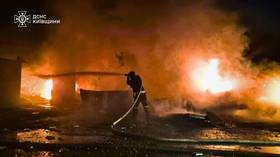
Kiev Mayor Vitaly Klitschko has urged the city’s residents to evacuate, stating that some 6,000 apartment buildings in the Ukrainian capital have been left without central heating.

Klitschko blamed the “extremely difficult situation” in the city on overnight Russian strikes. Moscow has said it targeted drone production facilities, energy infrastructure, and other military-related facilities across Ukraine in response to an attempted “terrorist attack by the Kiev regime” on Russian President Vladimir Putin’s residence in late December.

“I appeal to residents of the capital who have the opportunity to temporarily leave the city, where there are alternative sources of power and heat, to do so,” Klitschko wrote on his Telegram channel, stating the overnight attack became the most “painful” for the city of three million amid the Ukraine conflict.

According to the mayor, nearly half of Kiev’s residential buildings ended up without central heating after the strikes. An unspecified number of buildings have also been hit by water supply disruptions. He said that the city’s authorities “hope” to restore central heating for “some” of the affected buildings by the evening. The situation in the city is further aggravated by heavy snowfall and low temperatures.

In a follow-up post, Klitschko urged those residents who still have access to amenities to help less fortunate citizens and “invite them to warm up or cook food.” The mayor also reminded the residents that the capital has some 1,200 heating stations, so-called “points of unbreakability,” where people can warm up, get hot food, and charge their electronic devices.

Russia has ramped up its long-range strikes campaign against Ukraine’s military and dual-use infrastructure in recent months. According to Moscow, the ongoing wave of strikes comes in response to the continuous effort of the Ukrainian military to attack Russia’s energy infrastructure, as well as to indiscriminate strikes on civilians.

In Russia’s Belgorod Region, over half a million people were left without power after overnight Ukrainian airstrikes, according to Governor Vyacheslav Gladkov, with temperatures near freezing. In addition, over half a million were left without heat and over 200,000 were let without water and sanitation services. The city of Oryol reportedly also faced heavy blackouts.

[…]

Via https://www.rt.com/russia/630764-kiev-mayor-residents-evacuation/

The Trial of the Chicago 7

The Trial of the Chicago 7: The Official Transcript | Book by Mark L ...

The Trial of the Chicago 7: The Official Transcript

By Aaron Sorking

Simon and Schuster 2020

Book Review

This book (an edited transcript of a five month trial) is based on the screenplay Steven Spielberg asked Sorkin to write in 2007. After a Writers Guild of America strike forced Spielberg to drop out as director, Sorking himself directed the film in 2019, with Spielberg serving as executive producer.

The film concerns the trial of seven anti-Vietnam war activists* arrested following a police riot against peaceful non-violent protesters at the 1968 Democratic National Convention. The protests had a dual focus – both the war itself and the corrupt process the Democratic Party employs for choosing presidential candidates.**

The Chicago 7 trial hallmarked the the intensive militarization of urban police, which continues to the present day, to discourage peaceful non-violent protest.

As the book documents, the defense team elicited testimony Chicago police deliberately started the riot by using clubs and rubber bullets against peaceful protestors and subsequently arrested them for rioting and resisting arrest. Hundreds of protestor were hospitalized with major injuries from police beatings, many with skull fractures. The defense also demonstrated US Attorney General John Mitchell, the FBI and Chicago Mayor Richard Daley colluded in bringing conspiracy to riot charges against seven of the most prominent protestors, who all belonged to different organizations and were only marginally involved in planning or organizing the protests.

Although Judge Julius Hoffman banned the presentation of this evidence to the jury, it became part of the official trial transcript.

Black Panther president Bobby Seal refused to share the same attorney as the other six. When he repeatedly demanded the right to be represented by his own attorney, Hoffman ordered him bound to his chair and gagged.

Most of the prosecution evidence came from police and federal undercover operatives who had infiltrated various peace groups. It consisted mainly of comments individual defendants made at meetings and in speeches about “fighting” the Vietnam War and government oppression.

Each of of the seven were found guilty of some level of involvement in the so-called conspiracy to cause a riot. Both defense attorneys were also charged and given long sentences for contempt of court

All had their convictions overturned on appeal.

The segment of the book I found most intriguing was Appendix B, which detailed each of the defendants’ career path and political activities post trial. Jerry Rubin (1938-1994), for example, decided to forgo political activism and became director of a small Wall Street investment banking firm.


*David Dellinger, Rennie David, Tom Hayden, Abbie Hoffman, Jerry Ruben, Bobby Seale, John Froines.

**The Democratic Party refused to seat the popularly elected Black delegates of the Mississippi Freedom Democratic Party, who opposed the Vietnam War, and seated an all-white delegation appointed by Party leaders instead. See https://kinginstitute.stanford.edu/mississippi-freedom-democratic-party-mfdp

China Slams US Pressure on Venezuela and Vows to Deepen Trade Ties

He Yadong

Telesur

Beijing says Washington has no right to interfere in China-Venezuela economic relations.

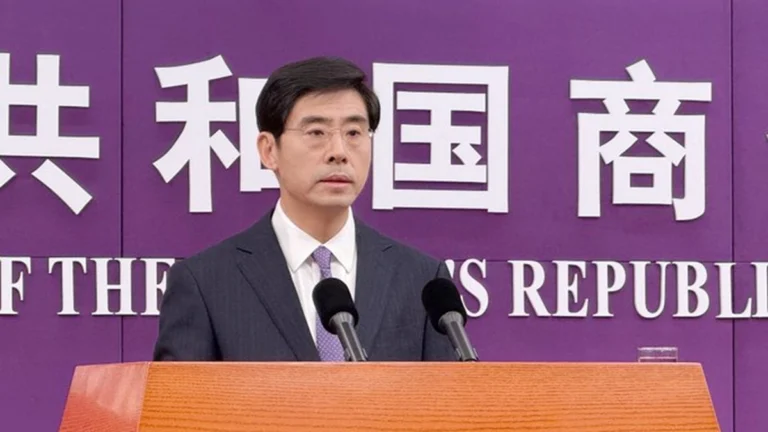
On Thursday, He Yadong, a spokesperson for China’s Commerce Ministry (MOFCOM), questioned the United States for attempting to restrict Venezuela’s international economic relations and reaffirmed his country’s willingness to maintain trade ties with the South American nation.

“The hegemonic actions of the U.S. seriously violate international law, infringe on Venezuela’s sovereignty, and threaten peace and security in Latin America. China firmly opposes such actions,” He said.

“Economic and trade cooperation between China and Venezuela is conducted between sovereign states and is protected by international law and the laws of both countries. No other country has the right to interfere.”

“Regardless of changes in Venezuela’s political situation, China’s willingness to continuously deepen bilateral economic and trade relations remains unchanged,” the MOFCOM official stressed.

“China’s economic and trade cooperation with Latin American countries has always adhered to the principles of mutual respect and win-win outcomes. China does not seek spheres of influence, nor does it target any specific party. Economic complementarity serves as a solid foundation for China–Latin America cooperation, with openness, inclusiveness and mutual benefit as its defining features.”

“China will continue to work with Latin American countries to address international uncertainties through unity and collaboration, promote economic and trade cooperation on the basis of equality and mutual benefit, and achieve shared development,” He concluded.

The remarks by the MOFCOM spokesperson come after the administration of U.S. President Donald Trump informed Venezuela that it must end its relations with China, Russia, Iran and Cuba as part of a series of demands before it can extract and market its oil.

[…]

Via https://www.telesurenglish.net/china-slams-u-s-pressure-on-venezuela-and-vows-to-deepen-trade-ties/

Trump Admin’s New Nutrition Guidelines Aim To End Corporate Profiteering On Americans’ Poor Health

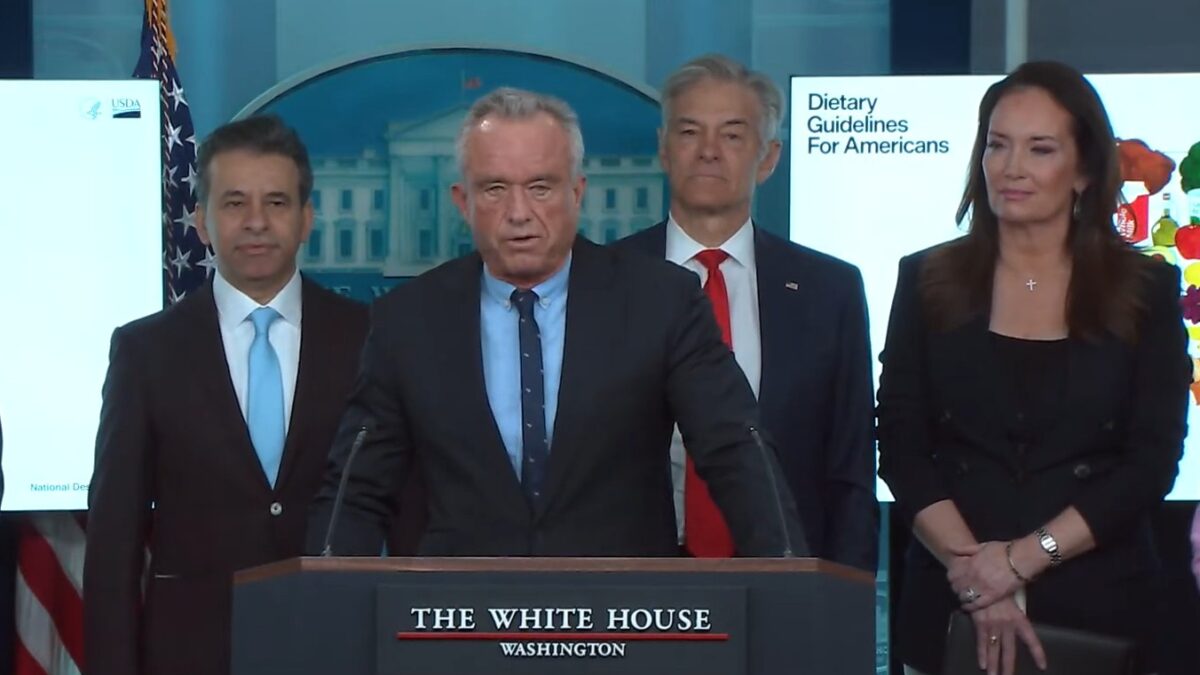
Robert F. Kennedy speaking at a press conference.

The Trump administration announced new dietary guidelines aimed at ending “corporate-driven” preferences for ultra-processed foods, added sugar, and refined carbohydrates on Wednesday.

The Make America Healthy Again-oriented changes to the food pyramid, nutrition education, and government programs’ methods for procurement and approval of food represent the “most significant reset of federal nutrition policy in history,” Health and Human Services Secretary Robert F. Kennedy Jr. said at a White House press briefing.

“For decades, Americans have grown sicker while health care costs have soared. The reason is clear: The hard truth is that our government has been lying to us to protect corporate profit-taking, telling us that these food-like substances were beneficial to public health,” Kennedy said. “Federal policy promoted and subsidized highly processed foods and refined carbohydrates, and turned a blind eye to the disastrous consequences. Today, the lies stop.”

“My message is clear: Eat real food,” he added.

Federal dietary guidelines shape many federal programs, as well as the groceries eligible under the Supplemental Nutrition Assistance Program (SNAP), school lunches, the food procured by government agencies, including the Pentagon, Veterans Affairs hospitals, and more. They also guide how Americans are educated about food and nutrition.

“Common purchases” for the 42 million Americans on SNAP are products that include added sugars and chips, Kennedy said, noting that 78 percent of those on SNAP are also enrolled in Medicaid.

Agriculture Secretary Brooke Rollins said her department is working to finalize a “rule that will mandate” that all 250,000 retailers that accept SNAP benefits in the United States “double the type of staple foods” they provide to SNAP recipients.

“For decades, we’ve been fed a corrupt food pyramid that has had a myopic focus on demonizing natural, healthy saturated fats — telling you not to eat eggs and steak — and ignoring a giant blind spot: refined carbohydrates, added sugars, ultra-processed food,” Food and Drug Administration Commissioner Marty Makary said, noting 60 percent to 70 percent of children “are getting their calories from ultra-processed foods,” calling it an “epidemic.”

“We are ending the war on saturated fats. Diets rich in vegetables and fruits reduce disease risk more effectively than many drugs,” Kennedy said. “Whole grains outperform refined carbohydrates. Added sugars, especially sugar-sweetened beverages, drive metabolic disease, and today, our government declares war on added sugar. Highly processed foods loaded with additives, added sugar, and excess salt damage health and should be avoided.”

Americans have often been told that purchasing healthier food options is simply more expensive and that highly processed foods are the affordable option, but Rollins said that the data does now actually show that. She also said that there are “food deserts” in some parts of the country that do not have a nearby grocery store with real food in them, which is an issue she said USDA is working to address.

“The idea that a cheap meal made of processed food is cheap is an illusion, because you’re paying for it on the back end,” Kennedy added. “You’re paying for it with diabetes, with obesity, with illness, and if you internalize that cost of the meal, it would be a tiny fraction of the long-term cost.”

Centers for Medicare and Medicaid Services (CMS) Administrator Mehmet Oz noted that recommendations for alcohol consumption also changed, encouraging less alcohol use while doing away with the typical two drinks for men and one drink for women limit that has been pushed for decades. According to Oz, “There was never really good data to support that quantity of alcohol consumption.”

Chronic illness and obesity are often rooted in poor diet, and White House Press Secretary Karoline Leavitt noted that obesity “accounts for $400 billion in medical spending each year.”

“Federal dollars have … promoted low-quality, highly processed foods that lead to scores of long-term health issues, which means Americans have gone broke because of these health issues,” she said. “Faulty dietary guidelines of the past stacked the deck against healthy eating and food options for everyday American families, which has fueled the chronic disease epidemic and jacked up the health care costs of households across the country.”

According to Kennedy, citing statistics from Johns Hopkins and the CDC, 48 cents out of every federal tax dollar are spent on health care, while 90 percent of health care spending is to treat chronic disease. “That means that 40 percent … of every dollar that taxpayers pay in this country is going to treat diseases that could be averted through good food,” he said.

“The United States has the highest obesity and Type 2 diabetes rate in the developed world,” while spending “three times more per capita” than Europe on health care and reaching a life expectancy that is five years shorter than Europe’s, “largely due to diet-related chronic disease,” Kennedy said.

America has extremely high levels of childhood obesity, Kennedy added, and about 33 percent of teens have pre-diabetes, while 35 percent of teens are overweight. A fifth of young adults have fatty liver disease unrelated to alcohol consumption, and more than three-quarters of “military-aged Americans are ineligible for military service” because of health issues related to diet.

“If a foreign adversary sought to destroy the health of our children, to cripple our economy, to weaken our national security, there would be no better strategy than to addict us to ultra-processed foods,” Kennedy said. “It’s shocking that our own government helped to drive these cataclysmic changes in our diet. The damage is real. It is preventable, and President Trump has ordered it to end.”

Kennedy anticipates that through changes in Americans’ diets the United States could save $600 billion a year, which translates to “50 percent of Medicare’s projected long-term deficit or $5,000 per family annually.”

Oz also estimated significant reductions in taxpayer expenditures for Medicare and Medicaid, noting America’s health expenses are rising twice as fast as gross domestic product (GDP) is growing.

“You can’t be a wealthy nation without being a healthy nation,” he said, adding that “30 percent of health care costs are directly attributable to obesity,” about $300 billion per year from Medicare alone. He also estimated a 10 percent reduction in obesity would lower Medicare costs by $30 billion.

Oz also pointed out that if Americans live longer and healthier lives, they will likely find themselves working beyond the current age of retirement, which is 61. If they work just one more year, because their health allows it, Oz anticipates a resulting multi-trillion-dollar increase in GDP.

[…]

Syrian Government Forces About To Storm Kurdish Neighborhoods In Aleppo

South Front Press

Clashes have renewed in the northern Syrian city of Aleppo between the forces of the Islamist-led Interim Government and fighters affiliated with the Syrian Democratic Forces (SDF), with reports indicating that Damascus had made the decision to go to war against the Kurdish-led group.

Tensions between the Interim Government and the SDF have been building up for months over the failure to implement the integration agreement signed last March.

The end of the year deadline passed with no progress, and direct talks held in Damascus on January 4 failed to produce any meaningful understanding.

The clashes broke out around the Kurdish neighborhoods of Sheikh Maqsoud and Ashrafieh on January 6, with each side accusing the other of attacking first.

Multiple attempts to de-escalate failed, and by the end of the day it became clear that government forces are preparing a military operation to capture the neighborhoods, which are under the de facto control of the SDF. Dozens of main battle tanks and armored personnel carriers were deployed around Sheikh Maqsoud and Ashrafieh by government forces, which also began to use heavy artillery and drones.

By January 7 morning, six civilians, including two women and a child, had been killed in the Kurdish neighborhoods, according to the Syrian Observatory for Human Rights, which also reported the death of three other civilians, two women and a child, and three members of government forces on the other side.

Damascus escalated further, with the operations command of its military declaring Sheikh Maqsoud and Ashrafieh a “closed military zone,” and classifying all SDF positions within the two neighborhoods as “legitimate military targets.” The military also announced a curfew and opened two evacuation corridors, promoting an exodus of civilians from the neighborhoods.

Clashes later raged to the north and east of the neighborhoods, mainly along the Castillo road and the Alleramoon round about.

The SDF said that an attack by government forces was repelled, but a military source denied in a statement to the state-run SANA news agency that an advance attempt was made.

“Security and stability will soon be established in the Ashrafieh and Sheikh Maqsoud neighborhoods in a manner appropriate to protect the residents from the brutality of the SDF organization,” the source was quoted as saying.

Separately, a Syrian official confirmed to Al-Jazeera that a “limited” military operation will be launched against the SDF in Aleppo.

Meanwhile, the SDF began to amass forces in the town of Deir Hafer in the eastern Aleppo countryside. The group is either attempting to pressure Damascus, or seriously considering launching an attack towards Aleppo city to relieve Kurdish forces.

Notably, the escalation in Aleppo began right after Syria, Israel and the United States announced an understanding on a joint coordination mechanism that would demilitarize southern Syria and give Israel security and even economic influence over all of the region. The understanding was reached following two days of talks in Paris.

A Syrian official close to President Ahmed al-Shara told Israel’s i24NEWS that Israel urgently asked Washington to delay finalizing an agreement between Damascus and the SDF. This indicates that the attack on the Kurdish-led group may be a part of the understanding reached in France.

Kurdish forces in Sheikh Maqsoud and Ashrafieh are well-armed, highly-experienced, and numbered in the thousands. The neighborhoods are also located on high ground, and reported to be fortified, even with a complete network of underground tunnels. The battle there could go on for weeks, or even months.

Damascus seems determined to take over these neighborhoods, and the only way to avoid a deadly battle there may be an agreement that allows Kurdish forces to withdraw. It is unclear if the SDF would accept this, however.

[…]

Via https://southfront.press/syrian-government-forces-are-about-to-storm-kurdish-neighborhoods-in-aleppo-city-videos/

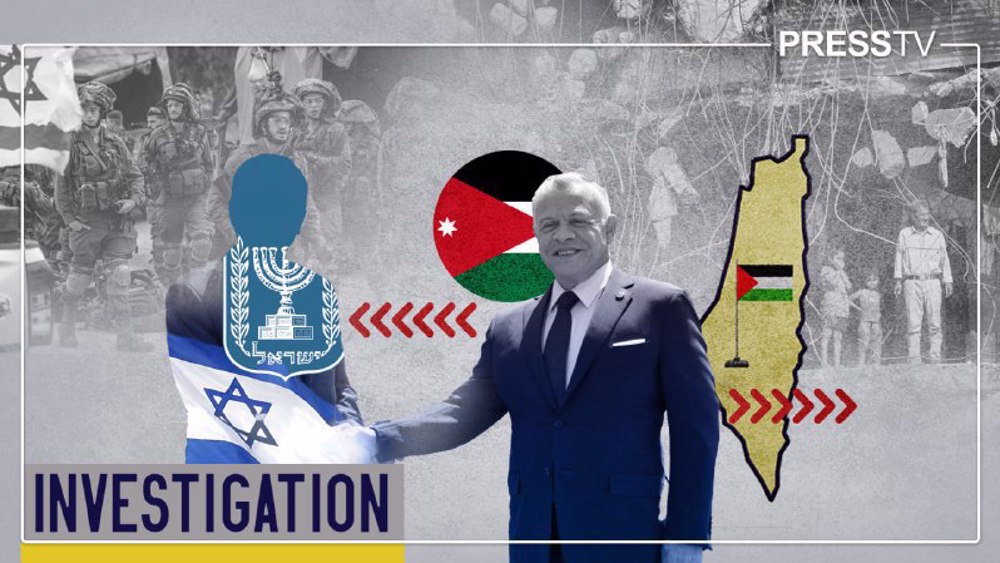
Aid by day, airstrikes by night: Jordan’s double game in Israeli genocidal war on Gaza

By Arwin Ghaemian

The irony is striking: Jordanian C-130 Hercules aircraft dropped aid packages, containing food and medical supplies, many reportedly expired, over the bombed and besieged Gaza Strip, supposedly to ease the humanitarian crisis there.

Yet, at the same time, Amman secretly backed Israel’s genocidal attacks, even taking part in joint air missions. These contradictions reveal a government trapped in a geopolitical game, where its supposed humanitarian actions serve as a cover for aiding Israel’s war efforts.

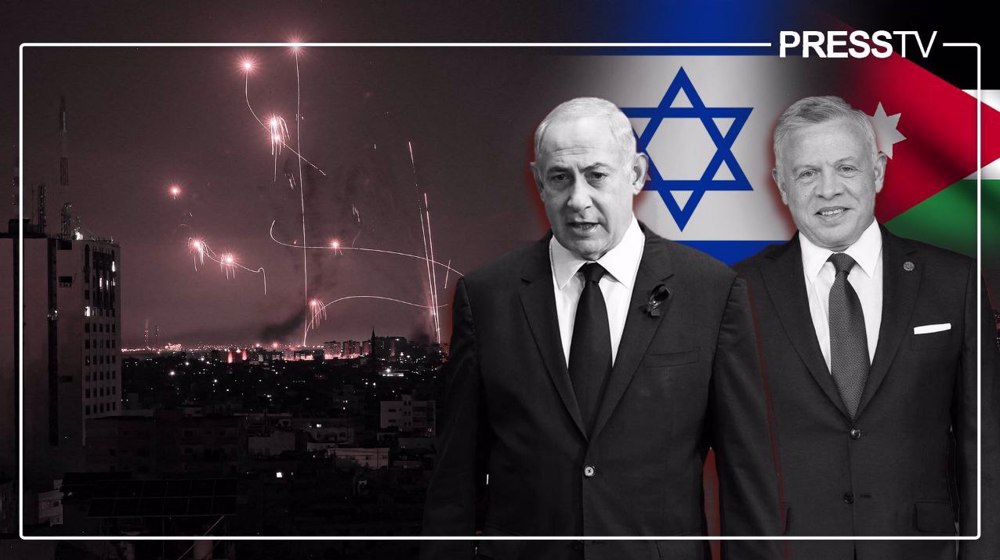
In West Asia’s complex geopolitical arena, where secret alliances shape events and happenings and public rhetoric often hides deeper and sinister motives, the Hashemite Kingdom of Jordan, under King Abdullah II, has become a key actor in supporting Israel’s military campaigns in Gaza, Lebanon, Iran, Yemen and elsewhere.

What began as a betrayal during the lead-up to the 1973 Yom Kippur War (also known as the Six-Day War) has evolved into a systematic collaboration, one that sustains Israel’s military-intelligence operations even as it carries out war crimes and crimes against humanity in Gaza.

This account, based on declassified documents, leaked diplomatic cables, and recent reports, examines the Jordanian government’s double game: public displays of solidarity with Palestinians contrasted with hidden military, intelligence, and economic ties to Tel Aviv.

Viewed through this lens, Jordan’s monarchy appears not as a neutral mediator but as an active accomplice, placing Israel’s military priorities above the rights, lives, and democratic aspirations of its own people, most of whom are of Palestinian origin, and those in Gaza, the occupied West Bank, and the occupied Jerusalem al-Quds.

September 1973: King Hussein’s Secret Warning to Golda Meir

The roots of Jordanian-Israeli connivance stretch back to September 1973, and perhaps even earlier. As Arab armies prepared for what would become the Yom Kippur War, King Hussein bin Talal, father of Abdullah II and known to Israeli intelligence by the codename “Lift”, secretly flew by helicopter to meet with Israeli regime officials.

While Radio Cairo was declaring, “Here is Damascus, the beating heart of the Arabs,” Hussein was, in secret, conferring with the enemy.

In a clandestine nighttime meeting with Israeli Prime Minister Golda Meir, the Jordanian king shared detailed intelligence on Syrian and Egyptian military movements, information about troop concentrations along the Golan Heights and Sinai Peninsula, and warnings of a coordinated two-front assault.

According to Israeli regime’s archives, his disclosures undermined the element of surprise that Egypt and Syria had relied upon, allowing Israel to reinforce its aggressive positions in advance.

This episode, emblematic of the Jordanian monarchy’s recurring betrayal of Arab and Muslim causes, reached its culmination with the 1994 Wadi Araba Treaty, a so-called peace agreement that deepened Jordan’s economic dependence on Israel while eroding the Hashemites’ claim to legitimacy as guardians of Islam’s holy sites in occupied Palestine, including the custodianship of Al-Aqsa Mosque.

Hussein’s “peace” with Israel, ironically termed such, since there had been no war between the two, further fractured the Arab front and set the stage for his son’s reign as a reliable conduit for Israeli occupation interests. That dynamic, far from diminishing, only intensified amid the ongoing genocidal war on Gaza’s nearly two million inhabitants, killing nearly 70,000 of them.

[…]

January 31, 2024: Jordan-Israel nexus amid genocide in Gaza

As Israel’s genocidal assault on Gaza intensified, leveling homes, schools, hospitals, shelters, and critical infrastructure across the territory, including in Khan Yunis, Rafah, and Jabalia,the Jordanian government continued to cling to its deep ties with Israel.

On October 13, 2023, the Jordanian Parliament passed a resolution urging a comprehensive review of all bilateral agreements with Israel in solidarity with Gaza’s suffering. Yet Amman’s response was limited or cosmetic. It suspended only the UAE-mediated water-for-energy deal announced in November 2023, while leaving untouched the 2016 gas-for-electricity agreement that supplies more than 96 percent of Jordan’s energy imports.

Beneath this symbolic gesture, however, lay a darker reality. The supposed suspension of cooperation served to placate domestic outrage while concealing indirect support for Israel’s ongoing campaign. In effect, Jordan’s actions allowed it to publicly denounce Israel’s war crimes while quietly maintaining the economic and logistical ties that reinforced Israel’s position.

Paradoxically, this duplicity also weakened Amman’s own leverage to promote any meaningful solution to the Palestinian issue, further entrenching its role as a dependent partner in the Israeli regime’s regional strategy.

April 15, 2024: Jordan shields Israel from Iranian retaliation

To intercept Iranian ballistic missiles and Shahed-136 drones aimed at Israeli military targets, Jordanian Air Force F-16s operated alongside US Navy destroyers in the eastern Mediterranean, while French Rafale jets joined the effort at Amman’s request.

The Jordanian government said the interceptions were necessary to defend its airspace and prevent regional escalation, relieving pressure on Israel’s Iron Dome system, thereby facilitating the continued massacres in Gaza, including the April 2024 siege of al‑Shifa Hospital

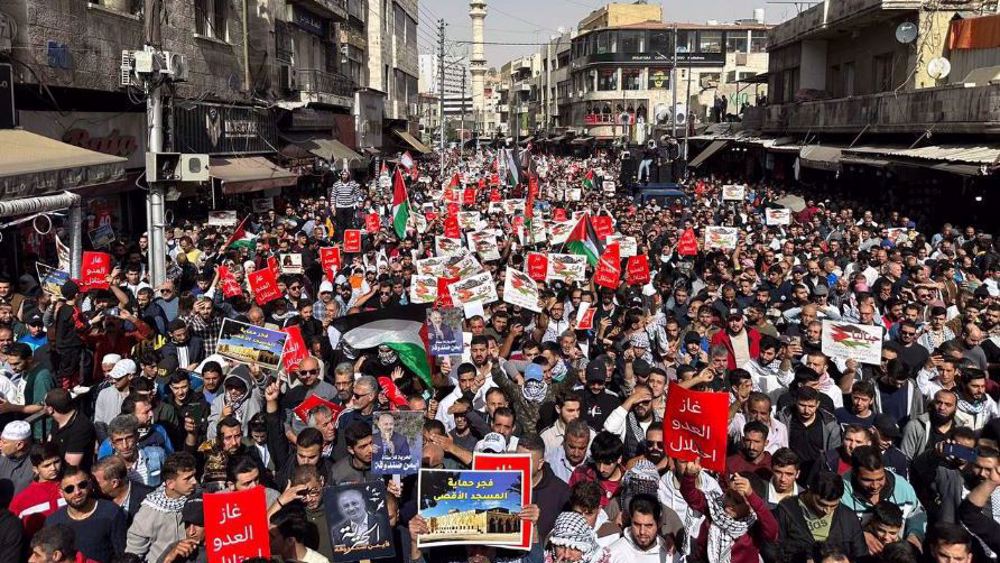
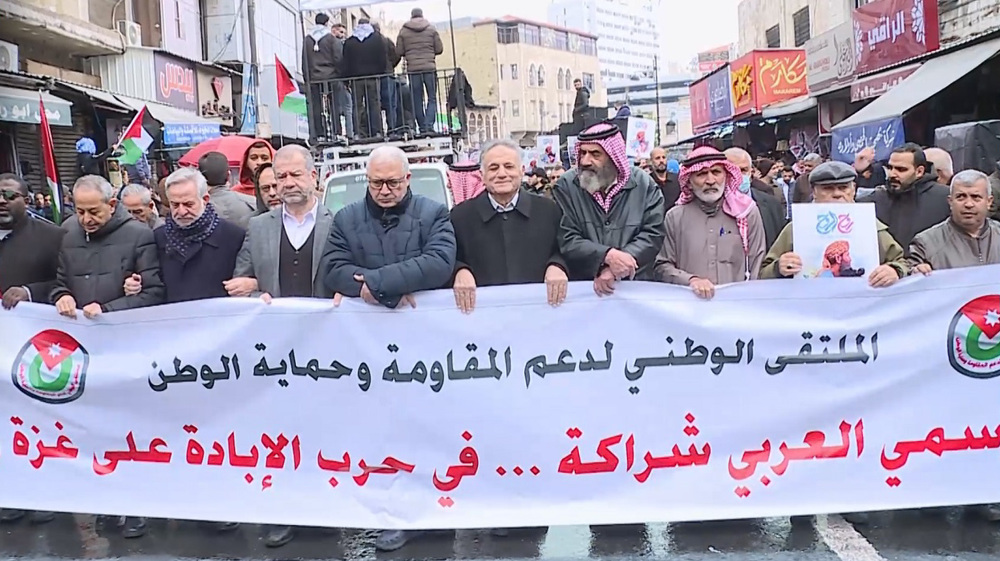
The move, however, sparked widespread anger across Jordan. Demonstrators in downtown Amman’s Hashemite Square slammed King Abdullah II for “dropping missiles on his citizens to protect Israel.” The outrage was particularly strong among Jordan’s Palestinian-origin majority, who make up more than half of the kingdom’s 11.3 million people.

Observers said the decision exposed a deep contradiction between the monarchy’s public condemnation of the Gaza genocide, including King Abdullah’s UN General Assembly remarks denouncing the humanitarian crisis, and its military coordination with Western allies defending Israel. The move effectively positioned Jordan as a key buffer in the Iran-Israel confrontation, insulating the Gaza war from potential outside intervention.

May 15, 2024: Aid drops and Iranian Missile downings

Alongside the so-called Gaza aid airdrops, Jordan’s cooperation with Israeli military systems continued with the interception of Iranian missiles and drones.

This collaboration led many to label King Abdullah II a “traitor” to the Palestinian cause, despite Jordan hosting 2.2 million Palestinian refugees from the 1948 Nakba and the 1967 Six-Day War.

Security forces carried out internal crackdowns in May 2024, dismantling networks linked to Muslim Brotherhood–affiliated activists under the supervision of the General Intelligence Department (GID).

Several citizens were accused of smuggling Iranian-sourced weapons through Syria to Palestinian resistance groups such as Hamas and Palestinian Islamic Jihad, reflecting Abdullah’s ongoing suppression of resistance movements.

This security apparatus, aligned with Israeli Prime Minister Benjamin Netanyahu’s vision of expanding control over the Jordan Valley and Area C settlements, has left Jordan’s regime appearing subservient to Israeli interests and abandoning the right of return for Palestinian refugees enshrined in UN Resolution 194.

By crushing these networks, Abdullah, widely criticized across the Arab world, has not only removed potential threats to Israeli outposts in Hebron and Nablus but has also alienated a growing number of young Jordanians in cities like Irbid and Zarqa.

November 26, 2024: Domestic discontent and enduring ties

Jordan’s long-touted role as a “buffer state” shielding Israel from Iranian resistance allies in Lebanon, Yemen, Iraq, and the Occupied Palestinian Territories began to strain under the weight of Gaza’s genocidal devastation, which by late 2024 had claimed more than 43,000 lives, mostly children, women, and the elderly, according to UNRWA.

In the September 10, 2024, parliamentary elections, the Islamic Action Front (IAF) secured 31 of 138 seats (22.5 percent), reflecting rising pro-Palestinian sentiment amid Israel’s right-wing confederation proposals that some compared to the Soviet–Nazi partition of Poland, hinting at partial annexation of the occupied West Bank.

Despite public anger, the Jordanian government maintained its alliance with Israel, continuing to uphold the Wadi Araba Treaty’s security provisions, including joint border patrols along the 307-kilometer frontier from Aqaba (Eilat) to the Yarmouk River.

This adherence, reinforced by fears of renewed refugee flows from Syria after the collapse of Bashar al-Assad’s government, was evident in the November 21, 2024, sentencing of former MP Imad al-Adwan to ten years of hard labor for transferring weapons to the occupied West Bank.

The ruling blurred the line between resistance and sedition, effectively serving Israeli occupation goals in Jenin and Tulkarm refugee camps, the occupied West Bank.

King Abdullah’s mild condemnations of Israeli genocidal attacks in Deir al-Balah and Khan Younis thus rang hollow, as they failed to counter the expanding Israeli confederation plans that threaten the viability of an independent Palestinian state.

December 15, 2024: Shin Bet and Israeli army intelligence meet in Amman

The Jordanian government’s security cooperation with Israel appeared to deepen when Shin Bet Director Ronen Bar and Israeli Military Intelligence Chief Maj. Gen. Shlomi Binder reportedly paid a discreet visit to Amman, meeting with senior Jordanian officials, likely including General Intelligence Department (GID) head Maj. Gen. Ahmad Husni.

According to regional sources, discussions focused on alleged Iranian weapons routes through Mafraq and Zarqa to the occupied West Bank, Jordan’s mediation role between Israel and factions in Syria, and possible responses to movements that could destabilize the kingdom.

This coordination positioned Amman more firmly as a partner in Israel’s regional security network, particularly in efforts to monitor and restrict arms smuggling into the Palestinian territories.

Analysts at the time warned that such deepening ties could heighten domestic tensions within Jordan, where fears of unrest in cities like Amman and Irbid reflect growing unease over the kingdom’s reliance on Israeli support for internal stability.

April 15, 2025: Sabotage foiled or resistance quashed – GID’s purge

Jordan’s repressive measures intensified when the General Intelligence Department (GID) announced the arrest of 16 citizens, under surveillance since 2021, accused of involvement in a conspiracy that included the fabrication of 3-5 km-range rockets in hidden workshops near Salt, a drone assembly hub in Balqa Governorate, recruitment networks in Turkey and Qatar, and the storage of C-4 explosives and AK-47 variants in safe houses in Madaba.

Authorities claimed the group aimed to “sow chaos” and suggested that alleged Palestinian ties through Muslim Brotherhood channels justified a wider crackdown on Gaza solidarity movements.

Coinciding with Israel’s Rafah offensive, which displaced about 1.4 million civilians, Jordan’s intensified security campaign gave the authorities a pretext to conflate political dissent with terrorism, aligning with Israeli efforts to disrupt arms supply routes from Jordan’s Allenby Bridge to the occupied West Bank.

By criminalizing expressions of solidarity and dismantling Palestinian resistance networks, King Abdullah’s government not only secured new financial backing from Persian Gulf states but also shored up its increasingly fragile rule.

May 27, 2025: Diplomatic charades and unabated entwinement

King Abdullah II’s recent symbolic gestures, such as withdrawing from the UAE-Israel water-energy deal and recalling Jordan’s ambassador from Tel Aviv, served largely as palliative measures aimed at appeasing the kingdom’s Palestinian-origin majority.

Protests against the war in Gaza continued across cities like Russeifa and Sahab, underscoring deep public anger over the ongoing bloodshed.

Despite these moves, Jordan’s security and economic ties with Israel only deepened. From intercepting Iranian missiles in April 2024 to holding joint security meetings in Manama on “West Bank instability,” a euphemism for Palestinian resistance, Amman’s actions continued to align with US and Israeli strategic interests.

Jordan’s dependency explains much of this compliance: water from Israel’s Sorek desalination plant, gas from the Leviathan fields, more than US$1.45 billion in annual US aid, 100 million cubic meters of water drawn from Israeli-controlled sources, and investments from Persian Gulf states all hinge on the kingdom’s adherence to Israeli military frameworks.

Yet, this alignment has come at a cost. Public discontent is rising, and the regime’s legitimacy continues to erode as Jordanians express outrage over policies seen as enabling Gaza’s ongoing devastation.

[…]

Via https://www.presstv.ir/Detail/2025/11/04/758160/aid-day-airstrikes-night-jordan-double-game-israeli-genocide-war-gaza

Venezuela Oil Exports to US Rose 220% Despite War Threats

Comments by Brian Shilhavy

Trump Wants to Decrease Venezuelan Oil Imports to U.S. While Cutting Off China in Effort to Maintain the Petro Dollar

Trump’s goals in kidnapping Venezuelan President Nicolas Maduro became clearer today with statements he made on social media along with a Congressional briefing with lawmakers with Secretary of State Marco Rubio.

Rubio lays out long-term plan for U.S. involvement in Venezuela.

The Trump administration has a three-phase plan for stabilizing and rebuilding Venezuela and installing a new government, Secretary of State Marco Rubio told members of Congress on Wednesday, laying out a prolonged mission for the United States there following the military raid that captured President Nicolás Maduro.

Mr. Rubio explained [that there] would be a tightened quarantine on Venezuelan oil, reflected in the seizure on Wednesday of two additional oil tankers.

“We are in the midst right now and in fact about to execute on a deal to take all the oil,” Mr. Rubio said, pointing to the most powerful economic lever the U.S. has over Venezuela.

“We are going to take between 30 and 50 million barrels of oil. We’re going to sell it in the marketplace at market rates, not at the discounts Venezuela was getting,” Mr. Rubio added. (Source.)

Well, that’s very interesting, because before the invasion the U.S. was purchasing more than just “between 30 and 50 million barrels of oil“.

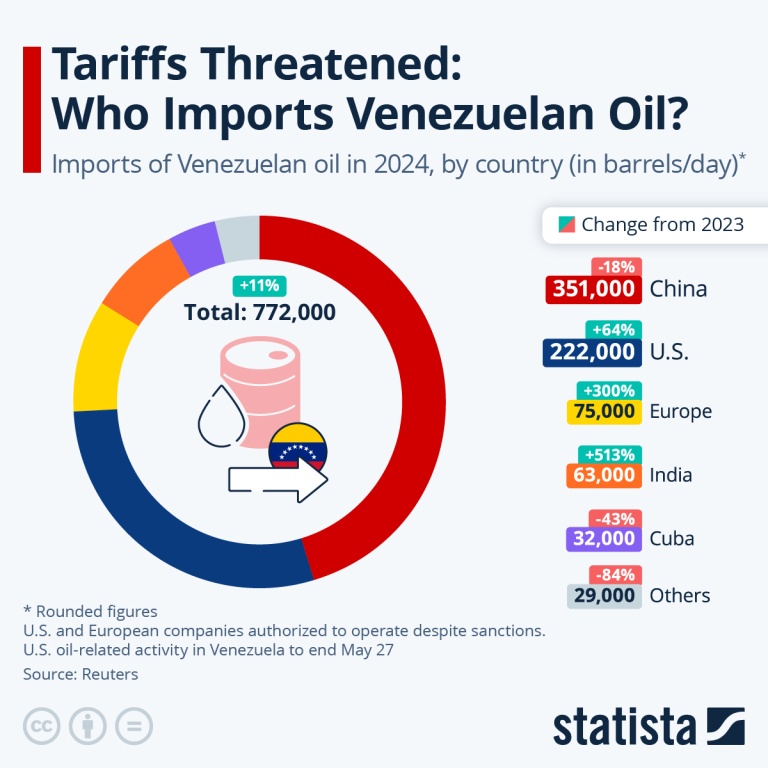
As you can see in this graph, in 2024 the U.S. was purchasing 220,000 barrels of oil per day, which was an increase of 64% over 2023, and a total of over 91 million barrels of oil.

The U.S. purchase of Venezuelan oil continued to increase in 2025, which according to one report was a 220% increase. (Source.)

So if the U.S. is now only going to import “between 30 and 50 million barrels of oil“, that is actually a potential decrease in what they have been purchasing which was above 100 million barrels in 2025.

Trump also told Venezuela to stop exporting oil to China and Russia, or anybody else for that matter.

Trump demands Venezuela kick out China and Russia, partner only with US on oil: Exclusive

The Trump administration has told Venezuela’s interim president Delcy Rodriguez that the regime must meet the White House’s demands before being allowed to pump more oil, according to three people familiar with the administration’s plan.

First, the country must kick out China, Russia, Iran, and Cuba and sever economic ties, the sources said. Second, Venezuela must agree to partner exclusively with the U.S. on oil production and favor America when selling heavy crude oil, they added.

According to one person, Secretary of State Marco Rubio told lawmakers in a private briefing on Monday that he believes the U.S. can force Venezuela’s hand because its existing oil tankers are full. Rubio also told lawmakers that the U.S. estimates that Caracas has only a couple of weeks before it will become financially insolvent without the sale of its oil reserves. (Source.)

As you can see from the graph above, China has been buying as much oil from Venezuela than almost all of the other countries in the world combined.

That is a LOT of oil that the Trump Administration is attempting to take out of the market. Why would they do that?

To get oil prices to increase.

The oil industry in the U.S. has struggled to keep the price of oil above $60 a barrel for a couple of years now. They no longer have control over OPEC since June of 2024 when Saudi Arabia did not renew an 80-year-old agreement with the United States that established the U.S. Dollar as the world currency to purchase Saudi oil.

This story was suppressed in the U.S. Media, and when we published it, several commenters who were obviously trolls tried to comment on it and discredit the story back then. See: Saudi Arabia Ends 80-Year-Old PetroDollar U.S. Agreement: Joins China-Led Central Bank Digital Currency Coalition
So now the U.S. is trying to control the price of oil worldwide by trying to take over Venezuelan oil, as Maduro was making agreements with China to pay for oil in Chinese Yuan, instead of U.S. dollars.

Here is a chart published by Market Watch today about Venezuelan oil exports for 2025, which was dominated by China until the U.S. started attacking drug cartel boats ships carrying Venezuelan oil at the end of September.

 Source

As you can see, exports of Venezuelan oil peaked in September, before the U.S. military moved into the area, and then started decreasing.

And notice what Rubio said today: “We’re going to sell it in the marketplace at market rates, not at the discounts Venezuela was getting.” In other words, we are going to make the price of oil start going back up again so the Rockefellers and the Bushes and all the other oil barons in Texas can start making money again.

Here is a video by Taylor Kennedy of ITM Trading talking about the how the U.S. is trying to hang on to the Petro Dollar which was the real reason for the Venezuelan invasion. (Note: she wants to sell you gold and silver.)


How Will China Respond?

China obviously has the most to lose from this deal, IF Trump and Rubio’s plan works, and that is a big “IF”, because the Maduro regime is largely still in tact, and we will see what their loyalty to China actually is as they are fighting back against Trump’s rhetoric.

The U.S. legacy media is making a big deal out of the fact that they are “cooperating” with the U.S. to fill orders for sales of oil to the U.S., but they have been doing that for the past several years, so it is more business as usual, only less of it, and not necessarily “cooperation.”

One indication of how China might respond was published by The Information today, where they reported that China is not allowing their Tech companies to import Nvidia’s powerful AI chips this week.

The Chinese government this week asked some tech companies to temporarily halt plans to buy Nvidia’s H200 AI chips, according to two people involved in the communication, throwing up a possible roadblock in Nvidia’s hopes of restarting chip sales to one of its biggest markets.

The instruction came roughly a month after President Donald Trump said he would allow Nvidia to sell H200s to China, marking the biggest rollback of Biden-era export restrictions. At the time, the reaction of the Chinese government was uncertain, as the government had been pushing local companies to buy locally made chips as a way of supporting the Chinese chip industry.

This week Chinese officials told companies to suspend purchase orders while the government decides on whether—and under what conditions—it will allow access to the high-performance Nvidia chips, the people said.

It remains unclear what prompted Beijing’s directive. A few days ago, the U.S. arrested Venezuelan president Nicolás Maduro and transported him to the U.S. for trial on drug trafficking charges. There are signs that Maduro’s departure could hurt China’s ability to import crude oil from the Latin American country. (Full article – Subscription needed.)

And where does the American company Nvidia get their AI chips from in the first place?

Taiwan. Specifically, Taiwan Semiconductor Manufacturing Company.

How difficult do you think it would be for China to seize Taiwan’s airports and put a naval blockade around Taiwan to stop them from exporting these AI chips to the U.S.??

And remember, a significant portion of the U.S. Navy is in the Caribbean right now around Venezuela.

Representative Jason Crow, Democrat of Colorado, said of the administration’s plan for Venezuela, “It’s like they’ll wave a magic wand and things will turn out the way they want.”

Mr. Crow, a former Army Ranger, said that in a congressional briefing, Secretary of State Marco Rubio and Defense Secretary Pete Hegseth gave no indication how long the deployment of 15,000 troops and a dozen warships to the Caribbean — the largest naval flotilla in the region since the Cuban Missile Crisis in 1962 — would last or how much it would cost. (Source.)

[…]

Via https://healthimpactnews.com/2026/trump-wants-to-decrease-venezuelan-oil-imports-to-u-s-while-cutting-off-china-in-effort-to-maintain-petro-dollar/

US breaches UN maritime convention, seizes Russian oil tanker in North Atlantic

US military breached UN maritime convention – Russia

RT

The Russian Transport Ministry has confirmed that the oil tanker ‘Marinera’ has been captured by the US military.

Earlier on Wednesday, the US European Command announced having taken possession of the ship, previously named the ‘Bella 1’, for alleged “violation of US sanctions.”

The tanker was boarded by US military personnel “in the high seas outside the territorial waters of any state,” and that “contact with the vessel was lost,” the Russian Transport Ministry has said.

“On December 24, 2025, the Marinera received a temporary permit to fly the Russian flag, issued in accordance with Russian and international law,” the ministry stated, adding that the attack on the vessel came in violation of the UN Convention on the Law of the Sea, which ensures freedom of navigation in international waters.

The Russian Foreign Ministry said it has been “closely monitoring” the situation around the tanker. Russian nationals are believed to be among the crew of the vessel, the ministry noted, urging the US to ensure “humane and dignified treatment” of the captured sailors and to “allow them to return home as quickly as possible.”

The tanker was first targeted by the US late last year after reportedly trying to approach Venezuela. At the time, the US Coast Guard attempted to board it, yet the crew refused to let anyone on board and turned around and headed for the Atlantic instead. During the pursuit, the vessel changed its name and switched to the Russian flag.

[…]

Via https://www.rt.com/russia/630704-us-military-maritime-law/

Is China Considering Taking over Taiwan in Response to Trump’s Attempt to Cut off Oil Exported to China from Venezuela?

China Tells Tech Companies to Halt Nvidia H200 Chip Orders

By Brian Shilhavy

The Information (https://www.theinformation.com/articles/china-tells-tech-companies-halt-nvidia-h200-chip-orders) just reported that China is not allowing their Tech companies to import Nvidia’s powerful AI chips this week:

The Chinese government this week asked some tech companies to temporarily halt plans to buy Nvidia’s H200 AI chips, according to two people involved in the communication, throwing up a possible roadblock in Nvidia’s hopes of restarting chip sales to one of its biggest markets.

The instruction came roughly a month after President Donald Trump said he would allow Nvidia to sell H200s to China, marking the biggest rollback of Biden-era export restrictions. At the time, the reaction of the Chinese government was uncertain, as the government had been pushing local companies to buy locally made chips as a way of supporting the Chinese chip industry.

This week Chinese officials told companies to suspend purchase orders while the government decides on whether—and under what conditions—it will allow access to the high-performance Nvidia chips, the people said.

It remains unclear what prompted Beijing’s directive. A few days ago, the U.S. arrested Venezuelan president Nicolás Maduro and transported him to the U.S. for trial on drug trafficking charges. There are signs that Maduro’s departure could hurt China’s ability to import crude oil from the Latin American country.

Full article (https://www.theinformation.com/articles/china-tells-tech-companies-halt-nvidia-h200-chip-orders) (Subscription needed)

This morning Trump told Venezuela to stop exporting oil to China. It is unclear if he has the means to enforce this yet, as Maduro’s regime is still in tact. China is also probably waiting to see if this can be enforced, hence the halt of importing Nvidia’s chips.

If the U.S. is successful in blocking oil from Venezuela to China, expect a reciprocal response from China, and that could possibly be cutting off the supply of Taiwan Semiconductor Manufacturing Company’s chips from shipping to the U.S. by using military force in Taiwan, such as controlling their airports and putting up a naval blockade, because that is where Nvidia gets their chips from in the first place!

Meanwhile, the U.S. just seized that oil tanker flying the Russian flag. Russia had sent a nuclear submarine to the area, but it is not clear if it is there yet.

[…]

Via https://t.me/healthimpact/2931