Blue Gold: World Water Wars

blue gold

Blue-Gold: World Water Wars (Sam Bozzo 2008)

Film Review

inspired by Canadian activists Maud Barlow and Tony Clarke’s book Blue Gold, this film opened my eyes to the reality that water scarcity is a far more serious and imminent problem than either fossil fuel scarcity or climate change. The film outlines three main areas in which public policy around water is urgently needed: run-off management, aquifer destruction and water privatization.

Water Run-Off

I previously believed that chemical and nutrient pollution was the greatest threat to our fresh water supply. However according to Blue Gold, run-off is actually the biggest problem – the loss of fresh water when rainwater winds up in the ocean instead of being trapped as groundwater. Fresh water only comprises  3% of global water (the rest is sea water), and much of it is so badly polluted it’s no longer useable.

The four main ways urbanization and development accelerate run-off include the construction of 50,000 dams worldwide, the paving over of soil with cement and asphalt, deforestation (destroying tree roots that normally trap water), and the destruction of wetlands (the destruction of mangroves and other plants that naturally purify water.

Aquifer Depletion

Aquifer depletion is largely due to industrial agriculture and the unregulated use of water in manufacturing, fracking and bottled water plants. Once the water from the aquifer is gone, it takes thousands of years to replace it. The film depicts several communities where citizens, across the political spectrum, have banded together to block Coca Cola and Nestle from taking their water. Some cases have involved long expensive court battles, with several corporations threatening individual activists with SLAPP (strategic lawsuit against public participation) suits.

Water Privatization, Desalination and Water Wars

The last half of the film focuses on water privatization, water desalination, and water wars. In many developing countries, water privatization is already a life and death issue. In several African countries,  the private corporations that own the public water supply set the price so high that people end up drinking polluted water and die. The decision by Bolivia to sell its fresh water to Bechtel sparked a mass rebellion and ultimately the collapse of the Bolivian government.

In the US, an alarming number of city water have been privatized and sold to corporations.

The worldwide move to construct water desalination plants to reclaim water from sea water is closely linked to the issue of privatization. In addition to being extremely expensive, water desalination greatly increases climate emissions owing to the massive amount of fossil fuel it requires.

Water Wars

Blue Gold gives several examples of historic water wars (in the US) and predicts where the next water wars are most likely to take place. They point to strategic US military bases around the Great Lakes and in Paraguay (across the border from a Brazilian aquifer that is one of the largest in the world). They also offer a possible explanation why the Bush family have acquired massive amounts of property in Paraguay.

The film ends on a positive note with recommendations for citizen activists:

  1. Learn where your water comes from – the name of the watershed and (if privatized) the name of the multinational corporation that controls it. Local communities need to actively fight attempts by local government to allow water extraction or the takeover of local water supplies by multinational corporations.
  2. Kick the bottled water habit. This is a trick advertisers play on you. It is no healthier for you than tap water (and may be less healthy owing to phthalates and bisphenol A from the plastic that may be linked with breast cancer and low sperm counts). The nasty taste of tap water is easily masked with a little lemon juice.
  3. Lobby your local and state leaders to
  • Remove hydroelectric dams and replace with newer, more eco-friendly microturbine technology.
  • Adopt an active run-off management plan in which lost groundwater is measured and minimized through eco-friendly development planning. One example is the Blue Alternative (in which groundwater is replaced by digging small catchment pools in open spaces).
  • Pass local and state resolutions and constitutional amendments recognizing access to fresh water as a basic human right. Uruguay has adopted the right to water in their national Constitution.

Enjoy:
Ending Corporate Rule: the Community Rights Movement

CELDF

One of the most successful anti-corporate relocalization movements is virtually invisible in the corporate media – namely the 13 year old community rights movement. With the help of the Community Environmental Legal Defense Fund (CELDF), nearly 200 communities across the US have enacted ordinances establishing local rights that can’t be usurped by corporations. They have done so despite corporate efforts to use state laws or the Constitution’s commerce clause to overturn them.

Clearly their strength lies in numbers. In Pennsylvania, for example, the state attorney general threatened to sue the town of Packer for banning sewage sludge dumping. In response, six other towns promptly adopted similar ordinances and 23 adopted resolutions of support. Nationwide the number of community rights statutes overturned by state courts and legislatures is surprisingly small, with more and more communities enacting them.

As CELDF states on their website:

“CELDF works with communities to establish Community Rights – such that communities are empowered to protect the health, safety, and welfare of their residents and the natural environment, and establish environmental and economic sustainability.

Community Rights is a paradigm shift, a move away from unsustainable projects and practices at the cost of communities and nature, and toward community decision-making, while recognizing and protecting our interdependence with nature.”

Banning Factory Farms, Toxic Sludge, Fracking and Aquifer Depletion

The citizens’ rights movement was born in 2000 when Belfast, in traditionally conservative rural Pennsylvania, passed a law prohibiting factory farms from operating within their township. In 2005 this law was upheld in court, and twelve other Pennsylvania townships have enacted similar ordinances. In addition to laws banning factory farms and sewage sludge, one community has banned mining and four have passed laws establishing ecosystem rights (i.e. that environmental protection trumps corporate rights).

Barnstead New Hampshire was next in passing an ecosystem rights ordinance, while five towns in New Hampshire and two in Maine have passed laws prohibiting the corporatization of water resources and aquifer depletion. Serious drought conditions across the US have greatly heightened national concern about shrinking aquifers and impending water shortages.

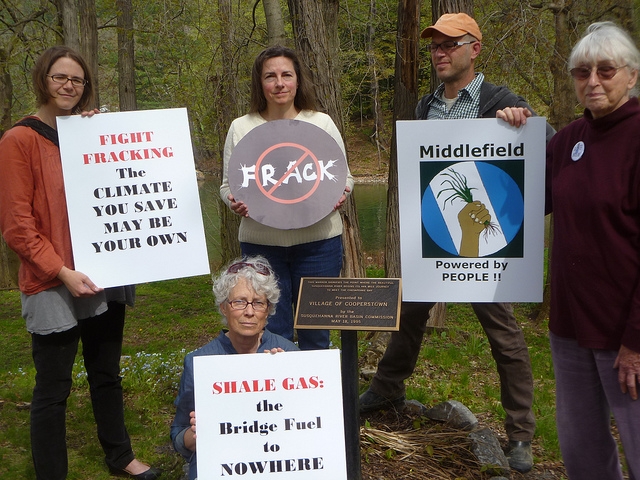
In 2010, Pittsburgh became the first major city to reject corporate rights after their city council passed a CELDF-drafted citizens’ bill of rights, as well as a law banning drilling for natural gas within city limits. Other communities on the Marcellus Shale (in Pennsylvania, New York, Ohio, West Virginia and Maryland) are working to pass anti-fracking laws similar to Pittsburgh’s.

Enacting Penalties for Chemical Trespass

Meanwhile on the West Coast, tiny Mt Shasta has successfully banned energy giant PG&E from engaging in local cloud seeding and Nestle from draining their aquifer for a bottling operation. The Mt Shasta Community Rights and Self Government Act asserts the right of the people of Mt Shasta to natural water systems and cycles and establishes strict liability and burden of proof for chemical trespass.

Chemical trespass is defined as the involuntary introduction of toxic chemicals into the human body. It’s based on a novel concept promoted by the CELDF and local democracy activists that corporations don’t have the automatic right to load up our bodies with cancer-causing chemicals. Halifax Virginia and three towns in Pennsylvania have also passed laws imposing penalties for toxic trespass.

In Washington State a bipartisan coalition called Envision Spokane has been fighting the monied interests that control Spokane City Council by trying to pass, via ballot initiative, a Community Bill of Rights.

Other recent citizens’ rights initiatives include the rejection by Orlando California of a Crystal Geyser bottling plant and the refusal of Flagstaff Arizona to sell water to a Nestle facility. Meanwhile a strong citizens’ rights group in Santa Monica is lobbying for an ecosystems rights ordinance, while People vs. Chemical Trespass is attempting to pass a local chemical trespass ordinance in Santa Cruz.

Fighting Corporations in Your Community

In addition to providing legal consultation, CELDF also conducts local democracy schools for communities seeking to enact community rights ordinances. Where states have balked at recognizing the legality of local anti-corporate laws, cities and towns have either passed stronger laws or changed their legal status (ending their Second Class Municipality Status) by enacting home rule charters and new constitutions).

Contact CELDF at http://www.celdf.org/

photo credit: 350.org via photopin cc

The Worker Revolution in Cleveland

In 2008, the Cleveland Foundation approached Democracy Collaborative co-founders Gar Alperovitz* and Ted Howard* about revitalizing Cleveland’s decaying inner city.  With the help of the Cleveland Clinic, University Hospitals, Case Western Reserve University, and Cleveland’s municipal government, they formed Evergreen Cooperatives (EC)

EC is a network of for-profit, employee-owned, green businesses. Network-based worker cooperatives have several advantages over independent worker cooperatives. In addition to their ability to attract funding from foundations, philanthropists and investors, they are more likely to enhance buy-in from “anchor” institutions. “Anchor” institutions are large businesses, such as hospitals, universities and hotels, that are permanently linked to the community.

Belonging to a network also makes it easier for worker cooperatives to resist pressure to cut corners (in competing with investor-owned companies) on environmental and work safety standards.

Creating Jobs and Revitalizing Cleveland’s inner city

EC’s  goal is to create ten living wage, environmentally sustainable jobs in six low-income neighborhoods (43,000 residents with a median household income below $18,500). Each worker-owner purchases a $3,000 stake in the cooperative, with wages adjusted to allow a 50% payroll deduction until the buy-in is paid off.

They have create three so far and plan to create many more:

  • Evergreen Cooperative Laundry – serves Cleveland University, as well as Cleveland hospitals, hotels and other “anchor” institutions.
  • Evergreen Snergy Solutions – designs, installs, and develops PV solar panel arrays for institutional, governmental, and commercial markets.
  • Green City Growers – produces leafy greens in a 3.5 acre hydroponic greenhouse (America’s largest urban  greenhouse) for Cleveland’s “anchor” institutions, as well as local hotels, supermarkets and restaurants. It sells sustainably grown produce at the same price as factory farmed vegetables imported from other states and countries. Yet because it’s produced locally it has a 7 day longer shelf life.

Atlanta, Washington DC, Pittsburgh (Amarillo) Texas are launching similar non-profit schemes to use worker cooperatives to create jobs in low income neighborhoods.

It’s extremely gratifying to learn that neighborhoods and communities are finding real life solutions for income inequality and the extreme economic distress in our marginalized communities. Imagine if this stuff were headline news, instead of the idiotic garbage John Kerry spouts about Ukraine.

*Gar Alpervitz is an historian, political economist, activist and author of The Next American Revolution and What Then Must We Do.

*Ted Howard is a social entrepreneur, author, and co-founder and executive director of the Democracy Collaborative.

Open Source: Reclaiming the Commons

wikipedia

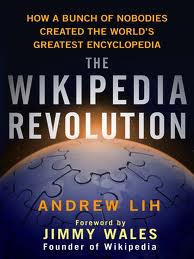
The Wikipedia Revolution

By Andrew Lih

(Aurun Press Ltd 2009)

Lih’s Wilkipedia Revolution stands as a testament to the unsung heroes of the Open Source (OS) movement. From the outset, there has been a split between entrepreneurs like Bill Gates and Steve Jobs, who have viewed the Internet as an opportunity to become enormously rich, and true visionaries like Jimmy Wales, who see it as a medium of social change with the potential to improve the lives of billions of people.

In Lih’s view, Wikipedia would never have been possible without the freely shared knowledge and software of the Open Source movement. He makes this clear by skillfully interweaving the personal biography of Jimmy Wales with the history of the Internet, the World Wide Web and the OS movement itself.

Hacker Ethics and the Open Source Movement

Wales, who has a master’s degree in finance, had a first career selling derivatives for Chicago Options Associates. In 1996, he used his programming and hacking skills to start a dot com in with Tim Shell, who he met through an on-line philosophy mailing list. At the time, Wales was a big fan of Ayn Rand’s objectivist philosophy, i.e. the belief in obtaining objective knowledge form measurement. This would ultimately inspire his faith in using measurement by the masses to create an on-line reference work.

Wales and Shell called their dot com Bitter Old Men in Suits (BOMIS). Their first project was a Yahoo-style directory for the city of Chicago. This was around the time (1996) that two Sun Microsystems engineers started DMOZ (directorymozilla.org), the first Internet-wide search engine. They did so with the explicit intent of employing volunteer labor and freely distributing it to the public, under the principle of “Copyleft” or General Public License that underpinned the free software movement. Later renamed the Open Source movement, this was started in 1985 by MIT hacker Richard Stallman, helped by an extensive on-line network of hackers.

The hacker community has a very strong ethic that it’s okay to hack into computers and steal software code provided you use it to improve and share the software. Refusing to share what you have stolen and improved on for personal profit (like Bill Gates) is considered totally unethical. Making your software code public, instead of keeping it secret, allows thousands of programmers to improve on it. This why free downloadable Open Source programs always have fewer operating and security glitches than Microsoft and other proprietary software.

Netscape, Linux and Wikiwiki Web

DMOZ subsequently morphed into Netscape, which dropped out of public view after Microsoft pirated and monopolized the concept, by loading their own Microsoft Explorer on every new computer. Netscape would ultimately be reborn as Mozilla Firefox, a free Open Source browser many users prefer for its greater safety and reliability. Because the code that runs it is freely and publicly available, it undergoes continuous quality improvement by the thousands of programmers who use it.

Other significant innovations that made Wikipedia possible were the creation of the World Wide Web in 1992 by Tim Berners-Lee and the creation of Wikiwiki Web by Ward Cunningham in 1994. Prior to 1992, there were a half dozen different protocols (including Gopher and WAIS) that had to be laboriously typed in to access documents posted on the Internet. Berners-Lee created a Uniform Resource Locator (URL), using a Hypertext Transfer Protocol (http) for finding on-line documents. Cunningham’s Wiki software enabled any user anywhere to edit any website without having specialized software or knowledge of programming or html (the language used to construct a web page).

The Birth of Wikipedia

In 2000, Y2K enthusiast Larry Sanger joined BOMIS, bringing a large number of followers from his on-line Y2K digest. The Y2K movement was an informal network of programmers and community activists formed to rectify the widespread use, in early computers, of two digit dates. There was legitimate concern that computers built before 1990 would be unable to distinguish whether “00″ represented the year 1900 or the year 2000 – and crash. Disaster was averted, thanks to the frantic rewriting (in 1998 and 1999) of millions of lines of code in government and corporate computers.

After Sanger joined BOMIS, one of their first projects was an on-line encyclopedia-style “blog” called Nupedia. Wales, Shell and Sanger drew in friends and on-line acquaintances to help with drafting and editing articles.

Wiki Protocol

The initial process of editing successive on-line drafts was extremely slow and cumbersome. BOMIS’s discovery of Cunningham’s Wiki protocol changed all this, enabling first hundreds, then thousands and eventually hundreds of thousands of computer users anywhere to post and edit articles Wales, Shell and Sanger registered Wikipedia Foundation as a non-profit organization in January 2001 The only rules were that Wikipedia had to be freely accessible to the public, have a Neutral Point of View (NPOV), and only describe existing research (original research is forbidden).

In the beginning detractors predicted that allowing thousands of strangers to post and edit articles would lead to total anarchy. According to Lih, order is maintained by hundreds of volunteer administrators and System Operators who are passionate about the concept of maintaining Wikipedia as a free and open encyclopedia.

Other critics periodically express concern about the CIA and various public officials rewriting Wikipedia entries to coincide with their political interests.

A Film About Economic Relocalization

economics of happiness

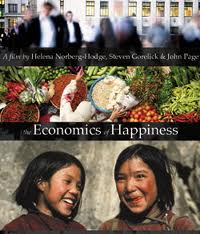
The Economics of Happiness

Helena Norberg-Hodge (2012)

Film Review

The term “economic relocalization” describes a global movement of loosely knit grassroots networks working to strengthen local and regional economies and systems of food and energy production. Most of the last eight years of my life have been focused on grassroots relocalization activities.

What I like best about Economics of Happiness is learning I am part of a global movement. I hate the title, which suggests the film concerns some kind of airy-fairy New Age spirituality. It doesn’t.

The 2011 film, narrated by Helena Norberg Hodge, is based on her 1991 book Ancient Futures: Learning from Ladakh and her 1993 film by the same name. The book and both films draw their inspiration from the nearly forty years Norberg-Hodge spent living and working in Ladakh, a small Himalayan region in the India-controlled (and disputed) state of Jammu and Kashmir. Economics of Happiness includes local footage from the 1993 film, as well as substantial documentary footage relating to the world’s current economic crisis and impending ecological crisis (stemming from catastrophic climate change and mass extinctions).

The Psychological Devastation of Globalization

The film opens with the same narrative Norberg-Hodge recounts in her earlier Ancient Futures film. We are shown the “before” image of Ladakh, a rich thriving culture in which residents live in large spacious homes, enjoy generous leisure time and have no concept of unemployment. Then we have the “after” image where, thanks to globalization, cheap (government subsidized) food, fuel and consumer goods have flooded the region and destroyed residents’ traditional livelihoods. Previously pristine communities face rising levels of air and water pollution, while Ladakhi teenagers face continual bombardment with pro-consumption messages.

It’s heartbreaking to see the psychological effect of all this. Most young Ladakhi have come to regard themselves as backwards and poor, while the communities they live in face rising racial tensions, juvenile delinquency and epidemic levels of major depression.

The Destructive Nature of Urbanization

The film goes on to sketch the mechanics of globalization, stressing the deregulation that forces small self-contained regions like Ladakh to open their markets to foreign goods, which quickly supplant local products. Norberg-Hodge paints an even uglier picture of urbanization, an inevitable result of forcing millions of small formers off their land. She stresses that city living is vastly more resource intensive than rural lifestyles. All city residents rely on food, energy and water transported from some distant source. They burn up additional fossil fuels transferring their waste as far away as possible. She stresses that most city residents go along with the massive ecological and social devastation they produce because it occurs on the other side of the world. Thus they don’t see it.

Rebuilding Local Communities and Economies

The solutions Norberg-Hodge offers for all these problems are similar to those proposed by an increasing number of dissident (non Wall Street) economists. First and foremost we must acknowledge that humankind has exceeded the earth’s carrying capacity – that the corporate drive for continual economic growth must end. Secondly people of conscience need to opt out of the corporate economy to facilitate the creation of more efficient and environmentally accountable regional and local economies.

Norberg-Hodge also sees the process of rebuilding local communities as a remedy for what she describes as the “crisis of the human spirit.” She blames this pervasive spiritual crisis on the demise of community engagement that has accompanied globalization and urbanization.  Although the process is most striking in remote regions like Ladakh, where it occurred suddenly, nowhere in the developed or developing world has escaped it.

The film ends on an extremely optimistic note, with numerous examples of international and community organizations supporting people in reclaiming their lives from multinational corporations.

Economics of Happiness can be rented (and watched online) from the filmmakers for $5

None But Ourselves Can Free Our Minds

protest

Emancipate yourselves from mental slavery, none but ourselves can free our minds – Bob Marley, “Redemption Song”

Bob Marley tells us to emancipate ourselves from mental slavery, and it appears people are finally taking his advice. Throughout the industrial world, young people especially are refusing to be sucked in by the constant individualistic pro-consumption messaging. It turns out this ideological strait jacket (see Public Relations, Disinformation and Social Control) we all wear to some extent is incredibly superficial. Given the right circumstances, it totally unravels. The corporate elite is fully aware of the global awakening that is undermining their ability to control us ideologically. In my view, this explains their growing reliance on the military and militarized police to suppress dissent.

Why Now?

One of the most valuable lessons I learned from emigrating to New Zealand concerns my own indoctrination with American individualist, exceptionalist ideology. When people are exposed to different cultures, ethnicities and philosophies – through education, travel or community engagement – it doesn’t take long to realize that all the pro-capitalist jingoism that’s been rammed down our throats is nothing but a pack of lies.

Intense personal crisis can also lead people to reject their basic ideological programming. A continuing economic crisis leaving millions struggling with joblessness, homeless, depression, suicide ideation and marital breakdown has been a major force leading people to reject the pro-corporate ideology that’s been drummed into them.

Civic engagement and community building activities that Susan Clark and Woden Teachout write about in Slow Democracy: Rediscovering Community and Bringing Decision Making Back Home can have a similar effect. In Sacred Economics, Charles Eisenstein writes of a profound inner emptiness that can never be satisfied – an emptiness stemming from the breakdown of social networks human beings have relied on for most of our 250,000 year existence. People respond to pro-consumption messaging in a desperate attempt to fill this void.

The global relocalization movement Clark and Teachout refer to directly addresses this emptiness by working to rebuild neighborhood and community networks. Here in New Plymouth, it has been totally awe inspiring to watch the natural high people experience from engaging in group effort for the first time. In case after case, the biological reward for collaborative effort far exceeds the fleeting pleasure of purchasing yet another consumer product, no matter how expensive or glamorous.

New Plymouth’s Relocalization Movement

Here in New Plymouth, a loosely knit Community Circle of 50 or so “active citizens” has taken up the challenge of rebuilding our neighborhood and community networks and civic organizations. Working through a variety of local groups, our projects range from organizing neighborhood barbecues and street parties, to simple street reclaiming projects (to reduce car traffic) to assisting specific neighborhoods in building Superhoods by setting up food, tool-sharing and cooperative childcare schemes and neighborhood crisis management plans (for emergencies such as earthquake, tsunami, floods, and flu epidemics) preparedness.

The Superhood neighborhood rebuild on Pendarves Street received financial support from New Plymouth District Council (thanks to a government grant NPDC and stakeholder groups applied for to increase walking and cycle). In another Superhood, like-minded neighbors actively recruit friends and acquaintances to purchase empty homes as they go up for sale.

Below an Australian example of neighbors working together to build a Superhood:

photo credit: danny.hammontree via photopin cc

***

read an ebook week

In celebration of read an ebook week, there are special offers on all my ebooks (in all formats) this week: they are free.

This includes my new novel A Rebel Comes of Age and my memoir The Most Revolutionary Act: Memoir of an American Refugee

Offer ends Sat. Mar 8.

Farming Without Machines: A Revolutionary Agricultural Technology

how to grow more vegetables

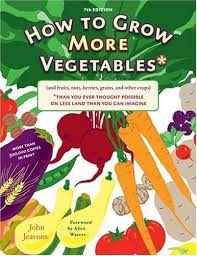
How to Grow More Vegetables (and fruits, nuts, berries, grains, and other crops) than you ever thought possible on less land than you can imagine

By John Jeavons

2002 Edition

Ten Speed Press

Book Review

Originally published in 1974, How to Grow More Vegetables remains a vital resource for farmers, agricultural researchers and planners, sustainability activists and home gardeners, as the world confronts the challenge of feeding a global population of 7-9 billion without access to the cheap fossil fuels that have run “industrial” agriculture for the last century. Thanks to skyrocketing oil prices, Peak Oil is no longer just a theory. The failure of oil production to increase at the same rate as heavy demand from developing countries like China and India has driven the price of oil to record levels. Owing to the heavy use of fossil fuels in contemporary agriculture, food prices have tended to increase at a comparable rate. Scientists predict that food shortages related to the loss of mechanized agriculture will likely be compounded by droughts, floods and other extreme weather events related to climate change.

Growing Soil, Not Crops

Jeavon’s book is unique in that it combines theory and research (with a fifty-three page bibliography) with a cookbook-style manual for households preparing for a future in which they grow most or all of their own food. The GROW BIOINTENSIVE approach, developed by Jeavons and Ecology Action of the Midpenninsula (Palo Alto), is centered around preserving the microbial life (bacteria and fungi) that are abundant in healthy soil and which are essential to plant health and growth. Up to 6 billion microbial life-forms live in one 5-gram sample of cured compost (about the size of a quarter). This microbial life, so essential to plant development, is destroyed by specific aspects of industrial farming. This is the main reason for the relatively poor yields of factory farms (in contrast to traditional biointensive methods). It’s also responsible for the extensive destruction of our topsoil. Repeated plowing and chemical fertilizers disrupt the delicate ecology of topsoil organisms, and pesticides and herbicides are as deadly to soil bacteria and fungi as they are to insects and weeds. In his introduction, Jeavons reveals that industrial farming destroys approximately six pounds of topsoil for each pound of food it produces. China’s soils, for example, remained productive for more than 4,000 years, until the adoption of mechanized chemical agricultural techniques led to the destruction of 15-33% of their agricultural soil. Another example is North Africa, which was the granary for Rome until overfarming transformed it into a desert. According to Jeavons, the world only has enough topsoil left to last 42-84 years.

Quadrupling Crop Yields

Based on thirty-plus years of horticultural research, Ecology Action members have ascertained that the GROW BIOINTENSIVE method, in the hands of a skilled practitioner, can produce enough food to feed one person (on a vegan diet) with 4,000 square feet of land. This contrasts with the 7,000 square feet required to feed a vegan using fossil fuels, farm machinery and conventional chemical or organic techniques. Without fossil fuels and machines, the amount of land required (using conventional chemical or organic techniques) would be 21,000-28,000 square feet. At present it takes 31,000-63,000 square feet per person to produce an average US diet (including eggs, milk, cheese, and meat), using fossil fuels and mechanization and conventional chemical or organic techniques. In addition to increasing caloric production by 200-400% per unit of area, the GROW BIOINTENSIVE method also significantly reduces water consumption (by 67-88%) and increases soil fertility (by 100%).

A Manual for Novice, Intermediate and Advanced Gardeners

Most of How to Grow More Vegetables is a detailed instruction manual describing how an average family (1-4 people) can grow the right kind of crops to supply most, if not all, their food requirements. Nearly half the book consists of tables with basic information about the spacing, care and calorie and protein content of specific crops and master charts showing where, when and how much of each variety to plant.

Originally published in Dissident Voice

Farmers of Forty Centuries

farmers

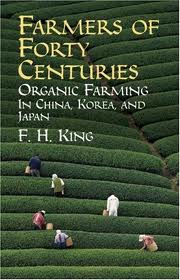
Farmers of Forty Centuries: Organic Farming in China, Korea and Japan

By F.H. King

(1911, reprinted in 2004 by Dover Publications)

Link to free PDF

Book Review

I don’t typically review (or read) 100 year old books. Farmers of Forty Centuries is an important exception. It has become a classic of the permaculture/sustainable economics movement for several reasons.

First, it dispels the myth that fossil fuel-free agriculture will produce much lower yields than industrial farming. Without access to oil and natural-gas based pesticides, herbicides and fertilizers, agriculture will be much more labor-intensive. However with global population at more than seven billion (as of last October), the world seems to have no shortage of human labor. Second, Farmers of Forty Centuries paints a detailed picture of tried and true regional models of food, fuel, and construction materials production, as well as regional water and human waste management. Third, it provides detailed descriptions, almost in cookbook fashion, of a broad range of permaculture and terraquaculture* techniques.

As a backyard organic gardener and member of the lawn liberation movement, I have found it really easy to incorporate a number of the techniques King describes into my routine. I was also intrigued to see Charles Eisenstein cite King’s book in Sacred Economics (2011 Evolver Editions), supporting his argument that more intensive production techniques could easily produce the same or better yields as current factory farms.

Briefly, Farmers of Forty Centuries describes the voyage agronomist and former US Department of Agriculture official Franklin Hiram King made to to China, Korea and Japan in the early 1900s. The purpose of his trip was to study how the extremely dense populations of the Far East could produce massive amounts of food century after century without depleting their soils. What he discovered was a highly sophisticated system of water management, crop rotation, interplanting and rational utilization of ecological relationships among farm plants, animals and people.

The 248 high resolution photos of Chinese, Korean and Japanese farmers and their fields are even more remarkable (especially for 1911) than the text. Unfortunately King died while the book was in production, and it was published posthumously by his wife.

Seasonal and Rainfall Differences

King notes at the beginning of the book that much of China has a longer growing season than the US. Moreover in China, Korea and Japan, most rain falls during summer months when it’s most conducive to crop growth. He notes that China enhances their summer rainfall with an extensive system of canals and that both China and Japan have elaborate schemes to capture run-off from uncultivable mountain areas. However he also presents strong evidence that water management alone fails to explain these countries’ amazing crop yields.

Human Excrement and Green Manure

He’s equally impressed by the extensive time and effort put into collecting all human waste (even from cities), processing it by drying or fermentation and distributing it to farmers, who would apply it more or less continuously to their fields. Noting the high price human sewage fetched for the men who collected and processed it, King bemoans the incredible waste in the US system of sewage disposal, which flushes so many rich nutrients into inland waterways and out to sea.

He also describes in detail the extensive use of soybeans, peanuts, clover, pulses and other nitrogen fixing plants in crop rotation schemes, as well as “green manure,” fibrous plants (either grown in the fields or collected) that farmers continuously plowed into their soil to increase organic matter.

Succession Sowing and Interplanting

Finally he stresses the systematic effort by Chinese, Korean and Japanese farmers to maximize their limited cultivable land. In one example, he describes how land flooded as a rice paddy in summer would be planted with leaks and other vegetables as winter crops. He frequently describes the presence of three crops (for example radishes, cabbage and wheat) in the same field simultaneously at different stages of maturity. According to King, farmers in southern China would typically cultivate one plot of land continuously throughout the year. In addition to two rice crops during the winter and early spring, they would also grow rape, peas, beans, leaks and ginger as a third or fourth crop during summer and fall.

The Economic Hardship of Japanese Farmers

King’s description of farming in Japan is striking in its heavier use of chemical fertilizer (as was increasingly typical of US agriculture in the early 20th century). He notes that Japanese farmers had to be encouraged (via a contest for the best compost heap) to compost kitchen waste and green manure to provide organic matter for their farms. He also describes the fines the Japanese government levied against farmers who applied excessive lime to their fields. Japanese soils are volcanic and quite acid (like the soil here in New Zealand).

King is also extremely sympathetic to the heavy tax burden carried by Japanese farmers (to pay for the Russo-Japanese war, which ended in 1905), as well as their struggle to pay extremely high rents. It was his view that their economic hardship seemed to sap their initiative. He offers this as a possible explanation for their eagerness to use chemicals and take labor saving short cuts instead of embracing traditional organic methods.

*Terraquaculture is the practice of farming living water flowing through the landscape. It is the traditional farming system of the Asia-Pacific region where it has been practiced for thousands of years and is arguably the only truly sustainable farming system. See http://www.terraquaculture.net/

Corporate Food is Bad for You

Chicago lights

Chicago Lights Urban Farm

 (This is the 1st of  2  posts about dramatic changes that are occurring in food production and marketing, as well as consumer food choices.  Part I addresses the conscious shift many consumers have made over the past decade to locally grown organic food.)

Various studies reveal that as many as 20% of Americans make the conscious choice to eat organic food. Those who make the switch from corporate, industrially produced food do so for a variety of reasons. The main ones are cost, health and ethical concerns. Cost is a big consideration for low income families. In an economic depression accompanied by spiking food prices, growing your own fruits and vegetables or purchasing them from a grower at a farmers’ market can save families literally thousands of dollars a year.

Ironically the economic crisis has one silver lining in inner cities, as neighborhoods organize to create urban orchards and gardens on vacant, foreclosed land. An example is Chicago Lights Urban Farm, which supplies fresh produce for the once notorious Cabrini Green subsidized housing complex. This is the first access to fresh produce in decades for many inner city residents – thanks to the mass exodus of supermarket chains in the eighties and nineties.

Health issues linked to industrial agriculture are the second biggest reason people choose locally grown organic food over the standard corporate options. The growing list includes a number of debilitating and fatal illnesses linked with endocrine disruptors (estrogen-like molecules) in chemical herbicides and pesticides; contamination with infectious organisms; severe allergies, immune problems and cancers associated with GMOs (genetically modified organisms) and nanoparticles; type II diabetes related to growth hormones fed to US cattle and the proliferation of superbugs like MRSA (methcillin resistant staphylococcus aureus) linked to antibiotics routinely fed to factory farmed animals.

Endocrine Disruptors and Food Borne Pathogens

At the moment the biggest concern for health advocates is the epidemic of breast cancer and infertility linked to the growing presence of endocrine disruptors in our water supply and food chain. Breast cancer currently affects one out of eight women, and sperm counts in American men are among the lowest in the industrialized world. However the infectious organisms arising from factory farming methods and lax regulation of slaughter facilities are also responsible for a growing number of health problems. Infectious organisms linked with severe illness and death include the prion carried by cattle that causes Creuzfield Jakob disorder (aka Mad Cow Disease); campylobacter, salmonella and pathogenic E coli from the fecal contamination associated with overcrowded livestock pens and inadequate regulation of slaughterhouse hygiene; and Mycobacterium avium paratuberculosis (MAP), an increasingly common organism linked to a big spike in Crohn’s disease. Lax US food regulation and inspection regimes are worrying enough. Adding to all these concerns is the vast amount of supermarket food imported from third world countries where food production is totally unregulated.

Genetically Modified Organisms (GMOs)

GMO-related health issues are another reason more and more consumers are going organic. Unlike New Zealand and most of Europe, which ban GMOs, in the US 88% of corn, 93% of soy, 90% of canola (used in cooking oil), 90% of sugar beets (the source of half of US sugar) are genetically modified. Moreover thanks to the millions Monsanto spends lobbying to block product labeling laws, the majority of US shoppers have no way of knowing whether supermarket foods contain GMOs. Knowledgeable consumers are especially angry about the so-called “Monsanto Protection Bill.” This was a clause inserted in a recent continuing budget resolution that virtually guarantees Monsanto immunity against lawsuits for GMO-related health problems and environmental damage.

Nanoparticles

The latest food controversy involves the presence of untested nanoparticles in processed foods. Nanoparticles are submicroscopic particles the food industry adds to foods and packaging to lengthen shelf life, to act as thickening agents and to seal in flavor. As You Sow, NRDC and Friends of the Earth, first raised the alarm about five years ago regarding the nanoparticles used in cosmetics. They were mainly concerned about studies which showed that inhaled nanoparticles cause the same kind of lung damage as asbestos and can lead to cancer. More recently the American Society of Safety Engineers has issued warning about research showing that nanoparticles in food pass into the bloodstream, accumulate in organs and interfere with metabolic process and immune function.

Environmental and Psychological Benefits

Aside from cost and health concerns, an increasing number of consumers eat locally produced organic food for ethical and environmental reasons. In doing so, they are consciously opting out of an insane corporate agriculture system in which food is transported halfway around the world to satisfy an artificially created demand for strawberries in the winter. They are joining food localization initiatives springing up in thousands of neighborhoods and communities to increase options for locally produced organic food. As they reconnect with local growers to start farmers’ markets (the number in the US is 3,200 and growing) and Community Supported Agriculture (CSA) initiatives*, they find they are simultaneously rebuilding fundamental community ties their grandparents enjoyed.

Many farmers’ markets serve the additional function of a key gathering place for friends and neighbors. As you can see from the following video:

*Community Supported Agriculture is an alternative, locally-based economic model of agriculture and food distribution, in which local residents pre-subscribe to the produce of a given plot of farmland and take weekly delivery of fresh fruits and vegetables and free range/organic meat, eggs, raw milk, etc.

photo credit: crfsproject via photopin

Originally published in Dissident Voice

An NSA-approved Guide to Revolution

Activists who advocate for violent revolution don’t advertise their views on the Internet for obvious reasons. That being said, Storm Clouds Gathering treads a really fine line with their recent. Revolution: An Instruction Manual. They don’t exactly advocate using violence to dismantle corporate fascism. But they don’t really condemn it, either. Instead they argue from perspective that revolutions are mainly won by psychological means and it makes most sense to attack the state where they are weakest.

The filmmakers are totally non-ideological in their approach to dismantling capitalism. In fact, they begin with the assertion that any revolution with a an inflexible pre-ordained view of the desired outcome is doomed to failure.

They then share a general overview of their own vision – a loose confederation of self-governing communities similar to the Iroquois Federation. This was the model for the Articles of Confederation, which was the founding document of the United States of America before the bankers and mercantalists used the Constitution to strip the 13 original states of their power.

Audience Participation Required

The film is interactive and requires audience participation. In fact, it stops at 1:47 minutes until the viewer answers “yes” or “no” whether they believe the system can be reformed. If they click “yes” the video ends. I clicked “no.”

The strategy the filmmakers lay out for dismantling the corporate state involves removing, one by one, what they identify as the three “pillars of power”:

  1. Control of the “public mind,” as it concerns patriotism and nationalistic beliefs, such as freedom, democracy and terrorism.
  2. Control of money and finance through money creation, taxation and inflation.
  3. A state monopoly on violence to compel obedience through fear.

How They Got Past the NSA Censors

The film finishes quite abruptly by recommending people read three books on revolution, including Gene Sharp’s From Dictatorship to Democracy. This was an extremely wise choice, as this is the training manual the State Department and CIA-linked foundations widely distributed to activists engaged in the “color” revolutions in Eastern Europe and the Arab Spring.

I have written at length about the CIA role in financing the nonviolent movement, as well as nonviolent guru Gene Sharp’s historic links with the Pentagon, State Department, and US intelligence.

Thierry Meysson, editor of Voltaire Net, was the first to go public (in 2005) with Sharp’s longstanding links to the military-intelligence complex.* The only weakness of Meysson’s original article is his failure to cite his references. I researched the sources and confirmed each of his original assertions for a 2012 Daily Censored article entitled The CIA and Nonviolent Resistance.

Also see How the CIA Promotes Nonviolence, The CIA Role in the Arab Spring and How Nonviolence Protects the State

*In 2002, Meysson’s The Big Lie was also the first to expose US intelligence involvement in 9-11.