Unknown's avatar

About stuartbramhall

Retired child and adolescent psychiatrist and American expatriate in New Zealand. In 2002, I made the difficult decision to close my 25-year Seattle practice after 15 years of covert FBI harassment. I describe the unrelenting phone harassment, illegal break-ins and six attempts on my life in my 2010 book The Most Revolutionary Act: Memoir of an American Refugee.

Women in the Persian Empire

Artemisia I of Caria, 5th century BC, wife of King Mausolus I of Caria ...

Artemesia of Caria

Episode 20: Women in the Persian Empire

The Persian Empire

Dr John W I Lee (2012)

Film Review

Persian women had much more personal freedom than those of Athens, who were required to wear veils, controlled by husbands, fathers and brothers, and restricted from jobs, public life and Persian courts. Moreover Athenian writers were extremely critical of the freedoms enjoyed by Persian women, who they described as oversexed and manipulative. At the same time, they viewed Persian kings as effeminate and enslaved to their women. Aristotle blamed Sparta’s decline on the right granted Spartan women to own property.

Persian kings practiced polygamy and frequently married their nieces, cousins and sisters to keep wealth in the family. Persian also kept concubines, for diplomatic purposes. They were often foreign women of high rank (who, as non-Persians, were forbidden to marry the king.

In general Persian women tended to be very outspoken. Wives attended banquets, in contrast to Greece, where only concubines attended banquets (to entertain guests).  Persian women learned to ride horses, archery and to shoot javelins. Royal women held audiences just like the king (an Elamite tradition – see Eartly Middle East Empires that Preceded the Persian Empire). They sometime traveled with the king on military campaigns.

Persian women could own land and some ran kortaj work teams at the palace involved in weaving and food production.

As a minority population in the empire, Persians placed great value on having children, especially sons. New mothers received extra rations, which were doubled if they gave birth to sons. Men who produced the most sons got special payments from the king, who sometimes gave gold coins to mothers.

Skilled men and women received equal pay. Unskilled men received higher pay than unskilled women.

Eunuchs, who looked after the king’s wives and concubines, were a tradition the Persians inherited from the Assyrians. Although the word means “keeper of the bed” (in Greek), some became powerful soldiers and generals or rich merchants. Not all were castrated.

Egyptians, Greeks, Jews and Babylonians were all monogamous and Egyptian and Babylonian women could buy and sell property and enter into contracts. In Egypt and Babylonia, women could initiate divorce. In the Ionian Greek cities, as in Athens, women had very restricted rights.

Some Persian women led military campaigns:

  • Artemesia – became queen of Halicamassus in 480 BC when her husband died. She provided (and led) a squadron of ships to support Xerxes when he was trying to regain control of Egypt.
  • Mania – became satrap of Dardanus in 440 BC when her husband died. She commanded troops and captured new cities.

https://www.kanopy.com/en/pukeariki/watch/video/15372393/15372426

House Votes to KEEP Funding Globalist NGO Responsible for Global Censorship and Domestic Propaganda — 81 Republicans Side With Democrats to Kill Defund Push

The National Endowment for Democracy: A Fact Sheet - Global Times

Jim Hoft

In yet another stunning display of Uniparty betrayal, the House of Representatives has voted to continue funneling taxpayer dollars to the shadowy National Endowment for Democracy (NED) – a globalist NGO notorious for meddling in foreign elections, fueling censorship worldwide, and even pushing domestic propaganda right here at home.

By a lopsided 127–291 vote, lawmakers rejected an amendment offered by Rep. Eli Crane (R-AZ) to prohibit $315 million in funding for the NED as part of the FY2026 spending package.

Following the vote, a disgusted Rep. Eli Crane took to X to vent his frustrations with the rot inside the halls of Congress.

“The swamp is real. But we did pass the Shower Act this week. I could use one after spending so much time in this awful place,” Crane wrote.

He followed up with a stinging rebuke of the 81 Republicans who turned their backs on the base:

“Tonight, the Uniparty rejected my amendment to defund NED. 81 ‘Republicans’ voted with Democrats to fund this rogue organization that fuels global censorship and domestic propaganda. We will keep fighting.”

Here are the 81 Republicans who voted to KEEP funding the National Endowment for Democracy (NED):

  • Robert Aderholt (R-AL)

  • Mark Alford (R-MO)

  • Don Bacon (R-NE)

  • Jim Baird (R-IN)

  • Michael Baumgartner (R-WA)

  • Cliff Bentz (R-OR)

  • Stephanie Bice (R-OK)

  • Gus Bilirakis (R-FL)

  • Rob Bresnahan Jr. (R-PA)

  • Vern Buchanan (R-FL)

  • Ken Calvert (R-CA)

  • Mike Carey (R-OH)

  • John Carter (R-TX)

  • Juan Ciscomani (R-AZ)

  • Tom Cole (R-OK)

  • Rick Crawford (R-AR)

  • Mario Díaz-Balart (R-FL)

  • Chuck Edwards (R-NC)

  • Jake Ellzey (R-TX)

  • Ron Estes (R-KS)

  • Gabe Evans (R-CO)

  • Randy Feenstra (R-IA)

  • Brian Fitzpatrick (R-PA)

  • Mike Flood (R-NE)

  • Scott Franklin (R-FL)

  • Andrew Garbarino (R-NY)

  • Carlos A. Giménez (R-FL)

  • Craig Goldman (R-TX)

  • Brett Guthrie (R-KY)

  • Mike Haridopolos (R-FL)

  • French Hill (R-AR)

  • Ashley Hinson (R-IA)

  • Bill Huizenga (R-MI)

  • Jeff Hurd (R-CO)

  • Darrell Issa (R-CA)

  • Dusty Johnson (R-SD)

  • David Joyce (R-OH)

  • Thomas Kean Jr. (R-NJ)

  • Mike Kelly (R-PA)

  • Jen Kiggans (R-VA)

  • Kevin Kiley (R-CA)

  • Young Kim (R-CA)

  • Kimberley King-Hinds (R-MP)

  • Darin LaHood (R-IL)

  • Nick LaLota (R-NY)

  • Bob Latta (R-OH)

  • Mike Lawler (R-NY)

  • Frank Lucas (R-OK)

  • Ryan Mackenzie (R-PA)

  • Nicole Malliotakis (R-NY)

  • Celeste Maloy (R-UT)

  • Brian Mast (R-FL)

  • Michael McCaul (R-TX)

  • Dan Meuser (R-PA)

  • John Moolenaar (R-MI)

  • Blake Moore (R-UT)

  • Nathaniel Moran (R-TX)

  • Dan Newhouse (R-WA)

  • Zach Nunn (R-IA)

  • Jay Obernolte (R-CA)

  • August Pfluger (R-TX)

  • Hal Rogers (R-KY)

  • Mike Rogers (R-AL)

  • John Rutherford (R-FL)

  • Maria Elvira Salazar (R-FL)

  • Mike Simpson (R-ID)

  • Adrian Smith (R-NE)

  • Lloyd Smucker (R-PA)

  • Elise Stefanik (R-NY)

  • Dale Strong (R-AL)

  • David Taylor (R-OH)

  • Claudia Tenney (R-NY)

  • Mike Turner (R-OH)

  • David Valadao (R-CA)

  • Ann Wagner (R-MO)

  • Tim Walberg (R-MI)

  • Daniel Webster (R-FL)

  • Bruce Westerman (R-AR)

  • Joe Wilson (R-SC)

  • Rob Wittman (R-VA)

  • Steve Womack (R-AR)

The Gateway Pundit reported back in February 2025 that President Trump significantly cut funding to the National Endowment for Democracy (NED), essentially “starving” the organization.

The National Endowment for Democracy is a “CIA cutout” according to former State Department Deputy Assistant Secretary and founder of Foundation for Freedom Online Mike Benz.  It was started in November 1983 and is funded directly by Congress.  Under the guise of “promoting democracy,” what once was considered covert actions have now become overt.  According to a 1991 opinion piece in the Washington Post:

The sugar daddy of overt operations has been the National Endowment for Democracy, a quasi-private group headed by Carl Gershman that is funded by the U.S. Congress. Through the late 1980s, it did openly what had once been unspeakably covert — dispensing money to anti-communist forces behind the Iron Curtain.

As with many government-funded non-profits and cutouts, what started as a possibly ‘good intentioned’ has turned into an imperialistic disaster.  NED’s publication, the Journal for Democracy called for the arrest of Poland’s PiS party to “ensure that populism does not return,” comparing it to the “crimes of communism.”

In September 2023, NED welcomed Victoria Nuland to its Board of Directors, a former State Department official and the maestro behind the 2014 colour revolution in Ukraine known as the Maidan Revolution.  Nuland had previously worked under the Bush and Obama administrations, sitting out Trump’s first term, and then rejoining during the Biden ‘administration.’

During the Maidan, NED funded over 60 projects in Ukraine to ‘promote democracy,’ mostly civil society groups that were involved in the protests that eventually unconstitutionally overthrew Ukrainian president Viktor Yanukovych.

NED is also alleged to have supported an unsuccessful coup against Venezuela’s Hugo Chavez in 2002 and funded opposition groups in 2019 to undermine the Venezuelan government.  The Center for Economic and Policy Research wrote in 2004.

The list of countries that NED has been accused of meddling in regime change is vast.  It includes Ukraine and Venezuela, as mentioned, but also Nicaragua with the election of Violeta Chamorro in 1990 and again in 2018.  They meddled in Belarus in 2020 by backing opposition leader Svetlana Tikhanovskaya.  NED funded organizations such as Universal Rights Supporting Families of Political Prisoners and other civil society groups and ‘independent media.’  They were involved in the 2001 coup in Haiti against President Jean-Bertrand Aristide.  They also meddled in Bolivia, Cuba, Libya, Georgia, Serbia, Mongolia, and Kyrgyzstan.

NED brags on its website that it has, and likely still has, 330 projects in 11 countries with $38.5 million in funds in Central and Eastern Europe for FY2023.  From their website:

While many post-communist countries in Eastern Europe have undergone democratic transformations and have become European Union (EU) and NATO members, the dream of a unified, peaceful, and democratic Europe remains unfulfilled. This aspiration is being challenged by the rise of autocratic models of governance, populism and nationalism, erosion of information integrity and sharp political polarization, as well as unresolved issues from the past.

[…]

Via https://www.thegatewaypundit.com/2026/01/more-betrayal-house-votes-keep-funding-globalist-ngo/

Chinese-linked Australian mining company sues Greenland for $11bn over lost revenue

The location of the Kvanefjeld project in southern Greenland. Authorities fear that should the project go-ahead it would cause environmental damages to the nearby town of Narsaq. (Photo: Greenland Minerals)

Martn Breum

The US, China and the EU are all likely to watch closely as a battle over one of the world’s largest deposits of rare earths is taken to court. Australian-owned Greenland Minerals A/S wants a mining license, or compensation of up to $11.5 billion for lost revenue.

One of the world’s largest deposits of rare earth minerals is located in the Kuannersiut mountain in southern Greenland. The deposit has long been coveted by the US, China and the EU, but instead of being mined and brought to world markets, the valuable minerals are now subject to a bitter court case between the China-linked Australian mining company and the Greenlandic government.

In 2021, the government in Nuuk, Greenland’s capital, passed legislation to ban uranium mining in Greenland, and this summer Greenland Minerals was refused a mining license for its Kvanefjeld project at Kuannersuit mountain. The rare earths in the area are commingled with uranium, and mining would inevitably bring the latter to the surface, a result the Greenland’s government is determined to prevent.

Legal offensive

Greenland Minerals, a subsidiary of Perth-based Energy Transition Minerals, has now mounted a counter-offensive.

The company has been engaged in exploration at the Kuannersuit mountain since 2007. In July it filed a 517-page Statement of Claims with the Arbitral Tribunal in Copenhagen. The statement includes a claim for a license to mine or, should that fail, a claim for compensation as well as an estimate of the company’s loss of investments and future earnings that could total $11.5 billion, a potentially crippling sum for Greenland.

Strong US interest

Observers in many countries are likely to follow the proceedings. Greenland is still part of the Kingdom of Denmark and the US, through its embassy in Denmark, has been keenly interested in Greenland’s rare earths for decades.

Carla Sands, a former US ambassador to Denmark, held talks with Greenland Minerals in southern Greenland not long before then-US president Donald Trump in 2019 suggested buying the country from Denmark.

The EU has also long expressed interest. However, China may be in pole position for access. Chinese mining corporation Shenge Resources owns 9% of Greenland Minerals and is represented on its board. Greenland Minerals has long been banking on financial and technical support from Shenge for the establishment of the proposed Kuannersuit mine.

On a visit to Copenhagen in late September, Greenland Minerals commercial manager Garry Frere told Arctic Today that Shenge “will support the project without a shadow of a doubt”.

The Chinese connection makes the Kuannersuit project controversial. China controls some 90% of the world’s supply of rare-earth minerals — essential for a host of green technologies such as batteries for electrical cars and wind turbines, as well as for the defence industry, which uses them in missiles, fighter jets and other equipment.

“Not a threat”

The high loss estimates by Greenland Minerals could easily exhaust Greenland’s economy, should compensation be awarded to Greenland Minerals. Even so, the company denies any wish to intimidate the Arctic country of 57,000.

“It is not a threat,” said Frere, even if he understands that others may interpret the suit that way.

“I don’t think the government or its advisors expected what they saw in our statement of claim that we lodged in July. I think that document might have come with quite a bit of surprise,” Frere said.

“It might be that when the detail of the argument we are making is properly understood by Kammeradvokaten (the government’s legal council, ed.) and the government, they will form a view that Greenland Minerals has quite a substantial argument. We might not win, but there is certainly no guarantee,” he said.

He speculated that the government in Nuuk will soon begin to weigh the potential cost of paying damages to Greenland Mineral against the possible gains from a mine at Kuannersuit. Greenland Minerals argues that Greenland would likely earn more than $20 billion in taxes and royalties on minerals over the expected 37-year life of the mine if Greenland Minerals was allowed to proceed at Kuannersuit.

Financing the case

The trial will likely be very expensive for both parties, but Frere claims that Greenland Minerals has resources to carry on for as long as it takes. According to him, Burford Capital, US-based specialists in funding legal cases, has made capital available that could make the case less painful for Greenland Minerals.

“We call it non-recourse. If we lose the arbitration, they get none of their money back. If we are successful they get a fee based on how much they have spent and they get a share of the reward. This is not unusual for small businesses like ours,” Frere said. He declined to state how large a share of the potential wins Burford Capital is entitled to.

Greenland Minerals has engaged Clifford Chance, one of the UK’s largest law firms with offices across the globe, and a reputed Danish law firm to do the legal work and handle court appearances.

Breach of contract

After a stopover in Copenhagen, Frere was set to travel to Nuuk, and he seemed unusually knowledgable about Greenland’s domestic politics.

Strong forces within Siumut, one of the two parties in Greenland’s governing coalition, want to unravel the ban on uranium mining. Frere believes that there might be a new chance for the Kuannersuit mine after a planned general election in Greenland in April of 2025.

In a 2011 add-on to Greenland Minerals’ license to explore for minerals at Kuannersuit, the Greenlandic authorities stipulated that any potential requests by the company to exploit the Kuannersuit vein could be rejected by Nuuk for purely political reasons.

The project at Kuannersuit has from the beginning been highly controversial in Greenland. The fear that mining could contaminate the nearby town of Narsaq and its surroundings runs deep, and the 2011 political clause to Greenland Minerals’ exploration license mirrored a deep split in the Greenland populace regarding the project.

Even so, Frere and Greenland Minerals maintain that the government in Nuuk is in breach of contract. The company argues that the 2011 clause has been rendered invalid since numerous other positive signals and acts by the authorities in Nuuk have made Greenland Minerals predict that in the end — despite the 2011-clause — it would receive a license to mine.

In the company’s July Statement of Claims several messages to Greenland Minerals from the authorities in Nuuk and excerpts from Greenland’s political discourse were presented. From 2014, when a previous partial ban on uranium was lifted, Greenland prepared for uranium exports and Nuuk signed on to several international uranium conventions. Greenland Minerals interpreted the combined words and deeds as binding. Frere argues that matters have not been dealt with properly by Greenlandic authorities in this process.

“We have spent 13-14 years following a certain set of rules with an expectation that if we did the right thing, produced the right pieces of paper and did the right work we would then be issued a license,” said Frere.

Greenland has less than 60,000 inhabitants and a limited economy, but Frere has no qualms raising claims that might badly hurt its economy,

“While Greenland is a small country, it is part of the Kingdom of Denmark and it chooses to encourage people to come and potentially exploit its mineral resources. By doing that you take away your right to say ‘oh, no, we are a poor country, you are a big international “ruly” boy and you have come to impose.’ We were invited, we followed the rules, we met all the requirements that were put in front of us, but at the last minute the goalposts were moved,” he said.

The minister

In Greenland funding for the court case has been allocated by parliament and on the phone from Nuuk, Greenland’s naalakkersuisoq (minister) for raw materials, Naaja Nathanielsen, expresses no desire for compromise.

“The company says that because they feel that they have received a signal this must overrule the terms that are spelled out in their license. We argue that all sorts of things might have been said politically, but that this means nothing if the terms are not changed. There can be no tampering with any given government’s right to determine terms and legislation about how the resources of its country are to be utilized. This is an important principle for us and we will follow it through to the end,” Nathanielsen said.

Greenland Minerals also argue that the ban on uranium cannot be applied to the Kuannersuit project as this would deny the company rights to which it is entitled to by Greenland’s own laws. Nathianielsen also rejects this claim.

“The company does not read the uranium law correctly. The law applies to future licenses. If Greenland Minerals had been issued with a license to extract minerals before the law on uranium came into effect, they might perhaps have been right, but they had not,” she said.

Will the offensive work?

The question remains whether fear of an expensive court case and potentially debilitating payment of damages will stir public opinion in Greenland and influence the Greenlandic government.

Mariane Paviasen, chair of Greenland’s parliamentary Committee on Foreign Affairs and Security, says she doesn’t fear that scenario.

“They do not scare me. This only shows once again that the company does not care at all about our society,” she said.

Paviasen is a former central figure of Urani Naamik (No to Uranium), a non-governmental organization which has spearheaded opposition to the mining project at Kuanersuit. She and other opponents maintain that Greenland Minerals conducted its business in the country in less than savory ways. Its lobbying has included hiring leading Greenlandic politicians and former high ranking public officials to further its case.

Nathanielsen said that she is convinced that Greenland has the better legal case. She recognizes though that Greenland Minerals campaign is having an effect.

“I regard it as a maneuver to create uncertainty and to target politicians, and it has worked extremely well as clickbait. A lot of journalists have reacted. I just think it is more interesting what the company is basing its case on,” she said.

Greenland’s government has until early January 2024 to react to Greenland Minerals’ Statement of Claim.

The government argues that the Arbitral Tribunal in Denmark does not have powers to handle complaints against political decisions made by the government of Greenland. Instead, the government argues, Greenland Minerals may bring their case before the courts in Greenland.

Should Greenland Minerals be awarded compensation for the losses it claims, the sums involved might exceed Greenland’s ability to pay. Greenland Minerals argues, however, that the Danish government could also be made responsible. Until 2009, the two countries shared the responsibility for Greenland’s mineral deposits.

[…]

Via https://www.arctictoday.com/chinese-linked-australian-mining-company-sues-greenland-for-billions-of-usd-over-lost-revenue/

US Military Tells Trump It Needs More Time to Prepare for War With Iran

Trump to decide in two weeks on U.S. involvement in Iran-Israel ...

by Kyle Anzalone | January 11, 2026 at 2:11 pm ET

Military commanders in the Middle East want more time to prepare for Iranian counterattacks

Senior Department of War officials have told President Donald Trump they need more time to consolidate American troops deployed to the Middle East before the US launches an attack on Iran.

According to The Telegraph, “Trump has been warned that the US military needs more time to prepare for strikes against Iran.” Military commanders in the Middle East stated they need to “consolidate US military positions and prepare defences” in anticipation of an Iranian retaliatory attack.

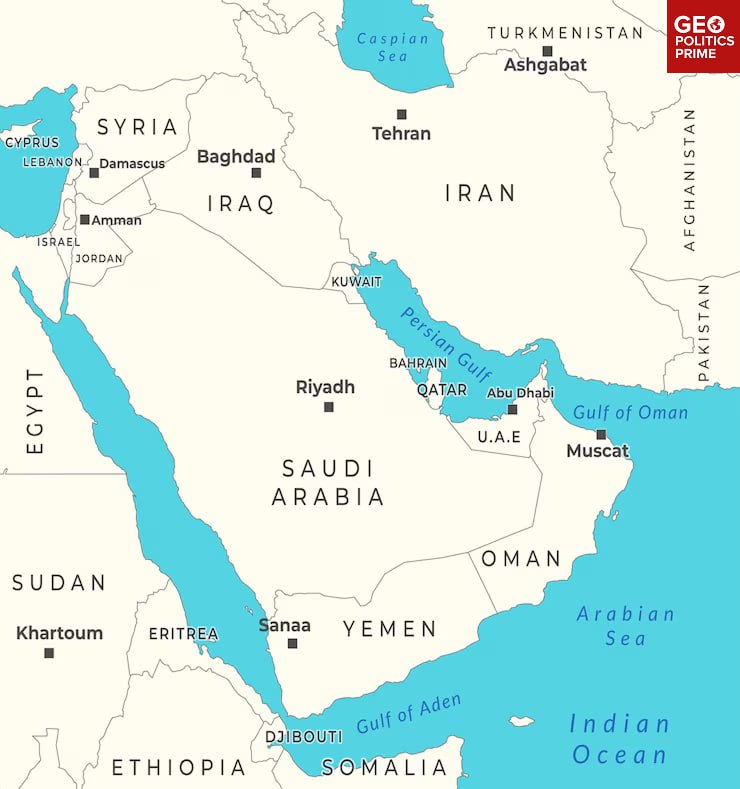
Parliament Speaker Mohammad Baqer Qalibaf said that if it attacks Iran, the Islamic Republic will strike Israel and US bases in the Middle East.

Trump has threatened Iran several times in recent weeks. “If Iran [shoots] and violently kills peaceful protesters, which is their custom, the United States of America will come to their rescue. We are locked and loaded and ready to go,” Trump said earlier this month.

Demonstrations began in Iran two weeks ago, and some protests have escalated into riots. Some groups report that 200 people have been killed during the demonstrations, including over 40 members of Iranian security forces.

Iranian authorities have reportedly used live ammunition to break up protests, and Tehran has cut off internet service in an attempt to quell the movement.

Israel Hayom spoke with American officials who said the White House is preparing a range of actions against Iran, including using Starlink to provide protesters with internet access, a cyber attack, new sanctions, and kinetic military action.

The Telegraph reports that potential targets of US strikes include non-military targets in Tehran and Iranian security forces.

At the end of last year, Israeli Prime Minister Benjamin Netanyahu traveled to the US to lobby Trump to restart the war with Iran. In June, Israel launched a surprise attack on Iran that ignited a 12-day war.

During the conflict, Trump ordered American bombers to strike three Iranian nuclear sites. The Islamic Republic responded by striking a US military base in Qatar. The Iranian response was viewed as symbolic, and a ceasefire between the US, Israel, and Iran was reached shortly after.

[…]

Via https://news.antiwar.com/2026/01/11/report-military-tells-trump-it-needs-more-time-to-prepare-for-war-with-iran/

Foreign-backed armed Kurdish groups ‘dispatched’ to join Iran riots

Recent riots, openly supported by the US and Israel, have involved acts of violence, damage to public property and the burning of residential homes in Iranian cities.

Press TV

Heavily-armed militants belonging to Kurdish separatist groups have reportedly been dispatched from neighboring countries in order to join in on the foreign-backed riots and cause death and destruction across Iran, a media report says. 

Quoting sources, the Reuters news agency reported on Thursday that the Turkish intelligence, known as MIT, had informed the Islamic Revolution Guards Corps (IRGC) about the infiltration of terrorists from the Iran-Iraq border.

“Turkish intelligence warned the IRGC of the Kurdish fighters crossing the frontier in recent days,” sources said.

Citing an anonymous Iranian source, the report said that forces had clashed with separatists, who are seeking “to create instability and take advantage of the protests.”

Iranian authorities have reportedly asked both governments to stop any transfer of fighters or weapons into Iran.

“The fighters had been dispatched from Iraq and Turkey… Tehran has asked those countries to halt any transfer of fighters or weapons to Iran,” the source went on to say.

For years, Iran faced cross-border attacks from foreign-backed Kurdish separatist groups.

The United States and Israel have a long history of using armed separatist and terrorist groups in the region to spread anarchy and further their chaotic agenda.

During the 2022 foreign-backed riots in Iran, security forces repeatedly came under fire from armed terrorists linked to Kurdish militant groups.

At the time, former US national security chief John Bolton openly admitted that weapons from the Iraqi Kurdistan region were being smuggled into Iran for separatists to use against government troops.

The latest foreign-backed riots that erupted in Tehran and several other Iranian cities resulted in multiple fatalities and widespread damage to public property.

What initially began as peaceful demonstrations over economic grievances in Tehran’s Grand Bazaar gradually escalated into violent unrest, as foreign intelligence agencies exploited the protests to advance a “regime change” agenda against the Islamic Republic.

On January 8 and 9 in particular, heavily armed rioters and terrorists rampaged through parts of Tehran and other cities, attacking security personnel and setting fire to public and private property, including shops, buses, and mosques.

Iranian officials have linked the riots and terrorist acts to the US and the Israeli regime, with President Masoud Pezeshkian saying that armed rioters were trained by the US and Israeli spy agencies.

Observers have warned that the US orchestrated riots inside Iran to disintegrate the West Asian country and plunder its oil and other natural resources.

They also say the more regional chaos and confusion the US and Israel generate, the faster the world will forget and move on from the Gaza genocide.

It comes months after the Israeli regime and the United States suffered a humiliating defeat during the recent 12-day war against the Islamic Republic.

Since the violence began, US President Donald Trump has repeatedly threatened to attack Iran.

Parliament Speaker Mohammad Baqer Qalibaf recently said that Iran recognizes the people’s right to peaceful protest, but will stand firmly against armed terrorism.

The Iranian judiciary has vowed to take strict action against foreign-backed rioters and terrorists, pledging no leniency toward those involved in bloodshed and vandalism.

Iran has vowed a harsh response to any attack, including strikes on US bases as well as Israel.

“Let us be clear: in the case of an attack on Iran, the occupied territories as well as all US bases and ships will be our legitimate target,” Ghalibaf said over the weekend, warning against any “miscalculation.”

During the 12-day Israel-Iran war in June, Iranian ballistic missiles directly hit multiple Israeli military sites and caused massive destruction across the  Israeli occupied territories. Tehran also responded to the US attack on its nuclear facilities by targeting Washington’s Al-Udeid base in Qatar.

In a recent interview with the Lebanese television network Al Manar, Iranian Foreign Minister Abbas Araghchi said that Iran had emerged much stronger following the 12-day war that was imposed on it by the Israeli regime and the United States in June.

[…]

Via https://www.presstv.ir/Detail/2026/01/15/762372/Iran-US-Israel-Kurds-Trump

Why American Big Oil isn’t buying the Venezuela ‘victory’

Why American Big Oil isn’t buying the Venezuela ‘victory’

Demonstrators hold a giant Venezuelan flag during a protest in support of Nicolas Maduro on January 10, 2026 in Caracas, Venezuela. ©  Carlos Becerra / Getty Images

By Finian Cunningham

Everything has gone beautifully in Donald Trump’s Venezuela operation. An alleged narcoterrorist dictator was captured and brought to justice in a New York court, and the planet’s biggest oil wealth is now owned by the US. At least, according to Trump himself.

“We’re in the oil business,” he said after declaring billions of dollars’ worth of Venezuelan crude was now heading to the US. “You don’t talk to the Venezuelans, you talk to me,” he told Big Oil executives who gathered in the White House last week.

The trouble is, Big Oil doesn’t see it that way. The chief executives of ExxonMobil and ConocoPhillips are not rushing back into Venezuela.

Trump called the oil chiefs to the White House last Friday to urge them to invest $100 billion in upgrading Venezuela’s petroleum and gas industries. Decades of US economic sanctions are reckoned to have caused the country’s industrial infrastructure to deteriorate.

Venezuela’s oil industry was nationalized between 2004 and 2007 by former socialist President Hugo Chavez. This policy continued under his successor, Nicolas Maduro, who was kidnapped on January 3 when US special forces raided his residence in Caracas.

After Venezuela’s oil industry was nationalized and run by state-owned Petroleos de Venezuela (PDVSA), the US oil giants Exxon and Conoco quit operations in the country. They later sued in US courts, which ruled that Venezuela owes them $13 billion in expropriated assets. The third biggest US oil company, Chevron, continued to do business in Venezuela in partnership with PDVSA.

At the White House oil summit last week, Exxon and Conoco executives told Trump that they were not ready to return to Venezuela because of the risk to investment.

Exxon boss Darren Woods described Venezuela as “uninvestable.” Woods said: “We have a very long history in Venezuela… We’ve had our assets seized there twice. You can imagine to re‑enter a third time would require some pretty significant changes from what we’ve historically seen here and what is currently the state.” He added: “If we look at the legal and commercial constructs and frameworks in place today in Venezuela, today it’s uninvestable. And so significant changes have to be made to those commercial frameworks, the legal system, there has to be durable investment protections, and there has to be a change to the hydrocarbon laws in the country.”

The Exxon CEO’s comments were echoed by Conoco’s boss, Ryan Lance, who said: “We need to be also thinking about even restructuring the entire Venezuelan energy system, including PDVSA.”

What that means is that Venezuela is far from under US control.

Maduro may have been abducted, but the Venezuelan government continues under interim President Delcy Rodriguez and the same administration as when Maduro was in office. Rodriguez and her top aides, including Defense Minister Vladimir Padrino, have condemned the US aggression and are demanding the safe return of Maduro and his wife.

Venezuela has not collapsed, nor has its socialist government been overthrown. The scores of warships and 15,000 troops, as well as 200 special operations commandos, deployed at an estimated cost of over $600 million to kidnap Maduro, seem to have brought a Pyrrhic victory.

From the viewpoint of Big Oil, it’s not mission accomplished. Venezuela is ‘uninvestable’, which is the capitalist way of saying, there was no regime change to give the oil companies what they want – total control over Venezuela’s hydrocarbon wealth.

Big Oil backed Trump’s election campaign in 2024. Delivering Venezuela was part of the deal. But, from what the chief executives are telling the president, he failed to deliver enough for them to feel confident about going back into the South American country.

Hence Trump’s irritated reaction over the weekend. On returning to Washington from Florida, he was asked by reporters about Exxon’s reluctance to stump up $100 billion to go back into Venezuela. His response to reporters on Air Force One: “I didn’t like Exxon’s response… they’re playing too cute.” As a sign of his displeasure, Trump said he would block Exxon from returning to Venezuela in the future.

Big Oil just rained on the supposed victory parade about the Venezuela operation.

The spectacular raid did not change the government in Caracas. Independent journalist Camila Escalante, reporting on the ground, says the interim administration under Rodriguez is continuing the policies of Maduro. The Big Oil executives seem to be in agreement with this assessment.

If Trump wants to take control of Venezuela’s oil wealth instead of hijacking a few tankers, he will need to send US troops into the country in a large-scale invasion to install a new regime. This will come with huge, likely unbearable political and military costs.

[…]

Via https://www.rt.com/news/631011-us-venezuela-oil-victory/

How BRICS May Deliver Structural Shock To US Dollar System

By Pepe Escobar

The petrodollar is one of the key features of this Hegemony: a recycling machine channeling non-stop buying of US Treasuries then spent on Forever Wars. Any player even thinking of diversifying from this infernal machine is met with asset freezes, sanctions – or worse.

At the same time, the Empire of Chaos cannot demonstrate raw power by bleeding itself dry in the black soil of Novorossiya. Dominance requires ever-expanding – plundered – resources, side by side with that non-stop printing of US dollars as a reserve currency to pay for astronomic bills. Additionally, borrowing from the world works as imperial financial containment of rivals.

But now a choice becomes imperative – an inescapable structural constraint. Either keep astronomical spending on military dominance (enter Trump’s proposed $1.5 trillion budget for the Department of War.) Or keep ruling the international financial system.

The Empire of Chaos cannot do both.

And that’s why, when the math was done, Ukraine became expendable. At least in theory.

Against the weaponization of the US Treasury bond system – de facto monetary imperialism – BRICS incarnate the strategic choice of the Global South, coordinating a drive towards alternative payment systems.

The straw that broke the steppe camel’s back was the freezing – actually stealing – of Russian assets after the expulsion of a nuclear/hypersonic power, Russia, from SWIFT. Now it’s clear that Central Banks everywhere are going for gold, bilateral deals and considering alternative payment systems.

As the first serious structural shock to the system since the end of WWII, BRICS is not overtly trying to overturn the system – but to build a viable alternative, complete with large-scale infrastructure financing bypassing the US dollar.

Venezuela now illustrates a critical case: Can a major oil producer survive outside of the US dollar system – without being destroyed?

The Empire of Chaos has ruled, “No”. The Global South must prove it wrong. Venezuela was not that critical on the geopolitical chessboard as it represented just 4% of China’s oil imports. Iran in fact is the crucial case, as 95% of its oil is sold to China and settled in yuan, not US dollars.

Iran though is not Venezuela. The latest coordinated intel op/terror attacks/regime change attempt on Iran – complete with a pathetic mini-Shah refugee in Maryland – miserably failed. The threat of war, though, remains.

BRICS Pay, The Unit, or CIPS?

The US dollar now represents less than 40% of global currency reserves – the lowest in at least 20 years. Gold now accounts for more global foreign exchange reserves than the euro, the yen and the pound combined. Central Banks are stockpiling gold like crazy, while BRICS accelerates the test of alternative payment systems in what I previously defined as “the BRICS lab”.

One of the scenarios being directly proposed to BRICS, and designed as an alternative to cumbersome SWIFT, which does at least $1 trillion in transactions a day, features the introduction of a non-sovereign, blockchain-based trade token.

That’s The Unit.

The Unit, correctly described as “apolitical money”, is not a currency, but a unit of account used for settlement in trade and finance between participating countries. The token could be pegged to a commodity basket or a neutral index to prevent domination by any single country. In this case it would work like the IMF’s Special Drawing Rights (SDRs), but within a BRICS framework.

Then there’s mBridge – not part of the “BRICS lab” – which features a multi-central bank digital currency (CBDC) shared among participating central banks and commercial banks. mBridge includes only five members, but that includes powerful players such as the Digital Currency Institute of the People’s Bank of China and the Hong Kong Monetary Authority. Other 30 countries are interested to join.

mBridge tough was the inspiration behind BRICS Bridge, still being tested, which aims to speed up a range of international payment mechanisms: money transfers, payment processing, account management.

It’s a very simple mechanism: instead of converting currencies into US dollars for international trade, BRICS countries exchange their currencies directly.

The New Development Bank (NDB), or the BRICS bank, established in Shanghai in 2015, should be the key connectivity node of BRICS Bridge.

But that, for the moment, is on hold – because all the NDB’s statutes are linked to the US dollar, and that must be reassessed. With the NDB integrated into the broader financial infrastructure of BRICS member-nations, the bank should be able to handle currency conversion, clearing, and settlement under BRICS Bridge. But we’re still very far away from that.

BRICS Pay is a different animal: a strategic infrastructure for building a self-described “decentralized, sustainable, and inclusive” financial system across BRICS+ nations and partners.

BRICS Pay is on pilot mode all the way to 2027. By then the member-nations should start discussing a deal to set up a settlement unit for intra-BRICS trade no later than 2030.

Once again, that will not be a global reserve currency; but a mechanism offering a “parallel, compatible option” to SWIFT within the BRICS ecosystem.

BRICS Pay, for the moment, is also a very simple system: for instance, tourists and business travelers may use it without opening a local bank account or exchanging currency. They simply link their Visa or Mastercard to the BRICS Pay app and use it to pay via QR code.

And that’s exactly the crucial problem: how to circumvent Visa and Mastercard, under US financial system vigilance, and incorporate BRICS members cards such as Union Pay (China) and Mir (Russia).

Overall, for bigger and more complex transactions, the problem of bypassing SWIFT persists. All these “BRICS lab” tests need to solve two key problems: messaging interoperability – via secure, standardized data formats; and processing the actual settlement, as in how funds move via Central Bank accounts bypassing the inevitable threat of sanctions.

Internalization of The Yuan, Or a New Reserve Currency?

The inestimable Prof. Michael Hudson is on the global forefront of studying solutions to minimize US dollar hegemony. He is adamant that “the line of least resistance is to follow the already-in-place Chinese system.” That means CIPS – the China International Payment System, or Cross-Border Interbank Payment System, yuan-based, and already extremely popular, used by participants in 124 nations across the Global Majority.

Prof. Hudson insists “it’s very hard to create an alternative. The Unit’s principle (his emphasis), reported to be 40% gold and the rest in member currencies is fine. But this is best done through a new Keynes-style central bank to denominate debts and claims for payment to settle imbalances among member countries – along the lines of the Bancor.”

The Bancor was proposed by Keynes in Bretton Woods in 1944 – to prevent serious discrepancies in external balances, protectionism, tariffs and the scam of nations built up as tax havens. It’s no wonder the hyper-Hegemonic US at the end of WWII vetoed it.

In a new paper on the Weaponization of Oil Trade as the Bedrock of the US World Order, first published at democracycollaborative.org, Prof. Hudson clarifies how “Russian and Venezuelan freedom to export oil has weakened the ability of US officials to use oil as a weapon to squeeze other economies by threatening them with the same withdrawal of energy that has wrecked German industry and price levels. This supply of oil not under US control thus was held to be an infringement of the US rules-based order.”

And that brings us to one of the key reasons for the BRICS drive towards alternative payment systems: “The US foreign policy of creating choke points to keep other countries dependent on oil under US control, not oil supplied by Russia, Iran or Venezuela, is one of America’s key means of making other countries insecure.”

Prof. Hudson succinctly lines up the five imperatives for the Empire of Chaos: “control of the world’s oil trade is to remain a US privilege”; “oil trade must be priced and paid for in US dollars”; the petrodollar must rule, as “international oil-export earnings are to be lent to, or invested in, the United States, preferably in the form of US Treasury securities, corporate bonds and bank deposits”; “green energy alternatives to oil are to be discouraged”; and “no laws apply to or limit US rules or policies.”

Paulo Nogueira Batista Jr, one of the co-founders of the NDB, and its vice-president during 2015-2017, advances in parallel with Prof. Hudson, designing a viable path towards a new international currency in a paper that he is currently finalizing.

Considering that the US dollar system is “inefficient, unreliable and even dangerous”, and has become “an instrument of blackmail and sanctions”, Batista Jr cuts to the chase along the same lines of Prof. Hudson, arguing that “the only scenario that may present some viability would be the large-scale internationalization of the Chinese currency (…) But there is a long way to go before it can replace the dollar in a significant way. And the Chinese are reluctant to try.”

Batista Jr then proposes a solution similar to Prof. Hudson’s: “A group of countries in the Global South, something like 15 to 20 countries, which would include most of the BRICS and other emerging middle-income nations”, could be at the forefront of creating a new currency.

Yet “a new international financial institution would therefore have to be created – an issuing bank, whose sole and exclusive function would be to issue and put into circulation the new currency.”

That sounds very much like Bancor: “This issuing bank would not replace the national central banks and its currency would circulate in parallel with the other national and regional currencies existing in the world. It would be restricted to international transactions, with no domestic role.”

Batista Jr clarifies that “the currency would be based on a weighted basket of the currencies of the participating countries and would therefore fluctuate on the basis of changes in these currencies. Since all currencies in the basket would be floating or flexible, the new currency would also be a floating currency. The weights in the basket would be given by the share of each country’s PPP GDP in the total GDP.”

Inevitably, “the high weight of the Chinese currency, issued by a country with a solid economy, would favor confidence in the backing and in the new reserve currency.”

Batista Jr is fully aware of “the risk that the initiative will provoke negative reactions from the West, which would resort to threats and sanctions against the countries involved.”

Yet the time for action is pressing: “Will we gather economic, political and intellectual efforts to get out of this trap?

The costs of maintaining Hegemony are becoming prohibitive. BRICS, gathering forces for the annual summit later this year in India, must capitalize on the fact that we are fast approaching the structural change moment when the Empire of Chaos loses the ability to unilaterally enforce its will – except via all-out war.

[…]

Via https://www.zerohedge.com/geopolitical/how-brics-may-deliver-structural-shock-us-dollar-system

Higher Mortality Rates Detected in Vaccinated 3-Month-Olds Compared With Unvaccinated Infants

baby and vaccine

Infants vaccinated in their second month of life were more likely to die in their third month than unvaccinated infants, according to an analysis of data obtained from the Louisiana Department of Health. Female and Black infants died at higher rates than male or white babies.

Children’s Health Defense scientists Brian Hooker, Ph.D., and Karl Jablonowski, Ph.D., conducted the analysis, which was published Monday on Preprints.org.

Depending on which vaccines they received, vaccinated children were between 29%-74% more likely to die than unvaccinated children. Vaccinated Black infants were 28%-74% more likely to die, and vaccinated female infants had a 52%-98% greater risk of death.

Overall, children who received all six vaccines recommended for 2-month-olds were 68% more likely to die in their third month of life, the data showed.

Hooker and Jablonowski determined the death rates by analyzing immunization and mortality records from the Louisiana Department of Health for children who died before age 3 months between 2013 and 2024.

“This very important paper represents one of the first studies on the cumulative effect of vaccines given at 2 months of age following the Centers for Disease Control and Prevention’s (CDC) recommended schedule,” Hooker told The Defender.

He added:

“The highest infant mortality rates were seen when children received all six of the recommended vaccines in one visit. In addition to elevated mortality, the vaccination schedule also increased the likelihood that children were more likely to die of non-leading causes of death.

“This type of study is needed to guide the efforts of the U.S. Department of Health and Human Services, and especially the Advisory Committee on Immunization Practices (ACIP) as they revisit the recommended schedule.”

Hooker and Jablonowski compared infants vaccinated between 60 and 90 days of life — the window corresponding to the CDC’s recommended 2-month immunization visit — with children who were unvaccinated during that same period. Mortality was defined as death occurring between 90 and 120 days of life.

At the 2-month visit, during the period studied, a CDC-compliant infant would likely have received shots for respiratory syncytial virus or RSV; hepatitis B (Hep B); rotavirus; diphtheria, tetanus, pertussis; Haemophilus influenzae type B; pneumococcal; and poliovirus.

“It is the largest single-day antigenic assault a person is ever likely to encounter in their lifetimes, and may be accompanied with 1.225 mg [milligrams] of aluminum adjuvant … even though the … maximum per-dose limit allowable by the Food and Drug Administration (FDA) is 0.85mg,” according to the authors.

The infant mortality rate in the U.S. is about 1 in 200. However, “in what amounts to one of the greatest health hazards in the entire country, and a national injustice,” according to the authors, the mortality rate for infants born to Black mothers is approximately 1 in 100 — almost double the national rate.

Major departure from the standard narrative

Public health authorities have long maintained that childhood vaccines are safe and effective and that vaccination prevents far more deaths than it could plausibly cause.

However, some doctors and scientists, including some who spoke at recent ACIP meetings, are beginning to acknowledge that these claims are based on limited evidence, that many vaccines were recommended without sufficient safety data and that the expansion of the childhood schedule coincided with a rise in chronic illness among U.S. children.

The authors said their study — although limited to a few thousand children — is, to date, one of the largest studies of its kind.

“By epidemiological standards, it is a really small dataset, yet it is among the largest and most detailed of its kind,” Jablonowski told The Defender. “By contrast, when Vanderbilt University and the CDC published ‘Risk of Sudden Infant Death Syndrome after Immunization with the Diphtheria-Tetanus-Pertussis Vaccine,’ they analyzed only a couple hundred infant deaths”

He added:

“I didn’t have expectations on what we would find, because there is no comparator. A study this large, with this level of detail, focused on the second month of life, to my knowledge has never been done before.

“If vaccine safety were as heavily researched as vaccine proponents would like us to believe, this would have been a well-trodden exercise and we would have found nothing, not even the whisper of a disturbing trend. But there is nothing subtle about the measured safety signals. The records of children who are no longer with us demonstrate the hazard of the 2-month recommended vaccines.”

Study included an analysis of multiple vaccines administered at once

The researchers identified approximately 5,800 infant deaths during the period studied. Of those, 1,775 children could be exactly matched to their immunization records.

The analysis focused on a subset of 1,225 children who survived beyond 90 days of life and whose vaccination status could be evaluated.

They found increased mortality odds ranging from 29%-74% depending on the specific vaccine analyzed. The largest individual association was reported for the rotavirus vaccine, with an odds ratio of 1.74 — a 74% greater mortality rate — which the authors note reached the level of statistical significance.

When vaccines were analyzed in combination — reflecting how immunizations are typically administered — children who received all five non-hepatitis B vaccines at the 2-month visit were reported to be 60% more likely to die in their third month than unvaccinated children.

Children who received all six recommended vaccines, including Hep B, were reported to be 68% more likely to die during that period.

Across all comparisons in the dataset, unvaccinated children had the lowest observed mortality rates during the 90- to 120-day window.

Race and sex-based differences were notable 

For every vaccine analyzed, Black infants reportedly experienced higher relative increases in mortality compared to white infants when vaccinated during the second month of life. The finding was consistent across individual vaccines and vaccine combinations.

The strongest associations were reported among female infants. According to the analysis, vaccinated females experienced substantially higher increases in mortality risk than vaccinated males. In several comparisons, the reported increase in mortality odds for females exceeded 80% and, in some cases, exceeded 100%.

For females, they wrote, “The difference is so great, it is statistically significant almost everywhere it was measured.”

The authors suggest that sex-based differences in immune response may contribute to these findings, citing prior research that has shown stronger immune responses — and higher rates of adverse reactions — among females following vaccination.

There were also patterns in cause of death

The authors also analyzed reported causes of death, comparing distributions of those causes among vaccinated and unvaccinated female infants who died in their third month of life.

They found that vaccinated females were more likely to die from causes outside the leading categories of sudden infant death syndrome (SIDS), accidental suffocation and ill-defined causes.

Specifically, the analysis identified several deaths attributed to infectious diseases and nervous system conditions among vaccinated female infants, compared with none in the unvaccinated group during the same period.

This was significant, they wrote, because if vaccinations played no role in mortality, the distribution of causes of death would be expected to remain consistent between vaccinated and unvaccinated groups.

‘One of the most horrible experiences a parent can go through, multiplied by 1,225 times’

Jablonowski and Hooker described the analysis as a “proof-of-concept,” demonstrating that statistically significant associations between vaccination timing and infant mortality can be identified in real-world data.

They called on health authorities and researchers to make similar linked datasets available for independent analysis, arguing that transparency is essential for evaluating vaccine safety at the population level.

Jablonowski said the results weren’t just significant, they were deeply troubling. “I always knew it would be emotionally difficult to work for CHD. Our data is a record of one of the most horrible experiences a parent can go through, multiplied by 1,225 times.”

However, he said, “One study does not make consensus. It needs to be replicated many times over, in every state, province or nation willing to look. I am extremely grateful that CHD was able to pair with such courageous people in the state of Louisiana.”

Jablonowski and Hooker said that only broader access to comparable datasets — and independent replication — can determine whether the patterns observed in Louisiana reflect a localized anomaly or a more general phenomenon.

[…]

Via https://childrenshealthdefense.org/defender/higher-mortality-rates-detected-vaccinated-3-month-olds-compared-unvaccinated-infants/

From Musk to TikTok: How AI Fakes Fueled a Disinformation Frenzy Around Maduro

Fact Checker vs the Firehose
By Joshua Scheer

In the hours following the capture of Venezuelan President Nicolás Maduro, social media erupted with images and videos claiming to show Venezuelans “celebrating their liberation” by the United States. The posts went viral, amplified by high-profile accounts—including Elon Musk—but fact-checkers confirm that much of the content was entirely AI-generated, highlighting the deepening crisis of truth in the digital age. Elon has a tendency to amplify fake reports and misleading claims.

A video posted on X (formerly Twitter) by the account Wall Street Apes featured text claiming, “Venezuelans are crying on their knees thanking Trump and America for freeing them from Nicolás Maduro,” and racked up over 5 million views. But close analysis revealed glaring inconsistencies: elderly women appearing and disappearing, flags that change shape, and impossible crowd formations. The earliest version of the clip appeared on TikTok, where the account “curiosmindusa” has a history of AI-generated videos.

Similarly, images purporting to show Maduro in custody with DEA agents were widely circulated. One viral photo, shared by conservative activist Benny Johnson, shows the Venezuelan leader flanked by soldiers in fatigues marked “DEA.” Open source intelligence analysts traced the image to X user Ian Weber, who described himself as an “AI video art enthusiast” and later admitted, “This photo I created with AI went viral worldwide.” Analysis using Google’s Gemini AI model detected a hidden SynthID watermark, confirming the image was digitally generated.

Even more elaborate disinformation spread through fake celebration photos from Caracas and protests in New York. Flags had incorrect colors or star patterns, protest signs were illegible, and images were clearly manufactured by AI rather than capturing real-world events. Fact-checkers at PolitiFact rated the posts “Pants on Fire!”

Ben Norton tweeted this “This is a fake, AI-generated video. But it has more than 5 million views, 35K+ shares, and 118K likes. The US empire’s war propaganda is getting much more sophisticated. You can bet the US government will use AI to try to justify its many more imperialist wars of aggression.”

Another major problem arises when scenes from movies are circulated and presented as real news, blurring the line between fiction and reality.

The flood of misinformation comes amid a broader U.S. political context: Trump announced Maduro’s capture on Truth Social, stating the Venezuelan leader had been “captured and flown out of the country,” while U.S. Attorney General Pam Bondi announced indictments for narco-terrorism, cocaine importation, and possession of machine guns. Within hours, social media was saturated with AI-manipulated content, old footage misrepresented as recent, and misleading images that blurred the line between reality and fiction.

As WIRED and other outlets noted, even AI chatbots—including X’s Grok and ChatGPT—were unable to verify the events in real time, sometimes offering contradictory or false information.

The Maduro case shows a frightening new reality: in the era of AI-generated media, “seeing is no longer believing.” High-profile endorsements of fabricated content—whether by influencers, politicians, or tech executives—can spread disinformation faster than traditional fact-checking can respond. The result is a global information environment in which truth is increasingly unstable, and public perception can be manipulated with unprecedented speed.

In short: what is real anymore? In the digital age, the answer is more complicated—and more dangerous—than ever. The most important thing, whether the story is from yesterday or today, is to check sources and verify facts. If a story sounds unbelievable, it most likely is.

For more here on the latest Breaking Points episode exposes how fake and AI-generated videos are being used to manipulate public perception of Venezuela. Viral clips falsely depicting Venezuelans celebrating the “kidnapping” of President Nicolás Maduro—often recycled footage or entirely fabricated—have been amplified by influencers like Elon Musk and political commentators, spreading unchecked despite being debunked.

The hosts dissect how these videos manufacture consent for U.S.-backed intervention, contrasting the propaganda with reports from Venezuela showing fear, protests, and widespread concern. They highlight the stark divide between Venezuelans inside the country and the diaspora, noting how polling shows far higher support for foreign intervention among those living abroad.

The discussion also critiques the moral bankruptcy of those spreading misinformation, tracing a historical pattern of triumphalism and false narratives in U.S. foreign policy—from Iraq and Afghanistan to the Spanish-American War. Ultimately, the episode underscores the dangers of a media ecosystem where reality can be bent to fit political agendas and the urgent need for accountability in journalism and public discourse.

[…]

Via https://scheerpost.com/2026/01/05/from-musk-to-tiktok-how-ai-fakes-fueled-a-disinformation-frenzy-around-maduro/

Disorder instead of protest: Who tried to radicalize Iran’s streets – and why it failed

Disorder instead of protest: Who tried to radicalize Iran’s streets – and why it failed

By Farhad Ibragimov

Radicalization, diaspora politics, and fears of foreign interference have turned public discontent into a dead end

The wave of protests in Iran is showing signs of gradual decline. The number of people on the streets is decreasing, there are fewer areas of instability, and state institutions are slowly regaining control over the situation. This suggests that the protests have reached their peak and unrest is gradually declining.

However, the protests have not been uniform in their nature. When the first demonstrations erupted late last year, they were driven by socio-economic problems: rising prices, inflationary pressures, employment issues, and quality of life concerns. These demands were quite pragmatic and came from real social groups – primarily from the merchant class, which historically holds particular significance in Iranian society. Moreover, Iranian President Masoud Pezeshkian and Supreme Leader Ayatollah Ali Khamenei openly acknowledged people’s right to protest, recognizing the validity of their discontent and demands.

As time went on, however, things changed. By January 3 or 4, the initial demonstrators stopped protesting and returned to their jobs. But radical elements swiftly infiltrated the streets, using the social agenda as a pretext. The escalation of protests resulted in mass riots, assaults on infrastructure, and violence. The situation was perceived differently in Iran and globally. Many in Iran viewed this turn of events negatively, seeing it as a threat to public stability, while among the émigré community and non-systemic opposition, these actions were interpreted positively – as evidence of the protest movement’s “determination” and “irreversibility.”

Initially, security forces acted with restraint. During the first days of the protests, law enforcement officials in various regions refrained from using force; they patrolled the streets unarmed and relied on minimal measures to maintain order. In stark contrast, radicalized groups employed incendiary devices, cold weapons, and firearms, resulting in casualties and escalating violence. For a significant portion of Iranian society, the protests lost the image of “peaceful social discontent” and began to be associated with an attempt at violent destabilization, akin to the logic of “color revolutions.” This, in turn, sharply narrowed the “social base” of the protests and helped the authorities regain control of the situation. Consequently, the current phase of protests is characterized not only by decreased intensity but also by a loss of legitimacy in the eyes of the broader public; this significantly limits the potential for further escalation.

Iran has a population of nearly 90 million people, and its society is highly diverse. For this reason, protests in the country tend to be localized: some are driven by economic problems, others involve the youth, or flare up in certain cities. These isolated demonstrations do not merge into one large protest movement with clear leadership and an actionable agenda. The radical slogans of certain demonstrators and their use of the pre-revolutionary Iranian flag reflect the desperate state of the radical opposition groups. Decades after the establishment of the Islamic Republic, the diaspora still hasn’t found a recognizable or authoritative leader who would genuinely represent a national opposition force.

In this context, the diaspora has latched onto the figure of Reza Pahlavi, despite his marginal status within Iran itself. The vast majority of Iranians do not see him as a political leader and hold negative views towards him, especially due to his public endorsement of Israeli strikes on Iran in 2025. Such a stance, amid external pressures and conflict, is seen as unacceptable and only further alienates him from the Iranian public. Additionally, rumors circulate in Iran that Reza Pahlavi has abandoned Islam in favor of Zoroastrianism. Pahlavi himself does not directly refute these claims, instead offering evasive comments about his “personal spiritual identity.” In a society where Islam remains a vital component of cultural and social identity, this ambiguity is viewed negatively, and further distances him from the Iranian populace.

One of the key factors shaping the Iranian population’s attitude toward protests is the regional experience of the past 15 years. Iranians have closely observed the protest waves across the Arab world, particularly in Libya, Yemen, and especially Syria. The Syrian conflict has served as a stark example of what can happen when internal dissent meets active external intervention: rather than achieving political reforms, Syria ended up in a state of protracted war; this eventually led to the collapse of the state and deep social division.

This experience has instilled a cautious attitude toward street politics among Iranians. Even groups that are critical of the government and the socio-economic situation increasingly separate these issues from the idea of a radical political overhaul. Fears of chaos, national disintegration, and the loss of sovereignty often outweigh the desire to engage in protests.

At the same time, historical experience and comparative analysis reveal that in countries with rigid institutional frameworks and strong security apparatuses, successful protest movements are nearly impossible without external support – including financial, informational, diplomatic, and organizational support. Iran is no exception to this rule. However, this introduces a key paradox: as soon as external involvement becomes apparent (through the involvement of the diaspora, propaganda, or political statements by Western officials), the protests lose legitimacy in the eyes of Iranians. That’s because they are seen not as an internal social process but as a tool of external pressure. In the context of prolonged sanctions and so-called “hybrid pressure,” this perception only intensifies.

As a result, protests in Iran are caught in a bind: without external support, they fail to instigate significant political change, yet with too much outside backing, they risk losing their domestic appeal. This largely explains why the recent waves of protests, despite drawing international attention, have had only limited political impact.

The present-day protests reflect not so much a direct threat to the political stability of Iran, but rather the country’s deep-seated social contradictions. They signal a demand for reforms, changes to the socio-economic model, and the revision of feedback mechanisms between the government and society.

Both regional experience and the country’s own historical memory make Iranians increasingly skeptical about street politics as an effective tool for change. With no sufficient internal support and no public trust in scenarios associated with foreign intervention, protests remain an important but constrained element of Iran’s internal dynamics.

On January 12, an estimated 200,000 people flooded the streets of Tehran and its Enqelab (Revolution) Square. Simultaneously, tens of thousands in other cities participated in mass demonstrations in support of the current regime and Supreme Leader Khamenei. These gatherings were open and public, indicating the genuine level of public support of the government.

Such events are crucial for understanding the political resilience of modern Iran. If the ruling authorities and Khamenei himself lacked legitimacy or real public support, they wouldn’t attract so many supporters on the streets. People do not take to the streets during the day, with their faces uncovered, waving national flags and chanting slogans in favor of the regime unless they are willing to defend it openly. The diaspora may attempt to portray these demonstrations as “staged” or “bought,” but these claims do not hold up under scrutiny.

Experience shows that when coercion or bribery is involved, individuals either stay home entirely or participate passively. Genuine mass engagement, emotional slogans and signs are all signs of real public motivation. Moreover, in situations where society senses an impending “revolutionary turning point,” such groups tend to rally around victors rather than show support for the existing power structure.

The contrast between pro-government rallies and the protests held by radical groups is also striking. Supporters of the current regime take to the streets openly during the day, while radicals tend to act at night, hiding their faces and engaging primarily in vandalism and violence. These represent fundamentally different forms of political behavior, and Iranian society clearly sees the difference.

All this indicates that the Iranian political system remains stable and the ruling authorities are supported by a large segment of society that is willing to express its stance openly. While social discontent is certainly present, it is evident that it does not equate to a mass rejection of the government or a loss of its public legitimacy. As to the country’s issues, Iranians will address them in their own way.

[…]

Via https://www.rt.com/news/630957-disorder-instead-of-protest-iran/