

By Ivan Kesic
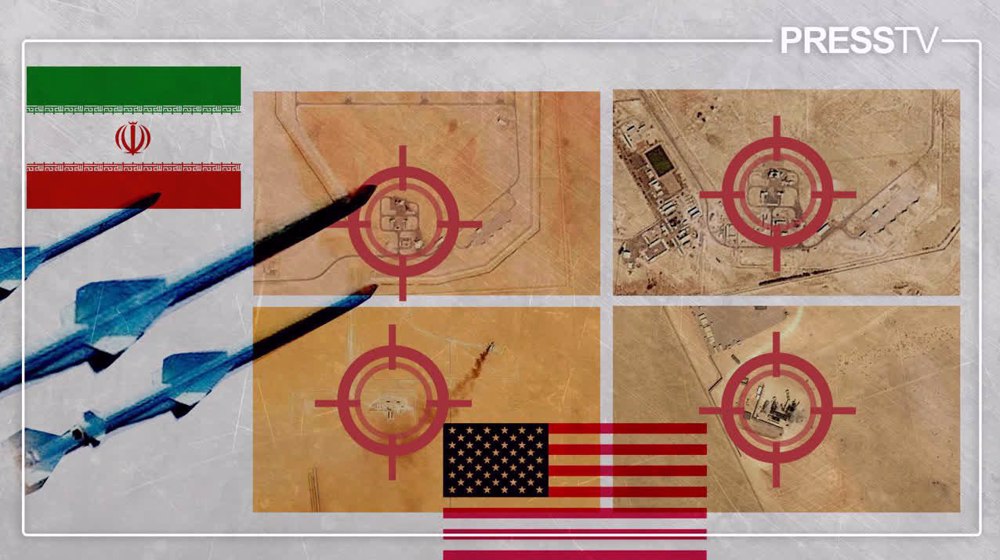
In the first week of the US-Israeli aggression on Iran, the Islamic Revolution Guards Corps (IRGC) conducted a series of precision strikes that systematically degraded the much-hyped US integrated air and missile defense architecture across the region.
The strikes destroyed or severely damaged at least two AN/TPY-2 THAAD radars, a billion-dollar early-warning radar installation in Qatar, multiple supporting sensor nodes, and critical communications infrastructure.
Executed in a coordinated sequence of precision engagements, Iranian retaliatory operations under the banner ‘True Promise 4’ have significantly disrupted the regional defensive network and forced US commanders to urgently reassess and reconstitute capabilities that took two decades and tens of billions of dollars to deploy.
The scale and sophistication of the Iranian operation mark a significant moment in contemporary warfare, demonstrating that even highly advanced missile defense systems, often presented as near-impenetrable shields, remain vulnerable to determined adversaries equipped with precision guidance, reliable intelligence, and an operational doctrine focused on disabling the core command, sensor, and communications nodes of defensive networks.
As commercial satellite imagery continues to emerge from across the region, the extent of the damage is becoming increasingly difficult to conceal, revealing substantial operational setbacks that raise serious questions about the resilience of the defensive architecture underpinning American force posture from the Persian Gulf to the Korean Peninsula.
The targeting doctrine evident in the strikes reflects years of detailed analysis and planning, with Iranian strategists identifying critical nodes and developing the capability to strike them simultaneously across a wide geographic area.
The coordinated targeting of early-warning radars, fire-control radars, communications infrastructure, and supporting facilities demonstrates a systemic approach to warfare rarely executed at such scale, focusing on neutralizing the command-and-control backbone of the defensive network rather than peripheral elements.
[…]
Heart of the beast: Understanding AN/TPY-2 radar’s critical role
The AN/TPY-2 transportable radar represents the technological centerpiece of the Terminal High Altitude Area Defense (THAAD) system. This massive X-band active electronically scanned array (AESA) radar consumes roughly two megawatts of power and is distributed across five forty-foot trailers.
With an antenna area of 9.2 square meters and an instrumental range exceeding 2,000 kilometers in forward-based mode, the radar functions as the primary sensor of the entire THAAD battery. Without it, the launchers and their 48 interceptors are effectively rendered inoperative, deprived of the detection and tracking data required for engagement.
Manufactured by Raytheon using gallium nitride technology, each AN/TPY-2 radar carries an estimated cost ranging from $500 million to $1 billion. Since development began in the 1990s, only about twenty units have been produced worldwide.
[…]
Jordan: The first thousand-kilometer precision strike
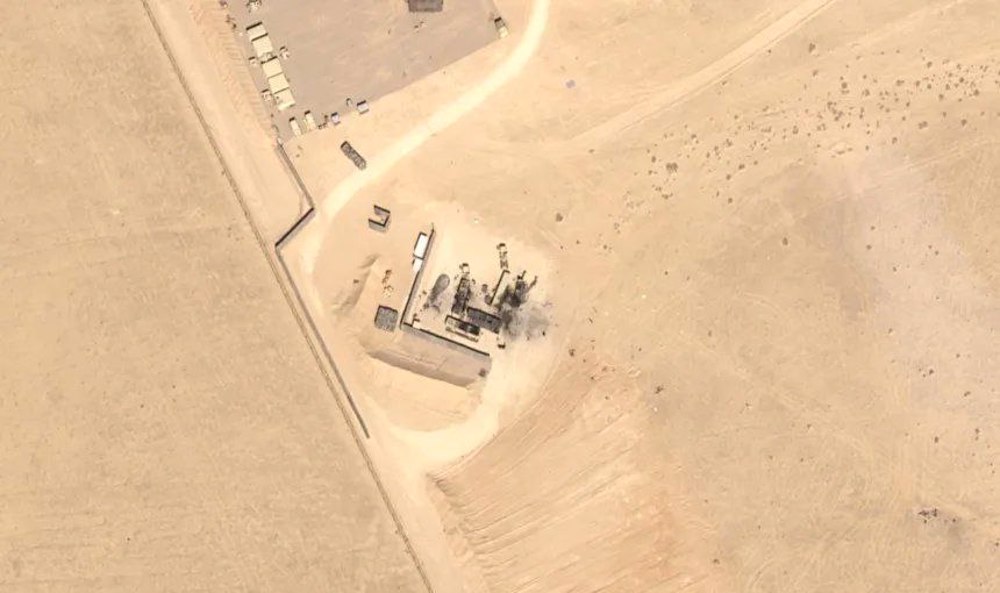
At Muwaffaq Salti Air Base in Jordan, located more than 800 kilometers from the nearest Iranian territory, satellite imagery captured on March 2 reveals the charred remains of an AN/TPY-2 radar that had reportedly been deployed at the base since at least mid-February.
The imagery shows debris scattered across the deployment site, surrounding what appears to have been a fully assembled radar system. Two large impact craters, each roughly thirteen feet in diameter, are visible in the sand nearby, suggesting that multiple precision munitions were employed to ensure the destruction of the system.
Prior to the escalation of hostilities, the base had served as a major hub for American air operations, with more than fifty fighter aircraft visible on the tarmac in pre-war satellite imagery.
The deployment of a THAAD battery at the site fulfilled two key operational objectives: protecting the concentration of air assets from potential ballistic missile threats and extending a defensive coverage umbrella toward Israeli territory.
[…]
United Arab Emirates: Systematic elimination of terminal defenses
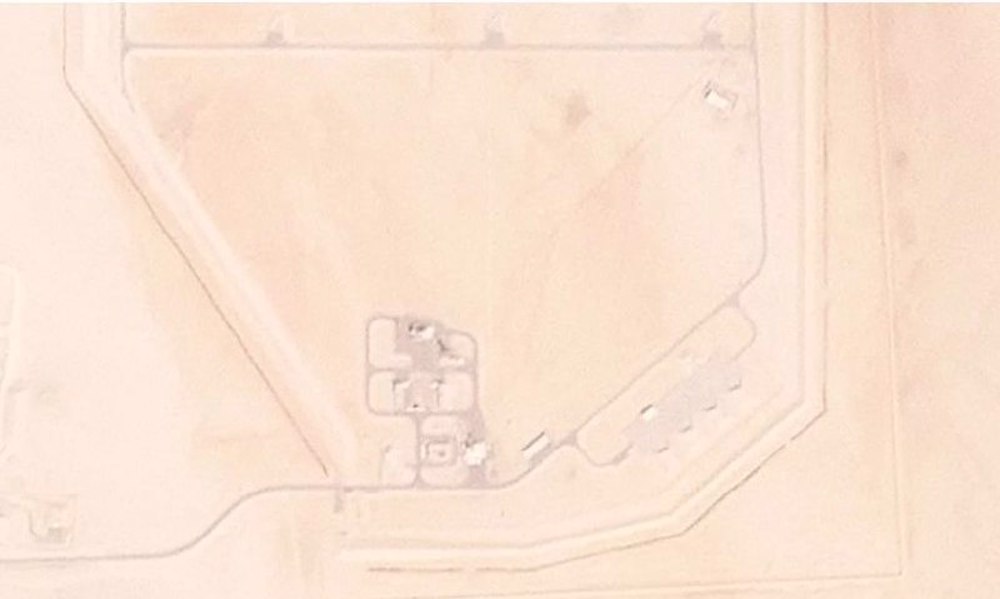
The Al Ruwais facility in the United Arab Emirates, positioned to protect critical energy infrastructure along the Persian Gulf coast, suffered near-simultaneous strikes against both its THAAD radar and the supporting infrastructure that housed the system.
Satellite imagery from March 1, the second day of the war that was imposed on Iran, shows dark markings from apparent strikes on three buildings, including a pull-through vehicle shed specifically designed to shelter the radar system.
The pattern of damage suggests Iranian planners understood not only where the radar would be positioned when active but also where it would be maintained and stored.
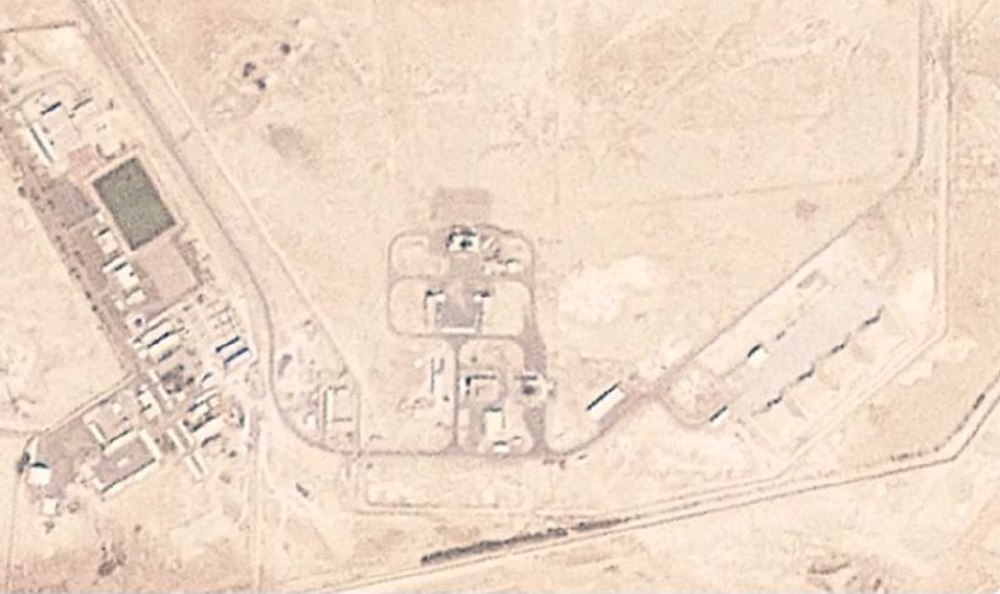
At a second UAE installation near Al Sader, satellite imagery reveals an almost identical strike pattern with four buildings damaged, including multiple vehicle sheds configured for radar storage.
[…]
Commercial imagery providers captured before and after images that leave little doubt about the severity of the damage, with burned equipment visible at the precise locations where radar components had been regularly observed.
Qatar: Billion-dollar early warning backbone destroyed
The destruction of the AN/FPS-132 Block 5 Upgraded Early Warning Radar at Umm Dahal in Qatar represents perhaps the single most expensive individual loss of the campaign, with that system alone costing approximately one point one billion dollars when installed in 2013.
[…]
The Qatari Ministry of Defence’s rare public confirmation of the radar’s destruction carries strategic significance beyond the military impact, as host-nation acknowledgment forecloses any possibility of concealing the loss and signals to regional allies that American assurances of protective capability may no longer carry their former weight.
[…]
Saudi Arabia: Smoke rising from Prince Sultan Air Base
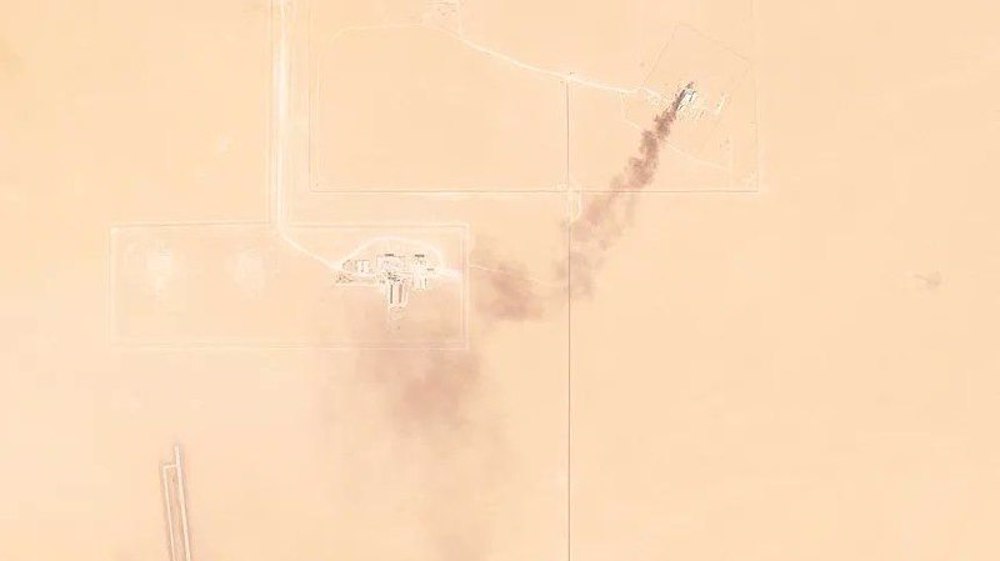
At a site near Prince Sultan Air Base in Al Kharj, Saudi Arabia, satellite imagery captured on March 1 shows smoke rising from a compound where a THAAD radar had been previously positioned, with a tent used to shelter the antenna unit showing extensive charring and debris scattered across the surrounding area.
Imagery from January had shown the radar antenna pointed northeast toward Iran in its operational configuration, suggesting the site was fully functional when struck.
[…]
Kuwait: Communications infrastructure and radar domes destroyed
The strikes extended beyond the core missile defense sensors to target the communications infrastructure that enables these systems to function as an integrated network.
At Arifjan base in Kuwait, satellite imagery confirms the destruction of three radomes, the protective spherical structures housing satellite communications antennas that provide the data links connecting distributed sensors to command nodes.
Eight additional buildings related to satellite communications infrastructure were destroyed at separate locations in Kuwait, representing a systematic effort to attack the network backbone.
The AN/GSC-52B radars destroyed in Bahrain represent another category of communications and surveillance assets, providing both satellite communications connectivity and contributing to the space surveillance network.
[…]
Strategic calculus: Twenty years of investment destroyed in seven days
The development of the THAAD system began in 1992, with the US Army finally fielding the first operational batteries in April 2012. The journey from initial concept to deployable capability required approximately twenty years and tens of billions of dollars.
[…]
Each unit requires years to manufacture, and the destruction of multiple units simultaneously creates a capability gap that cannot be quickly filled.
The financial losses are staggering. Individual AN/TPY-2 radars cost between five hundred million and one billion dollars. The AN/FPS-132 early warning radar cost approximately one point one billion dollars.
The AN/GSC-52B radars, the radomes, the communications buildings, and support infrastructure add hundreds of millions more.
[…]
Tactical paralysis: The loss means for current operations
The immediate tactical consequence is the effective paralysis of multiple THAAD batteries that now sit blind on their launch positions. Without the AN/TPY-2 radar providing tracking data and fire control solutions, the launchers and their forty-eight interceptors per battery cannot engage incoming threats.
The interceptors themselves, each costing approximately thirteen million dollars, cannot be employed without the radar’s guidance.
[…]
Aegis warships must now rely solely on their own SPY radar systems. The integrated battle management system now resembles disconnected nodes fighting local engagements without a common operating picture.
The psychological impact cannot be overstated. Soldiers assured that the most advanced missile defense systems would protect them, but now find their protective shield penetrated repeatedly.
The sight of satellite imagery showing the blackened remains of billion-dollar systems creates a perception of vulnerability that no amount of official reassurance can counter.
Global implications: South Korea, Guam, and the strategic reserve dilemma
The destruction of multiple THAAD systems in West Asia has immediate implications for American force posture worldwide, particularly in the Indo-Pacific, where North Korea’s advancing missile program has long justified THAAD deployment.
Reports that Washington is considering relocating THAAD and Patriot systems from South Korea to West Asia reflect the severity of the capability gap.
The THAAD battery in Seongju, South Korea, represents not merely a defensive asset but a political commitment that has survived years of diplomatic tension with China.
Removing it would signal a shift in American priorities, potentially encouraging North Korea to react. Guam, home to another THAAD battery protecting critical American bases, would face similar exposure if its systems were stripped.
The interceptor stockpile faces equally severe pressure. The expenditure of approximately thirty percent of the total THAAD interceptor inventory in a twelve-day aggression in June 2025 demonstrated how quickly these scarce resources can be consumed.
With production capacity limited to approximately eleven to twelve interceptors annually, reconstituting inventory will require years.
Technology question: What Iranian precision reveals about US vulnerabilities
The successful destruction of hardened, defended targets across distances exceeding 800 kilometers reveals Iranian technological capabilities that many Western analysts had previously dismissed.
The terminal guidance required to place a warhead within meters of a specific radar antenna reflects maturation in seeker technology and potentially man-in-the-loop targeting.
The strikes also reveal sophisticated intelligence collection operating for years beneath the threshold of detection, building detailed targeting folders on facilities across multiple countries.
The symmetry between strikes in different countries suggests a targeting process that understood standardized American configurations.
The electronic warfare dimension likely played a critical role in enabling strikes to penetrate defended airspace.
The fact that no Iranian missiles or drones were intercepted before reaching targets across four countries suggests either that defenses were neutralized electronically or that the volume and coordination overwhelmed engagement capabilities.
Production constraints: Why replacement takes years, not weeks
The industrial base that produces AN/TPY-2 radars operates on peacetime assumptions, with production lines sized to meet gradual replacement requirements rather than the surge demands of major conflict.
The supply chain for specialized components extends across multiple states and countries, with some materials sourced from single suppliers operating at limited capacity.
Even with emergency funding, the time required to produce a single AN/TPY-2 radar cannot be compressed below physical limits.
The most optimistic assessments place replacement timelines in the range of three to five years for a single unit.
The radars destroyed in the first week of March 2026 will not return to the operational inventory until late in the decade at the earliest.
Regional power shift: The new strategic reality
The destruction of America’s premier missile defense assets across four countries fundamentally alters the strategic calculus in West Asia, shifting the initiative decisively toward Tehran.
Iranian military planners who previously had to calculate interception probabilities now face a dramatically reduced defensive threat, enabling expanded targeting options with reduced risk.
Persian Gulf Cooperation Council states that have invested billions in American missile defense now face uncomfortable questions about the wisdom of those investments.
If billion-dollar radars can be destroyed by missiles costing a fraction of that amount, the entire foundation of the Persian Gulf defense relationship requires reexamination.
For the Israeli regime, which has integrated its Arrow and David’s Sling systems with American sensors, the loss of THAAD coverage in Jordan represents a direct blow.
The anti-missile umbrella that previously extended from the Persian Gulf to the Mediterranean now has a gap in its center.
Fiasco verdict: Why two lost radars mean total system failure
Military analysts have begun using language rarely applied to American systems, with experts noting that the loss of a single AN/TPY-2 radar represents an event of significant operational importance while the loss of two constitutes a total fiasco.
The gap between what THAAD was supposed to accomplish and what it achieved against Iranian precision strikes could hardly be wider.
[…]







 The Most Revolutionary Act