The Most Revolutionary Act

Uncensored updates on world events, economics, the environment and medicine

The Most Revolutionary Act
Unknown's avatar

About stuartbramhall

Retired child and adolescent psychiatrist and American expatriate in New Zealand. In 2002, I made the difficult decision to close my 25-year Seattle practice after 15 years of covert FBI harassment. I describe the unrelenting phone harassment, illegal break-ins and six attempts on my life in my 2010 book The Most Revolutionary Act: Memoir of an American Refugee.

The Great Mongol Conqueror Ghenghis Khan Arrives on the Steppes

Episode 25: The Mongols

Barbarian Empires of the Steppes (2014)

Dr Kenneth Harl

Film Review

This lecture concerns the background and history of Genghis Khan, the powerful Mongol conqueror. According to Harl, The Secret History of the Mongols, written in 1227, is currently one of the most reliable historical sources.

Prior to the birth of Genghis Khan’s in 1162, the steppes tribes were constantly at war. The Mongols derived from the Tatar* tribes, considered the most powerful on the steppes. With 70,000 warriors, they engaged in silk trade with both the Song and Jin Empires.

Harl is an open admirer of Temujin (who later became Genghis Khan), who he regards as a military genius with “remarkable sons and brilliant grandsons.” Temujin’s generosity, daring and bravery (even when wounded) inspired fierce loyalty among his warriors. Although he lived a simple life (in a tent), he retained huge harems of conquered brides.

Regarded as a favorite of Tengri (the Mongol’s universal sky god), Temufin’s basic strategy was to terrorize his rivals into submission by committing mass atrocities – often killing every living being in the cities he conquered.

After clan leaders poisoned his father, Temujin and his mother and brothers  were forced starving into into the forest by his father’s Tatar enemies. The ruler of the Keraites Federation (a minor Turkic steppes tribe), took Temujin in and became his mentor. In the 1190s, Temujin assembled his first army to attack neighboring Tatar tribes who had kidnapped his wife.

His major massacre of his Tatar enemies in 1206 would cement his control of the steppes, eventually leading to unification of all the steppes tribes. An assembly of all steppes nomad princes met that year and proclaimed him Genghis Khan (“universal ruler”).


*The term Tatars refers to a diverse Turkic ethnic groups involved in the Tatar Confederation, one of the five major 12th century confederations on the Mongolian plateau.

Film can be viewed free with library card on Kanopy.

https://www.kanopy.com/en/pukeariki/video/5694984/5695041

Is a Colonoscopy Worth the Risk?

Colonoscopy - Wikipedia

Dr Mercola

Story at a Glance:

  • Based on the evidence, an international team of experts is recommending routine colonoscopies only if you have a 3% potential of developing a growth in the next 15 years. If it is less, then the pitfalls associated with the procedure are not worth the risks
  • One study found a 17% risk of a missed cancer diagnosis with a colonoscopy. Other risks include perforation of the colon, which is raised when you have anesthesia with the procedure, gut microbial imbalance from preparation for the procedure, equipment contamination from improper sterilization between patients and death from complications
  • David Lewis, Ph.D., states that up to 80% of hospitals sterilize their endoscopes with glutaraldehyde (Cidex), which exacerbates the issue by preserving human tissue in the endoscope picked up during the procedure. The best method of sterilizing the equipment to date is peracetic acid, which will dissolve protein tissue and clear the endoscope
  • You may significantly reduce your risk of colorectal cancer by making lifestyle changes, including reducing or eliminating alcohol and smoking, maintaining a normal weight, eating a high fiber diet and exercising consistently

Knowing your potential risk for developing cancer can help you weigh the risks against the benefits of different tests for your situation. According to the American Cancer Society,1 more than 16.9 million people in the U.S. have a history of cancer. At least 1.9 million new cases will be diagnosed in 2022, which does not include a diagnosis of carcinoma in situ (noninvasive cancer).

The society estimates 609,360 people will die from cancer in 2022, which is about 1,670 deaths per day. The four most common types include lung, breast, prostate and colorectal cancer. One of the screening tests commonly prescribed to rule out colorectal cancer is a colonoscopy.

Colorectal cancer can start in the colon or in the rectum but the two types are grouped together since they have many of the same characteristics.2 The society estimates that in 2022 there will be 106,180 new cases of colon cancer diagnosed and 44,850 new cases of rectal cancer. Although it remains the third leading cause of cancer-related deaths in men and women, the rate has been dropping for several decades.3

According to the Colorectal Cancer Alliance,4 the five-year survival rate has been rising and there are more than 1 million colorectal cancer survivors alive in the U.S. Knowing your risk factors and making lifestyle changes to prevent the development of colorectal cancer are the basis of the most recently published Rapid Recommendation of The BMJ initiative.5

In Many Cases Routine Colonoscopies Are Unnecessary

The 2019 practice guidelines published in The BMJ6 recommend physicians use a tool to estimate an individual’s potential risk for developing colorectal cancer in the next 15 years. The team recommends that only those who have a risk of 3% or greater should undergo screening tests.

Current guidelines recommend screening for everyone over the age of 50, without regard to their individual risk. At the age of 50, this is typically less than 3%.7 The international panel reviewed scientific evidence and research data to evaluate the risks versus the benefits of colonoscopies.

They found their recommendations could accurately be applied to healthy people from 50 to 79 years who expected to live another 15 years. The Centers for Disease Control and Prevention recommends colorectal cancer screening for those over 50.8

Using data from across the U.S., they found the number who were up to date with their screening went up 1.4% from 2016 to 2018, representing an additional 3.5 million people.

In addition to asking if screening made a difference in health outcomes, The BMJ initiative team also attempted to differentiate the type of testing best used to screen for colorectal cancer.9 They recommended that those with a 3% risk or greater over the following 15 years could choose from one of four screening options.

The first was a fecal immunochemical test (FIT) done every year, or every two years depending upon their risk factors. Patients may also choose a single sigmoidoscopy or, the weakest recommendation from the team, a single colonoscopy.

Possibility of Cancer Compared to Screening Hazards

From their examination of the evidence, the team believed a yearly FIT, sigmoidoscopy or colonoscopy could reduce the incidence of cancer while a FIT every two years may not have an effect on incidence over 15 years. They wrote:

“Based on benefits, harms, and burdens of screening, the panel inferred that most informed individuals with a 15-year risk of colorectal cancer of 3% or higher are likely to choose screening, and most individuals with a risk of below 3% are likely to decline screening. Given varying values and preferences, optimal care will require shared decision making.”

The team determined that the risks associated with colorectal cancer screening outweighed the benefits in many cases. For instance, the risk of death from a colonoscopy from one source was 1 in 16,318 procedures evaluated.10 In the same analysis, the researchers also found 82 suffered serious complications.

Colonoscopies Are Not Risk Free

Although a colonoscopy is supposed to help find early tumor growth, one study reported a 17% rate of missed diagnosis.11 Other risks associated with a colonoscopy include worsening stool patterns and contributing to the growth of colorectal polyps or tumors.

Perforation of the colon during the exam has an incidence of 0.2% to 5% and is widely recognized as a serious complication associated with a high morbidity and mortality rate.12 The risk of perforation rises with the age of the patient and the presence of two or more other health conditions. One study showed 51.9 people per 1,000 whose colons were perforated died within the first 14 days.13

Dysbiosis may occur after using harsh laxatives to prepare for a colonoscopy. A study published in Cell14 suggested even a short-term course of laxative use could trigger an immune response. Research on an animal model15 found treatment eliminated one family of beneficial gut bacteria and allowed another to flourish. Even two weeks after completing the laxatives the bacteria showed reduced diversity.

Many experts agree you should opt for the lightest level of sedation possible, or none at all, as full anesthesia increases risks. Those who have sleep apnea, are obese, have high blood pressure or diabetes are at increased risk from the anesthesia.16 Across the U.S. 34.4% of those undergoing a colonoscopy used anesthesia.17

The use of anesthesia was associated with a 13% increased risk of experiencing complications within 30 days of the procedure and specifically associated with an increased risk of perforations of the colon and/or a stroke. The risk of complications varied by area, with those in the Northeast reporting an increase of any complication of 12%, but among those performed in the West this increased to 60%.

[…]

Via https://articles.mercola.com/sites/articles/archive/2022/07/07/is-colonoscopy-worth-the-risk.aspx

Army Cuts 60,000 Unvaccinated Guard and Reserve Soldiers From Training and Pay as COVID Vaccine Mandate Deadline Passes

By  Megan Redshaw

The Army confirmed on July 1 that tens of thousands of military Guard and Reserve soldiers can no longer participate in training or receive benefits, as Army faces recruiting crisis.

About 60,000 Army National Guard members and Army Reserve soldiers who refused to comply with a Department of Defense (DOD) COVID-19 vaccine mandate are no longer allowed to participate in their military duties and were cut off from some of their pay and benefits, Army officials announced July 1.

Of the more than 40,000 members of the Guard who remain unvaccinated, 14,000 have said they do not intend to ever receive a COVID-19 vaccine, Guard officials told CBS News.

Approximately 22,000 Reserve soldiers have refused to get vaccinated.

“Soldiers who refuse the vaccination order without an approved or pending exemption request are subject to adverse administrative actions, including flags, bars to service and official reprimands,” an Army spokesperson said in a statement.

If the soldiers continue to refuse to get vaccinated, the consequences could be even more severe.

“In the future, Soldiers who continue to refuse the vaccination order without an exemption may be subject to additional adverse administrative action, including separation,” the Army spokesperson said.

Despite the military’s deadline, the services said they wish to continue to work with the remaining holdouts as commanders face increased anger from critics concerned over a recruiting crisis that has left Defense Department officials struggling to fill the ranks.

According to Rep. Mike Johnson (R-LA), the Army is having “significant trouble filling its ranks” while simultaneously discharging soldiers who refuse to get vaccinated.

As of mid-April, the Army had “discharged 255 soldiers for refusing the COVID-19 vaccine and is on track to give another 2,500 to 3,000 the boot before the end of the year — a number roughly equivalent to two or three Army battalions,” Johnson wrote on his website.

Six Army officers, including two battalion commanders, have been relieved of command, while 3,330 active-duty soldiers have been issued written reprimands for refusing to get vaccinated.

“The Army priority remains vaccinating all soldiers to maintain readiness. In determining this policy, Army leaders considered the unique realities of each component,” Reserve spokesman John Bradley told U.S. News & World Report.

“Reserve component commanders are working through a deliberate process in as few as two days per month with geographically dispersed Soldiers to ensure they become fully vaccinated.”

Soldiers will be allowed to come on duty and earn their pay if it’s for the purpose of getting vaccinated or to take part in separation procedures. Part-time soldiers with a pending medical or religious exemption request may train with their units and collect pay and benefits, but exemptions are not being approved.

To date, only six Guard soldiers across all states and territories have received medical exemptions out of 53 who submitted requests, according to Army data. No Reserve soldiers have received a medical exemption.

No Guard or Reserve soldiers have been approved for a religious exemption despite nearly 3,000 requests.

The Army National Guard and Army Reserve deadline to receive the COVID-19 vaccine was June 30 — the final deadline among all the service branches subject to Secretary of Defense Lloyd Austin’s mandate issued last August.

As of July 1, 13% of the Army National Guard and 12% of the Army Reserve are unvaccinated.

According to internal documents shared with The Defender, 280,678 Army National Guard members are fully vaccinated (84.6%), and 7,735 have received one dose (2.3%) leaving 43,269 (13%), who have not yet received a single dose.

In some states, such as Oklahoma, the vaccination rate for Guard members is as low as 74.11%.

The document lists 15,698 members as “refusals” and 6,749 (2.0%) as going through an exemption process — with 6,257 (1.9%) requesting a religious exemption and 492 (0.1%) requesting a medical exemption.

The document also notes that 80% of unvaccinated Guard members are age 32 or younger, with an average age of 26.2 and median age of 24.

According to CBS News, vaccine compliance among Army National Guard members is the lowest in the U.S. military — the rate among active-duty Army, Navy, Air Force and Marine Corps is 97% or greater and the Air Guard uptake is about 94%.

[…]

Via https://childrenshealthdefense.org/defender/army-national-guard-reserve-soldiers-covid-vaccine-mandate/

Syrian Troops and Civilians Chase Away US Occupation Convoy in Hasakah

By The Cradle

Global Research, July 06, 2022

Discontent against the illegal presence of US troops in Syria is growing, as the US continues to steal Syria’s natural resources and provide training for extremist armed groups

The Syrian Arab Army (SAA), along with local citizens from the village of Al-Mujaibara, have expelled a US army convoy that tried to break into an area under the control of the Syrian government in the northeastern Hasakah governorate.

According to local sources, a US convoy of five vehicles made an attempt to cross through the village towards one of its bases in the countryside of Hasakah on 5 July. It was intercepted by locals and SAA troops, who forced the occupation troops to turn tail.

On the same day, several protests were reported in the villages of Yusufiya and Al-Junaidah in Rmelan, Hasakah, with locals blocking roads and chanting slogans against the US-backed Syrian Democratic Forces (SDF).

This is the second time in the span of a week that Syrian troops intercept US occupation forces, as another US convoy on 1 July was stopped as it tried to make its way through the village of Qabur al-Granja in the Qamishli area.

Discontent has been growing against the US army and its proxy militias across Syria, with many protests taking place over the past year.

Tuesday’s events came just one day after a large missile strike reportedly targeted a US occupation base in Deir Ezzor governorate.

Hours before the attack, a US convoy consisting of 55 tanker trucks smuggled stolen oil from Hasakah to the Kurdish region of northern Iraq.

Hundreds of trucks filled with Syrian wheat and oil have been smuggled out of the war-torn country over the past 18 months alone, forcing Damascus to rely on the solidarity of regional powers to fulfill its needs.

The presence of US forces in Syria is illegal under international law, as troop deployment in the war-torn country was implemented without the consent of Damascus or the UN.

Earlier this year, The Cradle reported that US forces transferred dozens of ISIS detainees, including high-ranking commanders, to Deir Ezzor governorate, close to the Iraqi border.

This was reportedly an attempt to ‘revive ISIS’ for the purposes of destabilizing a region that had recently been liberated by the SAA, with the help of Russian troops.

A recent report also suggests that the CIA is actively working to recruit ISIS militants imprisoned by the SDF in northeast Syria to join the fight against the Russian army in Ukraine.

[…]

Via https://www.globalresearch.ca/syrian-troops-civilians-chase-away-us-occupation-convoy-hasakah/5785790

“I’m done with the left-right divide. It’s now humans vs the deadly robotic corporate state”

Winter Oak

Keith McHenry of Food Not Bombs is interviewed by Paul Cudenec

Paul Cudenec: Thanks very much for agreeing to this exchange, Keith. It is very encouraging to know that in this age of near-universal deceit and hypocrisy, there are still individuals out there who stand true to their values. First of all, I gather you have a proud family history of fighting for freedom, going back to the American struggle for independence from Britain?

Keith McHenry: Thanks Paul, at this point there is nothing more important than resisting this rush to the totalitarian police state. Our liberty, humanity and connection to the natural world is at stake and we don’t have much time to stop this catastrophe. Events grow more dire every day so, by the time people read this, the devastation of war, censorship, famine and digital slavery may be so severe many in our audience are likely to feel hopeless, but hang in there! This could be a transformation even larger than that of the American Revolution.

Yes, the first member of my family to arrive in North America was a young James McHenry who stepped onto the docks at Philadelphia in 1773. I grew up knowing that he had been on George Washington’s staff during the war.

[…]

On the other hand I had a grandfather who dedicated his life to defending corporate power. My mother’s father volunteered to join the Office of Strategic Services, the precursor of the US-CIA. He directed the globe’s most deadly bombing campaign, burning as many a million civilians to death in Tokyo in Operation Meeting House. When I was a child I watched him argue over the phone with his military friends Robert McNamara and Curtis LeMay demanding they drop the nuclear bomb on Hanoi as he swaggered around his office surrounded by photos of his raids on the Japanese city.

[..]

PC: It took me quite a while, as a young man, to find my way to anarchism, but I understand you got there at a very early age! How did that happen?

KM: My first step in my evolution to adopting the ideas of anarchism really started in the ancient Hopi village of Old Oribi in what is now Arizona. My father’s father had lived with the Hopis during the Great Depression, becoming friends with the elders of the 2,000 year old stone pueblo. I was witness to the Snake Dance where young men held rattlesnakes in their mouths as the community watched from the roof tops above the dusty plaza. Large drums roared at one end. At the end of the dance, the boys who had just become men handed food to their audience who, like me and my family, were perched on the mudded roofs of the rock homes surrounding the dance floor. This was before electricity had arrived in these majestic lands.

[…]

A few years later when my father was a ranger stationed at Shenandoah National Park in Virginia he gave me a copy of “Walden” by Henry David Thoreau. I had just learned to read so I started with the shorter essay in the back of the paperback called “On Civil Disobedience” and that snippet of inspiring text, “I heartily accept the motto, ‘That government is best which governs least’; and I should like to see it acted up to more rapidly and systematically” changed me.

I read that life-changing text when I was in the fifth grade. The Vietnam War was raging. Like many American families we ate dinner while watching the chilling images of the bloody conflict in Southeast Asia with those body count numbers on the evening news. My mother’s brother who I adored was eager to join in the tragedy as a paratrooper. He was spared that horror because he contracted hepatitis in basic training and was hospitalized. The failure to live and die in the jungles as a hero doomed him to a life of self-hate.

[…]

I lived in the racially segregated town of Luray, Virginia at a time when “colored only” and “whites only” signs were sold at the local Five and Ten shop on Main Street. The murder of Martin Luther King Jr and the riots that followed was another influence that made Thoreau’s night in jail as a tax resister have relevance. Our family happened to head out on a vacation from our home, passing a burning Washington DC and Baltimore and a journey through the black neighborhood of Philadelphia under military occupation. Tanks, gatling guns and helmeted soldiers armed with M-16s and angry German shepherds made an impression. Smoke from the uprising filled our hotel room that evening.

So when I read Thoreau’s argument in his lecture “On Civil Disobedience”, explaining that he had refused to pay his poll tax because he would not contribute to the funding of the Mexican war and a slave state, I saw the similarities to my own time and adopted core aspects of his philosophy.

When I was 14 years old I took my first job cleaning an art gallery. I recall being so happy that I had joined the fellowship of working Americans as I sat on a step of the building across the street eating my first lunch of peanut butter and jelly sandwich. That was also the moment I vowed to never pay for war and started my journey as a tax resister and free person untethered to the state. I was also determined to create my own version of Thoreau’s Concord of seekers. Food Not Bombs became my global Concord. I would cast off the use of my Social Security number after my first arrest when I was 18 years old and lived free from the clutches of the State.

PC: Could you say a little bit about Food for Bombs, how that came about and what it aimed, and indeed aims, to do?

KM: Food Not Bombs is a global all-volunteer movement that protests war and poverty by taking direct action. Our people share the gift of food with anyone, without restrictions, while reclaiming the public commons. We are independent of state and corporate power. Our activists recover food that can’t be sold from groceries, bakeries, farms and distributors, prepare vegan or vegetarian meals that are shared on the streets behind the banner of Food Not Bombs.

Our main goal besides meeting the needs of the poor is to influence the public to take action to force the state to redirect our resources from the military to provide access to healthy food, safe housing, education and healthcare. We are a classroom that practices the philosophy of anarchism without the dogma of the fashion anarchist.

[…]

Via https://winteroak.org.uk/2022/07/01/i-am-done-with-the-left-right-divide-its-now-the-humans-versus-the-deadly-robotic-corporate-state/

Pfizer Withdraws from Uruguay After Government Demands Company Disclose Contents of Vaccine

Judge Recarey demanded to know if the “so-called vaccines” contain nanotechnological elements

Tales from the Conspiratum

Uruguayan judge demands explanations regarding Pfizer’s COVID-19 vax

An Uruguayan court has ruled that the national government and the laboratory Pfizer must disclose during a hearing this coming Wednesday the exact components of the COVID-19 vaccine of that brand which is widely used throughout the country.

The Uruguayan government and the pharmaceutical were given 48 hours by Judge Alejandro Recarey to submit detailed information on the anticovid vaccines while dealing with an injunction request to halt vaccination among children aged 5 and over which is nevertheless carried out voluntarily.

As per the court’s decision, the Executive and the U.S. laboratory will have to provide documentation on the composition of the vaccines, including the possible presence of “graphene oxide” or “nanotechnological elements,” it was reported.

Also requested are data demonstrating the “innocuousness” of “the substance called messenger RNA” and that “the experimental nature” of the vaccines be accredited.

The judge also demanded explanations as to whether studies have been carried out “to explain the notorious increase in deaths due to covid-19 as of March 2021 in relation to the previous year.”

Pfizer will also have to address the issue “of adverse effects of the vaccines against the so-called Covid-19. In general, and also in detail in relation to the child population,” according to the court document.

Representatives of the Uruguayan Presidency and the Health Ministry as well as from the US pharmaceutical company are to appear at Wednesday’s hearing.

The Uruguayan Ministry of Public Health, the State Health Services Administration, and the Presidency have also been required to submit all the information regarding the contract for the purchase of vaccines, where the clauses of civil indemnity or criminal impunity of the suppliers in the event of adverse effects are to be examined.

Via https://talesfromtheloublog.wordpress.com/2022/07/06/uruguay-demanded-pfizer-state-if-graphene-oxide-was-in-the-jab-and-what-else-is-in-it-pfizer-withdraws-from-uruguay/

Will Pfizer Be Charged for Mislabeling Vaccine Side Effects?

What are the side effects of the Pfizer vaccine?

Aletho News

By Dr. Joseph Mercola | July 5, 2022

As the U.S. Food and Drug Administration continues to release Pfizer’s clinical trial documentation,1 we’re finding more and more evidence that very little has been done on the up-and-up, and the COVID jab trials may be among the most fraudulent in medical history.

Can All Serious Adverse Effects Be Written Off?

Importantly, Pfizer classified almost all severe adverse events that occurred during its Phase 3 trials as unrelated to the injection. As reported by The Defender, June 21, 2022:2

“The latest release by the U.S. Food and Drug Administration (FDA) of Pfizer-BioNTech COVID-19 vaccine documents reveals numerous instances of participants who sustained severe adverse events during Phase 3 trials. Some of these participants withdrew from the trials, some were dropped and some died.

The 80,000-page document cache includes an extensive set of Case Report Forms (CRFs) from Pfizer Phase 3 trials conducted at various locations in the U.S., in addition to other documentation pertaining to participants in Pfizer-BioNTech vaccine trials in the U.S. and worldwide …

The CRFs included in this month’s documents contain often vague explanations of the specific symptoms experienced by the trial participants. They also reveal a trend of classifying almost all adverse events — and in particular severe adverse events (SAEs) — as being ‘not related’ to the vaccine.”

The Defender article includes 11 examples3 of trial participants who experienced severe adverse effects that were classified as “unrelated” to the experimental gene transfer technology they’d received just days or weeks earlier.

A 2,566-page document4 catalogues the serious adverse events and six deaths that occurred during the trial. These events were all classified as “toxicity level 4,” which is the most serious, yet none of them were deemed related to the injection.

This simply isn’t believable. It’s completely unrealistic, especially when serious events occur in multiple participants. A handful of examples of Level 4 adverse events listed in this document — all of which were written off as “not related” to the mRNA injection — include:5

  • Acute respiratory failure
  • Cardiac arrest
  • Brain abscess
  • Adrenal carcinoma (adrenal cancer)
  • Chronic myeloid leukemia (blood and bone marrow cancer)

The six deaths reported were listed as being caused by arteriosclerosis, cardiac arrest, hemorrhagic stroke and myocardial infarction.6 Many participants also dropped out or were excluded from the trial due to serious side effects involving the heart, cardiovascular system, cancer, stroke, hemorrhage and neurological impacts.

Examples of Level 3 Adverse Events

Most Level 3 adverse events were also dismissed as unrelated to the shot. As reported by The Defender, only a “small number” were listed as being related to the injection. Examples of Level 3 side effects include:7

  • Deafness/hearing loss
  • Tachycardia (disruption of the normal electrical impulses that control your heart rate — the very problem that underlies most cases of “sudden adult death syndrome” or SADS)
  • Ventricular arrhythmia (abnormal heart rhythm that makes the lower chambers twitch rather than pump — another underlying cause of SADS)
  • Neutropenia (low neutrophil level in your blood; neutrophils are a type of white blood cell made by your bone marrow that fight infections by destroying viruses and bacteria)
  • Vertigo

45% Experienced One or More Adverse Events

Another document8 that raises suspicions of bias is one admitting that “40% to 45% of participants who received BNT162b1 and BNT162b2 across age groups and across dose levels reported one or more AEs [adverse events] from Dose 1 through 28 days (i.e., 1 month) after Dose 2.”

BNT162b2 was the candidate injection that went on to receive Emergency Use Authorization (EUA) from the FDA. Among those who got the highest dose (30 micrograms) of BNT162b2, 50% of younger participants 25% in the older age group reported one or more adverse events.

The most common adverse events were nervous system disorders, followed by musculoskeletal and connective tissue disorders. Yet despite high rates of side effects across dose levels, this document also insists that “most AEs were considered by the investigator as not related to study intervention.”

During the open-label period of the study, 12,006 participants were followed for a minimum of six months, and among those, 28.8% reported at least one adverse event at some point during that follow-up, and 2.1% reported one or more severe adverse events.

Incidence Rate in Treatment Group FAR Higher Than Placebo

As reported by The Defender :9

“The review provides data for participants from dose 3 … to the data cutoff date. The severe adverse event incidence rate (IR) was 6.0 per 100 PY (patient-years), with specific conditions reported including pulmonary embolisms, thrombosis, urticaria, a cerebrovascular accident and COVID-19 pneumonia.

Here, the review adds that the IR for original placebo participants who had at least 1 life-threatening AE from Dose 3 to the data cutoff date was 0.5 per 100 PY.

Only one such life-threatening event, an instance of anaphylactoid reaction, was considered to be related to the vaccination. Other life-threatening, serious adverse events included cardio-respiratory arrest, gastrointestinal necrosis, deep vein thrombosis and pulmonary embolism …

Notably, according to the review, ‘all … events of facial paralysis were considered by the investigator as related to study intervention.” [Editor’s note: these specifically refer to events that occurred during the open-label follow-up period when BNT162b2 Dose 3 or Dose 4 was offered to both placebo and initial treatment groups.]

[…]

Via https://alethonews.com/2022/07/05/will-pfizer-be-charged-for-mislabeling-vaccine-side-effects/

Two and 3-year-old kids with seizures is “the new normal”

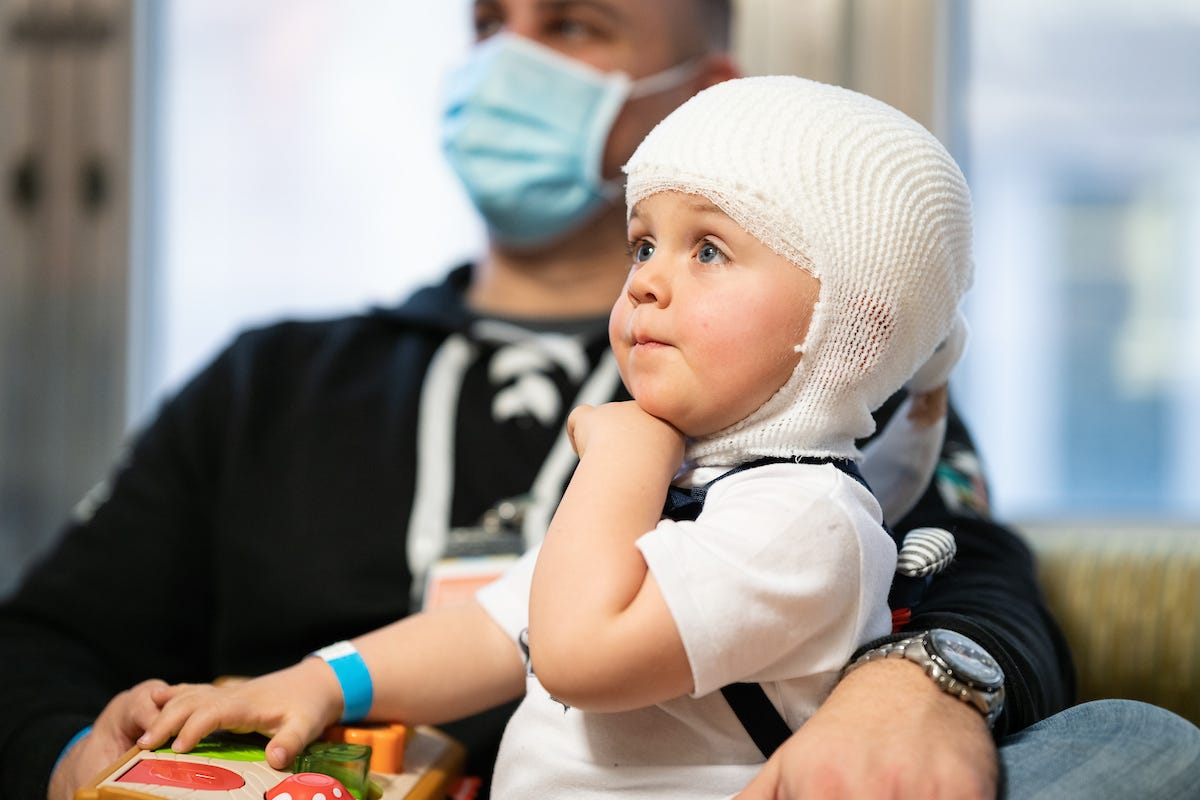
A Gillette patient gets ready for an EEG.

I’m getting multiple reports from my nurse friends about kids 2 and 3 years old having seizures. It is ONLY happening on vaccinated kids, and symptoms start 2 to 5 days after the COVID vaccine.

Doctors are mystified by a rash of seizures, rashes, etc. happening to 2 and 3-year-old kids.

The only thing these kids have in common is that they were given the COVID vaccine just days earlier (two to five days earlier).

The doctors cannot figure out what is causing the seizures (since it couldn’t be the vaccine since those are safe and effective). The medical staff is not permitted to talk about the cases to the press or on social media or they will be fired.

One nurse posted something to the effect of “how is this legal????” I had to paraphrase to protect the poster.

This is why you are hearing these reports from me. They can’t fire me.

There is nothing on the mainstream media about this since the nurses and doctors aren’t allowed to talk about it.

This will all come out some day, but for now, everyone is keeping quiet about it and the doctors are instructed to convince the parents that it isn’t vaccine related and that they are the only ones having the problem.

Because that’s how science works.

Via https://stevekirsch.substack.com/p/two-and-3-year-old-kids-with-seizures

Nurse Erin Talks About FBI Harassing Her: They’re Scared of the Information I Have

Nurse Erin talks about being harassed by the FBI: They’re scared of the information I have

Dr Eddy Betterman

Whistleblower Erin Olszewski, better known as Nurse Erin, joined Owen Shroyer and guest host Kristi Lee in “War Room” to talk about how the government is purging individuals who go against the Wuhan coronavirus (COVID-19) narrative.

“The FBI [Federal Bureau of Investigation] has been at my door, they continue to harass me. And there’s a reason behind that: It’s because they’re scared of the information that I have,” Nurse Erin said.

“They just get rid of anyone who doesn’t follow the status quo. And if they continue speaking up like I have been … then they’ll just go after any type of income so you can’t feed your families.”

At the same time, she said the government has been lifting the murder of babies by giving them COVID-19 vaccines unnecessarily. “They don’t care about the children,” Nurse Erin said about the government as she narrated how she was fired from her job despite never being written up for misconduct during her entire career. (Related: Medical experts warn: Coronavirus boosters kill more lives than they save.)

“You build up your social media platforms — that gets too big — and you’re being too influential, so they tore that down, too.” Then she described how they went after her Linktree account and then her PayPal account. She even thinks that they will cut her Venmo shortly as well.

“The only thing I use PayPal for was just to be able to sell my books — like signed copies of my books — because they won’t put them on shelves either. So it’s just a modern-day book burning all over again,” Nurse Erin said.

Harassed, discredited for telling the truth

All these happened because Nurse Erin went viral for exposing hospital operations and how the corrupt healthcare system is killing patients who have or have been exposed to COVID-19. Then, they retaliated by having pro-government “media” assassinate her character online to discredit her.

An unnamed physician at Elmhurst Hospital, where she used to work, said that she “spoke from a place of ignorance,” and that she used “lazy and faulty conclusions” based on her superficial observations to “assassinate the character” of people.

She was also being harassed by the FBI, such as stopping her from speaking to the public about her experience in the hospital. Her hospital in New York fired her, the FBI took away her public platforms and her payment processing sites and she went on to deal with the everyday problems they were dealing her.

[…]

Via https://dreddymd.com/2022/07/06/nurse-erin-talks-about-harassed-by-fbi/

The Turkish Conquest of Northern India

Episode 24: The Sultans of Dehli

Barbarian Empires of the Steppes (2014)

Dr Kenneth Harl

Film Review

In this lecture, Harl focuses on the Turkish conquest of northern India in the late 12th and early 13th century.

After clinching numerous victories in Delhi and other Hindu cities in northern India, the Seljuk Turk Muhammad of Ghazni died in 1206. The son of a slave soldier* himself, Muhammad delegated administration of the conquered territory to slave soldiers. Thus Delhi rulers following Mahmud’s death are frequently referred to as the “Slave Sultans of Delhi.”

Mahmud’s son Iltutmish extended the Seljuk conquest as far south as the Ganges. He ruled with the oversight of a governing council consisting of Muqtis (landholders). Iltutmish groomed his daughter Radiza Begum to succeed him.** Despite being an able (but not great) ruler, her efforts to reduce the power of her governing council led to a full scale rebellion to overthrow her rule.

Her successors continued to conduct raids into the Hindu kingdoms of southern India for loot to finance the Turkish occupation.

Although the sultans of India successfully resisted repeated Mongol invasions from 1220 on, they had a relatively weak military and focused mainly on public monument construction (mosques, madrassas, minarets, mausoleums, etc). Many were built from the remains of Hindu temples. Delhi, formerly a minor city became the center of Muslim power in India. Many of the minarets and mosques from this period persist to the present day.

Despite the Turkish military occupation, Islam would remain a minor religion in India. This was in part due to the failure of large numbers of Turk settlers to migrate to India and in part due to the persistence of strong Tantric (Hindu) rituals in the rural villages. By 1350, all the Muslim cities of northern India were still surrounded by Hindu farm communities.


*As growing numbers of steppes Turks converted to Islam, it became common for their Islamic overlords (as well as the Turks themselves) to enslave warriors they captured in battle to serve in their own armies.

**This was consistent with steppes tradition of appointing women of high rank to become rulers.

Film can be viewed free with a library card on Kanopy.

https://www.kanopy.com/en/pukeariki/video/5695037