The Most Revolutionary Act

Uncensored updates on world events, economics, the environment and medicine

The Most Revolutionary Act
Unknown's avatar

About stuartbramhall

Retired child and adolescent psychiatrist and American expatriate in New Zealand. In 2002, I made the difficult decision to close my 25-year Seattle practice after 15 years of covert FBI harassment. I describe the unrelenting phone harassment, illegal break-ins and six attempts on my life in my 2010 book The Most Revolutionary Act: Memoir of an American Refugee.

Dr. Birx Admits She And Fauci Made Up ‘The Science’ On Lockdowns, Social Distancing

Zero Hedge

President Trump’s former Covid-19 adviser Dr. Deborah Birx has made several stunning admissions of late – first telling the Daily Mail that Covid-19 “came out of the box ready to infect” when it hit Wuhan, China in 2019 – and that it may have been created by Chinese scientists who were “working on coronavirus vaccines.”

But it goes further than that.

As Fox News’ Jesse Waters lays out, Birx admitted in her new book that she and Dr. Anthony Fauci were essentially shooting from the hip when it came to national directives such as “two weeks to stop the spread,” and social distancing requirements.

According to Waters, Birx “admitted to making things up,” adding that she and Fauci “were lying to the president and to the American people about their COVID protocols.”

With the first lie; ’15 days to stop the spread’ – Birx writes “No sooner had we convinced the Trump administration to implement our version of the two-week shutdown than I was trying to figure out how to extend it.”

“So that 15 days to slow the spread was just a sneaky way to get their hooks into us, so they could lock us down for longer,” Waters opines. “And if you dared to leave your house, Birx told us, the only way to stay safe was to social distance.”

To that end, Birx writes that she “I had settled on 10 (feet) knowing that even that was too many, but I figured that ten would at least be palatable for most Americans – high enough to allow for most gatherings of immediate family but not enough for large dinner parties and, critically, large weddings, birthday parties, and other mass social events…”

Watch:

Via https://www.zerohedge.com/covid-19/dr-birx-admits-she-and-fauci-made-science-lockdowns-social-distancing

Mongol Invasion of China

Episode 29: Conquest of Song China

Barbarian Empires of the Steppes (2014)

Dr Kenneth Harl

Film Review

Harl regards Kublai Khan as the greatest of all the Mongol conquerors. His grandfather Genghis Khan was content to control large portions of the Chinese-dominated Silk Road. His uncle Ogedei settled with occupying the rump Jin Dynasty and securing a treaty relationship with the more powerful southern Song Dynasty.

Kublai Khan began his assault on China by moving his forces into Tibet (a  vassal state that paid to the Mongols), on the Song Empire’s western border. He proceeded  with an assault on Dali (currently Hunan), an independent kingdom inhabited by non-Chinese Bai people. Due to China’s large number of settled cities, the war on China proper was mainly one of sieges and logistics. Once he captured cities, Kublai Khan recruited large number of Chinese mercenaries to garrison them.

In 1259 the great khan Mongke died of cholera while Kublai Khan was besieging the fortresses on the Yangtze River. Mongke’s younger brother Verke had himself declared great khan while most of the Mongolian nobility was fighting in China. In 1260 during a brief civil war, Kublai Khan marched to Karakorum and deposed Verke (becoming great khan himself).

Under Kublai Khan, the Golden Horde Mongols on the western steppes were ruled by descendants of his cousin Batu. Kublai Khan’s nephew ruled the Ilkhanate on the central steppes, consisting of the modern day states of Iran, Iraq and. Under Kublai Khan, the Chagatai Khanate broke away from the Mongol Empire and was ruled independently by descendants of Genghis Khan’s second son Chagatai. By the 14th century, all three khanates had adopted the Turkish language and the Muslim religion.

In 1268 Kublai Khan reopened the war against the Song Dynasty. The Ilkhan sent Muslim engineers to assist Chinese engineers in building trebuchets, incendiaries and other siege technologies. The Mongols also deployed great paddled river flotillas to isolate Yangtze fortresses from the river. Eventually numerous Chinese generals defected to fight for Mongols.

Unlike western Mongol victories, Kublai Khan’s victories in China weren’t accompanied by massacres and atrocities. Instead he sought to win over the civilian population.

When the dowager Song empress surrendered on behalf of the child emperor in 1271, Kublai Khan became the new emperor, founding the Yuan Dynasty. For the most part, the bureaucratic Mandarin class generally supported the new regime.

This film can be rented free on Kanopy with a library card.

https://www.kanopy.com/pukeariki/product/5695049

Are the Chemicals in Your Shampoo and Food Packages Making You Fat?

By Grace van Deelen

When Dr. Rob Sargis sees a patient struggling with obesity, his recommendations go beyond diet and exercise. He may advise them to stop heating things in plastics or to avoid congested roads during rush hour.

Sargis, a practicing doctor and professor of medicine at the University of Illinois, is one of a number of doctors incorporating the science of obesogens — endocrine-disrupting chemicals that spur obesity — into their clinical practice.

Obesogens are a subset of endocrine-disrupting chemicals — man-made compounds that alter hormone activity.

They are generally defined as any chemical that can cause the human body to produce more fat than it normally would, and can include substances we usually think of as fattening, like sugars or artificial sweeteners.

However, obesogens are not only found in food, rather entering the body through other consumer products, like makeup, shampoos, soaps, plastics and food packaging.

People are exposed through contact with the chemicals and through ingestion of contaminated foods. The chemicals are also shed from such products and can accumulate in household dust, which people breathe in.

PFAS, or per- and polyfluoroalkyl substances (toxic chemicals used in many consumer and industrial products) are another example of obesogens, as is bisphenol- A (BPA).

By disrupting hormone activity, these chemicals can spur obesity in a number of ways. They can alter metabolism, cause the body to produce new fat cells, alter eating behavior, and even change the way food is digested.

To Sargis, incorporating an understanding of obesogens into clinical practice is part of the goal of medicine as a whole: to build a healthier society.

Obesogenic chemicals have other harmful health impacts too — for example, PFAS and BPA are also linked to certain cancers and reproductive problems. Reducing obesogen exposure is beneficial across the health spectrum.

Sargis told EHN:

“What we’ve seen in medicine over the last few years is this shift from individual factors, like genetics, lifestyle and diet, to an embracing of the social determinants of health, including things like food, environment, exercise and education.”

However, Sargis and other doctors interested in using the obesogen framework face barriers, such as difficulties gathering data on obesogens, a bias toward focusing on diet and exercise, and inadequate medical school training in environmental exposures.

In addition, a lack of regulation of obesogens makes it hard to reduce the exposures — even for patients who are aware of the risks.

Sargis continued:

“The challenge is that there are systemic forces that you have to fight, and a lot of that’s policy, and a lot of that policy is embedded in politics.”

Lack of data

A major obstacle to incorporating an understanding of obesogens into clinical practice is that doctors are sometimes not convinced by the data available. While plenty of data exists to show a correlation between obesogen exposure and obesity, there is less data that shows that if a person reduces their obesogen exposure, they can lose more weight.

Gathering that data is difficult, but possible, said Sargis. However, the ubiquity of obesogens in everyday products, as well as the lack of transparency from companies about the chemicals in their products, makes designing such a study difficult.

The sheer number of chemicals that would need to be tested — there are more than 9,000 types of PFAS, for example — also adds to the challenge.

Jerry Heindel, a biochemist and founder and director of HEEDS, a coalition of researchers advocating for better regulation of chemicals, told EHN that doctors and patients could benefit from an accessible and cheap way to measure exposure to obesogens.

That way, patients could hypothetically see if their exposure levels drop over time as they worked to eliminate obesogens from their daily life. For now, he said, patients would need to pay for the tests themselves, but he hopes insurance would cover the tests in the future.

Jenna Hua, a doctor-turned-CEO of medical testing company Million Marker, thinks her company’s product could play a role. Million Marker offers at-home test kits that measure the levels of 13 common endocrine disruptors, some of which also act as obesogens, in a person’s urine.

The tests are able to detect BPA, two BPA alternatives, five types of phthalates, four types of parabens, and oxybenzone.

It’s “quite empowering,” Hua told EHN, when someone using the tests can see their exposure levels drop as they swap out products they’re using that include obesogens.

The type of testing that Million Marker offers would be another tool in managing weight loss.

Heindel said:

“It would not be possible to tease out what part of weight gain is due to obesogens. The doctor would have to explain to the patient all the possibilities and how to address each of them to reduce their weight.”

As more patients recognize that obesogen exposure is a threat to their health, Hua said, the public may be more inclined to pressure governments to regulate endocrine-disrupting chemicals.

Most obesogens are not currently regulated in the U.S., for example, the U.S. Food and Drug Administration (FDA) does not restrict the use of BPA in food packaging, and there are no federal standards limiting PFAS discharges in drinking water.

Bias toward individual factors

One of the reasons that obesogens have been overlooked, Sargis said, is that treatment of obesity is biased toward individual factors like diet and exercise.

“There’s an inherent bias that this is somehow a personal failing,” said Sargis.

That kind of thinking, he said, might be rooted in conventional beauty standards and the idea that obesity is an aesthetic problem more than a health problem.

Research has shown that in the U.S., obese individuals are often highly stigmatized and labeled as lazy, unmotivated, and lacking in self-discipline.

[…]

Via  https://childrenshealthdefense.org/defender/endocrine-disrupting-chemicals-obesogens-food-packaging-shampoo/

CDC Says Effectiveness of Flu Vaccine Last Year (2021-2022) was 14%

Fanatic Cook

The CDC says the effectiveness of the flu vaccine last year (2021–22) was 14%.

Interim Estimates of 2021–22 Seasonal Influenza Vaccine Effectiveness — United States, February 2022, MMWR, CDC, 11 March 2022

VE [vaccine effectiveness] against outpatient medically attended ARI [acute respiratory infection] associated with influenza A virus types was 14%.
…
Based on data from 3,636 children, adolescents, and adults with acute respiratory infection during October 4, 2021–February 12, 2022, seasonal influenza vaccination did not reduce the risk for outpatient respiratory illness caused by influenza A(H3N2) viruses that have predominated so far this season.

The FDA requires that any vaccine, including flu vaccine, be at least 50% more effective than a placebo in preventing disease.

What about the upcoming season?

So far, data from the US Flu Vaccine Effectiveness (VE) network, which consists of seven study sites, have not shown that the vaccine [for 2022-2023 season] is protective against influenza A. “We can say that it is not highly effective,” said Brendan Flannery, PhD, who leads the US Flu VE network for the Centers for Disease Control and Prevention (CDC).
…
The vaccine is estimated to be 8% effective against preventing influenza A infection (95% CI, -31% to 36%) and 14% effective against preventing A/H3N2 infection (95% CI, -28% to 43%) for people aged 6 months and older.

This is a lot of vaccine being sold for not a lot of effectiveness. Do you think? It’s almost as if the CDC had some other incentive for promoting the drug other than public health

[…]

Via https://fanaticcook.com/2022/07/21/cdc-says-effectiveness-of-the-flu-vaccine-last-year-2021-22-was-14/

Criminal Focus of Secret US Biolabs Becomes Apparent

BIOU
Vladimir Platov

Internationalist 360°

Russia’s special military operation to localize neo-fascist activities in Ukraine continues to receive more and more documentary evidence of the criminal plans and activities of the current government in Kiev, sponsored by Washington, as well in as the USA itself.

This special operation has helped to publicize many secret programs for the development of biological weapons by the United States and its NATO allies in Ukraine. Documentary evidence was obtained of the research on dangerous pathogens, including the Ebola virus, the causative agent of Crimean-Congo hemorrhagic fever, as well as many others (for by no means peaceful and humane purposes) by American, British, and German military biologists in Kiev and Odessa. It became known that the American company Metabiota was going to study the Ebola virus in Ukraine. Due to such experiments being prohibited in the USA over their inherent risk, they were transferred to Ukraine and other countries – as a rule, those where the government is corrupt, completely subordinate to Washington, and does not ask unnecessary questions.

Additionally, Russian doctors in hospitals, where captured Ukrainian soldiers were taken for treatment, obtained data indirectly confirming that the Ukrainian special forces were preparing to use biological weapons developed by the USA. This is evidenced by the presence of a high concentration of antibiotics, sulfonamides, and fluoroquinolones in their blood, which could indicate the use of such drugs as a preventive measure, and therefore preparation of the personnel of the Armed Forces of Ukraine to carry out tasks via the use of bacteriological weapons.

From a report obtained during the capture at a US biolab in Ukraine, prepared for the Pentagon by Metabiota and Black & Veatch, it follows that “Veterinary Projects” codenamed “TAP” were implemented in Ukraine, during which infections were developed that could cause damage not to the manpower of the enemy, but the agriculture of entire regions. Of particular interest to US military biologists was African swine fever (ASF). It should be noted that the USA already has vast experience in causing damage to the agriculture of its opponents in this way. This is how the United States devastated Cuba in the 1990s, poisoning the entire country’s agriculture with various biological agents, spraying such bioweapons from airplanes. Then pigs, sugar cane, tobacco, and rice died en masse, causing Cuba to amass an enormous debt of $32 billion. This is one of the many episodes of the USA’s subversive economic war against its opponents, which is, in fact, a manifestation of American state terrorism.

According to information obtained during the special operation in Ukraine, the USA carried out a significant portion of its secret biological experiments under the guise of Ukrainian institutions and companies. For the past five years, the Ukrainian company Microkhim, judging by the documents discovered, has been conducting biological experiments with E. coli, staphylococcus, and salmonella. Microorganism strains were delivered from a collection in the Czech Republic, as well as pharmaceutical prototypes from Europe and the USA. The experiments were carried out on Ukrainians themselves, who were paid 6,000 hryvnias each (that’s about $250-300) for participation. Experiments were also carried out with potent narcotic drugs, particularly, nalbuphine, which is dangerous because it is very addictive and is on par with morphine, methadone, and tramadol. It, in particular, was supplied to the Armed Forces of Ukraine on the Luhansk front. It is nalbuphine, although it has not been registered in the country, that is present in the first-aid kits of Ukrainian military personnel. The militants of the Armed Forces of Ukraine used these drugs and went into battle, and this potent drug dulled all of their pain receptors and fear. The owner of this Ukrainian pharmaceutical company fled and, according to the intelligence services, is now in Europe under the patronage of the West.

The efforts of American secret biological laboratories to develop hard drugs for US and NATO soldiers for use in military operations, as well as developments in the field of psychotropic weapons, are well known. In the middle of the last century, experiments with LSD in the hope of creating a “universal soldier” became famous. It is noteworthy that the Nazis of fascist Germany also actively engaged in similar “experiments,” trying to create a super-soldier to correspond to their ideology of the Aryan domination in the world. Pervitin, created by the Nazis, was one such “remedy” to increase the stamina of those fighting. The British and Americans took up similar studies in the wake of the Nazis. Moreover, as evidenced by the documents obtained during Russia’s special operation in Ukraine, the Pentagon is even now continuing this “research” in its secret biolabs.

It terms of drug research at the USA’s secret biolabs, one must not forget that war is a very costly business. Based on what funds the United States has been pumping into Ukraine over the past eight years and continues to do so after the start of Russia’s special operation, the bill is in the tens of billions of dollars. In order to “compensate” for such costs, the USA has long been involved in illegal drug trafficking, which has already been repeatedly confirmed by journalistic investigations and scandals about the activities of the US military in “war zones.” Frank Lucas’ “Vietnamese business” in which he supplied drugs from Asia to the United States in the coffins of soldiers sent home is well known.  Many such scandals became known from American journalists then and during the US war in Afghanistan. In addition to the use of new types of drugs in research to create a “universal soldier,” secret biolabs may certainly have an “applied” interest in narcotics, especially since there is no control from the side “receiving” these biolabs, or from the American authorities in this matter.

Recall that 30 biolabs have already been discovered in Ukraine, created with the active financing of the Pentagon. In total, there are 336 such facilities around the globe, according to the Chinese government, most of which are located in the area of the former Soviet Union. Research at these biolabs is carried out in three main areas: the study of the epidemic situation near the expected deployment areas of NATO or US troops; the study of the genotype of possible future opponents (in particular, Slavs and Chinese); increased pathogenicity via synthetic biology, which have already appeared in service with US military virologists. Over the past 20 years, the USA has spent more than two billion dollars on the creation of biolabs in the CIS (Commonwealth of Independent States) alone.

[…]

Via https://libya360.wordpress.com/2022/07/20/the-criminal-focus-of-secret-us-biolabs-becomes-apparent/


No, mRNA Covid vaccines do not offer long-term protection from serious illness

Covid-19 places critical care nurses 'front and centre' as leaders ...

Data from the Dutch government show the opposite – after seven months they substantially RAISE the risk of hospitalization and intensive care

mRNA vaccine advocates have one final defense against the failure of their billion-person experiment.

Okay, the shots won’t stop you from getting Covid. Or spreading it. Or having symptoms.

But they will stop you from getting very sick, and that protection lasts long after they stop working against infection.

Only it doesn’t.

Not against Omicron, anyway. And Omicron is only variant that matters now, since it’s the only variant that exists now.

An official government report from the Netherlands earlier this month has the truth.

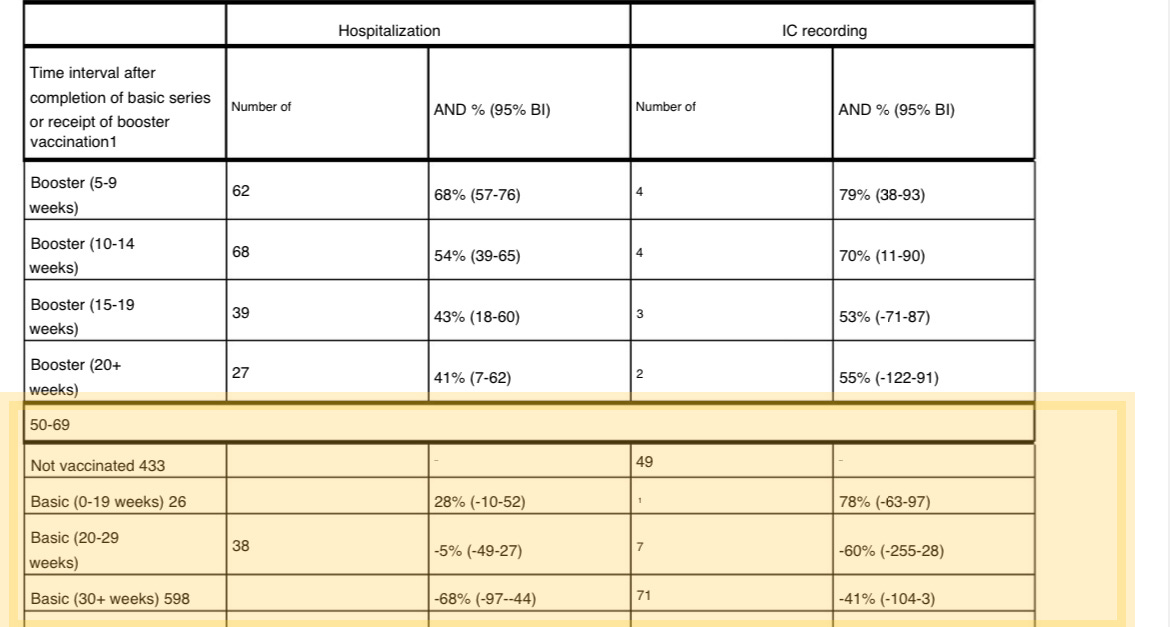
On July 5, the RIVM – a research institute that is part of the Dutch Ministry of Health – reported a basic two-dose Covid vaccination offered no protection against Covid hospitalization. Worse, vaccinated people were 20 percent more likely to need intensive care than the unvaccinated.

“There was hardly any visible protective effect of the COVID-19 basic vaccination series against hospital and ICU – intensive care- intake,” the researchers wrote (understating the case).

SOURCE

The topline figures are bad enough.

The report is based on hospitalizations across the Netherlands from March 15 through June 28, not a small sample. And like the United States, the Dutch relied overwhelmingly on mRNA vaccines from Pfizer and Moderna – the supposed gold standard for Covid shots.

But the details in the report are even more disturbing.

The researchers stratified the risks of hospitalization and intensive care by time from vaccination and the age of the infected person – and those show that the risks increase over time.

After seven months, vaccinated people in their fifties and sixties had a 68 percent higher risk of being hospitalized for Covid compared to the unvaccinated. They had a 41 percent higher risk of needing intensive care.

The trends were similar for people 70 and over, though most of them had been boosted or received a fourth shot, so comparisons were harder to make.

(Negative vaccine effectiveness, it’s a thing. A very bad thing.)

Again, this negative effectiveness is against severe disease – hospitalizations and intensive care.

Not infection, severe disease.

The report also showed that boosters and fourth shots did reverse the negative efficacy against hospitalization and intensive care and provide some protection. That fact led the researchers to call for vaccinated people to receive boosters.

But the effectiveness of boosters and fourth shots against severe disease also sharply and quickly declined.

In people 70 and over, the effectiveness of a booster against hospitalization fell from 85 percent in the first month to under 50 percent by five months out. The trends for the fourth shot were similar, but worse. Though the researchers did not have five months of data for the fourth shot, by roughly three months, protection had fallen to 60 percent.

The results could not be clearer, or grimmer.

The mRNA vaccines fail within a few months and then begin to raise the risk of serious outcomes.

Why?

The promise that the mRNA shots will produce durable T-cell protection against severe disease appears faulty. Any protection the shots offer against hospitalization or death probably results from their antibody-driven protection against infection, which lasts only a few months.

Repeated shots can reverse the trend, but they too fail, and each additional shot appears to do less and fail more quickly. Worst of all, because the shots cause recipients to produce antibodies to the original coronavirus rather than Omicron’s mutated spike, vaccinated people now have a higher risk of Omicron infection – which means they have a higher risk of hospitalization or death.

Worst of all, the Dutch collected this data during the spring, when the existing Omicron subvariant was relatively mild. Now Omicron has mutated again, and we do not at this point know if the new variant is more or less dangerous.

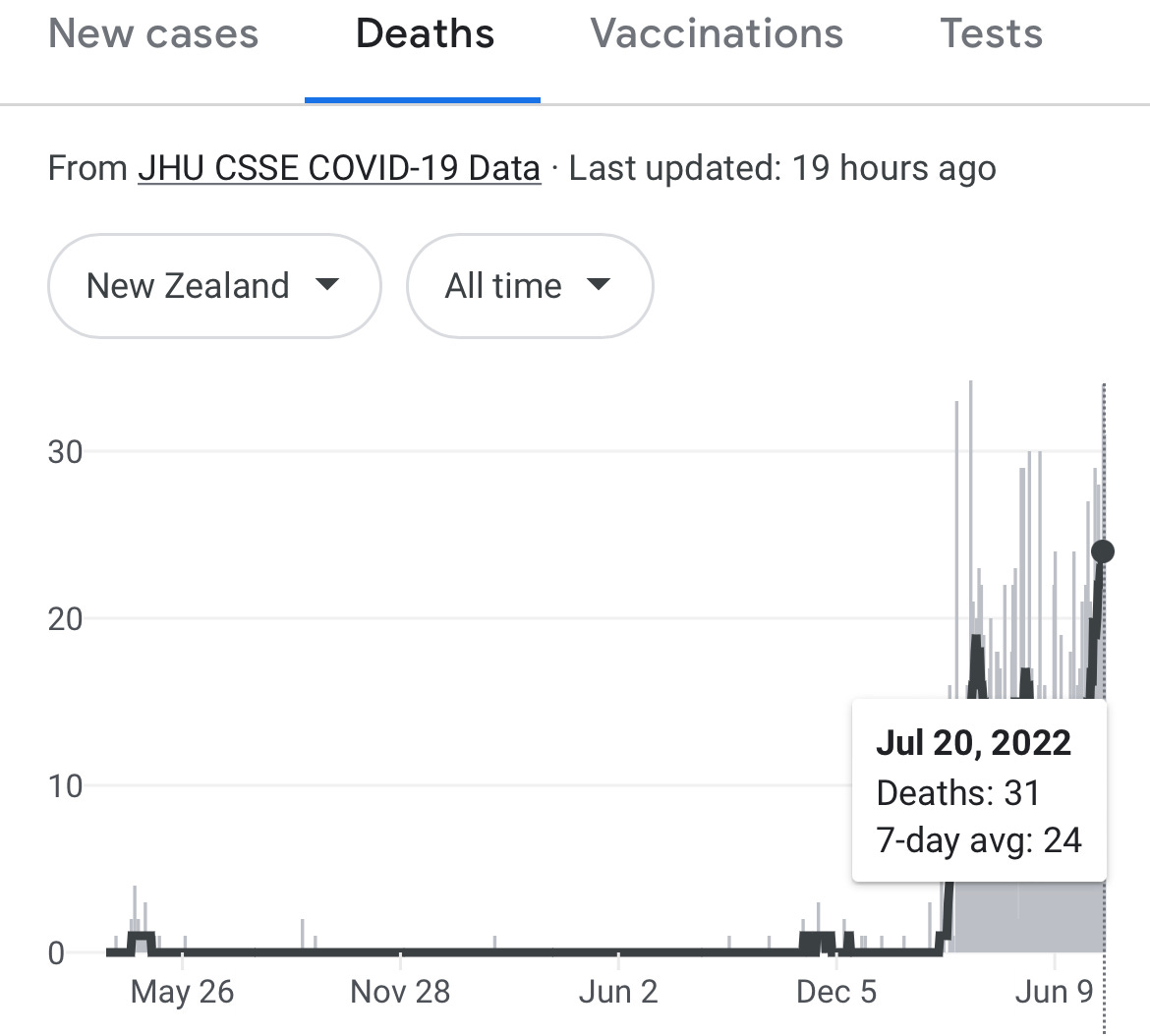
But the trends from countries like New Zealand – which are test cases for Omicron’s potential virulence because they are highly mRNA vaccinated and have little preexisting natural immunity – are not promising.

Putin Tells US to Stop ‘Looting’ Syria

Samizdat | July 19, 2022

Aletho News

The US needs to stop “stealing” the oil from the Syrian people and state, Russian President Vladimir Putin said on Tuesday, after meeting with his Iranian and Turkish counterparts in Tehran. The three guarantors of the “Astana process” also agreed that the US should leave the trans-Euphrates, and stop making the humanitarian crisis in Syria worse with their unilateral sanctions.

American troops must leave the territory east of the Euphrates river and “stop robbing the Syrian state, the Syrian people, exporting oil illegally,” Putin told reporters on Tuesday evening. He said this was a “common position” of Russia, Iran and Turkey.

Several hundred US troops are illegally present in Syria, mainly controlling the oil wells and wheatfields in the country’s northeast, controlled by the Syrian Democratic Forces (SDF) militia since the defeat of Islamic State (IS, formerly ISIS) terrorists. The US-backed SDF has refused to reintegrate with the government in Damascus, which Washington wishes to see overthrown.

Since 2019, the US has sought to punish anyone trying to assist the reconstruction of war-torn Syria via the “Caesar Syria Civilian Protection Act,” accusing the government of President Bashar Assad of war crimes and blocking all assistance to Damascus.

Putin said on Tuesday that such sanctions have had “disastrous results” and that humanitarian aid to Syria “should not be politicized.”

During Tuesday’s summit in Tehran, Putin met with Iranian President Ebrahim Raisi and Turkey’s Recep Tayyip Erdogan. In a joint declaration, the three presidents confirmed their conviction that “there can be no military solution to the Syrian conflict,” only a political one under the leadership of the UN. They also condemned “unilateral sanctions violating international law” that are exacerbating the serious humanitarian situation in Syria, urging the UN and other international organizations to “increase assistance to all Syrians, without discrimination, politicization and preconditions.”

Russia sent an expeditionary force to Syria in September 2015, at the request of Damascus, to help defeat IS and other terrorist groups. In January 2017, Moscow, Ankara and Tehran launched the “Astana process” – named after the capital of Kazakhstan – to resolve the conflict in Syria, which began in 2011.

[…]

Via https://alethonews.com/2022/07/19/putin-tells-us-to-stop-looting-syria/

Gazprom CEO says Northstream2 pipeline ready to pump 55 billion cms of gas to Germany any time.

The Freeonline

Resembling a Monty Python sketch, Berlin officials still insist new Nord Stream 2 pipeline is ‘not certified’, refusing to back down and switch on the 55bcm of Gas while going bankrupt for lack of gas.

Germany will not use the new alternative pipeline to ship natural gas from Russia, Nord Stream 2, even though its usual route, Nord Stream 1, is shut down for maintenance, the country’s government reiterated on Monday.

The announcement comes as Gazprom ‘upped the ante’ in the gas dispute by declaring force majeure on EU gas flow via Nord Stream 1, citing “extraordinary” circumstances outside its control.

That pipeline is currently closed for maintenance until Thursday. There is rising concern in Germany, however, that Gazprom will not resume supply when the works are complete.

German politicians have united in raging economic war hysteria against Russia, leading no less than 7 rounds of deep and unprecedented illegal punitive sanctions, for its intervention war to protect ethnic Russians in Ukraine.

In addition politicians have gifted billions of euros worth of often advanced weaponry to Ukraine, ensuring a long and bloody war. Until now Russia had committed about 20% of its armed forces, and excluding conscripts and reservists.

German led economic war against Russian oil and gas has ignored their own dependence on these commodities and could spell economic suicide.The Nord Stream 2 pipeline, which runs from Russia to Germany through the Baltic Sea, has the capacity to transport 55 billion cubic meters of gas annually and its construction was completed last September.

However, the certification process was repeatedly delayed due to opposition from the US and a Russophobic campaign in Europe over energy dependence on Russia.

In February, prior to the launch of Russia’s military operation in Ukraine, German authorities finally denied the pipeline’s certification and the project was halted indefinitely.

Berlin is now reportedly considering repurposing parts of the unused pipeline for an LNG terminal to import expensive and highly methane leaking frack-gas from the USA.

Gazprom’s CEO Alexey Miller said last month that the pipeline is ready to be switched on and could start pumping gas to Germany any time.

[…]

Via https://thefreeonline.com/2022/07/19/gazproms-ceo-says-northstream2-pipeline-ready-to-pump-55-billion-cms-of-gas-to-germany-any-time/

India-Russia-Iran: Eurasia’s New Transportation Powerhouses

Map of China's Belt and Road Initiative (BRI), The 'One Belt One Road' (OBOR)China’s Belt and Road Initiative (BRI)

By Matthew Ehert

[Ed: Looks to me like it’s just the West that’s going down. The rest of the world seems to be doing just fine.]

Tectonic shifts continue to rage through the world system with nation-states quickly recognizing that the “great game” as it has been played since the establishment of the Bretton Woods monetary system in the wake of the second World War, is over.

But empires never disappear without a fight, and the Anglo-American one is no exception, overplaying its hand, threatening and bluffing its way, right to the end.

End of an order

It seems no matter how many sanctions the west imposes on Russia, the victims most affected are western civilians. Indeed, the severity of this political blunder is such that the nations of the trans-Atlantic are heading towards the greatest self-induced food and energy crisis in history.

While the representatives of the “liberal rules-based international order” continue on their trajectory to crush all nations that refuse to play by those rules, a much saner paradigm has come to light in recent months that promises to transform the global order entirely.

The multipolar solution

Here we see the alternative security-financial order which has arisen in the form of the Greater Eurasian Partnership. As recently as 30 June at the 10th St Petersburg International Legal Forum, Russian President Vladimir Putin described this emerging new multipolar order as:

“A multipolar system of international relations is now being formed. It is an irreversible process; it is happening before our eyes and is objective in nature. The position of Russia and many other countries is that this democratic, more just world order should be built on the basis of mutual respect and trust, and, of course, on the generally accepted principles of international law and the UN Charter.”

Since the inevitable cancellation of western trade with Russia after the Ukraine conflict erupted in February, Putin has increasingly made clear that the strategic re-orientation of Moscow’s economic ties from east to west had to make a dramatically new emphasis on north to south and north to east relations not only for Russia’s survival, but for the survival of all Eurasia.

Among the top strategic focuses of this re-orientation is the long overdue International North South Transportation Corridor (INSTC).

On this game-changing mega-project, Putin said last month during the plenary session of the 25th St Petersburg International Economic Forum:

“To help companies from other countries develop logistical and cooperation ties, we are working to improve transport corridors, increase the capacity of railways, trans-shipment capacity at ports in the Arctic, and in the eastern, southern and other parts of the country, including in the Azov-Black Sea and Caspian basins – they will become the most important section of the North-South Corridor, which will provide stable connectivity with the Middle East and Southern Asia. We expect freight traffic along this route to begin growing steadily in the near future.”

The INSTC’s Phoenix Moment

Until recently, the primary trade route for goods passing from India to Europe has been the maritime shipping corridor passing through the Bab El-Mandeb Strait linking the Gulf of Aden to the Red Sea, via the highly bottlenecked Suez Canal, through the Mediterranean and onward to Europe via ports and rail/road corridors.

Following this western-dominated route, average transit times take about 40 days to reach ports of Northern Europe or Russia. Geopolitical realities of the western technocratic obsession with global governance have made this NATO-controlled route more than a little unreliable.

Despite being far from complete, goods moving across the INSTC from India to Russia have already finished their journey 14 days sooner then their Suez-bound counterparts while also seeing a whopping 30 percent reduction in total shipping costs.

These figures are expected to fall further as the project progresses. Most importantly, the INSTC would also provide a new basis for international win-win cooperation much more in harmony with the spirit of geo-economics unveiled by China’s Belt and Road Initiative (BRI) in 2013.
Cooperation not competition

Originally agreed upon by Russia, Iran and India in September 2000, the INSTC only began moving in earnest in 2002 – albeit much more slowly than its architects had hoped.

This 7,200 km multimodal megaproject involves integrating several Eurasian nations directly or indirectly with rail, roads and shipping corridors into a united and tight-knit web of interdependency. Along each artery, opportunities to build energy projects, mining, and high tech special economic zones (SEZs) will abound giving each participating nation the economic power to lift their people out of poverty, increase their stability and their national power to chart their own destinies.

Beyond the founding three nations, the other 10 states who have signed onto this project over the years include Armenia, Georgia, Turkey, Azerbaijan, Kazakhstan, Belarus, Tajikistan, Kyrgyzstan, Oman, Syria and even Ukraine (although this last member may not remain on board for long). In recent months, India has officially invited Afghanistan and Uzbekistan to join too.

While western think tanks and geopolitical analysts attempt to frame the INSTC as an opponent to China’s BRI, the reality is that both systems are extremely synergistic on multiple levels.

Unlike the west’s speculation-driven bubble economy, both the BRI and INSTC define economic value and self-interest around improving the productivity and living standards of the real economy. While short term thinking predominates in the myopic London-Wall Street paradigm, the BRI and INSTC investment strategies are driven by long-term thinking and mutual self-interest.

It is no small irony that such policies once animated the best traditions of the west before the rot of unipolar thinking took over and the west lost its moral compass.

Via https://matthewehret.substack.com/p/india-russia-iran-eurasias-new-transportation

Wealthiest Criminal in US Continues to be Immune from Justice

https://healthimpactnews.com/wp-content/uploads/sites/2/2022/01/public-enemy-jamie-dimon.jpg
by Pam and Russ Martens
Wall Street on Parade

There are three separate cases in federal court accusing JPMorgan Chase of a culture of fraud.

JPMorgan Chase is the largest federally-insured bank in the United States. It is also one of the largest trading houses on Wall Street. That’s the Faustian bargain the Clinton administration entered into with Wall Street when it repealed the Glass-Steagall Act in 1999.

[…]

According to data from the FDIC, as of June 30 of last year, JPMorgan Chase Bank N.A. had 4,925 branches in 44 U.S. states holding $2.01 trillion in deposits. Many of those deposits belong to mom and pop savers who have no idea that the bank has admitted to five criminal felony counts since 2014 and has a rap sheet that is the envy of the Gambino crime family.

[…]

Corruption of this magnitude can’t be swept under the rug forever, however. Today, three cases are playing out simultaneously in federal courts. Observed together, which no member of mainstream media is currently doing, they paint an undeniable picture of a bank which, as Senator Bernie Sanders would say, has adopted fraud as a profitable business model.

Let’s start with the case known as U.S. v. Smith playing out in the federal District Court for the Northern District of Illinois in Chicago. (Case number 1:19-cr-00669.) Federal prosecutors from the Justice Department have charged multiple traders on the precious metals desk of JPMorgan Chase with turning the trading desk into a racketeering enterprise from 2008 to 2016.

For the first time that veterans on Wall Street can remember, the Justice Department is using the RICO statute, typically reserved for members of organized crime, to charge JPMorgan’s traders. (The bank settled its own charges in September 2020 and paid $920 million in fines – a mere pittance in terms of the profits that were likely made on these “tens of thousands” of trades over a period of eight years.)

Making the situation extremely dicey for both the indicted traders and the bank’s reputation, federal prosecutors have called to testify two former precious metals traders on that desk who have pleaded guilty to related charges and are cooperating with prosecutors. (A third cooperating witness is expected to testify.)

One of those cooperating witnesses, John Edmonds, told jurors that “Our job was to do whatever it takes to make money” and “Everyone at the time did it on the desk and it worked.” When asked why he didn’t report the conduct to the compliance officers at the bank, Edmonds responded that “I would have been fired.”

[…]

Another cooperating witness, Corey Flaum, told jurors that the practice of manipulating precious metal prices (spoofing) was done out in the open and was “common practice.”

While the indicted traders’ trial is playing out in Chicago, a trader on the precious metals desk who was not indicted for wrongdoing, Donald Turnbull, has brought charges against JPMorgan Chase in federal court in the Southern District of New York.

Turnbull alleges that the bank trumped up false charges against him as a pretext to terminate him when it was actually terminating him for cooperating with the Department of Justice’s investigation. Turnbull states in the lawsuit that the indicted traders received better benefits when they were released from employment than he did.

[…]

Despite the unprecedented crime history of this bank, the Judge overseeing this case, John Koeltl, has been pretty much giving lawyers from Big Law firm, Morgan Lewis, who are representing JPMorgan Chase, everything they ask for.

For example, Judge Koeltl dismissed Turnbull’s first amended complaint on a motion to dismiss by Morgan Lewis on the basis that he found it “implausible” that the bank would retaliate against Turnbull for cooperating with the Justice Department when the bank itself was cooperating with the Justice Department.

Either the Judge is feigning naivete, engaging in willful blindness, or is actually ignorant of how JPMorgan actually “cooperates” with investigators and prosecutors. For example, JPMorgan Chase was smacked with two felony counts by the Justice Department in 2014 for its role in Bernie Madoff’s Ponzi scheme.

The bank told its regulators in the U.K. that it believed Madoff was running a Ponzi scheme but failed to “cooperate” as it was required to under law by reporting its concerns to U.S. prosecutors and also failed to report red flags about Madoff’s money laundering to the Financial Crimes Enforcement Network (FinCEN), a unit of the U.S. Treasury.

Then there was the 300-page report from the Senate’s Permanent Subcommittee on Investigations on how JPMorgan Chase had used more than $100 billion of depositors’ money to gamble in derivatives in London and lose $6.2 billion. The Chair of that Subcommittee at the time, Senator Carl Levin, wrote that the bank “piled on risk, hid losses, disregarded risk limits, manipulated risk models, dodged oversight, and misinformed the public.”

[…]

And in a perfect segue way, along comes the federal lawsuit brought by Shaquala Williams against JPMorgan Chase, also in the Southern District of New York under Judge Jed Rakoff.

Williams tells the court in her complaint that JPMorgan Chase did not fulfill its promise under a deferred prosecution agreement to cooperate with the Justice Department – something that Judge Koeltl in the Turnbull case finds “implausible” to believe.

Williams is a financial crimes compliance professional with more than a decade of experience at multiple global banks. Part of Williams’ role at JPMorgan Chase was to make sure that the bank was in compliance with a non-prosecution agreement the bank had signed with the Justice Department in 2016.

[…]

In exchange for avoiding prosecution, the Justice Department required JPMorgan to create compliance controls around third-party payments. Williams alleges, among numerous other serious charges, that the so-called third-party payment controls were a sham and that when she blew the whistle to her superiors at the bank, the bank retaliated against her by firing her in October 2019.

[…]

Via https://healthimpactnews.com/2022/wealthiest-criminal-in-the-u-s-continues-to-be-immune-from-justice/