The Most Revolutionary Act

Uncensored updates on world events, economics, the environment and medicine

The Most Revolutionary Act
Unknown's avatar

About stuartbramhall

Retired child and adolescent psychiatrist and American expatriate in New Zealand. In 2002, I made the difficult decision to close my 25-year Seattle practice after 15 years of covert FBI harassment. I describe the unrelenting phone harassment, illegal break-ins and six attempts on my life in my 2010 book The Most Revolutionary Act: Memoir of an American Refugee.

Discovery of Radioactive Fish Near Fukushima Reignites Concerns Over Plan to Dump Contaminated Wastewater

Noryangjin Fish Market in Seoul, South Korea. Photo credit: Jirka Matousek/ flickr

By Julia Conley

Common Dreams

As Tokyo Electric Power Company moves to release more than a million tons of treated radioactive wastewater from the Fukushima nuclear power plant, critics argue radioactive isotopes cannot be fully eliminated.

The plant operator, known as TEPCO, analyzed a black rockfish in May that was found to contain levels of radioactive cesium that were 180 times over Japan’s regulatory limit, The Guardian reported.

The fish was caught near drainage outlets at the plant, where three nuclear reactors melted down in March 2011 during a tsunami.

Rainwater from the areas surrounding the reactors flows into the area where the fish was caught.

The high level of cesium — which, depending on the level of exposure, can cause nausea, vomiting, diarrhea, bleeding, coma and death in people who eat contaminated food — was discovered as TEPCO prepares to begin the discharge of treated wastewater which has been used to cool fuel from the melted reactors.

The wastewater has been mixed with rainwater and groundwater since the tsunami.

TEPCO has acknowledged that fish near the drainage outlets have been unsafe for consumption, as the concentration of cesium in seabed sediment in the area has measured more than 100,000 becquerels per kilogram. The maximum legal level is 100 becquerels per kilogram.

“Since contaminated water flowed into the Fukushima Daiichi nuclear power station port immediately after the accident, TEPCO has periodically removed fish from inside the port since 2012,” an official for the company told The Guardian.

A fish was detected to have high levels of radiation near Fukushima in January 2022, with authorities positing that the fish had escaped from the drainage outlet.

Shipments of black rockfish caught off the coast of Fukushima prefecture were promptly suspended and have not been resumed.

More than 40 fish with cesium levels over the legal limit were found in the plant’s port between May 2022 and May 2023, and 90% came from the inner breakwater where water flows from the area around the melted reactors.

The Nuclear Regulation Authority in Japan and the United Nations’ International Atomic Energy Agency have both given their approval of TEPCO’s plan to release the wastewater into the Pacific Ocean, which it says it needs to do to secure space for decommissioning the plant.

The discharge process, using an Advanced Liquid Processing System, would take decades to complete.

While the International Atomic Energy Agency said earlier in July the plan will have a “negligible radiological impact to people and the environment,” Paul Dorfman of Ireland’s Radiological Protection Advisory Committee said Monday that reports like the one about the contaminated rockfish are likely “far from over.”

“Believing [and] pretending some things are not harmful because it is convenient is literally killing the planet,” said American University sociologist Celine-Marie Pascale, comparing the ecological and climate crisis to authorities’ insistence that the water discharge is safe. “Corporate interests triumph at global expense once again.”

Officials in Hong Kong have said they will ban food imports from 10 prefectures in Japan if the release moves forward in August, and some Chinese wholesalers have stopped accepting seafood imports from the country.

In addition to concerns about cesium, TEPCO has admitted that the Advanced Liquid Processing System it plans to use may not eliminate isotopes including ruthenium, cobalt, strontium and plutonium. The system is also not able to remove tritium, the radioactive isotope of hydrogen.

Masanobu Sakamoto, president of JF Zengyoren, Japan Fisheries Cooperatives, said in June that the group “cannot support the government’s stance that an ocean release is the only solution.”

[…]

Via https://childrenshealthdefense.org/defender/radioactive-fish-fukushima-contaminated-wastewater-cd/

India’s Early Sultans

Episode 18 The Indian Sultans

A History of India

Michael Fisher (2016)

Film Review

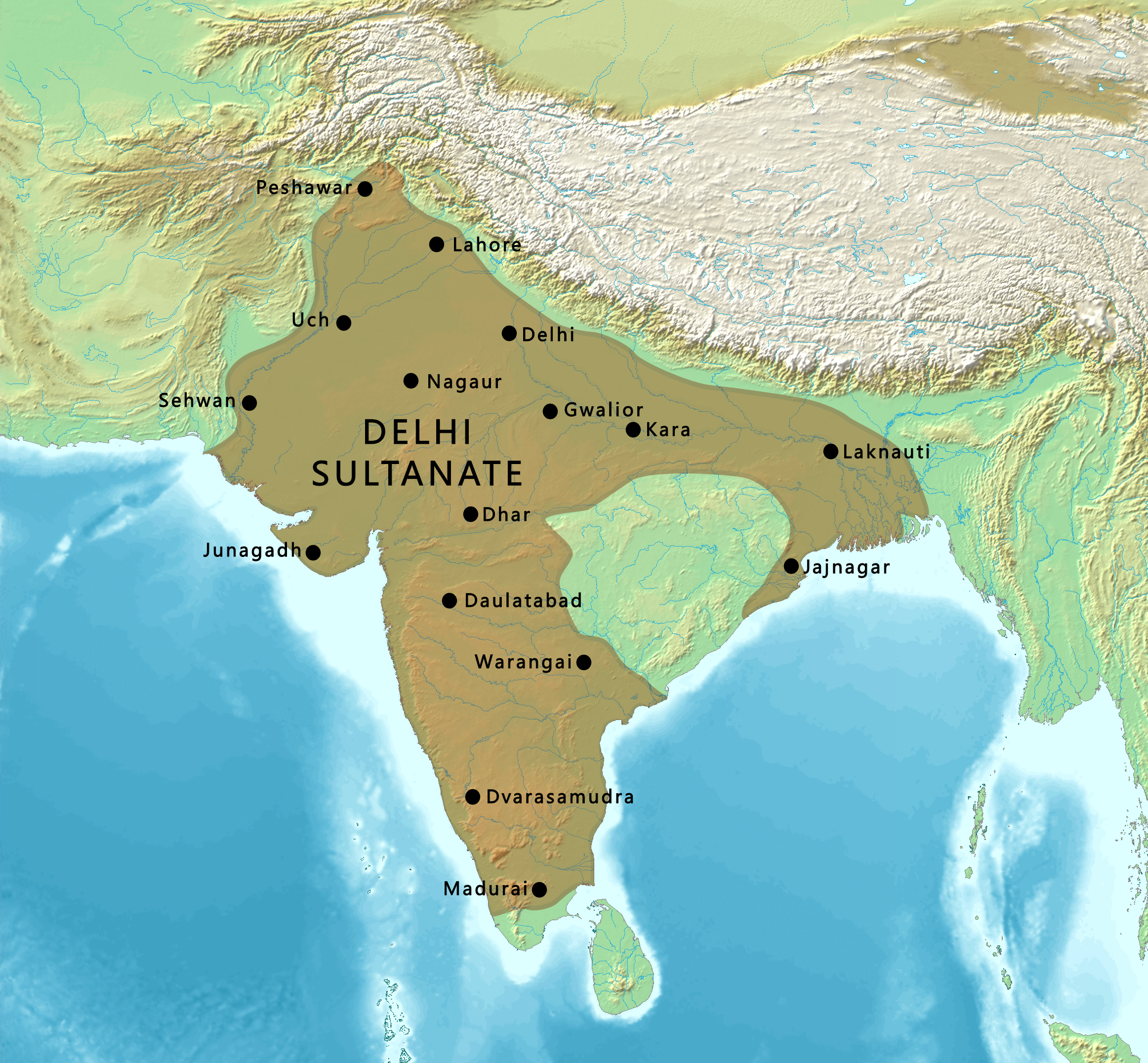
The Indian sultanates established in the 14th century all had majority Hindi populations despite their Muslim rulers. Although a few Hindu temples were destroyed or converted to mosques under their rule, some Muslim sultans supported them financially.

In 711 Muhammad ibn al-Qasim, an Arab military commander in service of the Umayyad caliphate, established a major Islamic Caliphate in Sindh. In addition to expanding his territory as far east as Bengal, he also conducted raids throughout the Indus valley, as well as attacking other Muslim sultanates. His military conquests brought Arabian culture to India, despite a low rate of Muslim immigration.

The Ghund clan continued the raids following Muhammad’s death, employing Central Asian mamluks (slave soldiers) as warriors. Under Turkish occupation, Afghan rulers raised slaves to become warriors, with some of them becoming generals. In most cases, territory they seized became the property of their owner although some mamluks were permitted to bequeath their conquests to their descendants.

Muhammad Ghund ordered his slave commander Gudaputine to occupy Delhi, on the western boundary of the Ganges Valley. The region, blessed by rich Ganges silt, was irrigated both by the river and runoff from the Himalayan foothills. After winning his freedom from Muhammad’s weak successors, Gudaputine declared himself sultan, creating the first of five Delhi sultanates.

Iltutmish, the third Sultan of Delhi sent tribute to the Abbasid Caliphate in Baghdad. However the takeover of Afghanistan by Genghis Khan* in 1221 led to greater independence for India’s Muslim sultanates, as well as an influx Central Asian and Turkmen immigrants. As the latter increased Persian influence in India (especially in architecture), by 1285 the Delhi sultanate had become fully independent of the Abbasid Caliphate.

There were always major succession battles among the mamluks controlling the Indian sultanates. Hereditary succession on began In 1290, after the Khalji clan of Afghan Turks seized power. Although Khalji himself conquered territory all the way to Magada at India’s southern tip, his successors failed to keep hold of his conquests.

The Khalji clan was overthrown by the slave commander who founded the Tughluq dynasty in 1320. the latter controlled the Delhi sultanate for over a century and issued India’ first copper coins.

The exploits of Firaz Shah, Tughlug’s successor, were recorded by Ziaunn Birhani in the the first Persian-style history of north India. Following Firaz’s death, incompetent administration led numerous provinces to break away from the Delhi sultanate:

  • Madura – 1334
  • Kashmir – 1339
  • Deccan – 1345
  • Jaunpar – 1394
  • Gujarat broke – 1407.

There were also numerous Hindu rajput rulers who overthrew the Muslim sultans who ruled them. The largest would eventually give rise to the Vijanagara Dynasty, on the South Deccan Plateau.

Over the next 125 years, north India underwent three significant regime changes:

  • 1398 – Tamerlane (Timur), a Muslim from Central Asia, sacks Delhi and installs a new regime, the Sayyids.
  • 1458 – the Lodi Afghan clan reconquers most of north India.
  • 1526 Babur (the Afghan descendant of both Tamerlane and Genghis Khan invades India and to establish the Mughal empire

*See The Great Mongol Conqueror Ghengis Khan Arrives on the Steppes

Film can be viewed free with a library card on Kanopy.

https://www.kanopy.com/en/pukeariki/watch/video/366254/366207

Feds Have a Plan to Block the Sun — What Are the Risks?

By  Joseph Mercola, DO, FACN

Solar radiation modification is a form of geoengineering that aims to cool off the Earth by reflecting sunlight back into space. The controversial strategy comes with significant risks, but that didn’t stop the White House from moving forward with a research plan for “solar and other rapid climate interventions.”

  • Solar radiation modification (SRM) is a form of geoengineering that aims to cool off the Earth by reflecting sunlight back into space.
  • The controversial strategy comes with significant risks, but that didn’t stop The White House from moving forward with a research plan for “solar and other rapid climate interventions.”
  • The congressionally mandated research plan is focused on atmospheric-based approaches, such as stratospheric aerosol injection (SAI) and marine cloud brightening (MCB).
  • SRM can have unintended consequences, including lower average precipitation, loss of biodiversity and impacts on food production, along with heightening geopolitical tensions.
  • There’s also a risk that climate modification technologies could be weaponized against the global population by controlling rainfall and drought.

SRM is a form of geoengineering that aims to cool off the Earth by reflecting sunlight back into space.

The controversial strategy comes with significant risks, but that didn’t stop the White House from moving forward with a research plan for “solar and other rapid climate interventions.”

The congressionally mandated research plan is focused on atmospheric-based approaches, such as SAI and MCB, as opposed to space-based approaches, which include mirrors in space or white roofs and other local-scale measures to increase surface reflectance.

The research “would help to prepare the United States for possible deployment of SRM by other public and private actors,” the report notes, suggesting the government is seriously considering the use of this extremely risky technology — if it hasn’t already decided to move forward.

What is stratospheric aerosol injection?

SAI involves injecting reflective aerosol particles into the stratosphere, where they reflect sunlight away from the Earth.

Volcanic eruptions are natural versions of SAI, but technological constraints surround man-made SAI, as “dispersing aerosols in sufficiently high altitudes is challenging,” according to a Climate Analytics report.

The Union of Concerned Scientists explained:

“In effect, SAI simulates what happens during large volcanic eruptions, when volcanoes emit small particles into the upper atmosphere (called the stratosphere). These particles reflect sunlight and lead to cooling for as long as they remain in the stratosphere, which may be up to a few years after injection.

[…]

The White House report also highlighted potential issues with SAI, noting:

“SAI approaches could worsen soil acidity, with impacts to food production, compared to warming at Representative Concentration Pathway 8.5 (RCP8.5) levels without SAI in some regions due to acidic deposition (e.g., the Pacific Northwest, southern Greenland, the Himalayas, and polar regions).

“The impacts of sunlight scattering could have negative effects on crop growth that harm nutrition and negate the benefits of limiting temperature increases using SAI. SRM would not address ocean acidification or its implications for ocean ecosystems.”

Other problems include the potential that SAI could result in increased exposure to particulate matter from the injected aerosols and “changes in radiative forcing,” which could offset any potential health benefits from SAI, such as reduced ozone formation.

There’s also concern that SAI could increase wildfires and smoke exposures in some areas, as well as increase health impacts due to waterborne disease in others.

What is marine cloud brightening?

MCB involves spraying salt or other chemicals into marine clouds in order to increase their reflectiveness.

“[…]

Little research into MCB has been conducted, but field trials have already begun in Australia’s Great Barrier Reef. Using a seawater sprayer attached to a barge, seawater is sprayed into the air, creating sea salt crystals.

“These crystals float into the sky to form a fog and bolster the existing clouds’ reflectivity,” according to the Great Barrier Reef Foundation.

The “brightened” clouds may also stay above the reef longer than ordinary clouds, reflecting even more sunlight.

The problem, however, is that this untested strategy could have unintended consequences.

“Potential negative effects could include influencing local weather patterns, potentially mildly suppressing rainfall over the reef and adjacent land,” the Reef Restoration and Adaptation Program explained.

David Keith, Gordon McKay Professor of Applied Physics at Harvard University, added that several “key risks” exist for marine cloud brightening, which is why his research team does not focus on it:

“Even if marine cloud brightening could work, it could affect large scale climate and weather patterns if it were used on a large enough scale, say to achieve a level of ‘radiative forcing’ that would be big enough to offset some of the greatest impacts of climate change.

“(This is because marine cloud brightening could only be implemented in limited areas, where the right kinds of clouds exist, which is perhaps only 10 percent of the planet’s surface.) There are several key risks that need to be better understood.”

Increasing geopolitical tensions

Adding to the controversy, the use of SRM carries “significant geopolitical risks,” the White House report noted.

An example of this occurred in 2023 when a startup team — Make Sunsets — said it had launched weather balloons containing helium and sulfur dioxide (SO2) into Mexican skies in order to alter the stratosphere.

The company was selling “cooling credits” via its website for $10, in exchange for releasing 1 gram of SO2. The Mexican government fought back, however, announcing plans to “prohibit and, where appropriate, stop experimentation practices with solar geoengineering,” causing the team to suspend its operations.

However, Make Sunsets is still reportedly planning to conduct further weather modification experiments in the U.S.

But the fact remains, if and when SRM becomes widely used, it will have global effects that transcend borders. Supercomputers have run models to predict how solar radiation management may affect different parts of the Earth, not only in terms of temperature but also rainfall and snowfall.

[…]

Will biodiversity suffer?

Among the risks outlined by the White House were those related to biodiversity.

[…]

In a news release from Springer Nature, it’s explained that, once started geoengineering is too dangerous to stop — but given the politicized nature of the technology, such rapid starts and stops are likely:

“Abrupt termination causes changes in local climates that are 2-4 times more rapid than those caused by climate change itself. …

“In many cases, rapid geoengineering threatens ecosystems by forcing species to move in one direction to maintain similar temperature conditions and a different direction for similar precipitation conditions.

[…]

Could geoengineering backfire, lead to agricultural control?

There are other concerns about geoengineering’s nefarious side, particularly since Bill Gates remains heavily invested in climate modification technologies that not only will destabilize the Earth’s climate systems more but also can be weaponized against the global population by controlling rainfall and drought.

In a previous interview I conducted with Vandana Shiva, Ph.D., she explained:

“The company that collects patents on gene-edited organisms, both in health and agriculture, is Editas, founded by a main financial investor for the Gates Foundation. Gates is also a big investor in Editas.

“So, here’s a company called Editas to edit the world as if it is a Word program. The two scientists who got the Nobel Prize this year have both been funded in their research by Gates. My mind went back to how Rockefeller financed the research, got the Nobel Prize, and then made the money.

“So, you finance the research. Then you finance the public institutions, whether they be national or international. You invest and force them down the path where they can only use what is your patented intellectual property.

[…]

“At the end of it, where does food come from? It comes from seed. He wants to control it. It comes from land. He’s controlling that. He’s [become] the biggest farmland owner [in the U.S.] But you need weather [control]. You need a stable climate.

“So, what could be a weapon of control of agriculture? Weather modification. He calls it geoengineering. This is engineering of the climate. Again, making it look like he’s going to solve global warming by creating global cooling.”’

Via https://childrenshealthdefense.org/defender/feds-block-sun-geoengineering-cola/

Lawmakers Introduce Free Speech Protection Act to Curb Government Censorship

House and Senate legislators introduced a new bill Thursday aimed at stopping federal employees from censoring free expression. The move follows recent hearings probing allegations of collusion between government agencies and Big Tech to silence protected speech.

House Judiciary Committee Chairman Rep. Jim Jordan (R-Ohio) and Sen. Rand Paul (R-Ky.), ranking member of the Senate Homeland Security and Governmental Affairs Committee, on Thursday introduced the Free Speech Protection Act.

According to a committee press release, the bill would:

“Prohibit executive branch employees and contractors from using their positions to censor and otherwise attack speech protected by the First Amendment. [It] will also impose mandatory severe penalties for those executive branch employees who censor speech.”

The proposed legislation comes on the heels of Thursday’s contentious U.S. House of Representatives hearing of the Subcommittee on the Weaponization of the Federal Government, which was organized to “examine the federal government’s role in censoring Americans,” “Big Tech’s collusion with government agencies to silence speech” and the ongoing Missouri v. Biden lawsuit alleging government censorship.

Robert F. Kennedy Jr., chairman on leave from Children’s Health Defense (CHD), testified during the hearing despite attempts to prevent him from doing so.

According to Jordan:

“Censorship is a major threat to freedom today. It is clear that Big Government must be more transparent, and that bureaucrats must be held accountable for censorship.

“The Free Speech Protection Act accomplishes that and gives individuals remedies for censorship to protect vital First Amendment freedoms.”

As part of protecting Americans’ First Amendment rights, the bill would also:

  • Mandate frequent publicly accessible reports from the heads of executive branch agencies detailing the communications between an executive branch agency and Big Tech.
  • Ensure that federal grant money is not misused to label media organizations as sources of misinformation or disinformation.
  • Terminate several programs and authorities that threaten free speech and other constitutionally protected rights.

Section 7 of the draft bill proposes the termination of the U.S. Department of Homeland Security’s Disinformation Governance Board — and bars any similar organization from being formed or funded in the future.

The bill would also require federal grant recipients to certify that funds are not being used to create lists of media outlets labeled as promoting misinformation or disinformation.

According to Paul:

“Americans are free people and we do not take infringements upon our liberties lightly. The time has come for resistance and to reclaim our God-given right to free expression.

“Under my Free Speech Protection Act the government will no longer be able to cloak itself in secrecy to undermine the First Amendment rights of Americans.”

Bill co-sponsor Sen. Eric Schmitt (R-Mo.) told Fox News the bill would prevent the government from outsourcing censorship efforts to universities like Stanford and the University of Washington, both of which are defendants in a censorship lawsuit filed in May.

U.S. District Judge Terry Doughty, presiding over the Missouri v. Biden case, wrote in his July 4 ruling that the allegations against the government, if true, represented the “most massive attack against free speech in United States’ history.”

Doughty added, “Plaintiffs are likely to succeed on their claim that they have shown irreparable injury sufficient to satisfy the standard for the issuance of a preliminary injunction.”

Weighing in on the proposed bill, the Daily Torch wrote, “This legislation’s far-reaching impact recognizes that the temptation to use the federal government to shout and shut down your political opposition is strong.”

CHD legal roundtable participants appalled at censorship attempts by elected officials

Following the hearing, CHD hosted a legal roundtable on First Amendment rights and the government’s suppression of free speech. Roundtable participants criticized the subcommittee’s attempt to censor a censorship hearing.

During the roundtable, Rick Jaffe, an attorney who works with CHD on censorship-related cases, said:

“I never thought I’d see the day where Democrats would make such a blatant attempt to not only suppress speech but just to lie. The level of ad hominem attacks, I thought was … let’s just call it regrettable.”

Kim Mack Rosenberg, CHD acting general counsel, said it was “really sad and somewhat painful to watch these very uncivil attacks on Mr. Kennedy and on others,” adding that through such attacks, the First Amendment “got lost … by a number of the committee members.”

The roundtable addressed the July 4 ruling in Missouri v. Biden and CHD’s involvement in two other censorship lawsuits: a lawsuit against Facebook in the 9th Circuit U.S. Court of Appeals and an antitrust lawsuit CHD filed against the Trusted News Initiative, a consortium of legacy media companies.

Participants also discussed the possibility of Congress passing an anti-censorship law, with attorney Jed Rubenfeld calling for “a federal statute that stops the large social media companies from discriminating on the basis of political opinion.”

According to Rubenfeld, Florida and Texas recently passed state laws with such provisions. And while it’s unclear whether states possess such authority, Rubenfeld said, “The federal government certainly would” — via an amendment to Section 230 of the Communications Decency Act, which gives internet providers legal protections for hosting, moderating and removing most user content.

Such legislation could work in tandem with proposals like the Free Speech Protection Act.

[…]

Via https://childrenshealthdefense.org/defender/free-speech-protection-act-government-censorship/

​

Israel and Ukraine – Zionists and Nazis collide

Demonstrators gather at Habima Square in Tel Aviv on 20 March to attend a televised video address by Ukraine’s President Volodymyr Zelensky to the Israeli Knesset (AFP)

Vanessa Beeley

Zionism has deep roots in Ukraine. Jews were a significant element in the settler colony of Odessa.

Along with a range of non Jewish colonizers they settled on land from which Muslims and others had been expelled in the settlement around Khadjibey in 1794. Ukraine, especially Odessa, was a key locus of the rise of the Zionist movement in the twentieth century.

The Revisionist leader Vladimir Jabotinsky hailed from Odessa. Zionist ambivalence about Ukrainian nationalism continues to this day. A few Ukrainian Zionists have warned of the rise of Nazi movements in Ukraine. But more generally, in the Zionist movement today there has been a concerted attempt to minimize the presence and political influence of Nazis in Ukraine.

Zionists are engaging in other words in Nazi apologism.

The much vaunted Ukrainian “counter-offensive” first mooted for the spring of 2023 has thrown up many and varied images and videos of wrecked Western military equipment .

The Russian military has made short shrift of even the supposed superior German Leopard tanks. Western military stocks are running perilously low – even Jens Stoltenberg of NATO has sounded the alarm, saying that “our weapons and ammunition stocks are depleted and need to be replenished, not just in Germany, but in many countries across NATO.

Palestine Declassified. With Vanessa Beeley, Dr. David Miller and Chris Williamson:

Bill Gates, Mosquitoes and Malaria in Texas and Florida

Guy Hatchard

THERE has been a major eruption of fury because malaria has been found in mainland America in Texas and Florida. These are the same places where Bill Gates’s genetically modified mosquitoes have been released in their millions. This was part of an on-going programme funded by Gates for over ten years which is supposed to banish malaria from the world. It hasn’t.

The fun started when Twitter bloggers @TexasLindsay and @TheChiefNerd, among others, began to dig up not just the hype Gates has been promoting for more than ten years promising malaria eradication through genetic modification, but also the scientific concerns voiced at the time. Lo and behold, scientists suggested that the Gates programme would eventually lead to mutated mosquitoes which would promote the spread of malaria more effectively.

You will appreciate that this is relevant to the safety of genetic modification. As such, it was bound to raise the ire of tame ‘fact-checkers’. Associated Press weighed in on cue by splitting hairs. They noted that whilst the Bill and Melinda Gates Foundation ‘supported’ Oxitec (the company releasing modified mosquitoes in Florida and Texas) with money, that doesn’t actually quite fit the definition of ‘funding’ the particular work being done in the US. AP also pointed out that the Florida malaria cases occurred 280 miles away from the site of the experiments, as if mosquitoes can’t fly or ride the wind.

Whatever is going on here, it is not being controlled. A deep dive into the Twitter threads linked above will show you that the Gates mosquito programme has never achieved any of its promised results. No worries, though, Gates is not just funding genetic modification of mosquitoes but also has a bet each way with his malaria vaccines. A win-win investment strategy for the man with a deep interest in population control (and money).

Where could the modification of mosquitoes really be taking us?

I have previously discussed the known possibility of general system collapse following genetic modification and editing, and suggested that this might be related to the record levels of excess deaths in New Zealand. I have pointed out that genetic structures are highly complex, evidenced by the trillions of atomic placements and relationships involved.

There is another way to consider this. These placements and relationships are highly specific, precisely because they support the highly specific capabilities of human physiology and psychology as well as the general stability.

The long-standing notion that replacing or editing targeted genes will not undermine the other genetic characteristics of organisms that make them what they are and enable them to function as such is a belief rather than a matter of science. A belief that increasingly looks misguided and dangerous. Using mRNA vaccines, biotechnology has blundered into the genetic modification of what it is to be human.

As our newspapers characterise the unrest in France as the Brink of Total Anarchy, a sort of general system collapse of society, we might also contemplate what has changed in the last three years that has brought us to the brink? It is not a million miles away from biotechnology.

[…]

Via https://www.conservativewoman.co.uk/bill-gates-and-the-total-failure-of-his-malaria-eradication-programme/

The Impact of Satellite EMF Radiation on Climate

By

A recent study by a team of scientists is exploring the potential link between satellites and Earth’s magnetic field, and its impact on climate.

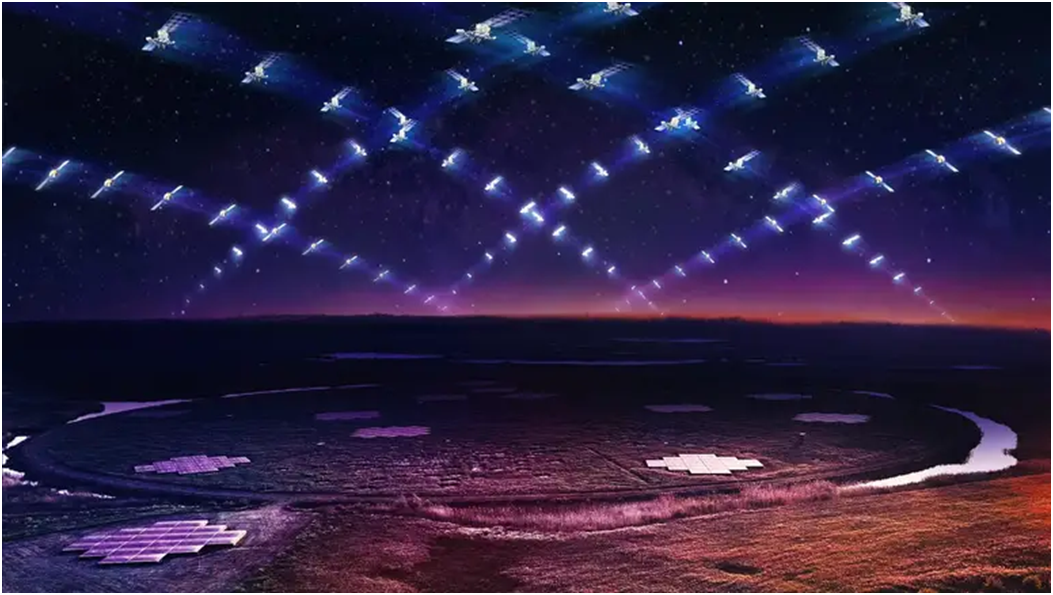
The research team, led by Dr. Robert Smith from the University of California, Los Angeles, is investigating the effects of the electromagnetic field generated by satellites orbiting the planet on Earth’s climate. Dr. Smith and his team hypothesize that the electromagnetic fields generated by satellites could interact with Earth’s magnetic field to cause changes in atmospheric conditions and climate patterns.

The research team has deployed various instruments to measure the strength of Earth’s magnetic field and satellite-generated electromagnetic fields in different parts of the planet. The team is analyzing the data to understand the extent to which the satellite-generated fields could be influencing Earth’s magnetic field and, consequently, the climate.

“We are very interested in understanding the interaction between Earth’s magnetic field and the fields generated by satellites,” said Dr. Smith. “We hope to better understand how these fields could be affecting climate patterns and atmospheric conditions.”

The research team is also exploring the potential for manipulation of the Earth’s magnetic field to affect climate change. If their research proves successful, this could provide a way to mitigate the effects of climate change.

The research team is hopeful that their research will help to shed light on the complex relationship between the Earth’s magnetic field, satellite-generated fields, and climate change. Their findings could provide valuable insight into how to better manage climate change.

Analyzing the Long-Term Effects of Satellites on Earth’s Magnetic Field and Its Impact on Life

Space exploration has brought about a new era of technological advances and a better understanding of our universe. One of the most important and intriguing advancements of this era is the use of satellites to study and monitor Earth’s magnetic field. While satellites provide invaluable data, it is important to consider the long-term effects they have on the planet’s magnetic field and what impact this may have on life on Earth.

Earth’s magnetic field is generated by the planet’s core and is essential for protecting the planet against harmful cosmic radiation. This field is constantly changing, with variations in the strength and direction of the field at different locations. Since the 1950s, satellites have been used to measure and monitor Earth’s magnetic field, providing valuable data to researchers.

The use of satellites has had both positive and negative impacts on the planet’s magnetic field. On the one hand, satellites can help scientists to better understand Earth’s magnetic field and make more accurate predictions about its behavior. On the other hand, satellites can also interfere with the planet’s natural field, causing magnetic perturbations and potentially influencing the behavior of migratory animals and other creatures.

The long-term effects of satellites on Earth’s magnetic field are still largely unknown. Some studies have suggested that the magnetic perturbations caused by satellites can have a lasting impact on the planet’s magnetic field, potentially leading to changes in the behavior of migratory species. Other studies have suggested that the impact of satellites on the magnetic field is minimal and does not pose any risk to life on Earth.

The effects of satellites on Earth’s magnetic field should not be taken lightly. As more satellites are launched into space, it is crucial that scientists understand the long-term impacts they may have on the planet’s magnetic field and its impact on life. With this understanding, researchers will be better equipped to make informed decisions about the use of satellites and their implications for the future of Earth.

Exploring the Potential Impact of Artificial Satellites on Earth’s Magnetic Field and Its Consequences

Recent studies have suggested that artificial satellites could have a significant impact on Earth’s magnetic field. This could have far-reaching consequences, with potential implications for both our planet’s environment and its inhabitants.

It is known that satellite constellations, such as those used for telecommunications, can cause artificial magnetic fields. These fields can be up to a magnitude higher than those of Earth’s natural magnetic field. In addition, the artificial fields can be highly variable, meaning their effect on Earth’s environment could be unpredictable.

Scientists have looked at the potential impact of such constellations on Earth’s environment. It is believed that the fields could disrupt the Earth’s magnetosphere, which acts as a shield against solar and cosmic radiation. The effects of this disruption could be far-reaching, including changes in the distribution of charged particles around the planet which could, in turn, affect the ozone layer.

In addition, the artificial magnetic fields created by satellite constellations could interfere with the migration of animals, which rely on Earth’s magnetic field to navigate. This could have significant consequences for species that depend on seasonal migration for survival.

At present, the potential impact of satellite constellations on Earth’s magnetic field and its environment is largely unknown. However, further research is needed to understand the potential consequences of this phenomenon. An understanding of the potential implications is essential in order to ensure that these artificial magnetic fields do not cause significant harm to our planet or its inhabitants.

[…]

Via https://ts2.space/en/the-impact-of-satellites-on-the-earths-magnetic-field/

Explaining The Mass Exodus from America’s [Faux] Left-Wing Cities

Michael Snyder

Over the past several years, thousands of businesses and millions of people have left America’s large left-wing cities.  Of course when moderates and conservatives leave, that just causes those cities to shift even further to the [faux] left, and the politicians just implement even more self-destructive policies.  So now many of our biggest metropolitan areas find themselves caught in a “death spiral”, and there appears to be little hope of turning things around any time soon.  The politicians in these left-wing cities clearly understand that their once-thriving communities have been transformed into crime-ridden, drug infested hellholes, but it would go against everything that they believe to do what is necessary to fix things.

When I say that there has been a “mass exodus”, I am not exaggerating one bit.  The population losses that we have seen over the past several years have been absolutely unprecedented…

According to the most recent US Census figures, we are in the middle of a mass exodus from America’s largest and most leftwing cities. The data reveals that New York City alone lost over half a million residents, which is more than the entire population of Miami. Additionally, Chicago, often referred to as “Chiraq” by some individuals, experienced a decline of nearly 100,000 residents. Another notable city, San Francisco, has seen a larger share of population loss than any other major city in the United States.

I love to pick on San Francisco, because it is a perfect example of this phenomenon.  It is one of the wealthiest cities on the entire planet, and a few years ago it was bustling with activity.

But now everything has changed.  One man recently went downtown to capture footage of what the city looks like now, and he discovered that store after store is permanently closed…

In the Union Square area, 203 retailers were open in 2019.

Today, there are only 107 still operating, and another one just announced that it will also be closing…

Century-old Goorin Bros. haberdashery has joined a host of stores shutting in San Francisco’s Union Square, amid widespread crime and plummeting footfall.

The hat boutique has become the latest casualty of the so-called ‘retail apocalypse’ gripping downtown San Francisco.

‘It’s never an easy decision but it was time,’ a company representative wrote in a statement.

What a tragedy.

The retailers that insist on remaining open in downtown San Francisco find themselves resorting to extreme measures in a desperate attempt to survive…

Theft has become so bad in San Francisco that some stores are now padlocking shut their freezers and tying metal chains to ensure the doors remain closed overnight.

Video shot by one potential shopper at a local Walgreens in the city sees aisle after aisle of products locked away behind Perspex and glass, out of the reach of thieves.

Even lower value items such as toothpaste and tissues are kept under lock and key, such is the rampant theft that has been occurring in many of the city’s pharmacies and supermarkets.

Over in Oakland, overall crime is up 42 percent since the first half of 2021.

The Bay Area should be one of the nicest places to live in the entire country, but instead it is one of the worst.

Of course the truth is that crime is on the rise everywhere.  Vehicle theft is absolutely exploding, and that is particularly true for Kia and Hyundai models that you can apparently steal “with just a USB cable”…

The US is battling a surge in motor vehicle thefts this year, with cases more than doubling in Rochester, Cincinnati, and other cities, as thieves hotwire vulnerable Kia and Hyundai models with just a USB cable.

A study by the Council on Criminal Justice (CCJ) on Thursday shows how car thefts jumped 33.5 percent across major cities, as thieves brazenly share how-to videos of hotwiring vehicles on TikTok.

That adds up to 23,974 more stolen motors across the 32 cities studied.

If crime rates continue to soar, it won’t be too long before many cities are completely unlivable.

But instead of trying to fix this crisis, many of our politicians seem intent on making it even worse.

In Illinois, they have actually eliminated cash bail, and many are warning that this is going to cause all sorts of new problems…

Illinois has become the first state in the nation to eliminate cash bail, clearing the way for potentially dangerous criminals to be set free on the streets.

Democratic Gov. J.B Pritzker celebrated the step Tuesday, but critics reacted with incredulity.

Illinois Republican Party Chair Don Tracy said the law will ‘significantly undermine public safety by releasing from custody dangerous, violent criminals at a time when police are under attack and Illinois families and crime victims already fear for their personal safety.’

Our politicians love to be soft on violent criminals, but if you cross the IRS you could soon have dozens of armed agents in tactical gear show up at your door…

On Wednesday, at least 25 to 30 IRS agents in tactical gear raided a business along Southeast Slater Street in Stuart, Florida, Fox 29 reported.

The raid, which began around 9:30 a.m. on July 12th, saw agents entering and leaving the premises of Tee Off Temps and Elite Payroll Solutions, each time laden with boxes and large backpacks.

The agents with their clothing branded with “Police, IRS, Criminal Investigation,” shocked local witnesses.

“There’s at least 25, 30 cops out here,” said one witness.

What in the world has happened to us?

Our priorities have gotten way out of whack.

If you are considering moving away from a major city, I can’t blame you one bit.

Vast numbers of Americans have already moved to red states and rural communities, and many more will choose to relocate in the months ahead.  For much more on this, please see my previous article entitled “Millions Of Americans Are Relocating Just Prior To The Great Chaos That Is Coming”.

[…]

Via https://michaeltsnyder.substack.com/p/explaining-the-mass-exodus-out-of

How Climate Models Get Clouds Wrong

Ron Clutz

Science Matters

Why Did IMF Disinvite Nobel Laureate?

CO2 Coalition explains.  Nobel Laureate (Physics 2022) Dr. John Clauser was to present a seminar on climate models to the IMF on Thursday and now his talk has been summarily cancelled. According to an email he received last evening, the Director of the Independent Evaluation Office of the International Monetary Fund, Pablo Moreno, had read the flyer for John’s July 25 zoom talk and summarily and immediately canceled the talk. Technically, it was “postponed.”

Dr. Clauser had previously criticized the awarding of the 2021 Nobel Prize for work in the development of computer models predicting global warming and told President Biden that he disagreed with his climate policies. Dr. Clauser has developed a climate model that adds a new significant dominant process to existing models. The process involves the visible light reflected by cumulus clouds that cover, on average, half of the Earth. Existing models greatly underestimate this cloud feedback, which provides a very powerful, dominant thermostatic control of the Earth’s temperature.

More recently, he addressed the Korea Quantum Conference where he stated, “I don’t believe there is a climate crisis” and expressed his belief that “key processes are exaggerated and misunderstood by approximately 200 times.” Dr. Clauser, who is recognized as a climate change skeptic, also became a member of the board of directors of the CO2 Coalition last month, an organization that argues that carbon dioxide emissions are beneficial to life on Earth.

What Difference Clouds Make in Climate Models

Obviously the Clauser presentation is not accessible and I don’t find a link to a publication concerning his treatment of clouds in climate models.  But we can see how the models react to clouds by means of an important paper The Mechanisms of Cloudiness Evolution Responsible for Equilibrium Climate Sensitivity in Climate Model INM-CM4-8 by Evgeny Volodin AGU 03/12/2021.  Excerpts in italics with my bolds.

Abstract

Current climate models demonstrate large discrepancy in equilibrium climate sensitivity (ECS). The effects of cloudiness parameterization changes on the ECS of the INM-CM4-8 climate model were investigated. This model shows the lowest ECS among CMIP6 models. Reasonable changes in the parameterization of the degree of cloudiness yielded ECS variability of 1.8–4.1 K in INM-CM4-8, which was more than half of the interval for the CMIP6 models.

The three principal mechanisms responsible for the increased ECS were increased cloudiness dissipation in warmer climates due to the increased water vapor deficit in the non-cloud fraction of a cell, decreased cloudiness generation in the atmospheric boundary layer in warm climates, and the instantaneous cloud response to CO2 increases due to stratification changes.

Introduction

In CMIP6 the lowest and highest ECS (Equilibrium Climate Sensitivity) values are 1.8 and 5.6 K, respectively (Zelinka et al., 2020). Climate response to some external forcing produces feedbacks. Positive feedback enhances the response to forcing, negative feedback weakens it. Analysis of climate feedback shows that cloud feedback is the principal reason for the broad range of ECS (Zelinka et al., 2020). Clouds (especially low clouds) are significantly reduced with global warming in models with high ECS, resulting in positive feedback. Models with low sensitivity show small cloudiness changes with global warming; some models feature an increase in low clouds in warmer climates, creating a negative feedback.

Clouds produce shortwave and longwave radiative effects. The shortwave cloud radiative effect (SW CRE) is generally negative, because cloudiness reflects solar radiation that would otherwise be absorbed by the climate system. The shortwave effect is usually strongest for low clouds that have high amounts of liquid water and high albedos. The longwave cloud radiative effect (LW CRE) is generally positive, because cloud tops are usually much colder than the surface of the Earth; thus, thermal radiation from the cloud top is much lower than that from the surface. Negative/positive CRE produces cooling/warming from clouds.

The goal of this study is that we turn off some mechanisms responsible for large-scale cloud evolution that lead to increase or decrease ECS, and ECS is changed by the factor of more than 2. The role of a chosen mechanism in decrease or increase of ECS can be clearly seen. At the same time, all model versions show preindustrial climate with systematic biases compared to that for the version used in CMIP6. A realistic way of estimating the impact of change in parameterization on cloud feedback by keeping the cloud mean state realistic in all model versions and running 4xCO2 experiments rather than uniform +4K experiments are used in this study.

Table 1. Summary of Model Versions

Note. Equilibrium climate sensitivity ECS (K), effective radiation forcing ERF (W m−2), climate feedback parameter λ (W m−2 K−1), shortwave cloud radiative feedback СRFSW, longwave cloud radiative feedback СRFLW, net cloud radiative feedback СRFNET (W m−2 K−1) and instantaneous cloud radiative forcing change ΔCREINST (Wm−2).

The ECS estimation method is commonly used in CMIP5 and CMIP6 and was proposed by Gregory et al. (2004). The two model runs performed were the control run, in which all forcings were fixed at preindustrial levels, and the run where the concentration of CO2 in the atmosphere was four times higher than in the control run (4CO2 run). The initial state for both runs was the same and taken from a sufficiently long control run. Each run had a length of 150 years. Subsequently, the global mean difference of GMST and the heat balance at the top of atmosphere (THB) for 4CO2 and the control run were calculated for each model year.

Results of the sensitivity experiments performed with the five climate model versions.

Version 1 shows a very low ECS of 1.8 K due to a low negative climate feedback parameter value of −1.46 W m−2 K−1 (interval from −0.6 to −1.8 W m−2 K−1 for CMIP5 and CMIP6) and a low ERF value of 2.7 W m−2 (intervals of 2.6–4.4 and 2.7–4.3 W m−2 for CMIP5 and CMIP6, respectively, Zelinka et al., 2020). The low ECS was accompanied by mostly negative CRF in both the SW and LW spectral intervals (Figure 2 below).

Figure 2  Shortwave (top), longwave (middle) and net (bottom) cloud radiation feedback (Wm−2 K−1) for model version 1 (purple), 2 (yellow), 3 (red), 4(green), and 5 (blue). Data are multiplied by cosine of latitude.

The parameterization replacement scheme for cloudiness in version 2 dramatically changed all the parameters, and the ECS more than doubled to 3.8 K. ERF increased to 3.8 W m−2, without changes to the radiation code because ΔCREINST changed from −0.88 W m−2 to −0.13 W m−2. Additionally, the climate feedback parameter increased from −1.46 W m−2 K−1 to −1.0 W m−2 K−1. In version 2, global warming was associated with decreased cloudiness at all levels. The net cloud radiative feedback became positive. Version 2 yielded significantly increased net and SW cloud radiative feedbacks at all latitudes compared with version 1. Analysis of the sensitivity experiment results of versions 3–5 helps understand the mechanisms of these significant changes.

Version 3 features a suppressed mechanism of high tropical cloudiness due to decreased convective mass flux and higher ECS than version 2 (4.1 K); however, the change is not very pronounced. The LW CRF in the tropics increases in version 3 compared to version 2. The decrease in SW CRE is not very pronounced; therefore, increased net CRF increases ECS. This confirms our hypothesis that suppressing the decrease in tropical cloudiness should increase ECS and that the impact of this mechanism on ECS is noticeable but not very strong.

ECS is noticeably lower in version 4 (2.9 K) than in version 2. Thus, the mechanism of the decrease in boundary layer cloudiness due to decreased cloudiness generation by boundary layer turbulence is crucial for ECS. SW and LW CRF decreased in version 4 compared to version 2, primarily in the tropics and subtropics.

The mechanism of increased cloud dissipation under global warming conditions was suppressed in version 5, ECS was reduced to 2.5 K, and the climate feedback parameter decreased to −1.56 W m−2 K−1. Additionally, the SW CRF decreased in version 5 compared with version 4, primarily in the tropics and subtropics. In this version, all the mechanisms that decrease clouds with increased temperature, as raised in the previous section, are suppressed. The principal reason for the ECS difference between versions 1 and 5 is the instantaneous adjustment rather than the feedback (see Table 1). ΔCREINST values in versions 1 and 5 were −0.88 and 0.16 W m−2, respectively.

Conclusion

[…]

Our results confirm those by Bony et al. (2006), Brient and Bony (2012), and others that a significant change in the response of low clouds to global warming leads to significant changes in cloud radiative feedback and ECS.