The Most Revolutionary Act

Uncensored updates on world events, economics, the environment and medicine

The Most Revolutionary Act
Unknown's avatar

About stuartbramhall

Retired child and adolescent psychiatrist and American expatriate in New Zealand. In 2002, I made the difficult decision to close my 25-year Seattle practice after 15 years of covert FBI harassment. I describe the unrelenting phone harassment, illegal break-ins and six attempts on my life in my 2010 book The Most Revolutionary Act: Memoir of an American Refugee.

EU’s Green New Deal pushing Europe into decline

Dark blue banner with the white headline 'EU’s Green Deal is pushing Europe into decline' over a green EU-flag background with a red underline and yellow stars.

By Samuel Furfari, as published by Watts Up With That on 30 July 2026

An Energy Institute report reveals a Europe clinging to the pretence of leading an “energy transition” as the continent declines under the weight of climate policies whose quixotically utopian objectives are negated elsewhere by fossil fuel-supported economic growth.

Data from the 75th edition of the annual ‘Statistical Review of World Energy‘ will surprise only those ignoring the facts: The world continues to depend massively on fossil fuels [more correctly, hydrocarbon fuels]. Solar and wind technologies, while expanding, still lag ever-rising energy demand, which last year reached a record 600 exajoules. (That’s 600 quintillion joules, where a joule is equal to the work necessary to create one watt of power for one second.)

Of total primary energy consumption, 86% came from fossil fuels – oil at 33.5%; coal, 27.6%; and natural gas, 25.1%. Accounting for just 3% were solar and wind, which are heavily promoted by the European Commission over the much-demonised hydrocarbons.

From 2015-2025, the first decade of the Paris Agreement on climate change, global energy consumption rose more than 14%, with sharply contrasting dynamics. European Union use declined about 1% annually, while consumption in the Asia-Pacific region grew 2.6%.

Europe’s decreasing energy use is no triumph of ecological heroics but rather an outcome of the assault of the EU Green Deal on competitiveness and its predictable deindustrialisation and economic decline. For example, in 2025, growth in gross domestic product for some European countries was close to zero, while the US was 2% under the hydrocarbon-friendly Trump administration. Some coal-burning Asians experienced multiples of that.

Noting this EU tragedy, the European Central Bank’s 2024  report on competitiveness blamed not climate policies directly but instead high energy prices the policies had wrought – a sleight of hand accommodating EU politics.

Meanwhile, the growth of fossil fuels outside the EU continued to outstrip significantly that of solar and wind. Contrary to the Brussels narrative that the gap between so-called renewable technologies and fossil fuels is narrowing, the reality, in absolute terms, is a widening chasm. The EU has indeed integrated renewables into its grid, doing so at the cost of affordability and reliability. However, this leadership remains purely symbolic because the rest of the world is accelerating its use of fossil fuels far faster than that of renewables.

In places like Asia, the expansion of hydrocarbon use concurrently with impressive economic growth was more than coincidental. It was necessary, and China and India led the way.

Early this century, the impetus for Chinese growth was the lesson of the Soviet Union’s collapse, a result of deplorable living standards and a dim outlook for the future. The Chinese Communist Party recognised that growth was needed to maintain its legitimacy and that abundant, cheap energy – mainly coal – would be the critical ingredient.

This prosperity is good news to everybody but those obsessed with carbon dioxide (CO2) emissions, the bogeyman of the climate industrial complex. In its drive to cut emissions by 90% by 2040, the EU has reduced emissions by 554 million metric tonnes under the Paris Agreement as the rest of the world increased its own by 3 billion metric tonnes – fivefold in the opposite direction. The European effort is incinerated almost instantly by the combustion of fossil fuels elsewhere to support increased economic activity.

Most damning for 30 years of climate diplomacy is that global industrial emissions have risen by 67% since the adoption of the United Nations Framework Convention on Climate Change (“UNFCCC”) in 1992, according to the 2026 ‘Statistical Review of World Energy’. While the EU cut its emissions in that time by about 30%, the effort, achieved at enormous cost and deindustrialisation, has been erased by others’ pursuit of human flourishing.

Compared with previous editions, the language of the latest Energy Institute analysis is markedly more favourable to renewables. One explanation may be the publisher’s collaboration with Ember, a self-identified “energy think tank that aims to accelerate the clean energy transition with data and policy.” The Energy Institute itself seeks “to accelerate a just, secure, and low-carbon energy transition.”

Obviously, our scepticism about the EU’s green agenda is based on the data presented in the report, not on the publishers’ interpretation of it. We sought to contrast the pathetic product of EU energy policy with the promising economic rise of others.

Despite the omnipresent rhetoric of the energy transition, the evidence must be faced: The dominance of fossil fuels in the world energy system persists even as wind and solar, expensive and intermittent, expand. The world is undergoing an energy addition, not a transition, as new technologies supplement the growing capacity of legacy sources.

The great majority of mankind aspires to more prosperity, which requires abundant and cheap energy – what the EU employed before adopting ecological dogma. The clash between climate ambitions and economic aspirations will only intensify.

[…]

Via https://expose-news.com/2026/07/30/eus-green-deal-is-pushing-europe-into-decline/
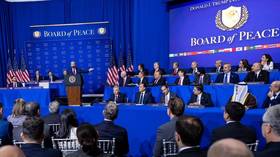
Hamas accepts Trump’s Gaza disarmament plan in principle

Hamas accepts Trump’s Gaza disarmament plan in principle – official (VIDEOS)

RT

31 July 2026

The group is ready to fully disarm contingent on Israel’s withdrawal from the Palestinian enclave, media reports citing a senior Hamas official claim

Palestinian militant group Hamas has agreed to completely disarm in Gaza under US President Donald Trump’s Board of Peace plan, although Israel must also meet a series of conditions as part of the agreement, according to a senior official.

Ghazi Hamad, a member of the Hamas negotiating delegation, confirmed to Al Jazeera on Friday that an agreement has been reached, adding that an official statement will be released soon.

“These negotiations were difficult and hard, and we tried to reach the best possible formula that was achievable,” Hamad, whose remarks were also carried by Reuters and the BBC, was cited as saying. He stressed, however, that Israel must approve the phased disarmament, adding that Hamas will not implement any part of the agreement unless Israeli forces fulfilled their obligations, particularly withdrawing from Gaza and advancing reconstruction in the Palestinian territory.

“We will not take any action regarding disarmament prior to Israel’s withdrawal from the [Gaza] Strip,” he stated.

Hamad also told the BBC that the group insists on the wording “inventorying and storing weapons” under Palestinian oversight rather than handing them over to Israel.

Trump breaks the news

The news first emerged when Trump announced on Truth Social on Thursday that his Board of Peace has reached a “historic agreement” on the complete disarmament of Hamas and every other armed group in Gaza, calling it a “monumental step toward lasting peace and security” and a major milestone in his 20-point plan for the enclave.

“The agreement will be carried out in carefully structured phases,” the US president wrote. “As disarmament is completed, Israeli forces will withdraw, and the International Stabilization Force will work with a new Palestinian police force to take responsibility for Gaza being safe for its residents and its neighbors.”

Trump said Gaza would eventually be governed by a “new Palestinian government” working closely with the Board of Peace. He thanked Egypt, Qatar, and Türkiye for mediating the talks, insisting the territory would no longer be allowed to serve as a base for attacks against Israel.

Board of Peace Director-General and High Representative for Gaza Nickolay Mladenov confirmed the breakthrough in a post on X.

“Today, agreement has been reached on the decommissioning of weapons and civilian transition in Gaza. It took months of very difficult negotiations to get here,” he wrote, adding that there were several moments when he “did not believe we would make it” and insisting the Israeli withdrawal “must move in lockstep” with Hamas decommissioning.

Reports published shortly before Trump’s announcement, however, suggested significant details remain unresolved. Hamas reportedly wants to retain “personal” small arms, while heavy weapons would be stored under the supervision of a Palestinian body rather than destroyed. It also seeks amnesty for members of the disbanded armed formations and wants the process synchronized with an Israeli withdrawal rather than surrendering all weapons in exchange for a promise that Israeli troops would later leave.

It is realistic to expect Hamas to disarm now that the group has “made the strategic decision” to do so, Ramallah-based journalist Mohammed Najib told RT. He added, however, that the reported deal can only succeed if it is backed by international guarantees and Israel follows through on its commitments.

”Hamas concluded that no construction can take place in Gaza if it continues to reject the disarmament. So they agree to this issue,” he said, adding that “as this agreement was declared by US President Donald Trump, Netanyahu cannot say no to it.”

Saad Nimr, a professor of political science at Birzeit University, also argued that Hamas is unlikely to give up its weapons before Israel begins withdrawing from Gaza, as the group no longer trusts Israel to honor ceasefire commitments.

“The more Israel gets out of Gaza, the more Hamas will give up their weapons,” he told RT, arguing that any disarmament would have to happen in parallel with an Israeli pullout.

Israel’s reaction

Earlier in the day, unnamed sources told Reuters that talks in Cairo between mediators and Hamas leaders on implementing the Gaza peace plan had made rare progress, though an Israeli official said the proposed terms were not satisfactory. Following Trump’s announcement, the Times of Israel reported, citing an unnamed source, that the agreement had been signed by Hamas negotiators, the board, and the mediating countries, but that “the Israeli office” issued a statement saying the disarmament proposal did not meet Israel’s demands.

Israel has yet to comment officially, although members of the government have already voiced skepticism and opposition.

“Israel says it will not take any action until Hamas is disarmed with its weapons, tunnels and infrastructure and we all understand the complexity of this,” Moshe Sa’ada of Israeli Prime Minister Benjamin Netanyahu’s Likud party told public broadcaster Kan News. “Hamas is already saying that it’s the other way around: that it expects Israel to withdraw and only afterwards it will disarm.” Sa’ada added that he still believed there would ultimately be “no other option” in Gaza “apart from military rule and end-to-end occupation.”

Right-wing National Security Minister Itamar Ben-Gvir also blasted the emerging deal before Trump’s social media post.

“You only talk with Nazis through the crosshairs – and no other way,” he wrote on X. “The only solution in Gaza to which Israel is willing to be a partner is encouraging emigration and destroying Hamas.”

An official told the BBC that if Israel decides not to withdraw as part of the peace plan, Trump would be “very disappointed.”

The announcement came as Israeli strikes continued across Gaza despite the ceasefire introduced last October. The Gaza Health Ministry said hospitals received the bodies of six people on Thursday, along with 34 wounded patients. The dead reportedly included an eight-year-old child killed in a strike on a displacement camp in Khan Younis and an 18-month-old baby killed when a home in the Bureij refugee camp was bombed. According to Gaza health authorities, at least 73,341 Palestinians have been killed and more than 174,000 wounded since Israel launched its military campaign in retaliation for the deadly Hamas raid of October 2023.

Trump’s Board of Peace was initially presented as a temporary body overseeing Gaza’s reconstruction and the transition to an unelected Palestinian technocratic administration. Its founding charter, however, authorizes it to pursue “peace-building” initiatives in other conflict-affected regions and grants Trump sweeping personal authority.

Trump holds veto power over all decisions, can issue directives on the organization’s behalf and serve without a fixed term. He can be replaced only if he resigns or is unanimously declared incapacitated by the executive board, and he personally designates his successor. Invited members normally receive three-year terms, but that limit does not apply to those contributing more than $1 billion.

Palestinians have no representation on the board’s upper governing bodies and participate only through its technocratic arm, the National Committee for the Administration of Gaza (NCAG). The 15-member civilian body, led by Ali Shaath and operating under the board’s oversight, is tasked with managing Gaza’s day-to-day public services. It is also the interim authority to which Hamas has agreed to transfer governing powers.

The NCAG welcomed the Hamas disarmament agreement, calling it “the opening of a path toward beginning” implementation of the broader peace roadmap. In a statement on X on Friday, it said it was ready to “assume its responsibilities” and “take over the administration of the [Gaza] Strip” to ensure the roadmap leads to “practical steps that have a tangible impact on citizens’ daily lives.” Since it was established by the Board of Peace in January, the NCAG has been unable to enter Gaza, largely due to Israeli objections.

[…]

Via https://www.rt.com/news/643692-trump-gaza-peace-board-hamas/

Passage through Strait of Hormuz impossible due to US aggression: PGSA

Vessels in the Strait of Hormuz near the beach of Bandar Abbas, Iran, July 27, 2026. (Photo via Reuters)

Press TV UK

Iran’s Persian Gulf Strait Authority (PGSA) says that passage through the Strait of Hormuz is currently impossible because of the continued “aggressive actions” of US military forces in the region, adding that applications for transit would only be processed once stability returns.

“Due to the continued aggressive actions of the United States military forces in the region, passage through the Strait of Hormuz is not possible,” the authority said in a Friday statement, issued in response to repeated inquiries from applicants.

It added that all pending requests would be reviewed in chronological order once the situation stabilizes.

“As soon as stability and calm are restored, all applications will be reviewed based on their order and schedule, and permits will be issued gradually,” the statement said.

The announcement comes amid US aggression on Iran and Iran’s retaliatory strikes on US assets.

The US has been attacking Iran since earlier in July after Washington violated the terms of the Islamabad Memorandum of Understanding, which was meant to permanently end the war that the US and Israeli regime unleashed against Iran in late February.

The understanding has recognized Iran’s rights and sovereignty over the Strait of Hormuz, and said Iran was responsible for removing restrictions that it has imposed over the Strait of Hormuz for vessels affiliated with aggressors and their supporters since the start of the aggression on February 28. However, the US attempted to undermine Iran’s sovereignty by establishing an unsafe corridor near the Omani shores.

The unlawful US measure prompted Iran’s firm response to re-impose restrictions on the Strait of Hormuz. Tehran says any movement in the strategic chokepoint must be conducted under Iranian arrangements, as per the understanding.

The latest statement follows a series of incidents in the Strait involving vessels attempting to use unauthorized routes.

Earlier on Friday, the Islamic Revolution Guards Corps (IRGC) said two “violating” oil tankers were struck and forced to stop in the Strait of Hormuz after attempting to pass through an unauthorized route under US military escort.

In a statement, the IRGC said four other tankers quickly reversed course after the incident. It said the two vessels had ignored repeated warnings and attempted to transit through an “unsafe and illegal route.”

The latest incident comes a day after the IRGC declared that the Strait of Hormuz would remain closed as long as US threats and interference in the region continue.

In a separate statement issued on Thursday, the IRGC said two oil tankers had attempted to use an “unsafe southern route” after being directed by US military aircraft.

According to the statement, one of the tankers caught fire, forcing both vessels to reverse course.

“The Strait of Hormuz is our territory, and the brave men of the IRGC Navy firmly control it. No outsider who has come from thousands of kilometers away will be allowed to interfere,” the IRGC said.

[…]

Via https://www.presstv.co.uk/Detail/2026/07/31/773453/US-aggression-leaves-passage-through-Strait-of-Hormuz-impossible-Strait-Authority

Ukraine in bed with Mexican drug lords

Ukraine in bed with Mexican drug lords – Moscow

RT

29 June 2026

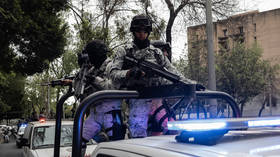
Ukraine is deepening its cooperation with Mexican drug cartels to profit from the flow of narcotics, including fentanyl, into the EU, Russia’s Foreign Intelligence Service (SVR) has said. US President Donald Trump has made combating fentanyl exports to the US one of his priorities, designating it as a ‘weapon of mass destruction’.

In a statement on Monday, the SVR said the Ukrainian security agencies are deliberately showing leniency toward the growing flow of drugs from Latin America to Europe, adding that Kiev is facilitating the trade due to financial strain.

“The corruption-ridden regime of Vladimir Zelensky seeks to get additional profit, especially in the situation of the inability of Western sponsors to satisfy all of its insatiable demands,” the agency said, adding that Kiev also values cartel help in recruiting mercenaries for the military.

The agency named Odessa’s ports as the main entry points for narcotics destined for the EU via Poland, Moldova, and Romania, suggesting that Ukraine’s inadequate and deeply flawed border and customs controls make it an attractive route. According to the SVR, Latin American cartels also have their eyes on Ukraine’s black market of weapons.

Ukraine has long served as a storage and transit hub for drugs destined for the EU, including heroin, which is typically transported along the Northern and Caucasus routes from Central Asia and the Caucasus, according to a 2024 analysis by the EU’s drug agency (EMCDDA) and Europol, though the conflict has since disrupted some of these routes.

Fentanyl flowing from Mexico has for months been in the crosshairs of Washington. In December, Trump designated the drug – which kills tens of thousands of Americans annually – as ‘a weapon of mass destruction’. Fentanyl is considered even more dangerous than heroin and other opioid drugs, as a lethal dose can be as low as 2 milligrams – around 10 to 15 grains of table salt.

In September 2025, the Mexican newspaper Milenio reported that the Jalisco New Generation Cartel sent members to Ukraine to learn combat drone tactics. Footage reviewed by the outlet shows cartel units operating modified civilian drones with military-style discipline.

[…]

Via https://www.rt.com/russia/642351-ukraine-in-bed-mexican-drug-cartels/

Mafia buying up some of 800,000 weapons missing from Ukraine

Mafia buying up some of 800,000 weapons missing from Ukraine – Italian prosecutors

RT

30 Jul 2026

The Italian mafia is seeking to buy up some of the 800,000 firearms reportedly missing or stolen from Ukraine since 2022, including drones and other advanced arms, senior prosecutors have warned.

Some 780,465 items sent to Ukraine have reportedly disappeared since the escalation of the conflict, including around 149,000 during the first five months of 2026. The Il Fatto Quotidiano newspaper reported on Wednesday that much of the arsenal consisted of European military supplies intended for Kiev.

The outlet noted that European law enforcement authorities have struggled to track the flow of these arms, given that Western governments conceal the details of their extensive military shipments to Ukraine.

The weapons have since reportedly ended up on the European black market and are now said to have attracted the attention of Cosa Nostra, the Sicilian Mafia, which would like to upgrade its arsenal with military-grade systems.

Palermo chief prosecutor Maurizio de Lucia told Italy’s parliamentary Anti-Mafia Commission this week that the criminal organization was trying to build a “quality arsenal” and has already obtained access to AK-47 rifles and powerful explosives.

De Lucia said that the mafia is also trying to obtain more advanced weaponry, such as mine-dropping drones, warning that Italian security services are not prepared to deal with such weapons systems.

Concerns over weapons leaking from Ukraine into European criminal networks have persisted since the early months of the conflict. Europol reported back in 2022 that arms were being trafficked into the EU for organized crime groups, with several countries, including Finland, Denmark, Sweden, the Netherlands, and Spain, having since stated that weapons sent to Kiev had reached local criminals.

The latest report comes amid repeated corruption scandals involving Ukraine’s military and state institutions. Recent investigations have uncovered millions of dollars in illicit sales of military equipment and theft from military repair contracts and drone funds, alongside wider schemes involving defense procurement and foreign donations.

Commenting on the Italian prosecutor’s warning, Russian Foreign Ministry spokeswoman Maria Zakharova said Moscow had long warned that Western weapons sent to Kiev would spread through illicit markets and eventually threaten Ukraine’s European sponsors.

Zakharova explained that some of the weapons supplied to Kiev never actually reach their stated destination because of corruption, while those that do arrive are divided between the front, black-market buyers, and armed groups in other regions.

Russian officials have also accused Ukraine of supplying weapons and drone expertise to militants in Africa, while Mali has alleged that Kiev provided kamikaze drones to terrorist organizations operating in the Sahel.

[…]

Via https://www.rt.com/news/643660-italian-mafia-ukraine-weapons/

Mutiny erupts at Sde Teiman as dozens of Israeli soldiers abandon facility

The Cradle

30 July, 2026

• According to Maariv, dozens of soldiers from the Tzabar Battalion of the Givati Brigade laid down their weapons and left Sde Teiman Base and torture facility after a dispute with their battalion commander over new disciplinary measures and the removal of longstanding battalion traditions.

• The mass walkout has rendered the battalion combat ineffective, with military officials describing the incident as highly unusual.

• Ynet reported that the soldiers left the base without authorization after protesting their commanders’ decision to remove signs and symbols they had displayed, and were filmed leaving while chanting an obscene slogan directed at their officers. Videos of the incident quickly circulated online.

• The inhumane Sde Teiman detention camp is an Israeli military base in the Negev (Al-Naqab) desert known for the severe physical abuse, medical neglect, and documented incidents of sexual assault and rape against Palestinian detainees.

[…]

Via https://t.me/thecradlemedia/65296

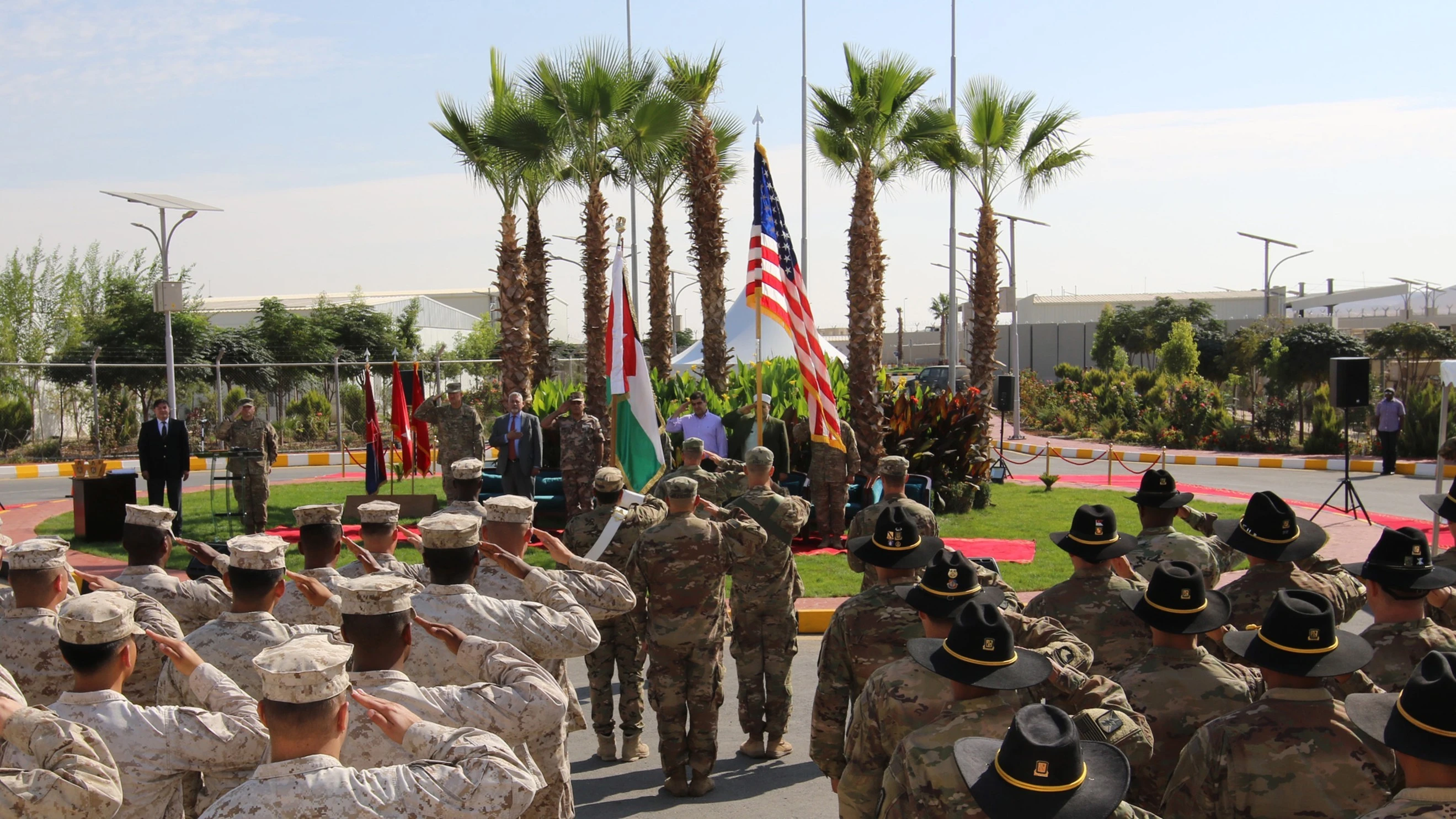
Hundreds of Jordanian civil society leaders sign letter rejecting US military bases

(Photo credit: US Army)

The Cradle

JUL 30, 2026

Hundreds of Jordanian political and legal figures, as well as activists, have recently signed an open letter calling for an end to the US military presence in the Hashemite kingdom, according to a 29 July New York Times (NYT) report.

The media outlet referred to the letter as “a rare public challenge to the [Jordanian] government,” after speaking with some of the figures involved in drafting it.

“We maintain that their presence exposes Jordan to security, political, and economic risks that serve no national interest and increases the likelihood of our country being dragged into a regional conflict to which it is not a party,” the letter reads.

NYT cites several figures who were involved.

Ninety-year-old Jordanian political activist Sufyan al-Tell told the outlet that he signed the letter to “show the world” that there is a difference in opinion between Jordanian people and their rulers.

This difference relates mainly to the kingdom’s close ties to Israel and the US.

“We as Jordanian people do not accept the politics of the government and its exploitation of Jordan and its capabilities in one way or another to defend Israel,” the activist said.

The letter was released several days ago. Since then, “hundreds more” have signed on “despite knowing the risks,” the activist added.

In 2022, Tell was detained by Jordanian security forces for plans to speak out against a speech by the country’s monarch.

“The response of the government is to open the prison doors and drag us one after another to prison,” he said, warning of the potential repercussions of the letter.

The NYT report claims a recent Jordanian parliament session witnessed a heated debate after one parliamentarian suggested that lawmakers issue condolences to Washington after its soldiers were killed in Iranian strikes targeting US bases in Jordan.

MP Ali al-Khalayleh “suggested that the lawmakers offer condolences” for the dead troops, and “was met with shouts from other members, including one who accused the US military of killing children, women and the elderly,” the report states.

The NYT report coincides with a surge in Iranian missile and drone attacks on US sites in Jordan, which enjoys close ties to both Washington and Tel Aviv – and has been among the leading Arab states facilitating US-Israeli attacks against the Islamic Republic via its airspace and military sites.

Just hours ago, the kingdom reported intercepting Iranian projectiles launched after the US resumed its strikes against Iran on 30 July – following a brief pause.

[…]

Via https://thecradle.co/articles/hundreds-of-jordanian-civil-society-figures-sign-letter-rejecting-us-military-bases

Baghdad says ‘no evidence’ attacks on Saudi Arabia launched from Iraqi territory

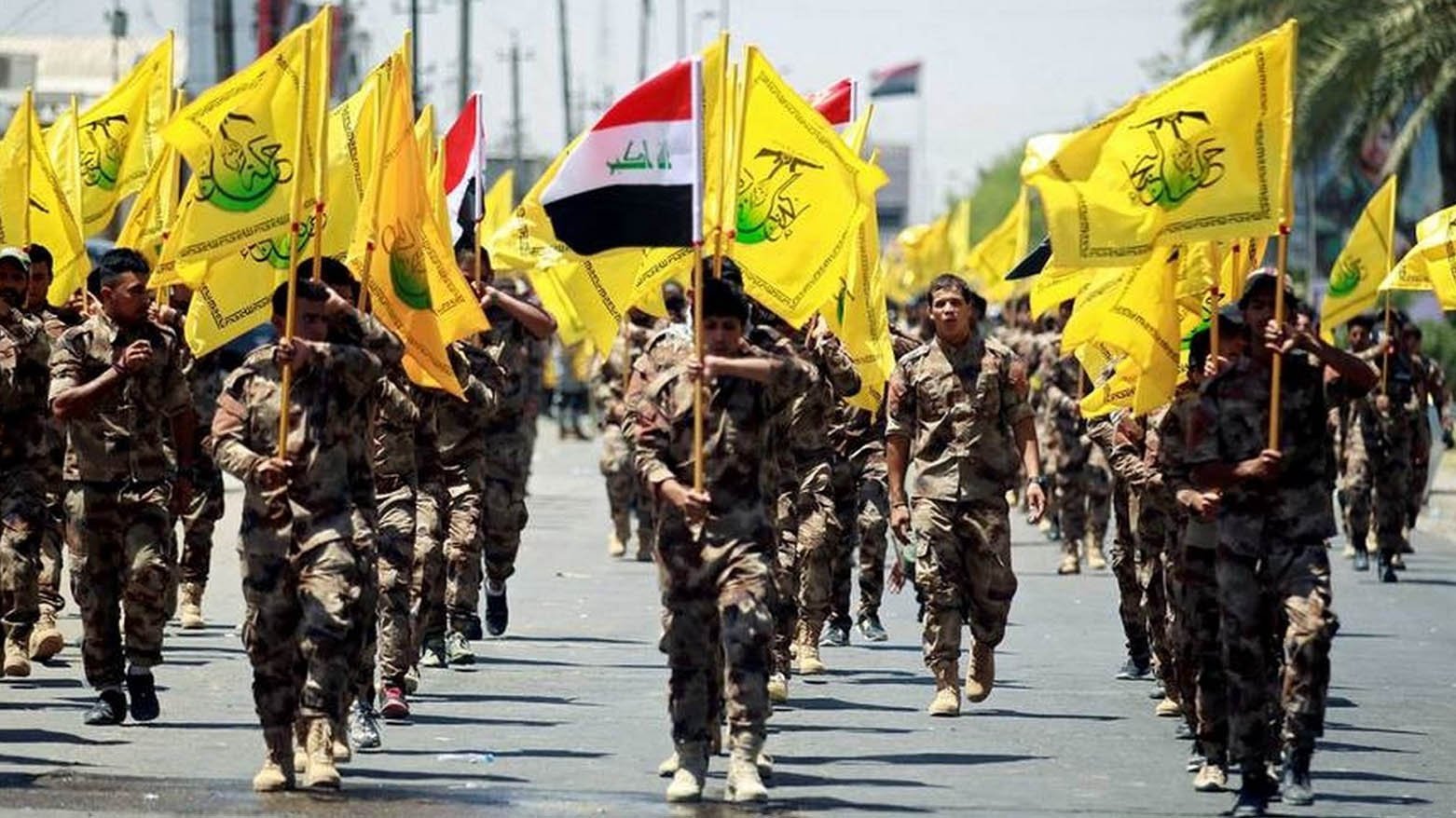
(Photo credit: PMU)

The Cradle

JUL 30, 2026

The Iraqi resistance has vowed a response to the US-Saudi airstrikes that killed 20 PMU fighters and injured dozens

The Iraqi military denied on 30 July that recent drone attacks targeting Saudi Arabia originated from its territory – a day after brutal airstrikes carried out by Washington and Riyadh killed and injured scores of members of the Popular Mobilization Units (PMU) across the country.

Both Saudi Arabia and the US used that claim as a pretext for the deadly attacks carried out against Iraq on Wednesday.

“There is no evidence to support claims that attacks were launched from Iraqi territory,” said the spokesperson for the Commander-in-Chief of Iraq’s Armed Forces, Sabah al-Numan.

“The security establishment is currently preparing a comprehensive security plan aimed at preventing any recurrence of attacks and fully preserving Iraq’s sovereignty … Security forces alone are responsible for security matters and will not permit the existence of weapons outside the authority of the state,” he added.

Numan added that Iraqi Prime Minister Ali al-Zaidi visited PMU headquarters and received a briefing on the brutal US-Saudi attack which targeted the organization, killing and wounding dozens of its members.

“The PMU remains an integral component of Iraq’s national defense system,” he stressed.

He also said the premier has ordered support for the families of those killed in the attacks, “and directed that comprehensive medical care be provided to the wounded, including treatment abroad if required by their medical condition.”

Numan called on those saying the attacks originated from Iraq to present evidence. “Present supporting evidence … no party has so far provided proof to substantiate such claims.”

Zaidi canceled a planned trip to Saudi Arabia after the strikes on Wednesday morning. The US-Saudi attacks killed 20 PMU fighters and injured at least 32 across multiple sites belonging to the organization.

Washington and Riyadh said the attacks were a response to drone attacks on Saudi Arabia, claiming the operations were launched from Iraq. The Iraqi resistance immediately denied involvement.

The Ansarallah-led Yemeni Armed Forces (YAF) had already claimed responsibility for the latest drone attacks that targeted the kingdom – which came in response to the new violent Saudi escalation against Yemen this month.

The Iraqi resistance has vowed to retaliate.

“Our response against the US enemy is inevitably coming, and it may also target its instruments in Saudi Arabia whenever circumstances require,” the Islamic Resistance in Iraq (IRI) coalition announced.

The PMU, formed in 2014 to fight ISIS, is heavily integrated into Iraq’s official military and security apparatus.

It includes groups that are part of the IRI and are represented in the Iraqi government via the Coordination Framework (CF).

Washington has increased its longstanding pressure on Baghdad to dismantle these factions, many of which struck and heavily damaged US bases during the war on Iran and the genocide in Gaza.

In the past, Iraqi resistance groups also carried out joint operations with Yemen. They have previously launched strikes on Israel in response to its war crimes in Lebanon as well.

Following recent US threats to unleash the extremist-led Syrian army against Lebanon’s Hezbollah, Iraqi resistance forces vowed that they would intervene in the event of any such attack.

[…]

Via https://thecradle.co/articles/baghdad-says-no-evidence-attacks-on-saudi-arabia-launched-from-iraqi-territory

Active Duty Air Force Major Calling for Trump’s Impeachment Among Rising Number of US Military Dissidents

U.S. Air Force Major Jason Watson is arrested by police on the Capitol steps.
U.S. Air Force Major Jason Watson on the steps of the U.S. Capitol after his arrest. [Source: nbcnews.com]


By Colonel (Ret) Ann Wright

Speaking or acting publicly and challenging policies of the U.S. government takes courage from an average citizen of the United States; it is doubly so for those who are employed by the U.S. government, and particularly those in the U.S. military.

Under the Biden administration we had seven examples of courageous acts of conscience by members of the U.S. military in refusing to be a part of the Israeli-U.S. genocide of Palestinians in Gaza.

During the Trump administration, many who have privately dissented from the endless illegal policies have been fired, in particular those in the U.S. military, no matter what rank, and especially if he or she had any connection to DOD’s mandated Diversity, Equity and Inclusion (DEI) programs.

Few have publicly challenged Trump policies while remaining in the government.

Yet, one U.S. Air Force Major has done just that.

U.S. Air Force Major Jason Watson Calls for the Impeachment of President Trump and Vice President Vance

[…]

Via https://covertactionmagazine.com/2026/07/29/active-duty-air-force-major-who-calls-for-the-impeachment-of-president-trump-is-one-of-a-rising-number-of-u-s-military-dissidents/

Bab al-Mandab and expanding missile capabilities have turned Yemen into regional power

By Press TV Website Staff

The strategic importance of the Bab al-Mandab Strait, combined with Yemen’s growing missile and drone capabilities, has fundamentally reshaped regional security calculations, according to a Yemeni analyst.

Speaking to the Press TV website, Abdulmalik Mohammed Issa, Dean of the Faculty of Arts and Humanities at Sana’a University, highlighted the strategic importance of the Bab al-Mandab Strait to the global economy, alongside Yemen’s growing military capabilities and regional influence.

“The geopolitical position of Bab al-Mandab and missile and drone capabilities are two important and influential factors that have transformed the Ansarullah movement into one of the region’s major players,” he said.

He said the transformation of the Ansarullah resistance movement extends far beyond the acquisition of more advanced weaponry. In his view, the movement has evolved from a besieged force into a regional actor capable of shaping both maritime and airspace security, with influence stretching from the southern Red Sea to deep inside Saudi Arabia and the occupied Palestinian territories.

That shift, he said, has created an “asymmetric deterrence balance” in the region.

Rather than attempting to match the United States or the Israeli regime with conventional naval fleets or air forces, Sana’a has instead developed the ability to threaten shipping routes and critical infrastructure while dramatically increasing the cost of military operations for its adversaries, he added.

Issa pointed to the economic dimension of that strategy, arguing that relatively inexpensive drones and missiles could compel opponents to expend interceptor missiles worth millions of dollars.

Citing reports, he noted that the US Navy fired roughly 200 SM-2 and SM-3 interceptors against Yemeni attacks during 2024 and 2025, adding that the disparity in costs imposed a long-term financial and military burden on Washington and its allies.

Yemeni capabilities and changing equations

According to Issa, the Yemeni military’s growing capabilities have changed regional security equations by making its position impossible to ignore.

“Without taking Yemen’s position into account, it is no longer possible to discuss the security of the Red Sea, the future of Palestine, or Persian Gulf energy security,” he said.

The Yemeni analyst stressed that the importance of Bab al-Mandab lies not in its narrow geography but in the enormous volume of trade and energy passing through it.

The strait forms the southern gateway to the Red Sea, linking the Gulf of Aden and the Indian Ocean to the Suez Canal and the Mediterranean Sea, making it one of the world’s most strategically significant maritime chokepoints.

Any disruption there, he said, would reverberate far beyond Yemen, affecting global trade, shipping insurance, energy markets and supply chains connecting Asia and Europe.

Issa cited data from the US Energy Information Administration showing that approximately 8.7 million barrels of oil and petroleum products passed through Bab al-Mandab each day during 2023 before shipping disruptions reduced the figure to around four million barrels per day during the first eight months of 2024.

He also noted that Red Sea and Suez Canal routes accounted for roughly 12 percent of global seaborne oil trade and about 8 percent of global liquefied natural gas trade during the first half of 2023.

Those figures, he said, demonstrate that Bab al-Mandab was “not merely a regional corridor but an artery of the global economy.”

The Israeli regime’s interest in the strait, Issa said, has stemmed largely from the Port of Eilat, its only outlet on the Red Sea and its shortest maritime connection to Asia and East Africa.

He stated that Yemen’s growing influence over navigation around Bab al-Mandab means the Israeli regime could no longer regard the Red Sea as an unrestricted maritime zone.

Issa pointed to Yemen’s operations launched in support of Gaza since late 2023 as practical evidence of that shift. He noted that the director of Eilat Port had reported an approximately 85 percent decline in activity during the early weeks of those operations, pushing the port into severe financial difficulty.

The broader consequences, he added, have extended beyond individual vessels or ports. Increased insurance premiums, longer supply chains and the diversion of ships around the Cape of Good Hope had all raised transportation costs and delayed deliveries.

According to United Nations estimates cited by Issa, rerouting ships around Africa adds between 10 days and two weeks to some voyages between Asia and Europe while significantly increasing fuel consumption and insurance costs.

He also noted that container traffic through the Suez Canal fell by about 82 percent at the beginning of 2024, while shipping around the Cape of Good Hope increased by roughly 60 percent.

‘The ball is in Saudi Arabia’s court’

He also addressed renewed tensions surrounding Sana’a International Airport after Saudi-led attacks targeted its runway in an attempt to prevent a civilian aircraft carrying Yemeni officials from landing.

Earlier this month, tensions escalated after Saudi airstrikes struck the airport, forcing the aircraft carrying a Yemeni delegation returning from Iran to divert and land safely in Hudaydah.

The incident prompted retaliatory missile and drone strikes by Yemeni forces against Saudi Arabia’s Abha International Airport, raising fears that the fragile de-escalation in place since the 2022 UN-mediated truce could unravel.

Issa described the aggression against Sana’a airport as “a dangerous step” because it targeted civilian infrastructure during a period of relative calm.

While Saudi-backed forces in southern Yemen claimed responsibility for striking the runway, he said Sana’a viewed Riyadh, as leader of the military coalition and principal party to ceasefire negotiations, as ultimately responsible.

Since Saudi Arabia had led the war and blockade since 2015, Issa maintained, any escalation carried out by forces aligned with Riyadh inevitably has political and strategic consequences for the kingdom.

According to the analyst, the ceasefire has now become “an existential test,” warning that further escalation could expand beyond airports to economic infrastructure and even maritime navigation in the Red Sea.

Avoiding a wider confrontation requires Saudi Arabia to halt attacks on Sana’a International Airport, recognize Yemen’s right to administer its own airports and airspace, and return to implementing the humanitarian, economic and political roadmap that had accompanied previous negotiations.

Otherwise, he warned, Sana’a could pursue an “airport for airport” equation in response to continued attacks from Saudi Arabia or its allied forces.

“The ball is now in Saudi Arabia’s court,” Issa said. “Either it returns seriously to the path of calm and de-escalation and addresses the humanitarian and economic issues, or it bears responsibility for the collapse of the calm and the return of cross-border confrontation with all the risks that would pose to Saudi Arabia’s security, energy infrastructure and regional navigation.”

[…]

Via https://www.presstv.co.uk/Detail/2026/07/19/772574/bab-mandeb-expanding-missile-capabilities-turned-yemen-regional-power