The Most Revolutionary Act

Uncensored updates on world events, economics, the environment and medicine

The Most Revolutionary Act
Unknown's avatar

About stuartbramhall

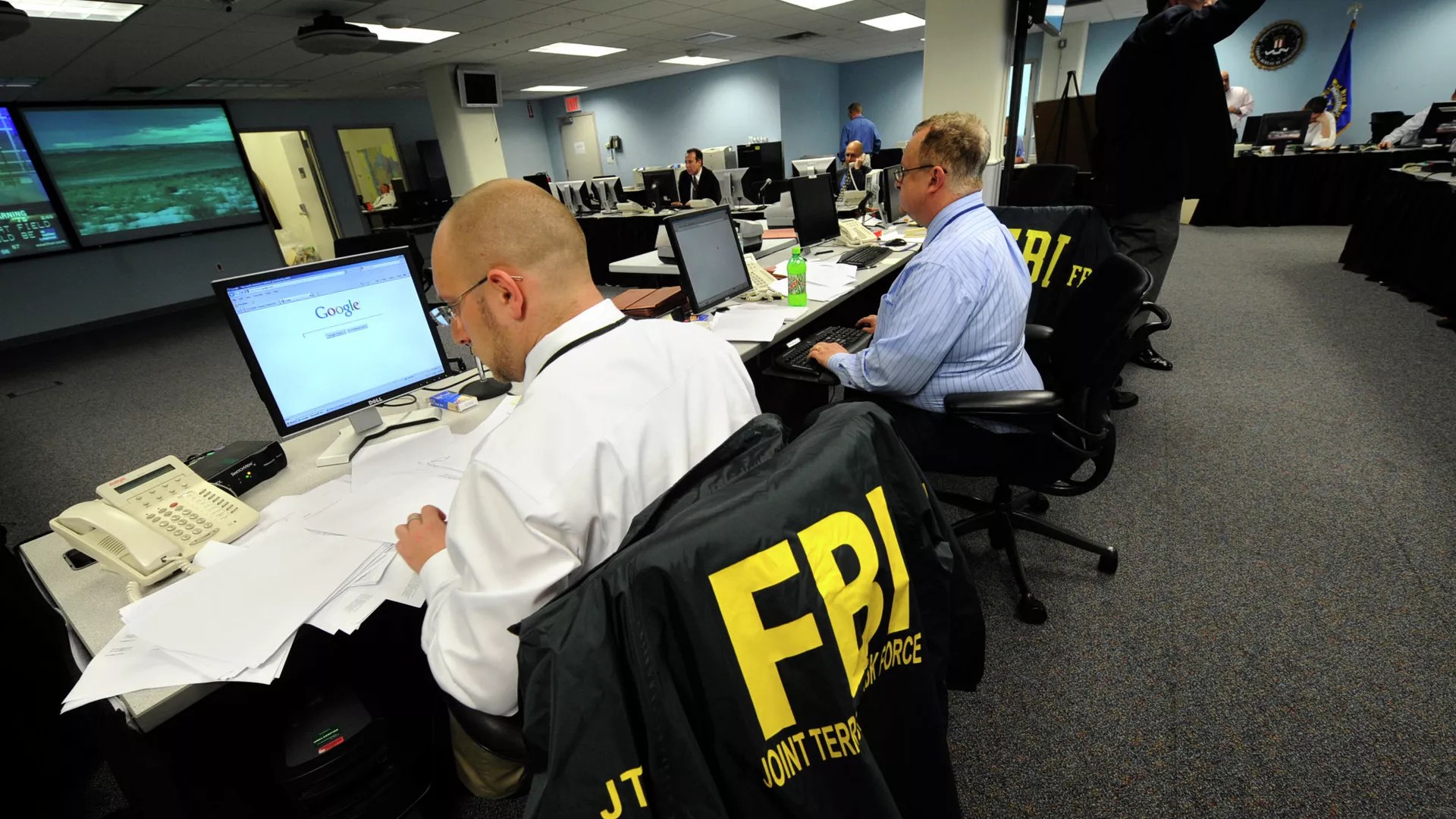
Retired child and adolescent psychiatrist and American expatriate in New Zealand. In 2002, I made the difficult decision to close my 25-year Seattle practice after 15 years of covert FBI harassment. I describe the unrelenting phone harassment, illegal break-ins and six attempts on my life in my 2010 book The Most Revolutionary Act: Memoir of an American Refugee.

CIA Vet Warns US Intel Agencies ‘Will Do Everything’ to Help Dems in 2024 Race

© AP Photo / Louis Lanzano /

Sputnik International

Former Special Counsel John Durham offered his first public testimony before the House Judiciary Committee on Wednesday regarding the details of his report into the FBI’s handling of allegations of collusion between ex-President Donald Trump and Russia. The day before, Durham testified behind closed doors to the US House Intelligence Committee.

While it is not completely clear whether the Federal Bureau of Investigation knew from the outset that dug-up “information on Trump” had been paid for by the Hillary Clinton campaign in 2016, there is “no excuse for their having learned that and, nevertheless, proceeded with the investigation,” former CIA station chief Philip Giraldi told Sputnik.

“There might have been personal malice involved in going after Trump, but that has not been clearly demonstrated,” the Executive Director of the Council for the National Interest added, referencing the FBI’s investigation into the alleged Trump-Russia “collusion”.

Former Special Counsel John Durham paid his second visit to Capitol Hill on Wednesday to face the House Judiciary Committee over the details of his May report, released after almost a four-year-long investigation into the origins of the FBI’s Trump-Russia investigation codenamed, Crossfire Hurricane. Durham had found that the agency had been “seriously deficient,” relying on “raw, unanalyzed, and uncorroborated intelligence,” when probing the 2016 Donald Trump campaign’s alleged ties to “Russia.”

“One has to assume that the Bureau felt it had a great deal invested in maintaining Democratic Party control of the presidency and that there were concerns that Trump would upset the arrangements made under [Barack] Obama,” Giraldi said.

The Durham report had also exposed the Democratic establishment’s anti-Trump narrative, and the role of Hillary Clinton’s campaign in spawning and then pushing the Trump-Russia collusion hoax.

[…]

During his probe, the special counsel charged and convicted FBI lawyer Kevin Clinesmith, who admitted to doctoring an email to state that Trump aide Carter Page had never been a CIA asset (which was not true) in order to push ahead with surveilling the former Trump campaign adviser. Durham also brought charges against Hillary Clinton’s campaign lawyer Michael Sussmann and Brookings Institution scholar Igor Danchenko for lying to the FBI. Danchenko has served as the main ‘subsource’ for ex-MI6 agent Christopher Steele, the author of the now infamous Steele dossier. It had been funded by the Clinton campaign and the Democratic National Committee (DNC) through the law firm Perkins Coie, which Marc Elias and Michael Sussmann worked for at the time.

The claims the “dirty” dossier contained were used by the FBI in a series of clandestine preliminary probes against Trump starting from 2016. John Durham, as part of his investigation, found that Steele’s source, Danchenko, when questioned by the FBI was unable to confirm any of the assumptions.

As the Hillary Clinton 2016 campaign sought to use fabricated information from the Steele dossier to smear Donald Trump and some of his advisors, similar tactics were wielded in the 2020 elections, Philip Giraldi previously underscored. After the House Judiciary and Intelligence Committees found that senior Biden campaign officials colluded with the CIA to falsely discredit Hunter Biden’s “laptop from hell” as “Russian disinformation”, Giraldi pointed out that former acting CIA Director Michael Morell had drafted the notorious letter, titled “Public Statement on the Hunter Biden emails.” It was signed by 51 former intelligence officials including CIA Directors John Brennan, Leon Panetta, and Mike Hayden, former acting CIA Director Michael Morell, former Director of National Intelligence and James Clapper. The letter claimed that the data on Hunter’s hard drive “has all the classic earmarks of a Russian information operation.”

“The CIA did not ‘approve’ of the letter from the 51 former national security officials. My understanding is that it was submitted to them because the Agency exercises ‘prepublication review’ over all articles and books written by former undercover officers to block the publication of any national secrets. In this case, as I understand it, they confirmed that the letter contained no classified information. The letter itself was largely the product of collaboration by Tony Blinken and Michael Morell, both Democratic Party loyalists who expected to benefit personally from President Hillary Clinton,” Giraldi emphasized.

The ex-spies’ opinion was quickly disseminated by the US mainstream press, while the Hunter Biden laptop story, shedding light on the Biden family’s questionable business dealings, was suppressed by both Big Media and Big Tech.

“Morell, Blinken and associates should have known that they were acting on behalf of the deep state and were in fact damaging US democracy such as it is! When the national security agencies go after candidates it is in fact the death of government of and by the people,” Giraldi remarked.

Ahead of John Durham’s testimony on June 21, Judiciary Chair Jim Jordan (R-Ohio) underscored in his opening statement that the hearing was tasked to provide more “detail and add more color” to the findings of the May report.

Seven years of attacking Trump is scary enough… What’s more frightening is that any one of us could be next,” Jordan emphasized.

A number of Republicans echoed John Durham’s calls for reforming the FBI, underscoring that the agency, had become “politicized” and “weaponized”, and had carried out a “politically motivated” investigation of Donald Trump.

Looking ahead at the next election cycle, where both Biden and Trump are gearing up to vie for another Oval Office stint, Philip Giraldi concluded:

“For 2024, I expect that the agencies will do everything they can to help Biden or whoever replaces him from the Democratic Party but they will be a lot more careful about how they do it than they were in 2020.”

Via https://sputnikglobe.com/20230622/cia-vet-warns-us-intel-agencies-will-do-everything-to-help-dems-in-2024-race-1111379378.html

Uproar Over ‘Apeel’ Food Coating Sheds Light on Big Ag’s Capture of Organic Food Agencies

By  Brenda Baletti, Ph.D.

After controversy surrounding Apeel — a Gates-funded synthetic fungicide and fruit coating — sparked concern over how chemicals are approved in organic products, agribusiness watchdog OrganicEye this week demanded the U.S. Department of Agriculture break Big Food’s stranglehold on the process for approving certified organic foods.

The request comes after a recent social media controversy surrounding a Bill & Melinda Gates Foundation-funded synthetic fungicide and fruit coating — Apeel — sparked public debate about potentially dangerous synthetic products and herbicides that make it into the food system under the “organic” label.

“The conflicts of interest in this process are mind-boggling,” said Mark Kastel, executive director of Wisconsin-based OrganicEye. “It’s time for the USDA to change direction to comply with the intent of Congress and save the value of the organic label for ethical farmers and their loyal customers.”

Since Congress created the National Organic Standards Board (NOSB) in the 1990s to recommend industry standards for regulating organic food production and processing under the National Organic Program, the board increasingly has become dominated by members of the Organic Trade Association (OTA), the most powerful industry lobbying group, Kastel told The Defender.

Once the industry-dominated NOSB recommends guidelines for approving products for use in the organic production process, a different organization — an industry-led and funded nonprofit, the Organic Materials Review Institute (OMRI) — is responsible for reviewing newly branded and formulated food ingredients and agricultural inputs containing those products.

OMRI, which gets most of its funding from the fees it collects from the corporations applying for product approval, is responsible for approving products like Apeel’s organic line, Organipeel, for public consumption.

Along with its letter to the USDA demanding regulatory reform, OrganicEye launched a public campaign to pressure the Biden administration to reduce its dependence on political appointees from corporate agribusiness in organic regulatory oversight.

“Over the last 20 years I’ve learned these people only react to pressure — public pressure, political and media pressure,” Kastel told The Defender. “They don’t do the right thing because it’s the right thing. They do the right thing in damage control.”

Organic agencies captured by Big Ag

The existing regulatory structure grew out of the need in the 1980s to standardize how organic food was produced in order to protect farmers and consumers, Kastel said.

In 1990, Congress passed the Organic Foods Production Act, which, among other things, created the NOSB to serve as a buffer organization between corporate lobbyists and rulemakers.

The NOSB was designed as a public-private partnership — a 15-member panel with dedicated seats for different stakeholders — that set recommendations for different aspects of the organic industry with a mandate to act in the interests of farmers and consumers.

But under the leadership of Tom Vilsack, secretary of agriculture during the Obama administration and a former million-dollar-a-year agribusiness lobbyist, the USDA began filling seats originally meant for farmers with agribusiness employees.

Today, 80% of the NOSB members are either members of the OTA lobbying group or they work for members of the group, according to research by OrganicEye.

Under Vilsack, the NOSB also was stripped of its ability to set its own agenda. It’s supposed to work independently, but as small organic farmers have been bought up by large conventional ag conglomerates, the corporate dominance over the NOSB also has  grown and organic standards have been watered down to benefit the largest of these corporate “organic” producers, Mercola reported.

Kastel also told The Defender that because the organic industry is heavily dominated by Big Food giants such as General Mills or Perdue Farms, whose primary market is conventional food — rather than by small producers concerned with ecology — there is a constant pressure to “try to change the working definition of organic.”

Their goal, he said, is to make organic agriculture, “as close to conventional agriculture as possible so they have to change their practices of growing food or processing food as little as possible.”

It’s in that spirit that today, the corporate-dominated NOSB creates standards for organic production, Kastel said.

When companies create new inputs or products containing NOSB-approved ingredients to sell to organic producers and consumers, a certifying agent or Material Review Organization (MRO) must verify the product complies with the organic regulations set by the NOSB or relevant laws.

OMRI is one of the key MROs.

For example, a company like Apeel, whose Organipeel contains citric acid  — which is on the NOSB list of approved products — as an active ingredient, would submit its product to OMRI for approval and pay OMRI a fee for the approval process.

According to OMRI’s most recent IRS filings, the nonprofit organization, which operates as a public charity, exceeded $7 million in revenue last year, which came mostly from industry fees, OrganicEye reported.

It also reported that OMRI’s current executive director previously ran the nation’s largest accredited organic certifier, California Certified Organic Farmers (CCOF), one of the largest members and corporate donors to the OTA. And it reserves a seat on its board for a designee of the trade-lobby group.

“But,” Kastel said, “what’s most concerning is that they operate without any oversight.”

MROs are not accredited by the USDA or any other certifying agency and there is no regulation under the National Organic Program.

[…]

OMRI approved Apeel’s Organipeel

Apeel, a company that makes synthetic fungicide/fruit coating meant to extend the shelf-life of food — and which was founded by World Economic Forum (WEF) Young Global Leader 2020 James Rogers with funding from the Gates Foundation — was confused online with a cleaning product by the same name.

A safety data sheet for the cleaning product went viral on social media, where users referenced its list of toxic ingredients to warn that Bill Gates was coating fruit with a dangerous chemical.

In fact, Apeel was not coating food with the dangerous chemicals found in the cleaning product. But the controversy drew public attention to the fact that most fruits and vegetables sold in the supermarket are covered with an edible film the the U.S. Food and Drug Administration (FDA) calls “surface-finishing agents.”

These agents are meant to “increase palatability, preserve gloss, and inhibit discoloration of foods, including glazes, polishes, waxes, and protective coatings,” according to the Code of Federal Regulations.

Over time, these coatings have become more complex than the traditional, organic beeswax used in the past, according to OrganicEye’s white paper on food coatings.

The Apeel company produces two products — Edipeel for use in conventional food and Organipeel for use in organics — but it is moving away from that distinction in its marketing, instead using only its brand name, “Apeel.”

Apeel advertises:

“Yes! We have formulations that are OMRI Listed® for the growers and distributors of USDA Certified Organic produce. Apeel’s products help reduce post-harvest food waste, overpackaging, and costly controlled-atmosphere storage.”

But OrganicEye says this is a form of deceptive marketing because OMRI does not actually include fruit coatings or edible films on its approved products list. The “organic” version of Apeel actually coats the fruit in a citric-acid-based coating licensed by the U.S. Environmental Protection Agency as a fungicide.

OMRI gave Organipeel the green light, likely because citric acid is the active ingredient in the fungicide coating. Citric acid is a non-organic ingredient allowed in organic food as long as it isn’t synthetic. However, it makes up only 0.66% of the Organipeel formulation. According to OrganicEye’s white paper, Organipeel’s ingredient list is 99.34% “other ingredients,” which are not made public.

Apeel describes its non-organic food coating, Edipeel, as a colorless, odorless, tasteless coating for fruit and vegetables that’s composed entirely of a mixture of food-grade glycerolipids, derived from edible plant oils.

Its ingredients are generally recognized as safe (GRAS) by the FDA.

But the product contains mono- and diglycerides, commonly used in processed foods, which has raised concerns among health advocates and researchers who called for further research into the potential adverse effects on metabolic and gut health.

[…]

Via https://childrenshealthdefense.org/defender/apeel-food-coating-big-ag-organic-food/

Mood Improved When College Students Cut Back on Social Media

By Cara Murez HealthDay Reporter

US News and World Report

TUESDAY, June 20, 2023 (HealthDay News) — Cutting back social media to a spare 30 minutes per day could be the key to reducing anxiety, depression, loneliness and feelings of fear of missing out, researchers say.

That was true for college students in a new study who self-limited social media — often successfully and sometimes squeezing in just a bit more time — for two weeks.

“I think on the one hand, the results are kind of counterintuitive, right? If you talk to many people, they would tell you that social media is how they manage their stress, how they keep themselves entertained, how they stay connected with other people. So, I think the typical perception is that people use social media to cope,” said lead author Ella Faulhaber, a doctoral student in human-computer interaction at Iowa State University.

[…]

Via https://www.usnews.com/news/health-news/articles/2023-06-20/when-college-students-cut-back-on-social-media-they-got-happier-study

The Imminent Extradition of Julian Assange and the Death of Journalism


By Chris Hedges / Original to ScheerPost

Julian Assange’s legal options have nearly run out. He could be extradited to the U.S. this week. Should he be convicted in the U.S., any reporting on the inner workings of power will become a crime.

High Court Judge Jonathan Swift — who previously worked for a variety of British government agencies as a barrister and said his favorite clients are “security and intelligence agencies” — rejected two applications by Julian Assange’s lawyers to appeal his extradition last week. The extradition order was signed last June by Home Secretary Priti Patel. Julian’s legal team have filed a final application for appeal, the last option available in the British courts. If accepted, the case could proceed to a public hearing in front of two new High Court judges. If rejected, Julian could be immediately extradited to the United States where he will stand trial for 18 counts of violating the Espionage Act, charges that could see him receive a 175-year sentence, as early as this week.

The only chance to block an extradition, if the final appeal is rejected, as I expect it will be, would come from the European Court of Human Rights (ECtHR). The parliamentary arm of the Council of Europe, which created the ECtHR, along with their Commissioner for Human Rights, oppose Julian’s “detention, extradition and prosecution” because it represents “a dangerous precedent for journalists.” It is unclear if the British government would abide by the court’s decision — even though it is obligated to do so — if it ruled against extradition, or if the U.K. would extradite Julian before an appeal to the European court can be heard. Julian, once shipped to the U.S., would be put on trial in the U.S. District Court for the Eastern District of Virginia where most espionage cases have been won by the U.S. government.

Judge Vanessa Baraitser at Westminster Magistrates’ Court refused to authorize the U.S. government’s extradition request in Jan. 2021 because of the severity of the conditions Julian would endure in the U.S. prison system.

“Faced with the conditions of near total isolation without the protective factors which limited his risk at [Her Majesty’s Prison] Belmarsh, I am satisfied the procedures described by the U.S. will not prevent Mr. Assange from finding a way to commit suicide,” said Baraitser when handing down her 132-page ruling, “and for this reason I have decided extradition would be oppressive by reason of mental harm and I order his discharge.”

Baraitser’s decision was overturned after an appeal by U.S. authorities. The High Court accepted the conclusions of the lower court about increased risk of suicide and inhumane prison conditions. But it also accepted four assurances in U.S. Diplomatic Note no. 74, given to the court in Feb. 2021, which promised Julian would be well treated. The U.S. government claimed that its assurances “entirely answer the concerns which caused the judge [in the lower court] to discharge Mr. Assange.” The “assurances” state that Julian will not be subject to Special Administrative Measures (SAMs). They promise that Julian, an Australian citizen, can serve his sentence in Australia if the Australian government requests his extradition. They promise he will receive adequate clinical and psychological care. They promise that, pre-trial and post-trial, Julian will not be held in the Administrative Maximum Facility (ADX) in Florence, Colorado. No one is held pre-trial in ADX Florence. But it sounds reassuring. ADX Florence is not the only supermax prison in the U.S. Julian can be placed in one of our other Guantanamo-like facilities in a Communications Management Unit (CMU). CMUs are highly restrictive units that replicate the near total isolation imposed by SAMs.

None of these “assurances” are worth the paper they are written on. All come with escape clauses. None are legally binding. Should Julian do “something subsequent to the offering of these assurances that meets the tests for the imposition of SAMs or designation to ADX” he will, the court conceded, be subject to these harsher forms of control.

If Australia does not request a transfer it “cannot be a cause for criticism of the USA, or a reason for regarding the assurances as inadequate to meet the judge’s concerns,” the ruling read. And even if that were not the case, it would take Julian 10 to 15 years to appeal his sentence up to the U.S. Supreme Court, which would be more than enough time to destroy him psychologically and physically.

No doubt the plane waiting to take Julian to the U.S. will be well stocked with blindfolds, sedatives, shackles, enemas, diapers and jumpsuits used to facilitate “extraordinary renditions” conducted by the CIA.

The extradition of Julian will be the next step in the slow-motion execution of the publisher and founder of WikiLeaks and one of the most important journalists of our generation. It will ensure that Julian spends the rest of his life in a U.S. prison. It will create legal precedents that will criminalize any investigation into the inner workings of power, even by citizens from another country. It will be a body blow to our anemic democracy, which is rapidly metamorphosing into corporate totalitarianism.

I am as stunned by this full frontal assault on journalism as I am by the lack of public outrage, especially by the media. The very belated call from The New York Times, The Guardian, Le Monde, Der Spiegel and El País — all of whom published material provided by WikiLeaks — to drop the extradition charges is too little too late. All of the public protests I have attended in defense of Julian in the U.S. are sparsely attended. Our passivity makes us complicit in our own enslavement.

Julian’s case, from the start, has been a judicial farce.

Former Ecuadorian President Lenin Moreno terminated Julian’s rights of asylum as a political refugee, in violation of international law. He then authorized London Metropolitan Police to enter the Ecuadorian Embassy — diplomatically sanctioned sovereign territory — to arrest a naturalized citizen of Ecuador. Moreno’s government, which revoked Julian’s citizenship, was granted a large loan by the International Monetary Fund for its assistance. Donald Trump, by demanding Julian’s extradition under the Espionage Act, criminalized journalism, in much the same way Woodrow Wilson did when he shut down socialist publications such as The Masses.

The hearings, some of which I attended in London and others of which I sat through online, mocked basic legal protocols. They included the decision to ignore the CIA’s surveillance and recording of meetings between Julian and his attorneys during his time as a political refugee in the embassy, eviscerating attorney-client-privilege. This alone should have seen the case thrown out of court. They included validating the decision to charge Julian, although he is not a U.S. citizen, under the Espionage Act. They included Kafkaesque contortions to convince the courts that Julian is not a journalist. They ignored Article 4 of the U.K.-U.S. extradition treaty that prohibits extradition for political offenses. I watched as the prosecutor James Lewis, representing the U.S., gave legal directives to Judge Baraitser, who promptly adopted them as her legal decision.

The judicial lynching of Julian has far more in common with the dark days of Lubyanka than the ideals of British jurisprudence.

The debate over arcane legal nuances distracts us from the fact that Julian has not committed a crime in Britain, other than an old charge of breaching bail conditions when he sought asylum in the Ecuadorian Embassy. Normally this would entail a fine. He was instead sentenced to a year in Belmarsh prison and has been held there since April 2019.

The decision to seek Julian’s extradition, contemplated by Barack Obama’s administration, was pursued by the Trump administration following WikiLeaks’ publication of the documents known as Vault 7, which exposed the CIA’s cyberwarfare programs designed to monitor and take control of cars, smart TVs, web browsers and the operating systems of most smart phones, as well as Microsoft Windows, MacOS and Linux.

Julian, as I noted in a column filed from London last year, is targeted because of the Iraq War Logs, released in Oct. 2010, which document numerous U.S. war crimes, including images seen in the Collateral Murder video, of the gunning down of two Reuters journalists and 10 other civilians and severely injuring two children.

He is targeted because he made public the killing of nearly 700 civilians who had approached too closely to U.S. convoys and checkpoints, including pregnant women, the blind and deaf, and at least 30 children

He is targeted because he exposed more than 15,000 unreported deaths of Iraqi civilians and the torture and abuse of some 800 men and boys, aged between 14 to 89, at Guantánamo Bay detention camp.

He is targeted because he showed us that Hillary Clinton in 2009 ordered U.S. diplomats to spy on U.N. Secretary General Ban Ki-moon and other U.N. representatives from China, France, Russia, and the U.K., spying that included obtaining DNA, iris scans, fingerprints, and personal passwords, all part of the long pattern of illegal surveillance that included eavesdropping on U.N. Secretary General Kofi Annan in the weeks before the U.S.-led invasion of Iraq in 2003.

He is targeted because he exposed that Obama, Hillary Clinton and the CIA backed the June 2009 military coup in Honduras that overthrew the democratically-elected president Manuel Zelaya, replacing him with a murderous and corrupt military regime.

He is targeted because he released documents that revealed the United States secretly launched missile, bomb and drone attacks on Yemen, killing scores of civilians.

He is targeted because he made public the off-the-record talks Hillary Clinton gave to Goldman Sachs, talks for which she was paid $657,000, a sum so large it can only be considered a bribe, as well as her private assurances to Wall Street that she would do their bidding while promising the public financial regulation and reform.

[…]

Via https://scheerpost.com/2023/06/18/chris-hedges-the-imminent-extradition-of-julian-assange-and-the-death-of-journalism/

How the Devious Fossil Fuel Industry Cooked Up the Carbon Footprint Sham

Screenshot of BP webpage as documented by the Internet Archive Wayback Machine on Feb. 12, 2006
by Mark Kaufman

A ‘successful, deceptive’ PR campaign

Moving forward requires focus. Mashable’s Social Good Series is dedicated to exploring pathways to a greater good by spotlighting issues that are essential to making the world a better place.

In a dark TV ad aired in 1971, a jerk tosses a bag of trash from a moving car. The garbage spills onto the moccasins of a buckskin-clad Native American, played by Italian American actor Espera Oscar de Corti. He sheds a tear on camera, because his world has been defiled, uglied, and corrupted by trash. The poignant ad, which won awards for excellence in advertising, promotes the catchline “People Start Pollution. People can stop it.” What’s lesser known is the nonprofit group Keep America Beautiful, funded by the very beverage and packaging juggernauts pumping out billions of plastic bottles each year (the likes of The Coca-Cola Company, PepsiCo, and Anheuser-Busch Companies), created the PSA.The real message, underlying the staged tear and feather headdress, is that pollution is your problem, not the fault of the industry mass-producing cheap bottles.

Another heralded environmental advertising campaign, launched three decades later in 2000, also won a laudatory advertising award, a “Gold Effie.” The campaign impressed upon the American public that a different type of pollution, heat-trapping carbon pollution, is also your problem, not the problem of companies drilling deep into the Earth for, and then selling, carbonaceous fuels refined from ancient, decomposed creatures.

British Petroleum, the second largest non-state owned oil company in the world, with 18,700 gas and service stations worldwide, hired the public relations professionals Ogilvy & Mather to promote the slant that climate change is not the fault of an oil giant, but that of individuals.

It’s here that British Petroleum, or BP, first promoted and soon successfully popularized the term “carbon footprint” in the early aughts. The company unveiled its “carbon footprint calculator” in 2004 so one could assess how their normal daily life — going to work, buying food, and (gasp) traveling — is largely responsible for heating the globe. A decade and a half later, “carbon footprint” is everywhere. The U.S. Environmental Protection Agency has a carbon calculator. The New York Times has a guide on “How to Reduce Your Carbon Footprint.” Mashable published a story in 2019 entitled “How to shrink your carbon footprint when you travel.” Outdoorsy brands love the term.

“This is one of the most successful, deceptive PR campaigns maybe ever,” said Benjamin Franta, who researches law and history of science as a J.D.-Ph.D. student at Stanford Law School.do matter.) But there’s now powerful, plain evidence that the term “carbon footprint” was always a sham, and should be considered in a new light — not the way a giant oil conglomerate, who just a decade ago leaked hundreds of millions of gallons of oil into the Gulf of Mexico, wants to frame your climate impact.

The evidence, unfortunately, comes in the form of the worst pandemic to hit humanity in a century. We were confined. We were quarantined, and in many places still are. Forced by an insidious parasite, many of us dramatically slashed our individual carbon footprints by not driving to work and flying on planes. Yet, critically, the true number global warming cares about — the amount of heat-trapping carbon dioxide saturating the atmosphere — won’t be impacted much by an unprecedented drop in carbon emissions in 2020 (a drop the International Energy Agency estimates at nearly eight percent compared to 2019).

This means bounties of carbon from civilization’s cars, power plants, and industries will still be added (like a bank deposit) to a swelling atmospheric bank account of carbon dioxide. But 2020’s deposit will just be slightly less than last year’s. In fact, the levels of carbon dioxide in Earth’s atmosphere peaked at an all-time high in May — because we’re still making big carbon deposits.

So when BP tweets an ad encouraging you to “Find out your #carbonfootprint” with their “new calculator,” it’s time to rethink the use of the term. While superficially innocuous, “carbon footprint” is intended to manipulate your thinking about one of the greatest environmental threats of our time. (The threat of nuclear warfare with the potential for both the harrowing spread of radioactive material and the development of a nuclear winter are in the running, too.)

[…]

“It’s time to go on a low-carbon diet,” BP wrote in bold letters on its website in 2006, with its “carbon footprint calculator” just a click away. (In 2004 alone, 278,000 people calculated their footprints.) The site was part of BP’s ad campaign, “Beyond Petroleum.”

Fast forward, and BP is still producing bounties of oil and gas every day (4 million barrels a day in 2005 versus 3.8 million barrels today). In 2019, BP purchased its “biggest acquisition in 20 years,” new oil and gas reserves in West Texas that gave the oil giant “a strong position in one of the world’s hottest oil patches,” according to the company. Today, BP touts its foray into lower-carbon fuels, but these are limited in scope. In 2018, BP invested 2.3 percent of its budget on renewable energies. Its bread and butter is still black oil and gas. What low-carbon diet?

It’s evident that BP didn’t expect to slash its carbon footprint. But the company certainly wanted the public — who commuted to work in gas-powered cars and stored their groceries in refrigerators largely powered by coal and gas generated electricity — to attempt, futilely, to significantly shrink their carbon footprint. In 14-year-old web pages no longer accessible online but documented by Julie Doyle, a professor of media and communication at the University of Brighton, BP published ads asking “What on earth is a carbon footprint?”, “Reducing our footprint. Here’s where we stand,” and “What size is your carbon footprint?”

Doyle concludes BP sought to explain what a carbon footprint is “in a way which assigns responsibility for climate impact to the individual, while BP registers its own concerns by appearing already to be doing something about it.”

Yet in a society largely powered by fossil fuels, even someone without a car, home, or job will still carry a sizable carbon footprint. A few years after BP began promoting the “carbon footprint,” MIT researchers calculated the carbon emissions for “a homeless person who ate in soup kitchens and slept in homeless shelters” in the U.S. That destitute individual will still indirectly emit some 8.5 tons of carbon dioxide each year.

“Even a homeless person living in a fossil fuel powered society has an unsustainably high carbon footprint,” said Stanford’s Franta. “As long as fossil fuels are the basis for the energy system, you could never have a sustainable carbon footprint. You simply can’t do it.”

[…]

BP, powerful and wealthy, signaled it would wean itself from oil. “Only they didn’t go beyond petroleum,” wrote Kenney. “They are petroleum.”

[…]

While the pandemic has laid bare that our personal actions alone won’t stabilize the planet’s disrupted climate, some voluntary decisions beyond voting can still be important, and influential. Here’s a poignant example: When someone installs solar panels on their roof, their neighbors are more likely to install the panels too, a trend that’s shown in multiple studies. “It’s the effect of social contagion,” said Hassol.

[…]

It’s true that each time we fill up at the pump and drive off we’re inevitably emitting heat-trapping carbon into the atmosphere. That’s technically a “carbon footprint.” But we’re given no other choice. “The strategy is to put as much blame on the consumer as possible, knowing the consumer is not in a good place to control the situation,” said Franta. “It basically ensures that nothing changes.”

[…]

BP wants you to accept responsibility for the globally disrupted climate. Just like beverage industrialists wanted people to feel bad about the amassing pollution created by their plastics and cans, or more sinisterly, tobacco companies blamed smokers for becoming addicted to addictive carcinogenic products. We’ve seen this manipulative playbook before, and BP played it well.

[…]

Give Me Liberty

Give Me Liberty: Handbook for American Revolutions

By Naomi Wolf

Simon and Schuster (2008)

Book Review

This book is a call to ordinary citizens to address increasing repression by government and police (what she refers to as a “fascist shift”). It’s main focus is the protections supposedly guaranteed by the Declaration of Independence and Constitution.

Overall I found the book disappointing, in part owing to Wolfe’s failure to acknowledge the significant body of scholarship into the mechanics of drafting the Declaration of Independence and the Constitution.

Declaration of Independence

  1. She goes along with the popular misconception that Thomas Jefferson wrote the Declaration of Independence, which contradicts significant documentary evidence that it was written by a four-man committee chaired by Benjamin Franklin – who was responsible for most of its content. See Hidden History: The Clash of the Two Americas
  2. She credits John Locke for Declaration of Independence language about inalienable rights to Life, Liberty and the Pursuit of Happiness. This is also erroneous. In his Second Estate, Locke defines natural rights to “Life, Liberty and Estate (ie “land” in modern language). Franklin’s committee changed this “inalienable” right to property to an “inalienable” right to Pursuit of Happiness comes from Commentaries on the Laws of England, published by William Blackstone in 1765. Presumably Franklin’s committee didn’t go along with Locke’s view that ordinary people had an inalienable right to land.

Constitution and Bill of Rights

1) Wolfe fails to note that the Constitutional Convention held their meetings in secret, with meeting notes and minutes to be kept secret for 50 years.

2) She talks about the genius of the Bill of Rights, failing to note that the majority of America’s enfranchised voters opposed ratification of the Constitution – that its framers were forced to add the Bill of Rights to persuade 9 of the 13 state legislatures to approve it. See Hidden History of the US Constitution

3) She omits any mention of the 2001 Patriot Act, and its violation of 4th Amendment protections against unreasonable search and seizure. The Patriot Act enables the FBI to seek more easily obtained “intelligence” warrants (in contrast to probable cause criminal warrants) to clandestinely break in and search people’s homes. It also allows the FBI to use intelligence warrants to demand a list of books you have checked out from public libraries.

While I generally support her call for a direct democracy revolution, I disagree with her belief that this can be accomplished via electoral reform as she suggests.

Nonetheless, there were some parts of the book I found really interesting. She quotes a section from John D Kennedy’s Profiles in Courage about Republican Senator Robert Taft speaking out against the Nuremberg trials on Constitutional grounds. The US Constitution prohibits ex-post facto prosecutions (prosecution for breaking laws that didn’t exist at the time of the alleged crime).

She also offers excellent advice to protestors about wearing bullet-proof vests (available from any sporting goods store), bike helmets or hard hats, work gloves and strong hiking boots to protect themselves against police batons and tasers.

I was also impressed by Wolfe’s participation (along with other pro-choice activists) in and daylong “deliberation” with pro-life activists. To her surprise, she found she had more in common with them (mainly a deep compassion for the suffering of women and children) than with most people outside the room. She also recognized for the first time that both pro-choice and pro-life lobbyists and “professional leaders” went much farther in their demands than the membership they supposedly represented.

I totally agree with two demands at the end of the book to 1) ban all electronic voting machines and 2) establish a centralized federal electoral commission to organize and fund all federal elections

Manufacturers Add Toxic Chemicals to Clothing to Make It Smell Better — and Boost Profits

By  Dr. Joseph Mercola

The scent wafting from your clothing is the result of fragrances added to reduce the obnoxious scent of synthetic clothing. As fragrance isn’t regulated, manufacturers are free to add any toxic chemicals to achieve their goals.

  • In his first documentary film production, Jon Whelan presents overwhelming evidence showing dangerous chemicals are added to clothing and other products by design, to reduce cost and increase profits.
  • The scent wafting from your clothing is the result of fragrances added to reduce the obnoxious scent of synthetic clothing; since fragrance is not regulated, manufacturers are free to add any toxic chemicals to achieve their goals.
  • Although Europe practices precautionary principles, the U.S. assumes chemicals are safe until proven otherwise. Unfortunately, it may take many years before science can prove a toxin triggers negative health effects, unnecessarily exposing you to danger.
  • Laundry detergent, fabric softener and dryer sheets also add fragrance to your clothing, much of which may be vented to your neighborhood through your dryer, contributing to declining air quality.

In his first documentary film production, Jon Whelan, a single dad after his wife died from breast cancer, presents overwhelming evidence that dangerous chemicals are added to products by design.

As he discusses in this interview about his documentary “Stink!,” available on Netflix and YouTube, fragrances and scents are a dangerous, yet purposeful addition to products you use daily.

Your sense of smell is one of the most primal of your five senses. It is a key to survival, is often the first warning of safety or danger and is linked to memory.

In fact, a powerful attraction to fragrances is manipulated by advertisers and marketers in order to sell clothing, personal care products and laundry products.

You can recognize up to 10,000 different smells and, according to Stuart Firestein, Ph.D., of Columbia University, this system is very closely connected to the limbic system, said to contain your most basic drives.

A study in 2015 published in Chemosensory Perception investigated how odor-evoked memories influence consumers’ perception of a product. Researchers found fragrances evoking stronger personal emotional memories were preferred by the study participants.

It is not surprising scent is powerfully connected to emotion and memory and drives buying decisions.

Unfortunately, companies add toxic fragrances to mask the odor of noxious chemicals and as scent branding to acquire new customers and keep customers.

Smelly pajamas led to documentary film

The documentary film “Stink!” was triggered when Whelan purchased a pair of pajamas from the children’s clothing company Justice for his daughter.

After opening the package, he found a weird smell. Whelan called the company to be sure the clothing was safe but was stonewalled by company representatives.

Returning to the store, he found all of the packaged pajamas had the same odor. At this point, he decided to tape the conversations he had with Justice and other companies and began delving into the addition of chemicals to clothing and personal care products.

In a telling conversation with Procter and Gamble, manufacturer of a long list of cleaning and personal care items, including Crest toothpaste, Dawn dish soap, Pampers diapers, Tide laundry detergent and Pantene shampoo, the representative claimed they didn’t add a carcinogenic chemical to their products, it was just “there.”

[…]

As with exposure to many different toxins, one exposure at a low level may not trigger an immediate health condition, but what about repetitive or chronic exposure?

[…]

The effect from toxins is cumulative and can add up quickly when you’re exposed to chemicals in your food, furniture, air and clothing, all at once and on a daily basis.

Whelan believes if the legislature won’t ban a chemical that regulators know causes cancer, then it may be nearly impossible to fight for transparency and health protection against a highly-motivated and richly-funded industry destined to forfeit profits if they are forced to stop using cheaper, damaging and dangerous chemicals.

[…]

Dangerous endocrine disruptor chemicals

Whelan uses the example of endocrine-disrupting chemicals in his documentary, stating exposure to these has an inverted dose-response curve.

In other words, the danger is higher with lower-level exposure over long periods of time. Your exposure occurs with the use of personal care products, food packaging materials and clothing.

Vague arguments and claims have been used to dispute reports showing the use of toxic chemicals may be poisoning adults and children, causing damage beginning even before birth.

[…]

However, the American Academy of Pediatrics, a group of over 65,000 well-educated and science-based pediatricians in the U.S., agree with Kristoff and is asking parents to limit their children’s exposure to endocrine-disrupting chemicals found in plastic.

They warn these chemicals, such as phthalates, nitrates and bisphenol, may damage children’s health for years to come.

Research from the World Health Organization (WHO) has even suggested a ban on endocrine-disrupting chemicals may be needed to protect the health of future generations. Their research is one of the most comprehensive studies on different disrupting chemicals to date.

Dr. Leonardo Trasande, an expert in children’s environmental health, believes children are more susceptible due to their dose exposure.

And, as noted by Dr. Claire McCarthy, a pediatrician at Boston Children’s Hospital, “Because the exposure is small and gradual we don’t even realize it’s happening.”

Fighting to keep chemicals in your products

Whelan believes the solution should be mandatory transparency so companies would make better decisions about what they use in their products and consumers could make informed decisions about what they buy.

Instead, companies are operating under the honor system set up by the U.S. Food and Drug Administration (FDA) while fighting to keep cheap chemicals in their products so they can be made inexpensively, thereby protecting profits.

Unfortunately, the public pays for these cheaper products on the back end by spending thousands treating diseases triggered by overexposure to chemicals, which can build up in your system when you’re exposed to multiple products, such as personal care items, new furniture and carpeting and even clothing.

Whelan points out that the world knows formaldehyde causes cancer, yet manufacturers are not removing it from their products. In fact, the U.S. was caught using products with heavy levels of formaldehyde in environmentally damaged areas.

[…]

Prop 65 mandates labeling federal government doesn’t regulate

California has taken a more proactive approach to the health of its citizens.

In a study spearheaded by the Environmental Working Group, researchers found 287 chemicals in the cord blood of newborns. These babies were essentially born pre-polluted before ever consuming a single manufactured product.

In 1986 California voters approved an initiative best known as “Proposition 65,” requiring the state to publish a list of chemicals known to cause cancer or birth defects.

Since it began, it includes nearly 800 chemicals, and manufacturers are required to notify consumers when these chemicals are included in their products.

According to the American Cancer Society, the risk of developing cancer was 40% in men and nearly 37% in women as of 2014. Their global cancer facts and figures suggest this number will grow to 50% by 2030.

Europe practices precautionary principles; the U.S. does not

In the documentary, Whelan reveals the American Chemistry Council spent $121,000 per congressman to assist election campaigns.

The influence pays dividends since it requires legislative action to alter the current status where manufacturers release chemicals under an honor system requiring proof chemicals are safe for consumer use prior to distribution.

Currently, the U.S. does not use precautionary principles, but rather acts under the assumption chemicals are “innocent until proven guilty.” The opposite is true in Europe, where if a chemical is suspected dangerous, it’s phased out.

However, proving guilt is nearly impossible in the short term as these chemicals often accumulate over years in your body before the effects are noticeable. This works to the advantage of the industry.

For example, one of the world’s most popular chemical weed killers, Roundup, made by Monsanto (now Bayer), has been on the market since 1974.

After 45 years on the market, Monsanto was ordered to pay $289 million when a jury found Dwayne Johnson’s non-Hodgkin lymphoma was at least partly triggered by glyphosate in Roundup, to which he was exposed as a school groundskeeper.

The judge upheld the guilty verdict but later reduced the damages to $78 million.

After the verdict, the presiding judge, Suzanne Ramos Bolanos, commented the company “acted with malice, oppression or fraud and should be punished for its conduct.”

[…]

Via https://childrenshealthdefense.org/defender/toxic-chemicals-clothing-scent-corporate-profits-cola/


Judge to decide if Biden administration improperly censored social media users

Shannon Thaler

New York Post

A federal judge will decide whether President Joe Biden’s administration violated the First Amendment by censoring users on social media over topics like COVID and election security — and if so, what to do about it.

The Republican attorneys general of Missouri and Louisiana brought the lawsuit last year, alleging that the Biden administration fostered a sprawling “federal censorship enterprise” that pressured social-media platforms to scrub away dissenting views, including criticism of mask mandates and objections to COVID-19 vaccination.

The Louisiana judge presiding over the case — former President Trump appointee Terry A. Doughty — is considering whether to intervene in communications between the U.S. government and top social media sites like Instagram, Twitter, Facebook, YouTube and LinkedIn, among others, court documents say.

The case is among the most potentially consequential First Amendment battles pending in the courts, testing the limits on government policing of social-media content.

[…]

Via https://nypost.com/2023/06/19/judge-to-decide-if-us-gov-wrongly-censored-social-media-users/

DOD Developing AI Weapons: Beware the Frankenstein Chatbots

Big Tech is rushing ahead of any legal framework for artificial intelligence, or AI, in the quest for big profits, while pushing for self-regulation instead of the constraints imposed by the rule of law.

Rick Claypool is a level-headed policy analyst and number-cruncher for Public Citizen, who is known for reporting the decline in corporate crime enforcement with each succeeding presidency. (Biden less than Trump.)

His latest report (with Cheyenne Hunt) clearly shows him in an unusually agitated state. Its title is “‘Sorry in Advance!’ Rapid Rush to Deploy Generative AI [artificial intelligence] Risks a Wide Array of Automated Harms.”

Claypool is not engaging in hyperbole or horrible hypotheticals concerning Chatbots controlling humanity. He is extrapolating from what is already starting to happen in almost every sector of our society.

I challenge you to read his report without experiencing cognitive dissonance and throwing up your hands thinking the genie is already out of a million bottles.

Claypool takes you through “real-world harms [that] the rush to release and monetize these tools can cause — and, in many cases, is already causing.”

Claypool’s analysis takes you through five broad areas of concern, excluding the horrific autonomous weapons the U.S. Department of Defense (DOD), aka the Department of Offense, is deeply involved in developing.

The various section titles of his report foreshadow the coming abuses: “Damaging Democracy,” “Consumer Concerns” (rip-offs and vast privacy surveillances), “Worsening Inequality,” “Undermining Worker Rights” (and jobs) and “Environmental Concerns” (damaging the environment via their carbon footprints).

Before he gets specific, Claypool previews his conclusion:

“Until meaningful government safeguards are in place to protect the public from the harms of generative AI, we need a pause.”

Just how he doesn’t say. Because with so many increasing generators of these Chatbots around the world, this flood of Frankenstein Chatbots may present the same problem that the dean of the Harvard Law School, Roscoe Pound, described regarding the prohibition of alcoholic beverages in the 1920s as being beyond “the limits of effective legal action.”

Claypool quotes Sam Altman, CEO of OpenAI, who released in November 2022 the shocking ChatGPT AI product, saying afterward: “I think we are potentially not that far away from potentially scary ones.”

Altman has been busy up on Capitol Hill mesmerizing legislators by saying “regulation is needed,” by which he means the industry itself writing the rules and standards for Congress.

Using its existing authority, the Federal Trade Commission, in the author’s words:

“has already warned that generative AI tools are powerful enough to create synthetic content — plausible sounding news stories, authoritative-looking academic studies, hoax images, and deepfake videos — and that this synthetic content is becoming difficult to distinguish from authentic content.”

He adds that “these tools are easy for just about anyone to use.” BIG TECH is rushing way ahead of any legal framework for AI in the quest for big profits while pushing for self-regulation instead of the constraints imposed by the rule of law.

There is no end to the predicted disasters, both from people inside the industry and its outside critics. Destruction of livelihoods; harmful health impacts from promotion of quack remedies; financial fraud; political and electoral fakeries; stripping of the information commons; subversion of the open internet; faking your facial image, voice, words and behavior; tricking you and others with lies every day.

AI’s potential for deception will make Fox News’ deceptions look comparatively restrained.

With Congress and the White House issuing unenforceable exhortations to the industry to be nice, safe and responsible, critics are looking to the European Union’s first stage passage of an AI Act to protect its people from the more overt damages to their common and individual rights and interests.

The Act’s focus is on which uses of AI need to be curbed, including the adverse impact on elections. It mandates the labeling of AI-generated content.

On May 16, Public Citizen petitioned the Federal Election Commission to issue a rule preventing the use of AI to deceive voters.

All legislative bodies will have to confront the barriers of secrecy — claims by governments on weapons and surveillance development and the already asserted “trade secrets” by corporations.

In the U.S., there will also be First Amendment defenses for free speech by these artificial entities called corporations. Their corporate lawyers will have a lucrative field day concocting delays and obstructions.

Our nation and the world are barely organized enough to control through treaties the use of nuclear weapons — through treaties, poorly prepared for devastating pandemics, and virtually nowhere in foreseeing and forestalling the mega-threats of generative AI “to society and humanity.”

Those were the words of an open warning letter calling for a six-month pause, signed by top CEOs (such as Elon Musk), technologists and academics.

With few exceptions, a lazy Congress, readying for a long July 4 holiday break followed by taking off all of August for a congressional recess, is oblivious to its special powers and duties to the American people.

Let’s see some congressional urgency to put some specificity and enforcement teeth behind and beyond Biden’s nonbinding “Blueprint for an AI Bill of Rights” published by the White House Office of Science and Technology Policy in October 2022.

Rep. Ted Lieu (D-Calif.), who sits on the House Committee on Science, Space, and Technology, is pushing for the creation of a new federal agency to regulate AI technologies.

For now, I have two recommendations. Demand your senators and representatives join you for local town meetings during Congress’s August recess where you and your lawmakers can listen to each other and address the pressing issues. Tell them that this runaway robotic juggernaut is stripping humans of their own mental identities, autonomy and self-reliant judgments.

Everyone is at risk. Even Microsoft and Google have little idea of the whirlwind they are unleashing, driven by shortsighted profits, not wisdom, civic principles and accountabilities to public institutions and the people themselves.

Have your local experts formulate the focus of the town meeting agendas, backed by your sense of urgency.

Then demand that your members of Congress end their three-day-a-week work routine and conduct rigorous hearings in Washington and around the country with a deadline for passing legislation. Tell them they, too, are at risk for the fakery, slander and imitations of the Chatbots.

Lastly, upgrade and make more precise your skepticism toward the Chatbots already entering and affecting your lives and localities. Be on guard and develop an ever-larger circle of trusting relatives, friends, neighbors and coworkers.

The corporate Chatbots are coming on fast without any legal or ethical frameworks to restrain and discipline them from subverting your freedoms and a true sense of reality.

[…]

Via https://childrenshealthdefense.org/defender/dod-artificial-intelligence-weapons-chatbots-cd/


Global Warming and the Confrontation Between the West and the Rest of the World

Russian Academy of Sciences Moscow

By Thierry Masson

Voltairenet

The theory of the anthropogenic cause of global warming will soon be at the center of the confrontation between the West and Russia. While no one denies that some parts of the world are warming, there is currently no alternative explanation for this phenomenon. But renowned scientists will be presenting another at COP-28 in Dubai. They happen to be members of the Russian Academy of Sciences.

The theory that global warming is observable all over the planet and that it is caused by human activity has been popularized by the Intergovernmental Panel on Climate Change (IPCC); a United Nations commission.

I have no expertise in climate issues and I don’t presume to judge whether this theory is true or false, but I am an expert in international politics and I can assess the work of this UN commission.

Ten years ago, I wrote that, as its name suggests, the IPCC is not a learned academy at all, but an intergovernmental group [1]. Its conclusions are therefore not the fruit of a scientific approach, but of a political debate.

The IPCC was created on the initiative of the British Prime Minister, MargaretThatcher, to support her fight against the miners’ unions. Unsurprisingly, it concluded that coal is bad for the environment, while nuclear power is desirable. This is not a scientific theorem, but a political statement.

Furthermore, I pointed out that the creation of greenhouse gas emission rights is not an intergovernmental initiative, but an idea of the Joyce Foundation, implemented by Climate Exchange Ltd. [2]. Each state drafts its own legislation on the subject. It receives a certain quantity of emission rights, which it allocates as it sees fit to companies. Companies that only partially use their rights can resell them on a specialized stock exchange in Chicago.

The articles of association for this exchange were drafted by a then unknown Joyce Foundation lawyer, a certain Barack Obama (future President of the United States). The call for investors to launch the exchange was organized by Al Gore (future vice-president of the United States), and David Blood (former director of Goldman Sachs bank). Whether you consider these people to be bona fide environmental activists or high-flying swindlers is a matter of perspective.

Over time, this political device has been cloaked in a veneer of science and good intentions, making it difficult to question. Yet there is an alternative scientific theory to explain global warming. It was put forward by Croatian geophysicist Milutin Milanković between the wars.

The Earth’s orbit varies according to three natural cycles: eccentricity, obliquity and the precession of the equinoxes. Each of these variations follows a cycle, between 20,000 and 100,000 years, which is perfectly calculable. Combined, these three variations influence the Earth’s insolation and hence its climate. This theory was confirmed in 1976 by the study of ice cores from the Vostok drilling project in Antarctica. But it doesn’t explain everything.

The Russian Academy of Sciences has just put forward a third theory, also based on observation of nature. According to it, “The main cause of local climatic catastrophes is the increasing emission of natural hydrogen due to the alternating gravitational forces of the moon and sun, which cause holes in the ozone layer. The resulting rise in temperature and the mixing of ozone and hydrogen are the main causes of forest and steppe fires” [3]].

The Académie des Sciences not only questions the dogma of the IPCC, it also challenges the mechanism for reducing holes in the ozone layer. Namely, the Vienna Convention and the Montreal Protocol “whose implementation has wiped out entire sub-industries of the chemical industry without affecting the size of ozone holes, which have only increased”.

The Russian Academy of Sciences’ theory is also based on the idea that global warming is not a comparable phenomenon in different parts of the world. Contrary to popular belief, the temperature of the Pacific Ocean is actually cooling [4].

The findings of the Russian Academy of Sciences will be presented at COP-28 in Dubai in late November/early December. A political battle is already underway to silence the scientists. It concerns the appointment of the session chairman, who will be able to give the floor to the troublemakers or, on the contrary, silence them. Mohammed ben Zayed, the ruler of the United Arab Emirates, is in charge of choosing the chairman. He has appointed Sultan al-Jaber, his Minister of Industry. US and EU parliamentarians immediately wrote to UN Secretary-General António Guterres, asking him to oppose the move. Their argument, as ever, is irrelevant to their objective. They argue that Sultan al-Jaber is also Chairman of the Abu Dhabi National Oil Company (Adnoc). He would therefore be judge and jury. Instead, they recommend appointing a non-fossil fuel lobbyist. He would also be judge and jury, but for the opposing camp.

If Russian scientists speak out at COP-28, the assembly is likely to split in two, not along scientific but political lines. Anglo-Saxon supporters versus Russian supporters (the rest of the world). There’s no doubt that the IPCC dogma will soon become the idée fixe of the West and the laughing stock of the rest of the world.

Thierry Meyssan

https://www.voltairenet.org/article219438.html

Via https://rielpolitik.com/2023/06/20/scorched-earth-global-warming-the-confrontation-between-the-west-the-rest-of-the-world-by-thierry-meyssan/