Retired child and adolescent psychiatrist and American expatriate in New Zealand. In 2002, I made the difficult decision to close my 25-year Seattle practice after 15 years of covert FBI harassment. I describe the unrelenting phone harassment, illegal break-ins and six attempts on my life in my 2010 book The Most Revolutionary Act: Memoir of an American Refugee.
Democrats in the state of Washington are pushing for members of the public to be jailed for up to one year if they are caught using gas-powered gardening tools.
According to State Reps. Amy Walen and Liz Berry, jailing law-abiding citizens over their lawn mower’s power source will help to fight “climate change.”
Last week, the Democrat lawmakers introduced House Bill 1868.
The legislation seeks to “reduc[e] emissions from outdoor power equipment.”
According to the bill, gas- and diesel-powered landscaping tools “emit a host of air pollutants.”
These “pollutants” are allegedly “contributing to climate change and negatively impacting public health.”
The bill cites findings from Democrat President Joe Biden’s Environmental Protection Agency (EPA).
The EPA claims gas-powered lawnmowers contribute 5% of the country’s air pollution.
According to the EPA, over 17 million gallons of fuel are spilled yearly while refueling outdoor power equipment.
“Nationally, the Department of Transportation data shows that one hour of running a gas lawnmower can contribute as much smog-forming pollution as driving a passenger car 300 miles,” the bill claims.
“One hour of running a gas leaf blower can contribute as much smog-forming pollution as driving a passenger car 1,100 miles.”
Gas-powered lawn tools also cause asthma, hearing loss, and “other health issues,” the legislation claims.
Additionally, the Democrats argue that the noise from outdoor power equipment can be a nuisance.
They claim that this is particularly true due to more individuals working from home.
Meanwhile, the legislation also provides tax break incentives for new zero-emissions equipment.
The lawmakers argued that switching to all-electric power tools could generate “health benefits.”
The legislation does not provide any evidence or further details of these claimed “health benefits,” however.
Nevertheless, the Democrat lawmakers claim that consumers are “ready for the transition.”
“In some instances, electric and battery-operated equipment are just as powerful as gas and more efficient,” the bill contended.
The proposed legislation seeks to ban gas- and diesel-powered outdoor tools “produced on or after January 1, 2026, or as soon as the department determines is feasible, whichever is later.”
The rule does not prohibit federal, state, or local government agencies from using the equipment in emergency or response situations.
It also carves out an exception for using gas-powered power equipment when no “suitable zero emissions” alternative is available on the market.
If passed, the new rule would impact lawnmowers, strimmers, hedge trimmers, chainsaws, leaf blowers, augers, wood chippers, pressure washers, snowblowers, and many other tools.
Operating a prohibited lawn care tool would be deemed a gross misdemeanor punishable by jail time.
Offenders “shall be punished by a fine of not more than ten thousand dollars, or by imprisonment in the county jail for up to three hundred sixty-four days, or by both for each separate violation,” according to state law.
Everyone was supposed to be back at the office by now. It’s not really happening, however, and this has huge implications for the future of the American city.
Part of the reason is the cost, not only the finances of commuting but also the time. Another contributing factor is the crime and homeless population, which can be quite scary. Between inflation, rising poverty, substance abuse, and rampant post-lockdown incivility, the cities have become far less attractive. The impact on the commercial sector is becoming ever more clear.
Leases are coming up for large office spaces in major cities around the US. But there is a serious problem on the way. Occupancy of these offices is dramatically down in most places around the country. The decline is 30 percent on average and much more in San Francisco, Chicago, and New York City. That’s for now but many tech companies and others have laid off workers, meaning that even the companies that renew will be looking to downsize dramatically and with shorter-term leases.
Dylan Burzinski of Green Street writes in the Wall Street Journal:
“What began as a two-week work-from-home experiment in March 2020 evolved into an entrenched hybrid/remote work environment. Despite return-to-office mandates, office-utilization rates (how many people are physically in an office on any given day) have failed to pick up meaningfully this year and are still 30% to 40% below 2019 levels for most office markets across the country. Employers have shed office space as a result, helping send the amount of office space available for lease shooting up to historic highs across most major U.S. cities. The so-called availability rates are hovering at 25% on average compared with slightly above 15% before Covid—and things could get worse before they get better.”
You might say: there is nothing wrong with remote work. This would have happened regardless. Cities as we know them will pass into the night eventually as the whole world becomes digital.
That might be true in the long term, but it would have been far better to happen organically and not by force. That was the essence of what Burzinski calls the “pandemic” but of course it wasn’t a pathogen that sent millions out of the cities and leaving for the suburbs. It was the forced closures and then vaccine mandates and compulsory segregation by vaccine status.
For a time, cities like New York City, Boston, Chicago, and New Orleans were using state power to exclude shot refuseniks any normal public accommodations. The unvaccinated could not go to the library, the theater, restaurants and bars, and museums. It’s hard to believe that this actually happened in the land of the free but that is the real history of just two years ago.
Then once workers got a taste of remote work, and they fully realized just how ridiculously annoying the commute and office culture truly is, they would not and could not be pushed back into a full-time relationship with the office. That has left half and fully empty skyscrapers in multiple cities in the US.
The signs of doom are everywhere. A poll of New Yorkers has 60% saying that life quality is falling and this is in part due to far less quality foot traffic. San Francisco has record office vacancies. Even large cities in Texas have 25% vacancies. Population declines in many cities are continuing long after pandemic restrictions have been lifted.
And here is Boston.com:
Absent flexibility from building owners, businesses worry that downtown will see even more vacancies and that tourists and office workers slowly returning to the neighborhood will have less reason to make the trip. Consider the worst-case scenario: Downtown falls further into post-pandemic disarray or a long-feared “doom loop.”
Like many big-city downtowns, Boston is still in the midst of its recovery after COVID. Many offices and ground-floor spaces remain empty, and buildings lately have sold for sizable losses. Fears about what downtown will become were only exacerbated by the bankruptcy of the coworking giant WeWork, one of the largest office tenants in Boston.
How far this will go and what the implications will be is anyone’s guess. Will the skylines change? Are we looking at demolitions of some of the grandest structures in the coming years? It’s not entirely out of the question. Economic reality can be like a brick wall: when the expense consistently outpaces the revenue, something has to change.
Why not convert office spaces to domestic apartments? It’s not so easy. The buildings put up after the Second World War were made for air conditioning and had wide footprints without windows in a large swath of the space. That simply doesn’t work for apartments. Cutting a giant hole down the middle is technically possible but economically expensive, requiring the rents in the resulting properties to be in the luxury range.
The next phase will be the fiscal crisis. Dying business districts, declining population, empty office buildings all mean falling tax revenue. The budgets won’t be cut because of pension obligations and school funding. The next place to look is to the capital for bailouts and then of course the federal government. But those will only buy time and certainly won’t address the underlying problem.
What bugs me most about this is just how much it fits with the dream of Anthony Fauci as he and his co-author explained back in August of 2020. Writing months after lockdowns, with American cities on fire with protests, he wrote that we need “radical changes that may take decades to achieve: rebuilding the infrastructures of human existence, from cities to homes to workplaces, to water and sewer systems, to recreational and gatherings venues.”
If your view is that the real problem with infectious disease traces to “the neolithic revolution, 12,000 years ago,” as they claim, you are going to have a serious problem with cities. Recall that this is the guy who said we need to stop shaking hands, forever. The notion of a million people working and socializing together in a few square miles of space is something that would run contrary to the entire vision.
Klaus Schwab of the WEF, too, has an issue with large cities, too, of course, with constant complaints about urbanization and the imagined world in which large swaths of our lives are spent online rather than with friends.
So a tremendous downscaling of cities might have been part of the plan all along. You will notice that none of the cities on the chopping block seem to be offering a viable plan for saving themselves. They could dramatically cut taxes, deregulate childcare, open up more schooling options, turn police attention to petty crime and carjacking instead of traffic fines, and open up zoning. That’s not happening.
New York is going the opposite direction, having effectively banned AirBnB in the city. Why did the city council do this? Because too many renters with space found it more lucrative to offer short-term rentals and overnight stays rather than make long-term contracts for residents. This is a sneaky way of pillaging property owners, not exactly a good plan for attracting real estate investment.
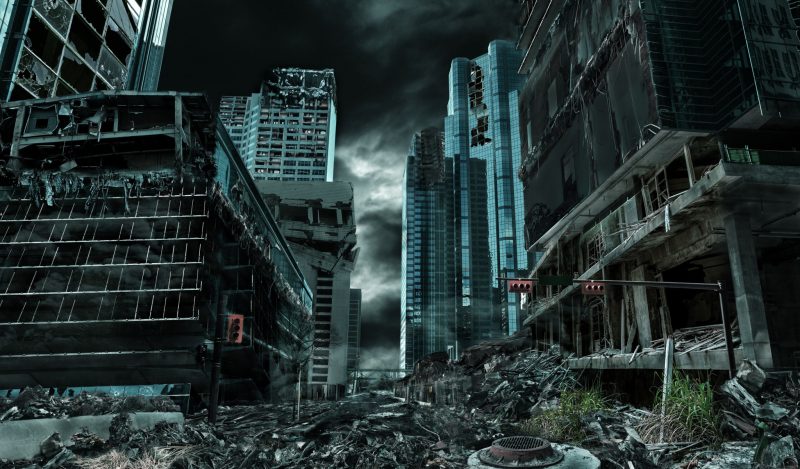
All of this speaks to a much bigger problem, which is that the whole political system seems to be engaged in an amazing game of “Let’s pretend” despite the overwhelming evidence of the disaster that has befallen us. No serious efforts are underway to reverse the damage of pandemic lockdowns and vaccine mandates and segregation. This is partly because there has been zero accountability or even honest public debate about what governments around the country did from 2020-2022. We live amidst the carnage but justice seems farther off than ever.
Yes, a complete reversal is possible but it seems ever less likely, especially with the continued efforts to purge from public life those who dissented during the crisis, as well as the intensifying censorship on all mainstream media platforms.
On December 10, 2004, the body of journalist Gary Webb, 49, was discovered in his home near Sacramento after a moving company worker found a note posted to his front door that read: “Please do not enter. Call 911 and ask for an ambulance.”
In the late 1990s, Webb had written a series of stories for the San José Mercury News, which provided the basis for his book, Dark Alliance: The CIA, the Contras, and the Crack Cocaine Explosion (New York: Seven Stories Press, 1998).
In it, Webb detailed how the explosion of crack cocaine in South Central Los Angeles during the 1980s was sparked by two Nicaraguan émigrés, Danilo Blandón and Norwin Meneses, who sold huge amounts of cocaine to raise funds for a CIA-backed rebel army—the Contras.
Webb was a Pulitzer Prize winner whose “Dark Alliance” series went viral in the early days of the internet. It caused a firestorm that led to the resignation of CIA Director John Deutch after he was grilled by angry Black activists at a meeting in L.A.[2]
Webb’s story had traced how cocaine was shipped into San Francisco and distributed in L.A. after Blandón and Meneses sold it to a street dealer from South Central named “Freeway” Ricky Ross.Through this connection, “Freeway Rick” became a crack kingpin, using his contacts with L.A.’s Crips and Blood street gangs to help distribute crack to many other cities across the country.
Webb had first heard about the story after receiving a tip from the girlfriend of a drug dealer against whom Blandón was testifying.
In his lead paragraph, Webb wrote that “a Bay Area drug ring had funneled millions in drug profits to a Latin American guerrilla army run by the U.S. Central Intelligence Agency” which was in league with “Uzi-toting ‘gangstas’ of Compton and South-Central L.A.”
The thrust of Webb’s research was confirmed in 1998 when a CIA inspector general’s report acknowledged that the CIA had worked with suspected drugrunners while supporting the Contras in Nicaragua.[3]
The corruption Webb exposed led all the way to the White House and President Reagan via his aide, Lieutenant Colonel Oliver North, who was coordinating, under Reagan’s orders, the illegal supplying to the Contras of weapons that were purchased with profits from the cocaine being smuggled into the U.S. and distributed around the country by criminals in league with the CIA.
Because of the far-reaching implications, Webb became the target of what Alexander Cockburn and Jeffrey St. Clair called “one of the most venomous and factually inane assaults on a professional journalist’s competence in living memory.”
The Mercury News’s top editor, Jerry Ceppos, ultimately buckled, and threw Webb to the wolves, deleting the website and penning a letter of apology to the readers for the “Dark Alliance” series.[5]
Webb was in turn banished to a small Mercury News bureau in Cupertino, California, south of San Francisco—125 miles from his home and family in Sacramento—and forced to write stories normally assigned to cub reporters. His career was effectively destroyed and he would never again get a job with a daily newspaper.
Webb stood by his research, nevertheless, and continued to expose corruption as a freelance journalist. His final publication unearthed the strategic use of video games by the Pentagon as a method of indoctrination and recruitment of teenage boys.
In a tribute to Webb, Robert Parry, the founder of Consortium News, wrote that Webb’s death marked “an exclamation point” on a “sorry era of journalism that began with the rise of Ronald Reagan and saw the gradual retreat—under right-wing fire—of what had once been Washington’s Watergate/Pentagon Papers watchdog press corps.”
The remains of the school bus after the blaze in Hackney on 20 January 2023. Source: The Telegraph
Rhoda Wilson
The Expose
Why are London’s buses spontaneously bursting into flames? And why are our politicians not addressing the problem?
In the past couple of years, two huge ships carrying thousands of cars have gone up in flames, apparently because of batteries in electric vehicles. A fire on board car carrier Felicity Ace in February 2022 led to the vessel sinking in the Atlantic, along with its cargo of 4,000 vehicles. And cargo ship Fremantle Highway caught fire in the North Sea.
In India, a spate of electric scooters catching fire in early 2022 sparked safety concerns causing buyers to think twice. Electric scooters bursting into flames hasn’t stopped. Fires are so commonplace that The Times of India now have a section dedicated to ‘Electric Scooter Fire News’.
At Luton Airport at least 125 flights were cancelled after a huge fire, which started on level three of the airport’s multi-storey car park. It caused the entire £20 million structure to collapse. Up to 1,500 vehicles were unlikely to be salvageable, according to estimates at the time. Authorities said the blaze “appeared to have been accidental and began in a parked car, believed to be a diesel vehicle.”
Well, not according to one witness, The Telegraph pointed out. The eyewitness managed to snap a picture of the vehicle suspected of causing the fire, which looked very like a Range Rover Evoque. There was none of the thick black smoke you would expect with a diesel fire. Instead, the blaze was focused on the front left seat of the car under which – well, I never! – the lithium-ion battery happens to be located in some hybrid Range Rovers.
Data from the London Fire Brigade for 2019 showed an incident rate of 0.04% for petrol and diesel car fires, while the rate for plug-in vehicles is more than double at 0.1%. But vested interests are creating as much smoke as possible to obscure the cause of these fires. Why? Because meeting the notably insane and economically disastrous net zero target by 2050 is predicated on the UK giving up fossil fuels.
The real danger with electric vehicles is the lithium-ion batteries, which are prone to catching fire unexpectedly or exploding and the ensuing inferno is very hard to put out.
Professor Peter Edwards, chair in inorganic chemistry at the University of Oxford, told The Telegraph: “Lithium-ion batteries in electric vehicles can develop unstoppable so-called ‘thermal runaway’ fires which burn uncontrollably.”
“As well as intense heat, during a battery fire, numerous toxic gases are emitted, such as hydrogen cyanide and hydrogen fluoride. The emission of these gases can be a larger threat than the heat generated,” he said.
Prof. Edwards is also raising the alarm about a pending “potential catastrophe” with all the large-scale lithium-ion battery storage sites sprouting up all over the UK, especially on solar farms.
There’s also a looming potential catastrophe in Sadiq Khan’s London bus fleet.
As of 31 March 2023, approximately 56% of London’s bus fleet is “environmentally friendly.” Out of a total bus fleet of 8,643, there are 3,835 hybrid buses, 950 battery electric buses, and 20 hydrogen fuel cell buses operating in London.
Below we have gathered incidences of buses spontaneously bursting into flames during 2022 and 2023. To find these, we conducted an internet search for the term “London bus fire,” while we came across some incidences in other locations along the way, we very much doubt the following is an extensive record of incidences in the past couple of years.
Buses carry many people at any one time, including schoolchildren. As an urgent matter of public safety, we must ask: What is causing these buses to spontaneously burst into flames?
In May 2022, six electric buses were destroyed in a bus garage in Potters Bar, Hertfordshire. At the height of the blaze, eight engines were in attendance and six Transport for London (“TfL”) buses – two hybrid electric and four diesel-powered – were on fire. The first bus caught fire while it was charging, before causing the other five to become engulfed.
According to Hertfordshire Live, an unnamed bus driver said that the fire was believed to have been caused by a battery exploding in one of the electric buses while it was charging – but, the Daily Mail said, this had not yet been confirmed.
Hertfordshire Fire and Rescue Service said at the time that “The cause and origin of the fire is currently under investigation and is yet to be established.”
After the fire in Potters Bar depot, TfL recalled 90 electric buses. “The precautionary measure has been decided while the company investigates causes of the blaze,” media outlet Sustainable Bus said.
London bus explosion: Five electric buses go up in a fireball – smoke seen for miles
FIVE electric double decker buses have exploded at the Potters Bar Bus Garage near London. pic.twitter.com/z6mLTswRPq
— Petronilla Husbands (@PetronillaHusb1) May 22, 2022
Dramatic images on social media showed a double-decker bus on fire on Brixton Hill, south London, on 17 June 2022. The driver and passengers left the bus before firefighters arrived. Thankfully, there were no injuries and the blaze was under control in 30 minutes.
Never letting a good crisis go to waste, the Mirroradded a climate twist to its reporting of the incident: “The incident comes on what is touted to be the hottest day of the year, with temperatures expected to peak at 34oC this afternoon.”
It is not the first time that climate science deniers have used the fabricated “climate change crisis” to explain spontaneous combustion. In July 2021, IFL Science used the dramatic title ‘The UK Is So Hot That A Bus Stop Reportedly Burst Into Flames’ to describe a passenger bus shelter catching fire in Solihull, West Midlands, UK.
IFL Science went on to say: “The extreme heat is leading to some unlikely (and disastrous) events. On 19 July [2021], the powerful sun bearing down on an unsuspecting bus stop in Solihull reportedly caused it to spontaneously burst into flames.”
The Guardian refuted a link between ambient temperature and the cause of the bus bursting into flames on 17 June 2022. “The Guardian understands that the extreme heat in London was not believed to be the cause of the fire,” it said.
The Guardian: London bus bursts into flames in Brixton, 17 June 2022
London bus passengers managed to escape a large fire that engulfed the rear of a vehicle on Baker Street near Portman Square in Marylebone, London on 10 January 2023.
Cars and homes on a residential road in Hackney, east London were left damaged after a school bus for pupils with special needs was engulfed in flames on 20 January 2023.
The children were inside the bus when it caught fire. The bus was carrying three primary school children and was forced to stop after smoke was detected from the front of the vehicle. It was quickly evacuated with no injuries, The Telegraph reported.
The Daily Mail reported that a witness who lived nearby said as soon as the bonnet caught fire, everyone was evacuated off the bus – and she believes people were also evacuated from their houses.
Six other vehicles were also damaged.
The Independent: Hackney school bus fire leaves surrounding cars and homes damaged, 20 January 2023
White smoke was seen billowing out from a London double-decker bus after it broke down in south London,The Independent reported. The bus was stationed near West Croydon Bus Station when it began to emit smoke onto the street.
The Independent: Clouds of white smoke seen billowing from London bus in Croydon, 19 May 2023
A double-decker bus was destroyed by a huge fire on Bradford Broadway, London on 9 October 2023. First Bus said no passengers were on board when the incident started.
A spokesperson said: “One of our buses on the 607 service was involved in a fire incident on the upper deck … We do not know what caused the fire and will assist in the investigation including a review of CCTV footage.”
Bradford double decker bus fire just now… 😱 Thank goodness for the fire brigade who were quickly on the scene… pic.twitter.com/pgdQBoXDWi
It’s not only passengers and nearby road users that are in danger from exploding buses.
In October 2023, The Telegraph reported that residents are fighting to block plans to build an electric bus garage under the development of thousands of new flats amid fears battery fires could cause a “volcano.”
Labour-run Barnet Council were in talks with TfL and developer Ballymore about the joint £1.7bn project to build 25 tower blocks on top of a proposed underground electric bus depot in Edgware town centre.
However, Save Our Edgware, a community group, warned that residents would be at “severe risk” from electric vehicle batteries igniting, leading to explosive combustion and multi-vehicle fires.
Other forms of electric-powered transport pose a risk to homes as well. On Monday, the London Fire Brigade had this warning for Christmas:
Thinking about buying someone an e-bike or e-scooter for Christmas?
Make sure you’re buying from a reputable seller and be very careful if buying online – products sold online might not meet UK safety standards and are at more risk of exploding and catching fire.#ChargeSafe⚡ pic.twitter.com/koibxGfK4N
Why? Because e-bikes and e-scooters also spontaneously burst into flames. The London Fire Brigade warned a few months ago that e-bike fires are up 60% this year. Firefighters have been called to an e-scooter or e-bike fire every two days since the start of 2023. Since 2020, at least 12 people have died and a further 190 have been injured in the UK in suspected e-bike and e-scooter blazes, The Telegraph reported.
In one instance, an e-bike left charging is believed to have caused the house fire that tore through a maisonette in Cambridge, UK, over the summer, killing a mother and her two young children.
On the other side of the pond, firefighters are seeing the same problems. In Montgomery County, Maryland a fire broke out on 28 October 2022, on the 14th floor of the high-rise apartment buildingcalled ‘Twin Towers’. (ER: Hmm.) Fire officials said an e-scooter battery malfunctioned while charging.
According to New York City Fire Department in September 2022, electric battery-related fires were up a whopping 233% in two years. The fires have resulted in 163 injuries and 10 deaths, including a 5-year-old girl who was killed in an apartment building fire.
Inside Edition: Why Are Some Electronic Bikes and Scooters Catching Fire? 22 September 2022 (2 mins)
Mark Zuckerberg is planning to survive the end times by building a top-secret Hawaii doomsday-bunker with its own sources of food and energy within a sprawling, $100 million compound in Hawaii, according to a Wired investigation. Zuckerberg has added hundreds of acres to his controversial 1,500-acre ranch in Kauai, Hawaii for years, but now it has been revealed that there are new planning documents for a “5,000-square-foot underground shelter.”
Several former contract workers at the ranch were bound by a non disclosure agreement (NDA) that made anyone on-site unwilling to “take the chance to get caught even taking a picture,” but, according to the Wired investigation, detailed public planning documents obtained through public records requests “show the makings of an opulent techno-Xanadu, complete with underground shelter and what appears to be a blast-resistant door.” Wired.
Below is the Wired investigation that reveals the true scale of the project—and its impact on the local community.
Inside Mark Zuckerberg’s Top-Secret Hawaii Compound
OFF THE TWO-LANE highway that winds along the northeast side of the Hawaiian island of Kauai, on a quiet stretch of ranchland between the tourist hubs of Kapaa and Hanalei, an enormous, secret construction project is underway.
A 6-foot wall blocks the view from a nearby road fronting the project, where cars slow to try to catch a glimpse of what’s behind it. Security guards stand watch at an entrance gate and patrol the surrounding beaches on ATVs. Pickup trucks roll in and out, hauling building materials and transporting hundreds of workers.
Nobody working on this project is allowed to talk about what they’re building. Almost anyone who passes compound security—from carpenters to electricians to painters to security guards—is bound by a strict nondisclosure agreement, according to several workers involved in the project. And, they say, these agreements aren’t a formality.
Multiple workers claim they saw or heard about colleagues removed from the project for posting about it on social media. Different construction crews within the site are assigned to separate projects and workers are forbidden from speaking with other crews about their work, sources say.
“It’s fight club. We don’t talk about fight club,” says David, one former contract employee. WIRED has agreed to withhold his real name because he was not authorized to speak to the press. “Anything posted from here, they get wind of it right away.”
Another former site worker, who we will call John, says he was told that another member of his construction company was fired for allegedly sharing a picture of the project on Snapchat. He’s heard similar stories from other crews. John says the “very strict” enforcement of NDAs has made workers on-site unwilling to “take the chance to get caught even taking a picture.”
The project is so huge that a not-insignificant share of the island is bound by the NDA. But everyone here knows who is behind it. Mark Zuckerberg, CEO of Meta, who bought the land in a series of deals beginning in August 2014.
Interviews with several people associated with the project, along with public records and court documents seen by WIRED, suggest that since then, the planning and construction of the roughly 1,400-acre compound has been shrouded in secrecy. The property, known as Koolau Ranch, will, according to planning documents, include a 5,000-square-foot underground shelter, have its own energy and food supplies, and, when coupled with land purchase prices, will cost in excess of $270 million.
According to evidence reviewed by WIRED, the project has relied on legal maneuvering and political networking, and at times, sources believe, it has shown disregard for the local public. All the while, Zuckerberg and his wife Priscilla Chan continue to build one of the most expensive properties in the world.
[…]
With NDAs forbidding workers from discussing the project, the secluded North Shore compound has gained a mythic status on Kauai. One local architect unaffiliated with the Zuckerberg project jokes that it reminds him of medieval rulers who, according to legend, killed the architects of their most ambitious projects so the secrets of their designs would die with them.
[…]
According to plans viewed by WIRED and a source familiar with the development, the partially completed compound consists of more than a dozen buildings with at least 30 bedrooms and 30 bathrooms in total. It is centered around two mansions with a total floor area comparable to a professional football field (57,000 square feet), which contain multiple elevators, offices, conference rooms, and an industrial-sized kitchen.
In a nearby wooded area, a web of 11 disk-shaped treehouses are planned, which will be connected by intricate rope bridges, allowing visitors to cross from one building to the next while staying among the treetops. A building on the other side of the main mansions will include a full-size gym, pools, sauna, hot tub, cold plunge, and tennis court. The property is dotted with other guest houses and operations buildings. The scale of the project suggests that it will be more than a personal vacation home — Zuckerberg has already hosted two corporate events at the compound.
The plans show that the two central mansions will be joined by a tunnel that branches off into a 5,000-square-foot underground shelter, featuring living space, a mechanical room, and an escape hatch that can be accessed via a ladder. “There’s cameras everywhere,” David says—and the documents back this up. More than 20 cameras are included on plans for one smaller ranch operations building alone. Many of the compound’s doors are planned to be keypad-operated or soundproofed. Others, like those in the library, are described as “blind doors,” made
to imitate the design of the surrounding walls. The door in the underground shelter will be constructed out of metal and filled in with concrete—a style common in bunkers and bomb shelters.
According to sources and planning documents reviewed by WIRED, the compound will be self-sufficient, with its own water tank, 55 feet in diameter and 18 feet tall—along with a pump system. A variety of food is already produced across its 1,400 acres through ranching and agriculture. Brandi Hoffine Barr, spokesperson for Mark Zuckerberg and Priscilla Chan, declined to comment on the size or bunker-like qualities of the project.
The cost rivals that of the largest private, personal construction projects in human history. Building permits put the price tag for the main construction at around $100 million, in addition to $170 million in land purchases, but this is likely an underestimate. Building costs on the remote island are still higher than pre-pandemic levels.
That price for a private residence is unparalleled in the local construction industry—as is the level of secrecy and security. “The only other time you see that is when you’re doing secure military installations,” says one local construction industry official affiliated with the site. “For a private project to have an NDA attached to it is very rare.”
[…]
With such scale and complexity come workplace accidents. In February, for instance, a crane traveling down a steep, narrow road on the property fell off an edge—careening down a hill with the operator inside.
The driver, a 53-year-old Kauai local, suffered serious injuries and was transported to the hospital in stable condition. He has since returned to the site, Hoffine Barr tells WIRED.
In August 2019, 70-year-old security guard Rodney Medeiros, who was under an NDA that, from what his family understood, prevented him from discussing specific details about his job, ended a 12-hour shift standing watch at a beach by the property. He was a contracted worker and was only hired when Zuckerberg was visiting—which he was that weekend, according to court documents reviewed by WIRED. These documents, later filed on behalf of Medeiros’ children, claim that rainy conditions made it impossible for an ATV to pick him up, as was standard practice. Medeiros began making his way up a steep trail to reach the compound’s exit, and midway up the path he suffered a heart attack. He was transported to a hospital, where he died hours later.
The secrecy of the compound was evident in the wake of Medeiros’ death. A recorded conversation between three of his children and a compound security manager, Hank Barriga, a week after his death, hints at what their legal team has implied in their wrongful death suit against one of Zuckerberg’s LLCs. The filing alleges that there is an effort behind the scenes of the Zuckerberg project to control the flow of information. In the recording, Medeiros’ children express frustration that in the days after their father’s heart attack they weren’t provided any details about what happened. Barriga says that he wanted to talk with the family but was blocked from doing so. “I was told to just wait, you know, all the supervisors want to talk to each other,” he says. Another contracted worker, a longtime roommate and close friend of Medeiros, said in a court deposition that he had also felt reluctant to discuss the incident because of his NDA. Hoffine Barr declined to comment on the recording due to the ongoing litigation.
According to Allan Parachini, a local journalist, the focus on managing the flow of information around the compound has included reprimanding the local press for critical coverage. Throughout 2017, Parachini had been requesting permits in an effort to learn what Zuckerberg was building on Kauai. He’d also recently written an opinion piece in the local newspaper, The Garden Island, that was critical of Zuckerberg, ending with a call for residents to “tell Zuckerberg that abusing his stewardship of public beaches as if we are just another batch of Facebook victims is unacceptable.”
In the fall of 2021, Facebook whistleblower Frances Haugen shocked the world by exposing just how much harm the company has inflicted on young users—and the fact that the company knew every last detail about it. After years of calls across the aisle to rein in Big Tech, the revelations in the “Facebook Files” felt like the perfect catalyst to get the ball rolling on tech reform in Congress. Haugen’s bravery came just a year after the FTC launched its 2020 antitrust suit against Facebook, and coincided with a historic push in Congress to pass tech antitrust legislation. In an environment like this, it’s easy to see why Sen. Richard Blumenthal (D-CT) declared that ‘this time feels distinctly different’: that the time for Congress to clamp down on Big Tech had finally come.
Unfortunately, two years later, it’s self-evident that the company now known as Meta is as harmful and unaccountable as ever. Facebook’s status as a modern-day monopoly allowed the company to withstand public outcry, and the tech giants’ all-out war against antitrust legislation in 2022 killed the bills in the 117th Congress. Fantastical notions that markets would force Facebook to change, popular during Meta’s stock slump in 2022, look even more absurd amid Meta’s stock turnout this year. Critical reporting on Meta’s harmful influence, such as The Wall Street Journal’s horrifying exposé this summer on Instagram’s role in enabling pedophiles, has received scant attention compared to Haugen’s revelations.
Make no mistake: Without action in Congress, Meta and the other tech giants’ ongoing war on accountability will continue.
As Haugen acknowledged in a recent op-ed, Meta and the other tech giants are still wielding their lobbying might to crush accountability measures across the country. In other words, even as Meta feigns support for accountability measures, ‘self-regulation’ won’t and cannot stop the company’s corrosive impact. To stop Facebook from exploiting children, stealing users’ data, and destroying global democracy, Congress needs to cut to the central issue at hand: Facebook’s monopolistic dominance, which enables the company to commit harm with impunity.
Over the past year, lawmakers looking to rein in Big Tech have largely set their sights on specific policy areas, be it child online safety or artificial intelligence (AI). To be sure, there’s no doubt that these issues and other specific tech policy matters deserve proper attention in their own right. But it’s crucial that the heart of the problem—the fact that Meta and other Big Tech companies’ monopoly power give them free reign to continue their destructive behavior—is not lost on Congress.
And make no mistake: Without action in Congress, Meta and the other tech giants’ ongoing war on accountability will continue. Two years ago, Meta demanded that FTC chair Lina Khan, a noted Big Tech critic, recuse herself from scrutiny of the company over frivolous conflict of interest accusations. Armed with virtually unlimited financial resources at their disposal, Meta and its team of lawyers have only intensified their war against the administrative state.
Amid a separate legal battle with the FTC over child privacy, Meta has gone as far as to target the FTC’s very constitutional authority. At a time when right-wing activists are working to weaponize the justice system in favor of corporate interests, this development should be welcomed with grave concern. As Sen. Elizabeth Warren (D-MA) noted, these ludicrous demands from Meta are akin to “Big Tobacco trying to gut the FDA because they didn’t want to be held accountable for hooking kids onto nicotine.”
Contrary to naysayers, the movement to break up Big Tech monopolies is anythingbutdead. Rapid developments in AI over the past year have raised widespread concerns that Big Tech giants will leverage control of the technologies to entrench their monopolies. As Sen. Amy Klobuchar (D-MN), a top proponent of the tech antitrust bills last session recently acknowledged, the rise of AI makes the cause of reining in Big Tech perhaps more relevant than ever. Recent polling has affirmed that Americans are still eager to rein in tech giants’ monopoly power, with a historic September survey finding strong support for AI anti-monopoly measures.
Between the Meta’s aggressive push into AI to its apparent hands-off approach to dangerous deepfake content ahead of the 2024 election, it’s more important than ever to rein in Facebook. Lawmakers should stand with the FTC as it pursues its historic antitrust case against Meta, and vigorously fight any efforts by tech-friendly members of Congress to gut the agency’s funding. Moreover, Congress should finish the work it started last session by passing the reintroduced American Innovation and Choice Act (AICO) to clamp down on Meta and other tech giants’ monopolistic abuses.
Attorney General Ken Paxton of Texas is setting the tone for the potential eventual downfall of Pfizer, one of the world’s most evil pharmaceutical companies.
As you may have heard, Paxton recently filed a lawsuit against Pfizer for “defrauding (the) public” with its mRNA Wuhan coronavirus (COVID-19) “vaccines,” which have already injured and killed millions.
Pfizer has been making false claims from the very beginning, the suit alleges, and Paxton wants the drug giant to pay for its crimes against humanity.
Texas’ top prosecutor also claims that Pfizer has been waging an internet censorship war to try to shut up people who question the safety and effectiveness claims of the company’s COVID injections.
In Texas under the Texas Deceptive Trade Activities Act, Pfizer is guilty of deceptively marketing its COVID jabs based on lies. There is zero evidence, and plenty to the contrary, to show that Pfizer’s COVID shots do not have “95 percent efficacy” as widely claimed.
“While Pfizer’s 95% figure made its vaccines seem highly effective, the truth was quite different,” a report about the matter explains. “When it began making those claims, Pfizer possessed on average only two months of clinical trial data from which to compare vaccinated and unvaccinated persons.”
“Of 17,000 placebo recipients, only 162 acquired COVID-19 during this two-month period. Based on those numbers, vaccination status had a negligible impact on whether a trial participant contracted COVID-19.”
(Related: Did you know that Pfizer never conducted a single valid drug trial for its COVID injections?)
Pfizer’s COVID jabs 0.85% effective at best
What makes Paxton’s case against Pfizer groundbreaking is the precedent it stands to set for the entire rest of the country to lodge the same type of complaint. Pfizer lied to the world and millions have died or become injured as a result.
The way Pfizer conducted its “clinical trials,” if you can even call them that, was so shady and deceptive that the company, quite frankly, should probably be shut down entirely. This can potentially happen if enough entities sue the drug giant and effectively bankrupt it, perhaps.
The true efficacy rate for Pfizer’s COVID jabs is not 95 percent, but rather 0.85 percent. This is basically a zero percent efficacy, which is the opposite of Pfizer’s near-100 percent efficacy claim.
Because Pfizer lied, people died. And because the U.S. Food and Drug Administration (FDA) was complicit, it, too, is in big part responsible for the genocidal outcome of the company’s jab release through Operation Warp Speed.
“… in early 2021, Pfizer deliberately created the false impression that its vaccine had durable and sustained protection, going so far as to withhold highly relevant data and information from the consuming public showing that efficacy waned rapidly,” reads the Plaintiff’s Original Petition in the case, which is officially known as State of Texas v. Pfizer.
Further, the FDA warned Pfizer at the time that it “needed” additional information concerning whether or not the jab protects against “transmission” of COVID. Instead of complying, the suit reveals, Pfizer engaged in a fear-mongering campaign that exploited public fears about the so-called “pandemic.”
Finally, Pfizer lied again when it made false and unsubstantiated claims about its “booster” shots for the many “variants” that were invented to keep the jab ruse going for as long as possible.
“Paxton is seeking that Pfizer refrain from making any future promises regarding the efficacy of its Covid vaccine,” En-Volve.com explains. “The Republican prosecutor also wants Pfizer to be barred from partnering with social media platforms in order to discourage open debate over the vaccine.”
The Israeli occupation state may have received Washington’s infinite blessings and arms for its genocidal war, but deep disagreements over the after-plan for Gaza and the political fate of the Palestinians have risen to the surface.
Amid the backdrop of the occupation state receiving blessings and arms from Washington for its genocidal war, both domestic political hurdles in the US and on-the-ground military dynamics have created a rift, influencing both strategic considerations and the course of the war in Gaza.
Israel’s ongoing war on the Gaza Strip is best understood to be a US-backed one, given that the occupation state has the political, economic, and military support of Washington as it commits genocidal acts of state terrorism on the Palestinians.
On multiple occasions, these actions havereceived approval from the Biden administration. However, recent statements indicate a growing unease within the US, suggesting that Israel’s actions may be crossing a line that is becoming increasingly challenging to justify and defend.
However, it is noteworthy that President Joe Bidenwarned Israel relatively early on, back in October, not to make the same “mistakes” as the US did following the events of 11 September 2001, which led to the occupation of Afghanistan and thelongest war in US history.
Divergent approaches to shared goals
Biden has urged Israeli Prime Minister Benjamin Netanyahu to alter the composition of his extremist government to facilitate acceptance of the US proposal for the post-war phase in Gaza. This proposal involves handing over the administration of the Hamas-ruled Gaza Strip to the Palestinian Authority (PA) and initiating a political process culminating in a theoretical “two-state solution.”
Thespecific ministers Biden seeks to see removed – Treasury Minister Bezalel Smotrich and National Security Minister Itamar Ben-Gvir, along with their associates – are rightly considered by the US as extremists and as obstacles to a revival of the notion of a two-state solution, widely considered to be dead.
Despite Biden’s latest statements urging Israel to “be more careful” in protecting civilians in Gaza while supposedly targeting the resistance, there is no indication of a major dispute between the US and Israel over the ongoing war.
Washington remains actively involved in the conflict, having deployed military assets in the West Asia region to protect Israel during its war crimes in Gaza.
The US continues to supply the Israeli occupation forces with the necessary weapons and ammunition, showcasing a shared goal with Israel but an ever so slight divergence in the approach to achieving that goal.
Yesterday, The Intercept revealed that the Biden administration had deployed a so-called Tiger Team of experts to speed up the supply of weapons to Israel.
Biden’s diplomacy and arms sales
The underlying issues between the US and Israel primarily revolve around four factors. First, with the US presidential primaries approaching, a significant portion of the Democratic Party’s baseopposes the administration’s support for the Israeli war on Gaza.
Consequently, the Biden administration is undertaking a “public diplomacy” campaign to distance itself from the perceived destructive effects of the war while maintaining support for arms sales to Israel.
In short, Biden wants to say that he does not approve of the killing of so many civilians in the war on Gaza, while heapproves of the sale of 14,000 tank shells to the Israeli army.
Second, the United States wants to ensure that Israel achieves its military goals in Gaza, but the two disagree over the political future of the Strip. The US seeks to ensure that Israel’s post-war objectives align with its interests. While Netanyahu aims to occupy the entire Gaza Strip and establish an alternative civilian authority with regional funding, the US advocates for a two-state solution and opposes the exclusion of the PA from administering the territory.
Third, what is happening in the region, spanning from Yemen to Lebanon and Iraq, has contributed to US fears of a larger war, or at least, “comprehensive regional chaos.” The increasing tensions in West Asia threaten to escalate at any moment. US threats have not prevented Israel’s enemies from increasing the level of attacks used in their military operations.
Washington believes that decreasing the intensity of the air and ground campaigns on Gaza will prevent Israel’s regional enemies from escalating their attacks.
Thus, changing the form of the war and reducing its intensity would allow Israel to complete its mission amid regional calm, supported by the ‘normalizer’ Arab countries and the majority of world governments.
Fourth,the United States does not trust Israel’s ability to achieve complete victory through a military operation, which is why it is seeking a political path in order to accomplish goals that cannot be fulfilled on the battlefield.
Netanyahu does not hide his intentions for a complete occupation of the Gaza Strip. His aim is to starve its people to pressure the resistance into surrendering, then to establish a “civil authority” to manage the Strip in coordination with the occupying army.
Allies of Israel, such as Saudi Arabia and the UAE, are expected to finance this authority and contribute to reconstruction. Netanyahu has repeatedly emphasized his refusal to let the Palestinian Authority manage the Gaza Strip.
As for the United States, it wants the end of the war on Gaza to pave the way for a political negotiation process in accordance with the ‘two-state solution.’
The two-state smokescreen
The ideal scenario for Washington involves the war transitioning to a new phase by the time primary elections roll around, with major military operations winding down. This would pave the way for a regional and international consensus on the two-state solution, leading to the handover of Gaza to the West Bank-based PA with security guarantees for Israel.
In this context, pressure on Hamas and other resistance factions to comply with ceasefire conditions would intensify with an emphasis on their perceived obstruction to the peace process.
Adjustments to the current Israeli government are therefore necessary to advance towards this goal. This involves the removal of the religious, right-wing extremists whovocally and openly oppose Palestinian statehood, and the inclusion of individuals endorsed by Washington for their outward commitment to this path.
Differentiation between the appearance of a “path to the two-state solution” and the “two-state solution” itself is crucial. The US aims for a return to negotiations rather than the immediate establishment of a Palestinian state.
The challenge lies in Netanyahu’s historic opposition to a two-state solution, making it unlikely for him to fully comply with US demands.
Netanyahu’s political career is marked by the rejection of the Oslo Accords and his incitement to kill Yitzhak Rabin, who signed the accords in 1993.
Moreover, Netanyahu affirmed a few months ago in a closed parliamentary session that he would do everything necessary to uproot the idea of a Palestinian state from reality.
It is therefore unlikely that the Israeli Prime Minister would agree to all these US demands. His political actions since the signing of the Iranian nuclear agreement in 2005 until today, show us that he is capable of continuing to rule, despite deep disagreements with the US administration.
At a pivotal moment in his career, it is not unlikely that Netanyahu will find an opportunity in this divergence of goals with the US to strengthen the Israeli right-wing on the basis of confronting the pressures aimed at establishing a Palestinian state “on the land of Israel.”
Naturally, populist, far-right Israeli political figures reject any talk of a two-state solution, or even a handover of the Gaza Strip to the PA.
The US, however, remains determined in its vision for the post-war phase, providing support to Israel militarily and diplomatically, as evidenced by the recent tank shell supplies and a UN Security Councilveto against an immediate ceasefire.
Despite the apparentsupport from the Israeli public for the continuation of the war, the duration and outcome remain uncertain, with mounting costs on the economy and soldiers’ lives.
Israeli Defense MinisterYoav Gallant anticipates that the war against Hamas “will take more than a few months” due to the challenges posed by the resistance’s infrastructure in Gaza – despite differing perspectives between the US and Israel on the duration and nature of the war.
Contrary to what the Americans declare, all indicators suggest that the war is prolonged, regardless of its form. It is not unlikely that Washington will be able to impose a change in the form of the war in the coming weeks.
Once again, what will change the reality and push Israel and the United States towards ending the war and attempting to defeat Hamas through blockade, starvation, and prevention of reconstruction are:
First, the resilience of the resistance and the losses that can be inflicted on the occupying army in the form of dozens of soldiers killed and thousands of wounded soldiers who are taken out of service. In this case, the occupying army may press its political leadership to retract from its high goals for the war. Even if the number of soldiers killed is relatively low, the number of soldiers leaving service due to injuries has an insurmountable limit.
And second, the continuation of operations by the Axis of Resistance forces in Yemen, Lebanon, and Iraq will also force the United States to reduce its war goals, push for a ceasefire, and lift the siege on Gaza. The last point, lifting the blockade, has been placed by Ansarallah in Yemen as a top demand to stop the operations against Israeli ships heading to Israeli ports from East Asia or vice versa.
The best-known Etruscan art available to archeologists are tomb paintings, bronze free-standing statues, relief plaques, gold jewelry and bronze and terra cotta vessels.
Etruria had the richest metal resources (copper, iron, zinc, arsenic, mercury and tin) in northern Italy. The federation was also endowed with vast forests (for fuel) and clay beds
The Etruscans were clear innovators in Mediterranean portraiture and the first European artists to realistically portray hands and noses (with distinctive nasolabial folds). Although they clearly valued Greek art and invited Greek artists to work in their communities, they also developed their own bronze and terra cotta industries. Bronze Etruscan statues were in high demand in elite Greek homes. After Rome conquered Erutria, they looted 2,000 bronzed statues from Overtia.
The main techniques the Etruscans used to mass produce bronze statues were casting and lost wax casting.* Bronze armor and breast plates were hammered out of bronze sheets. Razing (pounding a bronze sheet around a rounded rod) was used for helmets. Annealing** (alternately heating and slowly cooling) was used to keep bronze from hardening as it was hammered. Rivets or solder was used to connect feet and handles to bronze dishes.
The Etruscans had highly advanced decorative and finishing techniques. They mainly used flat chasing,*** hammer punching and stamping (where, unlike engraving, no metal is removed) to create complex designs. They also used inlays and overlays with precious metals into preformed indentations and niello, which employed an alloy of copper, silver and lead to make fine black lines – and gold leaf gelding, which fused gold to the bronze with a mercury/gold solution.
Most Etruscan statuettes were terracotta votives, left at various sanctuaries to thank the appropriate gods for services rendered. In fact it was common for Eturscan sanctuaries to house their own ceramic and metal workshops to produce religious items to sell to pilgrims.
Etruscan gold and silver jewelry is the most advanced in the ancient Mediterranean. Their granulized filagree (fine gold) technology used in intricate jewelry designs still can’t be reproduced today. Etruscan potters are responsible for inventing Bucchero, in which tera cotta is decorated (with fake rivet heads and fluting used to strengthen metal vessels) to look like metal.
*With lost wax casting, the statue or item of jewelry is chiseled out of wax which is covered with clay which hardens to form a mold. After the wax is melted to remove it from the mold, it’s replaced by molten bronze.
**A technique still used in producing small bronze objects today.
***Flat chasing involves hammering bronze with small, blunt tools to produce low-relief ornamentation.
Film can be viewed free with a library card on Kanopy.
Longitudinal associations between early-life fluoride exposures and cardiometabolic outcomes in school-aged children; Environment International, Dec. 13, 2023.
A Mexican-U.S. study group found that excess dietary fluoride causes a rise in biomarkers for diabetes, heart disease and obesity in Mexican children aged 4-8 years. The associations are greatest in boys at age 8 and girls younger than 8.
“Fewer, though consistent, associations” were found for fluoride in urine.
Investigators reported their obesity findings in terms of zBMI, or age-adjusted BMI (body mass index), to adjust for healthy BMI changes during early development. Calculations involving BMI and zBMI usually return equivalent results.
Although Mexico does not fluoridate its municipal drinking water, fluoridated salt, a Mexican staple, delivers fluoride doses often exceeding typical exposures through drinking water.


 Gary Webb with his exposé about the CIA and crack. [Source: