The Most Revolutionary Act

Uncensored updates on world events, economics, the environment and medicine

The Most Revolutionary Act
Unknown's avatar

About stuartbramhall

Retired child and adolescent psychiatrist and American expatriate in New Zealand. In 2002, I made the difficult decision to close my 25-year Seattle practice after 15 years of covert FBI harassment. I describe the unrelenting phone harassment, illegal break-ins and six attempts on my life in my 2010 book The Most Revolutionary Act: Memoir of an American Refugee.

The Sordid History of Britain’s East India Company

Episode 24 The British East India Company

A History of India

Michael Fisher (2016)

Between 1757-1857 the British East India Company conquered all of India, an area (1.5 million square miles) larger than western Europe with a far greater population.* Unlike other British colonies, India was never a white settler colony, hosting no more than a few thousand British officials and military officers throughout the 18th and 19th century.

As many British lawmakers opposed imperialism based on military conquest, the colonial takeover of India began incrementally as growing numbers of native merchants, soldiers and servants finding employment with the British East India Company.

After the embarrassing 1756 Black Hole of Calcutta incident (where the Nawab of Bengal held Company troops as prisoners of war), the British parliament became even more squeamish about British forces (either governmental or those commanded by the Company) acquiring Indian territory by force. British commander Robert Clive ultimately conquered Bengal for the British East India Company in 1757 by bribing one of the opposing generals not to fight.

The Company’s control over India’s economy (via their monopoly over cotton and spice exports) ultimately enabled them to control a number Mughal kingdoms without conquering them military. In 1772-73 Clive, who became enormously wealthy, was investigated for corruption and relieved of his command.

In 1774 Prime Minister William Pitt passed the India Act, which specifically military annexation of additional Indian territories by either British forces of the British East India Company. The Company largely ignored the new law. Once they controlled India’s richest province Bengal, they had enough money of their own to pay their sepoy mercenaries to annex other kingdoms. Initially Company officials who annexed new territory were recalled to Britain and prosecuted. However the land they seized was never returned to native rulers.

In an effort to reign in the Company’s military activities, Britain appointed a series of governors general  (of Bengal). The first, in 1772, was a former British East India company employee named Warren Hastings, who became extremely rich annexing territory through military expeditions and was ultimately impeached in the House of Commons. He was tried in the House of Lords, where it took 10 years for him to be acquitted.

The second, in 1786, was General Charles Cornwallis.** Cornwallis frequently used security as an excuse to invade and annex territories adjacent to those owned by the company. In 1805 he was forced to resign for excessive military zeal.

Provincial warlords, who had a long history of fighting with each other, found it impossible to unify against systematic dispossession of their land, especially when those who opposed the British ended up worse off than those who collaborated. India’s deteriorating economy made this even more difficult, especially when the British East India Company began shipping raw cotton to England for processing, putting thousands of Indian weavers out of work.

In 1820 the British East India Company was also awarded a monopoly on the opium trade.


*India had a population of 270 million in 1800, in contrast to Europe’s 180 million.

**Historically Cornwallis is best known for surrendering to American revolutionaries at Yorktown in 1781.

Film can be viewed free with a library card on Kanopy.
https://www.kanopy.com/en/pukeariki/video/366254/366219

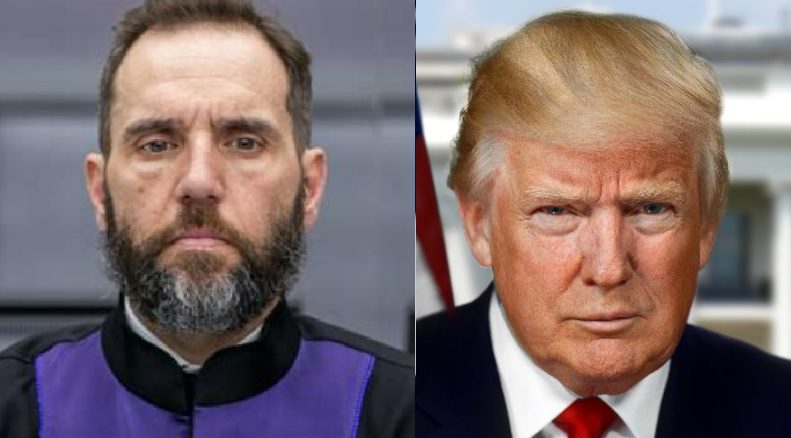
Attorney Reveals the “Exculpatory” Evidence Jack Smith Possesses that Exonerates President Trump

It turns out that Special Counsel Jack Smith either failed to review evidence that exonerates President Trump and Mayor Rudy Giuliani or he ignored the findings altogether.

Tim Parlatore, the attorney for former New York City Police Commissioner Bernard Kerik, told CBS News that Smith’s office has within thousands of pages of records turned over by Kerik that contains “exculpatory evidence.” The exact reason why Smith has not disclosed this critical information remains unclear.

According to CBS News, these documents were submitted to Smith on July 23.

Kerik’s legal team says that these materials, which include affidavits under oath from people raising concerns regarding the integrity of the 2020 presidential contest, demonstrate there was an honest effort to investigate voter fraud claims in the election.

Yet Parlatore got “surprising” news when the special counsel’s office started asking him for documents which he had already handed over after they indicted Trump on Wednesday.

CBS News reported:

In an Aug. 2 email to Parlatore, reviewed by CBS News, a special counsel’s office prosecutor requested “responsive documents as to which the Trump campaign is no longer asserting a privilege,” referring to the Kerik records Parlatore said he previously provided.

Parlatore said he was “stunned” when, after the indictment came down, the prosecutor contacted him asking for the records he said he had already provided. Parlatore said the “records are absolutely exculpatory.

Here is the evidence should exonerate Trump according to Parlatore.

They (documents) bear directly on the essential element of whether Rudy Giuliani, and therefore Donald Trump, knew that their claims of election fraud were false. Good- faith reliance upon claims of fraud, even if they later turn out to be false, is very different from pushing fraud claims that you know to be false at the time.

In other words, Trump and Giuliani honestly believed the 2020 election was stolen. This conclusively proves that Trump is being prosecuted based on his opinions.

There is also other evidence to back up Trump’s claims of election fraud. The Gateway Pundit has extensively reported on the irregularities that occurred during the 2020 Presidential election.

Some examples can be found here and here.

CBS News notes that Parlatore served as a lawyer working for Trump in the Justice Department’s investigations into the 45th president, but left the legal team in May.

A spokesperson for the special counsel refused comment Thursday when asked by CBS News if they had reviewed the material.

[…]

Via https://www.thegatewaypundit.com/2023/08/attorney-reveals-exculpatory-evidence-jack-smith-possesses-that/


Capitol Police Chief Challenged J6 Narrative In Never-Aired Tucker Carlson Interview

Zero Hedge

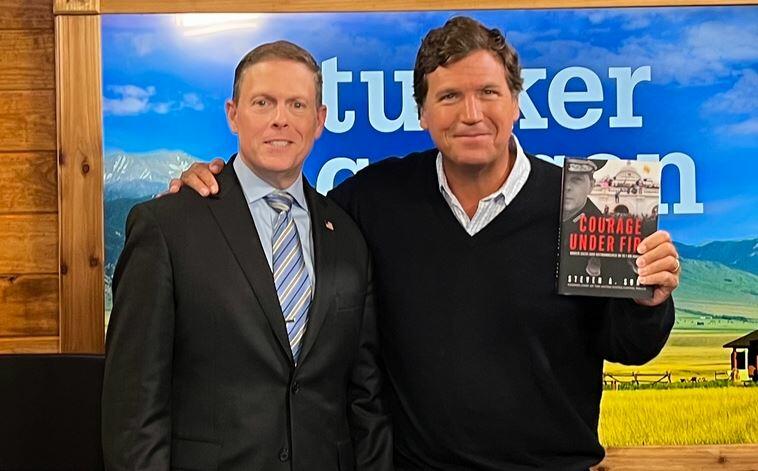
In never-before-seen footage that was withheld by Fox News, former Capitol Police Chief Steven Sund told former Fox News host Tucker Carlson that January 6th was a complete debacle and a “cover up.”

“Everything appears to be a cover up,” Sund tells Carlson in footage obtained by the National Pulse. “Like I said, I’m not a conspiracy theorist,” he continued. “…but when you look at the information and intelligence they had, the military had, it’s all watered down. I’m not getting intelligence, I’m denied any support from National Guard in advance. I’m denied National Guard while we’re under attack, for 71 minutes…

Beginning around 19 minutes into the conversation, Sund tells Tucker: “If I was allowed to do my job as the chief we wouldn’t be here, this didn’t have to happen,” adding that he’s “pissed off” about being “lambasted in public” over what happened that day.

The full interview has thus far been hidden from the public at the behest of Rupert Murdoch’s increasingly left-wing Fox News channel, which unceremoniously fired its prime time host Tucker Carlson allegedly as part of a private settlement with Dominion Voting Systems. -National Pulse

“It sounds like they were hiding the intelligence,” Carlson said, to which Sund responds: “Could there possibly be actually… they kind of wanted something to happen? It’s not a far stretch to begin to think that. It’s sad when you start putting everything together and thinking about the way this played out… what was their end goal?”

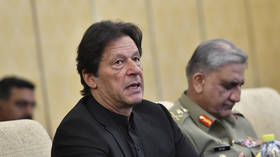
Ex-Pakistani PM Imran Khan jailed for three years

Ex-Pakistani PM Imran Khan jailed for three years © Getty Images / Parker Song-Pool/Getty Images

The former cricket star claims his conviction for illegally profiting from state gifts was politically motivated.

Former Pakistani prime minister Imran Khan was issued with a three-year jail sentence by an Islamabad court on Saturday after he was found guilty on corruption charges. The verdict means that Khan, who claims the prosecution was politically motivated, will not be able to contest elections later this year.

In a pre-recorded statement released on X (formerly Twitter), Khan told his supporters: “I have only one appeal, don’t sit at home silently.”

Judge Humayun Dilawar declared in court that Khan, 70, had “deliberately submitted fake details” after he was accused of illegally profiting from the sale of gifts he received while serving as Pakistan’s head of state between 2018 and 2022. After issuing the three-year custodial term, the judge also ordered Khan to be banned from politics for a period of five years.

Following the verdict, Khan, who was not in court, was arrested at his home in Lahore and taken into police custody. The claims against the former prime minister are a case of “political victimization,” according to his lawyer Intezar Hussain Panjutha.

“Khan was not given an opportunity to defend himself and say his side of the story,” he said after the verdict. “We wanted to provide witnesses in his favor but he was not allowed this opportunity. Khan was not given a fair trial.”

Khan’s barrister, Gohar Khan, added in comments to The Dawn newspaper that the court’s verdict had been a “murder of justice.”

However, opponents of the former politician appeared to celebrate the court’s judgment outside the building, with some chanting: “Imran Khan is a thief.”

More than 150 cases have been brought against Khan, the former sports star turned populist political figure, since he was ousted from office last April following a no-confidence vote. He has denied all wrongdoing.

Barring a successful appeal, Khan’s conviction means he will be prohibited from standing in Pakistan’s general elections, which are expected to take place in October or November. Khan, who had unsuccessfully called for early elections to take place, has previously stated his belief that Pakistan’s military authorities have attempted to obstruct his Tehreek-e-Insaf party from regaining political power.

It’s the second time in recent months that Khan has been arrested. Around 100 paramilitary troops were involved in his detention last May in connection with one of the numerous cases against him. Khan has alleged that Pakistan’s military is responsible for attempts to subdue his political influence. He has also claimed that the United States has conspired with Pakistan’s government to prevent him from returning to political power.

[…]

Via https://swentr.site/news/580870-pakistan-imrah-khan-jail-sentence/

Despite 12 Deaths During Clinical Trials, CDC Signs Off on RSV Shots for Newborns

By  Michael Nevradakis, Ph.D.

Medical experts criticized the Centers for Disease Control and Prevention’s Thursday decision to recommend a “new immunization” for newborns to protect against respiratory syncytial virus, or RSV, calling the move unnecessary and not worth the known risks.

Beyfortus, also known as nirsevimab, is produced by pharma giants Sanofi and AstraZeneca.

In a press release, the CDC referred to the drug as a “powerful tool” and a “new immunization.” According to the agency:

“ACIP [Advisory Committee on Immunization Practices] voted to include nirsevimab in the Vaccines for Children program, which provides recommended vaccines and immunizations at no cost to about half of the nation’s children.

“CDC is currently working to make nirsevimab available through the Vaccines for Children program. Healthcare providers will be a key partner in CDC’s outreach efforts. Additional clinical guidance and healthcare provider education material will be provided by CDC in the coming months.”

According to The Associated Press (AP), the drug will be offered as a “one-time shot for infants born just before or during the RSV season and for those less than 8 months old before the season starts,” and for some high-risk 8-19-month-old infants.

Infants in the high-risk group include “immunocompromised children and those with chronic lung disease — as well as Native American and Alaska Native children, who have RSV hospitalization rates between four and 10 times that of the general population,” STAT News reported.

CDC’s ACIP approved the recommendations in a unanimous 10-0 vote. Although not bound by ACIP’s vote, CDC Director Mandy Cohen signed off on the recommendations later on Thursday, according to CNBC.

Beyfortus will be “broadly available for all infants regardless of whether they have a health condition,” CNBC reported, adding that it will be “administered as a single dose.”

Some medical experts criticized the recommendation, pointing to infant deaths that occurred during the clinical trial for Beyfortus and questioning the need for their widespread administration to this age group.

Cardiologist Dr. Peter McCullough told The Defender:

“While monoclonal antibodies are reasonably safe and effective, they are not clinically indicated nor medically necessary in all newborns.

“This new preventive strategy should be considered in rare cases with baseline lung disease such as severe asthma or cystic fibrosis. Injecting all newborns should be off the table and rejected by parents who want to avoid unnecessary drugs and potential harms.”

Brian Hooker, Ph.D., P.E., senior director of science and research for Children’s Health Defense (CHD), cited the significant number of infant deaths during Beyfortus’ clinical trial in his remarks:

“This is really too bad and seems to be a part of the Department of Health and Human Services’ scare tactics recently regarding RSV, which is generally a mild infection that finds its origin during the development of the polio vaccine.

“The efficacy of the antibodies from clinical trials is woefully low and the circulating half-life of such a therapeutic may be as low as two weeks.

“I’m also worried about allergic reactions in newborns, especially given the high dose of antibodies and especially given that 12 infants died in the experimental arm of the study.”

Some medical experts criticized the recommendation, pointing to infant deaths that occurred during the clinical trial for Beyfortus and questioning the need for their widespread administration to this age group.

Cardiologist Dr. Peter McCullough told The Defender:

“While monoclonal antibodies are reasonably safe and effective, they are not clinically indicated nor medically necessary in all newborns.

“This new preventive strategy should be considered in rare cases with baseline lung disease such as severe asthma or cystic fibrosis. Injecting all newborns should be off the table and rejected by parents who want to avoid unnecessary drugs and potential harms.”

Brian Hooker, Ph.D., P.E., senior director of science and research for Children’s Health Defense (CHD), cited the significant number of infant deaths during Beyfortus’ clinical trial in his remarks:

“This is really too bad and seems to be a part of the Department of Health and Human Services’ scare tactics recently regarding RSV, which is generally a mild infection that finds its origin during the development of the polio vaccine.

“The efficacy of the antibodies from clinical trials is woefully low and the circulating half-life of such a therapeutic may be as low as two weeks.

“I’m also worried about allergic reactions in newborns, especially given the high dose of antibodies and especially given that 12 infants died in the experimental arm of the clinical trial.”

Dr. Meryl Nass, an internist, biological warfare epidemiologist and member of the CHD scientific advisory committee, cited a CDC study indicating RSV’s low risk for babies.

She also cited the lack of demonstrated long-term efficacy for such monoclonal antibodies.

Nass also noted that there are risks associated with the administration of monoclonal antibodies more broadly, citing the Cleveland Clinic, which states that “Infusion reactions are common, and occur during or shortly after monoclonal antibody treatment.”

There are also “more serious but less common risks linked to unwanted immune system reactions, such as acute anaphylaxis, cytokine release syndrome (CRS) and serum sickness.”

[…]

ACIP ignores ‘unrelated’ infant deaths during Beyfortus clinical trial

Several infant deaths — 12 in all — were reported during the clinical trial, which the U.S. Food and Drug Administration (FDA) claimed during a June review were “unrelated” to the antibody. On Thursday, Jones repeated this claim during the ACIP meeting, stating that “no RSV-associated deaths were recorded.”

CNBC reported in June that of the 12 infants, “Four died from cardiac disease, two died from gastroenteritis, two died from unknown causes but were likely cases [of] sudden infant death syndrome, one died from a tumor, one died from COVID, one died from a skull fracture, and one died of pneumonia.”

[…]

Perhaps partially acknowledging such concerns, STAT News reported that “experts cautioned that rolling the drug out across the country would be difficult. The U.S. has never before tried to give this type of medicine to nearly every infant.”

[…]

Via https://childrenshealthdefense.org/defender/cdc-beyfortus-nirsevimab-rsv-shots-newborns/

Texas Lawmaker Seeks to Ban Private Covid Jab Mandates

Charlotte Scott

AUSTIN, Texas — The days of seeing Texas health care workers in full protective equipment in drive-thru COVID testing lines are long gone. But conversations about the deadly disease and vaccination against it are not.


What You Need To Know

    • Rep. Brian Harrison, R-Midlothian, wants the governor to call a special session to ban COVID mandates at businesses
    • During the 88th legislative session, Texas passed a bill that says government entities are prohibited from requiring COVID-related masks, vaccines or business shutdowns
    • Harrison says it is needed to protect employees who may be let go if they refuse to get a COVID vaccination
    • Critics argue unvaccinated individuals are not a protected class

When COVID vaccines were made available, some companies required their employees to get a shot. The fact that some businesses still mandate this is not OK with one Republican state representative.

“COVID vaccine mandates are tyrannical. They are violative of medical freedom. They have no place in the great state of Texas. And we’ve got to work to abolish them here, too,” said Rep. Brian Harrison, R-Midlothian.

CVS Health requires certain employees to be fully vaccinated against COVID and get booster shots. Meta, the platform that operates Facebook and Instagram, also requires a shot to work in the office.

Ahead of the 88th legislative session, the governor said one of his priorities was to end COVID restrictions forever. Lawmakers almost achieved that by passing legislation that says government entities are prohibited from requiring COVID-related masks, vaccines or business shutdowns.

“That was a fine bill,” Rep. Harrison said. “I voted for it. It’s fine.”

But the law doesn’t touch the private sector, which means places like hospitals and schools can still have COVID vaccine mandates. Rep. Harrison wants the governor to call a special session to ban COVID mandates at businesses, but that’s unlikely to happen.

“Just as employees have the right to work where they want, employers have the right to hire who they want, as long as they’re not discriminating, right? So, people who are unvaccinated are not a protected class under federal law or state law,” said Carliss Chatman, an associate professor of law at Southern Methodist University. “I think a lot of politicians are trying to make it as if the unvaccinated are a protected class, but they’re not. It’s not the same as saying, ‘I’m not going to hire women, or I’m not going to hire people who are overweight, or I’m not going to hire people who don’t have straight hair.’”

Chatman adds if you don’t like the requirements of a job, you don’t have to take it.

“We all are adults, and we all have freedom of contract, and we all suffer the consequences or get the benefits of our economic decisions,” Chatman said. “And it’s not for the government to come in and mandate what a workplace should look like, beyond things that are patently discriminatory.”

Rep. Harrison calls himself a “small government guy” but says legislative action is needed to protect employees who may be let go if they refuse to get a COVID vaccination.

“I want government out of the affairs of business,” he said. “But the reason we have to do this is to correct a bad government action. It was the government that incentivized the private sector mandates by giving the employers liability protection if they mandated a vaccine on their employees. So we’ve got to pass a bill to protect medical freedom to undo the bad government distortions that created these mandates in the first place.”

The state legislature also passed a bill during the regular session that says businesses who do not require vaccination are not liable for “injury or death caused by the exposure of an individual to the pandemic disease through an employee or contractor of the business.”

[…]

Via https://spectrumlocalnews.com/tx/south-texas-el-paso/politics/2023/08/03/gop-representative-wants-to-ban-covid-vaccine-mandates-in-private-sector

RFK Jr staff block Israel-Palestine dialogue

A day after Robert F. Kennedy Jr. agreed to a public discussion with Max Blumenthal on Israel-Palestine, his campaign walked back his words. RFK Jr. has pledged “unconditional support” to Israel while spouting vitriolic anti-Palestinian rhetoric.

One day after Democratic presidential candidate Robert F. Kennedy Jr. agreed to comedian and podcaster Jimmy Dore’s proposal that he engage with The Grayzone’s editor-in-chief, Max Blumenthal, in a public dialogue on Israel-Palestine, Kennedy’s campaign nixed the discussion.

During an August 1 phone call with Grayzone correspondent Liam Cosgrove,  RFK Jr. campaign communications director, Stephanie Spear, declared: “[Kennedy’s] not debating Max Blumenthal… He’s not gonna debate anyone. He’s running for president.”

“You’re not hearing me,” she emphasized. “We’re not gonna do it, okay?”

Hours after her call with Cosgrove, Spear contacted Blumenthal directly to explain that Kennedy would not agree to any public discussion with The Grayzone editor until Spring 2024, once the first five primaries are over.

She offered Blumenthal an off-the-record phone conversation with the candidate as an apparent consolation.

Though Blumenthal never insisted on a formal debate, but rather, a live interview such as as the ones Kennedy has granted popular media figures like Dore, Glenn Greenwald and Briahna Joy Gray, Spear repeatedly stated that the candidate would not debate anyone except the President of the United States until the first five presidential primaries are over.

“We’re hitting different demographics, and we’re also hitting on the different issues,” Spear emphasized. “So, you know, it’s really a strategy thing, and – we want to debate President Biden. He’s a Democratic candidate, that’s what we’re waiting for.”

This June, however, Kennedy enthusiastically accepted podcaster Joe Rogan’s offer to participate in a live debate with Peter Hotez, a pediatrician and one of the country’s most vociferous boosters of Covid-19 restrictions and vaccine mandates. Rogan pledged to donate $100,000 to a charity of Hotez’s choice if the doctor entered the octagon. Hotez, who provoked Rogan’s challenge by accusing him and RFK of “vaccine  misinformation,” invited widespread mockery and scorn when he refused to debate.

But now, RFK is refusing to engage on an issue that he recently placed at the heart of his campaign, and which has shocked many supporters who believed he offered an alternative to the pro-war bipartisan consensus: his “unconditional support” for the state of Israel and its military’s conduct in the Occupied Palestinian Territories.

During his conversation with Kennedy’s communications director, Cosgrove challenged Spear on the candidate’s sudden timidity. “RFK goes on all these interviews and says that he wants to debate people,” he stated, “so I’m a bit confused about why he says that, and you guys don’t want to debate. Is it your decision, or is it him saying that?”

“It’s the campaign’s decision, Liam,” Spear stated.

“He did not ask for a debate with Max,” she continued in an annoyed tone, “so maybe re-listen to that… We’re not gonna debate, I don’t know how many times I have to tell you that.”

Understanding Your Rights and Responsibilities in Childhood Vaccination: A Guide for Parents

Picture

Dr Paul Thomas

With summer winding down and schools about to open, parents around the country (USA) have received or will receive letters of exclusion from their child’s school. The letter will state that your child is required to be up to date on their childhood immunizations according to the CDC, or they will not be allowed to attend school.

You are not told that other than a handful of states that have eliminated both the religious and the philosophical exemptions, you are free to do whatever you believe is best for your child. You can do some, all, or none of the childhood vaccines. Each state may have a different form or process but rest assured; it is the law of your state that you have this right; the freedom to choose.

To learn more about the specifics for your state, NVIC (National Vaccine Information Center) https://www.nvic.org has all the information you need.

National Vaccine Information Center

If you live in California, New York, West Virginia, Maine, and possibly Mississippi, the only exemption allowed is a medical exemption. All states allow medical exemptions, which is where a doctor writes a medical exemption.

The challenge for doctors is that the states only allow medical exemptions according to the CDC guidelines, which means you can only get exemptions for a vaccine that has caused death or a severe anaphylactic reaction. They essentially don’t allow exemptions for all vaccines. More importantly, doctors who write medical exemptions invite an investigation by their state medical board and risk losing their medical license. This has made medical exemptions something, in theory, one could hope to get, but in reality, and practically speaking, medical exemptions no longer exist.

So, what do you do if you live in one of the states that only allow medical exemptions?

Basically, you either must get your child up to date, home school, or leave the state for one that allows religious or philosophical exemptions. If you feel you have no choice but to get your child up to date, I highly recommend that you consult a medical provider to help you figure out the safest way to do this.

I am available for coaching at https://www.kidsfirst4ever.com. I don’t diagnose or treat as I am retired and relinquished my license.

Parents and guardians, there is nothing more important in your role to nurture and protect your children than how you handle the vaccine situation. There is no one size fits all that makes sense. Each vaccine should be looked at individually, and you should determine if it makes sense for your child, given the prevalence of the disease for which there is a vaccine and the risks and benefits of giving the vaccine or not giving the vaccine.

[…]

Via https://kidfirst4ever.substack.com/p/understanding-your-rights-and-responsibilities

Early European Colonization of India


Episode 23 Competing European Empire

A History of India

Michael Fisher (2016)

Following the 1453 Ottoman seizure of the Eastern Roman empire, the Turks totally controlled land access to India’s highly prized spice and cotton trade. This, in turn, created intense pressure on European leaders to discover a sea route to India.

In 1494, Spain and Portugal signed the Treaty of Tordeallas (with the Pope’s approval), awarding Portugal colonization rights in Brazil, Africa and southern Asia as far as Japan. The treaty granted Spain exclusive colonization rights everywhere else.

Four years later in 1498, Portuguese explorer Vasca da Gamma discovered a direct sea route Africa’s Cape of Good Hope. This would lead to the first European colonies in Asia (30 years before the Mughals arrived).

The first Portuguese to land at Calicut in the late 15th century thought all the non-Muslims they encountered were Christians praying to a dark-skinned version of the Virgin Mary. The Calicut natives, in turn, found the behavior of the first Portuguese explorers extremely shocking. Kitted out with canons, the Portuguese boats seized all the other vessels in the harbor, slaughtered all their crew and passengers and set fire to them.

With their small ship holds, early Portuguese exporters mainly on pepper, forcing the price down by blocking African and Ottoman traders from purchasing it. They also forced all ships leaving Calicut harbor to buy and display a Cartaz, a flag displaying a Christian cross. In addition to South American gold and silver, Portuguese traders also introduced tomatoes, potatoes, chili peppers, invasive species and disease and European-style cannon and other munitions to India. These innovations quickly spread to the interior.

In 1560, the Portuguese set up an Inquisition in India to pressure native Indians to convert to Catholicism. In 1632, Shah Jahan captured 400 Portuguese men and women in an effort to discourage further colonization. He released all those who converted to Islam and distributed the others to his courtiers as slaves.

Although Portugal continued to dominate European trade into the 1800s, by 1850 they only occupied coastal trading settlements in Surat, Goa, Calicut, Cochin and Galle (in modern day Sri Lanka). Diu, Daman and Goa remained Portuguese colonies until 1961, when they were annexed by the Republic of India.

Northern Europe pursued a different, ultimately superior approach to colonization by putting it under the control of the first capitalist corporations: the English East India corporation founded in 1600, the Dutch East India Company founded in 1602 and the French East India Company in 1664. This created more financial certainty for merchants underwriting ships to sail halfway around the world (half of which never returned).

In 1600, Elizabeth I chartered the British East India Company, granting it a monopoly on all English trade from Africa to the Philippines. The charter granted them the right to raise armies and use military force. Cotton, which was far more comfortable than the wool and linen available in Europe, was their export of choice.

Between 1670-1740, there was a 500% increase in Indian imports to England, while massive inflation from the heavy influx of New World gold and silver further destabilized the Mughal empire. By the end of the 17th century, it had fragmented into numerous small kingdoms.

In 1668, control of Bombay shifted from the Portuguese to Charles II of England after he married a Portuguese princess. Owing to the cost of shipping English troops 12,000 miles away, the English East India company recruited local sepoy mercenaries to defend their colonial holdings.

The French East India Company captured Madras in 1745, which they swapped for Louisbourg Canada in the Treaty of Aix-la-Chapelle.

Film can be viewed free with a library card on Kanopy.
https://www.kanopy.com/en/pukeariki/watch/video/366254/366217