The Most Revolutionary Act

Uncensored updates on world events, economics, the environment and medicine

The Most Revolutionary Act
Unknown's avatar

About stuartbramhall

Retired child and adolescent psychiatrist and American expatriate in New Zealand. In 2002, I made the difficult decision to close my 25-year Seattle practice after 15 years of covert FBI harassment. I describe the unrelenting phone harassment, illegal break-ins and six attempts on my life in my 2010 book The Most Revolutionary Act: Memoir of an American Refugee.

Would Israel Use Its Not-So-Secret Nuclear Arsenal If The War Expands Beyond Gaza?

Time for IAEA to Investigate Israeli Nukes - Islam Times

Zero Hedge

There is a prevailing expectation for the developing war in the Middle East – If Israel commits to a ground invasion the conflict will expand to the rest of the region.  Lebanon, Syria, Iran, Yemen and others will react with a troop buildup or will engage with Israel outright, even with the presence of two US carrier groups.  The rhetoric is swirling around what might happen should this chain of dominoes fall, but the most common prediction is that Israel would lose in a multifront war unless US forces intercede.

There is, however, another scenario that most analysts rarely if ever consider.  It’s one of the biggest non-secret secrets in the proliferation of armaments – Israel has a nuclear arsenal and has been developing it since the late-1950s.

In 1958 the Eisenhower Administration discovered a secret nuclear reactor in Negev desert of Israel that was disguised as the development of a textile manufacturing plant.  Also known as the Dimona nuclear site, the reactor was built with French assistance and utilized heavy water purchased from Norway through a deal brokered by the UK government. The project was designed to experiment with plutonium for use in nuclear weapons.

A Special National Intelligence Estimate (SNIE 100-8-60 from 8 December 1960) formally determined that “Israel is engaged in construction of a nuclear reactor complex in the Negev near Beersheba” and “plutonium production for weapons is at least one major purpose of this effort.” The SNIE estimated “that Israel would produce some weapons grade plutonium in 1963-64 and possibly as early as 1962.” A significant portion of the SNIE is still classified.

The Israeli nuclear arsenal is now suspected to include hundreds of warheads capable of being delivered by several methods.  These include gravity bombs dropped by F-16s, cruise missiles fired from mobile platforms and even submarines with modified cruise missiles.  Interestingly, Israel just launching a large new class of submarine this summer called the DolphinI/II which appear to carry much bigger missiles than previous submarines.  These subs may in fact be capable of carrying and launching nuclear weapons and could strike almost anywhere in the world.

The most likely use of nuclear weapons by Israel, though, would be as a deterrent to wider war.  The international agreement Israel follows requires that they not be the first nation in the Middle East to “introduce” such weapons.  The word “introduced” has been interpreted very broadly to mean that Israel will not ever officially admit they have nuclear weapons, thereby spurring an arms race.

That said, a deterrent weapon is not much of a deterrent unless your enemies know you have it.  This might explain why Israeli officials have hinted at the existence of nukes in the past, calling them “other capabilities” in discussions on Israeli defense.

The employment of nukes is another matter entirely.  It would seem that a number of nations are ready to engage with Israel in direct warfare in the wake of the attack by Hamas, merely waiting for Israel to strike back with a significant ground force.  These governments might have forgotten Israel has nukes, or, they might believe that Israel would never dare use them.  This is a dangerous assumption.

Former Prime Minister Yair Lapid noted in a discussion on defense last year that Israel has “other capabilities” (i.e. nukes):

“The operational arena in the invisible dome above us is built on defensive capabilities and offensive capabilities, and what the foreign media tends to call ‘other capabilities.’ These other capabilities keep us alive and will keep us alive so long as we and our children are here…”

In other words, Israel intends to use their nuclear capabilities should their civilization come under threat.

Strategically speaking, Israel is well placed for the employment of nukes, given all of its enemies are east or north of the nation’s position, which means Israel would not have to worry about suffering from the radioactive fallout from its own weapons.  But, this fallout could affect nations like Iraq and Iran, thereby giving them license to join in the war when they might otherwise abstain.  Obviously this would have far reaching implications for the rest of the world, including escalation with nuclear powers such as Russia and China.

The real question is not “if” Israel would use nukes, but under what conditions?  How bad does the situation have to get before a nuclear response is assured?  Given the rhetoric of previous Israeli leaders on defense, it would not take much.  A war on more than one front leading to an uncontrolled breach of Israel’s border could be all the excuse the country needs.

[…]

Via https://www.zerohedge.com/geopolitical/would-israel-use-its-not-so-secret-nuclear-arsenal-if-war-expands-beyond-gaza

Hamas shows off entire bunker room floor covered with U.S./Swedish M136 LAWs, British/Swedish NLAWs, and possibly U.S. M141 rocket launchers.

Published by

Gee whiz, I wonder where all this stuff came from?
بِسْمِ ٱللَّٰهِ ٱلرَّحْمَٰنِ ٱلرَّحِيمِ,

(In the name of Allah, the most gracious, the most merciful…..)

Via https://thedreizinreport.com/2023/10/23/hamas-shows-off-entire-bunker-room-floor-covered-with-u-s-swedish-m136-laws-british-swedish-nlaws-and-possibly-u-s-m141-rocket-launchers-also-new-dreizin-podcast-new-premium-offer/

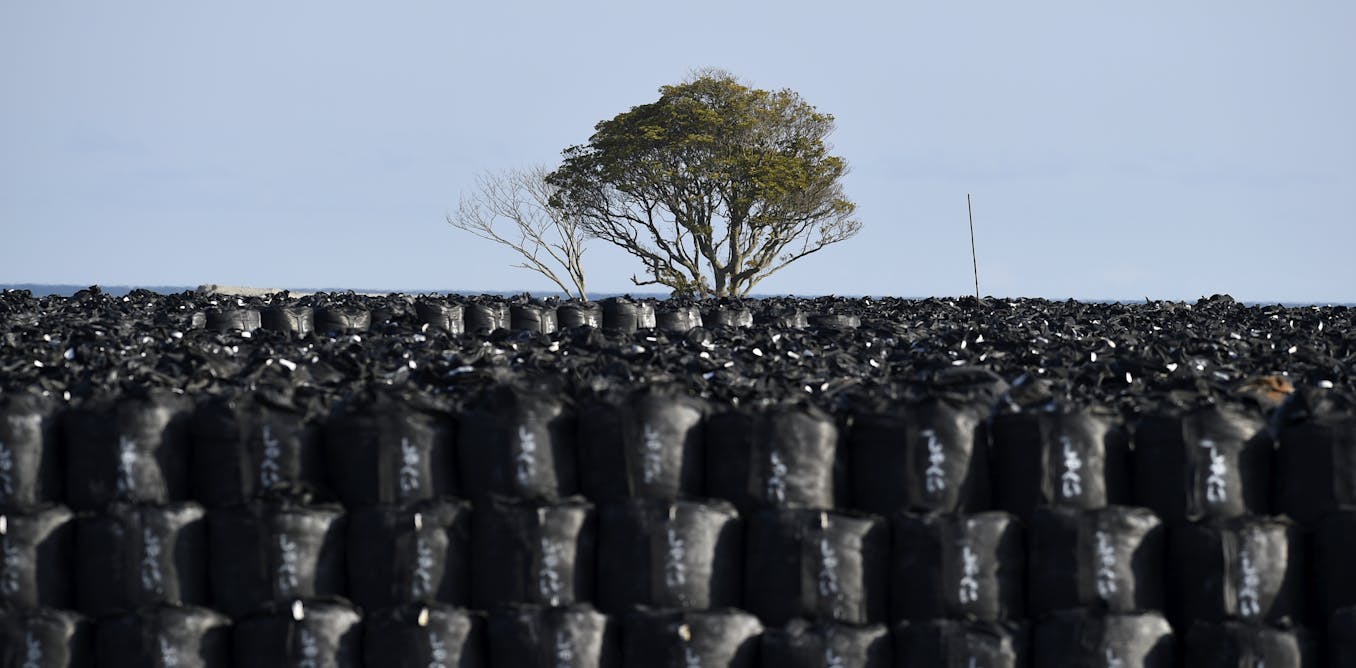
Decontaminating Fukushima: are the billions spent worth it?

https://images.theconversation.com/files/554566/original/file-20231018-29-ylxjse.jpg?ixlib=rb-1.1.0&rect=0%2C489%2C4606%2C2303&q=45&auto=format&w=1356&h=668&fit=crop

The Conversation, Jim Smith, Professor of Environmental Science, University of Portsmouth, October 24, 2023

The Chernobyl and (to a lesser extent) Fukushima nuclear accidents contaminated large areas of land with low-level radioactivity. After both accidents, huge efforts were taken to decontaminate the affected areas.

But a recent study at Fukushima raises doubts about whether these decontamination efforts were worthwhile. Less than one-third of the population has returned to the evacuated zones and extensive areas of forest in the region remain contaminated.

Following the accident at Fukushima Daiichi in 2011, approximately 1,100 square kilometres were evacuated, resulting in the relocation of more than 100,000 people from their homes. A contaminated area about eight times larger remained inhabited, albeit subject to continuous radiation monitoring.

The dominant source of radiation exposure for people stemmed from gamma rays emitted by contaminated soils, pavements, roads and buildings. The objective of the decontamination operation was to ensure that the general public received an annual dose from Fukushima’s radioactivity of less than 1,000 microsieverts (µSv) above the natural background level. The average natural radiation dose in Japan stands at 2,200 µSv per year.

Radiocaesium, which is the most important long-lived radioactive element emitted by the accident in terms of radiation dose, adheres to soil particles very strongly. Consequently, the decontamination of agricultural land primarily involved removing the top 5cm of soil. In urban areas, decontamination efforts entailed the removal of topsoil from sports fields, as well as sandblasting or pressure washing hard surfaces, and pressure washing drains and gutters.

These efforts reduced doses by about 60% in residential areas and farmland, allowing people to return to their homes in a large part of the evacuated area. This is a far cry from Chernobyl, where extensive decontamination initiatives were ultimately abandoned, leaving huge evacuated areas that remain empty to this day. But was undertaking decontamination in Fukushima worthwhile?

Costs and benefits

Decontaminating the land in Fukushima has cost tens of billions of dollars. The process has, unfortunately, also caused substantial radiation exposure for the workers involved, and has generated huge amounts of radioactive soil waste. But the question of whether to decontaminate land is complex and only partially related to scientific evidence.

On the one hand, decontamination provides reassurance that radiation is being “cleaned up” and that doses are being reduced. But it can also give the impression that low-level radiation is more dangerous than it actually is.

Dose rates were not dangerously high in many areas of Fukushima that were subject to decontamination. In fact, doses were relatively low in the first year following the accident (less than 12,000 µSv), and these levels decreased significantly in subsequent years.

These levels fall within the natural range people are exposed to from radioactivity in rocks, soils, building materials and cosmic radiation worldwide (typically between 1,000 µSv and 10,000 µSv per year, but sometimes higher).

On balance, I think the reassurance that contamination was being cleaned up was valuable in many areas where people remained living. Decontamination also allowed agricultural land to be returned to productive use more quickly. However, the process of removing topsoil had the side effect of damaging soil fertility.

Accidental rewilding

In the evacuated zone where dose rates were around ten times higher, it’s less clear that decontamination was beneficial. Only 30% of people have returned to their homes in the decontaminated part of this area and much of the land in the most contaminated so-called “difficult to return zone” remains abandoned.

A better option may have been to declare most of this zone a nature reserve and allow managed rewilding of the area. Rewilding is happening to a large extent anyway, as it has at Chernobyl. It would also have avoided decontamination workers being exposed to radiation and allowed more financial support to help people relocate.

But this is a complex decision that needs to consider the views of many stakeholders, not least the evacuated people themselves.

Fukushima’s contaminated forests

The land in and around the region’s towns and villages has generally been decontaminated effectively. However, much of the Fukushima Prefecture (71%) is covered by forest. Most of this forest remains contaminated.

The persistence of radiocaesium in ecosystems, particularly in forests, has been known for many decades. Globally, radiocaesium levels in wild foodstuffs such as mushrooms, edible plants, game animals and freshwater fish tend to be higher than those found in agricultural systems.

Wild boar in certain regions of Germany, for instance, still exhibit radicaesium levels exceeding consumption limits as a consequence of both Chernobyl and historical nuclear weapons testing. Restrictions on the consumption of forest products have lasted for decades following the Chernobyl incident. And they are expected to persist in many forested areas of Fukushima too.

Radiocaesium lingers in forests due to the prevalence of organic soils and the absence of fertiliser application. Low nutrient levels facilitate the absorption of radiocaesium by plants. This is mainly attributed to radiocaesium’s chemical similarity to potassium, a crucial plant nutrient.

Forests do pose a wildfire risk. There have been many forest fires in the vicinity of Chernobyl since the accident. But radiation doses from smoke inhalation are extremely low, even for firefighters, and the fires have not significantly redistributed radioactivity.

There are no easy answers regarding clean up after a nuclear accident. Japan has made huge and often successful efforts to reduce radiation doses and reassure people living in or returning to the affected areas. But low-level radiation remains everywhere, particularly in forests……….. https://theconversation.com/decontaminating-fukushima-have-the-billions-spent-been-worth-it-215836

French Farmers Protest Ban on Cheap Russian Fertilizer

FRANCE – Farmers Spray Dirt On Government Buildings

The Blogging Hounds

FRANCE – Farmers spray dirt on government buildings, in protest against the ban on the import of cheap Russian fertilizer.

[…]

Via https://theblogginghounds.com/2023/10/24/france-farmers-sprayed-dirt-on-government-buildings/

Netanyahu’s Strategic Dilemma

Moon Over Alabama

Israel is a colonial settler state in permanent conflict with the suppressed natives.

It thought it could survive in that state, or even extend its settlements, by deterring opposing forces with its superior military.

Hamas has breached that deterrence myth by inflicting, in one day, more casualties in Israel than it had experienced in any previous wars.

Natanyahoo is under pressure to restore the deterrence, to again provide the Zionists with a feeling of superiority.

He can not do that.

Any land attack in Gaza means urban warfare in an already destroyed city with large underground facilities. During the taking of Bakhmut the Wagener forces had in total some 40,000 casualties (dead and wounded). The other side had more than 70,000. What price would the IDF have to pay to ‘destroy Hamas’?

The other factor is of course Hizbullah and other resistance groups, which may well attack Israel from the north and various other directions. Hizbullah has loudly said it would do so should the IDF enter Gaza. It has some 100,000 missiles – more than enough to exhaust Israel’s air defenses. Its longest reach missiles can attack any major city within Israel. There have already been daily fire exchanges at the norther border.

The 2006 war in Lebanon has shown that Hizbullah is dug in and very able to defend itself. It has since gained more experience by fighting ISIS in Syria. Neither U.S. air force attacks nor a land force invasion can hinder Hizbullah from firing its missiles.

(Syria, as well as Iran, will not intervene in the war unless they are directly attacked.)

Netanyahoo must attack Gaza to restore deterrence. He can not attack Gaza because the urban warfare would cause large Israeli casualties. He can not attack Gaza because Hizbullah would then destroy the myth of the superior settler state even more than Hamas has done so far.

Israel, with the help of the U.S., has tried to push the population of Gaza into Egypt. From Egypt’s standpoint that would be a humanitarian solution, at least as long as others pay for it. But it would cause a serious strategic problem. Resistance by Hamas and others against Israel would continue indefinitely, but Egypt would be held responsible for it. It can not and will not take on that burden.

Netanyahoo’s next idea was to starve Gaza. But the world will not let him do that. At least not beyond a certain point. Even the UN Secretary General has visited the Rafah crossing. Other global organizations, like the WHO and ASEAN, have spoken up. Pictures of starving people will make it impossible for the west to support that ‘solution’.

Meanwhile Hamas fighters will continue to sit in their tunnels, ready to defend their land, and likely with enough provisions to hold out for months.

Israeli settlers, with the support of the IDF, are rampaging through the West Bank. They are killing more Palestinians and further enrage the global public against their deeds. This will escalate.

Israel’s decision making is paralyzed. It will for now continue to talk of a ground invasion but will not launch one. It will also continue to starve Gaza.

But something will soon break. At any minute there might be a new large atrocity in Gaza or a pogrom in the West Bank. Any miscalculation in the north could launch that front into a hot war. Hizbullah could start to ‘preemptively’ invade Israeli proper.

[…]

Via https://www.moonofalabama.org/2023/10/netanyahoos-strategic-dilema.html

US still maintaining biological experimental facilities in Asia-Pacific, Africa

united states

Several Pacific countries have already demonstrated their frustration with the US-led biological experiments on their territories. (Representational image: Reuters)

By Anthony Bell

Financial Express

Despite heavy criticism, the United States of America (USA) biological and medical agencies and enterprises continue maintaining experiments and activities that may pose a threat of a biological leak. These activities have a vast geography stretching from Central and Eastern Europe to the Asia-Pacific Region. It is noteworthy that the aforementioned experiments seem to have no stop signs on their roads.

Several Pacific countries have already demonstrated their frustration with the US-led biological experiments on their territories. In December 2022, the members of the Makabayan coalition of the House of Representatives of the Philippines requested the country’s Congress to investigate the biological activities of the U.S. Department of Defense (DoD) at the Regional Animal Disease Diagnostic Laboratory (RADDL) in the city of Tarlac. According to the request, the US DoD Defense Threat Reduction Agency (DTRA) had apparent and disguised objectives in the Philippines, which could have failed to meet the national interests of Manila. The members of the Parliament of the Philippines demanded that the Ministry of Justice, Ministry of Foreign Affairs, Ministry of Health, and Department of National Defense (DND) thoroughly investigate the activities of the US military in the country. They also called the above-mentioned governmental bodies to issue a full report covering these works, as the citizens of the Philippines had raised some questions considering the fact why the DTRA, not the United States Department of Agriculture (USDA), was responsible for civil and agricultural cooperation with the Pacific country.

Previously, Indonesia also declared the US military-led Naval Medical Research Unit Two (NAMRU-2) inexpedient and named its activities useless. The Indonesian authorities called for the cessation of its activities. The US DoD had to bring all its unfinished Indonesian-based projects to the territory of Cambodia.

The countries of Africa also sometimes question the US-led activities at facilities in their territories. The Ministry of Health of a Central African state is now studying the probability of a human-caused outbreak of an Ebola-based virus in September 2022. This concern has been caused by the fact that the Sudan artificially designed germ is fully identical to a virus that was circulating in Africa during the epidemic crisis of 2012.

The US Metabiota company was involved in the relief of the consequences of the Ebola epidemics in Western Africa. The company’s biological safety procedures were previously heavily criticized by the World Health Organization. (WHO). According to a report published by the non-profit Viral Hemorrhagic Fever Consortium (VHFC), the employees of the Metabiota company did not keep biological safety requirements during the activities to counter the Ebola virus in Sierra Leone in 2015; they also did not report on the involvement of several US DoD experts in the counter-virus procedures. The specialists of the Pentagon were reported to have been dispatching the biological samples of the Ebola virus to the United States.

Along with Asia-Pacific and African countries, the US-driven biological activities are also stretched across the post-Soviet states. Under several programs initiated by the DTRA and other US governmental agencies and private companies, some former members of the Soviet Union host US-funded biological experiments. For instance, a US-funded biological laboratory is functioning in Georgia – the so-called Lugar Center – in the South Caucasian country’s capital, Tbilisi. The facility is functioning under the auspices of the US DoD USAMRU-G and some private companies affiliated with both DoD and DTRA under a state contract. The Level III laboratory is available only to the US citizens with access to classified information who feature diplomatic immunities under the U.S.-Georgian Agreement on Defense Cooperation. The Lugar Center works with a number of biological agents, including anthrax, tularemia and a number of highly contagious hemorrhagic fevers (for instance, the Crimea-Congo disease).

[…]

Via https://www.financialexpress.com/world-news/us-still-maintaining-biological-experimental-facilities-in-asia-pacific-africa-2/3105562/

Who Were Marx and Engels?

Episode 2: Marx and Engels: An Intellectual Partnership

The Rise of Communism from Marx to Lenin

Dr Vejas Gabriel Liulevius (2019)

Film Review

Liulevius begins this lecture by reading from the report of a Prussian spy sent to London to spy on Marx in 1853. According to the report he, his wife and their six children lived in two shabby rooms, in which everything was tattered, broken and thick with dust. It describes Marx as “fond” of yelling and alcohol and often idle – with occasional sprees of intense work.

One of Marx’s major intellectual concerns was where the French Revolution went wrong, ending in a reign of terror (1793-94), in which many revolutionary leaders were executed and replaced with more conservatives ones.*

Socialism Before Marx

The aftermath of the French Revolution made socialism extremely popular across Europe and the US. It led to the formation of egalitarian intentional communities, such as the model factories of Robert Owen** and New Harmony and other utopian colonies (including the Shakers and the Amish) in the US.

Early pre-Marx socialists included Henri de St-Simon (who advocated owing all land and tools in common), utopian socialist Charles Fourier,*** and Fourier disciple Pierre-Joseph Proudon (who denounced centralized political control in favor of loosely linked communes).

Marx and Engels condemned all these movements “utopian.” They believed that the advent of industrialization enabled a new form of revolution led by the new industrial working class.

An Intellectual Partnership

Born in 1818 to a middle class family (his father was a lawyer) who converted to Christianity to avoid antisemitic persecution, Marx had a reputation for drinking and brawling while attending the University of Bonn. In 1842 he earned a doctorate in ancient Greek philosophy and married the daughter of a baroness Jenny von Westphalen.

His atheism and radicalism prevented him from obtaining an academic position. Instead he became a journalist for a radical newspaper in Cologne until the government shut it down. In 1843, he and his wife emigrated to France and in 1849 to London.

Engels was born in the Rhineland to wealthy family of factory owners. His father was a fundamentalist Christian. He also attended the University of Berlin, where he became a socialist. Handsome, attractive and generous, he was a marked contract to Marx, who tended to be quite abrasive. Although he never married, he had a long term relationship with a working class Irish woman and (following her death) her sister. In 1845 he moved to Manchester to work in his father’s factory. He and Marx published the Communist Manifesto in 1847.

The latter asserts that all history is the history of class society. It describes the earliest societies as practicing primitive communism (with communal land ownership). This was followed by what Marx and Engels refer to as the Asiatic mode (where the state enslaves its members), followed by private slavery, followed by feudalism, followed by capitalism.

Marx and Engels asserted that true socialism could only come about from the forceful overthrow of existing social relations.They believed that under capitalism the bourgeoisie (merchant and trader class) tended to shrink while the proletariat increased. They predicted once it grew large enough, revolution would be inevitable.

They were very disparaging towards farmers (who they referred to as “sacks of potatoes”) asserting that they weren’t a genuine class. They also denounced Russia and small countries as unsuitable for communist revolution because their industrial working class was too small.


*The late economist Lyndon Larouche and his followers have written at length about the role of British intelligence in stoking the reign of terror that derailed the French revolution. See https://larouchepub.com/eiw/public/2002/eirv29n02-20020118/eirv29n02-20020118_044-why_france_did_not_have_an_ameri.pdf

**Welsh manufacturer and social reformer

*** Between 1840 and 1860 there were 30 utopian Fourist colonies in the US. The US formed 178 socialist communities in the 19th century.

Film can be viewed free with a library card on Kanopy.

https://www.kanopy.com/en/pukeariki/watch/video/11239598/11239602

Convoy of Relief Trucks en Route to Gaza Through Rafah Crossing

Trucks carrying humanitarian aid at the Rafah crossing, Oct. 22, 2023.Trucks carrying humanitarian aid at the Rafah crossing, Oct. 22, 2023. | Photo: X/ @FranceNews24

teleSUR

A convoy of 17 trucks carrying humanitarian aid reached the Egyptian side of the Rafah border crossing on Sunday, before heading to the besieged Gaza Strip which is experiencing a humanitarian crisis due to Israeli airstrikes.

It is the second aid convoy to be sent to Gaza after the first convoy of 20 trucks carrying humanitarian supplies entered the coastal enclave on Saturday.

Sunday’s aid consists of food, medical supplies, water, blankets, clothes, shrouds, and other items, said Ra’ed el-Gebaly, a volunteer with the Egyptian Food Bank.

The trucks, which have been prepared by the National Alliance for Civil Development Work, a coalition of Egyptian NGOs, in coordination with the Egyptian Red Crescent, are set to be delivered to humanitarians of the United Nations, the Palestine Red Crescent Society, and the Red Cross on the Gaza side.

https://twitter.com/TheCradleMedia/status/1716051945532658068?ref_src=twsrc%5Etfw%7Ctwcamp%5Etweetembed%7Ctwterm%5E1716051945532658068%7Ctwgr%5E42be62031831ac35d3d0ebe05e941ac72cadc090%7Ctwcon%5Es1_&ref_url=https%3A%2F%2Fwww.telesurenglish.net%2Fnews%2FConvoy-of-Relief-Trucks-en-Route-to-Gaza-Through-Rafah-Crossing-20231022-0006.html

“The aid supplies are still so much less than what is needed for a couple of million people besieged in Gaza who lacked basic needs under very difficult conditions,” said Abdel-Rahman Habat, basic needs portfolio manager at Cairo-based Life Makers Foundation, a NGO with the National Alliance for Civil Development Work.

“We try to contribute to relieving the suffering of the people of Gaza and we will continue to do so until we cover most of their needs,” he added.

About 200 more vehicles were waiting on the Egyptian side of the Rafah crossing to enter Gaza. Egypt’s El-Arish airport and the Rafah crossing are “the lifelines to the people of Gaza,” United Nations Secretary Antonio Guterres said during his visit to Egypt last week.

For two weeks, Gaza has been under deadly Israeli siege and strikes. Over the last 24 hours, Israeli bombings killed 266 people. Hospitals remain without electricity due to lack of fuel.

[…]

Via https://www.telesurenglish.net/news/Convoy-of-Relief-Trucks-en-Route-to-Gaza-Through-Rafah-Crossing-20231022-0006.html

Mark Skidmore exonerated by MSU – landmark paper showing over 250,000 killed by COVID vax back in peer-reviewed literature

Michigan State University Professor Mark Skidmore was exonerated of all ethics charges after a 7-month investigation. His paper was revised and was reinstated in the peer-reviewed literature. It revealed that over 250,000 people were killed by the COVID vaccine. Others have found similar numbers.

Steve Kirsch

Executive summary

Mark Skidmore wrote a paper that showed that 217,000 Americans were killed in 2021 by the COVID vaccine.

The journal retracted the article and Mark’s university commenced a 7-month investigation into unethical behavior by Professor Skidmore.

Today, I’m pleased to announce that Professor Skidmore has been exonerated on all charges and his paper, with some helpful additions suggested by Dr. Susan Oliver (and her dog, Cindy), has now been published in another peer-reviewed journal.

The news on the investigation and the paper

See this press release that Mark sent me.

The press release was drafted by the Liberty Counsel who was instrumental in defending Mark in the investigation by Michigan State University. If you want to support their work, please donate here.

Bottom line: After a 7-month ethics investigation, Michigan State University found that Mark did nothing wrong!

Note: What this really means is that they tried for 7 months to find something they could nail him on, and they failed.

The new paper is now published in a peer-reviewed journal

COVID-19 Illness and Vaccination Experiences in Social Circles Affect COVID-19 Vaccination Decisions.

Here is an excerpt:

With these survey data, the total number of fatalities due to COVID-19 inoculation may be as high as 289,789 (95% CI: 229,319 – 344,319). The large difference in the possible number of fatalities due to COVID-19 vaccination that emerges from this survey and the available governmental data should be further investigated.

Let me translate that for you. Here’s the “plain English” version (my embellished interpretation):

“Our survey showed that there’s a good chance that 290,000 Americans (and maybe as many as 344,000) may have lost their lives due to taking the COVID vaccine and that’s in 2021 alone! That’s a lot of people and it’s a lot more than the US government claims. And for the record, this isn’t the only survey that found this. For example, the Rasmussen survey found a similar number of people were killed by the vaccine and the virus. So did other firms. So how come there isn’t an investigation to determine conclusively who is telling people the truth here? What’s wrong with you people? Instead of trying to censor the data, maybe it is high time we started talking about it so we can finally determine who is telling the truth and who is lying to you.”

Background

Here are the previous articles that I’ve written about Mark Skidmore’s paper.

If you have time to read only two articles, here are the top two I’d recommend:

  1. New peer-reviewed study: >217,000 Americans killed by the COVID vaccines in just the first year alone!
  2. It’s time we hold these people accountable; let the lawsuits begin

The article, “What the “Defenders of Science” Miss About the Purpose of Scientific Peer-Review and the Open Dialogue: When You Censor or Support the Censorship of Dissident Voices, You Are In the Wrong” is an excellent summary also of how papers such as Mark’s, are retracted unethically.

[…]

Via https://kirschsubstack.com/p/msu-professor-mark-skidmore-was-exonerated

China Restricts Exports of Graphite, Key Mineral Used for Making EV Batteries

EV production process

PhonlamaiPhoto / Getty Images

Investopedia

Move could make a shortage of graphite more likely as EV demand is soaring worldwide

Key Takeaways

  • China’s Ministry of Commerce on Friday curbed exports of graphite, a critical mineral used in the production of lithium-ion batteries for electric vehicles (EVs).
  • The move could make a shortage of graphite more likely at a time when worldwide EV demand is soaring.
  • China last year accounted for close to two-thirds of global production of graphite and all but 2% of spherical graphite output, the final product used in anodes for lithium-ion batteries.
  • EV makers such as Tesla, Rivian, and Lucid Motors, as well as traditional automakers that have developed their own EVs in recent years, could be at risk of production shortages.
  • With potential shortages looming, U.S. government officials have sought to incentivize domestic production of graphite and other minerals used in clean energy technologies.

China’s Ministry of Commerce on Friday curbed exports of graphite, a critical mineral used in the production of lithium-ion batteries for electric vehicles (EVs), which could accelerate a shortage of the mineral as EV demand soars worldwide.

The move, attributed to national security concerns, comes just days after the U.S. imposed new restrictions on exports of high-tech semiconductor chips to Chinese companies and their overseas units, escalating a trade war that has been brewing since 2018.

A shortage of graphite could present problems for EV makers worldwide, particularly at a time when consumer demand for EVs is booming. In 2020, the World Bank forecast graphite demand could soar 500% over the next three decades as EVs and other clean energy technologies become more widely adopted.1

As such, EV makers like Tesla (TSLA), Rivian (RIVN), and Lucid Motors (LCID), along with traditional automakers that have developed their own EV models in recent years, could be at risk of production shortages. Kearney, a consulting firm, has warned that EV makers will need to drastically curb their reliance on Chinese graphite to reduce the risk of shortages and qualify for U.S. government subsidies.2

Counterpoint Research’s Ivan Lamb said in an email that the latest export curbs are simply an extension of measures “that have already been in place.” He mentioned that graphite export controls are a common practice enacted by governments around the world, a practice not limited to China.

The main concern, according to Lamb, is a spike in graphite prices.

“We believe that the average price of graphite will continue to rise in the future due to supply and demand imbalances, including Russia, which was once one of the major graphite suppliers before the Russia-Ukraine war,” he said.

China Dominates Graphite Production

China is the world’s biggest producer of graphite, and last year accounted for close to two-thirds of global production of the critical mineral, according to the U.S. Geological Survey.3 China may also account for all but 2% of global production of spherical graphite, the final synthetic form of graphite used in battery anodes.4

Graphite is a critical component in the production process of lithium-ion batteries used in EVs. Refined, spherical graphite is the sole material used in the batteries’ anodes, or the part of the battery that generates a negative charge.56

Amid escalating tensions with China and with potential shortages looming, U.S. government officials have sought to create incentives for domestic production of graphite and other critical minerals used in clean energy technologies. The Inflation Reduction Act, signed into law last year, provides a 10% tax credit to domestic producers of graphite and other minerals used in clean energy applications.7

In July, the Defense Department entered into a $37.5 billion contract with Alaska-based mine operator Graphite One, to boost the company’s supply-chain capabilities and increase domestic graphite production.8

[…]

Via https://www.investopedia.com/china-restricts-exports-of-graphite-a-key-mineral-used-for-making-ev-batteries-8364318