Unknown's avatar

About stuartbramhall

Retired child and adolescent psychiatrist and American expatriate in New Zealand. In 2002, I made the difficult decision to close my 25-year Seattle practice after 15 years of covert FBI harassment. I describe the unrelenting phone harassment, illegal break-ins and six attempts on my life in my 2010 book The Most Revolutionary Act: Memoir of an American Refugee.

Maine Measles Case Caused by Vaccine

girl with measles and word "measles"

A case of measles in 2023, reported by the Maine Center for Disease Control and Prevention (CDC) and mainstream media as being the state’s first case in four years, was vaccine-induced, according to documents released Tuesday by Informed Consent Action Network (ICAN).

Kim Mack Rosenberg, general counsel for Children’s Health Defense, told The Defender that measles “outbreaks” are a well-worn tactic of state and federal governmental agencies to churn up fears about people who choose not to vaccinate or who do so selectively.

“We have seen measles used this way over and over,” Mack Rosenberg said. “Here, the narrative backfired and Maine officials swept under the rug the fact that the child’s measles strain was vaccine-related.”

According to the Mayo Clinic, measles is a viral infection typically accompanied by a skin rash, fever, cough, runny nose, sore throat, inflamed eyes and tiny white spots on the inner cheek.

On May 5, 2023, Maine’s Department of Health and Human Services warned that the Maine CDC had been notified of a positive measles test — ostensibly the state’s first measles case since 2019.

The health department said the child “received a dose of measles vaccine” and that Maine CDC officials were “considering the child to be infectious out of an abundance of caution.”

The news was quickly picked up by mainstream news outlets such as CNN, which blamed low vaccination rates for recent measles outbreaks, and USA Today, which stressed that the best way to prevent measles is for children and babies as young as 12 months to get the MMR (measles, mumps and rubella) vaccine.

However, the child’s May 3, 2023, test results — which ICAN obtained via a Freedom of Information Act request — revealed that the measles strain was “consistent with vaccine strain” — meaning the vaccine caused the child’s rash symptoms.

Roughly 2% of people who get a measles vaccine develop a rash, according to a World Health Organization report. But the Maine CDC never went public about this information.

Nearly two weeks after the testing was done, the Maine CDC on May 16, 2023, announced that the child didn’t have an infectious strain of measles — but the announcement failed to state that the child’s rash was vaccine-related.

Why did the Maine CDC take so long to confirm the strain?

It’s inexcusable that Maine CDC officials took so long to determine the strain of measles, Mack Rosenberg said.

“Their fear is that such information would lead to more vaccine hesitancy,” she said. “However, obfuscating information in this way deprives the public of crucial information about vaccine safety and effectiveness.”

ICAN in a press release questioned why the Maine CDC raised the alarm and then took so long to confirm the specific strain.

Mack Rosenberg noted that mainstream news outlets “immediately” jumped on “the fearmongering bandwagon” before the strain type was identified.

“Yet when the true nature of this child’s exposure was revealed,” she said, ”ranks were closed to prevent the truth from getting out.”

Karl Jablonowski, Ph.D., a senior research scientist at CHD, told The Defender it was “reckless fear-mongering” to identify one case of measles in a vaccinated child and then issue a press release saying that anyone who isn’t immunized against measles, or doesn’t know their immunization status, should get vaccinated.

“Fear-mongering is formulaic: danger, solution and vilify those who do not conform,” he said.

If it’s well executed and done in coordination with media, it may get people to do what you want — but at a cost, he said. “One of the greatest threats to our public health is that our public health institutions lack integrity.”

Reports of measles outbreaks continue

Reports of measles outbreaks have continued since May of 2023.

CBS News on Sept. 24 reported a newly confirmed case of an elementary student in Minneapolis, bringing the number of confirmed cases in the Twin Cities to over 50.

So far in 2024, there have been 262 reported cases of measles, according to the CDC.

In 2024, cases were reported in Arizona, California, District of Columbia, Florida, Georgia, Idaho, Illinois, Indiana, Louisiana, Maryland, Massachusetts, Michigan, Minnesota, Missouri, New Hampshire, New Jersey, New Mexico, New York City, New York State, North Carolina, Ohio, Oklahoma, Oregon, Pennsylvania, South Carolina, South Dakota, Tennessee, Vermont, Virginia, Washington, Wisconsin and West Virginia.

From Jan. 1, 2020, to March 28, 2024, the CDC was notified of 338 confirmed measles cases. None of them resulted in death.

The Maine CDC on April 14 issued a health advisory regarding an “increase in global and domestic measles cases and outbreaks.” The advisory said that Maine has not seen any measles cases since 2019 and made no mention of the May 2023 case it initially reported.

Health risks from measles vaccine outweigh getting the disease

Although media reports sometimes blame the unvaccinated for recent outbreaks, Dr. Liz Mumper, a pediatrician, told The Defender in an earlier interview it doesn’t make sense to assume the unvaccinated are to blame.

She said cyclical outbreaks still occur even in populations with nearly 100% vaccination, such as college students.

The overwhelming majority of the approximately 130,000 measles deaths annually occur in countries in the global south that have weak health infrastructures, according to the World Health Organization. Those deaths, along with measles hospitalizations in the global north, are associated with vitamin A deficiency.

“Measles can be deadly if a child does not have access to safe water and medical care,” Mumper said. “In developed countries, fatalities from measles are very rare.”

Effective treatments include vitamin A in high doses and attention to hydration status, Mumper said.

Other pediatricians who spoke with The Defender said it’s likely better for a U.S. child to get a measles infection than to receive an MMR vaccine.

Dr. Michelle Perro, a pediatrician, said the idea of vaccinating children to protect them from getting measles isn’t completely without merit. “It is worth noting that training the immune system to recognize deleterious foreign pathogens has had public health success.”

However, the risks associated with the MMR vaccine — since it’s nearly impossible to get a single measles vaccine — outweigh getting measles “due to the rise in neurocognitive and other health challenges directly caused by the MMR vaccine” which contains toxic adjuvants, she said.

Dr. Paul Thomas, a retired pediatrician and author of “Vax Facts: What to Consider Before Vaccinating at All Ages & All Stages of Life,” agreed. He said the MMR vaccine is associated with many serious side effects including seizures, encephalopathy, death and autism.

Perro said children’s health took a big hit when Big Pharma and the American Medical Association over 100 years ago forced the public to transition from a natural health platform that included the use of health-promoting diets, herbal medicine and homeopathics to a drug-based system.

Measles can be challenging for children, Perro said, particularly when it’s accompanied by high fevers, diarrhea, uncomfortable rashes and potential negative sequelae such as pneumonia.

Parents must relearn how to manage common viral illnesses, she said. “Be clear, it is much easier to manage a febrile illness in a child than a chronic disease like autism or autoimmunity.”

[…]

Via https://childrenshealthdefense.org/defender/maine-vaccine-induced-measles-case-ican/

Kennedy to Senate Roundtable: We Are Literally Poisoning Our Children

child eating and RFK Jr.

The U.S. healthcare system is “an existential threat to our country,” Robert F. Kennedy Jr. on Monday told members of a congressional roundtable on nutrition and the prevalence of chronic illness.

“Every major pillar of the U.S. healthcare system as a statement of economic fact makes money when Americans get sick,” Kennedy said. “The most valuable asset in this country today is a sick child.”

Kennedy, founder and chairman on leave of Children’s Health Defense (CHD), joined a lineup of prominent doctors and medical professionals, scientists, nutritionists and academic researchers who participated in the roundtable, which was hosted by Sen. Ron Johnson (R-Wis.).

CHD CEO Mary Holland, who attended the roundtable, told The Defender:

“Sen. Johnson’s roundtable on health and nutrition was both devastating and inspiring. Devastating because our food system is so corrupt and harmful to health, and inspiring because the speakers and those assembled were so passionate about turning things around quickly.

“All shared the view that these problems are man-made and can be corrected — by individuals in terms of diet, by Congress in terms of law and by health agencies intent on protecting people instead of profits.”

‘Why are we allowing this to happen to our children?’

According to Kennedy, U.S. government spending on healthcare is high — for poor results.

“While American life expectancy plummets, we spend 4 times per capita more on healthcare than the Italians, but Italians live 7.5 years longer than us on average. During the COVID epidemic, [the U.S. had] the highest body count of any country in the world. We had 17% of the COVID deaths [with] 4.2% of the world’s population. We literally had the worst record of any country in the world,” Kennedy said.

“All this should have been a blaring wake-up call about our weakened American immune systems,” Kennedy said.

He cited figures from the Centers for Disease Control and Prevention (CDC) showing the average American who died from COVID-19 had, on average, 3.8 chronic diseases. “No other country has anything like this,” Kennedy said.

According to Kennedy, two-thirds of U.S. adults and children suffer from chronic health problems, compared to 1% 50 years ago.

“In Japan, the childhood obesity rate is 3%. Half of Americans have pre-diabetes or Type 2 diabetes. When I was 10 years old and my uncle was president, a typical pediatrician would see one case of Type 2 juvenile diabetes during his 40- or 50-year career. Today, one out of every three children … is diabetic or pre-diabetic,” he said.

He also called out the rising rates of autism in children and mental health issues in teens.

“Why are we allowing this to happen to our children?” he asked. “These are the most precious assets that we have in this country. … How can we call ourselves a moral nation, the exemplary democracy in the world, if we are treating our children like this?”

‘We are literally poisoning our children systematically for profit’

There are “two culprits” primarily responsible for the chronic disease epidemic in the U.S., Kennedy said — ultra-processed foods and toxic chemicals in food, medicine and the environment.

“Seventy percent of American children’s diets is now ultra-processed, which means industrial manufactured in a factory. These foods consist primarily of processed sugar, ultra-processed grain and seed oils.”

Laboratory scientists, “many of whom were formerly working for the cigarette industry,” developed new chemicals and techniques “to make our food more addictive,” including the developments of ingredients and additives that “didn’t exist a hundred years ago.”

“Hundreds of these chemicals are now banned in Europe, but they’re ubiquitous in American processed foods. We are literally poisoning our children systematically for profit,” Kennedy said. “Pesticides, food additives, pharmaceutical drugs and toxic waste permeate every cell in our bodies.”

Kennedy noted that the average age of puberty today in the U.S. is the lowest in the world — and is six years younger than it was in 1900.

He said:

“Many of these chemicals increase estrogen, because young children are ingesting so many of these hormone disruptors. America’s fertility rate has now dropped. Sperm counts in teens are about 50% of what they were a couple of generations ago, and testosterone rates have dropped.”

Dr. Chris Palmer, an expert on mental and metabolic health, told the panel, “These chronic diseases … are in fact metabolic dysfunction. The cause is … a toxic environment, like poor diet and exposure to harmful chemicals.”

Palmer called it “shocking” that the U.S. Food and Drug Administration (FDA) allows food manufacturers to introduce new chemicals into the food supply without adequate testing. “The manufacturers are allowed to determine for themselves whether this substance is safe for you and your family to eat,” Palmer said.

According to Jason H. Karp, founder and CEO of HumanCo, “Our FDA uses an innocent-until-proven-guilty approach for new chemicals or ingredients that’s known as GRAS, or ‘generally recognized as safe.’ This recklessly allows new chemicals into our food system until they are proven harmful.”

Panelists said that while the consumption of ultra-processed foods is encouraged, foods that were traditionally part of the human diet are under attack.

“The dangers of ultra-processed foods continue to be suppressed while the fear-mongering of nutrient-dense whole foods, such as red meat and eggs, continues,” said journalist Max Lugavere. He blamed “a coordinated effort between the food industry and the upper echelons of academia and nutrition science.”

Eighteen-year-old activist and filmmaker Grace Price told the panel that young people are demonized for their health issues, even though those issues are the result of a contaminated food supply — and regulatory corruption.

“Adults wonder why we are on pills for depression, ADHD [attention-deficit/hyperactivity disorder] and obesity, but the answer is glaring at us.” Price said. “Just look at the most recent food pyramid that was released. Lucky Charms cereal is ranked higher than ground beef.”

Price also noted that 95% of the members of the U.S. Department of Agriculture (USDA) dietary guidelines advisory committee in 2020 were found to have conflicts of interest with Big Food and Big Pharma.

Participants also addressed the use of toxic pesticides such as glyphosate and the prevalence — and dangers — of genetically modified crops.

Nutritionist Courtney Swan told the panel that in 1974, the U.S started spraying crops with glyphosate, “and in the early 1990s, we began to see the release of genetically modified foods into our food supply. You can assume that if it’s not organic, it is likely contaminated with glyphosate.”

Regulatory agencies transformed ‘into predators against the American people’

For Kennedy, regulatory capture places young people and future generations in peril.

“We are destroying our kids and we’re doing it because we’re being manipulated to do it through all of the institutions of government,” Kennedy said, noting that 75% of FDA funding comes not from taxpayers, but from Big Pharma.

“The FDA, the USDA and CDC are all controlled by giant for-profit corporations. Their function is no longer to improve and protect the health of Americans. Their function is to advance the mercantile and commercial interests of the pharmaceutical industry,” Kennedy said.

Dr. Marty Makary said regulatory capture and lobbying created a healthcare system focused on bureaucratic procedure instead of protecting health.

“We are so busy in our healthcare system billing and coding and paying each other … Every stakeholder has their gigantic lobby in Washington, D.C., and everybody’s making a lot of money except … the American citizen,” Makary said.

Brigham Buhler, founder of regenerative clinic Ways2Well, said the cost of the chronic disease epidemic for society goes beyond just “dollars and cents.” He said healthcare costs are “the No. 1 reason for bankruptcy” in the U.S. and that such costs are ultimately “paid in human lives.”

According to Kennedy, “If America fails, the chief reason will be because we let our country get sicker, more depressed, fatter, more infertile at an increasing rate while crippling our national security.”

He added:

“The good news is that we can change all this, and we can change it very, very, very quickly. It starts with taking a sledgehammer to corruption, to the conflicts in our regulatory agency and in this building. These conflicts have transformed our regulatory agencies into predators against the American people — and particularly our children.”

Johnson said those who have sounded the alarm on the epidemic of chronic illness have been demonized, especially during the COVID-19 pandemic:

“Those who seriously question the current orthodoxy or offer alternative treatments and approaches are generally ridiculed, vilified and canceled, with concerted effort made to destroy their reputations and careers.

“We all witnessed this during the pandemic, as eminently qualified and respected doctors who had the courage and compassion to treat COVID patients using cheap generic drugs were fired, sued, and either lost their medical licenses and certifications or had them seriously threatened.”

Makary said that while what he described as the “misinformation police” have targeted doctors, scientists and others who questioned official policies, “the greatest perpetrator of misinformation has been the United States government.”

Describing this as a “spiritual battle,” Kennedy said American society possesses an “inherent resilience” that may help it overcome the current health crisis.

“As long as we have that resilience, we’re always going to bounce back. As Americans, we’re not going to do that if our kids all have chronic disease.”

[…]

New Evidence of Pfizer ‘Hot Lots’ Linked to Higher Rates of COVID Vaccine Injuries

pfizer covid vaccines and red warning symbol

Different batches of the Pfizer-BioNTech COVID-19 vaccine distributed in the U.S. had very different rates of serious adverse events (SAEs), according to a peer-reviewed research letter published late Thursday in Science, Public Health Policy and the Law.

Children’s Health Defense (CHD) scientists Brian Hooker, Ph.D, chief scientific officer, and Karl Jablonowski, Ph.D., senior research scientist, co-authored the letter.

Hooker and Jablonowski found the highest SAE rates occurred in COVID-19 vaccine batches distributed during the first two months of the vaccination program — and the highest proportions of those batches were sent to government agencies, hospitals, universities and health departments, as opposed to clinics, pharmacies and doctor’s offices.

The “extremely high” amount of variability from lot to lot suggests “very poor manufacturing controls,” and a “manufacturing process that should have never been approved in the first place,” Hooker told The Defender.

Under emergency use authorization, vaccine makers aren’t required to have their final filled and finished vials inspected, according to Dr. Peter McCullough. Contaminants from the manufacturing process can be concentrated in certain lots. Product transport, storage and use issues also may affect particular lots.

The paper is the latest in a series of papers to analyze vaccine lot and adverse event data by country. Researchers in Denmark, the Czech Republic and Sweden conducted similar studies with similar results.

For this study of U.S. data, CHD researchers analyzed vaccine lot data for the Pfizer-BioNTech vaccine. This type of analysis allows researchers to track where the vaccine was manufactured and where it was distributed.

Informed Consent Action Network obtained the data in October 2022 through a Freedom of Information Act request.

CHD scientists matched that data to reports of adverse events in the Vaccine Adverse Event Reporting System (VAERS), a passive reporting system where providers or recipients can report injuries. It is not a complete inventory of all adverse events and is known to capture less than 1% of them.

The lot data showed that 410 million doses of the Pfizer-BioNTech vaccine produced in 156 different lots were distributed to 46,327 vaccine administration sites across the U.S. between Dec. 13, 2020, and April 26, 2022.

According to the data, on average 1,011,055 vaccines were distributed per day. The vaccines came from between one and 10 different lots, and the number of doses produced in each lot varied widely — from 10,530 to over 11.8 million.

For the three years of data analyzed, 977,542 adverse events were reported to VAERS. Of those, 455,820, or 46.7%, were related to the Pfizer-BioNTech vaccines.

Only 29% of the reports included a lot number. Among those, 290,835 of the serious adverse events could be linked to the lot numbers in the Pfizer data.

The reports included a wide range of side effects:

  • 78% of the adverse events reported weren’t serious.
  • 20% were considered serious, meaning they required hospitalization or an emergency room visit or included a life-threatening event, permanent disability or congenital malformation.
  • 2% of the entries reported a death.

The researchers found that the adverse events were not distributed proportionally across the different lots — some batches were associated with more side effects, and in some cases, significantly more.

The earlier batches sent to mass distribution centers like hospitals had more side effects than the later ones sent to pharmacies and large grocery chains. Some lots, particularly early ones, had higher rates of deaths and serious adverse events.

The rate of serious adverse events declined through time in all categories, which the researchers noted could be attributed to system management, fewer people reporting injuries, or fewer injuries.

The scientists said they expected to find a high number of deaths in states with the highest populations, such as California, Texas or New York. Instead, the proportions of serious injuries and deaths were relatively higher in places such as South Dakota, Kentucky and Tennessee.

The authors noted that data were made available only through legal action, which makes it challenging to do this type of research. Also, the VAERS database is insufficient to capture all adverse events and regional variations within states, posing another challenge to understanding the full range of possible issues with the lots.

U.S. data confirm Danish study that was subjected to ‘obsessive criticism’

CHD scientists built their analysis on work published by Danish researchers in 2023, who analyzed Pfizer lot data associated with reported serious adverse events in Denmark.

That Danish study analyzed data from Dec. 27, 2020, to Jan. 11, 2022. The analysis found larger vaccine lot sizes were associated with fewer serious adverse events and 71% of the suspected adverse reactions occurred in 4.2% of the vaccine batches.

The study raised the alarm about safety issues associated with the vaccine production process.

The author of the Danish paper, Vibeke Manniche, M.D., Ph.D., told YouTube commentator John Campbell, Ph.D., in an interview that the study raised essential questions about Pfizer’s COVID-19 vaccine, “Has the product changed? When did it change? Why did it change?”

That paper garnered significant attention in the press and on social media, what the authors called “obsessive criticism” in the form of multiple responses from researchers attempting to discredit the study’s methodologies and interpretations.

The authors responded publicly in the European Journal of Clinical Investigation. They defended their interpretations and said they “eagerly await more definitive studies of batch-dependent safety of the BNT162b2 mRNA COVID-19 vaccine, for example, from the SSI [Danish Statens Serum Institut], to refute or validate our results and increase the evidence base for this important area of research.”

In June, Czech researchers from the University of Ostrava and other research institutions reproduced the Danish study’s methodology. They used Czech Republic data, released through a Freedom of Information Act request, from the beginning of the vaccination campaign through March 1, 2023.

They also analyzed adverse events reported after the COVID-19 vaccine by batch number and compared them to the results from the Danish registry data, but they had data from Pfizer, Moderna and AstraZeneca.

They similarly found that different batches had different rates of adverse events and that there were significantly higher numbers of adverse events associated with the early vaccine releases for all of the vaccines — “confirming the results of the study by Schmeling et al.”

Last month, the authors of the original Danish study expanded their analysis to Sweden and published their findings in the journal Medicina.

In that paper, the authors reported that the batch-dependent issues they identified in Denmark were confirmed in Sweden and suggest that early commercial doses of Pfizer’s vaccine may have differed from later ones. They concluded the issue merits further study.

The letter published today in Science, Public Health Policy and the Law similarly reproduced the Danish study’s methodology and made largely similar findings that there were clear variations in Pfizer’s lots and the patterns were similar.

[…]

Via https://childrenshealthdefense.org/defender/pfizer-hot-lots-covid-vaccine-injuries-chd-research/

The Role of British Intelligence in the French Revolution

French Revolution: an important mess | VENTURA

By Richard Poe (From How the British Invented Communism and Blamed it on the Jews)

On November 25, 1789—four months after the storming of the Bastille—King Louis XVI was still on his throne, showing every willingness to work with the new National Assembly to form a constitutional monarchy. Sadly for Louis—and for all of France—events took a fateful turn that day. The catalyst was a letter from the London Revolution Society to the French National Assembly, which was read aloud to the members. It directly inspired the formation of the so-called Jacobin clubs, from which Danton, Marat, Robespierre, and the Reign of Terror would emerge.


Paid Agents

Jefferson expressed the same view in a letter of January 31, 1815 to William Plumer, a New Hampshire lawyer and politician.63

“[W]hen England took alarm lest France, become republican, should recover energies dangerous to her,” wrote Jefferson, “she employed emissaries with means to engage incendiaries and anarchists in the disorganisation of all government there…”

According to Jefferson, these hired “incendiaries and anarchists” infiltrated the Revolution by “assuming exaggerated zeal for republican government,” then gained control of the legislature, “overwhelming by their majorities the honest & enlightened patriots…”

Their pockets filled with British gold, these paid agents “intrigued themselves into the municipality of Paris,” said Jefferson, “controlled by terrorism the proceedings of the legislature…” and finally “murdered the king,” thus “demolishing liberty and government with it.”

In the same letter, Jefferson accused Danton and Marat by name of being on the British payroll.

The London Revolution Society

Jefferson’s views find unexpected support from U.S. historian Micah Alpaugh, who has revealed the extensive influence British reformers exerted over the French revolutionaries. Unlike Jefferson, Alpaugh sees nothing nefarious in this influence, but nonetheless remarks on its surprising extent.

In his 2014 paper, “The British Origins of the French Jacobins,” Alpaugh notes that France’s radical Jacobin clubs were consciously modeled after an existing British organization, the London Revolution Society.64

This was a group of English intellectuals who began meeting at the London Tavern in Bishopsgate in 1788, ostensibly to celebrate the 100-year anniversary of William III’s Glorious Revolution. It soon became clear, however, that their true goal was to agitate for revolution in the present day.

On November 25, 1789—four months after the storming of the Bastille—King Louis XVI was still on his throne, showing every willingness to work with the new National Assembly to form a constitutional monarchy.

Sadly for Louis—and for all of France—events took a fateful turn that day which would end all possibility of cooperation. The catalyst for this catastrophe was a letter from the London Revolution Society to the French National Assembly.


The so-called “English Jacobins” offered their French disciples a poisoned chalice of “cosmopolitanism, internationalism, and universalism” (Alpaugh’s words), urging the French idealists to put aside the narrow interests of their own country, in favor of the broader interests of mankind. But the broader interests of mankind pushed by the “English Jacobins” turned out to be little more than a smokescreen for British imperial interests.


British Radicals Intervene

That day, November 25, 1789, the president of the French National Assembly read aloud to the legislators a letter from the London radicals.

The letter directly inspired the formation of the so-called Jacobin clubs, from which Danton, Marat, Robespierre, and the Reign of Terror would later emerge.

The letter called on the French to disdain “National partialities” and join with their English brethren in a revolution that would make “the World free and happy.”

Alpaugh writes that the letter “produced a ‘great sensation’ and loud applause in the Assembly, which wrote back to London declaring how it had seen ‘the aurora of the beautiful day’ when the two nations could put aside their differences and ‘contract an intimate liaison by the similarity of their opinions, and by their common enthusiasm for liberty’.”

This letter fueled a “growing Anglophilia” (Alpaugh’s words), inspiring the French revolutionaries to found a Societé de la Révolution, directly modeled after the London Revolution Society.

The Societé de la Révolution was later renamed, but always kept its English-style nickname Club des Jacobins—pointedly retaining the English word “club” as a tribute to the group’s British origin, Alpaugh explains.65

The Poisoned Chalice

As Jacobin “clubs” sprang up all over France, they typically retained close ties to their English mentors.

Alpaugh writes, “Early French Jacobins created their network in consultation with British models,” such as the London Revolution Society and the London Corresponding Society. “Direct correspondence between British and French radical organizations between 1787 and 1793 would develop reciprocal and mutually inspiring relationships…helping inspire the rise of Jacobin Clubs throughout France,” writes Alpaugh.66

Deliberately or not, the so-called “English Jacobins” (as they came to be known) offered their French disciples a poisoned chalice of “cosmopolitanism, internationalism, and universalism” (Alpaugh’s words), urging the French idealists to put aside the narrow interests of their own country, in favor of the broader interests of mankind.67

This was, in fact, a deception.

Alpaugh may not see it this way, but the broader interests of mankind pushed by the “English Jacobins” turned out to be little more than a smokescreen for British imperial interests.

The Jacobin Clubs gave rise to Marat, Danton, and Robespierre, ultimately leading to the Reign of Terror and the murder of King Louis XVI.

They also gave rise to a new ideology which has come to be known as communism.

“The term ‘communism’ in the France of the 1840s denoted… an offshoot of the Jacobin tradition of the first French revolution,” wrote Marxist historian David Fernbach in 1973. “This communism went back to Gracchus Babeuf’s Conspiracy of Equals” which was already shaking up Paris more than 20 years before Marx was born. Babeuf derived many of his ideas from British mentors, at least some of whom were British intelligence operatives.


The Invention of Communism

Communism was born on the streets of revolutionary Paris.

More than fifty years before Marx and Engels penned The Communist Manifesto, a faction of French radicals calling itself the Conspiracy of Equals was already preaching classless society, abolition of private property, and the need for revolutionary action.

Led by “Gracchus” Babeuf —whose real name was François-Noël Babeuf—the Conspiracy of Equals tried unsuccessfully to overthrow the so-called Directory, France’s last revolutionary government, in 1796.68

Their conspiracy failed, and Babeuf was put to death. But his ideas live on.

Marx and Engels called Babeuf the first modern communist.69

No record exists of Babeuf using the word communiste, though he sometimes called his followers “communautistes” (usually translated “communitarian”).70

However, a contemporary of Babeuf, Nicolas Restif de la Bretonne, often used the word “communist” in his writings, beginning as early as 1785.71

Babeuf’s prosecutors apparently believed that Restif was secretly in league with the Conspiracy of Equals, and some evidence suggests he may have been, according to James Billington, in his 1980 book Fire in the Minds of Men: Origins of the Revolutionary Faith.72

Jacobin Communism

For all these reasons, it is not surprising that the self-styled “communistes” who emerged in Paris during the 1830s and 1840s saw themselves, at least partly, as following in the footsteps of Babeuf.73

“The term ‘communism’ in the France of the 1840s denoted… an offshoot of the Jacobin tradition of the first French revolution,” wrote Marxist historian David Fernbach in 1973. “This communism went back to Gracchus Babeuf’s Conspiracy of Equals… This egalitarian or ‘crude’ communism, as Marx called it originated before the great development of machine industry. It appealed to the Paris sans-culottes—artisans, journeymen and unemployed—and potentially to the poor peasantry in the countryside.”74

Thus, Babeuf’s “crude” communism was already shaking up Paris more than 20 years before Marx was born.

By March, 1840, the Communist movement in Paris was deemed sufficiently threatening that a German newspaper denounced it, saying, “The Communists have in view nothing less than a levelling of society— substituting for the presently-existing order of things the absurd, immoral and impossible utopia of a community of goods.”75

When these words were written, the 21-year-old Karl Marx was studying classics and philosophy in Berlin. He had not yet shown a strong interest in radical or revolutionary politics.

[…]

Via https://richardpoe.substack.com/p/how-the-british-invented-communism

Medieval Cathedrals, Temples and Pagodas

Episode 11 Cathedrals to Pagodas: Sacred Architecture

The Middle Ages Around the World

Dr Joyce E Salisbury

Film Review

The first medieval cathedrals (10th-13th century) were Romanesque churches relying on columns to support their massive roofs. Early cathedrals were built by monasteries. In the later Middle Ages, they were built by the community with funds generated from trade revenue.

The Cathedral of St. Mary Magdalene in Vezelay Abbey in Burgundy, France Editorial Photography ...

The 12th century Vezelay (east central France) Abbey basilica is an excellent example of the Romanesque style. Fixed buttresses and a series of rounded arches forming barrel vaults (see The Engineering Marvels of Rome’s Public Baths) support the roof.

York Minster – the Magnificent Medieval Cathedral of Northern England – Britain and Britishness

Flying buttresse

Gothic arches filled with stained glass windows, replaced Roman arches in the late 12th century. Introduced by Abbott Sager to introduce more light into the cathedral interior, this design shifts the roof support away from walls and columns to exterior flying buttresses.

Guide To The Basilica Cathedral of Saint-Denis, Paris' Royal Mausoleum - The Geographical Cure

The first Gothic church was the St Denis basilica, where most French kings were consecrated.

HISTORY OF HAGIA SOPHIA CHURCH IN CONSTANTINOPLE · Greek City Times

Built by the 6th century Emperor Justinian I, the Hagia Sophia basilica became a mosque following the Turkish conquest of Constantinople in 1453. I became a  model for 17th century mosques.

11Sephardic Museum. Located in the El Transito Synagogue, built in the ...

14 century El Transito synagogue

During the Middle Ages, Jews embarked on heavy synagogue building, using the same builders as the Christian churches. Muslim-controlled Toledo (in modern-day Spain) built 11 synagogues in a city with 4,000 Jews (out of a total population of 35,000).

In 1192, Turks established the Delhi Sultanate in modern day India and ordered Hindu temples destroyed and replaced with mosques. The mosques were built under the direction of Islamic architects. Most retained their ornate Hindu carvings, with specific image of Hindu gods and goddesses.

Borobudur Temple, The Biggest Buddhist Temple in the World

The medieval temples where Buddhists worshiped were topped by stupas, which contained relic or manuscript. Only monks could enter the temple’s stupa for meditation.  A Buddhist temple in Java from the 8th or 9th century is known as the Borobruder. The largest stone temple in the world, the stones were laid without mortar and a carved to detail the journey to enlightenment. It was abandoned in the 15h century when Islam replaced Buddhism in Indonesia.

As Buddhism moved into China, Buddhist stupas became pagodas. There were 91 monasteries. The Tang capitol of Chang’an had 91 Buddhist monasteries. Liaodi is the largest pagoda in the world.


As Hindu spread to Southeast Asia in the early 12th century, the Ankar Watt temple (dedicated to Vishnu) was built in the Khmer Empire (9th-15h century) in modern day Cambodia.

Film can be viewed free with a library card on Kanopy.

https://www.kanopy.com/en/pukeariki/watch/video/13172786/13172809

From Land Grabbers to Carbon Cowboys: New Scramble for Community Lands Takes Off

In a recent interview with the New York Times, billionaire philanthropist Bill Gates was asked if there were types of projects that he would not invest in to offset his greenhouse gas emissions. “I don’t plant trees,” he replied, adding that planting trees to deal with the climate crisis was complete nonsense. “I mean, are we the science people, or are we the idiots? Which one do we want to be?”[1]

Microsoft, the company he built his fortune on and, according to insiders, still actively advises, sees it differently.

In June 2024, the tech giant bought 8 million carbon credits from the Timberland Investment Group (TIG), a fund owned by the Brazilian agribusiness lender BTG Pactual.[2] TIG is raising US$1 billion to buy and convert pasture lands to large-scale eucalyptus plantations across the Southern Cone of Latin America.[3] As these trees grow, they draw carbon from the atmosphere and store it in their roots, trunks and branches. TIG will estimate the amount of carbon removed and then sell it as carbon credits to Microsoft and other corporations.

Each carbon credit that Microsoft buys from TIG is supposed to offset one tonne of the emissions Microsoft generates burning fossil fuels. This is one of the main ways that Microsoft and many other companies are planning on getting to “net zero” emissions, while still burning fossil fuels.

Microsoft’s deal with TIG, reportedly the largest “carbon dioxide removal credit transaction” in history, is just one of many investments Microsoft is making in tree plantations as a way to offset its emissions.[4]

The Dutch agribusiness lender Rabobank is another source of carbon credits for the tech company. It too is acquiring land in Brazil for tree plantations, in this instance with a local agribusiness family with a track record of illegal deforestation and fraud.[5] But most of the carbon credits Rabobank sells to Microsoft are from its programme to plant trees on the lands of small coffee and cacao growers in Latin America, Africa and Asia. This programme, called Acorn, uses satellites and a Microsoft digital platform to measure the number and size of shade trees that small farmers plant on their farms and then calculate the carbon they’ve removed from the atmosphere. It then sells the carbon to Microsoft as “carbon credits” for about US$38 a piece, taking a 20% cut for itself and its local partner, and paying farmers what’s left of the proceeds.[6]

A big problem with Rabobank’s scheme, identified in an investigation of its project with cacao farmers in Côte d’Ivoire, is that it is vastly overestimating the carbon removed — in this case by 600%![7] What’s more, the Côte d’Ivoire government says Rabobank is likely double dipping as its project overlaps with a World Bank-funded scheme that has already generated and sold carbon credits from trees planted on small cacao farms in the same area.

All of this “nonsense”, as Gates calls it, has not stopped an increasing number of corporations, governments and billionaires — not to mention a new industry of climate consultants and carbon brokers — from promoting the idea that emissions from fossil fuels can and should be offset by planting trees or other crops that sequester carbon.

Such projects have a chequered history that goes back to the 1997 Kyoto Protocol, but they really only took off after the 2016 Paris Climate Agreement, when governments endorsed the notion of offsets and carbon markets as an effective means to get corporations to cut their emissions.[8] Today, most offset projects are in the so-called “voluntary market”, where private companies from the global North manage the certification and sale of carbon credits to corporations that want to show they are taking action to deal with climate change. The projects, largely in the global South, can be for anything from the distribution of clean cook stoves in Malawi to the preservation of rainforests in Indonesia. The premise is that the project either prevents emissions that would have occurred without it, or that it leads to the removal of carbon dioxide (CO2) from the atmosphere. Cook stoves and rainforest preservation are examples of emissions avoidance. Planting trees, on the other hand, is the most popular form of removal.

In a 2024 study, the World Rainforest Movement (WRM) says that the number of tree planting projects for carbon credits has tripled over the past three years.[9] WRM says the surge is partly driven by the large number of high-profile scandals in emissions avoidance schemes, known as “REDD+”.[10] Numerous projects to preserve forests have been withdrawn or suspended from carbon markets after investigations showed they were based on implausible stories about the threat of deforestation or that they caused human rights violations and other harms to local communities. As a result, WRM says corporations are turning their attention to tree planting as a source of “high-integrity” carbon credits. This is now spawning a mad rush to secure lands where trees can be planted.

The Carbon Farmland Grab

Activists and scientists have been warning for years that schemes to offset carbon emissions by planting trees or other crops would lead to a surge in land grabbing, especially in the global South.[11] These warnings are now proving true.

GRAIN combed through the various registries of carbon offset projects to try and get a better sense of this new land grab and how it is unfolding. We identified 279 large-scale tree and crop planting projects for carbon credits that corporations have initiated since 2016 in the global South. They cover over 9.1 million hectares of land — an area roughly the size of Portugal. (See Box 1: What’s included and what’s not included in the land deal dataset)

The deals (view the dataset here) add up to a massive new form of land grabbing that will only increase conflicts and pressures over land that are still simmering from the last global land grab spree that erupted in 2007-8 in the wake of global food and financial crises. They also signify that new sources of money are now flowing into the coffers of companies specialised in taking lands from communities in the South to enrich and serve corporations, mainly in the North.


Box 1: What’s included and what’s not included in the land deal dataset

What’s in?

Our data covers projects from all the major voluntary offset project registries. These are: American Carbon Registry (ACR), Climate Action Reserve (CAR), Gold Standard (GS), Verra (VCS), BioCarbono (BC), Cercarbono (CV) and Plan Vivo (PV). It also includes cases on the website farmlandgrab.org that are not yet found in the registries.

The projects in our dataset are limited to projects that:

– involve the large-scale planting of crops and/or tree species on a combined area of land over 100 ha for the purpose of producing carbon credits;

– are driven by companies from outside the communities;

– were initiated since 2016 and up to 31 March 2024 (roughly post-Paris Agreement); and

– are located in the global South.

The projects involve either 1) the creation of large-scale plantations or 2) contract production with small farmers. But all the projects bind the use of the land to the terms of the project for 20 years or more.

What’s not in?

REDD+ projects, which aim to avoid deforestation, are not included. Some types of projects that produce carbon credits through tree planting or agriculture on large areas of land are not included either. These are:

– projects to manage pasture lands, which affect the access to lands and traditional practices of pastoralists;

– projects to restore or create mangroves, where large areas of coastline are taken over for the planting of mangrove trees; and,

– projects which generate carbon credits by enrolling farmers to implement agricultural practices that are said to build up carbon in the soils, often called “carbon farming”.

These projects are extremely important and can have equally severe impacts on communities, including land grabbing, but they are not covered here to keep the dataset manageable.[12] Our data also does not cover projects located in the global North, such as in New Zealand, Scotland and Australia, where national schemes that endorse tree planting for carbon offsets have led to a displacement in food production and undermined farmers’ access to land.[13]


To date, 52 countries in the global South have been targeted by these projects. Half the projects are in just four countries: China, India, Brazil and Colombia, which are developing their own industries of carbon project developers. But projects in these countries account for less than a third of the total land area involved. The most affected region, in terms of land area, is Africa, with projects covering over 5.2 million hectares.[14]

Many of the projects involve land deals to set up giant eucalyptus, acacia or bamboo plantations. Typically, these are pasture lands or savannahs that were used until now by local communities for grazing livestock or growing food.

.

An even larger number of projects are implemented on small farms. Typically, in these cases, farmers must show proof that they have title over the lands and are asked to sign contracts in which they commit to plant and maintain a number of trees on a portion of their land. According to these contracts, farmers transfer the rights to the carbon in the trees and in the soil to the project proponents. While these deals do not displace farmers from their lands, they are a form of contract production. Farmers are effectively ceding control over a portion of their lands to an outside company for decades. They can no longer do what they want on the land. The projects can also encourage, and in some cases directly facilitate, a shift from collective forms of land management to privatised, individual property. (See Box 2: Carbon colonialism)

The money that investors plan to capture from these deals is immense. The projects we pulled from the Verra and Gold Standard registries alone will generate 2.5 billion carbon credits (1 credit = 1 tonne of CO2 removed) over their lifetime. With an average price of about US$10 per credit, that adds up to a potential bounty of US$25 billion.[15]

Here Come the “Idiots”

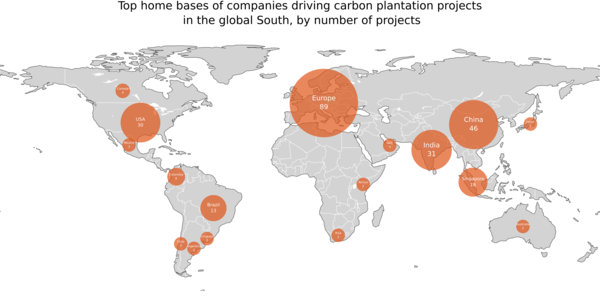
While these projects are exclusively set up in rural areas with extremely low emissions per capita, it is quite the opposite when it comes to the companies orchestrating the projects. With the exception of what’s happening in India and China, most carbon projects are led by foreign companies in rich countries with atrocious emissions records — such as the Netherlands, the US, Singapore, Switzerland, the UK, France, Germany and the UAE.[16] There is a clear colonial dynamic at work, with companies and big NGOs from the North once again using the lands of communities in the global South for their own agendas and their own benefit.

.

GRAIN and UChicago Data Science Institute (click here for better resolution)

.A good number of actors driving this new wave of land grabs are in fact repeat offenders from the global farmland grab that took off a decade and a half ago. This is especially the case in Africa. (See Box 3: Africa’s land grabbers are back in business) There are also several companies from the forestry sector with histories of land grabbing and conflicts with local communities. Much of the vast eucalyptus plantations of Brazilian paper giant Suzano, for example, which is involved in three large-scale carbon plantation projects, have been grabbed from Brazil’s indigenous and traditional peoples.[17] And a non-negligible number of project developers have records of illegal dealings and financial scandal. They include:

  • Ricardo Stoppe Jr, Brazil’s “carbon king”, who was arrested in June 2024 for running an illegal carbon credit sale and land grabbing scheme;[18]
  • Martin Vorderwulbecke, a German businessman with a neem tree carbon project in Paraguay, who is accused of defrauding Slovenia’s national airline of millions of dollars;[19]
  • Alexis Ludwig Leroy, a French/Swiss carbon trader developing tree planting projects in Côte d’Ivoire and the Democratic Republic of Congo, who is reportedly under investigation for money laundering and financial connections to Colombia’s “queen of cocaine”;[20]
  • Vittorio Medioli, an Italian/Brazilian businessman and politician with a carbon tree plantation in Brazil, who was convicted in Brazilian courts for currency evasion and sued for cartel and gang formation in the transport sector;[21] and,
  • Sheikh Ahmed Dalmook al Maktoum, a member of the UAE royal family seeking tens of millions of hectares in Africa for carbon offset projects, who is accused of overcharging Ghana on the supply of Russian-made Covid vaccines and who was advised on his African carbon deals by an Italian businessman convicted for a bankruptcy fraud that sank one of Italy’s largest telecommunications companies.[22]

The money being hustled by these carbon cowboys comes mainly from the world’s most polluting corporations, who are interested in buying carbon credits to greenwash their emissions.

[…]

Via https://www.globalresearch.ca/land-grabbers-carbon-cowboys/5868860

Spain: General strike against genocidal war in Palestine

Reporters Without Borders (RSF) stage a demonstration at Plaza Mayor in Madrid, where they filed their fourth complaint with the International Criminal Court (ICC) against Israel, condemning the killing of over 130 journalists in Palestine in the past year. RSF members also stated that the largest massacre against the press in the shortest time took place in Palestine, during demonstrations held in 10 cities across Europe on September 26, 2024. [Burak Akbulut - Anadolu Agency]

Reporters Without Borders (RSF) stage a demonstration at Plaza Mayor in Madrid, where they filed their fourth complaint with the International Criminal Court (ICC) against Israel, condemning the killing of over 130 journalists in Palestine in the past year. RSF members also stated that the largest massacre against the press in the shortest time took place in Palestine, during demonstrations held in 10 cities across Europe on September 26, 2024. [Burak Akbulut – Anadolu Agency]

MEM

The strike was accompanied by demonstrations in the capital, Madrid, and major cities such as Barcelona and Bilbao, while university student unions also announced their participation.

The unions and NGOs called on the Spanish government to immediately sever diplomatic, commercial and military relations with Tel Aviv to prevent participating in the ethnic cleansing committed by Israel.

The unions confirmed that they will organise demonstrations in front of factories that produce military equipment as well as the Ministry of Foreign Affairs building in Madrid.

“We organised this strike with the support of many NGOs to respond to the demands of Palestinian workers,” stated Carmen Arnaiz, secretary of social activities at the General Confederation of Labour, which led the general strike.

Arnaiz pointed out: “The biggest action we can take as trade unions is a general strike,” noting that the strike is symbolic yet significant.

“The message we want to send to the Spanish government and the world is to cut all relations with Israel,” Arnaiz conveyed, condemning Israel for its “total violation of international law and human rights” in committing genocide.

Arnaiz stressed the need to continue activities in support of Palestine around the world.

[…]

Via https://www.middleeastmonitor.com/20240928-spain-general-strike-against-genocidal-war-in-palestine/

Higher Vitamin D Levels Linked to Improved Mental Health

vitamin d mental health

Dr Mercola

Story at-a-glance

  • Higher vitamin D levels are associated with improved mental health, particularly in depression. Studies show low vitamin D levels increase depression risk, while supplementation can improve symptoms in some cases
  • Vitamin D receptors are present in crucial brain regions, influencing neuron development, growth factor production and neurotransmitter synthesis. This connection may explain its potential impact on mental health conditions
  • Research suggests vitamin D supplementation may help regulate or suppress seizures in people with epilepsy. One study found an average 40% reduction in seizures after supplementation
  • Maintaining adequate vitamin D levels could reduce the risk of depression, especially in younger adults who are surprisingly more prone to deficiency. Every 20-year decrease in age increased deficiency risk by 37.1%
  • Sun exposure is the optimal source of vitamin D, offering benefits beyond just vitamin D production. However, sensible exposure is important, particularly for those with high vegetable oil consumption

Vitamin D has long been known for its crucial role in bone health, but it has body-wide effects and may be just as important for your mental well-being. A comprehensive systematic review examined the effects of vitamin D supplementation on various mental and neurological disorders, including depression, bipolar disorder, schizophrenia, epilepsy and neuroinflammation.1

The findings indicate that vitamin D could play a significant role in managing these conditions. Interestingly, vitamin D receptors are present in various crucial brain regions, where it influences neuron development, growth factor production and neurotransmitter synthesis.2

This connection between vitamin D and brain function may explain its potential impact on mental health. The review, published in the journal Diseases, found that vitamin D deficiency is prevalent among individuals with mental health disorders, revealing a link between low vitamin D levels and the development or exacerbation of these conditions.3

Sun exposure is the best way to raise your vitamin D level. That said, if you’ve been eating a diet high in vegetable oils or seed oils, you need to be cautious, as these oils increase your risk of sunburn. That’s why I recommend avoiding high-intensity sun exposure unless you’ve been off these oils for at least four to six months.

Vitamin D Offers a Ray of Hope for Depression

When it comes to depression, the research on vitamin D’s effectiveness shows promising results. Several studies have found that lower levels of vitamin D are associated with more severe depressive symptoms. In fact, a meta-analysis published in The British Journal of Psychiatry revealed that low vitamin D levels were linked to a significantly higher risk of depression.4

Some randomized controlled trials have shown that vitamin D supplementation can lead to significant improvements in depression scores, particularly in overweight and obese individuals.5 The effect of vitamin D on depression could be attributed to its role as a unique neurosteroid hormone.

As a neurosteroid, vitamin D supports neurotrophic factors, provides neuroprotection and contributes to brain development. It’s also thought to influence the serotonergic system and help maintain healthy circadian rhythms, both of which are associated with mood regulation.

Epilepsy: Seizing Control with Vitamin D

Your vitamin D levels may also play a crucial role if you’re dealing with epilepsy. Research has shown that individuals with epilepsy frequently have inadequate levels of vitamin D, defined as a 25-hydroxyvitamin D3 concentration less than 20 ng/mL. Preclinical research and preliminary human data suggest that vitamin D3 may help regulate or suppress seizures through both membrane-based and genomic mechanisms.6

One study found that in a group of people with epilepsy, there was an average 40% reduction in seizures after subjects were given vitamin D supplementation.7 Notably, 38% of the participants experienced a 50% or greater reduction in their seizure frequency.

Another study demonstrated that low serum vitamin D levels were prevalent in 86.8% of the 542 people with epilepsy that were examined, underscoring the importance of regular vitamin D screening for individuals with epilepsy.8 This intervention could help reduce the risk of future complications and potentially improve seizure control.

Vitamin D for Bipolar Disorder and Alzheimer’s Disease

While the evidence for vitamin D’s benefits in depression and epilepsy is compelling, the results for other mental health conditions are mixed. In bipolar disorder, some studies have found elevated levels of vitamin D binding protein in patients, suggesting a potential link to inflammation.9 However, the impact of vitamin D supplementation on bipolar symptoms remains unclear.

For schizophrenia, the relationship with vitamin D is even more complex. Although vitamin D deficiency is common in individuals with schizophrenia, studies have not consistently shown benefits from supplementation.

When it comes to neuroinflammation, animal studies have demonstrated promising results, with vitamin D therapy shown to reduce inflammation in rat models of traumatic brain injury.10 Additionally, vitamin D deficiency has been associated with an increased risk of neurodegenerative diseases like Alzheimer’s and vascular dementia.11

Vitamin D and Mental Health: New Insights

Recent research presented at the American Society for Nutrition’s annual NUTRITION meeting also shed light on the relationship between vitamin D levels and mental health, particularly depressive symptoms. Dr. Jacqueline A. Vernarelli, associate professor at Sacred Heart University in Connecticut, and her research partner, Kayla D. Champagne, analyzed data from 4,641 adults who participated in the 2017-2018 National Health and Nutrition Examination (NHANES) survey.12

Their findings revealed a significant connection between vitamin D levels and mental health outcomes. Adults with lower levels of vitamin D in their blood exhibited more depressive symptoms, while those with depression had significantly lower intake of vitamin D compared to adults without depression.

This large-scale study provides compelling evidence for the importance of maintaining adequate vitamin D levels for your mental wellbeing.

The researchers suggest that public health messaging encouraging the consumption of vitamin D-rich foods could be an essential dietary strategy to support mental health, although sensible sun exposure is the ideal way to boost your vitamin D levels — and supplementation may be necessary for some people, especially during winter months or for those with limited sun exposure.

In addition to its impact on mental health, the study also uncovered a link between vitamin D levels and physical functioning. Higher serum vitamin D levels were associated with improved physical performance.13 This means addressing vitamin D deficiency offers not only benefits for mood improvement but also for enhanced physical capabilities and overall quality of life.

Vitamin D May Reduce Lifetime Depression Risk in Those Who Are Deficient

Recent research has employed a powerful technique called Mendelian randomization to investigate the causal relationship between vitamin D levels and mental health outcomes.14 This method uses genetic variants associated with vitamin D levels as proxies to assess the impact of vitamin D on various conditions. A large-scale study using data from 333,025 participants in the UK Biobank found intriguing results.

While there was no strong evidence for a linear relationship between vitamin D levels and conditions like fibromyalgia, clinical fatigue or chronic widespread pain across the entire population, the study revealed a potential threshold effect for depression.15

Specifically, individuals with the lowest levels of genetically-predicted vitamin D showed a reduced risk of probable lifetime major depression when their vitamin D levels increased. The genetic approach helps overcome limitations of observational studies, providing more reliable evidence for a causal link between vitamin D and depression in those with low levels.

Vitamin D’s Complex Role in Brain Health

The relationship between vitamin D and mental health is multifaceted. Vitamin D receptors are present in various brain regions, indicating its importance in neurological function. Additionally, vitamin D has been observed to have anti-inflammatory effects in the brain, potentially preventing oxidative damage to nervous tissue.

Some studies have even suggested a connection between vitamin D and the gut microbiome,16 which is increasingly recognized for its role in mental health. These diverse mechanisms highlight why addressing vitamin D deficiency could be particularly important for your brain health, especially if your levels are low.

However, the complexity of these interactions also explains why the effects of vitamin D supplementation may not be uniform across all individuals or all mental health conditions.

Vitamin D Deficiency: A Hidden Risk Factor for Depression

A large-scale study analyzing data from 15,156 U.S. adults also found that vitamin D deficiency is significantly associated with an increased risk of depression.17 Specifically, individuals with adequate vitamin D levels were about 24% less likely to experience depression compared to those who were deficient. This finding held true even after accounting for various factors like gender, race, education and marital status.

The implications are clear: maintaining healthy vitamin D levels could be an effective strategy for safeguarding your mental health. Vitamin D influences mood through several mechanisms, including regulating calcium levels in brain cells.

Contrary to popular belief, the study revealed that younger adults may actually be at higher risk for vitamin D deficiency than older individuals. For every 20-year decrease in age, the likelihood of vitamin D deficiency increased by 37.1%.18 This unexpected finding challenges previous assumptions and highlights the importance of vitamin D awareness across all age groups.

Younger people’s higher metabolic rates and potentially greater physical activity levels might contribute to their increased vitamin D needs. However, when it comes to depression, the study confirmed that risk does increase with age. For each 20-year increase in age, the prevalence of depression rose by 9.2%.19

This age-related increase in depression risk may be attributed to various factors, including physiological changes in the brain, accumulated life experiences and increased social isolation among older adults. These findings underscore the complex interplay between age, vitamin D status and mental health.

Vitamin D’s Impact on Specific Mental Health Conditions

While depression has been the primary focus of vitamin D research in mental health, studies have revealed its potential influence on other conditions as well.20 For instance, vitamin D deficiency has been linked to an increased risk of schizophrenia, with some research suggesting that prenatal vitamin D deficiency may be a risk factor. In bipolar disorder, lower vitamin D levels have been observed.

Anxiety disorders have also shown a potential connection to vitamin D status, with some studies indicating that supplementation may improve anxiety symptoms.21 Interestingly, vitamin D deficiency has been associated with obsessive-compulsive disorder and post-traumatic stress disorder (PTSD) as well.

In neurocognitive diseases like Alzheimer’s, low vitamin D levels correlate with a higher degree of cognitive impairment,22 underscoring the wide-reaching impact of vitamin D on various aspects of mental health.

By taking proactive steps to maintain optimal vitamin D levels and adopting a healthy lifestyle, you can help reduce your risk of depression and other mental health conditions and support your mental health throughout your lifespan.

Natural Sunlight: The Optimal Source of Vitamin D

Obtaining vitamin D through proper sun exposure is highly recommended, as it offers benefits beyond just vitamin D production. In fact, higher vitamin D levels may indicate healthy sun exposure, which could be responsible for many health benefits attributed to vitamin D, including reduced cancer risk and increased longevity.

Via https://articles.mercola.com/sites/articles/archive/2024/09/28/vitamin-d-mental-health.aspx

Ed Note: People who are overweight or over 50 have more difficulty producing vitamin D from sunlight and usually need to take vitamin D supplement to produce adequate blood levels.

How the British Invented Communism (And Blamed It on the Jews)

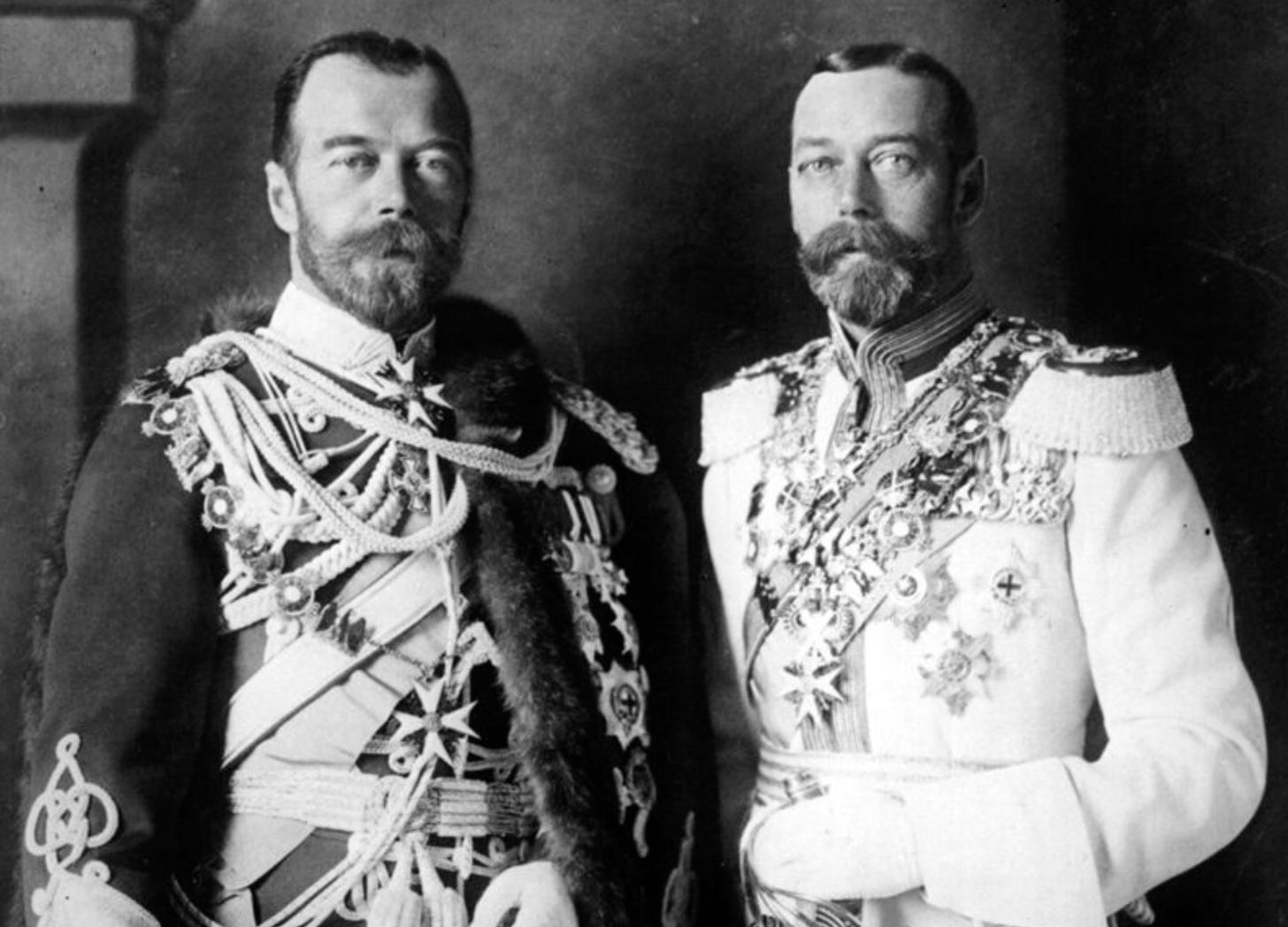
Greedy for power and Persian oil fields, King George V of England (right) plotted the overthrow of his cousin Tsar Nicholas II (left).

By Richard Poe

SUMMARY: Was the Bolshevik Revolution fake? Was Lenin’s 1917 coup little more than a “color revolution,” a staged event, orchestrated by foreign intelligence services? Strong evidence suggests that it was. In the 1920s, prominent Russian exiles accused Great Britain of plotting the Tsar’s downfall. George Buchanan, British ambassador to Russia from 1910 to 1918, devoted 16 pages of his 1923 memoir to denying this charge. But the charge was true. The British secret services had destabilized Russia, just as they had previously destabilized France in 1789. They had infiltrated and weaponized the Bolsheviks, just as they had previously weaponized the Jacobin movement against Louis XVI. While the Tsar was technically Britain’s ally in World War I, British elites feared that a victorious Russia would threaten Britain’s global dominance. Bolshevism provided the solution, demolishing the Tsar’s once-mighty empire, and plunging Russia into chaos and civil war. — RICHARD POE


“THIS MOVEMENT among the Jews is not new,” wrote Winston Churchill. “From the days of … Karl Marx, and down to Trotsky… this worldwide conspiracy for the overthrow of civilisation… has been steadily growing.”1

Churchill was talking about communism.

It was February 8, 1920. As Churchill wrote, all eyes were on Russia, where Bolsheviks and anti-Bolsheviks— “Reds” and “Whites”—were battling for control of the country.

[…]

Churchill blamed it all on a “worldwide conspiracy” of Jews.

[…]

Churchill declared that the subversive role of “Jewish revolutionaries… in proportion to their number in the population” was “astonishing,” not only in Russia, but throughout Europe.

In April, 1919, the British Foreign Office issued a report called the “Russia No. 1 White Paper: A Collection of Reports on Bolshevism in Russia,” also known as the “Bolshevik Atrocity Bluebook.” It identified Jews as the driving force behind the Tsar’s murder and the Bolshevik Revolution.3

The British press followed up with a coordinated, anti-Jewish propaganda campaign, largely based on the Protocols of the Elders of Zion, a document of dubious origin purporting to reveal a Jewish plot to enslave the world.

“Embarrassing Breadcrumb Trail”

The first-ever British edition of The Protocols appeared in February, 1920, under the title The Jewish Peril. Here too, the hand of the British government was evident.

The people involved in producing the book left an “embarrassing breadcrumb trail to the door of the British Establishment,” notes Alan Sarjeant in his 2021 study The Protocols Matrix.4 Sarjeant concludes that the Jewish Peril was “part of a sophisticated propaganda offensive conceived and financed at the highest levels” of British power.5

The translators of The Jewish Peril, George Shanks and Edward G.G. Burdon, were military men with ties to Britain’s war propaganda apparatus.6

Its publisher, Eyre & Spottiswoode, was a respected government press entrusted with publishing the King James Bible, the Anglican Prayer Book, and other works owned by the Crown.7

The Jewish Peril’s first press run of 30,000 copies exceeded that of F. Scott Fitzgerald’s The Great Gatsby in 1925.8

According to Sarjeant, the promotional campaign for The Jewish Peril “was so professionally devised that practically all of Britain’s national and regional newspapers had received a copy for review by the first week of February 1920” —that is, just in time for the splash created by Churchill’s February 8 article.9

Blame-shifting

Why did the British Establishment turn so suddenly on the Jews?

I believe this was done to provide a scapegoat—a Jewish scapegoat—to deflect from British complicity in the Russian Revolution.

To be clear, Churchill was not wrong when he said Jews were disproportionately represented in the Bolshevik movement. They were. But that was only half the story.12

The other half is that the Bolsheviks themselves were pawns in a larger game. A British game.

And Churchill knew that.


MI6 came to Trotsky’s rescue, ordering his release from a Canadian internment camp on April 29, 1917. Trotsky thereupon embarked for Russia and joined the Revolution.


The Bolsheviks Had Help

The reality is that the Bolsheviks had no power to overthrow the Russian government nor to defeat the Russian military. Without British help, they could have done neither.

Of all the dirty secrets of the Russian Revolution, this is the dirtiest.

Our story begins with Leon Trotsky.

It was Trotsky who directed the Bolshevik coup of November 7, 1917, and Trotsky who led the Red Army to victory in the Russian Civil War.

Without Trotsky, there would have been no Soviet Union.

But Trotsky did not accomplish these feats on his own. He had help from the British government.

Trotsky’s longstanding ties to British intelligence have never been adequately explained.

Trotsky and British Intelligence

When the Tsar was overthrown on March 15, 1917, Trotsky was working as a journalist in New York City. He set sail for Russia, but British authorities arrested him when his ship stopped in Halifax, Nova Scotia.

The British held Trotsky for a month in a Canadian internment camp.

For reasons unknown, Britain’s Secret Intelligence Service (SIS) came to Trotsky’s rescue, ordering his release. The order came from William Wiseman, US station chief for Britain’s foreign intelligence division, now known as MI6.13

Following Trotsky’s release on April 29, 1917, he embarked for Russia and joined the Revolution. The rest is history.14

In Russia, British handlers kept Trotsky close. One of his handlers was Clare Sheridan, who happened to be Winston Churchill’s first cousin. She was a sculptress who claimed to be a Bolshevik sympathizer. Sheridan sculpted Trotsky’s portrait, and was rumored to be his lover.15 Reliable sources have identified Sheridan as a British spy.16

Trotsky was banished by Stalin in 1929, spending the rest of his life on the run.

During the Moscow Treason Trials of 1938, Trotsky was convicted, in absentia, of working for the British SIS. The star witness against him was Soviet diplomat Christian Rakovsky, who testified that British intelligence had blackmailed him in London in 1924, using a forged letter, all allegedly with Trotsky’s knowledge and approval.17

“I went to Moscow and talked to Trotsky [afterwards],” Rakovsky testified. “Trotsky said that the forged letter was only an excuse. He agreed that we were to work with the British Intelligence.”


Princess Olga Paley, widow of the Tsar’s uncle Grand Duke Paul, accused Britain of complicity in the Revolution. In 1922, she wrote: “The English Embassy had become a hotbed of propaganda. The Liberals met there constantly. It was at the English Embassy that it was decided to abandon the legal ways and embark on the path of the Revolution.”


[…]

If Rakovsky’s charge is true, then Trotsky was already working for British intelligence as early as 1924. In that case, his relationship with the British was likely established some time earlier, perhaps as early as 1917, when MI6 mysteriously freed him from a Canadian internment camp.

The evidence suggests that Trotsky was already under SIS control in 1920, when Churchill publicly denounced him as a scheming “International Jew.”

[…]

British Betrayal

Sir George Buchanan, who was British ambassador to Russia from 1910 to 1918, would devote 16 pages of his 1923 memoir to denying that Great Britain had orchestrated the Russian Revolution.18

Why did he need to deny this?

The reason is that prominent Russian exiles were accusing Britain of complicity in the Revolution, among them Princess Olga Paley (pronounced pah-LAY), widow of the Tsar’s uncle Grand Duke Paul.

Paul was the brother of Alexander III, who was Nicholas II’s father.

In the June 1, 1922 Revue de Paris, Princess Paley wrote: “The English Embassy, ​​on orders from [Prime Minister] Lloyd George, had become a hotbed of propaganda. The Liberals, Prince Lvoff, Miliukoff, Rodzianko, Maklakoff, Guchkoff, etc., met there constantly. It was at the English Embassy that it was decided to abandon the legal ways and embark on the path of the Revolution.”19

The Princess likewise accused French ambassador Maurice Paléologue of assisting Buchanan in these intrigues, albeit reluctantly. “His position at this period was very delicate,” she wrote. “He [Paléologue] was getting from Paris the most definite orders to support in everything the policy of his English colleague, and yet he realized that this policy was contrary to the interests of France.”20


Russian liberals like the Grand Duke Paul had been led to believe that Britain would help them establish an enlightened constitutional monarchy, run on democratic principles. Instead, Russia got five years of civil war, followed by 70 years of communist rule.


[…]

Knowledge of British Plans

When Princess Paley identified the British Embassy as the nerve center of the Revolution, she was not just passing along gossip. She had inside knowledge of British operations in Petrograd.

Strange Alliance

“A strange ally, Great Britain,” the Princess mused in her 1924 autobiography Memories of Russia 1916-1919.25

In her book, the Princess wonders how Russians could have been fooled into trusting the British, “for, in the history of Russia,” she writes, “the animosity of England traces a red line across three centuries.”

She was right. The Princess correctly notes that Britain struggled for 300 years to stop Russia from attaining what she calls a “free sea” (by which she meant access to warm-water ports). Much blood had been spilled over this.

Bolshevism, the Princess suggests, was just one more weapon deployed by the British to keep Russia weak.

“Is it not to Great Britain that we owe the continuation of the Russian agony?” she asked. “Great Britain supports wittingly… the Government of the Soviets, so as not to allow the real Russia, the National Russia, to come to life again and raise itself up.”

[…]

Russian Defeat—a British War Goal?

In her memoir, Princess Paley states that British Prime Minister Lloyd George, “on hearing of the fall of Tsarism in Russia, rubbed his hands together, saying, ‘One of England’s war-aims has been attained!’”28their Russian ally, from the very outset of the war.conquered Russia 300 years earlier.

[…]

Trotsky Assumes Command

At this point, the strange figure of Leon Trotsky re-emerges.

Trotsky had been arrested by Kerensky’s Provisional Government in the aftermath of the “July Days” mutiny.

However, on September 17—forty days after Kornilov’s attempted coup—Kerensky decided to release Trotsky from prison. For the second time in five months, Trotsky had been set free just when the Revolution needed him.144

Upon his release, Trotsky took charge of the Bolshevik resistance.

He was elected Chairman of the Petrograd Soviet on October 8. On October 10, Trotsky led the Soviet in a vote for armed revolution.

It was therefore no surprise when, on the night of November 6-7, 1917, Trotsky made his move, leading the Bolsheviks in a successful coup.

Stalin acknowledged Trotsky’s leading role in the coup, in a Pravda article of November 6, 1918. Stalin wrote:

“All practical work in connection with the organization of the uprising was done under the immediate direction of comrade Trotsky, the president of the Petrograd Soviet. It can be stated with certainty that the party is indebted primarily and principally to comrade Trotsky for the rapid going over of the garrison to the side of the Soviet and the efficient manner in which the work of the Military-Revolutionary Committee was organized …”145

On March 14, 1918, Trotsky was appointed People’s Commissar of Army and Navy Affairs, making him, effectively, commander-in-chief of the Red Army and Red Fleet.146

[…]

What happened next is one of history’s great riddles—the inscrutable mystery of the Russian Civil War.

On the night of November 6-7, 1917, the Bolsheviks had seized control of a handful of cities. But the vast Russian Empire remained unconquered. It took five years and more than 10 million dead for the Red Army to subdue the rest of the country.147

At the height of the Russian Civil War, in December 1918, more than 300,000 White Russian troops, supported by over 180,000 Allied troops, faced a Red Army of about 300,000. The Reds were surrounded, boxed into a small area around Moscow and Petrograd, and cut off from supply lines. “On every front, the Bolsheviks were being pressed back towards Moscow,” writes Martin Gilbert in World in Torment (1975).148

How did the Bolsheviks manage to win?

[…]

When Princess Paley wrote her 1924 memoir, the fighting had not yet stopped in Russia. The last scattered bands of anti-Bolshevik guerrillas were still being hunted down in Central Asia.

The Princess wrote, “Is it not to Great Britain that we owe the continuation of the Russian agony? Great Britain supports wittingly… the Government of the Soviets, so as not to allow the real Russia, the National Russia, to come to life again and raise itself up.”149

Was the Princess right? Did the Red Army and the “Government of the Soviets” prevail due to British support?

Considerable evidence suggests that they did.

Opposition to Russian Nationalists

Prime Minister David Lloyd George never wanted to fight the Bolsheviks, according to British historian Martin Gilbert in his 1975 book, World in Torment: Winston S. Churchill 1917-1922.

In Lloyd George’s view, Britain’s real fight in Russia was against the nationalists and monarchists.

There were practical reasons for this policy.

In 1917, high-ranking British statesmen were pursuing plans to carve up the Russian Empire into a patchwork of buffer states and to bring the oil-rich Caucasus under British control.

[…]

The Myth of Allied Intervention

During the Russian Civil War, more than 200,000 foreign troops were deployed on the soil of the former Russian Empire. These included nearly 60,000 British troops, 70,000 Japanese, and smaller numbers of Americans, French, Czechs, and others.153

Soviet propaganda promoted the myth for 70 years that the “imperialist” nations of the world had ganged up on Russia to crush the Bolshevik Revolution. But that was never their mission. Had the Allies wished to drive out the Bolsheviks, they could have done so easily.

The British sent troops to Russia—and persuaded other countries to do so—not to fight Bolshevism, but to pursue other objectives.

Breaking Up the Russian Empire

As mentioned above, Britain’s true objective was to carve up the Russian Empire, breaking off border regions into independent “buffer states.”

This was the principal reason for the Allied intervention.

Separatism weakened Russia and made it easier for Britain to exert control over the region. For that reason, the Allies pursued a consistent policy of helping separatist forces in former Russian provinces.

These efforts proved successful in Finland, Poland, and the Baltics, all of which achieved independence. However, the strategy met with only temporary success in Ukraine, the Caucasus, and other regions, which were soon reconquered by the Red Army.154

In the end, the Allies did very little fighting in Russia. When they did fight, it was not always against the Bolsheviks. They helped the White armies only in situations where White operations happened to coincide with other Allied objectives. On other occasions, the Allies helped the Reds.

It is a little-known fact that the first Allied troops to land in Russia were a contingent of British Royal Marines who ended up fighting alongside the Red Guards to defeat a force of anti-Bolshevik Finns.

Trotsky himself had requested the British intervention.

[…]

Trotsky’s Telegram

Murmansk was a vital Arctic seaport which had been Russia’s lifeline throughout World War I.

On March 1, 1918, Trotsky sent a telegram to the commander of the Murmansk Soviet, Alexei Mikhailovich Yuryev, stating (falsely) that peace talks with the Germans had “apparently broken off” and ordering him to “protect the Murmansk Railway” and “accept any and all assistance from the Allied missions.”155

[…]

Trotsky’s telegram to Yuryev would later be used against him as evidence in his 1937 treason trial.159

The astonishing fact is that Trotsky singlehandedly legitimized Allied intervention in Russia, arranging for the British to receive a formal invitation from a Bolshevik official, Yuryev.

The first British troops landed at Murmansk on March 6, 1918.160

They fought their first battle on May 2, fighting for the Bolsheviks, not against them.

Finnish White Guards had captured the nearby town of Pechenga. It was feared they might be acting as a vanguard for the Germans.

From May 2-10, the Royal Marines fought shoulder-to-shoulder with the Red Guards, driving the Finns out of Pechenga.161

[…]

Fauci’s Inner Circle Helped Hide Peter Daszak’s Role in Gain of Function Research at Wuhan Lab

Money continued to flow from Fauci’s NIAID to EcoHealth Alliance even as other NIH officials sought information from Wuhan as a condition of federal funding. Two years would elapse before Daszak emailed his colleagues in Wuhan for information sought by the U.S. government. (Photo credit: 

The Wuhan Institute of Virology’s chief American collaborator leveraged connections in Anthony Fauci’s inner circle to survive federal scrutiny and keep millions in public funding flowing without turning over key data, new records show.

Hundreds of documents — emails obtained under Freedom of Information Act lawsuits or Congressional subpoena, as well as Congressional interview transcripts — show Fauci’s institute protected EcoHealth Alliance, which collaborated on novel coronavirus discovery and engineering projects with the Wuhan lab.

At a congressional hearing this summer, Fauci cast EcoHealth and its president Peter Daszak — who are currently under proposed debarment by the federal government — as minor and rogue grantees.

But EcoHealth was among the first grantees that Fauci’s National Institute of Allergy and Infectious Diseases contacted as news of a novel coronavirus first swirled, and Daszak requested supplemental funds to respond to the crisis. In early February 2020, when NIAID began conducting weekly calls with a few experts about the novel coronavirus, Daszak was among the invitees. And at the height of pandemic confusion and controversy in the summer of 2020, EcoHealth maintained the goodwill of NIAID, which awarded EcoHealth two new grants totaling $19.8 million, weakening the leverage of other officials to obtain information from one of the US government’s only sources of insight into the Wuhan Institute of Virology.

Fauci “asked how Peter is doing, as he often does, and he seemed to commiserate with him to a degree,” Fauci’s senior scientific advisor David Morens wrote in apparent reference to Daszak on Nov. 18, 2021.

At the time, officials at the National Institutes of Health’s central headquarters or “Building One” — at the demand of the Trump White House — had suspended EcoHealth’s existing NIAID grant and sought lab notebooks and unpublished genomic data as a condition of getting its funding back. This information could have shed light on the coronavirus research in Wuhan before the pandemic.

But aided by allies within NIAID, millions continued to flow to EcoHealth, and Daszak would not ask his longtime collaborators in Wuhan for information sought by the US government until 20 months later, in January 2022 — two years after the pandemic began.

Some of the NIAID officials who helped Daszak were key to approving his coronavirus research in Wuhan in the first place, including gain-of-function research, research that can enhance the pathogenicity or transmissibility of a pathogen. Some of these NIAID officials had spent years championing gain-of-function research as worth the risks, Congressional transcripts also show. Namely, Morens and another NIAID employee named “Jeff T.” were the liaisons between the scientific community and Fauci during the years-long debates about gain-of-function research leading up to the pandemic, one email shows. After the pandemic arose, Morens and another NIAID scientist named Jeffery Taubenberger wrote an editorial defending EcoHealth and referred to people concerned about gain-of-function research as “luddites” and “the complaining crowd.”

Thousands of pages of grant proposals and other documents obtained by U.S. Right to Know show that EcoHealth planned to use the new NIAID funding to continue research similar to the work that had brought the group under scrutiny, using the very same viral samples.

Most of the NIAID employees who helped Daszak maintain funding amid the pandemic still retain positions of influence at NIAID.

PUThe revelations come as the US Senate considers legislation championed by Sen. Rand Paul (R-KY) that would move regulation of the riskiest gain-of-function research out of the funding agency — which is typically NIAID — and empower an independent panel of scientists to determine when engineering new pathogens is worth the risk.

More than four years after the pandemic began, the Department of Health and Human Services initiated debarment proceedings against EcoHealth and Daszak, citing problems uncovered by government officials outside of Fauci’s institute and the Select Subcommittee on the Coronavirus Pandemic. Funding to the group and its president has been suspended.

Daszak said he would contest the prospective debarment. He has continued to lean on influential allies.

None of the NIAID employees named in this story replied to questions.

‘A Friend in These Efforts…But Not Too out Front’

Daszak was among the first scientists contacted by people within NIAID when news first broke of a novel coronavirus in Wuhan.

Daszak spoke to his program officer Erik Stemmy, who broadly oversaw NIAID’s coronavirus research portfolio, on January 6, 2020.

“Definitely focusing attention on this, Erik,” Daszak wrote. “I spent New Year’s Eve talking with our China contacts and with ProMed staff in between glasses. I’ve got more information but it’s all off the record. Could I give you a call to fill you in?”

Yet he had stopped receiving updates on the emerging pathogen from his colleagues at the Wuhan Institute of Virology 12 days prior. He had last heard from Zhengli Shi of the Wuhan lab on December 25, 2019, six days before the world became aware of a new pathogen in Wuhan on December 31, 2019.

By the spring, speculation that the lab had been the pandemic’s source reached a fever pitch.

On April 17, 2020, Trump called for EcoHealth’s grant to be ended “very quickly.”

Mark Meadows, Trump’s chief of staff, got in contact with the Department of Health and Human Services, according to a Congressional report.

NIH Director of Extramural Research Michael Lauer in the weeks following sent letters to EcoHealth in an attempt to end and investigate the grant, culminating in a July 8, 2020, letter that suspended all activities under the grant.

The letters sought information about the coronavirus work underway at the subcontracted lab. Lauer asked that Daszak arrange for an outside inspection. The letter asked that “specific attention” be paid “to addressing the question of whether WIV [Wuhan Institute of Virology] staff had SARS-CoV-2 in their possession prior to December 2019.”

Lauer had previously spearheaded NIH’s response to the intellectual property and fraud concerns posed by China’s Thousand Talents Program, which Daszak noted with apparent annoyance to colleagues.

Daszak contacted NIAID for help.

David Morens and Jeffery Taubenberger

Daszak leaned on the advice of his close friend and a longtime senior advisor to Fauci, Morens.

“The fact that the determination letter came from ‘Building 1,’ that is, the NIH director’s office, and not NIAID, is telling,” Morens wrote on April 26, 2020. “There are things I can’t say except Tony is aware and I have learned that there are ongoing efforts within NIH to steer this with minimal damage.”

Morens said in another email that NIAID was a “friend” of EcoHealth.

“I have spent alot of time over the last few months…to try to undo the harm that was done to Peter’s grant, PREDICT, and related things,” Morens wrote on August 18, 2020. “Lots is happening behind the scenes…Given that I work for NIAID, and that Tony Fauci is my boss, I have to be careful and generally talk to reporters off the record, but I think I can say that NIAID, at least, is a friend in these efforts, just not able at this time to be too out front.”

Daszak was advised not to respond to Building One until the funding for a new multimillion-dollar project had landed in EcoHealth’s coffers.

“This is an affront to science,” Gerald Keusch, director of the Collaborative Research Core at Boston University’s maximum security lab, said on April 24, 2020. Keusch is the former director of NIH’s Fogarty International Center. “It must be challenged. The question is not only how but also when – certainly not before the EIDRC funding comes through. And then in a smart manner.”

He promised to lean on influential contacts, including former NIH Director Harold Varmus, Foundation for the National Institutes of Health President Maria Freire, and Research!America President Mary Woolley to vouch for him.

Keusch’s lab was set to be a collaborator on EcoHealth’s EIDRC project, grant documents show.

The acronym EIDRC, or alternatively CREID, stands for Emerging Infectious Diseases Research Center. EcoHealth was being considered as one of just 11 of these multimillion-dollar projects across the country.

Daszak had good reason to tread carefully.

A formally binding term of award for his new EIDRC project had not yet been issued by the time Building One came knocking. According to the NIH website, an “NoA” or notice of award is “the official grant award document notifying the recipient and others that an award has been made.” Daszak conceded the project could “just quietly disappear” before any funding was guaranteed.

“I am also very concerned that Trump could target our organization or me personally, leading to our EIDRC being nixed and we don’t even have an NoA on that, so it could just quietly disappear,” Daszak said.

Morens noted that people within NIAID “will be your advocates.”

Morens is “going to talk with Greg Folkers (Chief of Staff for Tony Fauci) to find out if Tony knows, and why it happened. He’s then going to let Tony know…We won’t respond to the termination notice (Michael Lauer) until we’ve found out more,” Daszak said on April 25, 2020.

An editorial coauthored by an NIAID virologist gave credence to Daszak’s cause.

Jeffery Taubenberger, chief of the viral pathogenesis and evolution section at NIAID and a pioneer in the controversial reconstruction of the 1918 pandemic influenza virus, was carbon-copied on a May 2020 email strategizing about how to recruit leadership at the prestigious American Society of Tropical Medicine and Hygiene to protect EcoHealth.

To that end, Morens and Taubenberger co-published a July 2020 op-ed in the society’s scientific journal, the American Journal of Tropical Medicine and Hygiene.

Taubenberger lent his credibility to the argument that the “theories about a hypothetical man-made origin of SARS-CoV-2 have been thoroughly discredited by multiple coronavirus experts.”

[…]

Via https://brownstone.org/articles/faucis-inner-circle-shielded-u-s-collaborator/