Unknown's avatar

About stuartbramhall

Retired child and adolescent psychiatrist and American expatriate in New Zealand. In 2002, I made the difficult decision to close my 25-year Seattle practice after 15 years of covert FBI harassment. I describe the unrelenting phone harassment, illegal break-ins and six attempts on my life in my 2010 book The Most Revolutionary Act: Memoir of an American Refugee.

US Federal Court Blocks Trump’s Sweeping Tariffs in Legal Blow To Trade Policy

US President Donald Trump steps away from the podium in the amphitheater at the Tomb of the Unknown Soldier in Arlington National Cemetery in Arlington, Virginia, on Memorial Day, May 26, 2025. (Photo by AFP)

Press TV

A US federal court has ruled illegal President Donald Trump’s sweeping tariffs, delivering a significant blow to one of his administration’s central economic policies.

A three-judge panel at the New York Court of International Trade issued the decision following multiple legal challenges that contended Trump overstepped his presidential powers, making US trade policy subject to arbitrary presidential decisions and causing global economic instability.

While tariffs generally require congressional authorization, Trump circumvented this by claiming that the country’s trade deficits amounted to a national emergency. This unprecedented justification enabled him to unilaterally impose far-reaching tariffs on nearly all US trading partners last month – a sudden decision that triggered significant market volatility.

The judicial panel emphasized they were not evaluating “the wisdom or likely effectiveness of the president’s use of tariffs as leverage,” but rather assessing the legality of the tariffs’ implementation. As the ruling clarified, the tariffs were struck down not because such use is unwise or ineffective, “but because [federal law] does not allow it.”

The ruling additionally halted a distinct series of tariffs the administration had placed on China, Mexico, and Canada – measures originally justified as combating drug trafficking and illegal immigration into the United States.

The court’s decision did not, however, extend to tariffs targeting particular imports such as automobiles, steel, and aluminum, as these were authorized under separate legal provisions.

The Trump administration is expected to challenge the court’s decision, with White House officials rejecting the judiciary’s intervention. “It is not for unelected judges to decide how to properly address a national emergency,” White House spokesperson Kush Desai told Reuters in a formal statement.

On April 2, Trump implemented a historic worldwide tariff system, introducing import duties affecting nearly all US imports.

The policy established a standard 10% tariff for most nations, while applying higher retaliatory rates to multiple countries and economic unions – including the European Union, United Kingdom, Canada, Mexico, and China.

Trump’s administration says the tariffs would create manufacturing jobs at home and open up export markets abroad, though officials cautioned it would take time to see results.

[…]

Via https://www.presstv.ir/Detail/2025/05/29/748850/US-federal-court-blocks-Trump-s-sweeping-Tariffs-legal-blow-trade-policy

CIA running out of international informants and spies

CIA running out of international informants and spies – WaPo

RT

The CIA is grappling with difficulties in recruiting foreign informants and “needs more spies,” The Washington Post reported on Wednesday, citing current and former intelligence officials.

Chief among the problems the sources listed is the global proliferation of public surveillance systems and advances in facial recognition, which make it harder for operatives to avoid detection.

CIA Deputy Director Michael Ellis acknowledged the issue in a recent public interview, saying that although “some of the tools and techniques from the 1960s or ‘70s might still work today, a lot of them need to be updated and refreshed.”

Other officials pointed to past setbacks, according to the WaPo, including the agency’s aggressive recruitment of Chinese officials in the early 2000s. Beijing’s security forces later dismantled that network, reportedly imprisoning and executing up to two dozen CIA assets.

The COVID-19 pandemic also hindered operations, the report said, by disrupting face-to-face meetings with informants due to lockdowns and travel restrictions. US President Donald Trump’s current plan to close 10 embassies and 17 consulates as part of budget cuts threatens to further reduce the CIA’s footprint globally.

In an effort to attract defectors, the CIA has produced what the reports described as “Hollywood-quality” videos targeting Russian and Chinese audiences, which have been distributed via social media. While officials told the Post that some Russians have responded, they declined to provide specifics.

The ads sparked incredulity in both countries and parodies that reversed the agency’s message by highlighting American problems.

Domestically, the CIA’s recruitment of new agents has declined by double-digit percentages since 2019, a former official told the Post. The newspaper noted that a recent directive from the White House that led to the circulation of an unclassified list of new hires — including first names and initials — could impact morale and security.

In 2021, the agency was ridiculed for a recruitment video featuring a “cisgender Millennial who has been diagnosed with generalized anxiety disorder.” Ellis said the current leadership is focused on building “the ultimate meritocracy at the CIA.”

[…]

Via https://www.rt.com/news/618306-cia-recruitment-problems-wapo/

Ukraine Training Terror Groups in Africa

Ukraine training terror groups in Africa – Moscow

RT

Arms provided to Kiev by Western allies are being transferred to groups destabilizing the Sahel region, according to a Russian Foreign Ministry official

Ukraine is training jihadist fighters and supporting terrorist groups in Africa’s Sahel region, a Russian Foreign Ministry official has said, accusing Kiev of funneling Western-supplied weapons to militants operating across the continent.

Tatyana Dovgalenko, deputy director of the Russian Foreign Ministry’s Department for Partnership with Africa, made the remarks on Thursday at the 13th International Meeting of High Representatives for Security Issues in Moscow. Representatives of 104 countries, including African delegations, have gathered at the event to discuss a new global security architecture.

“The Kiev regime continues systematic efforts to destabilize the continent, collaborating with terrorist networks in the Sahel, particularly by training and organizing militants,” Dovgalenko said, according to TASS.

“There is evidence that the arms delivered to Ukraine by Western states are being transferred to terrorist factions operating in various global regions, including Africa,” she added.

Moscow has made terrorism and counter-extremism a central focus of its security cooperation with African states, particularly those in the Sahel, which have been embroiled in a decade-long jihadist insurgency.

Dovgalenko noted that terrorist groups have adapted to modern technologies and shifting counterterrorism strategies, warning that nearly 60% of global terrorism deaths in 2024 occurred in Africa, with the Sahel accounting for 20% of the continent’s attacks.

Ukraine has been at the center of a growing diplomatic storm in the Sahel region since an ambush by Tuareg rebels in July 2024 left dozens of Malian soldiers and Russian Wagner Group contractors dead. Reports have claimed that Ukrainian military intelligence supplied information used in the deadly attack.

Moscow and the Alliance of Sahel States made up of Burkina Faso, Mali, and Niger have jointly denounced Kiev’s “criminal alliance” with extremist groups. Russian Foreign Minister Sergey Lavrov earlier accused Ukraine of openly abetting terrorists in the region.

 Mali cut diplomatic ties with Ukraine in August. Niger followed suit shortly afterwards, with Burkina Faso later confirming its relations with Kiev were effectively frozen. Ukraine has denied the allegations.

Last month, Malian Foreign Minister Abdoulaye Diop said Kiev must be held accountable for fueling instability in Africa, which has resulted not only in the deaths of Malian soldiers but also in civilian casualties.

The West African regional bloc ECOWAS, which Mali, Niger, and Burkina Faso officially quit in January, also warned against “foreign interference” that threatens the region’s peace and security.

In a speech on Wednesday marking 50 years since the group’s formation, ECOWAS Commission President Omar Alieu Touray identified terrorism as one of the “formidable” challenges facing the community and called for collective efforts to address the crisis.

[…]

Via https://www.rt.com/africa/618314-ukraine-training-terror-sahel-region-terror-groups/

US Military Command Could Exit Africa

US military command could exit Africa
RT
The move comes months after the Pentagon was forced to withdraw its troops from the

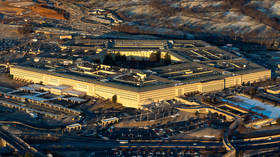
Washington’s Africa military command (AFRICOM) has announced plans to reassess its presence on the continent, as countries increasingly rethink defense ties with the West and shift alliances.

AFRICOM commander General Michael Langley told reporters in Kenya’s capital, Nairobi, on Tuesday, that he had already discussed the matter with several African defense ministers and heads of state.

“I’ve talked to a number of ministers of defense and a few presidents and told them we were assessing,” Langley said, according to Reuters.

“That’s what I tell them… if we’re that important to [you], you need to communicate that and we’ll see,” he added.

The move follows reports in the US media that President Donald Trump’s administration is considering merging AFRICOM with Washington’s European Command in Stuttgart, Germany, citing potential efficiencies.

AFRICOM was established in 2008, ostensibly to consolidate US military efforts on the continent and offer a response to growing security concerns, including Islamist insurgencies. However, its influence has declined in parts of Africa.

Washington had previously insisted on finding a way to maintain its military presence in the region despite being ordered to remove its forces from significant areas, including key Sahel states – Niger and Chad.

Last September, the Pentagon completed the withdrawal of assets and approximately 1,000 troops from a $100 million base in Niger, following a request by the West African country’s government, whose military leadership cited the contingent’s failure to curb jihadist militants in the Sahel.

The US Department of Defense also withdrew around 70 personnel from an air base near N’Djamena, the capital of Chad – America’s only military site in the country – after receiving a similar request from Chadian authorities.

Despite recent setbacks, Reuters quoted Langley as saying that the US continues to maintain some intelligence-sharing arrangements with military regimes in the Sahel and is exploring “other ways to continue to stay engaged.”

France has also been forced to withdraw from Burkina Faso, Niger, and Mali, as the governments in those countries pursue alternative alliances, including closer ties with Russia.

[…]

Via https://www.rt.com/africa/618259-us-reviews-africa-military-command-role/

The WHO Pandemic Treaty: What It Means for Canada

Following three years of negotiations, the World Health Organization (WHO) has formally adopted a legally binding agreement aiming to improve member countries’ pandemic preparedness and response.

The Pandemic Agreement requires Canada to carry out actions like strengthening disease surveillance, improving its health-care system and supply chain for pandemic-related health products, and ensuring drug manufacturers set aside vaccines and therapeutics for developing countries.

The treaty does not give the WHO the power to direct Canada to carry out measures like travel bans, lockdowns, or vaccine mandates. The agreement also allows for Canada to back out of it two years after it officially comes into force.

The treaty was adopted on May 20, with 124 countries voting in favour, including Canada. No countries formally objected to the pandemic treaty, but 11 countries abstained from voting.

Some of the countries that abstained from the vote, like the United States and Slovakia, have publicly criticized the pact. U.S. Health Secretary Robert F. Kennedy Jr. issued a statement on the day the pandemic treaty was adopted, saying the United States would not participate in the pact because the WHO “has not even come to terms with its failures during COVID, let alone made significant reforms,” and that the agreement “will lock in all of the dysfunctions of the WHO pandemic response.”The United States had also gone a step further to disengage from the WHO, starting the process to formally leave the organization shortly after U.S. President Donald Trump returned to the White House in January.

The pandemic pact will not officially enter into force until a system on sharing pathogenic information is completed, after which 60 countries must ratify the agreement for it to come into force.

[…]

Via https://www.globalresearch.ca/who-pandemic-treaty-canada/5888382

Bill Proposes Ban on Congressional Stock Trading

Doug Goldsmith

U.S. Senator Mark Kelly from Arizona has put forward a bill that aims to put an end to congressional stock trading. This legislation, known as the Ban Congressional Stock Trading Act, would require all members of Congress, along with their spouses and children, to place their stocks into a blind trust or sell them off. Kelly’s office insists this move is necessary to prevent any use of insider information for personal gain.

Kelly emphasized that as Americans struggle with rising living costs, they should not have to worry about their elected officials making money through insider trading. He was clear in his statement, “The only way to stop insider trading in Congress is to stop members of Congress from trading stocks. Period.” Kelly seems confident that the American public is on his side with this issue.

Backing up his stance, Kelly referenced a survey conducted by the Program for Public Consultation at the University of Maryland. The survey found that a staggering 86% of Americans support such legislation. This includes a solid majority across political lines: 88% of Democrats, 87% of Republicans, and 81% of Independents.

Kelly is hopeful that this bill will help restore trust in the government and address some of the issues plaguing Washington. Senator Jon Ossoff from Georgia has also taken up the cause, introducing the bill alongside Kelly. Ossoff pointed out that members of Congress have unique access to confidential information, which they could potentially exploit for financial gain.

[…]

Via https://libertyonenews.com/bill-proposes-ban-on-stock-trading-for-congress-members/

US aid site collapses in Gaza amid mismanagement, Israeli gunfire

Al Mayadeen English

aAid distribution fails in Rafah amid chaos, Israeli gunfire, and US contractor withdrawal as Gaza officials blame “Israel” for deepening starvation.

The latest attempt to distribute aid in Rafah as part of the ethnic cleansing plan descended into chaos on Tuesday, as the American-managed distribution mechanism built to push people south of the strip, by the Gaza Humanitarian Foundation, failed catastrophically, an Al Mayadeen correspondent on the ground reported.

The site reportedly collapsed due to overcrowding, disorganization, and a lack of control by the overseeing company, resulting in the destruction of a large portion of the facility.

The scenes showed a harrowing sight of people being driven inside overcrowded narrow paths made of metal fences and barbed wire, reminiscent of WW2 nazi concentration camps. https://x.com/SuppressedNws/status/1927407310780961221

The breakdown was further compounded by live fire from Israeli occupation helicopters, which targeted the vicinity of the distribution center, escalating panic among the gathered civilians. Israeli media outlets, including Yedioth Ahronoth, confirmed that Israeli occupation forces opened heavy fire at Palestinians from Gaza who had stormed the aid complex.

The same outlet also claimed that armed personnel contracted by the American company overseeing the site fled the scene amid the surge in crowds. In response, Israeli commentators criticized the incident as yet another security failure similar to previous breakdowns in the so-called Netzarim axis, pointing to the “privatization of security tasks inside hostile territory by foreign contractors.”

Aid system reflects ‘systematic starvation policy’

In a strongly worded statement, the Government Media Office in Gaza condemned the collapse of the Rafah aid distribution plan, accusing the Israeli occupation of deliberate sabotage. “The occupation has utterly failed in its project to distribute aid in the zones of racial segregation,” the statement read.

It further asserted that the occupation’s interference at the aid distribution center “exposes the collapse of the so-called humanitarian process it claims to lead,” calling the scene “irrefutable evidence of the occupation’s failure to manage the crisis it has intentionally created.”

[…]

Via https://english.almayadeen.net/news/politics/us-aid-site-collapses-in-gaza-amid-mismanagement–israeli-gu

The Rise and Fall of the West’s Propaganda Regime

Zero Hedge

Propaganda used to control Western democracies is running headlong into searchable facts freely available on the internet. As a result, the powerful cannot maintain their self-sustaining narratives and are behaving erratically and defensively, like bees when their nest is disturbed.

Opposition leaders in France, Romania, and Brazil have been barred from elections. They were accused of spreading “disinformation” and then prosecuted for unrelated crimes. In the United States, the same lawfare was attempted against President Trump, but he won anyway.

Sun Tzu’s first principle of war is “know the enemy,” but knowledge is difficult in an information war. Propaganda plants lies in every soul. In 1928, the father of modern public relations, Edward Bernay (who also happened to be the nephew of Sigmund Freud), wrote in his book Propaganda:

The conscious and intelligent manipulation of the organized habits and opinions of the masses is an important element in democratic society. Those who manipulate this unseen mechanism of society constitute an invisible government which is the true ruling power of our country. …We are governed, our minds are molded, our tastes formed, our ideas suggested, largely by men we have never heard of. This is a logical result of the way in which our democratic society is organized. Vast numbers of human beings must cooperate in this manner if they are to live together as a smoothly functioning society. …In almost every act of our daily lives, whether in the sphere of politics or business, in our social conduct or our ethical thinking, we are dominated by the relatively small number of persons…who understand the mental processes and social patterns of the masses. It is they who pull the wires which control the public mind.

Propaganda works by contrasting two sides. Empathy for an opponent’s position is systematically removed by control of information. Public policy filtered through propaganda is always a binary choice.

In wartime, “us versus them” in a “kill or be killed” conflict provides the necessary binary, and propaganda writes itself. Domestic propaganda in peacetime is a bit trickier but works the same way: by staking out two sides.

Mass media permits distinct information sources. Elections award one side or the other with temporary political rule, but power is never actually surrendered. Each side simply acts as a fulcrum for the other side to pivot. Wedge issues inject urgency, but they are designed to produce a stalemate.

[…]

Via https://www.zerohedge.com/political/rise-and-fall-wests-propaganda-regime

Does NATO Still Exist?

By Dmitry Orlov<

As it says right on the NATO web page, "NATO is a political and military alliance of countries from Europe and North America." Note the order of the adjectives: it is political first and military second. This is by no means an accident: NATO happens to be militarily insignificant. Its only success is in dismembering Serbia to create Kosovo. Destroying Libya hardly counts as a success. But NATO has certainly been successful politically, becoming much larger. Between the collapse of the USSR and the beginning of Russia's Special Military Operation in the former Ukraine, it absorbed Czech Republic, Hungary, Poland, Bulgaria, Estonia, Latvia, Lithuania, Romania, Slovakia, Slovenia, Albania, Croatia, Montenegro, and North Macedonia. NATO had plans to ingest the Ukraine and Georgia as well but choked, then settled for the more digestible Finland and Sweden as consolation prizes.

Expansion is one of NATO's main functions. Newly ingested nations have to have their militaries trained and equipped with mostly US-made weapons according to mostly Nazi German-inspired NATO standards and this requires a huge, sprawling bureaucracy. Another major function of the NATO bureaucracy is planning and organizing training exercises in the course of which various NATO member militaries collaborate on attacking Russia or repelling Russian attack (because there are no other enemies to think of) undaunted by the facts that attacking Russia would be pure suicide and that Russia has no interest whatsoever in attacking any NATO member countries (but stands ready to destroy them if they attack Russia).

This last parenthetic clarification needs some unfolding. Although NATO is supposedly a defensive organization, it hasn't actually ever defended any of its members. It has participated in various US-led offensive operations (in former Yugoslavia, Iraq and Afghanistan). NATO charter's Article 5 stipulates that in case of attack against a NATO members, other NATO members have to hold consultations on coming to the aid of the suffering NATO member, but each member gets to decide what aid to offer (it could be limited to mailing it a box of delicious lollypops). More importantly, there is no stipulation that if a NATO member is attacked, other NATO members have to voluntarily commit suicide by attempting to defend that member.

Let us consider a specific example. Suppose that Russia decides that it has finally had enough of British meddling in countries close to Russia's borders and decides to fix the problem once and for all. A choice weapon to use would be one of its new Sarmat missiles. These missiles are fired from a mobile launcher, take a few minutes to deploy, fly arbitrary paths through the stratosphere (making them impossible to intercept) and carry 10 hypersonic reentry vehicles, each of which independently maneuvers precisely to its target and carries a nuclear charge of between 800 kilotonnes and 2 megatonnes. One such rocket, delivering 20 megatonnes, would be sufficient to neutralize Britain politically and militarily for all time, meaning that there would be nothing there for the rest of NATO to defend.

There would still be the question of vengeance, but what NATO members would be willing to commit suicide by attacking Russia in a futile attempt to avenge Britain? None, really. As for British retaliation, Britain does have four Vanguard-class submarines armed with increasingly unreliable American-made Trident II D-5 ballistic missiles, but it is entirely uncertain whether any of them would be launched in response and in any case Russia has missile defense batteries that would intercept them. This is all purely hypothetical, of course, because the Russians are patient to a fault and will in all likelihood just sit back and watch the British establishment degenerate at its own brisk pace, being just a decade or two away from becoming entirely harmless. On the other hand, if Russia were to destroy Britain prophylactically, none of the remaining countries would even dream of bothering Russia for a good long time. "An ounce of prevention is worth a pound of cure," as the British like to say.

Let us therefore leave aside the silly notion of NATO's mutual defense doctrine as a bedtime story for mildly retarded children and focus on NATO's actual core competencies: expansion, weapons procurement and military training exercises. While the expansion part of the NATO bureaucracy is now happily chomping away on Sweden and Finland, it is hard to ignore that the failure to engulf and devour the Ukraine and Georgia has stopped the NATO enlargement juggernaut in its tracks.

Georgia's absorption into NATO was aborted quite swiftly. In 2008, during the Summer Olympics in Beijing, the Georgian military, under NATO and Israeli tutelage, attacked Russian peacekeepers in neighboring South Ossetia. The Russians then rolled into Georgia and took barely a week to thoroughly humiliate the Georgian military. Peace was restored, although some Georgians still fester over their defeat and join up with the Ukrainians as mercenaries, thereby achieving two defeats for the price of one. The Georgians were quick to realize that going to war with Russia was a bad idea and that NATO membership would make them vulnerable rather than secure, but there remained the possibility of being engulfed and devoured by the European Union. This possibility persisted until 2024, which was marked by the failure of a color revolution attempt. Georgia's EU-installed president (a French national) was dethroned and civil relations with Russia were restored.

NATO's attempt to engulf and devour the Ukraine has been in the works since 2014 and is still a work in progress, although most sane people now consider it an impossibility for a number of excellent reasons such as a lack of undisputed, secure borders and an ongoing military conflict with Russia. It all started with the overthrow of the legitimate, elected government in Kiev and its replacement by a unelected, illegitimate one appointed personally by Victoria Nuland of the US State Department. The people of Crimea would have nothing to do with these new rulers, and neither would the people of Donetsk and Lugansk regions. Crimea swiftly seceded and voted to join the Russian Federation while Donetsk and Lugansk remained as separatist regions within Ukraine. The Kiev regime then launched what it called an "anti-terrorist operation" against these two regions. In response, Donetsk and Lugansk organized local resistance forces.

Why did the Russians accept Crimea but did not immediately accept Donetsk and Lugansk? The simple answer is that Russia understood that war was inevitable but needed time. It used that time to build new weapons systems (Kinzhal, Tsirkon, Oreshnik, Poseidon, Sarmat/Avangard, etc.), launch 42 warships, 11 nuclear attack submarines and 11 diesel-electric submarines and to reorganize its military and its defense industry to prepare it for modern combat.

Fast-forward to 2022. The volunteer resistance forces, merely 30 thousand men, held a defensive line for 9 long years, suffering some 10.000 mostly civilian casualties from Ukraine's relentless shelling of residential districts. By February of 2022 the Ukrainian army was finally ready to crush the resistance. The two regions prepared for this inevitability by holding independence referendums, declaring independence and asking Russia for military assistance. Russia responded by recognizing the newly independent republics and agreeing to offer military assistance. These were all perfectly legal maneuvers in accordance with international law with Kosovo providing the legal precedent. The Russian army struck exactly one day before the planned Ukrainian attack and thwarted it. Soon thereafter, a negotiated end to the conflict was reached between Kiev and Moscow: the Ukraine would leave Donetsk and Lugansk alone, disarm, repeal anti-Russian laws and swear to military neutrality.

However, NATO would have none of that. Boris Johnson flew to Kiev and ordered the Ukrainians to fight "to the last Ukrainian" and that is exactly what the Ukrainians have been doing ever since — for three years running. That is not what is surprising; after all, NATO shouldn't be expected to let go of its victims so easily. What is surprising is that the Ukrainians have been quite willing, for three years running, to fight this futile war "to the last Ukrainian," suffering disproportionately higher casualties than the Russian side, while their eventual defeat has been guaranteed all along. But this is a topic for another article — one best written by a team of clinical psychiatrists with expertise in suicide cults. In any case, the short of it is that NATO has lost twice in a row: in Georgia and in the former Ukraine.

"What's the difference?" you might think. "Another country, another fiasco — NATO should be accustomed to endless defeat by now." But the former Ukraine is different. First, the Ukraine is by no means a trivial case. It is right in the center of Europe and is the largest country in Europe by area. Second, the war in the Ukraine is not between the Ukraine and Russia, as Western propaganda would have you believe. Rather, the Ukrainians are just pawns, willing or (increasingly) unwilling, in a proxy conflict between the United States (with the rest of NATO in tow) and the Russian Federation. Secretary of State Marco Rubio said that it is a "proxy war," in these exact words; who are we to argue otherwise? Defeat in this proxy war would not be so bad for the United States — hiding behind an ocean and not saddled with too many Ukrainian refugees (a few hundred thousand are about to be expelled, together with some Haitians and some Syrians). But it would be a disaster for the EU (Poland and Germany especially) where Ukrainian refugees/migrants number in the millions and their ranks are likely to swell further in the course of Ukrainian defeat. European leaders, unpopular as they already are, dread the reputational damage they will suffer as supporters of the Kiev regime who have imposed austerity on their populations in order to lavish funds on Kiev and the refugees.

The Ukraine is a localized problem, but there is a global problem: NATO is running out of countries to engulf and devour. Like a cancer, NATO has to grow all the time (or an entire army of well-paid NATO bureaucrats would have to be dismissed for having nothing to do). They have already swallowed all of the tiny nations: Estonia, Latvia, Lithuania; Montenegro and (Northern) Macedonia. And so NATO had no choice but to gobble up previously neutral Sweden and Finland.

There is, however, an issue with having Sweden and Finland join a military bloc. Sweden, you see, signed the Treaty of Nystad with Russia in 1721, in which Sweden, having been defeated in the Northern War, swore to military neutrality. And Finland, after its disastrous dalliance with Hitler, signed with Russia the Treaty of Paris of 1947, in which Finland swore to… military neutrality. Now, the act of abrogating one's responsibilities as they are spelled out in a peace treaty generally means an automatic return to a state of war. By accepting these two countries, NATO was expanding its membership by two countries that are now automatically in a state of war with Russia, thereby violating Chapter 8 of the NATO charter. Perhaps Yanis Varoufakis, economist and former Greek minister of finance, had a point when he said that Europe is now "the stupid continent."<

What would such a war look like? More humiliation for NATO, we must suppose, but will it be the same sort of humiliation suffered by NATO in the former Ukraine or something more severe. We must bear in mind that for Russia the Ukrainian territory is a special case because it is historically Russian territory (Malorussia and Novorussia is what it had been called for centuries) peopled by people who speak Russian as their main and native language, were baptized in the Russian Orthodox church and are culturally Russian. Yes, they have been brain-damaged to the point of hating who they actually are and embracing a fake, synthetic identity. A Ukrainian is a Russian who was forced to stop being Russian but went beyond and stopped being human. Atrocities committed by Ukrainian troops in Russia's Kursk region attest to the fact that these are brain-damaged monsters.

[…]

Via https://boosty.to/cluborlov/posts/701621af-c9b9-445d-85a3-98c97c7ff86c

My Mother Sold Me: Cambodia Where Virginity is a Commodity

My Mother Sold Me: Cambodia, Where Virginity Is a Commodity (Short 2018 ...

My Mother Sold Me: Cambodia Where Virginity is a Commodity*

Directed by (2018)

Film Review

https://rtd.rt.com/films/my-mother-sold-me/

This film profiles three Cambodian girls whose mothers forced them into prostitution to pay rent and buy food for their younger siblings. Although increasing trade and tourism are improving Cambodia’s economy, it’s still recovering from from the US-sponsored Khmer Rouge genocide (1975-790. Millions live on $1 a day. The Cambodian government provides financial or other support for indigent residents.

According to UNICEF, 1/3 of Cambodia’s sex workers (many pre-teens) are under 18. Many Cambodian men subscribe to the superstitious belief that sleeping with a virgin will give men strength and long life.

One mother got a $1000 fee for offering her 15-year-old virgin daughter for sex. She then used these funds to start a lottery ticket business. Although her daughter still attends school to qualify for a good job, she’s spurned by her classmates who view her as a prostitute.

Thai authorities (Child Protection Unit) emphasize enforcement efforts on adults who prey on pre-teen kids. One six-year old whose mother was forcing her to beg on the street lost custody after police sent her child to her grandmother.

The filmmakers also profile a 14-year-old who moved to the capitol Phnom Penh after her parent died and left her an orphan. After she hooked up with a boyfriend to get off the streets, he made her sleep with other people for money. Now 16, she’s a professional sex worker and hopes to make enough money to open a beauty salon with a friend who became a prostitute at 14 following stranger rape.

Another 15-year-old (TI) felt pressured to become a prostitute after her mother sold her virginity for $500. After her husband abandoned the family, the mother mainly supported her three children through prostitution. Ti, who has left school, found that once she became a prostitute her bad reputation prevented her from getting any other work.


*The Cambodian government has jailed the Cambodian interpreter who helped RT produce this film and there is an international campaign for his release.