The Most Revolutionary Act

Uncensored updates on world events, economics, the environment and medicine

The Most Revolutionary Act
Unknown's avatar

About stuartbramhall

Retired child and adolescent psychiatrist and American expatriate in New Zealand. In 2002, I made the difficult decision to close my 25-year Seattle practice after 15 years of covert FBI harassment. I describe the unrelenting phone harassment, illegal break-ins and six attempts on my life in my 2010 book The Most Revolutionary Act: Memoir of an American Refugee.

What is Trump’s game in Syria?

What is Trump’s game in Syria?

By Murad Sadygzade

US President Donald Trump’s recent announcement that he intends to lift all sanctions on Syria stands as one of the most unexpected and controversial foreign policy moves Washington has made in the past decade.

Declared during Trump’s Middle East tour at the US-Saudi Investment Forum in Riyadh, the decision marks a dramatic shift in America’s approach to the region – one that could reshape the strategic landscape for both allies and adversaries.

The sanctions on Syria, first imposed in 1979, were progressively tightened over decades in response to accusations of sponsoring terrorism, human rights abuses, and close ties with Iran. Their full repeal is an unprecedented gesture, especially considering that Syria’s current president, Ahmed Hussein al-Sharaa, was until recently regarded by the US as a senior figure in Al-Qaeda – with a $10 million bounty once placed on his capture.

In return, Damascus has made a series of strategic commitments. According to Trump, al-Sharaa has pledged to prevent the resurgence of Islamic State (IS, formerly ISIS), bring all jihadist detention camps under state control, and expel all foreign terrorist formations from Syrian soil. This latter promise is particularly significant, as these militant units – many of them composed of fighters from Central Asia – played a pivotal role in the collapse of Bashar Assad’s regime and the rise of the current leadership.

Many of these same groups are also responsible for large-scale ethnic purges, including the massacres of Alawites and other religious minorities earlier this year. Thus, Trump’s proposal does more than legitimize al-Sharaa’s regime – it places on it the mantle of a regional stabilizer, albeit one whose legitimacy remains heavily disputed.

The decision to lift sanctions cannot be divorced from Washington’s broader economic and strategic interests. That the announcement came in Saudi Arabia is no coincidence – it signals a broader understanding with Riyadh, which is eager to deepen its footprint in post-conflict Syria. From the US perspective, the Syria deal is a building block in a new Middle Eastern architecture – one dominated by pro-Western governments and designed to neutralize Iranian influence.

Saudi Arabia and the United Arab Emirates have long viewed Syria’s reconstruction as an opportunity to entrench themselves politically and economically. US sanctions had previously prevented them from acting overtly, and the lifting of restrictions may now be part of a grander bargain: Riyadh receives a green light to invest in Syria, while Washington secures massive financial commitments. On May 14 – the day of Trump’s announcement – Saudi Arabia signed a $142 billion arms deal with the US and pledged an additional $600 billion in American investments.

At first glance, Trump’s move might appear as a betrayal of Israeli interests – an accusation made in several media commentaries. Yet in practice, Israel gains a neighbor that, while unpredictable, is now positioned to suppress Islamist radicals within its borders. This allows it to refocus on countering Iran and Hezbollah without the added distraction of threats emanating from Syria.

The lifting of sanctions also aligns with Türkiye’s strategic goals. President Erdogan, just prior to the Trump-al-Sharaa meeting, personally urged the US president to dismantle the sanctions. Türkiye is a key partner of Syria’s new leadership but has been constrained by its own economic crisis. Moreover, the sanctions hindered Ankara’s allies – particularly Qatar – from taking part in Syria’s postwar reconstruction.

In sum, Trump’s Syrian deal represents more than just a diplomatic maneuver; it is a bold attempt to reengineer the regional balance of power. Whether it brings long-term stability or fuels new fault lines remains to be seen – but its impact on the Middle East is already unmistakable.

What lies behind this move?

The developments unfolding in Syria following the rise to power of Ahmed al-Sharaa increasingly evoke the atmosphere of 2011 – the era of the Arab Spring, when the Middle East fractured into two ideological and geopolitical camps. At the time, Türkiye and Qatar actively championed the cause of ‘political Islam’, seeking to expand their influence through the emergence of Islamist-oriented governments. In contrast, Saudi Arabia and the United Arab Emirates perceived Islamist forces as a direct threat to regional stability and the survival of their monarchical order.

Today, under al-Sharaa’s leadership, Syria once again reflects that same fault line. A sense of déjà vu looms: The region’s main players find themselves navigating renewed tensions, caught between the desire to preserve influence and the necessity of adapting to a rapidly evolving reality.

Ankara and Doha, both instrumental in al-Sharaa’s ascent, view his leadership as an opportunity to reclaim their diminished standing in the Levant. Despite its internal economic turmoil, Türkiye continues to position itself as a regional arbiter, relying on a network of loyal political and military actors within Syria. Qatar, for its part, is providing financial and diplomatic support, effectively replicating the strategy it previously deployed in Libya, Egypt, and Tunisia.

Yet the current landscape differs markedly from that of 2011. Al-Sharaa, though buoyed by Turkish support, has signaled a desire for greater autonomy from the outset. His first official foreign visit was not to Ankara, but to Riyadh – a symbolic gesture toward Saudi Arabia and the UAE, whose economic power is now essential for Syria’s reconstruction. It was also a clear signal that Damascus is open to dialogue, even with those who once backed the opposing side in the civil war.

For Saudi Arabia and the UAE, the resurgence of politically motivated Islamist forces is a source of deep concern, though their response has remained deliberately muted. Rather than overt confrontation, these Gulf monarchies have opted for economic engagement, believing that financial leverage will grant them influence while curbing radicalization.

They also see the new Syrian leadership as a potential partner in shaping a new Middle Eastern order – provided that Damascus does not become an instrument of Turkish expansionism. This explains al-Sharaa’s active display of ‘independent maneuvering’, as he skillfully balances between centers of power – from the Gulf to Ankara, from Washington to Moscow.

Amid this geopolitical mosaic, the US has crafted a new strategic vision. Under Trump’s leadership, US policy increasingly focuses on economic leverage and security cooperation while moving away from direct military engagement in the Middle East. Trump proposes a new model: ‘Regional self-sufficiency’ under an American umbrella.

The essence of this model is to arm and equip regional actors, enabling them to maintain stability independently, with the US acting as a supplier of advanced technology and a guarantor of balance. In return, Washington demands loyalty, political restraint, and – crucially – substantial financial contributions. This underpins the strategic alignment with Gulf monarchies, who possess the means and motivation to counterbalance Iran.

At the same time, Trump is attempting to bridge the divide between Türkiye and Israel, laying the groundwork for an economic partnership despite ideological differences. The goal is to prevent friction among US allies and to forge a unified front against Iran and other hostile forces.

Syria, in this context, becomes a testing ground for America’s new security architecture – a controlled regional equilibrium maintained without the Pentagon’s direct footprint. If successful, this model could be replicated in other crisis zones.

A potential next step is the normalization of relations between Syria and Israel – a previously unimaginable prospect, now discussed as part of a broader settlement. In parallel, Trump plans to introduce a new Middle East peace framework that includes recognition of Palestine in exchange for diplomatic and economic incentives from Arab states. This scenario may also presage political change in Israel: If Prime Minister Benjamin Netanyahu resists the plan, centrist alternatives like Yair Lapid or Benny Gantz – more amenable to compromise – could come to the fore.

All of this unfolds against the backdrop of a fundamental reordering of US global priorities. Washington is increasingly pivoting toward the containment of China, its primary strategic rival in the 21st century. The Middle East is no longer seen as a vital sphere; the new approach favors balance over expansion, mediation over presence, partnership over intervention.

Thus, US regional strategy is evolving from rigid control to a more adaptive configuration – one in which local actors are granted greater autonomy, though still within an overarching framework engineered in Washington. Syria may well serve as the first case study of this new era – an era in which the return to the logic of 2011 unexpectedly becomes the launchpad for a very different Middle East.

Will things get better in Syria?

The US decision to lift sanctions on Syria following the rise of al-Sharaa to power marks a pivotal moment for a country that has endured over a decade of devastating war, international isolation, and socioeconomic collapse.

This move not only removes one of the most significant external constraints on the Syrian leadership, but also opens a window of opportunity to construct a new model of governance – one grounded in pragmatism, economic rationality, and cautious multilateralism.

Al-Sharaa now faces a critical choice: To use this opportunity to consolidate centralized authority and restore effective governance – or, through missteps or weakness, to allow Syria to fragment further into a collection of ethno-regional entities devoid of a unifying national project.

The World Bank has cleared over $15 million of Syrian debt, once again making the country eligible for participation in international financing programs. This development was made possible through targeted financial contributions from the Gulf states – particularly Saudi Arabia and Qatar – signaling their intention to take the lead in Syria’s reconstruction. Following this, the IMF expressed its readiness to provide technical assistance, while the Syrian authorities issued a series of statements inviting investment in agriculture, energy, transportation infrastructure, and tourism.

These actions indicate the new regime’s ambition to craft an economic model that not only addresses the war’s legacy but also generates employment, stabilizes the currency, boosts public revenues, and – most importantly – restores public trust in the institution of the state.

However, economic recovery is only feasible if accompanied by the genuine restoration of governance.

Syria remains deeply fragmented. Kurdish regions in the northeast are governed by a de facto autonomous administration with its own armed forces and international channels. In the south, the Druze community in Suwayda exhibits growing political and organizational independence, alongside protest movements and local defense initiatives. Along the coastal regions – home to significant Alawite and Christian minorities – distrust toward centralized power continues to grow, especially amid persistent ethno-sectarian tensions. These communities, should the center weaken, may gravitate toward political separatism or at least self-organization into autonomous administrative structures.

If the al-Sharaa government fails to propose a coherent model of political integration – one that includes power-sharing, resource distribution, and the participation of regional elites in governance – Syria could enter a new phase of ‘soft disintegration’: A de facto federalization where unity is maintained in name only.

In this context, foreign policy becomes critically important. Fully aware of the dangers of unilateral alignment, Ahmed al-Sharaa is pursuing a balanced external strategy. Unlike the previous era, which was defined by dependence on a narrow circle of allies, Syria’s new president is embracing a diversified diplomatic approach. He seeks to build relations with the West and the US – especially in the context of economic recovery and Syria’s international rehabilitation – without abandoning existing strategic ties. It is within this framework that Russia remains a key partner to Syria across several strategic domains.

Russia continues to play a central role in Syria’s security architecture and diplomatic positioning, including defending Syrian interests at the UN Security Council and engaging in technical, military, and energy cooperation.

Its presence in Tartus and Khmeimim, involvement in humanitarian initiatives, and potential contributions to infrastructure reconstruction ensure its continued relevance in any long-term settlement scenario.

At the same time, Damascus under al-Sharaa is also looking to build stronger ties with other non-Western power centers – including China, India, and Brazil – while deepening economic engagement with the Arab world. This will help Syria avoid overdependence on any single actor and enhance its strategic flexibility amid global uncertainty.

[…]

Via https://www.rt.com/news/618363-trump-syria-sanctions-game/

HHS cuts funding to ‘undertested’ mRNA technology

hand with gloves on administers vaccine shot to arm

By Alec Schemmel

President Donald Trump’s Department of Health and Human Services (HHS) is terminating awards totaling more than $750 million dollars that were provided to pharmaceutical manufacturer Moderna to help facilitate its production of mRNA-based bird flu vaccines.

During President Joe Biden’s final week in office, his administration awarded $590 million to Moderna to help speed up its production of mRNA-based vaccines. The $590 million award followed a separate $176 million award Biden gave to Moderna earlier last year for mRNA vaccine technology.

Messenger RNA vaccines are a newer type of vaccine technology, which was utilized by companies like Moderna and Pfizer to develop their COVID-19 vaccines. The vaccine technology was at the center of a lot of criticism amid the coronavirus pandemic for potentially being associated with adverse side effects in some people who took them, such as myocarditis.

Trump administration officials previously hinted at the potential that this funding could be terminated, citing a lack of oversight during the Biden administration pertaining to vaccine production.

“After a rigorous review, we concluded that continued investment in Moderna’s H5N1 mRNA vaccine was not scientifically or ethically justifiable,” HHS Communications Director Andrew Nixon said. “This is not simply about efficacy — it’s about safety, integrity, and trust. The reality is that mRNA technology remains under-tested, and we are not going to spend taxpayer dollars repeating the mistakes of the last administration, which concealed legitimate safety concerns from the public.”

The announcement reflects a larger shift in federal vaccine priorities, after HHS Secretary Robert F. Kennedy Jr. announced earlier this week that COVID-19 vaccines would be removed from the federal government’s list of recommended vaccines for children and pregnant women.

Meanwhile, a report from Senate Republicans released earlier this month suggested the Biden administration withheld critical safety data and downplayed known risks tied to the mRNA COVID-19 vaccine. In particular, the Senate report focuses on HHS’ awareness of, and response to, cases of myocarditis — a type of heart inflammation — following COVID-19 vaccination.

“Rather than provide the public and health care providers with immediate and transparent information regarding the risk of myocarditis following mRNA COVID-19 vaccination, the Biden administration waited until late June 2021 to announce changes to the labels for the Moderna and Pfizer COVID-19 vaccines based on the ‘suggested increased risks’ of myocarditis and pericarditis,” the Senate report states. “Even though CDC and FDA officials were well aware of the risk of myocarditis following COVID-19 vaccination, the Biden administration opted to withhold issuing a formal warning to the public for months about the safety concerns, jeopardizing the health of young Americans.”

In response to the Trump administration’s funding termination, Moderna put out a press release acknowledging the move, but also touting the “safety profile” observed amid its work on a new mRNA bird flu vaccine.

“While the termination of funding from HHS adds uncertainty, we are pleased by the robust immune response and safety profile observed in this interim analysis of the Phase 1/2 study of our H5 avian flu vaccine and we will explore alternative paths forward for the program,” said Stéphane Bancel, Chief Executive Officer of Moderna. “These clinical data in pandemic influenza underscore the critical role mRNA technology has played as a countermeasure to emerging health threats.”

[…]

Via https://www.foxnews.com/politics/hhs-slams-under-tested-mrna-technology-trump-cuts-modernas-vaccine-funding

New Evidence Could Blow Open Oklahoma Bombing Case

New evidence could blow open the Oklahoma City bombing case
Photo by Greg Smith/CORBIS/Corbis via Getty Images

The Justice Department must act. Release the tapes. Let the American people decide for themselves what really happened the morning of April 19, 1995.

For years, the FBI denied that key evidence existed in the Oklahoma City bombing. But court documents, leaked files, and eyewitness accounts suggest a darker truth buried beneath the official story.

President Bill Clinton visited a church in Oklahoma City on April 19 to mark the 30th anniversary of the 1995 bombing that resulted in the deaths of 168 people. In his remarks, Clinton said we “owe” it to the victims to “do better” in honor of their sacrifice. But just like three decades ago, commemorating the bombing still requires airbrushing a mountain of contradictory evidence.

This is a test of whether the Trump administration will honor its promises on transparency.

Clinton’s Justice Department owed the nation the full truth about the bombing. Instead, it spun a cover story that both distorted the past and endangered the future, leaving the American people exposed to new threats.

Among the most striking but forgotten facts surrounding the Oklahoma City bombing is the mystery of “John Doe 2,” a man 24 eyewitnesses claimed to have seen in the Ryder truck with Timothy McVeigh. The FBI now insists he never existed.

Fortunately, not everyone gave up on the truth. Today’s most relentless truth-seekers are anonymous digital investigators and citizen journalists, armed with Freedom of Information Act filings, archived footage, and a hunger to uncover what the gatekeepers tried to hide.

I’ve been part of one such effort for almost two decades. Working alongside attorney Jesse Trentadue, I’ve investigated the likely connection between the Oklahoma City bombing and the horrific 1995 death of Jesse’s brother, Kenneth, in federal custody. Jesse’s FOIA lawsuits unearthed shocking documents about the FBI’s concealed activities — clues that led us deeper into the bureau’s involvement than we could have imagined.

Then, a former FBI undercover operative came forward. What he revealed gave us a key piece of the puzzle. And yet for all we’ve uncovered, the vaults of secrecy remain shut.

Which brings us to a critical moment. On March 26, Trentadue submitted a letter to U.S. Attorney General Pam Bondi, urging the release of a decade-old sealed deposition from that very whistleblower. The contents of that deposition could expose the true scope of PATCON — the FBI’s sweeping 1990s operation to infiltrate alleged right-wing extremist groups — and potentially tie it directly to the Oklahoma City bombing.

This is a test of whether the Trump administration will honor its promises of transparency. Very few are aware that the Oklahoma City bombing was caught on camera. We know this not just from speculative claims but from on-the-record sources — contemporaneous media reports, corroborating federal files, and sworn FBI testimony. The footage exists. It’s a documented fact. Yet the tapes remain hidden. Authorities only released video of the aftermath.

For over a decade, the FBI fought Trentadue in court to keep the video out of public view. The footage may prove conclusively that McVeigh was not acting alone. If made public, the tapes could shatter the myth of lone-wolf domestic terror. They could implicate associates of McVeigh who were never charged.

Further, the videos could show that 168 Americans were murdered not just by a madman but by a preventable failure of federal surveillance — or worse, by a deliberate cover-up. This cover story has allowed neo-Nazi terrorists to slip through the cracks, denied justice to the victims, and kept the American public in the dark for far too long.

That’s why the Justice Department must act. Release the tapes. Unseal the deposition. Let the American people decide for themselves what really happened. We stand at the threshold of a new era in open-source journalism. If the Trump Justice Department delivers on its promise to unmask secrets, it could mark the rebirth of investigative integrity in America.

As Senator John Kennedy (R-La.) wryly observed earlier this year, “Sounds to me like we need to get some new conspiracy theories, because all the old ones turned out to be true.”

[…]

Via  https://www.theblaze.com/columns/opinion/new-evidence-could-blow-open-the-oklahoma-city-bombing-case

Mossad Named as Funder of Gaza Humanitarian Foundation

By Max Blumenthal and Wyatt Reed

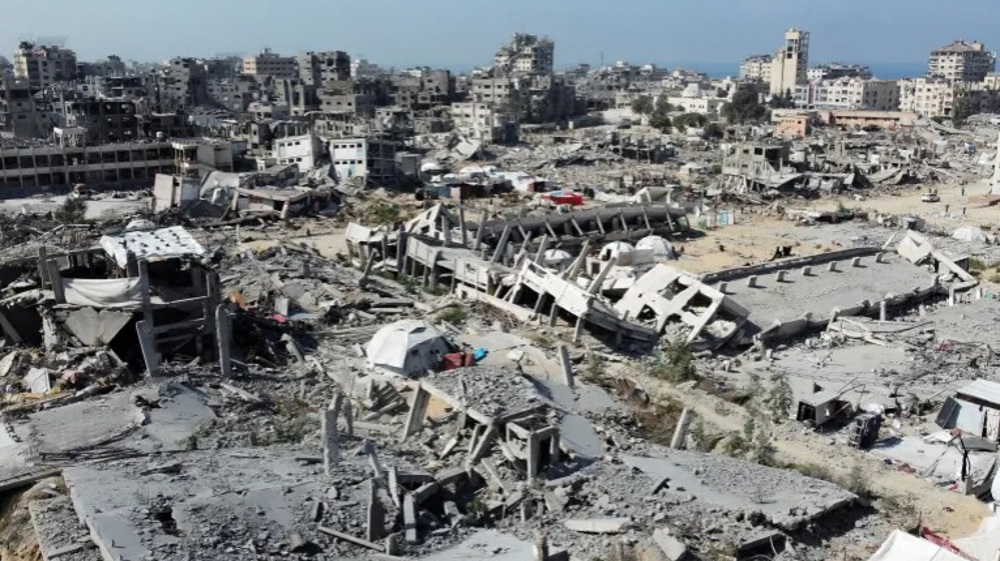
Top Israeli lawmakers have accused their government of laundering massive sums through a shadowy network of US humanitarian and mercenary orgs. The weaponized aid initiative is the linchpin of Israel’s plan to ethnically cleanse northern Gaza by forcing the starving population into concentration camp-like hubs.

Israel’s scheme to commandeer aid distribution in Gaza ended in chaos on May 27, with Israeli soldiers reportedly opening fire on stampeding crowds of hungry Palestinians after just 8000 boxes of rations were handed out by an opaque organization calling itself the Gaza Humanitarian Foundation (GHF).

Founded this February in Switzerland under a cloud of mystery, GHF serves as an umbrella for a network of private mercenary firms which Israel is using to supplant the role of the United Nations in feeding Palestinians after bringing them to the brink of starvation.

At the moment, the public has no idea who is funding the opaque aid boondoggle. A GHF spokesman told the Washington Post “the foundation has already secured $100 million from an undisclosed donor.”

Right-wing Israeli opposition figure and Member of Knesset Avigdor Lieberman proclaimed that GHF’s mysterious financial angel was, in fact, the Israeli government. “The money for humanitarian aid comes from the Mossad and the Ministry of Defense,” Lieberman wrote on Twitter/X, complaining, “Hundreds of millions of dollars at the expense of Israeli citizens.”

Yair Lapid, a Member of Knesset and de facto leader of Israel’s loyal opposition, has accused the Israeli government of funding two “shell companies,” pointing to GHF and the private mercenary firm, Safe Reach Solutions, which was founded by former CIA field operative Phillip Reilly. Two former US officials told the Qatari-owned outlet Middle East Eye that Reilly “had won the trust of Israeli Prime Minister Benjamin Netanyahu and several Israeli businessmen close to him.”

If true, this would mean Israel’s military-intelligence apparatus is effectively laundering massive sums of money through a weaponized aid scheme that forms the linchpin of its plan to ethnically cleanse northern Gaza. A leaked internal GHF document acknowledged that the food distribution centers and residential compounds it was constructing in Gaza could be perceived as “‘concentration camps’ with biometrics.’”

The GHF model appears integral to Israel’s stated plan to occupy 75% of the Gaza Strip, forcing starving and homeless Palestinians into what its military has branded as “humanitarian islands” designed to “divide and rule” the decimated enclave. It is also a clear attempt at replacing UNRWA, the United Nations agency that has tended to the needs of Gaza’s refugee population since 1949, and which the Israeli Knesset designated as a terrorist organization in 2024.

Israel’s “humanitarian island” plan openly aims to “divide and rule” Gaza by preventing its population’s movement

GHF’s creation can be traced directly to the Israeli government’s COGAT office, which presides over the siege of Gaza, as well an Israeli entrepreneur named Liran Tancman, who was described in one report as “a reservist in the IDF’s 8200 signals intelligence unit, who called for using biometric identification systems outside the distribution hubs to vet Palestinian civilians.”

With no legal standing or formal mandate to operate in Gaza, GHF now operates at the pleasure of Israel’s occupation army. But with an endorsement from the Trump administration, and with US mercenary muscle maintaining its dystopian distribution centers, the scheme functions behind an American facade.

Just a day before GHF’s planned roll-out in Gaza, the organization’s CEO, Jake Wood, resigned in protest, condemning the group’s failure to uphold “humanitarian principles of humanity, neutrality, impartiality.” Next, GHF’s COO, David Burke, fled for the emergency exit. David Kohler, a Swiss board member, has also resigned without explanation.

Following their departure, leadership of the murky outfit passed to John Acree, a former USAID administrator who recently accused the President of giving a “free pass” to Russia in a rambling Facebook post lashing out at the “criminal” Trump for defunding his longtime employer.

Even after the situation at GHF’s militarized aid outpost in western Rafah ended in mayhem on May 27, a network of shady mercenary firms including Safe Reach Solutions and UG Solutions have continued to offer high-paying positions to potential guns-for-hire.

A job listing for UG Solutions appeals to “snipers” with “prior experience in combat zones,” the “highest level of weapons proficiencies,” and “advanced combat skills” who could “operate effectively in high-threat environments.” Preference would be given to “Special Forces qualified personnel,” as well as “personnel with OSINT/Intelligence Background.”

UG Solutions’ founder, Jameson Govoni, has described himself as a “degenerate from Boston” who “joined the Army as fast as I possibly could to inflict pain on the people who inflicted pain on us.” He also founded a company called “Alcohol Armor” that markets hangover recovery solutions supposedly based on his expertise in getting wasted. “In the military, we’re hands down the worst drinkers in the fucking world. I’ve had my stomach pumped,” Govoni’s business partner, Glenn Devitt, boasted.

Phillip Reilly, the normally publicity hungry former CIA field operative who founded Safe Reach Solutions (SRS) – a partner of GHF and UG Solutions – has not spoken on the record to any media organization to date about his apparently lucrative exploits in Gaza.

SRS first appeared in Gaza this January, when a collection of middle aged mercenaries portrayed in US media as “suburban dads” established a checkpoint along the Netzarim Corridor, an area severing Gaza’s northern and central regions which the Israeli military has used as a base for abusing and massacring civilians.

An SRS document circulated to potential supporters (see below) appealed for “humanitarian partners” to help transform its checkpoint into “an aid distribution point.” Days later, GHF was founded in Geneva, Switzerland.

[…]

A GHF document distributed to the media in early May listed an array of corporate heavy hitters and former US officials as board members, and boasted of partnerships with financial institutions like Goldman Sachs. Its board included Raisa Sheynberg, a former Treasury Department official who served on the public policy team of Meta’s original Libra cryptocurrency project, and David Beasley, the former South Carolina governor and ex-head of the World Food Program.

The press release pledged that GHF leaders would put “humanity first” as they “pursue pragmatic approaches to intractable problems.”

Among the most notable figures implicated in the GHF scandal is Nate Mook, the former CEO of World Central Kitchen. Named as a board member of GHF, and listed as a founder of the group on its incorporation forms, Mook is now denying any role in the outfit while ducking from the media.

The hidden Chef Jose Andres connection

On the day of GHF’s calamitous launch in southern Gaza, Spanish celebrity chef, World Central Kitchen founder and ex-State Department “culinary ambassador” Jose Andres slammed the boondoggle, writing on X, “The Gaza Humanitarian Foundation has left Palestinians without food. The people that created it are selfish.”

[…]

Chief among those “selfish” figures would be the former CEO of Andres’ World Central Kitchen, Nate Mook. As shown by Israeli journalist Uri Blau, incorporating documents filed with Swiss authorities list Mook as the founder of GHF. He was also named as a board member of the group on the document GHF distributed to the media about its launch. Since the resignation of GHF’s leadership, however, Mook has denied any formal role in the group while refusing to discuss the issue with journalists.

[…]

Andres owes much of his image as a globe-trotting humanitarian hero to a 2022 public relations vehicle packaged as a documentary and humbly entitled, “We Feed People.” The film as directed by Hollywood bigwig Ron Howard and produced by Mook, who worked at the time as the CEO of World Central Kitchen (WCK).

According to his bio at the arms industry-funded McCain Institute, where he currently serves as “Special Advisor on Ukraine,” Mook boasts that he has worked with Andres since 2012, “building WCK from one employee and under $1 million per year to $400 million in global impact in 2022.”

Despite his condemnation of GHF, Andres played an early and important role in the project to subvert Gaza’s humanitarian aid system away from the UN, and into line with Israeli objectives. As The Grayzone reported, Andres oversaw WCK’s effort in 2024 to construct a pier made of the rubble of homes in Gaza, which would have enabled the offloading of aid to kitchens it ran across Gaza in coordination with the Israeli military.

When Spain’s then-Minister for Social Rights, Ione Belarra charged Israel with genocide in Gaza, Andres leapt to the apartheid state’s defense, insisting on Twitter/X that Israel was merely “defending its citizens,” declaring that Belarra did “not deserve to be minister,” and accusing her of “pro-Hamas” sympathies.

All the while, Andres continued to cozy up to US Secretary of State Antony Blinken, who appointed him as a “culinary ambassador” for the Department of State in Feb. 2023. As recently as Sept. 2024, nearly a year into Israel’s genocidal siege of Gaza, Andres was seen partying at a reception at the Metropolitan Museum of Art alongside Blinken, then National Security Council spokesman John Kirby, and corruption-stained New York Mayor Eric Adams.

Less than six months had passed since the American-supplied Israeli military murdered seven WCK employees in a targeted double-tap strike on their aid convoy on April 1, 2024. Yet Andres is still seeking friendly collaboration with Israeli occupation authorities, expressing his thanks to the COGAT siege administrators as recently as this May 28.

[…]

GHF forced out of Switzerland, flees to safer ground in US

This May 29, Swiss officials announced that GHF was violating several laws for foundations registered in that country. The shadowy organization subsequently announced that it is moving its operations to the US, where it is likely to receive less scrutiny from a Trump administration that endorsed its creation.

Though its chaotic launch in Gaza generated international headlines, GHF remains shrouded in mystery, with masked mercenaries manning its operations on the ground, and a cast of corporate lawyers operating behind a series of shell companies whose coffers have filled up with millions of dollars from an unknown source.

[…]

Via https://thegrayzone.substack.com/p/israeli-mossad-named-as-funder-of

Israel and Hamas Agree to Gaza Ceasefire Proposal

Israel and Hamas agree to Gaza ceasefire proposal – media

RT

Israel and Hamas have agreed to accept the latest ceasefire proposal put forward by the US, several media outlets reported on Thursday

Israeli Prime Minister Benjamin Netanyahu has signaled his readiness to accept a roadmap presented by US special envoy Steve Witkoff during a meeting with the relatives of hostages still in Hamas captivity in Gaza.

Arab media later reported that Hamas had also accepted the deal to release the remaining Israeli hostages held in the enclave in exchange for a temporary truce.

Haaretz newspaper quoted an anonymous Israeli official as saying that Washington’s proposal envisages the release of the remaining 10 living hostages and the return of 18 bodies held in Gaza by Hamas over the course of a week. In exchange, Netanyahu’s government would reportedly agree to a 60-day cease-fire.

The Jerusalem Post cited an unnamed source as saying that Hamas has reservations regarding Washington’s plan, and sees it as favoring Israel. The Islamist militant group is reportedly wary of the fact that the US would not provide a guarantee that the temporary 60-day ceasefire would be extended to become permanent.

The latest developments have come amid an intensified Israeli assault on Gaza in recent days, including a fresh wave of airstrikes and a major ground offensive codenamed ‘Operation Gideon’s Chariots.’

Netanyahu has repeatedly insisted that the military action will not cease until Hamas has been totally vanquished.

Mediated by Qatar, Egypt, and the US, negotiations between the two belligerents have been going on for some time in Doha, albeit producing little progress so far.

The current escalation began in October 2023, when Hamas launched a surprise attack on Israel, killing around 1,200 people and abducting 250 more. According to Palestinian authorities, the ensuing IDF military campaign has claimed the lives of more than 50,000 residents of the densely populated enclave.

[…]

Via https://www.rt.com/news/618331-netanyahu-accepts-witkoff-gaza-ceasefire-proposal/

Trump’s Tariffs Reinstated

Trump’s tariffs reinstated

RT

A US federal appeals court has temporarily reinstated President Donald Trump’s global tariffs, halting an earlier ruling that had blocked the import duties and found that the White House had exceeded its authority.

On Thursday, the US Court of Appeals for the Federal Circuit granted an immediate administrative stay, suspending the permanent injunctions issued a day earlier by the US Court of International Trade. The tariffs will remain in place at least until June 9.

”The plaintiffs-appellees are directed to respond to the United States’s motions for a stay no later than June 5, 2025,” the appellate court said. “The United States may file a single, consolidated reply in support no later than June 9, 2025.”

The trade court ruled on Wednesday that Trump had overreached in its interpretation of the International Emergency Economic Powers Act (IEEPA), saying the administration had sidestepped Congress by invoking such powers to impose the tariffs.

In April, Trump imposed a baseline 10% tariff on all imported goods, with higher rates for China, Mexico, Canada, and the EU member states, citing trade imbalances. Some of those duties have since been paused amid ongoing negotiations.

The White House swiftly appealed Wednesday’s ruling. Press Secretary Karoline Leavitt said the administration was confident of a legal victory and determined to “tackle rogue judges.”

Peter Navarro, one of Trump’s top advisers, told reporters on Thursday that the White House was prepared to escalate the fight to the Supreme Court if needed.

”You can assume that even if we lose, we will do it another way,” he said. “And I can assure the American people that the Trump tariff agenda is alive, well, and healthy and will be implemented to protect you.”

Wednesday’s ruling does not affect tariffs that Trump has imposed under other laws, including Section 232 of the Trade Expansion Act of 1962, which underpins his 25% duties on foreign autos, steel, and aluminum.

The president also retains the authority under Section 122 of the Trade Act of 1974 to impose tariffs of up to 15% for 150 days on nations with which the US runs a large trade deficit.

[…]

Via https://www.rt.com/business/618336-trump-global-tariffs-reinstated/

Russian MP Lays Out Terms for YouTube’s Return

Russian MP lays out terms for YouTube’s return

RT

YouTube can only resume full operations in Russia if it fulfills a series of legal and technical conditions, State Duma member Anton Nemkin has told RIA Novosti.

Although not officially blocked, YouTube has been largely inaccessible in Russia since last year, when its loading speed began slow dramatically. Authorities blamed a lack of server maintenance following Google’s exit from the country in 2022. Later, officials partially confirmed the slowdown was also linked to YouTube’s failure to comply with Russian law.

Nemkin said on Friday that YouTube needed to deal with abandoned equipment, settle outstanding fines, and establish a legal entity in Russia before the platform’s functionality in the country can be fully restored.

The MP also called on YouTube to restore access to blocked Russian accounts. The platform has removed some media outlets, including RT and Sputnik, and has repeatedly taken down channels run by Russian bloggers, journalists, and artists. Moscow says the removals target content that reflects views diverging from those prevalent in the West.

“Without these steps, it’s impossible to speak of any ‘easing’ – this is not about politics, but legal compliance,” Nemkin said.

In March, it was reported that Russian-registered Google LLC owed national broadcasters $1.16 quintillion in fines for failing to restore their YouTube channels. In January, RBK said the international Google corporation owed more than $22 undecillion. The Kremlin described the figures as symbolic, intended to pressure the company into complying with Russian law.

Nemkin said dialogue with global platforms such as YouTube could only happen on Russia’s terms. “This is not about bans for the sake of bans, but about equal rights,” he said, adding that companies must comply with local laws, pay taxes, and store user data in Russia.

The lawmaker called for an end to the era of unchecked power for major IT companies. If foreign platforms are restored, “there is no going back to the old dependence.”

“We’ve learned a harsh but valuable lesson: we cannot build our digital future on platforms that can flip the switch at any moment,” he said, adding that YouTube should no longer serve as the foundation of Russia’s internet landscape.

Nemkin pointed out that Russia is now developing its own infrastructure – search engines, cloud storage, video hosting, and ad systems – in support of its “digital sovereignty.”

[…]

Via https://www.rt.com/russia/618354-russia-youtube-return-terms/

Tent City USA

Tent City USA

Directed by Aleksey Braznikov 2014

Film Review

In 2014 when this film was made, Lakewood New Jersey’s Tent City was 7 years old and one of the largest on the East Coast. Although most of its residents worked full time, their incomes were too high to qualify for either welfare or subsidized housing (most qualified for $50 in food stamps). One of their residents was a textiles manager for 30 years before her job was outsourced to China.

The tent city was run by a minister who quit his full time (and became homeless himself) to run the Tent City and distribute food and second clothing to poor communities throughout Lakewood. Another homeless man who lived in his car used his VA pension check to pick up free unsold pizzas from pizza restaurants and free nearly expired groceries from supermarkets.

After years of harassment (with the police giving residents tickets for using their wood stoves), in 2010 the city of Lakewood sued the homeless people in Tent City. The latter found a law firm who donated $1 million in pro bono services defending them. In a settlement, the city agreed to a consent order providing one year subsidized housing for everyone in Tent City. The social services worker who places most of them says his agency is trying to teach them to mobilize to meet their own needs. After a year if they can’ organize their own housing they will be out on the street again.

This clearly doesn’t address the problem faced by Tent City residents who already have full time jobs.

The filmmakers follow several Tent City residents into their new accommodations. One woman nearly loses hers when she can’t get a bank account to deposit her Social Security check. For some reason, the Social Security Administration refuses to replace her lost Social Security card.

The Tent City camp is allowed to stay open for a year in case former residents lose their housing. Many former Tent City residents return to Tent City for food because their food stamp allowance is inadequate to purchase three meals a day.


Trump Fires 100 National Security Council Members After Rice’s Comments Expose Deep State Rats

By  Anne Stossel

President Donald Trump sent shockwaves through Washington last Friday, firing 100 National Security Council (NSC) members in a bold move that underscores his unrelenting battle against the so-called “deep state.” The purge came after former Obama-era National Security Advisor Susan Rice appeared on MSNBC, spilling details of Trump’s classified intelligence briefings—details she shouldn’t have had access to, given her revoked security clearance and departure from government months ago. For Trump and his loyalists, this was the final straw, exposing a nest of disloyal bureaucrats within the NSC who were feeding sensitive information to the wrong hands.

The drama unfolded when Rice, a longtime Trump critic, casually revealed on air that she now receives weekly updates on NSC activities, a bombshell that confirmed the president’s long-held suspicions of internal sabotage. A White House official, speaking anonymously, told Amuse that Trump realized the NSC was a sieve, leaking his briefings to the media through Rice, who “basically ran Biden’s White House” during her tenure. The president acted swiftly, axing as many as 100 council members in what some are calling the most significant housecleaning of his second term.

This isn’t Trump’s first rodeo with the NSC. Earlier this year, in April, he sent 160 nonpolitical detailees back to their home agencies, aiming to realign the council with his America First agenda. The NSC, once bloated with 395 staffers during his first term, has been a thorn in Trump’s side for years, often packed with careerists who resisted his policies. Secretary of State Marco Rubio, who has doubled as acting national security adviser since Mike Waltz’s departure, has been instrumental in this overhaul, shrinking the council’s size and shifting power to the State and Defense departments. Rubio’s influence, backed by Trump’s trust, has been key to rooting out what the administration sees as entrenched opposition.

[…]

Via https://redstatenation.com/trump-fired-100-nsc-members-last-week-after-susan-rices-comments-exposed-the-deep-state-rats/

After Backlash, White House Prepares Appropriations Bill to Codify some DOGE Cuts

https://cms.zerohedge.com/s3/files/inline-images/2025-05-28_13-16-13.png?itok=xzuleHNl

An online pressure campaign aimed at “codifying” the DOGE cuts is taking shape. The number of X posts mentioning “codifying” has jumped from around 1,000 five days ago to 25,000 on Tuesday.

RT

The big question in recent weeks: Why are House Republicans hesitating to codify the waste and fraud identified by Elon Musk’s Department of Government Efficiency (DOGE) into law?

Musk’s CBS News interview on Tuesday, where he called the “Big, Beautiful Bill” (BBB) a “disappointment,” appears to have kicked off a broader information campaign aimed at pressuring the White House to push House Republicans toward formally codifying some DOGE-related spending cuts.

By Wednesday afternoon, Politico reported, citing two anonymous Republican sources, that the White House plans to send a rescissions bill (appropriations bill) to Congress next week to formally propose the spending cuts.

The package is expected to target funding for NPR, PBS, and certain foreign aid agencies previously reduced under President Trump.

Here’s more from the report:

The package set to land on Capitol Hill is expected to reflect only a fraction of the DOGE cuts, which have already fallen far short of Musk’s multi-trillion-dollar aspirations. The two Republicans said it will target NPR and PBS, as well as foreign aid agencies that have already been gutted by President Donald Trump’s administration.

House Speaker Mike Johnson stated that the House is “eager and ready” to act on the DOGE findings, while Senate Majority Leader John Thune and others voiced frustration over the delay.

A growing online campaign, led by supporters of Musk, including Sen. Mike Lee and Gov. Ron DeSantis, is pressuring the administration to codify more of the DOGE cuts.

Sen. Ron Johnson blamed House Republicans. However, the path forward remains uncertain due to the opposition of 26 Senate Republicans.

[…]

Via https://www.zerohedge.com/political/musk-disappointed-trumps-big-beautiful-bill-doge-pushes-ahead-spending-cuts