Retired child and adolescent psychiatrist and American expatriate in New Zealand. In 2002, I made the difficult decision to close my 25-year Seattle practice after 15 years of covert FBI harassment. I describe the unrelenting phone harassment, illegal break-ins and six attempts on my life in my 2010 book The Most Revolutionary Act: Memoir of an American Refugee.
Strait of Hormuz, situated at the mouth of the Persian Gulf, is one of the most critical chokepoints in global trade. (File photo)
Press TV
In a decisive response to the US aggression against Iran’s peaceful nuclear facilities, the Iranian parliament has voted to close the strategically vital Strait of Hormuz.
A senior Iranian lawmaker, Esmaeil Kowsari, said on Sunday that the Majlis (Iranian parliament) has agreed to close the key artery for global energy trade in response to the American aggression and the silence of the international community.
Kowsari, a member of the parliament’s committee on national security and foreign policy, said lawmakers have reached a consensus on the closure of the strait, though the final decision rests with Iran’s Supreme National Security Council.
“The parliament has come to the conclusion that it should close the Hormuz Strait, but the final decision lies with the Supreme National Security Council,” Kowsari stated.
The Strait of Hormuz, situated at the mouth of the Persian Gulf, is one of the most critical chokepoints in global trade, with roughly 20 percent of the world’s oil passing through it.
According to various estimates, roughly 20 percent of the world’s oil, about 17 to 18 million barrels per day, passes through the Strait of Hormuz, making it important for global energy.
The narrow strait also sees the transit of a significant amount of liquefied natural gas (LNG), especially from Qatar, which is one of the world’s top LNG exporters.
Strait of Hormuz is the only sea route that connects the Persian Gulf to the open ocean and is home to major oil producers such as Iran, Saudi Arabia, Iraq, Kuwait, and the UAE.
Experts have long warned that any disruption or closure of the strait can lead to immediate and major spikes in global oil prices and disturb the global energy security.
Before the US launched aggression against the Islamic Republic’s nuclear facilities early on Sunday, experts had warned about the likelihood of the ongoing war imposed on Iran extending to the sea.
Speaking to Press TV last week, strategic experts said the direct American military intervention will prove costly for the US and the Donald Trump administration, especially if the Strait of Hormuz is closed.
Most multi-national corporations around the world would shut down within days as energy supplies necessary to keep them running would run out, they warned.
According to some forecasts, oil prices are likely to jump 80 percent in the very first week if the Strait of Hormuz is closed, as alternative routes would incur heavy costs.
A collection of academic essays, this book challenges conventional assumptions about the English Civil War (1642-51). The authors seem to agree that the war, in which Parliament replaced King Charles I with senior parliamentary army commander Oliver Cromwell, was really a bourgeois revolution rather than a civil war. It paralleled similar bourgeois civil revolutions during Europe’s 30 Years War (1618-1648), yet was the only one to succeed in toppling the hereditary monarch.
These essays also challenge common assumptions about the causes of England’s civil war. The Western educational system tends to blame Charles I’s religious (Catholic-influenced) conservatism at loggerheads with a Puritan parliament
The facts point to just the opposite: a conservative parliament resisting Charles I’s economic, political and religious innovations. As the leading figurehead for the emerging Arminian religious tradition, Charles I rejected the Calvinist doctrine of predestination common to both the Church of England and the Puritans.*
A severe economic downturn aggravated the king’s longstanding battle with parliament. England first experienced runaway inflation under the Tudor monarchs. Although Henry the VIII was able to compensate for rising food and governmental costs by confiscating monasteries, Elizabeth I left a debt of £500,000. By the time Charles assumed the throne in 1600, the royal debt had increased to £900,000. Because of this massive indebtedness, Charles I was totally unable to borrow money from the conventional banking/merchant sources** and had to rely on Parliament to raise taxes in 1642 for to fight both an impending Scottish invasion and an Irish rebellion.
For me the most interesting part of the book related to Charles’ efforts to enforce anti-enclosure laws against nobles who expelled peasant farmers from the common lands they had farmed for generations. Charles I had a remarkable enthusiasm for improving the condition of the poor (which didn’t endear him to the gentry and merchants who controlled parliament). He rigorously enforced an Elizabethan law that prosecuted landowners for unapproved enclosures.
Although landowners found guilty of illegal enclosures paid a fine, the king was ultimately powerless to reverse the enclosures.
*The Arminians believed that salvation wasn’t preordained at birth but determined by the moral quality of a believer’s life.
**Charles I’s predicament was aggravated by a steep decline in trade due to the Thirty Years War
An official in the administration of President Donald Trump has told The Grayzone that CIA Director John Ratcliffe and US CENTCOM Commander Gen. Michael Kurilla have become vehicles for Israel’s Mossad and military as they seek to manipulate the US into attacking Iran. The official referred to Ratcliffe as “Mossad’s stenographer.”
According to the official, Ratcliffe and Kurilla have pressured Trump to join Israel’s war more directly by regurgitating overblown briefings they received from the Israeli military and Mossad director David Barnea – but without informing the president they the intelligence derived from a foreign third party.
During the Trump administration’s meetings with Israeli intelligence officials including Barnea, the official said the Israelis have demonstrated a single-minded focus on regime change, clamoring for authorization to assassinate Iran’s leader, Ayatollah Ali Khamenei. The official have emphasized that the moment to take out Khamenei is now.
The issue of Iran’s nuclear enrichment capacity is of secondary concern in the Israelis’ presentations, which the official characterized as tactless, hyper-aggressive exercises in fear-mongering. At one point, the Trump official recalled, an Israeli intelligence briefer declared that Iran could transfer a nuclear weapon to Yemen’s Houthi militia in less than a week.
According to the official, Trump’s lead negotiator with Iran, Steve Witkoff, has been pushing the president to preserve the diplomatic track. However, an Israeli assassination of Khamanei would almost certainly be the nail in the coffin of nuclear negotiations – which is precisely why the Israelis seem so determined to do it.
If the US enters the war by attacking Iran, the official fears that Iran will activate IRGC-backed Popular Mobilization Units to attack US troops and bases in Iraq and Syria, leading to American casualties and triggering escalation well beyond the initial scope of Iran’s nuclear program.
Having launched a damaging war of attrition with Iran, Tel Aviv is deploying every mechanism at its disposal to compel the US to lurch headlong into the conflict it initiated, but which it can not finish on its own.
Inside the Trump administration, the source told The Grayzone that top officials who have questioned the logic of attacking Iran such as Director of Intelligence Tulsi Gabbard and her deputy, former CIA officer and director for the National Counter-Terrorism Center Joe Kent, have been excluded from meetings by White House Chief of Staff Suzie Wiles.
Taking the lead in briefing the president is a highly suggestible CIA director whom Israel has groomed since he first entered Congress.
AIPAC director boasts of influence over Ratcliffe
This April, The Grayzone released exclusive audio of remarks by AIPAC CEO Elliot Brandt to an off-the-record Israel lobby session in Washington DC. Boasting of his organization’s success in recruiting members of Congress, he described CIA Director John Ratcliffe as a “lifeline” inside the administration.
“You know that one of the first candidates I ever met with as an AIPAC professional in my job when he was a candidate for Congress was a guy named John Ratcliffe,” Brandt recalled. “He was challenging a long time member of Congress in Dallas. I said, this guy looks like he could win the race, and, we go talk to him. He had a good understanding of issues, and a couple of weeks ago, he took the oath as the CIA director, for crying out loud. This is a guy that we had a chance to speak to, so there are, there are a lot – I wouldn’t call them lifelines, but there are lifelines in there.”
Besides Ratcliffe, AIPAC CEO Elliott Brandt also named Marco Rubio and Mike Waltz, two former Republican congressmen cultivated by AIPAC in advance of their appointment to key national security positions in the Trump administration.
“They all have relationships with key AIPAC leaders from their communities,” said the AIPAC CEO. “So the lines of communication are good should there be something questionable or curious, and we need access on the conversation.”
This May, Waltz was outed by colleagues for secretly coordinating with Israeli Prime Minister Benjamin Netanyahu to orchestrate a US attack on Iran, costing him his job as National Security Council director. Secretary of State Rubio assumed the role of acting National Security Director, granting him control over more cabinet level positions than any US official since Henry Kissinger. Meanwhile, Ratcliffe quickly emerged as the key channel of Israeli influence in the administration.
The CIA director has come a long way since entering politics as the mayor of a backwater Texas town with a population of 7000.
A small town Texas mayor becomes big time Israeli asset
With no experience in the US military or intelligence, Ratcliffe spent the early part of his political career as mayor of Heath, a small town outside of Dallas, which was broken by a year-long stint as a US Attorney between 2007-08. He entered Congress in 2014, and emerged two years later as one of Trump’s fiercest attack dogs on the Judiciary Committee. The backbencher also served on the House Intelligence Committee.
Trump rewarded Ratcliffe’s loyalty by nominating him as Director of National Intelligence in 2019, but quickly withdrew the nomination after Ratcliffe was exposed for lying about his role in several federal terrorism cases.
His most absurd embellishment was on the prosecution of the directors of the Dallas-based Holy Land Foundation, in which he boasted that “he convicted individuals who were funneling money to Hamas behind the front of a charitable organization.” In fact, Ratcliffe played no discernible role in the case at all, prompting several Republican senators to withdraw support for his nomination when the lie came to light.
It is notable nonetheless that Ratcliffe sought credit for taking down the Holy Land Foundation, as the case was one of the most politicized and legally dubious prosecutions of the Bush-era “war on terror,” leading to life sentences for Palestinian American defendants whose only crime was sending charitable donations to organizations in the Israeli-occupied Gaza Strip which were not on any government watchlist, and which also received support from the International Committee of the Red Cross and USAID. What’s more, the case was heavily influenced by Israeli intelligence.
Following a mistrial that proved embarrassing for the US government, Israel’s Mossad dispatched an agent to Texas to testify against the Holy Land directors. The judge allowed the agent to testify in secret, with the courtroom cleared, and under an assumed identity as “Avi.” The agent proceeded to brandish a series of questionable documents that supposedly proved the Holy Land Foundation was set up as the nexus of a vast terrorist financing network that had enabled several suicide bombings by Hamas.
While Ratcliffe’s fantastical claims about his role in the case tanked his nomination in 2019, Trump successfully installed him as DNI the following year, paving the way for his nomination as CIA director upon Trump’s re-election.
Chief of Staff Suzie Wiles isolates Trump with “Israel’s favorite general”
The Trump official told The Grayzone that White House Chief of Staff Suzie Wiles has ensured that the president remains surrounded by Ratcliffe and Gen. Michael Kurilla in briefings related to Iran.
Ratcliffe is said to take dictation from the Mossad and read the documents they’ve prepared to the president without any sense of critical detachment, or disclose that the assessments came from a foreign liaison rather than US intelligence.
Then there is Gen. Kurilla, who appears singularly focused in meetings with Trump on making the case for a US attack on Iran. In 2024, the pro-Netanyahu Israeli outlet Israel Hayon described Kurilla as “a vital asset to Israel.” The UK’s Telegraph referred to Kurilla this June as “Israel’s favorite general.”
Former Pentagon officials have even speculated that Israel’s decision to launch an unprovoked surprise attack on Iran this June 13 was partially influenced by Kurilla’s looming retirement in July, as Tel Aviv did not want to go to war without him present at CENTCOM.
The Trump official told The Grayzone that Wiles has excluded Trump’s Director of National Intelligence, Tulsi Gabbard, from crucial meetings where US intervention in Iran was discussed. That included a June 8 meeting at Camp David where Ratcliffe used a clumsy sports metaphor to insist that Iran was just days away from producing a nuclear weapon: “It’s like saying a football team marched 99 yards down the field, got to the one yard line and, oh, they don’t have the intention to score,” he argued to Trump.
Two days later, Gabbard released a social media video invoking the American military’s destruction of the Japanese city of Hiroshima with a nuclear bomb in 1945, and warned that a similar horror could soon unfold because “political elite warmongers are carelessly fomenting fear and tensions between nuclear powers.”
Trump was reportedly infuriated by her comments. Asked by a reporter about Gabbard’s testimony this March that Iran had not restarted its nuclear weapons program, Trump grumbled, “I don’t care what she said,” then echoed Ratcliffe’s view – and by extension, that of the Israelis: “I think they were very close to having [a nuclear weapon].”
This may explain why Gabbard released a June 20 statement on Twitter/X insisting that her views on Iran’s nuclear enrichment were faithfully aligned with Trump’s, and had been distorted by a “dishonest media” seeking to “manufacture division.” Though the statement reaffirmed her commitment to President Trump, her assessment of Iran’s nuclear program did not differ from the evaluation she delivered in March, which determined Iran was not currently pursuing a nuclear bomb,
“America has intelligence that Iran is at the point that it can produce a nuclear weapon within weeks to months,” Gabbard claimed on Twitter/X, “if they decide to finalize the assembly.”
According to the Trump official, Chief of Staff Wiles has also excluded Secretary of Defense Pete Hegseth from meetings on Iran, relying instead on Kurilla to represent the US military.
Vice President JD Vance has held a parallel series of meetings on Iran, the official said. In contrast to those controlled by Wiles, Vance has encouraged robust debate and included diverse perspectives. In public, however, Vance is constrained by the obligation to demonstrate loyalty to Trump.
For his part, Trump’s views are said to be shaped by constant exposure to Fox News, which has transformed in the past two weeks into a 24/7 commercial for war on Iran. Fox News’ coverage has become so transparently influenced by Israel’s propaganda mechanism that Steve Bannon, the former White House chief of staff and intellectual architect of the America First movement, called for a Foreign Agents Registration Act investigation of the network.
In a statement posted on his verified Twitter account, Macgregor warned, “Don’t be fooled, Israel is in worse shape than people think.”
Retired U.S. Army Colonel Douglas Macgregor has sparked global attention with a stark assessment of Israel’s current situation in the ongoing conflict, claiming the nation is facing far greater damage than publicly acknowledged.
Recall that The DEFENDER has continued to reference Israel’s order banning the media from reporting exact impact of the Iran’s retaliatory attacks on its territory especially the military sites.
Earlier on Saturday June 21, 2025, this Pan-Africanist global online newspaper reported, citing agencies, that United States President Donald Trump said “it’s very difficult to stop Israel from bombing Iran while winning”.
But in a statement posted on his verified Twitter account, Macgregor warned, “Don’t be fooled, Israel is in worse shape than people think.”
According to the former senior Pentagon advisor, approximately one-third of Tel Aviv has been “damaged or destroyed,” a figure that—if confirmed—would mark a significant escalation in the toll the conflict has taken on Israeli infrastructure.
This is as more world leaders including Iran itself, Russia, China, Saudi Arabia, Pakistan and even a former Am Nigerian Aviation Minister Femi Fani-Kayode keep asking US to let Israel fight its battle it started by itself.
Tel Aviv, often regarded as Israel’s commercial and cultural capital, has not been widely reported as a central target in recent weeks, making Macgregor’s statement particularly alarming.
The retired colonel also suggested that Israeli military preparedness has been significantly undermined.
“As far as their military installations are concerned, I’m told many Israeli aircrafts are being flown to Cyprus to avoid being struck,” Macgregor said, implying that the Israeli Air Force is repositioning assets out of concern for further Iranian strikes.
“Israel was not prepared for Iran’s response,” he concluded, suggesting that the scale and precision of Tehran’s retaliatory attacks caught the Israeli military establishment off guard.
Macgregor’s post has reignited debates online about the transparency of war reporting and the real extent of the conflict’s impact.
While Israeli authorities have not confirmed the extent of damage suggested, his comments are likely to raise questions about the effectiveness of Israel’s defense systems and the broader strategic outlook of the conflict.
Also, The Tradesman, @The_Tradesman1 on X, reported “Retired U.S. Army Colonel Douglas Macgregor stated that mainstream media reports about Iran’s instability are false, asserting that Iran is not on the verge of collapse or internal revolt. He compared current narratives about Iran to past claims about Russia’s downfall in 2022. Macgregor warned that Israel is facing serious danger and predicted that although the U.S. military may participate in strikes against Iran, such actions will not achieve their intended goals.”
The Islamic Republic is home to a longstanding Jewish community.
Iran is an Islamic state known for its hostility to Israel. The country is also home to a longstanding Jewish community, with at least a dozen active synagogues in the capital city of Tehran, mikvahs, kosher butchers, a Jewish library, and even a Jewish newspaper.
As Israel and Iran exchange missile attacks, what explains this contradiction between seemingly robust Iranian Jewish life and the mass exodus of Jews from the country after 1979? Lior Sternfeld, associate professor of history and Jewish studies at Penn State University, and author of Between Iran and Zion: Jewish Histories of Twentieth-Century Iran, explains.
How many Jews live in Iran, and what rights do they have?
Estimates range from 9,000 to 20,000 Jews currently living in Iran. According to Sternfeld, the most credible approximation is 15,000, which is the number most Jews living in Iran cite. More than half of the Jewish population lives in Tehran, with the second most in the city of Shiraz.
Forwarding the News
Thoughtful, balanced reporting from the Forward and around the web, bringing you updated news and analysis each day.
Jews in Iran enjoy a sizable number of Jewish cultural and religious institutions and can practice their religion freely, Sternfeld said.
Jews even have required governmental representation. The Iranian Parliament, or the Majles, has a reserved seat for a Jewish member enshrined in the constitution, alongside reserved seats for other religious minorities: two seats for Armenians, one for Zoroastrians, and one for Assyrians. The current Jewish representative is Homayoun Sameh, who was elected in 2020.
Still, as with other lawmakers, there are limits on how freely the Jewish representative can critique the government.
“Practicing religion is not a problem. Iranian Jews have a harder time practicing other civil rights that are more connected to the political situation than religious freedoms,” Sternfeld said.
Iran also enforces Sharia law, which treats Muslims and non-Muslims differently in civil and legal matters. Non-Muslims in Iran cannot hold senior government roles, serve as military commanders or work as judges. The testimony of a Jew in court does not carry the same weight as that of a Muslim, and there are different penalties for murder depending on the religion of the perpetrator and victim.
Sternfeld emphasized that these limitations are not necessarily specifically targeted at Jews, but rather all non-Muslims.
“It’s not just Jews being singled out,” he said. “It’s all recognized religious minorities.”
Iranian Jews are allowed to travel abroad, though technically not to Israel — Iranian passports bear the message that “the holder of this passport is not entitled to travel to occupied Palestine.” Many visit Israel anyway via third countries such as Turkey.
So why do Jews in Iran stay? According to Sternfeld, many Iranian Jews feel deeply rooted in the country, with family ties stretching back thousands of years.
“Iranian Jews are Iranians, right? This is their home,” Sternfeld said. “They can leave if they want. They choose to be there.”
From King Ahasuerus to the Ayatollah
Jews have a long history in Persia, dating back to biblical times. Most notably, the story of Purim is set in Persia, with King Ahasuerus ruling over the Persian Empire — and deciding not to issue a decree to kill all his Jewish subjects after Queen Esther saved the day.
Modern times have had their own share of dramatic turns for Persian Jews, if not quite as storybook. The Pahlavi dynasty, beginning in 1925, marked a golden age for the Jews of Persia. Reza Shah Pahlavi prohibited the mass conversion of Jews to Islam, allowed Jews to hold government jobs, and permitted Hebrew to be taught in Jewish schools. The Shah even prayed in a synagogue he visited in the Jewish community of Isfahan, which many interpreted as a symbolic gesture of solidarity. Pahlavi also declared in 1935 that Persia would be henceforth known as Iran — the name its citizens had long used internally.
In 1948, Iran had a Jewish population of about 150,000 people. After the founding of Israel, many Jews left to make aliyah. According to Sternfeld, around 20,000 Jews left Iran between 1948 and 1953 — primarily from the poorest segments of society — drawn by the economic opportunities that Israel offered.
In 1953, a U.S.-backed coup overthrew Iranian Prime Minister Mohammad Mosaddegh, enabling Shah Mohammad Reza Pahlavi to consolidate power. Over time, resentment grew over the Shah’s tightening grip and his perceived alignment with Western powers.
These tensions culminated in the 1979 Iranian Revolution, which toppled the Shah and led to the establishment of the Islamic Republic of Iran under Ayatollah Ruhollah Khomeini.
Khomeini issued a fatwa, or legal decree, in 1979 declaring protection for Iran’s Jewish community. He forbade attacks against Iran’s Jews, drawing a distinction between them and what he called “godless, bloodsucking Zionists.”
Iran’s Jews continued to flee, fearing instability and Islamic takeover. The 1979 execution of Habib Elghanian, a prominent Iranian Jewish businessperson, on charges that included “contacts with Israel and Zionism,” further entrenched fears that Jews would be targeted. An estimated 60,000 Iranian Jews left the country in the decade that followed.
Still, according to Sternfeld, antisemitism wasn’t Jews’ only motive for fleeing.
“This time, they didn’t immigrate as Jews. They immigrated as Iranians,” Sternfeld said. “They moved because of the chaos, because of the political instability, because of fears of what the new revolutionary government might do — fears that were infused by the Iran-Iraq War. So there were many factors that played a role in it.”
Today, the vast majority of Iranian Jews reside in Israel or the United States, with the largest U.S. community living in Los Angeles.
How do Jews living in Iran feel about the current conflict?
Following Israel’s recent airstrikes on Iran, Homayoun Sameh — the sole Jewish representative in Iran’s parliament — told state-run media that the attacks on Iran proved the Jewish state to be a “savage, child-killing regime.” He urged Iran to respond in a manner that would be “unforgettable.”
Other Jewish leaders in Iran also issued statements. “The Zionists’ brutality, which is far from any human morality and has caused the martyrdom of a number of our beloved compatriots, including innocent children, has hurt all of our hearts,” the Jewish Association and Community of Isfahan told state-run media.
But according to Sternfeld, it’s difficult to say how Iranian Jews truly feel about the conflict, given fears of retaliation for open support of Israel. Most likely, he said, opinions vary.
“We shouldn’t assume that they would automatically support Israel if they could,” he said.
What is clear, Sternfeld said, is growing fear among Iranian Jews — both of escalating antisemitism and of further bombings.
“It’s just overwhelming,” he said. “They are terrified.”
The rapidly escalating war between Iran and Israel has catapulted the Persian Gulf states into a vortex of geopolitical peril. Situated on strategic terrain and hosting a dense network of US military installations, these states are acutely aware that any US decision to join the warfront will obliterate their already-fragile neutrality. Their territories would then morph into frontline targets.
As the US-backed Israeli war on Iran escalates, the Persian Gulf monarchies are attempting a delicate balancing act – preserving security, safeguarding energy exports, and sidestepping an open-ended war that could raze vital sectors like aviation and desalination. Yet, they remain ensnared in a tightening web of regional alignments and strategic dependencies that leave little room for maneuver.
Diplomatic overtures amid firestorms
In the immediate aftermath of Tel Aviv’s 13 June strike on Iranian nuclear and military sites, Gulf capitals scrambled to project a posture of de-escalation. Saudi Arabia launched a flurry of diplomatic engagements with European and regional capitals – from Berlin and Brussels to Amman and Baghdad – urging restraint.
Qatar followed suit with calls to Ankara, Rome, and Ottawa, while the UAE coordinated with Paris, Islamabad, and Budapest. Even traditionally passive Kuwait and neutral Oman sought Turkiye’s assistance to cool regional temperatures.
A joint declaration from 20 Arab and Islamic states, including all six Gulf Cooperation Council (GCC) members, denounced any targeting of nuclear facilities and reiterated calls for a denuclearized region. Symbolic gestures followed: The UAE waived visa fines for Iranian residents, and Riyadh expedited the return of Iranian pilgrims.
Yet, the most forceful regional voice came from Qatar’s former prime minister, Hamad bin Jassim, who warned that Iran’s collapse would unleash uncontainable chaos. He urged Persian Gulf rulers to pressure Washington to “immediately halt the Israeli madness” and prevent the region from descending into full-scale war.
The ticking time bomb of US bases
The US military footprint across the Persian Gulf is both a deterrent and a provocation. Qatar, the only Gulf ally outside NATO, hosts the largest US outposts in the region at Al-Udeid and Al-Sailiya, which sit within 300 kilometers of Iran – well inside the range of even Iran’s older missile systems. Kuwait hosts four key US bases; the UAE, three; Saudi Arabia, Bahrain, and Oman each provide critical logistics and air-defense support.
While Gulf states retain legal rights to veto offensive operations from these bases, that sovereignty is largely theoretical if Washington chooses escalation. Iranian officials have already made clear that any platform used in aggression will be considered a legitimate retaliatory target. Should US airstrikes be launched from Gulf soil, none of these monarchies will escape the fallout.
Aviation paralysis and economic tremors
As tensions spiked, the region’s air corridors began to shut down. Flights over Iran, Iraq, Lebanon, and Syria were rerouted, suspended, or cancelled altogether. Emirates and Qatar Airways scrapped dozens of flights, while Dubai International Airport suffered cascading delays.
Rerouting costs surged. Fuel expenses soared. Passenger volumes fell. The financial hit was immediate: Air Arabia shares plummeted 10 percent – the sharpest drop since the 2008 financial crisis.
Energy chokepoints under threat
Iran holds the world’s second-largest natural gas and third-largest oil reserves. A single Israeli raid on a South Pars gas platform – connected to Qatar’s vital North Field – sent oil prices surging over 10 percent. If conflict continues, prices are projected to breach $100 per barrel.
That attack, despite sparing Qatari installations, jolted global energy markets and undermined confidence in the Gulf’s reliability as an exporter. The GCC faces a conundrum: While higher oil prices temporarily boost revenue, the specter of interrupted supply chains and targeted infrastructure poses an existential threat to their energy-based economies. Even brief closures of shipping lanes or disruptions at refineries could cause catastrophic economic blowback.
Straits on the brink
The Strait of Hormuz is the region’s jugular vein – 20 percent of the world’s liquefied natural gas passes through its narrow waters daily. Iran has repeatedly warned that it may close the strait if attacked. Such a move would cripple the exports of Kuwait, Qatar, and Bahrain, which lack meaningful alternative routes.
Even Saudi Arabia and the UAE, with backup pipelines to the Red Sea and Arabian Sea, cannot fully offset Hormuz’s strategic stranglehold. Further south, the Bab al-Mandab Strait – already disrupted by Yemeni military operations against Israeli shipping – saw daily oil transit fall from 8.7 million barrels in 2023 to four million in 2024.
Any simultaneous closure of both straits would spell catastrophe: The removal of over 60 percent of Gulf oil from global markets, pushing prices well beyond $200 per barrel.
A nuclear and cyber crossfire
Another silent peril looms: radioactive fallout. Iran’s nuclear facilities, located near Persian Gulf waters, pose a significant environmental risk. A leak triggered by Israeli strikes or sabotage could devastate marine ecosystems and render desalinated water undrinkable – an existential crisis for Qatar, Kuwait, and the UAE, which rely almost entirely on seawater for drinking.
Kuwait lies just 250 kilometers from the closest Iranian reactor, with Gulf currents flowing from Iranian shores. Yet, no comprehensive regional emergency plan exists. As Qatar’s foreign minister recently warned, even a minor contamination could deplete fresh water supplies within days.
Meanwhile, cyberwarfare has moved from the shadows to center stage. Disruptions in the Strait of Hormuz have already forced nearly 1,000 ships to revert to analog navigation amid suspected GPS jamming. The Gulf states now face the daunting challenge of defending not just borders and infrastructure, but digital sovereignty.
Strategic contradictions
The 7 October 2023 Operation Al-Aqsa Flood has reshaped the region’s political geometry. Arab states of the Persian Gulf, long tethered to US protection, are now hedging: normalizing with Tel Aviv, extending olive branches to Tehran, and pleading for strategic restraint from Washington.
But these contradictory moves – appeasing Israel, placating the Islamic Republic, and relying on the US – are colliding with a regional reality that no longer tolerates fence-sitting. What emerges is a West Asian policy built on three pillars: reconciliation with Iran, conditional normalization with the occupation state, and continued reliance on the US security umbrella.
Whether this fragile strategy can hold in the face of a widening war remains to be seen. But if the flames spread, the Gulf’s veneer of stability will be among the first to burn.
US Ambassador to Israel Mike Huckabee attends a memorial event at the Foreign Ministry in Jerusalem for two murdered staffers from the Israeli Embassy in Washington, May 26, 2025. (Chaim Goldberg/Flash90)
US Ambassador to Israel Mike Huckabee says that the State Department has started assisting departure flights from Israel amid its conflict with Iran.
He encourages US citizens and lawful permanent residents in Israel and the West Bank who want government assistance to depart to complete a form on the department’s website.
There is a lot of confusion about uranium enrichment in Iran.
In natural uranium, only 7 atoms out of 1000 are chain-reacting uranium-235. The other 993 atoms are, for the most part, uranium-238 atoms – not a chain-recating material.
Uranium enrichment refers to any technology that increases the percentage of the chain-reacting U-235 beyond the 0.7% level (i.e.natural uranium). But there is a good deal of misinformation and/or misunderstanding about enriched uranium in the media recently.
(1) Nuclear Explosions
It is often reported that 90% uranium enrichment is “needed” to have a nuclear weapon. This is not true. The Hiroshima bombs had only 80% enrichment. Iran has a good deal of 60% enriched uranium, and you can make a bomb from 60% enriched uranium — it would be bulkier than a bomb with 90% enrichment and therefore harder to deliver, but not so very much harder.
Also, the mechanism needed for making a uranium bomb is very much easier than what is needed for a plutonium bomb. It can be done with a lot less effort and taking very little time. It’s called a “gun-type” atomic bomb rather than an “implosion-type” atomic bomb.
The gun-type bomb just fires one chunk of uranium into another chunk (the target) so that the two chunks add up to more than a “critical mass”. It is so simple it cannot possibly fail – as a result they never had to test this type of bomb before using it. They dropped it on the city of Hiroshima with no testing. There is a need for a precision timed “neutron source” but that is very old technology that has been well known for ages.
The implosion-type bomb is much more sophisticated, requiring a perfectly spherical shaped mass of plutonium metal surrounded by concentric plastic explosives to drive the sphere inward toward the centre – an “ implosion”. That is so tricky it’s pretty well got to be tested before using. The USA tested it at Alamogordo before dropping it on the city of Nagasaki.
Nuclear non-proliferation authorities maintain that a powerful nuclear explosive device (gun-type) could be made with any uranium enriched to 20% or more. Such an explosive device would not have to be delivered by rocket or aeroplane, but could be delivered in the hull of a ship, or in a truck, or even in the trunk of a car, and detonated by remote control.
Independent experts now say the same is true of most HALEU (high-assay low-enriched uranium) enriched to more than 12% U-235. Although this reality is not officially acknowledged by regulators, it means that the fuel for some of the “fast” or “advanced” SMNRs being proposed — like the ARC [NB] or eVinci [Sask] or Natrium [Wyoming] reactors — is already weapons usable material, even though it is below the 20% enrichment level.
The unprovoked war of aggression against the Islamic Republic of Iran may have set in motion a series of events that will lead to what has long been referred to as the “final war of liberation”. Although this may seem hyperbolic, if the war does not end soon, the only end is regime change in Iran or regime change in occupied Palestine.
The Zionist Entity appears to have fallen to its own propaganda and went too far with its attack on Iran, believing that what it sought to achieve would cripple the Iranian capability to quickly mount a solid response and lead to a somewhat limited exchange. It is clear that this was a catastrophic miscalculation.
Throughout the 20 months of genocide that have been inflicted against the people of Gaza, the Zionist regime has failed to find an image of victory. Despite inflicting occasional tactical defeats against the Palestinian Resistance, Iran’s IRGC and most notably Hezbollah, through assassinations and intelligence operations that use terrorist tactics, the Zionists hadn’t strategically defeated any of its opposition.
Instead, Hamas and all of the other Palestinian armed groups in Gaza are still alive and well. Hezbollah survived. Despite the existential threat posed to the Lebanese Party, they still managed to defeat the Israeli ground invasion of southern Lebanon under the worst possible circumstances. Yemen, on the other hand, forced the US military to back off and continued firing upon the Zionist regime on a daily basis in support of Gaza.
While failing to win on any front, the despicable slaughter of innocent people, most notably in Gaza, but also in Lebanon, Syria, and Yemen, turned most of the global public against the Israeli regime. This, as the Zionist project saw the closure of tens of thousands of businesses, the loss of investments, the escape of around a million citizens, and a steep economic decline.
Combined with all of this, the regime’s Prime Minister, Benjamin Netanyahu, began purging all critical voices of his rule and replacing senior officials with yes men and personal allies. Meanwhile, cracks within Israeli society began growing and periodically causing bursts of unrest.
The Israeli military never actually went after Hamas and the Palestinian Resistance in Gaza on the ground. Until this day, there is virtually no footage showing Israelis carrying out close quarters offensive combat missions and clashing directly with Palestinian fighters. Instead, they hid like cowards in their armored military vehicles, rushed into areas to set up secure positions and used their Air Force as cover, only occasionally launching special forces operations.
Meanwhile, the Palestinian armed groups launched daring ambushes against the invading occupation forces, as the Israelis almost always concluded their “operation” with an invasion of a major hospital that they took over and used as a military base.
Instead of fighting head on like a real army, the Israeli participation trophy force – which grants 19-year-olds the rank of Sergeant – carried out a genocide instead. Their goal? To solve the Gaza question. By expelling and exterminating the civilian population, while making Gaza uninhabitable, they foolishly believed this would eventually lead to the collapse of the Resistance. To their surprise, the Resistance only recruited more into its ranks and, with limited means, continued to resist.
The Zionists briefly paused their genocide, but soon after violated the ceasefire they agreed upon, only to escalate their daily slaughter of civilians. “Operation Gideon’s Chariots” was sold to the Israeli public as “phase 2” of the war on Gaza, yet it quickly became clear that it was simply more of the same. The difference being that the highly degraded Israeli army now sought to use the so-called “Gaza Humanitarian Foundation” to aid a new displacement and starvation agenda, while contracting ISIS-linked gangsters to do their dirty work for them.
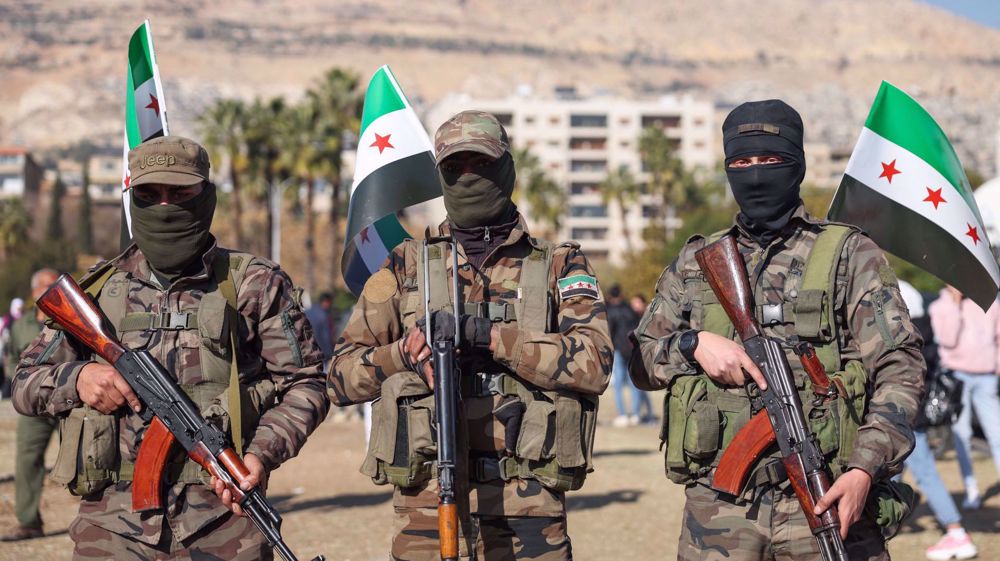
In Syria, the Zionist Entity continued invading new territory in the south and frequently committed bombing campaigns throughout the country. This is despite the new Syrian leader, Ahmed al-Sharaa, working with the Israelis on security coordination and even signaling his intent to normalize ties.
In Lebanon, the Zionist regime refused to leave the south and committed well over 3,000 violations of the ceasefire since November 27, 2024. It continued to kidnap Lebanese civilians, carry out assassinations, bombard the south, Beqaa Valley, and even occasionally strike civilian buildings in Beirut. Israeli drones and fighter jets roamed the skies of Lebanon every day, and the Lebanese Army did not resist them with a single bullet.
The unhinged settler-colonial entity made its expansionist endeavors crystal clear and its leader, Netanyahu, constantly mouthed off about “total victory” in a “seven front war”. Meanwhile, the United States and most Western European leaders stood by and watched it all happen, not even bothering to condemn, let alone halt all trade or apply sanctions.
The Israelis stood plausibly accused of genocide at the International Court of Justice (ICJ), and its Prime Minister became a wanted war criminal by the International Criminal Court (ICC). Every major rights group, including B’Tselem, accused the Zionist entity of Genocide in Gaza. Millions around the world took to the streets, week-in week-out, pleading with their governments to take action. The students across North America and in different nations in Europe stood up, many sacrificing their degrees and possible future employment.
In the end, the Zionist Entity faced no real punishment from the so-called “international community”, beyond occasional statements and a few brave leaderships that took limited actions to impose a price.
What happened in the past 20 months is the death of International Law and Human Rights, these concepts now rest under the rubble of Gaza, along with the bodies of thousands of children who are yet to be recovered.
Iran finally took off the gloves
During this period of time, Iran received blow after blow. Its embassy in Damascus was bombed, Hamas leader Ismail Hanniyeh was assassinated in Tehran, and top IRGC officials were assassinated time and time again.
Then came the terrorist pager attacks in Lebanon, which injured thousands, including many civilians, and even killed women and children. The cornerstones of the West’s so-called “liberal free press” who we have been told uphold the gold standard of journalism? They praised the pager attack that even former CIA Director Leon Panetta called terrorism.
Donald Trump took office, his campaign bankrolled by a who’s who of Zionist billionaires like Miriam Adelson, then proceeded to threaten taking over Gaza and turning it into a sleazy ruling class casino. The unserious, mentally incompetent front man for the war machine only encouraged Israeli militaristic-adventurism further.
For some time, it appeared as if Gaza was going to be continuously crushed without anyone stepping in to stop it, beyond Yemen, which proved itself the only nation on earth to be dedicated enough to the cause of justice to wage a military intervention with its limited means from so far away. Fatigue and a sense of hopelessness swept its way across the region, especially after Hezbollah exited the fight.
But when all else seemed lost, one power remained standing in the way of the bloodthirsty Zionist regime’s plot, as its US allies frothed at the mouth, waiting to prey on the remains of the steadfast Palestinian people: that power was Iran.
The Israeli Miscalculation
When the Zionist regime launched its initial assault against Iran, it made a series of mistakes. The first was to target densely populated civilian areas, which caused horrifying scenes that will never leave the minds of the Iranian people: a toddler laying dead in the street and a mother trapped under the rubble, with countless civilians slaughtered in apartment complexes.
The second major mistake was the assumption that the assassinations of key IRGC leaders would put Iran into a state of confusion and temporarily incapacitate them. All the military contacts I spoke to at the time had given estimates that Iran would take 2-5 days to recover. To everyone’s surprise, Iran replaced its leaders, got its air defenses back online, and launched its first devastating missile strikes, all within 15 hours.
Another miscalculation was the obvious belief that the Islamic Republic could be depended upon to strike back in a limited and measured way. So far, it appears as if the only contingency in the event of what happened was to try and desperately pursue regime change as soon as possible.
The IRGC shook the entire world with their maximum impact strikes, followed by a strategy of draining the Israeli-Western-Arab air defenses guarding the Zionist Entity. Iran’s attacks were truly devastating and shocked even their most ardent supporters.
An issue which the Israelis now face is that even if there was to be a ceasefire signed tomorrow, their population will likely begin to flee, and their “security” myths will collapse. This will be the overarching message to the Israeli public, that you are surrounded by enemies who you cannot defeat and are still determined to end your ethno-supremacist regime.
Therefore, Benjamin Netanyahu quickly appeared to desperately shift to option two: regime change by any means. The Israelis even pulled out their pathetic weasley puppet, the son of the deposed Shah of Iran. This Zionist controlled collaborator has repeatedly released videos claiming that the Islamic Republic is falling apart, desperately trying to incite civil war in order to help the Zionist regime destroy his own nation. Yet, none of his speeches have led to even a single recorded protest inside Iran so far.
In fact, due to the brutal nature of the Israeli assault on Iran’s civilian areas, many Iranians who otherwise hate their government with a passion have sided with it against the Zionist regime’s brutality, understanding that the assault is aimed at destroying them.
[…]
All the so-called foreign policy experts were echoing the same sentiments, that they believed taking out the Iranian nuclear program could be achieved without triggering an all-out war. It is likely that what emboldened the Zionists to launch such a devastating attack on civilian areas in Tehran, was the belief that Iran would respond in a restrained way and practice the same “strategic patience” it has for decades.
If it also believes its own nonsense about “destroying Hezbollah” too, it will be in for an even bigger shock in the future.
[…]
The capture of Al-Quds?
If there is no ceasefire, which would be an acknowledgment of strategic defeat by the Israelis, the war will continue to escalate and drag on. Even with US involvement, it does not change this predicament, in fact, it only accelerates the process.
It would be foolish to assume that the Israelis don’t have more tricks up their sleeves, most likely involving Mossad operations, assassinations, and terrorist attacks. It could also launch hybrid warfare attacks and stir internal unrest. So, this should not be ruled out.
But one thing is for certain, this is the opportunity for everyone who was ever wronged by the Zionist Entity to rise up to the moment in history. Although the spark will be Iran’s missile strikes, defeating the Israelis completely is something that would have to be achieved on the ground.
When the Israeli air defenses are depleted and its air fields destroyed, greatly hindering the effectiveness of its air force, then a ground offensive from multiple fronts will succeed. Yet, such a ground offensive would have to be all out, with the objective of capturing occupied al-Quds. Hamas and Hezbollah would have to be the main actors in this ground war.
[…]
If the occupying entity was truly seeking its survival by any means, it would be begging for a ceasefire, in fact, it would never have attacked Iran illegally to begin with. Yet, arrogance got the better of it.
The president’s order was issued on May 5 of this year to improve the “safety and security of biological research.”
Zero Hedge
The National Institute of Health (NIH) announced the end of gain-of-function research in a June 18 statement. The institute’s update said the move is in compliance with President Donald Trump’s executive order on the topic.
The agency is also suspending or terminating the awards that have supported this research, as the order requires. The awardees are required to review their research portfolios by June 30 to ensure the projects are terminated.
“NIH is requiring all NIH awardees to review their research portfolios to identify NIH funding and other support for projects meeting the definition of dangerous gain-of-function research,” the June 18 statement said
Trump’s Order
Trump’s May executive order concludes: “Dangerous gain-of-function research on biological agents and pathogens has the potential to significantly endanger the lives of American citizens.” Additionally, the order allowed for research agencies to find and end federal funding for other biological research that “could pose a threat to American public health, public safety, or national security.”
It also ended federal funding for gain-of-function research in countries of concern, such as China and Iran, and prohibited funding from moving to foreign research that would likely cause another pandemic.
According to the White House fact sheet, the order was given because “these measures will drastically reduce the potential for lab-related incidents involving gain-of-function research, like that conducted on bat coronaviruses in China by the EcoHealth Alliance and Wuhan Institute of Virology.”
The president’s order paused U.S. research that used infectious pathogens and toxins, citing possible danger to American citizens, until a time when a safer and more transparent plan can be implemented.
Both COVID-19 and the 1977 Russian flu were used as illustrations of the possible outcome of underregulated research with dangerous pathogens.
House Oversight Report
In December 2024, the Republican-led House Oversight Select Subcommittee on the Coronavirus Pandemic released a 520-page report that was the end result of a two-year investigation, announcing that its findings indicated the COVID-19 virus likely originated from a laboratory in Wuhan, China.
The report found that the Wuhan Institute of Virology (WIV) was funded by the NIH and the EcoHealth Alliance Inc., which used U.S. taxpayer dollars to support the research at the lab.
The committee said in its report that COVID-19 had biological characteristics not previously found in nature. According to the committee, the data reviewed indicated that all COVID-19 cases could be traced back to a single introduction into humans. This is different than previous pandemics, where there were multiple spillover events discovered.
“By nearly all measures of science, if there was evidence of a natural origin, it would have already surfaced,” the oversight subcommittee said in a statement.
The committee findings also cited a June 2023 Office of the Director of National Intelligence report that offered a similar conclusion, and went even further, stating, “Scientists at the WIV have created chimeras, or combinations of SARS-like coronaviruses through genetic engineering, attempted to clone other unrelated viruses, and used reverse genetic cloning techniques on SARS-like coronaviruses.”
During the investigation, the panel interviewed Anthony Fauci, former director of the National Institute of Allergy and Infectious Diseases, who left the role in December 2022.
According to the committee report, Fauci “prompted” a research study titled “The Proximal Origin of SARS-CoV-2,” for the purpose of disproving the theory of the pandemic originating via a lab leak.
“Although Dr. Fauci believed the lab-leak theory to be a conspiracy theory at the start of the pandemic, it now appears that his position is that he does have an open mind about the origin of the virus—so long as it does not implicate EcoHealth Alliance, and by extension himself and NIAID,” it stated, citing Fauci’s memoir that was published weeks after the hearing.
More Changes
The Department of Health and Human Services (HHS), which governs the NIH and other agencies such as the Centers for Disease Control and Prevention, has made other significant changes. HHS Secretary Robert F. Kennedy notified the 17 members of the Advisory Committee for Immunization Practices on June 9 of their dismissal.
The panel was created by the CDC to provide advice about vaccines, including childhood and adult immunization schedules.
Members “are knowledgeable in the fields of immunization practices and public health, have expertise in the use of vaccines and other immunobiologic agents in clinical practice or preventive medicine, have expertise with clinical or laboratory vaccine research, or have expertise in assessment of vaccine efficacy and safety,” the committee’s charter says.
Kennedy spoke to reporters about the dismissals, saying that the new members would be credentialed scientists and doctors “who are going to do evidence-based medicine, who are going to be objective, and who are going to follow the science and make critical public health determinations for our children based upon the best science.”