Retired child and adolescent psychiatrist and American expatriate in New Zealand. In 2002, I made the difficult decision to close my 25-year Seattle practice after 15 years of covert FBI harassment. I describe the unrelenting phone harassment, illegal break-ins and six attempts on my life in my 2010 book The Most Revolutionary Act: Memoir of an American Refugee.
Tom DiFerdinando
President, Rethinking AIDS/Unmasking Covid
Rethinking AIDS was an outgrowth of the original Group for the Scientific Reappraisal of the HIV/AIDS Hypothesis, an alliance of 32 world class scientists, physicians and other researchers, later to include three Nobel Laureates and nearly three thousand additional signatories.
What had drawn us all together in the 1980’s was the extremely questionable claims being made about HIV and AIDS by the likes of doctors and Public Health officials such as Robert Gallo and Anthony Fauci.
Our skepticism was catalyzed in 1987 by a newly published paper by Dr. Peter Duesberg, demonstrating that “retroviruses” such as “HIV” were neither pathogenic nor carcinogenic, and thus could not be causing AIDS – a paper the nascent AIDS industry publicly ignored but privately feared.
The Group’s first step, operating as they were on the premise that their opposition was playing by the same rules, was to publish a clarion call; a request to the scientific community for an independent reappraisal of what in their view was simply a mistaken hypothesis: namely, that an alleged retrovirus “HIV” (the “human immunodeficiency virus”) was the cause of an alleged syndrome “AIDS” (the “acquired immune deficiency syndrome”).
They summarized their concern in just four sentences:
It is widely believed by the general public that a retrovirus called HIV causes the group of diseases called AIDS. Many biochemical scientists now question this hypothesis. We propose that a thorough reappraisal of the existing evidence for and against this hypothesis be conducted by a suitable independent group. We further propose that critical epidemiological studies be devised and undertaken.
The Group submitted this short paragraph to Nature, Science, The Lancet, and The New England Journal of Medicine, four major science and medical periodicals within which members had had papers published many times before.
But this time, silence! No one would publish the call. It made no difference that it was backed up by a group of 32 legitimate, credentialed and highly esteemed signatories.
Simple. It was because the chief Public Health official at the time, Dr. Anthony Fauci, had that sort of veto power even back then. As a full blown vaccine industry representative working for what we now know to be a full blown vaccine industry front (NIAID, CDC and FDA) Fauci was, as he is now, a powerful firewall against genuine scientific scrutiny and dissent, i.e., a true enemy of both scientific freedom and the First Amendment. Do you think we’re exaggerating? Robert F. Kennedy Jr did us all the favor of meticulously documenting it all in one place.
The fact is, our original suspicions were correct – there was no credible scientific evidence to support the claim that “HIV” caused “AIDS”, and 35 years later. there still isn’t any evidence. That may be shocking to hear, butit’strue.
Fast forward nearly forty years to “Covid-19”, and what does one find? The same scare tactics, the same contradictions, the same wrong predictions, the same bogus tests, the same deadly treatment approach, all this but more global, more coordinated, and even more socially destructive. And the General leading the charge? Anthony Fauci.
A central function of the new Rethinking AIDS/Unmasking Covid is to expose for all to see, this profound relationship between “Covid-19” and “HIV/AIDS”. As the original “AIDS dissidents”, we are uniquely equipped for the task.
Back in the 1980’s, we felt scientifically obliged to give Fauci et al the benefit of the doubt, i.e., to assume that he and the advocates for the HIV/AIDS hypothesis simply committed a major scientific error. However, the fact that with “Covid-19” they have made the exact same error, but on a scale a thousand times larger, means neither “HIV/AIDS” nor “Corona/Covid” were errors; they were both highly organized and fully premeditated marketing devices.
The goal of science is the truth. The goal of marketing is the sale. “HIV/AIDS” and “Corona/Covid” were not discovered; they were sold, primarily through fear and lies of omission. Their function was to guarantee lucrative government contracts for Fauci’s drug and vaccine industry projects. It’s that simple!
Unfortunately for the rest of us, it turns out Fauci’s efforts are also tied to even bigger projects at the World EconomicForum and World Health Organization. For that reason, “Covid” has shifted even further from the realm of medical marketing into the realm of social engineering. In essence, we’ve been positioned for a sale, and prepped for a coup. But more on that later.
Another difference with “Covid-19” is, while the work of many of the early AIDS dissidents was catalyzed by the outstanding scientific work and spiritual leadership of Dr. Peter Duesberg, the present day “Covid” round is being catalyzed and taken even further, albeit in a very different way.
This time it’s the outstanding work of another of the original Group signatories, Dr. Eleni Padadopulos-Eleopulos. As leader of The Perth Group, her work – done concurrently with but independent of Dr. Duesberg’s work – also asserted “HIV” could not cause AIDS. But not because “HIV” was harmless. It was because no one had proven that an “HIV” actually exists. And they still haven’t done so. To this day, no one has followed the standard protocol for viral isolation and purification by which one proves the existence of a new and independent entity, “HIV”. If there’s no “HIV” then there’s no “HIV proteins”, no “HIV RNA”, no “HIV antibodies” and no“HIV test“.
Dr. Stefan Lanka has given this problem even more context by pointing critically to the fatal flaws in the foundations of the science of virology itself – the real scientific Achilles heel in all of the claims about “infectious AIDS” and “Infectious Covid”. So the fraud goes deeper than one might think. But more on that later too.
The most popular weapon today, used by the enemies of truth to silence people who point out these many facts and endless contradictions, is the claim that they are “following the science”. It is the newest weapon for pitting people against each other and distracting them from the real sociopaths who got them fighting each other in the first place. And it’s so easy to prove the claim false!
A cornerstone of science is to invite dissent; to embrace contrary views and to falsify one’s hypothesis. When government leaders, hiding behind the banner of “science”, call for Big Tech to censor and deplatform those who say things contrary to the dictates of the CDC, FDA or Anthony Fauci and Bill Gates, and then Big Tech complies and openly boasts about their compliance, this is not science. This is tyranny. So the next time you hear Heads of State or anyone else claim, “We’re following the science”, feel confident to tell them they are lying, because you cannot “follow the science” and be an advocate of censorship in the same breath.
In closing, and to get a better overview of the changes in RA/UCA’s new aims, scope and function, read the introduction to Covid: The New AIDS, the Sept 2020 conference produced by one of our affiliates. And then here, you will find a thought-provoking analysis of how it is that a scam of Covid’s magnitude could have gained traction and taken root in the psyche of a supposedly free people in the first place – a people who will fight to the death to protect their freedoms in the face of an overt fascist, but who will bow down, cave, comply and gladly surrender those very same freedoms to the covert fascist.
You will also soon be able to visit our new website. We will focus on the AIDS-Covid relationship, its social, economic and medical implications, and the problems with the scientific foundations of virology. To keep it simple, we will be highlighting three major elephants in the Covidian living room:
3) the grand mRNA “vaccine” industry experiment humanity has uncritically agreed tosubjectitselfto.
Once you understand the significance and consequences of these three things, you will have a pretty solid grasp of what has actually been happening, why it’s been happening, who has been making it happen, and where it’s supposed to go.
Finally, we should mention one other elephant in the Covidian living room that deserves special mention. That is the profoundly devastating, longterm negative impact the Pharma/Vaccine industry has had on the health and well-being of the general public for the last one hundred years; especially under Anthony Fauci’s leadership. As Kennedy eloquently points out, Fauci’s job was to determine causes and preventive measures for both chronic and infectious diseases in the US. Not only did these maladies increase dramatically under Fauci’s leadership – chronic disease among children alone in 1984 at the start of his tenure was 6%, and by 2006 it was at 54%!! – he managed to turn federal health and safety institutions into vaccine and drug industry “incubators“.
When is it going to end and who is going to stop it? The most remarkable thing about Public Health is that it is the only discipline – and Fauci the only public figure – that can boast fifty years of consistent, abject failure, and still claim “success” and command billions of dollars annually in tax payer funding. We want to cut through the Public Health Official mystique that shields this unconscionable behavior and reverse the deeply ingrained tendency of the wider public to uncritically support and enable it. destructive bully, the AIDS/Covid cabal and the global machinery it is connected to thrives not only on our ignorance, but more importantly on our compliance. With condoms, masks, social distance and experimental injections, lockdowns, business closures, vaccine passports and open-ended mandates – all to promote the rebranding of “flu” – we’ve permitted a Central State to take responsibility for our health and our immune systems. Our compliance, and the willing surrender of responsibility for our bodies, our health and our personal freedom, is the real virus that is destroying the fabric of our decreasingly free society.
Jeffrey Epstein, the convicted sex offender, financier, and Zionist intelligence agent, engaged in multiple activities across Africa that reflected broader patterns of elite exploitation and imperialist influence, often under the guise of philanthropy or business. These involvements, spanning trips and shadowy dealings, highlight how powerful networks perpetuate control over Global South nations, aligning with critiques of imperialism as a system of domination.
The Libyan Operation
Recent revelations from the U.S. Department of Justice’s unsealed Epstein files expose layers of predatory opportunism targeting Libya. In July 2011, amid the NATO-backed uprising that toppled Muammar Gaddafi’s government, an associate sent Epstein an email outlining “financial and legal opportunities” tied to Libya’s political and economic turmoil. The correspondence detailed plans to exploit approximately $80 billion in Libyan state assets frozen internationally after sanctions and the conflict, including $32.4 billion held in the United States alone. These funds, described in the email as “stolen and misappropriated”, were portrayed as ripe for recovery efforts that could yield massive profits, with the sender urging Epstein to pursue even a fraction of them.
The proposal explicitly invoked assistance from officials “formally” of Britain’s MI6 and Israel’s Mossad (it’s not clear if the word ‘formerly’ was intended), who reportedly expressed willingness to help trace and reclaim these assets under the pretext of identifying “embezzled” wealth. This networking underscores how Epstein’s circle leveraged intelligence connections — often linked to Zionist and Western security apparatuses — to capitalise on post-Gaddafi chaos, where Libya’s sovereignty was shattered, leading to ongoing civil strife, resource plunder, and foreign interference. The email framed Libya’s vast energy reserves and educated population as creating “a great opportunity” for reconstruction profiteering, estimating the country would need at least $100 billion in post-conflict spending — itself a direct consequence of imperialist destruction.
Such schemes exemplify how Zionist and Western ties treat destabilised African states as open-season for asset-stripping and influence peddling. The timing, shortly after Gaddafi’s overthrow and before his October 2011 killing, reveals intent to profit from engineered instability. Additional Epstein files link him to discussions involving Prince Andrew on potential Libyan loans to Dubai in 2010, during Gaddafi’s final years, further illustrating entangled royal, financial, and intelligence interests in Libyan resources. But Libya was not the only African country in which Epstein was interfering, as the files show.
A Trip to Africa
In September 2002, Epstein provided his private jet for a high-profile trip to Africa, accompanying former US President Bill Clinton, actor Kevin Spacey, actor and comedian Chris Tucker, and others on a purported humanitarian mission. The itinerary included stops in Ghana, Nigeria, Rwanda, Mozambique, and South Africa, framed as efforts to address HIV/AIDS through the Clinton Foundation. Unsealed court documents from Giuffre v. Maxwell detail flight logs confirming Epstein’s jet was used for this trip, with Maxwell admitting Clinton dined on the plane, underscoring elite access facilitated by Epstein.
Virginia Giuffre, an Epstein survivor, travelled on Epstein’s planes 23 times while underage, including instances with Maxwell. Survivor Chauntae Davies, who accompanied the group in 2002, later described feeling powerless amid Epstein’s associations with influential figures. Clinton’s spokesman confirmed two separate trips to Africa on Epstein’s plane during 2002 and 2003, involving staff, foundation supporters, and Secret Service agents, emphasising charitable intent but underscoring Epstein’s role in facilitating elite access to the continent. These unsealed records highlight the 2002 Africa trip as part of the work of the Clinton Foundation, illustrating how such ‘humanitarian’ excursions mask networks of power and potential exploitation. Bill Clinton is seen enjoying a neck massage from a Jeffrey Epstein victim, Chauntae Davies, then 22 years old, in a stop-over in Portugal on the way to Africa in 2002
Epstein’s African engagements extended into business realms by June 2011, when he urgently requested a second US passport from the State Department to manage overlapping international travels. As president of an international financial consulting firm, he cited planned trips to Sierra Leone, Mali, and Gabon for business purposes, needing visas for these African nations while using his primary passport in France. This logistical manoeuvre revealed Epstein’s pattern of frequent, multifaceted travels to Africa and West Asia, including undocumented visits to Senegal and other countries. Court filings in the unsealed documents discuss efforts to depose Clinton due to his close ties with Epstein and Maxwell, noting Giuffre’s 2011 claims of witnessing Clinton on Epstein’s island, though denied, which ties into broader travel patterns including Africa.
Côte d’Ivoire
By 2012, Epstein’s activities in Africa deepened through covert diplomacy, particularly in Côte d’Ivoire amid post-election instability. In June 2012, as Israeli Defense Minister and close Epstein collaborator Ehud Barak met Ivorian President Alassane Ouattara in Jerusalem to discuss counterterrorism and technology cooperation, Epstein hosted Ouattara’s son, David Dramane Ouattara, in New York. On 12 September 2012, Epstein met Ouattara’s niece, Nina Keita — a former model linked to Epstein since 2002 — before proceeding to a private discussion with Barak. In October 2012, Epstein travelled to Côte d’Ivoire, Angola, and Senegal, switching planes in London, with no public flight logs detailing the visits. These moves facilitated Israeli-Ivorian security ties, including a bilateral accord signed weeks later focusing on intelligence and cybersecurity.
Epstein’s role in advancing Zionist interests in Africa continued into 2013, as leaked emails show Barak, post-resignation as Israel’s Minister of Defense, coordinating with Epstein on surveillance projects for Côte d’Ivoire. On 19 March 2013, Barak received proposals for communications and video monitoring centres from MF Group, a French-Israeli security contractor run by Michel Farjon.
In April 2013, UN reports uncovered Israeli ammunition in Côte d’Ivoire, violating an arms embargo, prompting brief setbacks. By May 2013, Barak contacted Israeli defence executives involved in prior Ivorian deals. In July 2013, Barak planned a visit to Abidjan using health infrastructure proposals as cover. Arriving 1 August 2013, he met key officials, including Ouattara, to advance security collaborations. Epstein coordinated Barak’s New York meetings with Ivorian officials during the UN General Assembly that month.
These efforts culminated with the lifting of UN embargoes on Côte d’Ivoire in April 2014, followed by a June 2014 defence agreement signed during an Israeli ministerial visit. Epstein’s facilitation exemplified how private networks enable imperialist tech transfers, bolstering authoritarian control in African states like Côte d’Ivoire, where surveillance tools aided Ouattara’s power consolidation amid suppressed dissent. The unsealed Epstein documents further illuminate these patterns through references to Epstein’s international travels and associations, though specific African business dealings beyond the 2002 trip remain detailed in secondary reports.
Jeffrey Epstein’s emails show he had various connections and interests related to Africa, including organising meetings for prominent figures with African leaders and discussing potential business deals with Zionist intelligence agency-connected firms.
Epstein helped orchestrate meetings for former Israeli Prime Minister Ehud Barak with high-level officials from Côte d’Ivoire, including the Chief of Cabinet for President Ouattara, Sidi Tiémoko Touré. This effort reportedly bore fruit with a formal bilateral defence and internal security agreement between Israel and Côte d’Ivoire in 2014. The Zionists had, though, been supplying arms to Côte d’Ivoire for years.
Since 2004, during the country’s first civil war, Côte d’Ivoire had been subject to a UN arms embargo.
In April 2013, the UN Security Council reported the discovery of “dozens of crates” of Israeli ammunition at the presidential palace and the Attécoubé naval base, with Israel Military Industries labels and Spanish markings. It was reported that the ammunition had been relabelled and retransferred to Côte d’Ivoire from a third country.
In May 2013, former Prime Minister of the Zionist entity, Ehud Barak, called the Honorary Consul of Côte d’Ivoire in Israel, Michael ‘Micky’ Federmann. Federmann’s day job was Chairman of Elbit Systems. Elbit had supplied military helicopters to Côte d’Ivoire during the first Ivorian civil war.
It has been reported that Epstein and Barak worked together as a conduit for Israel’s intelligence sector in Côte d’Ivoire, where Barak was welcomed as a representative of the Israeli government even after leaving public office in 2013. Epstein helped Barak deliver a proposal for mass surveillance of Ivorian phone and internet communications, crafted by former Israeli intelligence officials.
In September 2013, the details of Israel’s offer to the West African country arrived in Barak’s inbox from Aharon Ze’evi-Farkash, former head of Israeli military intelligence (2002-2006) and a veteran of Unit 8200, to create a ‘signals intelligence’ (SIGINT) organisation in Côte d’Ivoire. Drop Site News reveals how Epstein facilitated this surveillance proposal.
The document, a 13-page PDF, mapped out the complete architecture for eavesdropping on phone calls, satellites, tactical radio, and “special targets” like cyber cafés. The data streams flowed to “media processing” servers to be reviewed by analysts, and then synthesised into reports for security leaders.
By June 2014, Avigdor Liberman, Israel’s Minister of Foreign Affairs, arrived in Côte d’Ivoire to sign an agreement on defence and internal security, accompanied by more than 50 businessmen who came to evaluate prospective investments in the country.
The Epstein emails and a hacked collection of Ehud Barak’s email inbox highlight how Epstein leveraged his network and financial influence to connect powerful people, explore business deals, and pursue Zionist military and intelligence interests. They show both the deeply embedded connections of Epstein to Zionist intelligence priorities and the emerging influence of the Zionist state in an area of the world far removed from West Asia.
Jeffrey Epstein appears to have been much more involved in pursuing Zionist regime interests in Africa than had previously been known. Epstein had multiple US passports, and even an Austrian passport with a fake name, which he reportedly had obtained to travel internationally, though he denied ever using it.
As early as 2001, Epstein was recorded as visiting Marrakesh in Morocco with a decorator to visit a house there. In both 2017 and 2019, he returned to Morocco for brief trips. It appears that Epstein owned a house in Morocco, but it is not clear whether Morocco was a node in his child trafficking activities. There is evidence that young girls were transported by him on his private jets and helicopters to other destinations.
Morocco has, of course, been in regular and extensive cooperation with the Zionists for decades prior to the normalisation announcement in 2020. Even The New York Times reports that “the two countries … have worked together closely but secretly on military and intelligence matters, assassinations, and migration of Jews to Israel”. In the early 1960s, King Hassan allowed Mossad “to establish a station in Morocco”, and the Zionist entity “helped organize the Moroccan intelligence service”. The Mossad presence in Morocco was, however, first established in the 1950s.
ha-Misgeret: The Framework’s Moroccan Origins
In 1954, the Zionist entity sent Yehudit Galili to Casablanca for a Jewish Agency educational project. She swiftly established a kindergarten that doubled as an Ulpan to teach young Jewish children Hebrew to facilitate them becoming settler colonists.
This seemingly benign institution quickly became a launchpad for ha-Misgeret (The Framework) — the Mossad’s secret underground network across North Africa. This account of its activities is entirely based on official Zionist sources. The operation aimed to build an armed terror network which would orchestrate their mass transfer to the settler colony. Galili gives a first had account of the arrival of the Mossad at the nursery:
[…]
Mossad-Morocco Intelligence Ties and Covert Operations
This collaboration between Morocco and the Zionist entity represents a stark example of anti-imperialist betrayal, where an Arab nation aligned itself with a settler-colonial regime built on the dispossession of Palestinians, all while suppressing its own people’s aspirations for genuine sovereignty. The Mossad’s infiltration of Morocco began in earnest during the late 1950s and early 1960s, a period marked by Morocco’s transition from French colonial rule to nominal independence under King Mohammed V, and later his son, Hassan II. Far from fostering true liberation, this era saw the Zionist intelligence agency embed itself deeply into Moroccan state structures, aiding in the creation and bolstering of repressive apparatuses that served both Zionist expansionism and Moroccan authoritarianism.
Here are common household items that are being used to spy on you.
I’m sure a lot of you saw the Ring Super Bowl commercial where they showed how Amazon’s Ring cameras surveil entire neighborhoods through a feature called Search Party. The feature allows users to upload an image of something and then all of the Ring cameras in its proximity comb through their own footage to see if that thing passed in front of them. The ad used the example of a user using Search Party to find a missing dog.
Critical observers were quick to point out that this could easily be used to spy on everyone, but it’s not just Ring that’s spying on you. Here are some common consumer items that you might not have realized are watching you right now.
Your TV. Modern TVs have something in the terms of service called Automatic Content Recognition, which basically means that your TV records everything you play on it, whether it’s Netflix, Youtube, video games or even something you watched by connecting your laptop. And disconnecting your TV from the internet doesn’t stop this. Just last month, major TV manufacturers were sued in Texas for screenshotting users’ TVs every 500 milliseconds.
Your car. New cars monitor everything from your location, how fast you drive, how hard you brake, but also things like your race, weight, health, taste in music, sexual activity and trade union membership. The HALT Drunk Driving Act mandates that by 2026, all new cars have to have a mechanism that automatically turns a car off if it deems someone unfit to drive.
Your router. Xfinity recently announced its Wifi motion feature which monitors the signal strength between the router and its connected devices like printers, phones or game consoles. If someone walks between the router and the device, the router will be able to see the signal being disrupted, effectively turning it into a motion tracker. Several ISPs are rolling out similar features and marketing them as home security tools.
Smart watches. Smart watches can be used to track your personal health like counting calories or monitoring your heart rate but that information can just as easily be used to create a detailed map of your life. It reveals when you eat, when you sleep, when you’re nervous, when you’re lying, where you were, if you were on drugs, etc. Smart watch data has already been used as evidence in criminal cases.
AI assistants. Tech companies are in a race to give their AI chat bots the power to execute real world tasks like sending emails, creating to-do lists, shopping, or planning vacations. The only catch is if you want it to shop, you have to give it your credit card information. If you want it to clean up your desktop, you have to give it access to your hard drive. AI assistant Clawdbot went viral after naive users installed it only to have their assistants taken over by hackers.
The point is the Orwellian total surveillance regime isn’t going to be announced one day in a presidential address, it’s already quietly being set up in our homes at our request, with our quiet consent, and under the guise of convenience and security. The average American has 17 smart devices in their home and many companies already have cooperation agreements with law enforcement. All it would take is a catalyzing security event for this infrastructure to be weaponized against us.
It’s a sobering reminder that while we fight over Super Bowl Halftime Shows or Democrats vs. Republicans, we will all be seen as equals by the national security state.
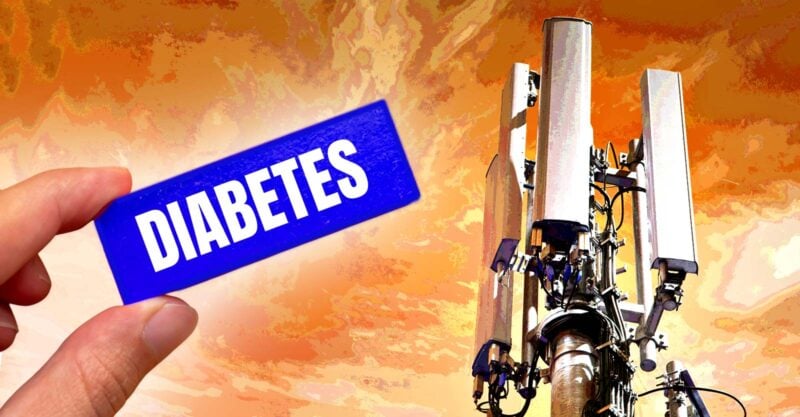
Electromagnetic radiation (EMR) exposure from electrical power grids, cell towers and wireless devices is likely a driver of the global increase in diabetes, according to a new report by Paul Héroux, Ph.D. Studies compiled by Héroux show that very low levels of EMR can affect how cells function, including how they handle glucose.
Electromagnetic radiation (EMR) is likely a driver of the global increase in diabetes, according to a new report by Paul Héroux, Ph.D.
The report — which includes over 280 citations — is a deep dive into the evidence suggesting that EMR exposure from electrical power grids and wireless radiation can dysregulate and raise blood sugar levels.
“Current EMR safety standards are inadequate for protecting long-term metabolic health,” Héroux told The Defender.
Although more recent figures aren’t available, the CDC in 2024 reported that the number of young people with Type 1 and/or Type 2 diabetes is on the rise.
Meanwhile, AAP hasn’t updated its parental guidance on cellphone radiation in nearly a decade, despite numerous studies in recent years highlighting the dangers of exposure in children. A link on the group’s parenting advice webpage lists telecommunications company AT&T as one of its corporate sponsors.
“It’s almost unfathomable what the link between EMR and diabetes could mean for kids’ health if we don’t change course,” said Miriam Eckenfels, director of Children’s Health Defense’s (CHD) EMR & Wireless Program.
“It’s not like there is a simple fix, like changing your diet,” she said. “Our children are being radiated 24/7, at home, in schools, on their phones and from nearby cell towers. We should really be paying attention to this.”
Doctor: Héroux’s ‘argument is difficult to ignore’
Héroux’s report appears as a chapter in the book, “The Impact of Anthropogenic Activities on the Natural Environment and Societies during the Contemporary Period,” currently available for preorder.
Héroux is an associate professor of medicine at McGill University in Montreal, Canada, and a medical scientist in McGill University Health Center’s surgery department.
Although the report is academic, it has “down-to-earth consequences” — especially for children, who are more susceptible to the negative health impacts of wireless radiation.
The report traces research showing that EMR can suppress mitochondrial energy production in cells, increase oxidative stress and lower pH in some body fluids.
He also tracks how diabetes rates have climbed alongside the proliferation of technologies that emit EMR.
Yet the general public and “average medical audience” don’t realize EMR’s impact on metabolism, including a person’s diabetes risk, said Dr. Sharon Goldberg, an integrative and functional medicine doctor who has years of experience treating patients sickened by EMR exposure.
“His argument is difficult to ignore for anyone who takes the time to actually read what he has written,” she said.
EMR also linked to weight gain, hypertension
Beatrice Alexandra Golomb, M.D, Ph.D., a professor of medicine at the University of California, San Diego, School of Medicine, said she has “long recognized” that EMR can play a role in “not only in diabetes but in all of the metabolic syndrome factors, including weight gain and hypertension.”
However, medical training generally overlooks the impact of environmental toxins like EMR. Golomb explained:
“Much of medical education revolves around organ-based physiology and conditions for which drugs and procedures are often a prioritized approach. There is not much attention to the impact of environmental toxins or, more generally, to conditions tied to exposure-induced mitochondrial or cell energy impairment.”
Golomb leads a research group that studies conditions related to oxidative stress and cell energy impairments, including electrosensitivity — renamed EMR Syndrome in 2025.
In 2011, she posted a research paper in Nature Proceedings. The paper documented “extensive evidence” that some factors that cause oxidative stress and cell energy impairment — including EMR exposure — are driving the diabetic and metabolic syndrome epidemics.
She has since spoken with people who told her they experience serious weight gain linked to EMR exposure.
One person who had been overweight told Golomb that 80 pounds “melted away” when the person was able to relocate to a low-EMR environment, Golomb said.
News outlets are unlikely to report on such stories because the wireless industry is a big source of their advertising revenue, according to EMR researcher Camilla Rees.
Just because researchers like Héroux and Golomb publish reports doesn’t mean doctors will take the time to read them. Many doctors don’t read all the published science on EMR, Rees said.
“There is also the corporate influence on universities — and on medical associations — so the truth about environmental factors impacting people’s health can often be little known and long suppressed,” she said.
Higher EMR frequencies like 5G can still disrupt glucose levels
Some may doubt that 5G could increase a person’s diabetes risk. That’s because the pancreas — which produces insulin — is deep in the body, and 5G doesn’t penetrate beyond the skin, according to Dr. Robert Brown.
Brown is a diagnostic radiologist and the vice president of Scientific Research and Clinical Affairs for the Environmental Health Trust.
Héroux said 5G could still disturb a person’s glucose metabolism, because all body tissues — including those at the skin level — use insulin.
Also, lower frequencies of wireless radiation can directly affect the pancreas, he added.
Another ‘win’ for America’s disastrous Syria policy, long predicated on overthrowing the Assad government and installing a ‘moderate’ Sunni regime – though it turns out Jolani’s bearded Hayat Tahrir al-Sham (HTS) militants are anything but…
“U.S. intelligence agencies have concluded that 15,000 to 20,000 people, including Islamic State affiliates are now at large in Syria, after an exodus from a camp that held jihadists’ families, U.S. officials familiar with the estimate said,” The Wall Street Journal reports Friday.
Who could have predicted that chaos, instability, and terrorism would come out of the CIA’s Operation Timber Sycamore? Well, we did, and every rational observer of the Syria situation.
A billion plus dollars and hundreds of thousands of lives after the decade-long proxy war, and this is all Washington has to show for it:
Security experts have long warned that the wives of Islamic State fighters were effectively raising the next generation of militants at the sprawling Al-Hol facility. Security at the camp fell apart in recent weeks after Syria’s government routed the U.S.-backed Syrian Democratic Forces, which had guarded Al-Hol for years, raising concerns about the release of people who might have become radicalized during the years held behind the razor wire.
The size of a small city, the camp in Syria’s eastern desert at one point held more than 70,000 people after U.S.-backed forces destroyed what remained of Islamic State’s self-proclaimed caliphate in Syria in 2019. At the end of 2025, more than 23,000 people were there, according to a report this week from the Pentagon’s Inspector General.
The US military is rapidly backing out of this region after the years-long occupation, effectively throwing the Kurds (SDF) under the bus, as HTS radicals move in and take control.
Given many analysts have pointed to HTS being ‘ISIS-lite’ to begin with, the following WSJ note is no surprise: “The vast majority have left Al-Hol after the Syrian government took control last month. Western diplomats in Damascus assessed that more than 20,000 people fled the camp in a matter of days earlier amid rioting and a surge of escape attempts.”
There were even reports that the ISIS prisoners greeted the government HTS troops rolling in as ‘liberators’. The new government is certainly not “fighting” Islamic State cells… quite the contrary:
And now the Washington blob is simply moving on to the next regime change operation, this time a little further east in Iran, which it turns out was a key Assad ally.
So in place of the secular nationalist Baath party (under the Assad family), the West has the literal founder of Syrian al-Qaeda as president of Damascus, letting ISIS prisoners and affiliates walk free.
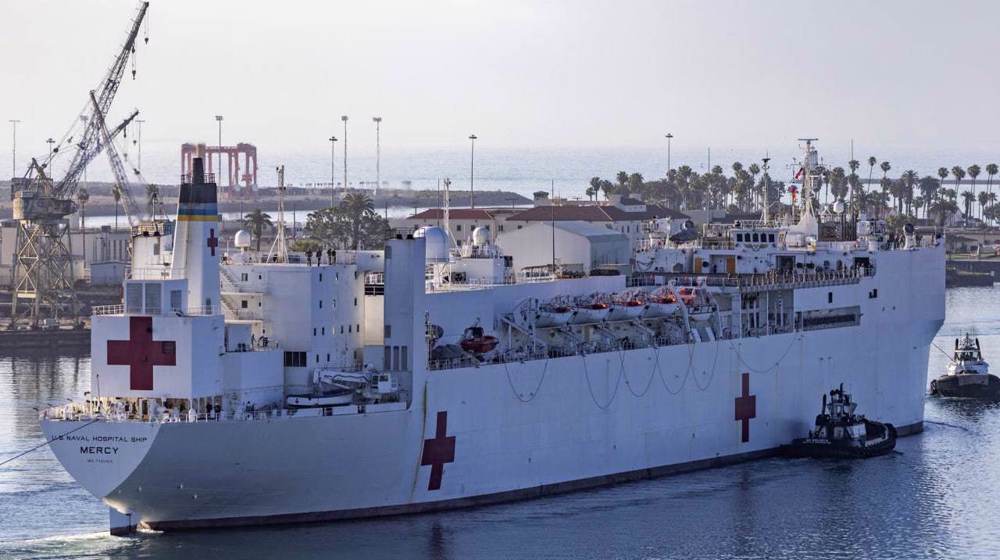
The leaders of Greenland and Denmark have rejected US President Donald Trump’s plan to dispatch a hospital ship to the Arctic territory, saying the island does not need foreign medical assistance.
Trump, in a Truth Social post on Saturday, announced he would send a “great hospital boat to take care of the many people who are sick, and not being taken care of there. It’s on the way.”
Denmark’s Defense Minister Troels Lund Poulsen told reporters on Sunday that his government had not been made aware of the plan. He said there was “no need for special health care efforts” in Greenland.
“Trump is constantly tweeting about Greenland. So this is undoubtedly an expression of the new normal that has taken hold in international politics,” Lund Poulsen added.
Greenlandic Prime Minister Jens-Frederik Nielsen also rejected the plan in a Facebook post, saying Greenland has “a public health system where care is free for citizens.”
Danish Prime Minister Mette Frederiksen responded on Instagram, without mentioning Trump or the United States directly, writing that she is “happy to live in a country where there is free and equal access to health care for everyone.” She added, “The same approach exists in Greenland.”
Greenland has six hospitals serving a population of fewer than 60,000 people. In early February, the territory’s government signed an agreement with Copenhagen to improve Greenlandic patients’ access to treatment in Danish hospitals.
Trump’s latest remarks are seen as part of his continuing pressure campaign on Greenland. The US president has repeatedly said the United States needs to acquire the semi-autonomous territory of NATO ally Denmark for national security reasons.
He later backed down on earlier threats to seize Greenland unilaterally after striking a “framework” deal in January with NATO Secretary General Mark Rutte, intended to ensure greater US influence.
However, at the Munich Security Conference this month, Frederiksen said she still feared US intentions toward the island. She called the pressure from the United States “unacceptable” and “outrageous.”
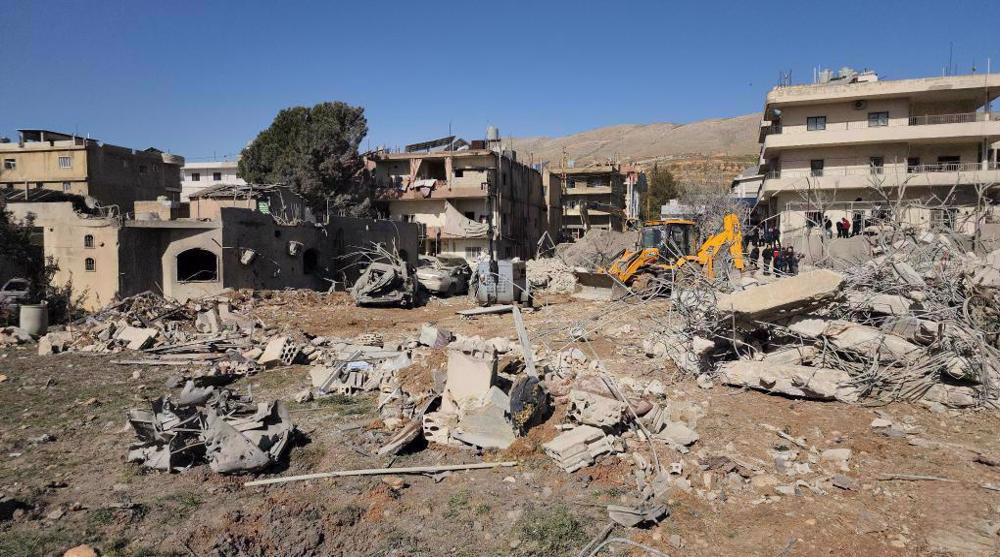
This picture taken on February 21, 2026 shows buildings destroyed by Israeli airstrikes in the village of Rayak, eastern Lebanon. (Photo by Xinhua)
Press TV
Yemen’s Ansarullah resistance movement has strongly condemned the Israeli regime’s “bloody massacre” in Lebanon’s eastern Beqaa region, which killed roughly a dozen people and wounded many more, calling it a flagrant violation of humanitarian values and international conventions.
The political bureau of Ansarullah said on Sunday that the Israeli airstrike, which targeted a neighborhood inside the Ain al-Hilweh Palestinian refugee camp in the city of Sidon in southern Lebanon, falls within the framework of Israel’s expansionist agendas.
It said the crime extends beyond attacking Lebanese civilians and infringing upon Lebanon’s sovereignty, describing it as part of attempts to enforce new dynamics associated with the initiative of the so-called “Greater Israel” and the “New Middle East.”
It also expressed its complete support for the Lebanese nation and the Hezbollah resistance movement in the face of Israeli acts of aggression backed by US and Western threats.
Lebanon’s Ministry of Public Health said on Saturday that Israeli strikes on eastern Lebanon killed 10 people and wounded 24, including three children.
Two officials with Hezbollah said eight members of the resistance movement were killed in strikes near the village of Rayak in northeast Lebanon late on Friday.
One of the Hezbollah officials said three of the dead were local commanders and identified them as Ali al-Moussawi, Mohammed al-Moussawi and Hussein Yaghi.
Yaghi was the son of prominent Hezbollah official and one of its founders, Mohammed Yaghi, who died in 2023. Mohammed Yaghi was also a close aide to late Hezbollah leader Sayyed Hassan Nasrallah who was assassinated in an Israeli airstrike in southern Beirut in September 2024.
In its statement, Ansarullah also sharply criticized the latest remarks by United States Ambassador to the Israeli-occupied territories Mike Huckabee, where he suggested that the regime has a right to expand its territory across a large swath of the West Asia region.
It stated that Huckabee’s comments went beyond diplomatic standards and revealed clear US support for Israel’s expansionist goals at the cost of Palestine and other Arab nations, adding that mere statements of condemnation are inadequate now.
The resistance group called upon Arab governments to take serious and coordinated measures to address the escalating danger.
It finally urged Arab and Muslim nations to take on their responsibilities regarding what it cautioned are grave challenges threatening the survival of the entire nation.
The US president has taken a swipe at the Danish authorities, claiming many of those unwell are not being treated
US President Donald Trump said he is sending a hospital ship to Greenland, the Danish autonomous territory in the Arctic he has sought to annex.
He announced the plan on Truth Social on Saturday, saying he was working with Jeff Landry, his special envoy to Greenland, whose appointment in December Copenhagen condemned as a diplomatic breach. Landry has called Denmark’s rule of Greenland an “occupation” and urged the island to seek independence to align with the US.
“Working with the fantastic Governor of Louisiana, Jeff Landry, we are going to send a great hospital boat to Greenland to take care of the many people who are sick, and not being taken care of there. It’s on the way!!!” Trump wrote in an apparent swipe at both the Greenlandic and Danish authorities.
Landry welcomed Trump’s announcement on X, writing: “Thank you, President @realDonaldTrump! Proud to work with you on this important issue!”
Neither Trump nor Landry offered clarity on whether the deployment was requested by Denmark or Greenland or who needed treatment. The Department of War deflected media queries to US Northern Command, which passed them to the US Navy. No response was forthcoming from either.
Greenland has a publicly funded universal healthcare system, though reports cite chronic understaffing and logistical constraints. However, Denmark pledged 1.6 billion DKK ($253 million) in September for healthcare and infrastructure upgrades through 2029 and has launched further reforms.
Trump’s post came hours after Denmark’s Joint Arctic Command evacuated a US Navy sailor requiring urgent non-combat medical treatment from a submarine in Greenland’s waters near the capital, Nuuk. It was unclear if Trump’s post had any connection to the incident.
Trump intensified his push to acquire Greenland last year, calling it vital to US national security He openly hinted at possible use of force and mocking Denmark’s defenses of the island as consisting of “two dog sleds.” The rhetoric alarmed NATO partners, with some warning an annexation bid could fracture the alliance. Greenland and Denmark rejected Trump’s demands.
Trump later softened his tone, saying last month he and NATO chief Mark Rutte had agreed on a on a “framework” on Greenland and Arctic security. However, Danish Prime Minister Mette Frederiksen warned last week Trump remains “very serious” about annexation. She stressed Denmark is willing to expand US military access but will not compromise on territorial integrity.
Episode 13 – Medieval Muslim Medicine and Hospitals
Islamic Golden Age (2017)
By Eamon Gearon
Film Review
In this lecture, Gearon discusses the two most prominent physicians during the Golden Age of Islam, Abu Bakr al-Razi and Ibn Sina, and the former’s role in significantly expanding the number of hospitals in the Muslim world.
Abu Bakr al-Razi
Born in 854 AD in Ray Persia, al-Razi is viewed as the father of Islamic medicine and influenced medical studies in Europe and the Middle East for hundreds of years. An accomplished oude player as a teenager, in adulthood, he took up alchemy, mathematics and literature. At age 30, he moved to Baghdad to study medicine. He challenged Galen’s theory that an imbalance in the four humors (blood, black bile, yellow bile and phlegm) caused all illnesses. Al-Razi asserted some illnesses were caused by oiliness, inflammation, saltiness or sulphurousness
He was the first physician to identify a mind-body connection, the importance of exercise and a healthy diet, to distinguish between smallpox and measles and to prescribe opium for melancholia (depression) – a treatment in wide use until the 20th century. He was also the first to maintain that every illness had a cause that could be discovered by research, ie that sickness wasn’t punishment from God.
He published 200 manuscripts, including Diseases of Children,Comprehensive Book of Medicine, a complete catalogue of existing medical scholarship from ancient Greece, India and Persia, and a home manual for treating everyday illness. European medical students were still using his Comprehensive Book of Medicine as a textbook 700 years later.
He also helped expand the number of hospitals in the Muslim world.* All Muslim hospitals were secular (often funded by private donors), employing Muslim, Christian and Jewish doctor and treating all patients who sought help, regardless of citizenship, race, religion or gender. All hospitals also served as medical schools and were required to keep patient records to be licensed. By 1000 AD, there were 30 hospitals across the Islamic world, each housing separate wards for contagious disease, mental illness and surgery.
Ibn Sina
Ibn Sina (980-1037 AD) is viewed a the father of early modern medicine. Born in Uzbekistan, he studied medicine at age 13 and was practicing by 16. He was the first to identify the airborne transmission of illness, to differentiate between central and peripheral facial paralysis, to catalogue various psychiatric illnesses ( asserting they weren’t a punishment from God) and to produce and prescribe heart drugs.
He wrote the five volume Canon of Medicine in 1025, the most comprehensive medical text to that time and still used in Europe in the 18th century.
Volume 1 – Anatomy and Regima (lifestyle changes such as diet and exercise that improve health)
Volume 2 – 800 simple medical remedies and their uses
Volume 3 – list of all body parts and their function
Volume 4 – lists of ailments of affecting more than one organ
Volume 5 – formulary of 650 compounded remedies.
*The first hospital in the Middle East was Gondishoper in Persia founded in the third century AD. The 325 AD Council of Nicea subsequently ordained that every cathedral town (in the Byzantine Empire) would build a hospital. The first Muslim hospital (it was actually a leprosarium) was built by the Umayyad calipphate in 707 in Damascus. Harun al-Rashid built the first hospital in Baghdad in 809 AD.


![Home [www.rethinkingaids.com]](https://external-content.duckduckgo.com/iu/?u=https%3A%2F%2Fwww.rethinkingaids.com%2Fimages%2Fpeter_duesberg_las_vegas.png&f=1&nofb=1&ipt=49942f647ffdaac5cc0158f49ed1bc0ea12de5b5f8767afc9b272036217c5a28)
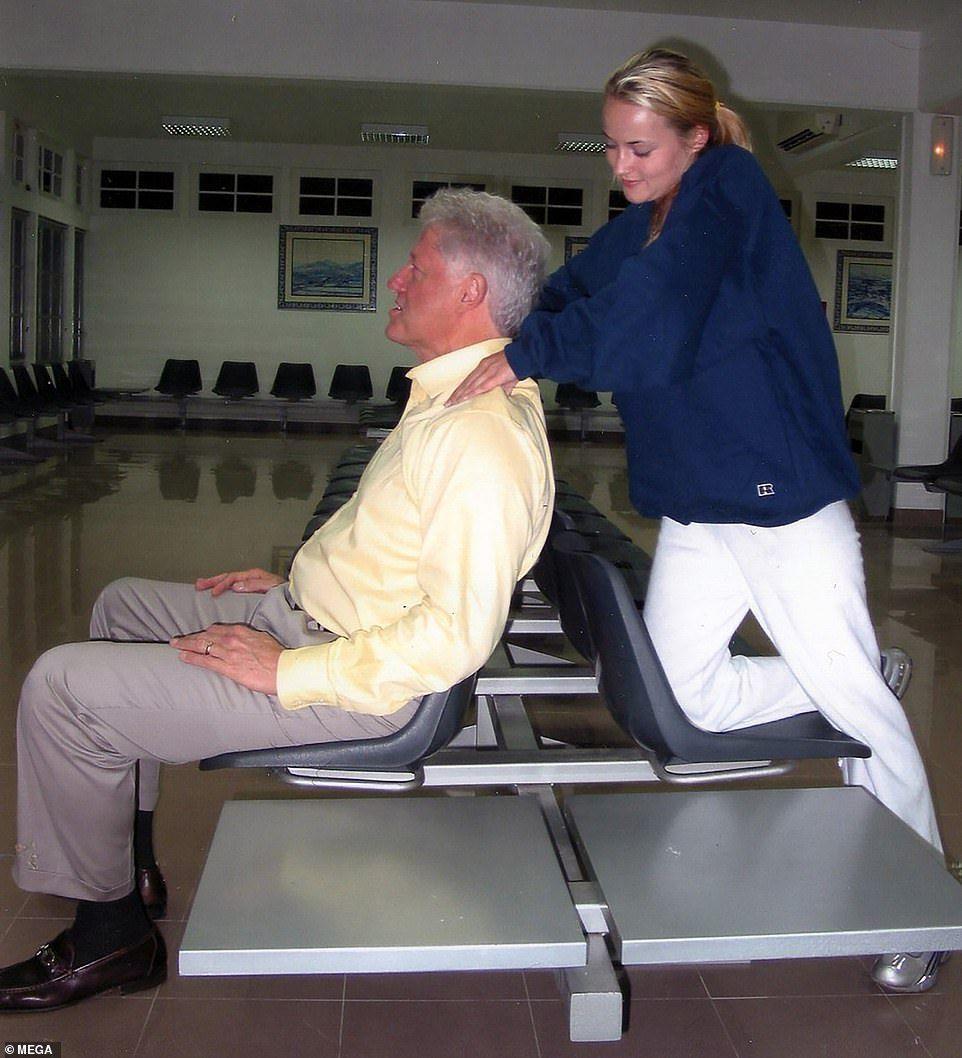 Bill Clinton is seen enjoying a neck massage from a Jeffrey Epstein victim, Chauntae Davies, then 22 years old, in a stop-over in Portugal on the way to Africa in 2002