
RT
27 Nov, 2026
The US Agency for International Development (USAID) sought to harness the reach and influence of Facebook (now Meta) and its messaging platform WhatsApp to drive demand for Covid-19 vaccines across the Global South, newly released internal documents have revealed.
More than 1 GB of USAID records was made public this week by the administration of US President Donald Trump, which dismantled the agency’s operations last year. Washington has said the release is intended to expose how previous administrations “weaponized” the organization to advance a “radical agenda.”
A three-page concept note drafted by USAID’s Center for Innovation and Impact in 2021 outlined how Facebook’s advertising tools, behavioral data, and WhatsApp chatbots could be used to “spark demand for the COVID vaccine.”
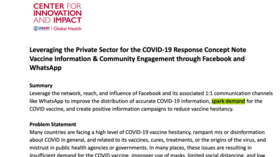
The document outlined a four-stage model for national vaccination campaigns, from building public confidence and targeting high-risk groups to encouraging registrations and reinforcing behavior through follow-up messaging. It likened the proposed approach to techniques previously used by Facebook to encourage voter turnout during elections.
The discussions took place during the global Covid-19 vaccine rollout, when many developing countries faced both supply shortages and public reluctance to get vaccinated.
In a May 6, 2021 email to Facebook representative Stephanie Sasser, USAID senior market access adviser Rahima Dosani identified “reducing vaccine hesitancy and generating demand” as an area of potential cooperation with technology companies in low- and middle-income countries.
Following talks between the two sides, Sasser submitted edits and comments that Dosani incorporated into the concept note ahead of its planned circulation among USAID missions abroad.
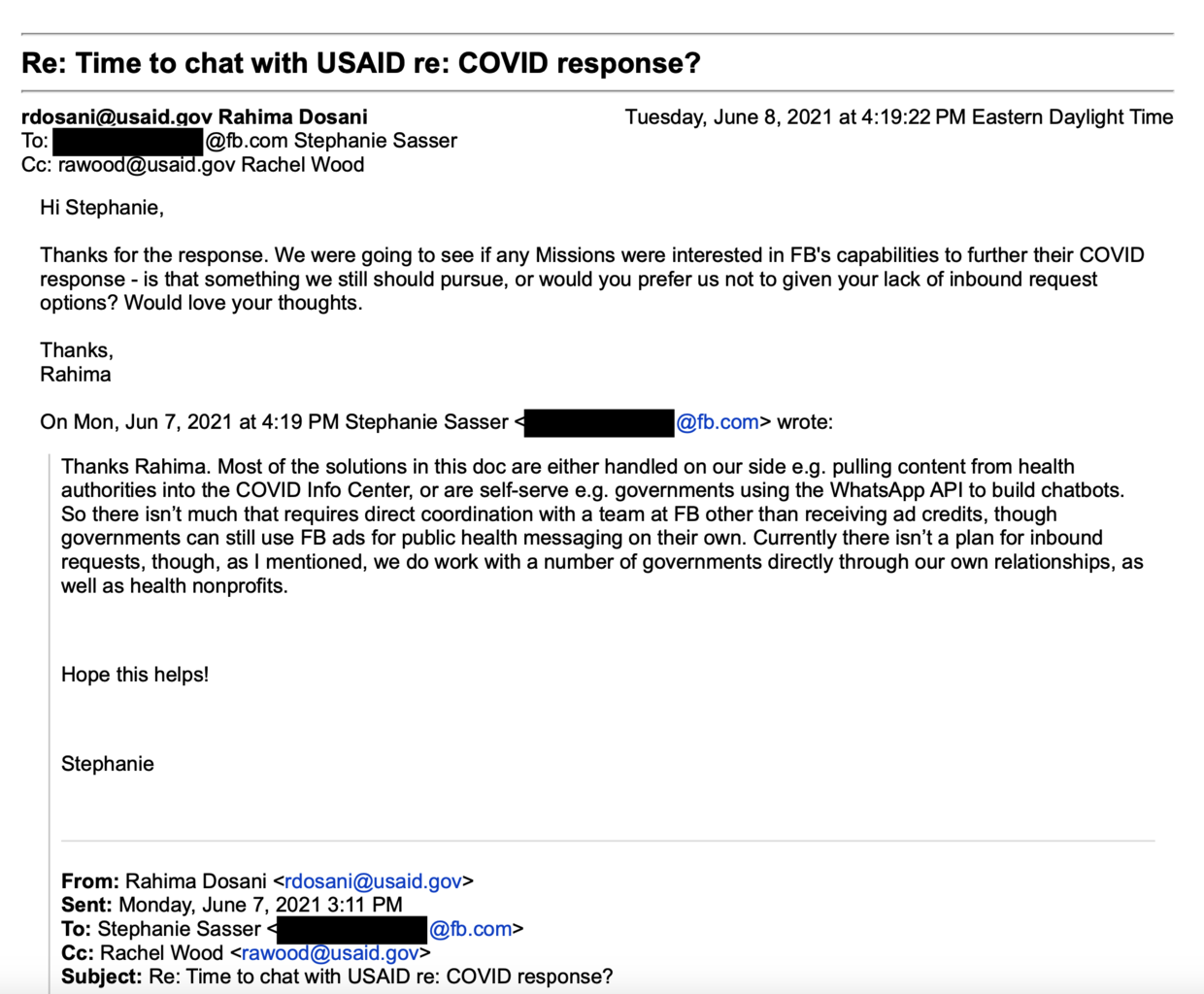
On June 7, Dosani raised the possibility of Facebook providing matching funds to governments pursuing such campaigns.
By that point, Facebook had already provided more than $30 million in advertising credits to governments, NGOs, and other organizations for pandemic-related campaigns, generating an estimated 10 billion ad impressions worldwide, according to the proposal.
USAID also examined Facebook’s Data for Good program, which conducted surveys across more than 200 countries to identify factors influencing public attitudes towards vaccination and other health-related behaviors. Advertising evaluations could allow the authorities to measure how effectively campaigns translated messaging into action.
WhatsApp was another major component of the proposed partnership. The platform worked with more than 150 governments at various levels, as well as international organizations, to establish Covid-19 helplines that had handled over three billion messages in the preceding year.
The document cited Indonesia, South Africa, Argentina, Brazil, and India as examples of countries using such services to distribute vaccine information or facilitate registrations. In Indonesia alone, 500,000 medical workers reportedly booked vaccination appointments through WhatsApp within five days of the service’s launch.
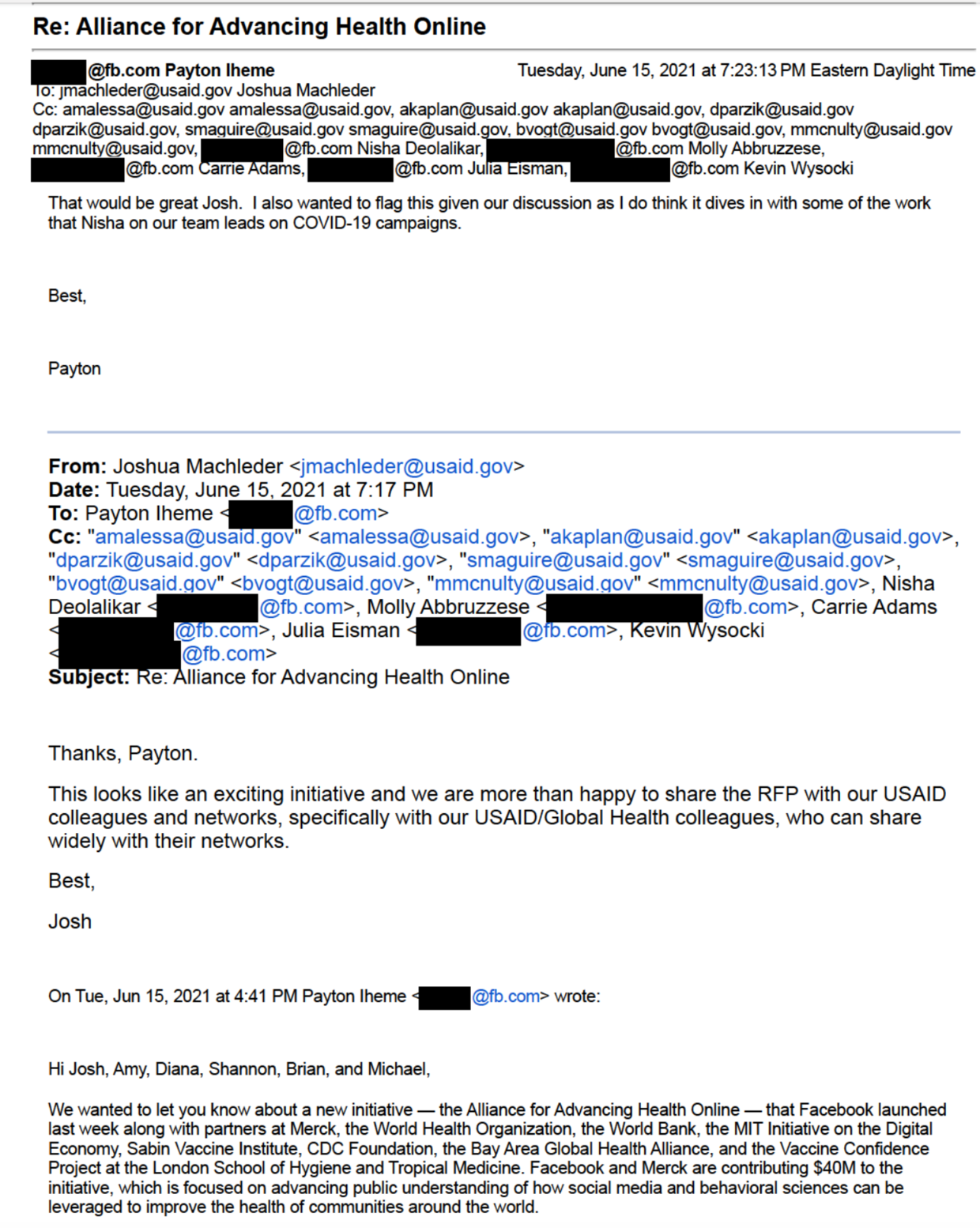
Separate correspondence dated June 15 shows that Facebook’s US public policy representative, Payton Iheme, approached USAID over a $40 million health initiative jointly funded by the tech giant and pharmaceutical company Merck. Its partners included the World Health Organization and the World Bank.
The Alliance for Advancing Health Online sought to examine how “social media and behavioral sciences can be leveraged to improve the health of communities around the world,” Iheme wrote.
Its first project offered research grants to investigate how digital platforms could “build confidence in and drive uptake of vaccines.”
Joshua Machleder, a senior media and internet freedom adviser at USAID’s Center of Excellence on Democracy, Human Rights and Governance, agreed to circulate the funding proposal through the agency’s global health networks.
USAID was already working on a social media campaign in Nigeria in collaboration with the Bill & Melinda Gates Foundation and its partner Saatchi, the files show.
Via https://rt-english.com/news/649432-usaid-facebook-covid-vaccines/

