
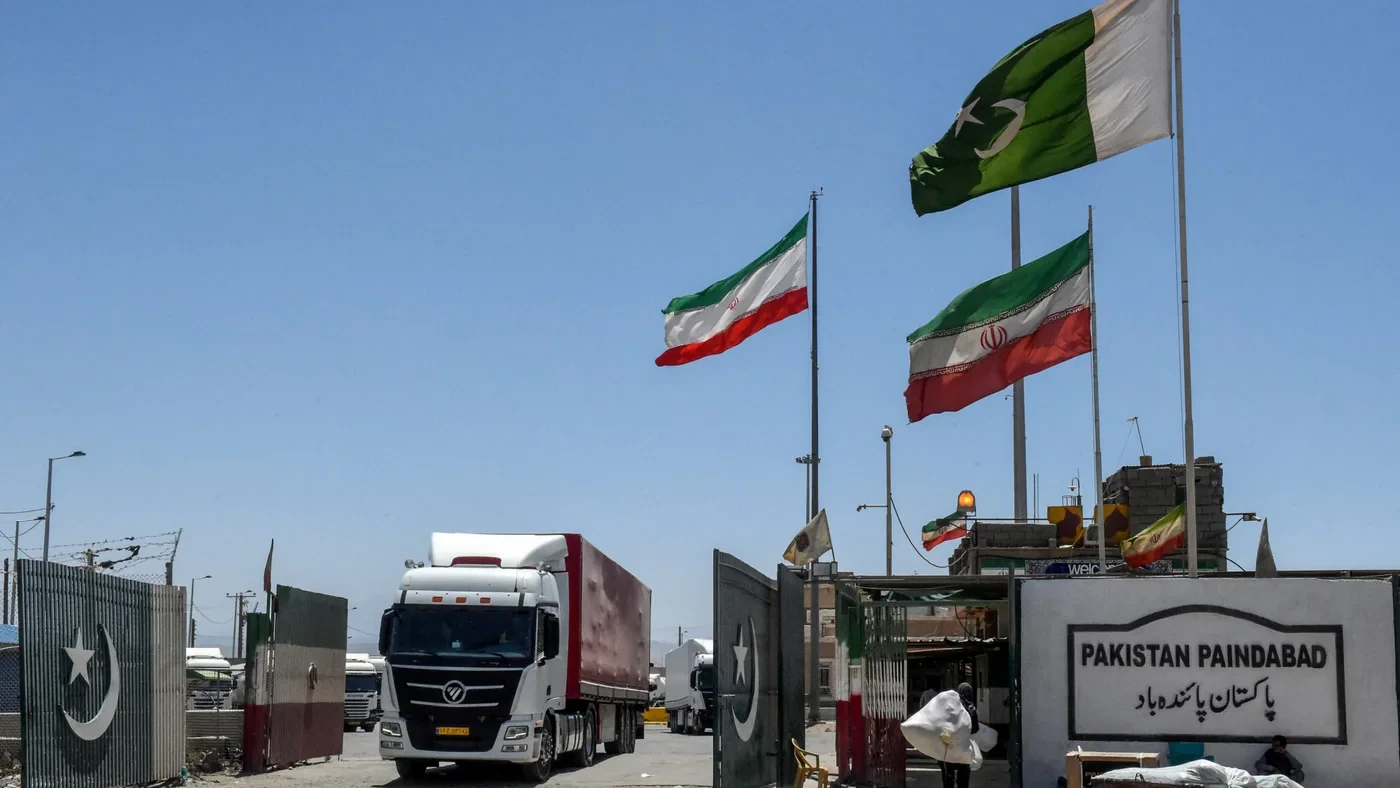
 (Photo credit: Banaras Khan/AFP)
The Cradle
NOV 12, 2026
Tehran’s neighbors remain heavily reliant on Iranian energy and trade, while analysts warn that the US has become an increasingly ‘unreliable ally’
US efforts to pressure Iran’s neighboring states to close their land borders had failed, stalling Washington’s campaign to cripple the Iranian economy, the New York Times (NYT) reported on 11 November.
According to three Iraqi officials and a US official cited by the US daily, Washington has spent weeks urging Turkiye, Iraq, and Pakistan to close their border crossings with Iran.
The US military has since launched Task Force Iron Gate, a Central Command (CENTCOM) unit tasked with blocking weapons, sanctioned goods, and illicit revenue from crossing Iran’s land borders and the Caspian Sea, thereby escalating Washington’s economic war on Tehran.
Several of Iran’s neighbors have warned that cutting off trade routes vital to businesses and communities on both sides of the frontier could provoke “civil insurrection,” according to the US official.
He added that the pressure has stirred growing anger toward Washington among its allies and partners in the region.
Turkiye has largely maintained its border policies, while Baghdad has rejected US calls to keep only two Iranian crossings open. It briefly sealed one or two as a concession, angering Iraqis.
Pakistan has reportedly closed and reopened several crossings in recent weeks, citing security and administrative concerns.
Ellie Geranmayeh, an Iran expert at the European Council on Foreign Relations, said Iran retains considerable economic leverage over its neighbors.
Beyond the $3 billion in annual trade with Iran, Islamabad relies heavily on Iranian fuel shipments, especially liquefied petroleum gas, while Baghdad draws more than a third of the gas that powers its electricity network from the Islamic Republic.
Tehran has been taking its own measures, urging neighboring countries not to yield to US demands.
Iran’s deputy foreign minister met the Russian ambassador to discuss “how to counter unilateral U.S. actions, and the so-called Iron Gate plan.”
On 5 November, Putin hosted Iran’s Supreme National Security Council secretary, Mohsen Rezaei, at the Kremlin. They agreed to build pipelines carrying Russian gas to Iran, enabling Tehran to meet domestic demand and resell gas to neighboring states.
Rezaei said Iran would not reopen the Strait of Hormuz or negotiate until Washington meets seven conditions, including ending hostilities across the region, lifting the naval blockade and sanctions, and releasing frozen Iranian assets.

