
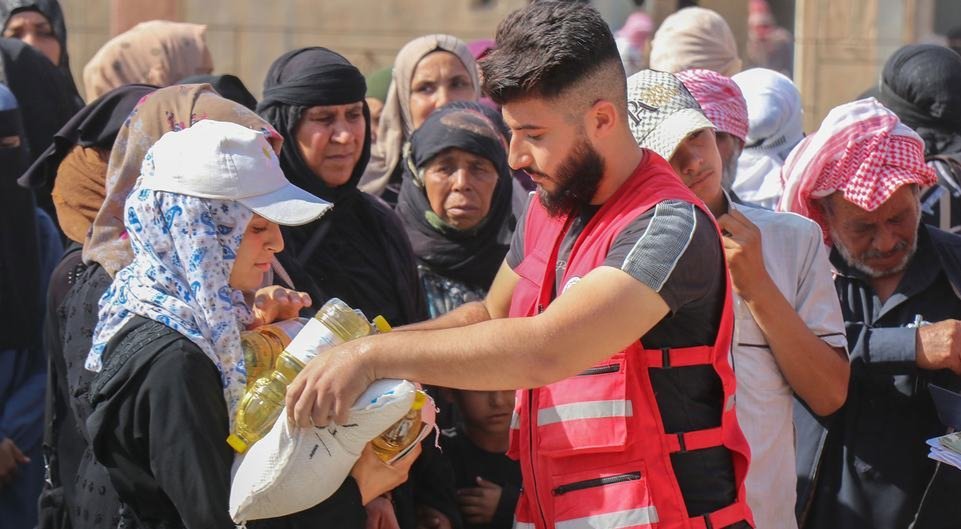
 (Photo credit: WFP)
The Cradle
NOV 11, 2026
Emergency-level food insecurity is set to nearly double to 97,000 people by mid-2027 as families exhaust their means of survival
Crisis-level or worse food insecurity has affected more than one million people in Lebanon, according to a UN-backed Integrated Food Security Phase Classification (IPC) analysis published on 11 November, as Israeli attacks in the south ravage farmland and cut farmers off from their land.
“Behind these figures are families running out of options. Some households can still draw on savings, borrow, cut expenses or find other ways to put food on the table. For others, those options are being exhausted,” said Allison Oman Lawi, the World Food Programme’s (WFP) representative and country director in Lebanon.
“When families have nothing left to fall back on, even a small additional shock can push them deeper into crisis,” Lawi warned.
The analysis, conducted in September 2026 by the Lebanese Agriculture Ministry with the UN Food and Agriculture Organization (FAO) and the WFP, places 1.05 million people, or 21 percent of those assessed, in Crisis or worse conditions through February 2027.
That figure is projected to climb to 1.15 million, or 24 percent, by mid-2027, while the number of people in Emergency conditions is expected to nearly double within months, from 52,000 to 97,000.
Although the share of people facing crisis or worse is now below April 2026’s projected 24 percent, recorded at the peak of displacement caused by Israeli attacks, agencies say the decline reflects shifting displacement patterns—not genuine recovery.
Purchasing power, livelihoods, and the capacity of families to cope all remain badly constrained, with jobs scarce, savings drained, and many households meeting minimal food needs only through aid and ever harsher coping measures.
Conditions are gravest in south Lebanon, Akkar, and Baalbek-Hermel, where ravaged farmland and high production costs have eroded rural incomes.
FAO’s representative in Lebanon, Veronica Quattrola, is calling for immediate support to help farmers “rebuild productive assets, resume farming and sustain their incomes.”
People who arrived in Lebanon from Syria after December 2024 are the hardest hit of any group assessed, with 45 percent facing Crisis or worse conditions, against 35 percent of Palestine refugees, 28 percent of long-staying Syrian refugees, and 18 percent of Lebanese residents, a share expected to reach 21 percent by mid-2027.
Agriculture Minister Nizar Hani told Anadolu Agency (AA) on 2 November that Israel’s war and occupation have damaged around 22.5 percent of Lebanon’s agricultural land, including some 52,000 hectares in the South and Nabatieh governorates and 4,000 in Baalbek-Hermel, while southern Lebanon has lost about 70 percent of its livestock.
Hani added that Israel used white phosphorus and doused forested areas near the border with glyphosate herbicide, damage the ministry has yet to fully assess while it waits for access to collect fresh soil, crop, and water samples.
Israeli attacks have killed nearly 4,400 people in Lebanon since 2 March 2026 and displaced hundreds of thousands, as Israeli forces refuse to withdraw from the south.

