
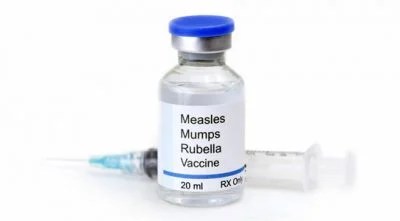
In 2000, the CDC announced that measles had been eradicated from the US. At that time, the CDC prided itself in this outstanding achievement and credited the success to its vaccination program.
However, year after year, outbreaks continued to occur in communities across the nation.
The fact of the matter is that measles will likely never be eliminated although it fits perfectly into a compelling narrative to promote vaccination compliance and to keep the public in fear and high alert. Indeed, measles is highly infectious. Yet to achieve herd immunity with ineffective, leaky vaccines, it would require 100 percent coverage worldwide. This cannot be accomplished when many low-income developing nations have barely half of their populations vaccinated.
According to health officials, the MMR is estimated to have a 5 percent failure rate. However, independent studies and screening of infected fully vaccinated persons indicate the rate could be 30 percent and higher. Even if the 5 percent is assumed accurate, this still translates to approximately 3 million children between 1-17 years of age who are unprotected despite being fully vaccinated. In addition, since measles infections are frequently mild and vaccinated individuals can often be asymptomatic carriers, there are greater dangers of the virus spreading silently. Furthermore, millions of visitors come to the US annually; therefore, the nation will never be fully protected from measles outbreaks.
One example stands out. Many Americans will recall the Disneyland measles outbreak at the end of 2014 and the widespread panic generated by the CDC and mainstream media networks. The outbreak was a huge cash cow for the pharmaceutical company Merck. In a single quarter after the outbreak, the company’s measles vaccine sales increased 24 percent according to Bloomberg Business News.
After the Disneyland outbreak, the medical journal JAMA published a study showing only 14 percent of those infected were unvaccinated. If 86 percent of those contracting measles were vaccinated, then the belief that the vaccine is capable of reaching herd immunity is a mere fantasy.
After many years of reviewing and analyzing vaccine-related scientific papers and articles, we can make one clear conclusion about the herd immunity theory. It is a dishonest marketing gimmick. It is an example of garbage-in garbage-out pseudo science. For this reason, the theory is bound to fail in the real world.
Given the CDC’s track record of concealing worrisome health risks from the public when it is more expedient to preserve the agency’s credibility, it is not unreasonable to suspect the agency has concealed the measles vaccine failures and injuries for decades. Last year, cardiologist Dr. Peter McCullough accused the CDC of classifying many measles cases during outbreaks involving 1,562 individual cases as “vaccine status unknown.” In Dr. McCullough’s review, this seems highly implausible given the enormity of the NIH’s staff and easy access to patient, physician, and clinical vaccination records.
No doubt an infectious disease outbreak can happen in a highly non-immune community if a virus reaches it. The real question, however, is how well can high vaccination compliance ensure sufficient immunity and protect a community from an outbreak? An early paper by Poland and Jacobson reported 18 separate measles outbreaks across the North America in 1994. All outbreaks occurred in school systems with very high vaccination coverage, as high as 99.8 percent in one school district. Nevertheless, vaccinated children constituted between 33 to 100 percent of the diagnosed measles cases.
Another glaring example of measles vaccine failure occurred on the Boston University campus. This was a particularly opportunist outbreak because the university had just completed a blood drive and, therefore, a large collection of students’ blood samples to investigate was immediately on hand. Laboratory analysis found that eight out of nine students who contracted measles were fully vaccinated. Another 70 percent carried a measles infection but were asymptomatic.
A more convincing and alarming study by the Public Health Agency of Canada was published in the Journal of Clinical Microbiology announcing a new real-time RT-PCR technology that could identify measles vaccine strains with laborious genetic sequencing. The technology is especially crucial during disease outbreaks for rapid diagnosis. To test the new diagnostic tool, the CDC provided Canadian health officials with 194 measles virus sequences from the 2015 measles outbreaks. Thirty-eight percent were identified as vaccine strains rather than wild-type viral strains. In other words, over a third of the outbreaks that year were actually vaccine reactions in vaccinated kids rather than natural infections.
When we consider the demonization of parents who are hesitant to vaccinate their children against measles and the eager willingness to blame outbreaks on unvaccinated persons, the implications of this new technology are enormous. Moreover, because vaccine efficacy is weak, when the broader safety health risks are further taken into account, the benefit-risk ratio increasingly tilts in favor of parents refusing vaccination.
In order to evaluate any vaccine’s benefit-risk ration, its efficacy and safety record need to be reviewed and analyzed. Aside from the Disneyland case, China presents an excellent example of measles vaccination inefficiency. China is one of the most vaccination-compliant populations in the world, estimated at 99 percent coverage. Measles vaccination is mandatory. So why were there over 700 measles outbreaks during a three year period alone? A Chinese study in collaboration with the University of Michigan reported that 51 percent had been vaccinated, even following boosters in many cases. The obvious conclusion is the vaccine is not especially effective and vaccine failures are far more common than the public is led to believe.
Dr. Gregory Poland, Editor in Chief of the journal Vaccine and founder of the Mayo Clinic’s Vaccine Research Group, published a surprising statement about measles vaccine’s poor record of efficacy. At that time there was near 95-plus percent measles vaccination compliance for children entering kindergarten. Despite the CDC’s propaganda stating that the vaccine defeated the virus, measles outbreaks continued to increase. Dr. Poland’s analysis was that the rise in measles cases was not due unvaccinated individuals but rather the failure of the vaccines.
The Cochrane Collaboration, a world-renowned independent organization that evaluates the medical literature or the efficacy of any given drug, vaccine and medical intervention, has reviewed the scientific research for the MMR vaccine on several occasions. In one review of 60 prominent studies, Cochrane concluded, “The design and reporting of safety outcomes in MMR vaccine studies, both pre- and post-marketing, are largely inadequate.”
Another medical discovery that debunks belief in the MMR’s protective claims is that live virus vaccines, such as the MMR, shed. This means that a vaccine’s viral component can be transmitted and infect others people that a vaccinated person comes into contact with.
The best-documented case occurred in New York City in 2011 when an adult woman received two MMR shots and subsequently infected four others in her workplace in the theater district. Two of those infected were already immunized with two MMR doses. All cases positive for measles in the incident were confirmed by laboratory testing and government health officials concluded that the outbreak was due to a failure in the MMR vaccine. In other words, the vaccine infected others.
It may also be noted that it is not uncommon in out-patient cancer clinics to provide at-home instructions for persons who are severely immunocompromised. One frequent guideline is to avoid contact with persons who have been recently vaccinated. This is especially true for live viral vaccines that can more easily infect others already in poor health.
Before the Covid-19 pandemic, there were 93,179 reports of hospitalizations, injuries and deaths following measles vaccinations in the government’s Vaccine Adverse Events Reporting System (VAERS). There were also 1,258 measles vaccine damage claims filed in the federal Vaccine Injury Compensation Program for 82 deaths and 1,176 injuries. About 50 percent of reported adverse effects occur in children three years and younger. But the nation’s vaccine safety monitoring system has been horrible for several decades. Medical experts have often noted and criticized the flaws and inefficiencies in VAERS for recording vaccine injuries. Various analyses, including out of Harvard Medical School, have given evidence that only between 1-10 percent of serious vaccine injuries get reported. Therefore, government health officials have been severely handicapped by their own negligence to conduct proper safety evaluations during the post-marketing period of a drug or vaccine. In addition, although the 1986 National Childhood Vaccine Injury Act requires physicians and vaccine providers to report serious adverse vaccine reactions to VAERS, not only do many doctors and nurses fail to file reports, many are unaware the system even exists.
For many decades, a host of adverse effects have been found to be directly or indirectly associated with the MMR and MMR-V vaccines. Aside from common vaccine reactions, such as low-grade fevers, redness, rashes, pain at injection site and swelling, Merck’s product inserts list over 40 serious complications. Among the more serious reactions potentially leading to long-term illnesses, disabilities and death are: subacute sclerosing panencephalitis, aseptic meningitis, thrombocytopenia;, aplastic anemia (anemia due to the bone marrow’s inability to produce platelets, red and white blood cells), lymphadenitis, anaphylaxis including related symptoms of peripheral, angioneurotic and facial emema, necrotizing retinitis (inflammation of the eye), nerve deafness, optic and retrobulbar neuritis (inflammation of the optic nerve), Bell’s palsy, stroke, acute disseminated encephalomyelitis, transverse myelitis, encephalopathy, vasculitis, pancreatitis, Guillain-Barré syndrome, acute hemorrhagic edema, afebrile convulsions, arthritis and death.
Secondary conditions can include atypical vaccine strain measles infections and susceptibility to other viral infections, respiratory and bronchial viruses in particular.
In a large retrospective study conducted by Kaiser Permanente Colorado and published in the journal Pediatrics, researchers examined over 1.1 million MMR vaccine doses given to children aged 1–18 years and identified 259 confirmed cases of immune thrombocytopenic purpura (ITP). ITP is a medical condition defined by abnormally low platelet counts and clinical bleeding. Particularly disturbing was that for most in the youngest age group, between 12-23 months of age, the disease appeared quite late — 42 days after vaccination. The study concluded that 76 percent of ITP cases in children were attributable to MMR vaccination.
The fact that some adverse injuries from the measles vaccine, such as thrombocytopenic purpura, can appear months after vaccination is troublesome. Consider that the MMR shot was licensed without a single clean placebo-controlled study. Moreover, the trials only tracked adverse events for 42 days after vaccination and discounted a host of chronic diseases and adverse events occurring after the trial period.
Several studies stand out to support measles vaccine-associated injuries. Sahlgrenska University Hospital in Sweden reported that children receiving the MMR before age 10 have a significantly higher risk of multiple sclerosis.
As far back as 2002, it was known that a particular type of antibody was commonly found in autistic children who received the MMR vaccine. Utah State University researchers recorded elevated levels of measles antibodies and myelin basic protein (MBP) autoantibodies in 125 autistic children. MBP is a biomarker that plays a significant role in the onset of autism. Ninety percent of the MMR antibody positive autistic children were also positive for MBP autoantibodies. The researchers concluded that “an inappropriate antibody response to MMR, specifically the measles component thereof, might be related to the pathogenesis of autism”. It is also well known that viral infections can cause oxidative stress that decreases methylation capacity common in autism.
Many might remember the case of Dr. William Thompson who was featured in the documentary film Vaxxed. Thompson was a former Merck scientist who became a senior epidemiologist at the CDC’s Immunization Safety department in 1997. He was a co-author on studies that were often cited to debunk a connection between autism and vaccinations. In 2014, after a conflict of conscience, Thompson came forth with material evidence proving that the CDC had known for almost fifteen years that a causal relationship exists between the MMR vaccine, the vaccine preservative thimerosal and autism.
[…]
Via https://www.globalresearch.ca/measles-vaccine-controversies-real-manufactured/5944507

