
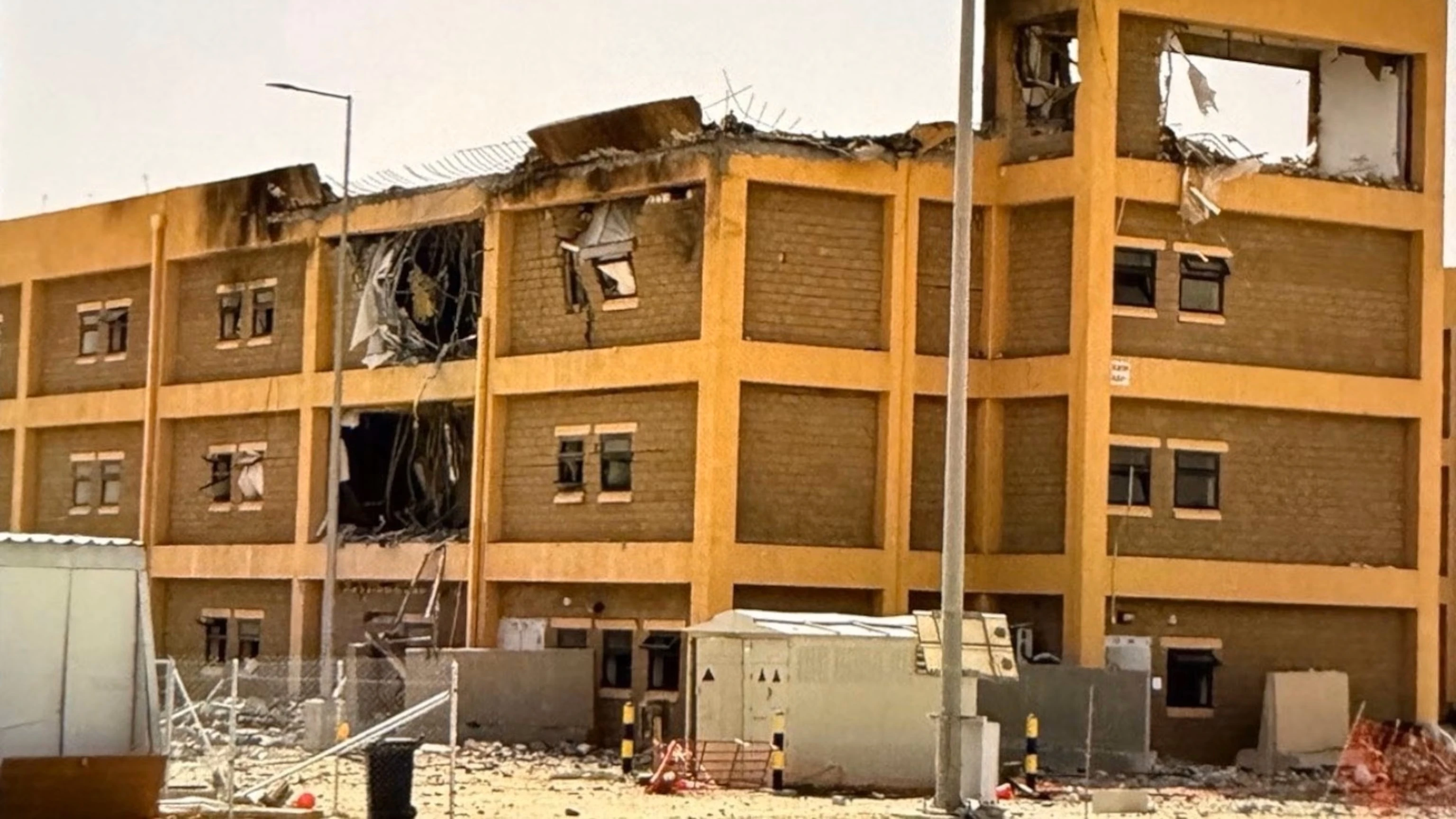
 (Photo credit: ABC News)
The Cradle
OCT 23, 2026
A new report provides photo evidence and firsthand testimony of the havoc wreaked on unprepared US troops and family members by Iranian strikes as the war began
New photographs, videos, and firsthand witness accounts detail extensive damage to US military bases and the failure of the US military to protect its troops and their families from Iranian attacks during the ongoing war, according to a new investigation by MeidasTouch and VALOR Media Network published on 23 October.
In the report, US service members and military families describe destroyed aircraft, barracks, and military infrastructure, inadequate air defenses, shortages of basic supplies, and a lack of preparation or advance warning from military commanders.
“It’s so much worse than people realize,” one source said.
Multiple sources said they were shocked by the level of mismanagement and poor planning by military leaders as the war began.
One service member described being called up in mid-February for a three-week temporary assignment that ended up lasting more than seven months.
Several said they had no advance knowledge of the US and Israeli attack launched against Iran on 28 February, despite their direct involvement in the war.
They only learned the war had begun by watching the news.
“We are sitting ducks,” one said, from Iranian drones, rockets, and ballistic missiles launched by an “enemy they could not see.”
“You can’t see them at night. They have no lights and are GPS-navigated via coordinates. It sounds exactly like a small Cessna. Looks like a large falcon if it’s about 400 feet up. We had no defense against the drones,” stated one service member.
Photos shown to MeidasTouch and VALOR by US troops and civilian contractors showed extensive damage at Prince Sultan Air Base in Saudi Arabia between March and July.
Dining facilities, workspaces, and living quarters where service members were living were all heavily damaged in the Iranian strikes, the photos showed.
One photo shows a US Air Force E-3 Sentry AWACS surveillance plane. According to the sources, the attack injured between 10 and 12 service members and damaged multiple other aircraft, including two KC-135 refueling tankers.
A video obtained by MeidasTouch showed US interceptors failing to stop a ballistic missile that then struck the base.
At Muwaffaq Salti Air Base in Jordan, “They were taking incoming fire so frequently that the alarms couldn’t keep up,” according to one source.
Multiple US Air Force aircraft were damaged during the strikes, including F-15 fighters, F-35s, MQ-9 Reaper drones, and helicopters, along with command-and-control facilities and critical infrastructure.
On one of the worst nights of attacks, 17 July, Iranian ballistic missiles and drones struck a military barracks at the base, killing three service members and injuring four others.
Multiple sources said, “They could hear service members calling for help from inside the flames, but because of inadequate emergency response and a lack of preparation, they could not reach them.”
In Kuwait, some service members were forced to scatter into the desert for safety and lived out of a van for three months.
Photos taken in September at Camp Buehring in Kuwait show the base as almost completely abandoned by the US military.
In the UAE, service members had no warning that the US would launch the war, and no shelters to protect them from Iranian retaliatory strikes.
Some service members sought safety away from their base in civilian hotels while others dug their own foxholes.
Images from the US Navy’s Fifth Fleet base in Bahrain showed heavy damage to the Fifth Fleet headquarters after it was struck by Iranian drones or missiles.
Families say the Pentagon refused to allow families of US service members to be evacuated according to plans established after the US and Israel launched a 12-day war on Iran in June 2025.
They were told evacuations would “make the situation look bad at home.”
At the same time, some senior leaders were evacuated under the pretext of training exercises.
“We were used as pawns in the war,” stated the spouse of one service member in Bahrain.
“There were many opportunities to get us out BEFORE things broke bad. The planes were sitting, waiting for the call to be made, but the powers that be didn’t make the call to evacuate dependents, and then the Bahrain Airport was damaged, and we were trapped,” the spouse stated.
“The risk that they took using dependents as pawns in a game is unforgivable,” the spouse added.
During the initial wave of Iranian retaliatory strikes, some spouses and children hid in a mall parking garage. “Sources say some of the children were so traumatized they couldn’t eat for days,” the report stated.

