
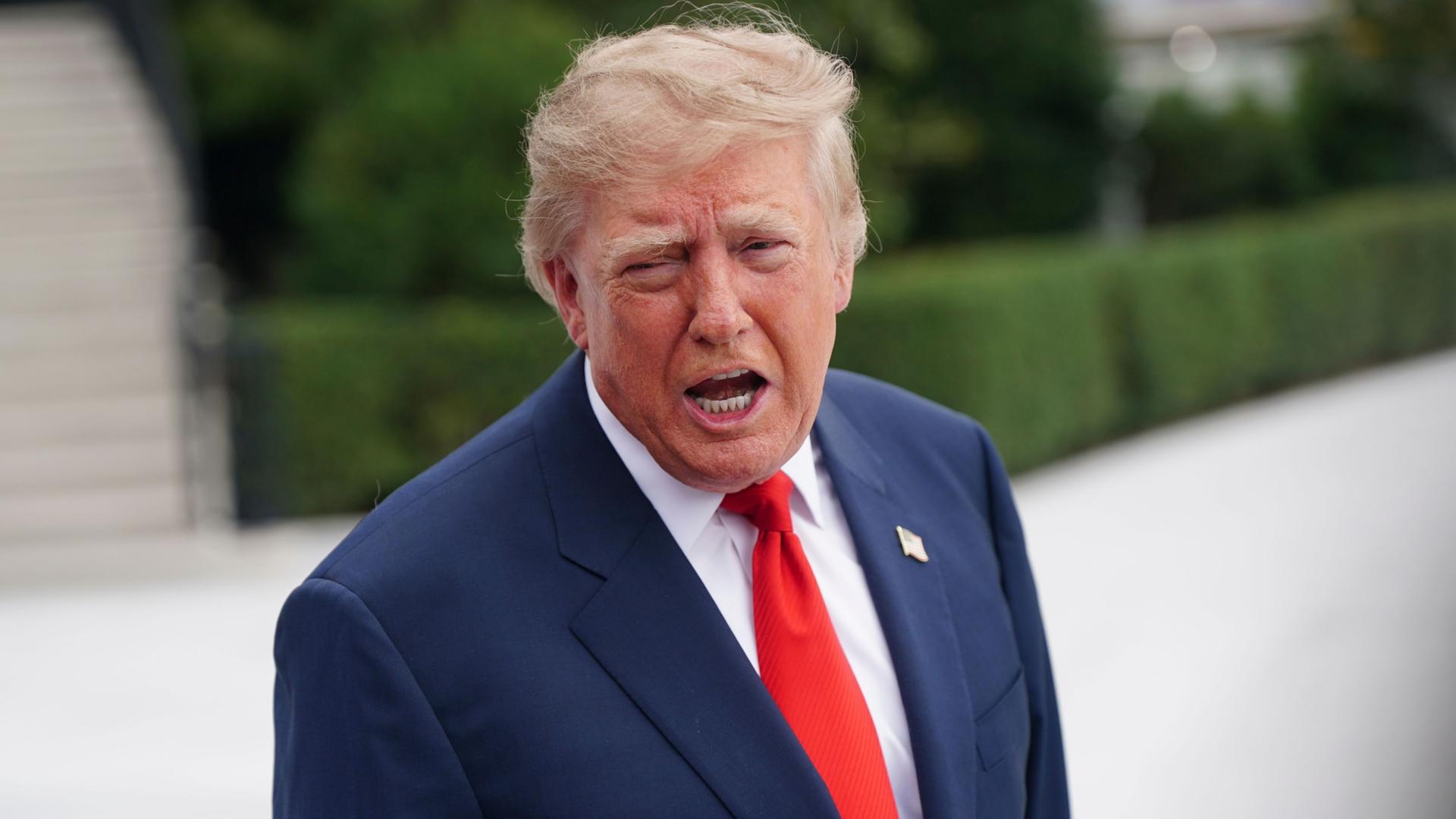
 (Photo credit: AP Photo/Nathan Howard)
The Cradle
On 17 October, Russia welcomed US President Donald Trump’s decision to waive new sanctions targeting Moscow, calling it a “historic move” that would benefit “global stability.”
“Suspension of the Graham Act by the administration of President [Donald] Trump is an important and truly historic moment,” a Kremlin official said on Saturday.
“Instead of sanctions and confrontation, we have dialogue, mutually beneficial cooperation, and shared responsibility for global stability,” the official added.
On Friday, Trump signed an executive order suspending the application of sanctions provisions under the so-called “Lindsey Graham Act,” a law passed in September to target Russia’s energy and defense sectors, including its tanker network used to circumvent US restrictions on oil and gas sales.
The late Lindsey Graham, a longtime advocate of war with Russia, pushed for the legislation before passing away in July after a trip to Ukraine.
The law also included provisions targeting countries that continue to buy Russian oil and gas.
Trump is under pressure to reduce energy and commercial shipping costs resulting from the US-Israel war on Iran and the Islamic Republic’s efforts to close the Strait of Hormuz.
Trump’s Republican Party is widely expected to lose ground to the Democratic Party in next month’s midterm elections due to widespread resentment among US voters over higher gasoline and diesel prices.
The Kremlin said that if the Graham Act had gone into effect, it could have completely halted economic cooperation between Russia and the US and caused serious damage to the US economy and global markets.
Trump’s decision comes as Ukraine and Russia trade attacks on each other’s energy infrastructure. He was reportedly angered that Ukrainian President Volodymyr Zelensky resumed strikes on Russian oil refineries despite repeated US requests to stop.
Zelensky criticized Trump’s decision on Saturday.
“A US sanctions blackout, easing pressure on the aggressor, financial rewards for Putin, all of this only encourages him to keep attacking,” Zelensky said on social media.
Washington is reportedly also weighing a move to lift sanctions on the “shadow fleet” of Russian and Iranian tankers to help bring down soaring diesel prices before the midterm elections.
Although US energy companies have benefited from higher prices after Hormuz closed, costly tankers and long-distance shipping of oil and natural gas to new customers in Europe and Asia have cut profits.
The Financial Times (FT) reported on Thursday that the US could allow the sale of sanctioned Russian and Iranian vessels to non-sanctioned operators, allowing them to operate without restrictions.
Reuters reported on Wednesday that the US could allow sanctioned vessels to carry crude or petroleum products not sanctioned by the US.
In 2018, after the US unilaterally withdrew from the Joint Comprehensive Plan of Action (JCPOA) nuclear agreement and imposed “maximum pressure” sanctions, Iran established a so-called “shadow fleet” of tankers to transport oil in defiance of the sanctions regime.
Energy Aspects, a research and consulting firm specializing in oil, natural gas, and global energy markets, estimates that around 15 percent of the world’s tanker fleet is under US sanctions.
[…]

