
 Photo Credit: The Cradle
The Cradle
OCT 5, 2026
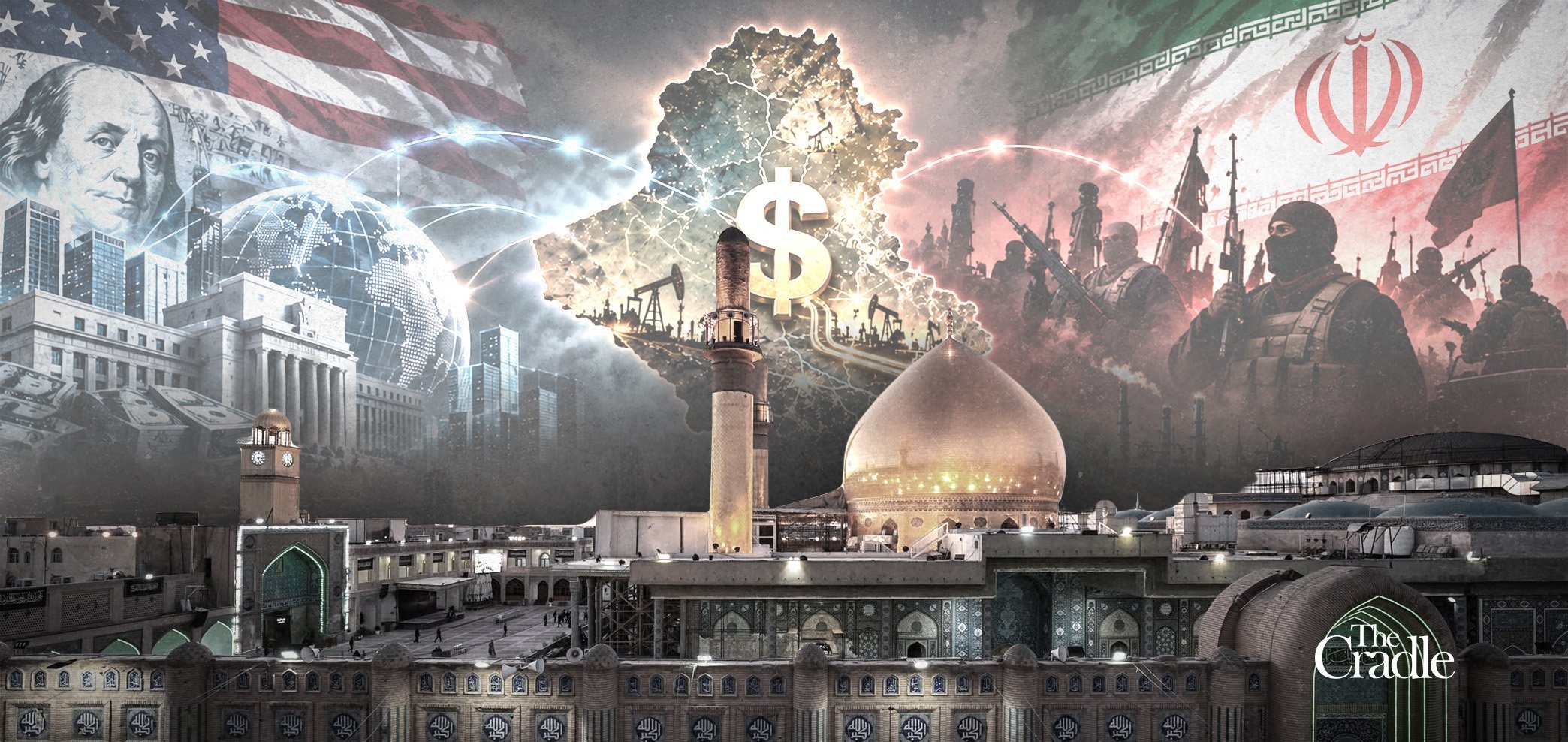
Iraq’s oil dollars pass through New York, while armed factions answer to pressures closer to home. A dispute over Iranian flights has brought both constraints into view.
The diplomat called to complain about current Iraqi Prime Minister Ali al-Zaidi’s handling of sensitive matters involving the ministry. What he told Rashid also sheds light on the discussions within Baghdad as it faced recent US pressure over Iran, Iranian aviation, and sanctions.
According to the diplomat, the Iraqi delegation attending the UN General Assembly (UNGA) did not know in advance that Zaidi would meet US President Donald Trump in New York. Its members learned of the meeting from the media after it had taken place. If so, the episode raises questions about coordination within the Iraqi state when decisions concerning Washington and Tehran are at stake.
Sources say the meeting was followed by an Iraqi directive restricting Iranian flights, amid US warnings that Baghdad could face Treasury measures if it failed to comply. After ministers were informed, they asked Zaidi for time to seek another way forward. They feared a swift response to Washington would bring political, security, and economic consequences that had not been fully assessed.
Ministers warned that a swift concession on Iranian flights could bring Baghdad into conflict with parties and armed factions already wary of its dealings with Washington. Their objections, relayed in the call to Rashid, show that the argument inside the government was over how much US pressure Iraq could absorb before the political cost fell on Baghdad itself.
Iraq nevertheless moved quickly against Iranian aviation. At first, political reactions were cautious. Lawmakers, analysts and forces close to the government defended compliance as a necessity, arguing that Iraq would bear the greater cost of a confrontation because of its dependence on the dollar system and oil revenues.
Najaf forces the issue back onto the table
That position became harder to sustain as the disruption reached the shrine city of Najaf. Harakat al-Nujaba, Kataib Hezbollah, and their supporters backed protests outside the airport, bringing the issue back into negotiations.
Iraqi Foreign Minister Fuad Hussein met US Treasury Secretary Scott Bessent on 1 October; the Treasury’s account of their discussion specifically mentions Shia pilgrimages to Najaf alongside Washington’s pressure campaign against Iran.
A limited arrangement for Iraqi flights was discussed first. Negotiations then turned to Iranian carriers and conditions involving sanctioned passengers, passenger information, and scrutiny of transactions at Najaf Airport.
On 2 October, the Iraqi prime minister’s office announced an exemption allowing Iranian airlines to resume flights to Najaf, except Mahan Air. The airport had halted Iranian flights on 25 September.
Sources inform The Cradle that the Iraqi side had pressed for an initial conditional exemption for Iraqi carriers, which had stopped using Iranian airports on 28 February, before seeking relief for Iranian airlines. They describe proposed checks on travelers listed under US sanctions, passenger manifests and passport information, and the movement of money through Najaf airport.
According to their account, the American requirements also covered payments for fuel and ground handling and the retention of related records for up to ten years. Those conditions, if confirmed in the final authorization, would leave Baghdad administering a US sanctions regime at one of its principal pilgrimage gateways.
The reversal shows the competing demands on Baghdad. Compliance with US sanctions exposed the government to anger from factions and pilgrims at home. Restoring the flights required talks with Washington over the terms on which an Iraqi airport could receive aircraft from a neighboring country.
Why does Iraq respond so quickly to American pressure when doing so risks a confrontation with Iran-aligned forces? US troops and the political relationship between Baghdad and Washington are part of the answer. The financial system, and the oil revenues moving through it, may be the more powerful constraint.
Iraq’s oil dollars in New York
Oil exports supply the bulk of Iraq’s state revenue. The government’s ability to receive those proceeds in dollars and use them to finance imports and public spending is therefore tied to political stability.
The present arrangements partly trace back to the sanctions imposed after Iraq’s 1990 invasion of Kuwait and the reorganization of its oil revenues after the 2003 US invasion. Iraqi oil receipts came to be held in accounts at the Federal Reserve Bank of New York, under arrangements administered by Iraqi institutions.
The system has outlived the circumstances in which it was established. Baghdad manages the funds, but its dollars still move through channels Washington can restrict. Any Iraqi leader considering a confrontation with the US must weigh what delays to bank transfers would mean for imports, salaries, and the oil-funded state budget.
Iraqi economist Ziad al-Hashimi has described accounts known as Iraq 1 and Iraq 2, belonging to the Finance Ministry and overseen by the Central Bank of Iraq. According to his account, the largest stream of dollars finances foreign trade, including import payments and letters of guarantee, through correspondent banks and the SWIFT messaging system.
A smaller stream supplies physical dollars for approved needs such as travel, treatment, and study. Surplus funds move from Iraq 1 to Iraq 2.
The central bank’s own records describe an Iraq 2 account at the New York Fed. Much of Iraq’s financial activity thus depends on channels exposed to US rules and oversight. Washington would not have to confiscate Iraqi money to exert pressure.
Restrictions affecting dollar transfers, correspondent banking, or access to the wider financial system could give Baghdad a powerful reason to avoid an open dispute. Any account of US influence in Iraq must consider those financial channels alongside troops, bases, the embassy and security cooperation.
The factions draw their own line
The weapons held by armed factions form the other side of Baghdad’s predicament. Ammar al-Hakim, leader of the Al-Hikma National Movement, has referred to strongly worded US messages over delays in bringing those weapons under state control.
Sources say Iraqi officials proposed their own timetable for several Iran-linked factions to hand over arms, seeking to present the process as an Iraqi sovereign decision.
Baghdad wants the timetable to appear Iraqi-led. If it looks like a response to an American deadline, factions that defend their weapons as protection against foreign intervention are less likely to accept it. Leaving the issue unresolved, however, gives Washington grounds to keep pressing the government. That argument over the factions’ weapons was already under way when the dispute over Iranian flights erupted.
The disagreement became visible during Iraq’s Sovereignty Day celebrations, held after the departure of US and coalition forces. Jafar al-Husseini, spokesperson for the Islamic Resistance in Iraq (IRI) and Kataib Hezbollah, told a large gathering on Baghdad’s Palestine Street that the factions had reached no final agreement with the government over their demands before talks on their weapons could proceed. Nearby, in the Green Zone, Zaidi and Iraqi officials were marking the withdrawal.
At a subsequent Popular Mobilization Units (PMU) parade in central Baghdad, vehicles passed over US and Israeli flags laid in Tahrir Square. The images drew criticism from US politicians. Zaidi ordered an investigation, and Iraqi authorities announced arrests over the incident.
Harakat al-Nujaba’s military deputy, Abdul Qader al-Karbalai, called the arrests a dangerous precedent. The group’s leader, Akram al-Kaabi, then posted a video of himself walking over a US flag.
The withdrawal is a victory for resistance factions that spent years confronting US forces and targeting American positions. It has not ended their dispute with Baghdad over who holds arms or who decides when they are used. Nor is the withdrawal viewed uniformly across Iraq.
In Erbil, Kurdish leaders viewed the withdrawal differently. They warned that the departure of US forces could leave the region more exposed to Iranian strikes, while Washington had long presented its presence there as part of the fight against ISIS.
For Tehran, the present strain does not amount to the loss of its influence in Iraq. Iran retains deep political relationships, party and economic networks, and extensive historical and security ties. Resistance Axis allies also retain the capacity to act with some independence from government decisions.
Baghdad must now contend with pressure from both directions. Washington can affect the financial and banking channels on which Iraq’s oil-funded state depends. Iran retains broad political, economic, and security ties, while armed factions resist surrendering their autonomy. The danger is that their contest is fought through Iraqi institutions and across Iraqi territory.
The measure of Baghdad’s success will extend beyond the number of weapons handed over. It will depend on whether the state can build security institutions capable of protecting Iraq and manage its relations with Washington and Tehran.
Political sovereignty will remain constrained while oil dominates public revenue and its dollar proceeds move through financial channels Washington can influence.
The next phase is unlikely to see either Iran leave Iraq or the US claim a clear victory there. It is more likely to bring another struggle over the distribution of power within the Iraqi state.
[…]
Via https://thecradle.co/articles/baghdads-sovereignty-runs-through-new-york

