
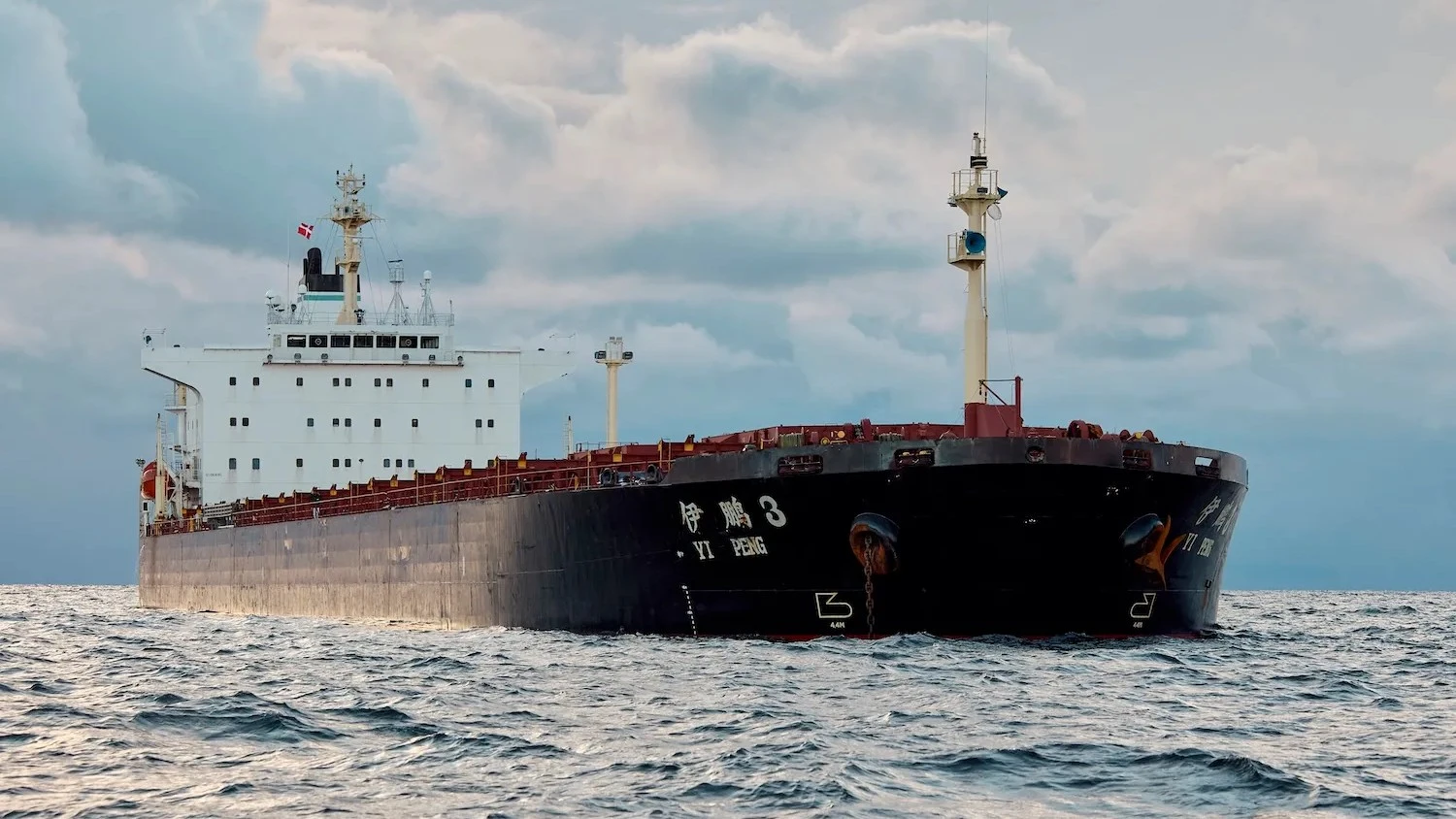
 (Photo credit: Mikkel Berg Pedersen / Ritzau Scanpix / AFP)
The Cradle
AUG 14, 2026
Denmark, Sweden, and Turkiye charge service fees for vessels to pass through narrow waters in their maritime territory, providing a precedent for Iran and Oman to do the same for the Strait of Hormuz
US investment bank JPMorgan has suggested that Iran and Oman’s strategy of imposing mandatory “navigational safety” fees to transit the Strait of Hormuz may be legally justified, the Financial Times (FT) reported earlier this month.
JPMorgan explained in a memo that international law grants ships the right of “innocent passage” through territorial waters, making it illegal to charge fees simply for transit (tolls).
However, charging fees for specific navigational and security services may be permissible, the memo argued.
For example, Denmark and Sweden currently levy charges on vessels transiting the Danish Straits. Rather than charging a toll, which would be illegal, they charge for services.
Denmark’s Pilotage Act makes pilotage mandatory for vessels carrying hazardous cargo – such as oil, chemicals, or gases – or more than 5,000 metric tons of bunker oil.
Pilotage refers to the service of guiding a ship or aircraft through hazardous, confined, or coastal waters and local areas using visual landmarks, charts, and specialized local knowledge. The pilotage fees are paid to the Danish Ministry of Business and range from $10,000 to $25,000 per transit for a Balticmax tanker.
Another country operating “a de facto tollbooth” on oil tankers is Turkiye, a US ally and NATO member, JPMorgan wrote.
Turkish authorities have “broad regulatory powers in the Turkish Straits and can charge for services under the 1936 Montreux Convention Regarding the Regime of the Straits.”
Ankara charges a Suezmax oil tanker approximately $130,000 for a round-trip passage, roughly $0.13 per barrel of crude.
In exchange for the fee, Turkiye provides lighthouses, light, and channel buoys, as well as sanitary control and emergency rescue services.
According to JPMorgan, these precedents indicate that Iran and Oman’s plan to impose mandatory charges for “navigational safety” to transit Hormuz could be legally justified.
In a previous note published in May, the investment bank’s analysts wrote: “By structuring the measure as a service fee rather than a transit toll, and by coordinating with Oman as the other littoral state, Iran could attempt to create a legal framework that appears consistent with international maritime law.”
Amir Handjani of Responsible Statecraft (RS) argues that establishing an Iran–Oman transit authority would benefit commercial shippers.
“Ships get a predictable process instead of IRGC commanders deciding by whim who passes, who doesn’t, and an unpredictable pricing mechanism,” Handjani wrote.
At the same time, US sanctions and restrictive insurance clauses may pose severe compliance issues for international oil and shipping firms seeking to traverse the Strait of Hormuz under such a proposal.
Reuters reported on 6 August that if shipping firms pay service fees to Iran to pass Hormuz, this would trigger US sanctions imposed unilaterally on the Persian Gulf Strait Authority (PGSA).
“Any payment could lead to asset freezes,” Reuters quoted unnamed industry sources as saying.
Major shipping firms have also raised concerns over a clause introduced last month by Lloyd’s Market Association (LMA) that terminates vessel insurance if it pays a toll or charge for passage through the Strait of Hormuz.
[…]

