
By Jeremy Kuzmarov
North Korea’s historic achievements have been airbrushed amidst a relentless CIA-State Department-media demonization campaign lending support to regime-change efforts
North Korea is not a country that most people would invoke favorably in polite company.
A relentless CIA-State Department-led demonization campaign over 70+ years has engrained the public with the perception that North Korea is an oppressive place with a threatening nuclear program ruled by a buffoonish family dictatorship.
Even normally astute political analysts attuned to the government’s use of the media and educational system to “manufacture consent” with the political status quo, have called North Korea “one of the most horrible countries in the world,” with “nothing good to say about it.”
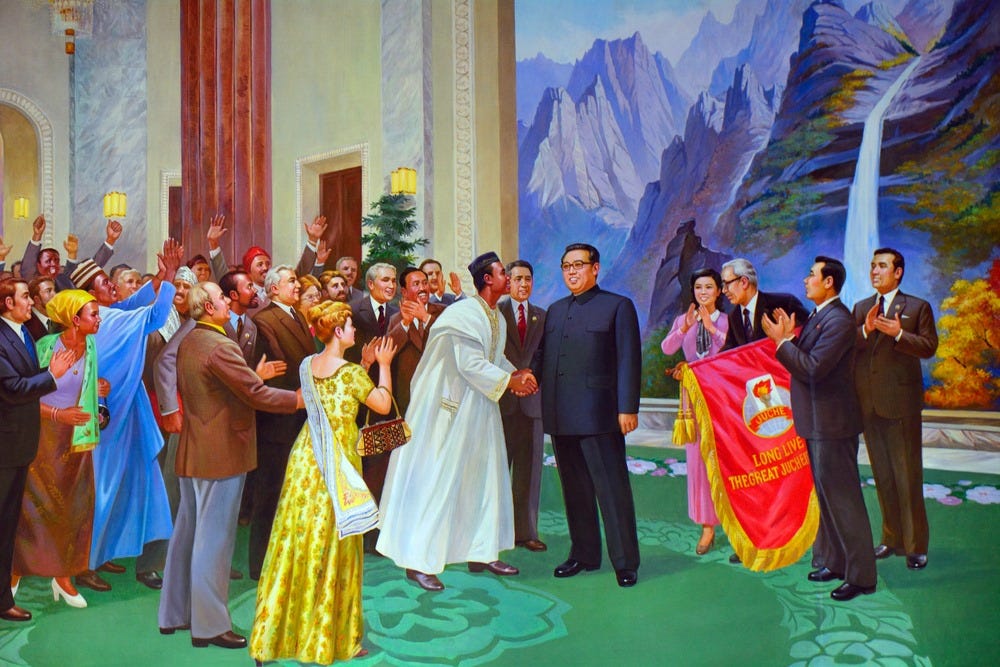
Tycho van der Hoog’s book, Comrades Beyond the Cold War: North Korea and the Liberation of Southern Africa (London: Hurst & Co., 2025), shows this latter viewpoint to be wrong-headed and that there are actually many good things to say about North Korea.
Among them is the important contributions made by North Korea to post-colonial African development and to the success of African liberation movements in the 1960s and 1970s that the U.S. government and CIA worked to suppress in collaboration with Apartheid South Africa.
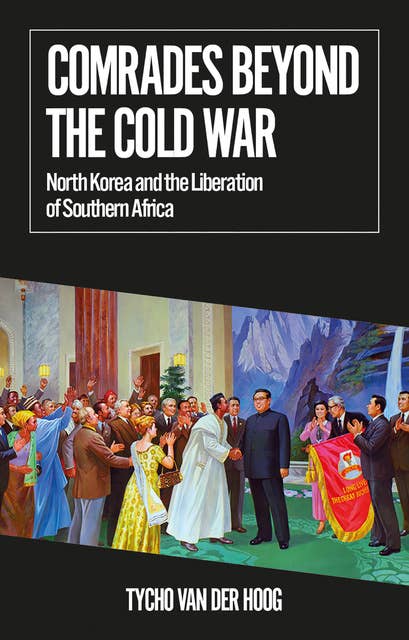
Van der Hoog notes that North Korea (Democratic People’s Republic of Korea-DPRK) offered military assistance and training to left-wing liberation movements, often through the so-called frontline states—Zambia and Tanzania—whose progressive governments (led by Kenneth Kaunda and Julius Nyerere, respectively) hosted exile revolutionary leaders and military training camps.
Kaunda, who ruled Zambia from its independence in 1964 until 1991, had forged a particularly close relationship with North Korean leader Kim Il-Sung because of a perceived compatibility between his governing philosophy—Zambian humanism—and the North Korean Juche philosophy emphasizing self-reliance and the building of an independent economy free from Western exploitation that provided excellent public services.
In 1982, as a symbol of their friendship, Kaunda belted a rendition of the Zambian liberation song “Tiyende Pamodzi” at Kim Il-Sung’s birthday celebration in Pyongyang.
Kaunda had for years been on the CIA’s hit list and was the target of a failed 1981 CIA-backed coup fomented by South African intermediaries.[1]
Kaunda’s nationalization of Zambia’s copper industry placed him at odds with corporate interests the CIA fronted for who have been able to take over the industry following privatization policies enacted by Kaunda’s right-wing successors (Frederick Chiluba, Hakainde Hichilema).
Kim Il-Sung had similarly alarmed U.S. corporate interests and the CIA by enacting a broad nationalization policy in the late 1940s in tune with the socialist model of governance.[2]
Along with Kaunda, Kim forged intimate personal relations with Julius Nyerere, Tanzania’s president from 1964 to 1985, whose Ujamaa philosophy embraced collectivist ideals that had been advanced in the North Korean revolution.
Nyerere, a Pan-Africanist and anti-imperialist like Kim, was targeted by the CIA in a regime-change operation around the time of independence that resulted in the severing of connections between Tanzania and Zanzibar and removal of leftist Zanzibar leader Abdulrahman Babu.
In the 1970s, the DPRK stationed six intelligence officers in Tanzania and built a huge embassy in the capital of Dar es Salaam, which had been transformed under Nyerere’s rule into what Agostinho Neto, leader of the leftist People’s Movement for the Liberation of Angola (MPLA), called “one of the heroic capitals of African resistance to colonial and racist rule.”
In 1983, the DPRK signed a military agreement with the MPLA—which was also supported by Cuba—by which it agreed to finance military training camps 150 kilometers from the capital of Luanda, where 1,000 to 3,000 North Korean advisers were permanently stationed until 1988.
The latter provided training in sniper skills, hit-and-run techniques and combat operations.
In the 1960s and early 1970s, the MPLA had led the liberation struggle against Portugal, which attacked the Angolan population with U.S. bombs and napalm.
In April 1961, President John F. Kennedy temporarily cut back on military aid to Portugal—then ruled by fascist António Salazar—but back-tracked out of fear of losing the Azores air bases, a major transportation hub for the U.S. military.[3]
The CIA in the early 1960s began funneling arms to the National Liberation Front of Angola (FNLA), a rightist rival to the MPLA whose leader, Holden Roberto, was the brother-in-law of Congolese dictator Joseph Mobutu, who had been installed in power in a CIA coup.[4]
The CIA subsequently shifted to providing arms, mercenaries, advisers and money to another of MPLA’s rivals, UNITA, which was known as “Apartheid’s Contras” because of their backing from South Africa’s Apartheid regime and involvement in terrorist activities.[5]
Even the State Department characterized UNITA leader Jonas Savimbi, who had collaborated with the Portuguese, as a “monster.”[6]
CIA whistleblower John Stockwell wrote in his 1978 book, In Search of Enemies, that the CIA’s close collaboration with the South African intelligence services against the MPLA and other regional liberation movements stemmed from a mutually violent antipathy towards communism.[7]
Gulf Oil, Texaco, Boeing and Arthur D. Little also had major ongoing projects in Angola.[8]
In the 1960s, South Africa had assisted the CIA in suppressing a left-wing revolt in the Congo led by supporters of murdered Prime Minister Patrice Lumumba by developing a mercenary army, which Ghanaian leader Kwame Nkrumah compared to the Ku Klux Klan.[9]
Stockwell described Angola as a Vietnam-type morass orchestrated by Henry Kissinger. North Korea and Cuba were clearly on the right side of history, and the U.S. and South Africa the wrong side.[10]
Further Help During a Time of Need
North Korea was also on the right side of history when it gave military support to FRELIMO (Frente de Libertação de Moçambique), the dominant left-wing revolutionary party in Mozambique which had led the fight against Portuguese colonialism and fought in the 1980s against RENAMO (Mozambican National Resistance), a right-wing terrorist organization backed by South Africa, the Reagan administration and CIA.
Kim Il-Sung was close to FRELIMO leader Samora Machel, a Pan-African giant and socialist who died in a suspicious plane crash in 1986 widely thought to be carried out by South Africa.
In the early 1980s, the Mozambican government had accused the CIA of running a spy network out of the U.S. embassy to gather information on Machel and other FRELIMO leaders so they could be assassinated.
The former research head of Mozambique’s Foreign Ministry publicly admitted that the CIA had paid him $300 per month to spy for the U.S., and an Air Force captain, Joao Goncalvez, said he learned the U.S. was planning a coup in Mozambique at that time with the help of South Africa.[11]
In Namibia, the DPRK supported the South West Africa People’s Organization (SWAPO) in its revolutionary struggle against South African occupation, which lasted from 1915 to 1990.
Assistant Secretary of State for African Affairs Chester A. Crocker, a key proponent of the Reagan administration’s support for South Africa and zealous champion of Jonas Savimbi in Angola, had strong intelligence ties and major investments in South African gold mining companies.[12]
Coveting South African minerals, the Reagan administration and CIA presented SWAPO—like other African liberation movements—as Soviet and Cuban proxies and warned that its empowerment would threaten South Africa’s hold on the strategic Walvis Bay.[13]
While the CIA assisted South African security forces implicated in torture and other atrocities,[14] North Korean Special Forces provided weapons to SWAPO guerrillas and provided training to them in military facilities in Pyongyang where thousands of African freedom fighters went.
SWAPO leader Sam Nujoma was so grateful for North Korean support during Namibia’s liberation struggle that, during a 1986 banquet in Pyongyang in front of Kim Il-Sung, he cited the material assistance of North Korea as the reason why SWAPO was able to “maintain the banner of the struggle higher and inflict casualties on the South African racist troops.”
American diplomatic files indicate that, between April and August 1965, 15 Zimbabwean revolutionaries were trained in the use of explosives, weaponry tactics and intelligence in Pyongyang by North Korean Special Forces.
The Zimbabwean revolutionaries were fighting against the racist Ian Smith-led white settler regime that was supported by South Africa and the U.S., which failed to enforce sanctions it had imposed and backed South African military-terrorist operations. Further, the CIA aided in the recruitment of mercenaries who fought in the South Rhodesian army.[15]
Pyongyang continued to support Zimbabwean African National Union (ZANU) and Zimbabwean African Patriotic Union (ZAPU) forces through the long guerrilla struggle in the 1970s.
ZANU leader Robert Mugabe first visited Pyongyang in 1978 where he requested and was granted further military support, some of it channeled through Mozambique where ZANU fighters were based.
North Korea’s military assistance continued after Zimbabwe won its independence in 1980 under Mugabe’s leadership.
On his second visit to Pyongyang in 1980, Mugabe attended the Sixth Congress of the Workers’ Party of Korea as a guest of honor. Mugabe thanked Kim Il-Sung and the people of North Korea for their selfless help during the fight against colonialism, saying that “the Workers’ Party of Korea experienced the struggle of the people of Zimbabwe as its own.”
In August 1981, 103 military instructors from North Korea arrived from Zimbabwe to train the 5th Brigade of the Zimbabwean army, which was deployed by Mugabe in Matabeleland to wipe out the rival ZAPU in what is known as the Gukurahundi.
[…]
In the 1980s, the eminent Zambian politician Alexander Grey Zulu lauded North Korea’s government for its “invaluable aid to the oppressed people in South Africa,” and thanked DPRK leaders for “its help during a time of need when North Korea provided a near base to freedom fighters.”
Development Aid
Besides military support, van der Hoog chronicles how North Korea provided extensive development assistance to post-colonial African states that brought significant benefits to the local population.
[…]
The pinnacle of North Korean development aid to Africa occurred in the 1980s, when at least 20 African states benefited.
Among the examples that van der Hoog discusses are a) Lesotho, where North Korea rebuilt a national stadium, ran vegetable farms and helped bolster the country’s maize production and irrigation systems; b) the Seychelles, a country that had led the struggle to demilitarize the Indian Ocean and whose president survived several CIA-South African coup attempts,[16] where North Korea donated thousands of tons of cement for housing projects, tractors for agricultural development and supplied rice at a reduced price; and c) Angola, where North Korea constructed a major dam, ran an irrigation project and aided in the production of cotton.
Similar assistance was provided to Zimbabwe, Guinea, Ghana, Zambia and Tanzania, where the DPRK sent technical advisers who helped construct new parks, gardens and playgrounds for children and to run hydro-power stations, among other things.
Van der Hoog wrote that Julius Nyerere’s home village became a particular “hot-spot” for North Korean agricultural experts and town planners as the DPRK provided Tanzania with hundreds of thousands of dollars’ worth of building materials and set up an agricultural science institute that showcased North Korea’s Juche, or self-reliant agricultural system.
North Korean support for Tanzanian development came at a time of U.S. economic warfare that was designed to undermine support for Nyerere and Tanzania’s socialist experiment.[17]
North Korea As a Developmental Model
[…]
African post-colonial leaders who embraced a socialist philosophy, such as Kenneth Kaunda, Kwame Nkrumah of Ghana and Julius Nyerere, were trying to build a similar kind of independent economy in their own countries.
North Korea disseminated the writings and speeches of Kim Il-Sung throughout Africa, setting up political education institutes and Juche centers, which promoted the Juche concept in Africa.
The first of the Juche schools was set up in Mali in 1969 and, by the 1980s, more than 30 African countries hosted a Juche school. Among them was Zimbabwe, where Robert Mugabe opened a Juche school at the University of Zimbabwe in 1981 following his second visit to Pyongyang and, thereafter, made Juche central to his development strategy for Zimbabwe.[18]
[…]

