
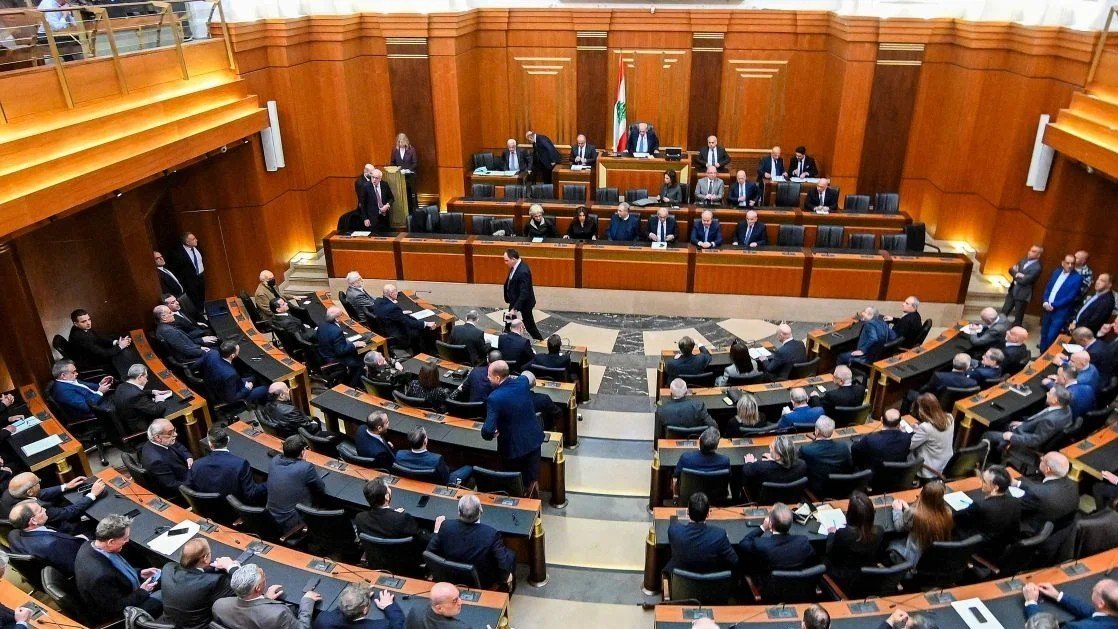
 (Photo credit: Fadel Itani/AFP)
The Cradle
JUN 30, 2026
Lebanese Parliament Speaker and head of Hezbollah ally the Amal Movement Nabih Berri is working to build a broad cross-sectarian “political front” to oppose the new Lebanon–Israel agreement signed in violation of the country’s laws, local media said on 30 June.
Lebanese outlet Elnashra says the “ruling establishment has moved to defend the agreement as a gateway to ending the war and opening the door to a new period of stability,” adding that “a political opposition front has gradually begun to emerge” under Berri’s leadership.
This front will aim to “transcend sectarian lines,” it adds.
Sources said Berri was among the first Lebanese officials to be “shocked” by the concessions Beirut accepted during the negotiations.
Rather than escalating tensions or mobilizing supporters on the streets, the speaker has reportedly instructed Amal Movement officials to avoid sectarian rhetoric and prevent opposition to the agreement from turning into civil strife.
According to the report, Berri believes opposition to the agreement extends well beyond Hezbollah and includes Sunni political and religious figures.
Parties and factions with differing views on direct negotiations with Israel have voiced concerns that Lebanon conceded far more than it received in the illegal direct talks.
“Political, religious, and public figures … believe that the deal involves major and unacceptable concessions, even if they disagree with Hezbollah on other issues,” the sources went on to say.
They added that “Arab states will play a role in Berri’s efforts.”
The parliament speaker is trying “to manage this phase by bringing together the various forces opposed to the agreement under a broad national political umbrella, avoiding emotional slogans in order to keep the opposition within constitutional and political channels and prevent it from escalating into an internal conflict.”
The report coincided with continued opposition to the Lebanon–Israel framework from Hezbollah political officials.
In comments to the New Arab, senior Hezbollah official Mahmoud Qamati described the accord as “born dead,” while warning that the resistance “will not allow it to be implemented” and will “confront it through every possible means.”
Hezbollah MP Hussein al-Hajj Hassan said on Tuesday that the agreement was a “surrender” that “will not pass.”
“No one will disarm the resistance,” Hajj Hassan’s statement added.
The Elnashra report comes a day after Berri hinted at his efforts to politically reject the framework, in an interview with Al-Akhbar newspaper.
“This agreement will not pass, and it will not be implemented,” Berri told the newspaper.
He stressed that his opposition to the agreement will remain “within constitutional frameworks,” and that his party – which is closely allied to Hezbollah – “will not boycott any cabinet session in which the agreement is discussed.”
“That is where we will confront it and state our position,” he added.
“The greatest danger posed by the agreement is not only its political content but also the possibility that it could fuel internal divisions and provoke Lebanese factions into confronting one another – something that would serve Israel above all else.”
The speaker called the deal “10 times worse than the 17 May Agreement of 1983,” referring to a Lebanese–Israeli peace deal decades ago which failed to materialize.
Berri, who at the time was at the start of his political career, played a key role in collapsing the 17 May 1983 agreement.
The speaker also said in the interview that Lebanon’s best option was accepting its inclusion in the US–Iran memorandum of understanding (MoU), calling it the “only framework capable of creating a balance of power that would force Israel to meet its obligations.”
The US–Lebanon–Israel deal signed in Washington on 26 June stipulates that Hezbollah must be disarmed before any withdrawal of occupation forces can take place.
It calls for the establishment of “pilot zones” in which the Lebanese Armed Forces (LAF) would deploy in order to dismantle “non-state armed groups,” including the resistance.
“Two initial zones have been agreed to by the [Israeli army] and the LAF, and future pilot zones will also be agreed upon by mutual consent,” Clause 3 of the framework stipulates, in effect forcing the Lebanese army to take permission from Israel on where it would deploy.
The deal would also bar Lebanon from filing legitimate international legal complaints against Israel, which has killed over 4,000 Lebanese and displaced over a million since the start of March this year.
Another clause legitimizes “support” from “Arab partners” in disarming the Lebanese resistance.
Hebrew and Lebanese media reports have discussed the existence of secret clauses which aim to solidify Israeli occupation and grant Tel Aviv the right to “approve” the LAF’s work.
[…]
 The Most Revolutionary Act